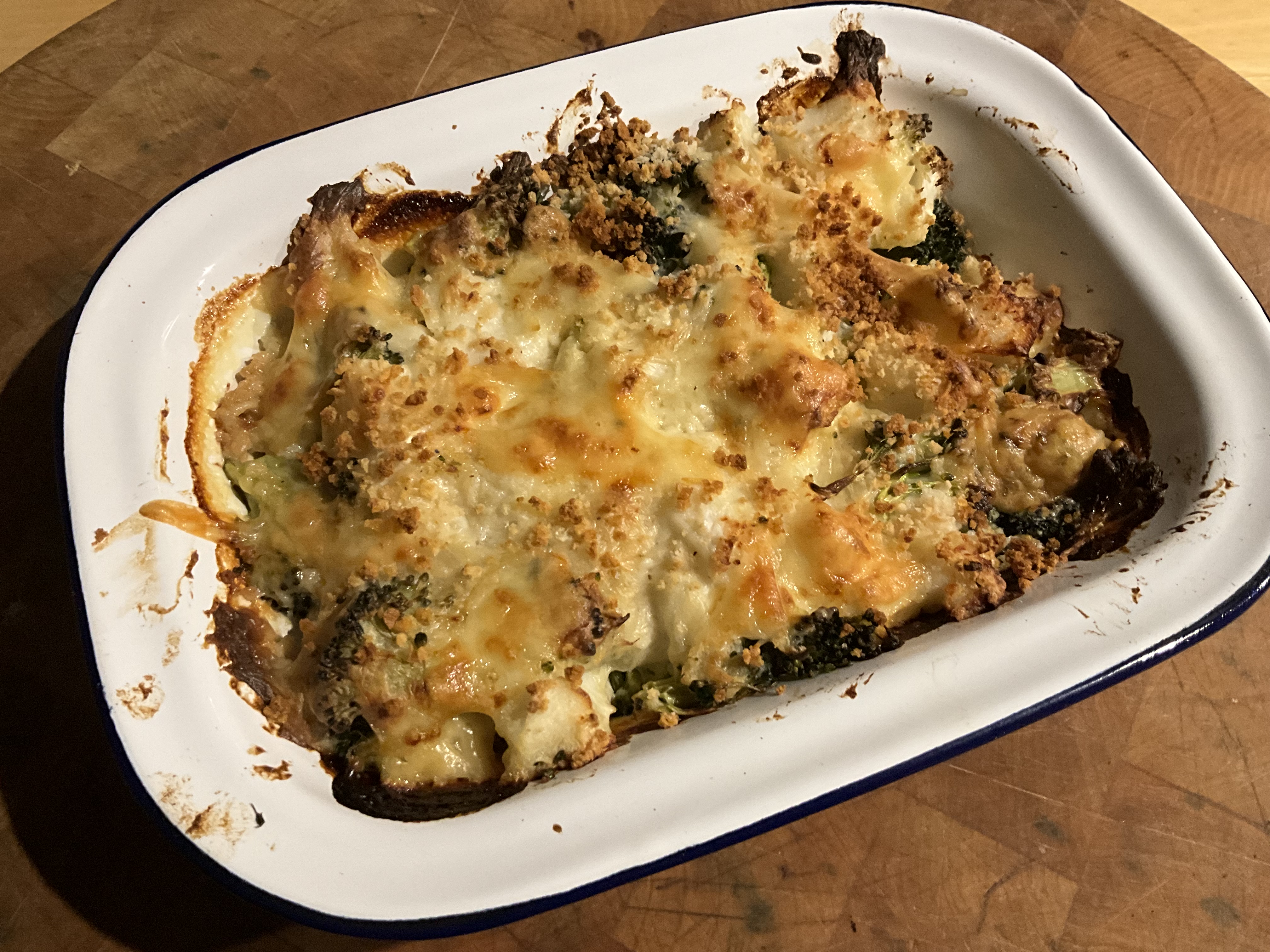
It’s always a challenge when you’re watching your calories. Fish is a great source of protein, and I love it sautéed in a little butter and olive oil with Paul Prudhomme’s Seafood Magic seasoning on it. But let’s face it, that gets old after a while, and we all know there’s nothing tastier than fried fish.

Rather than using a heavy beer batter like I used to do, I came up with a very light gluten-free-flour-based seasoning that gave the fresh-caught local fish I bought incredible flavor and crunch without a carb overload and without gluten. (I’m not on a gluten-free diet, but most GF flour is made from rice, and rice flour that gives you a lighter, crispy texture.)

There are many gluten-free flours out there now. My favorites are King Arthur and Cup 4 Cup, but use whatever GF flour you prefer. (Just make sure that rice flour is a key ingredient in it.)


image

1 cup flour (all-purpose or gluten-free)
1 tablespoon dried parsley
2 teaspoons salt
1 teaspoon oregano
1 teaspoon granulated onion
1 teaspoon paprika
1/2 teaspoon pepper
1/2 teaspoon granulated garlic
2 eggs
fresh locally caught fish fillets of your choice (I used fluke and ocean perch)
avocado oil for frying

In a flat bowl you will use to dredge the fish fillets, combine the flour, parsley, salt, oregano, onion, paprika, pepper and garlic.

In a separate flat bowl, scramble the 2 eggs.

Pour about 1/2″ of the oil in a pan and heat to medium-high heat, about 325° measured with a thermometer.

Dip the fish fillets first in the eggs, coating well. Then dredge them in the flour mixture, pressing down on both sides, so the flour mixture really sticks to the fish. Then shake the fillets lightly to remove the excess flour and gently lay the them in the hot oil. Fry them until they’re golden. (Fresh fish doesn’t take a long time.)

I made a quick and delicious tartare sauce using Hellman’s mayonnaise, dill pickle relish and Maille sauterne mustard.

KRUSTAI, A LITHUANIAN TREAT

Posted: February 14, 2025 in Uncategorized

Krustai, also called Zagarėliai in Lithuanian (known as Chrusciki in Polish…and sometimes called Angel Wings), are basically strips of fried dough, sprinkled with powdered sugar. What makes them different than your basic funnel cake is that the recipe uses egg yolks to make the batter richer. They’re simple and absolutely delicious, especially if they’re served with homemade applesauce, the way my mom used to serve them to my daughter. (The recipe for that is at the bottom of this blog.)


The traditional recipe my mom and grandmother used for years featured vegetable shortening–good old Crisco–so I still use that, considering how rarely I make them. (It’s the only time I still use it!) But you can also fry them with the oil of your choice.


This recipe can be made gluten-free if you use your favorite one-to-one gluten-free flour. (I like King Arthur.) The dough has less elasticity (as all GF dough does) and they’re crumblier than regular Krustai after frying, but the taste is still delicious!


Gluten-free Krustai.
 

1 cup powdered sugar
1 tablespoon cinnamon
a pinch of salt
8 egg yolks
1/3 cup granulated sugar
1 teaspoon vanilla extract
3 cups all-purpose flour
4 tablespoons sour cream
vegetable shortening (the 3 lb. can)
Combine the powdered sugar, cinnamon and salt in a bowl. Set it aside.

In a mixing bowl, combine the egg yolks, sugar and vanilla and mix until combined. Slowly add about 1 1/2 cups of the flour, then add the sour cream. Add flour again, a 1/2 cup at a time, mixing until the dough forms. (You may need more or less than the 3 cups listed.) The dough should be soft, but not too sticky.

Move the dough to a clean work surface, dusting it with flour. Knead the dough a bit, adding flour to prevent it from getting too sticky. Cut the dough into several pieces to make it easier to work with.


The original recipe said to roll the dough out to about 1/8″ thick, and I have a rolling pin that can be set in increments. I found that 1/8″ of an inch, although absolutely delicious, was thicker than my mom’s recipe. So it’s up to you if you want to go thinner with the dough.


I set the rolling pin to 1/8″, but you can make them thinner if you like.


Once you’ve rolled the dough out into a sheet, cut it into 4-inch long, 1-inch wide pieces with a sharp knife or a pastry wheel. (I used a pizza cutter.) Traditionally, you make a slit in the center of each strip, and slip one end of the dough through the slit to get the desired “angel wing” form. I made a few of them that way, and then decided to leave the rest of them the way they are. (The gluten-free dough has much less elasticity than wheat dough.) Again, up to you.


Re-roll any unused dough scraps and add them to the next batch of dough.


In a sturdy pot, melt about 2/3’s of the can of vegetable shortening. Most vegetable shortening has a smoke point of about 360°, so I don’t let it get past 350°. Keep an eye on it, and use a thermometer! You don’t want the shortening to burn.

Once the shortening reaches about 325°, drop one piece of dough in the oil to see how it’s frying. If it immediately rises to the surface and sizzles, the fat is ready for frying.


I use 2 forks to flip the pastry once it gets golden brown on one side. Once the oil temperature is right, the frying process goes quickly so keep an eye on your Krustai and don’t let them burn!


I like to place the fried Krustai on a metal rack for a few minutes to drain the oil, before transferring them over to a plate.


These are the Krustai made with all-purpose flour. You can see how they’re more flexible, and how they puff up a bit more than the GF Krustai in the previous photo.


Gluten-free. Lighter in color, crispier, but still delicious!

Of course, it never hurts to have a helper in the kitchen!


Once they’ve had a moment to drip off excess oil and to cool a bit, dust the Krustai with the cinnamon sugar.


The Krustai are delicious just like this, but serving them with applesauce is a special treat. My daughter was lucky enough to get to know her grandmother, and one of the last things my mom ever cooked for her was Krustai with homemade applesauce. Her recipe was simple…


6 to 8 organic apples, different varieties
3 tablespoons brown sugar
1/2 teaspoon cinnamon
1/4 cup water

My mom always used a variety of apples. Some cook down more rapidly, other stay chunky. Others are sweet. Others, like Granny Smiths, are tart. Whatever the choices, use organic apples to avoid pesticides. (Apples are some of the most heavily sprayed fruits you can buy.)

Peel and core the apples, cutting them into 1/2″ cubes. Combine them with the other ingredients in a large saucepan, and put it over medium heat.


Cook the apples down to the consistency you like. (I like it chunky.) You might need to add a little more water. Store the applesauce in a sealed mason jar in the fridge.


I love the combination of tomato sauce and feta, and this dish, served over some pasta, will have you licking the plate.


FullSizeRender (7)

8 oz. (or more!) feta cheese
1 can (28 oz.) whole tomatoes, ground into sauce
1 lb. (about 24) medium-sized wild-caught American shrimp, peeled and deveined
1 medium onion, chopped
juice of 1/2 lemon
2 tablespoons olive oil
2 cloves garlic, through a press
pinch red pepper flakes
1 teaspoon fresh dill
1 teaspoon oregano
1 tablespoon Ouzo
salt and pepper

Peel and devein the shrimp. Place them in a bowl and squeeze the lemon juice over them and toss them to mix. Open the can of tomatoes and pureé it in a food processor.

In a saucepan, heat the olive oil. Sauté the onions until they’re translucent and then add the garlic. Sauté the garlic for 10 seconds, until fragrant, then add the red pepper flakes, dill and oregano. Add the tomato sauce, and cook over medium heat until the sauce has reduced a bit and isn’t watery. Add the Ouzo carefully–keep it away from open flame! Add salt and pepper to taste.

Line a sheet pan with foil and pour a thin layer of the tomato sauce on the bottom. Lay the shrimp down in one layer on the sauce, and then cover the shrimp with the rest of the sauce. Crumble the feta cheese with your fingers and sprinkle it all over the top.

Bake in a pre-heated 350° oven until the shrimp has cooked through and it’s nice and bubbly. Serve over pasta or with a side of your favorite veggies.

A snowy day in New England today. It’s time to make some meatloaf!

Few dishes scream out “comfort food” like meatloaf. My Mom’s meatloaf was awesome, and she’d cut a huge slab of it onto my plate, with fantastic butter-loaded Pennsylvania Dutch egg noodles on the side. I couldn’t stop eating it.

I never thought of making meatloaf when I moved away, because it gave my Mom something special to make for me when I came home to visit. She was thrilled that there was a dish she could make that I would devour every time, without hesitation. (The others were her roasted lamb and Lithuanian pierogis called koldūnai (kol-doon-ay).

But Mom passed away years ago, so I’ve taken meatloaf matters into my own hands. I never got my Mom’s exact recipe. But I had an idea of what went into it, so I gave it a shot.

The standard mix for my Mom’s meatloaf was one-third each ground beef, pork and veal. I go 2/3’s beef and 1/3 pork instead, unless I can get my hands on humanely-raised veal from a farm down the road. My Mom used Lipton onion soup mix in her meatloaf. I chose to stay away from packaged ingredients which have chemicals and preservatives. And instead of layering slices of bacon on top as many people do, I fry and chop the bacon and mix it into the meat, giving my meatloaf delicious smokey bacon goodness in every bite!

To keep this dish gluten-free, just use GF breadcrumbs. I buy loaves of Udi’s frozen gluten-free bread, toast the bread slices, then put them in a food processor to make great-tasting bread crumbs that have all the flavor of regular bread crumbs, without the gluten. You’d never know the difference.


image

4 strips bacon, fried and chopped
1 yellow onion, minced
1 teaspoon salt
1/2 teaspoon pepper
1/2 teaspoon granulated garlic
pork fat or olive oil
2 lbs. ground beef
1 lb. ground pork
1 cup breadcrumbs
1/2 cup ketchup
2 eggs

Fry the strips of bacon until crisp. Remove the bacon from the pan and chop it fine. Set it aside.

Keeping the rendered bacon fat in the pan, sauté the onion with it until translucent. Add the salt, pepper and garlic. Set the pan aside, letting it cool to room temperature.


In a bowl, combine the meat, bread crumbs, ketchup, bacon, eggs, and the sautéed onion mixture. Form it into a loaf and place it in a loaf pan. Bake at 350° for about an hour.


Delicious, caramelized meatloaf. Leftovers are always welcome!


Years ago, I sampled a negroni-inspired cocktail in Cleveland, Ohio, dining at chef Jonathon Sawyer’s The Greenhouse Tavern. (Sadly, it’s no longer there.) The dishes were deliciously creative, and I had this mind-blowing cocktail that inspired me to buy a small oak barrel and start cask-aging everything I could get my hands on at home. The OYO Stone Fruit Vodka, a key component, was not available here in New England for years, but I recently spotted a bottle at Yankee Spirits in Swansea, Massachusetts!


OYO STONE FRUIT “NEGROSKI”

1 oz. OYO Stone Fruit Vodka
1 oz. Campari
1 oz. Cocchi Vermouth di Torino

If you’re doing it The Greenhouse Tavern way, combine large quantities of these ingredients in equal parts and pour them into an oak cask, then let it age! Experience tells you that newer and smaller oak casks will mellow flavors faster than larger, older ones. But it’s all about experimentation. Having a taste every once in a while is must, because you don’t want to over-age it, either.

If you don’t have an oak cask lying around at home, it’s still delicious without it.

Combine all the ingredients in a rocks glass with ice. Stir gently, adding a splash of soda, and garnish with an orange peel.

OYO Stone Fruit Vodka gets its wonderful flavors from stone fruits: cherries, peaches, apricots and almonds. Terrific on its own, but amazing in this recipe.

Campari is a world-famous aperitif and bitters, and a must in any decent home bar.

Cocchi Vermouth di Torino is a sweet vermouth, made in Italy from the Moscato grape. Choosing your own favorite sweet vermouth is, of course, optional.

HOMEMADE BELGIAN WAFFLES

Posted: February 2, 2025 in Uncategorized

My daughter wanted something special for breakfast a few Saturdays ago, and she brought a ready-to-mix box of Belgian waffle mix out of the cupboard. I read the instructions, and it required using the entire box, which made 10 gigantic waffles…way too much for us to eat in one sitting!


I figured there had to be a homemade Belgian waffle recipe somewhere online, and using ingredients I already had at home. The Food Network’s Alton Brown is usually my go-to source for recipes like this, and sure enough, he had a waffle recipe. But it used buttermilk and whole wheat pastry flour, neither of which I had in my pantry or fridge. Alton’s recipe would have to wait for another day.

I finally found one that used regular milk instead of buttermilk. I combined organic all-purpose flour with organic whole wheat flour; I like the richness in flavor whole wheat flour brings.

I try to always use organic unbleached flours, because wheat is another one of those crops that gets blasted with pesticides and chemicals in both growing and processing.


The Kitchen Aid might be overkill, but I don’t have a hand mixer!


*Separating eggs*
I like to take 2 small bowls and place them on the counter. I take an egg and crack it on a flat surface, which reduces the chance of a shell fragment getting into the egg. Going back and forth between eggshell halves, the yolk stays in the shell while the whites drip down into one of the bowls. The clean yolk goes in the other bowl. Repeat with the other egg.

It’s important to remember that you CAN have a little egg white with your yolk. It won’t hurt anything. BUT…you can NOT have any yolk with your egg whites! The whites will not whip up if there’s even the tiniest bit of yolk in them!

1 1/4 cups all-purpose flour
1 cup whole wheat flour
3 tablespoons sugar
1 tablespoon baking powder
1 teaspoon cinnamon
2 large eggs, separated
2 cups milk
1/2 cup vegetable oil
1 teaspoon vanilla extract

Pre-heat the waffle iron, spraying it with cooking spray. (I like to use a high-smoking point oil like avocado oil.)

In a large bowl, whisk together the all-purpose and wheat flour, the sugar, baking powder, and cinnamon.

Carefully separate the eggs whites from the yolks, placing the yolks in a bowl with the milk, vegetable oil and vanilla extract. Whisk until combined.

Place the egg whites in a bowl and beat with a hand mixer until stiff peaks form. (I don’t have a hand mixer, so I used my stand mixer for this job.)


Add the yolk mixture to the dry ingredients and mix well.

Next, fold the egg whites carefully into the bowl. You should have a beautiful, light airy batter, that has a wonderful cinnamon fragrance.


Ready to fold in…


Pour the batter into the hot waffle iron (according to your iron’s directions.)


Serve the waffles immediately with butter, syrup, fruit, whipped cream, or anything else you love!

I didn’t mean to cheat…honest. But I wasn’t thinking when I bought my corn in the supermarket, and I bought ears that were already shucked. Classically, Mexican street corn is made by throwing unshucked ears of corn on the grill to cook them. So I improvised.


I took the shucked ears of corn, placed them in a pot of cold water, and brought it to a boil. I boiled the corn for just 2 minutes, removing them from the water at that point.


I lit a grill. But you can also put them under a broiler, keeping an eye on them as they cook, rolling them back and forth so that they would have a nice char on them but wouldn’t burn. When I liked the color of the corn, I brought the ears inside and added the remaining ingredients, which can be prepared ahead of time.


1/2 cup mayonnaise
1/2 cup sour cream
juice of 1 lime
1/2 teaspoon granulated garlic

Combine these ingredients in a bowl and place it in the fridge until it’s ready to use.

Cotija cheese, crumbled
Tony Chachere’s Creole Seasoning
Fresh cilantro, finely chopped


Once the corn comes off the grill, brush on the mayo/sour cream mixture all over the corn. Traditionally, chili powder is sprinkled on, but I prefer the Tony Chachere’s. Sprinkle the cotija cheese on top, and garnish with a little cilantro.

A favorite.

BARBECUE SAUCE DU JOUR

Posted: January 29, 2025 in Uncategorized

Even if it’s too cold to grill outside, a nice barbecue sauce can make you feel like it’s summer!

I’ve probably got a dozen really great barbecue sauce recipes. But these days, it seems I’m always gravitating toward this one. It’s sharp and vinegar-based so it has that acidic kick, and goes great with beef and chicken, but especially pork.

I’ve used this sauce when making tacos with ground beef, pulled pork, ribs, and grilled chicken, as well as a whole roasted bird. Lip-smackin’ good!


Let’s make it…


2 cups ketchup
3/4 cup water
6 tablespoons cider vinegar
6 tablespoons white vinegar
6 tablespoons brown sugar
3 tablespoons Worcestershire sauce
1 tablespoon chili powder
2 teaspoons Kosher salt
2 teaspoons black pepper
2 teaspoons cumin
1 teaspoon granulated garlic
1 teaspoon granulated onion


Mix all the ingredients in a saucepan, and bring it to a boil. Then lower the heat to a simmer and cook until until the flavors have blended and it has thickened a bit–about 20 minutes.

If you store it in an airtight container in the fridge, it will keep for weeks.

Great on ribs!


PAN PIZZA, TWO WAYS

Posted: January 26, 2025 in Food, pizza, Recipes, restaurants
Tags: , , ,


I got my first restaurant job when I was 17, working at Pizza City East, just down the street from my childhood home in Plainview, NY. It wasn’t a great job, but I learned an awful lot about food preparation. It’s where I opened and tasted my first clam on the half shell. It’s where I had my first sip of espresso and cappuccino. And it’s where I learned a lot about how to make really good pizza. My buddy, Mel, and I worked the counter. Mel made the pies and I did the rest: sandwiches, espressos, clams, and eventually even cooked in the kitchen. We were 2 hard-working slobs in high school, but we bonded in a way that kept us friends to this very day, over 40 years later.

So you could say pizza was in my blood. For me, the true test of a great pie is a simple slice with only sauce and cheese. It’s not easy to get that right, despite how easy it may look.

And for me, there was no other pizza than New York style Neapolitan pizza, the classic round pie with thin crust. I have no doubt that it would be my choice for the classic question: “If you were stuck on a desert island, and you could only have one food, what would it be?”

But then I discovered Sicilian pizza: it was thicker, square, and was baked on a large sheet pan. The crust was crisp on the bottom, and light and airy inside. I thought: OK, I have room for 2 favorite pizzas. And then, believe it or not, I went to Uno’s…(Pizzeria Uno back in the day)…and I had my first pan pizza. It was thick like Sicilian, but somehow different, and heavier on the sauce. But absolutely delicious. I finally settled on 3 favorite pizzas.

Despite having 3 favorite styles of pizza, I always cooked a Neapolitan pie when I made pizza at home. Perhaps it was a bit easier, or perhaps I just never felt I really made the perfect pizza, and I needed to keep trying. In either case, it meant that after 40 years of making my own pizza, I finally made a pan pizza for the first time a couple of years ago. And it was good…really good.

The dough is stretched out and ready to accept whatever tasty toppings you like!

The dough…

The key ingredient is 00 flour, and it can be found in specialty stores, or online. Using ready-made store-bought dough saves a lot of work, and it’s great, too. Ratios for my dough recipe depend on the humidity in my kitchen on any given day, but my basic pizza dough recipe is as follows:

4–5 cups 00 flour
1 cup warm water (about 110 degrees)
1 tablespoon salt
1 packet Italian pizza yeast or regular dry yeast (about 2 1/4 teaspoons)
a squirt of extra virgin olive oil

I mix all the dry ingredients in the bowl of a stand mixer, then slowly add the water as it mixes. After the ingredients are well mixed, and the dough pulls from the side of the bowl, I remove it to a floured board, where I knead the dough by hand for another 5 minutes, until it is smooth and elastic, shaping it into a ball. I rub a little olive oil over the ball of dough, place it in a bowl covered with plastic wrap, and let it rise for 2 hours, punching it down after that. I roll it back into a ball, cover it, and let it rise another 2 hours again.

Let’s talk pans. For me, nothing beats a real heavy duty cast iron pan for this recipe…and I’ve got a large one. I brush olive oil generously all over the inside of the pan–even on the sides–and then place the dough in the center. Slowly, using my fingertips, I spread and flatten the dough out from the center evenly all the way around. I keep spreading and stretching until the dough just starts to come up the sides of the pan. I cover the pan with a clean towel, and turn the oven on to 450 degrees to pre-heat.

I use a pizza stone for standard pizzas, but there’s no need for it when making deep-dish pizzas.

Leaving the pan on the stove top while the oven pre-heats will help the dough rise again. Meanwhile, I get my ingredients ready for my pizza.

Crumbled sausage on top of the pizza.

White pizza…

3 cloves garlic, minced
olive oil
mozzarella
Parmigiano Reggiano
Provolone cheese
dried oregano
crumbled Italian sweet sausage

The first time I made a pan pizza, my daughter requested a white pizza. I minced a bunch of garlic and lightly sautéed it in olive oil, being sure not to burn it. I set that aside.

I grated mozzarella cheese and Parmigiano Reggiano, setting them aside. I also use sliced provolone.

And this time, my daughter asked for sausage on the pizza, so I got a few mild Italian sausages, cut open the casings, and crumbled the meat in a bowl, setting it aside.

I gave the oven at least a half-hour to pre-heat. I removed the towel covering the pizza dough, and stretched it out a bit more. Using a spoon, I spread the garlic and oil mixture evenly on the dough. I placed 5 or 6 slices of provolone down first. I then sprinkled the Parmigiano Reggiano on top, followed by the mozzarella. I crumbled the sausage meat over half the pie (I like my side plain), and then I finally gave the pizza a sprinkling of oregano.

The pizza went into the oven for 15 to 20 minutes. I kept an eye on it to make sure it didn’t burn.

My first pan pizza: half sausage white pizza.

My second pan pizza was a classic tomato sauce recipe…

I use canned crushed tomatoes for my tomato sauce pizza.

Tomato sauce pizza

1 cup crushed organic tomatoes
1 teaspoon sugar
mozzarella
peperoni, sliced thin
dried oregano

I like my tomato sauce to be a little chunky for my pan pizza, so I bought a can of crushed organic tomatoes. I placed about a cup of the crushed tomatoes in a bowl and added a teaspoon of sugar, mixing it well. This cuts the acidity of the tomatoes, and makes the pizza even better! I spooned out the tomatoes onto the the pizza dough. I sprinkled the mozzarella over the sauce. I put slices of pepperoni on half the pizza (like I said, I like my side plain!), and I gave it a sprinkling of oregano.

Don’t skimp on the pepperoni!

The final product!

Delicious! Crispy crust on the outside, soft on the inside.

I’ve had a lot of pizza in my life. But truly great pizza? I can probably count that on one hand: Sicilian at Ben’s in the Village in NYC…Pizza Montanara at Pizzarte on W 55th in NYC…a coal-fired oven-baked clam pizza at Frank Pepe’s in New Haven, CT…Sicilian at La Piazza in my hometown of Plainview, NY…and now…my house!

Good news if you’re on a gluten-free diet. These fritters can be made GF! And they’re delicious.

I have both recipes–gluten-free and the original–below!

They key ingredient in making a good fritter batter is beer. But until recently, there weren’t many gluten-free beers to choose from…and the ones that were out there tasted like crap. All that has changed.

Now you can pretty much find a gluten-free craft beer in every state, and there are several regional gluten-free beers as well. Easy enough to find: just go to a good beer store and ask. They almost always carry a couple of brands.

Gluten-free beers can be divided into 2 types: truly gluten-free: brewed with gluten-free ingredients and safe for all to drink…and gluten-reduced: beers that are brewed with ingredients containing gluten, then had an enzyme added to reduce the gluten. These are fine for those that have an intolerance to gluten, but are not Celiac. Read the labels!

The beer that I used for my recipe is a beer that they say  is “crafted to remove gluten,” meaning there’s still a small amount left in there.

Ultimately, if gluten is not an issue for you, follow the recipe at the bottom of this page. It’s my original, and not only uses a tasty lager full of gluten, but also a special fritter flour, which can be found in many stores.

However, if you have to live the gluten-free lifestyle, and you’ve told yourself you can never have another fritter, I have good news for you: you can…and they’re delicious! This is a large batch, so feel free to reduce it if needed.

In making this recipe, I tested 3 types of gluten-free flour: Cup4Cup all-purpose flour, Bob’s Red Mill GF Baking Flour, and a Canadian brand (not available here yet.) Cup4Cup (far left) was the clear winner for taste and texture of the fritter.

1 lb. all-purpose gluten-free flour (I like Cup4Cup)
2 lbs. frozen or fresh mussels
1/2 cup (or more) gluten-reduced lager beer (I used Omission)
oil for frying (I stay away from seed oils, but use what you like)

Pour an inch of water in the bottom of a pot, and place a strainer on top. Pour the mussels, fresh or frozen, onto the strainer and cover the pot. Set the heat on high and steam the mussels until they’re cooked, about 5 minutes. If you’re using fresh mussels, throw out any of the ones that didn’t open. Frozen mussel meats (without the shell) are also available in many areas. They work with this method, too. Just warm them through.

Steamed New Zealand green-lipped mussels. Available frozen in many stores. Get the plain ones, not the ones that already come with sauce.

Remove the mussel meats from their shells. Pulse the mussel meats in a food processor, but leave ’em chunky…or chop by hand…not too fine, because you want to see and taste them in the fritter.

Save the “mussel juice,” the water in the bottom of the pot. It’s got lots of mussel flavor.

Place the flour in a large bowl. Add the chopped mussels. Add a 1/2 cup of the mussel juice and a 1/2 cup of the beer. Mix thoroughly, using a fork or your hands, until you get a batter that’s a bit gooey, but not really wet. You might need to keep adding small amount of broth, beer or flour to get just the right consistency. Once you’ve done that, let the batter rest for 10 or 15 minutes. Keep it at room temperature, and do not stir again! If you need to wait a while before frying, cover the bowl with a wet towel.

In a heavy cast iron pan or a fryer, heat the oil to 350°.

Once the oil is hot, take small meatball-sized globs in your hands and gently drop them into the oil. Don’t fry too many at once or the oil temperature will drop quickly. Fry them until they’re golden brown and cooked all the way through. Drain the fritters on paper towels, and season them immediately with salt and a little pepper.

The dipping sauce recipe I have listed at the bottom is not gluten-free. But most tartare-type sauces usually are, and are equally delicious.

Of course, you can make fritters with anything, from mussels to shrimp to lobster!

You’d never know they were gluten-free!

Here’s the original recipe, full of glorious gluten!

It was a fall afternoon in Newport, Rhode Island, at the now-defunct Newport Yachting Center’s annual Oyster Festival. We were gorging on freshly shucked oysters and clams, boiled shrimp, and…what have we here? I had never heard of a mussel fritter before, but once I took a bite, there was no turning back.

They couldn’t be easier to make, but it is crucial to have the right fritter batter. And that starts with a Rhode Island product called Drum Rock fritter mix. If you live in New England, you can find it in just about any seafood department at Whole Foods. If you live further away, you can check out their website (www.drumrockproducts.com) or try your luck with a local brand of fritter mix.

fritter ingredients

If you’re using fresh mussels, be sure to clean them well and remove the beards. Steam them in a pot over a small amount of water. As they open, they will release their flavorful juices and you want to save every drop of that broth for the fritters. Here in New England, frozen mussel meats are available in some seafood stores. All you need to do is thaw them, steam them (saving the broth), and you’re ready to go.

For the fritters:
1 lb. fritter mix
2 cups cooked mussel meats
1/2 cup mussel broth (saved from steaming mussels)
1/4 to 1/2 cup good quality beer (I use Sam Adams Boston Lager)
Oil for frying (I stay away from seed oils, but use what you like)

Steam the mussel meats until they’re just cooked. Remove the mussel meats, and reserve 1/2 cup of the broth. Pulse the mussel meats in a food processor, but leave ’em chunky…or chop by hand.

Put the fritter mix in a large bowl. Add the mussel meats, mussel broth, and beer. Stir gently until just mixed. Let it sit for 10 to 15 minutes and do not stir again. (If you’ve got guests coming, you can prepare up to this part ahead of time, covering the bowl with a wet towel, and leaving it at room temperature.)

Using a thermometer, heat the oil in a deep pan to 350°, and using a small spoon or scoop, drop the fritters in the hot oil, turning gently, cooking 3 to 4 minutes until golden.

Drain them on paper towels, and season with salt and pepper immediately. Serve right away!

IMG_3043

An easy, delicious dipping sauce:
1 cup mayonnaise
1/4 cup Ponzu sauce

The perfect dipping sauce for these mussel fritters is made from two ingredients: mayo and Ponzu sauce, a citrus-based soy sauce found in most supermarkets. Combine both ingredients in a bowl. Keep it in the fridge until you’re ready to use it.

I haven’t found a gluten-free Ponzu sauce yet, but if you take GF soy sauce, touch of citrus juice, a drop of fish sauce, and a little rice vinegar, and mix them up, you’ll get close.