“You’ll never out-exercise a bad diet.”
That’s not my quote…but it’s absolutely true.
I re-started this diet couple of months ago, in early November, to counteract the weight gain that I knew would happen with the upcoming holidays. I decided I would not punish myself for over-eating during Thanksgiving, Christmas, and the new year, if I just stuck to this diet on the days in between. And it really did help.
My weight this morning was exactly what it was in the beginning of November. That may not sound like a success, but had I not dieted in between the holidays, I would easily be 10 to 15 pounds heavier right now.
But now, it’s time to get back to it, and lose some real weight. This diet has been extremely successful for me in the past, and as long as I stay with it, it will succeed for me again this year!
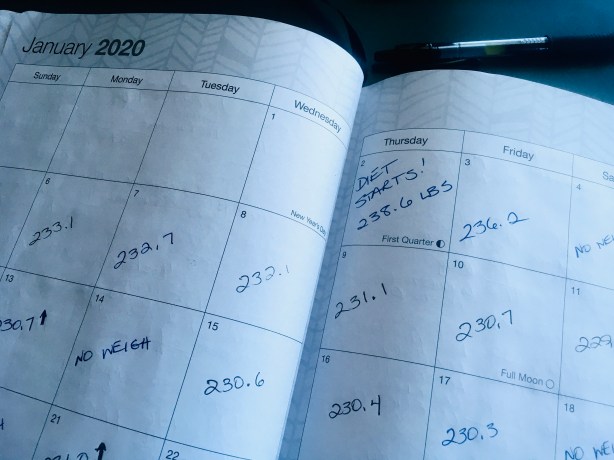
I started in 2020 at 238. I got down to 213! But the key was to write everything down: my weight, and exactly what I ate. It takes determination, but it works.
After seeing my blog posts featuring ribs, pastas with cheese, huge roasts, and cheesecake, I had several friends ask me how I didn’t weigh 500 pounds! My answer was simple: I cook everything. I just don’t eat everything. That’s what this diet is all about. I might cook a large portion, but I eat a small amount of it, portion out the rest of it, and put it in my freezer for another day. I also share it with family and friends, who are more than happy to oblige!
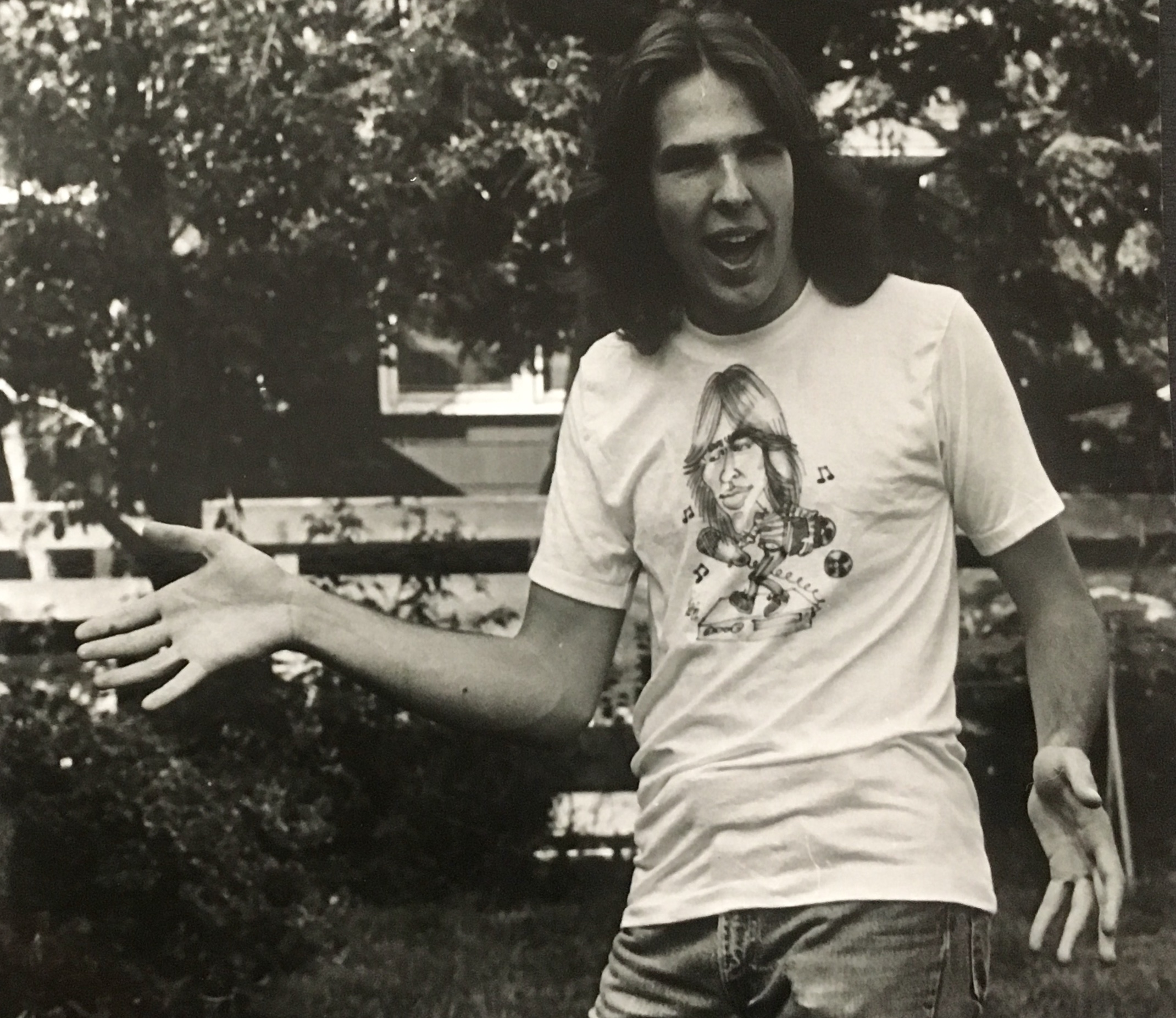
When I was young, I was rail thin and could eat anything I wanted without gaining a pound. When I got older, my metabolism slowed down, but my love of food did not–in fact, it probably increased, as I learned how to cook really well.
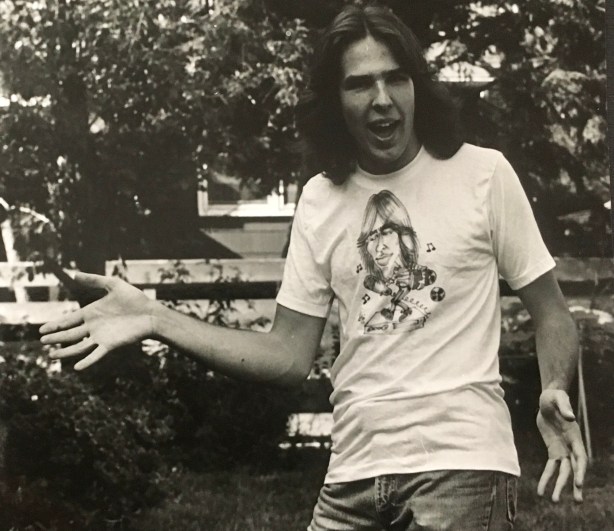
OMG…that was one skinny dude!
Now, here I am, writing a food blog. I travel for food. I plan six meals ahead at any given time. I’ll be 64 in March, and I have a 15-year-old daughter. Do the math, and you’ll realize, like I did, that I need to take care of myself to be around for as many of her upcoming life events as possible.
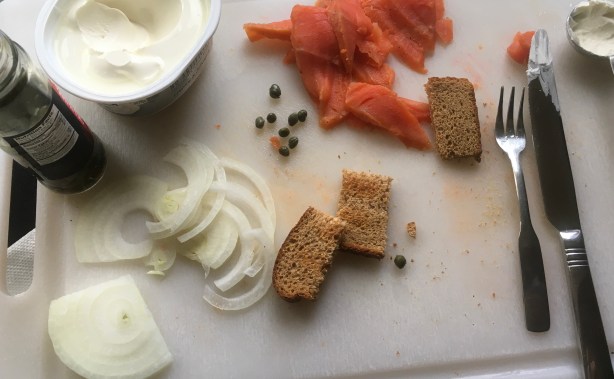
My version of lox and bagels: home-cured wild-caught Alaskan salmon, whipped cream cheese (fewer calories), onions, capers, and toast pieces. Lots of tasty bites here. (A sliced, hard-boiled egg would only add 70 calories.)
There are a million diets out there, and everybody claims they have the secret to weight loss. But no matter what diet you’re on, what it really boils down to is the simple mathematical equation of calories in…versus calories out.
My buddy, Lee, a PhD in chemistry, and someone that dropped 50 pounds a couple of years ago, told me about an article written by an engineer that lays out the basics. You can find it here:
As he states, losing weight is simply thermodynamics: you need to eat less calories than your body burns every day. If you do that, you will lose weight. Those diet pills that claim to burn your body fat, allowing you to lose 17 lbs. in a week, are about as believable as that con man, Dr. Oz, himself. You didn’t gain the weight overnight. So anyone that tells you you can lose it overnight is full of it.
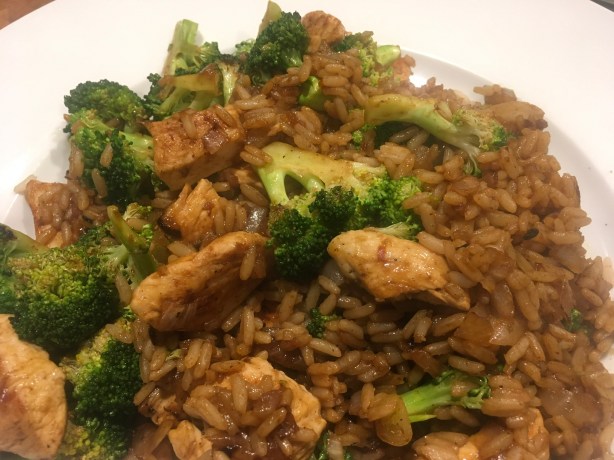
My stir-fry has chicken breast, broccoli, white rice, some onion, and my “Asian Mix” of flavors: soy sauce, hoisin sauce, chili garlic sauce, and sesame oil. My trick to add flavor to the rice without calories is to add homemade chicken broth instead of water when cooking.
There is a way to find out approximately how many calories a day your body uses to maintain its weight. It’s called the basal metabolic rate, or BMR. In my case, I need about 2500 calories per day to maintain my weight. So, like my friend Lee, I chose a diet where I eat no more than 1500 calories daily…a deficit of 1000 calories per day.
At the end of 7 days, I have eaten 7000 fewer calories than my body uses. Since about 3500 calories make 1 pound, I should be losing 2 pounds per week, according to this math.
Now, there are many variables to this, but basically this thought process holds true.
And the best part is: is doesn’t matter what I eat. If I want to eat bean sprouts, great. If I want Taco Bell, fine. As long as I don’t go over 1500 calories a day, it doesn’t matter what I put in my gut. This is really helpful for people like me, who get bored of eating the same old stuff day after day–a sure-fire way to give up on a diet. Carbs, fats, meat, dairy–even alcohol…all OK within those calorie limitations.

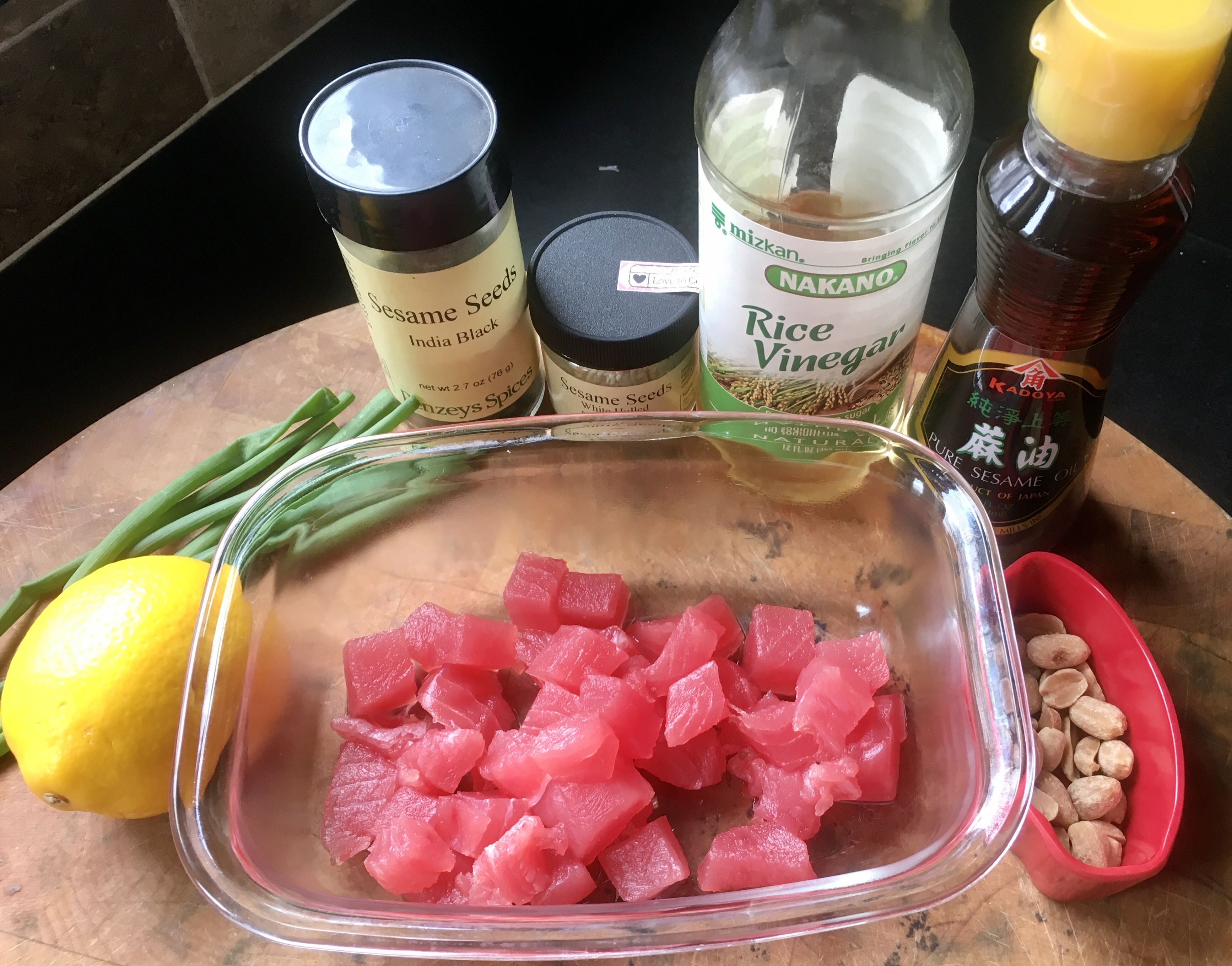
Fish is an excellent source of protein, and I never ate enough of it. Now, I make a bowl of tuna poke pretty often, and it’s absolutely delicious!
My buddy, Lee, is a diabetic, and stays away from carbs. He eats lean meats, seafood, and vegetables. That’s how he lost his 50 pounds. His son, on the other hand, lost weight by eating mostly fast food, but still counting the calories and not eating more than 1500 of them per day. He also lost 50 pounds.
I’m not a big junk food person. I don’t buy cookies, cakes or chips. Ice cream (my kryptonite) is a rare treat. I don’t put sugar in my coffee, and I don’t drink juices or soda. And I don’t like beer! But my biggest weight-gain mistake was thinking I could use unlimited amounts of so-called “healthy fats” in my recipes. I was pouring olive oil over everything…spreading pork leaf lard everywhere…and buttering my butter! Now I measure everything, drastically reducing my fats, and I can’t believe how many calories I’m saving!
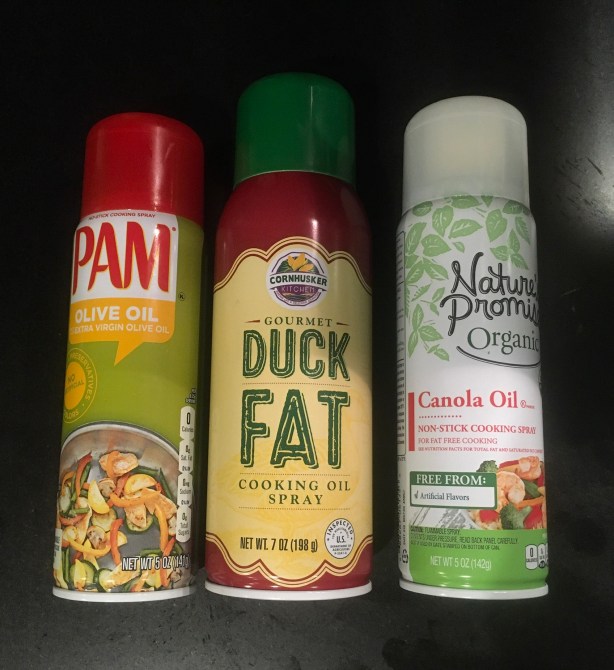
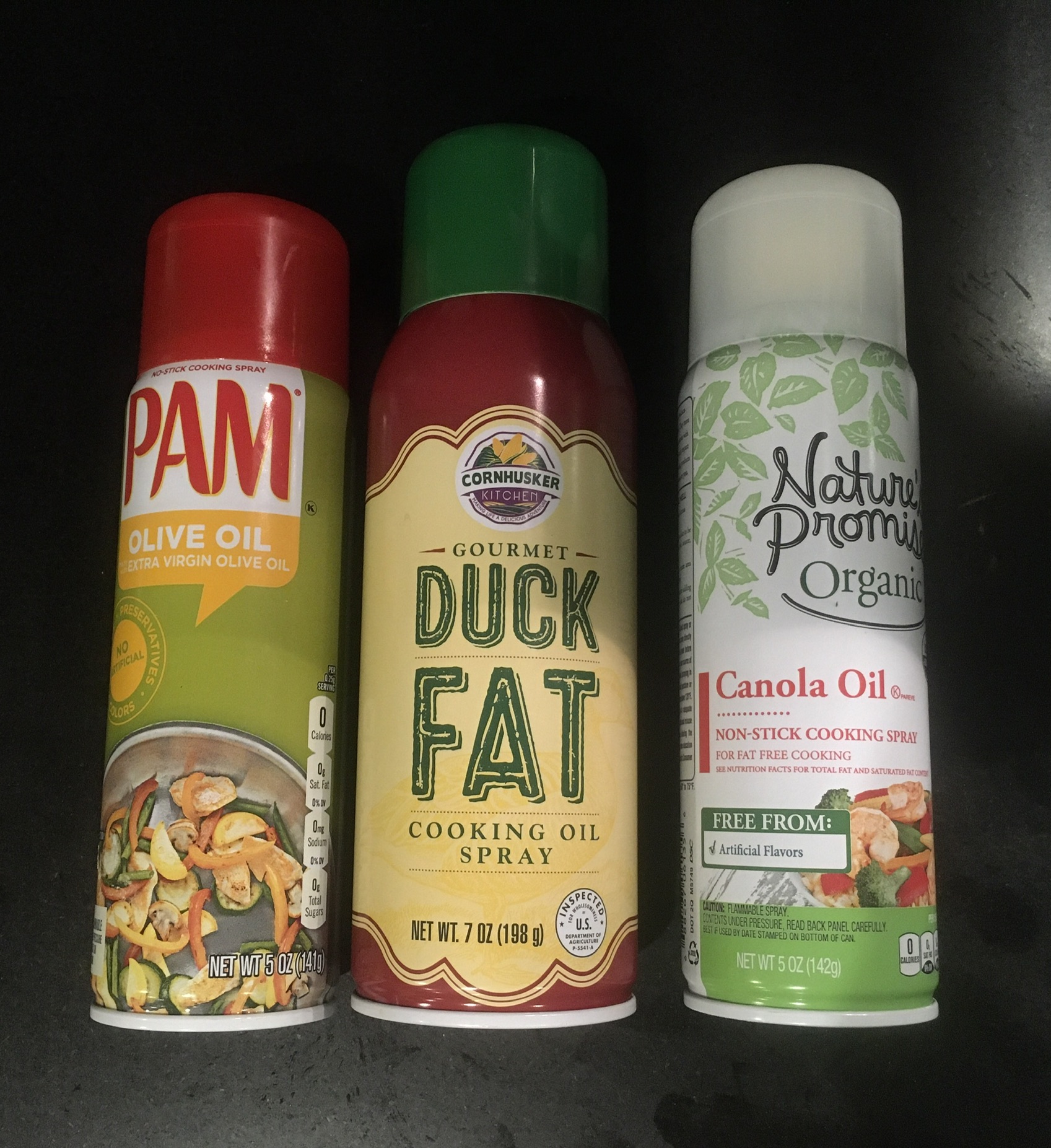
Sprays can be extremely helpful in keeping your calories low. Just be careful: they say “zero calories,” but that doesn’t mean you can spray a ton in your pan! Regulations allow them to say “zero” if a single serving is less than 1 calorie. That’s why a single serving here is a spray of about 1/5 of a second! (Seriously!)
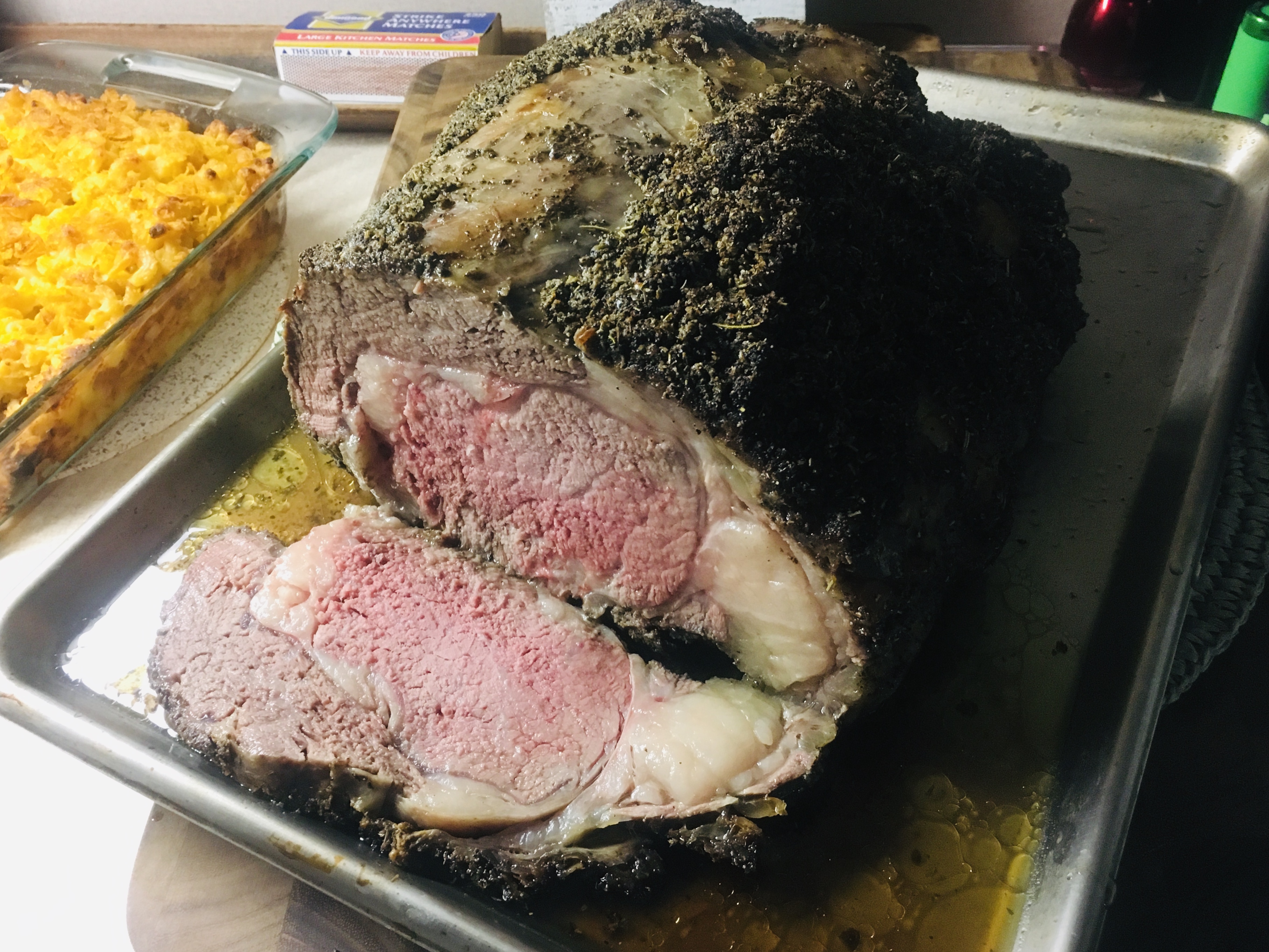
Portion control is essential. I’ve found that I really don’t have to change many of my recipes in this livethelive blog, which is all the food I love. I just have to control my portion sizes. For example, a ribeye may be a delicious source of protein, but it’s also loaded with fat. (That’s why it tastes so good!) So now I only eat a small, 4-ounce serving at mealtime, not the 12-ounce (or larger!) slab I was eating before.
In 2020, when I started my 1500-calorie-a-day diet, I was bloated from alcohol, salt, fat, and simply eating too much rich food. But once the diet really started rolling, I could step on the bathroom scale and see the bloat was diminishing, and rather quickly. At this point, it’s easy to deceive yourself in thinking that this is “real weight,” when it’s not. It’s just your body reaching its natural plateau. But that’s OK. When you see the weight go down, even by a tenth of a pound a day, it gives you the incentive to continue.
After about a week of bloat loss, the real diet and weight loss began.
The human body is full of constant change. So even once I started and steadily maintained my 1500-calorie-a-day diet, Lee told me not to expect to be dropping 2 pounds per week like clockwork. Some weeks, my body will retain more water, perhaps from eating too much salt. Some days, I’ll go to the bathroom more, some less. My bathroom scale itself may be off by a little, too. So what I see when I step on the scale needs to be taken with a grain of salt (pardon the pun.) On any given day, my weight can actually be plus or minus 2 pounds (or more) of what my scale shows.
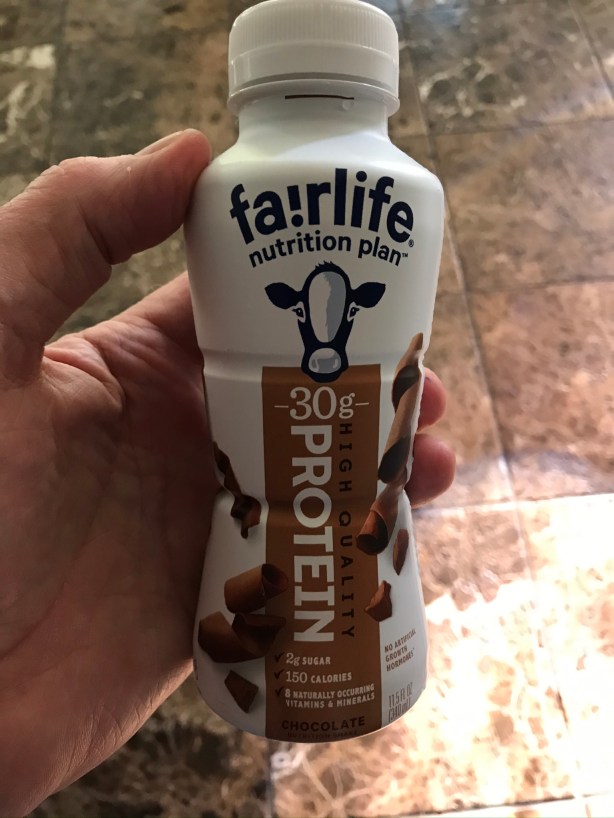
Find a protein drink or bar you like. It can really help when the cravings get bad. But make sure you choose one that is low in sugar!
The secret of this diet (or any other diet for that matter) is persistence. Don’t give up because your scale hasn’t moved. Your body is going through changes–big changes. And if you maintain your diet, you will see results eventually…the keyword being: eventually. Over the course of a month or two, you will see significant results.
The secret for me is to find the food I like and then eat it in reasonable quantities. Variety is also really important, or I’ll get bored and give up. Other than avoiding too much salt, I have few dietary restrictions. So I’m able to eat whatever I want within my calorie guidelines.
So as you read this blog this year, you’ll see that many of my recipes haven’t changed, with the exception, perhaps, of fats used in cooking, because that’s one of the top calorie culprits. It doesn’t matter if you’re using butter, bacon fat, or healthy olive oil, all fats have a lot of calories, whether they’re healthy or not.
Another key to my diet’s success–and this is the one that everybody hates!–I weigh and write down EVERY SINGLE MORSEL OF FOOD I EAT EVERY DAY, and then calculate how many calories that entails. Not everyone can be this anal, but I have no problem with it. Once I set my mind to it, it just comes naturally. I have a date book where I write my morning weight every day, and then everything I eat that day, with individual and total calorie counts. (Counting calories is easy, now that we all carry phones that let us simply Google that information.)
Using a simple digital kitchen scale (one that weighs ounces and grams) is KEY to making sure you’re not overeating. Buy one immediately! If you think you can simply eyeball measurements, you’ll find that you are WAY OFF!
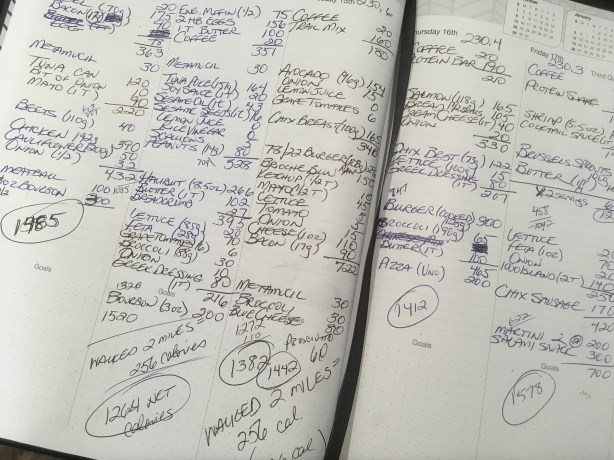
Yes…I write it ALL down!
Fortunately for me, even alcohol can be included in this diet. That’s not to say that I’m boozing it up! I only allow myself alcoholic beverages on Friday and Saturday nights. At 100 calories for a 1.5 ounce shot of 80-proof booze, I can have 2 3-ounce martinis for a total of 400 calories (without olives.) Of course, that still counts in my 1500-calorie-a-day plan. So that means I have to eat less…which can get me a little loopy on weekends! But as long as I’m not driving, that’s not a problem! Drinking alcohol also gives me the munchies…so I have to be very careful with that.

Having a seat at great bars, like the world-famous Bar Hemingway at the Ritz in Paris, is a passion of mine. My diet still allows me to sip a fine cocktail without guilt! I choose drinks that are low in sugar.
Follow this diet and you, too, will succeed. It doesn’t matter if you need to be gluten-free or not. It doesn’t matter if you’re avoiding carbs or not. It doesn’t matter if you’re vegan, vegetarian, or a total carnivore. Keto, Atkins, whatever. What matters is counting your total calories per day…and sticking to the diet every day…no cheating. No business lunch excuses, breakfast buffets, and 48-oz. steaks.
And no “rewarding” yourself with treats because “you did good” for a couple of days. Those things need to happen every few weeks, not every few days.
A great tip is to start by eating everything you love, even if it’s not really good for you, just in smaller quantities. Don’t eat real junk food, but worry about total calories first, not whether what you’re eating is “health food.” (Like my buddy, Lee’s, son who still lost weight eating Taco Bell.) Your first goal should be to limit calories. Get a feel for it. Then, as you get comfortable and progress, start making better and healthier food choices. Let’s be honest: anyone who starts a diet by chewing celery after a lifetime of steak and potatoes is going nowhere!
After I reached my goal weight last year, I went back to my daily intake of 2500 calories to maintain my new weight. (That’s still fewer calories than I was consuming every day before I started the diet, but after 1500 a day, it felt like I was cheating!)
What I learned with this diet, as I cooked healthier, measuring how much fat I put in a pan before frying…cutting my huge steaks into smaller pieces and trimming off the fat…was that I never want to go back to my old way of eating again. I can still eat anything I love…just less of it.
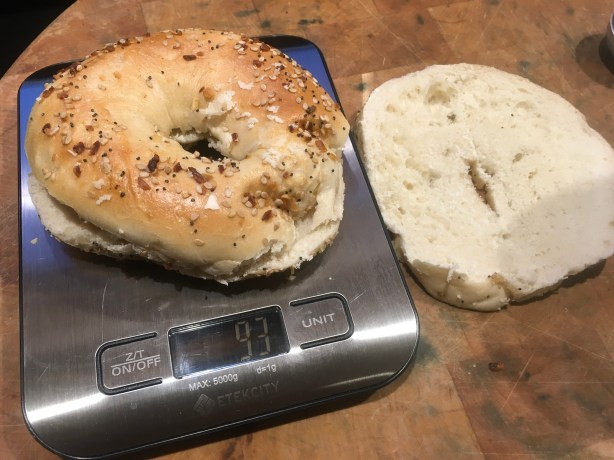
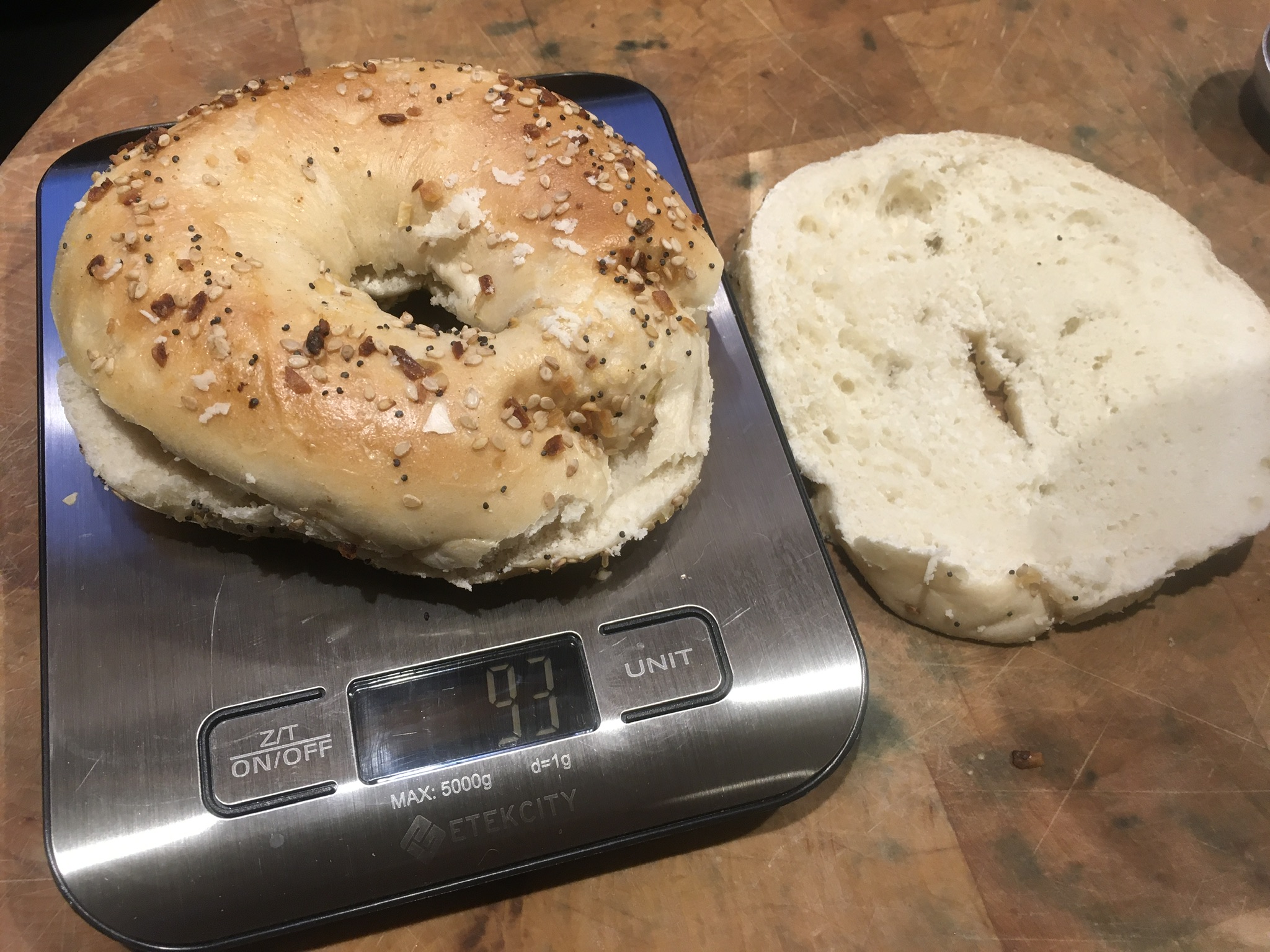
I cut the middle out of my bagel and weigh it!
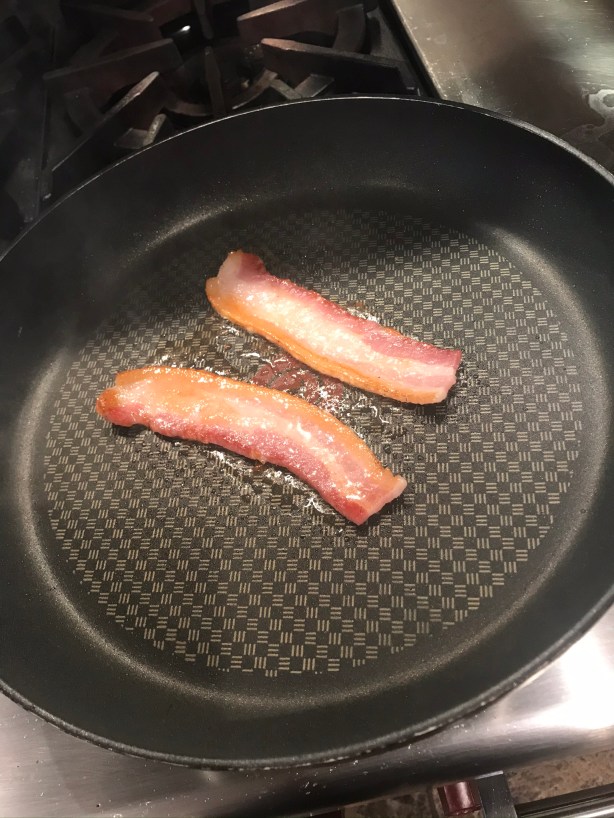
That right there, after cooking, is 90 calories. Nothing brings the flavor like bacon!
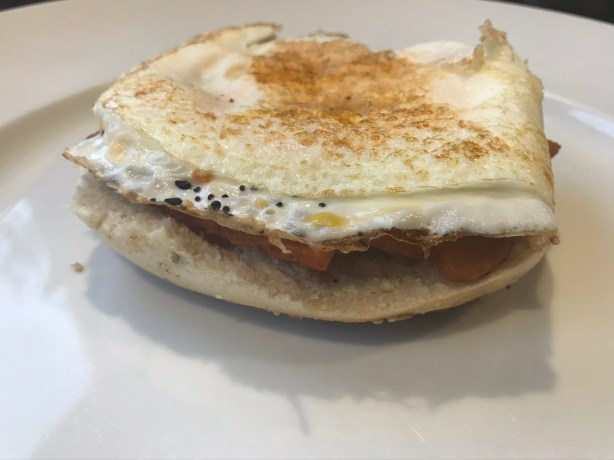
My breakfast sandwich: the bottom of an everything bagel, a strip of bacon, and a fried egg. 349 calories, including a tablespoon of butter! A sprinkle of everything bagel seasoning adds flavor and just a couple of calories.
WHAT I’VE FOUND….
Bad…
1 tablespoon of butter has 100 calories. I used to load my 400-calorie everything bagel with 300 calories of butter…and then I had breakfast! A tablespoon of whipped butter has only 50 calories, so I use that instead.
Same thing with mayonnaise. I love Hellman’s. But it’s got 90 calories per tablespoon. Enter Hellman’s Light: 35 calories and I can still indulge!
Cheese is not a dieter’s friend. It’s a calorie and salt nightmare. And light cheese tastes like crap. So I stick to small amounts of lower calorie cheeses, like feta (70 calories per ounce) or whipped cream cheese (40 calories per tablespoon), and save pizza and pasta dishes for very rare occasions.
Good…
Boiled Shrimp is our friend at just 80 calories for 4 ounces, and lots of protein. Shrimp cocktail makes you feel like you’re splurging, but it’s low in calories if you go easy on the cocktail sauce.
Lobster, too: super-low calorie. Just go easy on the butter!
Raw oysters: packed with protein and a ridiculously low 10 calories, on average, per oyster. Eat all you want, but go easy on the cocktail sauce.
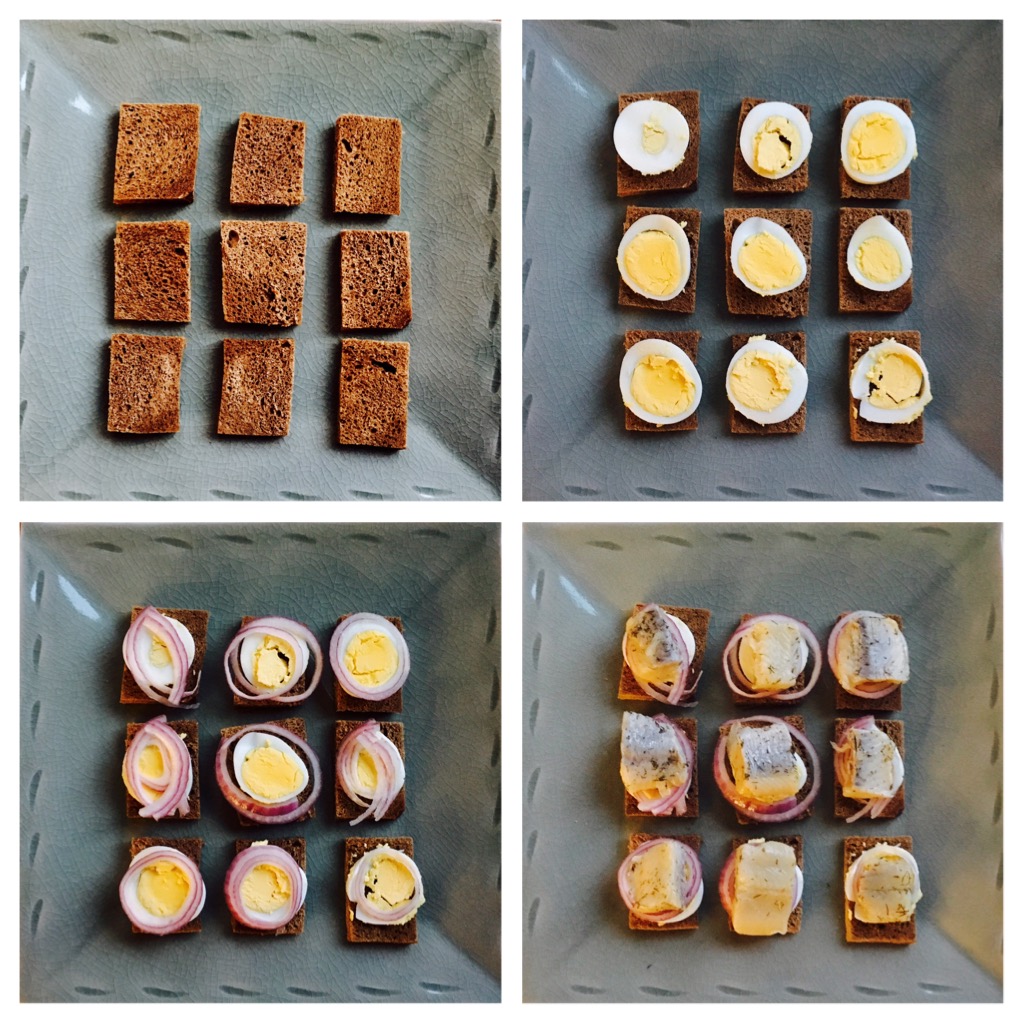
A hard-boiled egg, which I love, is just 70 calories…an excellent protein bomb that fills you up. (And don’t worry about the cholesterol unless you’re eating a dozen a day!)
You can still have bacon! My thick-cut bacon is 90 calories a slice after frying. Now I have one slice for breakfast instead of six! (Read the package.)
A diet saves you money! I can’t believe how much less food I buy at the supermarket! Sure, I’m buying more veggies, but a steak that used to be one meal is now three! As a nation, Americans eat way too much food, and what we eat is mostly unhealthy. A diet that focuses on veggies and lean proteins is good for any body. Michael Pollan’s quote is more valuable now than ever: “Eat food, not too much, mostly plants.”
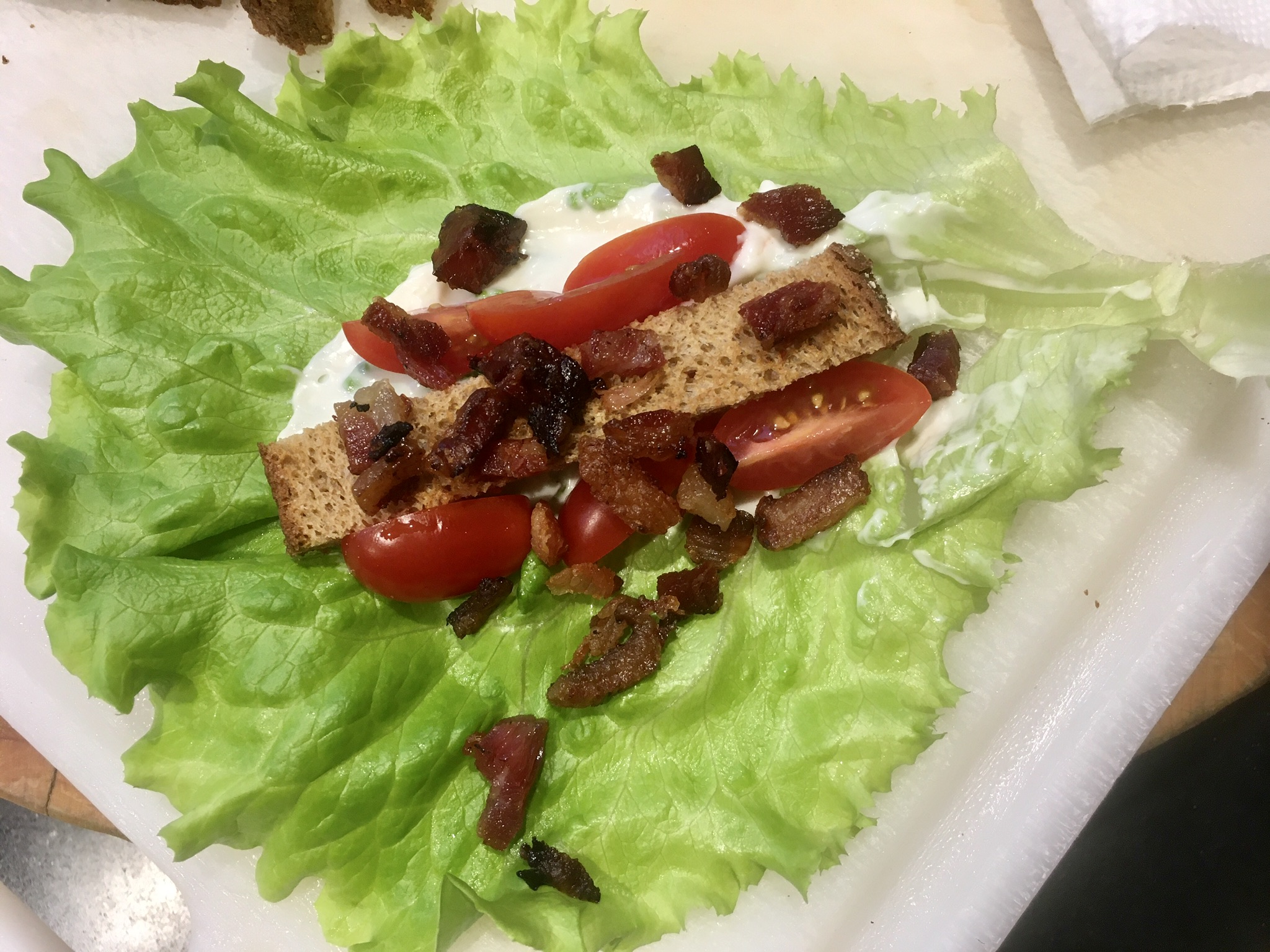
A successful diet is all about being creative. I can’t have a BLT in the usual sense anymore, and that’s my all-time favorite sandwich. But I can have BLT lettuce wraps that drastically cut the calories and still satisfy my cravings.
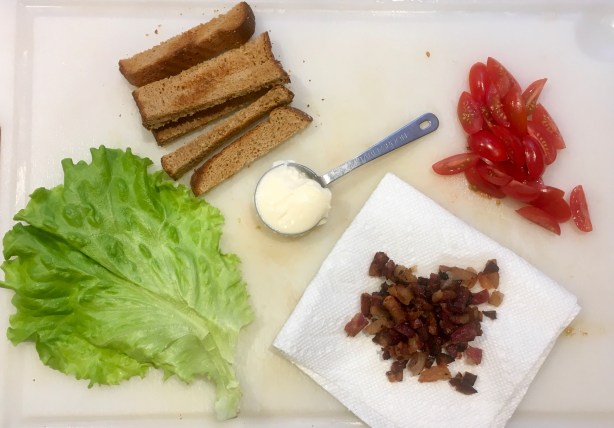
My BLT. Limiting the bacon and mayo makes it diet-friendly.
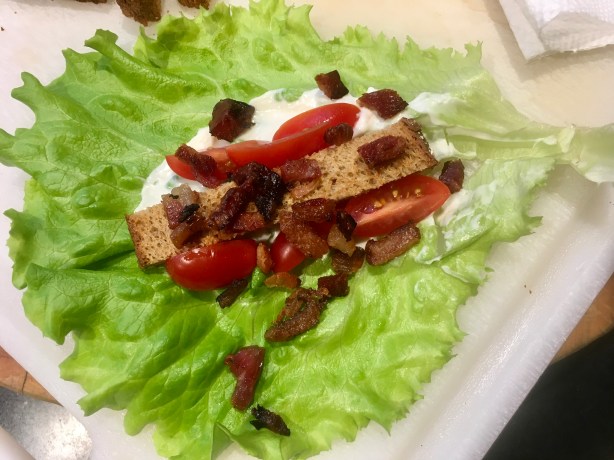
Adding that strip of toasted bread really adds to the flavor and texture!
Of course, any exercise you do in addition to this diet is only a bonus. If you use a treadmill or stationary bike, the digital readout will tell you just how many calories you’ve burned. You can subtract that from your daily calorie count. But, that being said, one of the biggest diet mistakes people make is to over-estimate how many calories they’ve burned during exercise. If you’re guessing…you’re WRONG! Guaranteed, you burned FAR LESS than you think you did!
I know the health clubs may not want me to say this, but you DON’T have to exercise to lose weight. Reducing your caloric intake alone–if you reduce it enough and for long enough–WILL make you lose weight. Exercise alone WILL NOT.
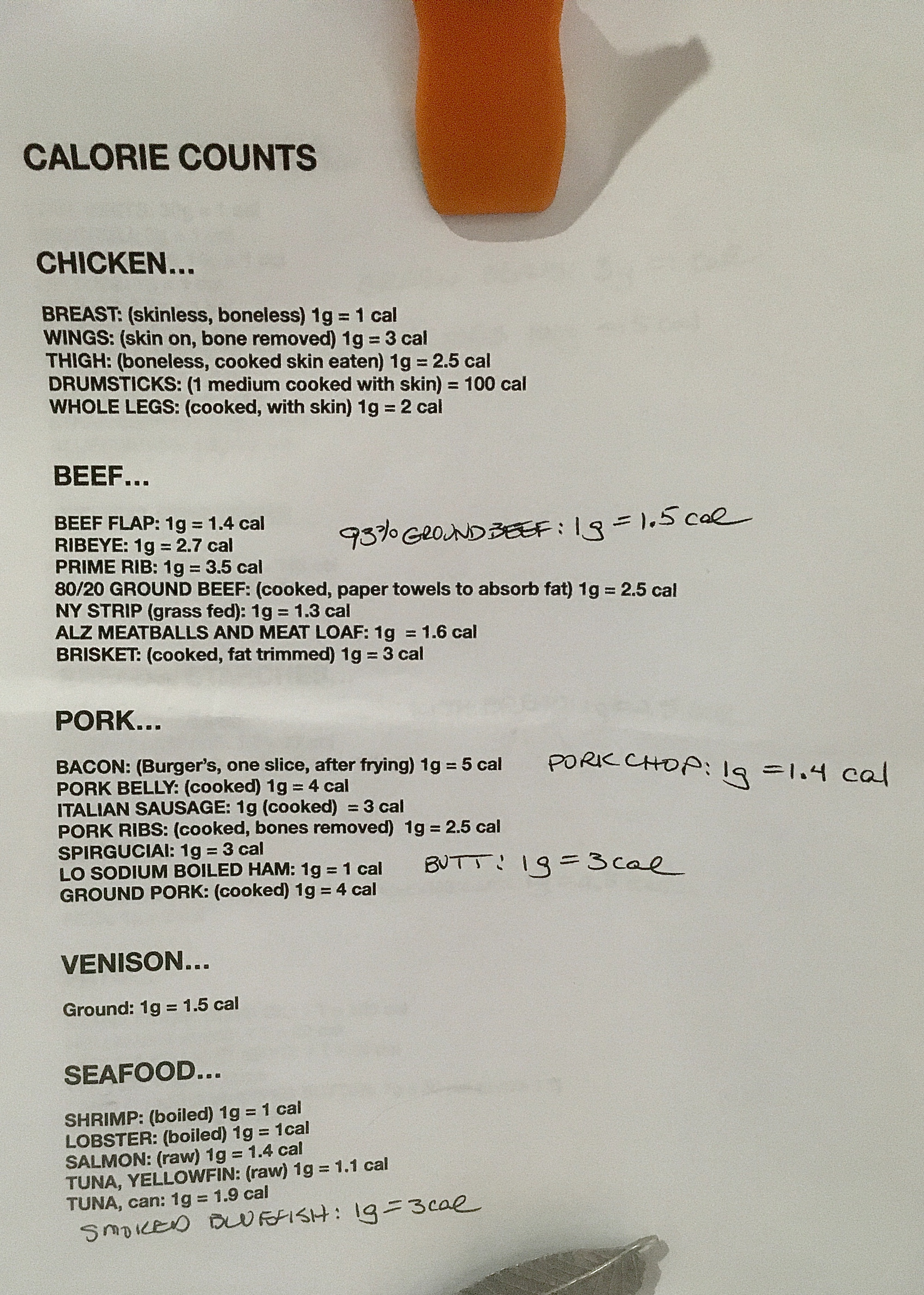
Here are my calorie charts from last year. You may not like all the foods I’ve got listed here, but I think it’s a good start. As I mentioned earlier, you can pretty much Google the calorie count of any food. That’s basically what I did….and I read a lot of labels!
One last tip: There will be times where the bathroom scale will be teasing you, taunting you: where your weight won’t budge for several days at a time. Don’t let this get to you! Your body is still changing for the better! This is where you need to be strong! Keep doing the right thing, and you will see that at the end of a couple of months, when you chart your progress, you really did lose almost 2 pounds a week.
I’ve done it before! I’m gonna do it again! So can you in 2022!