Posts Tagged ‘food’

I’ve never met a ceviche I didn’t like. Sometimes, nothing can stop a serious seafood craving like sushi, sashimi or ceviche. They require the freshest seafood and veggies you can get your hands on. And other than some fine chopping, they require little else.

The acid in citrus juices basically “cooks” the seafood in a process very similar to applying heat, but when I use shrimp in ceviche, I place them in some boiling salted water first…although very briefly.

Crazy colored shrimp, thanks to blood oranges.

Crazy colored shrimp, thanks to blood oranges.

Ingredients:

For the poaching liquid…

2 quarts water

1/4 cup salt

For the ceviche…

1 pound raw wild-caught American shrimp, peeled and deveined

juice of 2 lemons

juice of 2 limes

juice of 2 oranges (I had blood oranges this time)

1 cup diced seeded peeled cucumber

1/2 cup finely chopped red onion

pinch of red pepper flakes

1 cup diced seeded tomato

1 avocado, chopped into 1/2″ pieces

1 tablespoon roughly chopped cilantro leaves, plus more for garnish

1/4 cup extra virgin olive oil

1/4 teaspoon Fleur de Sel

Combine water and 1/4 cup salt in a saucepan and bring to a boil. Add shrimp and immediately turn off the heat. Let the shrimp sit for just a minute, drain and transfer to a bowl of ice and place in fridge to cool.

Remove cooled shrimp from fridge and drain. Chop shrimp into 1/2″ pieces and place in a medium non-reactive bowl. Add lemon, lime and orange juice. Stir in cucumber, onion and pepper flakes. Refrigerate for 1 hour.

Stir in the tomato, avocado, chopped cilantro, olive oil and Fleur de Sel into the shrimp mixture. Let stand at room temperature for 30 minutes before serving. Garnish with cilantro leaves, if desired.

St. Patrick’s Day is about 3 weeks away…just in time to make your own corned beef!

It takes about 3 weeks to make corned beef, but it’s not difficult to do. Doing it yourself gives you a better quality product than that nasty slab from the supermarket that is full of chemicals and preservatives.

Corned beef has nothing to do with corn. ‘Corning’ is a technique for preserving raw meats for long periods by soaking it in salt brine. This method was used before the days of commercial refrigeration. Back then, the large salt kernels used in the brine were called “corns.”

Brining is a time-honored way of preserving and it prevents bacteria from growing. Both pastrami and corned beef are made by this method. Both corned beef and pastrami usually start with a brisket of beef. Corned beef is then cooked–usually boiled–and served. Pastrami is made when the brined meat is rubbed  with more spices and smoked to add extra flavor. So corned beef and pastrami are the same meat, just treated differently.

Saltpeter is an ingredient that has been used in brining beef for years. It adds the traditional red coloring to the corned beef and pastrami meat. But since saltpeter can also contain carcinogens, I leave it out. The meat may not be the usual bright red color, but the flavor and texture of the meat will not be affected.

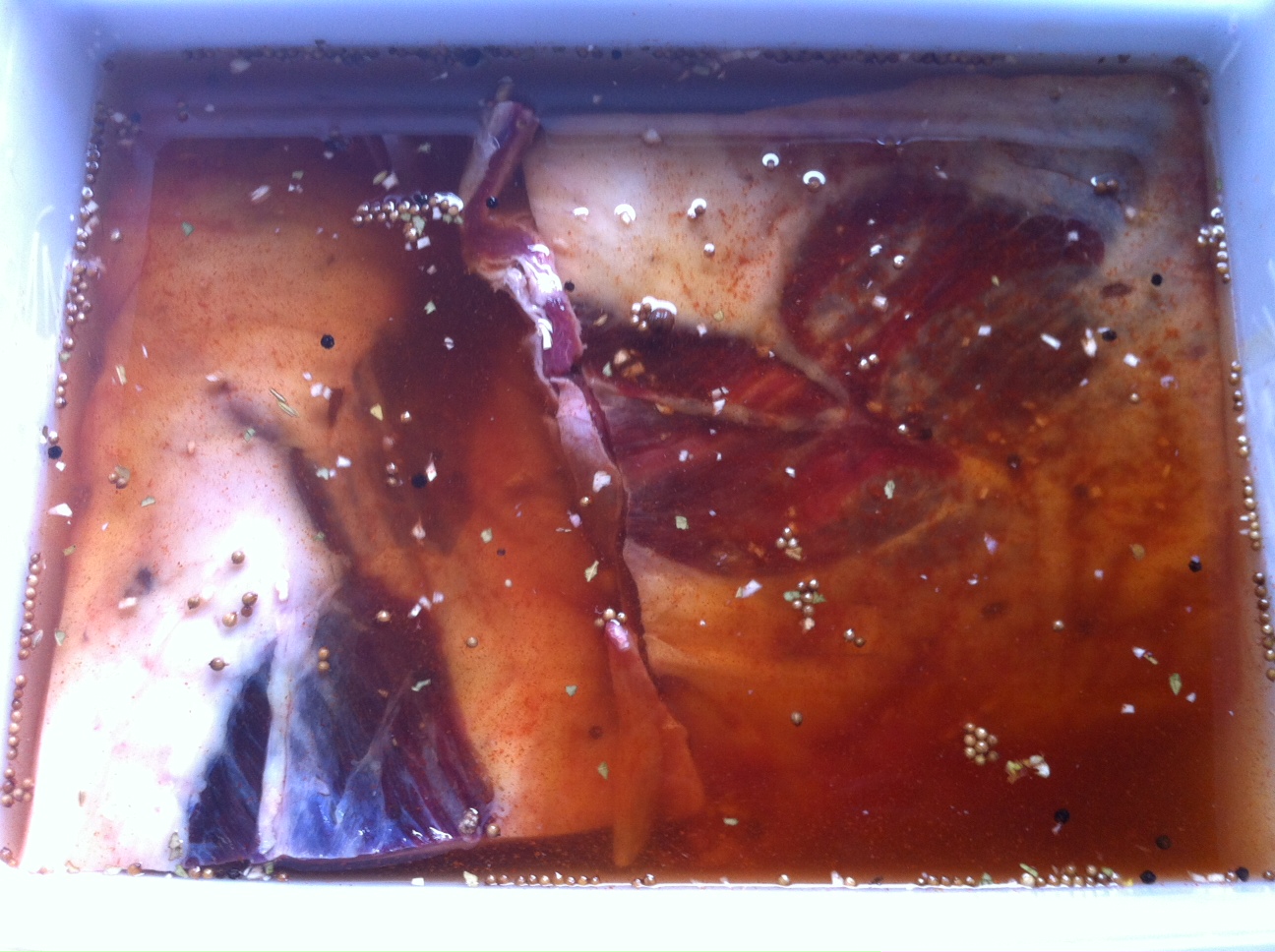
Brining the beef brisket

Brining the beef brisket

Step one: corned beef…

Ingredients:
beef brisket (about 8-10 pounds)
2 tsp. paprika
1/4 cup warm water
3 cloves of minced garlic
2 tablespoons sugar
1 tablespoon mixed pickling spices
3/4 cup salt
2 quarts water

Place the brisket in a large container made of non-reactive material, like glass or plastic.

In the 1/4 cup of warm water, dissolve the sugar, minced cloves, paprika and pickling spices.

Dissolve the 3/4 cup of salt in the 2 quarts of water. Pour in the sugar/garlic/paprika/pickling spices mix and stir everything together. Pour the mixture over the meat in the container. Make sure the meat is totally beneath the surface of the liquid. (You may need to weigh it down to do this.) Cover the container.

Refrigerate the container and contents for 3 weeks, turning the meat once or twice per week. At the end of the third week, remove the container from the refrigerator and take out the meat. Soak the meat in several changes of fresh cold water over a period of 24 hours to remove the excess salt.

At this point, if you want corned beef, prepare and cook it using your favorite recipe. But I’m all about the pastrami!

Step two: making Pastrami…

pastrami

Ingredients:

Brined and rinsed corned beef brisket from above recipe, patted dry with paper towels

1/4 cup Kosher salt

1/4 cup paprika

3 tablespoons coriander seeds

2 tablespoons black peppercorns

2 tablespoons yellow mustard seeds

1 tablespoon white peppercorns

3 tablespoons brown sugar

1 tablespoon granulated garlic

Combine coriander seeds, black and white peppercorns and mustard seeds in a spice grinder and grind coarsely. Place in a bowl. Add salt, paprika, brown sugar and granulated garlic. Mix well.

Rub the mix into the brisket well, covering all sides.

Heat smoker to 225 degrees and smoke for several hours using a less intense wood, like oak. When the internal temperature of the meat has reached 165 degrees, it’s done. It isn’t necessary to smoke pastrami as long as you would a regular brisket because the long brining time makes the meat tender.

It is very important that absolutely everything that comes in contact with the meat is very clean. (This includes your hands.) Also, make very sure that every inch of the meat reaches the 165 degrees before it is removed from the smoker. The corned beef is now pastrami.

My wife and I are iced coffee fanatics. It’s what we drink every morning, 365 days a year. I have a full air pot of coffee in the fridge at all times, and a stash of coffee ice cubes in the freezer so that not one precious drop of this elixir is diluted. When we go away on vacation, I will bring containers of this already brewed coffee with us. If we go somewhere with a kitchen and a coffee maker, I will grind the beans at home in pre-measured amounts and then seal it in Ziploc bags, brewing it immediately upon arrival so that we have our cold coffee ready the next morning, ice cubes included. When we travel to a destination where bringing this coffee is absolutely impossible, we try to look at it as an opportunity to perhaps discover a newer, better coffee. It has yet to happen.

The coffee is called Caffe Chicco D’Oro, which means “nugget of gold,” and we discovered it in Switzerland, near the Italian border, about 9 years ago. My brother-in-law’s family was living in Basel at the time and my wife and I traveled there to be a part of a large family Christmas holiday gathering. The journey across the pond included a scenic road trip to the spectacular Grand Hotel Villa Castagnola in Ticino/Lugano, close to the Italian border but still in Switzerland despite its Italian name. We stopped at a popular Autogrill rest area in southern Switzerland and sipped cappucinos that totally blew us away….so much so that we needed to know the brand of this incredible coffee. Once we were home in the United States, I was on a mission to find a way to buy this coffee for our every day use. Fortunately, they had an office here in the states, and it was relatively easy for me to buy Caffe Chicco D’Oro online. After a few years, they shut their operation down and transferred the rights to sell their product to a company called The Swiss Bakery in Virginia. To this day, these folks are the exclusive importers of Caffe Chicco D’Oro. (www.chiccodoro-usa.com)

The variety I buy is in the gold package, known as “Tradition.” I have tried the “Elite” when they were sold out of my favorite, and was not as happy with it.

coffee

I buy the coffee by the case: 12 whole bean bags (250g) at a time. Shipping is free. I keep them in a cool, dry place and I’ve never had a problem with spoilage. Besides, we drink a lot of it and it doesn’t sit around very long!

DIY TACO SEASONING

Posted: February 22, 2014 in beets, Food, morocco, Recipes, taco
Tags: , , , ,

It’s so easy to make taco seasoning at home, so why would you buy the spice factory floor sweepings that they use for packaged taco seasoning sold in supermarkets? I’m not a huge fan of Mexican cuisine, but every once in a while, I crave a good taco. As you’ll see, my tacos don’t resemble most, but that’s OK. It’s all about making it your own.

My taco seasoning recipe is for 2 lbs. of grass-fed ground beef…

Yes, I put my taco seasoning in a Moroccan tajine pot. But it looks cool, so cut me some slack!

Yes, I put my taco seasoning in a Moroccan tajine pot. But it looks cool, so cut me some slack!

Ingredients:

1 teaspoon granulated garlic

1 teaspoon onion powder

1/4 teaspoon crushed pepper flakes

1 teaspoon dried Mexican oregano

1 teaspoon paprika

2 teaspoons ground cumin

1 teaspoon sea salt

1 teaspoon black pepper

1 Spanish onion, finely chopped

olive oil

2lbs. grass-fed ground beef

Combine all the spice ingredients in a bowl.

Saute the onions in a bit of olive oil until translucent. Add the beef and saute until cooked, mixing in the spice mixture a little at a time until you’ve used it all.

You can also mix the spices with 1 cup of flour and use it to season chicken before frying…or mix the seasoning with strips of chicken breast or beef for fajitas.

My tacos are a bit unusual. Although I use a soft flour tortilla and my seasoned and cooked ground beef, I use my Awesomesauce  and roasted golden beets. Recipe here: https://livethelive.com/2014/02/19/awesomesauce/

Tacos with roasted golden beets, baby Romaine salad mix, and Awesomesauce

Tacos with roasted golden beets, baby Romaine salad mix, and Awesomesauce

For the beets: I wash the beets and quarter them, cutting the top and bottom off but leaving the skin. I place them in a sheet of aluminum foil, and sprinkle with salt, pepper and olive oil. I combine the ingredients to coat the beets, wrap the foil tightly into a package, and roast in a 400-degree oven for 1 hour. After roasting and the beets have cooled a bit, I slice them into smaller pieces for the tacos.

Slices of avocado go really well with this, too!

The Food Network’s Alton Brown was at PPAC in Providence, RI tonight. Great show, and a very nice guy.

alton2

…And Alton’s view…posted on his Twitter page…can you see us? 6th row, center.

alton3

The inspiration for this sauce was my attempt to replicate the “Shack Sauce” they use at Shake Shack , a high-end burger joint owned by restaurateur Danny Meyer. Since it opened in New York City’s Madison Square Park in 2004, Shake Shack has expanded to many other locations around the world.

I don’t know if I captured the Shack Sauce secret. But I do know that my Awesomesauce makes every cheeseburger I grill taste amazing. It’s also fantastic for shrimp, crab or lobster salad…a dip for veggies or boiled shrimp…a dressing for tacos…and great on salads.

Awesomesauce

Ingredients:

1/2 cup mayonnaise

1 Tablespoon ketchup

1 Tablespoon yellow mustard

1 tablespoon dill pickle relish

1/4 teaspoon garlic powder

1/4 teaspoon paprika

Pinch cayenne pepper

Combine all ingredients in a bowl. Refrigerate covered for a few hours to blend flavors.

I’ve been asked to list my sources for the organic, pastured, wild-caught or grass-fed foods I use in my recipes. I’ve had many successes as well as many failures with purveyors of foods over the years, but I’ve been able to find a handful of websites that deliver what they promise.

Of course, I support my local farmers. And if they’ve got the product I’m looking for, I will buy from them first. But the convenience of ordering from home is unbeatable…and sometimes you don’t live anywhere near a farm that can supply you with what you’re looking for.

My philosophy is simple: I will pay top dollar if the quality is there. I would rather eat exceptional quality meat and seafood rarely than antibiotic-laced, hormone-injected crap every day.

When it comes to seafood, I buy wild-caught (line-caught in the case of fish) American products. I’m OK with some farmed fish, like USA catfish and trout, which are of high quality. I buy Pacific cod, not Atlantic cod, which has been depleted in its numbers. I don’t buy orange roughy or Chilean sea bass because of overfishing. Same with swordfish unless it’s local and line-caught. I never buy farmed shrimp from Asia or South America, where there are no rules about what they feed them and how badly they crowd them in nets. I don’t buy Atlantic salmon, which is farmed and comes from Norway, Canada or South America. I buy wild-caught Alaskan salmon and halibut. Farmed oysters and mussels are fine, because their habitat is about the same as in the wild, and we have great sources for them here in Rhode Island.

It’s expensive to eat well. My family is worth it. I cut corners elsewhere.

TALLGRASS

www.tallgrassbeef.com: Owned by TV journalist Bill Curtis, they sell a variety of 100% grass-fed beef steaks, burgers and dogs. Just recently, they started selling my favorite cut: the porterhouse. But more than anything, this is my go-to website for grass-fed hamburger. They sell them in 1 lb. bricks, and I’ll buy about 24 lbs. at a time. I prefer the bricks over the pre-formed burger patties, because I use them for meatballs and tacos…not just burgers. Best burger I’ve had.

pork

www.heritagepork.com: A great website for Berkshire heritage pork. This is not the pale, flavorless stuff you get in a supermarket. Berkshire pork is known in Japan as Kurobuta pork, and is considered the “Kobe” of pork. Excellent quality, beautifully marbled fat, and delicious. I’ve bought the pork chops, the ribs, pork loin and the pork belly, and none of them has disappointed. Excellent service.

salmon

www.vitalchoice.com: If you’re looking for incredible wild-caught Alaskan seafood, this is the site. Wild salmon, tuna and shellfish. Frozen right after it’s caught. Rare treats like wild Pacific spot prawns, some of the tastiest shrimp you’ll ever eat. Hard-to-find organic grass-fed Wagyu beef. (Wagyu is American Kobe beef.)


www.westwindfarms.com: Without a doubt, some of the best chicken I have ever had in my life comes from this family run farm in Tennessee. Delicious not-too-big (about 4 lb.) birds. And their chicken wings are the best ever–period. No scrawny wings here: they come with breast meat attached, making them a real treat. They also sell grass-fed beef, lamb, pork, organic products and more. I’ve tried their other products, but for me, it’s all about the chicken. If you’re in Tennessee or Georgia, they have many pick-up locations to choose from. I go the mail-order route, and I think I might be their only online customer! But their service is top-notch.


www.cajungrocer.com: My trusted go-to place for any Cajun food you could want, from Turduckens (excellent quality) to alligator sausage, to live crawfish (in season.) This is where I get all of my wild-caught American gulf shrimp. Even with shipping costs, their prices are so much better than any local seafood store. Excellent service.

Burgerssswww.smokehouse.com Burgers’ Smokehouse has been around since 1952 and they’ve got it down to a science. You won’t find grass-fed or organic products here, but you will find great bacon, ham, turkey and other smoked products. Their Thick Original Country Bacon Steak is what I always buy…12 lbs. at a time. Their cooked and spiral sliced country ham is a real treat. Not only is their service awesome, but unlike other websites that surprise you with crazy shipping costs after you’ve spent an hour getting your order together, all of Burger’s price include shipping. That rocks!

http://www.mcallenranchbeef.com: Beef of the highest quality and outstanding flavor, although not grass-fed. This historic Texas ranch, established in 1791, has been dealing with droughts which have limited their supply of beef, and their website says their beef supplies will be back to full speed by June of this year.

www.grassfedbeef.org: This is the website of Tendergrass Farms, a supplier of grass-fed beef, pastured pork, and organic meats. We’ve had some success with the beef, and we also purchased a very tasty turkey from them for Thanksgiving last year.

www.drinkupny.com: It’s time for as drink! And these guys, based in Brooklyn, NY, have just about anything you could want. It may seem silly to order your spirits online instead of going to your local liquor store, but these guys have the high-end things my local guy doesn’t…and they’ve got better prices on the stuff he does have. Shipping is fast and reasonably priced.

www.empirewine.com: Need wine? These guys are based in upstate NY and they’ve got a huge choice of excellent wines at great prices. Shipping is FAST, but make sure they ship to your state to avoid disappointment.

Coming in a future blog: my sources for the gardening season: seeds, plants and more.

You make soup! And really tasty soup at that! The great thing about this soup is that you can pretty much add anything you like to it–ham, bacon, chicken, or keep it meat-free–and you just can’t go wrong.

Me? I had a couple of pigs’ feet in the freezer (seriously) and I plunked those suckers down into the soup as it cooked, removing and discarding the feet at the end. I chose not to pick the meat out of them…they had imparted a delicious porky flavor into the soup by then anyway.

I always use homemade chicken stock instead of water for extra flavor.

Lentil soup, with a pig's foot waving hello.

Lentil soup, with a pig’s foot waving hello.

Ingredients:

1/4 cup olive oil

2 carrots, diced

2 stalks celery, chopped

1 onion, chopped

2 cloves garlic, minced

1 bay leaf

1 tsp dried oregano

1 tsp dried basil

8 cups chicken stock

2 cups dry lentils

1 can crushed tomatoes (28 oz)

2 tbsp vinegar

1 cup spinach, rinsed

salt and pepper

Put olive oil, carrots, onions and celery in a large soup pot and place over medium heat. Add a little salt and pepper. Once the onion has softened, add the garlic, bay leaf, oregano and basil. Cook for a couple of minutes and add the chicken stock, lentils and tomatoes. Bring this to a boil, then reduce the heat. Let it simmer for an hour.

Before serving, add in the spinach and cook it until it wilts. Then stir in the vinegar and season with salt and pepper to taste.

I don’t exactly know when my love affair with bone marrow began, but suffice it to say that if I see it on a restaurant menu, I have to order it.
A 2 ounce serving of beef bone marrow has over 500 calories, so diet food it is not. But it has some calcium and “good” fats, especially if the cow was grass-fed.  Each 2 ounce serving has over 54 grams of fat, although most of it is unsaturated. How much protein it has depends on the marrow, but there are those carnivores out there that swear by bone marrow’s almost magical health food properties.
But whether it’s good for you or not, the main reason to eat bone marrow is taste. And I’ve found that when it comes to eating it, there are no gray areas…people either love it or are grossed out by it.
marrow
 
Bone marrow played a very important role in the development of mankind as a species. Long before we had the skills to hunt for our own food, about 2 million years ago, we feasted on the bones of fallen prey…or more accurately, what was inside the bones of fallen prey. A diet of fatty, high-calorie bone marrow meant that early man didn’t have to rely on the digestion of roughage alone to survive, and it allowed for the “luxury” of the development of larger brains.
Fast-forward to today, where the only critters that appreciate bone marrow are our dogs—if they’re lucky enough to get a bone—or foodies like us!
Aside from higher-end restaurants, bone marrow might be difficult to find at first. But you can certainly ask your local butcher for some—he’ll even cut them lengthwise or into short cylinders for you for easy access. I get mine online, with bones from grass-fed cows.

Cooking bone marrow couldn’t be simpler: a little salt and pepper, a drizzle of olive oil, then bake in a hot oven until bubbly and caramelized. Spread it on toast in the morning with your eggs, smear it on top of your steak instead of butter, or just scoop it right out of the bone.

Porchetta is a savory, fatty, herby, delicious slab of pig that is slow roasted…a favorite in Italy. Porchetta is also the name of a small eatery on the Lower east side of New York City, the baby of chef Sara Jenkins, where they serve this Italian classic almost exclusively, with lines of people winding down the block, waiting for their taste of pig heaven.

porchetta1

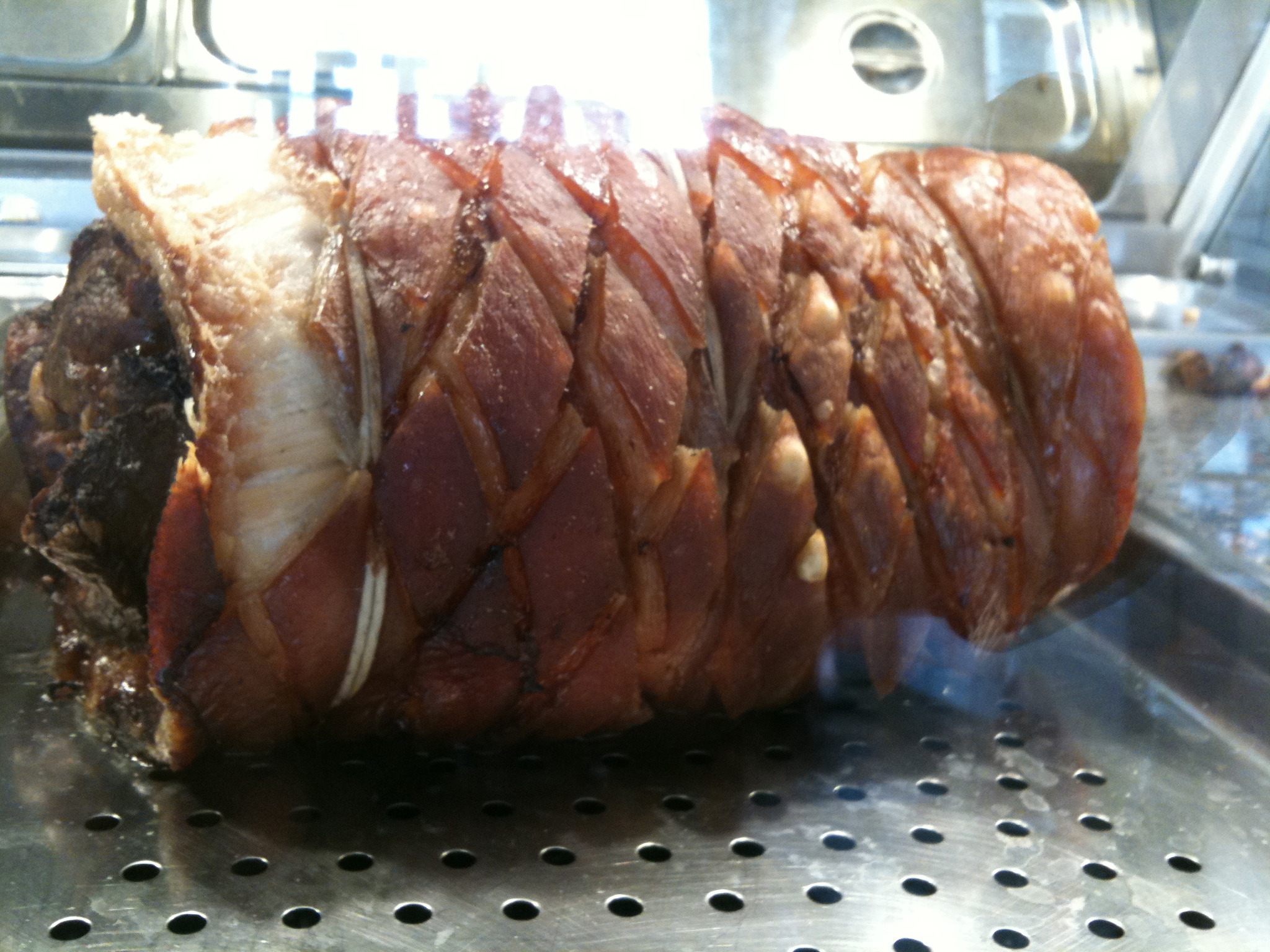
Traditional porchetta is made from a hog that is butchered, boned and roasted. Porchetta in New York City takes the pork loin, wraps it with the belly and skin, and slow roasts it in their special Combi oven. The result is nothing short of fantastic.

porchetta2

Both methods are way too big for my kitchen, so I took a page out of one of my favorite cooking magazines, La Cucina Italiana , where chef Jenkins described how a homemade version of porchetta was possible using boneless pork shoulder.
Well, I didn’t have a boneless pork shoulder, dammit! I had two beautiful pork tenderloins…not nearly as fatty, and no pork skin to wrap them with. I knew that I would have to be extremely careful not to totally dry my pork out.

Before...

Before…

Ingredients:

10 small fresh sage leaves
3 fresh small rosemary sprigs, leaves only
1 garlic clove, chopped
2 tablespoons wild fennel pollen (see below)
1 1/2 teaspoons sea salt
1 1/2 teaspoons coarsely ground black pepper
2 pork tenderloins (2 1/2 to 3 lb total)
2 tablespoons extra virgin olive oil
1/2 cup dry white wine

Heat oven to 250 degrees.

Finely chop the sage, rosemary and garlic. (I place them in a food processor.) Place mixture in a small bowl and add fennel pollen, salt and pepper. Stir together well.

Rub the herb mixture all over the 2 tenderloin pieces. Tie the tenderloins together with butcher twine. (Usually one end of the tenderloin is fatter and the other thinner. Line them up so that one fat end is tied with one thin end, making the pork package of equal thickness.)

Set pork fat side up in a roasting pan. Drizzle with olive oil.

Roast the tenderloins, basting with the wine and pan juices every 15 minutes. Cook until pork has an internal temperature of 140 degrees.

After!

After!

Despite that it came out somewhat awesome, I plan on using a pork shoulder next time. Leftovers make great sandwiches!