Posts Tagged ‘food’

It seems silly to travel all the way to Paris for a jar of mustard, but that’s exactly what we used to do. OK…we happened to be in Paris when we made the pilgrimage to the Maille mustard shop, but I couldn’t imagine a trip to the city of light without making the stop.
Back in 1747, Antoine Maille was known by many as the greatest mustard and vinegar maker of all time. He created the now-famous Maille Dijon Originale mustard in Dijon, France, and opened a shop in Paris to sell it. To this day, the company follows his strict guidelines to re-create that magic. The Maille company opened a second store, in Dijon, in 1845.
Saving us thousands of dollars in travel expenses, there are now 2 Maille mustard shops in my home town of New York City.

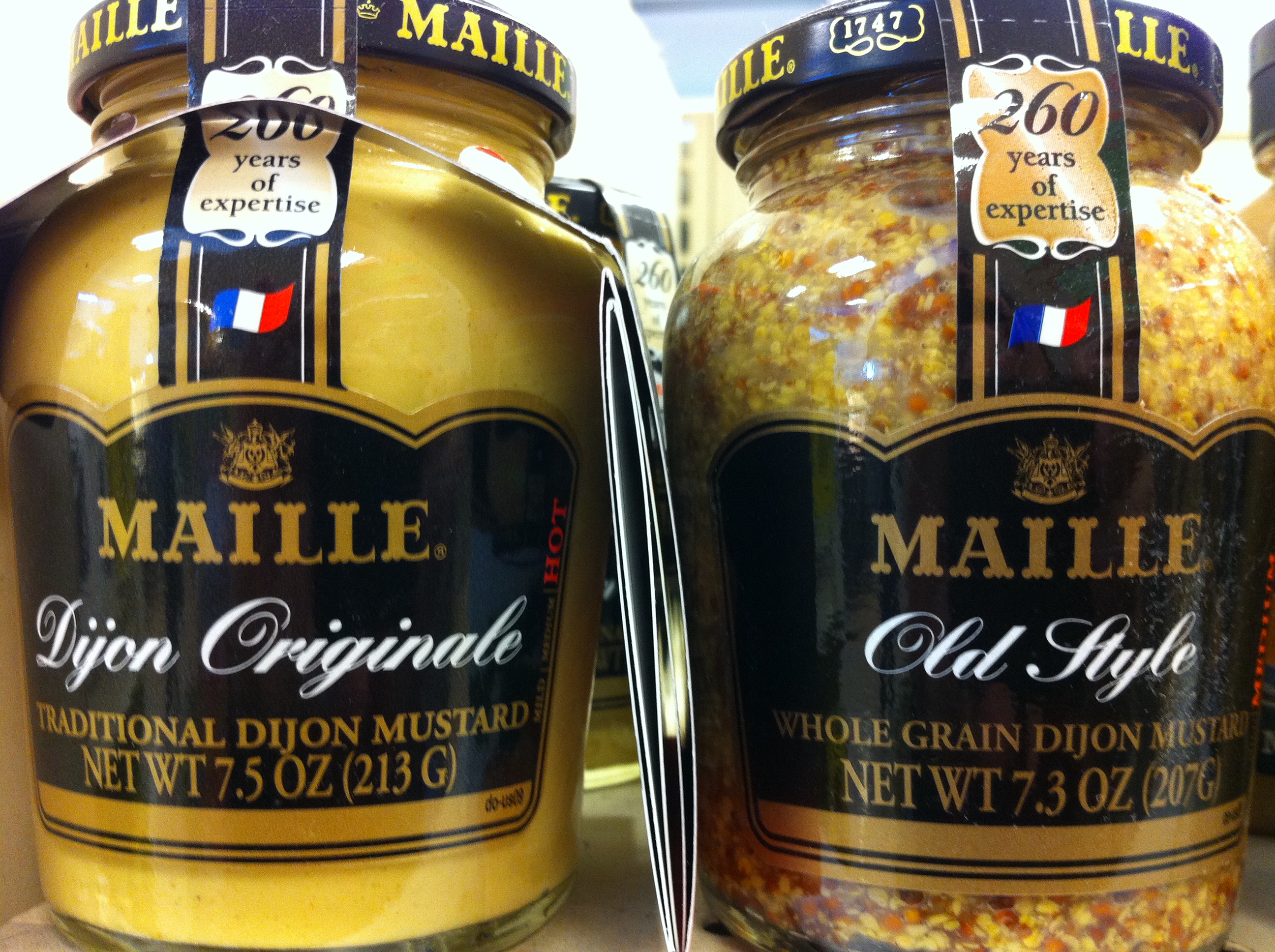
The supermarket stuff.

When you visit the Maille Paris shop on place de la Madeleine, you’re surrounded by beautiful displays of colorful jars of mustard. But you need to focus on the mustard taps–yes, like beer taps–at the main counter, a long oak bar where fresh mustard (no preservatives, never more than 10 days old) is dispensed into ceramic jars that are filled, corked, and wrapped in tissue paper.
Our mustard of choice is the Maille Chablis mustard, which is unlike anything I’ve ever been able to find here in the States. And though it is potent, it has a magical quality that I can’t even begin to describe.

How do I get one of these taps in my home?

While you’re standing in line for your mustard–and there is always a line–you can sample the three fresh mustards offered with a pretzel or a cracker. Aside from the Chablis mustard, there is also a grape juice and honey mustard, and a white wine mustard.
In the old days it was a sad day indeed when I opened the last jar of Maille mustard, look deep down inside, and saw that there was nothing left…just a dry residue of crusty mustard. I’d have to wait until our next trip to Paris. Now, it’s an excuse to go home to New York City and stock up!

I think I spent half of my childhood in the kitchen, watching my Mom and grandmother make koldūnai (kohl-doo-nayh), the Lithuanian version of a pierogi, by hand at lightning speed. They would roll a simple dough into a log about 1″ in diameter, then cut it into 1″ pieces, twirling each piece between their fingers to make a flat pancake, filling each with a small spoonful of meat or mushrooms, then fold it over, crimping the edges to make a crescent-shaped dumpling. It blew my mind that they could crank out over a hundred of these little masterpieces in no time, placing them on a cookie sheet and freezing them until it was time to cook.
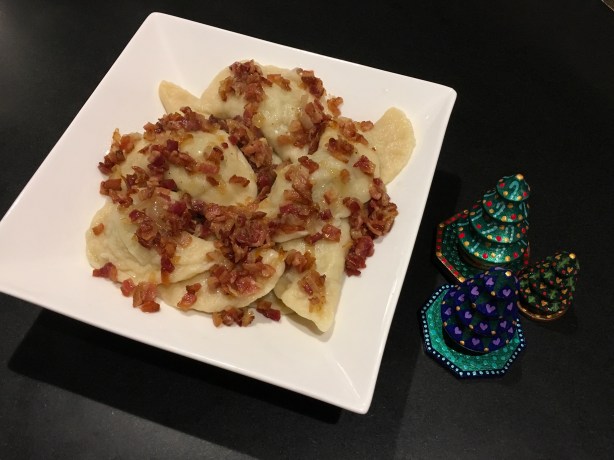
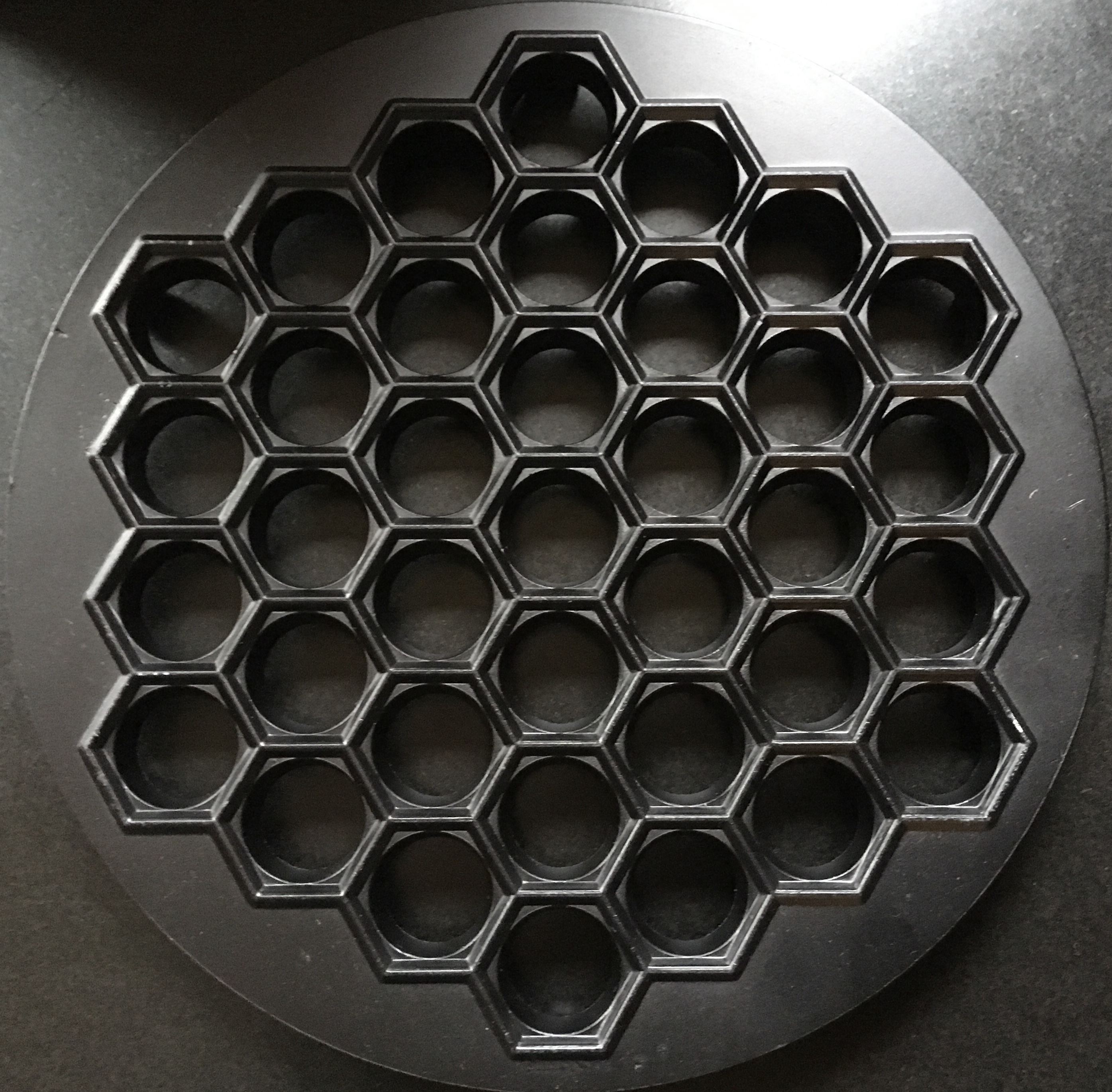
Always on the lookout to make my job easier, I discovered a new tool this year: a device that makes faster work of koldūnai production, though they do come out much smaller. It’s a ravioli maker, and the Lithuanian purists I chatted with on social media didn’t like it. I was willing to give it a try if it meant that I could save myself a lot of time.
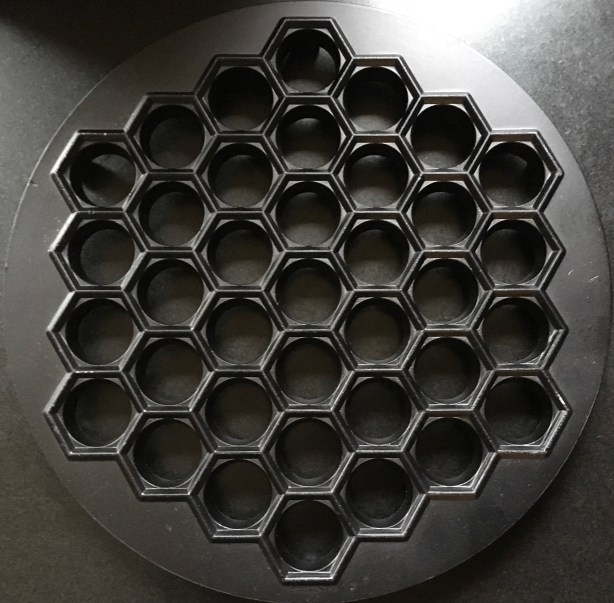
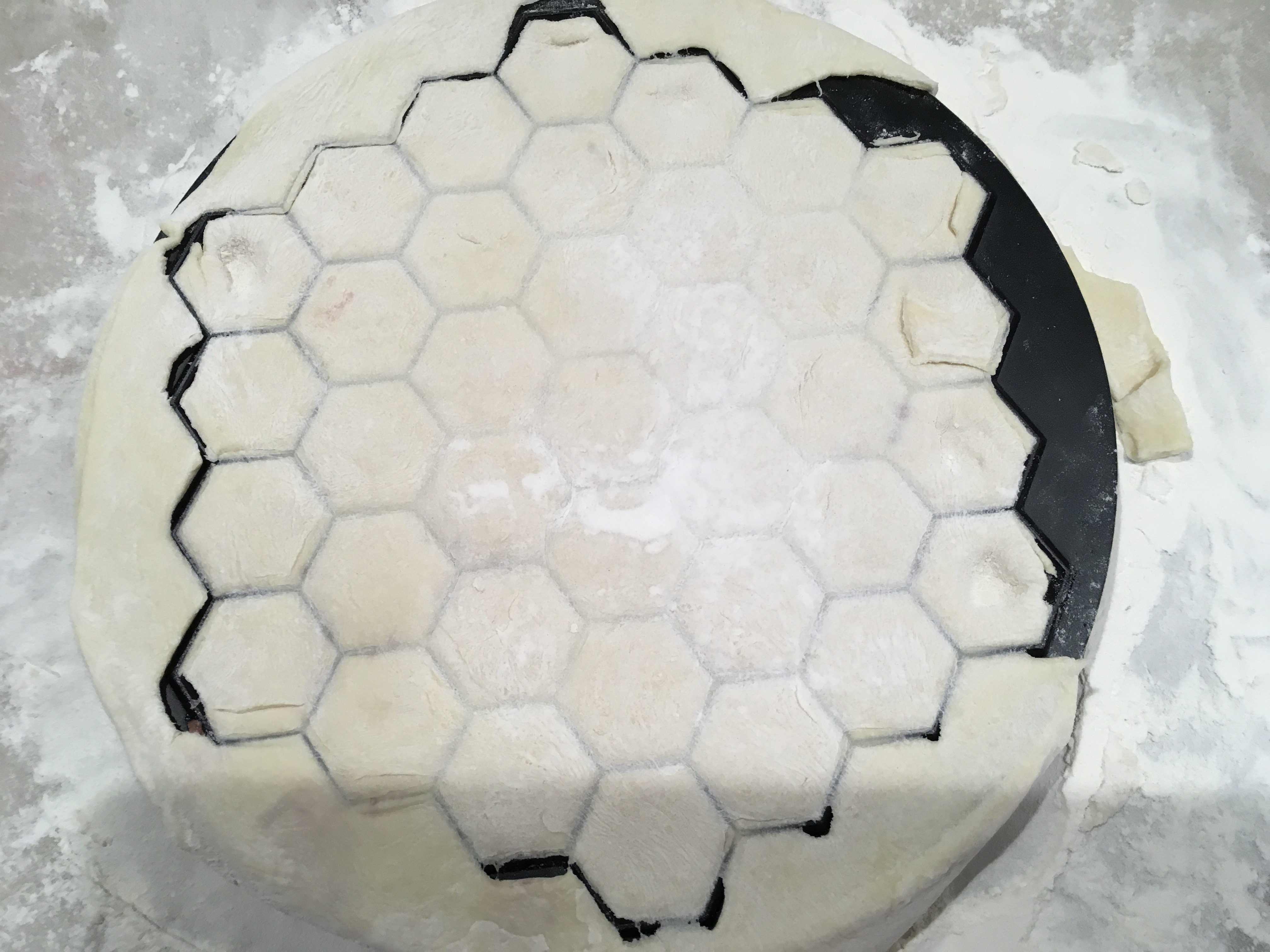
Simply roll out a sheet of dough on top of it.

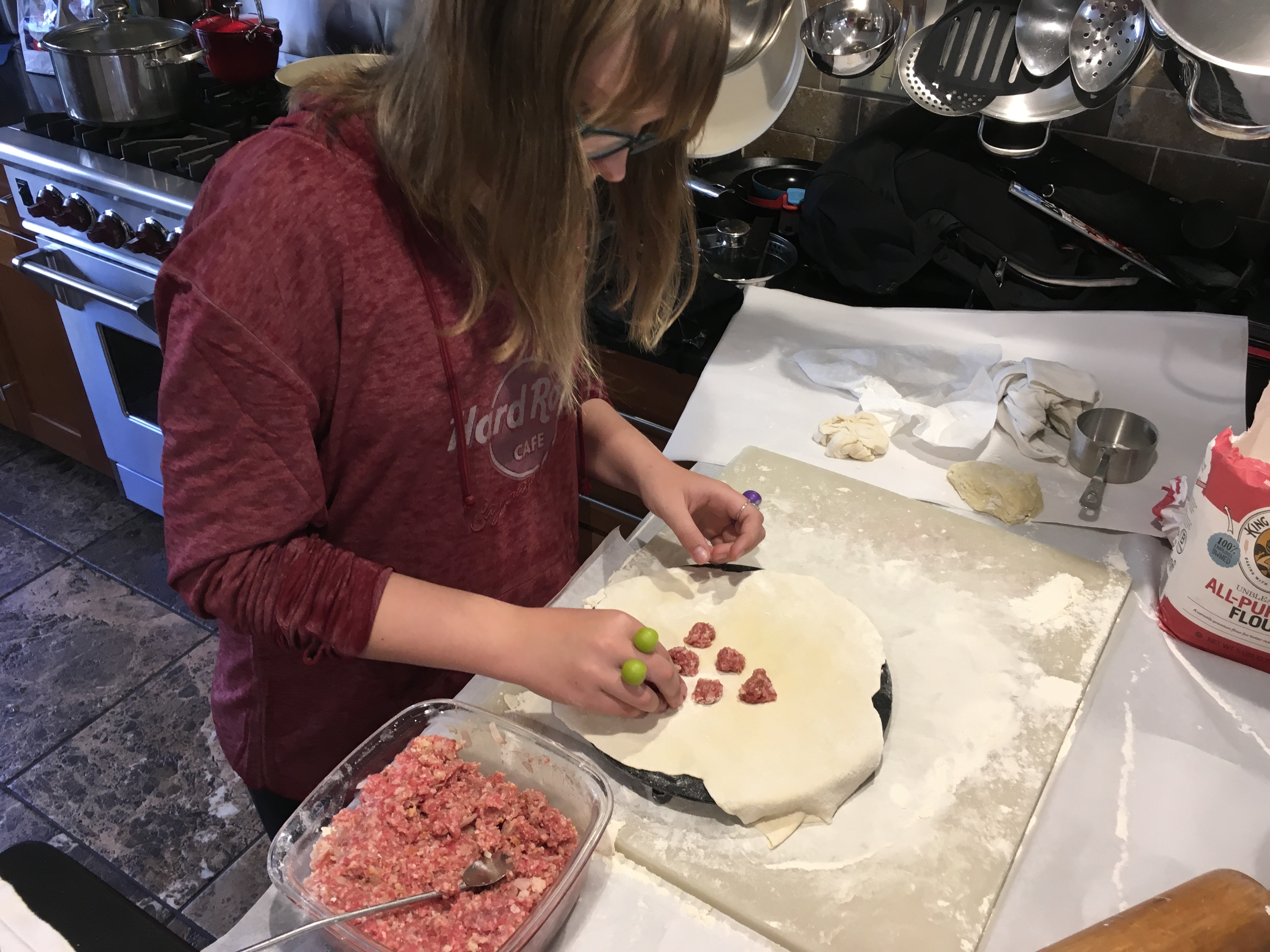
Add a spoon of filling (in this case, ground beef) in each area.

Then roll out another sheet of dough on top of that and press down with a rolling pin.
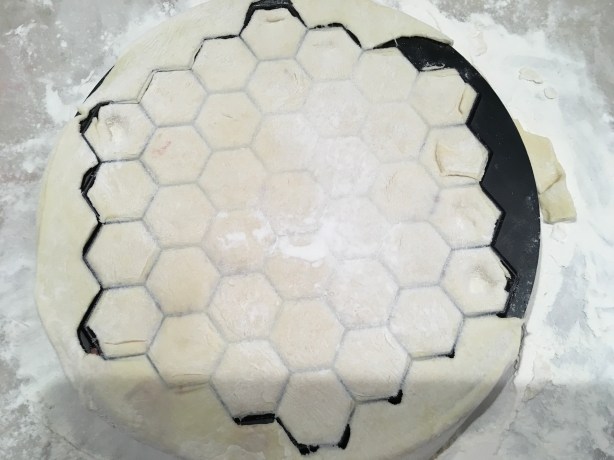
Voila! Out pop 37 mini-koldūnai at once!

I first tried it with gluten-free dough, with limited success. The dough needs to have elasticity for the device to work properly and that’s something that is sorely lacking in any gluten-free dough I’ve made over the years. Gluten-free dough tends to dry out quickly and simply break rather than bend. But, that said, I managed to make a decent amount of them so that my wife, who maintains a gluten-free diet, could enjoy them, too.
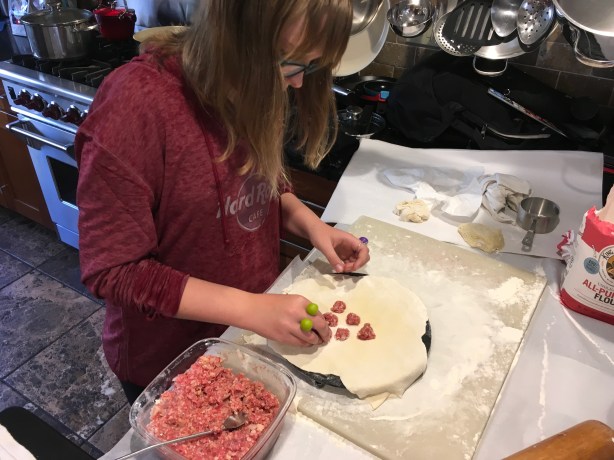
 

Always great to have a helper in the kitchen!


One of the main reasons Lithuanian koldūnai beat Polish pierogis is the filling. For me, standard pierogi fillings like potatoes, cheese, and sauerkraut just don’t cut it. My Mom would mix ground beef with chopped onions sautéed in butter, a couple of eggs, and milk crackers soaked in milk. She’d add salt and pepper, then spoon that mixture into her koldūnai.

The other stuffing, usually reserved for special holidays like Christmas Eve and Easter, was made from mushrooms. Italy may lay claim to the porcini, but the fact of the matter is, Lithuania is porcini heaven. And when they’re dried and reconstituted, their incredible flavor is so intense, you don’t need many of them to flavor a large amount of regular button mushrooms. We’d get our dried boletes from relatives in Lithuania every year…the real deal. Mom would place a handful in some boiling water and let them steep until they swelled up and could easily be chopped and added to the other mushrooms. She’d then pour the mushroom liquid into the pan as well, not wasting a bit of that magical porcini flavor. The mushrooms were simply sautéed in butter, cooled, then used to fill the koldūnai.
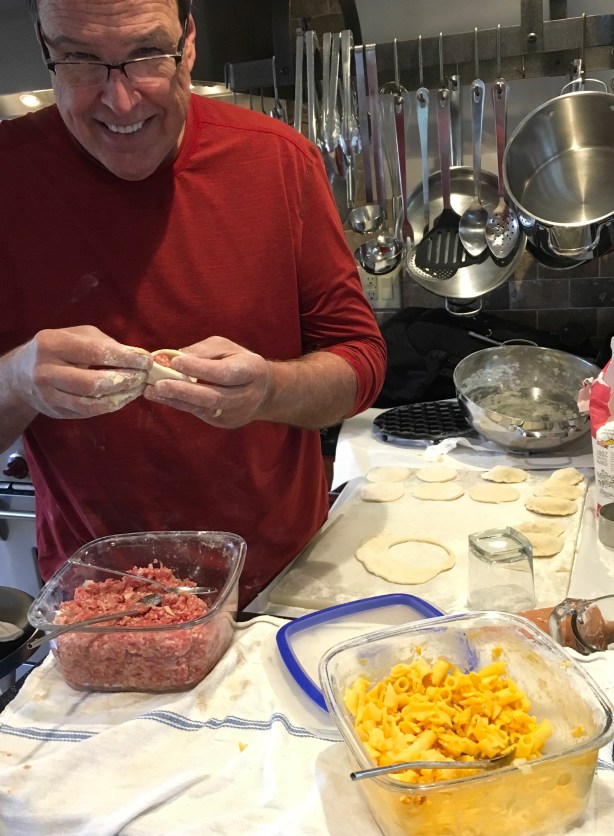
 

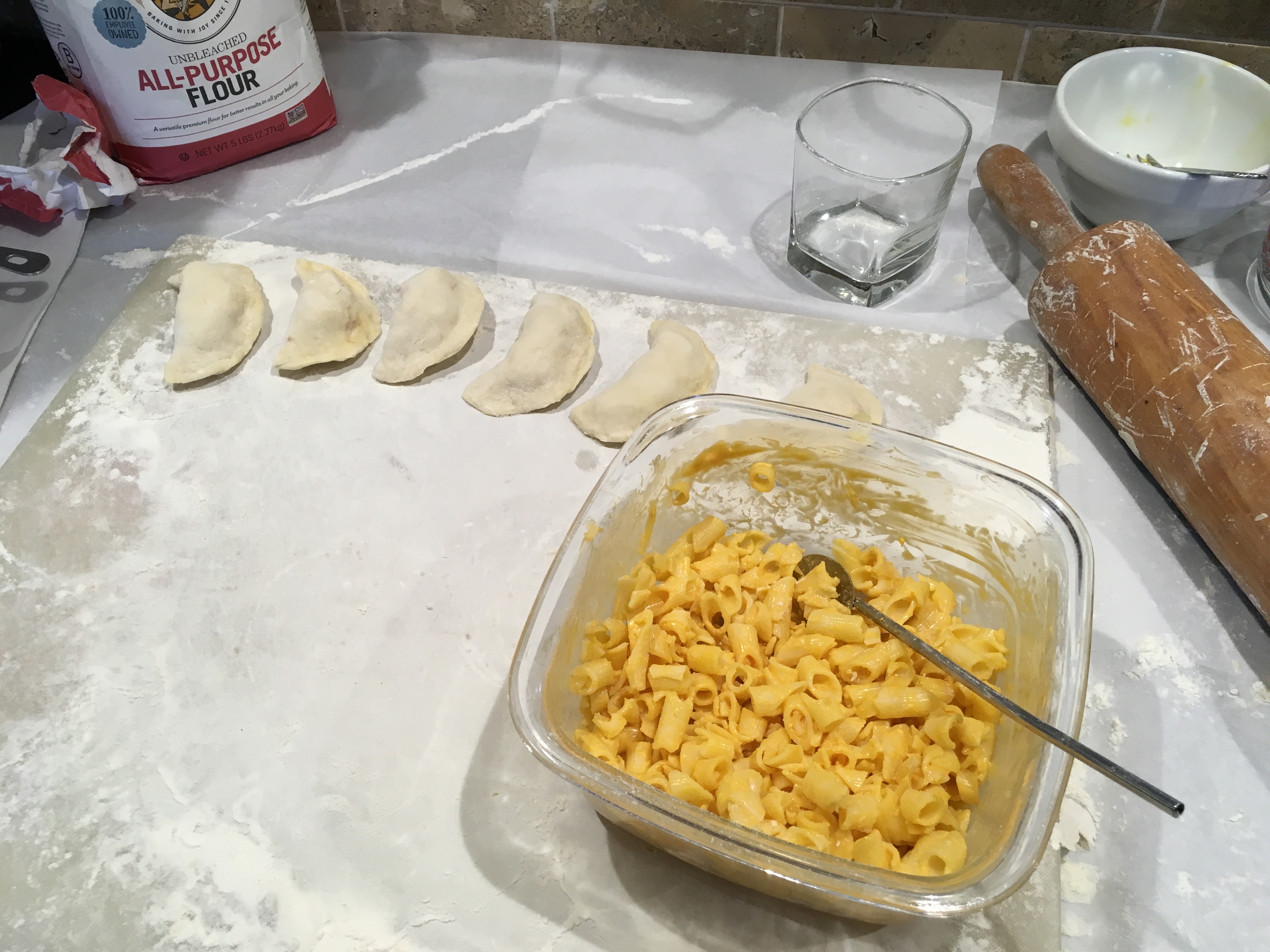
I found that my Mom’s log method was too much work. I rolled the dough out with a rolling pin, then cut with a glass. Yes, that’s mac-and-cheese in the forefront.

A few years ago, I decided it was time to try my hand at making koldūnai. As I recall, my Mom simply mixed water with flour and a little salt to make the dough, kneaded it into a log, and off she went. I decided to go with the rolling pin and glass cutting method, in addition to the ravioli maker, because I wanted to compare the classic crescent-shaped koldūnai with the newer mini’s.

The biggest challenges I had with making my own koldūnai was my clumsiness and lack of experience. Once I got the hang of it, things moved along steadily, and it didn’t take long for me to make a decent batch–not all perfect, but not bad for a first try.

Since my wife is allergic to mushrooms, I had to skip them this time around and used the ground beef filling instead. And, by my daughter’s special request, I also made mac-and-cheese koldūnai. (Patty’s Pierogis, a restaurant in nearby Fall River, Massachusetts, and featured on Food Network’s “Diners, Drive-Ins and Dives,” is where she first had them.)

I keep my fillings, whether it’s the mac-and-cheese or the ground beef, gluten-free, so I can use them in GF as well as regular koldūnai. There’s no difference in the taste. Gluten-free mac-and-cheese is easily found in a box in supermarkets everywhere. Here’s the beef recipe…


1/2 onion, finely chopped
1 pat of butter
1 lb. ground beef
1 egg
1/2 cup breadcrumbs (I use gluten-free)
1/4 cup milk


I make my gluten-free breadcrumbs with Udi’s frozen GF bread that I toast, then chop in a food processor. I think it tastes better than store-bought GF breadcrumbs in a can.

Finely chop the onion and saute it in the butter until translucent. Let it cool, then add it to 1 lb. of thawed ground beef. Add the egg, the breadcrumbs, and the milk. Season with salt and pepper. Mix the ingredients thoroughly and keep the meat in the fridge until you’re ready to use it.
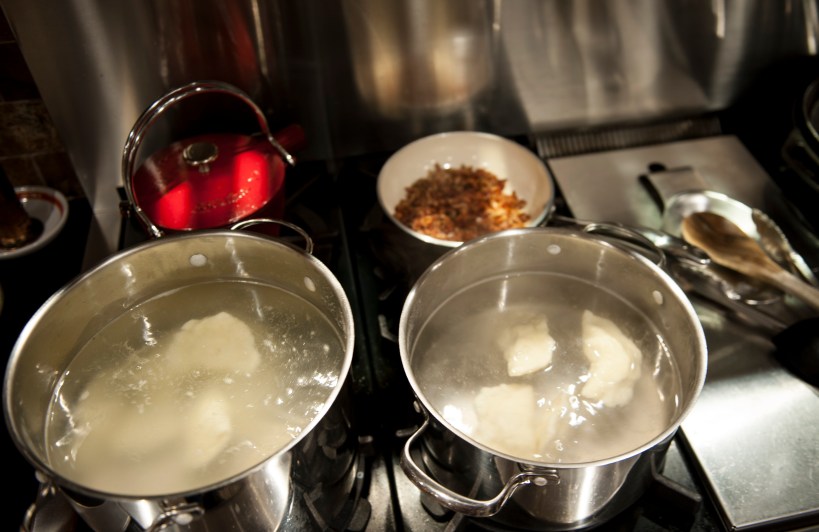
 

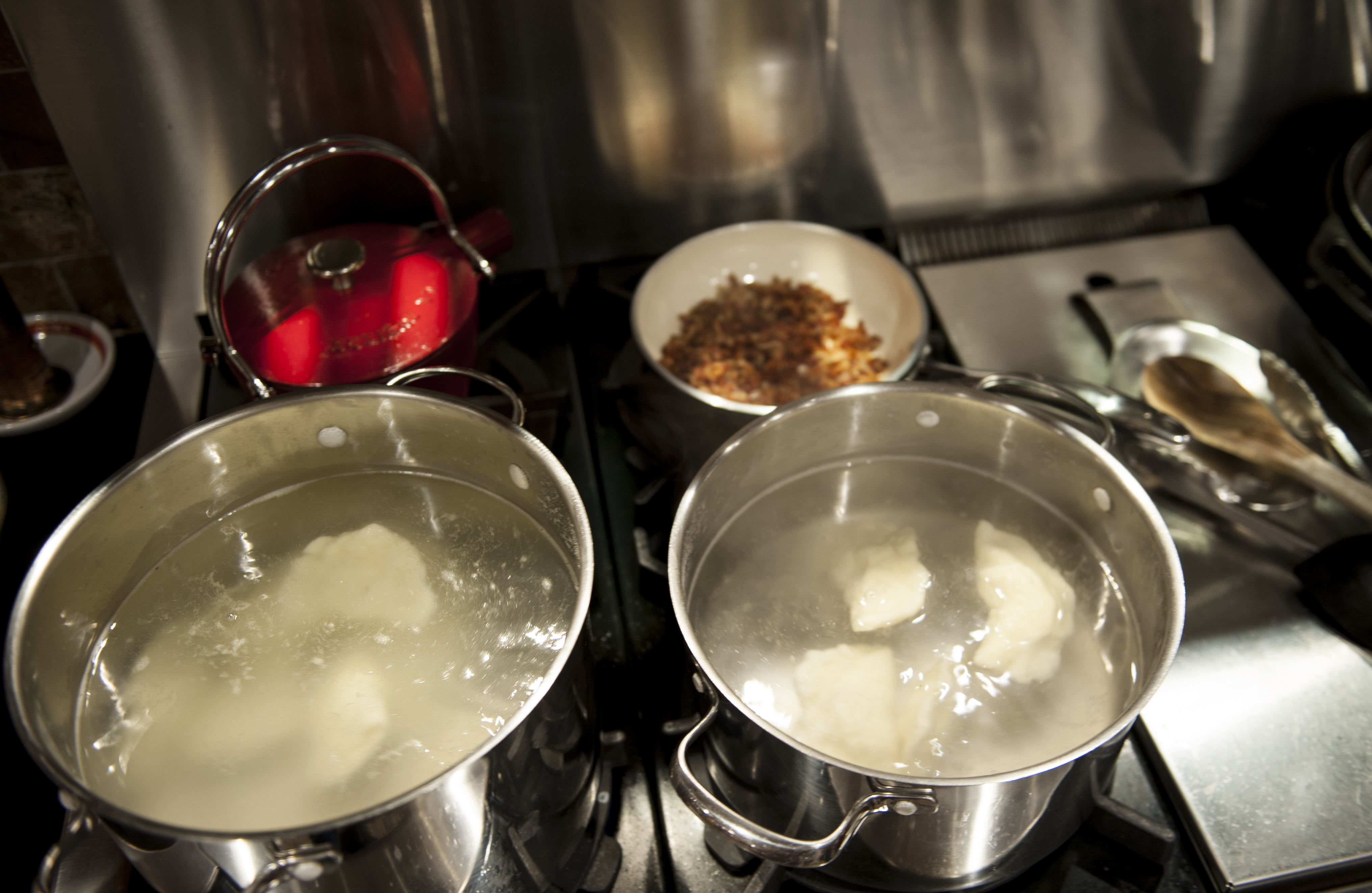
Two pots of boiling salted water: one for the meat-filled koldūnai, and one for the mac-and-cheese filled koldūnai.

Two pots of boiling salted water: one for the meat-filled koldūnai, and one for the mac-and-cheese filled koldūnai.


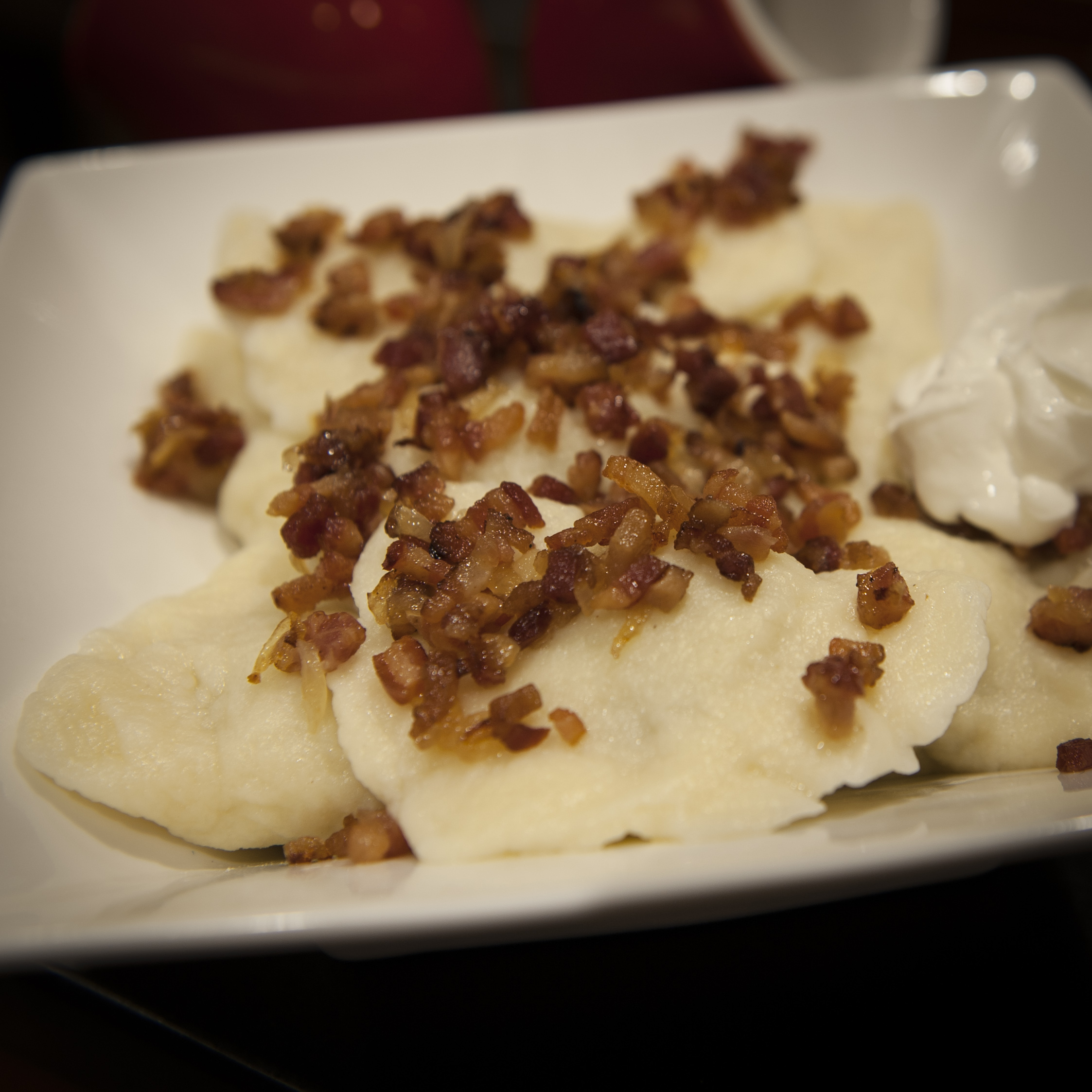
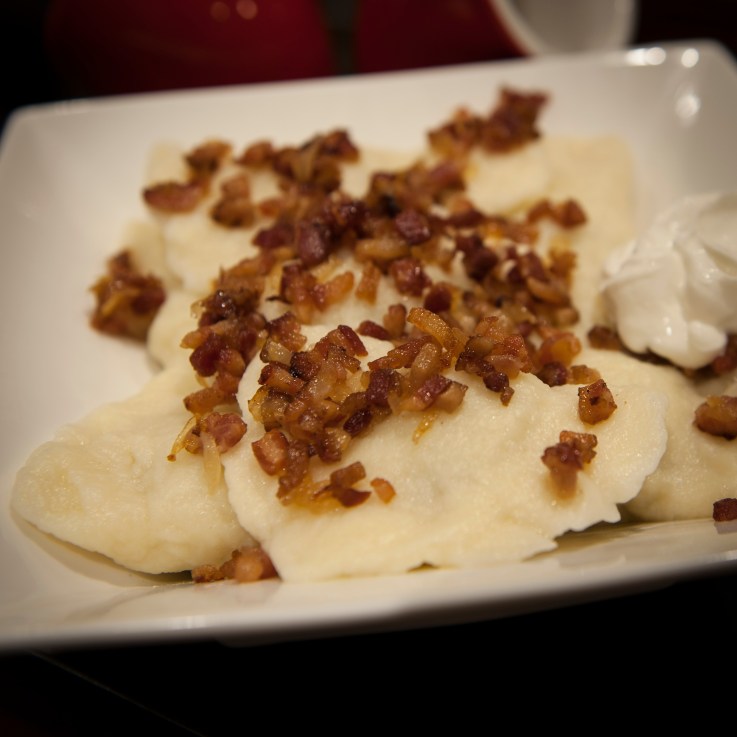
In my childhood home, you cannot possibly serve koldūnai without sour cream on the side and without spirgučiai (spir-guh-chay), chopped and fried bacon and onions that are sprinkled on top.

1 lb. bacon, finely chopped
1 large onion, finely chopped

In a large pan, fry the chopped bacon until it’s almost crisp. I don’t drain the fat, but you can if you’re a wuss. Add the chopped onions and cook until they are soft. Set aside.  (My Mom always kept a stash of spirgučiai in a container in the fridge, and sprinkled them on anything and everything.)
 

duni 4

Making the dough is simple. I add an egg to my Mom’s original recipe.

2 cups all-purpose flour (gluten-free or regular)
1 cup water
1 teaspoon salt
1 raw egg, scrambled


Combine the ingredients in a bowl, mixing with your hands. Keep adding flour in small amounts until the dough isn’t wet and sticky. When it forms a nice ball, remove it from the bowl and place it on a floured surface and knead it a bit more. Cut the ball into quarters, and work with these smaller pieces of dough.

If you’re using the ravioli maker method, each quarter will  make one sheet of dough for the top or bottom of the ravioli maker. If making them by hand, each sheet will give you about 8 crescent-shaped koldūnai.

For the rolling-pin method, roll each quarter out until the dough is about 1/8″ thick. Using a rocks glass as your cutter, cut circles out of the dough. Add a small spoonful of filling in the center of the dough, then fold the edges over and pinch them with your fingers. Flip it over and pinch again, making sure none of the filling seeps out. A tight edge means the koldūnai won’t break open when you put them in boiling water.
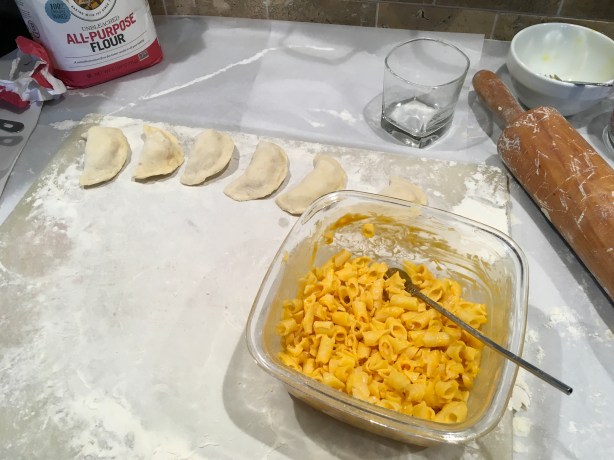
Some stuffed with mac and cheese!


Place the koldūnai on a sheet pan lined with parchment paper, and when you’re done, place the sheet pan in the freezer.

Get a large pot of salted water boiling. Drop the koldūnai in gently, being careful not to overcrowd them. If the dough is thin, the koldūnai will be ready when they float up to the surface. A thicker dough will need longer cooking. The best way to know if they’re done is by taking one out, cutting it open and having a look (and taste!)

When plating, sprinkle generously with spirgučiai, and serve with sour cream on the side.


My conclusion: When all is said and done, the old ways are still the best. Although the ravioli maker did a good job, in many ways it was just as time-consuming. And the finished mini-raviolis did not have the dough-to-filling ratio that I find so satisfying with classically made koldūnai. We sampled both side-by-side, and there really was a difference. I’m sticking with the classic methods for now! Mom will be proud.


The hand-painted Christmas trees in the photos are from our friend, Don Cadoret, an artist here in Tiverton, RI. Check out all of his work at: http://www.doncadoret.net.


Winter is here. It’s time for some serious comfort food.

Years ago, when I received a shipment of venison from my father-in-law, an avid hunter that lives in the Upper Peninsula of Michigan, I knew that although I could certainly use beef for this dish, it would be absolutely stellar with venison. And I knew that I couldn’t miss with a local brew from my buddy, Sean Larkin of Revival Brewing Company (www.revivalbrewing.com), with his Double Black IPA…

image


Unfortunately, I haven’t been able to find gluten-free alternatives for this recipe. You can buy GF beer and flour, but the puff pastry is what makes the dish. A GF pie crust would be an alternative, but once you have it with puff pastry, you’ll never want it any other way!

Olive oil
3 red onions, peeled and chopped
3 cloves of garlic, peeled and chopped
3 tablespoons butter, plus extra
3 carrots, peeled and chopped
3 celery stalks, trimmed and chopped
10 oz. baby bella mushrooms, chopped
3 lbs. venison, cut into 3/4″ cubes
A few sprigs of fresh rosemary, leaves picked and chopped
Sea salt and black pepper
2 bottles (24 oz.) Revival Brewing Company Double Black IPA, with a swig for the cook
3 tablespoons flour
12 oz. freshly grated cheddar cheese
1 1/2 pounds store-bought puff pastry (all butter is best)
1 large egg, beaten

image


Pre-heat the oven to 375.

In a large oven-proof pan, heat a few tablespoons of the olive oil. Add the onions and fry gently for about 10 minutes. Turn the heat up and add the garlic, butter, carrots, celery and mushrooms. Stir well, then add venison, rosemary, a pinch of salt and about a teaspoon of pepper.

Saute on high for about 4 minutes, then add the beer, making sure you take a swig for luck! Stir in the flour and add just enough water to cover. Bring to a simmer, cover the pan with a lid or foil, and place in the preheated oven for about 1 1/2 hours.

Remove after 1 1/2 hours and stir. Put it back in the oven and cook another hour, until the meat is cooked and the stew is rich, dark and thick. If it’s still liquidy, place the pan on the stove top and reduce until the sauce thickens. (You don’t want a soupy stew or you’ll get soggy puff pastry later.) Remove the pan from the heat and stir in half the cheese. Season with salt and pepper to taste and set aside to cool.

Depending on whether your puff pastry comes in sheets or a block, you’ll need to use a rolling-pin to get it into sheets about 1/8″ thick. Butter a good-sized pie dish or an oven-proof terrine. Line the dish with the sheets of pastry, letting the pastry hang over the sides. Pour in the stew, even it out with a spatula, and add the rest of the grated cheese on top.

Use another 1/8″ thick sheet of pastry (or a couple if they’re not wide enough) to cover the top of the pie dish. Lightly crisscross the top with a knife, then fold over the overhanging pieces of pastry over the lid, making it look nice and rustic. Don’t cut or throw any of the pastry away! Use as much as you can, since everyone will want some.

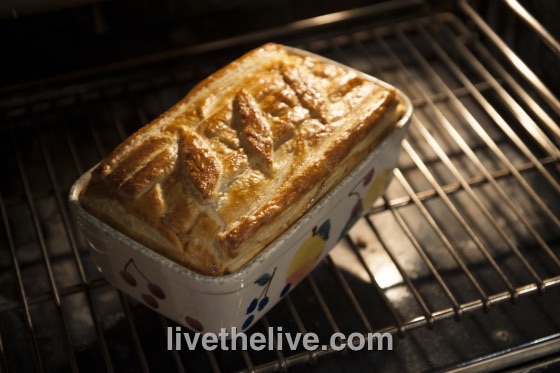
Brush the top with the beaten egg and then bake the pie on the bottom of the oven for about 45 minutes, until the pastry has cooked, and it’s beautifully puffed and golden. Serve with a side of peas (and beer!)


It takes a few weeks for this limoncello recipe to be ready, so plan ahead!

Many years ago, my wife and I visited the Amalfi coast, and we spent several nights on the beautiful island of Capri. On our last night, we dined at the legendary Grand Hotel Quisisana, and our incredible meal ended with a glass of the most delicious limoncello I ever had.

I asked the waiter if it was possible to get the recipe of the limoncello, and he made a big deal about the recipe being a “secret.” Though disappointed, I understood, and I left Capri thinking that I would never taste that limoncello again.

Two weeks later, now back at home, I was reading the latest issue of Conde Nast Traveler, and there in black and white, was the Quisisana limoncello recipe! WTF?

After making many batches of this limoncello, I started experimenting with other citrus, and the most successful by far was with grapefruit. Now I make a batch of each every year. Note: the recipe calls for 100-proof vodka. Most vodka is 80-proof, so you’ll need to go to a liquor store with a better selection to find it.


Four ingredients, easy to make. The toughest part is waiting for it to mellow a bit.


4 lbs. lemons, zest only
2 750-ml bottles 100 proof vodka (I prefer Absolut)
5 1/2 cups sugar
6 cups filtered water

Peel the zest off all the lemons, making sure you don’t get any of the white pith that could make the limoncello bitter. Place all the zest in the bottom of a glass jar with a lid that can hold all the vodka.

Pour the vodka on top of the lemon zest pieces, seal the container, and keep at room temperature for a week, swirling the jar around gently once a day.

On the sixth day, combine the sugar and water in a pot over medium-high heat, and stir until all the sugar completely dissolves. Remove from the heat, cover, and let it thoroughly cool to room temperature (overnight is best.)

On day seven, strain the lemon zest, pouring the infused vodka into a clean glass jar. Discard the lemon zest.

Pour the sugar/water mixture into the vodka and mix well.

At this point, you can pour the finished product into individual bottles, but let it mellow for about a month before drinking.

I keep my limoncello refrigerated.

Clam fritters, conch fritters, lobster fritters…I suppose you could fritter anything. But the first time I had them with mussels, I knew that I would never fritter my life away with any other!

It was a fall afternoon in Newport, Rhode Island, at the now-defunct Newport Yachting Center’s annual Oyster Festival. We’re gorging on freshly shucked oysters and clams, boiled shrimp, and…what have we here? I never heard of a mussel fritter before, but once I took a bite, there was no turning back.

They couldn’t be easier to make, but it is crucial to have the right fritter batter. And that starts with a Rhode Island product called Drum Rock fritter mix. If you live in New England, you can find it in just about any seafood department at Whole Foods. If you live further away, you can check out their website (www.drumrockproducts.com) or try your luck with a local brand of fritter mix.

fritter ingredients


If you’re using fresh mussels, be sure to clean them well and remove the beards. Steam them in a pot over a small amount of water. As they open, they will release their flavorful juices and you want to save every drop of that broth for the fritters. Here in New England, frozen mussel meats are available in some seafood stores. All you need to do is thaw them, steam them saving the broth, and you’re ready to go.

For the fritters:
1 lb. fritter mix
2 cups cooked mussel meats
1/2 cup mussel broth (saved from steaming mussels)
1/4 to 1/2 cup good quality beer (I use Sam Adams Boston Lager)
Avocado oil or lard for frying (I don’t use canola or vegetable oils)


Steam the mussel meats until they’re just cooked. Remove the mussel meats, and reserve 1/2 cup of the broth. Pulse the mussel meats in a food processor, but leave ’em chunky…or chop by hand.

Put the fritter mix in a large bowl. Add the mussel meats, mussel broth, and beer. Stir gently until just mixed. Let it sit for 10 to 15 minutes and do not stir again. (If you’ve got guests coming, you can prepare up to this part ahead of time, covering the bowl with a wet towel, and leaving it at room temperature.)

Using a thermometer, heat the oil in a deep pan to 350 degrees, and using a small spoon or scoop, drop the fritters in the hot oil, turning gently, cooking 3 to 4 minutes until golden.

Drain them on paper towels, and season with salt and pepper immediately. Serve right away!


IMG_3043


An easy, delicious dipping sauce:
1 cup mayonnaise
1/4 cup Ponzu sauce

The perfect dipping sauce for these mussel fritters is made from two ingredients: mayo and Ponzu sauce, a citrus-based soy sauce. Combine both ingredients in a bowl. Keep it in the fridge until you’re ready to use it.

Stuffies, or stuffed clams, are a very personal matter here in Southern New England. There are as many stuffies recipes as there are chowder recipes, and everyone thinks they’ve got the best one. Most stuffies that I’ve had in restaurants, like most meatballs I’ve had, have too much bread and not enough of the good stuff.


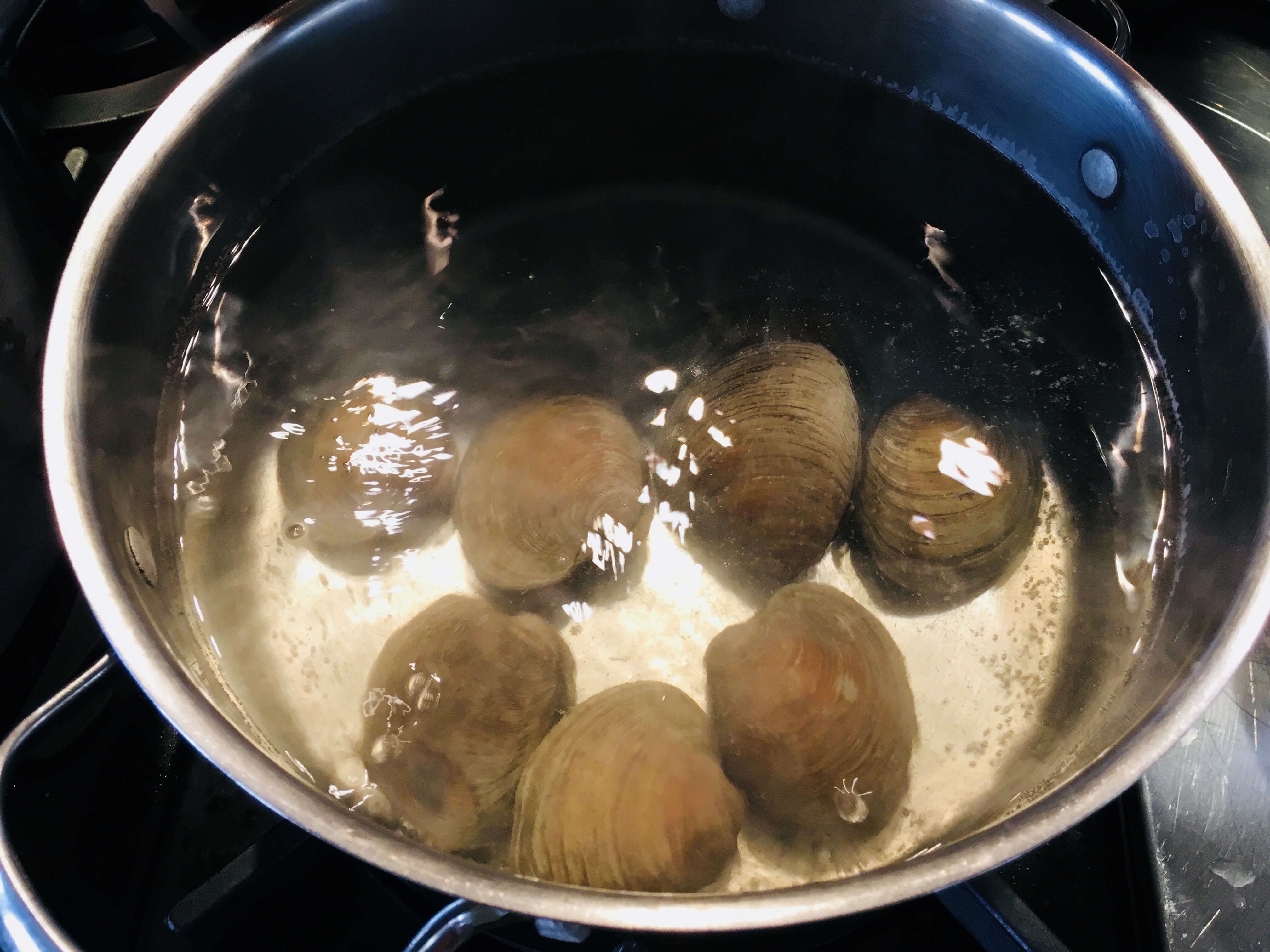
I use medium-sized clams for this recipe and not the traditional quahog, a large clam often used in chowders that I find to be too chewy. Dropping the clams in hot water in the beginning helps make opening the clams a lot easier.


Just 30 seconds in boiling water is all it takes.


This recipe requires quite a bit of fresh sage, which can be expensive off-season. I grow sage in my garden, then snip a ton of it at the end of the growing season, placing it in freezer bags and squeezing all the air out. I will even measure out 1 1/4 cups of fresh sage leaves (what I need for each batch), then place that amount in the freezer bag, so I don’t need to measure later.


Freezing the sage makes it easier to chop finely later on.


I use Portuguese chourico (since I live near Fall River and New Bedford, Massachusetts, the Portuguese capitals of America), and I think their flavor is best.

This recipe makes a lot of stuffies, but they freeze well so you can have them when you want.

This recipe is gluten-free…and you’ll never be able to tell the difference! But if that doesn’t matter to you, use toasted Portuguese bread instead of gluten-free bread.


stuffies


4 dozen medium neck clams
1.5 pounds chopped chourico, skin removed (I use Mello’s from Fall River, Mass.)
3 onions, finely chopped
3 tablespoons garlic, finely chopped
3 cups frozen or fresh corn kernels
3 cups toasted and coarsely ground bread (I use Udi’s Soft & Hearty Whole Grain bread to keep it gluten-free)
3/4 cup chopped fresh oregano (or 1 tablespoon dried)
1 1/4 cups chopped fresh sage (don’t use dried)
Salt and pepper
Butter
Sambal chili paste
Mayonnaise

In a large pot of boiling water, drop the clams in, about a dozen at a time. Remove them after about 30 seconds, before they open. Place them in a bowl to cool. Do this with all the clams.

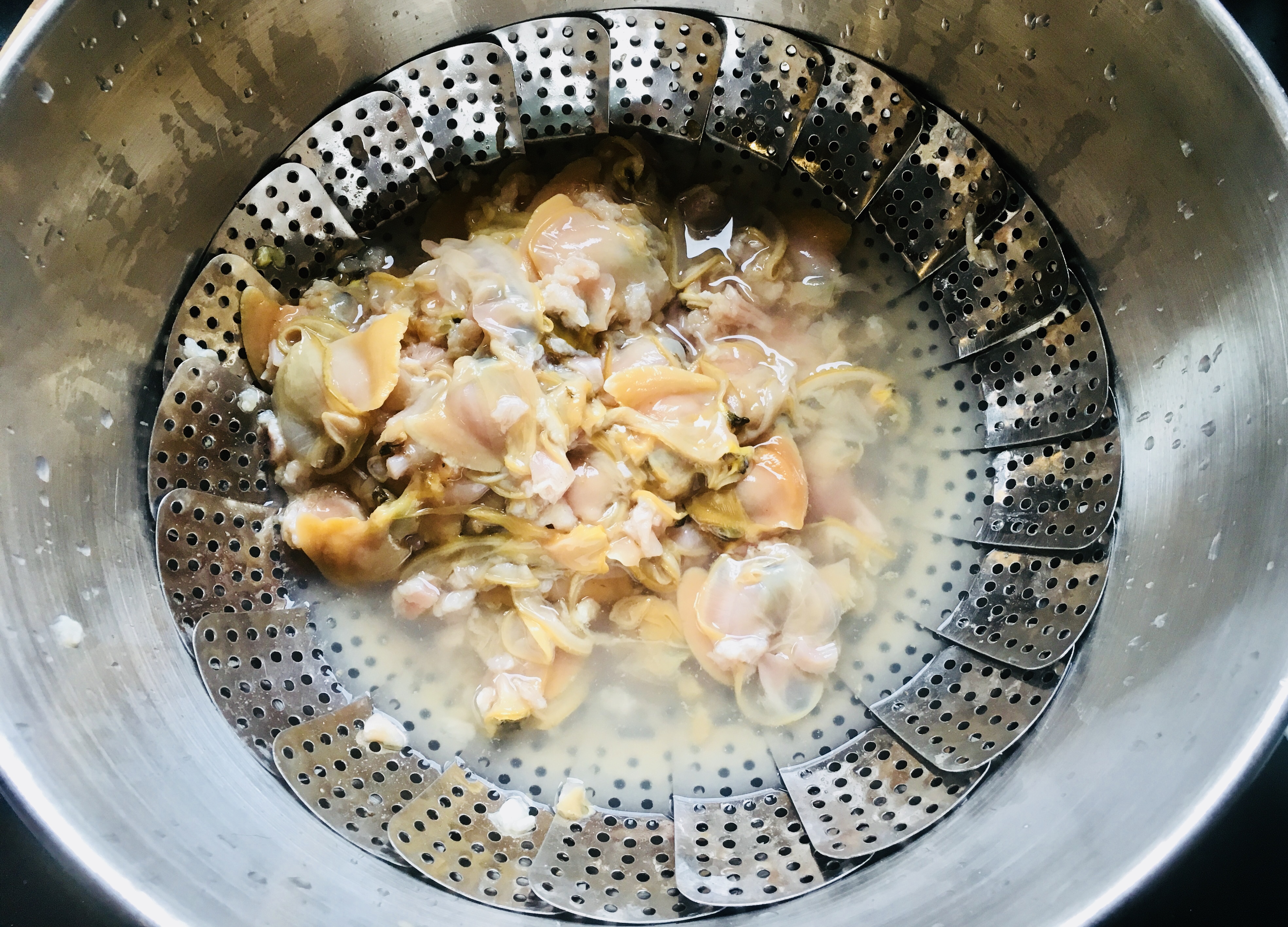
Open the clams with a clam knife over a bowl with a strainer, making sure you save all the liquid from the clams. Put the clam shells to the side. Throw away any broken shells, and wash the empty shell halves thoroughly, making sure there are no broken pieces.


I use a strainer to keep the sediment away from the clam meats.


Take the clam meat pieces out of the strainer, leaving the clam juice behind in the bowl. Move the clam meat to a cutting board or food processor and chop them to medium-fine. Set them aside.

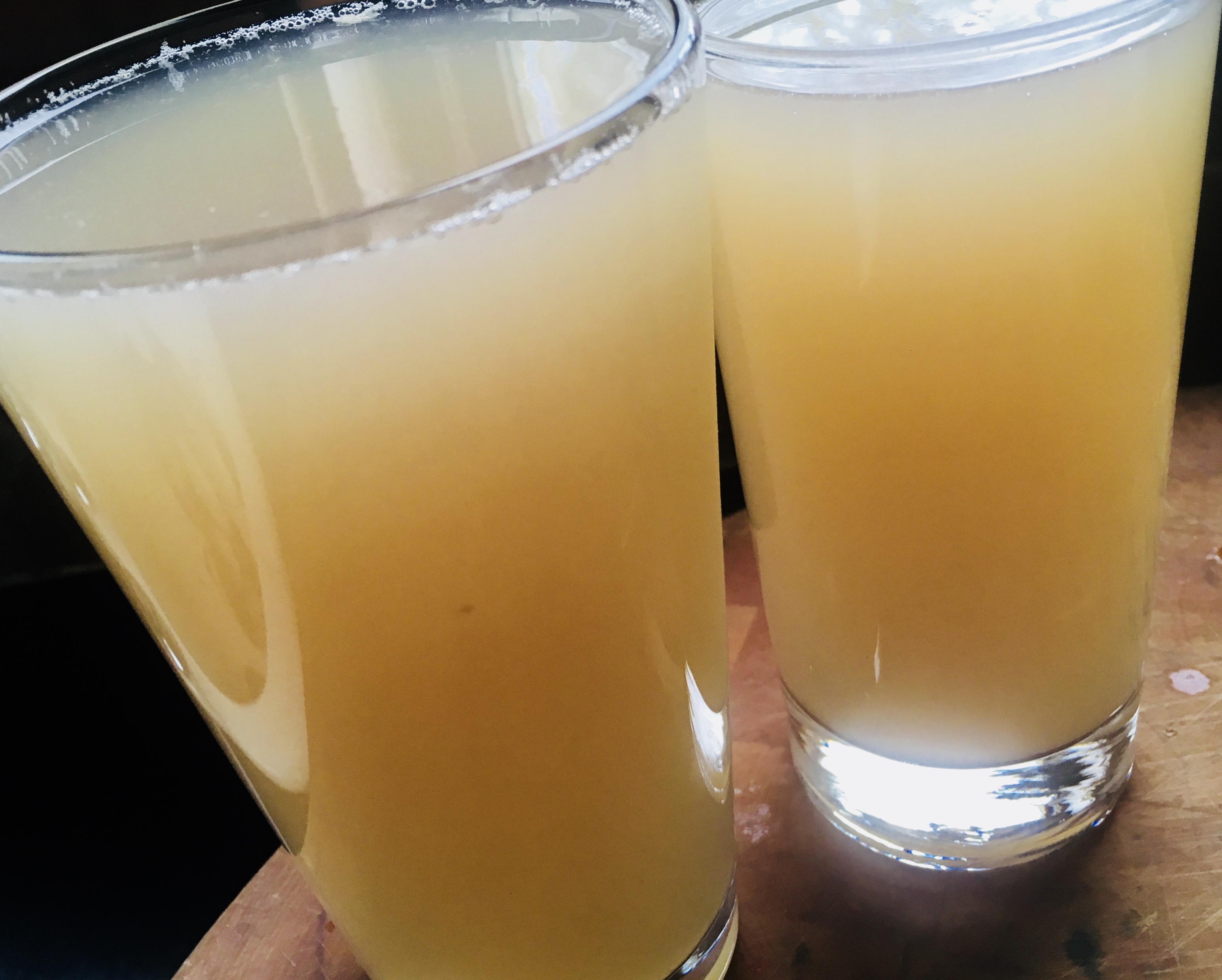
I pour the clam juices carefully from the bowl to tall drinking glasses, being careful not to let the sediment get in. Then, after some time, I pour off the clam juice from the glasses, leaving even more of the sediments behind. I find that the tall glasses make it easier to see the sediments, and maximize the amount of clam juice I get.


I let the clam juices sit in their tall glasses for a while, so that even more sediments get left behind.


In a large frying pan, add the olive oil, onions, and chourico and cook them on medium heat for a few minutes. Add the oregano and sage and cook a few more minutes. Add the corn and cook a few more minutes, a little more if the corn was frozen. Add the chopped clams and stir, cooking for a few more minutes. Add the breadcrumbs a little at a time until you have a nice balance of bread and other ingredients. Add the clam juice a little at a time as well, so that you can add all the breadcrumbs, but the mix isn’t runny. There’s lots of flavor in the clam juice, so use as much as you can! Season it all with salt and pepper.

Remove the pan from the heat and fill the empty clam shells with the stuffing.

At this point, you can freeze the clams. I put them on small sheet pans in the freezer until they harden, then I wrap them 6 at a time, and put them in freezer bags. Keep them frozen!


Ready for the freezer!


To make the aioli, mix the mayonnaise and Sambal in a bowl, to taste. Sambal is hot, so a little goes a long way. Keep it covered and refrigerated.


When you’re ready to bake, remove the clams from the freezer and place them on a sheet pan in a pre-heated 350 degree oven. Top each clam with a small ¼” square piece of butter. Bake them about 15 minutes, until the clams are sizzling and light brown. Top each with a small dab of aioli.

This is my version of a holiday drink I was introduced to by my mother-in-law from the Upper Peninsula of Michigan. I knew I was marrying into the right family after one sip!

This classic is loaded with sugar. But then…so is everything else around the holidays!

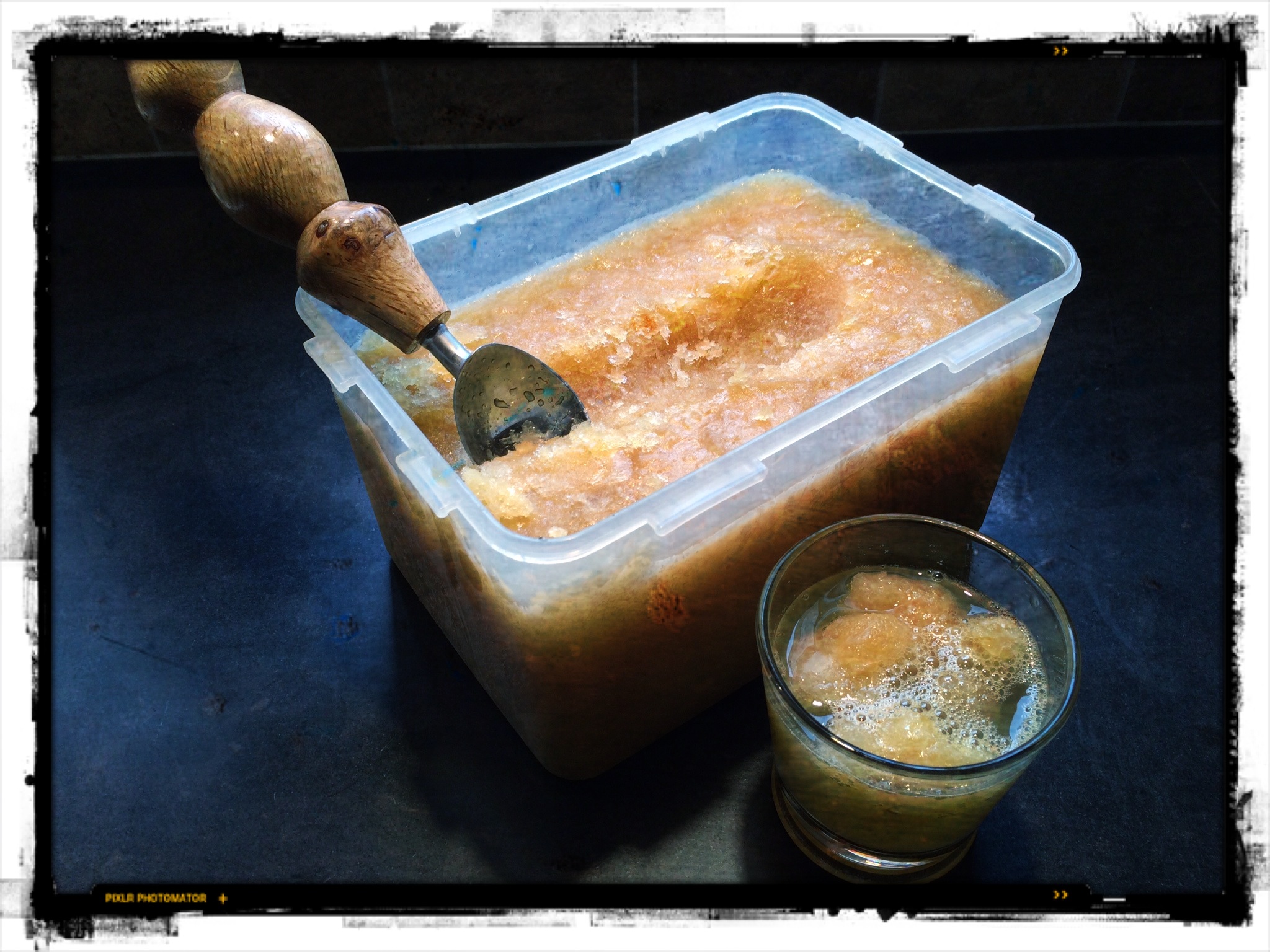
Whiskey slush


9 cups water
2 cups sugar
4 “Constant Comment” tea bags
12 oz. frozen OJ concentrate
12 oz. frozen lemonade concentrate
2 cups whiskey (I use Crown Royal)
7-Up or Sprite

Boil the water and sugar, making sure the sugar dissolves. Turn off the heat and steep the tea bags in the liquid for 10 minutes. Discard the tea bags.
Add the OJ, lemonade and whiskey. Mix well, then pour it into a freezeable container with a lid. Freeze.
To serve: Scoop the slush out of the container (it doesn’t freeze solid) and mix in a tall glass with 7 Up.

Like hot dogs and Slim Jims, jerky is one of those “mystery meats” we love but don’t really know how it’s made or what part of the animal it comes from. It’s also the only thing my nieces and my co-workers want for Christmas this year, so I’m making huge batches!
Really excellent beef jerky is a rare treat, and once you have it, you will never go back to that rancid, preservative-filled dog meat you find in a bag at the supermarket. And the best part is: it’s easy to make.
Shop around for a really nice slab of London broil or similar cut. You don’t need to buy an expensive piece of grass-fed beef, but the better the meat, the better the jerky. Remove all the gristle and fat that may be on the meat and then slice it against the grain and on a diagonal, into 1/4″ thick slices. Toss all the meat in a Ziploc bag. Once you’ve done that, all you need to do is make the marinade, marinate the beef overnight, and then dry it the next day. Your final product will be a flavorful beef jerky that is so good, you’ll find it very hard to stop eating it…or to share it.
If you use gluten-free soy sauce and teriyaki sauce (La Choy is the brand I use, found in any supermarket), this recipe can be considered gluten-free. Be careful: regular soy sauce, and even some tamari sauces, have wheat in them. Read the label!
I just received a nice slab of venison loin from my brother-in-law, the hunter. Venison jerky is next!
image
1 tablespoon salt
1 1/2 tablespoons granulated garlic
1 teaspoon black pepper
1 teaspoon fresh minced peeled ginger
2/3 cup brown sugar
1 cup teriyaki sauce (I use La Choy brand. It’s gluten-free.)
1 cup soy sauce (I use La Choy brand. It’s gluten-free.)
8 lbs. raw, lean beef, like London broil, cut into 1/4″ thick diagonal slices, against the grain of the meat
Mix all the ingredients except the meat in a large bowl. Place the meat in a large Ziploc bag, pour the marinade inside, seal it, and refrigerate overnight. Squish the bag around once in a while, to make sure all the meat surfaces make contact with the marinade. Keep the bag in a bowl to prevent any accidental spillage in your fridge!
The next day, pour off the marinade and discard it. Using a food dehydrator, dry the meat by laying strips in a single layer. You can also dry them in a 140 degree oven on racks slightly elevated off a baking sheet. Drying could take several hours to half a day, depending on how dry and chewy you like your jerky.
Jerky in the dehydrator.

Jerky in the dehydrator.

This recipe makes a lot of jerky, but it stores really well in the freezer. I put small amounts into individual freezer bags, then place all of them in one large freezer bag. Thaw as needed.

It’s all about the salt.

I fell in love with Fleur de Sel, the rare hand-raked salt, years ago. I’ve got high blood pressure, and unfortunately, I need to limit my intake of salt. So my discovery of “finishing salts” allowed me to cook completely without salt until the very end, where I can then sprinkle just a few crystals of this moist, hand-harvested miracle on my plate, enjoying every tiny burst of salty ocean flavor without a lot of guilt.

Inspired by an episode of “No Reservations” where Anthony Bourdain journeyed to Brittany, my wife and I dreamed of traveling to what is arguably the epicenter of Fleur de Sel production, the small town of Guerande, France. Located on the Atlantic coast in the Pays de La Loire region just south of Brittany, it’s about a 5-hour drive from Charles de Gaulle airport outside of Paris.

A salt flat in Guerande


Some of the articles we read about the medieval town of Guerande said it was too touristy, but we found that it had a lot of charm: the perfect combination of old and new, with many interesting shops and eateries inside its ancient walls. Built in the 15th century and fortified in the 19th century, the surrounding wall around Guerande is one of the best preserved in all of France.

The salt marshes outside the city walls have been around a long time…the last of them built around 1800. Salt production here declined soon after, because salt was available more cheaply from salt mines. But you gotta love foodies…the influence of chefs and food lovers around the world have brought back the demand for this very special product. Salt workers now harvest about 15,000 tons of cooking salt a year, and about 300 tons of the very precious Fleur de Sel.


Worth its weight in gold!


The process is simple: the ocean tides bring the salt water in and channel it into shallow pools where the water then evaporates, leaving behind the beautiful sea salt Guerande is known for. When just a few inches of water remain, a salty crystalized film floats on the surface of the water. This is very gently hand-raked and produces the much sought after Fleur de Sel. Traditionally only women were allowed to rake this salt because it was believed they had a gentler touch.

Driving through the salt field was a wonderful experience. The roads are narrow, and wind almost endlessly through these flat marshes where salt workers spend their days raking, gathering and then bagging their precious harvest. You can stop anywhere along the way to buy your salt directly from these salt workers, which we did. It was easy to get carried away…we brought home over 20 lbs. of salt! Of course, we shared it with friends.


Harvesting and selling salt in Guerande is a family affair.


One taste of Fleur de Sel, letting it gently melt on your tongue, and you’ll know what the big fuss is all about.

Our Fleur de Sel journey did not end in Guerande, however. After a couple of nights in that region, we headed south to the island of Ile de Re, just off the coast of La Rochelle, France. Connected by a 3km bridge, Ile de Re is a beautiful world unto itself, with an intricate network of bicycle paths that allow you to travel safely from one end of this flat island to the other, enjoying beautiful views as you ride through vineyards, salt marshes, beaches and small port towns.

As in Guerande, not only can you sample the local salt, but also the abundant supply of incredibly fresh seafood, especially their famous oysters. The salt flats seem somewhat newer in Ile de Re, but still very much a large part of the local economy. The salt itself differs in only the most subtle of ways from its Guerande counterpart and I would find it difficult to say which I liked better.


Ile de Re is long and flat, so many of the salt pools are larger than those in Guerande.


It may seem a bit silly to travel all this way for something is simple as salt. But it’s a journey I’m very happy I made…and will gladly make again.

Let’s face it: there’s no such thing as healthy eggnog. This recipe kicks ass but is also a heart attack in a glass.

My buddy, Rick Sammarco, a wicked talented bartender, credits his father, Al, for this eggnog. The original recipe calls for a lot more of everything. I’ve cut it down to a “more reasonable” size.

A word about salmonella: Many people are concerned about it, and you need to decide what works for you. Some recipes tell you to make your eggnog weeks in advance to “sterilize” the drink with all the booze you’ve added to it. I’m not sure that really works. Look…if you’re really worried about it, maybe this drink isn’t for you. I use raw eggs in my Caesar salad dressing and in other recipes, so I’m willing to risk it here.

eggnog


1.5 quarts vanilla ice cream (I use Breyer’s)
1 pint half & half
15 whole eggs (raw)
½ teaspoon vanilla extract
1/4 teaspoon cinnamon
1/4 teaspoon nutmeg
At least 3/8 cup of each:
spiced rum (I use Capt. Morgan)
whiskey (I use Crown Royal)
brandy (I use E&J)


Let the ice cream soften 1 day in the fridge. Mix the ice cream, eggs, vanilla, half and half in a blender.

Add the spices and liquor. Blend until it’s frothy.

Taste, and add more cinnamon and nutmeg if you like.

After it’s fully blended, let it sit in the fridge, covered, for at least 12-24 hours for the flavors to blend. Even longer is better.