Archive for January, 2018

I’ve been to Grand Cayman before. It was 16 years ago…I was single and found myself “stuck” on the island for an extra 4 days at the end of my vacation because of 9-11. (I was due to fly home on September 12, 2001.) The airport security systems we don’t even think twice about today didn’t exist back then, and I remember getting to the airport at 6AM to stand in a security line for a 1PM flight. Every piece of luggage was hand-searched…twice. It seemed like forever.

Coming in for a landing!

What I remember from that trip was how empty and primitive the island was…and how ancient the airport was, even for the Caribbean. Sixteen years later, the island has changed drastically: massive construction everywhere you look…huge investment properties are built, then stand empty, waiting for buyers. One “for sale” sign after another along the roads that line the island’s waterfront properties. A giant, soulless shopping center called Camana Bay is a stone’s throw from a very crowded 7-Mile Beach. And the airport? It now gets my award for one of the worst airports in the Caribbean: low-tech, crowded, disorganized, dirty.

What made–and still makes–the Caymans shine are the beaches and the people. Despite the oversized resorts lined up on 7-Mile Beach, the sand and water are pristine. It’s still a scuba diver’s and snorkelers’ paradise. And the people, if you go out of the crowded tourist areas to find them, are as friendly and helpful as ever. They just seem a bit lost in their own home.

The waters of 7-Mile Beach are still beautiful.


The Caymans were hit by a hurricane in 2004, and a billionaire investor by the name of Dart decided this was his opportunity to make the investment of a lifetime. The people of the Cayman Islands no doubt looked at him as somewhat of a savior–at least in the beginning. Here was a guy that was willing to invest a lot of money in rebuilding their beautiful island. And though he did invest a lot of money in real estate–it’s estimated that he now owns 25% of all the real estate on Grand Cayman–sadly that money went into condos, shopping malls, and hotels. Little by little, the real heartbeat of the Cayman Islands was being replaced by large, sweeping generic slabs of concrete and glass reaching for the sky, and huge roadways connecting them to each other.

Georgetown, the capital and where the airport is located, is crowded, dirty and hosts several cruise ships every day, dumping thousands of passengers for a few hours to buy the typical souvenirs and duty-free goods every cruise ship port holds.


OUR TRIP

We chose to stay off the beaten path for our first couple of nights, finding a cute waterfront condo on AirBnB in Boddentown, the original capital of the Caymans, and much quieter than 7-Mile Beach or Georgetown to the west. The condo was clean, but the beach in front of it was full of weeds. Winds and currents were strong. We realized that it was a good home base to settle in at the end of the day, but that’s about it. We would spend our first couple of days exploring the rest of the island, from Boddentown to the East End to the North Side to Rum Point.

A simple map of Grand Cayman.

There’s nothing better than finding a great little food place just steps from your condo, and the Czech Inn Grill hit the spot. They don’t sell alcohol, so it’s another few steps to a liquor store to pick up a few bottles before we finally sat down at the bar.
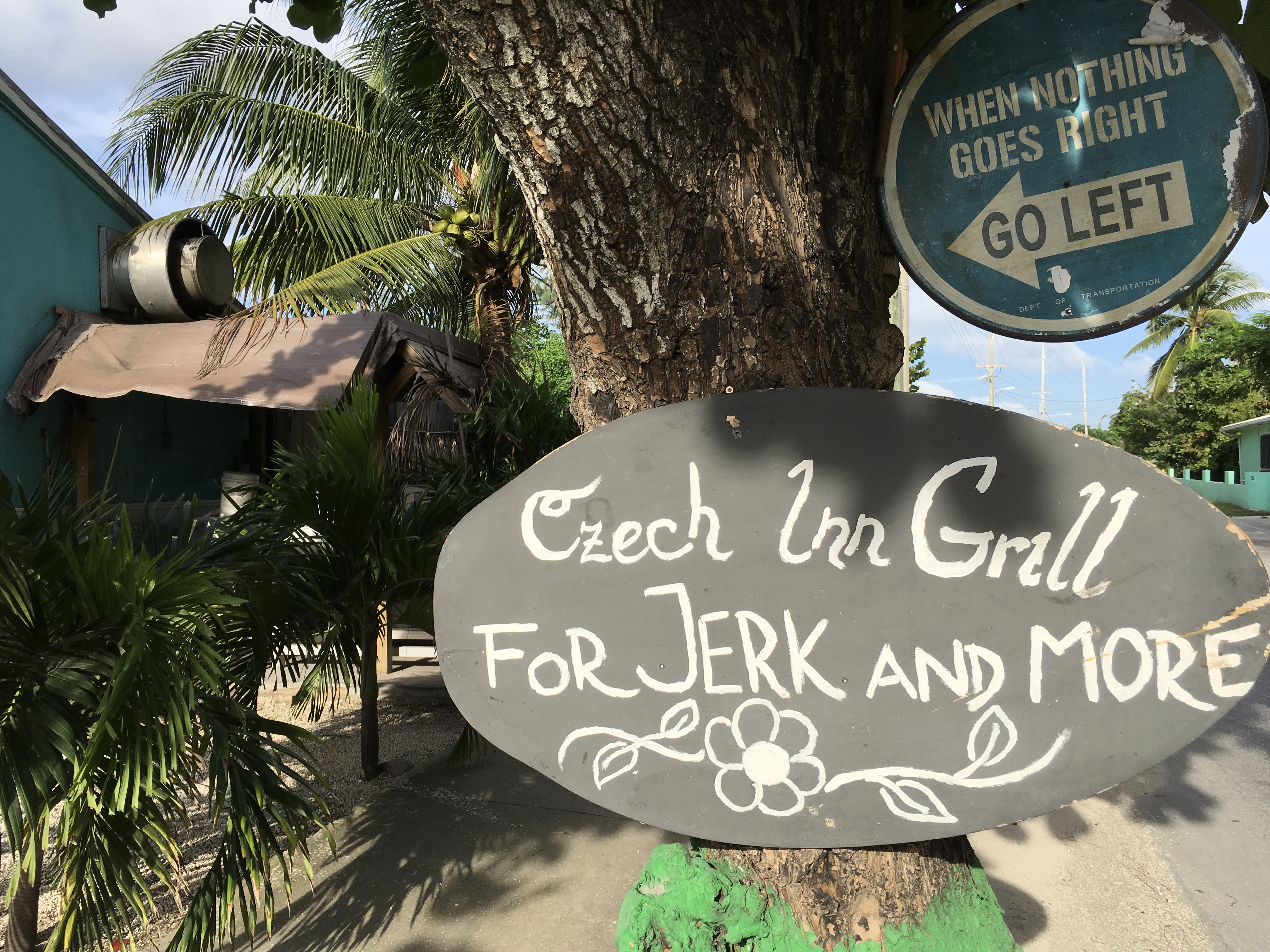
Celebrating its first year the very weekend we arrived, we met the owner, George, and sampled several dishes from his extensive menu which did feature a half-dozen hearty Czech dishes. We passed on those and enjoyed more local fare: a delicious freshly caught wahoo ceviche, smoked ribs, and a huge cheeseburger for my daughter. It was a very welcome meal, along with my Mount Gay Rum that I purchased a few doors down, after a long day of flying and settling in.


That evening, we headed for Tukka, a restaurant on the East End that got good reviews. It was already dark, so we saw no scenery, but we knew we’d be back this way the next day anyway. Among other things, Tukka boasted they had the largest rum selection on the island.
 

The rum bar at Tukka.


What we found when we got there were a couple of truths that guided us throughout the rest of our trip. First, though Tukka’s rum selection was excellent, many places layed claim to the biggest rum bar on the island. And second: the majority of menus at the so-called better restaurants on Grand Cayman are very similar. Only a handful of dishes really separated them. Part of the reason for that is that everything comes from off-island, and everyone uses the same companies to deliver their ingredients.

As for Tukka, we all thought the dinner was good, not great. The only exception was my lion fish tacos, which were a highlight. Lion fish is a nasty little invasive bugger, and requires hand protection when touching them, making them difficult to harvest and clean. But their meat is absolutely delicious, and I was very glad I tried it.
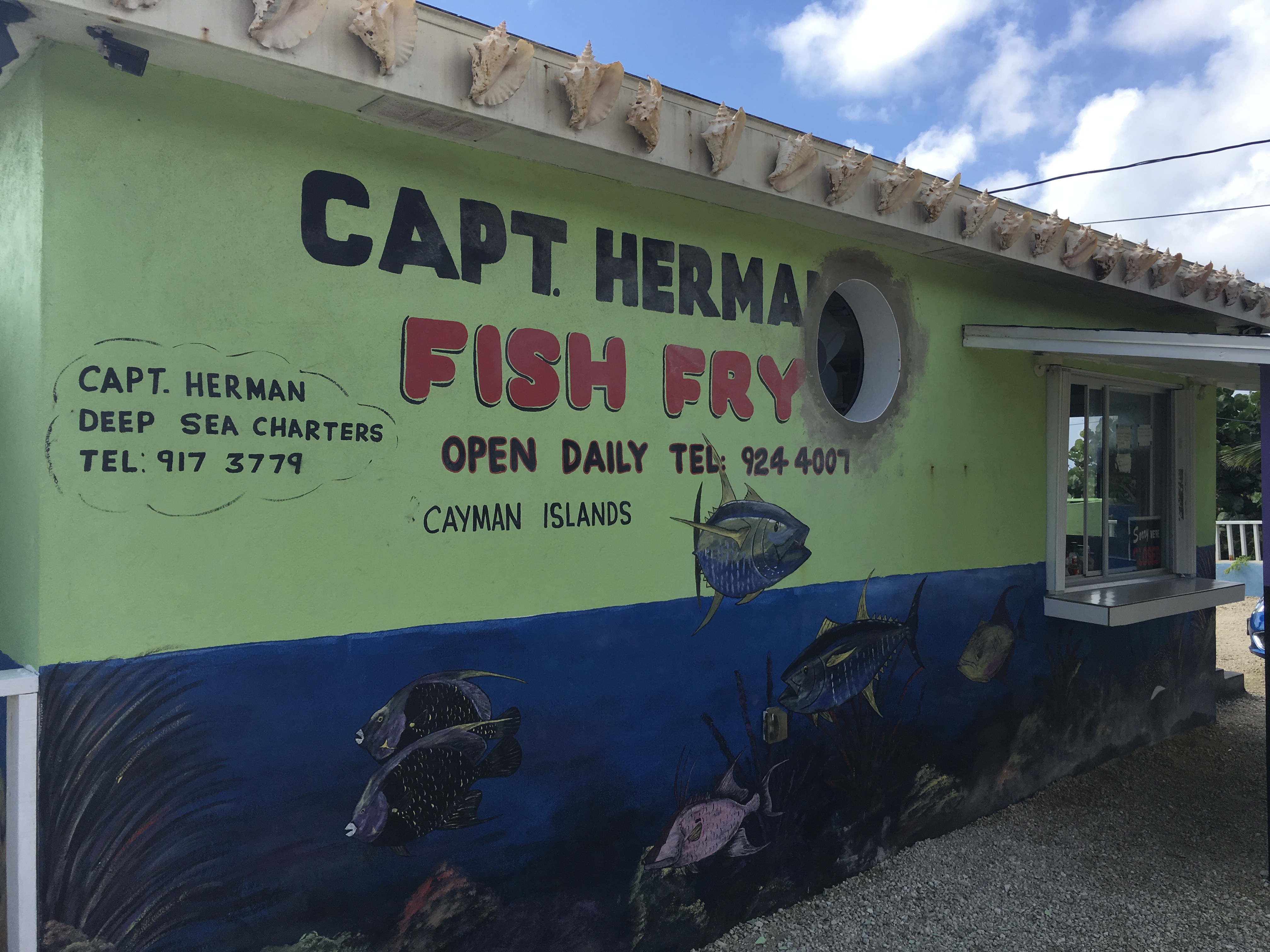


Leaving Boddentown the next day, we headed east again, and started exploring the coast. The south coast was too rough for swimming, but we enjoyed stopping at local fish shacks like Captain Herman’s for a quick snack of fried snapper with freshly made juices of cucumber, and carrot. I say “quick,” but I mean island-time quick. We were the only customers there, with 3 women serving, and it took an hour. Still, it was a beautiful day and they were fun to talk to.

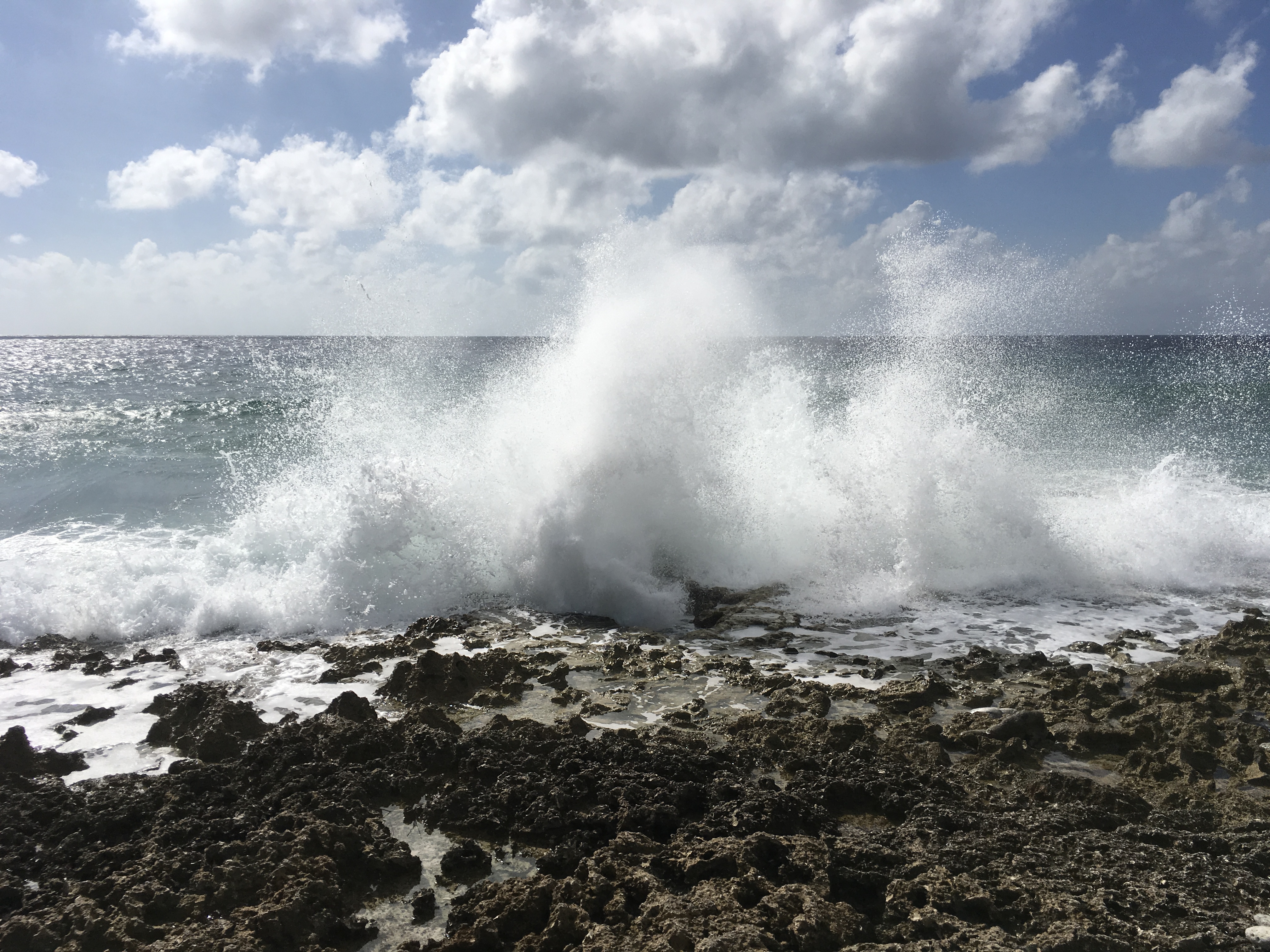
Our next stop: the Blowholes. Fun to watch these ocean-carved tubes pressurize and blast water high in the air.

We searched for more local eats, wanting to stop at the “famous” Vivine’s, but my daughter craved a ham and cheese from Subway instead, and there was one located on the property of the Windham Reef Resort on the East End. (There are Subways and Burger Kings all over the island.) There was also an out-of-service ATM across the street, surrounded by a strip mall of closed stores. (It was Sunday.) Lesson learned: if you need cash and you see an ATM that works in the town you’re in, don’t think you’ll find one later…you won’t! Grab the cash while you can!

We stopped when we saw a local fellow selling coconuts and enjoyed his highly skilled demonstration of how to crack one open with a machete.


A stop at Old Man Bay, another possible snorkeling spot listed in various books and websites, was disappointing: strong winds and currents and trash on the beach. We saw that elsewhere, too. One brochure even said that the trash “comes from cruise ships and that if you can get past it, you’ll find great snorkeling!” Uh…no, thanks.

We made a stop for lunch at Kaibo Restaurant Beach Bar and Marina, just a turn away from Rum Point. We enjoyed an excellent lunch–the jerk chicken was a standout–and contemplated returning there for dinner at their finer dining restaurant on the second floor. It, too, boasted one of the largest rum selections on the island. We never made it back to find out.


After lunch, we headed to Rum Point, where we finally had our first attempt at snorkeling. A small reef off the shore offered us a chance to see some tiny, colorful fish, and Rum Point itself offered beach chairs, sand, food, and bathrooms…everything we needed to spend the rest of day in the sun.


One of the signs at Rum Point.
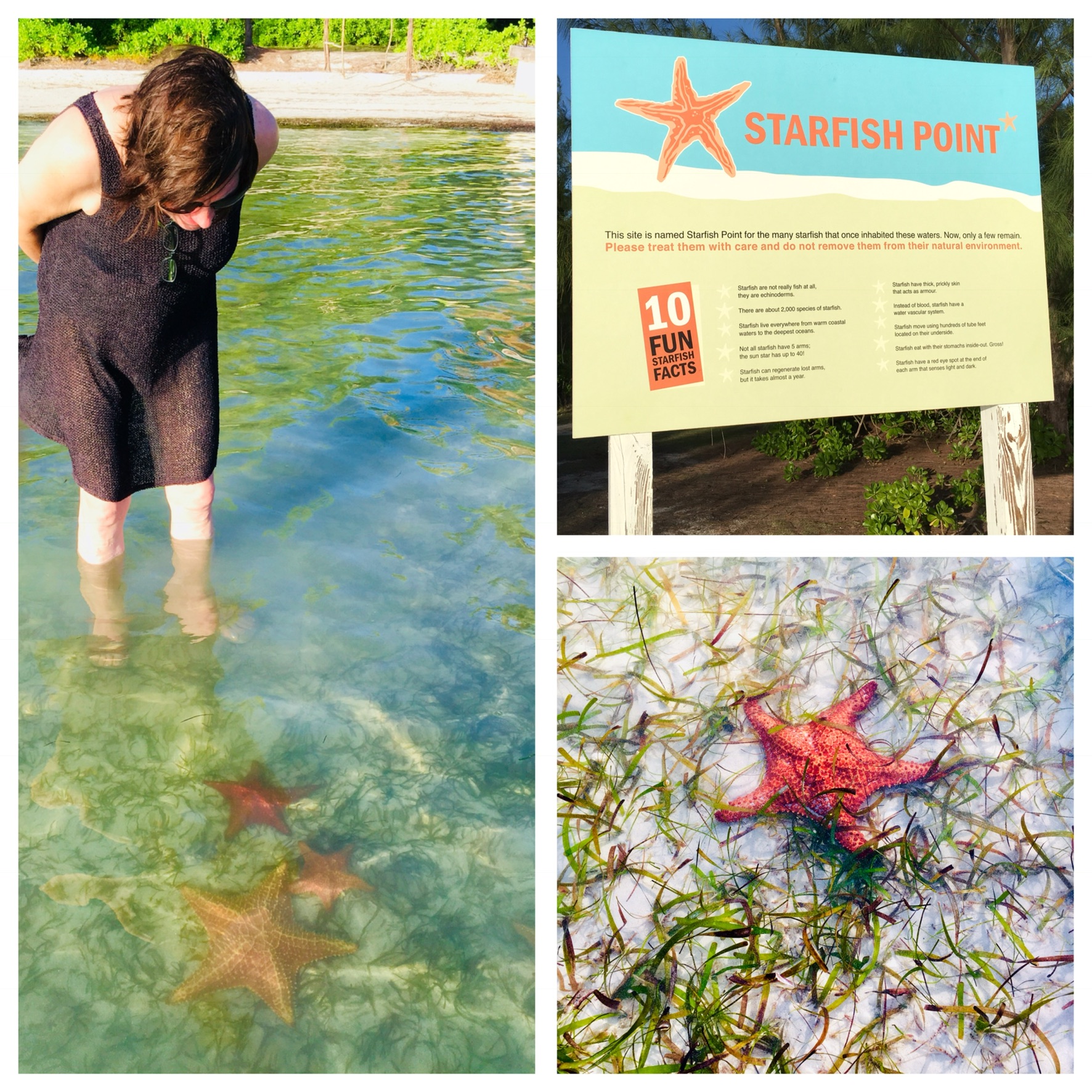
At the end of our day, we headed back toward Kaibo, because that’s where we found Starfish Point, a pretty patch of sand that attracts a large number of starfish. It was fascinating to see them. It’s OK to touch them, but never lift them out of the water. They need to stay underwater to stay alive.

Rather than going to Kaibo for dinner, we chose to head back to Georgetown and dine at Guy Harvey’s Bar & Grill. The food was mediocre at best, as was the service. We should’ve known, because its location was right where the cruise ships drop off their passengers. As we would find out the more we ate on this island, it was pretty much the same food as everywhere else: Ceviche of the day? Wahoo. Special of the day? Snapper. Etc., etc.  And with the Cayman dollar worth $1.25 US, even bad dining became an expensive part of the vacation, about $250 and up USA per dinner for 2 adults and 1 child.

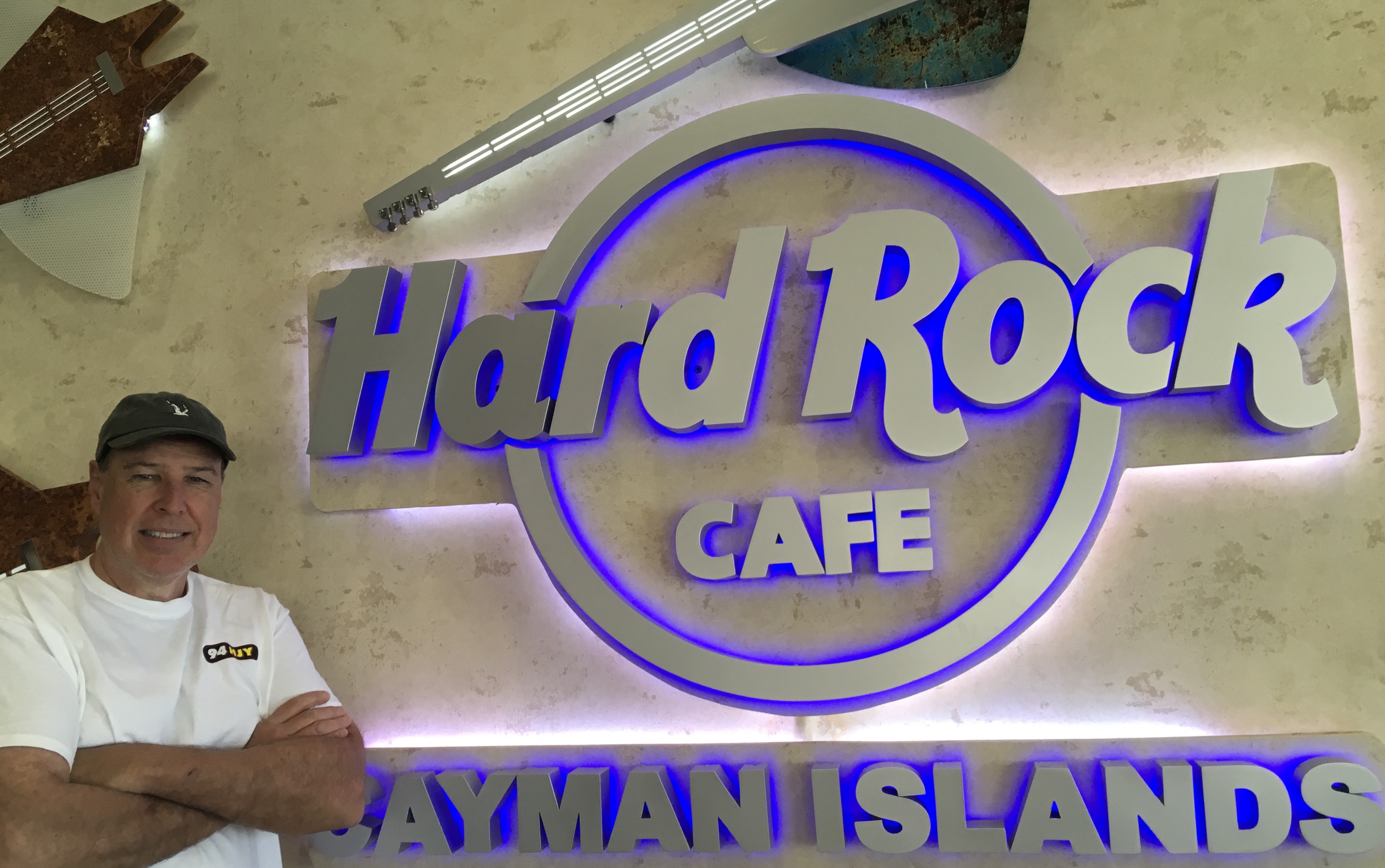
Our third day, we stopped in Georgetown for lunch, making a stop at The Rock Hard Cafe. (Just a stone’s throw from Guy Harvey’s.) I have only myself to blame for being in this tourist trap: I got my daughter hooked on visiting Hard Rocks when I took her to the one at Universal Studios in Florida last year. After that, she wanted to visit every city with a Hard Rock! I promised her I’d take here to the one on Grand Cayman for lunch. We enjoyed good burgers and salads.
 

We continued north after lunch and eventually arrived at the Westin Grand Cayman 7-Mile Beach Resort and Spa, where we would spend the next 5 nights. 7-Mile Beach is crowded, with one resort lined up after another. But they’re not stupid: they know their money comes from tourism, and despite the crowds, 7-Mile Beach remains pristine.


Dinner that night gave us our first glimpse at the massive investment and construction that was moving at full speed in Grand Cayman. We dined at Mizu Asian Bistro + Bar, a sushi restaurant located at the sprawling (and sterile) Camana Bay shopping center. We (again) read good reviews about this restaurant and we (again) were disappointed. The sushi wasn’t bad, just not great. My daughter’s cooked dishes were better. And the price of half-decent sake was outrageous! I joked about how we should’ve brought sake from the States. Price gouging was apparently common at restaurants in the Camana Bay shopping center. I’m guessing they have huge rents to pay.


Clever little gadget. A button attached to each beach umbrella. Press it, and you get food and drink service without searching high and low for help!


Once we settled into the Westin, we enjoyed several days of simply swimming, snorkeling and being lazy on the beach. The Westin is one of the headquarters for Red Sail Sports, a company that rents any water sport equipment you can imagine. They also have a fleet of boats for snorkeling and diving trips. Everyone (and we) agree they’re the best on the island. My daughter rented a bicycle, literally a bike on a pontoon boat that you pedaled in the water! And she and my wife enjoyed a wild parasail ride as well.

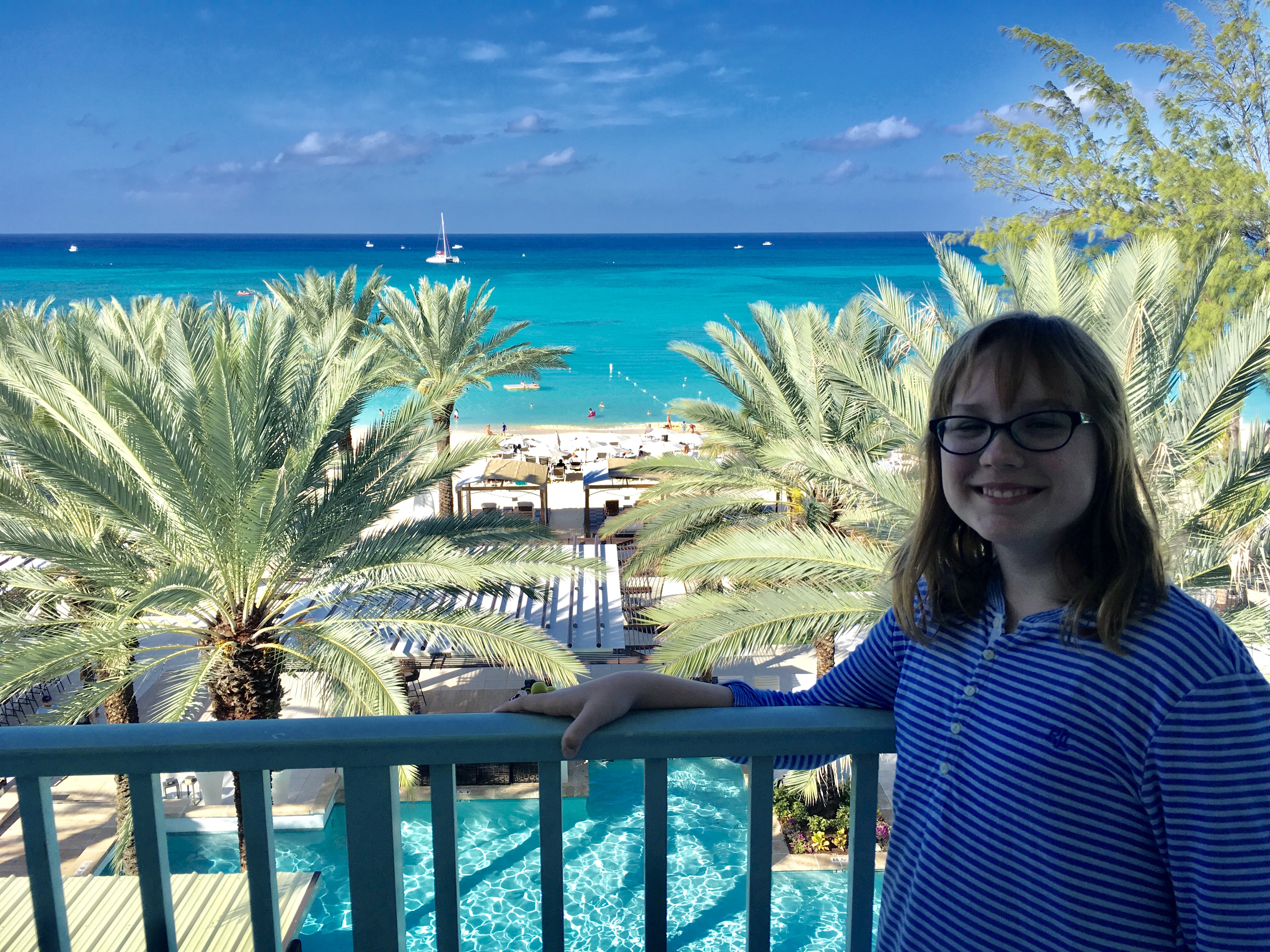
 

Balcony views at the Westin.

Good cheap eats across the street from the Westin at Eats Cafe.


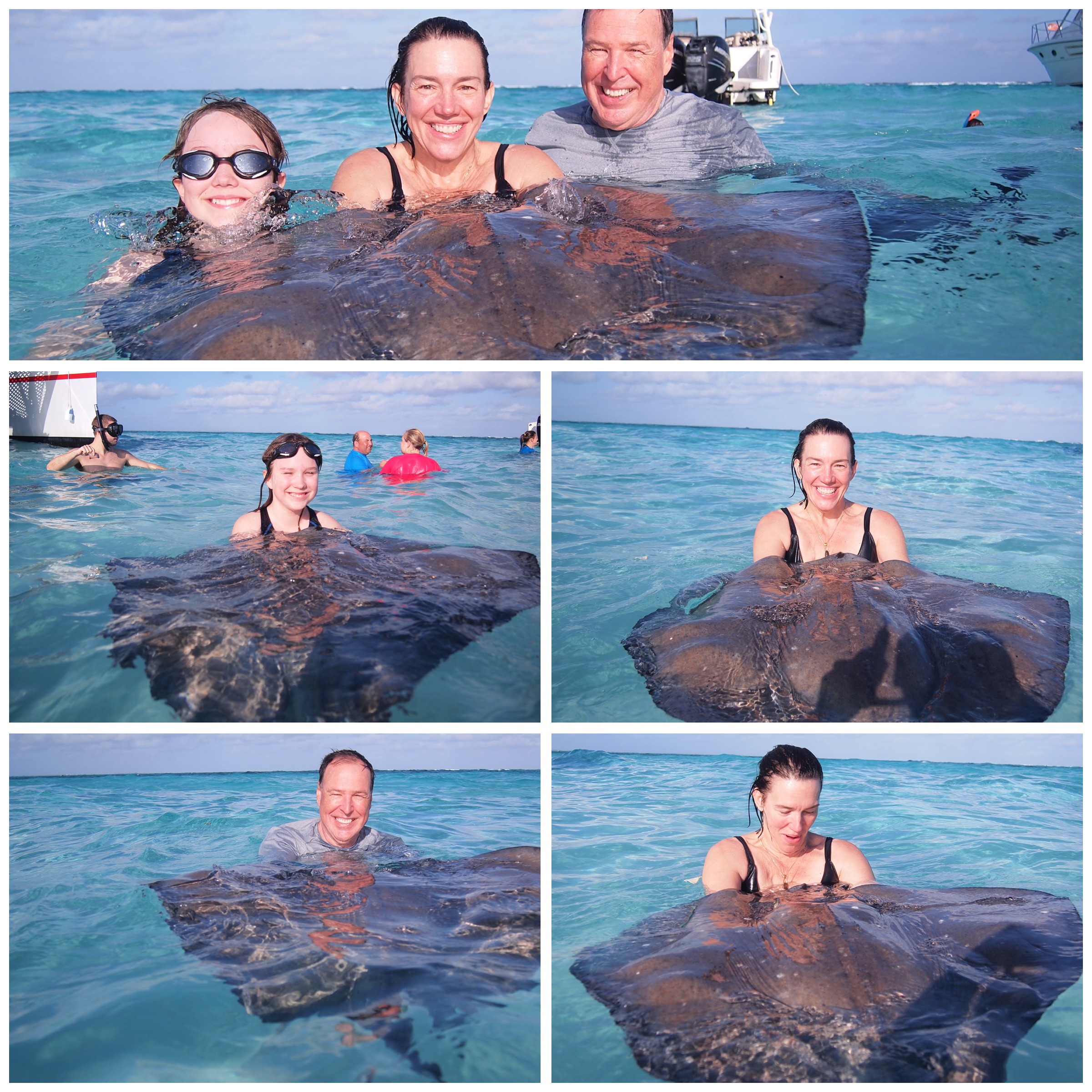
Scattered throughout our stay at the Westin, we took on a few trips. Probably the smartest way to see the stingrays at Stingray City, a must if you’re going to Grand Cayman, is to go first thing in the morning. Red Sail Sports offers a “Breakfast with the Stingrays” trip that gets you out there before the real crowds arrive…and it can get really crowded with cruise ship passengers showing up by the boatload. The staff on our beautiful 65′ catamaran was friendly and helpful, and they literally bring the rays to you, grabbing the attention of the stingrays they’ve handled many times before. The rays themselves are extremely gentle, and even though it wasn’t my first time swimming with them, it’s never anything less than amazing to bond with them. The females are the large ones, and we were fortunate enough to hang out with everyone’s favorite, Sandy, for some time.


Another great trip was with George’s Watersports (www.stingraycitygrandcaymans.com). George is a young guy that runs his own company. He’s literally a one-man show, from the van driver that picks you up at your hotel, to the captain of the boat. But he’s energetic, upbeat, and a young businessman I was glad to support. Among the many trips George does every day, he offered a nighttime snorkel in the bioluminescent bay. A fast boat ride from the marina got us to the “Bio Bay,” as they called it. Nighttime settled in, the stars came out, and we jumped in the water with our snorkeling gear to swim among the billions of bioluminescent plankton that live in the bay. It was a wild experience to see your whole body sparkle as you swam through the water! My daughter was particularly thrilled, waving her hands through the water, her fingertips sparkling like some character from a Harry Potter movie. Sadly, photos just don’t pick up the bioluminescence. You need to put on a snorkel mask and dive in. It’s worth it!


We took a road trip up the 7-Mile Beach coast and made the mandatory stop in the little town of Hell. Of course, we did all the silly tourist things you do when you go to a town named Hell…


On our way back, we made a stop at Cemetery Beach. Park your car along the street, then walk the marked path on the side of the cemetery to the beach. The water is beautiful, and the snorkeling was the best we had on our entire trip.

It’s pretty common to find beaches located behind the cemeteries, even fast food restaurants. For example, there’s one beach, appropriately called “Cheeseburger Beach,” because it’s located behind a Burger King.


The cemetery at Cemetery Beach.
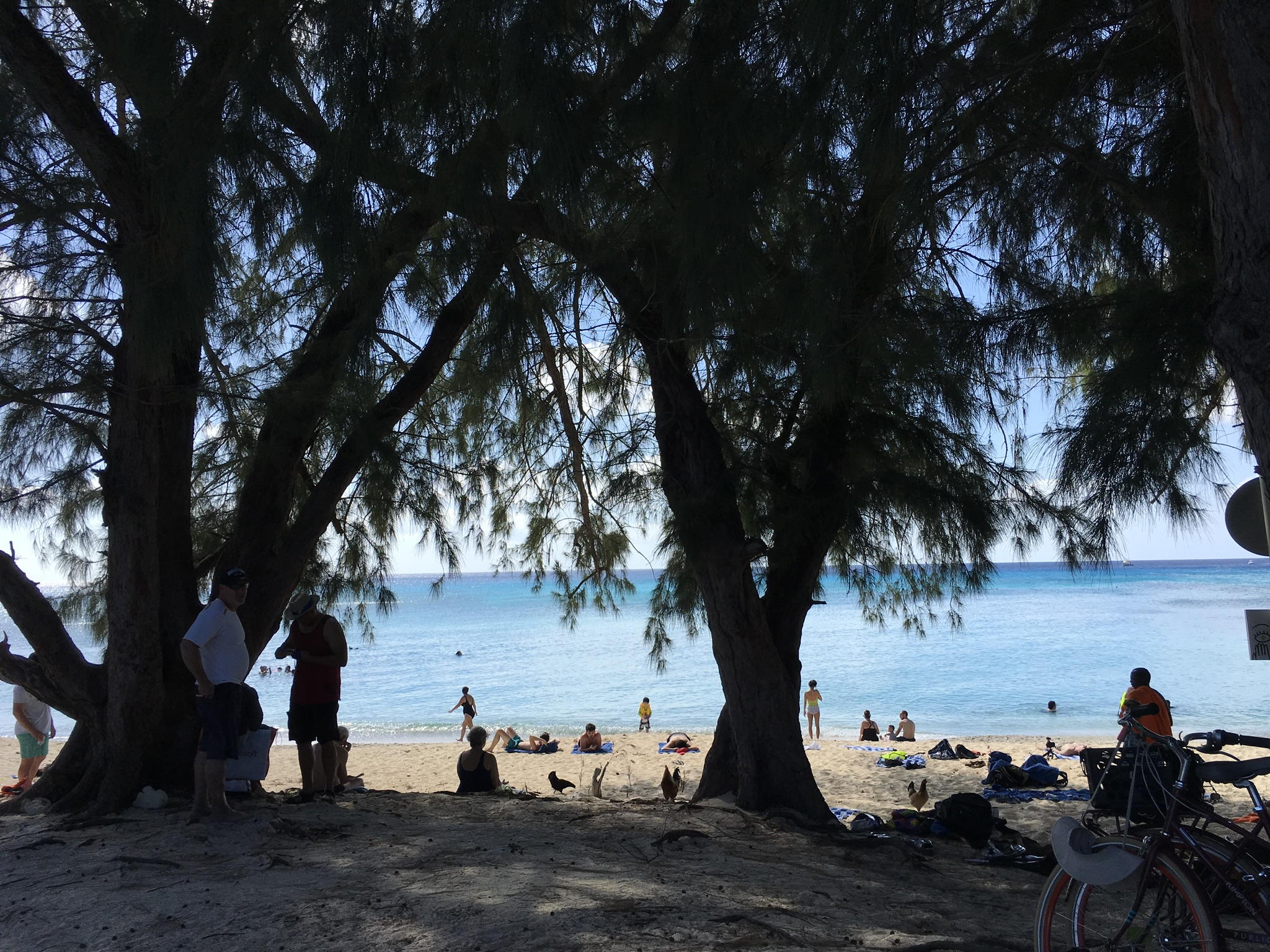
 

…And the beach at Cemetery Beach.

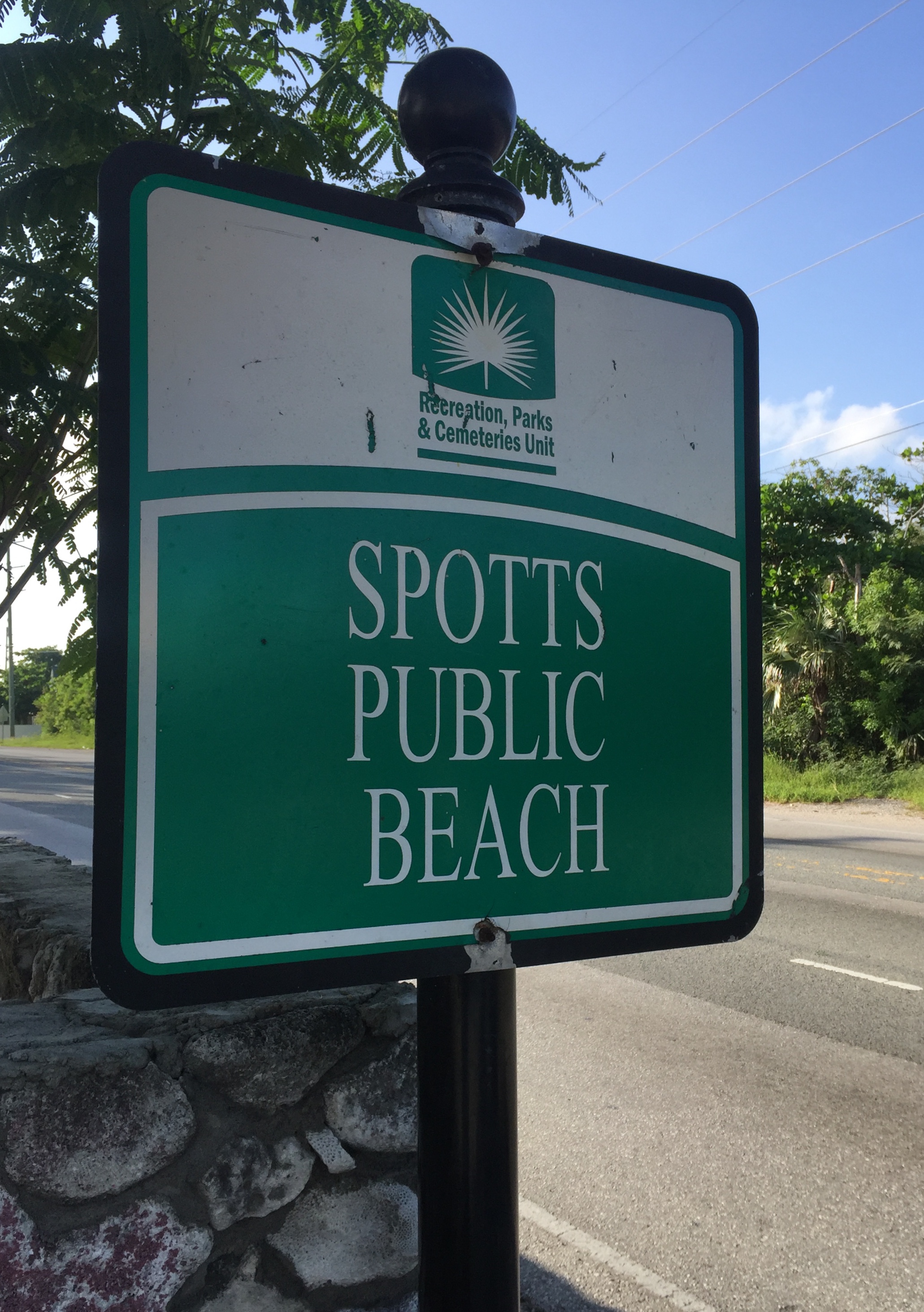
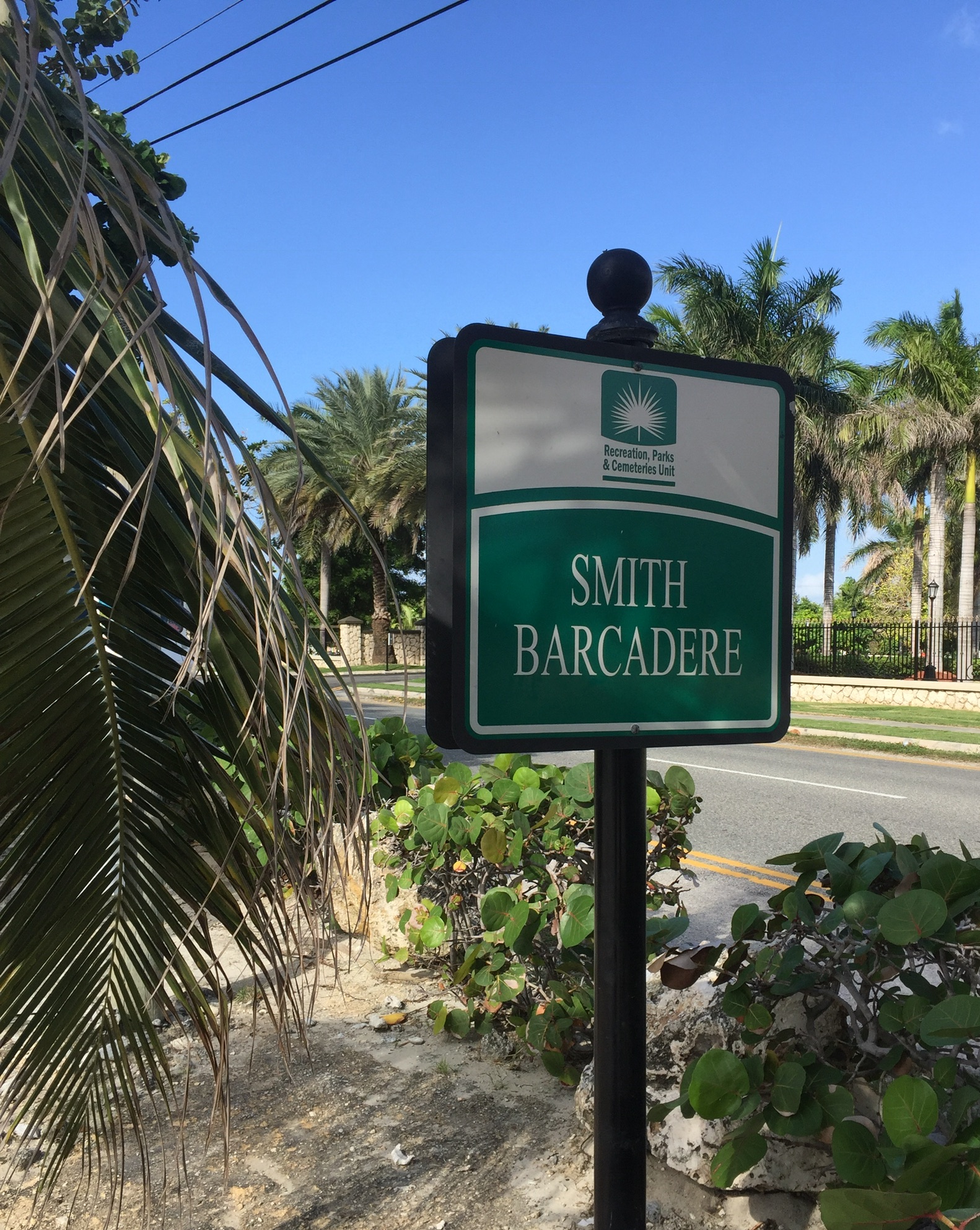
Heading back south toward Georgetown, and then further east toward Boddentown, other snorkeling adventures included stops at two public beaches: Smith Barcadere (or Smith’s Beach) and Spotts Beach, a favorite of locals and a hangout for sea turtles. The waters were a bit rough…we didn’t see much of anything. But it was a fun adventure nonetheless. Both beaches are clearly marked, with parking nearby.


OUR TOP 3 DINING EXPERIENCES ON GRAND CAYMAN

Great food is an important part of any trip we take. It doesn’t have to be fine dining…a shack on the water is totally fine, as long as the food is fantastic. Most of Grand Cayman lacks that old island charm, with the exception of the few places I mentioned earlier on the East End.

7-Mile Beach is where the luxury resorts are located, and that means fine dining, or at least the Cayman version of it. As I mentioned, because everything is imported to the island, the menus at most of these restaurants is pretty much the same. What varies is the dining room and the view. So despite the fact that the Cayman Islands tourism board brags about being “The Culinary Capital of the Caribbean,” there are really very few excellent restaurants. They are, for the most part, nice hotel restaurants. (And that’s not a complement.) It probably should come as no surprise, then, that the 2 best restaurants we found are at the fanciest hotel: the Ritz Carlton.

Blue by Eric Ripert. A newcomer to the island, Blue has made a big splash, totally reinventing the idea of fine dining. Eric Ripert is the Michelin star award-winning chef of NYC’s Le Bernardin, widely considered one of the top restaurants in the world. For him to put his name on another restaurant had to mean drastic changes in the way they do business in the Cayman Islands.

For one thing, the same importer that brings all the same mediocre products to the other restaurants, was not going to cut it. Ripert uses exotic, expensive, hard-to-get ingredients in his recipes that certainly required a new source, someone who could consistently bring him the highest quality tuna, foie gras, and other luxury ingredients.

The staff at Blue is well-trained: the service is beyond reproach, yet they don’t hover over you while you try to eat. And the kitchen staff was hand-picked by Ripert himself, who visits regularly.

What it all amounts to is the finest dining experience on the island: impeccably fresh seafood with the lightest touch of the finest ingredients to make the dishes really shine. One example was the tuna with foie gras, a combination that couldn’t possibly work on paper, but turned out to be a mindblower.
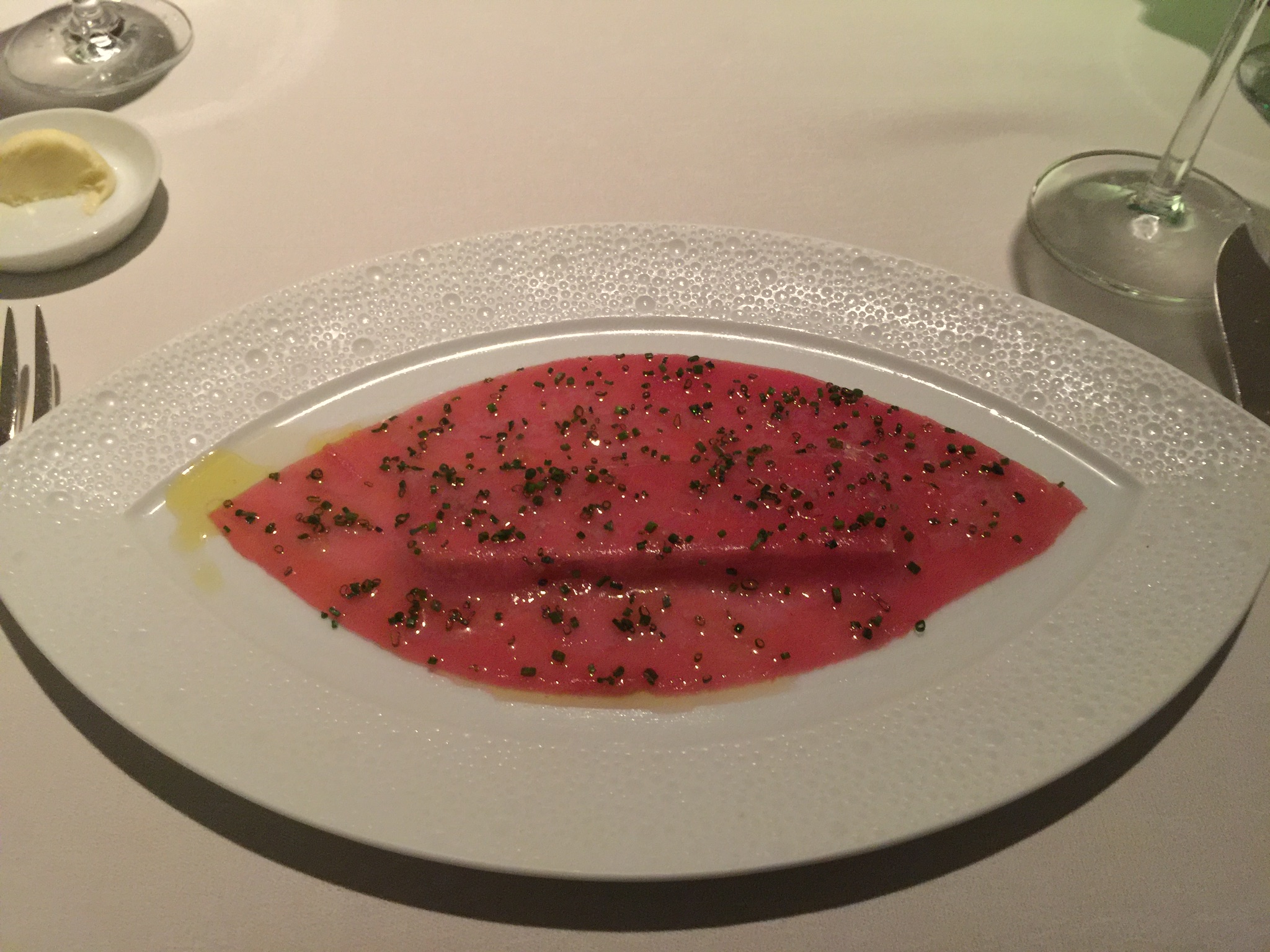
Tuna with foie gras. Tuna pounded thin, with a foe gras “wafer” underneath.

Of course, you pay a hefty price for all this luxury, and as expensive as dining is on this island, Blue kicks the price tag up a notch. All I can say is, go cheap somewhere else and treat yourself to Blue.
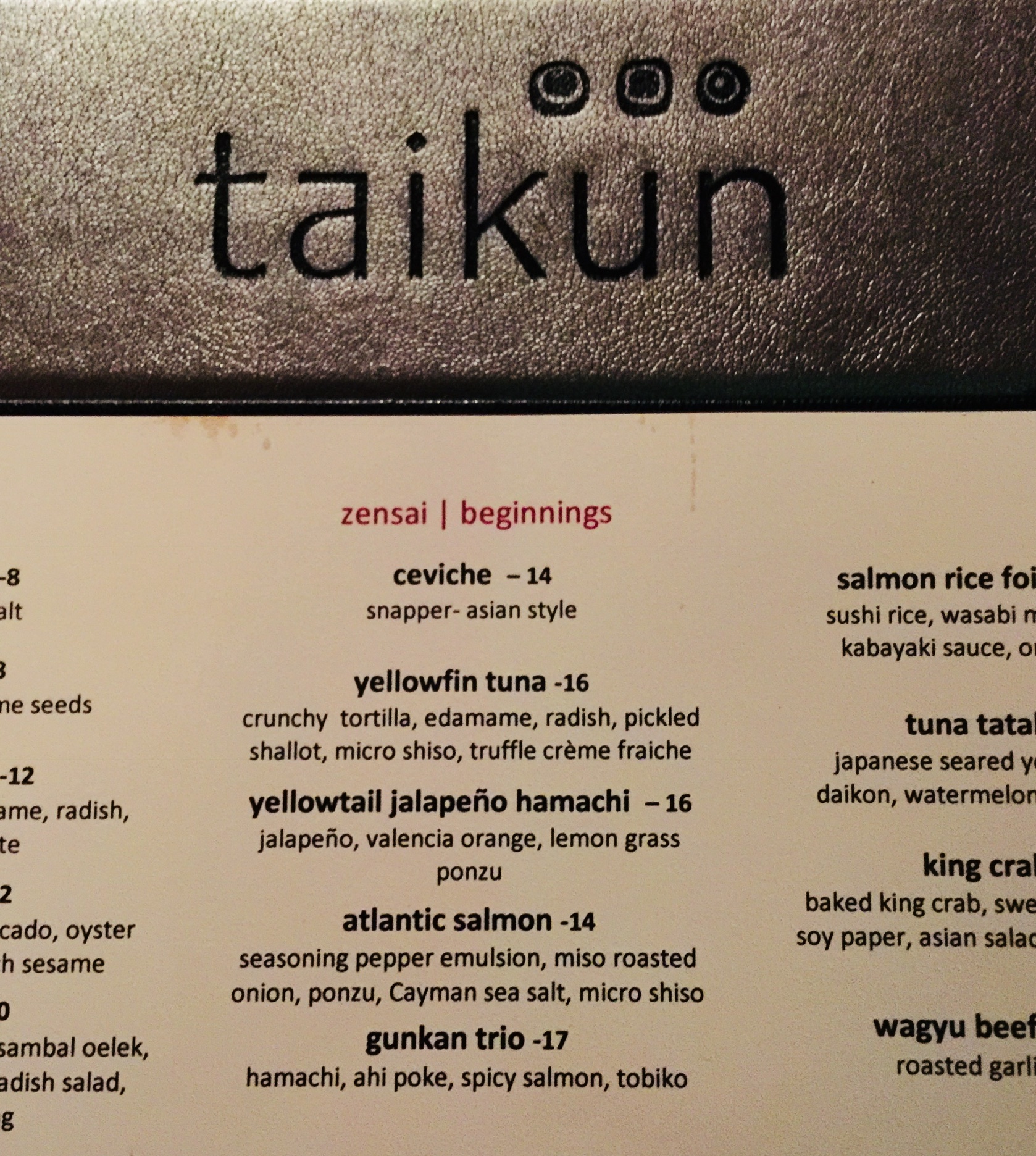
 

Taikun at the Ritz  Carlton. The fact that Taikun is the best sushi restaurant on the island is no doubt in part possible by the influence of the new and exotic ingredients imported for Blue by Eric Ripert. Hey, if one restaurant at the Ritz is getting them, why not two? They even had their own version of tuna with foie gras on their menu. Beautiful sushi, and an excellent, though expensive sake list.

The dining room at Taikun.


Ristorante Pappagallo: Our third favorite restaurant caught us by surprise. We thought for sure that it would be touristy, yet they served some of the most delicious and authentic Italian food we’ve had in a long time: handmade gnocchi, fabulous beef carpaccio, eye-rollingly good risotto…and an excellent wine list. Also, one of the best bars and bartenders on the island…real mixology.
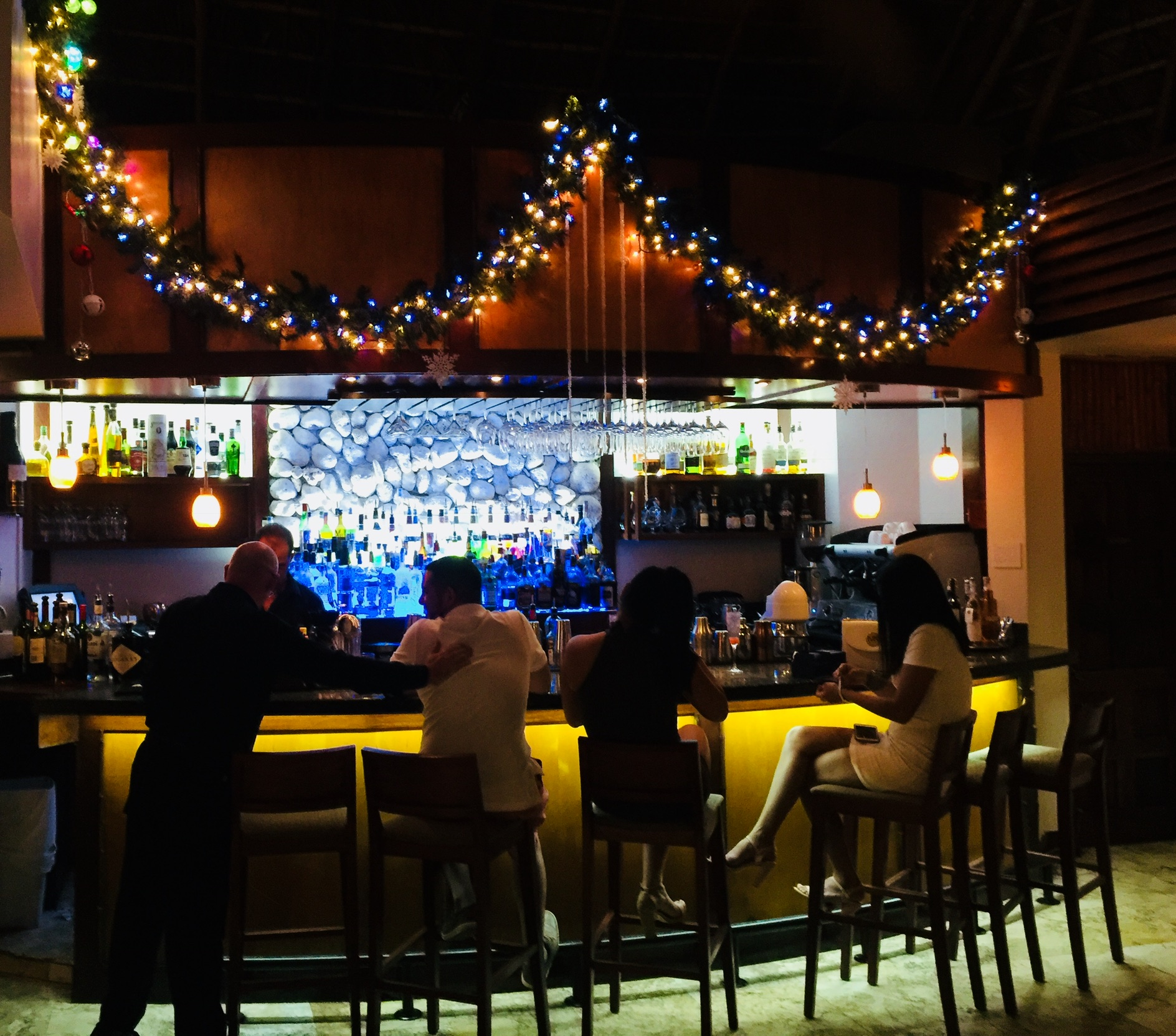
 

The bar at Ristorante Pappagallo.

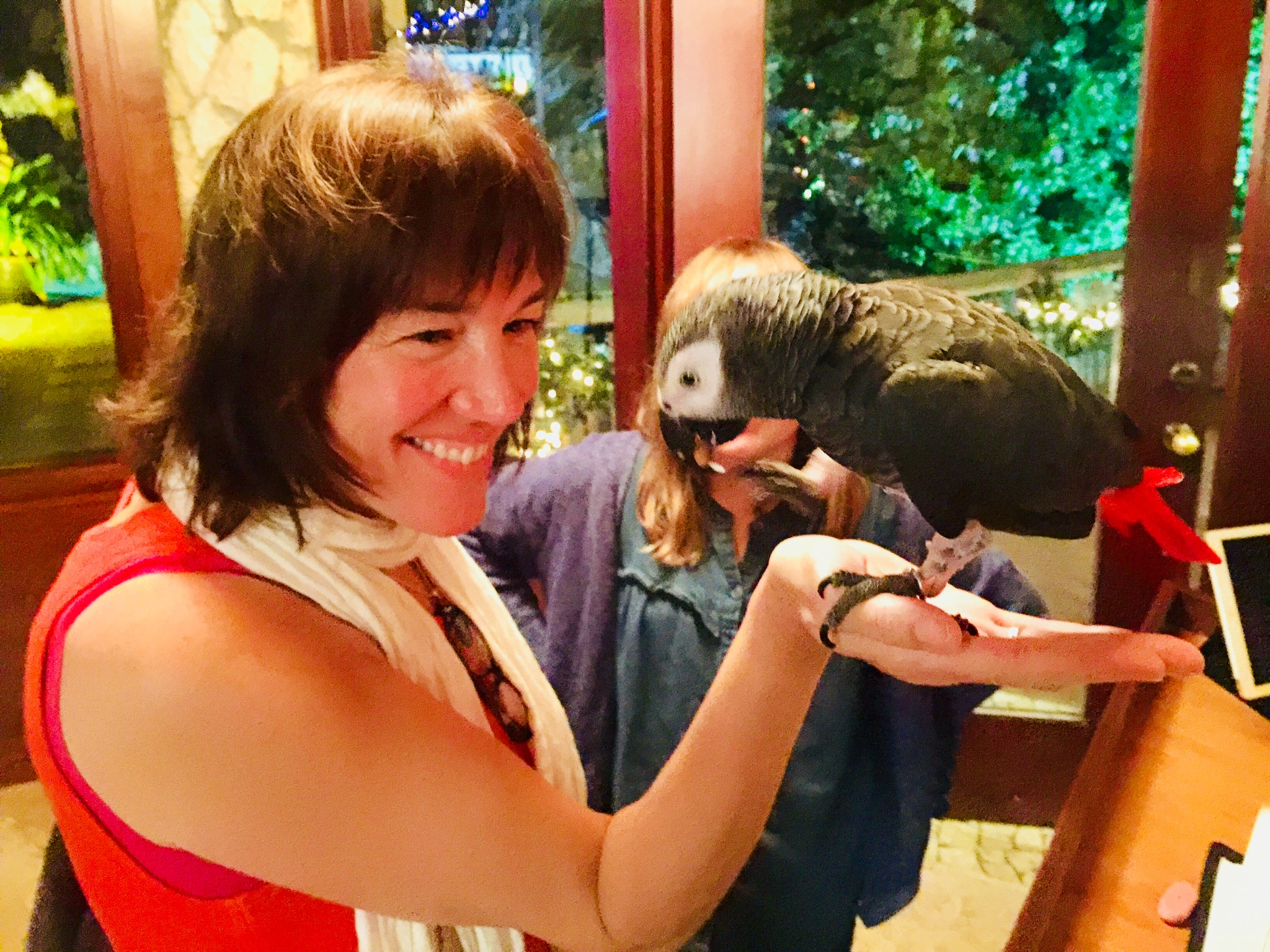
Plus, a wonderful old parrot that’s been there for 35 years!


The worst part about our trip to the Cayman Islands was the airport. For all that money invested in this island, you’d think they would have a state-of-the-art facility. Quite the opposite. It’s crowded, disorganized, low-tech, and dirty…enough of a negative that it makes you think twice about coming back…which is too bad, because it’s the last memory you have of your vacation.


With so many other island choices in the Caribbean, it’s hard to say whether we’ll be back to Grand Cayman any time soon. But we needed the rest and relaxation…and despite a few snags, we got that!


Most everything’s better when you do it yourself, and smoked whitefish salad is no exception. Sure, I can get whitefish salad at my favorite deli when I go home to New York, and it’s pretty good. But they treat the whitefish like they do tuna: they mash the fish to the point where you can’t recognize what you’re eating. And then they add a ton of mayonnaise as filler.

fish1

On a recent visit home, I bought a nice whole smoked whitefish from my favorite supermarket on steroids: Fairway (one of my stops in New York for fish, meat, coffee, and cheese.) I took extra care to really go through all the meat a couple of times to make sure there weren’t any sharp bones left in it. And I left the whitefish meat in small pieces, much like I would with crab meat.

fish2

Interestingly, I didn’t learn how to make whitefish salad from my Jewish New York neighbors. I learned it from my father-in-law in the Upper Peninsula of Michigan, where smoked whitefish is a favorite treat, caught right in the waters of the Great Lakes.

Buying whitefish at one of many smoke shacks at the foot of the Mackinac Bridge, which connects the Lower Peninsula to the Upper Peninsula of Michigan.

Buying whitefish at one of many smoke shacks at the foot of the Mackinac Bridge, which connects the Lower Peninsula to the Upper Peninsula of Michigan.

1 whole 1-lb. smoked whitefish meat, carefully de-boned
1/4 cup mayonnaise
2 tablespoons dill pickle relish
2 teaspoons finely minced onion
pinch black pepper
tiny pinch sea salt

Real fish has real bones, so make sure you go through the meat a couple of times. Place the meat in a bowl. Add the rest of the ingredients and mix well, but gently to keep the meat from breaking apart.

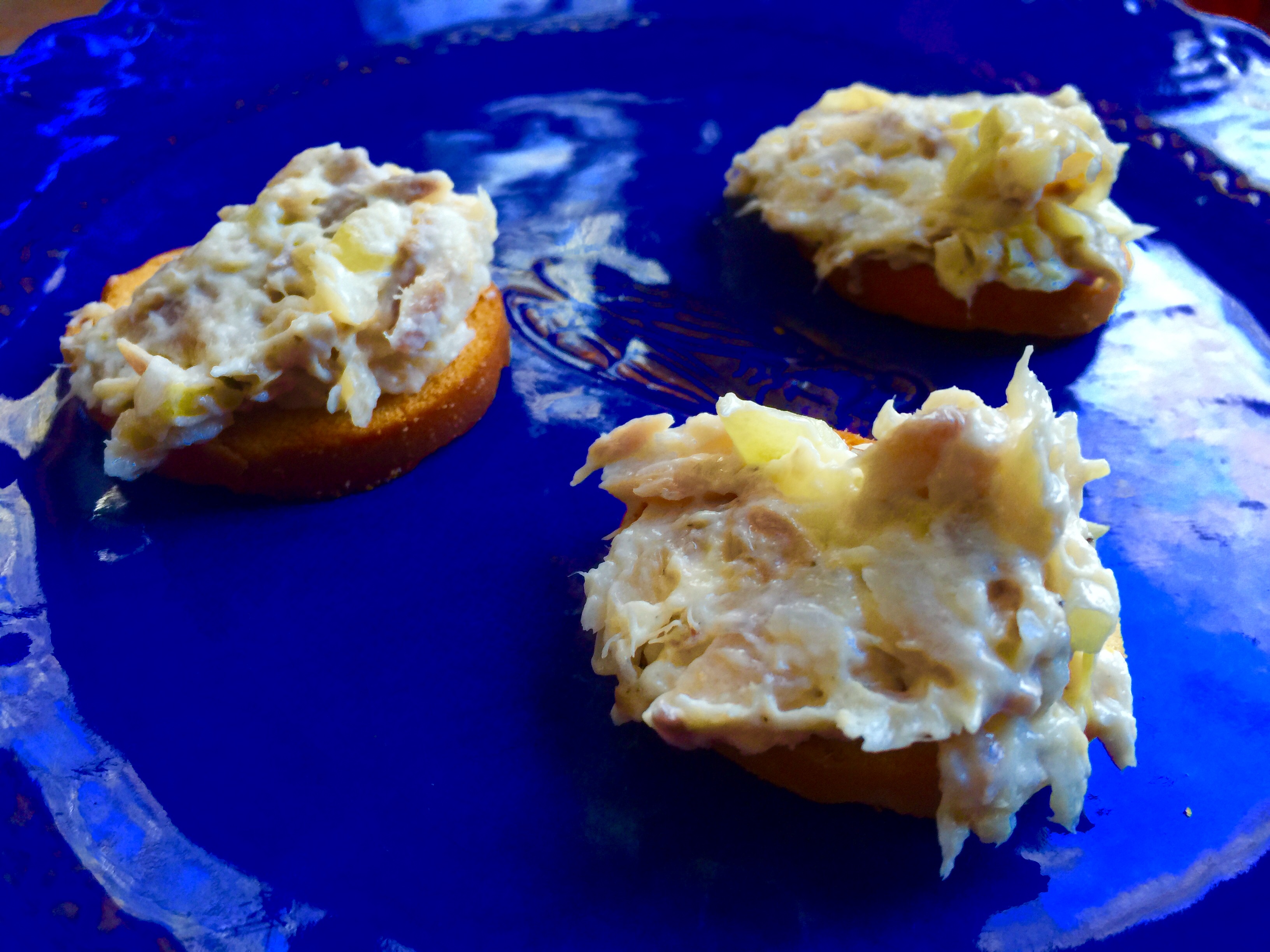
Spoon onto crackers and enjoy!

fish3

This will be the most amazing fish sandwich you’ll ever make.

There. I said it.


There’s no other way to describe this sandwich, something that shouldn’t work in some ways (cheese with fish?) and yet is absolutely perfectly crunchy and delicious. It starts with the cole slaw, ideally made a day in advance…

1 medium cabbage, sliced thinly
2 medium carrots, peeled, and finely chopped
1/2 cup mayonnaise
1 tablespoon Kosher dill pickle juice
1 teaspoon celery seed (not salt)

You can use a machine, but I like to finely slice my cabbage with a kitchen knife, cutting as thin as possible. Place the chopped cabbage in a large bowl.

For the carrots, peel them to remove the outer skin, and throw that away. Continue to peel the carrots into paper-thin slivers until there’s no carrots left. Finely chop those slivers and add them to the cabbage.

Add the mayonnaise, pickle juice, and celery seed, mixing thoroughly. Keep it in the fridge, covered with plastic, until ready to use.  The next day, before using, taste it and decide whether you want more mayo or pickle juice. Mix it well before using.


Like a classic pulled pork sandwich, the slaw will go inside! But it needs a sauce to tie it all together. Make this a day ahead as well.

1/2 cup ketchup
1/2 cup mayonnaise
1 tablespoon dill pickle relish
1/4 teaspoon Tony Cacherre’s Original Creole Seasoning (optional)
1/4 teaspoon salt (skip if using Creole seasoning)
1/8 teaspoon pepper (skip if using Creole seasoning)

Tony Cacherre’s Original Creole Seasoning is a personal favorite, and it works well in this sandwich. You can find it in many stores, and online. But if you don’t have it handy, salt and pepper do the job.

Combine all the ingredients in a bowl, mixing well. Keep it in the fridge, covered, until ready to use.


Cod or other white fish, preferably fresh, cut into sandwich-sized pieces (about 4″ square)
1 cup all-purpose flour (or Cup4Cup gluten-free flour, see below)
1 teaspoon celery seed (not salt)
1 teaspoon salt
1/2 teaspoon black pepper
1/8 teaspoon cayenne (optional)
2 eggs
1 cup corn flakes, crumbled (or Corn Chex for gluten-free, see below)
avocado oil or other oil for frying

My brother-in-law treated us to a huge stash of grouper that he caught on a recent fishing trip. I used that instead of cod the last time I made this sandwich, and the results were fantastic. I suggest you use whatever white fish is your favorite.


Cut the fish into pieces that will fit the bread you’re using, and make sure they’re the same thickness. Don’t make them thicker than 1/2″ or they’ll stay raw in the middle when you fry them. Set aside.

In a bowl, combine the flour, celery seed, salt and pepper and cayenne (if you’re using it). Mix well.

In another bowl, crack the eggs and scramble them.

Put the corn flakes in a plastic bag, squeezing the air out of it. Crush them into oatmeal-sized pieces, then pour them into a third bowl.

Heat a heavy pan with a couple of inches of oil. One by one, take the fish pieces and dredge them in the flour mixture, then into the egg, and then into the corn flakes, pressing into the corn flakes to make sure they stick to the fish.

When the oil in the pan is hot enough, fry the fish pieces on both sides, until cooked through and golden brown. Place them on paper towels to drain.


Pepperidge Farm Marble Swirl Rye Bread (or gluten-free bread)
Swiss cheese, sliced
Melted butter

Pre-heat an oven to 350 degrees.

To assemble the sandwiches, take a slice of the rye bread and spread some of the sauce on it. Place a piece of the fried cod on top, then cover it with some of the cole slaw. Place a few thin slices of Swiss cheese on top of the cole slaw. Take another slice of rye, slather it with the sauce, and place it on top of the slaw, sauce-side down.

Brush the top of the sandwich with the melted butter, and place the sandwich on a sheet pan. Do the same with the rest of the sandwiches.

Place them in the oven and bake them until the cheese melts. Cut the sandwiches in half and serve.

The gluten-free sandwich in the forefront.


What I changed to make this sandwich gluten-free…

My go-to all-purpose gluten-free flour is Cup4Cup. It works really well in any dish that requires all-purpose flour.

Not all corn flakes are gluten-free, and the ones that are can be hard to find. I found that Corn Chex cereal is a good substitute. It’s gluten-free, and has a nice crunch.

The Pepperidge Farm Marble Swirl Rye Bread is the ideal bread to use for this sandwich. But I made a pretty darn tasty gluten-free version for my wife using this Schar bread, found in many supermarkets.


I’m always on the lookout for a great cocktail, and these days, a great restaurant very often requires a great mixologist at the bar…not someone who can simply whip up a Cosmo, but someone who puts as much creativity in his drinks as the chef does in their dishes.

Over the years, I’ve created a list of cocktail recipes that bartenders have been willing to share with me, scribbled on business cards and bar napkins. Here are some from my travels…

The classic negroni is made with gin, Campari, and sweet vermouth. I love negronis, and this cocktail is inspired by them. It comes from chef Tony Maws’ restaurant Craigie on Main in Cambridge, Massachusetts. (www.craigieonmain.com) It’s been a decade since we dined there but the drink remains a favorite of mine. When our server communicated to the bartender that I was willing to be his guinea pig for creative cocktails, I was served this one–so new at the time, they didn’t have a name for it. I took a sip and exclaimed: “Holy Shit!” and the server laughed and said: “That’s as good a name as any!”

I still call it the…

“HOLY SHIT!” COCKTAIL

1 1/2 oz. Bols Genever
1 oz. Gran Classico
1/2 oz. Punt e Mes

Add some ice to a cocktail shaker, and add the ingredients. Stir well. Strain into a rocks glass with one large ice cube.

Bols Genever is a Dutch spirit, the ancestor of gin, created from lightly distilled Dutch grains and a complex botanical mix. It is made according to the original 1820 Lucas Bols recipe which stood at the basis of the cocktail revolution in 19th century America.

Gran Classico is an alcoholic aperitif/digestif created following a recipe dating from the 1860s. It’s made by soaking a mixture of 25 aromatic herbs and roots in an alcohol/water solution to extract their flavors and aromas. The maceration creates a natural golden-amber color, although many other producers, like Campari and Cynar, dye their product red.

Punt e Mes is a pleasantly bitter, slightly sweet red vermouth, the “baby brother” of Carpano Formula Antica. The formula was developed in 1870 in Antonino Carpano’s bar in Piedmont, and the distinctive 15-herb recipe is still a family secret.


I sampled another negroni-inspired cocktail in Cleveland, Ohio, dining at chef Jonathon Sawyer’s The Greenhouse Tavern. (www.thegreenhousetavern.com) Crazy creative food, and this mind-blowing drink that inspired me to buy a small oak barrel and start cask-aging everything I could get my hands on at home. The OYO Stone Fruit Vodka, a key part of this cocktail, is not available here in Rhode Island. And my online source will no longer ship it! (www.thepartysource.com/oyo-stone-fruit-vodka) Store pick-up only.


OYO STONE FRUIT “NEGROSKI”

1 oz. OYO Stone Fruit Vodka
1 oz. Campari
1 oz. Cocchi Vermouth di Torino


If you’re doing it The Greenhouse Tavern way, combine large quantities of these ingredients in the right proportions and pour them into an oak cask, then let it age! Experience tells you that newer and smaller casks will mellow flavors faster than larger, older ones. But it’s all about experimentation. Having a taste every once in a while is must, because you don’t want to over-age it, either.

If you don’t have an oak cask lying around at home, it’s still delicious without it…

Combine all the ingredients in a rocks glass with ice. Stir gently, adding a splash of soda, and garnish with an orange peel.


OYO Stone Fruit Vodka gets its wonderful flavors from stone fruits: cherries, peaches, apricots and almonds. Terrific on its own, but amazing in this recipe.

Campari is a world-famous aperitif and bitters, and a must in any decent home bar.

Cocchi Vermouth di Torino is a sweet vermouth, made in Italy from the Moscato grape.


PRETZEL BREAD

Posted: January 16, 2018 in Food, Recipes, Uncategorized
Tags: , , , ,

I haven’t found a great gluten-free pretzel bread recipe yet, so I don’t make this recipe as often as I used to. (My wife needs to be on a gluten-free diet, so we tend to focus our meals to that end for everyone in the family.) But sometimes, you just can’t resist…

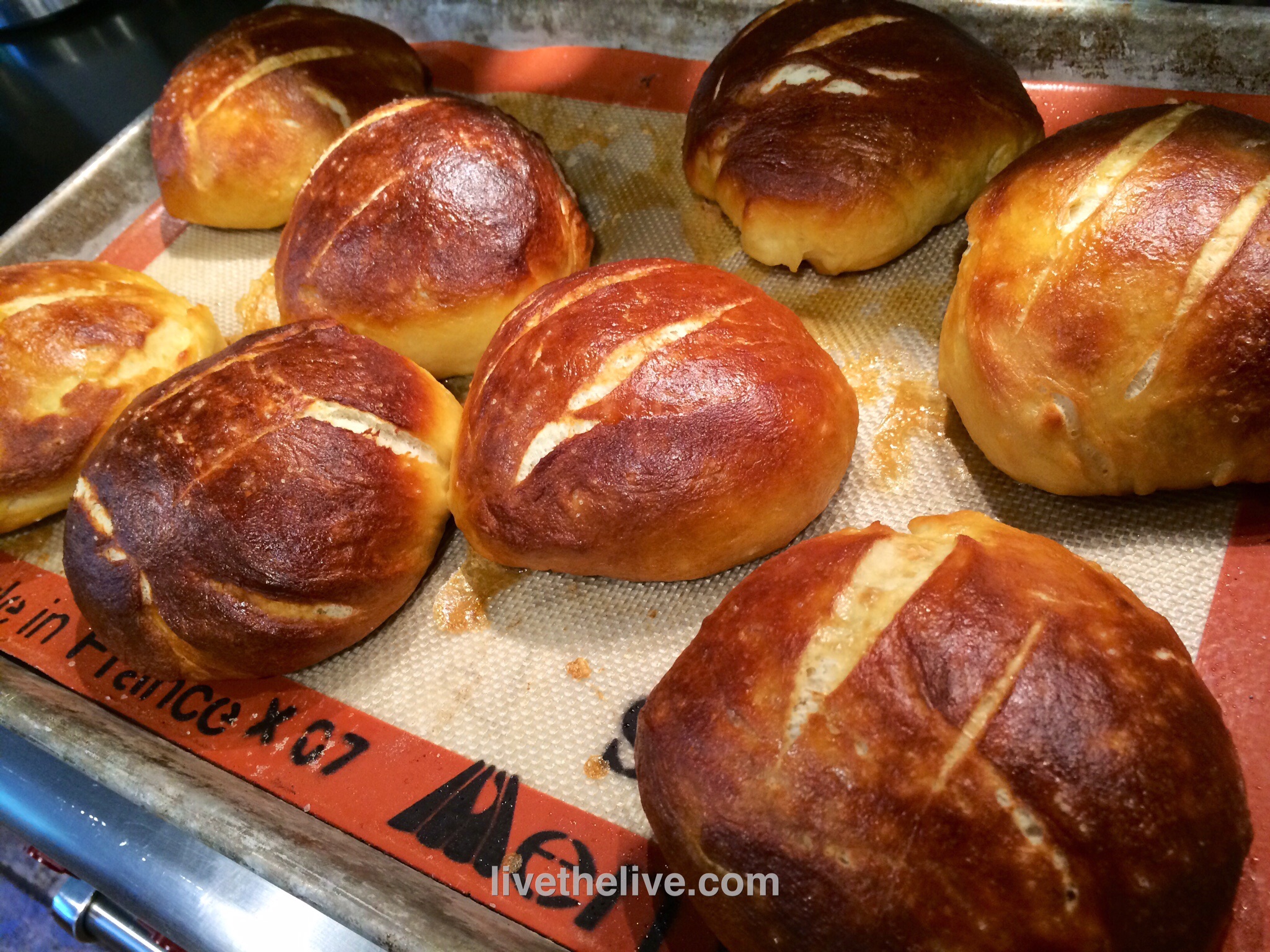
Making pretzel bread at home had one major stumbling block for me: the need for lye,  which has nasty corrosive qualities that I don’t want to deal with in my kitchen. Even special baker’s lye was not an option. So when I found a pretzel bread recipe that used baking soda, a much milder and safer alkaline ingredient that I could simply pour down my drain after using, I knew it was time to bake.


image


½ cup water
½ cup milk
2 tablespoons butter, softened
3 cups all-purpose flour
2 tablespoons brown sugar
1 tablespoon yeast
2 teaspoons salt
1 egg, separated
Cooking spray
¾ cup baking soda
Kosher salt for sprinkling

Combine the water, milk and butter in a glass container and microwave about 45 seconds to melt the butter and warm the milk. Set aside.

In a mixing bowl, combine the flour, brown sugar, yeast, salt and egg yolk. Slowly add the milk mixture and mix until the dough comes together. If it seems too dry, add small amounts of water. Knead the dough until it is smooth and springy, about 5 minutes.

Place the dough in a bowl sprayed with cooking spray. Flip it over so all sides get oiled, and then wrap the bowl with plastic wrap. Place in a warm place until the dough has doubled in size, about an hour.

Pre-heat the oven to 375 degrees.

Turn out the risen dough on a floured surface and divide it into equal pieces. You can make 15 small slider-sized buns, 8 burger buns, 8 hot dog buns or any other shape you like. Once all the pieces have been rolled, cover them with a clean dish towel and set them aside to rest.

While the dough is resting, heat about 12 cups of water in a large pot. When it comes to a gentle boil, carefully pour the baking soda into it. It will foam and bubble vigorously.

Add the rested pieces of dough to the simmering water and poach them for about 30 seconds and then flip them over for another 30 seconds. You may need to do this in batches.

With a slotted spoon or spatula, lift the poached buns onto a Silpat baking sheet (or a baking sheet sprayed with oil, then sprinkled with cornmeal.)

Froth the egg white with a fork, then brush each bun with the egg white.

Using a sharp knife, make a few slits on the top of the buns, about ¼-inch deep. Sprinkle them with Kosher salt, then bake for 20 minutes until golden brown.

Mystic, Connecticut has been a favorite day trip here in New England for years, with its charm as a historic seaport with an impressive aquarium. But over the past decade or so, food, which has never been a strong suit of this small community, has taken the forefront. There have always been the pizza joints and the fish shacks, and staples like the generic Steak Loft, but in recent years, food lovers have found Mystic to be a destination for dining alone. It’s no surprise, then, that this community, which would be busy for only 2 summer months out of the year, is now teaming with visitors year-round.

One of the best dining destinations in Mystic is The Oyster Club, (www.oysterclubct.com), a farm-and-sea-to-table establishment that features ever-changing menus based one what is truly in season at the moment. Add that to genuine creativity in the kitchen and bar, and you get a really fun and delicious dining and drinking experience often found only in larger cities.

We recently had dinner at The Oyster Club on a Saturday night, and loved it so much, we returned the next day for Sunday brunch. Neither meal disappointed.

Our friends at FireFly Farms, a certified humane farm that raises pigs, cows, chicken and ducks in nearby Stonington, Connecticut have contributed to The Oyster Club menu on occasion, including a pig roast next month. Despite that the duck wasn’t from their farm this time, it was a dish that 3 of us just couldn’t resist. Only I veered from the meat and went for a beautifully pan-sauteed black bass. And my daughter was perfectly happy with house-made tagliatelle with Bolognese. Appetizers included fresh local oysters (of course).

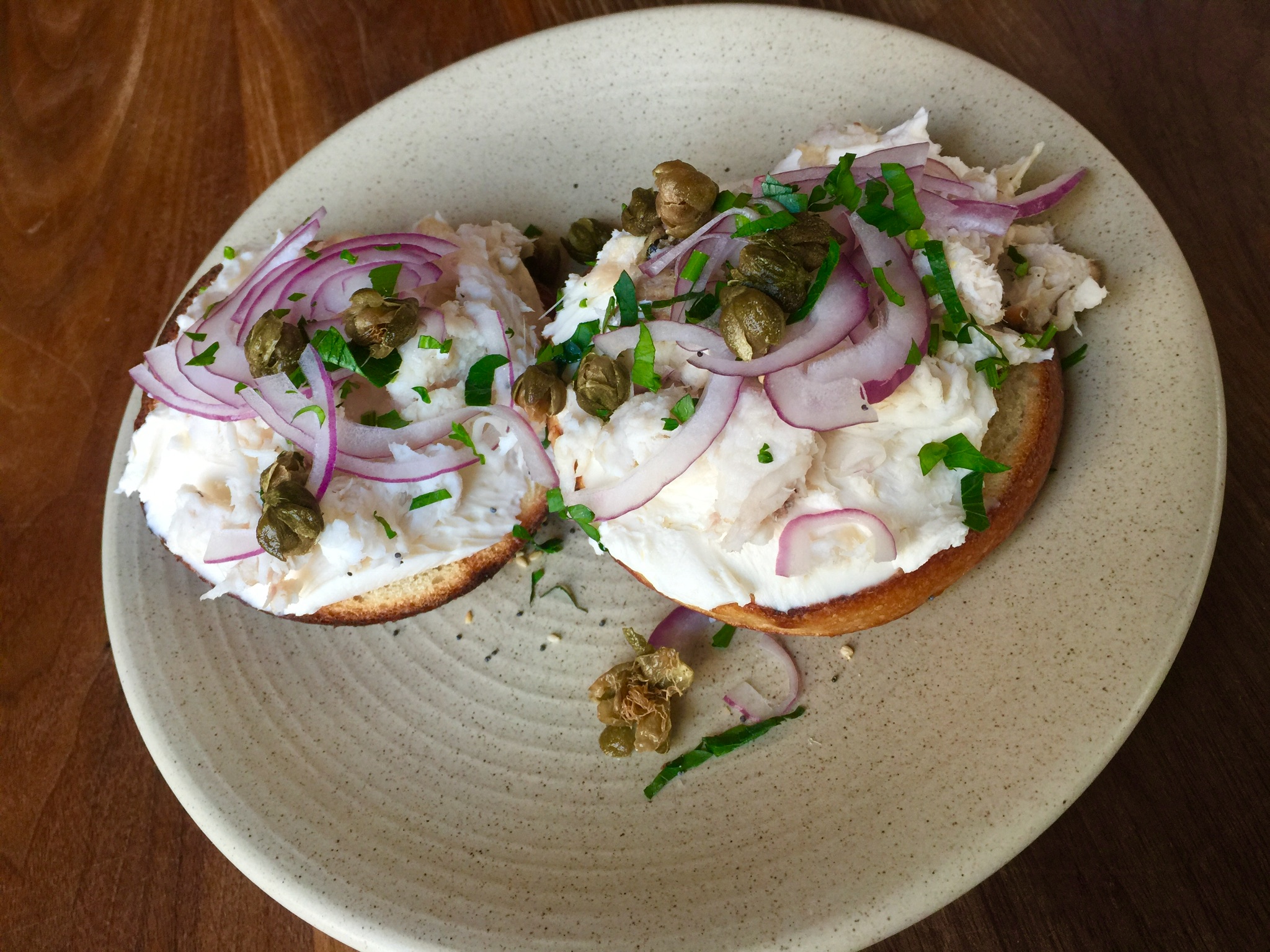
House-made everything bagel, cream cheese, red onion, fried capers, parsley, and smoked conger eel.

For brunch the next morning, my wife and returned to enjoy food and a few cocktails. My wife ordered a delicious frittata, while I just had to order the eyebrow-raising house-made everything bagel with cream cheese, sliced red onion, fried capers, parsley, and smoked conger eel! Yes, eel! It was fantastic! A delicious salad of apple and blue cheese rounded out our brunch.

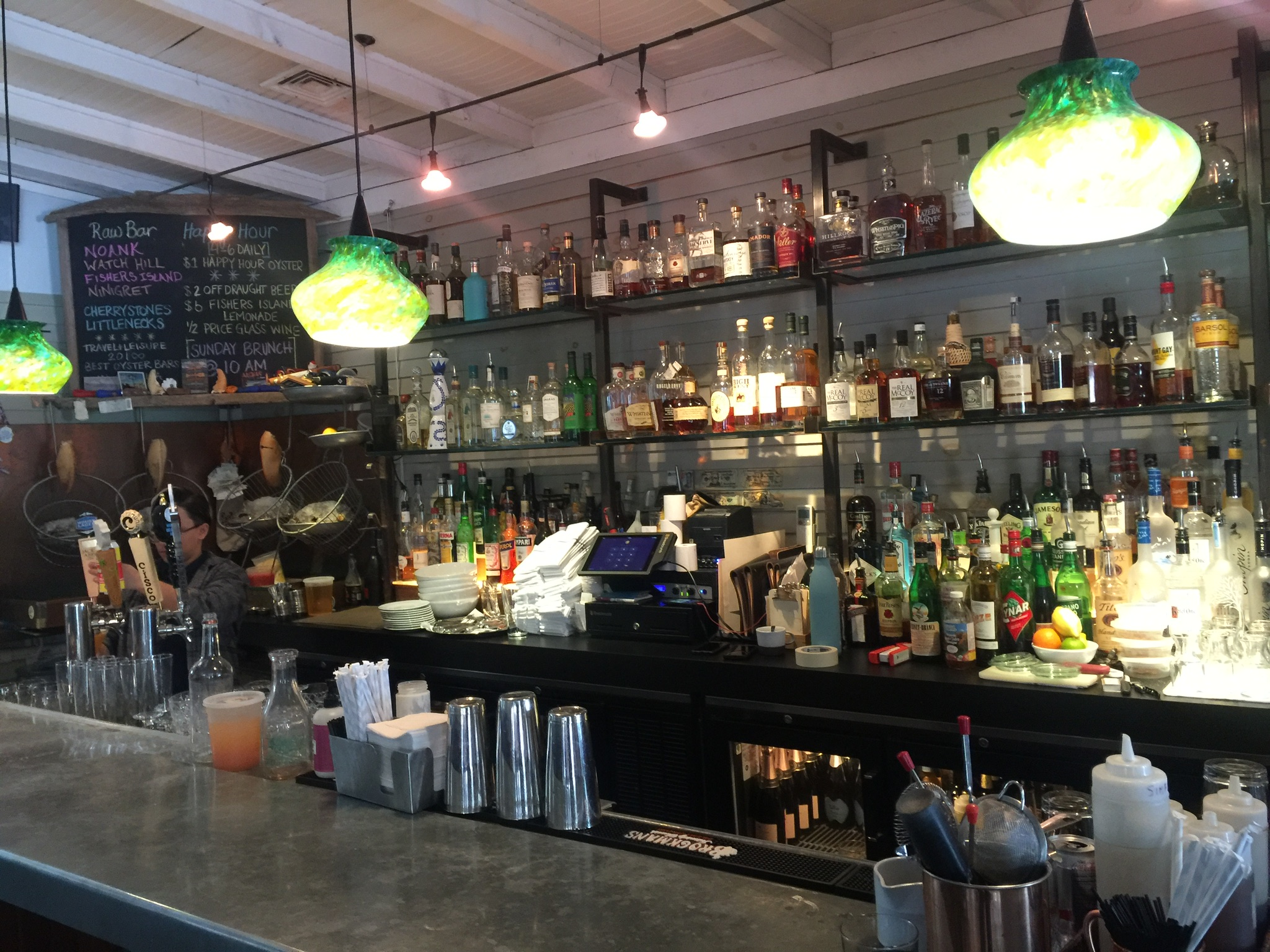
The bar at The Oyster Club. Wish I lived closer to this place…

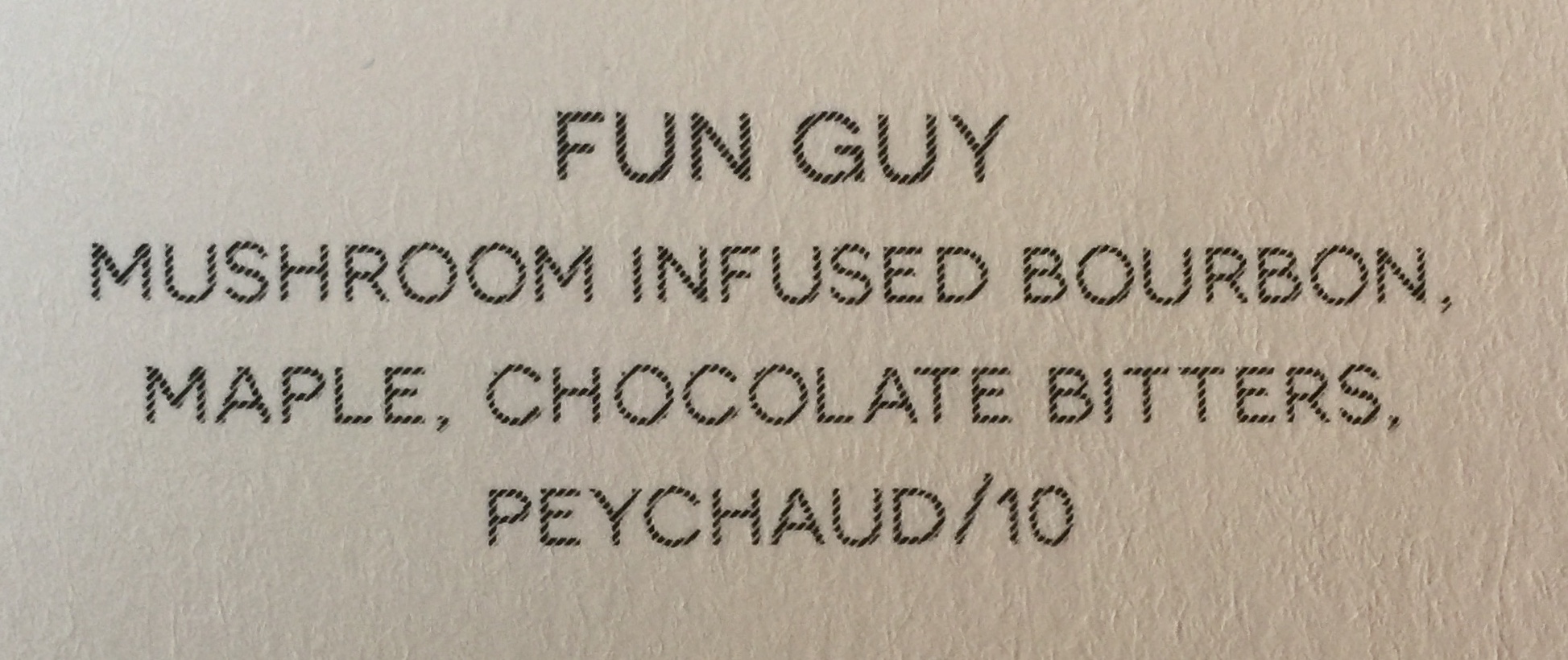
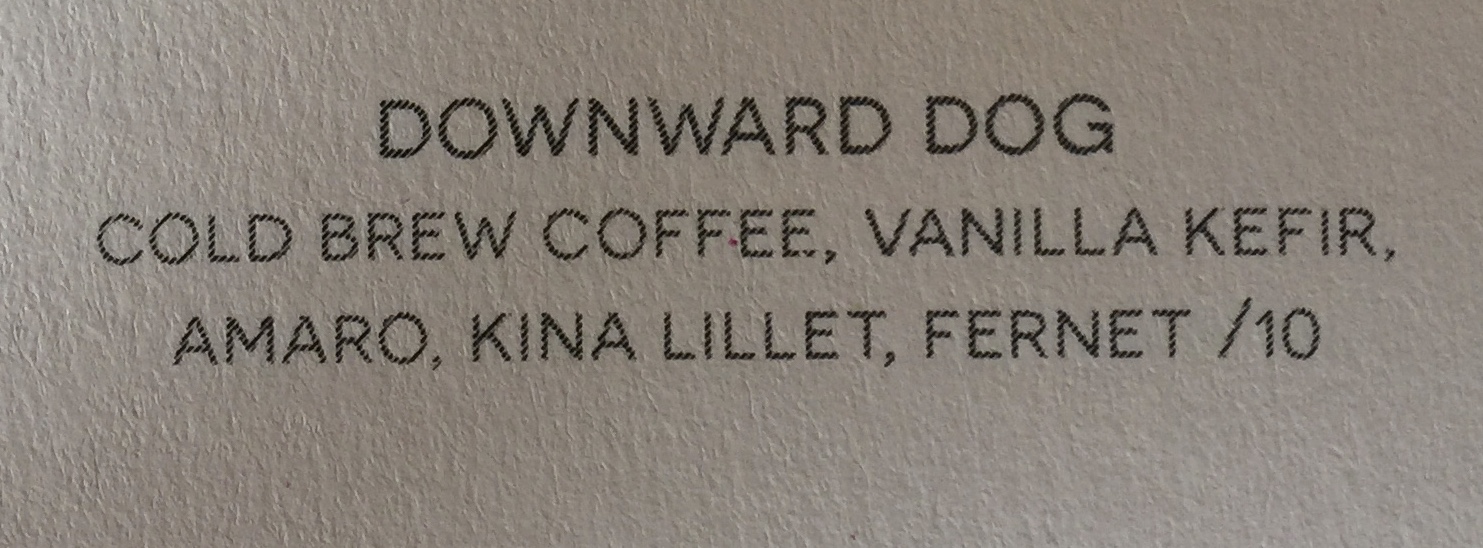
For drinks, I sipped on a mushroom infused bourbon cocktail called the Fun Guy…and my wife enjoyed the Downward Dog, featuring cold-brewed coffee.

Fun Guy (left) and Downward Dog (right.)

With an exterior raised deck area they call “The Treehouse” in the back, open in warmer weather, The Oyster Club is a place we will gladly return to!


If you’re craving sushi, ironically, the best sushi can be found across the street from the Mystic Aquarium at Johnny’s Peking Tokyo. (www.pekingtokyomystic.com) As its name implies, you’ll find Chinese and Japanese cuisine here, and everything is top-notch. It’s the best sushi between New York City and Boston.


And what visit to Mystic would be complete without hob-knobbing with the rich folks? The Spicer Mansion (www.spicermansion.com) is a beautifully refurbished Relais and Chateaux property, where you can dress up and sip cocktails by the fire. Join the special club here and you’ll have access to a “secret” speakeasy located in the basement! Excellent pampering service, as you’d expect.


This was a huge hit when I brought them to a recent neighborhood party. Imagine the best of a deviled egg and a BBQ chicken sandwich, and you’ve got this appetizer that rocks in more ways than one. This is a great appetizer you can make ahead of time. I boil the eggs and make the cole slaw the day before, then keep them in the fridge. Even the chicken can be cooked the day before and then warmed through before assembling right before your guests arrive. Be sure to make a lot of them…they’ll go faster than the hard-boiled eggs in “Cool Hand Luke!”

This recipe is gluten-free, as long as you use GF soy sauce.

_DSC6511


For the chicken and BBQ sauce:
3 cups ketchup (I use Heinz organic)
1 tablespoon apple cider vinegar
2 tablespoons soy sauce (I use La Choy: it’s gluten-free)
1 teaspoon hot sauce (I use Frank’s Red Hot)
1/4 cup + 2 tablespoons brown sugar
1 lb. boneless skinless chicken breasts


For the cole slaw:
2 tablespoons mayonnaise
1 tablespoon rice wine vinegar
1/2 teaspoon sugar (I use organic cane sugar)
2 cups finely shredded cabbage
For the deviled eggs:
6 hard-boiled eggs
1/4 cup mayonnaise
1 tablespoon mustard (I use Gulden’s)


Pre-heat the oven to 250 degrees.

Combine the ketchup, apple cider vinegar, soy sauce, hot sauce, and brown sugar in a oven-proof pot with a lid. Mix well, then add the chicken breasts, making sure they’re immersed in the sauce. Cook low and slow in the oven for about 3–4 hours.

When the chicken is cooked through, shred the meat with 2 forks. Set it aside, but keep it warm.

Combine all the cole slaw ingredients in a bowl, mixing well, and place in the fridge.

For perfectly hard-boiled eggs, place the eggs in a pot of cold water, and turn the heat on high. Just before the water starts to boil, put a lid on the pot and turn the heat off. Let the eggs sit in the hot water for 15 minutes. Once cooked, keep the eggs in the fridge.

Slice the eggs in half and place the yolks in a bowl with the mayonnaise and mustard. Mix well and keep in the fridge.

To assemble, take a teaspoon of the mayo/mustard/yolk mixture and place it in the cavity of one of the egg halves. Place another teaspoon of the shredded chicken on top (I like it warm, to counter the cold of the mayo and cole slaw), drizzling a little of the BBQ sauce that you cooked the chicken with on the meat. Then place a teaspoon of the cole slaw on top of the chicken.

It’s cold here in New England, with about a foot of snow on the ground. Sometimes, only comfort food will do: a warm bowl of beef stew or chowder…Shepherds Pie with buttery mashed potatoes…a big bowl of pasta…you get the idea. But the same goes for cocktails. And nothing gets me warm and fuzzy like a classic Scorpion Bowl!
Most of the recipes for a Scorpion Bowl I found on-line don’t match the one that I’ve been using for many years. This recipe comes from a bartender (whose name I can’t remember–too many Scorpion Bowls, I guess) from a long-gone Chinese restaurant, China Garden, that was in Warwick, Rhode Island. A car dealership now stands in that spot. This is the best Scorpion Bowl I’ve ever had…and continue to have!
Make sure to use top shelf booze for this or you’ll be a “Suffering Bastard” the next morning! (A little Chinese restaurant drink humor…)

Look carefully, and you may see the flame coming out of the volcano! Hope I don’t need to tell you not to drink the 151 while it’s lit! And yes, it’s an old photo: Disaronno Originale hasn’t been called Amaretto di Saronno for a long time!

2 oz. light rum (I use Don Q silver)
2 oz. dark rum (I use Mount Gay)
1 oz. gin (I use Bombay Sapphire)
½ oz. brandy (I use good ol’ E&J)
½ oz. Disaronno Originale
½ oz. Cointreau
6 oz. Pineapple juice
6 oz. Orange juice
½ oz. Bacardi 151 rum for the little cup in the volcano

In a blender half-full of ice, add all the alcohol, except the 151 rum. Add the pineapple juice and the orange juice.  (Use less if you like it stronger.) Give the drink a quick 1-second pulse in the blender, and pour it with all the ice into Scorpion Bowl or a very large glass or bowl. If you do have a Scorpion Bowl with the volcano in it, add the 151 rum to the bowl in the volcano. If not, you can mix the 151 into your drink.

Don’t drive!

My original banana bread recipe blog is featured directly below. It’s awesome. But my wife’s dietary needs required that I make some changes. My gluten-free version of the recipe, at the bottom of the page, is so good, you won’t miss the wheat!


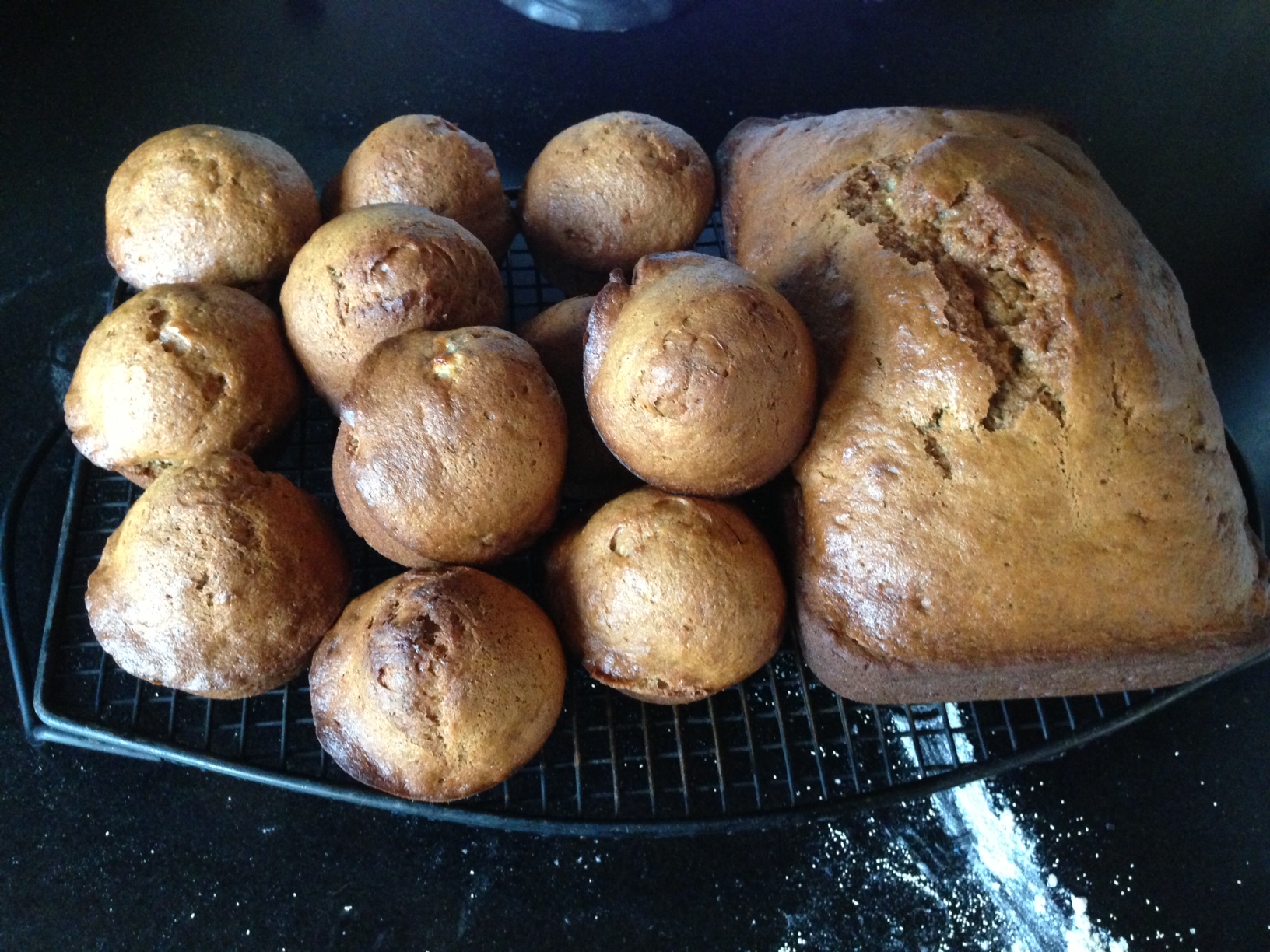
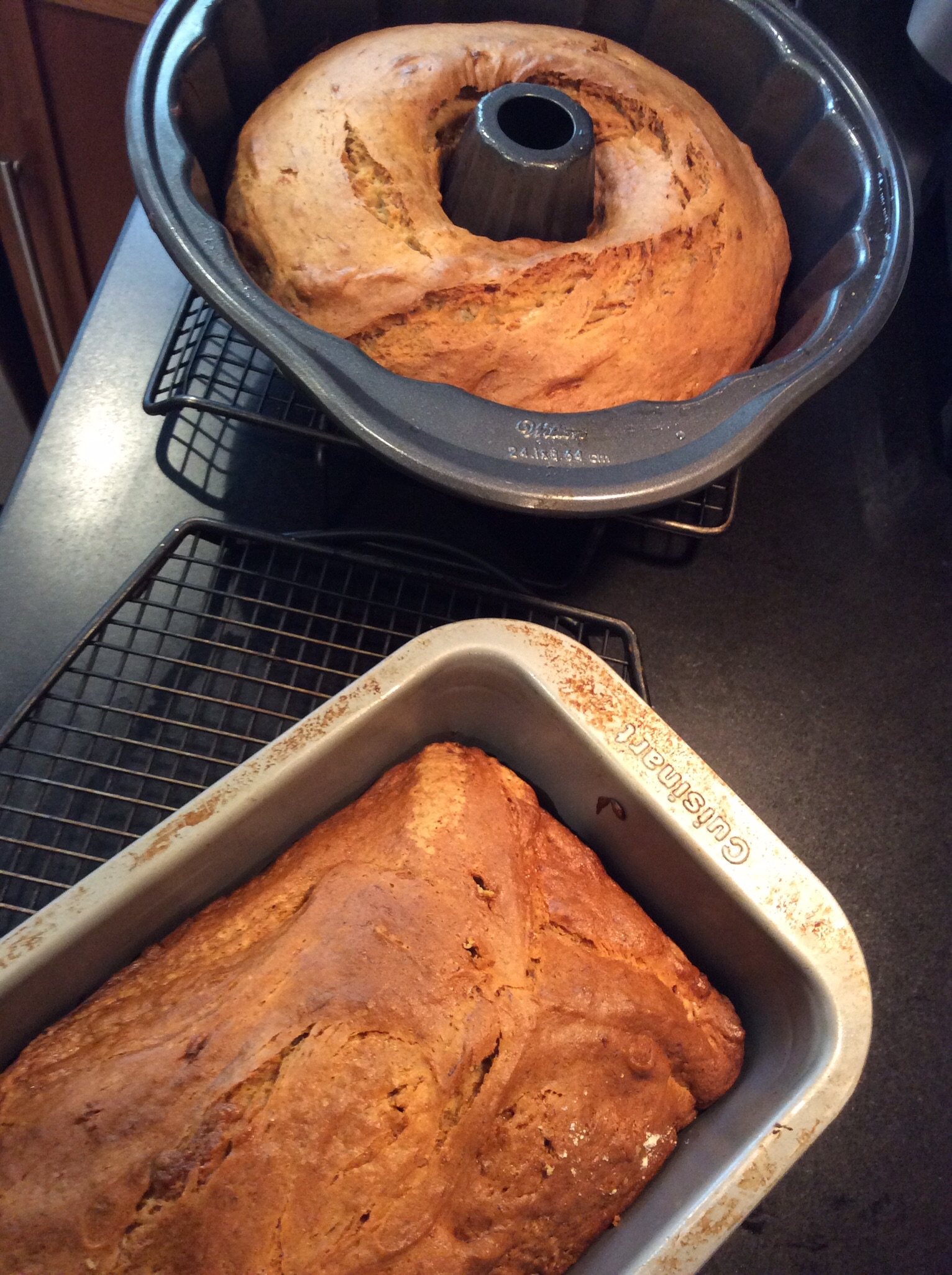
A gluten-free batch.


The original recipe…

What makes this banana bread special is that it uses whole wheat flour…less sugar…and no artificial extracts that make most banana breads taste like crap. It relies on very ripe bananas to give it its wonderful natural flavor.

It’s not always easy to get bananas to ripen exactly when you’re trying to make your banana bread recipe. So I by a large bunch of bananas and let them get very ripe at room temperature. I then take 5 at a time (for this recipe), peel them, and place the bananas in a Ziploc bag in the freezer. When it’s time to make banana bread, I just pull one of those Ziplocs out of the freezer, let it thaw, and mash with a potato masher.


Nana bread blog


3 cups all-purpose flour
1/2 cup whole wheat flour
2 tsp baking soda
1/2 tsp salt
1 1/4 cup sugar
3/4 cup vegetable oil
2 eggs
5 medium-sized bananas, peeled and mashed
2 tsp real vanilla extract
Cooking spray

Pre-heat the oven to 350 degrees.

Combine the all-purpose flour, whole wheat flour, baking soda and salt in a medium bowl. Set aside.

Combine the sugar and oil in a mixing bowl and mix at medium speed for 2 minutes. (I use the whisk attachment.) Add the eggs, one at a time. Beat until the mixture is light and lemon colored.

With the mixer running at low-speed, add the flour mixture alternately with the bananas, beginning and ending with the flour mixture. Blend well after each addition. Add the vanilla extract and blend some more to mix.

Pour the batter into 2 loaf pans that have been sprayed with cooking spray. Bake for 45 minutes or until a wooden pick inserted in the center comes out clean. Cool 15 minutes in the loaf pan on a wire rack.

Remove from the pan and let it cool completely on the wire rack before slicing.

image


The gluten-free recipe…

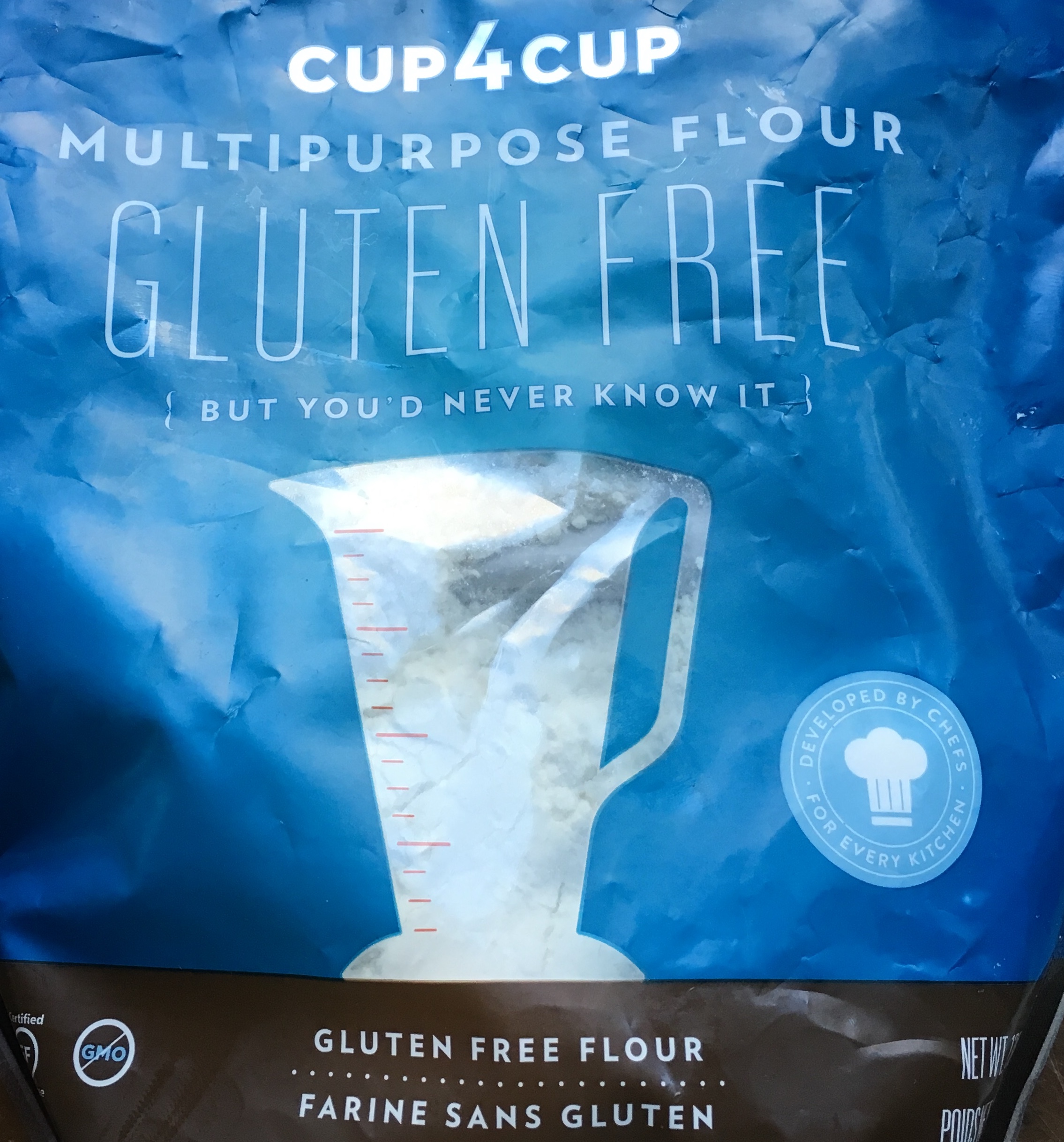
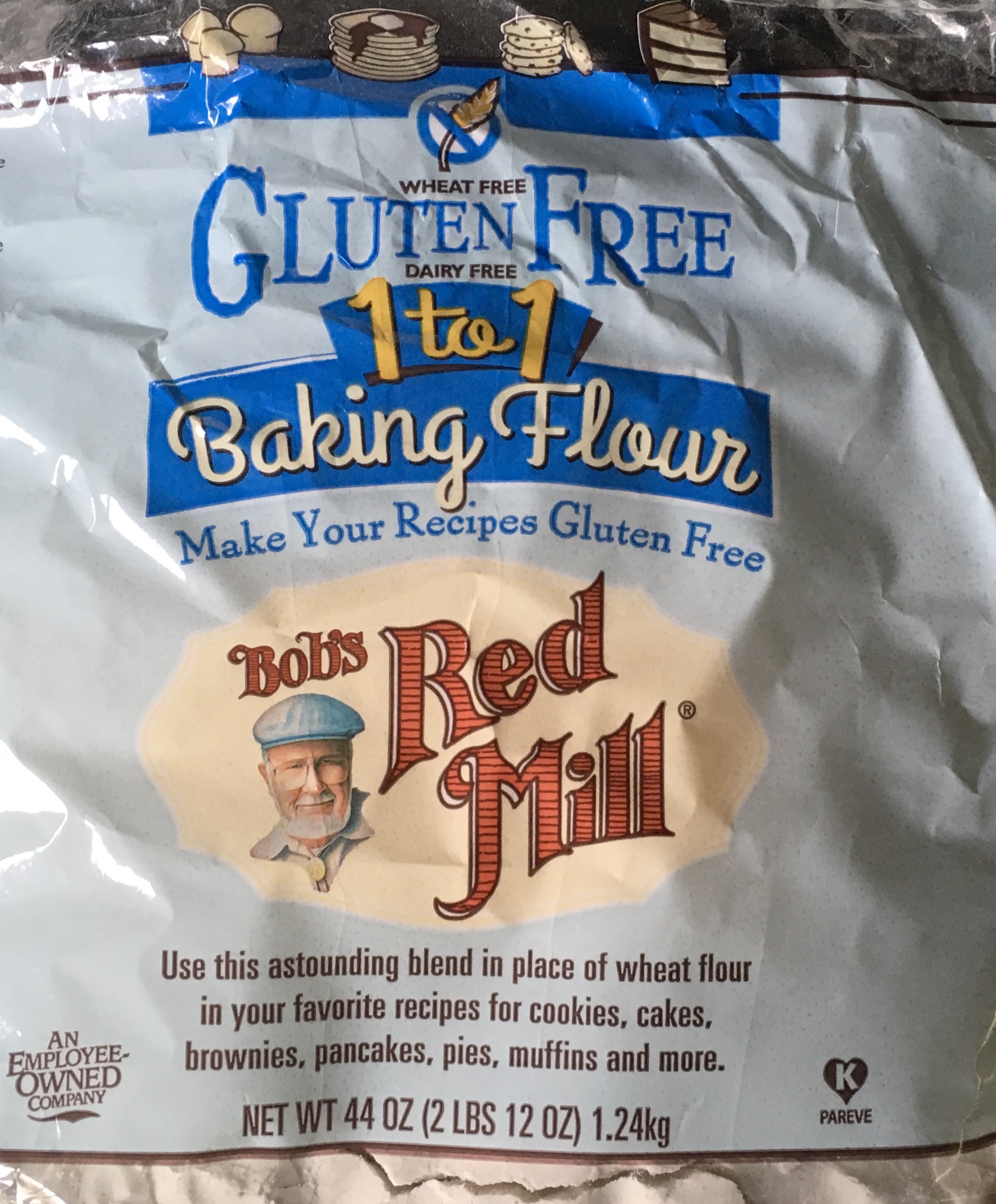
My go-to gluten-free flour is the brand called Cup 4 Cup. You can find it in most supermarkets. But this time I tried the gluten-free baking flour by Bob’s Red Mill. Both flours gave excellent–and tasty–results.


If you want a slightly more “rustic” flavor, you can substitute 1/2 a cup of corn meal for 1/2 a cup of the flour. I use organic cane sugar instead of regular sugar when I have it. I don’t use vegetable oils, especially not canola, so I use healthier avocado oil or olive oil. Eggs are pastured when I can get ’em. Bananas are organic. And I rub the pans with coconut oil or I use an olive oil cooking spray.


image


4 cups gluten-free flour
2 teaspoons baking soda
1/2 teaspoon salt
1 1/4 cup organic cane sugar
3/4 cup avocado or olive oil
2 eggs
5 medium-sized bananas, peeled and mashed
2 teaspoons real vanilla extract
coconut oil


Pre-heat the oven to 350 degrees.

Combine the flour, baking soda and salt in a bowl. Set aside.

Combine the sugar and oil in a mixing bowl and mix at medium speed for 2 minutes. (I use the whisk attachment.) Add the eggs, one at a time. Beat until the mixture is light and lemon colored.

With the mixer running at low-speed, add the flour mixture alternately with the bananas, beginning and ending with the flour mixture. Blend well after each addition. Add the vanilla extract and blend some more to mix.

Pour the batter into 2 loaf pans or one large bundt pan that have been rubbed with the coconut oil. Bake for 45–60 minutes or until a wooden toothpick inserted in the center comes out clean. Cool 15 minutes in the pan on a wire rack.

Remove from the pan and let it cool completely on the wire rack before slicing.


It seems silly to travel all the way to Paris for a jar of mustard, but that’s exactly what we used to do. OK…we happened to be in Paris when we made the pilgrimage to the Maille mustard shop, but I couldn’t imagine a trip to the city of light without making the stop.
Back in 1747, Antoine Maille was known by many as the greatest mustard and vinegar maker of all time. He created the now-famous Maille Dijon Originale mustard in Dijon, France, and opened a shop in Paris to sell it. To this day, the company follows his strict guidelines to re-create that magic. The Maille company opened a second store, in Dijon, in 1845.
Saving us thousands of dollars in travel expenses, there are now 2 Maille mustard shops in my home town of New York City.

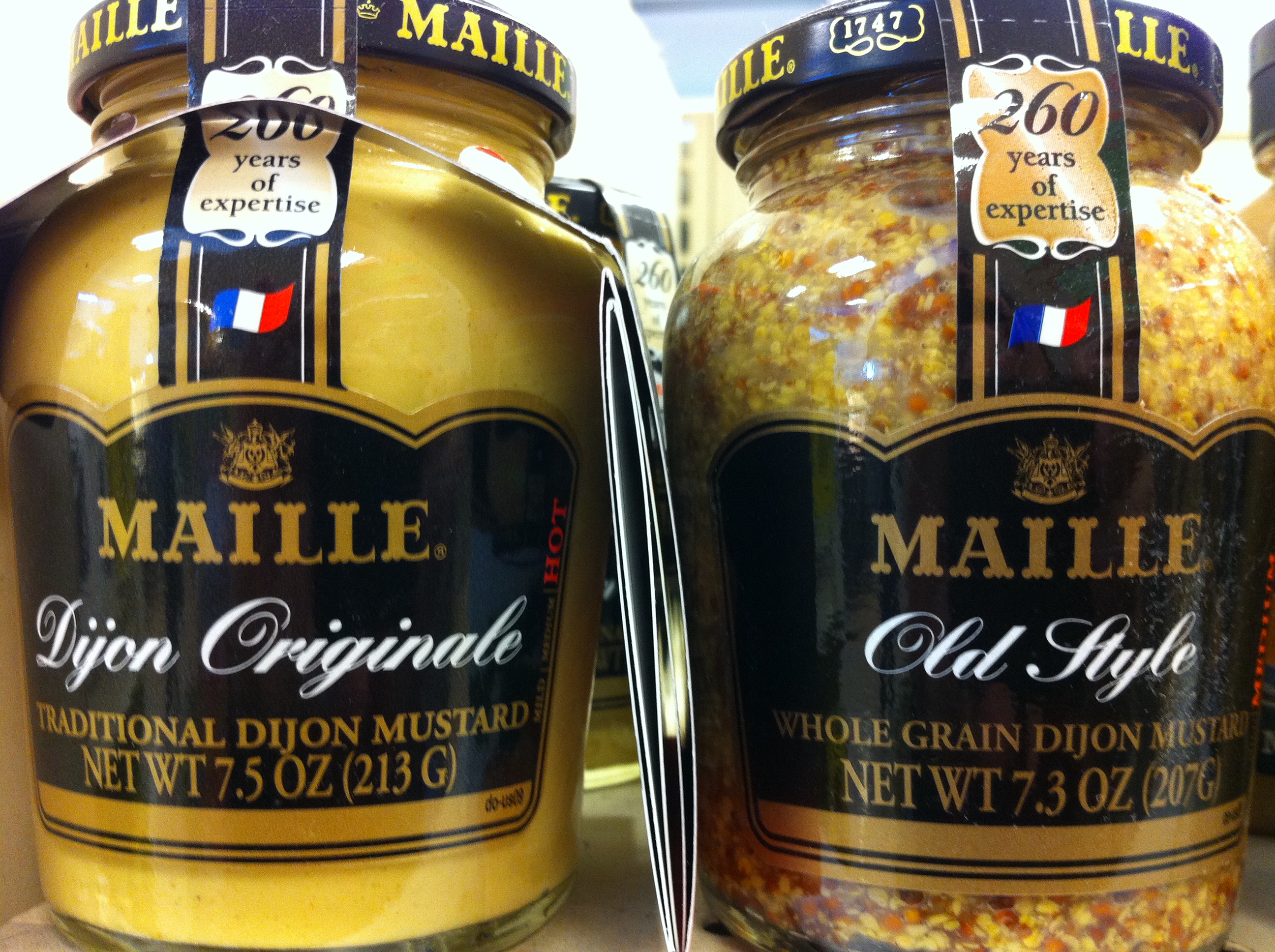
The supermarket stuff.

When you visit the Maille Paris shop on place de la Madeleine, you’re surrounded by beautiful displays of colorful jars of mustard. But you need to focus on the mustard taps–yes, like beer taps–at the main counter, a long oak bar where fresh mustard (no preservatives, never more than 10 days old) is dispensed into ceramic jars that are filled, corked, and wrapped in tissue paper.
Our mustard of choice is the Maille Chablis mustard, which is unlike anything I’ve ever been able to find here in the States. And though it is potent, it has a magical quality that I can’t even begin to describe.

How do I get one of these taps in my home?

While you’re standing in line for your mustard–and there is always a line–you can sample the three fresh mustards offered with a pretzel or a cracker. Aside from the Chablis mustard, there is also a grape juice and honey mustard, and a white wine mustard.
In the old days it was a sad day indeed when I opened the last jar of Maille mustard, look deep down inside, and saw that there was nothing left…just a dry residue of crusty mustard. I’d have to wait until our next trip to Paris. Now, it’s an excuse to go home to New York City and stock up!