Author Archive

Horseradish just doesn’t get the credit it deserves. A world without horseradish would mean boring Bloody Mary’s, cocktail sauces with no kick, and steaks and roast beef sandwiches just crying out for sauces and mayos with personality.

Horseradish is a perennial plant from the Brassicaceae family, which also includes mustard, wasabi, broccoli, and cabbage. It’s mainly grown for its white tapered root, which, when not disturbed, has little aroma. But when you cut or grate it, enzymes from the damaged plant cells release oils that give horseradish that wonderful pungent smell and flavor. It loses this pungency just as quickly, unless you store it in vinegar, which is why bottled or “prepared” horseradish is always found in a vinegar solution.

In the garden, horseradish can become invasive, meaning it will want to take over if you let it, but in my garden, it doesn’t get to do that because I regularly harvest a couple of roots for my kitchen.


Horseradish in the garden

Growing up in a Lithuanian family, there were very few spices ever used in cooking. Most of the food was pretty bland. Mom would salt food, but even black pepper was pretty rare. Peppers of any kind were never used–they never grew in Lithuania–so horseradish became the universal ingredient when a kick was needed. My grandfather loved it. I can still remember my grandfather crying his eyes out as he grated a freshly picked horseradish root from his garden. It was absolutely a labor of love. He would keep his grated horseradish in vinegar in the fridge, and then when dinner came around, it would quickly find its way to the table next to just about any meat my grandmother was cooking.

These days, with food processors in just about any kitchen, there’s no excuse not to use fresh horseradish. Your nasal passages and eyeballs are safe from being blown out.

Some of the basic applications for horseradish are still the best. The following recipes use prepared horseradish you easily find in the supermarket, but use fresh if you have it.


A freshly harvested horseradish root

For a simple horseradish mayo:

1/4 cup mayonnaise

2 Tablespoons prepared horseradish
Combine both ingredients in a bowl, cover with plastic, and refirgerate. Goes great on a roast beef sandwich.


For a fancier horseradish sauce that goes great on grilled salmon:

3/4 cup sour cream

1/4 cup mayonnaise

2 Tablespoons prepared horseradish

2 Tablespoons chopped fresh basil

1 Tablespoon fresh lemon juice

1 teaspoon soy sauce

Combine all ingredients in a bowl, cover with plastic, and place in fridge for a few hours for the flavors to blend.


Alz cocktail sauce

2 cups ketchup

4 Tablespoons prepared horseradish

1 Tablespoon fresh lemon juice

1 teaspoon Worcestershire sauce

½ teaspoon Tabasco

5 grinds of fresh black pepper

¼ teaspoon salt

1 teaspoon vodka

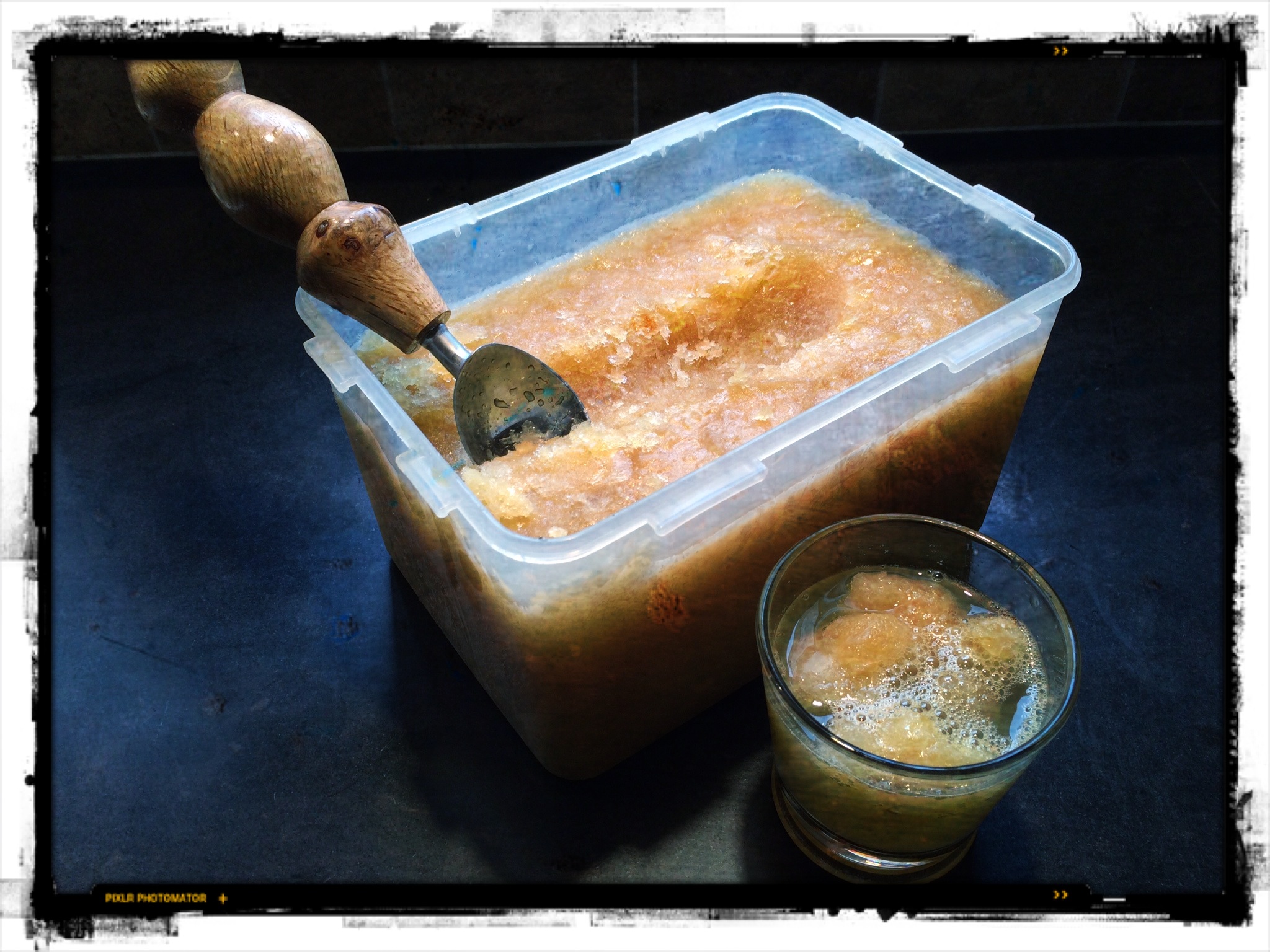
Combine all ingredients. Store in a tight plastic container in the freezer. Thanks to the vodka, my cocktail sauce never freezes solid, so just scoop out what you need and let it thaw.


ROASTING CHIOGGAS!

Posted: October 16, 2012 in beets, garden, Recipes
Tags: , ,


I love beets, but this variety I grow in my garden every year is special. They’re mild, they don’t bleed, the greens are delicious, and…look at ’em: they’re gorgeous! The variety is called Chiogga, and I highly recommend it in anyone’s veggie garden.

To roast, I simply wash the beets and cut them into smaller pieces. I place them on a sheet of aluminum foil, sprinkle with salt, pepper and a little EVOO, fold the foil over the beets to make a packet, and roast at 350 for about an hour or until they are fork-tender.

Gas grills make no sense to me at all. I find little or no difference between them and the gas stove I have in my home. I can make a perfectly acceptable steak by grilling it on my stovetop cast iron griddle…or I can sear it in a pan and pop it in a hot oven. If the real reason for grilling is flavor, why wouldn’t you want something that makes a real difference?


A charcoal grill is the way to go. Besides the quality and source of your beef, wood and smoke are what makes the difference between a good steak and a great steak.

I know the #1 argument for going with gas over charcoal is time. “It takes too long to start a charcoal grill.” That’s a load of crap. I’ve convinced many friends over the years by showing them that it takes no more time to light a charcoal fire than it does a gas grill.

Here’s what you need: Get yourself the charcoal grill you like…the classic Weber is still an awesome choice.

Get a bag of hardwood charcoal. I’m not talking charcoal briquets, like Kingsford, that have a ton of additives in them. And definitely don’t ever use crap like Match Light. I’m talking pure hardwood charcoal, easily found in many stores.

Get a charcoal chimney. It’s a metal tube with a handle and a grate at the bottom. You crumble a couple of sheets of newspaper into the bottom, pour charcoal into the top, light it, and you have hot coals in 10 minutes without lighter fluid.

And DON’T EVER use lighter fluid! Why would you spend good money on a steak and then want to make it taste like gasoline?


The variety of wood chips available for smoking is another flavor factor when it comes to grilling with charcoal. My personal favorite is hickory, especially when I’m cooking pork or chicken. But apple, cherry, oak, mesquite: they all impart their own unique flavors. I have apple and cherry trees in my yard. So whenever they need a little pruning, I save those cut pieces of wood and use them to smoke with. And I love Jack Daniel’s smoking chips, made from the oak barrels that have had JD soaking in them. You can actually get high from sniffing the bag when you first open it!


You don’t need to buy a separate smoker. Simply soak some wood chips in water for about a 1/2 hour before grilling (I’ve found that hot water speeds the process up), drain the water, and then sprinkle the moist chips on the hot coals in your grill. Throw your meat on the grill, close the lid (opening the vents, of course) and off you go.

“I don’t cook with charcoal because it’s so messy!” So what are you…a girl? You probably have one of those fake plastic log gas fireplaces in your house, too.

Because I’m using a small amount of charcoal for the average dinner, I don’t have to clean out my charcoal grill every time I use it. After a while, yes, some ashes pile up in the bottom of my grill and I have to dump them. But because they’re pure wood ashes, I dump mine into my strawberry or raspberry patch. They love the stuff.

You still have to clean a gas grill after a while anyway, and it always runs out of propane halfway through cooking when you have guests over for dinner. So where’s the convenience in that?

Charcoal grills give you everything you could ask for: low maintenance…ease of use–no stupid propane tanks, valves and igniters…real wood flavor–not lava rocks, whatever the hell those things are…and the thrill of cooking meat over a real fire–bonding with the caveman in you, not some pussy with an umbrella drink and his shiny chrome gas grill with a thermometer that doesn’t work and burners that don’t cook evenly or get hot enough. And I cook throughout the winter with my charcoal grill.

Time to be a man again! Ditch the gas grill. Get the charcoal. And rediscover what a really good steak is supposed to taste like.

Sad to say, but despite the large Italian community we have here in Rhode Island, there is no truly excellent pizza to speak of. I suppose you could say “them’s fightin’ words!” but if it’s here, I haven’t found it yet.
So where is the excellent pizza? New York City, of course. OK…maybe I’m a bit prejudiced because I grew up there and worked in a variety of pizzerias in my younger days, but there is no doubt in my mind that if you want the best pizza (or bagel, for that matter), you have got to go to the Big Apple. Everything else is simply a bad copy.
It can be confusing in New York City as there are many different varieties of pizza to choose from, some much better than others. Brick oven pizzas abound, but there are pizza lovers who won’t settle for anything less than a pizza baked in a coal-fired oven. The extremely high heat of a coal-fired oven cooks the pizza in just a minute, and imparts a crusty, charred flavor you can’t get any other way. There are only about a dozen coal-fired pizzerias in Manhattan, and many of them have been around for over 100 years, so it’s definitely a matter of making a special trip to enjoy this style of pizza. (No new coal-fired pizzerias can be built in the city, due to more recent strict pollution control laws.)
There’s the traditional thin, round Neopolitan pie, and the thicker, square Sicilian pie. Regular mozzarella or mozzarella di bufala. Domestic or imported cheese?
Many choices, but always the same answer: it’s a matter of personal taste.
But when I heard through the pizza lovers’ grapevine that there was a “new” pizza out there, one that was gaining a cult following, I needed to know about it. And more importantly, I needed to taste it!
It’s called Pizza Montanara, and there are only a few pizzerias in New York City that serve it. The one I went to is called Pizzarte, on West 55th St, and I have to say that I have now discovered the ultimate pizza.
What makes Pizza Montanara so spectacular, quite simply, is that the dough is fried in oil before they put the sauce and cheese on it, and then it is baked in a wood burning oven. It is not greasy. In fact, the frying process, which lasts only a minute, puffs the dough up and creates a beautiful pillow-like softness that I have never experienced in a pizza before.
Pillowy goodness! Its rectangular shape is probably due to the fact that they fry it in a restaurant deep fryer.
The pizza was so good that once my wife and I ate the first pie, we ordered another. Then when it was time for us to drive home from New York, we stopped at Pizzarte and ordered two to go, which we devoured by the time we got to the Connecticut border!
The Montanara is a simple pizza margherita: dough, super-fresh tomato sauce, mozzarella di bufala, topped with a fresh basil leaf. But the frying process creates a magical treat that has got me drooling all over this blog as I write it.
It’s so good, that just a few days after returning from the city, I made my first attempt at creating a montanara pizza at home. My result: pretty successful! A little crunchier than Pizzarte’s montanara, but with a little tweaking, I may just get the hang of this thing!
A little rounder (I fried it in a pan) and I sprinkled oregano on top instead of the fresh basil leaf. But not a bad first attempt!
I’m going to back to Manhattan for Thanksgiving weekend, and pizza montanara is the first food on my list!

I love cocktails that are full of herbaceousness. (Got that right without spell check!)

So whenever my wife and are dining in a higher-end restaurant, where we see that mixology matters to them as much as the food, we take advantage of their knowledgeable bartenders and have them create something special for us to try.

Coppa is my second favorite restaurant in Boston–Toro being at the top of the list–and both are part of the Ken Oringer empire, with head chef Jamie Bissonette at the helm. Both also take pride in their cocktails, and this one from Coppa, named “Hey Neon,” is a personal favorite that I regularly re-create at home for myself.

The Coppa finished drink:


HEY NEON, BOTH WAYS
1.5 oz Aalborg aquavit

.75 oz Punt e Mes

.5 oz Cynar

.5 oz green Chartreuse

Finely minced, dehydrated kalamata olives


Combine the liquid ingredients in a cocktail shaker with some ice. Stir briskly and pour (straining the ice) into a rocks glass rimmed with the minced kalamata olives.


My version of the cocktail:


I tried mincing and dehydrating the kalamata olives, like they do at Coppa. But the oils in the olives kept them from drying out enough–maybe I was just too impatient for a drink! And I couldn’t get the minced olives to stick to the rim of my glass.
My solution was pretty simple: pour the drink into a martini glass and serve with a skewer of kalamatas. Works for me!


Fast food is a relative term. What we Americans think of as fast food is not what, say, the Italians think of as fast food. We think of drive-thru burger joints serving greasy, salty and fatty food. Swallow a burger, pop a Crestor. The Italians think fast food is something that simply doesn’t take all day to cook! If you can use the freshest of ingredients, and serve it in the time it takes to sip a half a bottle of wine while chatting with a friend, it’s fast food Italian-style.
Years ago, when my wife and I were visiting the island of Capri in Italy, one of the dishes we enjoyed was an incredibly simple pasta and tomato dish called spaghetti sciue-sciue (pronounced “shwee-shwee.”) We were told that sciue-sciue was loosely translated as “quick-quick,” although a check on the web said that it also translates to “improvisation” in Italian. And though quick it was (that is, by Italian standards), it was one of the most memorable dishes we had on our trip. It could be because of our surroundings: the famous Faraglioni rocks all around us at a small seaside restaurant called Da Luigi. We took the small shuttle boat from Marina Piccola, which made its way through those stacks jutting out of the Bay of Naples, and landed at this historic restaurant, built in 1936. People come here not only to dine, but to spend the day sunbathing and swimming.
So the reason Da Luigi’s sciue-sciue was so amazing certainly was, in part, the location…but it was also very much due to the use of the freshest and best possible ingredients…and they didn’t mess around with them too much.
With the growing season coming to a close here in New England, there’s still a chance to get some beautiful ripe tomatoes at local farmstands for this recipe. This version of spaghetti sciue-sciue, our own home-made twist on what we had in Italy, absolutely takes advantage of what’s left of the season!

The ingredients. Yes, so I used lo-carb pasta!

OUR PASTA SCIUE-SCIUE
Ingredients:
1 small can (6 oz) tomato paste
½ cup extra virgin olive oil
2 hot Italian dried peppers, finely chopped
¼ cup white wine
8 to 10 chopped plum or cherry tomatoes (as ripe as possible)
12 to 15 torn fresh basil leaves
½ stick (4 oz) unsalted butter
1 ball of fresh mozzarella
1 lb of spaghetti, or better yet, bucatini
Sea salt
Fleur de Sel (optional)
Heat a large pot of salted water to boil the pasta in.
Almost burn—as in “heavily caramelize”—the tomato paste in a large pan with the olive oil, salt, and the dried peppers. Add the white wine to de-glaze, and simmer until reduced by half.
Add the chopped tomatoes and simmer on medium heat until they start to break apart. Hand tear the mozzarella ball into shreds and add to the sauce, stirring gently. Add the basil.
Add the butter, gently stirring until it melts.
When the pasta is slightly firmer than al dente, drain it and add it to the pan with the sauce.
Serve immediately, finishing with a little Fleur de Sel.

Finito!

In a world where buzz words like “probiotics” rule every food product marketing campaign, comes word that good ol’ sauerkraut is actually really good for your health! Who knew? Apparently, some have for many years. 

Lactic acid and beneficial bacteria…those are the two main ingredients that make sauerkraut so good for you. Lactic acid fermented foods such as sauerkraut have made up a significant portion of food eaten by humans for a long time and still do in many developing countries. Lactic acid fermentation is one of the simplest and safest ways of preserving food. 

Archaeological digs have found that mankind has used this technique for thousands of years. (Korean kimchi is a perfect example.) Our forefathers must have consumed large numbers of live lactic acid bacteria in their daily diets. So it seems logical to think that the human gastrointestinal tract has evolved over the years to adapt to a regular supply of live lactic acid bacteria. But this supply slowed down or even stopped in industrialized countries during the 20th century, which may have led to the enormous increase in gastrointestinal and immunological problems that plague us today. 

Here are just a few of the benefits of eating sauerkraut: it provides vitamin C…it reduces bloating and pain to those stricken with irritable bowel syndrome…it significantly helps aid in the digestion of starches and proteins found in soy and grains…and lots, lots more. 

Sauerkraut has been used for hundreds of years to help cure upset stomachs and to increase beneficial flora in the intestinal tract.
It’s amazing how we’ve forgotten about so many things that kept us healthy naturally. Our crazy lifestyles deplete all the beneficial building blocks our bodies need, and then we think we need to take pills and supplements to get them back. All we really need is to eat the right foods again. 

So next time you grab a hotdog, ask for extra sauerkraut! Maybe the dog isn’t the best thing for you, but you can certainly justify the kraut! 

I love the taste of sauerkraut as is. But here’s a recipe that takes it to a whole new level. I make gallon-sized batches of the stuff when I have a cookout in the yard, but this recipe has been reduced to a quarter of that for normal home use. 

1 package (32 oz) sauerkraut
1/4 lb bacon, chopped
1 large sweet onion, finely chopped
salt and sugar to tasteOpen the package of sauerkraut and drain it in a colander. wash the sauerkraut with water to remove the brine. Let drain again.

In a large sauce pan, fry the chopped bacon until just crispy. Don’t drain the fat! Add the onions and cook until they are translucent. Then add the sauerkraut and cook over medium heat until the sauerkraut has caramelized. This could take up to 30 minutes. Stir often.
If you see the sauerkraut sticking to the pot, add a little olive oil.

At the end, add a little salt and a touch of sugar, to taste.


One of the true delicacies of New Zealand is their version of lobster they call crayfish. It’s similar in appearance to a Maine lobster, but it has no claws. And prices are very high. For example, a single crayfish that weighs about 1 1/2 pounds costs 54 New Zealand dollars. That’s about $38 US for what amounts to a 1/2 pound of actual meat.

On the South Island of New Zealand, on the Pacific (eastern) coast near the beach town of Kaikoura, there is a shack that has been serving up crayfish for years…and it’s earned a cult following among foodies that, like me, have traveled thousands of miles just to have a taste of this seafood delicacy.

The place is called Nins Bin, and it’s simply a little shack that sits on the rugged, windy coastline of the Pacific. You walk in, and a plastic container holds already-cooked crayfish, caught that day. The prices for each are marked right on the shell. You pick one, they cut it in half, and serve it with your choice of two sauces: one a sort of thousand island thing, and the other a garlic aioli. We took one of each, walked over to the only picnic table nearby, and quickly finished off this little treat, hungry seagulls buzzing all around us, waiting for any morsel we might accidentally drop. (Not a chance!)


The flesh of the crayfish was sweet…but not really sweet like Maine lobster can be. And although it was a beautiful white in color, its texture was almost meat-like, like chicken. But really good. We devoured the tail, sucked whatever meat we could out of the legs, and that was it…crayfish gone. Experience had. It totally lived up to the foodie hype I had read about.


We hung out around Nins Bin a little longer, taking in the atmosphere before we got back in the rental car and headed down the road to the town of Kaikoura, our next stop on our 3-week, 2000 mile journey through New Zealand.

Sausage, like bacon, is magical. It contains but a handful of simple ingredients. But when you mix them together, they form a truly flavorful food that is far more than the sum of its parts.
What has always kept me from trying to make my own sausage at home was that it seemed like a very complex process, from mixing and grinding all the ingredients, to stuffing them into casings. But then I thought about it: most of the time when I cook sausage at home, I remove the casings beforehand anyway…so why put them into casings in the first place? Once I realized I didn’t have to deal with the hassle of stuffing casings, making sausage became something I knew I really wanted to try.
The best book for anyone interested in making their own sausage, bacon, salami and more is called “Charcuterie,”by Michael Ruhlman and Brian Polcyn. It shows you step-by-step how make these meaty creations, and I used their basic garlic sausage recipe to make my first-ever batch, though I did add a tweak of my own.This recipe makes a 5 lb batch of sausages…enough for you to pig out for some time, and still have enough to share with your friends.
Cutting the pork and bacon pieces into small cubes that grind more easily.
Ingredients:A total of 5 lbs of pork, containing 25% to 30% fat. I used lean pork loin, and then added pork fat to bring the fat level to around 30%. My special tweak was to include a half-pound of my home-made bacon (a future blog), to add some salt and smoky flavor.

3 Tablespoons kosher salt

1 Tablespoon ground black pepper

2 Tablespoons fresh finely minced garlic

1 cup chilled good red wine…I used Pinot Noir

It’s important to use at least 25% fat (or you’ll have dry, tasteless sausage) and I keep the meat as cold as possible at all times, so that the fat doesn’t break down or melt. I chop the meat and fat into small-sized bits that will be easier to grind…place them in a bowl, adding the salt, pepper and garlic. I mix the ingredients really well, place in a Ziploc bag, and store in the refrigerator overnight to chill and marinate.
The next day, I set up the grinder, keeping the meat in the fridge until the last minute. I have a Kitchen Aid mixer with a grinding attachment that does a great job of grinding the sausage. Using the smaller die, I grind the contents of the Ziploc, letting the ground meat fall into a bowl that sits in ice.
Ready to grind!
Once all the meat has passed through the grinder, I place the meat in the bowl of the mixer and, using the mixing paddle, mix the meat slowly for about 1 minute. I then add the 1 cup of cold Pinot Noir and mix for another minute, on medium.
If the sausage meat is sticky, I know I’ve reached the stage where it can go into casings–after I fry up and taste a small sample piece to make sure all of the seasonings are just right. If you do plan to use casings, keep the sausage meat in the fridge until you’ve set your casings equipment up.
As I said, I totally skip the casings part of the equation. So once the sausage meat has chilled for a bit, I roll them into small meatballs, placing the meatballs on trays lined with non-stick aluminum foil for easy removal later. These trays of meatballs go into the freezer, and once the meatballs freeze up, I can place them in freezer bags and properly store them.
I’ve also made sausage patties using a mold I have for beef sliders. Any shape will work.

Once you’ve made your own sausage, you will never settle for store-bought again. Knowing every ingredient that goes in…knowing the quality of the meat you’ve used…binding (and flavoring) with a quality red wine instead of simple water…it makes an incredible difference!

Paris has a special place in the hearts of my wife, myself, and even my 5-year-old daughter. It’s where my wife and I got engaged back in 2002. It’s where we celebrated my wife’s 40th birthday with family and friends in 2005. And it’s where my daughter has ridden on seven—count ‘em—seven—carousels…a record I’m sure she’ll want to break on her next trip.

One of the reasons why Paris is so special to us is a small, unpretentious wine bar called Juvenile’s, at 47 Rue de Richelieu. The owner is Tim Johnston, a sharp-tongued wise-cracking Scotsman who happens to know a helluva lot about wine and spirits, and is in fact a consulting editor to Saveur magazine. Tim takes no BS from his clients, and that adds to the entertainment value of every visit.

Hangin’ with Tim.

My wife met Tim back in 2001, just a few months before she had met me, when she and her Mom took a trip to France. The friendship with Tim was forged, and it has been going strong ever since. Tim, in typical fashion, tolerates me because he enjoys the company of my lovely wife…and I can’t say that I blame him!

The food at Juvenile’s is rustic…nothing fancy here. But it is all very good and satisfying. We’ve found what we consider the best foie gras in Paris here. The potatoes with raclette and bacon are fantastic. Sausage dishes, duck dishes…all the favorites, all wonderfully prepared in a very, very small kitchen in this wine bar that holds, perhaps, 30 people.

Paolo, Tim’s right-hand man, working the tiny kitchen at Juvenile’s.

Juvenile’s is one of Paris’ original wine bars, serving wine by the glass way before everyone else thought it was cool to do so. And even the locals will come in on a regular basis to ask Tim what the latest great wines are. The man has earned the respect of those who know.

We make Juvenile’s a mandatory stop with every visit to Paris we make, lingering sometimes for an entire day…eating, chatting, and sampling wine and even fine cognacs that Tim is willing to share with us. Often, we come back for a second and even third visit during the same trip. It’s a great place to unwind and get away from the hectic pace of the day, whether you’re a tourist or a local.

Yes, that says 1962!

The next time you’re in Paris, stop by Juvenile’s and tell Tim I sent you. He will promptly throw you out!

Tim and me. Great t-shirt!