Author Archive

There are few foods that people take as personally as pizza. Tell someone that your pizza place is better than their pizza place, and chances are you’ll start a fight. Well, my pizza place is better than your pizza place, because I make it at home. Besides, I can run faster than you.

I’m not going to say that much of the pizza that I’ve tried here in Rhode Island is mediocre, but I will say that I was born in Brooklyn and grew up working in many New York pizza places in my youth. So yes, I do have a very strong opinion on what I think makes a good or bad pizza.

My homemade pizza is all about the basics. The better quality my original ingredients are, the better my pizza will be:


The dough…

The key ingredient is 00 flour, and it can be found in specialty stores,  or online. My favorite new source is Central Milling in Logan, Utah. They make a 00 flour that is top notch. I buy it through the Forno Bravo pizza oven website: http://www.fornobravo.com/store/Tipo-00-Pizza-Flour/ It makes a crustier and more flavorful dough. Ratios for this recipe depend on the humidity in my kitchen on any given day, but my basic pizza dough recipe is as follows:

4–5 cups 00 flour

1 cup tepid water

1 Tablespoon salt

1 packet Italian pizza yeast

a squirt of extra virgin olive oil

I mix all the dry ingredients in the bowl of a stand mixer, then slowly add the water as it mixes. After the ingredients are well mixed, and the dough pulls from the side of the bowl, I remove it to a floured board, where I knead the dough by hand for another 5 minutes, until it is smooth and elastic, shaping it into a ball. I rub a little olive oil over the ball of dough, place it in a bowl covered with plastic wrap, and let it rise for 2 hours, punching it down after that, and letting it rise another 2 hours again.

The sauce…

I’ve written a previous blog about real and fake cans of San Marzano tomatoes. I feel that San Marzanos make the best sauce, but not all cans of San Marzanos are created equal. The only way you can be guaranteed you have a real can of these beauties, grown in volcanic Italian soil in the shadow of Mt Vesuvius, is by the D.O.P. designation on the can. (D.O.P. stands for “Denominazione d’Origine Protetta,” and signifies that it’s the real deal.) Anything else that says San Marzano may not be.

San Marzanos are so amazing, that all I do is puree them in a food processor, pour the sauce into a pan, and let it reduce until it has thickened. No spices or additions of any kind.

The cheese…

I don’t need to go super-fancy with mozzarella di bufala (cheese made from the milk of the water buffalo) …but I don’t use the mass-produced supermarket stuff, either. Whole Foods has fresh mozarella from Maplebrook Farms in Vermont, and it is excellent.

The toppings…

A matter of choice. I wrote a while ago about how I make my own guanciale, a cured meat that comes from pork cheeks. Chopped and fried, that is one of my daughter’s favorite pizza toppings.

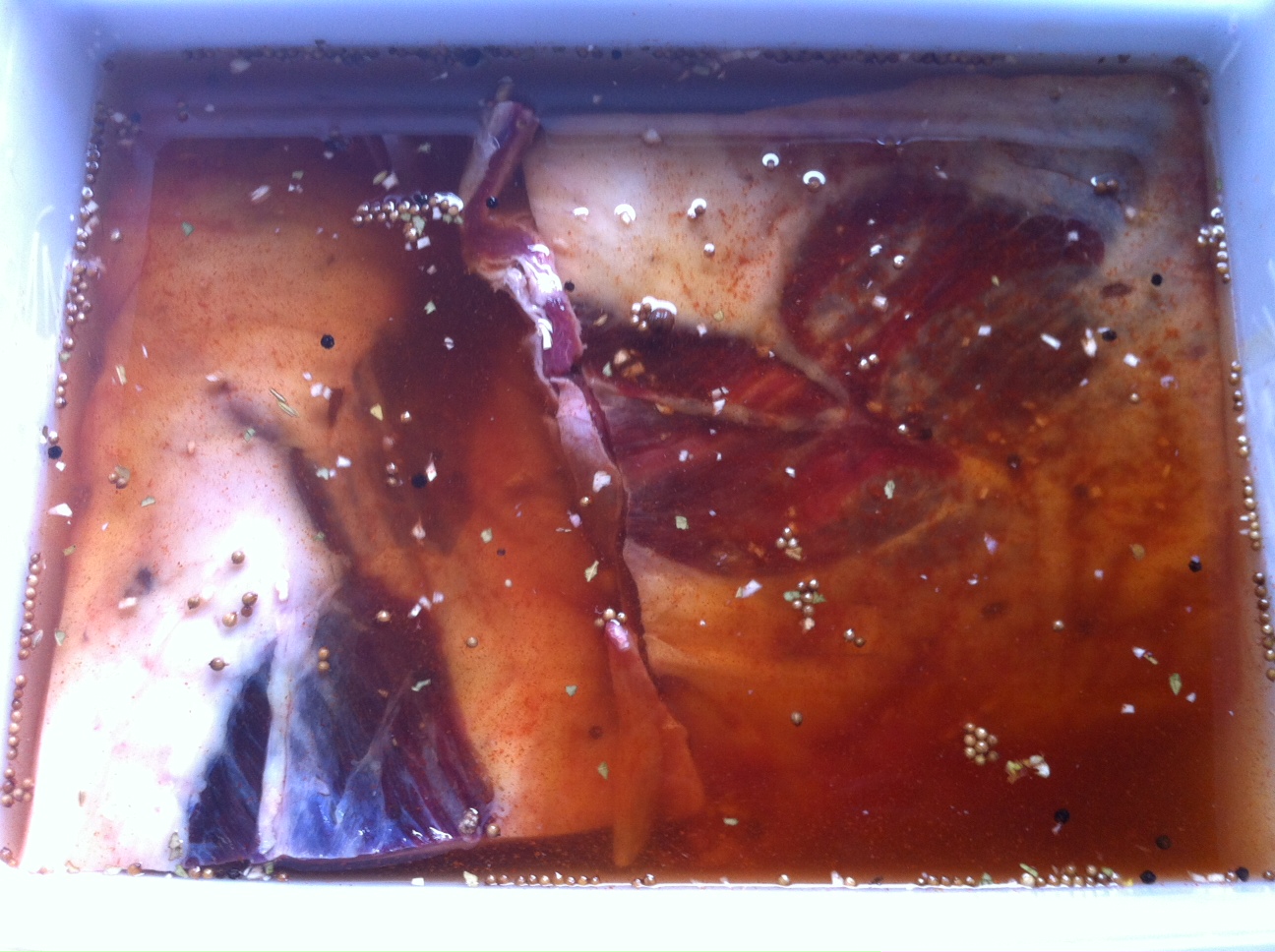
But my signature pizza that wows my dinner guests is my marinated beef tenderloin and fried chive blossom pizza. I marinate and grill a piece of beef tenderloin, slicing it thin. And in the springtime, when my chive plants are budding like crazy, I snip the blossoms before they open and place them in Ziploc freezer bags to use all year long. When it’s time, I grab a handful of the blossoms and fry them in a little olive oil, salt and pepper, and sprinkle them over the top of the beef tenderloin pizza. A touch of Fleur de Sel on top seals the deal.

My signature marinated beef tenderloin and chive blossom pizza.

The oven…

Many professional pizza ovens reach a temperature of 1000 degrees. My home oven only reaches 500, but it does the trick. I do use a pizza stone, and place it on the center rack of the oven, and let it heat up thoroughly before sliding a pizza onto it for cooking.

Recently, I’ve also started cooking pizzas on my barbecue grill (using a special stone for the grill) to add a smoky component. The grill gets hotter than my home oven, which is great, but it’s obviously a more work to set-up and clean.


My favorite pizza?

There are only a few pizzerias that I know of—all in NYC–that make pizza montanara, and for my money, it’s the best I’ve ever had. It’s a small, rustic pizza margherita using mozzarella di bufala and simple tomato sauce, garnished with a basil leaf. What makes it magical is the fact that after they stretch the dough–but before they put the toppings on it–they fry the dough in deep fryer with olive oil for just a minute. It puffs up like a pillow. Then they put the toppings on and quickly bake it in a very hot oven. The end result is a non-greasy, absolutely heavenly pizza cloud…the most delicious I’ve ever had.

I’ve actually had some great success recreating this pizza at home, frying the dough in a very large skillet of olive oil. The challenge is removing this giant piece of dough out of the skillet and into a pizza pan without dripping olive oil all over my stove and setting my house on fire! So far, so good!

SUMMER ISN’T OVER YET!

OK…at least I refuse to think so.

It’s still not too late to enjoy the fresh fruits and veggies that our local farmers have to offer. Soon, we’ll be forced to go back to the supermarket to buy our produce. But until then, we can enjoy the bright, fresh flavors that only our local farmers can provide.

Oven roasted plum tomatoes

These are not sun dried tomatoes. These are seasoned and slow roasted, so that their sweet flavors concentrate, but the moist, chewy texture remains.

Ingredients:

12 to 18 halved, seeded plum tomatoes

Extra virgin olive oil

Sugar

Freshly ground pepper

Fleur de Sel, or other finishing salt

Pre-heat oven to 250.

Line a baking sheet with foil and rub it with olive oil.

Arrange halved and seeded tomatoes on the baking sheet in a single layer, cut side up. Drizzle evenly with ½ cup olive oil, sprinkle with 2 tablespoons sugar, and season with pepper to taste.

Baked the tomatoes until they are still juicy but slightly wrinkled, about 3 hours. Transfer to a platter and let cool slightly.

Just before serving, sprinkle tomatoes with Fleur de Sel, and garnish, if you like, with mint, parsley or basil.


BABY BELL PEPPERS WITH FRESH CORN STUFFING

Bags of these baby bell peppers are appearing everywhere on supermarket shelves this season. Recently, I had about 100 people over for a party, and I came up with this tasty bite to serve as an appetizer.

Ingredients:

Baby bell peppers

1 dozen ears fresh corn, boiled for just a couple of minutes, then removed from the cob…or organic frozen corn

1 Vidalia onion, peeled, quartered, grilled, chopped

Juice of 1 large lime

¾ cup mayonnaise

20 shots of Frank’s Red Hot or Tabasco

1 lb Queso Fresco, crumbled

Salt

Fresh cilantro or parsley, finely chopped

Cook the corn for just a couple of minutes to keep it crisp. If using corn on the cob, cut corn from ears and place in a bowl.

Peel and quarter the Vidalia onion, and throw it on a hot grill with a little olive oil to get some nice grill marks on it, leaving the onion still crispy, not soft. Remove, let cool, then place in a food processor and pulse until the onion is chopped into small bits, just smaller than the corn kernels. Add onions to corn.

In a separate small bowl, combine mayonnaise and Frank’s Red Hot. Pour in crumbled Queso Fresco and mix well. Pour into corn and onion bowl and mix well.

Add lime juice to the bowl and mix well again. Taste mixture and season with salt.

Cut the baby bell peppers in half lengthwise, and remove the seeds and membrane. Stuff the peppers with the corn mixture and garnish with cilantro or parsley.

If preparing ahead of time, refrigerate until ready to eat, but allow some time for them to warm up a little bit. You don’t want to serve them ice cold.

Although Moroccan women have been painstakingly making Argan oil by hand for centuries, it is known by relatively few people outside of Morocco. Argan oil comes from nuts that grow on the Argan tree, and the only place in the world you’ll find Argan trees is in the southwestern part of Morocco, in an area that is only about 1.5 million acres in size.
That may seem like a lot of space, but it really isn’t, and despite the hardiness of the Argan trees and their ability to not only survive but thrive in the harsh climate of Morocco, their numbers disappeared by a third in the last century alone.
I remember my first glimpse of an Argan tree about five years ago when my wife and I visited Morocco. We were driving north from Marrakech to the coastal town of Essaouira and we had to do a double-take when we saw a tree by the side of the road that had about a dozen goats in it, literally standing on the branches of the tree and munching on the fruit. We later learned that although the goats eat the green Argan fruit (they look like olives, only larger and rounder), they leave the interior shell behind, and inside this shell are small kernels from which the Argan oil is extracted.

Nothing is wasted in the process of making Argan oil. Traditionally, the hard shells have to be cracked by hand, the kernels within removed. Then kernels are then crushed and mildy roasted and cooled before being ground by hand using a quern, or grinding stone. Later, the kernels are hand-mixed with water to form a dough, and it is from that dough that the oil is extracted (again, by hand.) Any by-product from this process is used to feed cattle…and the shells are crushed and burned as fuel.
Recently mechanical presses have been introduced to extract Argan oil. This process reduces considerably the time needed to do the job. Once the kernels are roasted, the mechanical press takes care of the grinding and extraction. More oil is extracted by machine than by hand, and since no water is added to press the dough, the oil can be stored longer without spoiling.
The most time consuming part of the process, cracking the nuts, is often still done by hand.
Argan oil is sensitive to heat and can spoil quickly, so once it is made, it is bottled, and once the bottle is opened, the oil is kept under refrigeration. You sprinkle it over salads, pasta, raw tuna, and other dishes at the last minute, just before serving.
It was only a matter of time before American chefs that visited Morocco would discover the wonderful nutty flavor of Argan oil and would bring it back home to use in their restaurants…and now, it’s all the rage.
In our visit to Morocco five years ago, we made a special trip to the Targanine Cooperative, where they gather local women to work together to produce the highest quality organic Argan oil.
The project has two objectives: to preserve what they can of the Argan forest by using sustainable harvesting methods…and to improve the social and economic status of the rural Moroccan women that make the oil.
As you can see in these photos, the women spend their days taking turns with different parts of the extraction process, sitting in a circle, and socializing while performing this tedious job. It’s no wonder that Argan oil is expensive…about $30 for 5 ounces here in the United States at gourmet websites. But, much like a fine olive oil or balsamic vinegar, a little goes a long way to flavor your food. And now Argan oil is becoming a popular ingredient in the world of cosmetics as well.
When you see the women of Morocco making Argan oil from beginning to end, and you realize just how much work it was to do it, the price is very reasonable. And it’s just another example of how often we take for granted what we can so easily buy on a store shelf or with a click of a mouse.
Pork is magical. And though I’ve loved bacon and pork chops all my life, it’s only recently that I’ve started to appreciate other cuts of pork and how they’ve been prepared.
No store-bought bacon for me. I have a favorite website where I’ve bought the best quality bacon on line from Missouri for years: http://www.smokehouse.com/.
My Italian pork sausages and larger cuts of pork (like shoulders, bellies, and big fat pork chops) come from Caw Caw Creek, the only certified humane heritage breed pork farm in North Carolina. http://www.cawcawcreek.com/.
My pork ribs and liverwurst come from my friends at Simmons Farm in Middletown, RI, a certified organic farm. http://www.simmonsorganicfarmri.com/
And sometimes, my pork can come from surprising places, like my rafting guide friend Rob, whose family runs Crabapple Whitewater in the Forks, Maine, where I raft on the kennebec and Dead Rivers every year. Rob decided to raise two pigs this past year, and he’s willing to trade pork jowls for a few bottles of my homemade Lithuanian honey liqueur called Krupnikas.
Pork jowls?
Weighing the jowl pieces
It all started when I wanted to make an authentic spaghetti carbonara. Since I worship at the Italian food altar of chef Mario Batali, I went to his website to look up his recipe. It said that although many people use bacon or pancetta (both from the belly of the pig—the bacon is smoked, pancetta is not)…authentic carbonara is made with guanciale (pronounced gwan-chee-ah-lay).
Guanciale is cured (but not smoked) and made from pork jowls…that would be the cheeks of the pig. According to Batali, you take raw jowls, cure them for about a week in sugar, salt, peppercorns and fresh thyme, then hang the meat to dry. The result is a delicious pork product that you slice and fry and use in carbonara or any other recipe that calls for a tasty addition of porky goodness.
The flavor of pork jowls is subtly different than that of pancetta. There is a very special mouth-feel to the fat that makes guanciale so good. And once I made my first batch, there was no turning back!
But finding raw pork jowls was not easy. Many websites offered smoked jowls. But raw jowls were almost impossible to find, and I just about gave up until I visited my friends Sal and chef Aaron at the Back Eddy in Westport, Massachusetts. I told them of my dilemma and they said: “Pork jowls? Oh, we can order them for you!” I was psyched!
About a week later, I picked up my jowls, individually wrapped in hermetically sealed ¼ pound packages, and my curing began, following Batali’s recipe.
Getting the curing ingredients together: picking thyme leaves.
Finding room in my spare fridge to cure the meat was easy…everything fit snugly in a Ziploc bag. But once it was time to dry the jowls (all 24 of them since I bought 6 pounds,) I had to rig up a special hanging system that used bungy cords, vinyl cable ties, and beer cans…don’t ask. But it worked! And three weeks later, I was frying up my guanciale in a sautee pan and adding it to vegetables, potatoes, and pizza. I even gave guanciale gifts to my foodie friends. And before long, it was time to make more.
Since that first curing effort, some things had changed. My source for heritage pork, Caw Caw Creek, now carried pork jowls, too. And I was able to buy a couple of 3-pound jowls at a time. They were big, thick, and what I originally envisioned when I dreamed of the jowl of a pig that weighed 300 pounds or more. I cut the two big jowls into 1/2–pound, 3-inch thick slabs, and cured them using the same recipe.
A big, beautiful jowl in its native habitat.
Jowls with curing spices.
All was fine until one time, I went away on vacation, and a hurricane hit our neighborhood, knocking the power out. Fortunately, my good neighbors came to my rescue and started up my generator, plugged in the fridge, and saved the guanciale! I was back in business.
Curing and hanging completed (I now used a far more sophisticated system of stereo wire instead of bungy cords and beer cans, as seen in the photo,) I’ve been sharing the goodness of this incredible and little-known pork product with anyone who would listen—and taste.
A year ago, I had never heard of guanciale. Now, I can’t imagine not having a slab at the ready in my fridge. I use it just about anywhere I would use bacon, short of a BLT.
And by the way…I’ve yet to make the spaghetti carbonara recipe!

So many people are afraid to try lamb, and I don’t understand why. On the grill, lamb is absolutely delicious.

I think that most people are turned off by lamb because somewhere in their past, they had a horribly cooked piece of it, and that event ruined it for the rest of their lives.

I’m here to tell you that you need to “man up” and try lamb again! And the two recipes below will make it one of your go-to grill ingredients…

I love the baby lamb chops that look like miniature porterhouse steaks. You can find them in any supermarket. If you think lamb has a strong taste, a good marinade will get rid of any of those flavors you don’t want. Here’s an easy recipe that I served at a party in my home for 40 people, many of whom claimed they didn’t like lamb or never had it before. By the end of dinner, the chops were gone!


½ cup olive oil

¼ cup balsamic vinegar

2 cloves garlic, minced

1 Tablespoon fresh rosemary, chopped

1 Tablespoon honey

2 teaspoons Dijon mustard

1 teaspoon dried oregano

Salt and pepper


Place lamb meat in a plastic bag or glass container with a lid. Combine all ingredients for marinade and pour over lamb. Toss lamb to coat. Seal container and place in refrigerator for at least an hour. Pre-heat your barbecue grill. Grill lamb until done. That means cooked no more than medium. Don’t cook it to death!


Here’s another recipe that doesn’t require marinating ahead of time:


2/3 cup Dijon mustard

3 Tablespoons orange zest

3 Tablespoons fresh thyme leaves

4 teaspoons packed light brown sugar

salt and pepper, to taste


Mix orange zest and thyme into a paste. Add mustard and brown sugar. Mix together. Pre-heat grill. Brush the mixture onto each side of the lamb chops and place on a hot grill for about 2 minutes per side. Turn the chops and brush again. Continue until done. Season with salt and pepper.

Try either of these recipes, and I guarantee you’ll be cooking lamb more often!

One of my recent mixology projects was to finally create my own version of the perfect espresso martini…one that has been developed from painstaking research (that means drinking a lot of other espresso martinis.)

My favorite local espresso martini here in Rhode Island comes from Asterisk in Newport. They sell thousands of them in the summer season, and part of their success is using freshly brewed espresso.

But overall, my favorite espresso martini was one that I sampled a couple of years ago at the Le Parker Meridien hotel in New York City. It featured an Irish cream liqueur called Coole Swan. The bartender was nice enough to write down the recipe for me, but I guess I had a little too much to drink…because I lost it! So it was up to me to come up with my own combination.

So here it is…

ALZ ESPRESSO MARTINI

3 oz. good quality vodka, like Belvedere
3 oz. freshly brewed espresso
1.5 oz. Kahlua
1.5 oz. Coole Swan

Chill your martini glasses. Pour all ingredients into a large shaker with ice. Shake vigorously. Pour into chilled glasses. Makes 2 martinis.

Let me tell ya…this tasted as good the first time as it did several martinis later!

I’ve found that using a high-end vodka really does make a difference in the quality and taste of the martini…as does brewing your espresso just before assembling the drink.

If you do your share of Italian recipes, a common product that you can find in just about any store has many people confused: San Marzano tomatoes. Most good cooks agree that San Marzano tomatoes are some of the best canned tomatoes you can buy.

But unfortunately,  the label can say “San Marzano tomatoes” even if they are not real San Marzano tomatoes.


San Marzano is a region in Italy near Naples and Mt. Vesuvius, and the special combination of climate and volcanic soil make these plum tomatoes world famous. They have less water, fewer seeds and are picked off the vine when perfectly ripe and processed the same day.


But San Marzano is a variety of tomato, too…and so you can have a can of San Marzano tomatoes that are not from San Marzano. And to add to the confusion, there’s actually a brand of tomatoes called San Marzano, with tomatoes grown in the United States. You can bet that the sellers of these tomatoes are counting on us not to know the difference!

Sold everywhere, but not the real deal. Grown in the USA.


Real San Marzano Tomatoes are a very old variety, extremely limited in quantity, grown and produced exclusively in the San Marzano region of Italy. Because production is so very limited, the Italian Government and the European Union have formed a way of protecting consumers from fraud by having San Marzano tomatoes tightly controlled. DOP, or denomination of protected origin, is the mechanism that the government is using to tightly control the production and marketing of genuine San Marzano tomatoes. Labels for DOP products must be individually numbered and manually applied to each and every can in specific lots and government officials must oversee this application. So here’s the deal: unless you see “DOP” on the label with a hand-stamped number on the can, it’s not a San Marzano tomato.


Real San Marzano tomatoes. Cento also sells non-certified San Marzano’s, so always look for the DOP on the can.

Another way to tell when you’re in the market is simple. Check the price. Your average can of tomatoes will be in the $2 range. Real DOP San Marzano tomatoes: about $4–$5 a can. It’s all about quality.


It’s all about the salt.

I fell in love with Fleur de Sel, the rare hand-raked salt, several years ago. I’ve got high blood pressure, and unfortunately, I need to limit my intake of salt. So my discovery of “finishing salts” allows me to cook completely without salt until the very end, where I can then sprinkle just a few crystals of this moist, hand-harvested miracle on my plate, enjoying every tiny burst of salty ocean flavor without a lot of guilt.

Inspired by an episode of “No Reservations” where Anthony Bourdain journeyed to Brittany, my wife and I dreamed of traveling to what is arguably the epicenter of Fleur de Sel production, the small town of Guerande, France. Located on the Atlantic coast in the Pays de La Loire region just south of Brittany, it’s about a 5-hour drive from Charles de Gaulle airport outside of Paris.

A salt flat in Guerande


Some of the comments we read about the medieval town of Guerande said it was too touristy, but we found that it had a lot of charm: the perfect combination of old and new, with many interesting shops and eateries inside the ancient walls of this small town. Built in the 15th century and fortified in the 19th century, the surrounding wall around Guerande is one of the best preserved in all of France.

The salt marshes outside the city walls have been around a long time…the last of them built around 1800. Salt production here declined soon after, because salt was available more cheaply from salt mines. But you gotta love foodies…the influence of chefs and food lovers around the world have brought back the demand for this very special product. Salt workers now harvest about 15,000 tons of cooking salt a year, and about 300 tons of the very precious Fleur de Sel.

Worth its weight in gold!

The process is simple: the ocean tides bring the salt water in and channel it into shallow pools where the water then evaporates, leaving behind the beautiful sea salt Guerande is known for. When just a few inches of water remain, a salty crystalized film floats on the surface of the water. This is very gently hand-raked and produces the much sought after Fleur de Sel. Traditionally only women were allowed to rake this salt because it was believed they had a gentler touch.

Driving through the salt field was a wonderful experience. The roads are narrow, and wind almost endlessly through these flat marshes where salt workers spend their days raking, gathering and then bagging their precious harvest. You can stop anywhere along the way to buy your salt directly from these salt workers, which we did. It was easy to get carried away…we brought home over 20 lbs of salt! Of course, we shared it with friends. Otherwise, not only would my blood pressure have gone through the roof, but I’d probably be dealing with kidney stones as well!

Harvesting and selling salt in Guerande is a family affair.

One taste of Fleur de Sel, letting it gently melt on your tongue, and you’ll know what the big fuss is all about.

Our Fleur de Sel journey did not end in Guerande, however. After a couple of nights in that region, we headed south to the island of Ile de Re, just off the coast of La Rochelle, France. Connected by a 3km bridge, Ile de Re is a beautiful world unto itself, with an intricate network of bicycle paths that allow you to travel safely from one end of this flat island to the other, enjoying beautiful views as you ride through vineyards, salt marshes, beaches and small port towns.

As in Guerande, not only can you sample the local salt, but also the abundant supply of incredibly fresh seafood, especially their famous oysters. The salt flats seem somewhat newer in Ile de Re, but still very much a large part of the local economy. The salt itself differs in only the most subtle of ways from its Guerande counterpart and I would find it difficult to say which I liked better.

Ile de Re is long and flat, so many of the salt pools are larger than those in Guerande.

It may seem a bit silly to travel all this way for something is simple as salt. But it’s a journey I’m very happy I made…and will gladly make again in the near future.

I love French cooking. Whatever they create, no matter how simple, is almost always better than its American counterpart. Part of that comes from the demand for the best quality ingredients. Nothing comes out of a box or a packet…everything’s made from scratch.

So it was no surprise that when I was in Paris on vacation recently, and I was walking through a Sunday farmers market in the Marais district, that something as simple as chicken and potatoes knocked my socks off.

You can find rotiserrie chicken anywhere in the USA, and it’s common in France as well. But what made this so special was the potatoes. They took small fingerling potatoes, peeled them, and then placed them on the bottom of the rotiserrie oven, where all the juices, herbs, flavors, and yes–fat, slowly dripped down from the rotating chickens above, basting and flavoring these spuds like nothing I’ve ever had before.

It was an incredible moment, popping one of those golden morsels in my mouth, and savoring the wonderful flavor of something as simple…as a spud.

Read more: http://www.94hjy.com/pages/alz_food_blog.html#ixzz264Ffyp3j

Even if you’re a huge fan of cheese, chances are you’ve never tried cheese curds. Cheese curds are the solid parts of soured milk, either eaten alone or used in regional recipes, mainly in Canada and the Midwest of the United States. The locals call it “squeaky cheese,” because it literally squeaks against your teeth as you eat it.

Cheese curds are usually found only in areas where cheese is made, because it is at its best when it’s freshly made. American varieties are usually yellow or orange, colored much like cheddar cheese, though you can find uncolored curds as well.

My first taste of cheese curds came from an airport store in Milwaukee, Wisconsin, as I was traveling to the Upper Peninsula of Michigan to visit the in-laws.

But now, you can find cheese curds here in our area…and closer to home means fresher curds.

Our friends at Simmons organic farm in Middletown, RI make their own organic goat cheese from milk they get from their own goats. And every once in a while, Karla and Mark treat us customers to cheese curds as well. They are awesome and worth asking for.

Meanwhile, in Westport, Mass, the Shy Brothers farm, makers of those delicious thimble-shaped Hannabel cheeses, also have their own cheese curds, which I find occasionally at Lee’s Market in Westport. Worth a look the next time you’re there.

Whether you eat them by themselves–and they are addictive–or add them to a recipe (most famously used in that classic Canadian dish, Poutine, featuring french fries, brown gravy and cheese curds) cheese curds are something you have got to try.

With the home garden in full swing, we enjoy freshly sliced tomatoes, drizzled with balsamic vinegar and crumbled cheese curds. Or, we take fresh corn on the cob, drizzle a little fresh lime juice on it, and then crumble curds on top. Fantastic!

Read more: http://www.94hjy.com/pages/alz_food_blog.html#ixzz25gdnUVLo