Author Archive

I love shrimp scampi, and had the need to satisfy my cravings the other day. But what started as a simple scampi recipe, turned into something a bit more. I may never make scampi the same way again!


image

1 lb. wild-caught American shrimp, peeled and de-veined
4 tablespoons butter
4 tablespoons olive oil
2 teaspoons parsley
1 teaspoon garlic salt
1 teaspoon oregano
1/2 teaspoon granulated onion
1/4 teaspoon black pepper
3 tablespoons Spirgučiai (see below)
1/2 lb. fresh mozzarella, sliced
oregano, for sprinkling


Thaw the shrimp under cold water. Place in a colander to drain.

Spirgučiai is a Lithuanian favorite: chopped bacon and onions, fried until crisp and usually sprinkled over anything and everything in Lithuanian cooking. I always have some in my fridge, already prepared and just waiting to be used.

In a saucepan on medium heat, combine the butter, olive oil, parsley, garlic salt, oregano, onion, pepper and Spirgučiai.  Heat only until everything melts and combines. Don’t let it burn. (If you don’t have Spirgučiai, all you need to do is take a couple of slices of bacon, chop them up, and fry them in a pan until crisp. Keep the bacon and the fat in the pan and then add the butter, olive oil, parsley, garlic salt, oregano, onion and pepper.)

In a small sheet pan lined with foil, lay the shrimp in a single layer and cook them halfway in a pre-heated 400-degree oven to remove the moisture from the shrimp.

Take the pan out of the oven, and drain off the moisture, if any. Pour the butter mix from the saucepan all over the shrimp and toss to coat. Return the shrimp to the oven for a few minutes, until they’ve heated through and are almost completely cooked. (Careful: never over-cook shrimp!)

Take the pan out of the oven, and place pieces of mozzarella on top, garnishing with a little oregano. Set the oven on broil and cook until the cheese has melted.

Slice with a spatula and serve on top of pasta, making sure you get some of that buttery scampi sauce.


image

As a low-carb option, you can serve this on broccoli or roasted spaghetti squash.

There’s something about Asian noodle dishes that make them incredibly addictive. They’re great hot or cold, and easy to make at home. I store an arsenal of basic Asian ingredients in my pantry, so slapping this together is no effort at all. And if you don’t have Asian noodles around, chances are you’ve got a box of pasta, which works just as well.

Next time you’ve got a bunch of people coming over, cook a batch a few hours beforehand and let it come to room temperature. It’s great with anything, really. Grab a bag of frozen egg rolls or some potstickers, and you’ve got great munchies for your guests.

Adding boiled and chilled shrimp to these noodles makes it a cool meal. I usually double the sauce recipe when I do that.

If you need to go gluten-free, use GF pasta…and you can find gluten-free hoisin sauce in the Asian food section of most supermarkets.

Asian noodles

4 tablespoons creamy peanut butter
1 tablespoon hoisin sauce
2 teaspoons sesame oil
1 teaspoon Chinese chili garlic sauce (more, if you like it spicy!)
16 oz. package Chinese noodles or pasta

Combine the peanut butter, hoisin sauce, sesame oil, and chili garlic sauce in a bowl. Set it aside. I keep my peanut butter in the fridge once the jar is open, so sometimes it’s a bit thick. So I just zap it in the microwave for about 10 seconds to soften it up.

Boil the noodles or pasta until al dente. Drain it and place it in a large bowl.

Mix the noodles with the sauce.

Devour!

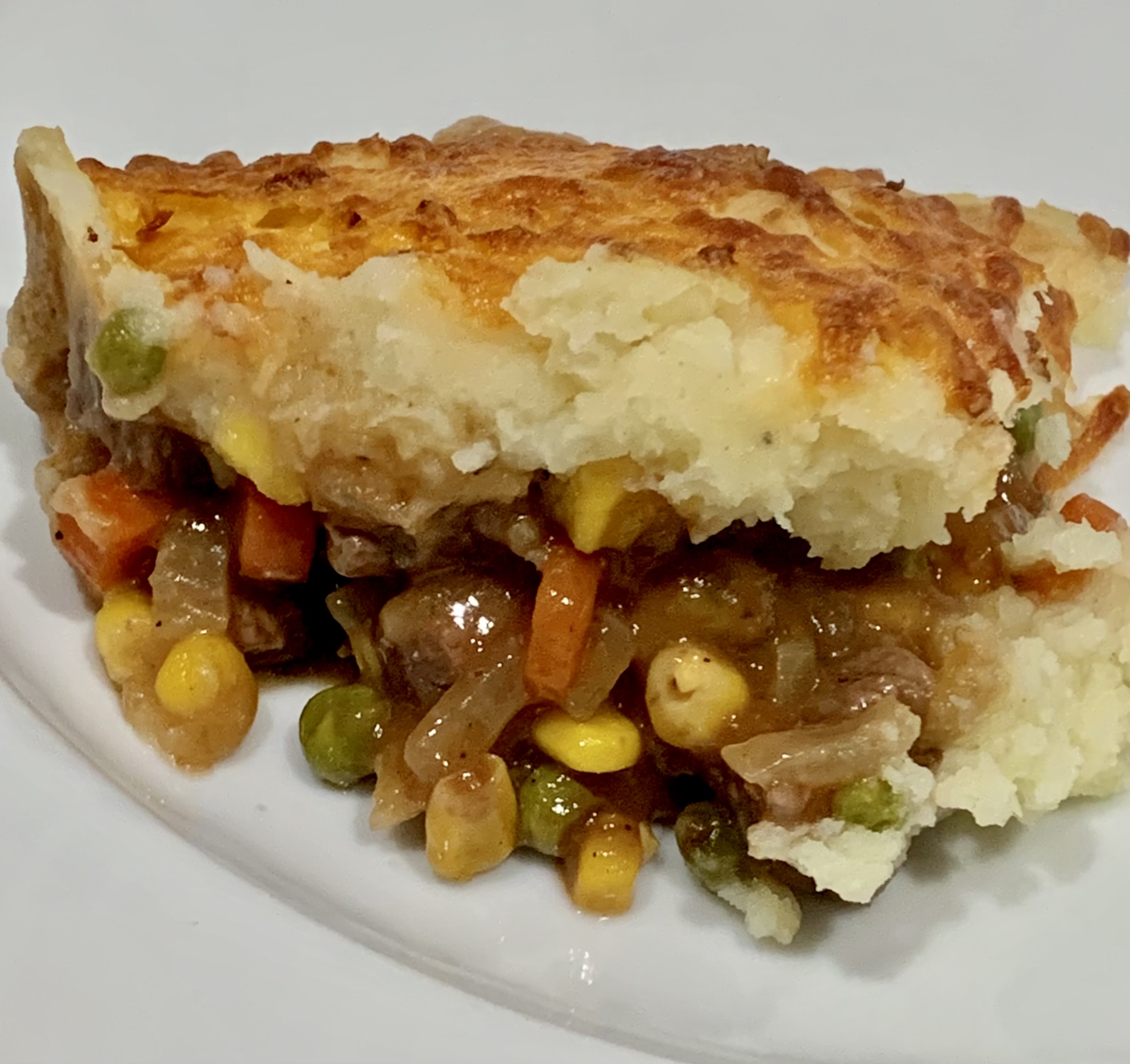
MY TAKE ON SHEPHERDS PIE

Posted: July 5, 2021 in Uncategorized

When my daughter returned from a week at summer camp recently, I asked her what she wanted for her first meal. She quickly went to her comfort zone and asked for Shepherds pie.


Using the Food Network recipe by Alton Brown as a guide, we made our own changes to accommodate the fact that she doesn’t like lamb. (The original recipe calls for ground lamb. We went with a bottom round beef roast that I trimmed and cubed.)

And, if we’re talking about comfort food, how could adding grated cheddar cheese hurt anything?


It came out absolutely delicious!

A few notes: I use organic vegetables, organic grass-fed dairy products, grass-fed beef, pastured eggs, and homemade chicken stock. These extra efforts make a difference to me, but use what you are most comfortable with and have easiest access to.

If you’re on a gluten-free diet, the only gluten in this recipe is in the all-purpose flour. Using a GF flour, like Cup 4 Cup, does a great job of thickening without the gluten. Feel free to substitute it.

2 oz. cheddar cheese

I start by grating 2 the cheddar cheese. I set it aside for later.

The potatoes…

1 1/2 lbs. Russets, peeled and cubed
1/4 cup half-and-half
2 oz. unsalted butter
3/4 teaspoon Kosher salt
1/4 teaspoon freshly ground black pepper
1 egg yolk
 

Peeled and cubed potatoes and place them in a pot of cold water. Bring it to a boil and cook the potatoes until they are fork-tender.
While they are boiling, place the half-and-half and butter in a microwave safe bowl and zap them for 35 seconds to warm them up.
Once the potatoes are done, drain them and place them back in the pot. Add the half-and-half and butter and mash really well. Add the salt and pepper and continue mashing. Finally, add the egg yolk, mixing quickly and thoroughly. Then set the potatoes aside.

The meat filling…

2 tablespoons bacon fat (or your favorite oil)
1 cup chopped onion
2 carrots, peeled and diced small
2 garlic cloves, minced

1 1/2 lbs. beef, cut into 1/2″ cubes
1 teaspoon Kosher salt
1/2 teaspoon freshly ground black pepper
2 tablespoons all-purpose flour
2 teaspoons tomato paste
1 cup chicken broth, preferably homemade
1 teaspoon Worcestershire sauce
2 teaspoons freshly chopped rosemary leaves
1 teaspoon freshly chopped thyme leaves
1/2 cup fresh or frozen corn
1/2 cup of fresh or frozen peas

Preheat the oven to 400°.

While the potatoes are cooking, prepare the meat filling.

Place the bacon fat or oil in a pan and set it on medium high heat. Add the onions and the carrots and cook until the onions are translucent. Add the garlic and stir.
Add the beef and the salt and pepper and cook until the meat has browned nicely.
Sprinkle to meat with the flour, and mix to combine, cooking for another minute.
Add the tomato paste, chicken broth, Worcestershire sauce, rosemary, and thyme, and stir to combine.
Bring this to a boil, reduce it to a simmer, and cook it for about 10 minutes, until the sauce has thickened nicely.

Add the corn and the peas to the meat mixture, and then pour it into a baking pan. ( I used a 9-inch round metal baking pan that was about 3 inches deep.)

Spread the mashed potatoes on top of the meat mixture. If you use the mashed potatoes all around the edges, it seals the meat mixture in, and prevents bubbling over and messing up your oven. A rubber spatula makes this job easy.

Place the pan on a parchment-lined baking sheet (to prevent spills), and in the oven to bake for 15 minutes.

After 15 minutes, remove the pan and sprinkle the grated cheddar cheese on top of the potatoes. Then return the pan to the oven for 10 more minutes, until the cheese has melted and created a beautiful golden crust on top.

Remove the pan from the oven, placed it on a wire rack, and let it cool at least 15 minutes before serving.

Does anyone remember Art Ginsburg, also known as Mr. Food? His syndicated segments appeared on the news for almost 10 years. I met him back in 1993, and he was quite the self-promoter…but a really nice guy. Art passed away years ago, but I still have his old cookbooks, and his simple but perfect pesto recipe has been my guide for decades.


We eat a ton of pesto at home, and I’m amazed at how much my daughter loves the stuff. Most of the time, it’s simply mixed with pasta. But we stir it into tomato sauce and smear it on grilled chicken or beef as well.


The herb garden, with basil in the foreground. Happy cucumbers are growing on the trellis in the background.

 
Basil is the main ingredient in classic Italian pesto, and it’s growing rapidly under the summer sun in my garden right now. And that’s key to great pesto: when Mother Nature says the basil’s ready, be sure you have all the other ingredients and get to work!
 

Basil, ready to be picked.


Besides the fact that it simply tastes bad, the problem with store-bought pesto is that it’s expensive. Although homemade pesto isn’t cheap, you can still save a lot of money by making it yourself.
 
Some of my tips for saving money: buy good quality ingredients in bulk. My go-to olive oil is California Olive Ranch Extra Virgin Olive Oil. It gets high ratings, tastes amazing, and can be found in large bottles at most supermarkets and in quantity on Amazon.
 
There’s been a rash of articles about already-grated parmesan cheese that is 50% wood fiber. Stay away from that junk and buy yourself a nice chunk of the real deal: Parmigiano-Reggiano. Grate it yourself and taste the difference!


The most expensive (and questionable) ingredient in basic pesto is pine nuts. If you look on the back of the package (and you always should!) you’ll see that most pine nuts come from China. I don’t buy any food products from China…period. So sourcing “safe” pine nuts can be difficult. The Italian pine nuts can be extremely expensive, but recently I’ve found pine nuts from the USA that are more reasonable in price.


They say they’re grown in New Mexico…


One of the reasons you want real pine nuts and not some look-alike from China is something called “pine mouth” or “pine nut mouth.” A small percentage of people experience a reaction after eating pine nuts that makes their mouth taste like metal–imagine putting a handful of pennies in your mouth–and the taste stays in their mouths for a couple of weeks, ruining their taste buds for the foods they love. (Eventually, it wears off.) Some scientists say you get “pine mouth” by eating counterfeit pine nuts–varieties like those from China that are not the same species. Others say that you can get the reaction even from real pine nuts. Research on this continues, but all the more reason not to buy any foods from China and other questionable countries.


There are alternatives to pine nuts, and you’ll find many pesto recipes that substitute with almonds, pistachios or walnuts. I think those nuts change the taste of the pesto, plus they have a skin that leaves a gritty residue, which I don’t like. So I don’t use them. The one nut that I’ve found that does a pretty good job filling in for pine nuts is macadamia nuts, although they, too, are a bit gritty. They are less expensive and usually come from Hawaii. Just remember to buy raw, unsalted macadamias.
 
So here’s my sure-fire pesto recipe. I make massive amounts of it, store it in plastic storage containers with a tightly sealing screw-top lid, and put them in the deep freeze. They last all year, and thaw out easily.


2 cups fresh basil, packed down a little
1 cup grated Parmesan cheese (preferably Parmigiano-Reggiano)
1/2 cup pine nuts
1 cup extra virgin olive oil
2 garlic cloves, crushed
1 teaspoon salt
 
When measuring the basil, I pick dry leaves from the garden and place them in a measuring cup, lightly packing them until I get 2 cups. Then I remove them from the measuring cup and wash them, tossing them in a salad spinner to dry. Then they go into the food processor.
 
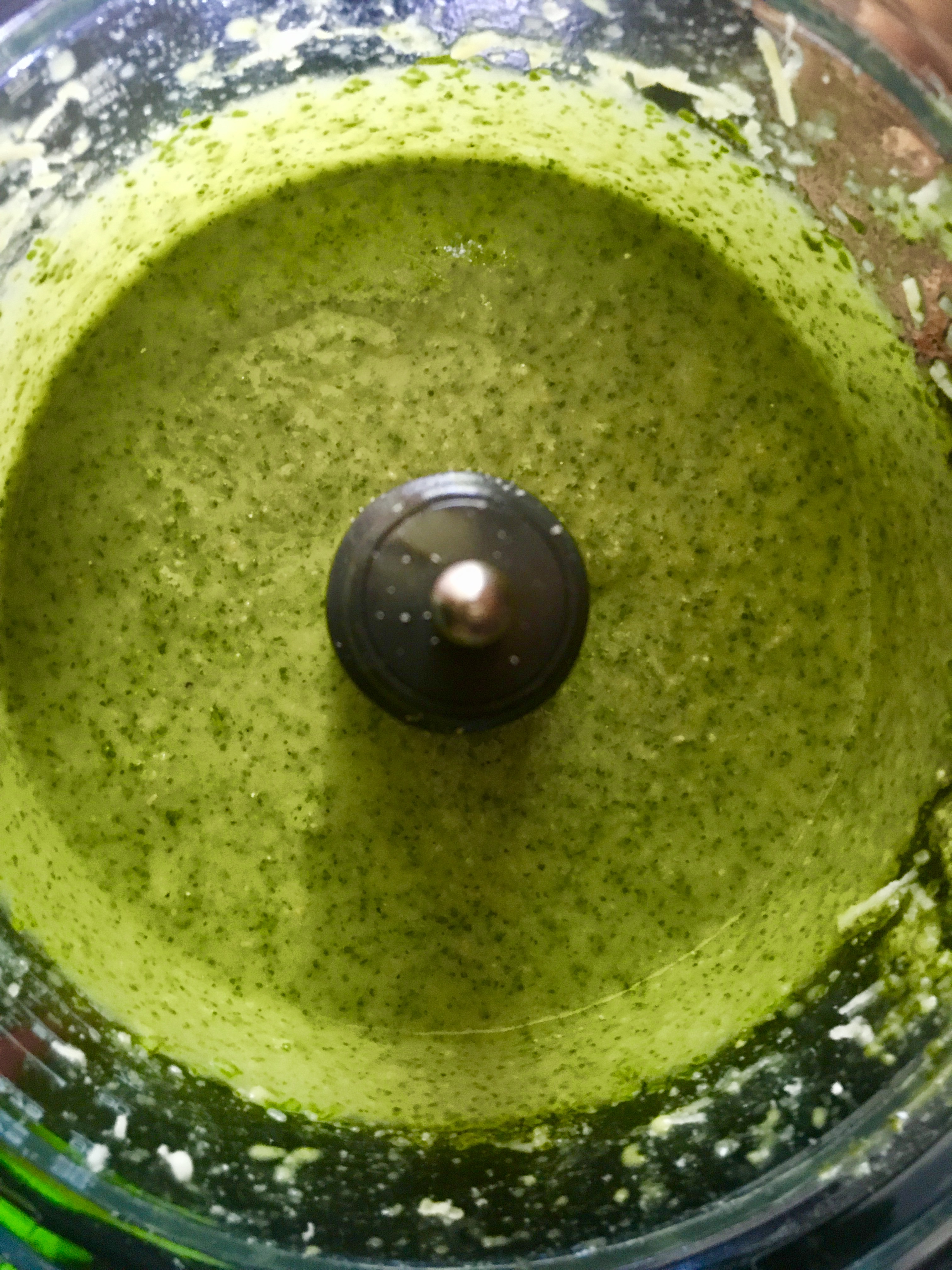
Add the other ingredients in the food processor with the basil and let it rip!


The color and fragrance of freshly-made pesto is hard to beat! For me, a bowl of pasta with pesto is real comfort food.
 

Sometimes, a refreshing cocktail is just what you need after a long day of yard work. Whether you’ve got cucumbers growing in your garden to not, this one fits the bill!

4 fresh cucumbers, peeled and seeded
Small ice cubes
1 cup loosely packed fresh mint leaves
2 teaspoons granulated organic cane sugar
3 tablespoons fresh lime juice
4 oz. vodka (I like Tito’s)
1 oz. orange liqueur (I like Cointreau)

Peel and seed the cucumbers. Coarsely chop them and then purée them in a food processor until smooth. Strain them through a fine sieve, pressing the solids to extract as much liquid as possible. Or, if you have one, use a juicer. Set the extracted cucumber juice aside.

To a large glass pitcher, add the mint leaves, sugar and lime juice. Muddle the ingredients so that the mint leaves release their oils. Add 3/4 cup (at least) of the cucumber juice. Add the vodka and Cointreau. Muddle again briefly.

Fill tall drinking glasses with ice cubes. Strain the cocktail into the glasses. Garnish with a cucumber spear or peel…or mint.

 Over the years, I’ve tweaked this Asian marinade recipe, adding more ingredients. Feel free to use more or less according to your own taste. After all, that’s how any recipe becomes truly your own.
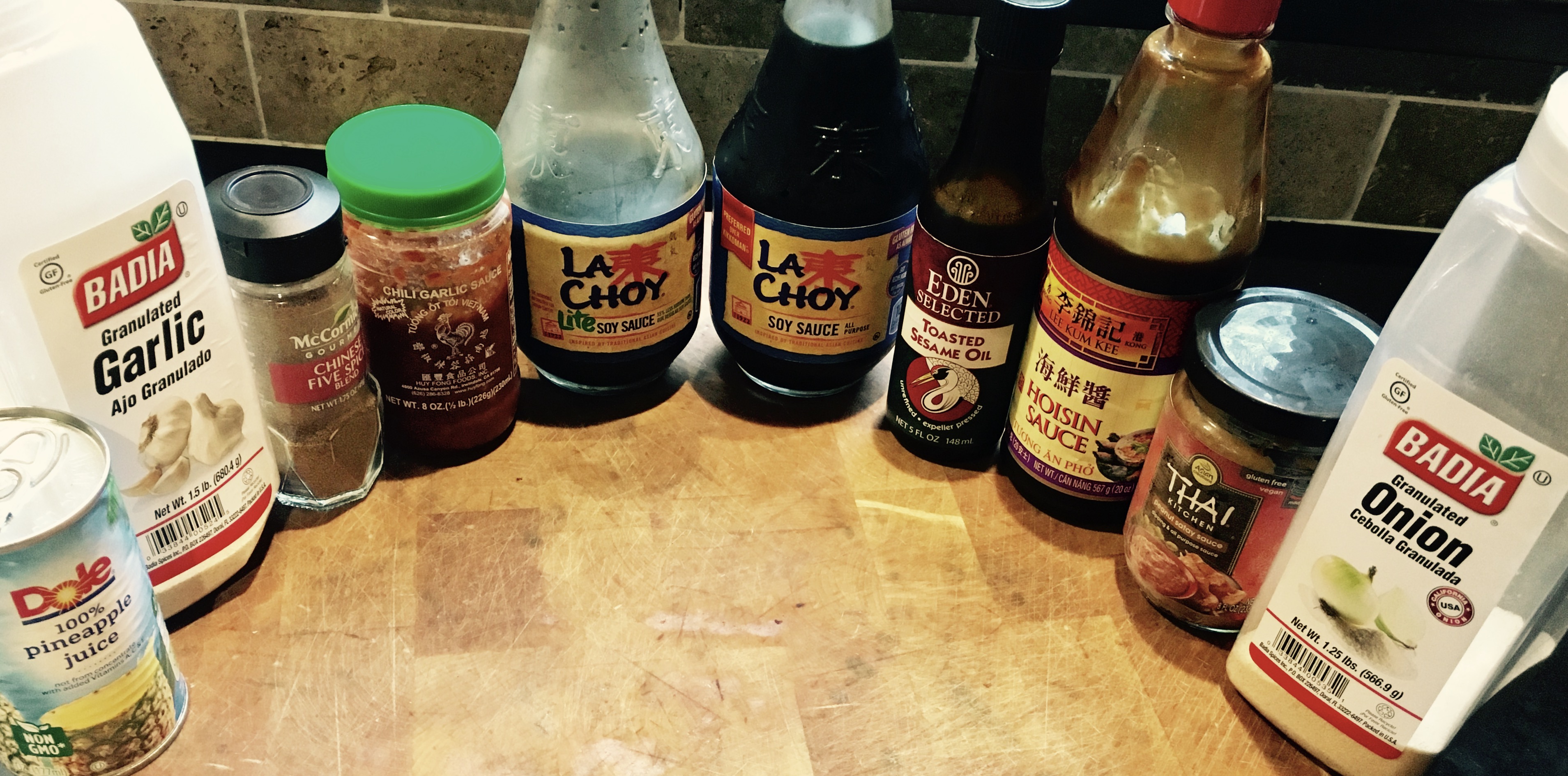
You’ll notice I have two bottles of soy sauce below. I sometimes mix half regular soy sauce with half lite soy to cut the sodium.
And, of course, with the chicken wing shortage we’re experiencing, chicken thighs make an excellent substitute.

10 lbs. chicken wings, the larger the better (or skin-on, bone-in chicken thighs)
1 cup soy sauce
1 small can (6 oz.) pineapple juice
2/3 cup brown sugar
1 tablespoon hoisin sauce
2 teaspoons chili garlic sauce
1 teaspoon granulated onion
1 teaspoon granulated garlic
1 teaspoon Chinese five spice
1 teaspoon sesame oil
1 teaspoon peanut satay sauce (optional)

Place the chicken pieces in a large  Ziploc bag. Whisk all the marinade ingredients together in a bowl. Add the marinade to the bag, seal it well, then squish the bag around so that the marinade makes contact with all of the chicken pieces.
To prevent accidental spills, place the bag in a clean bowl. Marinate the chicken for several hours at room temperature or overnight in the fridge, turning the bag once in a while to make sure everything gets even exposure to the marinade.
The next day, pour off the marinade and discard it, removing the chicken from the bag. Place the wings (or thighs) on a baking sheet lined with foil (I use Reynold’s non-stick) and bake at 325 degrees for about 30–45 minutes for wings…longer for thighs.

I know many people like to dry the herbs they grow in their garden. It’s easy enough to do: you snip ’em, wash ’em, and then dry ’em, usually in a food dehydrator or on a sheet pan placed in a low-heat oven.

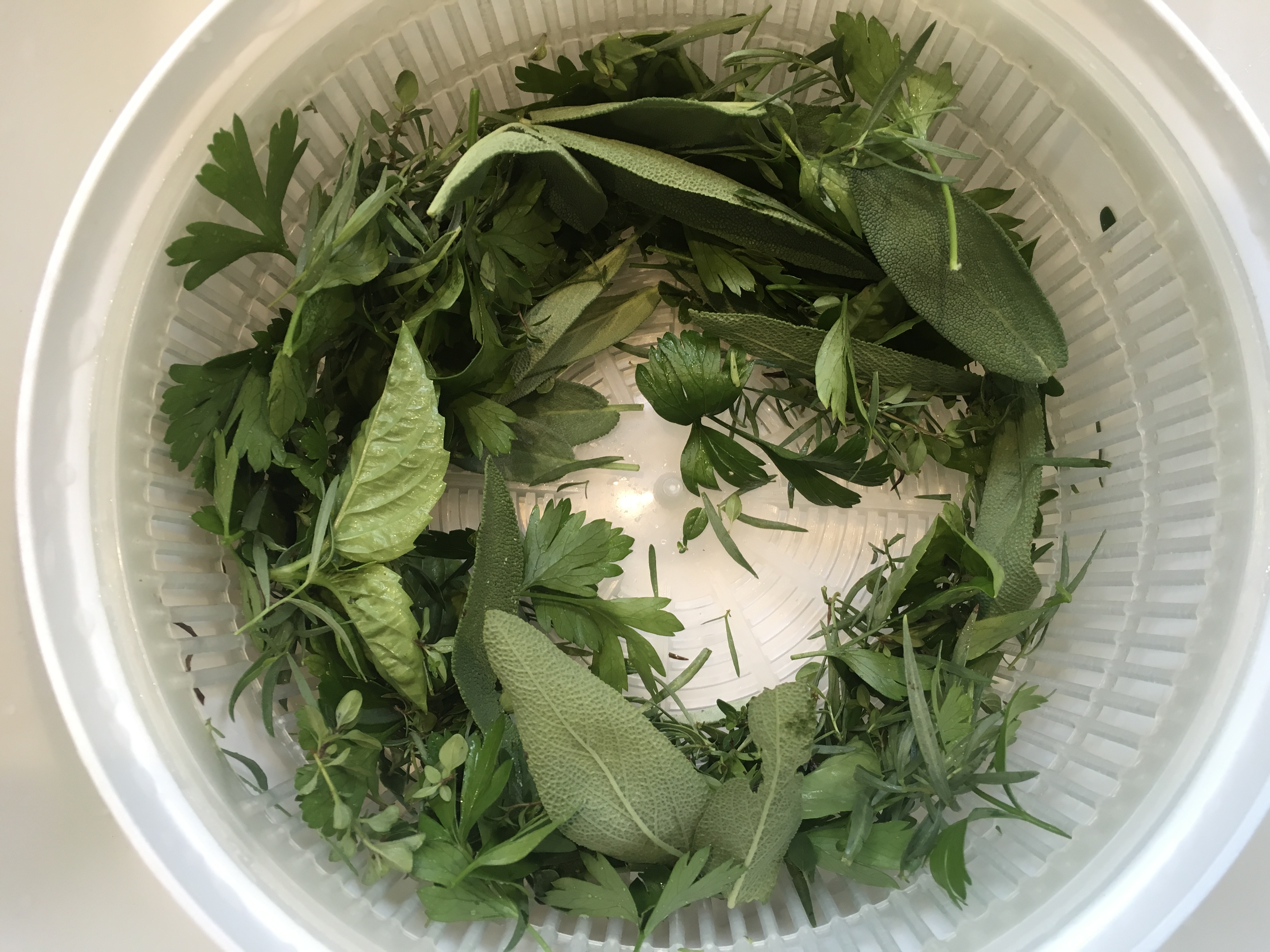
I prefer to freeze my herbs. Every year, I grow a wide variety: several types of basil, parsley, oregano, tarragon, thyme, rosemary, lavender, and massive quantities of sage. I snip the herbs, wash them and dry them in a salad spinner, and then place them in plastic freezer bags, squeezing all the air out before sealing. I place all those smaller bags in one larger bag, for extra protection. I like the color and flavor of the herbs better this way. I learned this method years ago, in my younger days, when preserving the potency of particular herbs was essential. (That’s all I’ll say about that!)

Freshly washed and dried sage.

The reason I grow a lot of sage is because I usually make a very large quantity of stuffies (the New England stuffed clam) in the wintertime and the recipe calls for several cups of fresh sage…really expensive if you decide to buy it at the supermarket in the dead of winter.

I snip the sage leaves, and before washing, I pre-measure them, usually a cup or two at a time, packing them somewhat tightly in a glass measuring cup. Once I have my measurement, I wash them, dry them in the salad spinner, and place them in plastic bags, marking the quantity on the bag. Then, when my stuffies recipe calls for 4 cups of sage, I simply grab the amount of bags I need and I’m ready to go.

Pre-measured sage, ready to go in the freezer.

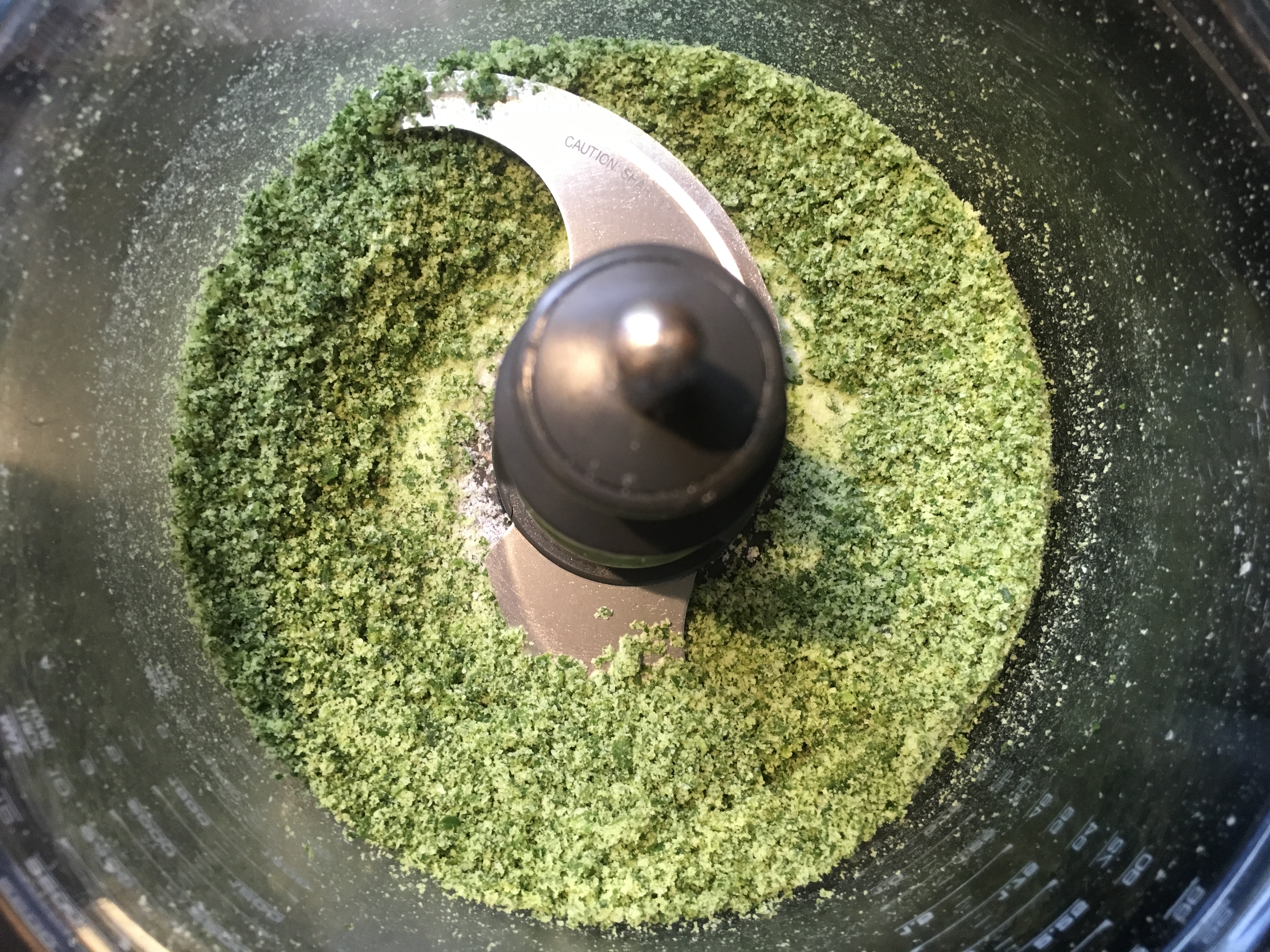
But even though I do all this, I’ve still got a herb overload in my garden, and it seems like such a waste to let them simply turn into compost. Recently, I read an article in Christopher Kimball’s “Milk Street Magazine,” featuring New Orleans chef Alon Shaya. When he faces massive herb leftovers, he takes all of them–and here’s the key–it doesn’t matter what herbs they are–and tosses them in a food processor with an equal amount of kosher salt. A few seconds of processing, and he’s got a fantastic herb salt that he then uses in all kinds of dishes. (To keep the herb salt fresh, it’s a good idea to put it in a tightly sealed container in the freezer.)

My mix of garden herbs. Really: you can mix and match anything.

I thought that was a brilliant way to use up the leftover herbs I had in my garden, so I gave it a try: a tightly packed cup’s worth of fresh herbs, plus a cup of Kosher salt in the processor.

The beautiful color of herbed salt.

I went one step further. If having herbed salt is a great idea, then having herbed butter at the ready has to be even better! I simply took a stick of unsalted butter out of the fridge and let it soften. (Use unsalted butter or the result will be way too salty.) I added one tablespoon of the herbed salt to the butter and mixed it in well. Then I placed the butter on a sheet of wax paper, and rolled it into a small log, twisting the ends of the paper to seal it, placing it in a plastic bag and into the freezer.

Herb butter.

Now, when I want to amp-up the flavor of a freshly grilled steak or piece of fish (or a plate of freshly cooked  boiled or baked potatoes,) I just take the log of herbed butter out of the freezer, slice a piece off, and let it melt over the top, placing the log back for future use.

When it comes to grilling, lamb is often overlooked. Some folks think it tastes too gamey, which can be true with grass-fed lamb that comes from New Zealand or Australia. Although you can’t beat their strict quality standards, the flavor can be intense.

I don’t mind that intense lamb flavor in a chop, but when I make lamburgers, I like to mix ground beef with ground
lamb to give it a milder flavor. And when I cook them over hardwood charcoal, the flavor is outstanding! Even seared in a cast iron skillet and finished in the oven, these burgers are awesome.

1 lb. ground lamb
1 lb. ground beef
2 tablespoons
1/2 onion, minced
1 tablespoon Dijon mustard
1 teaspoon each fresh parsley, mint, and dill, finely chopped
1 teaspoon dried Greek oregano
1/2 teaspoon cumin
1 large clove garlic, squeezed through a garlic press
1 scallion, finely chopped, green part only
1/2 cup breadcrumbs
1 egg
1 teaspoon salt
1/2 teaspoon black pepper

Fresh herbs make the difference!

Heat the olive oil in a skillet over medium heat. Add the onion. Cook it until it’s translucent, about 6 minutes. Transfer the onion to a plate to cool.

In a bowl, mix the cooled onion, mustard, parsley, mint, dill, oregano, cumin, garlic, scallion, and salt and pepper.

In another bowl, combine the lamb with the beef, so they are mixed well. Then add the onion mix bowl to the meat and make sure all the ingredients are combined. Add the breadcrumbs and mix again. Then add the egg and mix one more time.

Form the meat into patties. Place them on a baking sheet covered with non-stick foil, and place the baking sheet in the fridge.

The indentation in the center of the patty keeps it from swelling up while cooking.

Don’t let the lamburgers get too cold in the fridge…just enough to firm the meat up a bit. If it gets too cold, give it a few minutes at room temp to warm up again.  Grill the burgers over hardwood charcoal until they are cooked to medium.

If you’re cooking indoors, heat some avocado oil in an oven-proof pan, preferably cast iron. Sear the burgers well on both sides, then place the pan in a 350-degree oven to finish cooking.

Extra meat is great for meatballs! Just freeze them for another time.

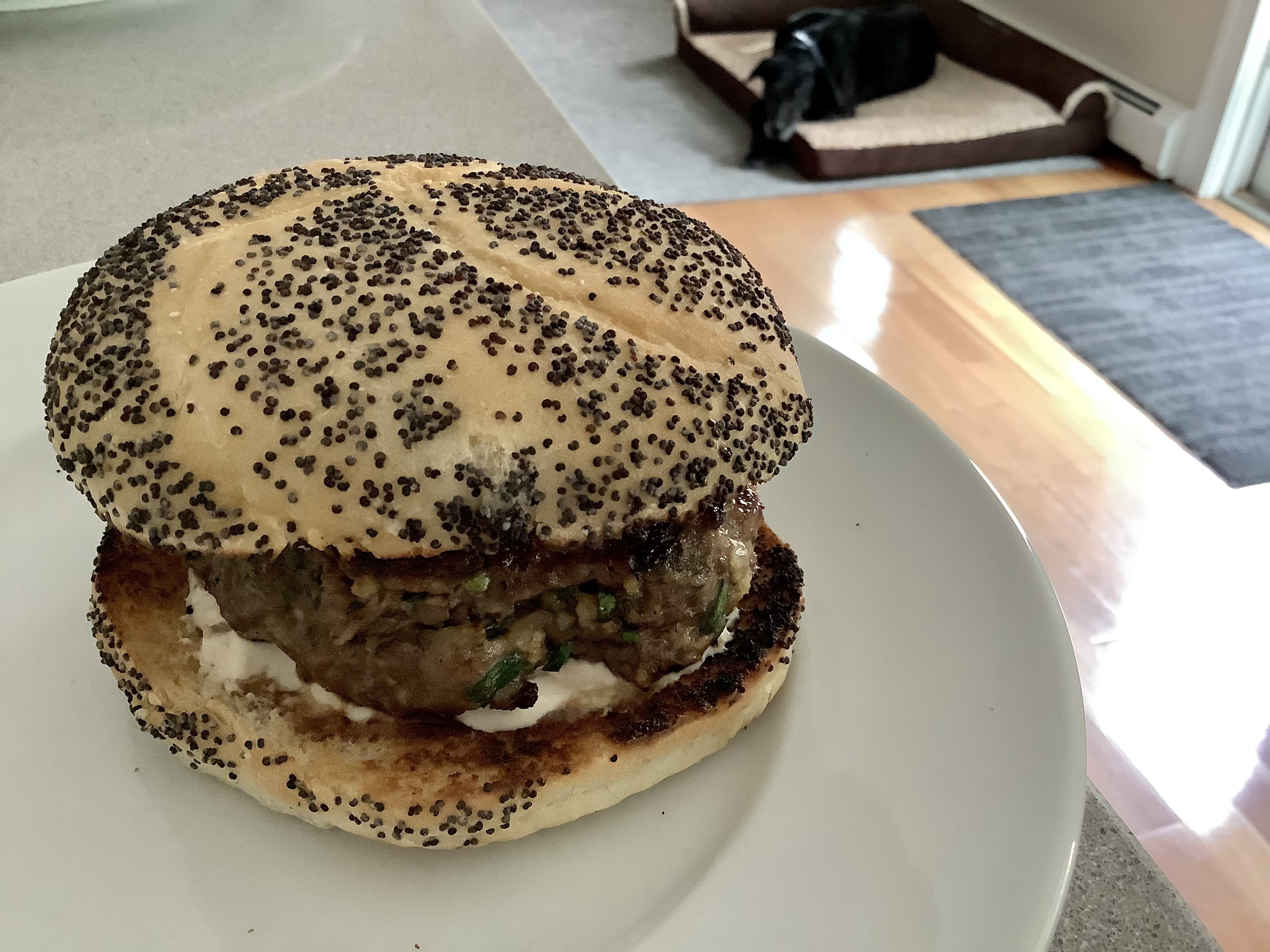
Place the burgers on buns, and smear the bun with the feta cheese dressing.

If the food is good, someone’s always watching!

My recipe for feta cheese dressing works really well with lamburgers. But it’s also great on a salad.

3/4 cup plain Greek yogurt
1  cup mayo
1 teaspoon Worcestershire sauce
1/2 teaspoon cayenne pepper sauce, like Franks Red Hot
1 teaspoon Dijon mustard
1/2 teaspoon granulated garlic
1/2 teaspoon salt
1/2 teaspoon ground black pepper
4–5 oz. crumbled feta cheese

Combine all the ingredients in a bowl. Mix well. Cover and refrigerate. If you can wait a day, it’s even better.

FullSizeRender (14)

Every Rhode Island home needs to have a box of corn meal in case of Johnny Cake emergencies. If you’ve never had a Johnny Cake before, you’re missing out on a simple, delicious Rhode Island treat. But that’s a topic of another blog. The point is, I always keep a box of white corn meal in my pantry, and I used it to make the coating for my chicken.

fullsizerender-4

Corn meal is great, because it adds a wonderful crunch while keeping this recipe gluten-free, which may be an important factor for some. But even if you don’t have to be on a GF diet, corn meal adds great flavor.

To keep the batter light, I add flour to the corn meal.

2 cups buttermilk (whole milk is fine, too)
1 tablespoon hot sauce (I use Frank’s Red Hot)
4 lbs. chicken wings
1 cup white corn meal
1 cup flour (or use Cup4Cup, a gluten-free flour, to keep it GF)
1 1/2 teaspoons salt
1/2 teaspoon pepper
1/2 teaspoon granulated garlic
1/2 teaspoon granulated onion
1/2 teaspoon paprika
oil, lard or a combination of the 2 for frying

fullsizerender-3

Pour the buttermilk or whole milk into a large Ziploc bag. Add the hot sauce. Drop in the chicken wings, seal the bag,  and let them soak in the mixture in the fridge for at least several hours…overnight is better. Place the bag in a bowl to prevent bag leakage accidents.

In a separate bowl, combine the corn meal, flour, salt, pepper, garlic, onion, and paprika. Mix well.

Pre-heat the oven to 350 degrees.

I like to use a combination of grapeseed oil and pork fat (if I have it) when frying. Heat the oil to about 325 degrees.

Take the wings out of the bag one by one, and drop them in the bowl with the cornmeal mix, coating the chicken well on all sides, then shaking off the excess. Place the chicken wings in the hot oil carefully to avoid splashing hot oil on yourself.

Cook the chicken in the oil on both sides for just a few minutes, until golden. You’re not trying to cook them all the way through.

Place the chicken pieces on a foil-lined baking sheet. when you’ve fried all the chicken, place the baking sheet in the oven and cook until the wings are done, about 25 minutes.

There’s only one thing better than a freshly made mojito when you’re hanging out at home…and that’s a pitcher of freshly made mojitos! Organic raspberries and blueberries are in the markets right now, and my mint plants are taking over the yard! All the ingredients for a great mojito!

Very often, I’ll use raspberries alone, but mojitos are even better when you combine the raspberries with blueberries. I stock up on organic berries, rinsing them and placing them in plastic bags that go in the freezer until I’m ready to make my mojitos. I always go organic with berries. Pesticides should never be a cocktail ingredient!  Pay a little extra and get the good stuff…it makes a difference!

Once you make mojitos by the pitcher, you’ll never have them any other way. (Even if you’re drinking alone!)


The ingredients


Make ahead of time…
1 1/2 cups fresh squeezed lime juice
1 1/3 cups turbinado sugar (Sugar in the Raw is a common brand)

Mix both ingredients together, letting it stand at room temperature for a few minutes. I like to combine them in a Mason jar, then shake really hard until the sugar has dissolved. I keep it in the fridge, and it’s good for up to 3 weeks…ready to use any time. Shake it well again before using.


mojito pitcher

For the Mojitos…
1 cup sugar/lime mixture
1 cup mint leaves, packed
1/2 pint blueberries (fresh or frozen)
1/2 pint raspberries (fresh or frozen)
3 or 4 cups white rum (I use Don Q Cristal rum)
3 or 4 cups club soda or seltzer

Combine the mint leaves and 1/2 cup of the sugar/lime mixture in bottom of a pitcher. Muddle the mint up very well to release mint oils. Add the blueberries and continue to muddle.

Add the remaining sugar/lime mixture, rum and raspberries. Mix well. Just before serving, add the club soda and ice. Stir. Pour into tall glasses.

Or…for drinks one at a time, I put in a shot of the sugar/lime mixture into a tall glass. I throw in about 8 mint leaves and muddle them for a minute. Then I add 2 shots of rum, and a few raspberries and blueberries. I muddle again.  I add ice, and I top it with the club soda, stirring well. An option is to pour it all into another tall glass. Garnish with a mint leaf.


Cheers!

Cheers!