Archive for the ‘breakfast’ Category

My wife and I are iced coffee fanatics. It’s what we drink every morning, 365 days a year. I have a full air pot of coffee in the fridge at all times, and a stash of coffee ice cubes in the freezer so that not one precious drop of this elixir is diluted. When we go away on vacation, I will bring containers of this already brewed coffee with us. If we go somewhere with a kitchen and a coffee maker, I will grind the beans at home in pre-measured amounts and then seal it in Ziploc bags, brewing it immediately upon arrival so that we have our cold coffee ready the next morning, ice cubes included. When we travel to a destination where bringing this coffee is absolutely impossible, we try to look at it as an opportunity to perhaps discover a newer, better coffee. It has yet to happen.

The coffee is called Caffe Chicco D’Oro, which means “nugget of gold,” and we discovered it in Switzerland, near the Italian border, about 9 years ago. My brother-in-law’s family was living in Basel at the time and my wife and I traveled there to be a part of a large family Christmas holiday gathering. The journey across the pond included a scenic road trip to the spectacular Grand Hotel Villa Castagnola in Ticino/Lugano, close to the Italian border but still in Switzerland despite its Italian name. We stopped at a popular Autogrill rest area in southern Switzerland and sipped cappucinos that totally blew us away….so much so that we needed to know the brand of this incredible coffee. Once we were home in the United States, I was on a mission to find a way to buy this coffee for our every day use. Fortunately, they had an office here in the states, and it was relatively easy for me to buy Caffe Chicco D’Oro online. After a few years, they shut their operation down and transferred the rights to sell their product to a company called The Swiss Bakery in Virginia. To this day, these folks are the exclusive importers of Caffe Chicco D’Oro. (www.chiccodoro-usa.com)

The variety I buy is in the gold package, known as “Tradition.” I have tried the “Elite” when they were sold out of my favorite, and was not as happy with it.

coffee

I buy the coffee by the case: 12 whole bean bags (250g) at a time. Shipping is free. I keep them in a cool, dry place and I’ve never had a problem with spoilage. Besides, we drink a lot of it and it doesn’t sit around very long!

These pancakes, based on a recipe from chef April Bloomfield (The Spotted Pig and The Breslin in NYC), are made from fresh homemade ricotta cheese. Light as air…and really delicious! I made my first-ever batch of homemade ricotta cheese the other day, following a recipe from Iron Chef Michael Symon. He used lemon juice and zest in the recipe, which gave the cheese a stronger lemon profile than I had hoped for. But once I realized I could use that ricotta in a pancake, the lemon flavor really took the pancakes to a whole new level.

I use raw milk for my ricotta cheese. It’s not available here in Rhode Island, but it is in neighboring Massachusetts. If you can’t find raw milk, use organic milk. Just avoid anything that is ultra-pasteurized.

milk

Ingredients:

1.2 gallon of raw milk

juice and zest of 8 small organic lemons

salt

sugar

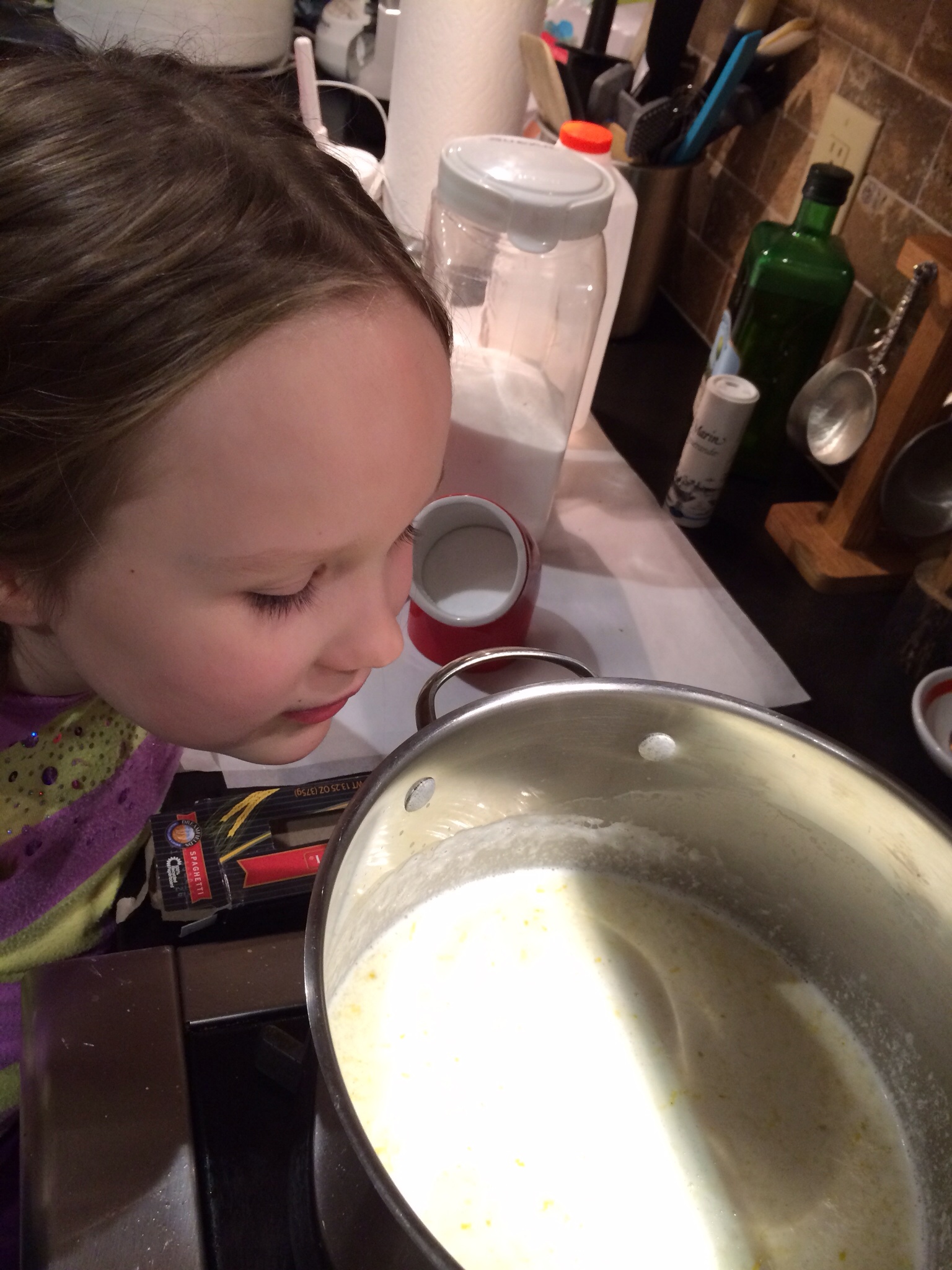
Always have top-notch assistants at your side to make sure you're doing it right!

Always have top-notch assistants at your side to make sure you’re doing it right!

In a saucepan, heat the milk to 180 degrees. Remove from the heat. Add lemon juice and zest, salt and sugar. Stir once and then let it sit for 5 minutes.

Pour the curds (solids) and whey (liquid) into a strainer lined with cheesecloth over a bowl. Discard the whey, if you choose, then place the remaining cheese in the fridge overnight to further continue drippage.

The next morning, the ricotta is ready to use!

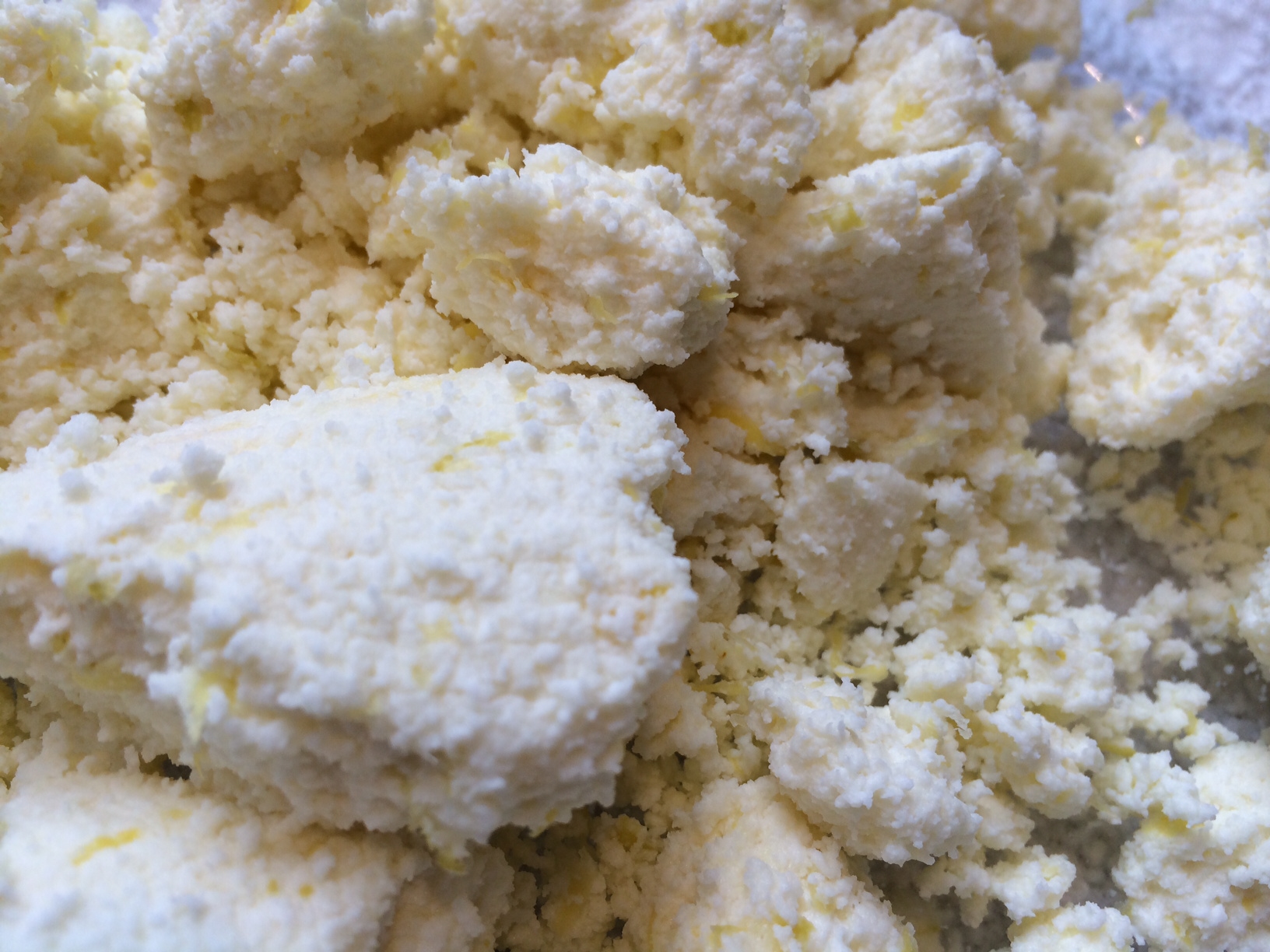
Homemade ricotta cheese

Homemade ricotta cheese

Once you have the fresh ricotta, it’s time to put these beautiful rustic pancakes together…


Ingredients:

1 1/2 cups all-purpose flour

1/4 cup yellow cornmeal

2 tablespoons sugar

1/2 teaspoon salt

1/2 teaspoon baking powder

1/2 teaspoon baking soda

2 cups milk

2 large eggs, separated

1/2 cup fresh ricotta


In a large bowl, combine the flour, cornmeal, sugar, salt, baking powder and baking soda. In another large bowl, whisk together the milk, ricotta,  and egg yolks. Fold the wet ingredients into the dry ingredients.

In a large stainless steel bowl, whisk the egg whites until they are stiff, but not dry. Fold gently into the batter.

Spray a non-stick griddle with a little cooking spray and drop about 1/4 cup of batter per pancake. Cook over medium heat for about 2 minutes per side, until golden and fluffy.

pancake

I’ve made some changes to my bacon blog of over a year ago, taking many more steps toward true bacon greatness. Scroll down for my updates…

There are few foods as magical as bacon. Add bacon to just about any dish you’re preparing, and it elevates it to incredible new heights of flavor. The BLT is possibly the greatest sandwich ever invented: just a few simple, fresh ingredients, when placed together, transforming into one of the most amazing treats on planet Earth.

And it all depends on the bacon.

For many years, I’ve bought my bacon on-line from Burger’s Smokehouse, a family run business in Missouri that not only sells some great bacon (get the thick-sliced country bacon—my favorite), but also smoked turkeys, ham and more. The prices are excellent and they include shipping.

But it was time to take the next step: I had to make my own bacon!

Bacon comes from the pork belly. So I bought a few slabs of insanely good pork from my friends at Fire Fly Farms in Stonington, CT (www.fireflyfarmsllc.com), and followed the simple curing techniques outlined in a great book about making all kinds of prepared meats (sausages, salamis, and of course, bacon): “Charcuterie,” by Michael Ruhlman and Brian Polcyn.

To cure bacon, all you really need is some salt and some sugar, and what they in the curing biz call “pink salt,” which is not to be confused with salt that happens to be pink, like Himalayan salt you would find in a spice catalog. Pink salt is bright pink—to let you know that this is special salt that should only be used in small quantities for curing. And the reason for that is because it has nitrites. Nitrites delay the spoilage of the meat, and help keep the flavors of spices and smoke. That’s good. But nitrites can break down into nitrosamines, which have been known to cause cancer in lab animals. But let’s face it: you would need to eat a ton of cured meat to really worry about this.

To make the basic dry cure:

1/2 lb. kosher salt

4 oz sugar

1 ounce (5 teaspoons) pink salt

Combine these ingredients well. You won’t need all of it unless you’ve got a lot of pork belly. An important note: kosher salts do not all weigh the same, so that’s why I go by the weight and not a cup measurement.

Once you rub the pork belly with the basic dry cure, place it in a Ziploc bag, squeeze the air out of it, and seal it well. Place in the fridge for about a week, flipping it over a few times to let gravity do its work. You’ll see that the salt will draw moisture out of the meat and form a brine. This brine will continue to cure your pork belly, so leave it in there.
Once the pork belly has been cured, wash the brine off the meat, pat dry with paper towels. Now it’s time to cook. You can simply cook the pork belly at 200 degrees for about 2 hours, until the internal temperature reaches 160 degrees, or do what I did: place the pork belly in a digital smoker, cooking it at 250 degrees for 1 hour, then adding hickory chips and smoking it at 250 degrees for another hour.

That’s it. You have achieved bacon!

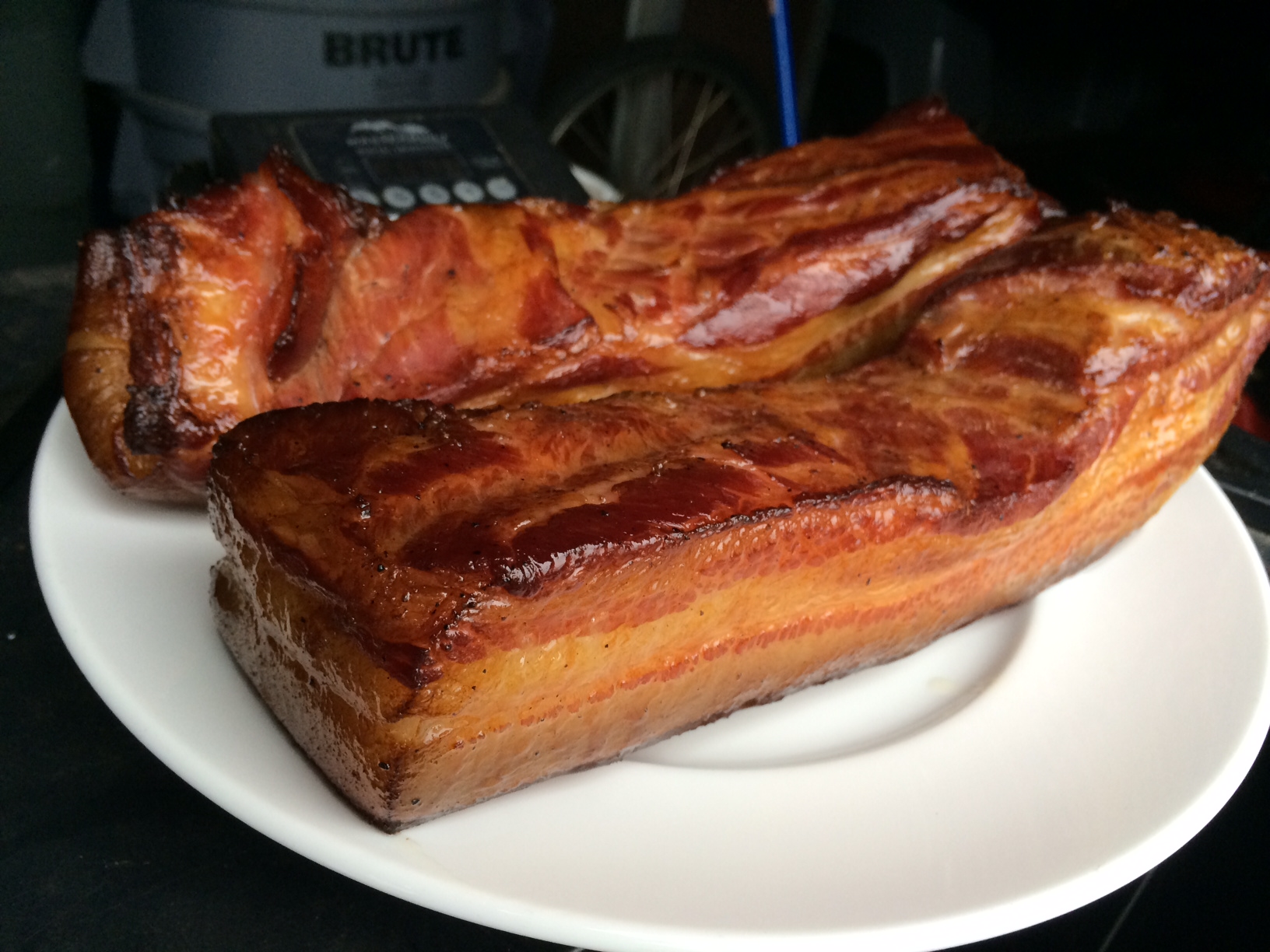
Bacon, straight out of the smoker.

Bacon, straight out of the smoker.

Let me tell you…that first slice you cut off that bacon and toss in a pan to lightly fry for a few moments will be the best bite of bacon you have ever had in your life!
The reward is so worth the effort. If you don’t want to bother going online or if you don’t have a local farm to buy your pork, simply go to your favorite butcher and ask for pork belly. It’s usually available. And if you’re making one slab of bacon, why not make it three or four? It freezes well. And…you will eat it. You know you will!

Sliced, and ready for frying.

Sliced, and ready for frying.

Since I posted the above information, I’ve had the opportunity to tweak my bacon curing recipe. The result was a more balanced, less salty bacon with tons of flavor…

Ingredients:

1/4 cup of the basic dry rub (recipe above)

1/2 cup light brown sugar

1/2 teaspoon ground black pepper

Combine these ingredients and rub on all sides of the pork belly. Place in Ziploc bags and squeeze all the air out of them. Place in a container in the fridge and turn them over every day to let gravity do its work. A brine will form inside the bag…this is good. It will cure the pork belly. After about a week, remove the pork bellies and rinse them with cold water. Pat them dry with paper towels and then proceed to the smoker.

Bellies in the smoker

Bellies in the smoker

I use a digital smoker, so I set the temp for 250 degrees and cook the pork bellies at this temperature for one hour. I then add hickory chips and smoke the bellies at 25o degrees for one more hour.

Smoked bacon

Smoked bacon

At this point, you have achieved bacon! While the bellies are still warm, you can easily slice off the pork skin off the belly. I discard it. Slice the bacon into whatever thickness you like, and fry some up immediately! Once the rest of the bacon has cooled to room temp, cut them into chunks, wrap individually, and freeze until ready to use.

Frying in the pan!

Frying in the pan!

Portland, Maine has always been a foodie destination, but the number of consistently amazing food experiences you can have in this waterfront town has just recently exploded. When my wife and I get a chance to have a date weekend, we avoid expensive New York, by-pass the Boston traffic, and head right to Portland.

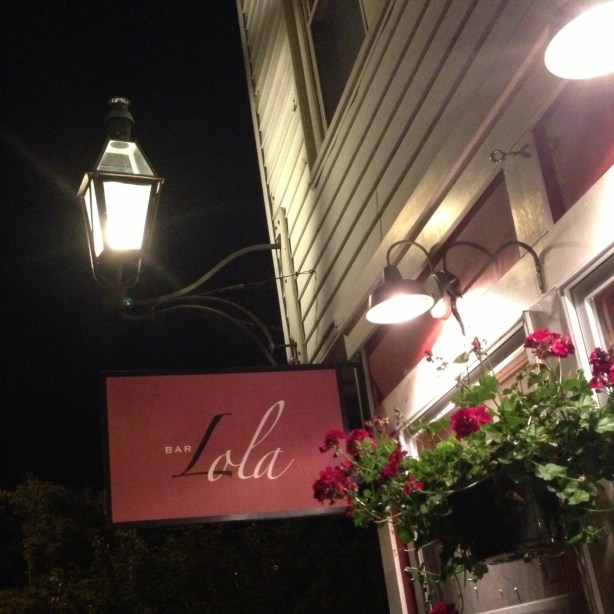
Bar Lola, a small, out-of-the-way bistro, raises the bar on fabulous food in Portland. Our best food experience in Portland to date, and that includes the landmark Fore Street.
Sure, it was a hot night and they didn’t have air conditioning. But the ceiling fans and window fans were on, the wonderfully inventive cocktails (“Atlantic & Congress” a personal favorite) were flowing, and the food was fantastic. Small bites, and lots of them…the kitchen cranked them out and we devoured them with pleasure.
photo
Radishes with marrow butter on a baguette…Spanish sardines…rabbit confit with frisee and tomato mostarda (I told the chef I wanted that one to be super-sized so I could just shovel it into my mouth)…a wonderful pulled pork taco special…seared steak with wheatberries and dried fruit…a delightfully tender roasted half poussin with farro, pea shoots and garlic jus. We savored it all.
An not-on-the-menu bowl of pasta with butter for our daughter was not a problem for this busy kitchen. And a unique wine list was assisted by a knowledgeable staff to help with the selections.
Bar Lola is a small, cool, funky out-of-the-way neighborhood restaurant.
If you really are all about the food in Portland, this is where you go.

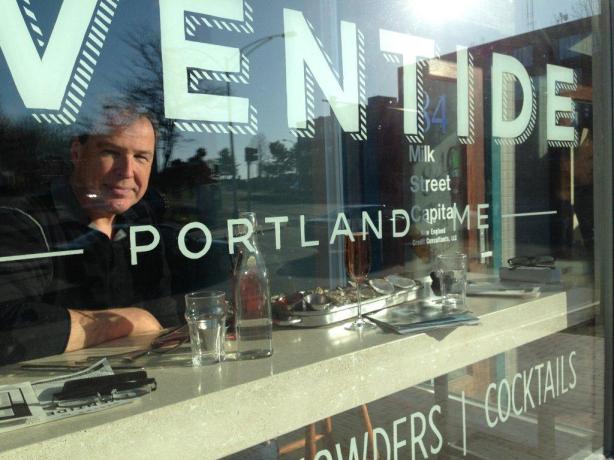
Eventide Oyster Company is a great little space around the corner from the waterfront, located next door to Hugo’s, which now shares a the kitchen with Eventide after renovations. (A visit to Hugo’s is tops on our list for our next visit.)
IMG_2930

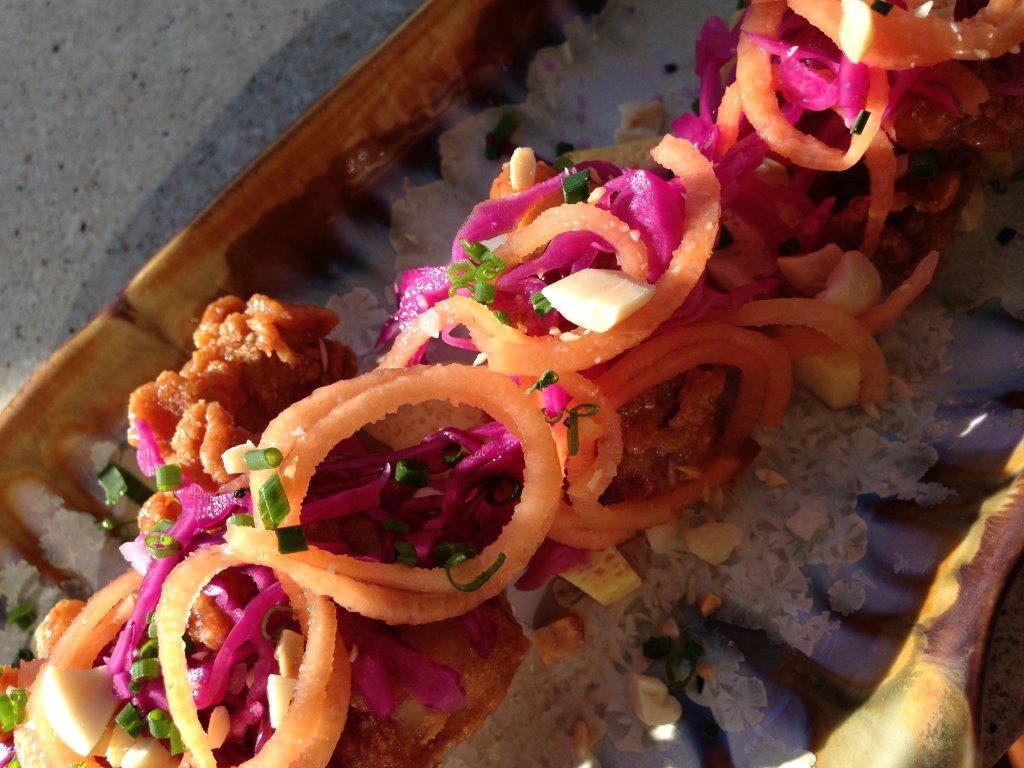
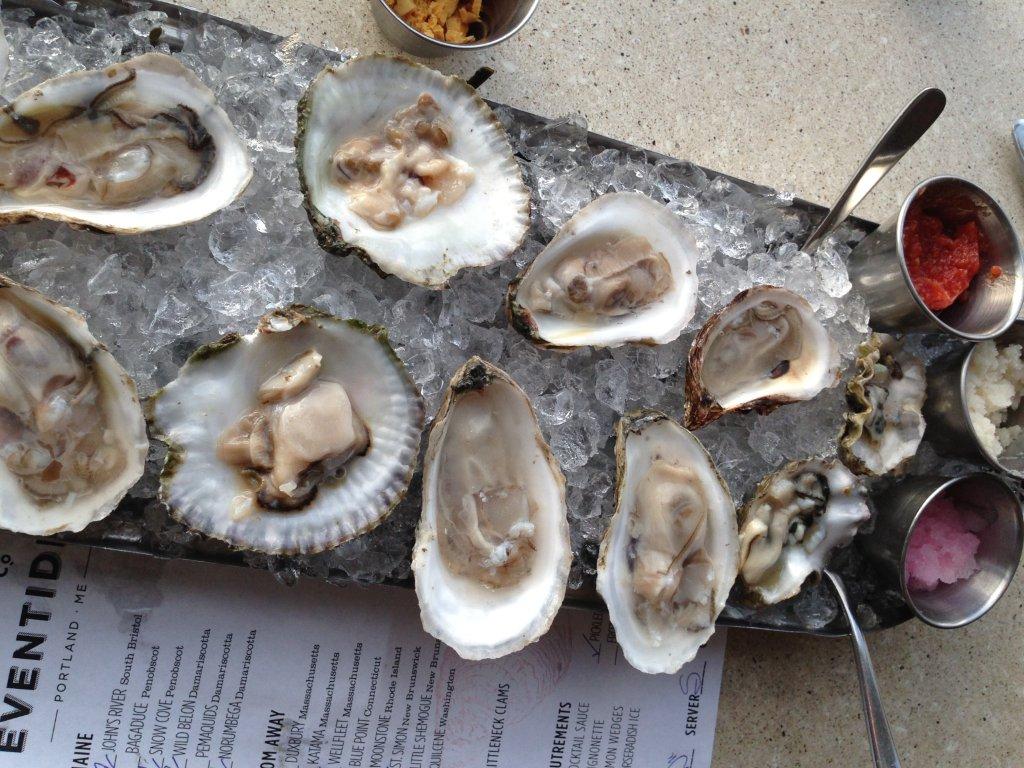
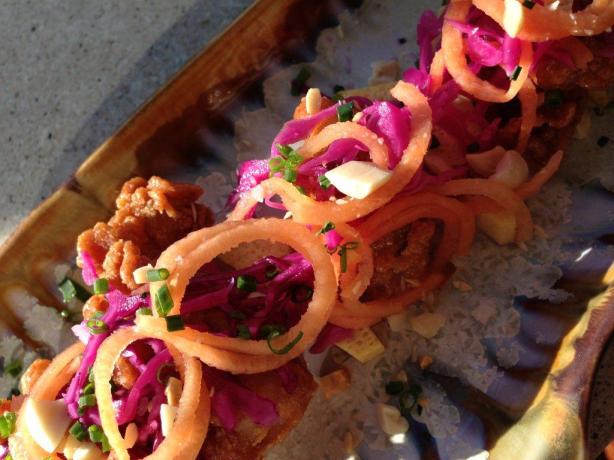
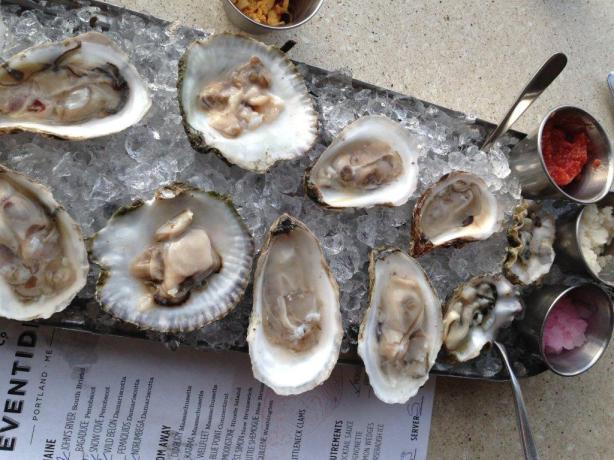
At Eventide: fresh oysters from all over the country, and fabulous small plates to go with them. Razor clams are tough to prepare properly, but they slice them and grill them to create a wonderful small plate. The fried oysters…the crudos (raw fish plates)…beautifully presented. The tuna deviled eggs: a home run. This is what an oyster bar should be. The staff is friendly and not jaded, despite the fact that it can get very crowded, spilling out into the street in the summertime. A good bar with interesting drinks and a nice choice of wines.
IMG_2925

IMG_2823

Probably the most amazing discovery for us was Eventide’s shaved ice accompaniments for their oysters, especially the red onion, horseradish and kimche shaved ice: intense flavors that just melt in your mouth. The red onion shaved ice was so good, I asked for a martini with a small bowl of it on the side. My wife and I came up with an oyster shooter: shot glass, small oyster of their choice, chilled Belvedere vodka, topped with the red onion shaved ice. WOW! You can thank me later!!!

IMG_2924

We were in Portland for 48 hours and stopped by Eventide twice.

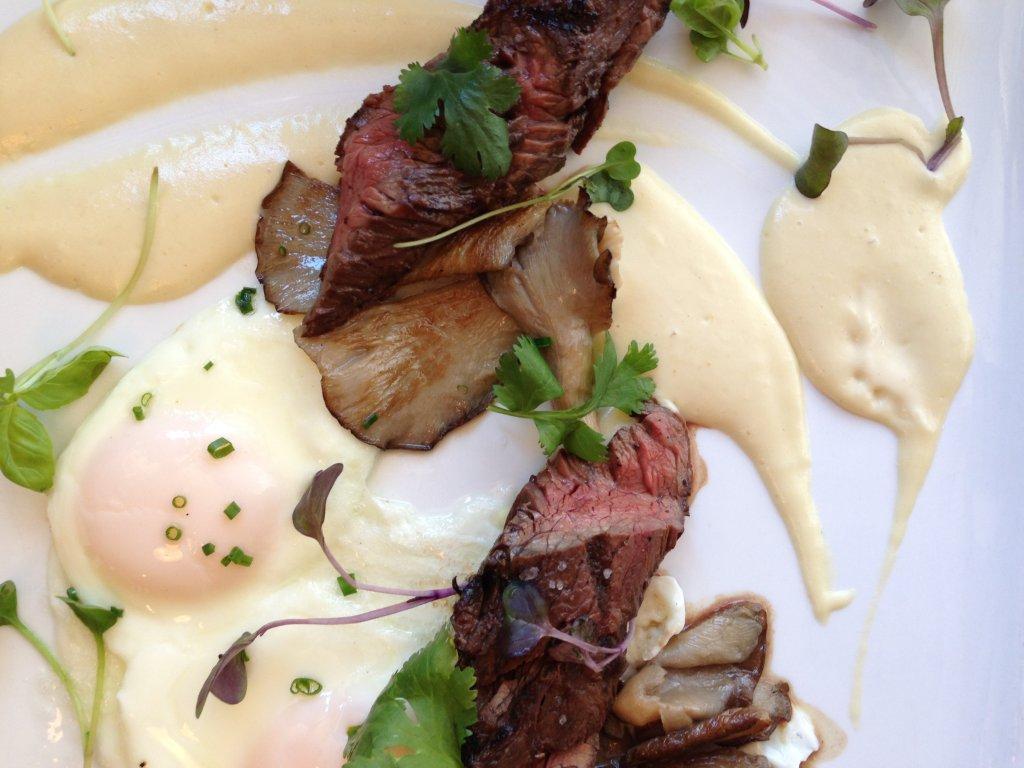
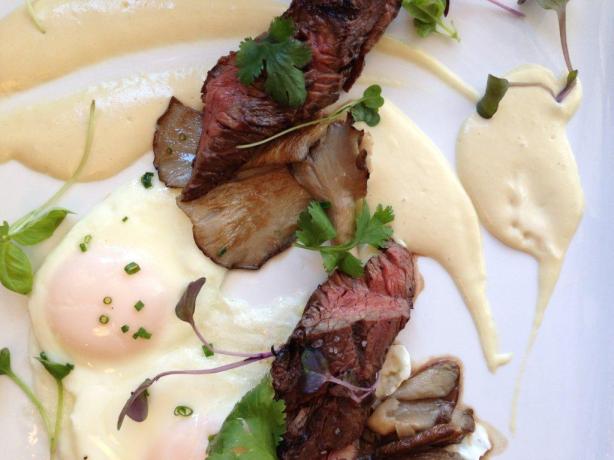
555 (Five Fifty-Five) served an excellent Sunday brunch…this coming from a guy that hates brunch. Going to a restaurant to eat eggs and drink bad champagne drinks is not my speed. But the lobster eggs Benedict was killer. Steak and eggs featured some of the tastiest, tenderest steak I’ve had anywhere. Fresh salads with local greens. A wonderfully satisfying creamy parsnip soup. Inventive cocktails. Live music. If I’m gonna have brunch, this is where I’m gonna have it! Can’t wait to come back to try 555 out for dinner. A great find, recommended to us by several servers from other restaurants. Always a good sign.

IMG_2846

555's Steak and Eggs

555’s Steak and Eggs

Killer lobster benedict!

Killer lobster Benedict!

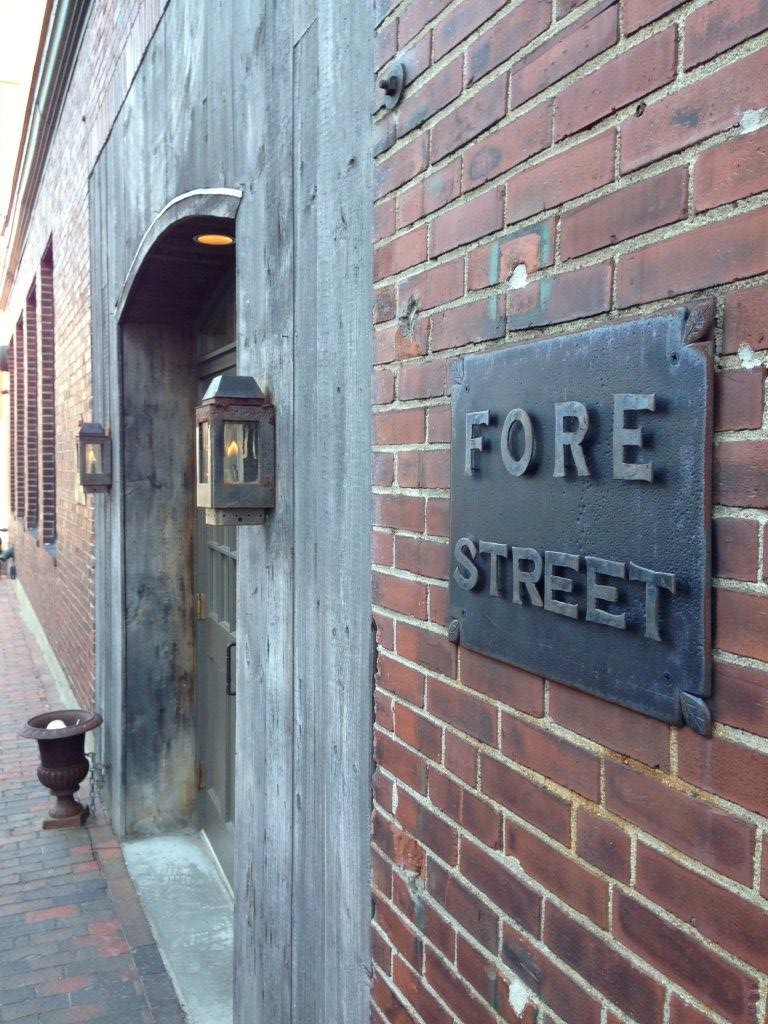
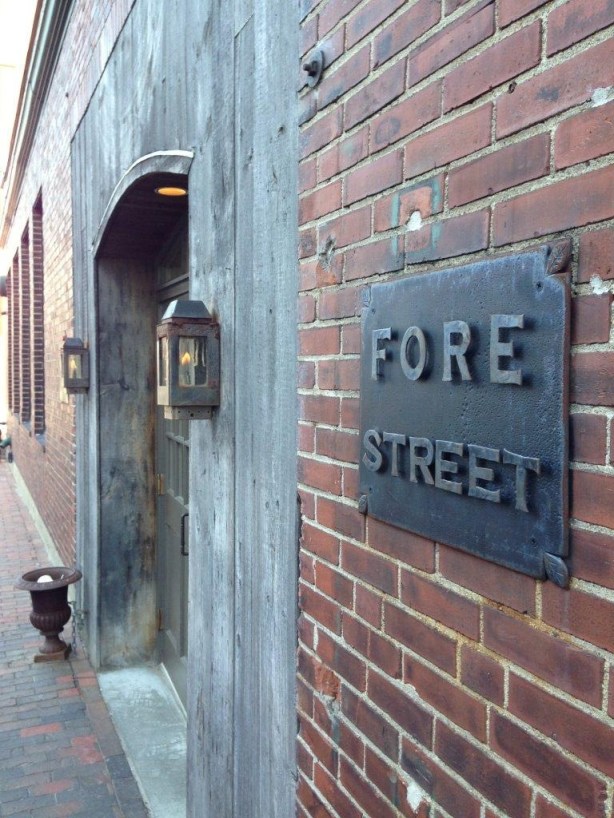
Fore Street: In some ways, this can still be considered the best restaurant in Portland. Earning great reviews and national attention year after year is not an easy accomplishment. And for the most part, Fore Street is really special. Tell anyone in the food business in Portland that you’ve got reservations at Fore Street, and they all swoon.
IMG_2921

Unusual charcuterie plates with lamb hearts, foie gras stuffed pork trotters and beef tongue: a fun trip for the adventurous, but not particularly flavorful or inspired on our visit. However, roasted quail…roasted chicken…fabulous salads with seasonal greens…ravioli with pesto…all beautifully prepared in their open kitchen.

IMG_2997

Fore Street keeps their produce local and seasonal, so I ordered an English pea and carrot salad that was at its seasonal peak. Then we ordered the ravioli: covered in English peas. Then the chicken: covered in English peas. Really? In this case, I wouldn’t mind if they brought in some veggies from out-of-town. I love peas. But I don’t need them in three separate dishes on the same night. Dropped the ball there.

We stayed away from any seafood because we had gorged on it the entire weekend at Eventide!

Although our Fore Street server tried to move the meal along a little faster than we were comfortable with, she got the message after a while and let us be. (It was an 8PM reservation on a Sunday night…she wasn’t going to have another seating at that table anyway.) Wine suggestions and selections were excellent, and though we took home a box of house-made chocolates, we really didn’t have room for dessert, with the exception of a refreshing espresso shaved ice.

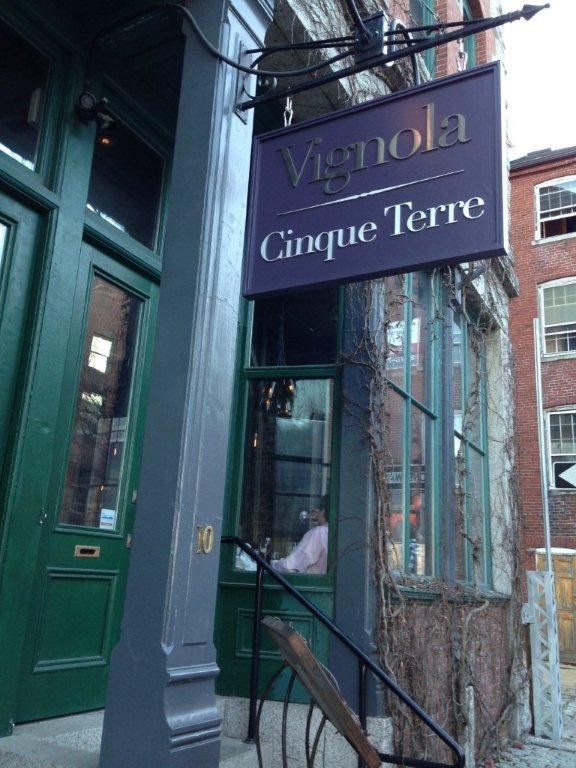
Vignola Cinque Terre was intended to be a quick stop for just a glass of wine. Several cheese plates and many cocktails later, we realized we’ve got to come back to this place to enjoy some of their authentic Italian cuisine. Some places feel sterile…this place has loads of good ju-ju. And a great selection of cheeses, by the way.

IMG_2971

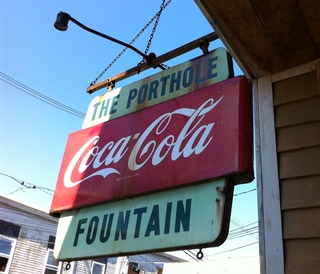
The Porthole Restaurant is a Portland classic: off the main drag, down and dirty on the dock, serving great drinks and fun food. Featured on Food Network’s “Diners, Drive-Ins and Dives.” And just when you think they’re shutting down for the night, they get ready to re-open for breakfast! Shrimp and grits, lobster benedict…and a great Bloody Mary. What else do you need?
1785_1341913290

1785_1341913321

Becky’s Diner: a classic, tight-spaced breakfast joint, extremely popular, no doubt due to a very loyal following and constant rave reviews from magazines like Esquire and Gourmet. Get ready to wait in line!

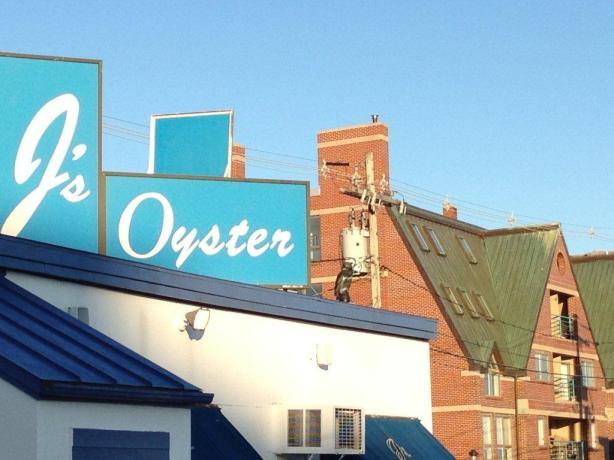
J’s Oyster: the quintessential seafood dive. J’s is a Portland legend. Great oysters, lobster rolls, strong drinks, sassy bartenders, crotchety locals. If you haven’t been to J’s, you haven’t been to Portland, Maine. Plain and simple.
IMG_2962

Infiniti, a brand spankin’ new and beautiful brew pub, serves atypically creative dishes, and they are just steps away from starting up their own distillery. It should be ready to rock on our next visit to Portland. We just popped in for a peek at the menu and the young, hip crowd that packed the place on a Saturday night.

Other FOOD FINDS…

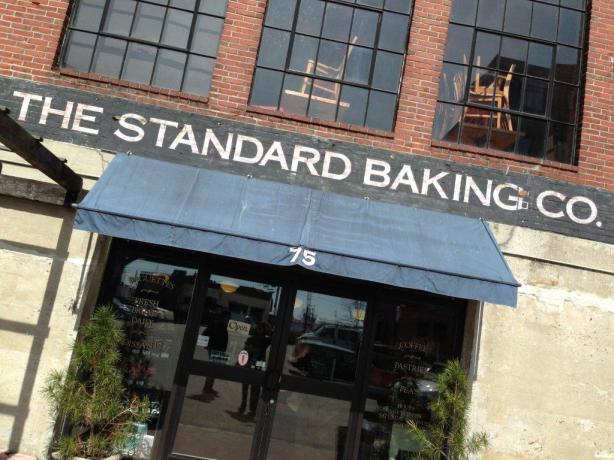
Standard Baking Co: Some of the most delicious breads in town, just steps away from the Hilton Garden Inn, where we stayed…and just under Fore Street. (They bake the bread for the restaurant.) Not a lot of pastries and cakes…more of a rustic bakery. But what they’ve got is wonderful.
IMG_3005

IMG_3004

Harbor Fish Market: Bring a cooler and load up on the freshest seafood that Portland has to offer. This fish market is the real deal: Maine shrimp, Maine crab meat, lobsters, clams, oysters and a huge selection of  fresh fish. We always stop here on the way home after our long Portland weekend. Order your breakfast to go right across the way at the Porthole, then come here for the seafood, and your breakfast will be ready to go by the time you’re done shopping.

IMG_3014

The MISSES…

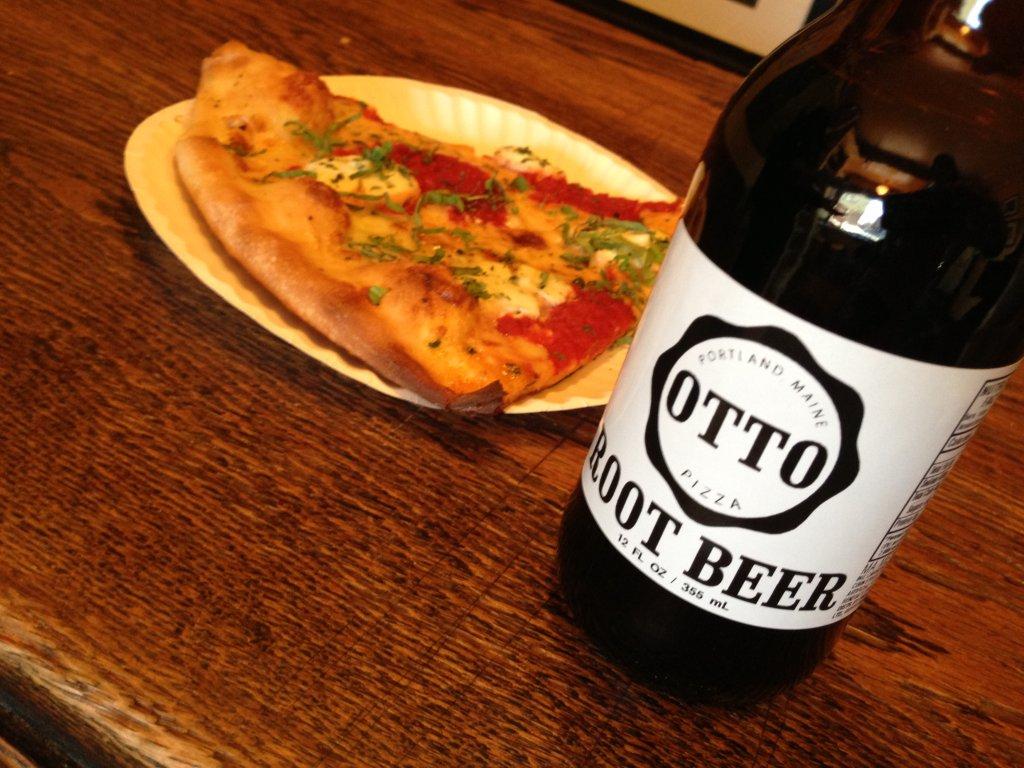
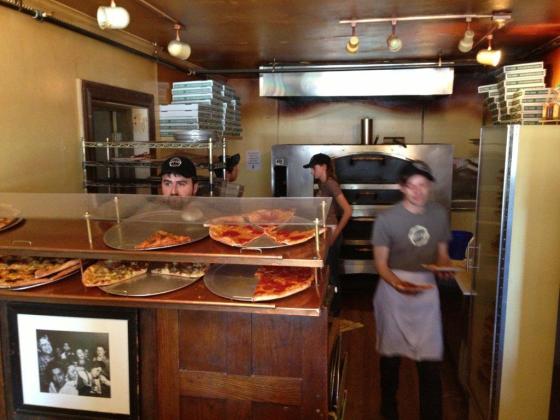
Otto has good pizza, perhaps, for Maine, but definitely not great. I give them credit for some not-so-simple toppings: potato, bacon and scallion on a pizza…pretty cool. But I really didn’t like that they had a shelf with a huge stack of already-made pizzas just sitting there, so nothing was fresh out of the oven. Everything had to be re-heated. As a Brooklyn boy raised on arguably the best pizza in the USA, and as a serious home pizza maker, I was not impressed.
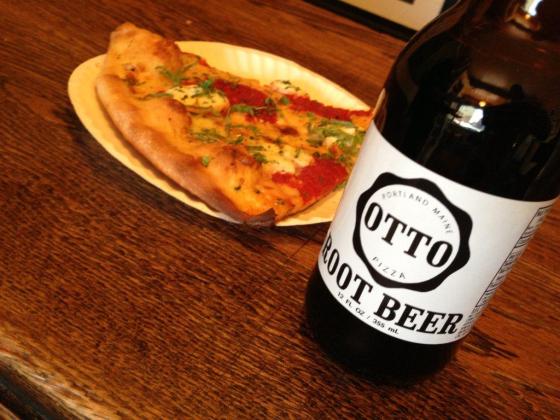
IMG_2857 IMG_2859

Some personal favorites, like The Salt Exchange, have fallen from grace in recent years. A change of ownership can do that. Foodie magazines love to chatter about Duck Fat, a small establishment that became famous for serving up french fries cooked in duck fat. The fries are good, not great, and the other dishes I’ve had there didn’t impress me. Same goes for anything with the name David’s in the title. Chef David Turin is a local legend, and quite frankly, I don’t know why. David’s was the most hyped and most disappointing dining experience we’ve had in Portland.

The HOTELS…

We don’t look for 5-star accommodations when we’re in Portland. We look for clean and close to the water.

Hilton Garden Inn: If we have a choice of where to stay in Portland, this is without a doubt our #1 pick. You cannot beat its location right on the Portland waterfront. Doesn’t hurt that the rooms are clean and the staff is friendly.

Hampton Inn Portland Downtown Waterfront: not really waterfront…a couple of blocks away. But it’s close enough, it’s relatively new and clean, and it’s another good option.

Holiday Inn Portland By the Bay: It’s easy to walk anywhere in downtown Portland, so this hotel, though not on the waterfront, is fine. The rooms are clean–though we did have to call housekeeping to change the sheets on the fold-out couch–they were pretty nasty. But we don’t come to Portland to live in our hotel room.
Beds are comfortable, there’s room service for breakfast, and most importantly: a hotel shuttle that means you can drink without driving.
I could be wrong, but it looks like a new Holiday Inn is being built along the waterfront at this moment. Worth keeping an eye on.

 

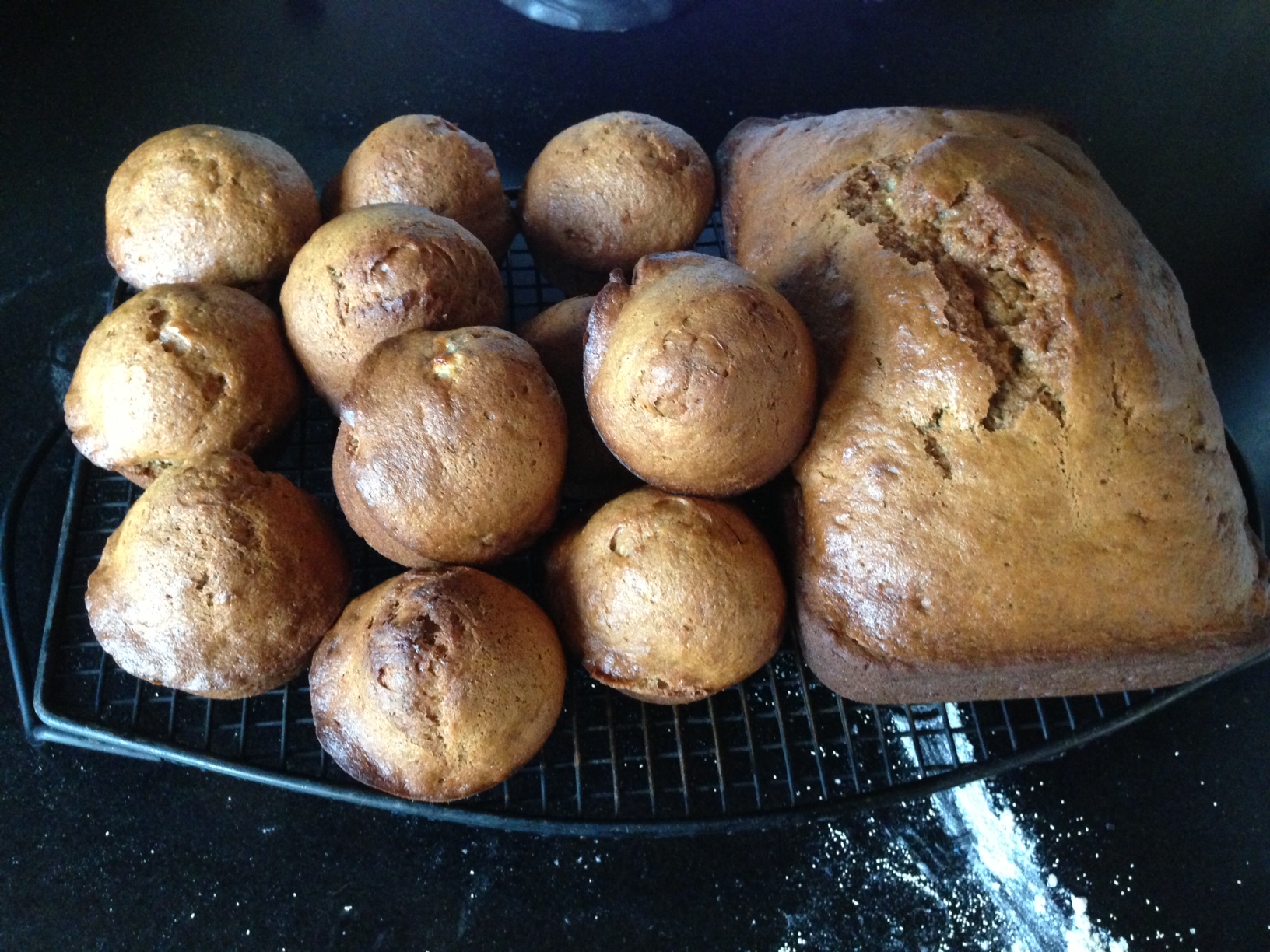
There are a million banana bread recipes out there, so let’s just get this over with and call mine a million-and-one! What makes this banana bread special is that it’s got loads of flavor. It uses whole wheat flour…less sugar…and no artificial extracts that make most banana breads taste like crap. This one relies on very ripe bananas to give it its wonderful natural flavor.
It’s not always easy to get bananas to ripen exactly when you’re trying to make your banana bread recipe. So here’s what I do: I by a large bunch of bananas and let them get very ripe at room temperature. I then take 5 at a time (for this recipe), peel them, and place the bananas in a Ziploc bag in the freezer. When it’s time to make banana bread, I just pull one of those Ziplocs out of the freezer and let it thaw. This also works really well when you need bananas for smoothies.


Nana bread blog

ALZ BANANA BREAD

Ingredients:

3 cups all-purpose flour
1/2 cup whole wheat flour
2 tsp baking soda
1/2 tsp salt
1 1/4 cup sugar
3/4 cup vegetable oil
2 eggs
5 medium-sized bananas, peeled and mashed
2 tsp real vanilla extract

Cooking spray

Pre-heat oven to 350 degrees.
Combine all-purpose flour, whole wheat flour, baking soda and salt in a medium bowl. Set aside.
Combine sugar and oil in mixing bowl and mix at medium speed for 2 minutes. Add eggs, one at a time. Beat until mixture is light and lemon colored.
With mixer running at low speed, add flour mixture alternately with bananas, beginning and ending with flour mixture. Blend well after each addition. Add vanilla and blend some more to mix.
Pour batter into 2 loaf pans that have been sprayed with cooking spray. Bake for 45 minutes or until a wooden pick inserted in the center comes out clean. Cool 15 minutes in loaf pan on wire rack.
Remove from pan and let cool completely on wire rack.

Portland, Maine has quickly become the most foodie-intense city in the northeast. Block for block, this waterfront town features anything you crave, from incredible James Beard nominated four-star restaurants like Fore Street, to legendary brewpubs like Gritty’s, to famous seafood dives like J’s.  It’s a town I look forward to visiting anytime I can, and I get there 2 or 3 times every year.
Located on the waterfront, across from the classic Harbor Fish Market (a great place to buy fresh lobster, Maine shrimp and crab and lots more), the Porthole has been serving amazing grub in Portland for many years.
The indoor seating area has hardly changed since the beginning, with the exception of a Guy Fiere Food Network poster proudly displayed on the wall, signifying that “Diners, Drive-Ins and Dives” did indeed pay these people a visit.
The outdoor deck, however, is somewhat new, say, 10 or so years old, connecting to the outdoor deck of the Comedy Connection next door, and certainly handling the overspill of drinkers that come to Portland to party.
I was here for breakfast recently, and the food is definitely “I got a hangover” greasy…but that’s not a bad thing! My daughter had French toast. (It comes with a bourbon maple syrup, but we got her the regular kind.) My wife had the home-made hash featuring beef brisket. And I enjoyed and incredible Porthole Classic Breakfast Sandwich featuring cheddar scrambled eggs, crispy pork belly, kimchi and scallions. We washed our meal down with Bloody Marys and Captain and Cokes.
Now that’s a breakfast!!!
It’s a mouthful…but man, is it good!
I think buttermilk is overlooked by most people. If you gave the average person a quart of buttermilk, they wouldn’t know what to do with it. Most people have heard of regular buttermilk pancakes, or maybe the process of soaking chicken in buttermilk before breading and frying…but that’s about it.
I grew up in a Lithuanian household where buttermilk, like many other dairy products, was an everyday ingredient. From something as simple as a bowl of cold buttermilk with fried potatoes on the side (one of my Dad’s favorites), to a cold summer borscht, my Mom found different ways to use buttermilk on a regular basis.
The term “buttermilk” actually refers to several different dairy drinks. Originally, buttermilk was the liquid left behind after churning butter out of cream. Buttermilk can also be quickly soured milk, a common drink in warmer climates. In colder climates, the souring process doesn’t occur naturally, but it is often encouraged, commonly by placing bread in the milk to make it go sour faster. (My Mom did this all the time, using Lithuanian bread, a dark rye-like bread.) And then there’s cultured buttermilk, which is what most of us find on supermarket store shelves today. This is milk that has had lactic acid bacteria introduced into it.
I loved the taste of buttermilk–still do. Just give me a cold bowl, sprinkle a little finishing salt in it, and I’m good. But for those who don’t want their buttermilk straight, here’s a recipe that will knock your socks off, and wouldn’t be the same without this great, misunderstood ingredient.
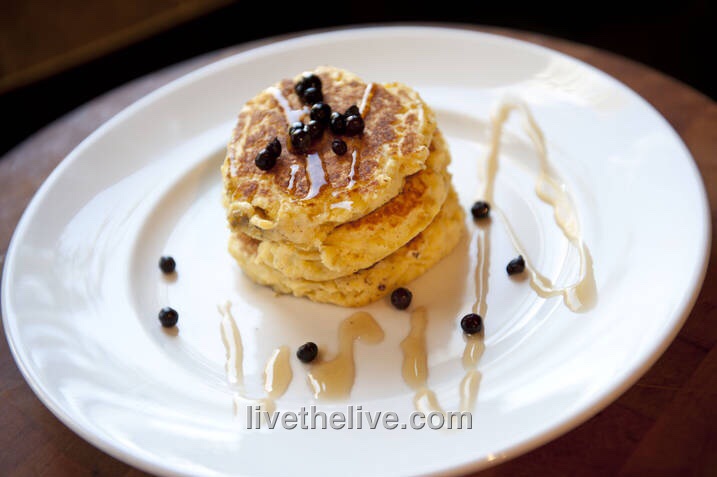
Blueberry cornmeal buttermilk pancakes with lemon zest
1 cup all-purpose flour
1 1/2 cups stoneground yellow cornmeal
2 Tablespoons sugar
2 teaspoons baking powder
1/2 teaspoon baking soda
1/2 teaspoon salt
2 cups buttermilk
2 teaspoons grated lemon zest
1 large egg
3 Tablespoons melted unsalted butter, slightly cooled
1–2 teaspoons vegetable oil
1 cup fresh or frozen blueberries, preferably wild, rinsed and dried
Whisk flour, corn meal, sugar, baking powder, baking soda, and salt in a medium bowl
to combine.
In a separate bowl, whisk egg, lemon zest, and melted butter into buttermilk to combine.
Make a well in the center of the dry ingredients in the bowl. Pour in milk mixture and
whisk very gently until just combined. Do not over mix. A few lumps are OK.
Heat non-stick skillet over medium heat. Add 1 teaspoon oil and brush to coat skillet
bottom evenly. Pour 1/4 cup batter into 3 spots on skillet. Sprinkle 1 Tablespoon
blueberries over each pancake. Cook pancakes until large bubbles begin to appear,
about 1 1/2 to 2 minutes. Using thin, wide spatula, flip pancakes and cook until golden
brown on second side, 1 to 1 1/2 minutes longer.
Serve immediately.