Archive for the ‘Food’ Category

I love onions! Raw, sautéed, caramelized, yellow, Spanish, Bermuda, Vidalia, Texas Sweets, scallion, pearl, Crimini, Walla Walla…they can do no wrong. In fact, my family gave me the Lithuanian nickname: “Ponas Svogūnas.” (“Mr. Onion.”)

I also love vodka martinis! So if I’m going to buy a top shelf vodka like Stoli Elit or Chopin, I’m not going to ruin it with jarred cocktail onions, brined with cheap vermouth, found in the bar mixers section of my local supermarket. Who knows how long those nasty things have been sitting on the shelf?

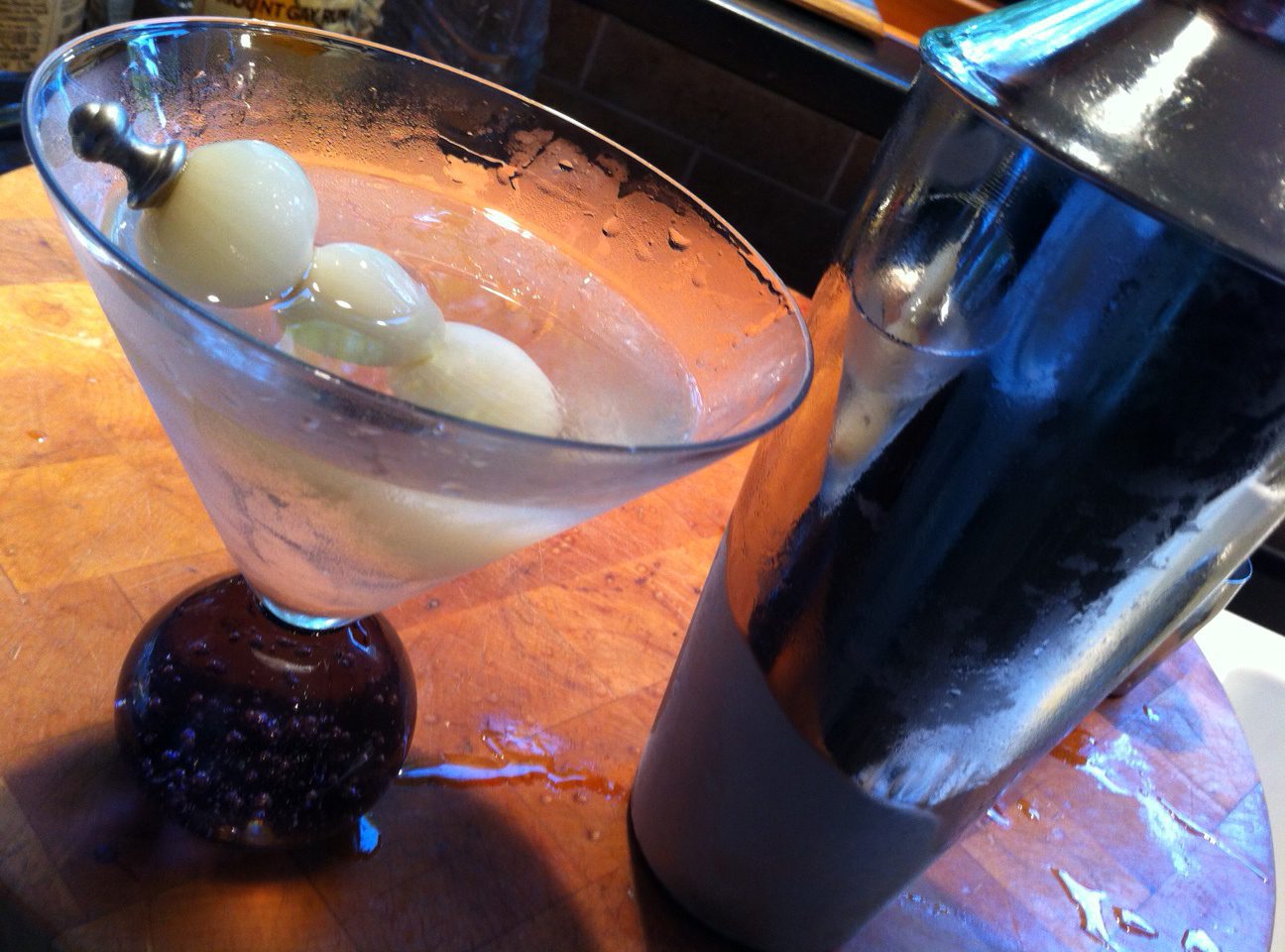
No, I’m going to make my own cocktail onions to enjoy a proper Gibson!

The Gibson martini is simply one with onions instead of olives, and the story of its origin is somewhat unclear. According to one story, it was invented by Charles Dana Gibson, who created the popular Gibson Girl illustrations. Supposedly, he challenged Charley Connolly, the bartender of the private club, The Players, in New York City, to improve on a martini. Connolly simply substituted an onion for the olive and named it after Gibson.

Another story claims a man named Gibson dropped an onion in his water-filled martini glass to differentiate between his own drink and that of his colleagues, who were imbibing heavily.

Some stories about the Gibson don’t even mention an onion. (?)

And yet another story, now considered the more probable one, is that the Gibson martini was invented at the Bohemian Club in San Francisco in the 1890’s by Walter D. K. Gibson. There is documentation as early as 1898 to back that up.

Whatever story you want to believe, the Gibson martini was originally made with gin, not vodka, but that’s strictly a personal preference–and I don’t use any vermouth. (I think the biggest injustice you can do to high-quality vodka is ruin it with low-quality vermouth. But that rule applies to any alcohol and any mixer. It’s only as good as its worst ingredient–and that includes the ice!)


My first attempt at homemade cocktail onions was not a success. I bought pearl onions and did what the package instructions said: I dropped them in boiling water for a couple of minutes, then moved them to ice water to let them cool. Then a gentle squeeze on one end of the onion would make it pop right out of its skin. Easy, right?

Well, it didn’t work out that way. For one thing, the onions got soft…not what I wanted. I had to cut one end of the bulb with a knife. And even then, when I squeezed the onion, the part that popped out was about half the size of the original onion…there was a lot of waste.


After brining, they tasted OK, but they never had that crisp bite I wanted. They were mushy. I realized that boiling was not the way to go.
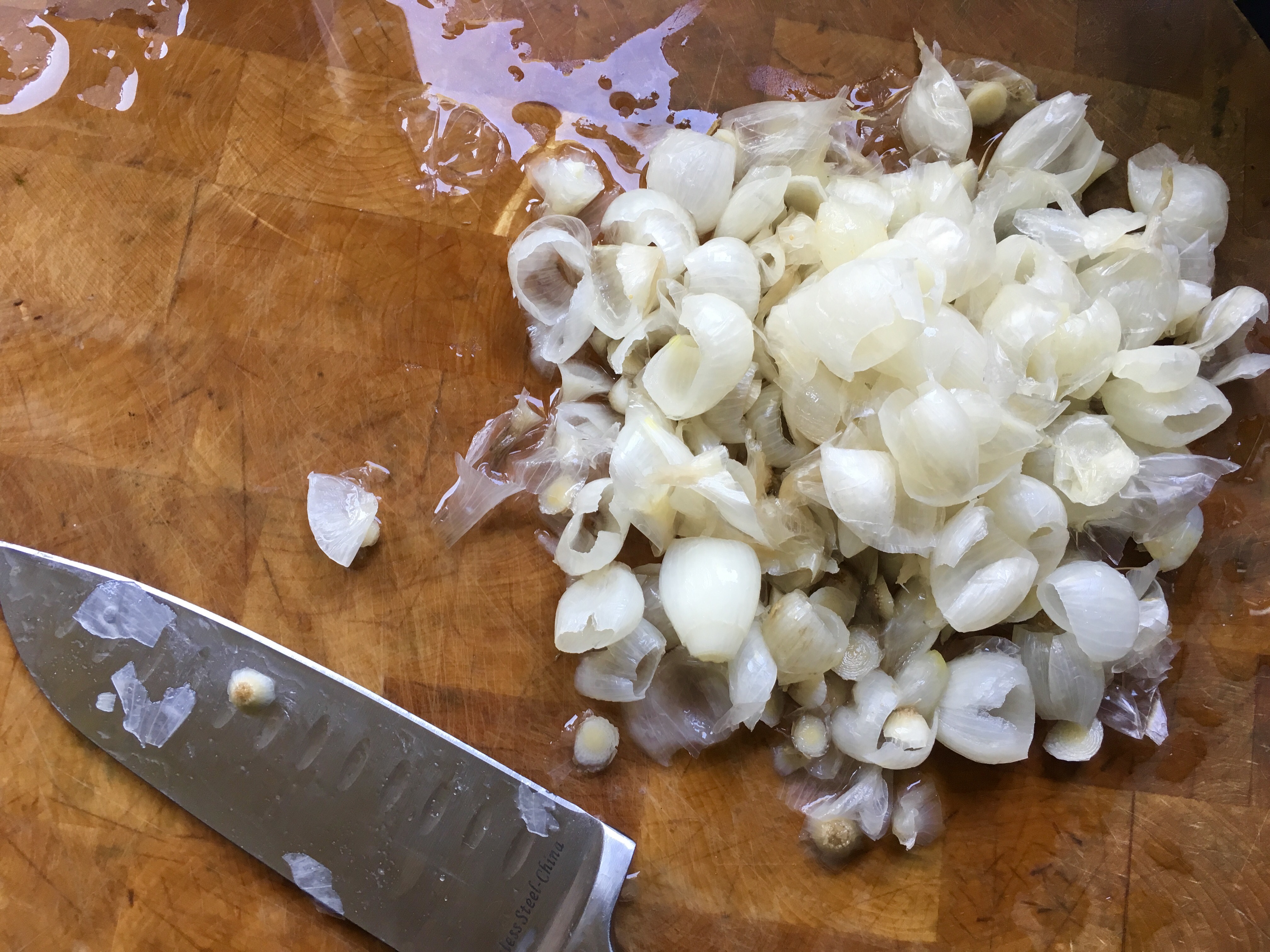
 

A lot of waste.


I knew there had to be a better way. Then I discovered already peeled pearl onions at Whole Foods. I have to be honest…I won’t use any other onions now. They’re big, plump, and exactly what I want. Some might say they’re too big…but I don’t have a problem with that.


Sure, these are much larger than the onions you find in a jar. But tell me how that’s a problem!


1 lb. pearl onions, peeled, ends cut off
1 cup white vinegar
1/2 cup apple cider vinegar
1 1/2  cups water
3/4 cup sugar (I like turbinado sugar)
10 peppercorns
1 teaspoon salt (per quart-sized Mason jar)
2 cloves garlic

Combine the white vinegar, apple cider vinegar, water, sugar, and peppercorns in a medium-sized saucepan. Bring it to a boil, making sure the sugar dissolves completely. Remove it from the heat.


Slice the ends off the onions.

I’ve found that if I allow the brining liquid to get inside the onions, especially these larger ones, they’ll get tastier faster…and who doesn’t want that? So I take a thin metal or bamboo barbecue skewer and push it through the center of the top of the onions, all the way through the center of the bottom of the onions. Now there’s a little “tunnel” for that brine to get in, and it can work its magic from the inside out!

Not skewering the onions simply means it’ll take longer for that brine to seep in…but that’s perfectly fine if you want a not-so-briny onion.


In a quart-sized Mason jar, add the teaspoon of salt and garlic cloves. Pour a little of the hot vinegar liquid in the Mason jar to dissolve the salt. Add the onions to the jar, as tightly as you can, then fill the jar to the top with the vinegar liquid.

Screw the top of the jar on tightly, and turn it upside-down a couple of times to mix everything together. If it looks like the level of the liquid has gone down a bit, open the jar and top it off with the vinegar liquid, then re-seal it.

Let the jar cool to room temperature, then move it to the fridge. You can use the onions as soon as the craving hits you, but they’ll taste better if you give them a few days to a week.


OK…so if after reading this, you just don’t want to go through the whole process of making your own cocktail onions, there is one product that I just recently discovered that does the trick: Aunt Nellie’s. You can find them in the jarred veggie section of just about any supermarket, next to pickled beets and things like that. It’s a milder brine, and so the onions taste quite good. No nasty cheap vermouth to ruin your good martini.

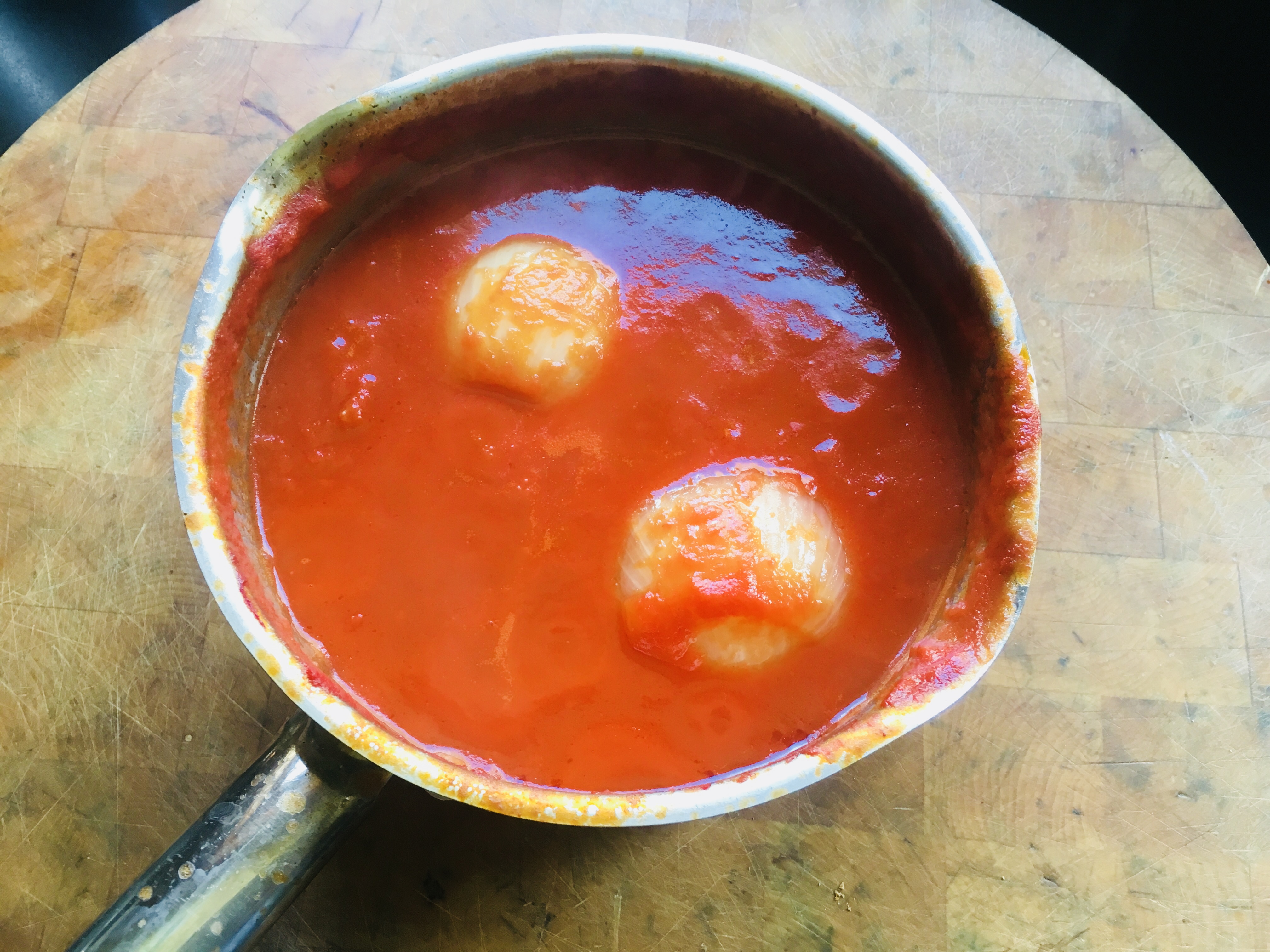
 

Though I’m a fan of renowned Italian chef Marcella Hazan, I had never heard of what many claim to be her most famous recipe: her 3-ingredient tomato sauce. (OK, salt makes 4.) Recently, I read an article about it and thought I had to try it for myself. The results were amazing: a subtle hint of onion, and a creamy smooth sauce thanks to the butter. You can use a regular can of tomatoes, but real San Marzano tomatoes will give the best results. How do you know if you’ve got real San Marzano’s? Just so happens I have a pet peeve about that. Read below the recipe.

The sauce before onion removal.


1 28 oz. can San Marzano tomatoes
5 tablespoons butter (I use unsalted)
1 onion, peeled and cut in half
salt

In a saucepan, combine the entire can of tomatoes (tomatoes and juice) and the butter, and add the onion with a couple of pinches of salt. Place the heat on medium, bring it to a simmer, and then cook for 45 minutes, stirring occasionally, breaking the tomatoes with a spoon. Add more salt, if needed.

When the sauce is done, remove the onion.

Silky smooth and ready to use.


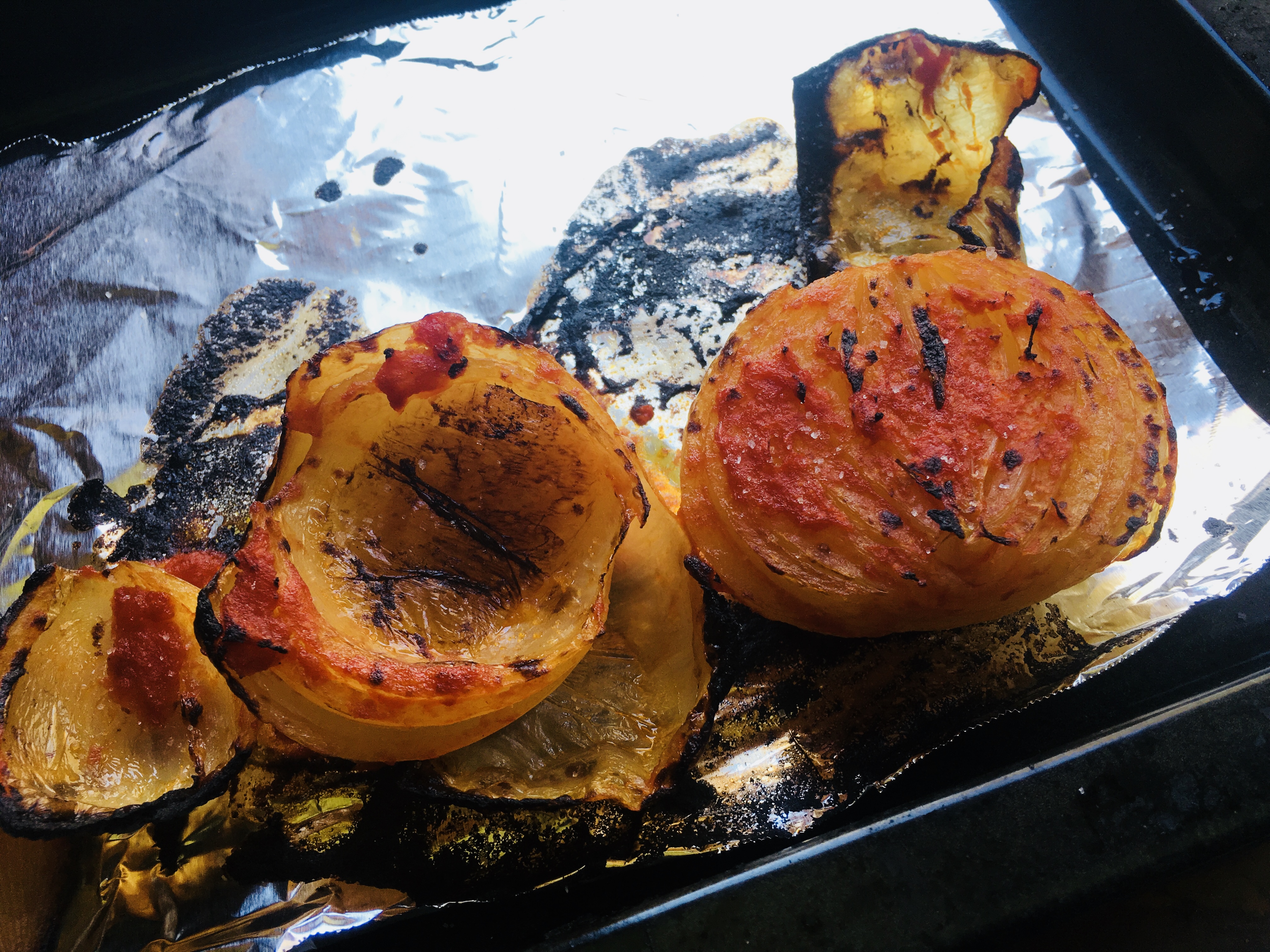
The original recipe says to discard the onion. What?! I’m an onion fanatic and I can tell you throwing the onion out is a sin. Here’s what I do: I place the onion on a baking sheet and put it under the broiler of my toaster oven: 5 minutes on one side, flip it, then 5 minutes on the other. If you’ve got a screamin’ broiler, those onions will have beautiful charred edges and the bits of tomato sauce left on the onion will caramelize to a fabulous intense, sweet paste. You then sprinkle Fleur de Sel on it, and devour it.

Never throw the onion away!


If you do your share of Italian recipes, you’ve used San Marzano tomatoes. Most good cooks agree that San Marzano’s are the best canned tomatoes you can buy.

Unfortunately,  the label can say “San Marzano tomatoes” even if they are not real San Marzano tomatoes.

San Marzano is a region in Italy near Naples and Mt. Vesuvius, and the special combination of climate and volcanic soil make these plum tomatoes world-famous. They have less water, fewer seeds and are picked off the vine when perfectly ripe and processed the same day.

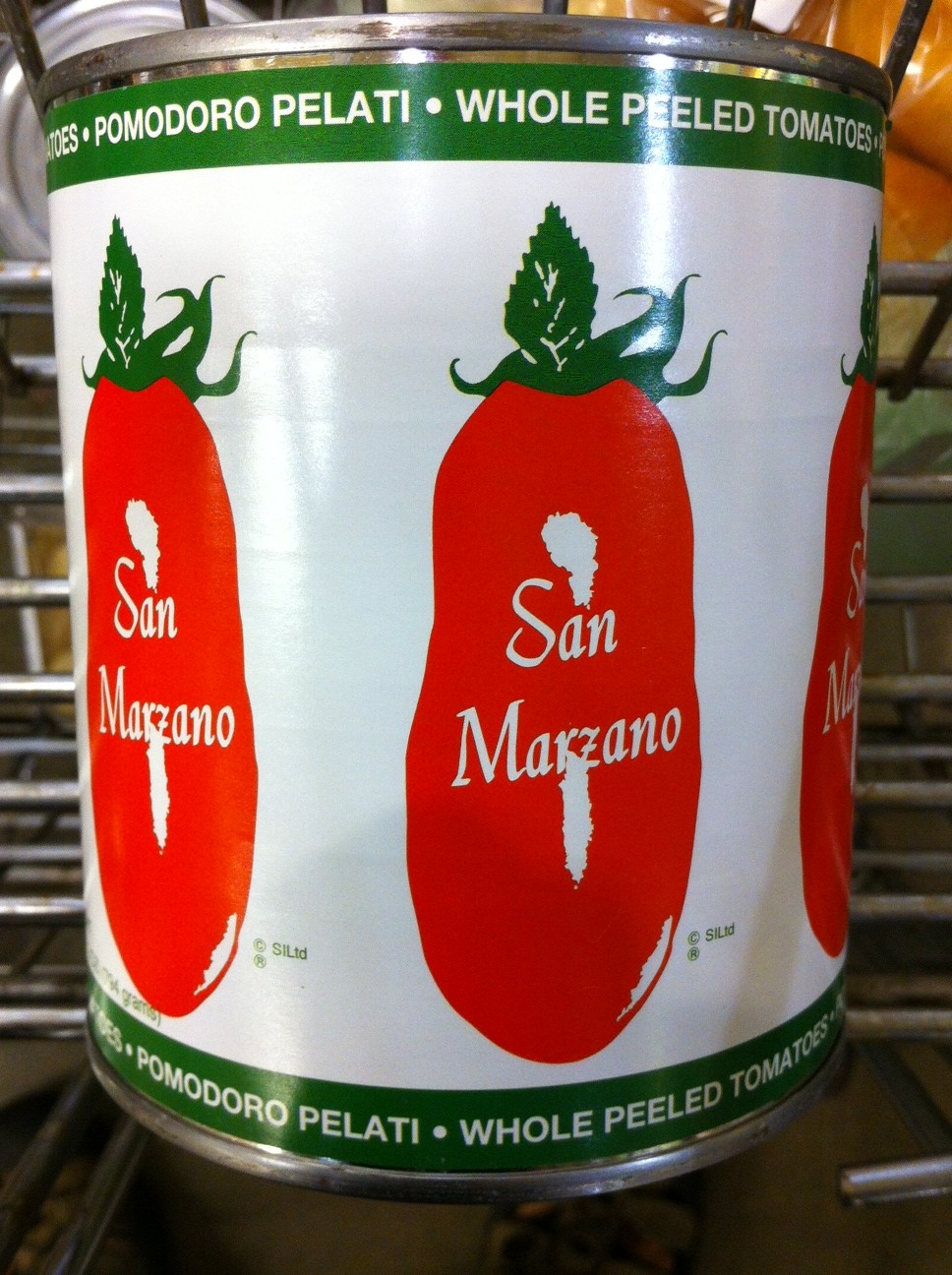
But San Marzano is a variety of tomato, too…so you can have a can of San Marzano tomatoes that are not from San Marzano. And to add to the confusion, there’s actually a brand of tomatoes called San Marzano, with tomatoes grown in the United States. Bet your ass the sellers of these tomatoes are counting on you not to know the difference!

Sold everywhere, but these are NOT real San Marzano tomatoes. They’re grown in the USA.


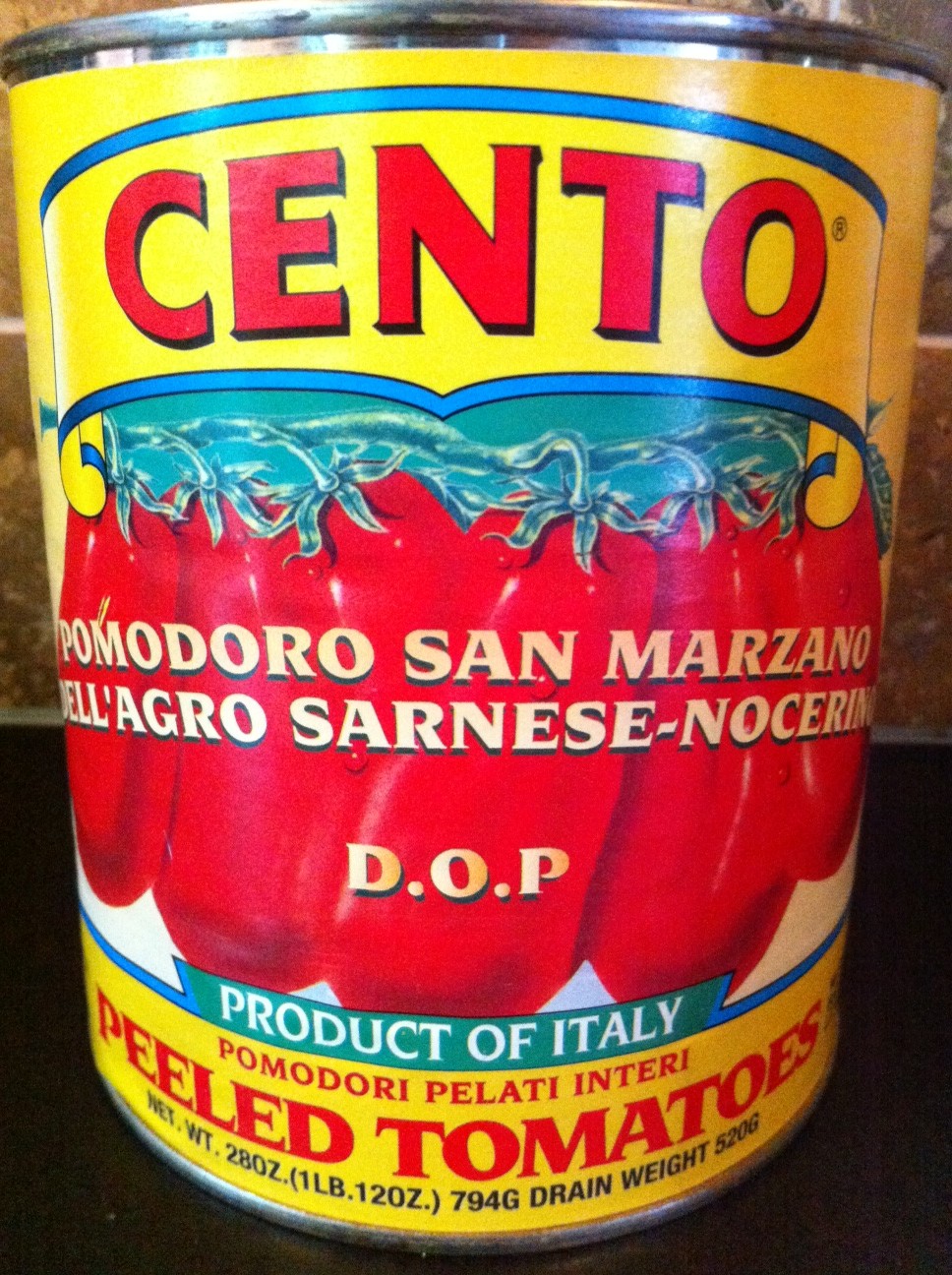
Real San Marzano Tomatoes are a very old variety, extremely limited in quantity, grown and produced exclusively in the San Marzano region of Italy. Because production is so very limited, the Italian Government and the European Union have formed a way of protecting consumers from fraud by having San Marzano tomatoes tightly controlled. DOP, or denomination of protected origin, is the mechanism that the government is using to control the production and marketing of genuine San Marzano tomatoes. Labels for DOP products must be individually numbered and manually applied to each can in specific lots and government officials must oversee this application. So here’s the deal: unless you see “DOP” on the label with a hand-stamped number on the can, it’s not a real San Marzano tomato.


Yes! Real San Marzano tomatoes. Cento also sells non-certified San Marzano’s, so always look for the DOP on the can.


Another way to tell when you’re in the market is simple. Check the price. Your average can of tomatoes will be in the $2 range. Real DOP San Marzano tomatoes: about $4–$5 a can. It’s all about quality. Buy them on sale, and you’ll not only save a few bucks, but you’ll have them when you need them at arm’s reach!

DIY TACO SEASONING

Posted: September 27, 2023 in beets, Food, morocco, Recipes, taco
Tags: , , , ,

It’s so easy to make taco seasoning at home. So why would you buy the spice factory floor sweepings they use for packaged taco seasoning sold in supermarkets? I’m not a huge fan of Mexican cuisine, but every once in a while, I crave a good taco. My tacos don’t resemble most, but that’s OK. It’s all about making it your own.


1 teaspoon granulated garlic
1 teaspoon onion powder
1/4 teaspoon crushed pepper flakes
1 teaspoon dried Mexican oregano
1 teaspoon paprika
2 teaspoons ground cumin
1 teaspoon sea salt
1 teaspoon black pepper
1 Spanish onion, finely chopped
olive oil
2 lbs. grass-fed ground beef

Combine all the spice ingredients in a bowl.

Sauté the onions in a bit of olive oil until they’re translucent. Add the beef and sauté until it’s cooked, mixing in the spice mixture a little at a time until you’ve used it all.

My tacos are a bit unusual. Although I use a soft flour tortilla and my seasoned and cooked ground beef, I spread a little Thousand Island dressing and chop some roasted golden beets.

But this taco meat goes great with the standard beans, shredded lettuce, guac, and salsa as well.


Tacos with roasted golden beets, baby Romaine salad mix, and Awesomesauce

Tacos with roasted golden beets, baby Romaine salad mix, and Thousand Island dressing.

For the beets: I wash the beets and quarter them, cutting the top and bottom off but leaving the skin. I place them in a sheet of aluminum foil, and sprinkle with salt, pepper and olive oil. I combine the ingredients to coat the beets, wrap the foil tightly into a package, and roast in a 400-degree oven for 1 hour. After roasting and the beets have cooled a bit, I slice them into smaller pieces for the tacos.

Slices of avocado go really well with this, too!

You can also mix the spices with 1 cup of flour and use it to season chicken before frying…or mix the seasoning with strips of chicken breast or beef for fajitas.

PAN PIZZA, TWO WAYS

Posted: September 20, 2023 in Food, pizza, Recipes, restaurants
Tags: , , ,

Today is National Pepperoni Pizza Day! So let’s talk pan pizza you can make at home…

I got my first restaurant job when I was 17, working at Pizza City East, just down the street from my childhood home in Plainview, NY. It wasn’t a great job, but I learned an awful lot about food preparation. It’s where I opened and tasted my first clam on the half shell. It’s where I had my first sip of espresso and cappuccino. And it’s where I learned a lot about how to make really good pizza. My buddy, Mel, and I worked the counter. Mel made the pies and I did the rest: sandwiches, espressos, clams, and eventually even cooked in the kitchen. We were 2 hard-working slobs in high school, but we bonded in a way that kept us friends to this very day, over 40 years later.

So you could say pizza was in my blood. For me, the true test of a great pie is a simple slice with only sauce and cheese. It’s not easy to get that right, despite how easy it may look.

And for me, there was no other pizza than New York style Neapolitan pizza, the classic round pie with thin crust. I have no doubt that it would be my choice for the classic question: “If you were stuck on a desert island, and you could only have one food, what would it be?”

But then I discovered Sicilian pizza: it was thicker, square, and was baked on a large sheet pan. The crust was crisp on the bottom, and light and airy inside. I thought: OK, I have room for 2 favorite pizzas. And then, believe it or not, I went to Uno’s…(Pizzeria Uno back in the day)…and I had my first pan pizza. It was thick like Sicilian, but somehow different, and heavier on the sauce. But absolutely delicious. I finally settled on 3 favorite pizzas.

Despite having 3 favorite styles of pizza, I always cooked a Neapolitan pie when I made pizza at home. Perhaps it was a bit easier, or perhaps I just never felt I really made the perfect pizza, and I needed to keep trying. In either case, it meant that after 40 years of making my own pizza, I finally made a pan pizza for the first time a couple of years ago. And it was good…really good.

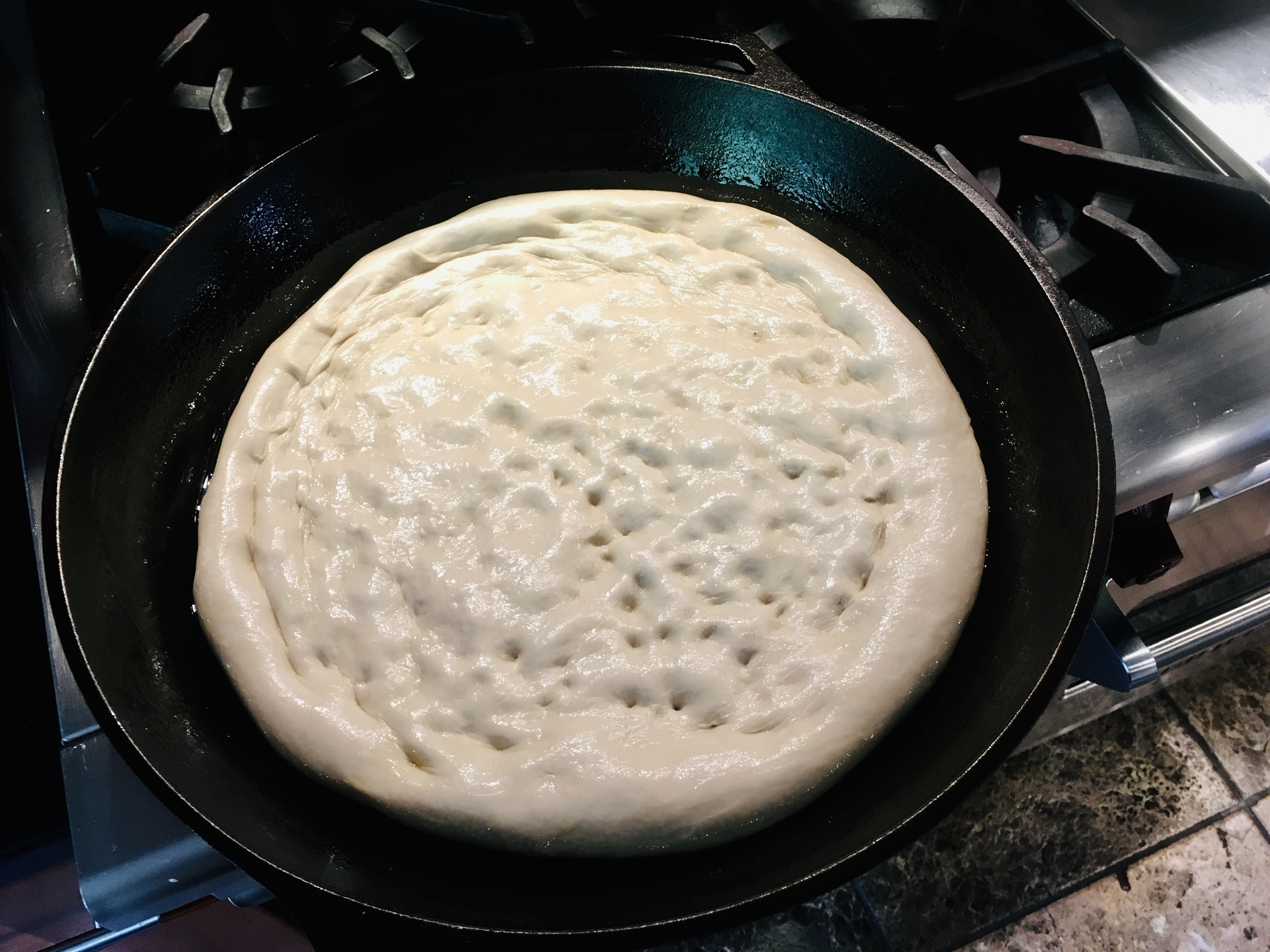
The dough is stretched out and ready to accept whatever tasty toppings you like!

The dough…

The key ingredient is 00 flour, and it can be found in specialty stores, or online. Using ready-made store-bought dough saves a lot of work, and it’s great, too. Ratios for my dough recipe depend on the humidity in my kitchen on any given day, but my basic pizza dough recipe is as follows:

4–5 cups 00 flour
1 cup warm water (about 110 degrees)
1 tablespoon salt
1 packet Italian pizza yeast or regular dry yeast (about 2 1/4 teaspoons)
a squirt of extra virgin olive oil

I mix all the dry ingredients in the bowl of a stand mixer, then slowly add the water as it mixes. After the ingredients are well mixed, and the dough pulls from the side of the bowl, I remove it to a floured board, where I knead the dough by hand for another 5 minutes, until it is smooth and elastic, shaping it into a ball. I rub a little olive oil over the ball of dough, place it in a bowl covered with plastic wrap, and let it rise for 2 hours, punching it down after that. I roll it back into a ball, cover it, and let it rise another 2 hours again.

Let’s talk pans. For me, nothing beats a real heavy duty cast iron pan for this recipe…and I’ve got a large one. I brush olive oil generously all over the inside of the pan–even on the sides–and then place the dough in the center. Slowly, using my fingertips, I spread and flatten the dough out from the center evenly all the way around. I keep spreading and stretching until the dough just starts to come up the sides of the pan. I cover the pan with a clean towel, and turn the oven on to 450 degrees to pre-heat.

I use a pizza stone for standard pizzas, but there’s no need for it when making deep-dish pizzas.

Leaving the pan on the stove top while the oven pre-heats will help the dough rise again. Meanwhile, I get my ingredients ready for my pizza.

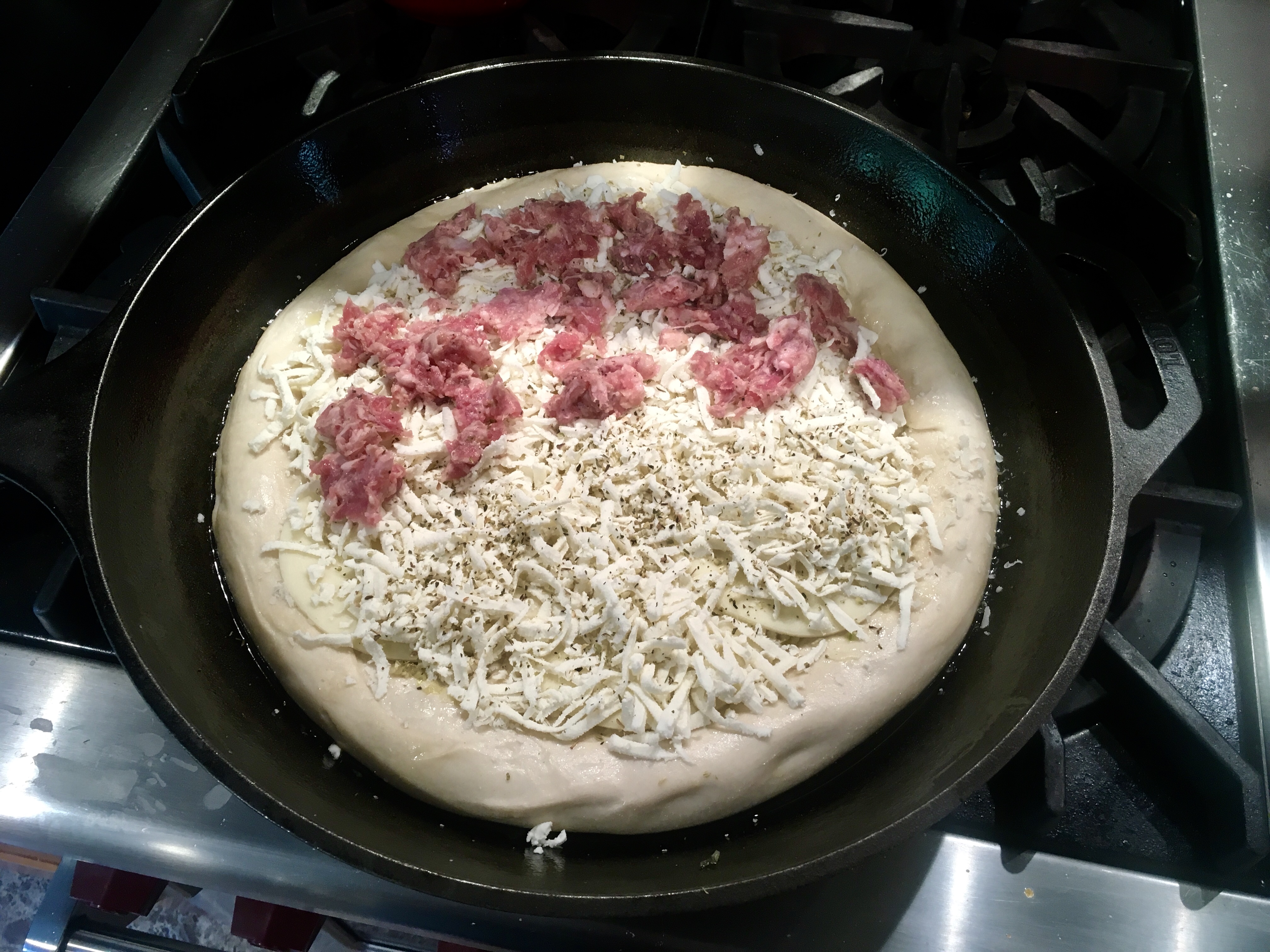
Crumbled sausage on top of the pizza.

White pizza…

3 cloves garlic, minced
olive oil
mozzarella
Parmigiano Reggiano
Provolone cheese
dried oregano
crumbled Italian sweet sausage

The first time I made a pan pizza, my daughter requested a white pizza. I minced a bunch of garlic and lightly sautéed it in olive oil, being sure not to burn it. I set that aside.

I grated mozzarella cheese and Parmigiano Reggiano, setting them aside. I also use sliced provolone.

And this time, my daughter asked for sausage on the pizza, so I got a few mild Italian sausages, cut open the casings, and crumbled the meat in a bowl, setting it aside.

I gave the oven at least a half-hour to pre-heat. I removed the towel covering the pizza dough, and stretched it out a bit more. Using a spoon, I spread the garlic and oil mixture evenly on the dough. I placed 5 or 6 slices of provolone down first. I then sprinkled the Parmigiano Reggiano on top, followed by the mozzarella. I crumbled the sausage meat over half the pie (I like my side plain), and then I finally gave the pizza a sprinkling of oregano.

The pizza went into the oven for 15 to 20 minutes. I kept an eye on it to make sure it didn’t burn.

My first pan pizza: half sausage white pizza.

My second pan pizza was a classic tomato sauce recipe…

I use canned crushed tomatoes for my tomato sauce pizza.

Tomato sauce pizza

1 cup crushed organic tomatoes
1 teaspoon sugar
mozzarella
peperoni, sliced thin
dried oregano

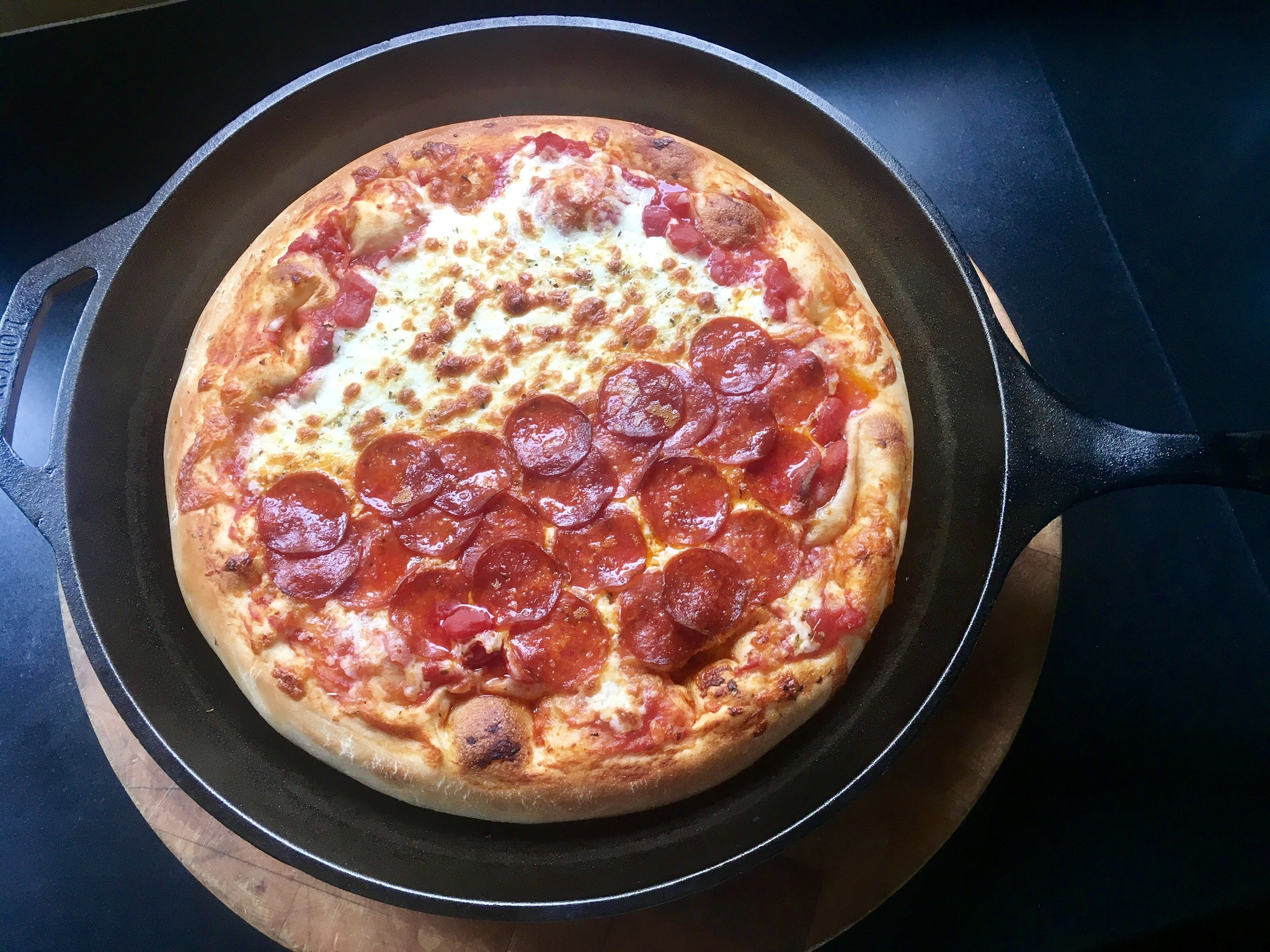
I like my tomato sauce to be a little chunky for my pan pizza, so I bought a can of crushed organic tomatoes. I placed about a cup of the crushed tomatoes in a bowl and added a teaspoon of sugar, mixing it well. This cuts the acidity of the tomatoes, and makes the pizza even better! I spooned out the tomatoes onto the the pizza dough. I sprinkled the mozzarella over the sauce. I put slices of pepperoni on half the pizza (like I said, I like my side plain!), and I gave it a sprinkling of oregano.

Don’t skimp on the pepperoni!

The final product!

Delicious! Crispy crust on the outside, soft on the inside.

I’ve had a lot of pizza in my life. But truly great pizza? I can probably count that on one hand: Sicilian at Ben’s in the Village in NYC…Pizza Montanara at Pizzarte on W 55th in NYC…a coal-fired oven-baked clam pizza at Frank Pepe’s in New Haven, CT…Sicilian at La Piazza in my hometown of Plainview, NY…and now…my house!

Negroni Week officially starts tomorrow! (Although it’s always a great time to enjoy one.)

A few years ago, I sampled a negroni-inspired cocktail in Cleveland, Ohio, dining at chef Jonathon Sawyer’s The Greenhouse Tavern. Crazy creative food, and this mind-blowing drink that inspired me to buy a small oak barrel and start cask-aging everything I could get my hands on at home. The OYO Stone Fruit Vodka, a key part of this cocktail, was not available here in Rhode Island for years, but I recently spotted a bottle at Yankee Spirits in Swansea, Massachusetts!

OYO STONE FRUIT “NEGROSKI”

1 oz. OYO Stone Fruit Vodka
1 oz. Campari
1 oz. Cocchi Vermouth di Torino

If you’re doing it The Greenhouse Tavern way, combine large quantities of these ingredients in equal parts and pour them into an oak cask, then let it age! Experience tells you that newer and smaller casks will mellow flavors faster than larger, older ones. But it’s all about experimentation. Having a taste every once in a while is must, because you don’t want to over-age it, either.

If you don’t have an oak cask lying around at home, it’s still delicious without it…

Combine all the ingredients in a rocks glass with ice. Stir gently, adding a splash of soda, and garnish with an orange peel.

OYO Stone Fruit Vodka gets its wonderful flavors from stone fruits: cherries, peaches, apricots and almonds. Terrific on its own, but amazing in this recipe.

Campari is a world-famous aperitif and bitters, and a must in any decent home bar.

Cocchi Vermouth di Torino is a sweet vermouth, made in Italy from the Moscato grape.

I don’t have the patience to boil Mason jars and lids and all that. But I love me my pickles, especially when this year’s garden cranked out cucumbers in record numbers!

This is such an easy way to make great pickles, it’s almost unbelievable…and no water is needed! The salt extracts just enough moisture, like when curing meat, to make it work. This method works great if you want fresh pickles to eat immediately, but if you want to keep them for longer periods of time, you’ll have to go back to the old tried-and-true methods.

Fortunately for me, I devour these pickles as soon as they’re ready!

I originally used a plastic bag for this, but a plastic container also works well. Use what you have.

pickles

fresh cucumbers
sea salt or Kosher salt
a handful of fresh dill
a couple of cloves of garlic, thinly sliced

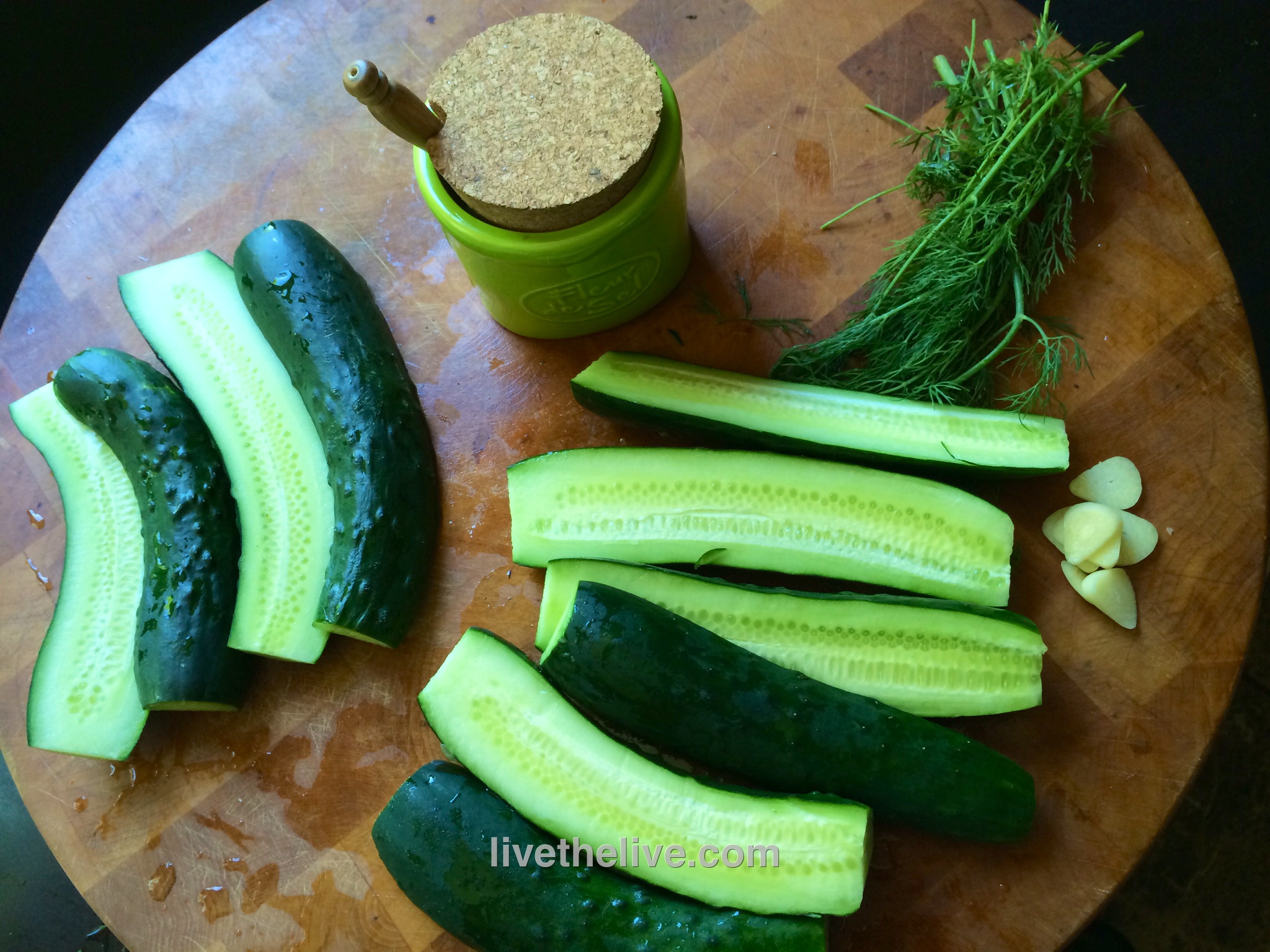
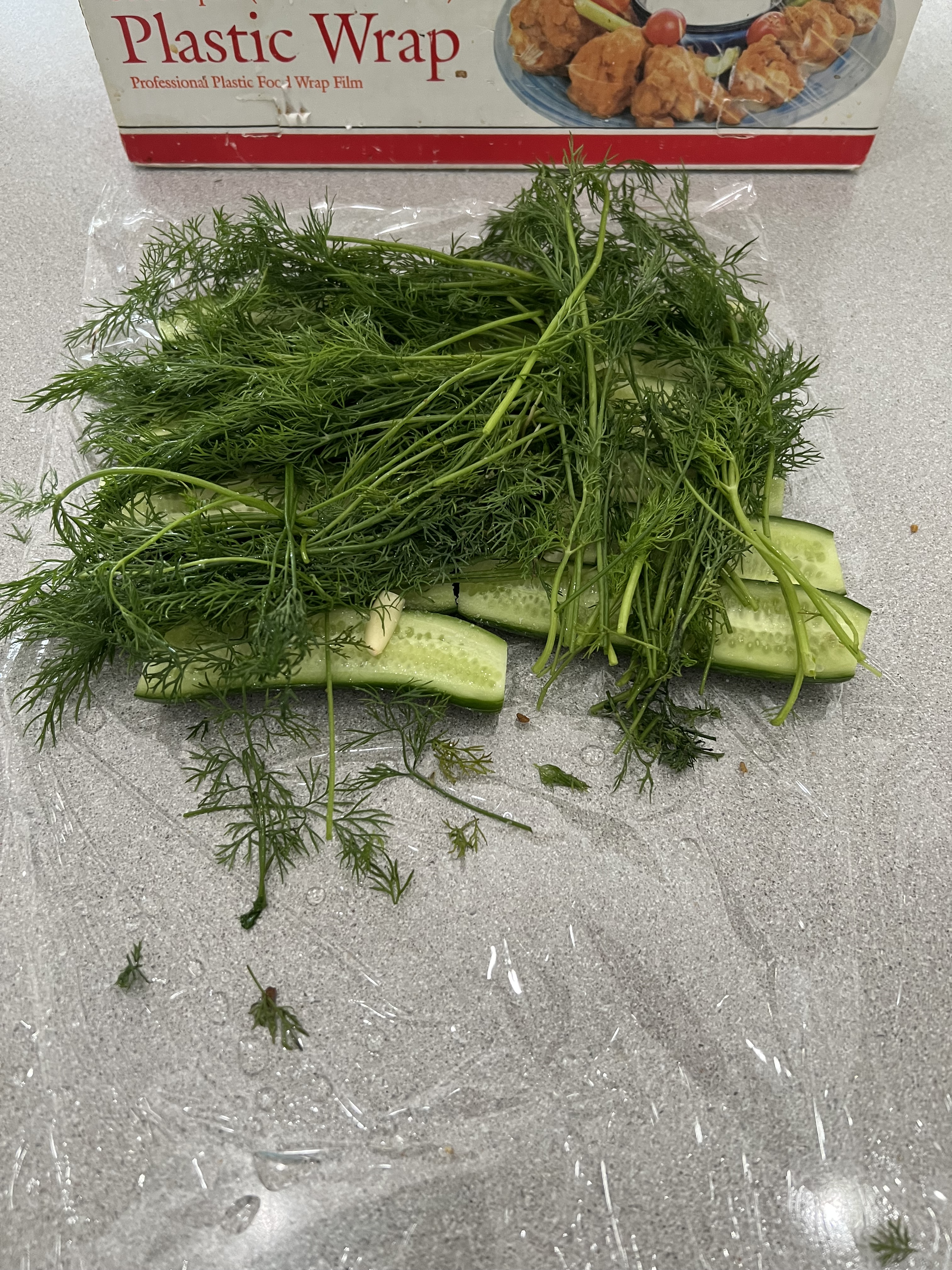
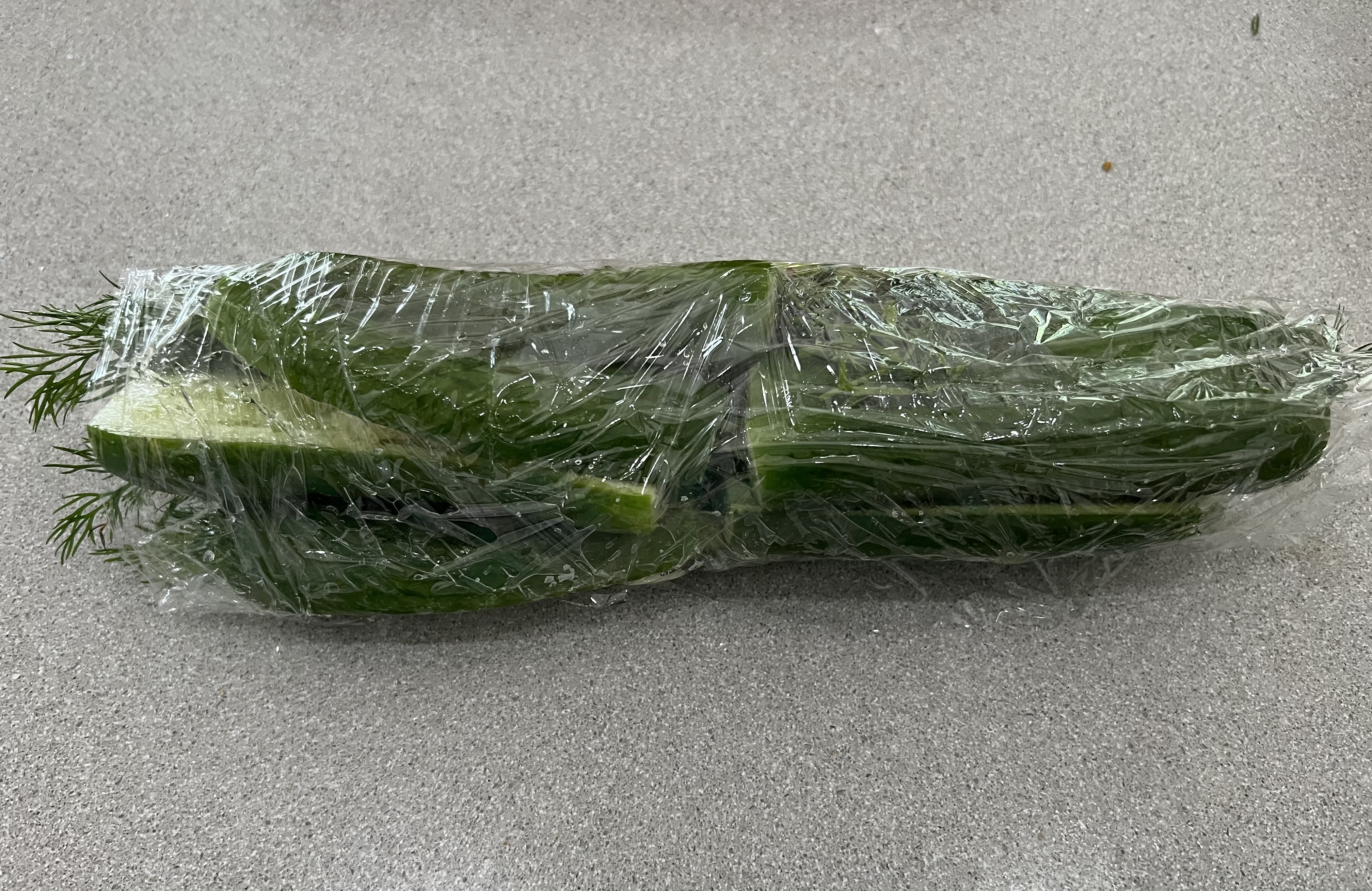
Cut the ends off the cucumbers and then slice them lengthwise, in half or in quarters. Lay them neatly next to each other in one layer in a container, or on a piece of plastic wrap, skin-side down. Sprinkle the salt over the cucumbers. Sprinkle some of the chopped garlic on top. Then, tear off some fresh dill and lay it to cover the pickles.

If using a container, you should be able to get a second row of pickles on top of the first, again sprinkling with the salt, garlic, and topping with dill.

Placing the lid on the container, squeeze out as much air out of the container as you can.

If using plastic wrap, roll it up tightly and place it inside a Ziploc bag, and seal it.

Put the container or bag  in the fridge overnight. Making sure the lid is tightly sealed on the container, flip it over every few hours. (I always put a plate underneath it when it’s upside down in case it leaks a little.) 

The plastic wrapped pickles don’t need to be flipped.

The pickles will be ready to eat the next day, but they’re even better after 48 hours.

SPICY SOY TUNA BITES

Posted: September 10, 2023 in Food, seafood, spicy, taco, tuna
Tags: , , , , , ,

I’ve served this to visiting friends often, and received many requests for the recipe. It requires a bit of setting up, but you can put it together right before serving to your guests…or yourself.

I use sushi-grade tuna for this dish, which is easily found online. It comes in 4-ounce packages, which is the perfect size for a single recipe. I buy them in quantity (it’s cheaper that way), and keep them in the freezer. You can also find tuna in small frozen “bricks” at Whole Foods or similar higher-end supermarkets. They might even have some fresh, in season.

It’s important you know where your tuna comes from, and if it was handled properly. If you go to a reputable seafood market, that shouldn’t be a problem.

If you’re concerned about parasites in raw fish, buying the bricks that have been in the deep-freeze is the way to go. And when it comes to mercury, the smaller the fish, the better. So if this is a concern, opt for ahi (also called yellowfin) tuna.

The topping…
¼ cup sour cream
1 tablespoon fresh squeezed lime juice
The marinade…
6 tablespoons soy sauce
1/2 teaspoon chili garlic sauce
Other Ingredients…
½ lb. sushi grade raw tuna, chopped into ¼-inch cubes
Tortilla chips, regular or the little bowls
Finely chopped scallions

Combine the topping ingredients in a bowl, and place it in the fridge.

Mix the marinade ingredients in a separate bowl and set it aside.

Chop the tuna into ¼-inch cubes, and if it looks wet, place it on some paper towels to absorb the excess moisture. (It can release quite a bit of moisture if it was frozen…you don’t want it watery before you marinate it.)

Marinate the tuna in the soy/chili garlic mix for just 10 minutes, then pour off the excess. (It will be really salty if you let marinate any longer.) Keep it in the fridge as well.

Finely chop the scallions.

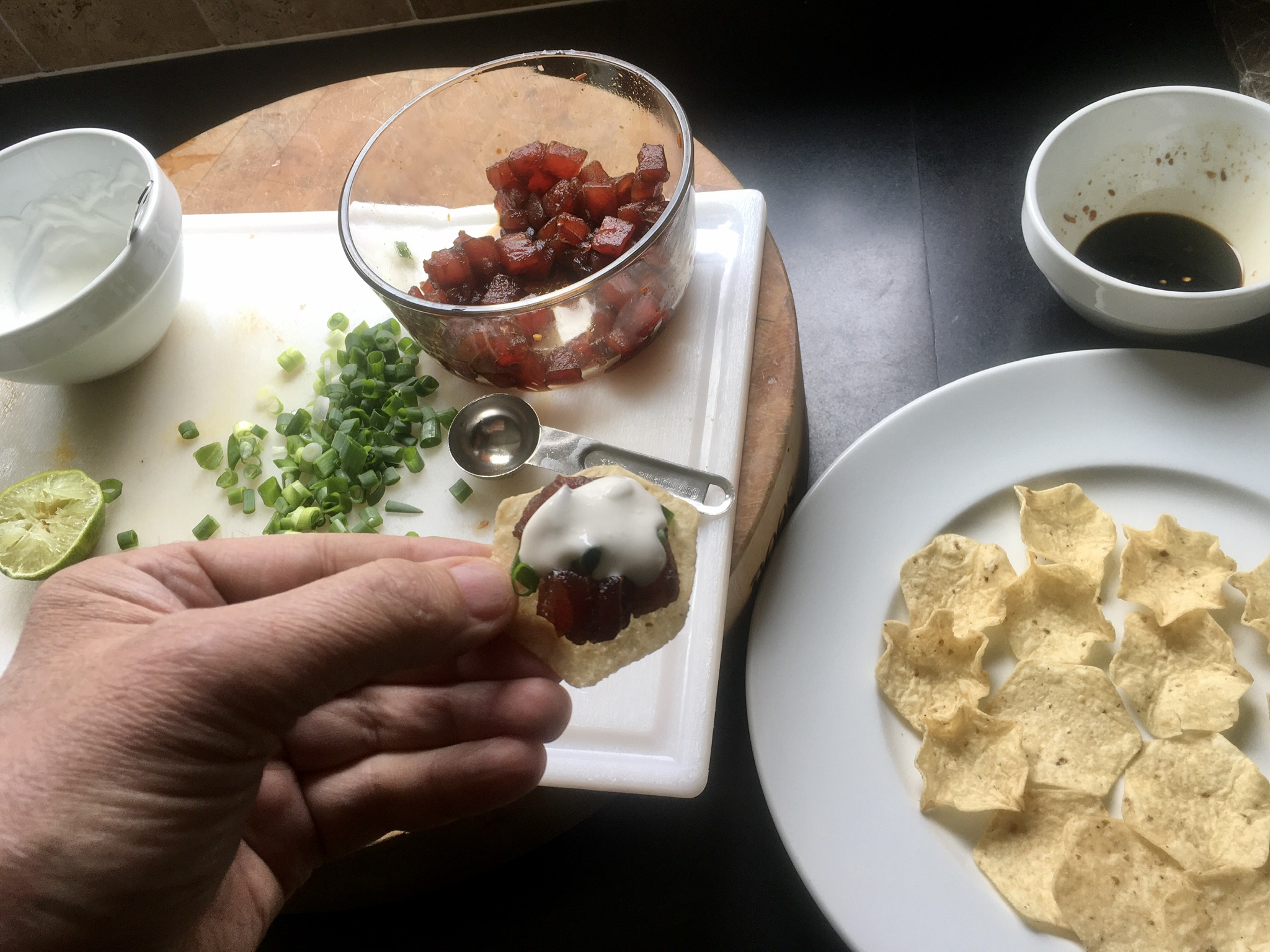
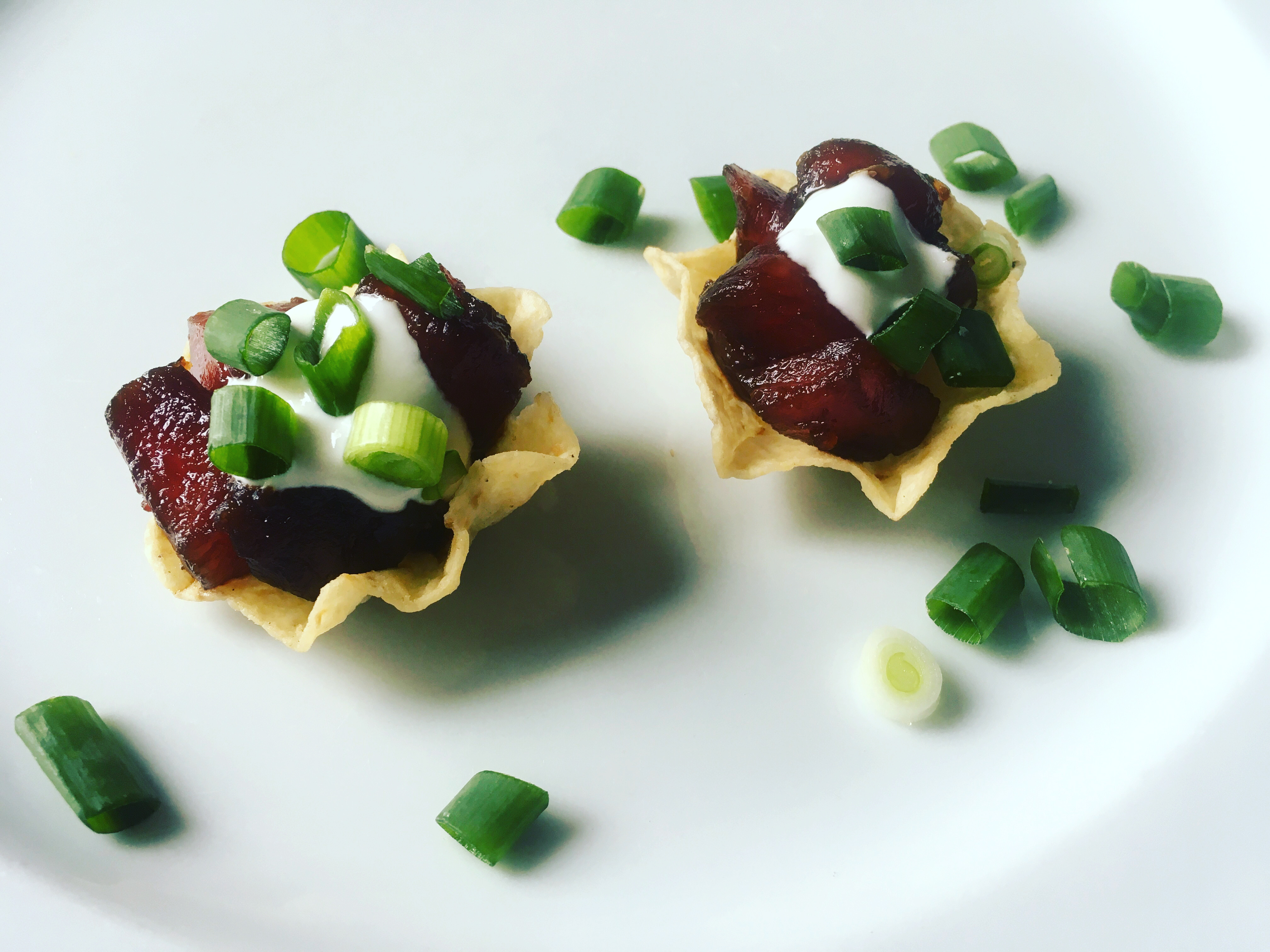
Just before serving, take a tortilla chip or little bowl, place 1 tablespoon of the tuna on top, top this with ½ teaspoon of the sour cream mixture, and then garnish it with the finely chopped scallions.

Serve them immediately, and eat these quickly, before the tuna makes the tortilla soggy!

Now’s the time to head to your local farm stand and pick up a bag of gorgeous plum tomatoes, before the season is gone! And this is what you do with them…

These are not sun-dried tomatoes. They’re better, because fresh plum tomatoes are still moist after roasting, with a bit of that magic tomato liquid in every cup! A great, simple platter to offer at parties.

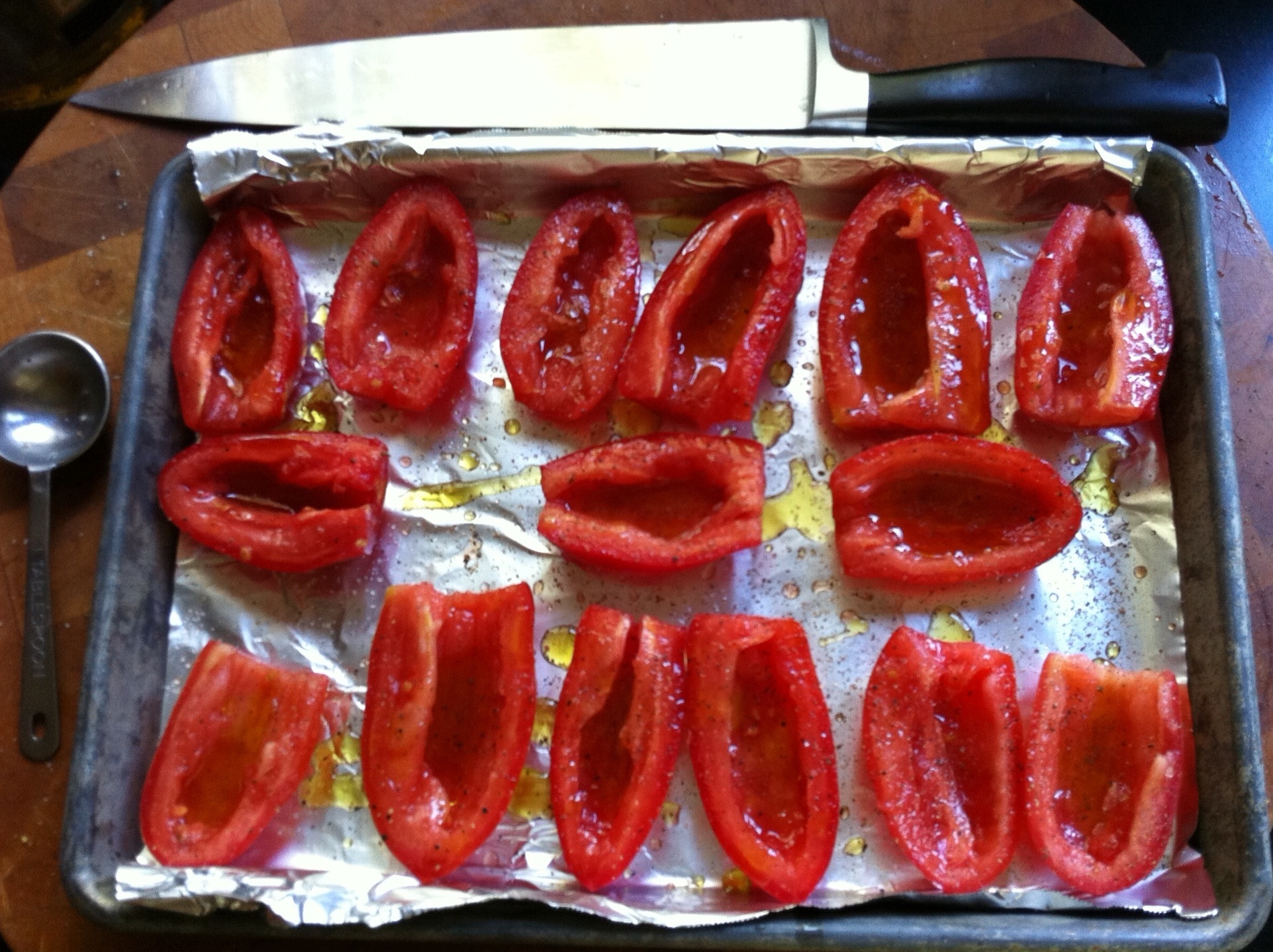
Tomatoes before

Tomatoes before.

12 to 18 halved, seeded plum tomatoes
1/4 cup extra virgin olive oil
2 tablespoons organic cane sugar
Freshly ground pepper
Fleur de Sel or sea salt

Pre-heat the oven to 250.

Line a baking sheet with foil and rub it lightly with olive oil.

Arrange halved and seeded tomatoes on it in a single layer, cut side up. Drizzle evenly with 1/4 cup olive oil, sprinkle with 2 tablespoons sugar, and season with pepper to taste.

Bake the tomatoes until they are still juicy but slightly wrinkled, about 3 hours. Transfer them to a platter and let them cool slightly.

Just before serving, sprinkle the tomatoes with Fleur de Sel, and garnish if you like, with chopped parsley leaves, mint leaves, or basil. (Bacon bits sound pretty good, too!)


Tomatoes after

Tomatoes after!

The definition of a consomme is: “a clear soup made with concentrated stock.” I might add “mind-blowing” to that sentence, especially with this recipe. The key to success– and this is crucial–is to use absolutely garden-fresh, in-season ingredients. If you try this with greenhouse or supermarket tomatoes, you’re just wasting your time.


FullSizeRender (9)

4 1/2 lbs. of fresh garden tomatoes (my favorite is the heirloom: Brandywine)
1 large bunch of fresh basil, leaves and stems
1 2-inch piece of fresh horseradish, peeled
1 clove of garlic, peeled
1 tablespoon white wine vinegar (I use Alessi)
2 oz. vodka (I use Tito’s)
sea salt and pepper

Remove the core of the tomatoes, but leave everything else, including seeds and skin.

Put all the tomatoes, basil, horseradish, garlic, vinegar and vodka in a blender or food processor. You might need to do this in batches if your equipment can’t handle it all.

Process until you get a kind of slush.

Line a mixing bowl with a double layer of cheesecloth and pour the tomato slush mixture into it. Gather up the corners of the cheesecloth carefully, and tie them securely so you can lift the bundle up by the knot. Hang the bundle from a hook over a clean bowl in the fridge so that it catches the liquid that drips out, and leave the whole thing in there overnight. The liquid that drips out will be clear.


Cheesecloth bundle dripping overnight in the fridge.

Cheesecloth bundle dripping overnight in the fridge.


To serve, chill bowls (or in this case: the sipping glasses) in the fridge. When you’re ready to serve, ladle out the consomme and garnish each with a tiny basil leaf. A drop of excellent quality olive oil is optional.


Synthetic cheesecloth apparatus. The real thing works better.

Synthetic cheesecloth apparatus. The real thing works better.


I tried using a synthetic cheesecloth for this recipe, and I found that it doesn’t filter out enough of the solids to make a clear consomme. You could use it along with real cheesecloth, just to use the stand, or just hang it all in real cheesecloth, as described in this recipe.

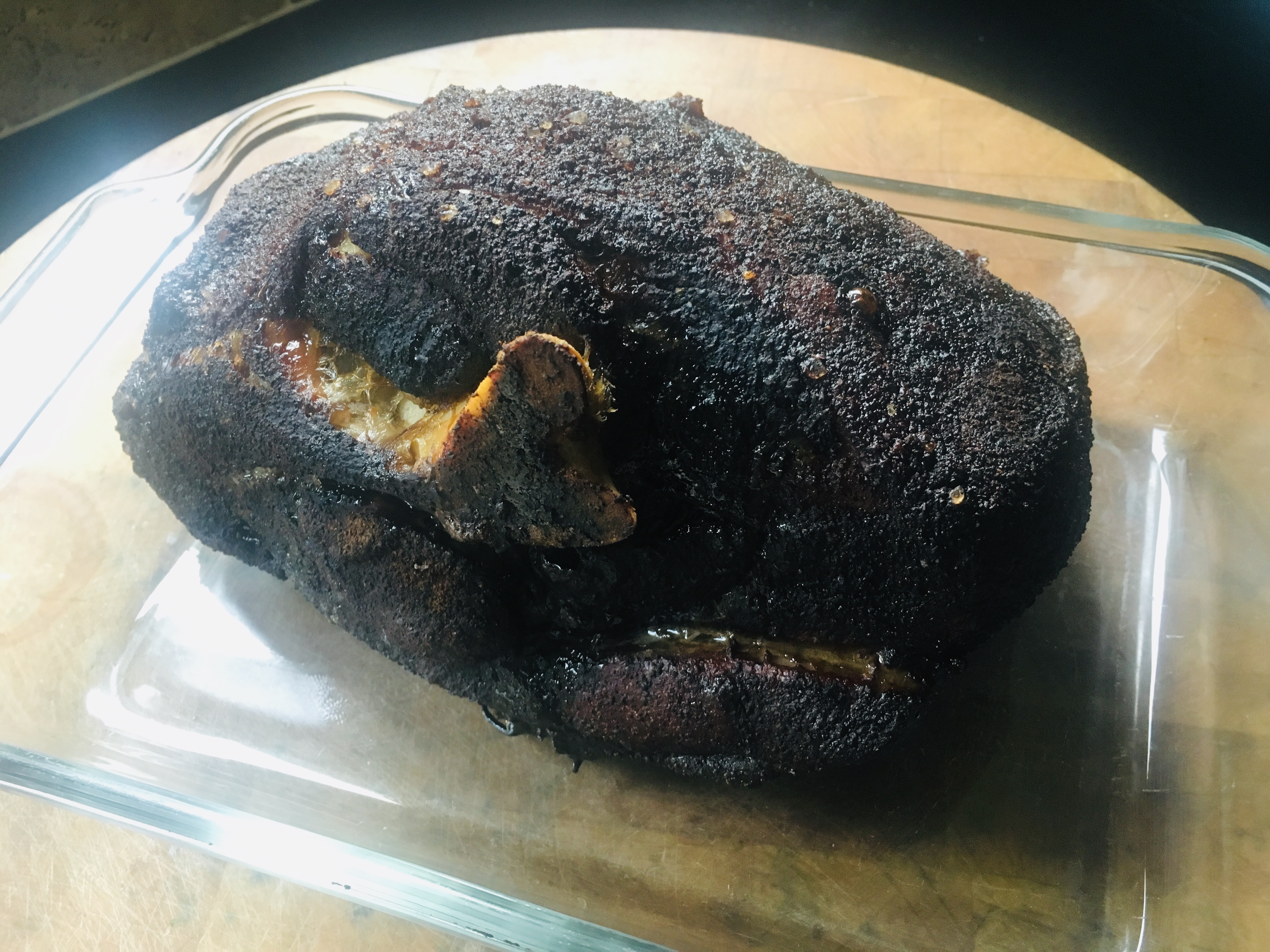
As I’ve mentioned previously, I love the Kona-crusted NY strip at the Capital Grille, so much so that it inspired me to make a coffee rub of my own. I’ve been using it on steaks and burgers for years. But recently, I used it on a slow-smoked pork shoulder for the first time, and it was fantastic!

I used a smaller pork shoulder, about 6 lbs., and smoked it for about 12 hours. Obviously, if you use a larger hunka meat, you’ll need more time. I prefer a bone-in shoulder over boneless. I think it gives greater flavor.

Rubbed and ready to smoke!

My coffee rub is easy to make, and I usually make a lot of it at once, since it stores well.

3 tablespoons brown sugar
1 tablespoon Kosher salt
1 tablespoon ground coffee (use your favorite)
1 teaspoon granulated garlic
1 teaspoon granulated onion
1 teaspoon unsweetened cocoa powder

I mix all the ingredients well, then rub generously on the pork shoulder before placing it a 250-degree smoker for about 12 hours. I use an electric smoker, which allows me to set the temperature and forget it, with the exception of occasionally adding hickory chips. I love just a hint of smokiness…I don’t want the rub to be overpowered by the smoke.

Perfectly smoked, with the bone easily sliding out of the shoulder.

The brown sugar in the coffee rub creates a beautiful crust on the meat, which goes really well with the pork and the barbecue sauce I make.

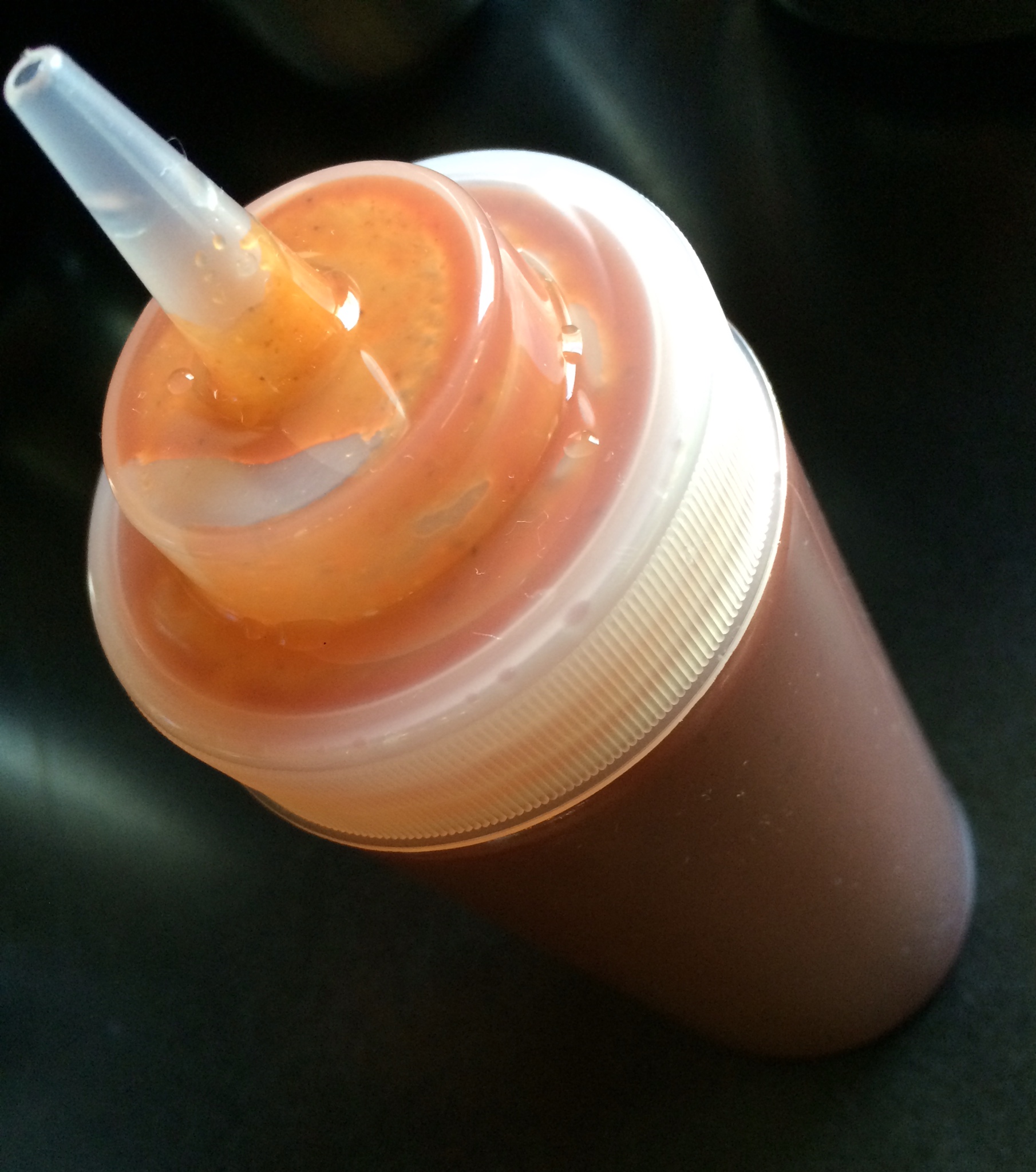
The barbecue sauce uses much-needed vinegar. It cuts through the rich fattiness of the pork, and is absolutely delicious.

2 cups ketchup
3/4 cup water
6 tablespoons cider vinegar
6 tablespoons white vinegar
6 tablespoons brown sugar
3 tablespoons Worcestershire sauce
1 tablespoon chili powder
2 teaspoons salt
2 teaspoons black pepper
1 1/2 teaspoons cumin

Mix all the ingredients in a saucepan and simmer until the flavors have blended, about 20 minutes. Remove from heat and cool to room temp. If you store it in an airtight container in the fridge, it’ll stay good for a few months.

A beautifully smoked pork shoulder, amazing barbecue sauce…what more do you need for an amazing pulled pork sandwich except a toasted brioche bun and perhaps some of my world-famous home fries on the side?

The home fries? That recipe is for another blog!