Archive for the ‘Rhode Island’ Category

It may be the end of November, but the kale in my  garden is still growing! As the nights get longer and colder here in Southern New England, the first thing I go for is a great bowl of soup.

When I first posted my recipe of Portuguese kale soup, I was told by many Portuguese friends that my soup wasn’t authentic so I couldn’t call it that. Fair enough. Well, my Portuguese pal, Paula, has a great soup recipe that has been passed down from her Mom. Her Mom even adds chicken feet to the stock, which Paula chooses to leave out. Like most Portuguese soup recipes I’ve seen, there’s a ton of carbs: often potatoes with pasta with a lot of beans. But damn, it’s good! My version follows.

Paula’s Portuguese Soup

3 cans garbanzo beans
2 cans white cannellini beans
1 can pink beans
1 fennel bulb
Large bunch of kale
5-6 potatoes
1 cabbage
2 sticks hot chourico
Beef ribs
1 cup dry macaroni (elbows)
Red crushed pepper wet-optional

Drain and puree  3 cans of garbanzo beans in a food processor. Put the puree in a large pot with about a gallon of water.  Chop the chourico, and add it to the puree along with the ribs. Boil for 20 minutes. Chop the fennel bulb and cabbage into 2 inch squares.  Add the fennel and cabbage to soup and boil for 30 minutes.  Add the chopped kale, and boil for 30 minutes. Add the cubed potatoes and before the potatoes are done, add the remaining drained cans of beans. Add macaroni and cook for a short time at the end.

My version of the classic Portuguese kale soup.

My version of the classic Portuguese kale soup.

Here’s my version: carb-friendly and gluten-free, but still packs a lot of flavor.

4 cups home-made chicken or beef stock
4 cups water
1 cup lentils, rinsed in cold water
1 onion, finely chopped
1 carrot, finely chopped
2 stalks celery, finely chopped
1 clove garlic, through a press
1 lb. chourico, peeled and chopped into small cubes (I use Mello’s, out of Fall River, Mass.)
1 large bunch organic kale
salt and pepper

Add the stock and water to a large pot. Heat until boiling. Add the lentils.

In a saucepan with a little olive oil or bacon fat, saute the onions, carrots, celery, and garlic for a few minutes. Add the chopped chourico and saute a few minutes more. Add the contents of the saute pan in the pot.

Wash and de-stem the kale, tearing the leaves into smaller pieces. Add the leaves to the pot and stir. The stems go in your compost pile. (You can also use them in a juicer.)

Cook the soup until the lentils are al dente. Taste and season for salt and pepper before serving.

Chourico is as important to the Portuguese as bacon is to us Lithuanians. Here in Southern New England, they pronounce it “sha-rees,” not the exaggerated Spanish “chaw-reezo,” like you hear on the Food Network.

I was joking with a friend the other day that if I won the lottery, I could buy a lifetime supply of chourico at my favorite store: Mello’s in Fall River, Mass. His response was: “Is there such a thing as a lifetime supply of chourico?!”

Good point!

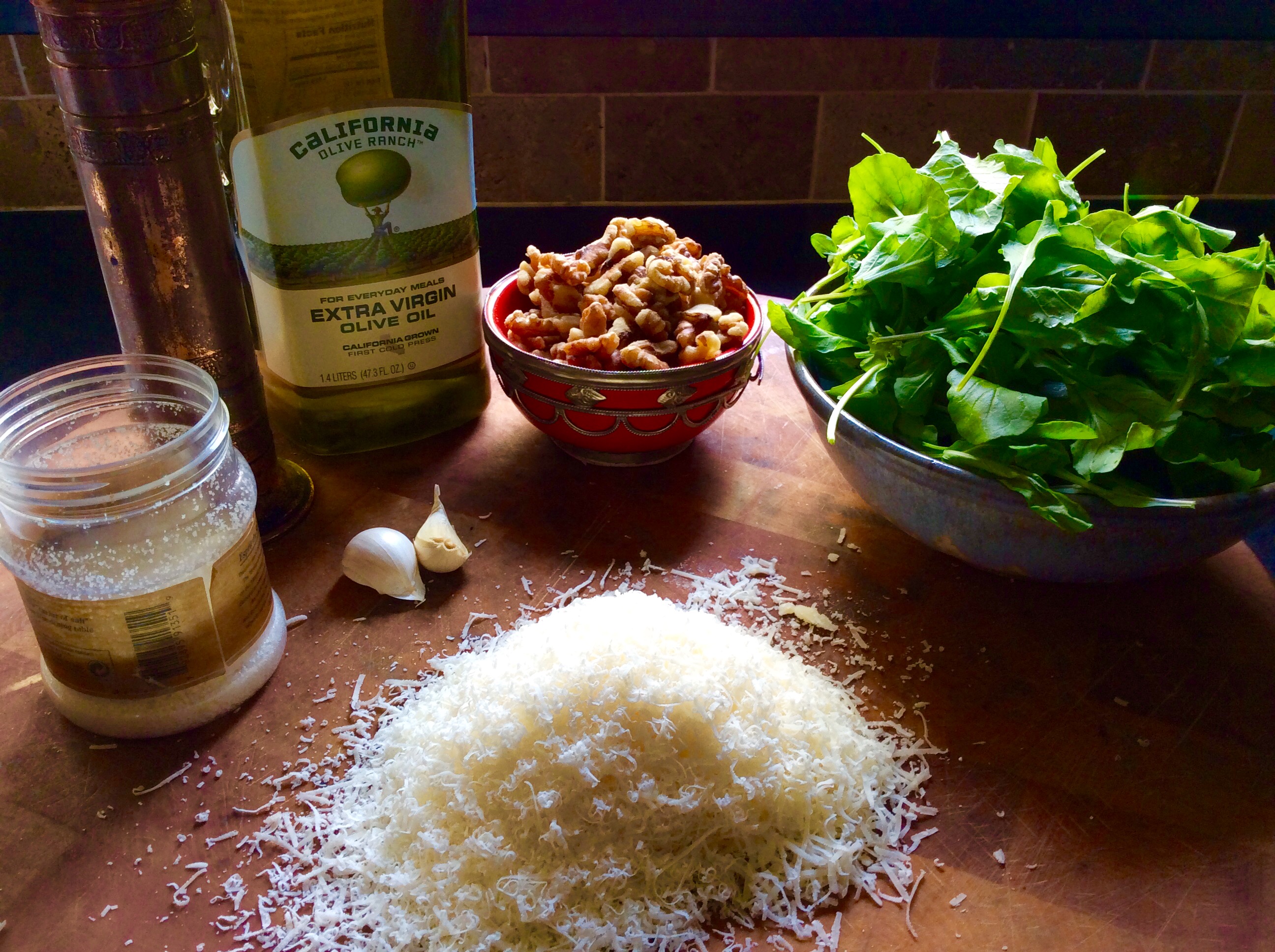
If you’ve had really great chourico, you’re always looking for new ways to include it in your cooking. And arugula is one of the easiest greens to grow in the spring or fall garden. Even now, in November, I’ve got lots of it growing, just waiting to be turned into pesto.

Inspired by chef Chuck Hughe’s recipe, this is a great chourico appetizer that’s really easy to make. Whip up the arugula pesto ahead of time and keep it in the fridge. Then when guests come, just slice the chourico, saute it in a pan until brown, and serve.

fullsizerender

3 cups fresh baby arugula
1/2 cup walnuts
1/2 cup olive oil
1 clove garlic
1 teaspoon salt
1/4 teaspoon pepper
1/2 cup + one tablespoon grated Parmigiano Reggiano or other good quality parmesan cheese
2 lbs. chourico, sliced into 1/2″ pieces

Combine the arugula, walnuts, olive oil, garlic, salt, pepper and the 1/2 cup of cheese in a food processor or blender and blend until smooth. Set the tablespoon of cheese aside for garnishing later.

fullsizerender-1

Remove the casing from the chourico and slice it into 1/2″ thick pieces. Saute the chourico in a pan until both sides are caramelized and golden.

Place the chourico on a plate, topping with some of the pesto. Sprinkle a touch of the grated cheese to garnish. Serve immediately, while the chourico is still hot!


fullsizerender-3


The corn is still out on farm stands in my neighborhood, and it’s really hard to resist, despite the fact that corn is at the top of the loaded-with-pesticides list of veggies. Organic farmers struggle with corn because it demands a lot and produces little in return, but you can find it if you look hard enough. It’s easier to find it frozen, but that’s something you don’t want to do in season, especially when you see those beautiful ears just waiting for you at the local farm stand!

By now, I’m sure you’ve seen those videos where the person takes corn still in the husk, pops it in the microwave, and then slips out a perfect ear of corn without any silk minutes later. If you haven’t, here’s one of them…

There are 2 problems with this method: 1) It takes forever to do a dozen ears…and 2) It ruins the damn corn!

corn1

Why would anyone who’s passionate about fresh corn, stick it in a microwave and nuke the living hell out of it? Fresh corn needs a minimalist approach. It should be eaten practically raw…not bombarded with gamma rays and dehydrated in to shriveled kernels.

I love my corn right off the cob…and I still stick to the tried-and-true method of putting it in a pot of water and boiling it for a very short time. Do I get a few strands of silk? Sure. That’s part of the deal. Real corn has silk…just like real fish has bones. Get over it.

My wife and daughter like their corn off the cob. In that case, I shuck the corn, standing the raw ear up in a bowl or bundt pan, slicing down with a knife to remove the kernels. I then lightly saute the corn in a pan with unsalted organic butter and a pinch of Fleur de Sel. Those pieces that have several rows of kernels stuck together, across and down, are the favorites.

corn2


One other way I’ve cooked corn is the “cooler corn” method, which is great when you have a really large crowd to feed. Get your favorite cooler and make sure it’s clean inside. Shuck your corn and place the ears in the cooler. Boil a large pot of water on the stove and then pour the hot water over the corn. Close the cooler lid tightly and let it sit for about 20 minutes. You’ll have perfect corn for a crowd every time.


The definition of a consomme is: “a clear soup made with concentrated stock.” I might add “mind-blowing” to that sentence, especially with this recipe. The key to success– and this is crucial–is to use absolutely garden-fresh, in-season ingredients. If you try this with greenhouse or supermarket tomatoes, you’re just wasting your time.

FullSizeRender (9)

4 1/2 lbs. of fresh garden tomatoes (my favorite is the heirloom: Brandywine)
1 large bunch of fresh basil, leaves and stems
1 2-inch piece of fresh horseradish, peeled
1 clove of garlic, peeled
1 tablespoon white wine vinegar (I use Alessi)
2 oz. vodka (I use Tito’s)
sea salt and pepper


Remove the core of the tomatoes, but leave everything else, including seeds and skin.

Put all the tomatoes, basil, horseradish, garlic, vinegar and vodka in a blender or food processor. You might need to do this in batches if your equipment can’t handle it all.

Process until you get a kind of slush.

Line a mixing bowl with a double layer of cheesecloth and pour the tomato slush mixture into it. Gather up the corners of the cheesecloth carefully, and tie them securely so you can lift the bundle up by the knot. Hang the bundle from a hook over a clean bowl in the fridge so that it catches the liquid that drips out, and leave the whole thing in there overnight. The liquid that drips out will be clear. (You can place an optional slice of beet in the bowl to add color, but I choose not to, because I think it changes the flavor.)

Cheesecloth bundle dripping overnight in the fridge.

Cheesecloth bundle dripping overnight in the fridge.

To serve, chill bowls (or in this case: the sipping glasses) in the fridge. When ready to serve, ladle out the consomme and garnish with a tiny basil leaf. A drop of excellent quality olive oil is optional.

Synthetic cheesecloth apparatus. The real thing works better.

Synthetic cheesecloth apparatus. The real thing works better.


I tried using a synthetic cheesecloth for this recipe, and I found that it doesn’t filter out enough of the solids to make a clear consomme. You could use it along with real cheesecloth, just to use the stand, or just hang it all in real cheesecloth, as described in this recipe.

Nothing says summer here in New England like a lobster roll. But I don’t go to a clam shack to get one. The prices are ridiculous, the meat can be overcooked, and they often add ingredients I don’t want.

I start with fresh lobster. I get it from my lobster man buddy, Gary, just down the street at his dock in Tiverton, RI.

A view of the Sakonnet River from the back of Gary's lobster boat, the Edna Mae

A view of the Sakonnet River from the back of Gary’s lobster boat, the Edna Mae

The next step is to cook it right. I use sea salt in a large pot of boiling water. I make sure the water is at a rolling boil before the lobsters go in. And I cook them for no more than about 8 minutes.

Lobster catch LTL

After the lobsters have been removed from the pot and have cooled for a few minutes, I get to work: cracking the claws and tail and removing every bit of beautiful meat I can find. I even take the legs off and push a rolling pin over them to extract the meat inside. The tomalley (the green liver and pancreas) and roe (eggs) are delicacies not to be missed, but for the purpose of making lobster salad, I don’t use these parts. I save them for a separate treat. And I use the legs and cleaned empty shells to make lobster stock. Nothing goes to waste!

Lobster roll LTL

Everyone has their own opinion about lobster rolls: what goes in ‘em…and perhaps more importantly, what doesn’t. I am no exception. For me, no veggies whatsoever: no chopped celery, no lettuce, no pickle. No paprika or Old Bay seasoning. A pinch of celery salt? Sure. Mayonnaise? Only Hellman’s. White pepper, not black, and just a touch. Salt? A pinch of Fleur de Sel. And the secret weapon to bring out all the flavors: the tiniest squeeze of fresh lemon juice…not enough to give it a lemon flavor…just to brighten the taste.

I prefer those long Martin’s potato rolls: straight out of the bag or lightly grilled with a little melted butter brushed on.


With a week of rain followed by a week of sunshine, the garden has really taken off. Nights are still too cool (in the 40’s) for tomatoes to go out, so they’re hanging out in my greenhouse until they’re ready to be transplanted.

Happy bees buzzing around the blossoms of my old and still productive apple tree.

Happy bees buzzing around the blossoms of my old and still productive apple tree.


Strawberries and asparagus share the same bed. A good combination: by the time the asparagus harvest is over, the strawberries fill in the bed. And by the time the strawberries are all picked, the asparagus stalks shoot upward to produce the ferns that will recharge the plants for next year's crop.

Strawberries and asparagus share the same bed. A good combination: by the time the asparagus harvest is over, the strawberries fill in the bed. And by the time the strawberries are all picked, the asparagus stalks shoot upward to produce the ferns that will recharge the plants for next year’s crop.


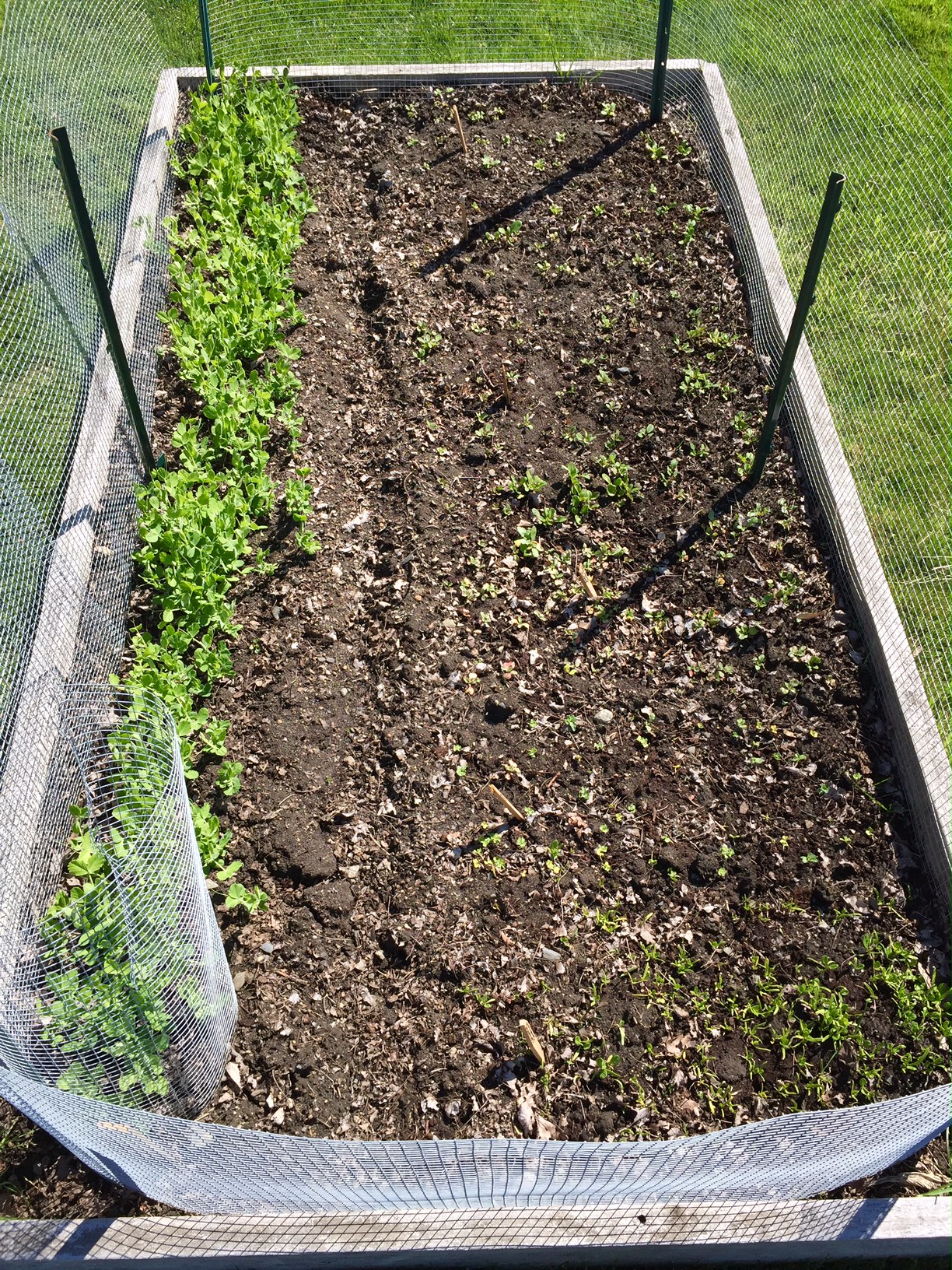
...And a check on the first bed I sowed this season: peas on the left, happy arugula, Asian greens, spinach and more on the right.

…And a check on the first bed I sowed this season: peas on the left, happy arugula, Asian greens, lettuce, spinach and more on the right.

Here’s the bed from 3 weeks ago…and the start of the season…

FullSizeRenderFullSizeRender

Fresh salads from the garden have already included: lettuce, Asian greens, scallions, arugula, spinach, asparagus, pea tendrils, fresh oregano, and kale.

I sowed some early spring seeds around March 7th in one of my raised beds. Here’s what it looked like on Day 1…

FullSizeRender


Three weeks later, germination began, albeit slowly. But you can see the happy little green seedlings popping up. On the left: peas. On the right: radishes, Asian greens, spinach, kale, arugula and others.

FullSizeRender

Now, it’s week #7, and you can see significant growth…

FullSizeRender

The peas (on the left) are about 6″ tall. Spinach (bottom right) making an appearance, too.

Another photo in a few weeks!

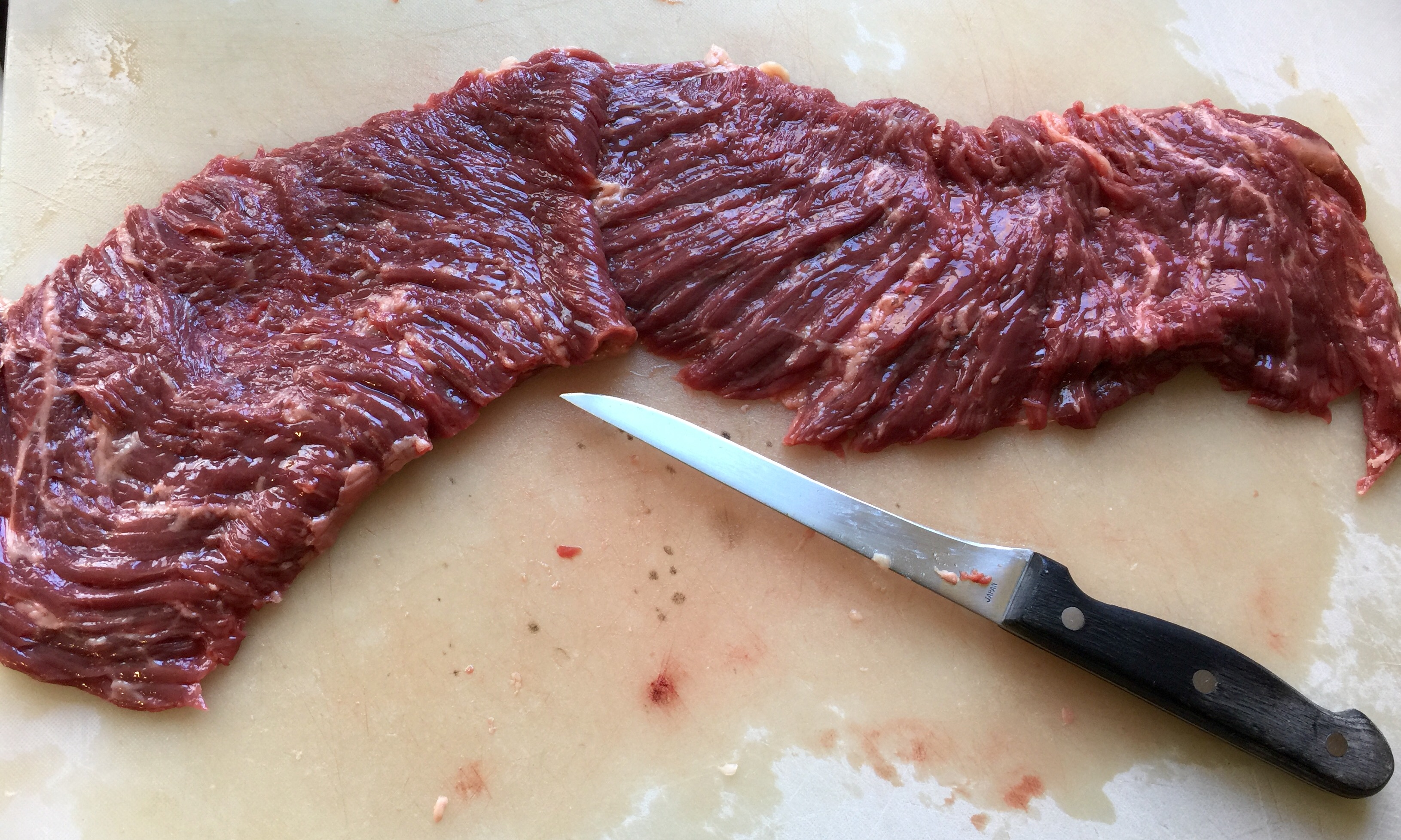
Although the name may not sound entirely appetizing, the beef flap or flap steak is a thin cut of meat that comes from the bottom sirloin butt cut, and it’s delicious when properly cooked. It’s not a skirt steak or a hanger steak, though they are similar.

I bought a beef flap from my friends at Simmons Organic Farm in Middletown, RI , and didn’t really know what I’d do with the cut until I started searching through my fridge for available ingredients. There were 2 beef flaps in the package I bought, one larger, one smaller, so I put the smaller one in a Ziploc bag with an olive oil/balsamic/garlic/onion/salt/pepper marinade, and left it to chill overnight in the fridge (what I did with it is in the next blog) while I worked on the larger, 2-lb. flap.

meat butterfly

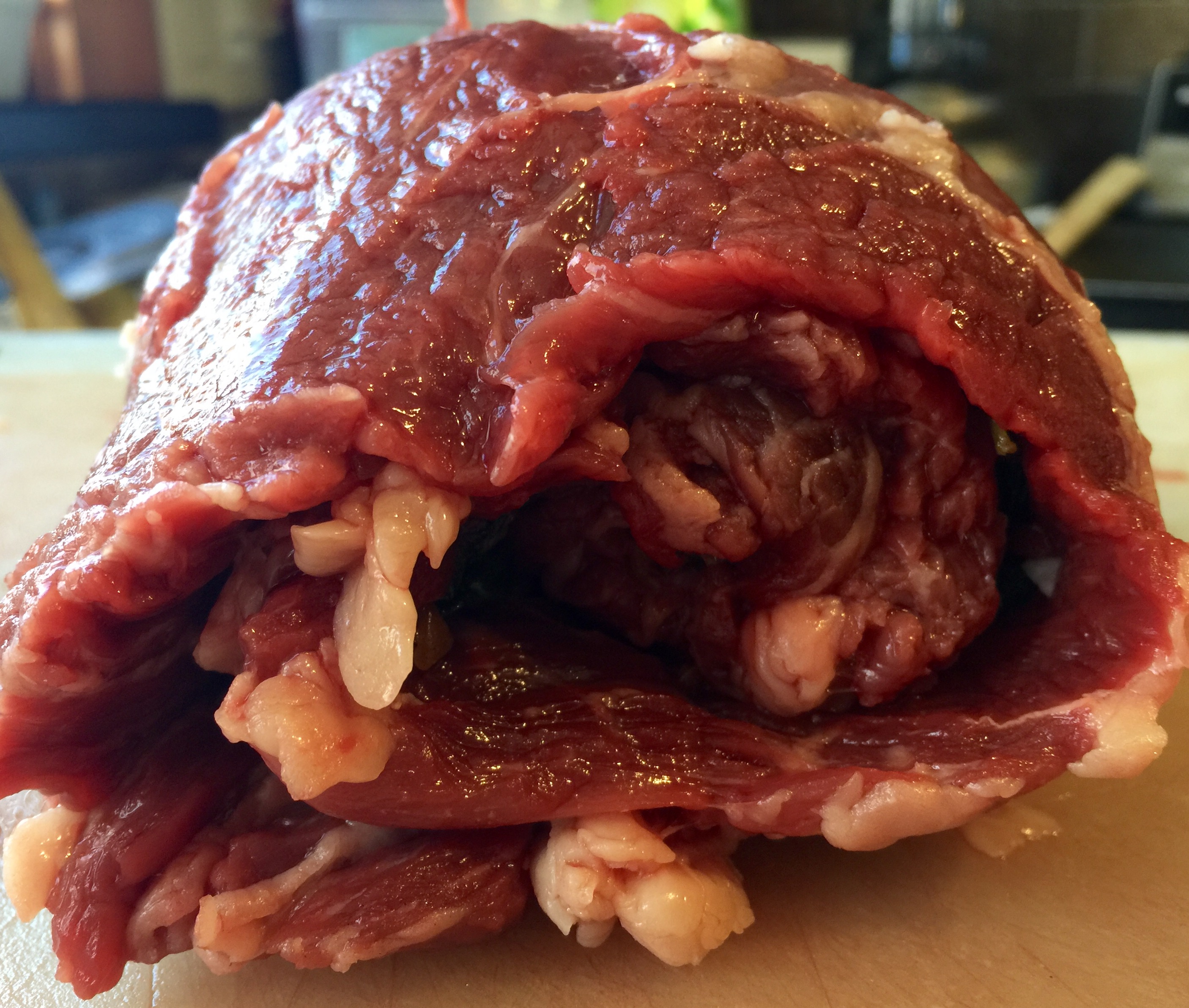
Though long and flat, if you have a sharp knife and you work carefully, you can slice the beef lengthwise and, stopping just before you cut it into 2 separate pieces, create a nicely butterflied piece of meat. Smear some tasty ingredients on the meat, then roll it up tightly and cook it.

meat cheese

2-lb. beef flap (I like grass-fed)
1/2 sweet onion, chopped (I like Vidalias)
1 clove garlic, minced
3 strips bacon, finely chopped
4 oz. container of organic spinach and kale (or whatever greens you like)
salt and pepper
8 oz. halloum-style cheese, sliced thin (provolone works, too)

meat roll 2

Take a little of the bacon fat rendered when cooking the bacon strips, and heat it in a saute pan. Add the onions and sauté until translucent. Add the garlic, and sauté for a minute. Add the chopped bacon and stir. Add the spinach and kale, and let it wilt and cook down entirely until it’s soft. Season with salt and pepper. Remove the pan from the heat and let it cool.

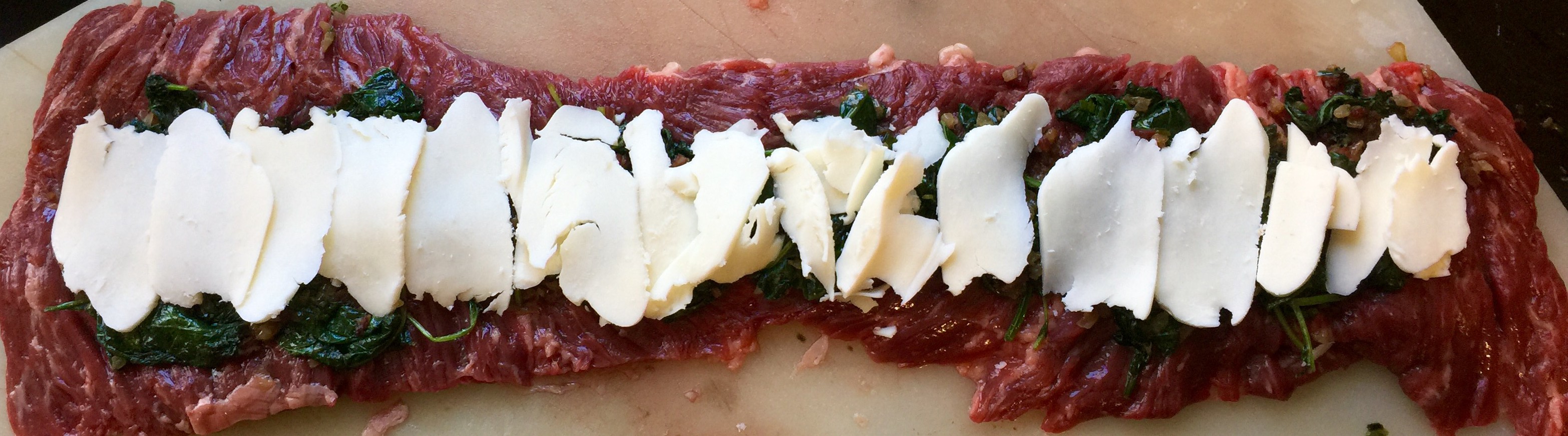
Butterfly the beef flap, as described above. Take the cooled mixture from the pan and smear it all along there top of the beef evenly. Add the slices of cheese on top.

Tightly roll the beef into a log shape, carefully keeping the inside ingredients from squeezing out.

I pinned the log together with toothpicks my first time around, and it did okay. But I suggest tying the roll with butchers twine in several places so that the meat stays together and cooks more evenly.

meat roll

Place the log in the fridge, removing it about an hour before cooking to bring it back to room temperature.

Rub the outside of the log with olive oil and season with salt and pepper. Place the log in a hot oven-proof pan and sear on all sides. Then place the pan in a pre-heated 350 degree oven and cook until the interior temperature of the meat is around 120, about 30 minutes.

cooked beef


A temperature of 140 is considered to be medium-rare for beef, but I like to cook it only to 120 and then let it rest, covered with a tent of foil. It will still rise in temperature for a few minutes before it starts to cool down.

Slice carefully with a sharp knife.

For most people, grilling season is still a long way away. I’m a bit of a fanatic: I’ll use my Weber grill in the wintertime, often standing in a foot of snow while I’m carefully turning my steaks over the hardwood coals below. In the spring, I put the Weber away, and unveil my larger ceramic grill. I use it to grill or smoke anything from a great steak to a whole chicken or even a pizza.

Making a great steak isn’t difficult, but like all good things, takes a little care and finesse.

It starts with the beef. I only buy grass-fed beef. I think it tastes better, and I buy it from local farms that raise the cattle humanely. Some say that grass-fed beef tastes too gamey. I understand that, because I’ve had grass-fed beef from many different sources over the years. The taste of the beef depends on the breed of cattle as well as the environment they’re raised in. The general title “grass-fed” is convenient to use, but quality varies greatly. The only answer to that is to keep trying cuts of beef until you find the one you like. For me, here in Rhode Island, Pat’s Pastured in East Greenwich has the quality and taste I’m looking for. And occasionally, my local Whole Foods will offer great cuts of grass-fed beef as well.

Grass-fed matters to me because the cows eat what is natural for them to eat: grass. The meat naturally has better fats; it’s higher in Omega-3’s. Feeding corn and grains to cattle is cheaper and fattens them up faster, which is why most American farmers switched to that method many years ago and created the factory farms we now have. But feeding them corn and grains also makes them sick, so the farmers have to pump antibiotics and hormones in them to keep disease away. Make no mistake: whatever nasty crap they put into the cow, goes into you. To me, it’s worth paying the extra bucks to support the farmers that do it right. I have beef less often, but what I have is the best I can get for my family.

If none of that matters to you, and you simply want to grab a slab of beef from your supermarket, that’s your choice. But even then, there are varying degrees of quality. Cough up a few extra bucks for better beef and it will reward you later.

A perfect medium-rare porterhouse that was simply pan-seared. It was thin enough not to even go in the oven.

A perfect medium-rare porterhouse that was simply pan-seared. It was thin enough not to even go in the oven.

The cut of beef I select is as personal as the choice to go grass-fed or not. My absolute favorite cut is the porterhouse: NY strip on one side, tenderloin on the other, bone in the middle. (Not to be confused with a T-bone, which offers almost no tenderloin.) And it needs to be thick. The thicker the cut of beef, the more control I have over the final cooking temperature I want it to be. Unfortunately, because grass-fed beef costs more, farmers often sell skinny porterhouses to keep the price down. But the end product comes out over-cooked, because the meat is so thin. I would rather pay big bucks less often and get a real slab of meat than get a scrawny cut more often.

If you want to try grass-fed beef, but are put off by the high price of the more popular cuts (tenderloins, ribeyes, etc.), go for the less popular cuts: flank, hangar, etc. They cost a lot less and they’ve got great taste. You just need to be careful not to overcook them because they’re usually thin and contain very little fat.


Many articles have been written about it being okay to cook beef from frozen, but I don’t like to do that. I always take my slab of beef out of the freezer the day before I want to cook it, and thaw it in the fridge (out of its wrapper.) Then, about an hour before I plan on cooking it, I take it out of the fridge and place it on a plate to warm to room temperature. I like to rub the beef with sea salt and fresh cracked black pepper and let it sit that way for an hour. And that’s all I season my beef with. No need to hide the flavor of amazing beef!

But although I grill year ’round, it’s not always convenient to fire it up when I crave a steak. Few methods can rival the simple steps of searing both sides of the beef in a hot cast iron skillet, and then finishing it in the oven. I use pork lard or bacon fat in the cast iron pan, heat it, sear one side, flip it over, sear the other side, and place it in a 375-degree oven. How long to cook it is a matter of practice. Eventually you learn the quirks of your oven and you get the perfect steak every time. Until then, a thermometer helps, though you don’t want to poke the hell out of your beef and let all the juices run out.

And it’s key to let the steak rest. I’ve gone to all this trouble…it would be dumb to mess it up now! This is when I take a few minutes to make myself a nice cocktail. By the time the cocktail’s made, and I’ve taken a few sips, the beef is ready to be devoured.

That's not scallions. That's garlic! And a side of fresh oregano.

That’s not scallions. That’s garlic! And a side of fresh oregano.


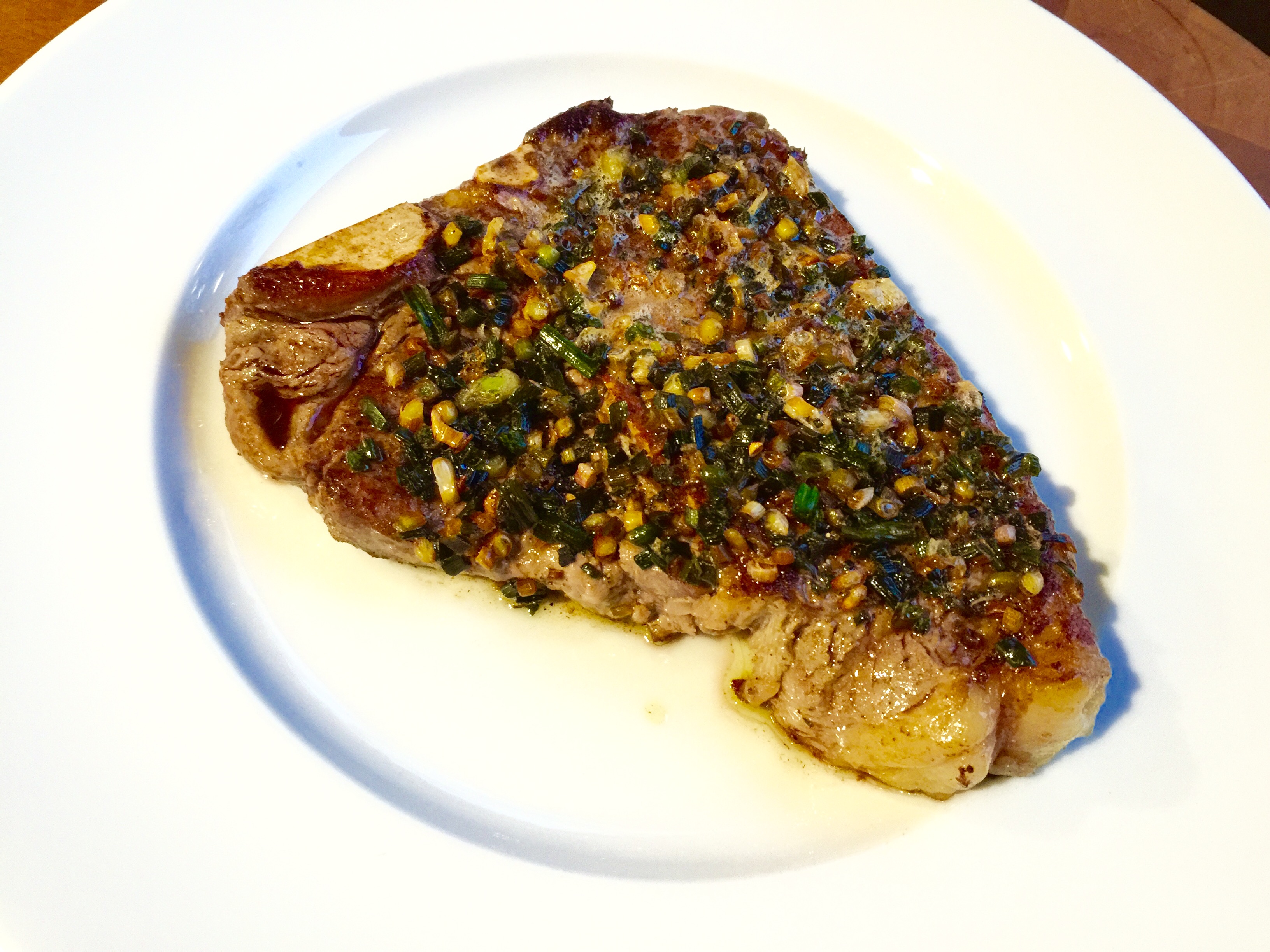
With the garden coming to life again this spring, I found a bunch of shoots popping out of the soil in my garlic patch. I pulled them out, and the garlic greens looked just like baby scallions, only with tiny garlic bulbs at the bottoms. I also found some fresh oregano growing in the herb garden. I washed them all, finely chopped them, and sautéed them in a pan with a little olive oil, butter, salt and pepper. I cooked them just until the garlic started to get brown and crispy, and I poured it all over my porterhouse. Fantastic!

FullSizeRender (5)

Just remember…

IMG_1521