Archive for the ‘seafood’ Category
PAN-SEARED WILD-CAUGHT AMERICAN SHRIMP
Posted: September 17, 2017 in Food, pasta, Recipes, seafood, shrimpTags: food, pasta, recipes, shrimp
1 lb. large peeled and deveined wild-caught American shrimp
SHRIMP WITH A TOMATO AND FETA SAUCE
Posted: August 30, 2017 in Food, Recipes, seafood, shrimpTags: feta, food, Greek, pasta, recipes, shrimp
I love the combination of tomato sauce and feta, and this dish, served over some pasta, will have you licking the plate.
8 oz. (or more!) feta cheese
1 can (28 oz.) whole tomatoes, ground into sauce
1 lb. (about 24) wild-caught American shrimp, peeled and deveined
1 medium onion, chopped
juice of 1/2 lemon
2 tablespoons olive oil
2 cloves garlic, through a press
pinch red pepper flakes
1 teaspoon fresh dill
1 teaspoon oregano
1 tablespoon Ouzo
salt and pepper
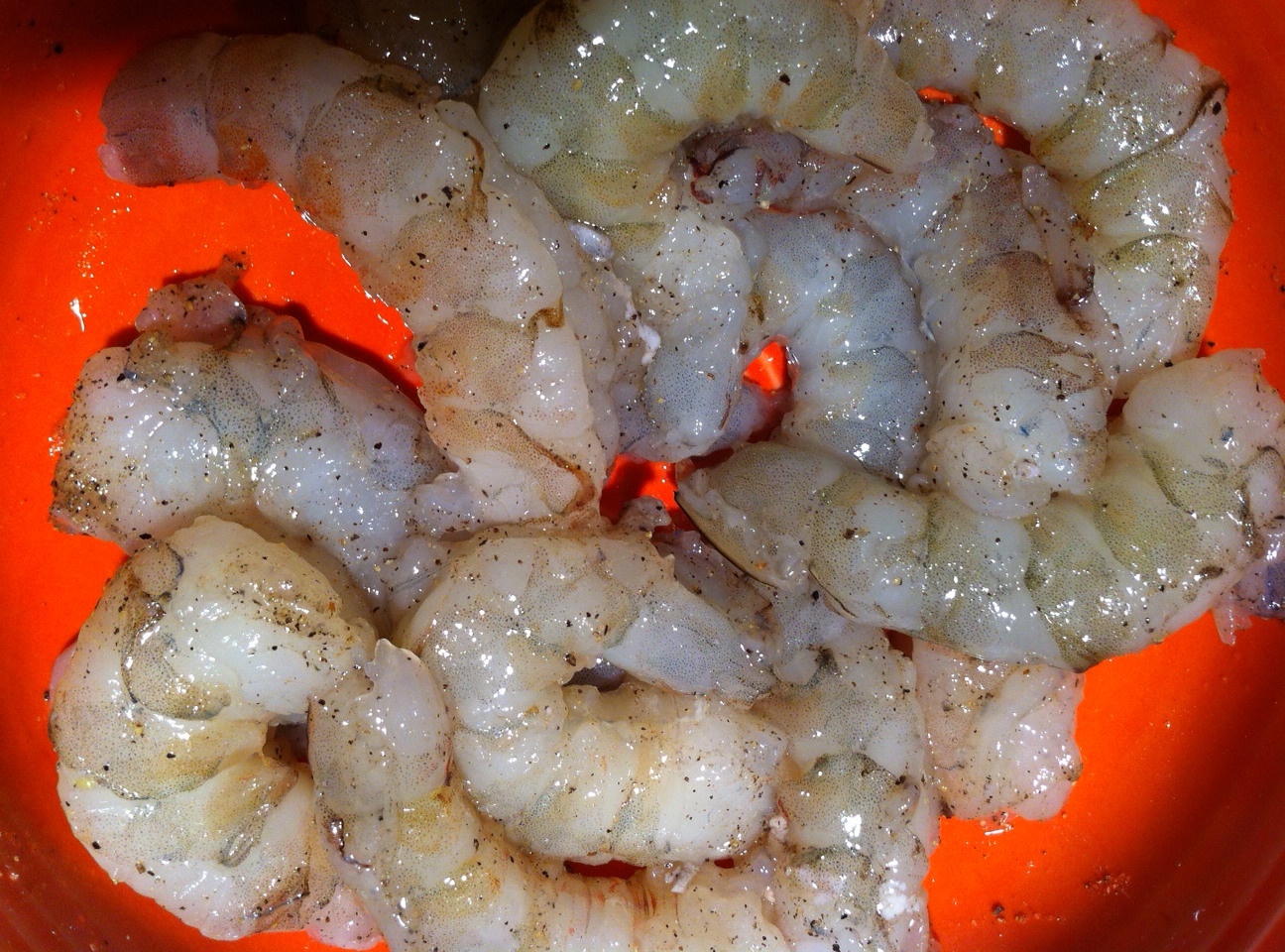
Peel and de-vein the shrimp. Place them in a bowl and squeeze the lemon juice over them and toss to mix. Open the can of tomatoes and puree it in a food processor.
In a saucepan, heat the olive oil. Saute the onions until they’re translucent and then add the garlic. Saute the garlic for 10 seconds, until fragrant, then add the red pepper flakes, dill and oregano. Add the tomato sauce, and cook over medium heat until the sauce has reduced a bit and isn’t watery. Add the Ouzo carefully–keep away from open flame! Add salt and pepper to taste.
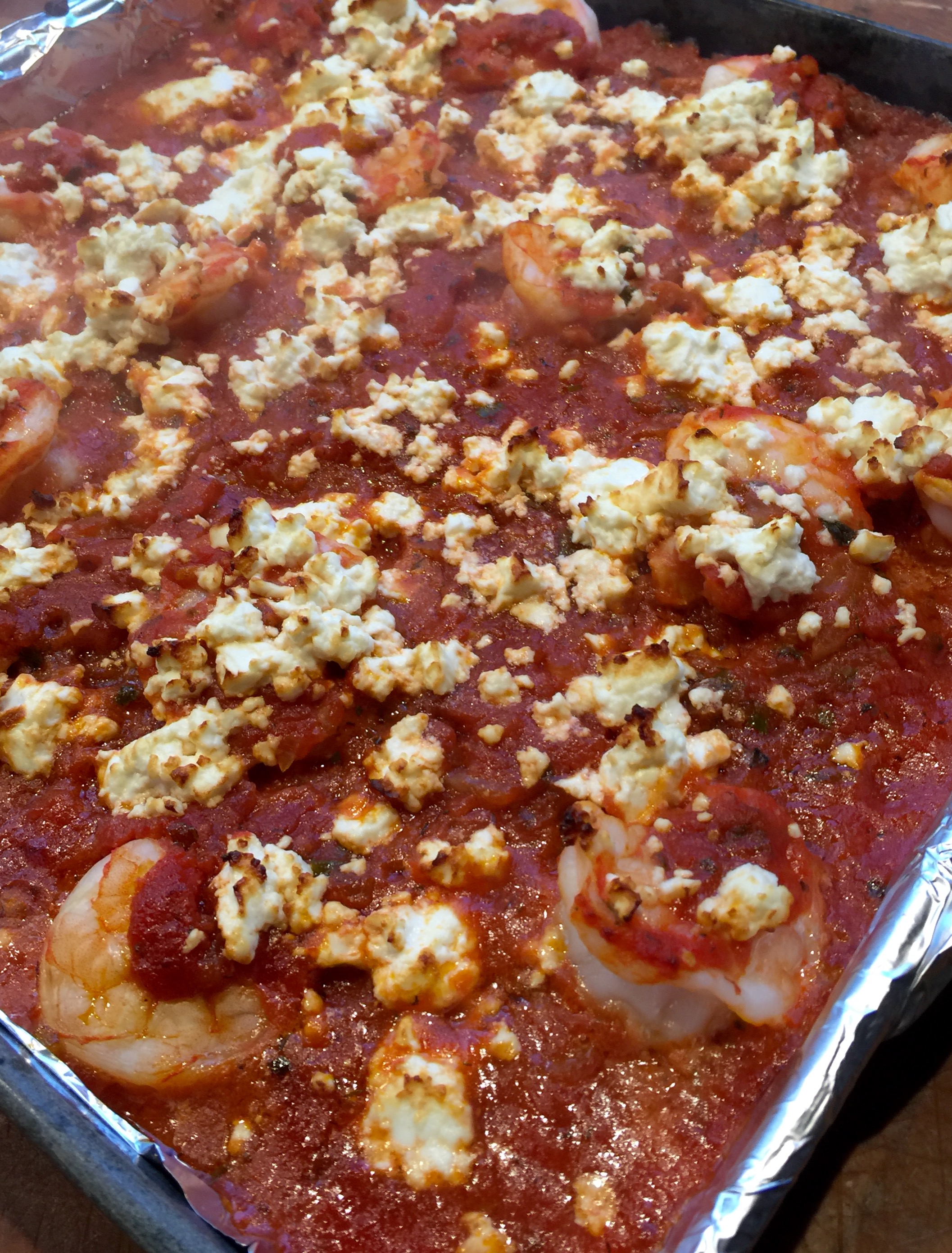
Line a sheet pan with foil and pour a thin layer of the tomato sauce on the bottom. Lay the shrimp down in one layer on the sauce, and then cover the shrimp with the rest of the sauce. Crumble the feta cheese with your fingers and sprinkle all over the top.
Bake in a pre-heated 350 oven until the shrimp has cooked through and it’s nice and bubbly. Serve over pasta.
SHRIMP AND ASPARAGUS SALAD WITH QUINOA
Posted: July 17, 2017 in Cucumbers, Food, garden, Recipes, seafood, shrimp, superfoodsTags: food, quinoa, recipes, SALAD, seafood, shrimp, superfood
Summer’s in full swing, and let’s face it: you might be tired of grilling by now.
Don’t get me wrong…grilling makes food taste great, but sometimes you don’t want to stand out there in a cloud of smoke while your friends are at the table, sipping wine and having a good time without you.
This is a great dish for those that want to pass on the grill for a day. It’s a delicious salad that you can serve warm or cool. You can make it the day before. Wrap it in plastic, and keep it in the fridge. Then, when your guests arrive, let it warm to room temperature. Taste for seasoning before serving. If you’re not a fan of quinoa, brown basmati rice works well, too. And use what’s fresh and in season. If you can’t find asparagus, some chopped and lightly sautéed squash works just as well.
1 1/3 cup dry quinoa (or 1 cup basmati rice)
Chicken stock
Juice of 1 lemon
2 lbs. wild-caught American shrimp, peeled and de-veined (16 to 18 count)
1 cup of asparagus stalks, cut into 1″ lengths
1/2 cup minced scallions, green part only
1 cup chopped fresh dill
1 cup chopped fresh flat-leaf parsley
1 English cucumber, peeled, seeded and medium-diced
1/4 cup red onion, small diced
1/2 cup seeded and chopped tomatoes
3/4 lb. good feta cheese, crumbled
Extra virgin olive oil
Salt and pepper
Prepare the quinoa according to the package directions, using chicken stock instead of water. Once it’s cooked, place it in a large bowl. (1 1/3 cups dry quinoa should give you about 3 cups of cooked quinoa.)
Place the chopped asparagus on a sheet pan, drizzle with olive oil, and sprinkle with salt and pepper. Toss them to combine and spread them out in a single layer. Roast them for just a few minutes at 350 degrees. Set them aside to cool to room temperature. (You can also simply saute the asparagus in a pan on the stove top with olive oil, salt and pepper.)
Place the shrimp on the same sheet pan, drizzle with olive oil, and sprinkle with salt and pepper. Toss them to combine and spread them out in a single layer. Roast for 5 to 6 minutes at 350 degrees, until the shrimp are cooked through. Turn them once while cooking. Don’t overcook them! (again…you can simply saute the shrimp in a pan on the stove top with olive, salt and pepper.)
Add the shrimp to the quinoa, then add the asparagus, lemon juice, scallions, dill, parsley, cucumber, onion, tomatoes, 2 teaspoons salt, and 1 teaspoon pepper. Add the feta and stir carefully. Set aside at room temperature for 1 hour to allow the flavors to blend…or, if you’re not serving soon, place the bowl in the fridge. Before serving, allow it to warm almost to room temperature. Taste it and season again, if needed, before serving.
GRAVLAX: MY FAVORITE WAY TO SERVE SALMON
Posted: June 10, 2017 in brining, curing, Food, Recipes, salt, seafood, UncategorizedTags: food, Gravlax, recipes, salmon, seafood
I love salmon in all forms but cooked. To me, cooking changes the true flavor of this fantastic fish, so I enjoy it raw (as in sashimi), smoked, and cured.
The best smoked salmon uses the gentle process of cold smoking. It’s something that the average homeowner can’t really do successfully, so I simply buy cold-smoked salmon when I crave it. I’ve made hot-smoked salmon at home with some success, but the fish is so delicate, you really have to keep an eye on it. It takes no time for a juicy, perfectly smoked piece of salmon to turn into a dry, overcooked hockey puck.
Curing, which is how you get Gravlax, is really quite simple. You just need to have enough patience to wait a few days before you can eat it.
There are many gravlax recipes out there. Some use peppercorns, fennel, caraway, even Aquavit in the curing process. My opinion is: if you’ve got a beautiful piece of fish, why mask the flavor of it? I go with the simplest recipe possible, featuring just 3 ingredients that cure the salmon: salt, sugar and fresh dill, and I lean toward the salty versus sweet side.
The first step, of course, is to get the right piece of salmon. What you want is that beautiful, vibrant, almost-orange wild-caught Alaskan or Pacific salmon that costs more than you thought you were going to spend. Wild-caught means the salmon has eaten the foods it loves, a balanced diet consisting of bugs, fish, shrimp, and small invertebrates. A natural diet gives the meat of the fish that beautiful color and incredible flavor. What the salmon eats is very important because you are eating the salmon. Wild-caught salmon is high in Omega-3’s…the good fats.
I avoid Atlantic salmon at all costs. Unfortunately, most restaurants on the east coast serve Atlantic salmon because it’s less expensive. There’s a reason for that. Atlantic salmon is farmed in the USA, Canada and Europe, which means the fish are kept in crowded underwater pens and are fed food pellets that contain a number of nutrients and additives. Often, farmed fish are treated to prevent sea lice, and are given antibiotics to prevent diseases caused by their tight living quarters. When you buy Atlantic salmon in the fish store, you can spot it a mile away, because it’s pale with a tinge of gray, and its flavor is bland and lifeless. Farmed salmon is much lower in Omega-3’s.
If it doesn’t say wild-caught Alaskan or Pacific salmon, it isn’t! Previously frozen vs. fresh fish matters less than where it came from and how it was raised.
2 lbs. wild-caught salmon, skin on, pin bones removed
2/3 cup (100g) Kosher salt (I use Diamond Crystal)
1/3 cup (80g) sugar (I use natural beet sugar)
1 large bunch fresh dill, washed
If your fish monger hasn’t removed the pin bones from your salmon filet, you’ll need to get a pair of long-nose pliers and remove them. It’s not the worst thing in the world to leave them in there, but you really don’t want to be spitting bones out later.
The reason I mention that I use Diamond Crystal Kosher salt is because all Kosher salt does not weigh the same. Morton Kosher salt, for example, is much heavier by volume, so it weighs more even though you’re using the same cup measurement. In the case of Diamond Crystal, 2/3 cup weighs 100g. Same rules apply to the sugar. This is really important point to keep in mind when you’re curing anything, fish or meat.
Get a non-reactive tray long enough to hold the salmon filet. I prefer glass.
Mix the salt and the sugar together, and sprinkle half of it evenly on the bottom of the glass tray. Lay the piece of salmon down on the cure, skin side down, and cover the top of the salmon with the rest of the cure evenly.
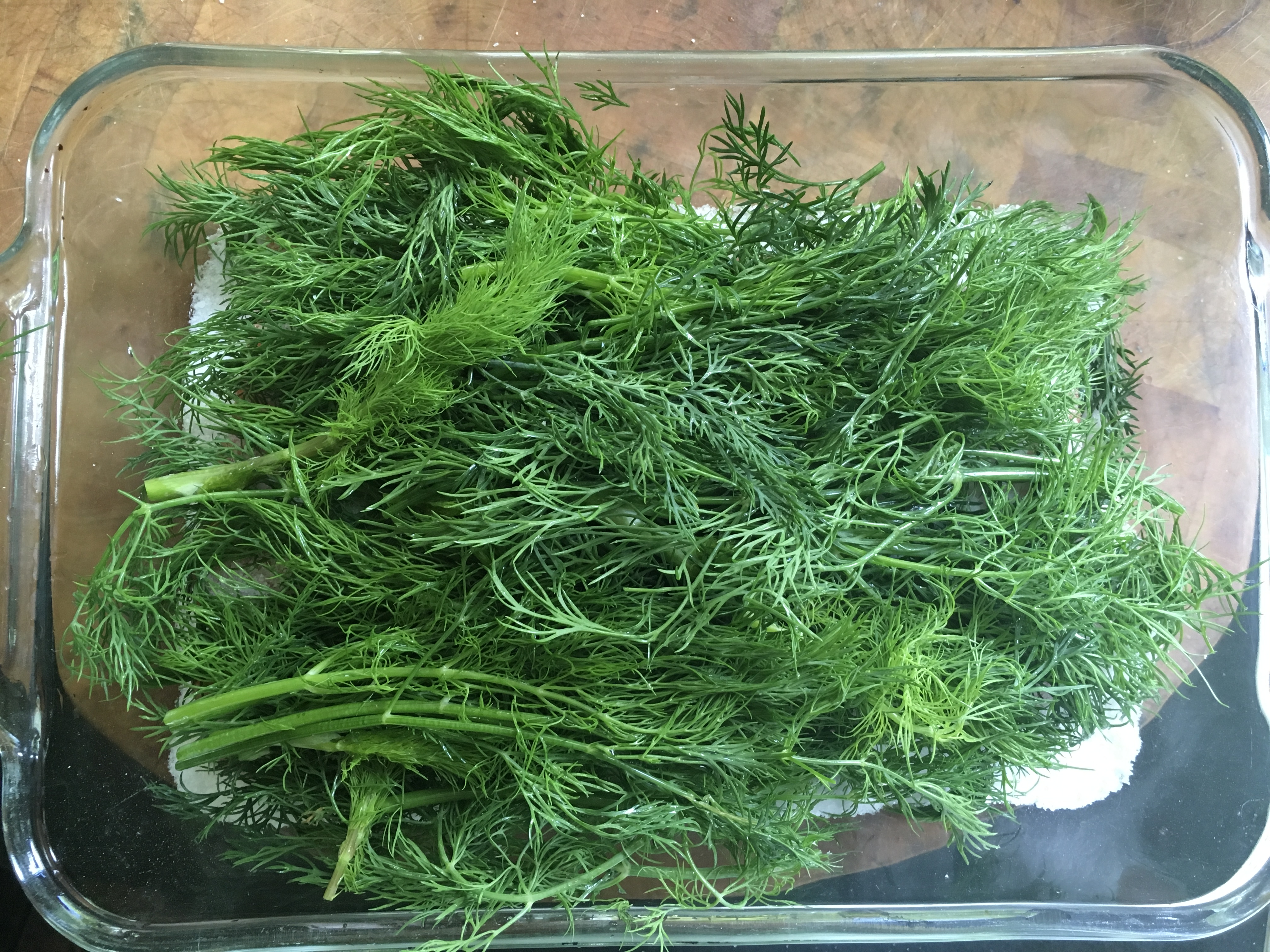
Lay the sprigs of dill on top of the cure, covering the entire piece of fish.
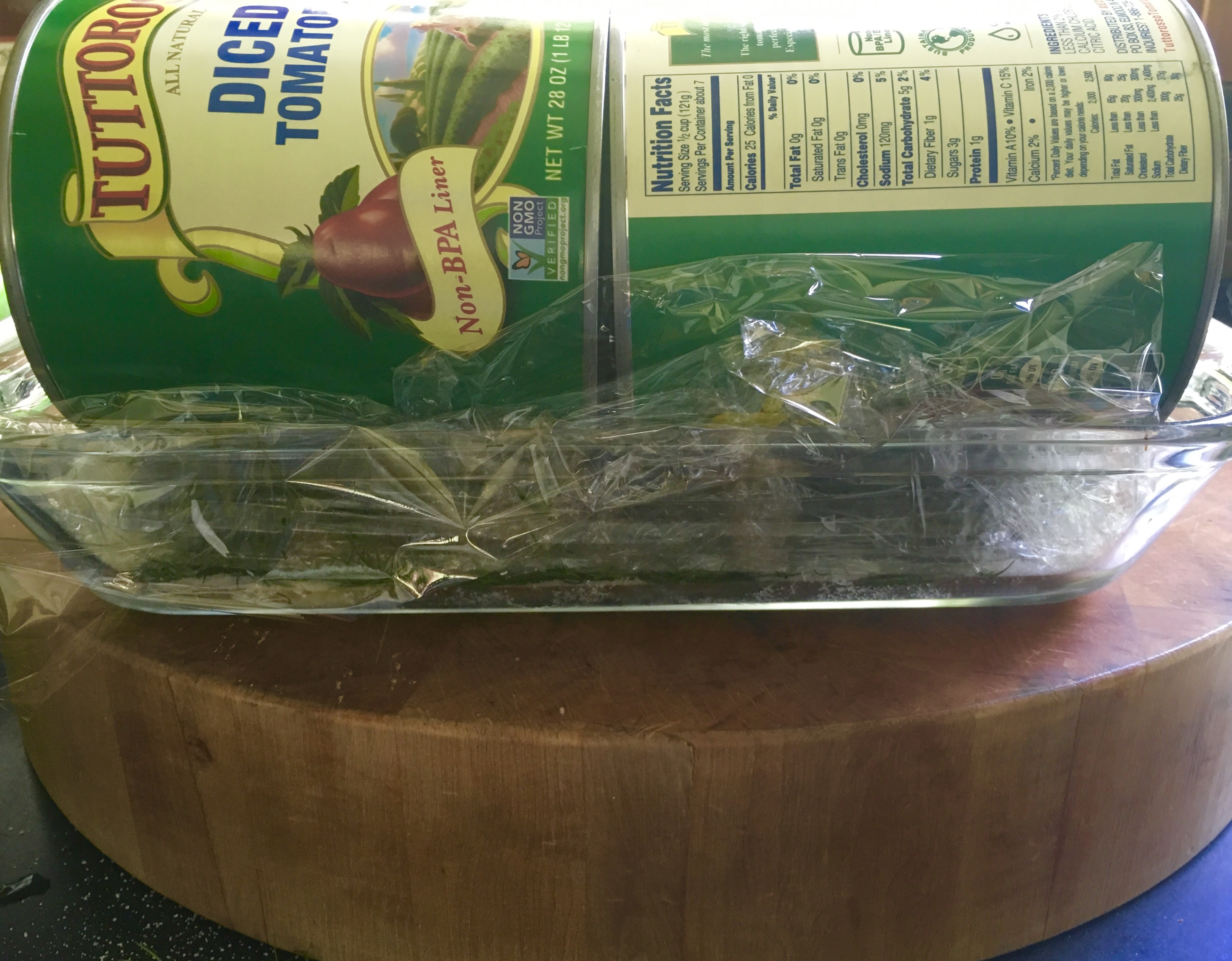
Cover everything with several layers of plastic wrap, pushing it down and tucking it into the corners for a tight fit.
Find a flat board or something similar (I used a clear plastic tray) and lay it on top of the plastic wrap.
Add heavy weights on top to press down evenly on all surfaces. I used cans of tomatoes.
Place the tray in the fridge for 48-72 hours.
After 24 hours, remove the plastic wrap and, tilting the tray, baste the dill-covered salmon with the brine juices that have formed. Put clean plastic wrap on top, add the weights, and put it all back in the fridge for another 24 hours. Repeat that process at the 48-hour mark, if needed.
You’ll know the fish is fully cured when the thickest part of the filet is firm to the touch.
Unwrap the salmon, discarding the salt and sugar brine and the dill. Rinse the filet under cold running water and pat dry with paper towels.
I don’t like a ton of chopped dill imbedded into my gravlax as some do, but if you do, simply chop a bunch of dill, spread it out onto a board, and press the salmon into it flesh-side down.
To serve, place the gravlax skin-side down on a board. With a long, sharp narrow-bladed knife, slice the fish against the grain, on the diagonal, into thin pieces. Serve with mustard-dill sauce, chopped onion, capers, hard-boiled egg, bread, whatever you like.
Refrigerate any remaining gravlax immediately, wrapped in plastic wrap, for up to 2 weeks.
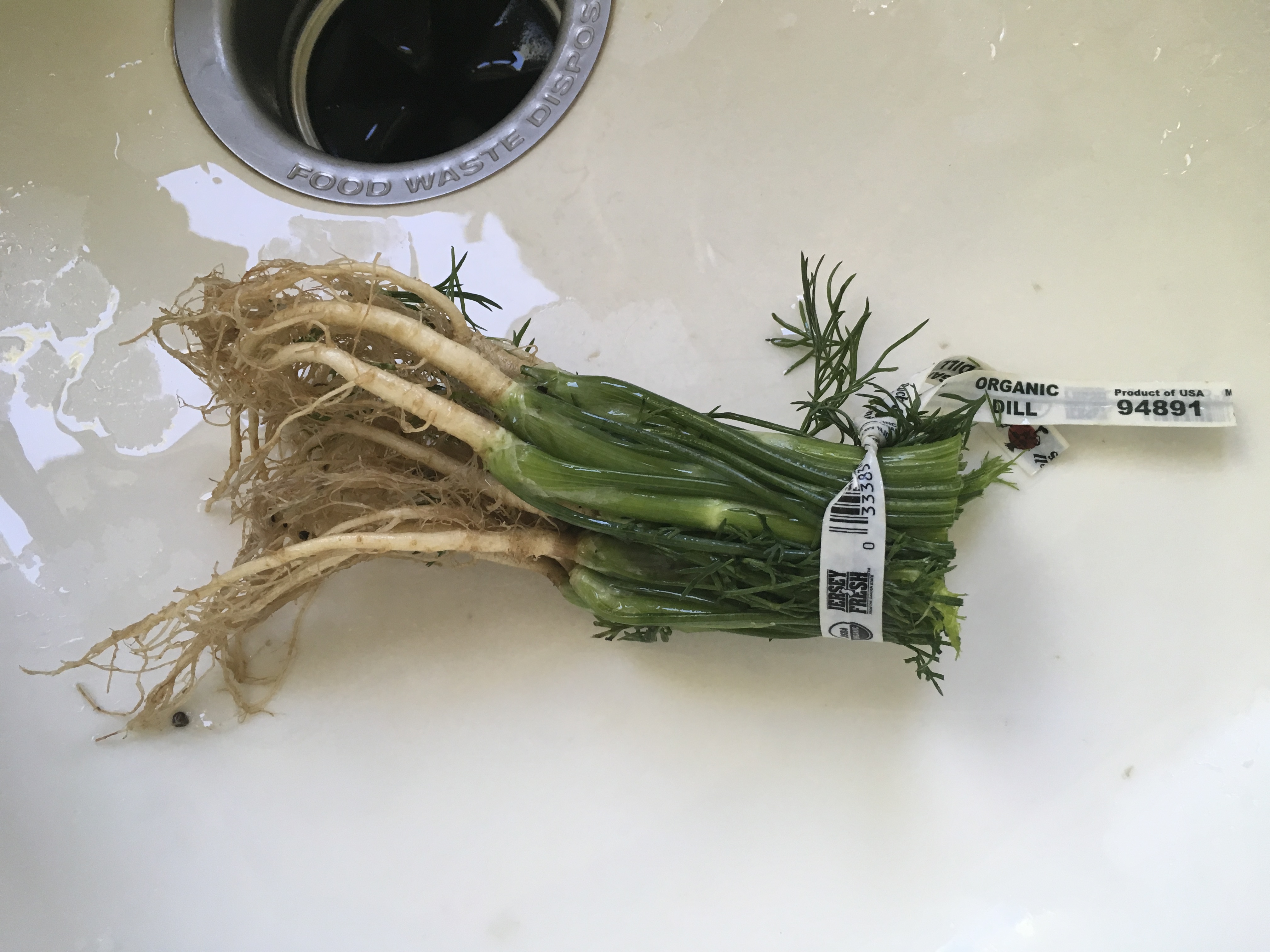
(My fresh dill bunch came with the roots intact, so I cut them off and placed them into the soil in my herb garden. New dill will sprout up quickly!)
SCALLOPS ON THE HALF SHELL
Posted: April 29, 2017 in ceviche, Food, marinade, scallops, seafoodTags: ceviche, food, marinades, recipes, scallops, seafood
3 tablespoons rice wine vinegar
2 tablespoons Grenadine
1/2 teaspoon fresh finely grated ginger
2 teaspoons finely chopped scallions
1/4 cup freshly squeezed orange juice
1 1/2 tablespoons freshly squeezed lemon juice
1 1/2 tablespoons freshly squeezed lime juice
2 tablespoons soy sauce
1 tablespoon + 1 teaspoon peanut oil
1/2 teaspoon honey
1 1/2 teaspoons fresh finely grated ginger
2 tablespoons finely chopped scallion
2 small dried chili peppers, finely chopped