Cooler fall weather always gets us craving for comfort foods, and this is one we discovered on a trip to Spain in 2014. Croquettes are the Spanish equivalent of chicken nuggets: they’re found on every kids’ menu…and my daughter ordered them just about everywhere we went! So it’s no surprise that I “got the order” to make a batch of croquettes this weekend!

image

I found a great recipe for croquettes in Saveur magazine, and decided to try it out. I was a bit clumsy at making them at first–they do need a bit of finesse–but by the end of the batch, I got the hang of it. And to make them gluten-free, I simply substituted GF flour and breadcrumbs for the all-purpose flour and Panko.

image


2 lbs. potatoes, peeled and cut into 1″ cubes
4 tablespoons unsalted butter
1 onion, minced
1/4 to 1/2 cup heavy cream
6 oz. cheddar cheese, grated
6 oz. ham, finely chopped
salt and pepper
1 cup all-purpose flour (or gluten-free flour like Cup4Cup)
2 eggs
2 cups Panko breadcrumbs (or gluten-free breadcrumbs)
avocado oil for frying


image

Peel the potatoes, cut them into 1″ cubes and boil them in salted water until tender. Drain and set them aside.

Melt the butter in the same pot the potatoes were in, then add the onions and saute until translucent. Put the potatoes back in the pot and add 1/4 cup of the heavy cream. Mash the potatoes with a potato masher until smooth. Add more cream, if needed, but be careful not to make it mushy.

Add the cheese and mix until it has melted in. Add the ham and mix again. Season with salt and pepper.

Pour the contents of the pot into a metal bowl and place it in the freezer to cool, stirring every 10 minutes until the mashed potato mix is cold, but not frozen.

Line up three bowls: flour (or GF flour) in the first bowl, eggs (scrambled) in the second bowl, Panko (or GF breadcrumbs) in the third.

Remove the mashed potato mix from the freezer, and with floured hands, grab enough to gently roll a small meatball in your hands. (I’ve found that starting with a round shape makes it easier to work with.)

Roll the ball in the flour, then the egg, then drop in the Panko and roll again. With the ball in your hand, gently squeeze into a tubular shape, and then place it on a sheet pan lined with non-stick aluminum foil. Continue with the rest of the potato mixture. (You may need to add another egg or two if you run out.)

Once you’ve rolled all the croquettes, place the sheet pan in the freezer for 20 minutes to firm up.

Heat a pan with 2″ of oil to 350 degrees. Remove the croquettes from the freezer, and working in small batches, fry them until golden brown. Place on paper towels, and quickly season lightly with salt while hot, if desired.

image


The croquettes freeze really well, so this batch goes a long way. Once they’ve been fried, let them cool completely to room temp. Place them in Ziploc freezer bags and store in the freezer. When it’s time to cook them, let them thaw for about 15 minutes, then place in a pre-heated 325 degree oven for another 15 minutes.
 

BEET AND QUINOA SALAD

Posted: September 24, 2017 in beets, Food, Recipes
Tags: , , , ,

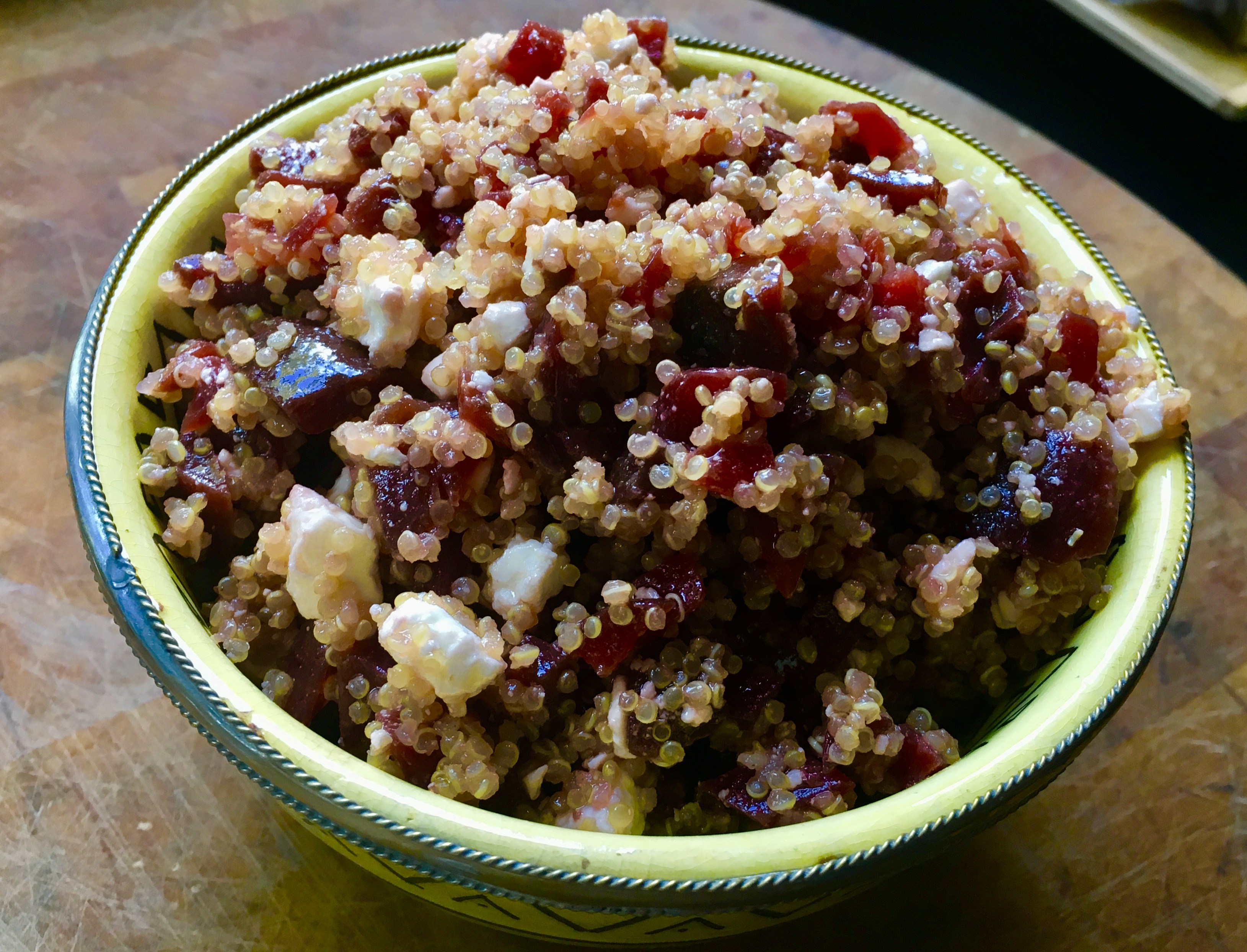
Why was it that I could only find a great beet salad in a restaurant? Was there some secret to making one? Well, after some experimentation, I came up with a beet salad that I really enjoy…and it’s easy to put together ahead of time if you have guests coming over for dinner.


Sometimes I skip the arugula and just go for a bowl like this…

2 cups cooked quinoa
1/2 lb. beets, cooked and sliced
1/2 cup extra virgin olive oil
1/2 cup red wine vinegar
1 teaspoon sugar
1/2 clove garlic, through a press
1/2 teaspoon salt
1/4 teaspoon ground black pepper
1 scallion, finely minced
2 cups baby arugula
5 oz. feta cheese, crumbled


Prepare the quinoa according to the package instructions. I like to substitute half of the water with homemade chicken stock.

While the quinoa is cooking, combine the olive oil, vinegar, sugar, garlic, salt and pepper in a separate bowl.

Once the quinoa has cooked, place it in a bowl and add half of the dressing, mixing gently with a fork to fluff up the quinoa. Place it in the fridge to cool completely.

I like to use the product LoveBeets, available in any supermarket. The beets come fully cooked and peeled, ready to slice.

I go to the membership clubs and buy the beetlicious jumbo size!

Chop the beets to the size you like and place them in the bowl of quinoa. Add the scallions, arugula and cheese. Toss to combine.

When the mixture has cooled down, give it a taste and add more of the dressing if needed. This tastes great at room temperature as well.

Years ago, before Alex & Ani founder Carolyn Rafaelian bought Sakonnet Vineyards in Little Compton, its success at creating quality wine was mediocre at best.
I heard stories that the grapevines on the property were there just for show. The story goes that the land was contaminated, and they couldn’t use it for winemaking. So despite having this magnificent piece of property, just about all of their grape juice was imported from South America.
To me, that defeated the purpose of going to a local vineyard. You expect them to grow the grapes and then use those grapes to make their wine.
Fast forward years later, the property is now called Carolyn’s Sakonnet Vineyards, and their website claims that they make their wines from the grapes they grow on their land. Is this truly the case? Or is this a bunch of BS? It’s hard to really know for sure.

The tasting room is full, especially on rainy days!

That issue aside, the vineyard seems to attract a lot of tourists, especially on rainy days when there isn’t a whole heck of a lot to do in Little Compton. Sampling a variety of wines, even if they’re not really that great, is better than sitting at home and watching television.
The property also has an outdoor stage for mellow concerts when the weather is cooperating. (They were denied a permit to have a larger concert venue established on their property, because of the traffic and noise it would create. The town of Little Compton has had a bug up its ass lately…just ask the folks trying to get the historic Stone House open again.)
And there is a café, which is open seven days a week through Columbus Day…and weekends through the winter months.
That’s good to know, because there isn’t a huge choice of places to dine nearby. There’s a luncheonette and pizza joint in Little Compton Commons, and there’s a grill and sandwich place at Tiverton Four Corners. But that’s about it.
The café at Carolyn’s Sakonnet Vineyards serves up a tasty menu of freshly prepared sandwiches, flatbreads, salads and more. At a recent lunch, my daughter and I enjoyed their steamed pork dumplings as a starter. My daughter chose the Sakonnet Club, a turkey and ham sandwich on sourdough. I went with the Grilled Tuscan, which featured Genoa salami, capicola and soppressata and mozzarella on sourdough, all freshly made and grilled to melt the cheese. The table next to us had a bachelorette party, and all the gals there had different flatbreads, which looked really delicious…something to keep in mind for our next visit. Our sandwiches came with a light salad and a bag of chips on the side.
I had a glass of mediocre Albariño with my lunch, but it served its purpose.
All in all, a really nice lunch, and other things on the menu that I am looking forward to trying in the future.
I didn’t taste more than one wine at the vineyard that day, so in all fairness, I need to make a return visit for that purpose. But for me, the best wines in the area are located down the road at Westport Rivers. Although they don’t have the beautiful room and property that Carolyn’s Sakonnet Vineyard has, they more than make up for it in the quality of their wine.
Almost 95% of all shrimp sold in the United States comes from farmed shrimp in countries like China, Thailand, Vietnam and India…as well as Latin America. The stuff you buy at the supermarket comes frozen (since shrimp is highly perishable) and then is thawed out and placed on ice to make the display look nice. But the shrimp you’re getting is not “fresh” (unless you’re lucky enough to get some wild caught local shrimp) and it’s from countries where the methods of farming are questionable at best.
Shrimp farming in Asia and Latin America is destroying mangrove forests and because of that, coastal villages as well. Disease is commonplace in shrimp farms, so they’re pumped full of antibiotics and pesticides.
Imported wild shrimp are also a problem because of bycatch. For every pound of wild shrimp caught, several pounds of other animals such as turtles die needlessly in the trawler nets.
Wild-caught  American shrimp is the best way to go for your health and the environment. American shrimp fishermen are required by law to reduce bycatch. For example, they’re required to use Turtle Exclusion Devices to stop turtles from being caught in their nets.
I stopped eating tiger shrimp and other farmed shrimp from foreign countries a long time ago because I found a source of shrimp that not only delivers to my door, but offers me that shrimp at competitive pricing even with the shipping! And best of all, it’s wild caught in American waters. I’m supporting the lives of shrimp men along the Gulf of Mexico, not some foreign country that doesn’t give a rat’s ass about the environment, the shrimp they raise in it, or my family’s well-being.

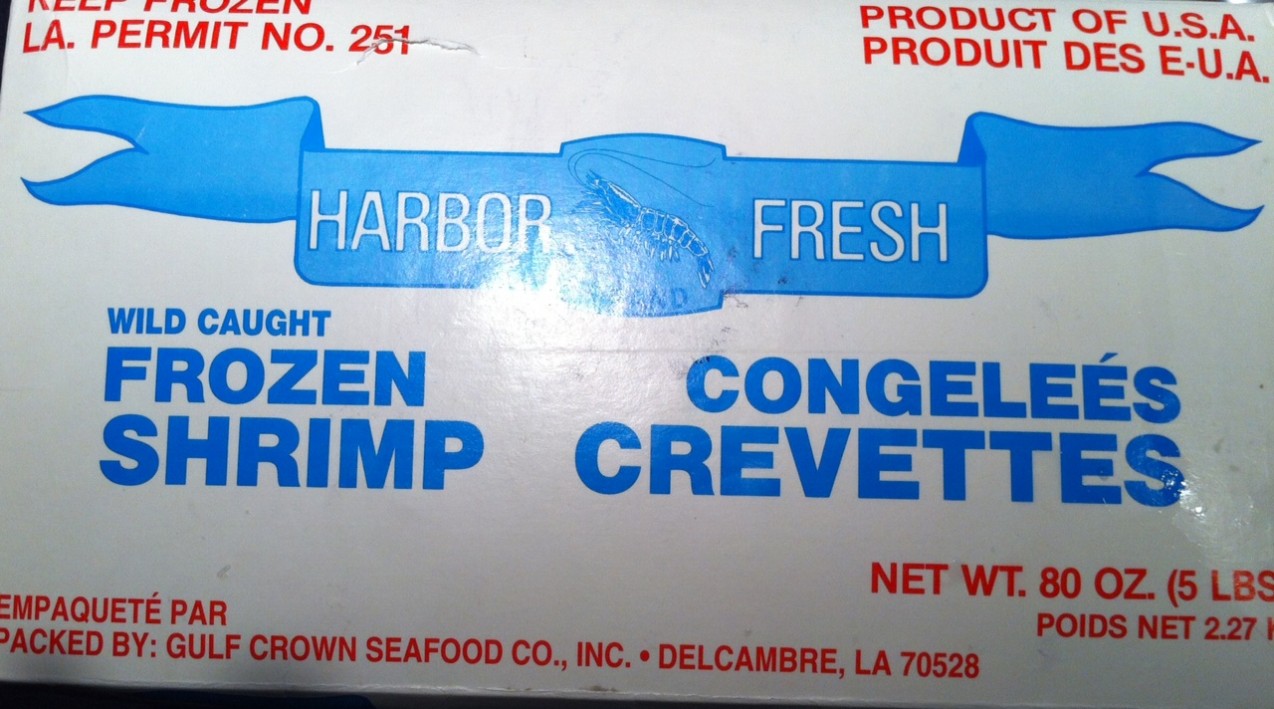
The real deal, usually sold in 5 lb. boxes.

On top of everything else, wild-caught American shrimp tastes better. And why shouldn’t it? The shrimp are eating their natural foods found in the wild…not some pellets thrown at them that contaminate the water and the shrimp themselves.
My favorite website for wild-caught American gulf shrimp is www.cajungrocer.com. I’ve been ordering my favorite Cajun foods, like Turduckens and alligator sausage, from these people for many years, but they also sell frozen shrimp and live crawfish (in season.)
Don’t cheat yourself, your friends or your family out of something really special. Wild-caught American gulf shrimp costs the same, supports our economy, is better for you and tastes better.
The basics of this recipe come from my friend, Lee, a retired chemist in New Jersey who also enjoys creating in the kitchen. What I found interesting about his recipe was the touch of sugar that doesn’t really add sweetness but rather helps create the light, tasty caramelized crust that forms on the shrimp when you sear it. I tweaked a few things in this recipe, but the essence of it remains the same.

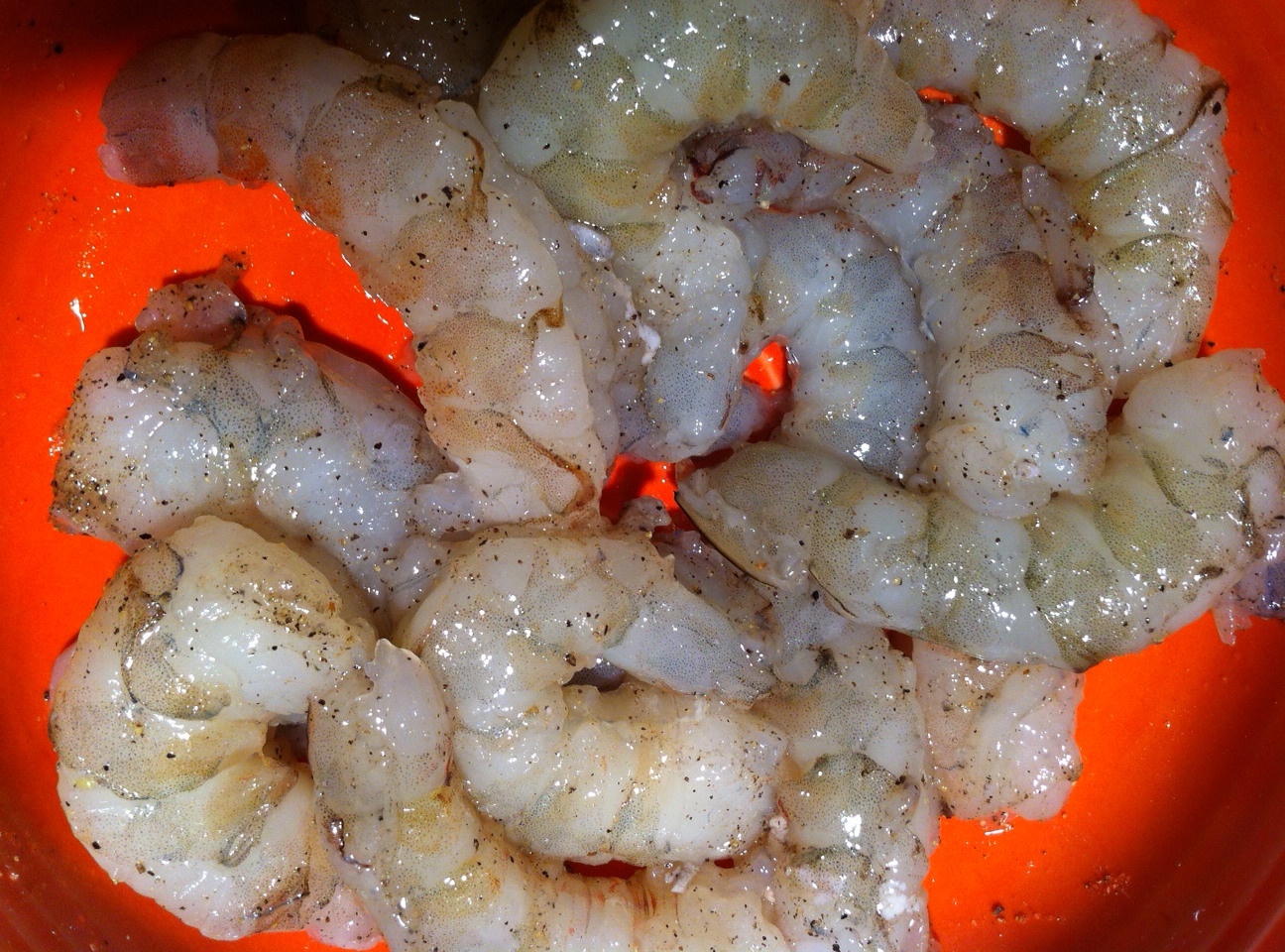
Seasoned shrimp.


1 lb. large peeled and deveined wild-caught American shrimp
Salt
Freshly ground pepper
Sugar
4 tablespoons softened butter
1 clove of garlic, squeezed through a press
1 tablespoon freshly squeezed lemon juice
2 tablespoons chopped parsley
1 teaspoon oregano
Extra Virgin olive oil
Toss the shrimp, 1/4 teaspoon salt, 1/4 teaspoon pepper, and 1/4 teaspoon sugar in a bowl.
In a separate bowl, mash the butter with a fork, folding in the garlic. Add the lemon juice, parsley, oregano, and 1/4 teaspoon salt.
Heat a tablespoon of olive oil in a large skillet over high heat. Add half the shrimp in a single layer to the pan and cook it at high heat until it’s caramelized on one side, about 1 minute. Flip the shrimp over with tongs and cook for another 30 seconds. Don’t over-cook it!
Remove the cooked shrimp to a covered bowl and similarly sear the other half of the shrimp, then return the other half of the shrimp back to the skillet. Turn down the heat to medium and add the butter/garlic/lemon/parsley/oregano/salt mixture, occasionally tossing shrimp around in the pan to evenly coat them with the glaze.
If you’re serving the shrimp over pasta, increase the amount of butter and olive oil to just lightly coat the pasta. Toss the cooked pasta into the pan of shrimp to combine.
I like to season lightly at the end with a tiny pinch of Fleur de Sel. Serve immediately.
I was cleaning out the pantry recently, and there, in a corner where I haven’t looked for years, was a green 5-liter jug with a plastic cap on it. It brought a smile to my face because although I haven’t seen it in many years, it reminded me of a wonderful trip my wife and I took to Italy when we were still dating.
Our first European trip together was to explore Rome, the Isle of Capri, and the Amalfi coast. We stayed at many wonderful hotels, including an old castle, and we made an effort to sample the local cuisine when possible.
At one of our stops, we walked through a small, quaint village and found a local eatery named Da Roketa (The Rocket.) As I recall, the food was homemade and fantastic, the bread to die for, and the homemade olive oil from the family’s own olive trees something you wanted to drown in.
Much to the surprise of the owners of the restaurant, we asked if we could buy their olive oil to take home to the states with us, and we somehow wound up with this massive 5-liter jug, which we carried with us throughout the rest of our trip.
Although this was after 9/11, the limitations about carrying on liquids had not yet been established, so I ducked taped the plastic cap securely, making sure there’d be no leaks, and I placed the jug in a small duffel bag, cushioned by clothing. I carried that bag right onto the plane!
But first I had to get through security…
Placing my duffel bag on the conveyor belt in Rome as we walked through the x-ray machines, one look at the security agent’s face and it was clear I was going to get pulled side.
The female agent asked me what was in the bag and I matter-of-factly told her: olive oil. She didn’t believe me, so I opened the bag for her and there was my beautiful 5-liter bottle, nestled in some “fragrant” dirty laundry. She looked at it, and her stern look morphed into a smile: “It looked like a bomb on the x-ray screen!”
I explained about the amazing food at Da Roketa, and how we were obsessed with the olive oil. She chuckled, shook her head, and let me zip it up and walk away with it.
The rest of our journey, even when we landed at customs in the United States, was uneventful.
I doubt that even now, even if I checked my luggage, I’d be allowed to bring in an un-hermetically sealed container of olive oil into the states the way I did that day.
We used that olive oil every opportunity we had, and yes, we did eventually finish it.

I’ve known Plum Pt. Bistro owner Ralph Conte for about 20 years now. Back in the day, Ralph owned Raphael Bar Risto in Providence. At that time, it was not only the best restaurant in town, but The Tunnel Bar at Raphael’s was also the hottest singles bar in town.

My buddy, Charles, and I would spend every Friday and Saturday night there, from dinner until closing, chatting with the ladies, sipping cocktails, and enjoying incredible food. As much as that kind of lifestyle can take its toll on your health, so can running a restaurant like that. And after a number of years, Ralph decided to close the doors on our beloved restaurant.

I was heartbroken, not only because it was a favorite hang out of mine, but it was also where I met my wife!

Fast forward a half a dozen years later.

Restaurants are in Ralph’s blood, so it was no surprise that he opened a smaller, family-run establishment, this time far away from the noise of Providence. Plum Pt. Bistro in Saunderstown became an instant hit with the locals and there’s rarely any empty seat in the house no matter what day you go.

Plum Pt. Bistro is smaller and more manageable than the old Raphael’s, and Ralph has his family to help him. His wife, Alyssa, daughter Zoe, and son Raphael, all work at the restaurant. The result is a comfortable atmosphere that makes you feel like you’re home. Ralph’s skills with Mediterranean flavors has not diminished in the least.

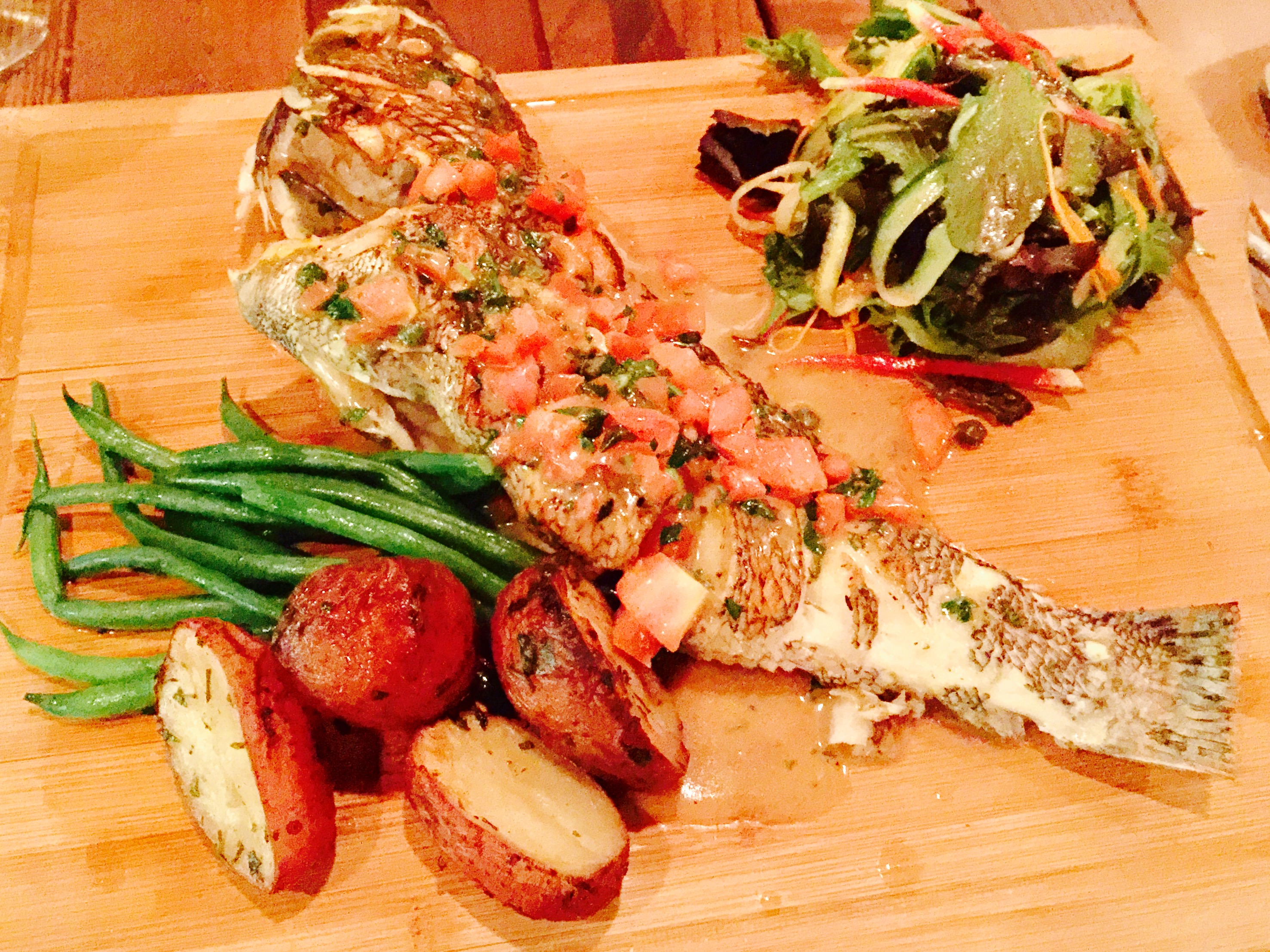
Although I love many of the standards that are on their menu, I always look to the blackboard first for the night’s specials. On a recent trip, there was fresh locally caught striped bass, tuna, and black bass. The tuna tartare was sensational. The whole fried black bass, served in a lemon butter caper sauce, with fresh seasonal vegetables and potatoes on the side, was the best whole fish I’ve had in many years. My daughter devoured the fried zucchini blossoms stuffed with ricotta cheese, sitting on a bed of beautiful marinara sauce. And her favorite regular dish on the menu is the potato gnocchi with pesto. My wife had the lettuce wraps, which were surprisingly fresh and tasty, dipping them in the Asian-style peanut sauce on the side. And a beet salad was raised to the next level by adding a perfectly cooked marinated steak to it.

My whole fried black bass, before I devoured it.


Plum Pt. Bistro has great bartenders that will make you your favorite cocktail, or create a new favorite for you. My buddy, Skip, from the Raphael days, still works for Ralph behind the bar. And they have a decent wine selection, too. Reservations are highly recommended. You need to call them since they don’t offer reservations online.

Plum Pt. Bistro is on the mainland of Rhode Island, right at the end of the Jamestown Bridge…just a stone’s throw from Wickford. Absolutely worth the trip if you’re spending any time in Newport. Cross the bridges and get some amazing food! Hey…I live on the other side of the state and it’s worth the trip for me!


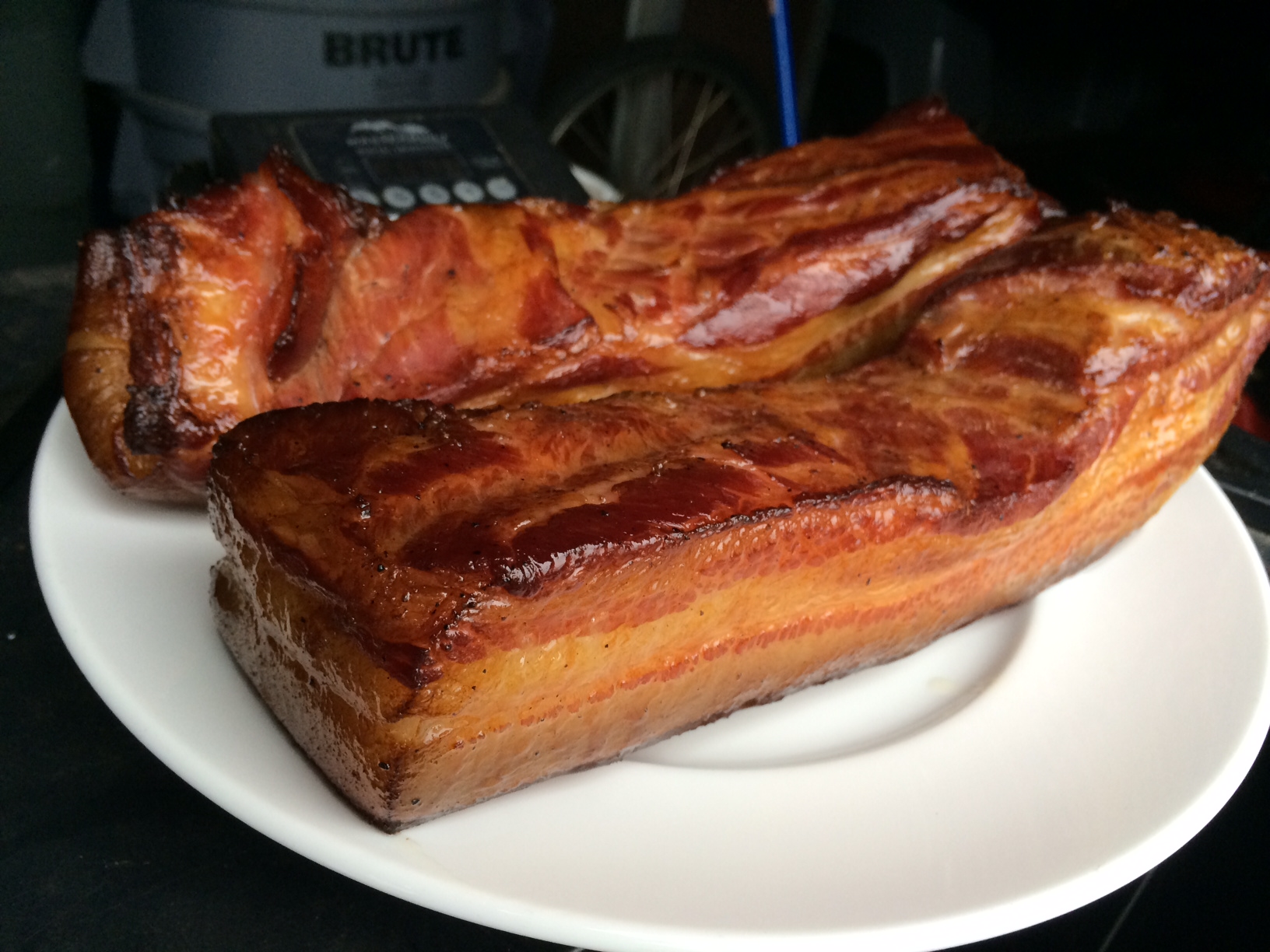
The Saturday before Labor Day is traditionally considered to be International Bacon Day. So that makes it today!

Let’s face it: there are few foods as magical as bacon. Add bacon to just about any dish you’re preparing, and it elevates it to incredible new heights of flavor. The BLT is possibly the greatest food combination ever invented: just a few simple, fresh ingredients, when placed together, transforming into one of the most amazing sandwiches on planet Earth.

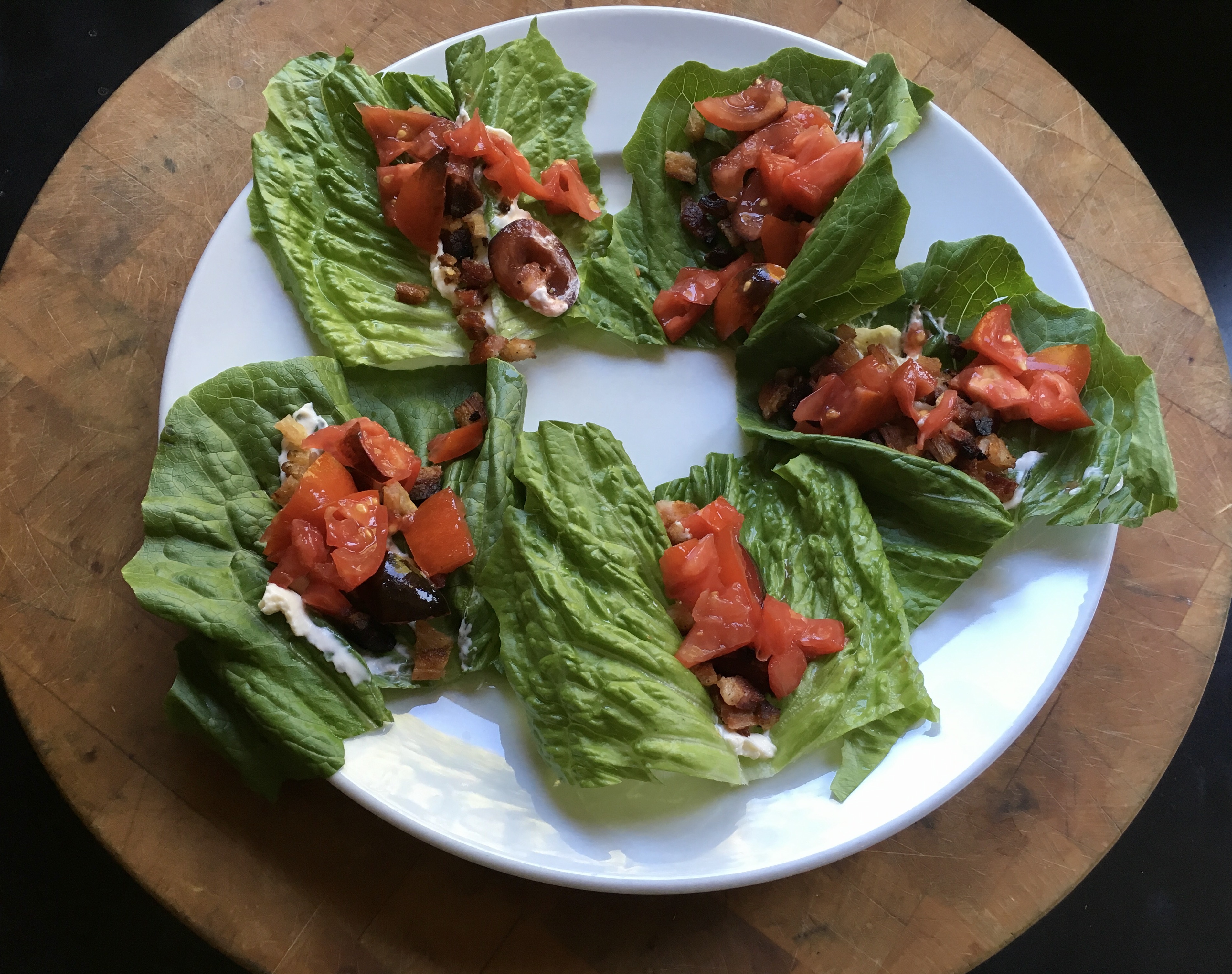
BLT wraps: home-cured and smoked bacon, local farmstead romaine, home garden tomatoes.


If I’m buying bacon, I go on-line to Burger’s Smokehouse, a family run business in Missouri that has made great bacon for decades. The prices are good, and they include shipping. (www.smokehouse.com) I buy in quantity and freeze what I don’t need right away. My favorite is the thick-sliced country bacon “steaks.”

But I also make my own.

Bacon comes from the pork belly, and they’re easy to find in any good butcher shop. But to get something a notch above, I’ll buy a heritage breed, like Berkshire pork, from Heritage Pork International. (www.heritagepork.com)  I follow the simple curing techniques outlined in “Charcuterie,” a great book written by Michael Ruhlman and Brian Polcyn.

To cure bacon, all you really need is salt and sugar, and what they in the curing biz call “pink salt,” which is not to be confused with salt that happens to be pink, like Himalayan salt you would find in a gourmet store. Pink salt is bright pink to let you know that this is a special salt that should only be used in small quantities for curing. The reason is it contains nitrites. Nitrites delay the spoilage of the meat, and help keep the flavors of spices and smoke. They also keep the meat nice and pink instead of an unappetizing gray. That’s good. But nitrites can break down into nitrosamines, which have been known to cause cancer in lab animals. But let’s face it: you would need to eat a ton of cured meat to really worry about this.

To make the basic dry cure:

1/2 lb. kosher salt
1/2 cup light brown sugar
1 teaspoon coarsely ground black pepper
1 oz. pink salt
optional ingredients: granulated garlic, granulated onion

Mix the ingredients well. An important note: all salts do not all weigh the same, so go by the weight and not a cup measurement.

Once you rub the pork belly with the basic dry cure, place it in a large Ziploc bag, squeeze the air out of it, and seal it tightly. If it’s too big for the bag, you can either cut the belly into two pieces, or wrap it tightly with several layers of plastic wrap. Place it in a container in the fridge for a couple of weeks, flipping it over every few days to let gravity do its work. You’ll see that the salt will draw moisture out of the meat and form a brine. This brine will continue to cure your pork belly, so leave it in there. (The container will capture any liquid that might seep out.)

In two or three weeks, once the pork belly has been cured, wash the brine off the meat, and pat it dry with paper towels. Now it’s time to cook. You can simply cook the pork belly at 200 degrees for about 2 hours, until the internal temperature reaches 160 degrees. I place the pork belly in a digital smoker, which allows me to set an exact temperature. I smoke it at 250 degrees for 2 hours, using hickory chips.


Bellies in the smoker

Bellies in the smoker.


Smoked bacon

Smoked bacon!

That’s it. You have achieved bacon!

The reward is so worth the effort. Just remember that you still need to slice the bacon and fry it. Don’t eat it straight out of the smoker. That first slice you cut off your bacon and toss in a pan to lightly fry for a few moments will be the best bite you’ve ever had in your life!
And if you’re making one slab of bacon, why not make it three or four? It freezes well. And…you will eat it. You know you will!

Frying in the pan!

Frying in the pan!

I get a lot of travel and food magazines, and for whatever reason, when they talk about where to stay in Providence, The Dean Hotel seems to be everybody’s new favorite. When they talk about where to get a great cocktail, The Dean is listed again. (I did notice that the cocktails article info was submitted by someone who has a financial part in the operation of the hotel…a bit suspicious.)

But, nonetheless, I decided it was time for me to check it out for myself.

Those of us that have been in Rhode Island for some time might remember what was previously at The Dean’s address back in the day: the legendary Sportsman’s Inn, a roach-infested whorehouse, to put it plainly. As as one reviewer put it: “Don’t go there without antibiotics!”

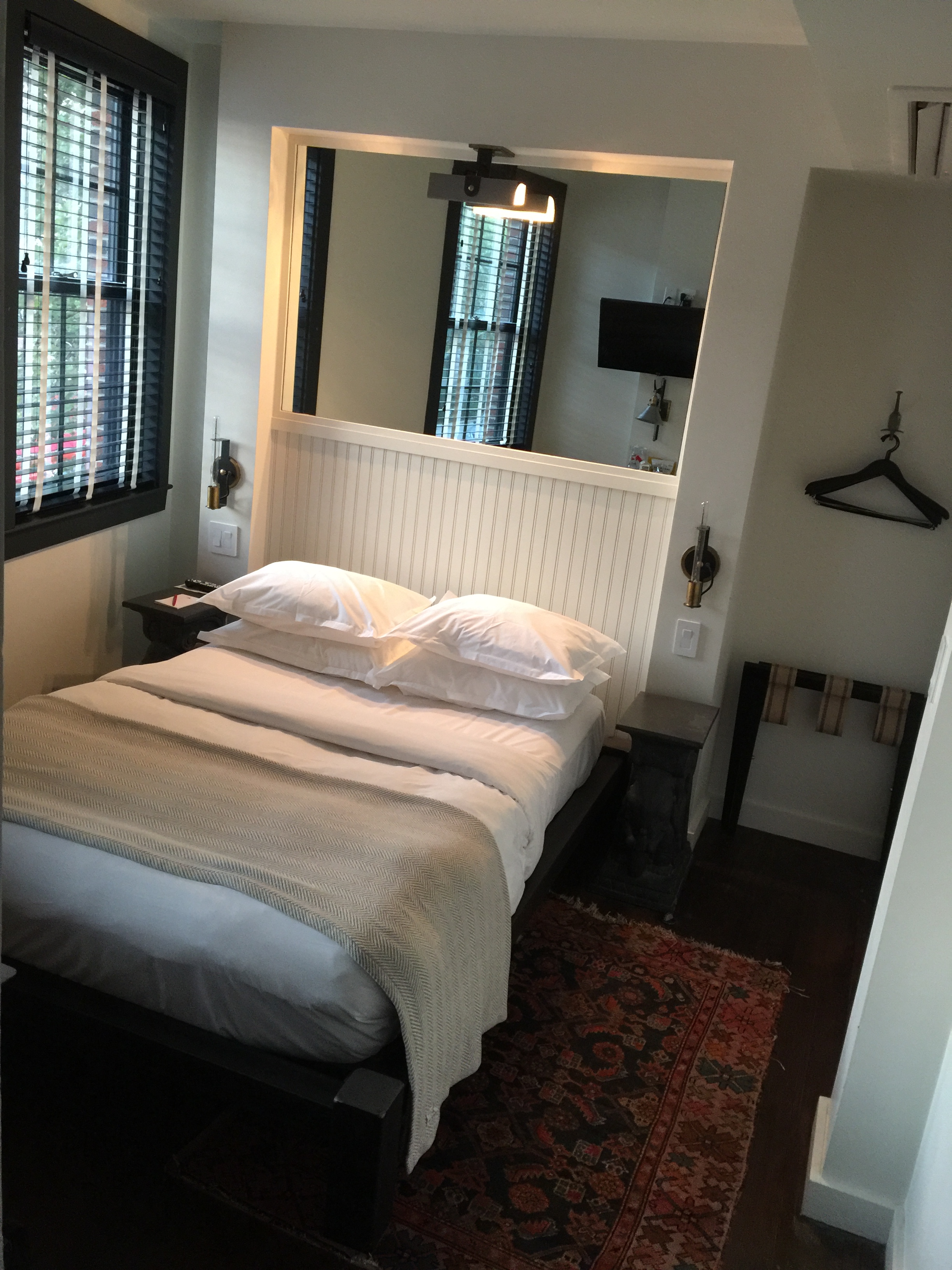
So The Dean is a serious improvement! I was told that to keep its historical value, The Dean had to leave the tiny hotel rooms exactly the same size as they were before. The result is a very cozy room that is clean and modern…just really small…as is the bathroom. But it’s got everything you would need to spend the night here, no complaints.

My small but very clean room at The Dean.


The Dean has many of the amenities you’re looking for in a nice city hotel: valet parking, a coffee shop (Bolt Coffee) for your morning wake-up, a very good cocktail lounge (The Magdalenae Room), a restaurant (Faust) and Boombox, a karaoke bar. Okay…in all honesty, I was glad to hear that the German food of Faust is being replaced this fall with the truly creative food of one of Providence’s best: north. (www.foodbynorth.com) And as long as I don’t have to hear the karaoke bar when I’m trying to sleep, I can deal with that.

I had dinner elsewhere in town the night I stayed at The Dean. (Faust was already closed.) But I did stop by to have a cocktail–or three–at The Magdalenae Room. The choice of spirits is limited, but the essentials are there. A nice chat with the bartender who knew his drinks and knew his way around Providence. Even someone like me that has lived here for almost 30 years learned a few things! (Was it the best crafted cocktail in Providence? That honor still remains with The Eddy.)

All in all, my experience at The Dean was a good one. I don’t know if it deserves all the attention it’s been getting in those magazine articles I’ve read, however. But it’s clean, it’s not expensive, and when north opens up, it can very much be an ideal one-stop in Providence.

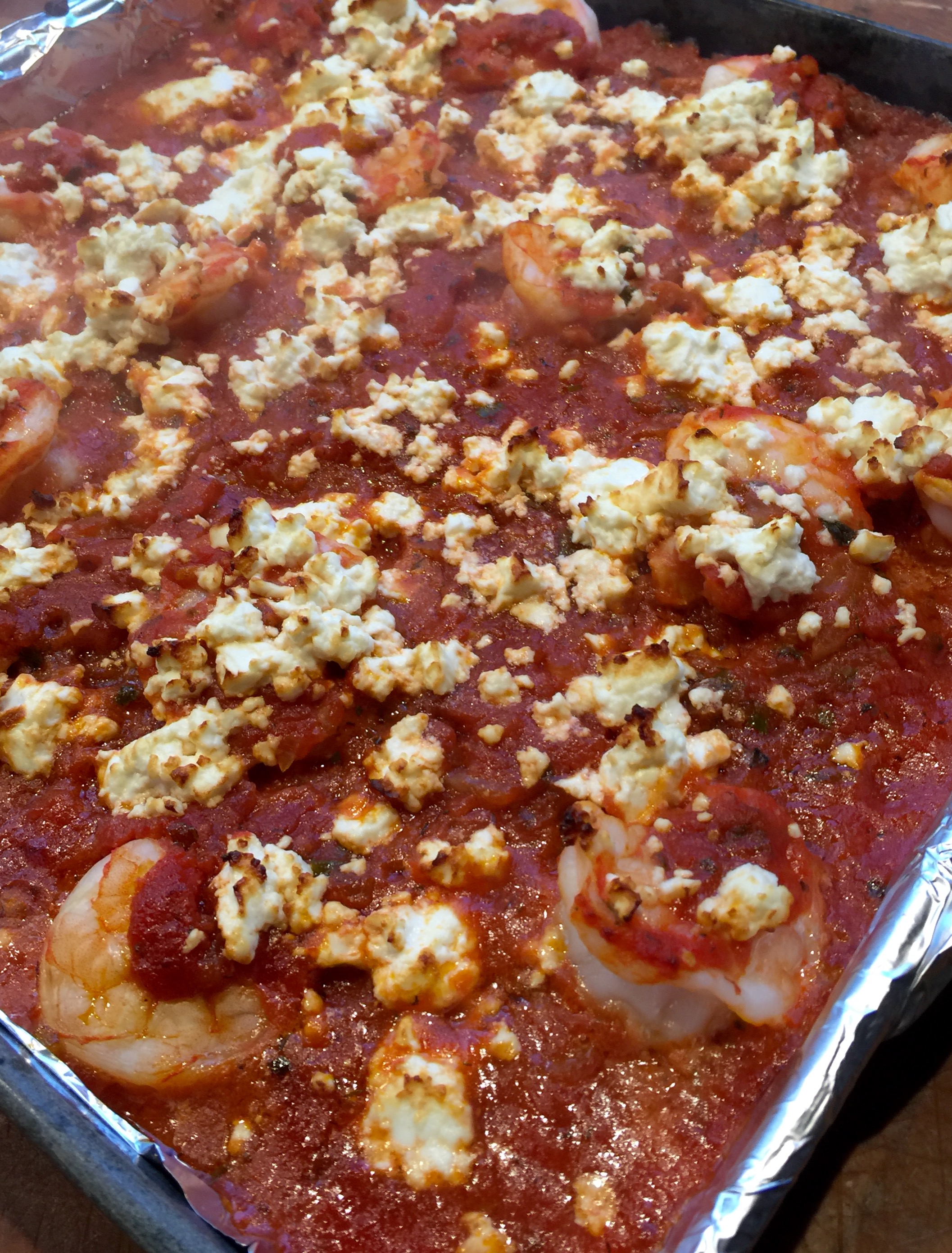
I love the combination of tomato sauce and feta, and this dish, served over some pasta, will have you licking the plate.

FullSizeRender (7)

8 oz. (or more!) feta cheese
1 can (28 oz.) whole tomatoes, ground into sauce
1 lb. (about 24) wild-caught American shrimp, peeled and deveined
1 medium onion, chopped
juice of 1/2 lemon
2 tablespoons olive oil
2 cloves garlic, through a press
pinch red pepper flakes
1 teaspoon fresh dill
1 teaspoon oregano
1 tablespoon Ouzo
salt and pepper

Peel and de-vein the shrimp. Place them in a bowl and squeeze the lemon juice over them and toss to mix. Open the can of tomatoes and puree it in a food processor.

In a saucepan, heat the olive oil. Saute the onions until they’re translucent and then add the garlic. Saute the garlic for 10 seconds, until fragrant, then add the red pepper flakes, dill and oregano. Add the tomato sauce, and cook over medium heat until the sauce has reduced a bit and isn’t watery. Add the Ouzo carefully–keep away from open flame! Add salt and pepper to taste.

Line a sheet pan with foil and pour a thin layer of the tomato sauce on the bottom. Lay the shrimp down in one layer on the sauce, and then cover the shrimp with the rest of the sauce. Crumble the feta cheese with your fingers and sprinkle all over the top.

Bake in a pre-heated 350 oven until the shrimp has cooked through and it’s nice and bubbly. Serve over pasta.

SHEET PAN EGGS

Posted: August 27, 2017 in breakfast, Food, Recipes, sausage
Tags: , , ,

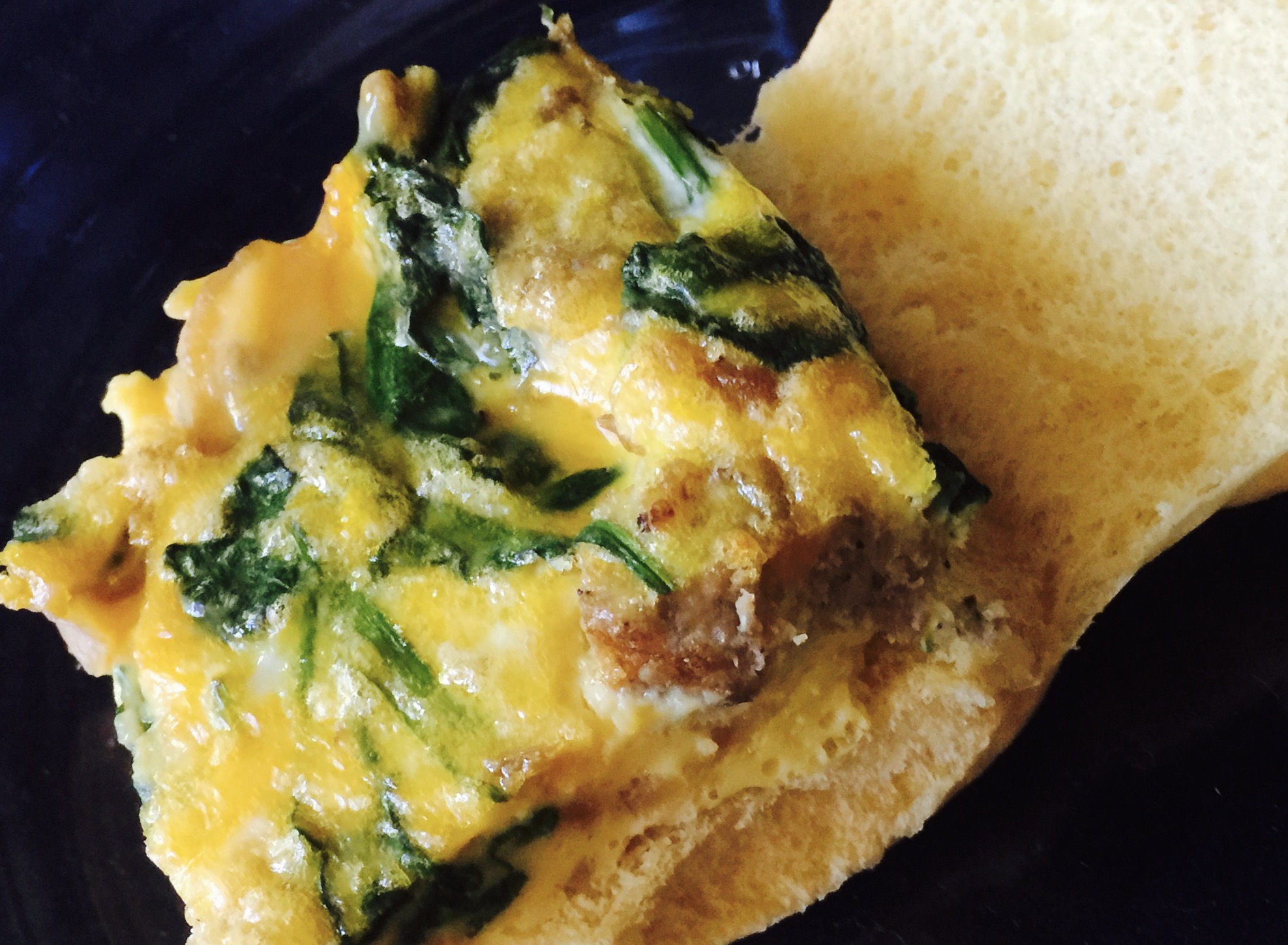
When you’ve got 20 people showing up at your house for breakfast the morning after hosting a 165-person party the night before, you want to make it all as easy as possible for yourself. Sheet pan eggs are the answer!

I pre-cook everything but the eggs the day before…I caramelized some onions, cooked sausage patties and cut them into small cubes, and wilted a couple of handfuls of spinach…then kept them in the fridge, ready to use. Grating or crumbling some cheese–cheddar or feta–is also a good idea.

2 dozen eggs, scrambled
12 sausage patties, pre-cooked
2 large handfuls of spinach, wilted in a pan with some olive oil
1 large onion, thinly sliced, and sautéed until caramelized in a little olive oil
cheddar cheese or feta, optional
milk or cream, optional
butter
olive oil


The next morning, I get a large bowl out and scramble 2 dozen eggs. A touch of milk or cream is optional. Then I add all the pre-cooked ingredients, stirring well.

The secret to successful sheet pan eggs is to make sure the pan is greased really well. Using a cube of butter, I cover every inch of the sheet pan thoroughly. Then, I pour a small amount of extra virgin olive oil in the pan, and spread that around with my fingers.

Once the pan is nicely greased, I carefully pour the contents of the bowl into the sheet pan and place in a 300-degree oven.

Let the sheet pan eggs bake at this temperature, resisting to hurry the process by cranking the heat up. Higher temperatures will burn the bottom before the top is properly cooked.  Eventually, you’ll see the bottom of the pan solidify while the top is still a bit runny. Be patient! When the top is cooked to your liking, remove it from the oven and let it cool for at least 5 minutes before slicing it into squares.

To serve, either go the sandwich route by toasting some fresh slider buns. Or simply serve a square on a plate, garnishing as you like, a little Tabasco on the side.