Pork is magical. And though I’ve loved bacon and pork chops all my life, it’s only recently that I’ve started to appreciate other cuts of pork and how to prepare them. That includes guanciale (pronounced gwan-chee-ah-lay), meat that comes from the cheek (or jowls) of the pig and is cured but not smoked. The process is similar to making pancetta, only pancetta comes from the belly of the beast.
It all started when I wanted to make an authentic spaghetti carbonara, which uses guanciale, not bacon or pancetta as many recipes state. But finding raw pork jowls wasn’t easy at first. Many websites offered smoked jowls. But raw jowls were almost impossible to find, and I just about gave up until I visited my friends Sal and chef Aaron at the Back Eddy restaurant in Westport, Massachusetts. I told them of my dilemma and they said: “Pork jowls? Oh, we can order them for you!” I was psyched!
About a week later, I picked up my jowls, individually wrapped in hermetically sealed ¼ pound packages, and my curing began. The process is simple: salt, pepper, some fresh thyme. Rub it all over the meat, wrap it tightly, and place it in the fridge to cure for a week or two.
4445B294-694F-4519-AB71-778490B12592
Finding room in my spare fridge to cure the meat was easy…everything fit snugly in a Ziploc bag. But after curing, and once I rinsed the excess salt off the jowl pieces, I had to dry them (all 24 of them since I bought 6 pounds.) So I rigged up a special hanging system that used bungy cords and vinyl cable ties. And three weeks later, I was frying up my guanciale in a saute pan and adding it to vegetables, potatoes, and pizza. I even gave guanciale gifts to my foodie friends.
FullSizeRender (2)
Since that first curing effort, many things had changed. I have several excellent sources for pork jowls, and I buy large 3-pound jowls (big pig!) at one time. And I’ve found 1001 uses for guanciale: pizza, ragu Bolognese, adding flavor to broccoli or brussels sprouts, and more. And, oh yes…I finally made the carbonara recipe with it as well. Here’s my recipe for ragu Bolognese using guanciale: http://wp.me/p1c1Nl-Pc
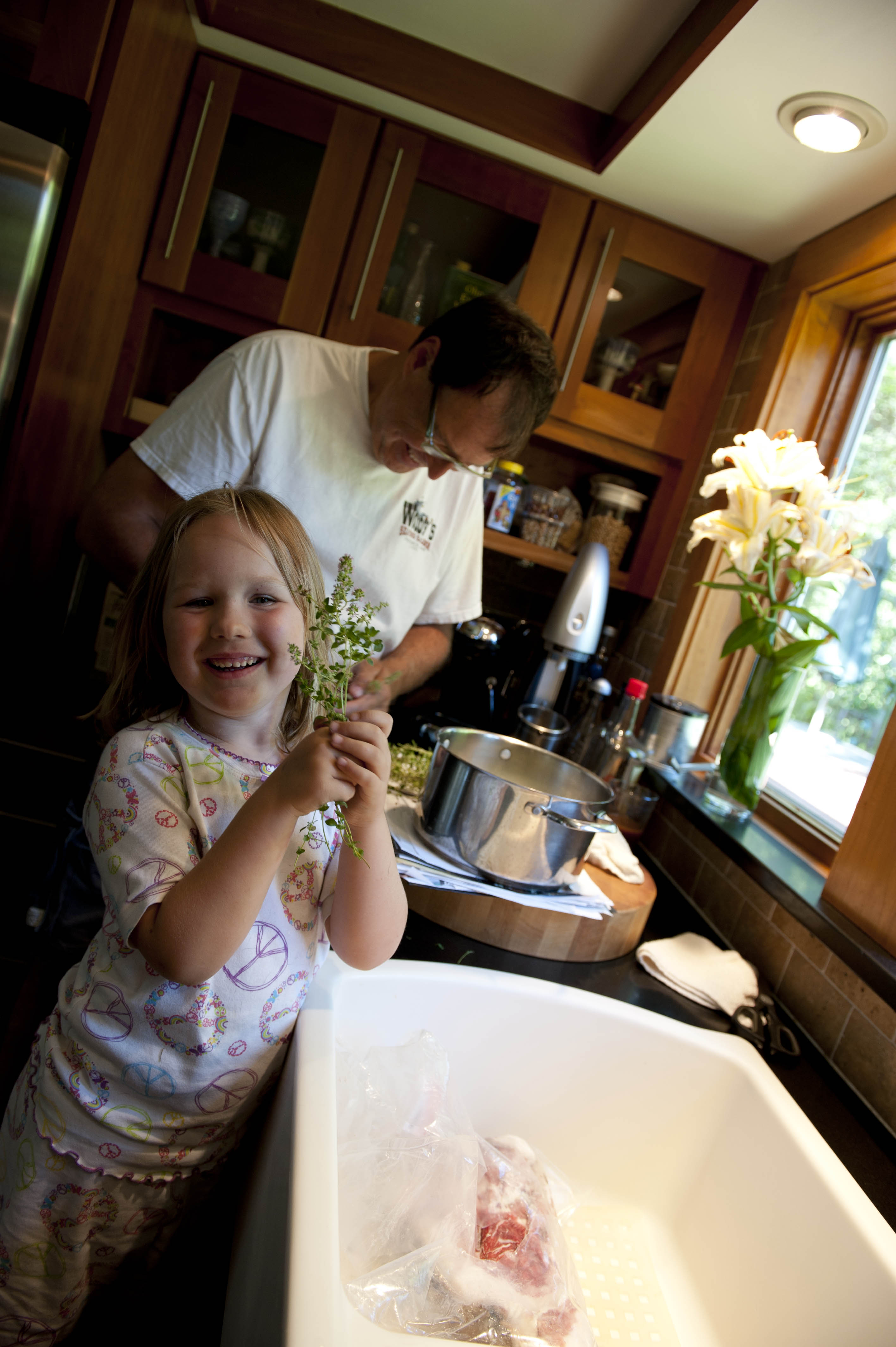
Always good to have a helper.

Always good to have a helper.
Let’s face it: there’s no such thing as healthy eggnog. This recipe kicks ass but is also a heart attack in a glass.

My buddy, Rick Sammarco, a former bartender at Mill’s Tavern in Providence, RI, credits his father, Al, for this eggnog. The original recipe calls for a lot more of everything. I’ve cut it down to a “more reasonable” size. It’s been so long since I bought ice cream, that I didn’t even know that the standard half-gallon size was replaced by a 1.5 quart size!

A word about salmonella: If you panic at the sight of raw eggs, this drink may not be for you. But you’re dumping a lot of booze into this drink, and those that worship eggnog will often make it weeks in advance so that the alcohol has more time to “sterilize” the drink. You’ve been warned.

eggnog


1.5 quarts vanilla ice cream (I use Breyer’s)
1 pint half-and-half
15 whole eggs (raw)
½ teaspoon vanilla extract
1/4 teaspoon cinnamon
1/4 teaspoon nutmeg
1/4 cup (at least) spiced rum (I use Capt. Morgan)
1/4 cup (at least) whiskey (I use Crown Royal)
1/4 cup (at least) brandy (I use E&J)


Let the ice cream soften 1 day in the fridge. Mix the ice cream, eggs, vanilla, half-and-half in a blender.

Add the spices and liquor. Blend until it’s frothy.

Taste, and add more cinnamon and nutmeg if you like.

After fully blended, let sit in fridge 24 hours for the flavors to blend. Even longer is better.


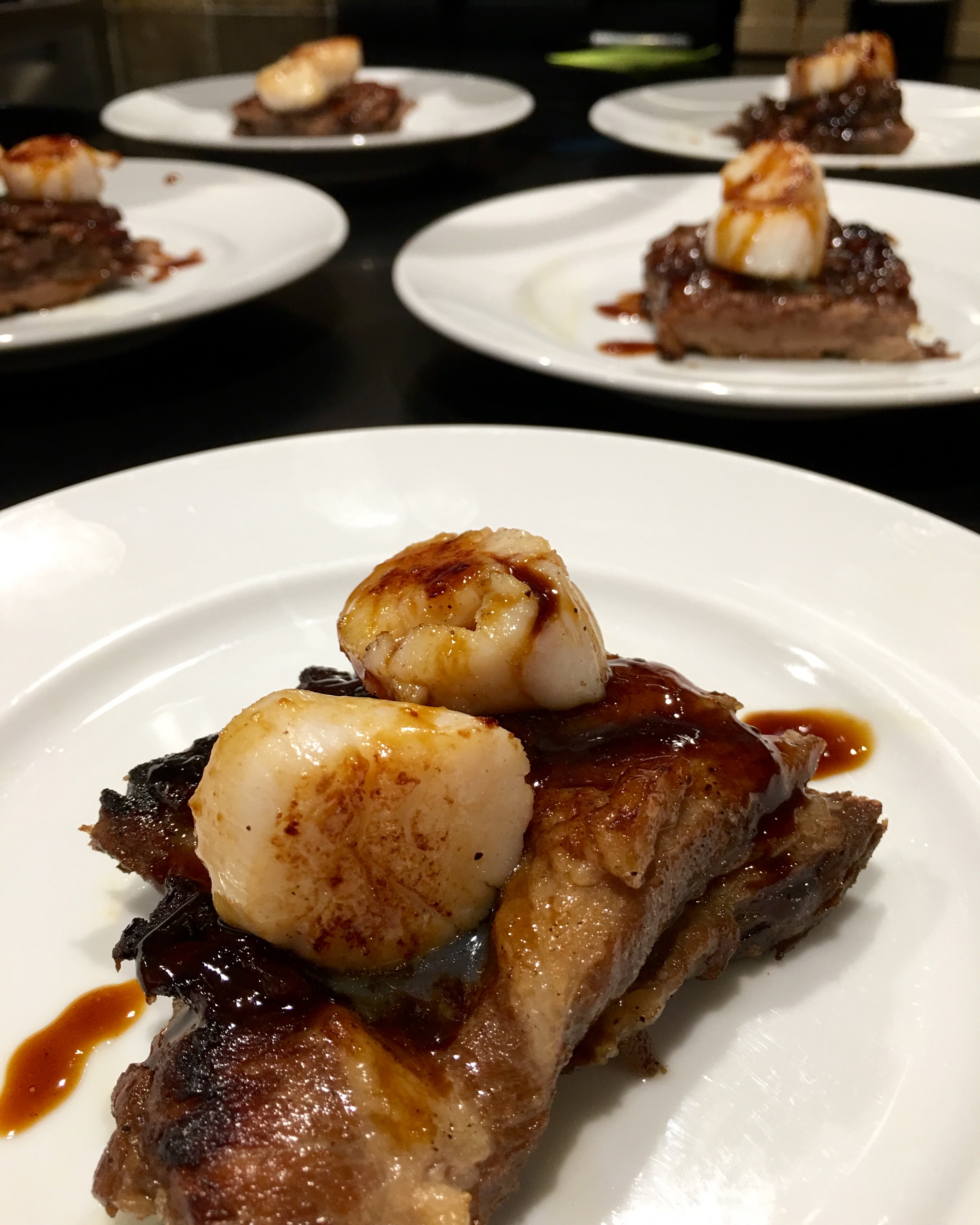
The is a killer recipe that I’ve waited a long time to prepare. My hats off to chef Chuck Hughes for the inspiration. My hats off to my buddy, Dr. Chezwick, who sent me a gift of wild boar bellies. Locally caught Rhode Island scallops in season complete the dish.

FullSizeRender (9)

For the pork belly…
3 lbs. fresh pork belly (I used wild boar belly)
salt and pepper
1–2 tablespoons leaf lard or olive oil
1 carrot, coarsely chopped
1 celery stalk, coarsely chopped
1 onion, roughly chopped
1 fennel bulb, quartered
2 sprigs fresh thyme
1 teaspoon black peppercorns
4 cups beef stock
1 cup hard cider or apple juice

Pre-heat the oven to 350.

Season the belly with salt and pepper. On medium-high heat, melt the leaf lard, then sear the meat on all sides in an oven-proof pot big enough to hold it in one layer. Add the carrot, celery, onion, fennel, thyme and peppercorns and continue cooking for another 5 minutes, until caramelized.

Add the beef stock and the cider. Cover the pot with a lid or seal with aluminum foil, and braise the belly in the oven for 3 hours, until tender.

Remove the pot from the oven, carefully remove the pork belly, and put it on a plate. Cover it with foil. If you’re cooking earlier in the day, you can place the belly in the fridge at this point.

Strain the leftover braising liquid from the pot and discard the vegetables and thyme. Skim off the excess fat. If starting this dish earlier in the day, you can put this liquid in the fridge and the fat will harden, making it easier to remove.

FullSizeRender (8)

For the glaze…
braising liquid, strained
1 tablespoon espresso
1 tablespoon honey

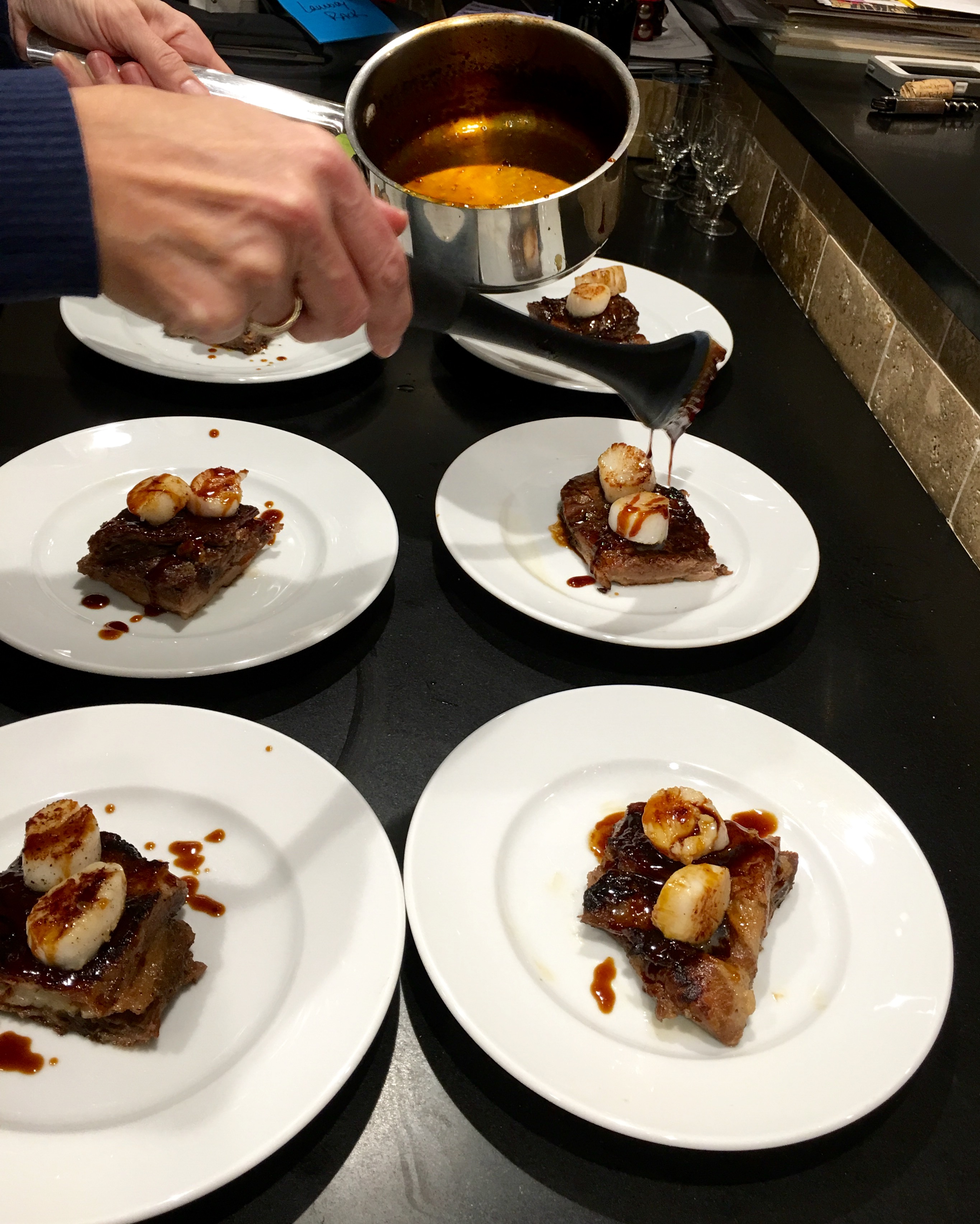
In a small saucepan, reduce the brazing liquid by half, then add the espresso and honey. Cook a few more minutes until the sauce thickens. When it coats the back of a spoon, it’s ready. Set aside.

For the scallops…
Fresh scallops
salt and pepper

When you’re ready to serve, heat a pan on high heat with a little more leaf lard. Cut the belly into equal pieces and sear on all sides for about a minute. Place the scallops in the same pan, season with salt and pepper, and sear them on both sides, being careful not to overcook them.

To serve, place the belly on a plate. Top with a scallop or two. Drizzle glaze over the top. Season with Fleur de Sel or sea salt and serve immediately.

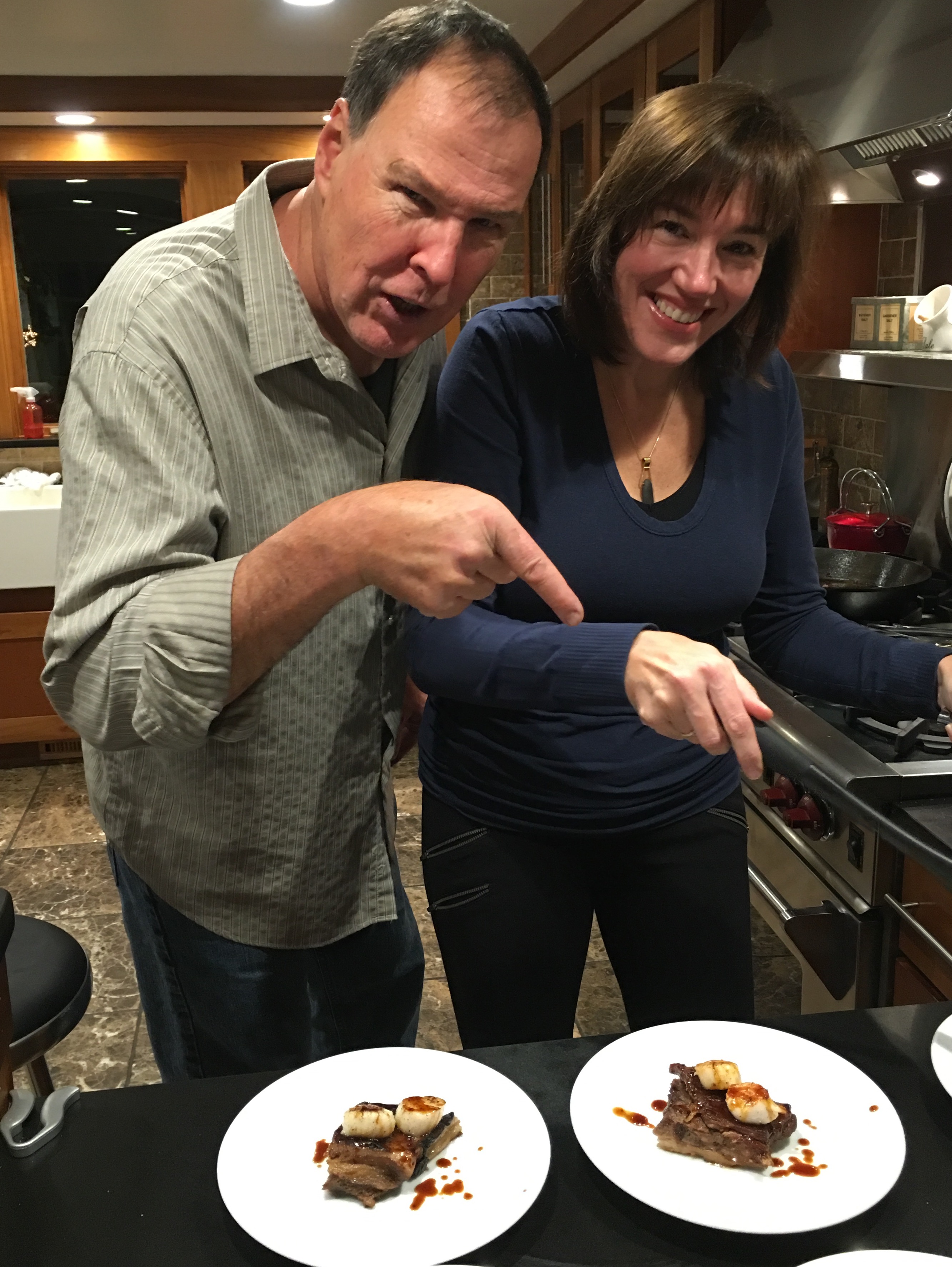
Always good to have a lovely food stylist around to make it look pretty.

Always good to have a lovely food stylist around to make it look pretty.


“WE NEED PIE”

Posted: December 9, 2015 in Food, Recipes
Tags: , , , , , , ,

Back in my younger days, when I could consume mass quantities of carbs without gaining a pound, I baked a wicked good apple pie, and I baked it often. While most apple pie bakers argued over which was better, a crust made with shortening or or one made with butter, my pie crust recipe used both.

These days, I don’t bake apple pies very often. I might bake a galette on occasion, but that’s about it. Besides dealing with the calories, I live in a house where I need to cook gluten-free because of my wife’s allergies, so things like pie were 86-ed off the menu.

Although I can find really good gluten-free flour (the brand I use is called “Cup 4 Cup”), it has its limitations. It’s great for dusting shrimp or fish before frying, or coating a pork chop before cooking, but the dough lacks elasticity, and never holds up well for pizza or pie crusts.

Brands of pre-made gluten-free products, however, are getting better. What once was only found in a gourmet store at a ridiculous price, is now found at the local supermarket at a reasonable price. Freschetta, the frozen pizza company, makes a gluten-free 4-cheese pizza that is absolutely delicious.

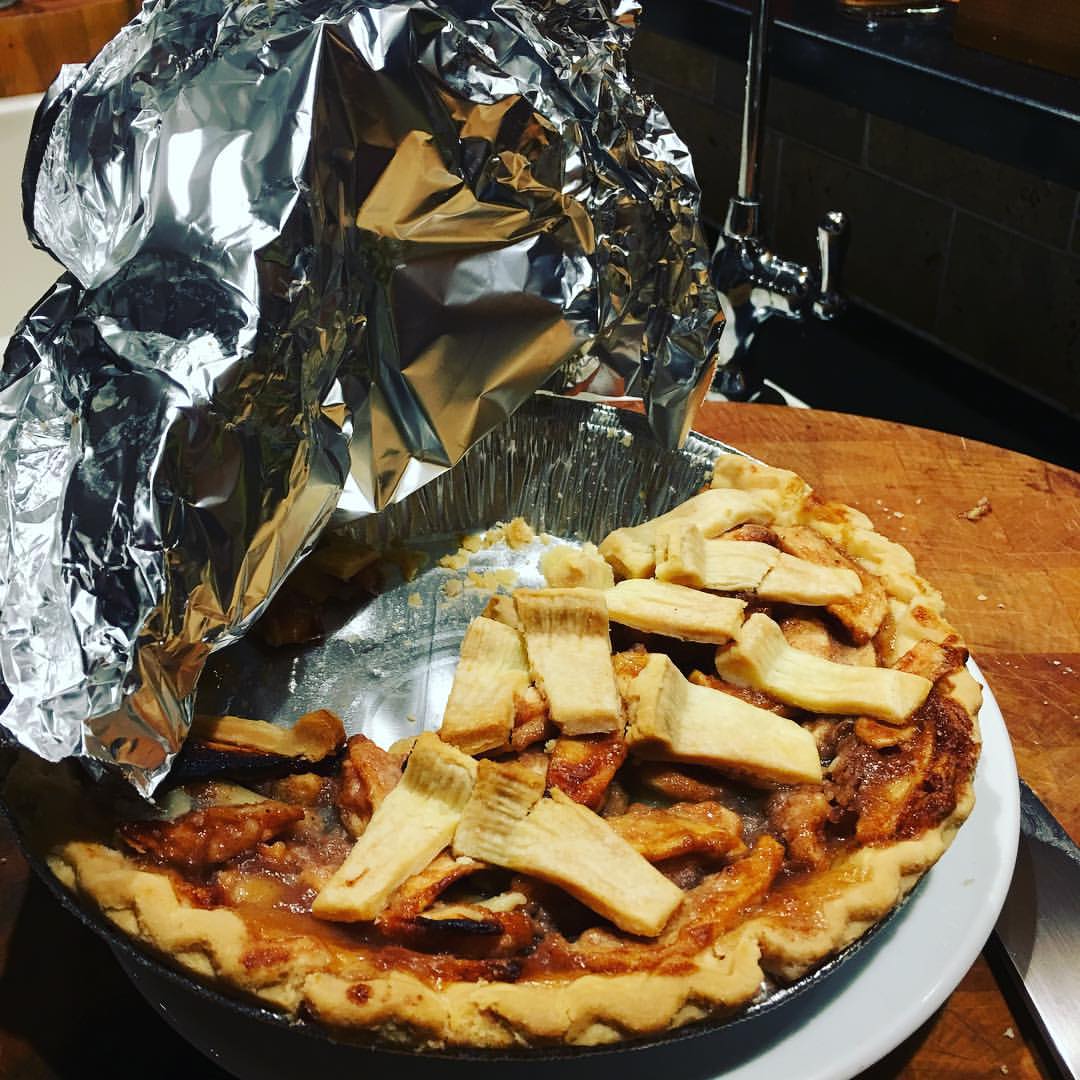
And the other day, I found a 2-pack of frozen GF pie crusts at Whole Foods. No way I couldn’t give that a try. I used one pie crust to hold the pie filling, and I sliced up the second one to decorate the top of the pie. Worked great.

Looks like apple pie is back on the menu!


FullSizeRender

pie dough
2 1/2 pounds apples: peeled, cored and sliced about 1/4″ thick (I like Gala)
1/2 cup sugar
3/4 teaspoon ground cinnamon
pinch of ground nutmeg
1/8 teaspoon ground allspice
3 heaping tablespoons all-purpose flour (I use GF)
4 tablespoons butter, cut into small pieces


Pre-heat the oven to 350.

Place the apple slices in a large bowl and add the sugar, cinnamon, nutmeg, allspice and flour. Mix well.

Pour the apple mixture into the pie plate that already has the pie crust in it. Dot the top of the apples with the butter and either seal the top with more dough, or decorate with whatever pattern of dough makes you happy. If you’re sealing the top with a full layer of dough, make sure you poke a few holes for steam to escape while cooking.

Place the pie on a cookie sheet (to catch any spills) and bake for 30 minutes, with foil wrapped around the edges of the crust to keep it from burning. Then remove the foil and bake about 30 minutes more, until the crust is golden.

12304212_10208013940245236_826204537007565530_o


Many years ago, my wife and I visited the Amalfi coast, and we spent several nights on the beautiful island of Capri. On our last night, we dined at the legendary Grand Hotel Quisisana, and our incredible meal ended with a glass of the most delicious limoncello I’ve ever had.

I asked the waiter if it was possible to get the recipe for it, and he made a big deal about the fact that it was a “secret.” Though disappointed, I understood, and I left Capri thinking that I would never taste that limoncello again.

Two weeks later, now back at home, I was reading the latest issue of Conde Nast Traveler, and there in black and white, was the Quisisana limoncello recipe! WTF?

My twist on the recipe: instead of lemons, I use grapefruit. I’ve tried other citrus, too, like oranges, but grapefruit-cello is fantastic!

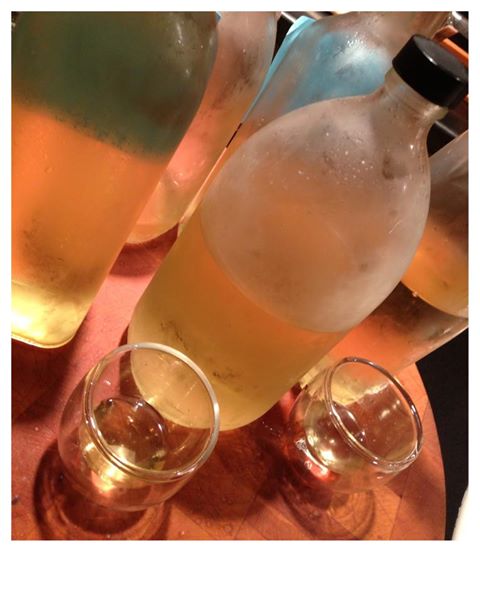
Sampling vintage limoncello and grapefruit-cello, aged 2 years or more

4 lbs. lemons or grapefruit, zest only
2 750-ml bottles 100 proof vodka (I prefer Absolut)
5 1/2 cups sugar
6 cups filtered water

Peel the zest off all the lemons, making sure you don’t get any of the white pith that could make the limoncello bitter. Place all the zest in the bottom of a glass jar with a lid that can hold all the vodka.

Pour the vodka on top of the lemon zest pieces, seal the container, and keep at room temperature for a week, swirling the jar around gently once a day.

On the sixth day, combine the sugar and water in a pot over medium-high heat, and stir until all the sugar completely dissolves. Remove from the heat, cover, and let it thoroughly cool to room temperature (overnight is best.)

On day seven, strain the lemon zest, pouring the infused vodka into a clean glass jar. Discard the lemon zest.

Pour the sugar/water mixture into the vodka and mix well.

At this point, you can pour the finished product into individual bottles, but let it mellow for about a month before drinking.

I keep my limoncello refrigerated.

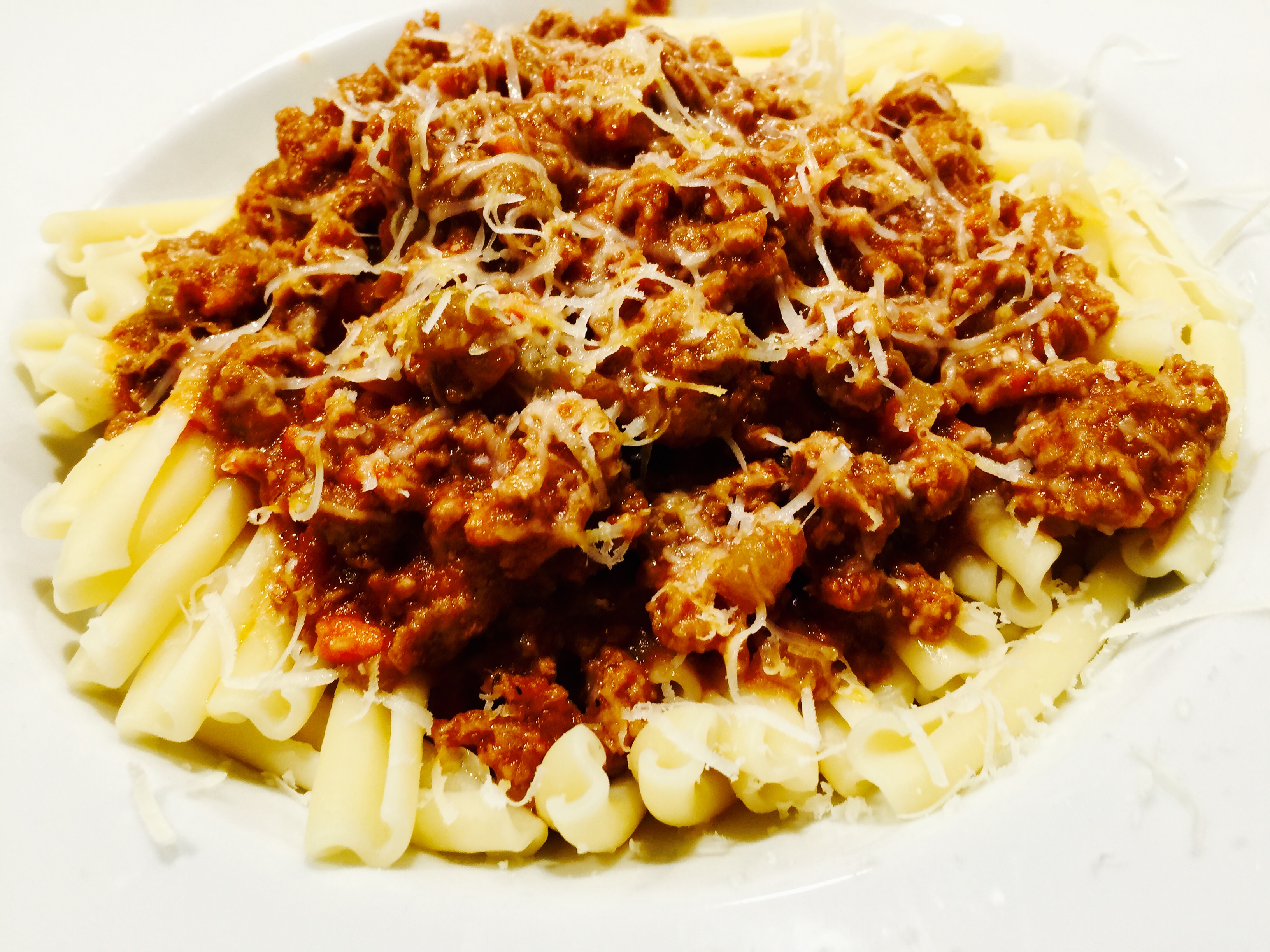
Fettucini alla Bolognese is my daughter’s go-to dish when we visit one of our favorite Italian restaurants,  Il Corso, on W 55th St. in New York. But we only go there once a year, so it was about time that I tried my hand at Bolognese at home. The dish isn’t difficult, but like many great dishes, the better the quality of the ingredients, the better the result.

I use grass-fed ground veal that I get down the road from a local dairy farm: Sweet & Salty Farm. I use ground Berkshire pork, full of “good fat.” And I use guanciale, a cured pork product that comes from the cheek (jowl) of the pig. I buy the Berkshire pork jowls raw and cure them myself. The rest of the ingredients are organic, when available.

FullSizeRender

5 tablespoons extra virgin olive oil
3 tablespoons butter
1 medium onion, finely chopped
1 carrot, finely chopped (1/3 cup)
1 stalk celery, finely chopped (1/3 cup)
1 clove garlic, thinly sliced
1 lb. ground veal
1 lb. ground pork
1/2 cup finely chopped guanciale
1 small can (6 oz.) tomato paste
1 cup ground tomatoes
1 cup milk
1 cup white wine (I use an un-oaked chardonnay)


Place the olive oil and butter in a large sauce pan with a heavy bottom over medium heat. Once the butter has melted, add the onion, carrot, celery and garlic. Keeping the heat on medium, sweat the veggies and allow them to get soft but not brown, about 10–15 minutes.

Turn the heat on high and add the guanciale. Stir it around to keep it from sticking. Let the guanciale cook for a minute, then add the veal and the pork, constantly stirring until the meat browns.

Once the meat has browned, add the tomato paste, ground tomatoes, milk and wine. Once it comes to a boil, reduce the heat to a medium-low, and let it simmer for 60–90 minutes, stirring occasionally.

Traditionally, ragu Bolognese is served by placing a portion of cooked pasta in a pan, and adding just enough sauce to have it cling to, not drip from, the pasta. It’s not soup!

To keep this dish gluten-free, I use GF pasta. Our favorite brand is Garofalo.

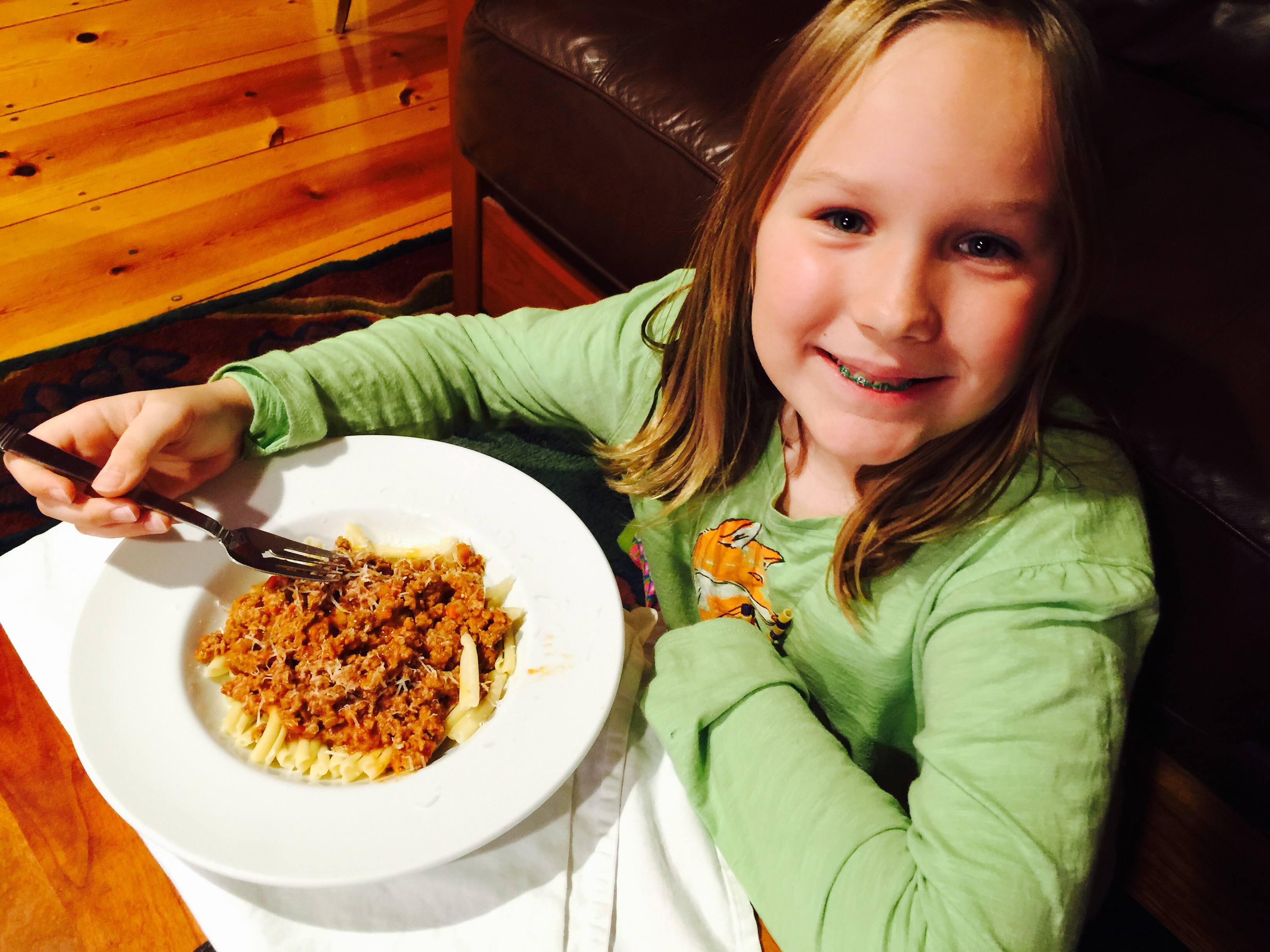
If she's happy, I'm happy!

If she’s happy, I’m happy!

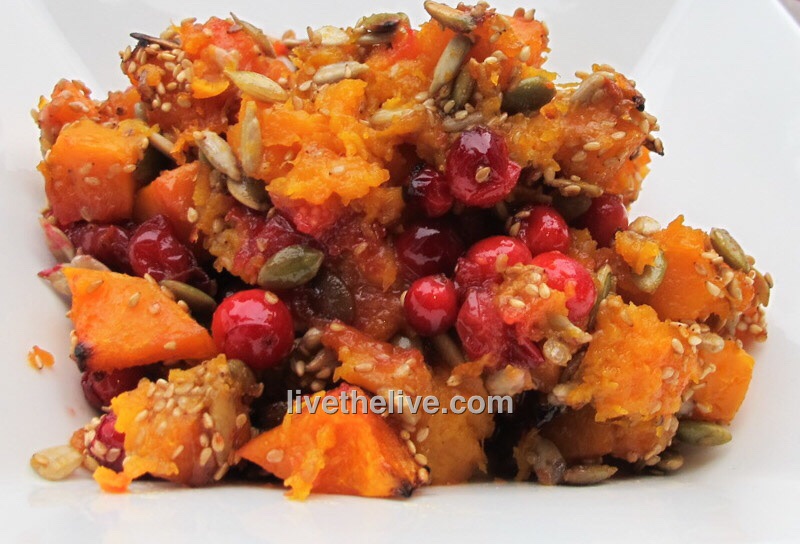
Thanksgiving weekend is almost over, and I seem to have left out one of my favorite side dishes. So while fresh cranberries and squash are still readily available this season, this one’s really worth a try.

image


1 medium-sized butternut squash, washed and peeled with seeds removed
Olive oil
Salt
1 cup fresh cranberries
¼ cup sunflower seeds
¼ cup pumpkin seeds or pepitas
¼ cup sesame seeds
¼ cup maple syrup, more if you like it really sweet

image

Pre-heat the oven to 400 degrees.

Once you’ve washed, peeled and seeded the butternut squash, cut it into ½” chunks. Sprinkle a little olive oil and salt and pepper on them and toss them to coat. Then spread the squash cubes in a single layer on the baking sheet. Bake for about 30 minutes or until golden on the edges.

Remove the squash from the oven and pour the cranberries into the hot tray. Mix gently. Pour the squash/cranberry mix into a smaller, deeper baking pan.

Increase the oven to 425.

In a separate bowl, combine the sunflower seeds, pumpkin seeds and sesame seeds. Sprinkle the seeds evenly over the squash/cranberry mixture. Drizzle the maple syrup over everything and place the baking pan in the oven. Cook for another 20 minutes, until the seeds have roasted.


With “Spectre” in theaters right now, it seems appropriate to bring this recipe back.
At first, it seemed almost silly to try to make one…but the classic James Bond martini has always fascinated me. I’m not talking about the clichéd Sean Connery “vodka martini, shaken, not stirred.”  I’m talking about the real James Bond martini, which appeared in Ian Fleming’s first 007 novel “Casino Royale” and only appeared in the most recent “Casino Royale” motion picture starring Daniel Craig.
Bondtini
To quote the novel:
‘A dry martini,’ he said. ‘One. In a deep champagne goblet.’ ‘Oui, monsieur.’ ‘Just a moment. Three measures of Gordon’s (gin), one of vodka, half a measure of Kina Lillet.  Shake it very well until it’s ice-cold, then add a large thin slice of lemon peel. Got it?’ ‘Certainly, monsieur.’ The barman seemed pleasant with the idea. ‘Gosh that’s certainly a drink,’ said Leiter. 
Bond laughed. ‘When I’m … er … concentrating.’ he explained, ‘I never have more than one drink before dinner. But I do like that one to be large and very strong and very cold and very well-made. I hate small portions of anything, particularly when they taste bad. This drink’s my own invention. I’m going to patent it when I can think of a good name.’ 
He watched carefully as the deep glass became frosted with the pale golden drink, slightly aerated by the bruising of the shaker. He reached for it and took a long sip. 
‘Excellent,’ he said to the barman, ‘but if you can get a vodka made with grain instead of potatoes, you will find it still better.’ 

To quote the movie: http://youtu.be/Vc7n7yyXWsU

Bond named this drink the Vesper martini, after the character Vesper Lynd, portrayed by Ursula Andress in the 1967 adaptation, and Eva Green in the 2006 adaptation of “Casino Royale.”
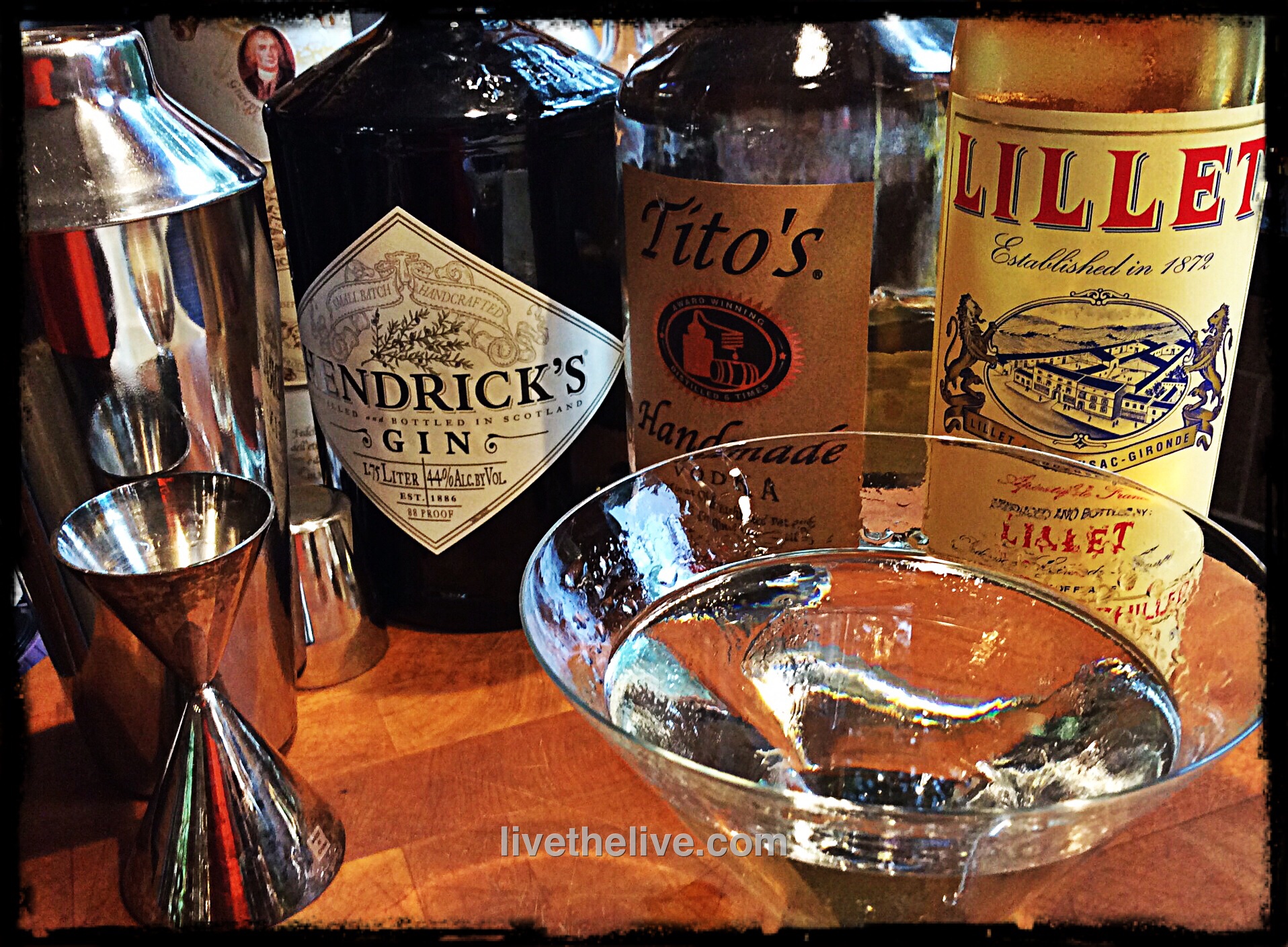
My version of this classic drink remains true to the original, though I’ve changed brands due to personal preference. In the novel, Bond just asks for “vodka.” (Of course, this was back in the 1950’s when we didn’t have 100 brands to choose from!) My choice for best-bang-for-the-buck grain vodka is Tito’s: it has just enough of an edge, which is what this drink needs.
Bond asks for Gordon’s gin. I’m partial to Hendrick’s or Bombay Sapphire. Again, in the 50’s, what good British agent wouldn’t drink Gordon’s?
And the original Kina Lillet had its formula changed in the 1980’s to keep up with the times by reducing the quinine, which made it bitter. The French aperitif wine, Lillet, is today’s version: a blend of wine grapes, oranges, orange peels and quinine. Lillet is not a vermouth, though you’ll find it in the vermouth section of your favorite liquor store. Some aficionados claim the martini is just not the same without the original Kina Lillet formulation, but I find that the drink works just fine for me.
ingredients again
So…measurements true to Bond:
3 oz. Hendrick’s or Bombay Sapphire
1 oz. Tito’s
1/2 oz. Lillet
I prefer combining these over ice in a cocktail shaker, and I stir, not shake. I strain it into a chilled martini glass and I skip the lemon peel. I prefer three olives instead…stuffed with garlic, if my wife is away on a business trip!
Cheers!
Bondtini2
A side note: the correct pronunciation of Lillet is Lih-LAY. Grammatically in French, the double-l would make it sound like Lih-YAY. So to keep that from happening, they spelled it Lilet for a while until the French were used to the correct pronunciation, then they went back to Lillet on the bottle.
A few years ago, at Le Saint-Amour, a great restaurant in Quebec City, the dish I ordered had these small strange-looking root vegetables sitting next to my roasted duck entrée. They resembled tiny twisted parsnips…or caterpillars! I needed to know what these things were, and so I asked my French waiter, who came back with a piece of paper that had the word “crosne” written on it. He said: “I don’t know how they say it in English.”
Back at the hotel room, I went right to the laptop and started a search on-line and discovered that crosnes (pronounced crones) are also known as Chinese artichokes, and although they are somewhat common in European gardens, they’re really difficult to find in the states.
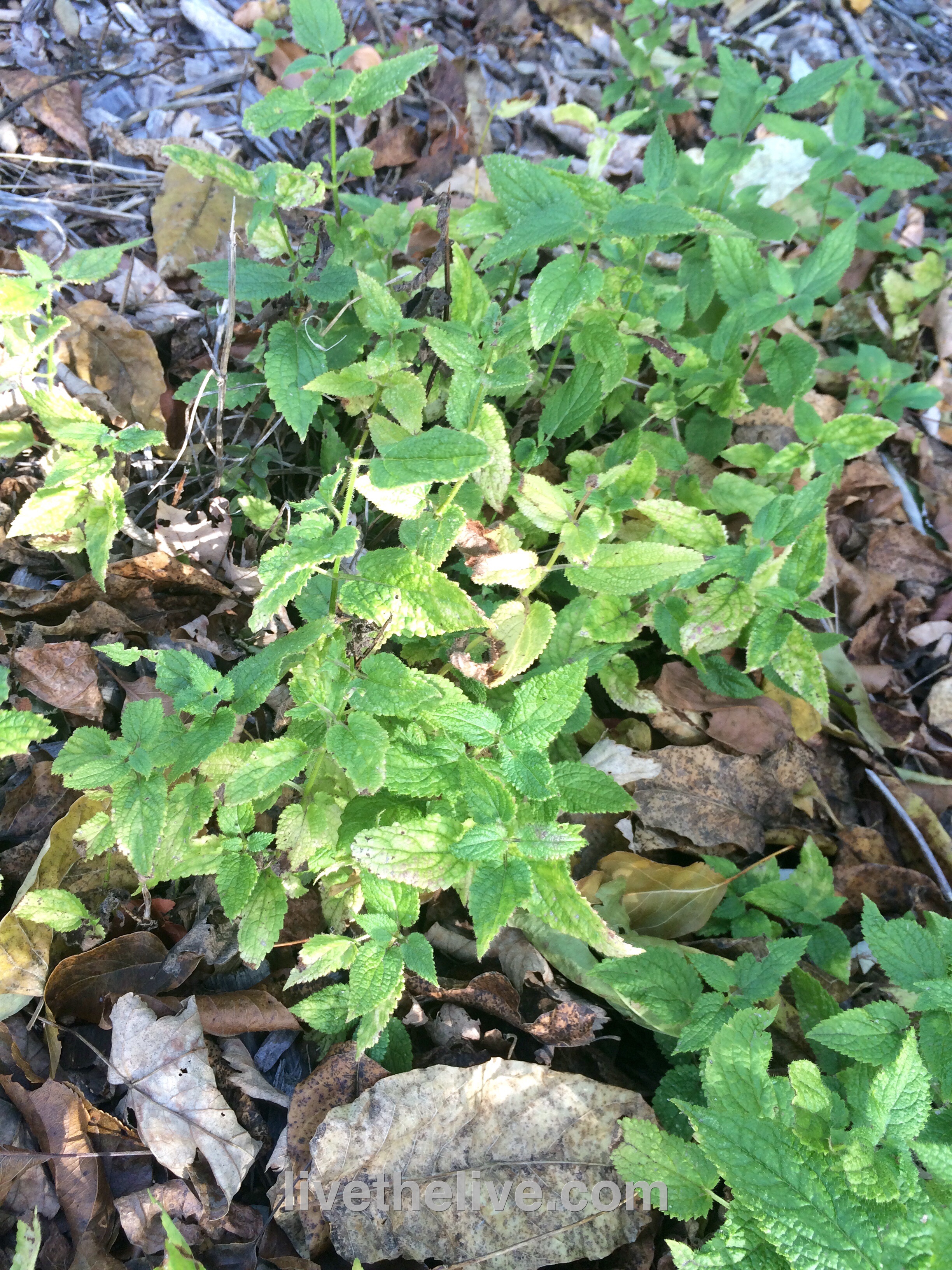
The leaves look like mint, but don't have a fragrance.

The leaves look like mint, but don’t have a fragrance.

The plant is a relative of mint (though the leaves have no aroma), a perennial, is easy to grow, spreads on its own, and has those small, convoluted and delicious root clumps (known as tubers to gardeners.) So what’s not to like? Well, apparently, it’s not the gardeners that don’t want to deal with them…it’s the chefs! The tubers are very small and need a little extra effort to make sure they’re washed clean before cooking. They don’t need to be peeled (now that would be a pain in the ass) but to many chefs, even the washing is too much of a hassle.
image
As a Master Gardener, I found all of this pretty interesting so I searched for sources to buy crosnes plants. It took a while (most growers were in Europe or Great Britain), but I finally found a source in Oregon that sold the plants and I bought a few for my home garden.
image

Much like mint, crosnes are pretty hardy and are tough to remove once well established, so they need to be planted in an area where you don’t mind if they take over. The tubers are ready to harvest October through November, and as long as I leave some in the ground over the winter, the crosnes will be back again the next year. Seems pretty low-maintenance for such a delicious treat!

image

As for preparation, a light saute in olive oil and butter (or lard), and a little salt and pepper, is all they need. They also go well with a deep, rich demi glace reduction like I had with my duck at Le Saint-Amour.

This past Thanksgiving, I combined several traditional desserts in one: pumpkin pie, cheesecake, and tiramisu. The challenge was to make it gluten-free, since my wife is sensitive to gluten. Rather than using the traditional lady fingers used in tiramisu, I used a GF product that replaces graham crackers. And though it can be presented in a trifle bowl, I made individual servings.
image

1 1/2 cups heavy whipping cream
2 packages (8 oz. each) cream cheese, softened
1 can (15 oz.) prepared pumpkin
3/4 cup milk
1/2 cup brown sugar, packed
4 teaspoons pumpkin or apple pie spice, divided
2 teaspoons vanilla extract, divided
1 cup strong brewed coffee, room temp ( I use espresso)
1 box (22 oz.) graham crackers or gluten-free substitute

image

In a large bowl, whip the cream until soft peaks form. Set aside.
In another large bowl, combine the cream cheese, pumpkin, milk, brown sugar, 2 teaspoons pumpkin spice, and 1 teaspoon vanilla. Beat with a mixer until well blended. Fold gently into the whipped cream.
Pour the graham crackers into a food processor and process until you get very fine crumbs. Pour into a bowl.
In a separate small bowl, combine the coffee and remaining pumpkin spice and vanilla. Pour the coffee mixture into the graham crackers a little at a time, and mix with a fork, until it resembles wet sand.
In each glass, alternately layer the pumpkin cream and the graham cracker mix. Serve with a little extra whipped cream on top, or with ice cream on the side.