It’s National Pizza Day and National Bagel Day. But since I don’t have a pizza bagel recipe–yet–I’ll stick with pizza.

There are few foods that people take as personally as pizza. Tell someone that your pizza place is better than their pizza place, and chances are you’ll start a fight. Well, my pizza place is better than your pizza place, because I make it at home. Besides, I can run faster than you.

I’m not going to say that much of the pizza that I’ve tried here in Rhode Island is mediocre, but I will say that I was born in Brooklyn and grew up working in many New York pizza places in my youth. So yes, I do have a very strong opinion on what I think makes a good or bad pizza. And, alas, I’ve tried, but a good gluten-free pizza is not yet within reach. The frozen ones you get in stores are passable, but making one at home has been nothing short of a disaster.

My homemade pizza is all about the basics. The better quality my original ingredients are, the better my pizza will be:


The dough…

The key ingredient is 00 flour, and it can be found in specialty stores,  or online. Ratios for this recipe depend on the humidity in my kitchen on any given day, but my basic pizza dough recipe is as follows:

4–5 cups 00 flour
1 cup tepid water
1 Tablespoon salt
1 packet Italian pizza yeast
a squirt of extra virgin olive oil

I mix all the dry ingredients in the bowl of a stand mixer, then slowly add the water as it mixes. After the ingredients are well mixed, and the dough pulls from the side of the bowl, I remove it to a floured board, where I knead the dough by hand for another 5 minutes, until it is smooth and elastic, shaping it into a ball. I rub a little olive oil over the ball of dough, place it in a bowl covered with plastic wrap, and let it rise for 2 hours, punching it down after that, and letting it rise another 2 hours again.

The sauce…

I’ve written a previous blog about real and fake cans of San Marzano tomatoes. I feel that San Marzanos make the best sauce, but not all cans of San Marzanos are created equal. The only way you can be guaranteed you have a real can of these beauties, grown in volcanic Italian soil in the shadow of Mt Vesuvius, is by the D.O.P. designation on the can. (D.O.P. stands for “Denominazione d’Origine Protetta,” and signifies that it’s the real deal.) Anything else that says San Marzano may not be.

San Marzanos are so amazing, that all I do is puree them in a food processor, pour the sauce into a pan, and let it reduce until it has thickened. No spices or additions of any kind.

The cheese…

I don’t need to go super-fancy with mozzarella di bufala (cheese made from the milk of the water buffalo) …but I don’t use the mass-produced supermarket stuff, either. Whole Foods has fresh mozarella from Maplebrook Farms in Vermont, and it is excellent.

The toppings…

A matter of choice. I wrote a while ago about how I make my own guanciale, a cured meat that comes from pork cheeks. Chopped and fried, that is one of my daughter’s favorite pizza toppings.

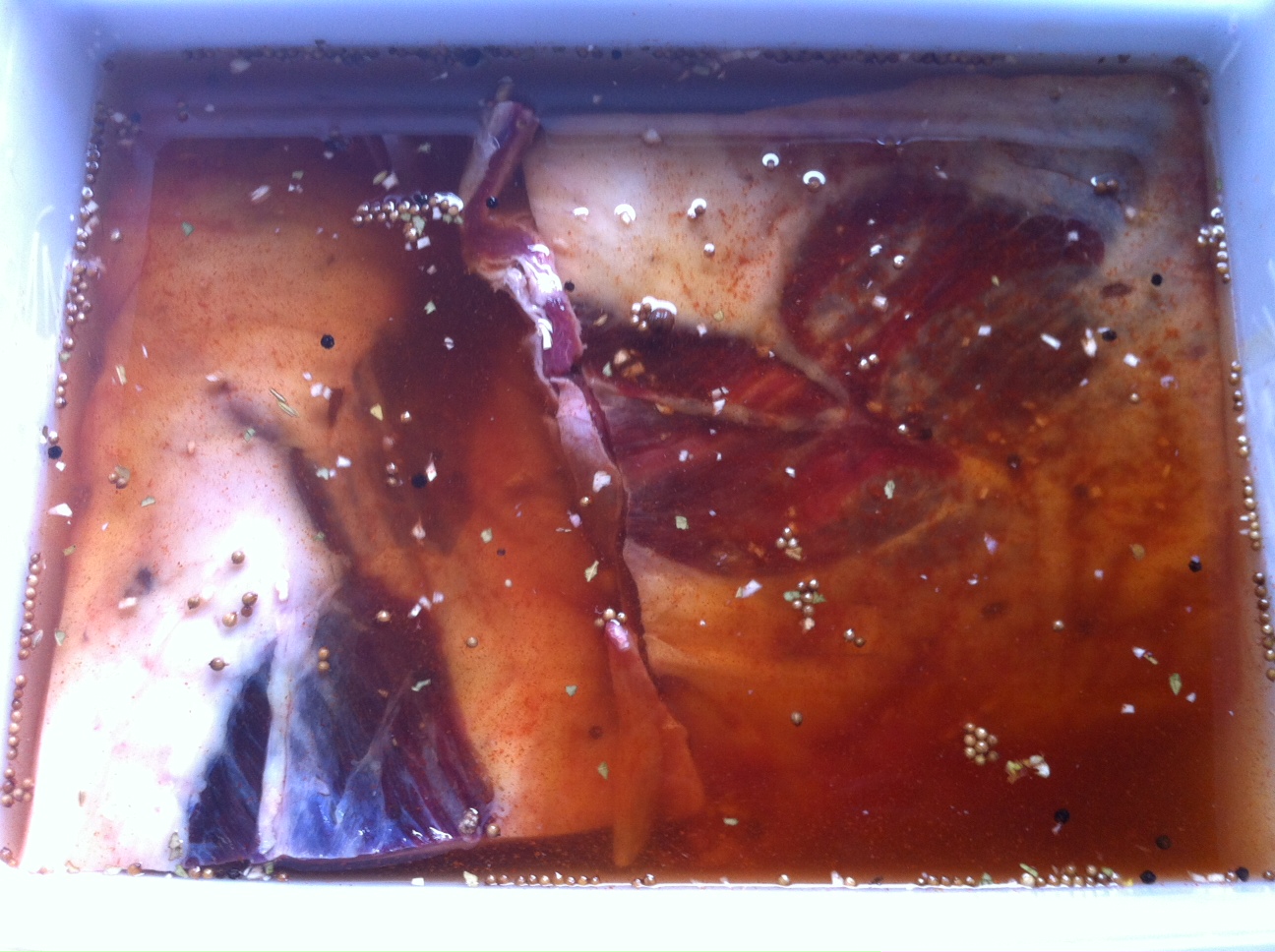
But my signature pizza that wows my dinner guests is my marinated beef tenderloin and fried chive blossom pizza. I marinate and grill a piece of beef tenderloin, slicing it thin. And in the springtime, when my chive plants are budding like crazy, I snip the blossoms before they open and place them in Ziploc freezer bags to use all year long. When it’s time, I grab a handful of the blossoms and fry them in a little olive oil, salt and pepper, and sprinkle them over the top of the beef tenderloin pizza. A touch of Fleur de Sel on top seals the deal.

My signature marinated beef tenderloin and chive blossom pizza.

The oven…

Many professional pizza ovens reach a temperature of 1000 degrees. My home oven only reaches 500, but it does the trick. I do use a pizza stone, and place it on the center rack of the oven, and let it heat up thoroughly before sliding a pizza onto it for cooking.

Recently, I’ve also started cooking pizzas on my barbecue grill (using a special stone for the grill) to add a smoky component. The grill gets hotter than my home oven, which is great, but it’s obviously a more work to set-up and clean.


My favorite pizza?

There are only a few pizzerias that I know of—all in NYC–that make pizza montanara, and for my money, it’s the best I’ve ever had. It’s a small, rustic pizza margherita using mozzarella di bufala and simple tomato sauce, garnished with a basil leaf. What makes it magical is the fact that after they stretch the dough–but before they put the toppings on it–they fry the dough in deep fryer with olive oil for just a minute. It puffs up like a pillow. Then they put the toppings on and quickly bake it in a very hot oven. The end result is a non-greasy, absolutely heavenly pizza cloud…the most delicious I’ve ever had. If you’re in New York, go to Pizzarte on W. 55th. Great montanara and other Italian dishes.

I’ve actually had some great success recreating this pizza at home, frying the dough in a very large skillet of olive oil. The challenge is removing this giant piece of dough out of the skillet and into a pizza pan without dripping olive oil all over my stove and setting my house on fire! So far, so good!

Sure, everyone’s talking Super Bowl, but the real party is this Tuesday: Fat Tuesday, to be exact. It’s been a while since I celebrated Mardi Gras in New Orleans, so it’s time for the next best thing: one of my favorite Nawlins dishes!

The first unusual thing you notice about the classic dish, New Orleans BBQ Shrimp, is that it’s not cooked on a barbecue grill and it contains no barbecue sauce. So why the name? Its origin goes back to the mid-1950’s, to an Italian restaurant in New Orleans called Pascale’s Manale. (It’s still there. http://www.pascalsmanale.com) A regular customer had just returned from Chicago, where he had dined on an amazing shrimp dish. He asked the chef at Pascale’s Manale to try and replicate it, and what resulted was actually better than the original. And though no barbecue grill or sauce was used, it is believed that they gave it the name “BBQ Shrimp” to cash in on the backyard barbecuing craze that was all the rage at the time.

The classic New Orleans BBQ Shrimp is served with shell-on shrimp, so you have to make a big, buttery mess of yourself as you devour it. And it’s served with plenty of crusty French bread.

Unfortunately, with a gluten-free household, I have to skip the bread. So I make rice on the side, and instead of leaving the shell on the shrimp, I peel and de-vein them, using the shrimp shells to make a stock I cook the rice in.

image

For the seasoning…
1 1/2 teaspoons salt
1 1/2 teaspoons fresh ground black pepper
1 teaspoon fresh rosemary, very finely chopped
1/4 teaspoon oregano
1/4 teaspoon granulated garlic
1/4 teaspoon granulated onion
1/4 teaspoon paprika
1/4 teaspoon dried thyme
1/8 teaspoon cayenne pepper
1/8 teaspoon white pepper


Mix all the seasoning spices and set aside.

image

For the BBQ shrimp…
2 lbs. large wild-caught American shrimp, peeled and de-veined
1 stick butter (4 oz.)
1/2 cup beer
1/4 cup Worcestershire sauce
olive oil


For the rice…
1 cup rice (I like organic basmati)
2 1/4 cups water or seafood stock (see below)
1 teaspoon olive oil
1/2 teaspoon Tony Chachere’s Original Creole Seasoning

image

Cook the rice following the directions on the package. I like using stock instead of water when I cook my rice, so after peeling all the shrimp, I toss the shells in a saucepan full of water and I boil the heck out of it, strain it, and use that stock to cook the rice. I add the olive oil and the Tony Chachere’s (available online or at your favorite food store) to the stock before cooking.


To cook the shrimp, I heat a little olive oil in a large skillet over moderate heat. Then I add the shrimp, and sear them on one side (about 30 seconds) and then flip them over to sear on the other side (another 30 seconds.) I’m not trying to cook them all the way through, just get them a bit caramelized. Then I remove the shrimp from the skillet and set them aside.

(I serve the BBQ Shrimp over the rice with broccoli. If you want to use broccoli, add a little butter and olive oil to the same pan you seared the shrimp in. Cook until the broccoli is nicely caramelized, then remove from the pan and set aside.)

In the same skillet, I heat the butter until the foam subsides. Then I add the beer, Worcestershire sauce, and 2 teaspoons of the seasoning mix. I mix well, then add the shrimp and broccoli back in the pan, simmering for about 5 minutes, stirring occasionally.


I can’t believe another year has gone by. My wife’s aunt in Florida started us on this kick which we have to have every year: Cushman’s HoneyBells. They look like fiery red bell-shaped oranges, and they are the sweetest and juiciest fruits you’ll ever have! But they’re not really oranges at all.
 image
HoneyBells are a unique natural hybrid of Dancy Tangerine and Duncan Grapefruit. The plants are grafted to a sour orange root-stock, and when the tree reaches maturity, it looks just like a grapefruit tree…but with oranges growing on it.
HoneyBells are available for a very short time every winter…and that time is NOW. So if you’re at all interested, check out www.honeybell.com. Cushman’s was bought out by the fruit giant Harry & David some years ago, but the excellent quality of the product and their fine service has not changed.
 I usually make my signature margarita, the Algarita, with pineapple juice. But when I get those HoneyBells in the mail, my recipe takes on a new twist.
 image
 2 oz. Patron silver tequila
1/2 oz. Cointreau orange liqueur
4 oz. fresh squeezed HoneyBell juice
1/2 oz. fresh squeezed lime juice
The Honeybells are so fresh and sweet, you can skip the Cointreau if you like.
Fill a tall glass with ice and add all the ingredients. Stir. Pour into a large margarita glass. Garnish with lime wedge. Salt optional.
 image
The HoneyBell clock is ticking…get ‘em soon or you’ll need to wait a year!
Any other time of the year, substitute pineapple juice, orange juice or a combination of both for the Honey Bells.

MANLY MEAT SAUCE

Posted: January 29, 2016 in bacon, beef, Food, Italian, pasta, Recipes
Tags: , , , , ,

Although my daughter goes crazy for my Ragu Bolognese (http://wp.me/p1c1Nl-Pc), pasta with meat sauce is one of the easiest things to make, with ingredients you probably have in your home. This sauce is really rich with flavor, and once you put all the ingredients together, it requires nothing more from you than an occasional stir every now and then.

image


1/4 cup olive oil
3 strips bacon, finely chopped, raw or pre-cooked
1 onion, finely chopped
1 teaspoon garlic salt
2 lbs. ground beef (I use grass-fed beef)
2 cans (28 oz. each) whole tomatoes
1 tablespoon dried oregano
1 tablespoon dried basil
2 tablespoons dried parsley
2 teaspoon salt
1/2 teaspoon black pepper
1 teaspoon anise seed
1 teaspoon fennel seed
2 bay leaves
1 small can (6 oz.)  tomato paste

image


In a large pot, heat the olive oil and add the bacon. Once the bacon is sizzling, add the onions and cook until the onions are translucent. Add the garlic salt and mix. Add the ground beef and cook until it has browned.

Pour the 2 cans of whole tomatoes into a food processor and blend until chunky…or go the old-fashioned route and simply squeeze the tomatoes with your hands, breaking them up. Pour the contents of both cans into the pot and stir well. Cook over medium heat, stirring, until the orange tomato foam disappears.

Add the oregano, basil and parsley and stir. Add the salt and pepper and stir. Add the anise seed and fennel seed and stir. Throw in the 2 bay leaves and stir. (I think you get the idea, there’s a lot of stirring going on!)

When the sauce starts to boil, add the tomato paste and stir well. Let it come up to a boil again–the paste thickens best at high heat–then turn the heat down to a simmer and cover the pot.

Let the sauce simmer for several hours. Whenever you walk by, give the sauce a good stir.

Serve over pasta, with some grated Parmiggiano Reggiano.

image


Here in Rhode Island, we have access to amazing seafood year-round. My friend, Gary, is a lobster man. My neighbor farms oysters. And for anything else, the Aquidneck winter farmers’ market at Newport Vineyards in Middletown is a great place to pick up veggies, bread, pasture-raised meats from local farmers, and freshly caught seafood.
IMG_3031
As far as I’m concerned, there is no better way to eat a fresh scallop than right out of the shell with just a little marinade on top, popping these beauties into my mouth literally as they’re still pulsing on the shell.
(Channeling Clint Eastwood) “So I gotta ask just one question: Would ya eat it if it twitches? Well, would ya, punk?”  youtu.be/b4eCXZUQkNY
Scallops are a bit trickier to open and clean than clams or oysters (at least for me) but all it took was a little practice while sipping a Chopin martini and I got the hang of it in no time.
There are two marinades that I use when serving up raw scallops. The acidity in these marinades will cook the scallop a little, like in ceviche.
“MILLS TAVERN” MARINADE
The first place my wife and I ever had a raw scallop was at Mills Tavern, in Providence, RI. Freshly shucked scallops (in large flat shells) were served on ice with a tangy red marinade. We never got the recipe from the restaurant, but this is our version of that marinade.
3 tablespoons rice wine vinegar
2 tablespoons Grenadine
1/2 teaspoon fresh finely grated ginger
2 teaspoons finely chopped scallions
Combine all the ingredients and chill before using.
IMG_3037
And here’s one I came up with that also works really well with raw seafood…
1/4 cup freshly squeezed orange juice
1 1/2 tablespoons freshly squeezed lemon juice
1 1/2 tablespoons freshly squeezed lime juice
2 tablespoons soy sauce
1 tablespoon + 1 teaspoon peanut oil
1/2 teaspoon honey
1 1/2 teaspoons fresh finely grated ginger
2 tablespoons finely chopped scallion
2 small dried chili peppers, finely chopped

Combine all the ingredients and chill before using.

IMG_3033


With snow coming our way this weekend in New England, it’s time for some serious comfort food.

A couple of years ago, when I received a shipment of venison from my father-in-law, an avid hunter that lives in the Upper Peninsula of Michigan, I knew that although I could certainly use beef for this dish, it would be absolutely stellar with venison. And I knew that I couldn’t miss with a local brew from my buddy, Sean Larkin of Revival Brewing Company (www.revivalbrewing.com), with his Double Black IPA…

image

Unfortunately, I haven’t been able to find gluten-free alternatives for this recipe. You can buy GF beer and flour, but the puff pastry is what makes the dish. A GF pie crust would be an alternative, but once you have it with puff pastry, you’ll never want it any other way!

Olive oil
3 red onions, peeled and chopped
3 cloves of garlic, peeled and chopped
3 tablespoons butter, plus extra
3 carrots, peeled and chopped
3 celery stalks, trimmed and chopped
10 oz. baby bella mushrooms, chopped
3 lbs. venison, cut into 3/4″ cubes
A few sprigs of fresh rosemary, leaves picked and chopped
Sea salt and black pepper
2 bottles (24 oz.) Revival Brewing Company Double Black IPA, with a swig for the cook
3 tablespoons flour
12 oz. freshly grated cheddar cheese
1 1/2 pounds store-bought puff pastry (all butter is best)
1 large egg, beaten

image


Pre-heat the oven to 375.

In a large oven-proof pan, heat a few tablespoons of the olive oil. Add the onions and fry gently for about 10 minutes. Turn the heat up and add the garlic, butter, carrots, celery and mushrooms. Stir well, then add venison, rosemary, a pinch of salt and about a teaspoon of pepper.

Saute on high for about 4 minutes, then add the beer, making sure you take a swig for luck! Stir in the flour and add just enough water to cover. Bring to a simmer, cover the pan with a lid or foil, and place in the preheated oven for about 1 1/2 hours.

Remove after 1 1/2 hours and stir. Put it back in the oven and cook another hour, until the meat is cooked and the stew is rich, dark and thick. If it’s still liquidy, place the pan on the stove top and reduce until the sauce thickens. (You don’t want a soupy stew or you’ll get soggy puff pastry later.) Remove the pan from the heat and stir in half the cheese. Season with salt and pepper to taste and set aside to cool.

Depending on whether your puff pastry comes in sheets or a block, you’ll need to use a rolling-pin to get it into sheets about 1/8″ thick. Butter a good-sized pie dish or an oven-proof terrine. Line the dish with the sheets of pastry, letting the pastry hang over the sides. Pour in the stew, even it out with a spatula, and add the rest of the grated cheese on top.

Use another 1/8″ thick sheet of pastry (or a couple if they’re not wide enough) to cover the top of the pie dish. Lightly crisscross the top with a knife, then fold over the overhanging pieces of pastry over the lid, making it look nice and rustic. Don’t cut or throw any of the pastry away! Use as much as you can, since everyone will want some.

Brush the top with the beaten egg and then bake the pie on the bottom of the oven for about 45 minutes, until the pastry has cooked, and it’s beautifully puffed and golden. Serve with a side of peas (and beer!)

image


It’s mind-blowing how many new and exciting restaurants keep popping up in Portland, Maine, and even more interestingly, how they’re all thriving! With a great arts scene, historic New England waterfront, and a young crowd eager to spend their money, Portland is just exploding.

I work in Providence, Rhode Island, a city whose food scene has had a lot of attention in the last few years in a variety of national magazines. But really creative restaurants here are hard to find, perhaps five in the entire city. In Portland, you’ll find five on one block!

Portland is big enough to be a destination, and small enough that you can park your car once and walk everywhere you want to go all day and into the night.

Oysters at Eventide.

Oysters at Eventide.

Three of the best restaurants in town just happen to be owned by the same three guys: Andrew Taylor, Arlin Smith and Mike Wiley. They called their company AMA LLC, though now I think they go by the name Big Tree Hospitality. All three restaurants are located right next door to each other on Middle Street: Hugo’s, Eventide, and The Honey Paw. If you go nowhere else in Portland, hit this one block. If you’re just passing through for lunch, it’s right off 295. Just take the Franklin Street exit.

The block. From left to right: The Honey Paw, Eventide, and Hugo's. And if you stay at the Hampton Inn, like we did, you walk less than a block!

The block. From left to right: The Honey Paw, Eventide, and Hugo’s. And if you stay at the Hampton Inn, like we did, you walk less than a block!


The bar at Eventide.

The bar at Eventide.

Our love of Portland started years ago with Eventide, an oyster bar serving the freshest and most creative small seafood plates in the city: a killer brown butter lobster roll, tuna crudo that rivals the best sushi anywhere, blackboard special plates like char tartare, and a dozen oyster choices served with inventive accouterments, our favorite being the pickled red onion ice. Our non-seafood-eating daughter loved the buttermilk fried chicken bun and Eventide burger. And probably the most ignored-but-shouldn’t-be entry on the menu is the fish sandwich: best you ever had or I’ll eat it for you. They use pieces of fresh-caught hake, a fish that’s somewhat unknown unless you’re a local. A full bar and a surprisingly friendly staff, despite the fact they’re jamming all day long.

The amazing fish sandwich at Eventide.

The amazing fish sandwich at Eventide.

Hugo’s made Portland a food destination thanks to its previous chef/owner, Rob Evans, who sold it in 2012 to concentrate on his newer joint: Duckfat. The three guys: Taylor, Smith, and Wiley, worked there before it closed down and they grabbed the opportunity to take over, bringing a cutting-edge American menu served over a series of exciting tasting courses. Whether you’re a carnivore, vegetarian or seafood lover, you’ll find some wonderful choices here. Our night featured raw and cooked beef selections, lamb bolognese, ankimo (monkfish liver) and unusual veggie plates like sunchokes and smoked parsnips.

FullSizeRender (21)

Paul, the bartender, is a mixologist of the finest kind. My wife sipped on a Jasmine Fizz before we plunged into the eclectic and inspired wine list chosen by Big Tree Hospitality’s wine director, Brian Flewelling, who happened to be our server that night.

My wife enjoyed a sip of my Pappy's as well.

My wife enjoyed a sip of my Pappy’s as well.


And it didn’t hurt that they had three kinds of Pappy Van Winkle bourbon on their shelves…something I haven’t seen anywhere else. (These are the bottles that go for over $1500 on line.) Needless to say, Paul the bartender and I bonded over a taste of the 20-year-old Pappy.

A bourbon conversation between my newest best friend, Paul and myself.

A bourbon conversation between my newest best friend, Paul, and myself.

The third and newest restaurant in the group is The Honey Paw, featuring an eclectic Asian menu. The intense flavors come from all over Asia, and we wondered how these young chefs could be so knowledgeable. We found out that the company flies its employees to countries like Singapore and Malaysia on a regular basis to give them the experience they need to create and serve this amazing food. I swear, I wanna work for these guys! I haven’t seen any company anywhere treat its employees with such respect, and all of that trickles down to how they treat the food, the community, and their customers.

The Honey Paw's mind-blowing albacore tuna sashimi.

Beautiful plates at The Honey Paw.

Like their other two restaurants, The Honey Paw sources most of its ingredients from local farms. So when we ordered a plate of coppa, it was housemade from rare mulefoot hogs raised in Maine, topped with pickled husk cherries.

FullSizeRender (9)

I’m a huge fan of whole-fried fish, but very few restaurants take on that challenge. Even many of my favorite New York Chinese restaurants no longer feature that on the menu. The whole fried black bass I had at The Honey Paw is something I will have every time I return.

FullSizeRender (10)


We did leave the block, eventually! Though not big on atmosphere, Sur Lie was another restaurant in the long list of new establishments in the city featuring small plates full of exciting flavors.

FullSizeRender (18)

We enjoyed tapas like a plate of “Surryano” ham, the West Virginia version of Spanish Serrano…fried milk-braised cauliflower…Hiramasa (Yellowtail Amberjack) crudo…carrot agnolotti (pasta)…and a nicely cooked hanger steak. Good food, good service, and a nice selection of Greek wine.

We walked a lot in Portland. Loads of small shops, art galleries, and stores with collectibles. We hit a couple of comic book stores with our daughter, who’s in that phase…art galleries that enticed my wife, the artist…and an unusual shop with rare, collectible barware in the storefront and an actual bar in the back to do some serious sipping: a place called Vena’s Fizz House.

FullSizeRender (12)

One of the more interesting products they sell at Vena’s was a variety of infusion kits: dried fruits and spices just waiting for vodka or tequila to bring their flavors to life…

FullSizeRender (11)

Sometimes we did jump in the car to get to the other side of town. Portland boasts one of the largest–and coolest–Whole Foods stores ever. The selection is fantastic, and they sell wine and local spirits in a special section that comes with its own wine expert to help you make the right choices!

A short hop down the road from Whole Foods is a line of distilleries and breweries on Fox Street just waiting for thirsty customers. We stopped in to Maine Craft Distilling for a tasting of their creations.

FullSizeRender (6)

Here’s the thing that tells you you’re in Maine: we arrived at Maine Craft Distilling, and they told us they were sold out of just about every spirit because of the holidays. But they still poured us free tastings of all their booze! That would not happen anywhere else. Their logic was: if you like it, you won’t forget it and you’ll buy it the next time around. Friendly and informative, and their blueberry spirit called Blueshine, is worth a trip back.

IMG_0812

Back along the waterfront, on Commercial Street, we tucked into the Flatbread Company, a wildly popular pizza joint that now has 15 locations in Maine, Massachusetts, New Hampshire and even Hawaii. Great pizza (with gluten-free options), salads, and an awesome view of the water.

FullSizeRender (14)

Watching these talented chefs work the oven is better than television. I could watch all night!

Watching these talented chefs work the oven is better than television. I could watch all night!

A must-stop at least once on any Portland trip is the classic Porthole. Featured on “Diners, Drive-Ins and Dives,” they open for breakfast and rock all through the night. I dropped in for some breakfast to go on New Year’s morning, watching those at the bar chug down their Bloody Marys: a little hair of the dog after a long partying night.

IMG_0678

Perhaps my biggest disappointment of the trip (and mainly because it has received so much hype from magazines and friends) was The Portland Hunt and Alpine Club. I was told not to go here for the food, so we passed on that. But while my wife and daughter spent some time in the shops nearby, I decided to go in and check the place out for a cocktail.

FullSizeRender (17)


The bartender was friendly enough, and when I asked for a Manhattan with his choice of bourbon (he used Baker’s), he made it with flair and it tasted good. But it was also something I could make at home just as easily. I don’t know…maybe I needed to order something else. Maybe I should give the place a try in the light of a summer day and not a cold winter’s night. It just seemed kind of dumpy and not at all what I was expecting: uncomfortable metal benches at the bar, a stuffiness in the air like the vents in the kitchen weren’t working. I need to come back and give these guys another chance.


For more on Portland, Maine, check out my blog from July of 2013. A lot has changed in a year and a half, but there’s still some good info there. http://wp.me/p1c1Nl-g3


This was a hit when  I brought them to a recent neighborhood party. Imagine the best of a deviled egg and a BBQ chicken sandwich, and you’ve got this appetizer that rocks in more ways than one. This is a great app you can make ahead of time: I boil the eggs and make the cole slaw the day before, then keep them in the fridge. Even the chicken can be cooked the day before and then warmed through before assembling right before your guests arrive.

_DSC6511

For the chicken:
3 cups ketchup (I use Heinz organic)
1 tablespoon apple cider vinegar
2 tablespoons soy sauce (I use La Choy: it’s gluten-free)
1 teaspoon hot sauce (I use Frank’s Red Hot)
1/4 cup + 2 tablespoons brown sugar
1 lb. boneless skinless chicken breasts


For the cole slaw:
2 tablespoons mayonnaise
1 tablespoon rice wine vinegar
1/2 teaspoon sugar (I use organic cane sugar)
2 cups finely shredded cabbage
For the deviled eggs:
6 hard-boiled eggs
1/4 cup mayonnaise
1 tablespoon mustard (I use Gulden’s)


Combine the ketchup, apple cider vinegar, soy sauce, hot sauce, and brown sugar in a Crock Pot or heavy pot with a lid. Mix well, then add the chicken breasts, making sure they’re immersed in the sauce. Cook low and slow for about 4 hours. If using a pot with a lid, place in a pre-heated 250-degree oven and cook for 6 hours.

When the chicken is cooked through, shred the meat with 2 forks. Set aside, but keep warm.

Combine all the cole slaw ingredients in a bowl, mixing well, and place in the fridge.

For perfectly hard-boiled eggs, place the eggs in a pot of cold water, and turn the heat on high. Just before the water starts to boil, put a lid on the pot and turn the heat off. Let the eggs sit in the hot water for 15 minutes. Once cooked, keep the eggs in the fridge.

Slice the eggs in half and place the yolks in a bowl with the mayonnaise and mustard. Mix well and keep in the fridge.

To assemble, take a teaspoon of the mayo/mustard/yolk mixture and place it in the cavity of one of the egg halves. Place another teaspoon of the shredded chicken on top (I like it warm, to counter the cold of the mayo and cole slaw), drizzling a little of the BBQ sauce on the meat. Then place a teaspoon of the cole slaw on top of the chicken.

I’m not a jealous guy. But when I saw my buddy, Lee, post a photo of himself and his family sipping Painkillers at my all-time favorite beach bar, the Soggy Dollar on the island of Jost Van Dyke in the British Virgin Islands, I have to admit, I wasn’t happy.

I mean, when I heard he was going to vacation in St. Thomas, I was the one who told him to go there. But seeing them sipping Painkillers on that amazing white sand was just too much to handle.

The Painkiller is one of the tastiest rum drinks you can make, and one that certainly brings you back to the Caribbean. And it was invented at the Soggy Dollar. Located on White Bay, a stretch of the whitest most beautiful sand in the Caribbean, surrounded by beautiful turquoise waters, there is no dock. You have to anchor your boat offshore and swim…hence the name: the Soggy Dollar.

SOGGY1

Daphne Henderson was the owner of the Soggy Dollar years ago, and she is credited for inventing the Painkiller, which used Pusser’s rum, a British rum that is readily available here in the United States. Charles Tobias, a businessman that received permission from the British Royal Navy to commercialize Pusser’s rum in 1980, tasted the Painkiller and realized the potential of this amazing drink. He took some Painkillers home to the island of Tortola, where he experimented in recreating that drink, coming up with what he thought was something that was as good as—if not better than—the original. He called it the Pusser’s Painkiller.

Tobias never found out what Daphne Henderson’s original recipe was, but when he brought his own Pusser’s Painkillers back to the Soggy Dollar, and had a tasting battle between the two recipes, his recipe apparently won 10 out of 10 times. With 4 Pusser’s bars and restaurants in the Caribbean and 2 more in the states, Tobias quickly made the Pusser’s Painkiller the signature drink of these now-famous establishments…and perhaps the most popular drink among the sailing community in the US, Caribbean and West Indies.

The drink itself is simple…

PUSSER’S PAINKILLER
4 parts pineapple juice
1 part cream of coconut
1 part orange juice

Combine these 3 ingredients, with lots of fresh grated nutmeg in a glass with ice. How much Pusser’s rum you use depends on how hammered you want to get! A Pusser’s #2 uses 2 parts rum…a Pusser’s #3 uses 3 parts rum…and a Pusser’s #4 uses 4 parts rum!

I’ve had several Pusser’s #4’s back in the day when there was a Pusser’s bar on the island of St John in the USVI many years ago. I’ve also sampled them in the BVI at the 2 Pusser’s locations on Tortola.  But I still prefer going back to Jost Van Dyke and knocking back a few at the place where the Painkiller was born, the greatest beach bar on planet Earth: the Soggy Dollar Bar.

I don’t know when I’ll get a chance to go back. But my bathing suit is already packed. Me, below, in happier days…

SOGGY2

And now I hear my buddy, Rick, is on his way to the Soggy Dollar, sailing from Tortola. I think I’ll avoid Facebook for a few days.

Clam fritters, conch fritters, lobster fritters…I suppose you could fritter anything. But the first time I had them with mussels, I knew that I would never fritter my life away with any other!

It was a fall afternoon in Newport, Rhode Island, at the Newport Yachting Center’s annual Oyster Festival. We’re gorging on freshly shucked oysters and clams, boiled shrimp, and…what have we here? I had never heard of a mussel fritter before, but once I took a bite, there was no turning back.

They couldn’t be easier to make, but it is crucial to have the right fritter batter. And that starts with a Rhode Island product called Drum Rock fritter mix. If you live in New England, you can find it in just about any seafood department at Whole Foods. If you live further away, you can check out their website (www.drumrockproducts.com) or try your luck with a local brand of fritter mix.

fritter ingredients


If you’re using fresh mussels, be sure to clean them well and remove the beards. Steam them in a pot over a small amount of water. As they open, they will release their flavorful juices and you want to save every drop of that broth for the fritters. Here in New England, frozen mussel meats are available in some seafood stores. All you need to do is thaw them, steam them saving the broth, and you’re ready to go.

For the fritters:
1 lb. fritter mix
2 cups cooked mussel meats
1/2 cup mussel broth (saved from steaming mussels)
1/4 to 1/2 cup good quality beer (I use Sam Adams Boston Lager)
Avocado oil for frying (I don’t use canola or vegetable oils)


Steam the mussel meats until they’re just cooked. Remove the mussel meats, and reserve 1/2 cup of the broth. Pulse the mussel meats in a food processor, but leave ’em chunky…or chop by hand.

Put the fritter mix in a large bowl. Add the mussel meats, mussel broth, and beer. Stir gently until just mixed. Let it sit for 10 to 15 minutes and do not stir again. (If you’ve got guests coming, you can prepare up to this part ahead of time, covering the bowl with a wet towel, and leaving at room temperature.)

Using a thermometer, heat the oil to 350 degrees, and using a small spoon or scoop, drop fritters in the hot oil, turning gently, cooking 3 to 4 minutes until golden.

Drain on absorbent paper, and season with salt and pepper immediately. Serve right away!

IMG_3043


For the dipping sauce:
1 cup mayonnaise
1/4 cup Ponzu sauce

The perfect dipping sauce for these mussel fritters is made from two ingredients: mayo and Ponzu sauce, a citrus-based soy sauce. Combine both ingredients in a bowl. Keep in the fridge until you’re ready to use it.