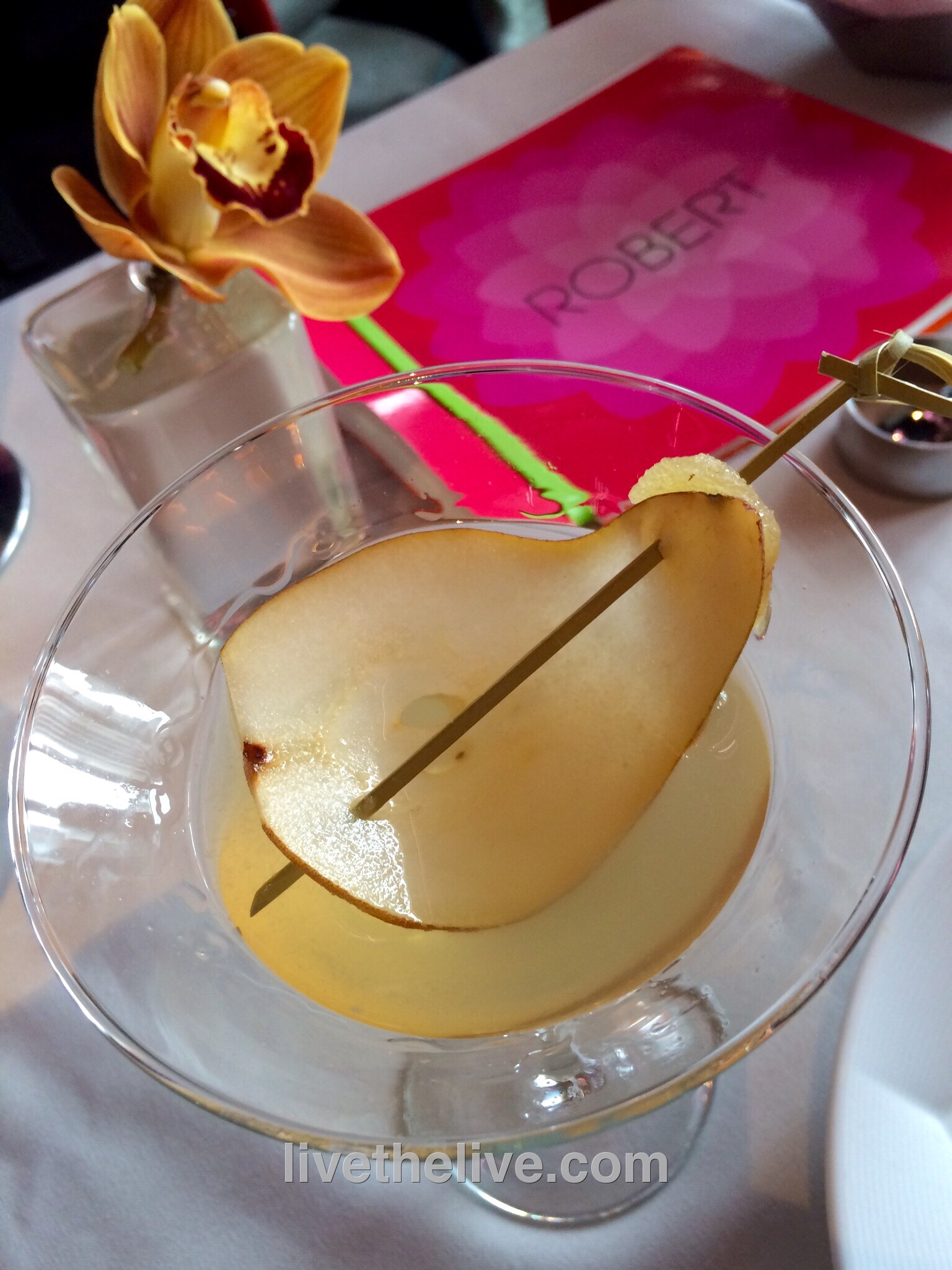
It’s not a Leap Year this year (next year is), but that doesn’t mean we should wait another year for a taste of a Leap Year Cocktail.

This special drink was created in 1928 by Harry Craddock, who worked at the American Bar in London at that time.

FullSizeRender (2)


2 oz. gin

1/2 oz. Grand Marnier

1/2 oz. sweet vermouth

1/4 oz. fresh lemon juice


Combine all the ingredients with ice in a cocktail shaker and shake vigorously for 30 seconds. Pour into a chilled martini glass and garnish with a twist of lemon.

Cheers!

I learned most of my Cajun dishes from the cookbooks of one of the masters: chef Paul Prudhomme. Sometimes, I’d use some of his great seasoning ideas in my own dishes. This was one of them. I would cook huge batches of these chicken breasts for my Mardi Gras parties and there would never be any leftovers! Don’t wait for Fat Tuesday to come around again to make these yourself.

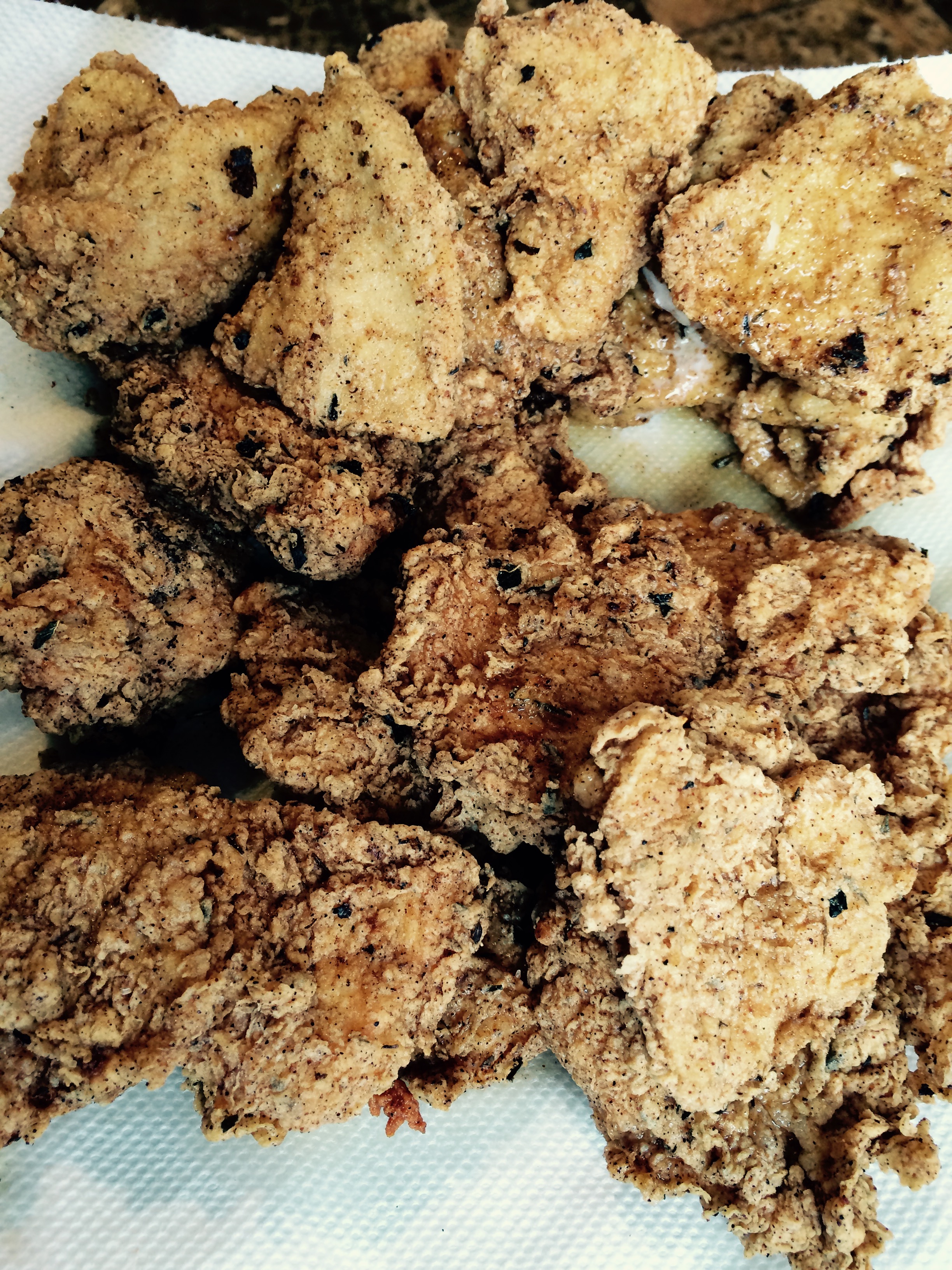
Double-dipping in the seasoning mix is a messy step, but it makes them extra crunchy and flavorful.

Single-dipped breasts are at the top. The extra crunchy double-dipped are at the bottom.

Single-dipped breasts are at the top. The extra crunchy double-dipped are at the bottom.


1 cup all-purpose flour

1 tablespoon salt

1 1/2 teaspoons sweet paprika

1 teaspoon granulated onion

1 teaspoon granulated garlic

1 teaspoon basil

1/2 teaspoon white pepper

1/2 teaspoon cayenne pepper

1/2 teaspoon black pepper

1/2 teaspoon dried thyme

1/2 teaspoon gumbo file (file powder), optional


2 pounds boneless, skinless chicken tenders or breasts

3 eggs

oil for frying (I like using avocado oil and some pork fat for flavor)


Cut the chicken breasts into manageable pieces. If they’re thick, slice them horizontally to make two thinner breasts. A thick piece of chicken won’t cook all the way through.

Combine the flour, salt, paprika, onion, garlic, basil, white pepper, cayenne, black pepper, thyme and gumbo file in a bowl. Mix well.

In another bowl, crack and scramble the eggs.

Single dip: Dip the chicken in the egg and then the flour mixture. Shake off an excess and place in a pan with oil that has been heated to 350 degrees on a thermometer.  Fry until it’s cooked all the way through. Drain on paper towels.

Double-dip: Dip the chicken pieces in the egg, then the seasoning mix, then the egg, then back in the seasoning mix and place directly in a pan with oil heated to 350 degrees on a thermometer. Fry the chicken until it’s cooked all the way through and golden brown. Drain on paper towels.


If you need to feed a crowd, just double or triple the recipe. I used to make a 10x batch for my Mardi Gras parties!

This recipe is gluten-free if you substitute GF flour for the all-purpose flour.


MY 1000TH LIVETHELIVE.COM TWEET!

Posted: February 24, 2015 in Uncategorized

Thanks for following! 110 on Twitter. 268 on Facebook. And 600 followers at livethelive.com!

Cheers!

Bondtini2

You’d think it would be Cinco de Mayo, but February 22nd is National Margarita Day! My personal recipe, called the Algarita, uses no sour mix…just 4 basic ingredients. I still have a small stash of the Honeybells mentioned here, but the original recipe, below, uses pineapple juice. Cheers!
My wife’s aunt in Florida sends us an awesome gift every year. It’s a box of Cushman’s HoneyBells. They look like fiery red bell-shaped oranges, but they’re not really oranges at all.
 image
HoneyBells are a unique natural hybrid of Dancy Tangerine and Duncan Grapefruit. The plants are grafted to a sour orange root-stock, and when the tree reaches maturity, it looks just like a grapefruit tree…but with oranges growing on it. They’re available for a very short time in the winter.
I usually make my signature margarita, the Algarita, with pineapple juice. But when I get those HoneyBells in the mail, my recipe takes on a new twist:
 image
HONEYBELL ALGARITAS
2 oz. Patron silver tequila (3 oz. is even better!)
1/2 oz. Cointreau orange liqueur
4 oz. pineapple juice (or fresh-squeezed HoneyBell juice, when in season)
1/2 oz. fresh-squeezed lime juice
Fill a cocktail shaker or tall glass with ice and add all the ingredients. Stir vigorously. Pour into a large margarita glass. Garnish with a lime wedge. Salt optional.
 image

Back in the 80’s, I worked at a radio station in Mobile, Alabama. My New York buddies thought I was crazy to move to the South, but that’s where the job was. When they realized that I was only a 2-hour ride from New Orleans, I wasn’t so crazy after all! What a great town. I spent every possible weekend there: the food, the music, the people…

When I moved to Rhode Island, I really missed all the fun of the Big Easy. So I decided to have a Mardi Gras party every year. I’d invite 80+ people, and I cooked all of the dishes myself. (Not bad for a single guy!) I made all the classics: red beans and rice, crawfish etouffe, gumbo, and jambalaya.

I still can’t imagine a Fat Tuesday without it.


image

For the seasoning mix:

2 bay leaves

1 teaspoon salt

1/2 teaspoon white pepper

1 teaspoon granulated garlic

1/4 teaspoon cayenne pepper

1/4 teaspoon black pepper

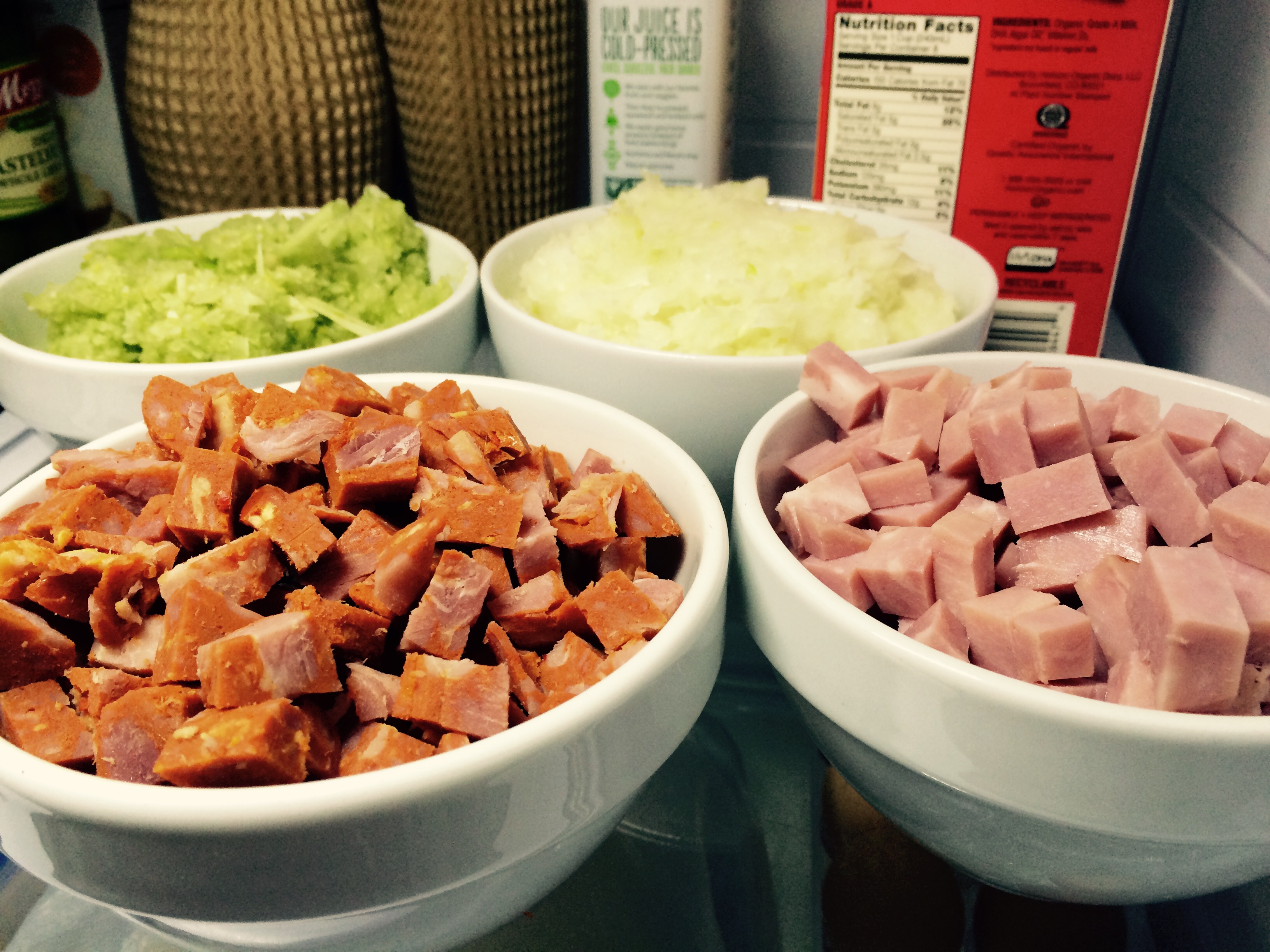
I find it easier to measure and chop all the ingredients before I start cooking.

I find it easier to measure and chop all the ingredients before I start cooking.


4 tablespoons olive oil

1 1/2 cups finely chopped onions, in all

1 1/2 cups finely chopped celery, in all

1 1/2 cups good quality chopped ham

1 1/2 cups chopped andouille sausage (Here in RI, I use local Portuguese chourico from Mello’s in Fall River, MA)

1 teaspoon cayenne pepper sauce (I use Frank’s Red Hot)

3/4 cup tomato sauce made from pureed whole tomatoes

2 cups uncooked rice (I like Texmati brown basmati rice)

3 cups chicken stock

1 lb. peeled and de-veined wild-caught American shrimp


image

Over medium-high heat, heat the olive oil in a large sauce pan. Add 3/4 cup of the onions and 3/4 cup of the celery. Cook until the onions are translucent.

Stir in the seasoning mix, then the chopped ham and the chourico, and then the cayenne pepper sauce. Cook until the onions are a dark brown, about 20 minutes, stirring constantly.

Add the remaining 3/4 cup of the onions and celery. Cook about 5 minutes.

Open a can (28 oz.) of tomatoes and puree in a food processor to make sauce. Add 3/4 cup of this and cook for about 5 minutes.

Stir in the rice, mixing well. Reduce the heat and simmer for about 12 minutes.

Add the chicken stock, stir well, and bring to a boil. Then reduce the heat and simmer covered over very low heat until the rice is tender but firm, about 15 minutes.

Remove the cover, toss in the shrimp, stir, then put the cover back on and cook for 5 minutes more.


Sometimes it’s hard to get wild-caught American shrimp at my local seafood store or supermarket. But for me, buying tiger shrimp or other Asian products is not an option. Once I learned about how they are farmed, I decided I’d never eat those shrimp again! Now I get my wild-caught Louisiana shrimp from a company I’ve been buying all my Cajun foods from for over 2 decades: http://www.cajungrocer.com. Not only will you find shrimp there, you’ll find many other Cajun classics: King cakes, Turduckens, andouille and alligator sausage, even live crawfish. And the price of their shrimp, even with shipping, is the same as the Asian shrimp you buy in the store. Make some room in your freezer, order large to save, and stock up on the real deal!


Julia Child was my first guide for many of the go-to dishes that I still make today. My Mom and I would watch “The French Chef” on WNET, Channel 13, our PBS station back home in New York.  Later, I’d start buying Julia’s cookbooks, and I was lucky enough to not only interview her, but meet her just a few years before she passed away. She was a lovely, down-to-earth lady, and someone I’ll never forget.

The classic rustic galette was the first dessert I learned how to bake, straight from the pages of “Baking with Julia.” I generally stayed away from desserts because cooking them required a lot of exact measurements, and that just wasn’t my style of cooking. So when I saw that this rustic galette required none of those things, and yet tasted absolutely delicious, I realized I had found my dessert! And the galette was versatile: I could use whatever ripe fruit I could get my hands on, so it became a dessert that changed with the seasons.

With my wife’s dietary needs changing, I decided I’d attempt a gluten-free version of the classic galette. The original recipe for the galette dough was one that I could make a couple of days ahead of time, wrap in plastic and keep in the fridge. Then it was simply a matter of bringing the dough back to room temperature before I rolled it out, added the filling, and put it in the oven.

Gluten-free doughs, however, are a bit more high-maintenance. I found that making the dough ahead of time was not an option. I’d remove the dough from the fridge, only to have it fall apart in my hands, with the consistency of Play-Doh. I was still able to form it into a round shape, but it had no elasticity and it just crumbled in my hands.
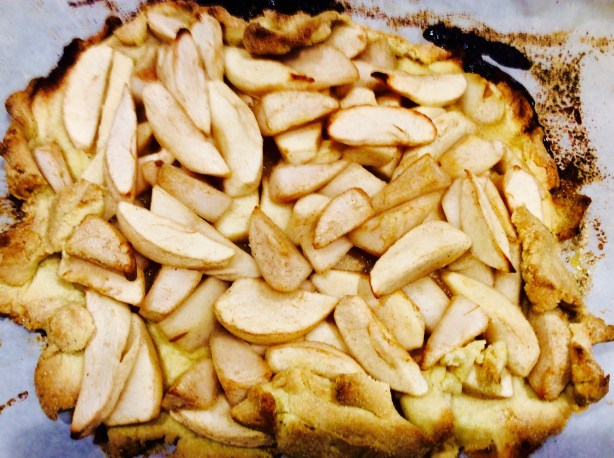
I used apples, and couldn't even fold the dough over the sides because it kept crumbling. Despite the fact that it wasn't too pretty, it tasted great!

I used apples, and couldn’t even fold the dough over the sides because it kept crumbling. Despite the fact that it wasn’t too pretty, it tasted great!

So now I make the dough right before I want to use it. You can make the dough by hand, but I use a food processor.


For the dough:

3 tablespoons sour cream

1/3 cup ice water

1 cup all-purpose flour (I use gluten-free)

1/4 cup yellow cornmeal

1 teaspoon sugar

1/2 teaspoon salt

7 tablespoons cold unsalted butter, cut into about 8 pieces


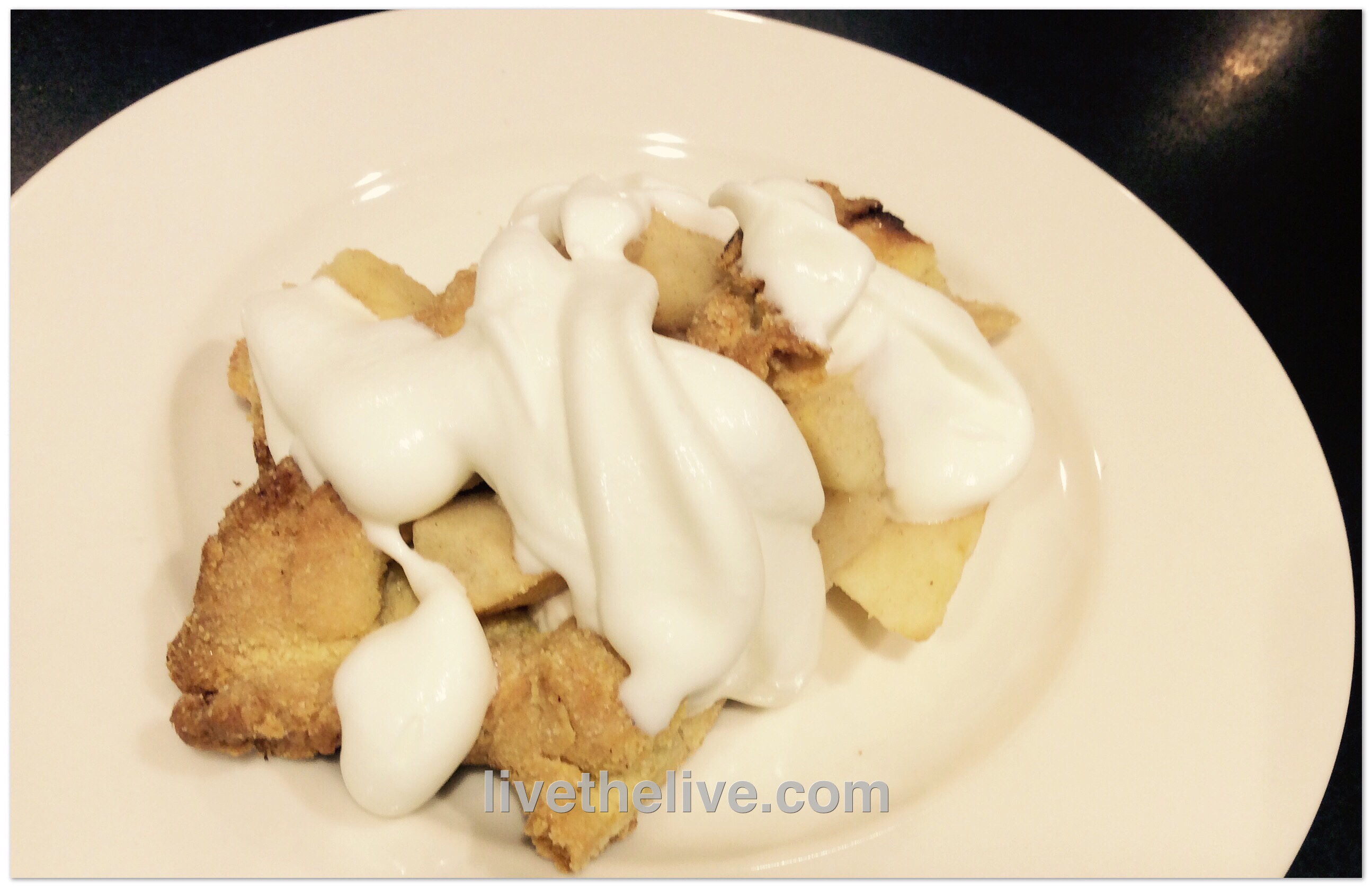
Everything looks better when you cover it with whipped cream!

Everything looks better when you cover it with whipped cream!

For the berries: (per galette)

1 1/2 cups mixed fresh berries or cut-up peeled fruit (I used apples)

1 tablespoon plus 1 teaspoon sugar

1 tablespoon cold, unsalted butter


Stir the sour cream and 1/3 cup ice water together in a bowl and set aside.

Put the flour, cornmeal, sugar, and salt in the work bowl of the food processor fitted with the metal blade and pulse to combine.

Drop the butter pieces into the processor and pulse 8 to 10 times, or until the mixture is speckled with pieces of butter about the size of a pea. With the machine running, add the sour cream mixture and process just until the dough forms soft, moist curds. Don’t overdo it!

Remove the dough from the processor, divide it in half, and press each half into a disk. If you’re not using gluten-free flour, wrap the discs in plastic and chill for at least 2 hours.

If you’re  going gluten-free, line a baking sheet with parchment paper for each disc of dough. Put the dough on a lightly (GF) floured work surface and roll it into an 11-inch circle that’s about 1/8″ thick. Carefully transfer it to the prepared baking sheet. If it falls apart, just press it back together on the parchment. (It’ll still taste great!)


Position a rack in the lower third of the oven and pre-heat to 400.


Spread the berries over the dough, leaving a 2 to 3-inch border. Sprinkle 1 tablespoon of the sugar over the fruit. Cut the butter into slivers and scatter it onto the fruit. Fold the uncovered border of the dough over the filling, allowing it to fold naturally onto itself as you lift it and work around the galette. It’s supposed to look rustic, so don’t sweat it. Dip a pastry brush in water, lightly brush the edge of the crust with it, then sprinkle the remaining teaspoon of sugar onto the crust.

Bake the galette for 35 to 40 minutes, until it’s golden and crisp. Move the baking sheet to a cooling rack and let the galette cool for 10 minutes. Serve warm or at room temp. Use a pizza wheel or sharp knife to cut into slices.


A little whipped cream never hurts!


This is so cool, I had to post it. A couple has been taking care of a legendary hotel in Montana’s Glacier National Park and has been snowed in since October! And we thought we had it bad here in New England!

It’s called the Many Glacier Hotel, and I stayed there with my buddy, Lee, back in 1989. A magnificent hotel, construction started in 1914 and was completed just 1 year later. The Great Northern Railway was building a series of chalets and hotels to establish Glacier National Park as a destination. They called it “the American Alps.”

The breathtaking scenery from any room at the Many Glacier Hotel. (Not my photo.)

The breathtaking scenery from any room at the Many Glacier Hotel.

The frame of the hotel consists of massive tree trunks crisscrossing to create an unbelievable structure. It’s hard to imagine how these things were lifted into place with the simplest of tools. It’s a place I will return to, someday, with my family.

The spectacular interior of the Many Glacier Hotel. (Not my photo.)

The spectacular interior of the Many Glacier Hotel.

We visited Glacier National Park the week before Labor Day, and temperatures were above 90 degrees every day. The main scenic route through the mountains, known as the “Going to the Sun Road,” officially closed on Labor Day, and we couldn’t figure out why, since we were sweating out butts off at the end of August. When we got home from our trip, a massive snowfall hit the area the day after Labor Day, and shut everything down. Those folks in Montana knew what they were doing. I’ve never doubted them since.

The photos posted here are the first I’ve ever posted on livethelive.com that don’t belong to me. I have an album full of photos from my Montana trip, and it’s lost somewhere in storage boxes. So I had to settle for these.

Here’s the article about the couple taking care of the hotel. “All work and no play makes Jack a dull boy!”

https://www.yahoo.com/travel/couple-all-alone-in-a-montana-hotel-for-the-winter-110297189427.html

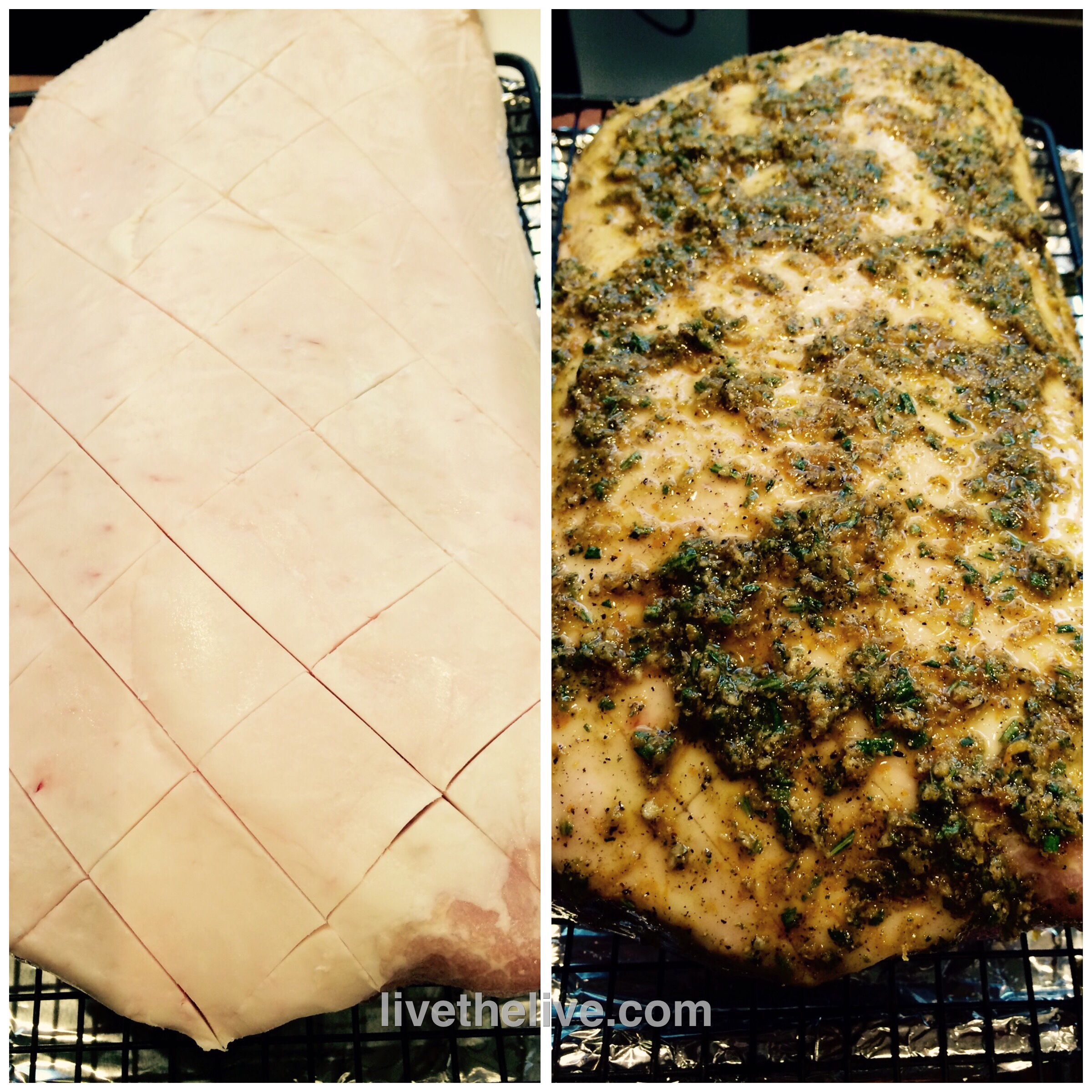
The “paste” used in this dish is really more like a citrusy pesto that you smear all over the meat before cooking, preferably the day before. The citrus flavors work really well with the pork, and the initial high-heat cooking really gets the fat crispy and delicious.

image

Ingredients:

1 pork loin, about 8 lbs. (I use Berkshire pork)


zest of 2 oranges

zest of 1 lemon

1 tablespoon fresh rosemary, chopped

1 tablespoon fresh sage, chopped

1 tablespoon Kosher salt

2 teaspoons black pepper

3 cloves garlic, through a press

1/4 cup olive oil


In a food processor bowl, combine the orange and lemon zest, the rosemary, sage, salt and pepper, and garlic. Pulse the processor just to mix, then turn it on and add the olive oil slowly, in a stream, until you get what resembles an oily pesto.

Score the fatty side of the pork loin with a knife in a diamond pattern. Rub the paste on all sides of the pork, but especially into the cracks of the fatty side.

Lay the loin down on a rack, raised off a sheet pan, fatty side up. Place it in the fridge, unwrapped, overnight.

The next day, about an hour before cooking, remove the loin from the fridge and let it come back to room temperature.

Pre-heat the oven to 450 degrees.

Bake the pork loin at 450 for 20 minutes, then cut the heat to 350 and cook until the pork reaches a temperature of 140 degrees (light pink). Let it rest for 15 minutes before serving.

image

There are few carbs in this preparation, because I use just the zest of the citrus and not the juice.

I always thought that spaghetti squash was a sort of “gimmick” vegetable. Who really ate this thing? I mean, if I wanted squash, I’d just buy a zucchini, chop it up and cook it. Why do I need a food that resembles another food I like?

Well, the answer to that question came to me when I could no longer eat the other food: pasta, because I was on a low-carb, no-carb diet. I was making meatballs and I was craving pasta. So I grabbed a couple of spaghetti squash at the store.

Cooking them certainly was easy. I washed them, cut them in half, and removed the seeds and membrane stuff with a spoon. I flipped them onto their backs, skin side down, and drizzled some extra virgin olive oil on them. A little sea salt and pepper, and then I flipped them back down, skin side up, on a sheet pan lined with non-stick aluminum foil. Into a pre-heated 350 degree oven for 30–40 minutes. When they were soft to the touch, I removed the sheet pan from the oven, flipped them back over again, and let them cool to room temperature. Then I simply spooned out the flesh, and it came out in strands, like spaghetti.

image

While the squash roasted in the oven, I made the meatballs. My wife is on a gluten-free diet, so I used gluten-free bread crumbs. The carb count of GF bread crumbs is about the same as regular bread crumbs, around 75 carbs per cup. I used 1 cup to make 25 meatballs, so they had about 3 carbs a piece. Not super low carb, but not awful.

Here’s how it went down…

image

For the balls…

1 lb. pastured ground veal
1 lb. ground grass-fed beef
1 cup GF breadcrumbs
2 eggs, cracked and scrambled

2 tablespoons dried parsley

2 tablespoons dried oregano

1 tablespoon dried basil

1 tablespoon granulated garlic

1 tablespoon granulated onion

1 teaspoon black pepper

2 teaspoons salt


Mix all the ingredients in a large bowl and form into meatballs. Place them in a hot pan with 1/4 cup of extra virgin olive oil. Cook until the meatballs are browned on all sides.


For the sauce…

2 cans (28 oz.) of tomatoes, pureed

olive oil

1/2 onion, finely chopped

1 tablespoon dried parsley

1 tablespoon dried oregano

1 teaspoon dried basil

1 teaspoon granulated garlic

2 teaspoons salt

1/2 teaspoon fennel seeds

1/2 teaspoon anise seeds


In a large pot, saute the onions in a little olive oil until translucent. Add the pureed tomatoes and cook at medium heat until the foam disappears.

Add all the herbs and spices and mix well. Continue cooking on medium heat, lowering to a simmer if the sauce seems to be boiling too hard.

Add the meatballs to the sauce when the meatballs have been browned on all sides. Pour the entire contents of the meatball pan, including the olive oil and fat, into the tomato sauce pot.

Make sure all the meatballs are covered with the sauce. Place a lid on the pot, and simmer for at least an hour, until the meatballs are cooked all the way through.

image

To serve:

Scrape the spaghetti squash with a spoon and place a mound of it in the center of the serving dish. Top it with the meatballs and sauce. Grate some Parmigiano-Reggiano over the top, or do what I did this time, and cut a slab of mozzarella di bufala into small cubes and toss on top. A little sprinkle of oregano and olive oil for good measure on top.