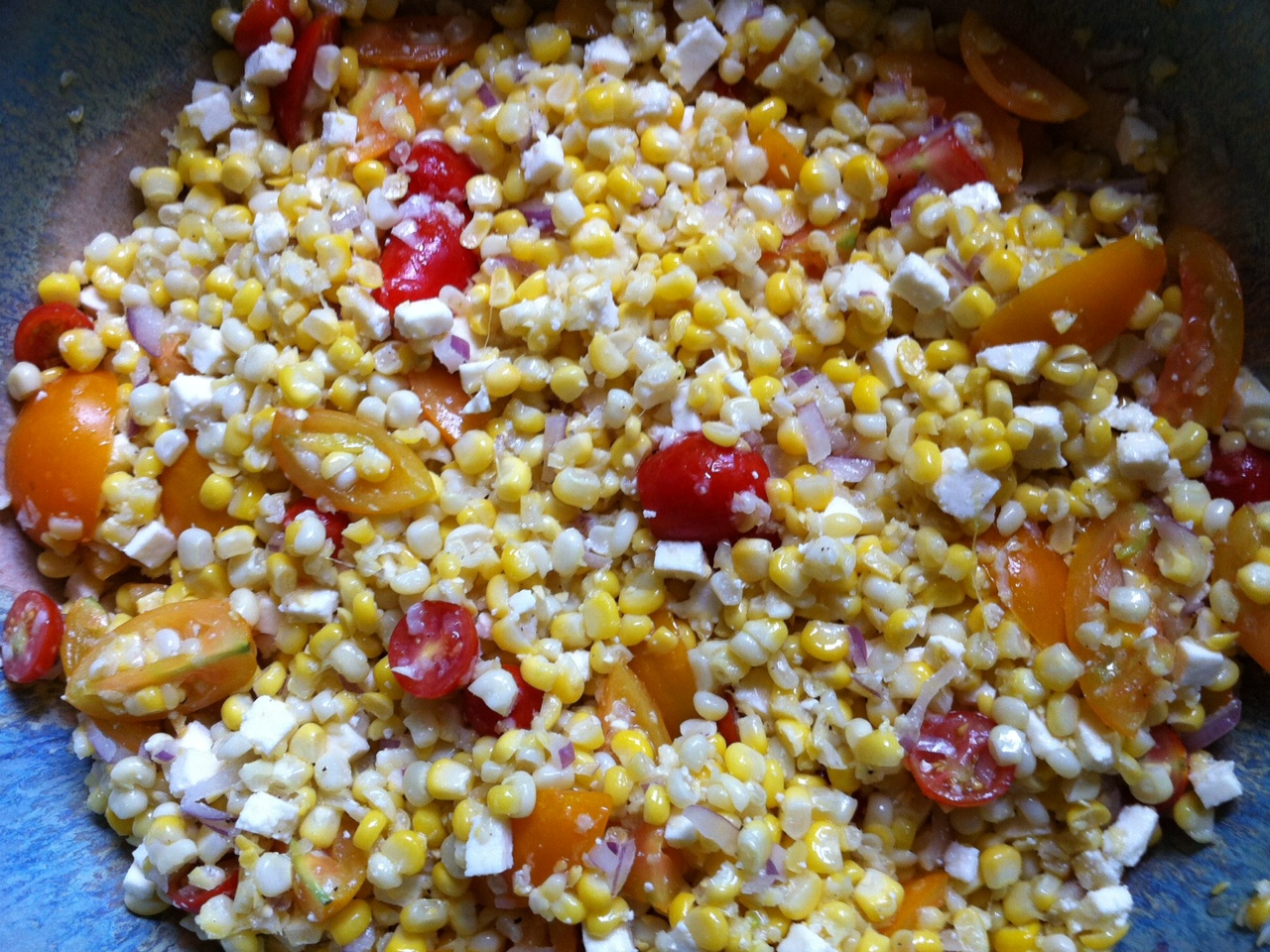
Corn and tomatoes…when they’re in season, you just can’t beat the combination! This is a very simple salsa that takes advantage of their natural sweetness and is easy to make.

salsa


Ingredients:


1 lb frozen organic corn or equivalent fresh

2 ripe tomatoes, seeded and chopped

1/4 small red onion, finely chopped

6 oz mild crumbled cheese, like feta, cotija, or queso fresco

1 teaspoon Fleur de Sel

A pinch of black pepper

2 teaspoons white vinegar

2 tablespoons extra virgin olive oil


If using fresh corn, remove it from the ears, then pan saute  in a little olive oil, but leave it nice and crisp. If you can roast the ears of corn over some coals, even better. Let it cool.

Mix corn with all the other ingredients in a bowl. Cover and refrigerate.

The cukes are taking over my garden! Time to make soup!

The original cucumber soup recipe comes from Ikies Traditional Houses, a wonderful hotel in the beautiful town of Oia in Santorini, Greece. After a long, hot day of exploring this beautiful island, we settled down to a refreshing bowl of cucumber soup. They were nice enough to share the recipe with us, and a few tweaks later, it’s my definition of perfect.

cuke soup


Ingredients:


3 English cucumbers or 5 regular cucumbers, peeled, seeded and roughly chopped

1 clove garlic, crushed

1 cup vegetable stock, preferably home-made

4 cups plain full- fat yogurt, preferably Fage Greek yogurt

1/2 cup fresh mint leaves

Juice of 1 lemon

Fleur de Sel and pepper


Peel, seed and chop the cucumbers and place in a blender with garlic, stock, 2 cups of the yogurt, mint leaves, lemon juice, 2 teaspoons Fleur de Sel, and a grating of fresh black pepper.

Turn on blender and mix well. Stop blender and then add remaining 2 cups of yogurt and mix by hand.

Pour cucumber soup in bowls. Garnish with diced cucumber or radish.


To make the vegetable stock, boil chopped carrots, celery and onion in a large pot of water for an hour, reducing by half. Strain the veggies before using the stock. You can roast the veggies on a sheet pan in a hot oven for a bit before adding to the water for an even richer flavor.


Here in New England, the best brand of chicken salad you can buy is called Willow Tree. It’s been here for over 50 years, and people crave it like crack. But I don’t like anything whose ingredients are a well-kept secret, so my task was to make something that was a reasonable Willow Tree facsimile. I got close enough. As always, I use pastured chicken and organic veggies when possible.

image


Ingredients:


1.5 lbs boneless skinless chicken breasts

4 pints salt-free chicken stock, preferably home made

1/2 cup mayonnaise, preferably Hellman’s

1/4 cup finely chopped celery

2 tablespoons finely chopped Vidalia onion

1 teaspoon light brown sugar

1/8 teaspoon granulated garlic

1/2 teaspoon salt

1/8 teaspoon black pepper


Heat the chicken stock in a large pot. Bring to a boil and add the chicken breasts. Bring to a boil again, then simmer uncovered for about 7 minutes. Turn the heat off, cover the pot with a lid, and let the breasts sit in the pot for at least 30 minutes. After 30 minutes, remove the breasts to a cutting board and allow them to cool.

Meanwhile, in a large bowl, combine mayonnaise, celery, onion, brown sugar, granulated garlic, salt and pepper. Mix thoroughly to combine.

When the chicken has cooled, shred the breast meat into bite-sized pieces and then transfer into the bowl with the mayonnaise mixture. Mix thoroughly and chill before serving.

I love my chicken salad on a Martin’s Long Roll.


BONUS: There’s a lot of tasty chicken stock left over in the pot. I don’t waste it! I chop some carrots, celery and onion and throw it in there. I reserve some of the chicken breast meat–just a bit–and throw it in there, too. I add a little salt and pepper, and a pinch of dried Bouquet Garni. I bring it to a boil, then reduce the heat to a simmer and cook until the veggies are al dente.

Makes an awesome chicken soup!


image image image

By now, I’m sure you’ve seen those videos where the person takes corn still in the husk, pops it in the microwave, and then slips out a perfect ear of corn without any silk minutes later. If you haven’t, here’s one of them…

There are 2 problems with this method: 1) It takes forever to do a dozen ears…and 2) It ruins the damn corn!

corn1

Here in New England, people lose their minds over fresh corn. They rush to farm stands first thing in the morning, and knock each other over to grab the largest, freshest ears they can find. Much to the chagrin of farmers, they peel the stalk off the top of a dozen ears before they find the one they want to keep. It’s an embarrassing scene usually reserved for morons fighting over sale items at Wal*Mart.

So why, then, if you’re that passionate about fresh corn, do you stick it in a microwave and nuke the living hell out of it? Fresh corn needs a minimalist approach. It should be eaten practically raw…not bombarded with gamma rays and dehydrated in to shriveled kernels.

I love my corn right off the cob…and I still stick to the tried-and-true method of putting it in a pot of water and boiling it for a very short time. Do I get a few strands of silk? Sure. That’s part of the deal. Real corn has silk…just like real fish has bones. Get over it.

My wife and daughter like their corn off the cob. In that case, I shuck the corn, stand the ear up in a bowl while it’s still raw, and slice down with a knife to remove the kernels. I then lightly saute the corn in a pan with unsalted organic butter and a pinch of Fleur de Sel. Those pieces that have several rows of kernels, across and down, are the favorites.

corn2


One other way I’ve cooked corn is the “cooler corn” method, which is great when you have a large crowd to feed. Get your favorite cooler and make sure it’s clean inside. Shuck your corn and place the ears in the cooler. Boil a large pot of water on the stove and then pour the hot water over the corn. Close the cooler lid tightly and let it sit for about 30 minutes. You will have perfect corn every time.

Lastly, although it’s probably tough to find these days, go for organic non-GMO corn when possible. If your local farmer doesn’t grow it, give him a rash of crap!


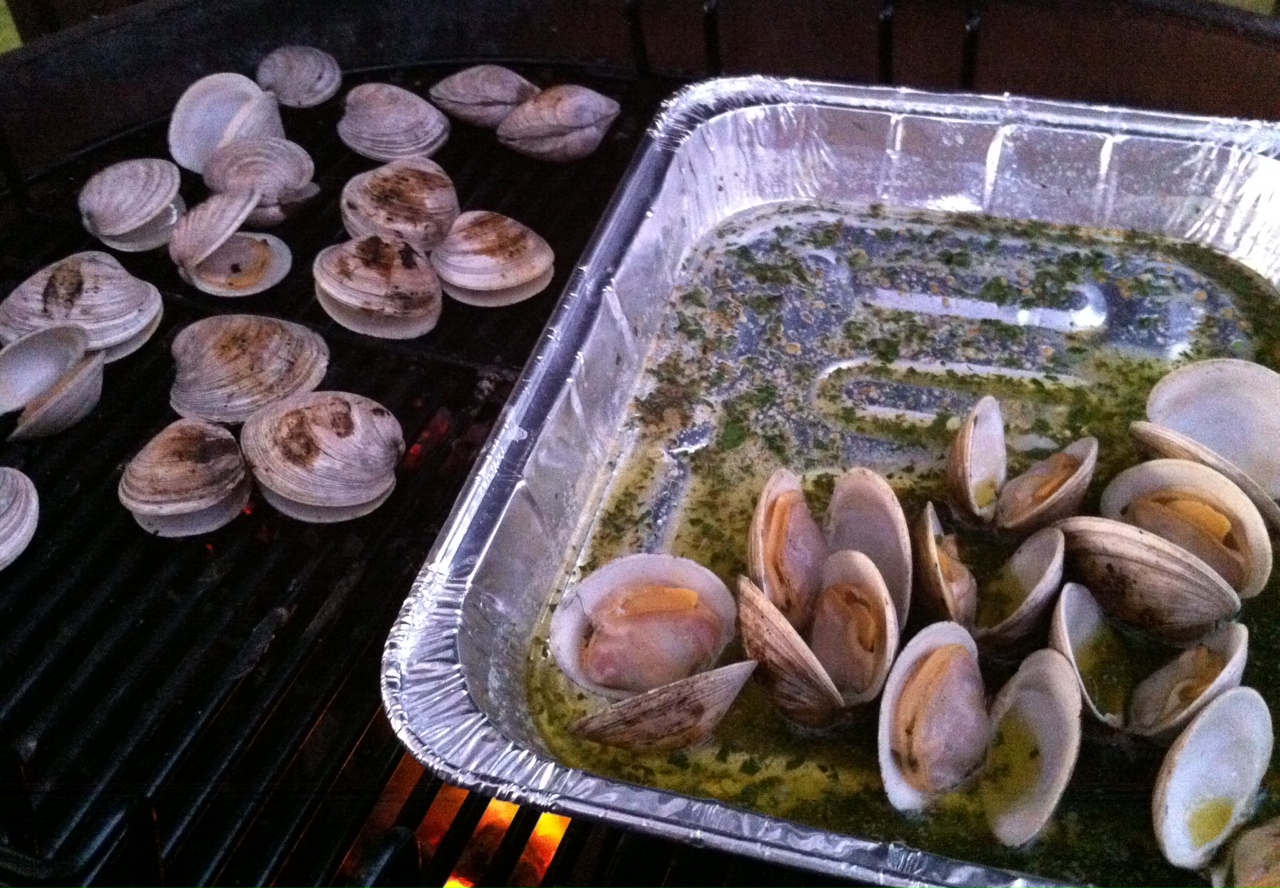
One of my favorite ways to enjoy clams…and without the clam knife! When you’ve got to feed a crowd, this is a delicious way to do it. Cooking clams on the grill is one of the tastiest ways to enjoy these awesome mollusks. I used sugar maple hardwood charcoal to get that true smokey flavor.

Although I live on the other side of the state, I love visiting my friends at American Mussel Harvesters in North Kingstown, RI. The quality of their seafood is second to none, which is why they supply so many area restaurants with their products. They feature “restaurant ready” mussels, meaning they’ve been cleaned and de-bearded. And their “restaurant-ready” clams mean they’ve been purged to perfection! (www.americanmussel.com) I use ’em whenever I can.

clams on the grill

Ingredients:

A couple of dozen (or more) little neck clams, washed and purged

1 stick (8 oz) of unsalted butter

1/4 cup extra virgin olive oil

1/4 cup chopped parsley

1 teaspoon dried oregano

1/2 teaspoon dried basil

1 teaspoon minced garlic

1/2 teaspoon sea salt


Clams should be stored cold and dry in a fridge until ready to use…not in water, not on ice.

Because my clams have already been purged, I don’t have to do it at home. But here’s what to do if they haven’t been purged: Fill a large bowl with cold water, add sea salt and some corn meal to it, and mix it around. Add the clams to this bowl and let them purge in this liquid for at least an hour. They will suck up the corn meal and spit out sand and grit. After an hour, pour off the water/salt/meal/grit mix, and thoroughly wash the clams.

Start your hardwood charcoal grill and divide it in half: coals on one side, no coals on the other.

While the coals are heating up, grab a disposable aluminum foil tray and place it on a burner on your stove over medium heat. Add the butter, olive oil, parsley, oregano, basil, garlic and salt, and stir to combine. Once the butter has melted and everything has blended, bring the tray over to the charcoal grill and place on the side of the grill without coals. It will stay warm.

Once the coals are hot, just place the clams directly on the grill. (Use tongs, unless you want to remove all of your knuckle hair.) When they start to open, carefully flip them over, trying not to lose any of the precious juices inside the clam. Cook them for as long as you like, from raw, to more thoroughly cooked. As each one reaches its desired doneness, place it in the aluminum tray, making sure it gets swished around in the butter and herb mix.

When all the clams have been cooked and are in the tray, serve with a fresh baguette or even over pasta. A glass of great white wine is a must.

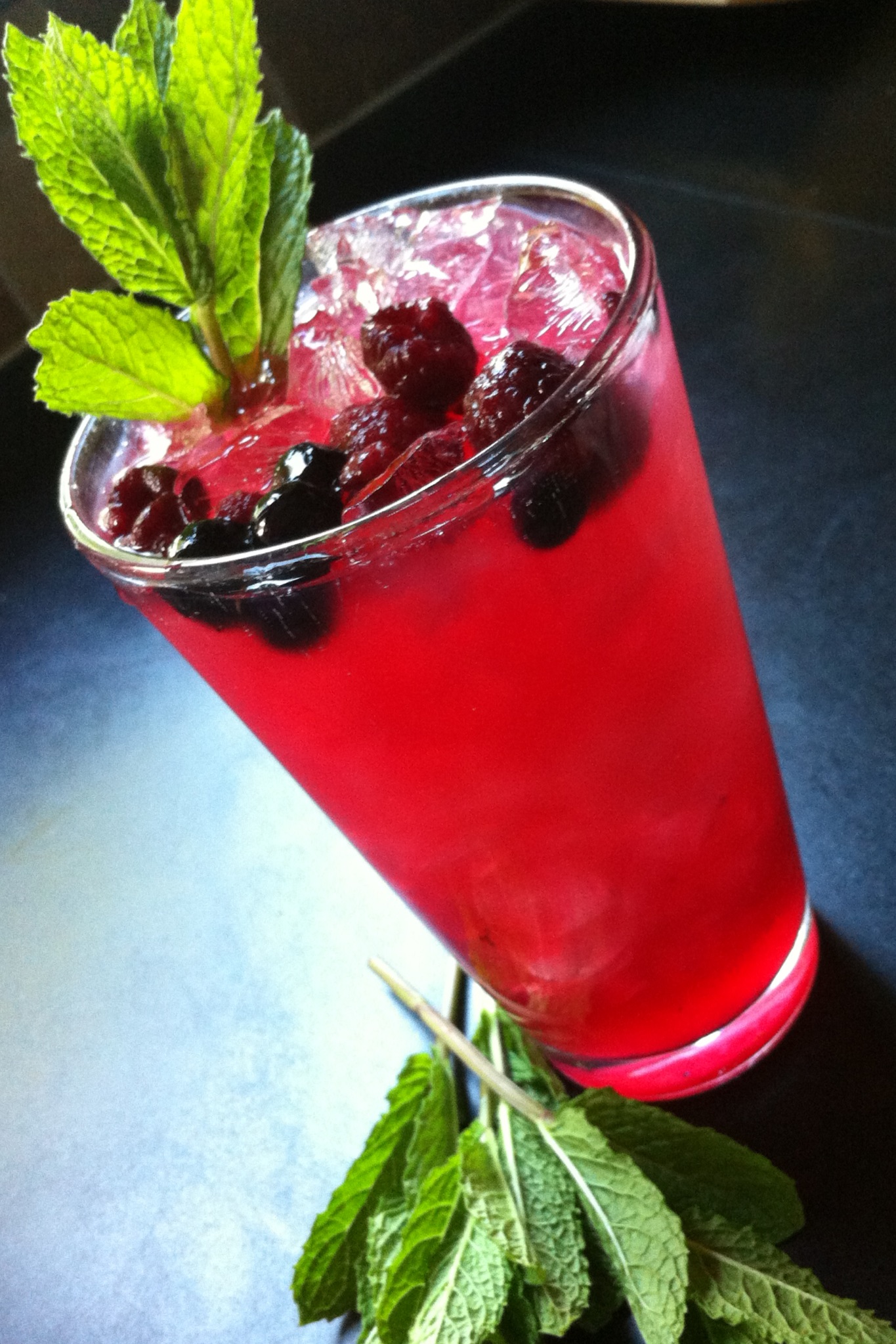
I love me my Mojitos, and they’re even better when I have fresh organic blueberries and raspberries to add to the mix. Frozen fruit works well, too. Make it by the pitcher and you’ll never make it any other way again!

The ingredients

The ingredients

Ingredients:

Make ahead of time…
1 1/2 cups fresh squeezed lime juice
1 1/3 cups turbinado sugar (Sugar in the Raw)

Mix both ingredients together and let stand at room temp. Shake until dissolved. The mixture can be covered and refrigerated for several weeks and ready to use any time. Shake well before using.

mojito pitcher

For the Mojitos…

1 cup sugar/lime mixture
1 cup mint leaves, packed
1/2 pint blueberries (fresh or frozen)
1/2 pint raspberries (fresh or frozen)
3 or 4 cups white rum, preferably Don Q Cristal rum
3 or 4 cups club soda

Combine mint leaves and 1/2 cup of sugar/lime mixture in bottom of a pitcher. Muddle mint up very well to release mint oils. Add blueberries and continue to muddle.

Add remaining sugar/lime mixture, rum and raspberries. Mix well. Just before serving, add club soda and ice. Stir. Pour into glasses.

Or…for drinks one at a time, fill a tall glass with ice. Fill one-third to halfway with club soda. Top with Mojito mix. Garnish with mint leaf.


Cheers!

Cheers!

The original maraschino cherries were a variety called marasca from Croatia, and that’s where the name comes from. But today’s maraschino cherry is a completely different animal. The modern American supermarket maraschino cherry (usually a variety called Queen Anne) is soaked in a salt brine to remove its natural color and flavoring…then pitted and soaked in a sweetener for around a month. The final step of dipping in artificial coloring gives the modern maraschino its neon red color (or any other color desired).

So why would any self-respecting bar that takes pride in its cocktails serve you these vile, rancid cherries? Especially when there are some incredibly amazing alternatives?

If you pride yourself in the quality spirits you drink…if you understand that every ingredient counts–from the mixers down to the quality of the ice cubes–then you need to get the right cherries for the job!

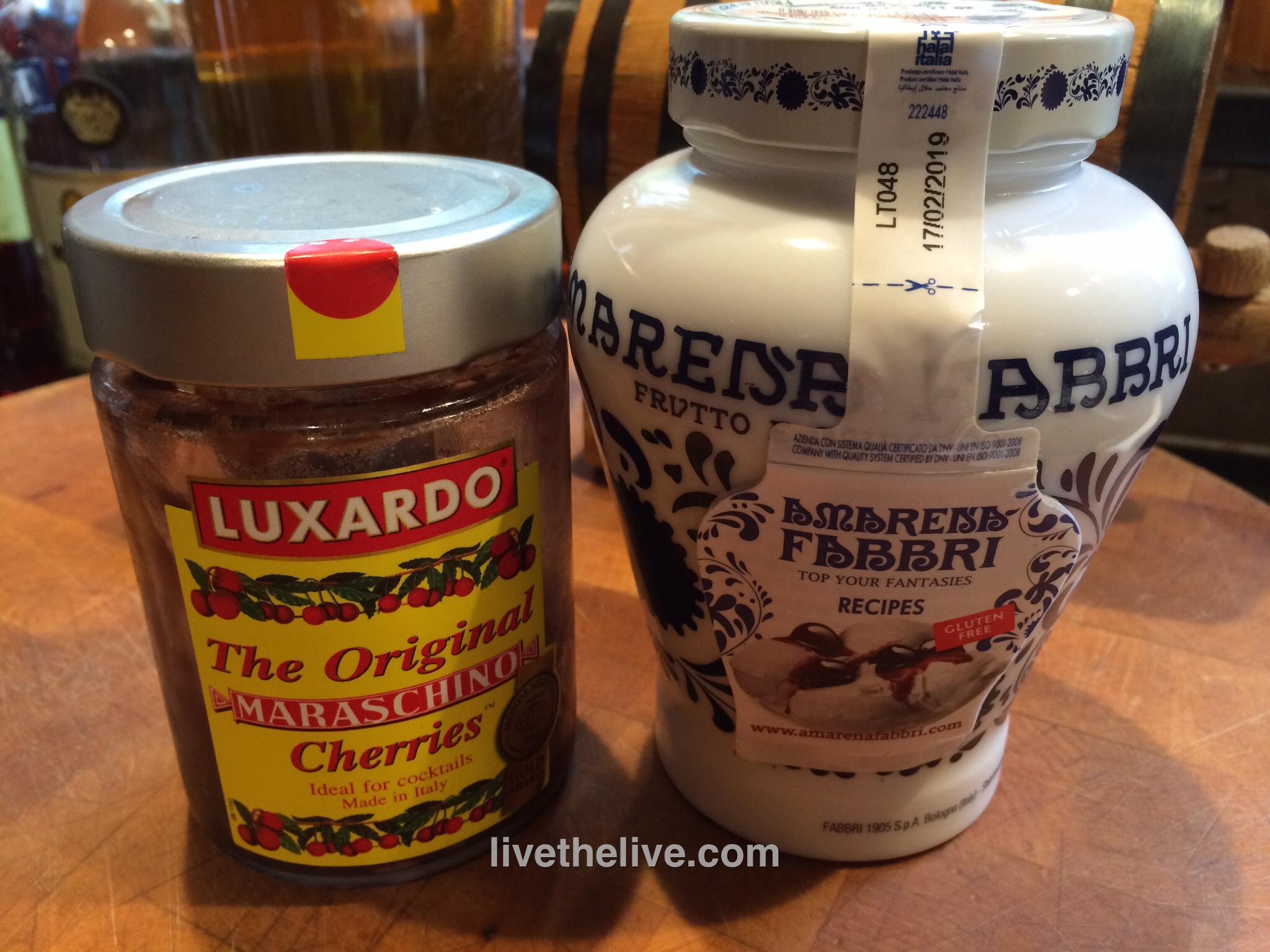
Luxardo cherries have always been the standard by which other cherries are ranked, and for good reason. Sip a Manhattan made with Luxardo cherries, and you will never go back to what you had before. It’s why they go for about $25 a jar and they are worth every penny. These are made with a recipe that dates back to 1821 in Italy, using genuine marasca cherries and their syrup.

cherry2


A recent trip to what has become my new favorite restaurant in Providence, RI, a tiny 20-seat restaurant called birch, opened my eyes to yet another fantastic cherry:

My Amarena Fabbri cherry awaiting my Manhattan at birch in Providence, RI

My Amarena Fabbri cherry awaiting my Manhattan at birch in Providence, RI

Amarena Fabbri wild cherries: made in Bologna, Italy since 1905, these are wild cherries that are carefully harvested and stoned, then preserved in amarena syrup. (The amarena cherry is a small, dark, bitter cherry grown in the Bologna and Modena regions of Italy.) Packaged in beautiful blue and white Opaline jars, I can’t think of a better gift for the avid mixologist. Also about $25 a jar.

Both the Luxardo and the Amarena Fabbri cherries are avilable at Amazon.


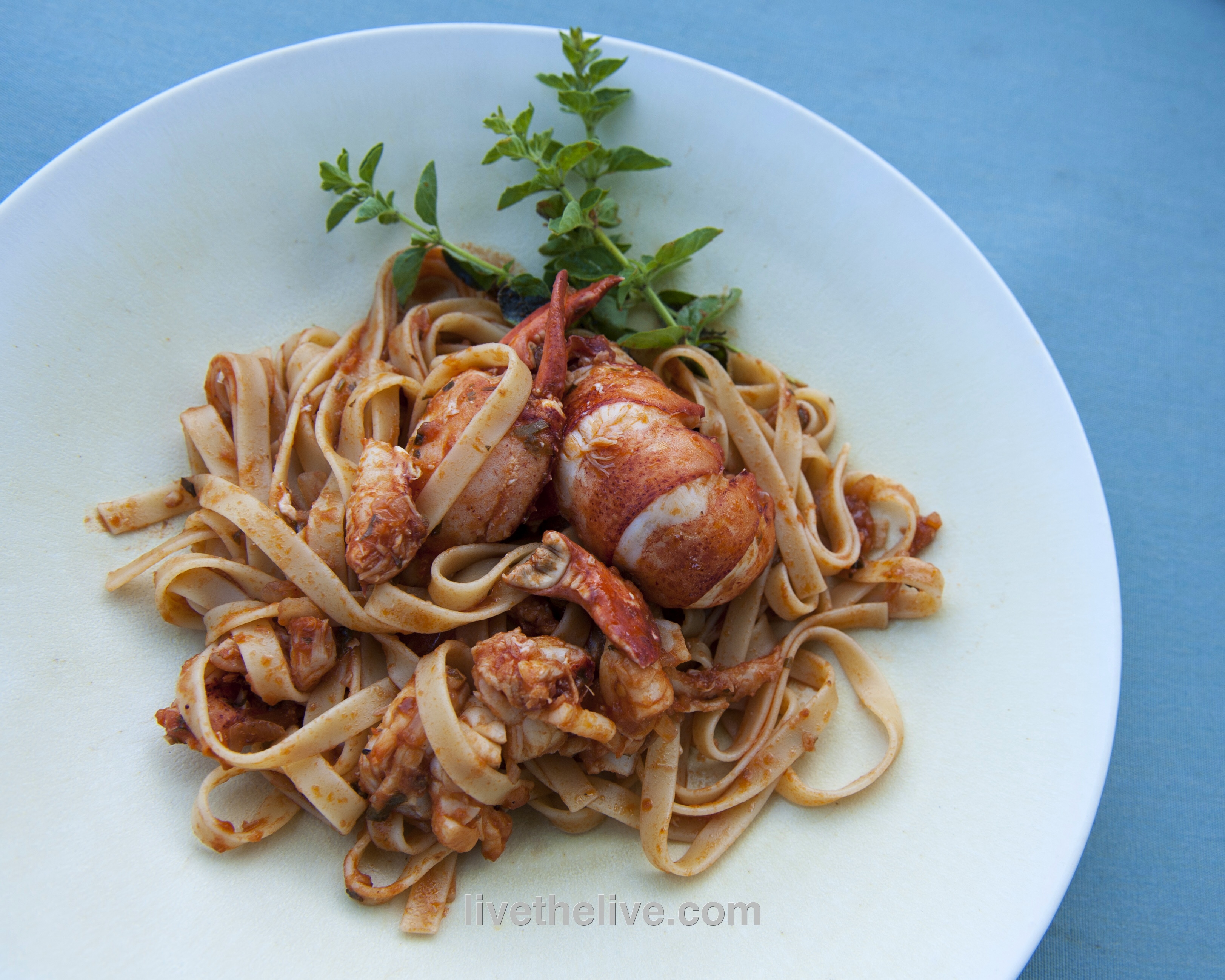
One of the most incredible dishes I’ve had on the beautiful island of Santorini, Greece, is lobster with pasta. It’s one of those dishes that takes time to prepare, because the pasta lobster sauce they make is a labor of love…time consuming but so spectacular.

Cooked lobster LTL

I often have friends over for dinner, but when I prepared this dish for them recently, it was the first time they all licked their plates clean!

To try to replicate that lobster sauce we had in Santorini, I started with a kick-ass lobster stock. It’s simple but flavorful:

Stock ingredients:

clean, empty claws, tails and bodies from two 1-1/2 lb. lobsters (use the legs, too)

12 cups water

1/2 onion

3 celery stalks

1 carrot

Place all ingredients in a large pot and set on high heat. Crush lobster shells with potato masher. Cook until it is reduced by half.

Strain the stock, discarding the lobster shells and veggies. Bring the stock back to the heat and reduce until all you have left is 1 cup of intense stock.

Now that you have the stock, you can make the sauce!

Pasta with lobster sauce

Sauce ingredients:

1/2 onion, finely chopped

1 garlic clove, finely chopped

pinch of Italian red pepper flakes

teaspoon parsley

extra virgin olive oil

1/2 cup lobster stock

1/4 cup San Marzano tomato sauce (see below)

splash of white wine (I use Alice white Chardonnay)

salt and pepper

1/2 lb. cooked pasta

Add some olive oil to a pan and saute the onions until translucent. Season with salt and pepper. Add the garlic and cook for 10 seconds. Add the red pepper flakes and parsley.

Add 1/4 cup of the lobster stock and let it cook, reducing by half. Add the other 1/4 cup of lobster stock and the tomato sauce. Let it cook for a couple of minutes and add the white wine. Cook for a few minutes more.

Cook pasta and drain even before it reaches the al dente stage. Place the pasta in the pan with the sauce, heating and coating thoroughly. Serve immediately.

For the San Marzano tomato sauce: I take a can of San Marzano tomatoes and place it in a food processor or Vita-Mix and blend until I get sauce. Pour into a pan and reduce over medium heat by half, until sauce has thickened.

Many people are choosing a gluten-free diet even though they don’t suffer from Celiac disease. Though many people stay undiagnosed, gluten sensitivity is pretty common. And even if you’re not sensitive to gluten, it can cause bloating, pain and fatigue. Many doctors are advising people to remove all or most of the gluten in their diets to see if they feel better as a result.

Gluten is a protein found in wheat and wheat products. So that means no bread, pasta, pizza, even soy sauce. Gluten is a hidden ingredient in many food products, so you need to do some research to figure out what alternatives are available. We’re pretty lucky…there are now entire sections of everyday food stores that carry gluten-free products.

I don’t have any sensitivity to gluten, and quite frankly, I find it hard to live without pizza or a nice slab of freshly baked bread now and then. And all the subsititute flours: rice, corn, quinoa, chickpea, or any combination of them–they all taste bad to me. But…I have a wife that has chosen a gluten-free diet. And since I’m the one that cooks all the meals at home, I’m making a valiant effort to find tasty alternatives.

I don’t spend my time baking gluten-free bread, cookies, cakes or other desserts. We have a great bakery nearby (www.evaruths.com) that does all that. Instead, I focus on the meals I’ve always made in the past and try to “de-glutenize” them.

Two of our favorite meals are chicken parmigiana and pizza.

The chicken parmigiana was relatively easy. The only gluten in my original recipe (http://wp.me/p1c1Nl-jq) was found in the breadcrumbs that I topped the chicken pieces with. I bought a package of Glutino gluten-free bread crumbs (made from corn) and the chicken came out pretty good. I still made a regular batch for myself…but my wife gave it a thumbs up.
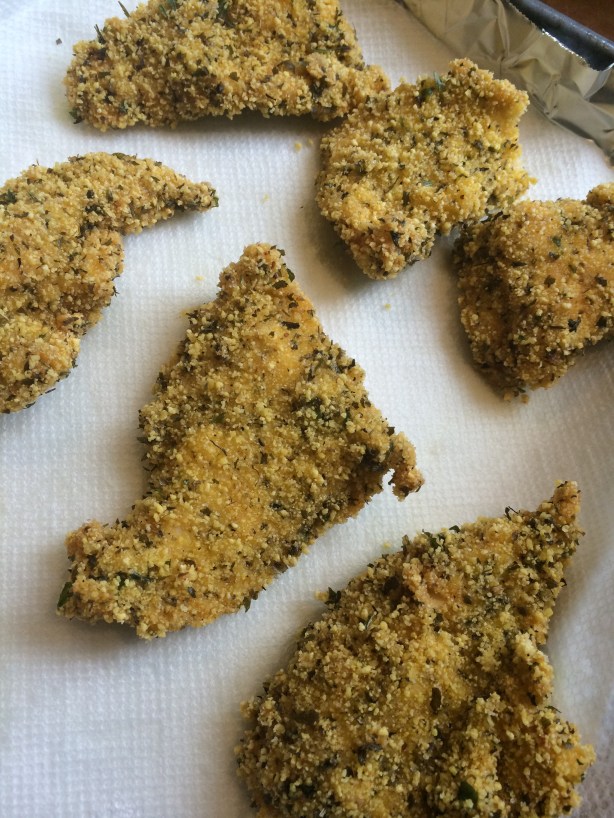
Gluten-free chicken before I added sauce and cheese.

Gluten-free chicken before I added sauce and cheese.

The tougher challenge was pizza. With dozens of flours to choose from, I wasn’t sure where to start. But I’m a fan of Bob’s Red Mill. I’ve been using their products for years. So when I saw they offered a Bob’s Red Mill All-Purpose gluten-free baking flour (a combination of garbanzo bean flour, potato starch, whole grain white and sorghum flour, tapioca flour and fava bean flour), I figured I’d make my first gluten-free pizza dough with that. I also learned that I had to buy some Xanthan Gum, a plant-based product that adds the elasticity that gluten usually provides.
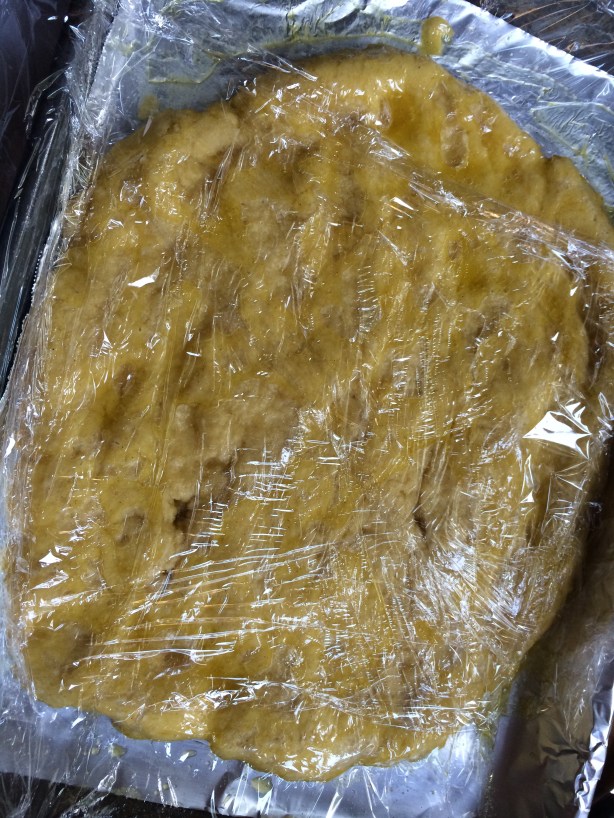
gluten pizza1


The recipe:

1 cup gluten-free all-purpose flour

1 teaspoon xanthan gum

1 teaspoon salt

1 teaspoon sugar

1 1/4 teaspoons yeast

1 cup very warm (130 degree) water

1egg

olive oil


Use two bowls: one for the dry ingredients, one for the wet.

In the first bowl, mix flour, xanthan gum, salt, sugar and yeast with a whisk to combine.

In the second bowl, whisk egg with warm water.

Pour the wet ingredients into the dry, and using a wooden spoon, combine to form a dough. It will be somewhat dry. If it’s very dry, add a small amount of water at a time until the dough holds together.

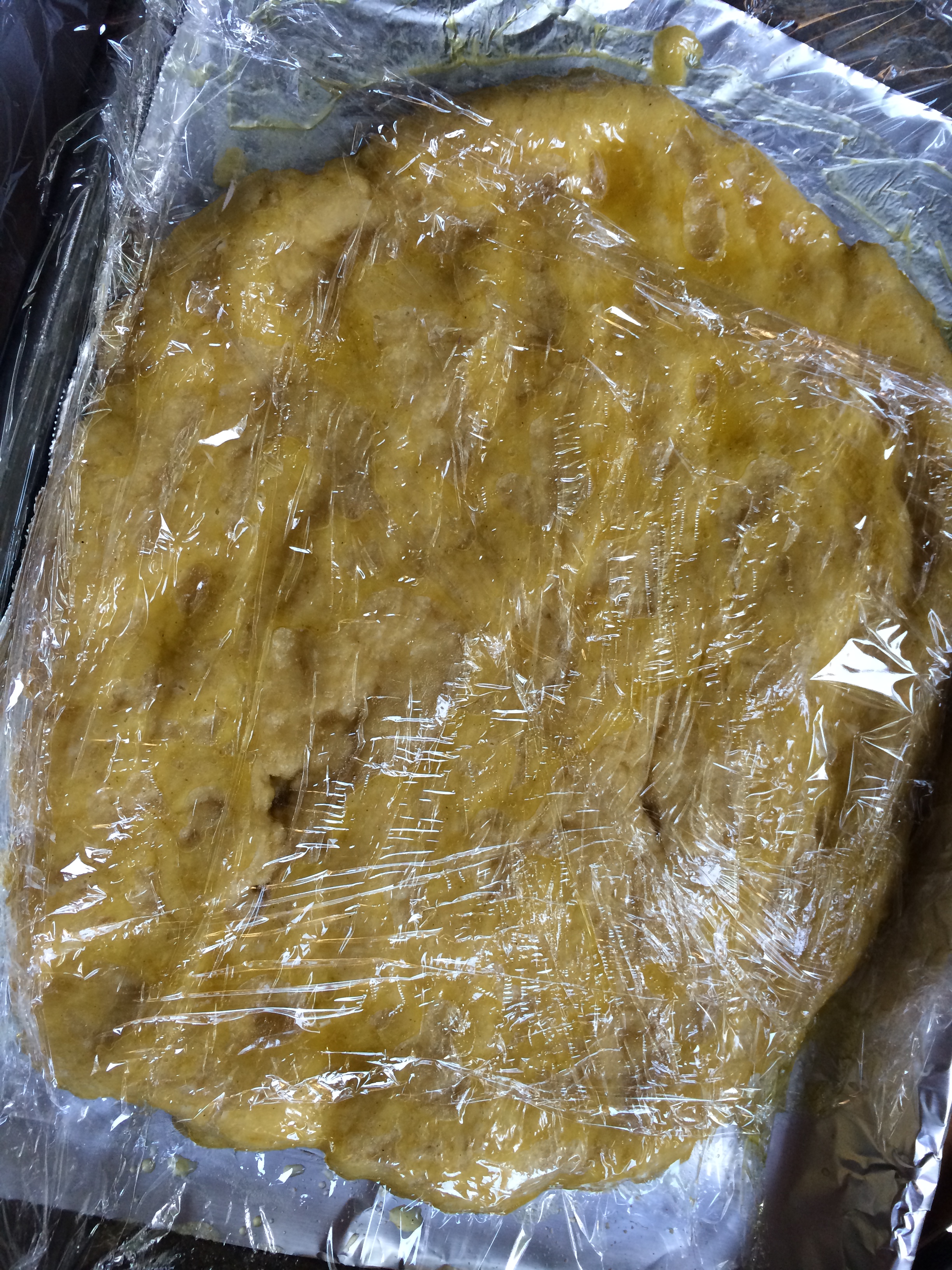
Line a small sheet pan with Reynolds non-stick aluminum foil. Spread the dough out to the desired thickness, and then brush lightly with olive oil. Cover with plastic wrap and let it rise for about 45 minutes.

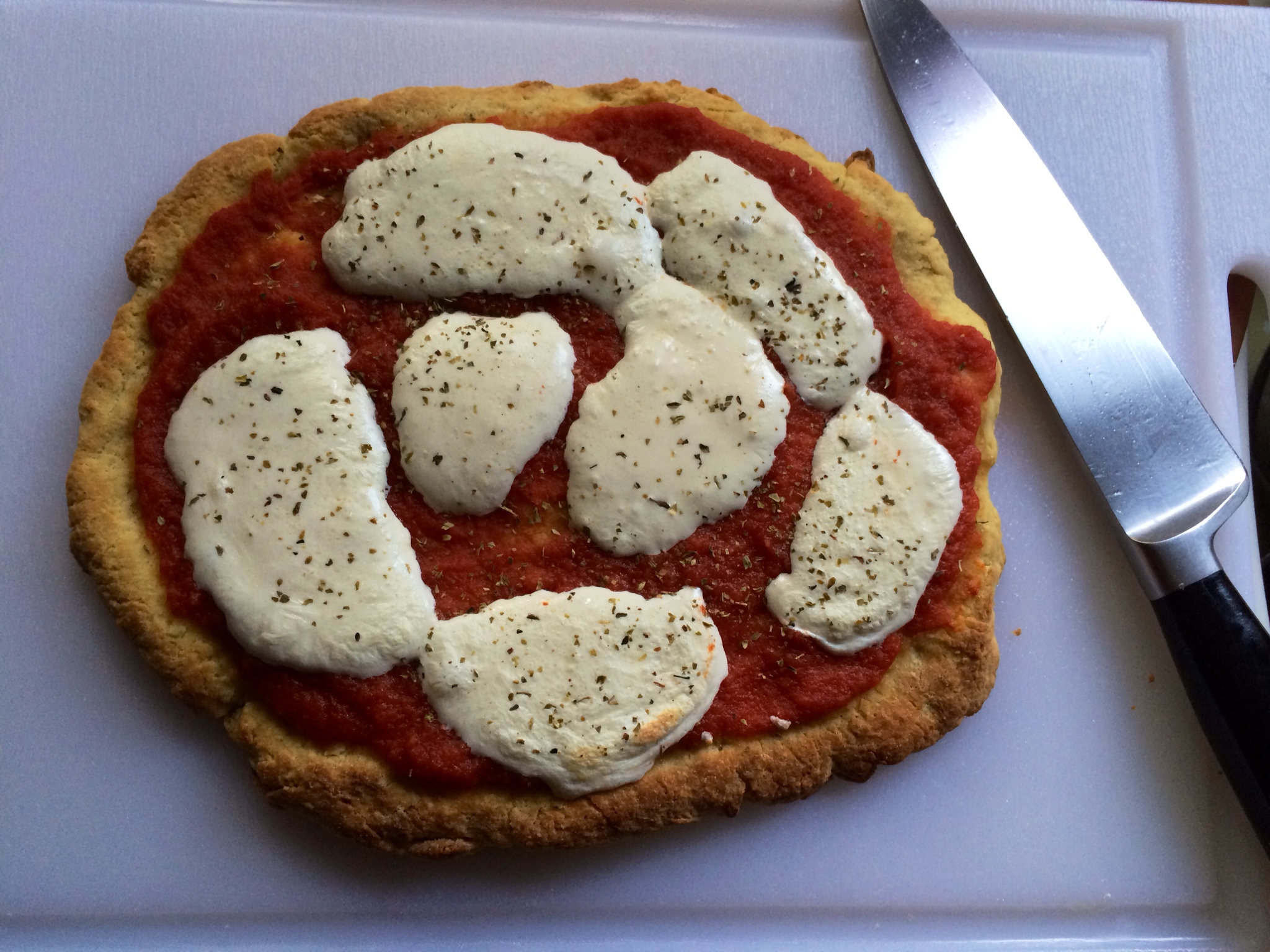
Bake the dough in a pre-heated 450-degree oven for about 5 minutes. Remove and add tomato sauce and cheese and other toppings, then place back in the oven and cook another 5 minutes, until golden.
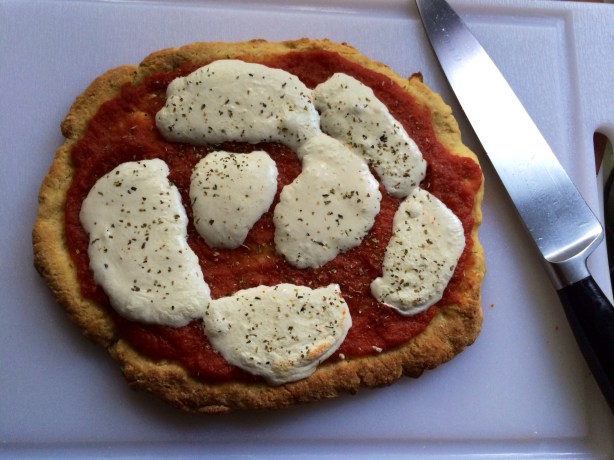
gluten pizza2


My wife liked the pizza. I could definitely pass on it. But I will keep tweaking recipes. I’ve heard that Bob’s Red Mill now has a brand new all-purpose baking flour, Bob’s Red Mill Gluten Free 1-to-1 Baking Flour, where they’ve removed the bean flours and added xantham gum to the mix. They also have a special Pizza Crust Mix.