It’s National Pork Month!

It’s been years since I made this recipe, but it’s a good one that dates back to my early years in radio on Long Island.

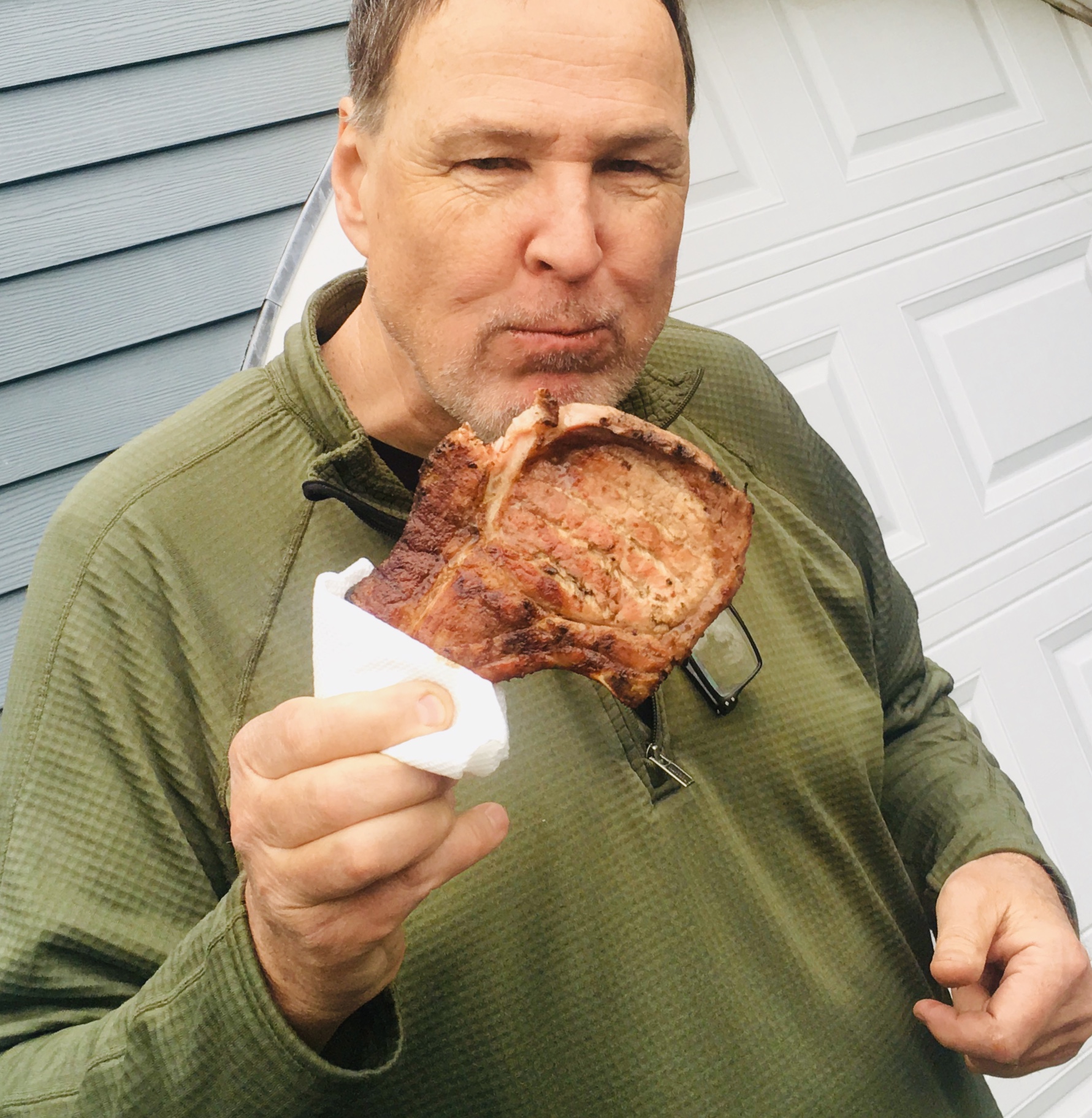
“Cope” chops are the creation of my radio buddy, Marc Coppola, who can be heard from Cape Cod to California. Cope and I met at WBAB on Long Island back in the early 80’s. He had the afternoon drive shift, and I was on after him from 7 to midnight. After his show, Cope would remove a hibachi grill out of the trunk of his car, light some charcoal in the radio station parking lot, and he’d grill up the most amazing pork chops I’ve ever had. They were thin, but juicy and beautifully charred, with a wonderful saltiness. He called ’em “Cope chops,” and we’d eat them by the stack, wrapping the hot bone of the chop with a paper towel, and then just chowing down. It was a great memory, and one that I like to re-live by grilling Cope chops at home even today.

After four decades, I’m not sure if my Cope chop recipe is the same as the original, but they are damn good and incredibly easy to make.

Ironically, for this recipe, I don’t go all out and spend big money on thick, expensive pork chops. I want them thin, fatty and with the bone in. This is not a low-and-slow process: the secret to the success of these chops is to cook them hot and fast on a charcoal grill, sealing in the juices.


Thin-cut pork chops
Dry white wine (I use an unoaked inexpensive chardonnay; many Australian brands to choose from)
Lawry’s seasoned salt

Place the pork chops in a flat bowl, and pour the wine over the top, making sure you cover the chops. Let them marinate for at least an hour at room temperature, flipping them over halfway through so that all sides get covered by the wine.

Light a hot hardwood charcoal fire.

Pour off the wine from the chops and discard. Place the chops on the hot grill and season the top with the Lawry’s seasoned salt. Once they’ve charred nicely, flip the chops over and season the other side. Grill until the chops are cooked all the way through, but not dry. Serve immediately.

The proper way to eat a Cope chop: wrap the bone in a paper towel and chow down!

CANTONESE DUCK

Posted: October 15, 2023 in Carnivore!, Food, Recipes
Tags: , , , , ,

This is basically my Cantonese chicken recipe, which I based on my love of Peking duck. But, for whatever reason, I never tried this recipe on duck before. Last year, I went home to Long Island, and I stopped by one of the great food stores of my life: Miloski’s Poultry Farm in Calverton, NY.

I’ve been coming to Miloski’s since I was a kid. My Dad would buy his ducks there and Grandpa Miloski, the guy that started it all, would serve us. Over the years, grandpa made way for his son, and now the son is retired and the grandson has taken over the business. All along the way, one thing hasn’t changed: the excellent quality of their product.

My uncle, Antanas, passed away years ago, but when it came to being a true foodie, this guy put all others to shame. Besides being the only hunter in our family (my first taste of venison was at his table) he had several huge freezers in the basement of his Richmond Hill, Queens, home. He would drive to Miloski’s and buy dozens of ducks at a time, and bring them home to freeze. Very often, after I finished Lithuanian school on a Saturday, my uncle would invite our family over for dinner, and we’d all sit around a massive table where several ducks would be cooked and served, along with all the fixings. That’s just a taste of my Miloski memories.

I try to stop at Miloski’s every time I pass through. I bring cash, because Miloski’s doesn’t take credit cards! I have a long ride home, first on the Cross Sound Ferry from Orient Point to New London, CT…and then an hour-and-a-half on the highway from there. I always bring a cooler and I buy a bag of ice along the way.

Miloski’s sells all kinds of exotic meats, like wild boar and ostrich. But I go for their delicious kielbasa, pierogis, and now: duck!

1 whole duck, thawed, about 5 lbs.
1 tablespoon peanut oil
1 tablespoon soy sauce
4 teaspoons Chinese five spice powder
2 teaspoons granulated garlic
2 teaspoons salt
1/2 teaspoon black pepper
6 tablespoons hoisin sauce
2 teaspoons sesame oil

Remove all the giblets from the bird and cook them up for your dog, like I do for my buddy, Fellow. (Leave out anything with bones, of course.)

Rub the soy sauce first all over the duck. (It will absorb the flavors better if you do it before you rub the bird with the oil.) Then rub the peanut oil all over the duck.

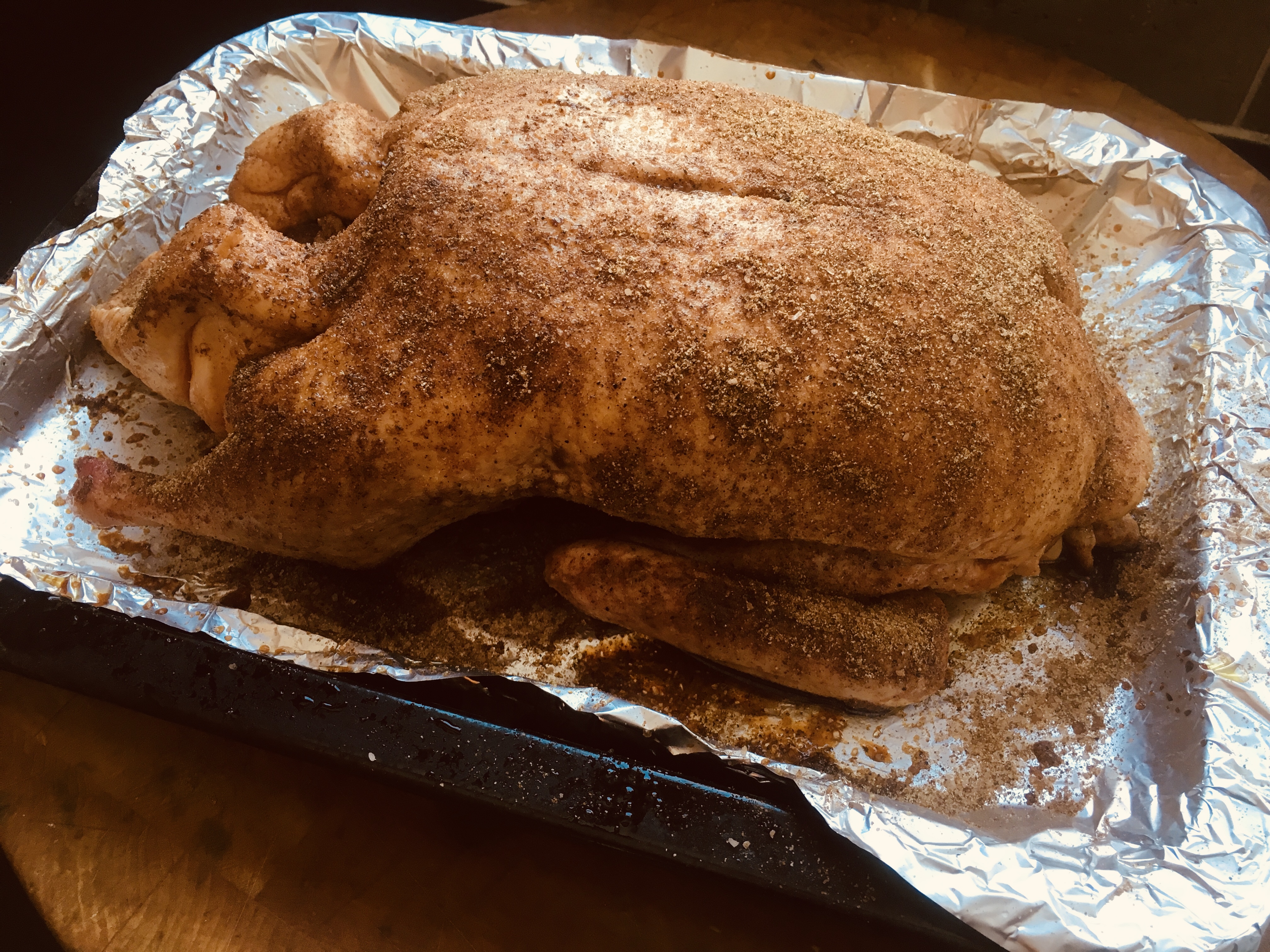
Rubbed and ready to go in the oven!

Combine the Chinese five spice, garlic, salt and pepper in a bowl. Season the entire bird, including inside the cavity, with this mixture.

Pre-heat the oven to 400 degrees. Place the duck in a pan lined with aluminum foil (cleanup will be easier.)

Reduce the oven temperature to 250 once you put the duck in the oven, and then cook it low and slow for up to 4 hours…or more. You want that fat to melt away, leaving delicious tender duck meat behind, with a crispy skin.

You might even need to pour off some duck fat after cooking for a couple of hours. Depending on the duck, sometimes the bird releases a lot of fat!

Meanwhile, combine the hoisin sauce and sesame oil in a small bowl. When the duck is about 15 minutes away from being done (skin is crisp, juices run clear), brush it with the hoisin/sesame oil mixture. Cook it another 15 minutes until the bird has a nice dark glaze.

Let the duck rest about 15 minutes before carving.

Perfectly delicious!

Can you get salmonella from duck? In a word: depends! It used to be that salmonella was only found in the intestinal tracts of chickens. But because ducks are often raised in areas where chickens live, cross-contamination is very possible. Even if the birds live totally separate lives, cross-contamination can also happen in slaughterhouses. So…despite the fact that many say you can eat duck meat that’s pink, I prefer not to. I’ll tell you this: there’s quite a bit of fat in an average duck, so even if you cook the bird to medium-well, it will be delicious and juicy….and the skin will be fantastically crispy. Be safe!

Inspired by a garden full of fennel and my fanatical love for all things pork, this recipe just happened. I use Berkshire heritage pork when possible, a far tastier and healthier choice over standard pork you find in a supermarket.

pork chop fennel

4 Berkshire pork chops
4 tablespoons finely chopped fennel bulb
2 teaspoons finely chopped fresh sage
3 teaspoons granulated garlic
1 teaspoon Kosher salt
1/2 teaspoon ground black pepper
3 tablespoons extra virgin olive oil
extra fennel bulb and fennel fronds
extra olive oil, salt and pepper for sauteing

Combine the chopped fennel, sage, garlic, salt, black pepper and olive oil in a bowl. Mix well and spread it all over the pork chops. Let them stand for an hour at room temperature.

Light a hot grill. Grill the pork chops until they’re done…with quality pork, that does not mean cook it to death! (An internal temperature of 160 is the way to go.)

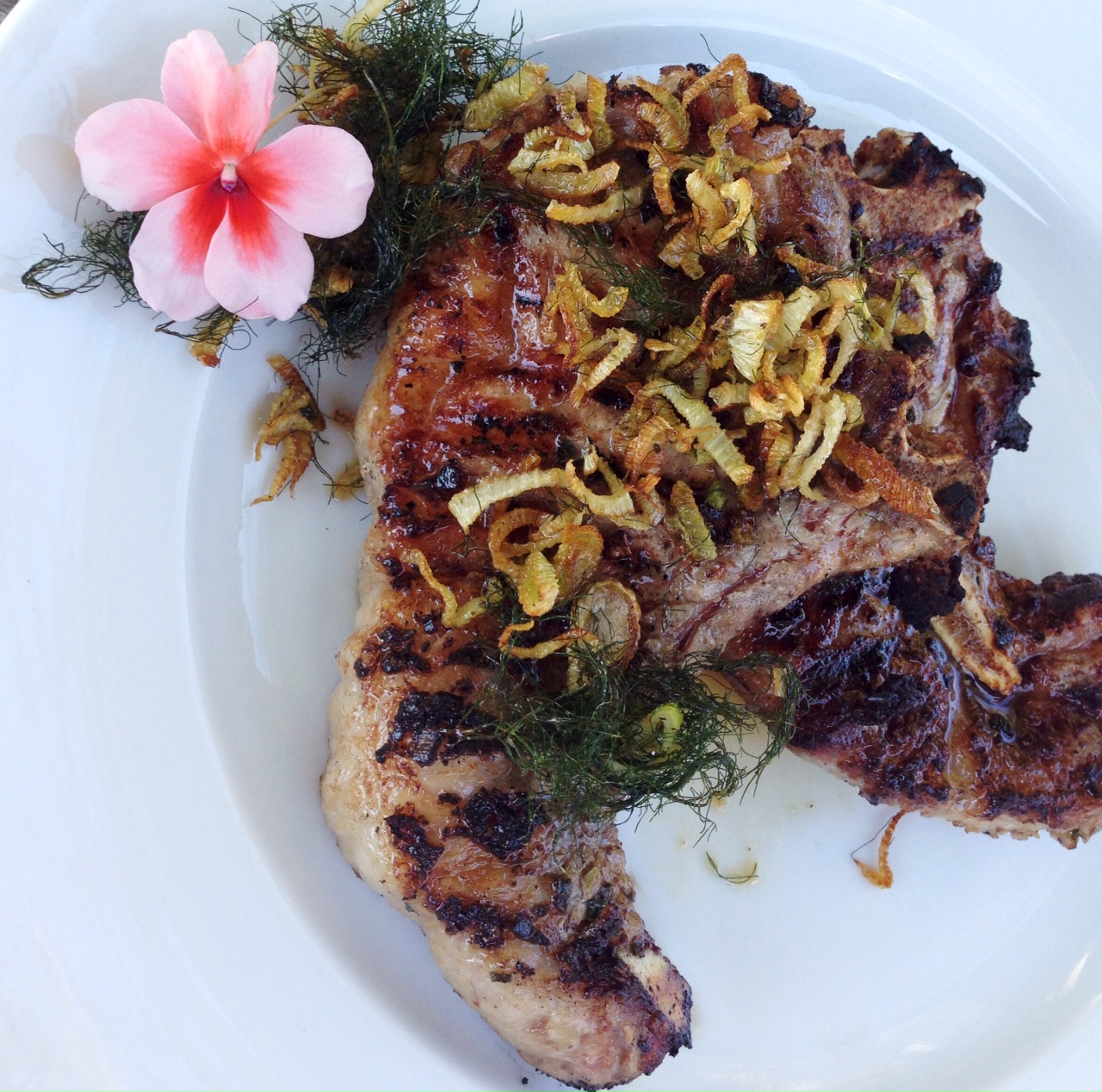
Chop the extra fennel bulb into thin strips about an inch long. Remove the fennel fronds from their stems. Saute the bulb strips in olive oil, salt and pepper until they are almost crisp. Toss in the fennel fronds and cook until the fronds and bulb strips are crisp.

Serve the pork chops with crispy fennel and fronds on top.

After making a batch of this for my daughter this week, I got a bunch of requests for the recipe. So here we go!

Chicken parmigiana, much like pizza, is a bit more difficult to make than you might think. Sure, there’s plenty of crappy chicken parm out there, made with processed frozen chicken cutlets, bad sauce and cheap cheese. But to make a really fantastic, mind-blowing chicken parm, that takes a little practice!

The key to this recipe is simple: don’t skimp on the quality ingredients. And my recipe makes a lot. Trust me: you will want leftovers.

The recipes for my Italian bread crumbs and my “Don’t Call It Gravy” tomato sauce are at the bottom.


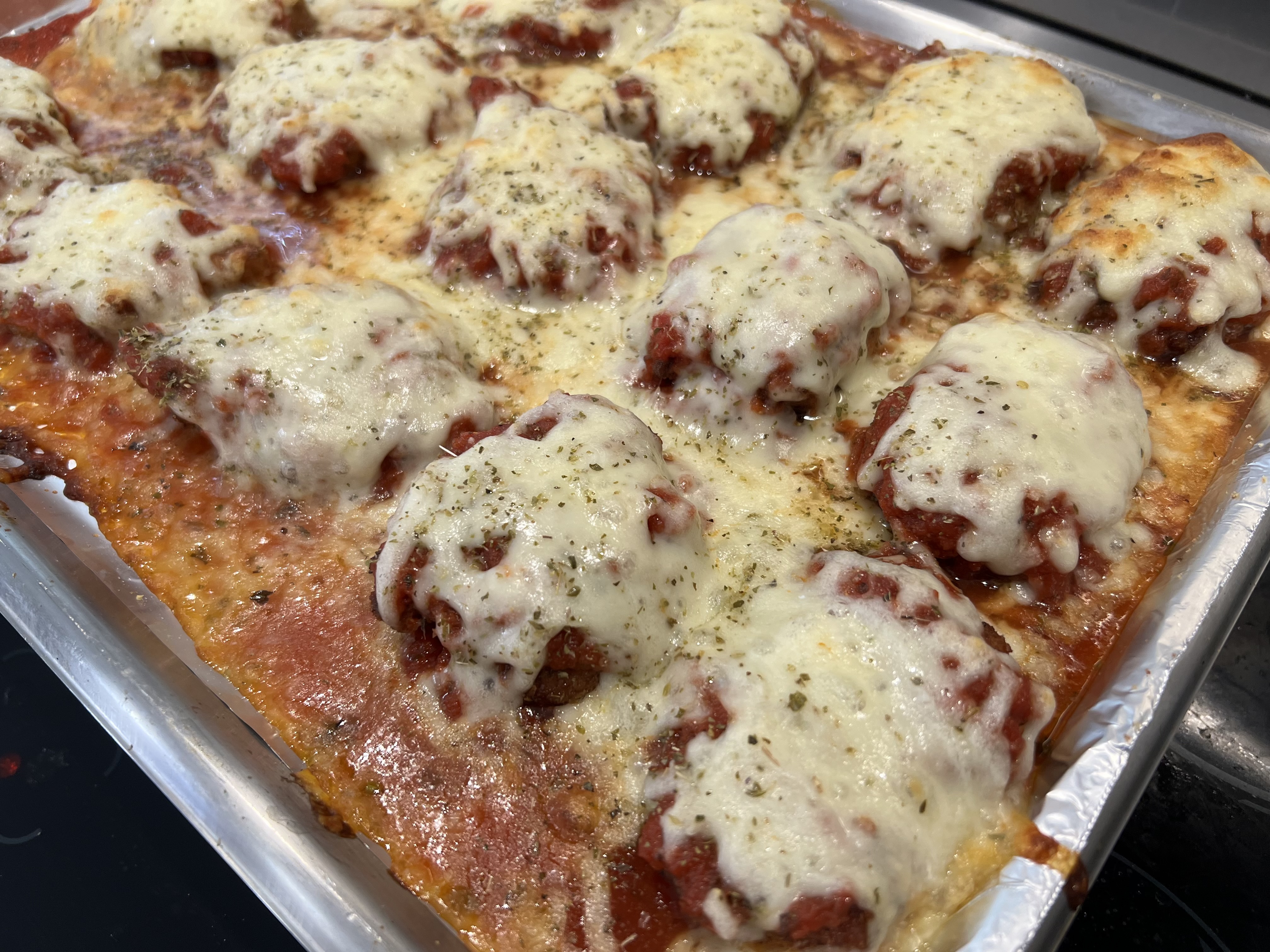
Gooey, cheesy, orgasmic.

Gooey, cheesy, orgasmic.


6 Chicken breasts, the best quality you can get your hands on
Italian bread crumb seasoning (see recipe below)
3 eggs
vegetable oil for frying
“Don’t Call It Gravy” tomato sauce (see recipe below)
Fresh mozzarella cheese
oregano

Thaw the chicken breasts. Lay them flat on a cutting board, and you’ll see where the chicken tender is on the side of the breast. Cut the tender off and set aside, leaving the breast which is thinner at one end and thicker at the other. Slice the breast in half lengthwise at the thicker end, keeping the knife level, so that you wind up with 2 pieces of breast meat that are the same thickness, but one will be a longer piece (the bottom) and one about half its size (the top part you sliced off.) Do this with all the breasts.

By slicing the breasts lengthwise into evenly thick pieces, it will take the same amount of time for them to cook. (I prefer not to pound the hell out of the chicken breasts until they’re flat as a pancake.)

Pour the vegetable oil into a large frying pan. (I like to use corn oil or grapeseed oil.) Next to the pan, set up two bowls: one with my Italian bread crumb seasoning (recipe below) and in the other: crack the eggs and whisk them.

Now it’s your standard breading procedure: chicken meat in the egg, then in the breadcrumbs, coating well. Shake off the excess and place carefully in the pan of olive oil when the oil comes to temperature (about 350) for frying.

Fry the chicken in the oil until it’s golden brown. You want it cooked all the way through, but not overcooked. Place the fried chicken pieces on a wire rack to drain the oil. Do this with all the chicken. The fried chicken at this point is delicious all by itself: chop it and use it in a salad, or make a chicken sandwich. (By the way, if there’s breading left over, use it on the chicken tenders you cut off, and fry them up. My daughter gets these instead of store-bought chicken tenders, and she loves them.)

Cover a baking sheet with aluminum foil. Ladle out enough sauce (recipe below) to create a thin layer on the bottom of the baking sheet. Place the fried chicken breasts on top of the sauce. Cover the breasts with more sauce, then place shredded mozzarella on top. Sprinkle the top with a little oregano.


Place the baking sheet in a pre-heated 350 degree oven and bake until the cheese has melted and just starts to brown. Serve it with pasta.


MY “DON’T CALL IT GRAVY” TOMATO SAUCE

It’s not hard to make a good tomato sauce. But it takes a little work to make an amazing tomato sauce. Honed from a recipe handed down by a friend-of-a-friend’s Italian grandma, it is one very important part in two of my favorite Italian comfort food recipes: my meatballs…and my chicken parmigiana recipe.


1 medium onion, finely chopped
2 cloves garlic, finely chopped
1/2 cup extra virgin olive oil
10 cups ground and peeled tomatoes…or 3 cans (28 oz.) tomatoes (real San Marzanos preferred)
2 teaspoons each: dried oregano, basil and parsley
3/4 teaspoon each anise seed and fennel seed
1 1/2 teaspoons salt
1/2 teaspoon black pepper
2 bay leaves
1 small can (6 oz.) tomato paste
1 teaspoon sugar, optional

Heat the olive oil in a large pot and add the onions. Cook until onions are translucent, then add the garlic. Stir for about 10 seconds.

Add the tomatoes and cook until the orange foam disappears, stirring frequently.

Add the oregano, basil, parsley, anise seed, fennel seed, salt, pepper, and bay leaves. Stir to combine. Add the tomato paste, stirring well. Let the sauce just come to a boil (which helps the paste thicken the sauce), then reduce it to a simmer, and cook uncovered for at least an hour, stirring constantly, until the sauce reaches the consistency you like.


MY ITALIAN BREAD CRUMB SEASONING

This is the one part of the recipe (other than the optional pasta) that keeps this dish from being gluten-free. So I use gluten-free breadcrumbs, even if I don’t need to. I buy a loaf of Udi’s frozen gluten-free bread, toast the slices, and them put them in a food processor. I dare you to tell the difference between these and breadcrumbs with gluten!


1 Udi’s loaf, toasted and ground into breadcrumbs
2 teaspoons dried parsley
1 teaspoon dried oregano
1 teaspoon dried basil
1 teaspoon salt
1/2 teaspoon granulated garlic
1/2 teaspoon granulated onion
1/4 teaspoon black pepper


Combine all the ingredients well.

It’s #NationalPorkMonth! Time to get piggish!

Few slabs of meat are as amazing as a pork butt or shoulder, rubbed with a special dry rub, then slow-smoked for 8 hours (or more), pulled and slathered with amazing barbecue sauce. It takes time, but it’s not really that hard to do.


My electric smoker allows me to set the time and temp and walk away.

Here’s how I do it…

First, I get a hunka pork. The kind of pig I get matters to me, so I buy a heritage breed, like Berkshire (also known as Kurobuta), from a farm that raises them humanely. I’m willing to pay the extra bucks.

But going to a supermarket or butcher shop for pork is what most people do. The names of the cuts of meat can be a bit confusing. Despite its name, pork butt is not from the back-end of the pig.  (The term “butt” referred to the barrel the meat was stored in when the only method of preservation was salting the meat and storing it in barrels.)

The pork butt is actually the shoulder of the pig. The pork shoulder picnic is a lower cut of the same area. These cuts can also go by the names: Boston shoulder roast, Boston butt, Boston roast, shoulder butt, pork shoulder picnic, and shoulder-blade roast. Whatever the name, these are all nicely marbled hunks of meat that usually weigh in anywhere from 6 to 8 lbs, are easy to find, and are rather inexpensive. Barbecue fanatics claim the bone-in pork butt is more flavorful, but if boneless is all you can find, that’ll work, too.

Once I’ve got my slab of pork, I remove the skin if it has any. I want my pork rub to make contact directly with the meat, so I always remove the tough skin. No skin? No problem. But leave the fat on!

Now I need to season it. I’ve found that a simple rub is the best way to go for the sauce I’m going to use later.


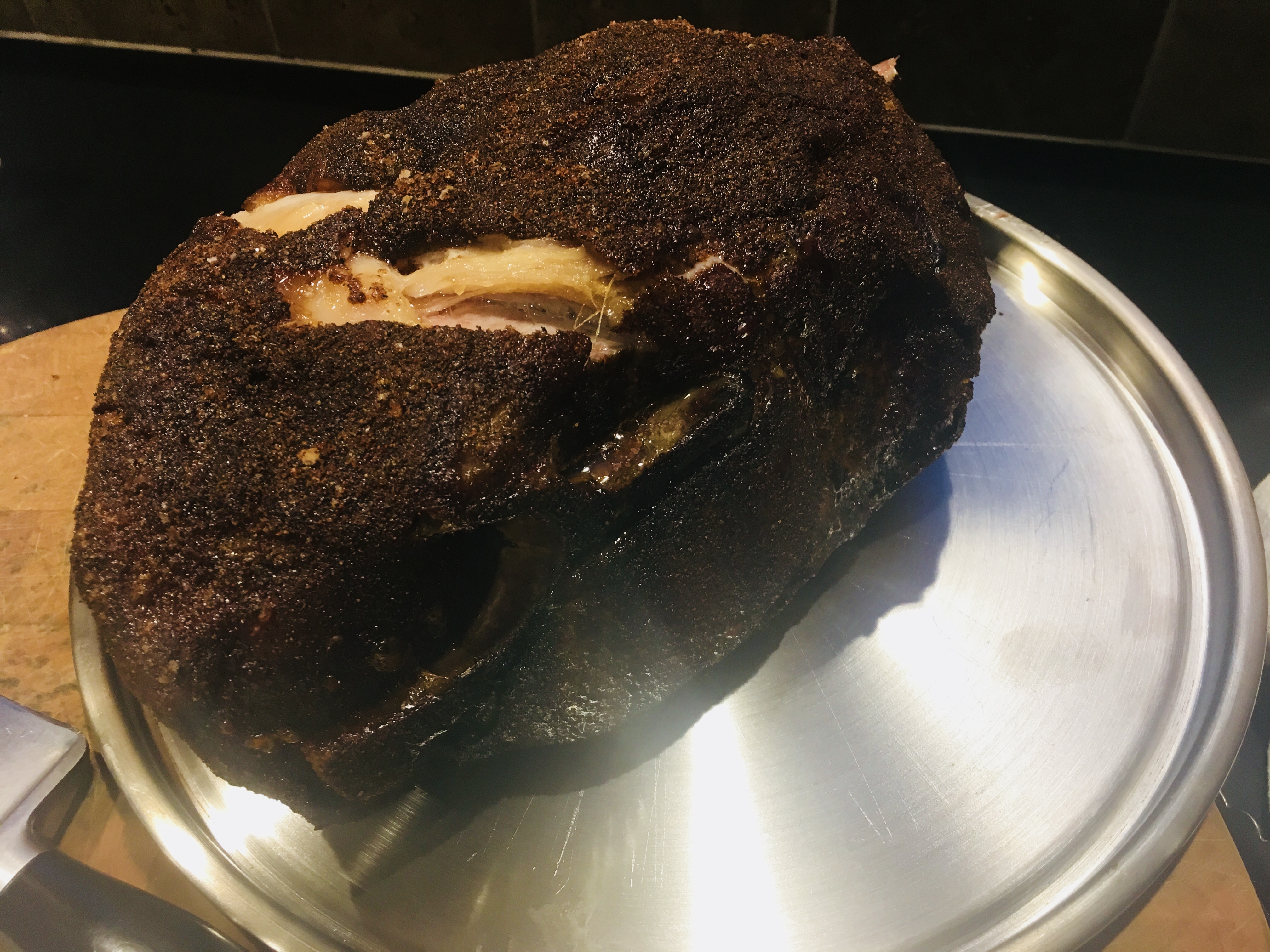
After 8 hours in the smoker, the rub makes a crust on the meat that is just fantastic!


BASIC DRY RUB

1/4 cup kosher salt
1/4 cup black pepper (freshly ground is best)
1/4 cup paprika
1/4 cup brown sugar
2 tablespoons granulated garlic
2 tablespoons granulated onion

Place all the ingredients in a jar with a lid and shake it up to blend.

Once I’ve made the rub, I generously sprinkle it all over the pork, and rub it in really well. Ideally, I let the pork shoulder sit in the fridge for 24 hours before smoking, bringing it out an hour beforehand to have it come up to room temperature.

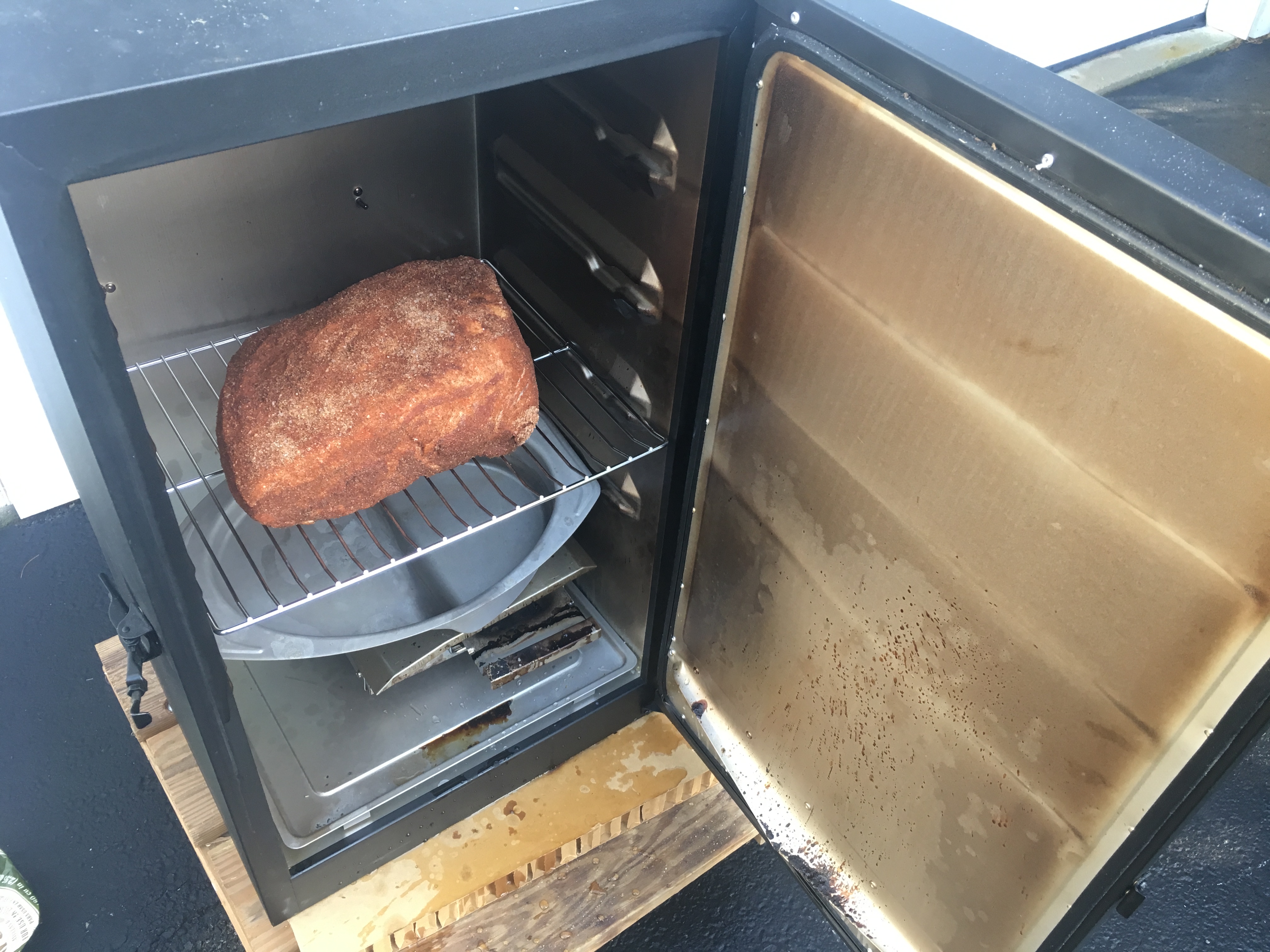
I have a digital smoker at home, which allows me to set the temperature to cook and smoke my pork butt. I place the pork butt on a rack, put a drip pan with water underneath it to catch the grease, and set the smoker for 250 degrees. I cook the pork at 250 for 8 to 10 hours, depending on the size of the meat, adding hickory chips to the smoker every few hours. The marbled fat in the pork butt slowly melts over time and the pork becomes incredibly tender and flavorful.

I remove the pork butt from the smoker and let it rest, covered with aluminum foil, for at least 20 minutes before pulling it apart with a couple of forks, or chopping it up with a cleaver.

While the pork is cooking and smoking, there’s plenty of time to make two other very important parts of this recipe: a vinegar-based barbecue sauce, and the cole slaw.


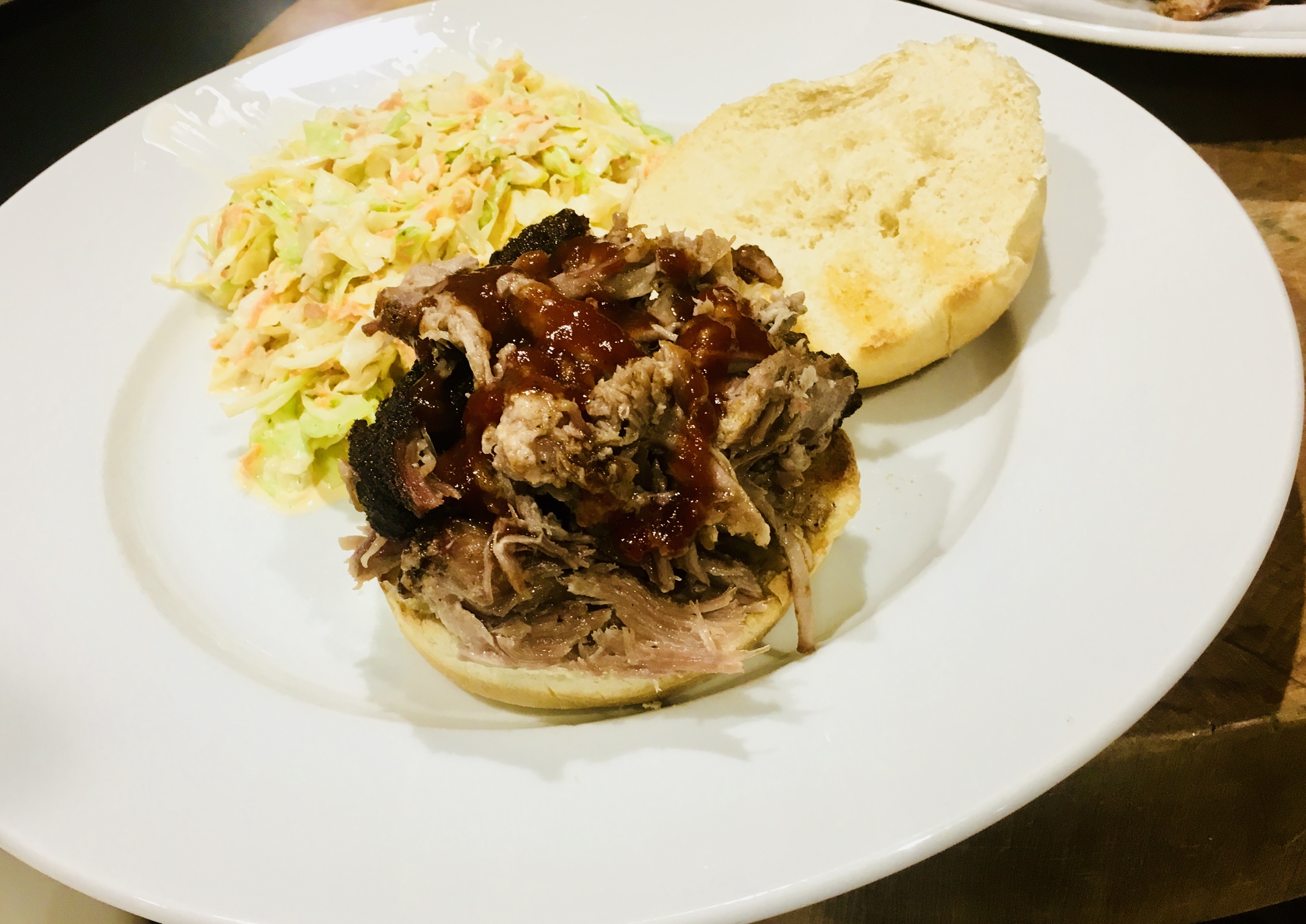
Slaw on the side or on the sandwich…up to you!


BARBECUE SAUCE

2 cups ketchup
3/4 cup water
6 tablespoons cider vinegar
6 tablespoons white vinegar
6 tablespoons brown sugar
3 tablespoons Worcestershire sauce
1 tablespoon chili powder
2 teaspoons salt
2 teaspoons black pepper
2 teaspoons cumin

Mix all the ingredients in a saucepan and simmer until the flavors have blended, about 20 minutes. Remove from the heat and cool it to room temp. If you store it in an airtight container in the fridge, it’ll stay good for several weeks.


COLE SLAW

My unusual cole slaw recipe uses an interesting ingredient: pickle juice! Just a splash of juice from your favorite jar of pickles is all you need.

1 package of cole slaw veggies
splash of pickle juice
1/4 cup mayonnaise (more to taste)
teaspoon celery seed (not salt)
salt and pepper

There are no real specific measurements for cole slaw, because I’ve found that some people like it dry, others wet…some peppery, some not. Play around with it and make it your own. I prefer a more mayonnaise-y cole slaw, and usually err on the wet side.

In a bowl, combine all the ingredients. Cover it with plastic wrap and chill. When ready to use, re-mix it, and taste for seasoning before using. Letting it sit overnight before serving is best.


OK…time to make that sandwich!

You can either go Carolina style and place the cole slaw right on top of the pulled pork in the bun, or simply serve the slaw on the side. No rules!

Whether you go through all these steps yourself or not, it’s nice to appreciate a labor of love that is worth every bit of time and trouble invested in it.

I love onions! Raw, sautéed, caramelized, yellow, Spanish, Bermuda, Vidalia, Texas Sweets, scallion, pearl, Crimini, Walla Walla…they can do no wrong. In fact, my family gave me the Lithuanian nickname: “Ponas Svogūnas.” (“Mr. Onion.”)

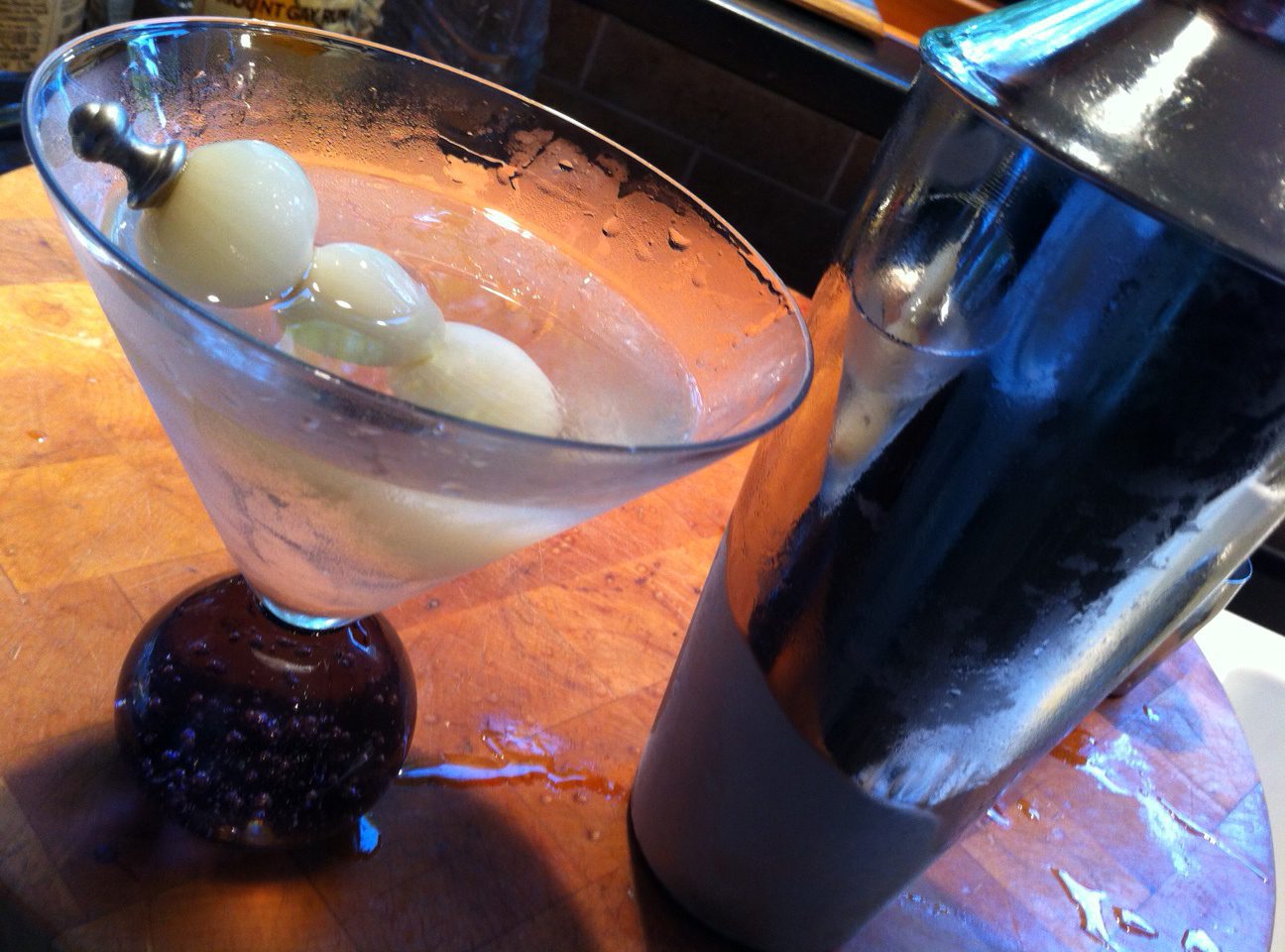
I also love vodka martinis! So if I’m going to buy a top shelf vodka like Stoli Elit or Chopin, I’m not going to ruin it with jarred cocktail onions, brined with cheap vermouth, found in the bar mixers section of my local supermarket. Who knows how long those nasty things have been sitting on the shelf?

No, I’m going to make my own cocktail onions to enjoy a proper Gibson!

The Gibson martini is simply one with onions instead of olives, and the story of its origin is somewhat unclear. According to one story, it was invented by Charles Dana Gibson, who created the popular Gibson Girl illustrations. Supposedly, he challenged Charley Connolly, the bartender of the private club, The Players, in New York City, to improve on a martini. Connolly simply substituted an onion for the olive and named it after Gibson.

Another story claims a man named Gibson dropped an onion in his water-filled martini glass to differentiate between his own drink and that of his colleagues, who were imbibing heavily.

Some stories about the Gibson don’t even mention an onion. (?)

And yet another story, now considered the more probable one, is that the Gibson martini was invented at the Bohemian Club in San Francisco in the 1890’s by Walter D. K. Gibson. There is documentation as early as 1898 to back that up.

Whatever story you want to believe, the Gibson martini was originally made with gin, not vodka, but that’s strictly a personal preference–and I don’t use any vermouth. (I think the biggest injustice you can do to high-quality vodka is ruin it with low-quality vermouth. But that rule applies to any alcohol and any mixer. It’s only as good as its worst ingredient–and that includes the ice!)


My first attempt at homemade cocktail onions was not a success. I bought pearl onions and did what the package instructions said: I dropped them in boiling water for a couple of minutes, then moved them to ice water to let them cool. Then a gentle squeeze on one end of the onion would make it pop right out of its skin. Easy, right?

Well, it didn’t work out that way. For one thing, the onions got soft…not what I wanted. I had to cut one end of the bulb with a knife. And even then, when I squeezed the onion, the part that popped out was about half the size of the original onion…there was a lot of waste.
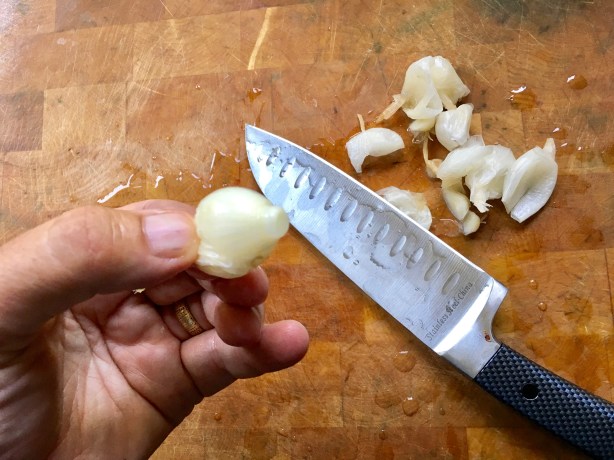


After brining, they tasted OK, but they never had that crisp bite I wanted. They were mushy. I realized that boiling was not the way to go.


A lot of waste.


I knew there had to be a better way. Then I discovered already peeled pearl onions at Whole Foods. I have to be honest…I won’t use any other onions now. They’re big, plump, and exactly what I want. Some might say they’re too big…but I don’t have a problem with that.
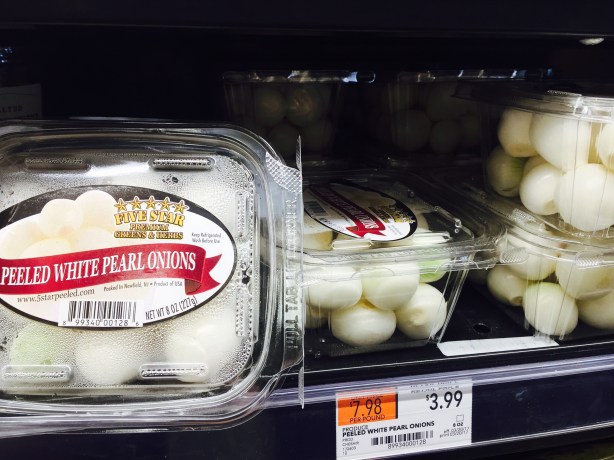
 

Sure, these are much larger than the onions you find in a jar. But tell me how that’s a problem!


1 lb. pearl onions, peeled, ends cut off
1 cup white vinegar
1/2 cup apple cider vinegar
1 1/2  cups water
3/4 cup sugar (I like turbinado sugar)
10 peppercorns
1 teaspoon salt (per quart-sized Mason jar)
2 cloves garlic

Combine the white vinegar, apple cider vinegar, water, sugar, and peppercorns in a medium-sized saucepan. Bring it to a boil, making sure the sugar dissolves completely. Remove it from the heat.


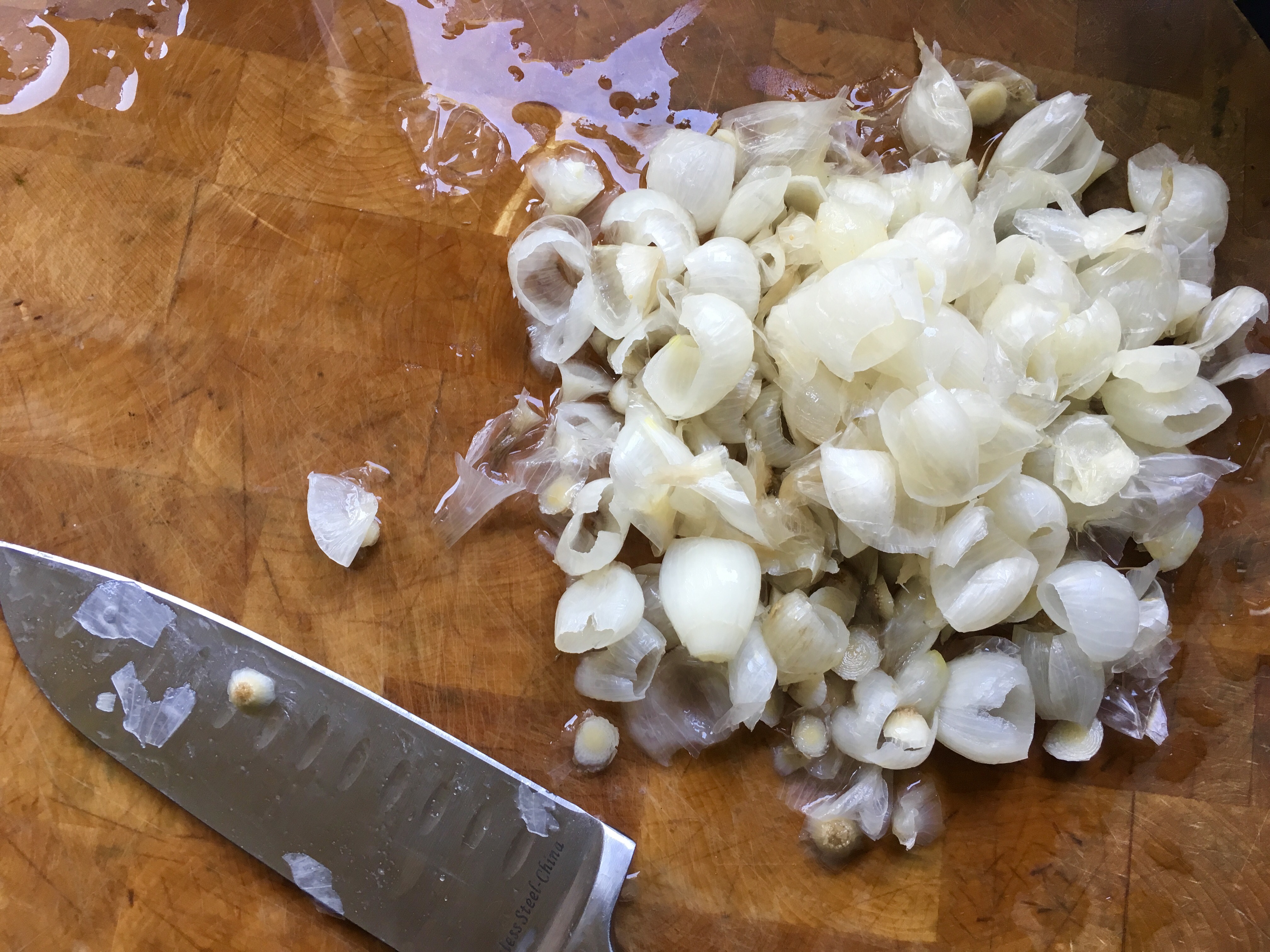
Slice the ends off the onions.

I’ve found that if I allow the brining liquid to get inside the onions, especially these larger ones, they’ll get tastier faster…and who doesn’t want that? So I take a thin metal or bamboo barbecue skewer and push it through the center of the top of the onions, all the way through the center of the bottom of the onions. Now there’s a little “tunnel” for that brine to get in, and it can work its magic from the inside out!

Not skewering the onions simply means it’ll take longer for that brine to seep in…but that’s perfectly fine if you want a not-so-briny onion.


In a quart-sized Mason jar, add the teaspoon of salt and garlic cloves. Pour a little of the hot vinegar liquid in the Mason jar to dissolve the salt. Add the onions to the jar, as tightly as you can, then fill the jar to the top with the vinegar liquid.

Screw the top of the jar on tightly, and turn it upside-down a couple of times to mix everything together. If it looks like the level of the liquid has gone down a bit, open the jar and top it off with the vinegar liquid, then re-seal it.

Let the jar cool to room temperature, then move it to the fridge. You can use the onions as soon as the craving hits you, but they’ll taste better if you give them a few days to a week.
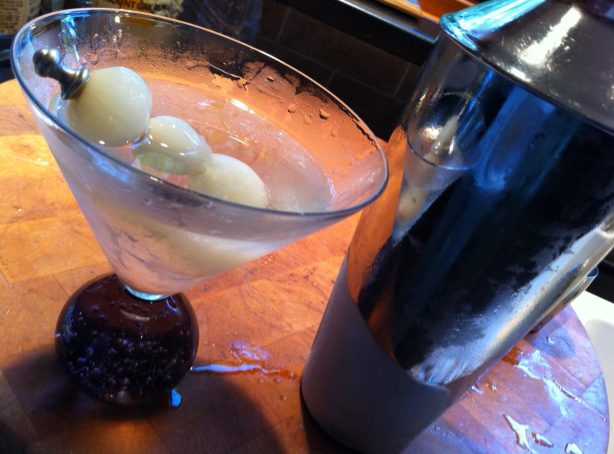


OK…so if after reading this, you just don’t want to go through the whole process of making your own cocktail onions, there is one product that I just recently discovered that does the trick: Aunt Nellie’s. You can find them in the jarred veggie section of just about any supermarket, next to pickled beets and things like that. It’s a milder brine, and so the onions taste quite good. No nasty cheap vermouth to ruin your good martini.


Though I’m a fan of renowned Italian chef Marcella Hazan, I had never heard of what many claim to be her most famous recipe: her 3-ingredient tomato sauce. (OK, salt makes 4.) Recently, I read an article about it and thought I had to try it for myself. The results were amazing: a subtle hint of onion, and a creamy smooth sauce thanks to the butter. You can use a regular can of tomatoes, but real San Marzano tomatoes will give the best results. How do you know if you’ve got real San Marzano’s? Just so happens I have a pet peeve about that. Read below the recipe.

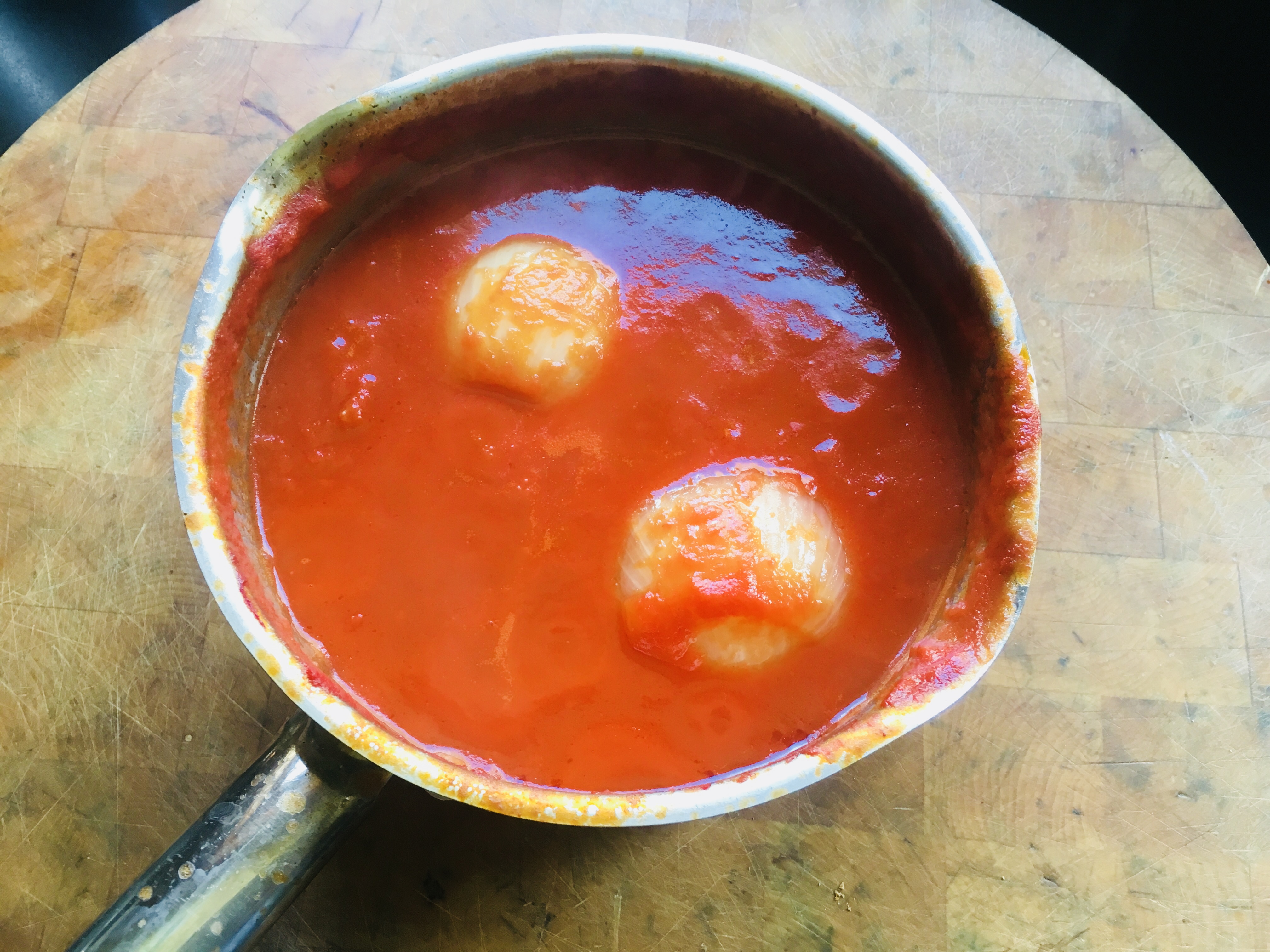
The sauce before onion removal.


1 28 oz. can San Marzano tomatoes
5 tablespoons butter (I use unsalted)
1 onion, peeled and cut in half
salt

In a saucepan, combine the entire can of tomatoes (tomatoes and juice) and the butter, and add the onion with a couple of pinches of salt. Place the heat on medium, bring it to a simmer, and then cook for 45 minutes, stirring occasionally, breaking the tomatoes with a spoon. Add more salt, if needed.

When the sauce is done, remove the onion.

Silky smooth and ready to use.


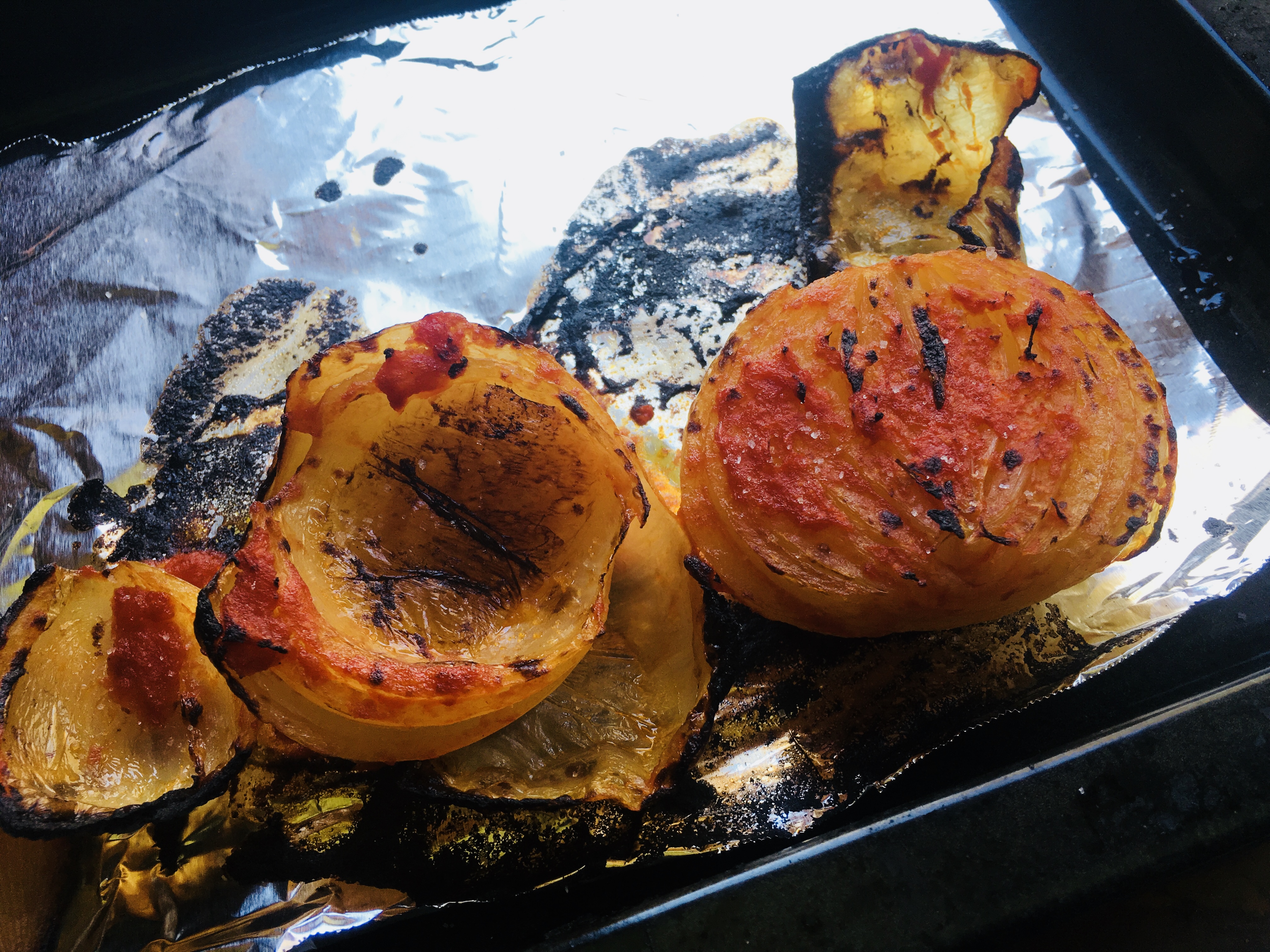
The original recipe says to discard the onion. What?! I’m an onion fanatic and I can tell you throwing the onion out is a sin. Here’s what I do: I place the onion on a baking sheet and put it under the broiler of my toaster oven: 5 minutes on one side, flip it, then 5 minutes on the other. If you’ve got a screamin’ broiler, those onions will have beautiful charred edges and the bits of tomato sauce left on the onion will caramelize to a fabulous intense, sweet paste. You then sprinkle Fleur de Sel on it, and devour it.

Never throw the onion away!


If you do your share of Italian recipes, you’ve used San Marzano tomatoes. Most good cooks agree that San Marzano’s are the best canned tomatoes you can buy.

Unfortunately,  the label can say “San Marzano tomatoes” even if they are not real San Marzano tomatoes.

San Marzano is a region in Italy near Naples and Mt. Vesuvius, and the special combination of climate and volcanic soil make these plum tomatoes world-famous. They have less water, fewer seeds and are picked off the vine when perfectly ripe and processed the same day.

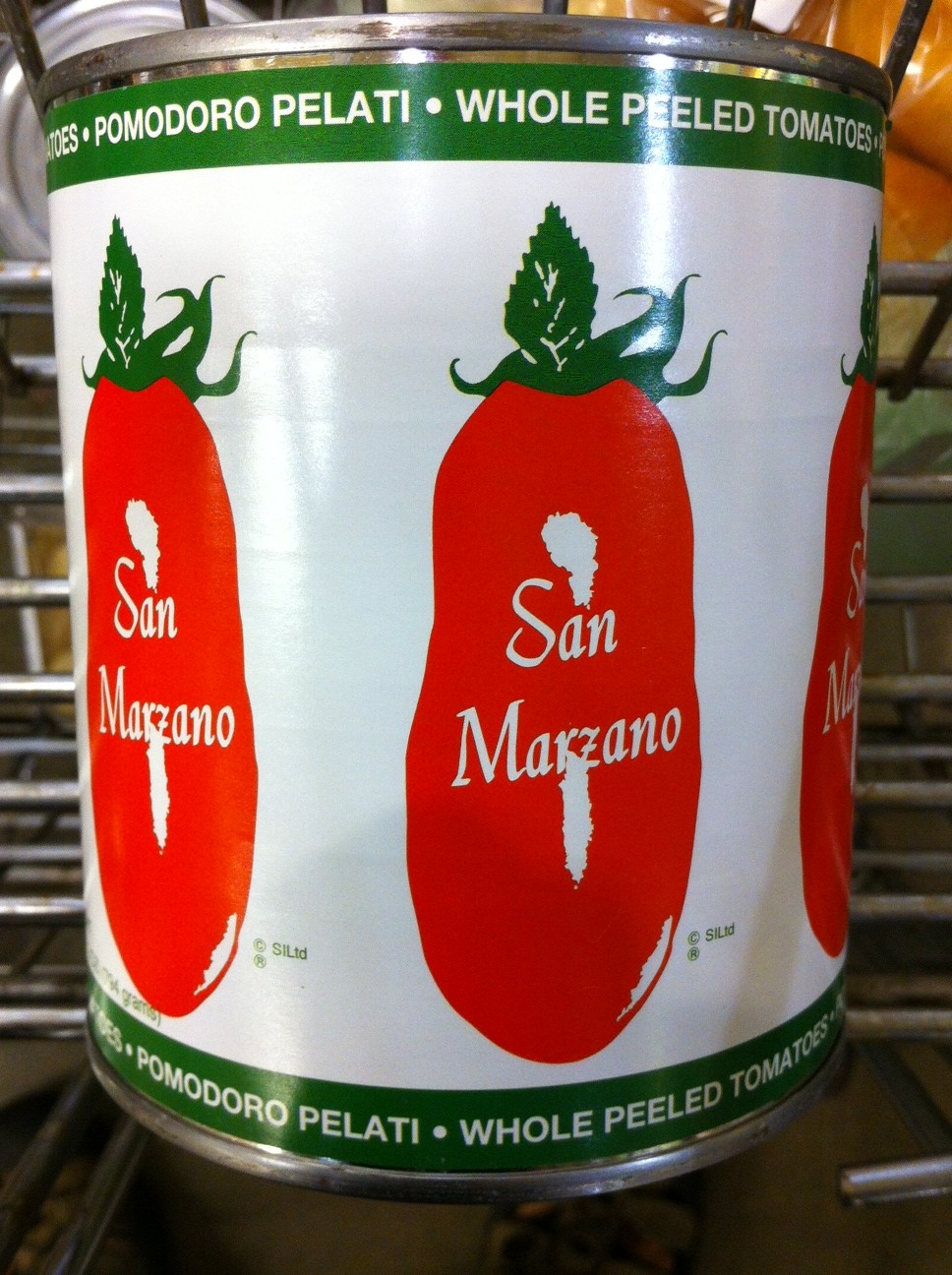
But San Marzano is a variety of tomato, too…so you can have a can of San Marzano tomatoes that are not from San Marzano. And to add to the confusion, there’s actually a brand of tomatoes called San Marzano, with tomatoes grown in the United States. Bet your ass the sellers of these tomatoes are counting on you not to know the difference!

Sold everywhere, but these are NOT real San Marzano tomatoes. They’re grown in the USA.


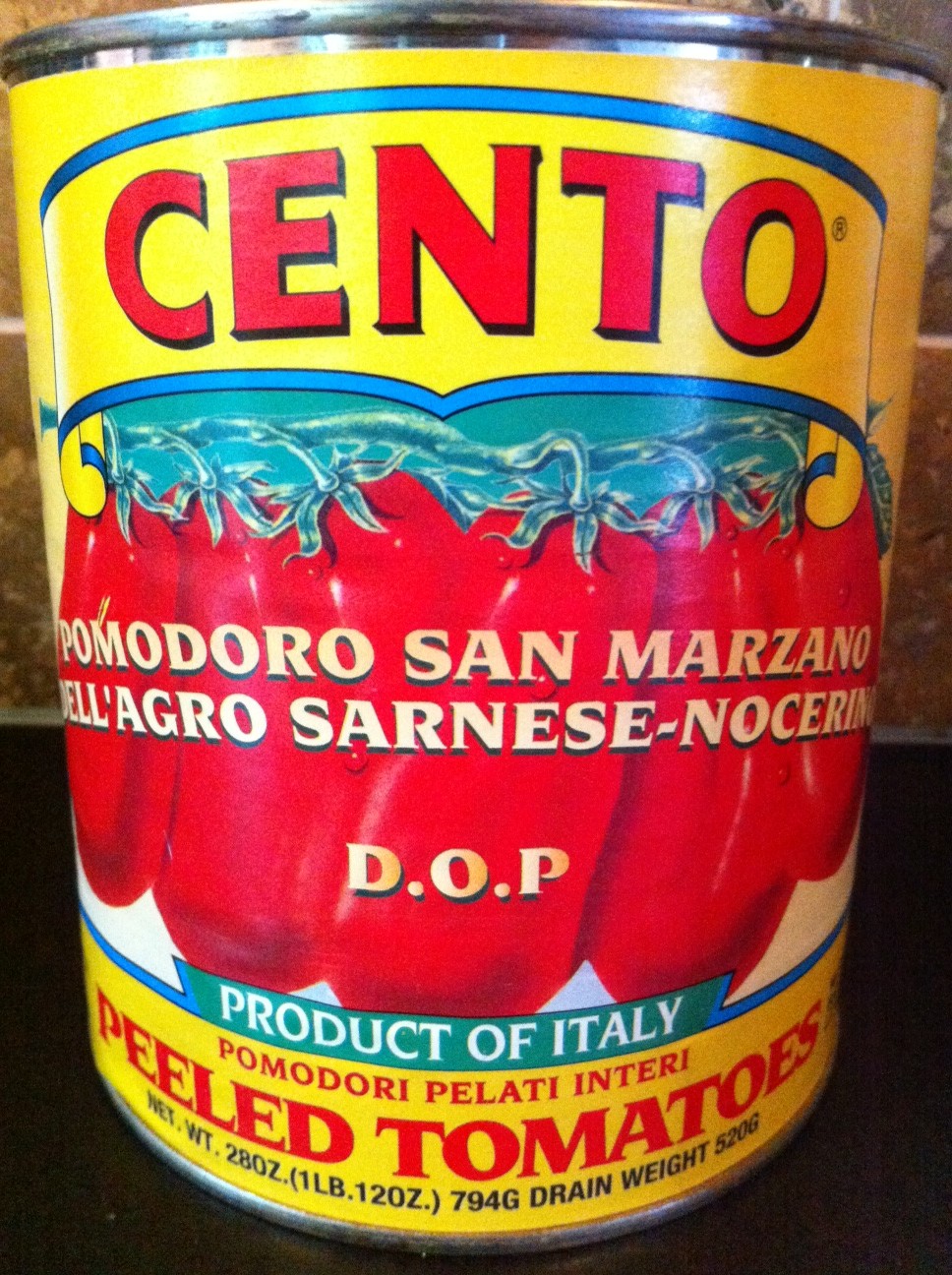
Real San Marzano Tomatoes are a very old variety, extremely limited in quantity, grown and produced exclusively in the San Marzano region of Italy. Because production is so very limited, the Italian Government and the European Union have formed a way of protecting consumers from fraud by having San Marzano tomatoes tightly controlled. DOP, or denomination of protected origin, is the mechanism that the government is using to control the production and marketing of genuine San Marzano tomatoes. Labels for DOP products must be individually numbered and manually applied to each can in specific lots and government officials must oversee this application. So here’s the deal: unless you see “DOP” on the label with a hand-stamped number on the can, it’s not a real San Marzano tomato.


Yes! Real San Marzano tomatoes. Cento also sells non-certified San Marzano’s, so always look for the DOP on the can.


Another way to tell when you’re in the market is simple. Check the price. Your average can of tomatoes will be in the $2 range. Real DOP San Marzano tomatoes: about $4–$5 a can. It’s all about quality. Buy them on sale, and you’ll not only save a few bucks, but you’ll have them when you need them at arm’s reach!

DIY TACO SEASONING

Posted: September 27, 2023 in beets, Food, morocco, Recipes, taco
Tags: , , , ,

It’s so easy to make taco seasoning at home. So why would you buy the spice factory floor sweepings they use for packaged taco seasoning sold in supermarkets? I’m not a huge fan of Mexican cuisine, but every once in a while, I crave a good taco. My tacos don’t resemble most, but that’s OK. It’s all about making it your own.


1 teaspoon granulated garlic
1 teaspoon onion powder
1/4 teaspoon crushed pepper flakes
1 teaspoon dried Mexican oregano
1 teaspoon paprika
2 teaspoons ground cumin
1 teaspoon sea salt
1 teaspoon black pepper
1 Spanish onion, finely chopped
olive oil
2 lbs. grass-fed ground beef

Combine all the spice ingredients in a bowl.

Sauté the onions in a bit of olive oil until they’re translucent. Add the beef and sauté until it’s cooked, mixing in the spice mixture a little at a time until you’ve used it all.

My tacos are a bit unusual. Although I use a soft flour tortilla and my seasoned and cooked ground beef, I spread a little Thousand Island dressing and chop some roasted golden beets.

But this taco meat goes great with the standard beans, shredded lettuce, guac, and salsa as well.


Tacos with roasted golden beets, baby Romaine salad mix, and Awesomesauce

Tacos with roasted golden beets, baby Romaine salad mix, and Thousand Island dressing.

For the beets: I wash the beets and quarter them, cutting the top and bottom off but leaving the skin. I place them in a sheet of aluminum foil, and sprinkle with salt, pepper and olive oil. I combine the ingredients to coat the beets, wrap the foil tightly into a package, and roast in a 400-degree oven for 1 hour. After roasting and the beets have cooled a bit, I slice them into smaller pieces for the tacos.

Slices of avocado go really well with this, too!

You can also mix the spices with 1 cup of flour and use it to season chicken before frying…or mix the seasoning with strips of chicken breast or beef for fajitas.

Somebody in marketing made a fortune when they took a product that had been around since 1945 (the convection oven), renamed it an “air fryer,” and sold millions of them. I still call my old oven a convection oven, but whatever you call yours, this recipe will work in it.

I love cauliflower roasted, boiled, baked–whatever–but my daughter does not. But when she had it air-fried at a restaurant, she suddenly fell in love with the stuff, and I knew it was time to make some at home.

Cutting a head of cauliflower into florets is an easy thing to do. But it’s even easier to buy a bag of cauliflower florets already cut up at a supermarket or membership warehouse.

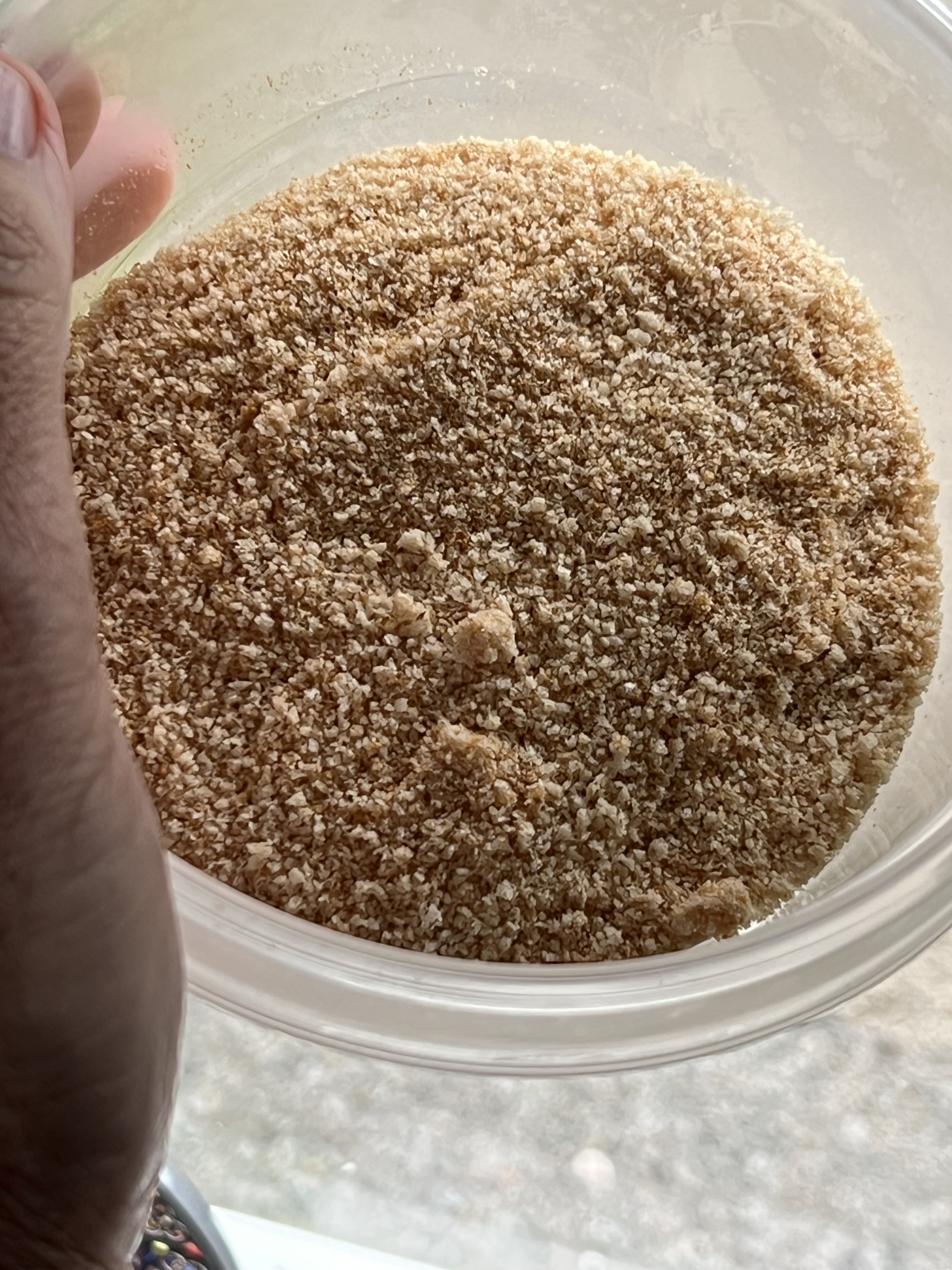
If you want this recipe to be gluten-free, do what I do: buy a loaf of Udi’s frozen white bread, toast it in the oven, and then let it dry out a bit at room temperature. Place it in a food processor and whiz it up for larger crumbs. I like my breadcrumbs fine for this recipe, so I then move them to a blender and grind them fine.

Fine grind.
1 head of cauliflower, cut into florets
2 large eggs
1 cup of breadcrumbs (I like them unseasoned and finely milled)
spray can of olive or avocado oil

There are many versions of sweet and spicy Asian-inspired sauces and glazes out there. Simply choose the one that has your favorite ingredients. This one works really well with the cauliflower.

4 tablespoons honey
2 tablespoons chili garlic sauce
2 tablespoons brown sugar
1 tablespoon + 1 teaspoon soy sauce
1/4 teaspoon granulated garlic
1/4 teaspoon ground ginger

Combine these ingredients in a saucepan and bring it up to a medium heat. When it comes to a boil, take it off the heat and let it cool. (I double this recipe simply because the sauce is so good, and I’ll want to put it on other things, like chicken.)

Pre-heat the oven to 400 degrees.

Scramble the 2 eggs in a bowl.

Add the breadcrumbs to another bowl.

For the oven, set up a slotted metal tray to sit on a baking tray, so that there’s airflow underneath it. The cauliflower goes on the slotted tray, and the baking tray catches any breadcrumbs that may drop. Spray some oil on the slotted tray to keep things from sticking.

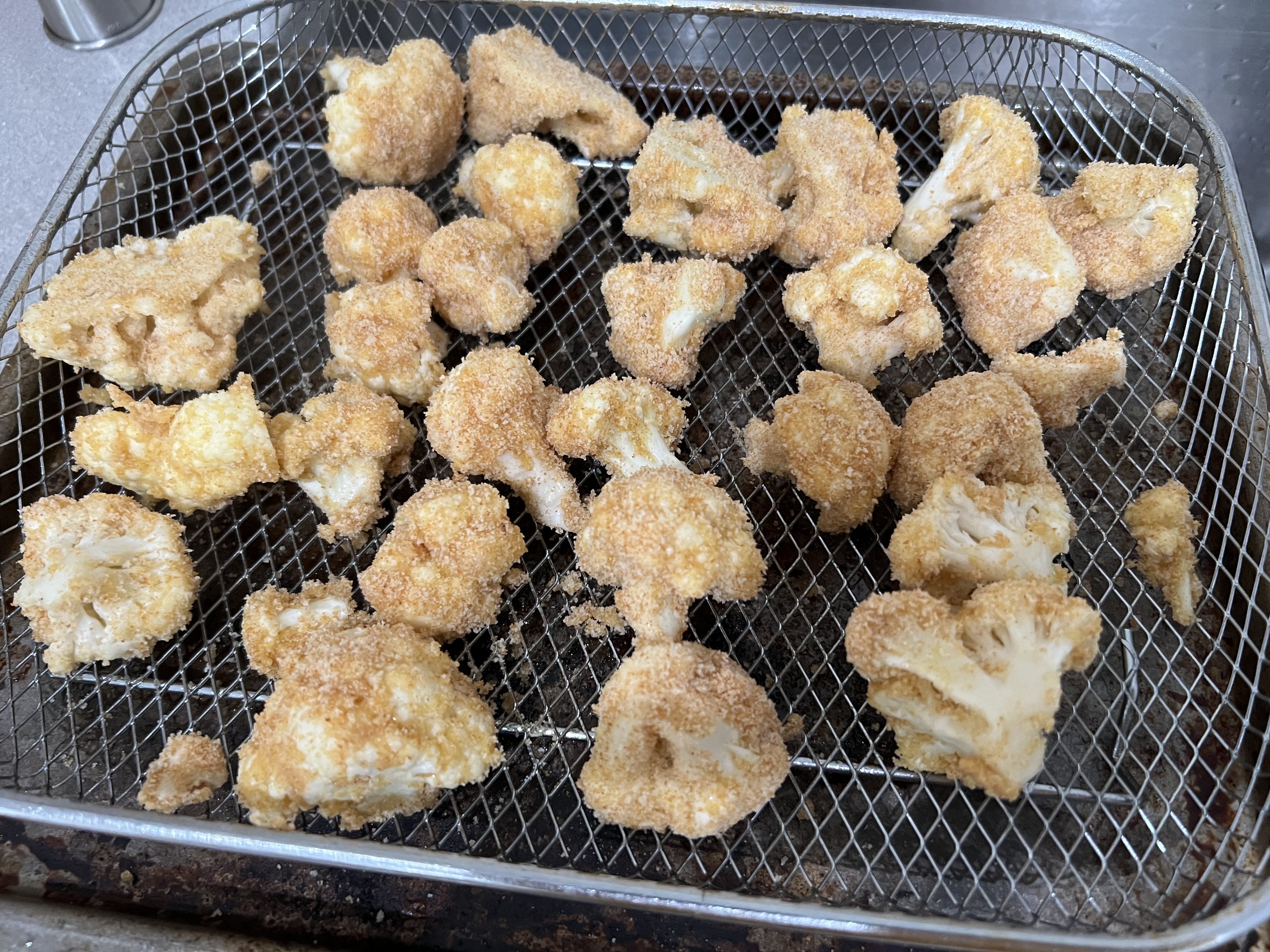
Take your cauliflower pieces and place them in batches in the egg, coating them completely. Then move them to the breadcrumb bowl, tossing them to get covered. Once they’re nicely coated, place them on the slotted tray. Do the same with the rest of the cauliflower.

Spray the cauliflower with the oil, and place them in the oven, baking for 30–45 minutes, depending on how cooked you like them.

I’ve seen restaurants that completely coat the cauliflower with the sauce, but I prefer to drizzle it on, with some extra on the side for dipping.

It had been a while since I made one of these, and my inventory of booze had changed a little bit. But the end result was still quite tasty.
First, the older recipe… And then the newer one below.
Most of the recipes for a Scorpion Bowl I found on-line don’t match the one that I’ve been using for many years. This recipe comes from a bartender (whose name I can’t remember–too many Scorpion Bowls, I guess) from a long-gone Chinese restaurant, China Garden, that was in Warwick, Rhode Island. A car dealership now stands in that spot. This is the best Scorpion Bowl I’ve ever had…and continue to have!
Make sure to use top shelf booze for this or you’ll be a “Suffering Bastard” the next morning! (A little Chinese restaurant drink humor…)

Look carefully, and you may see the flame coming out of the volcano! Hope I don’t need to tell you not to drink the 151 while it’s lit! And yes, it’s an old photo: Disaronno Originale hasn’t been called Amaretto di Saronno for a long time!

2 oz. light rum (I use Don Q silver)
2 oz. dark rum (I use Mount Gay)
1 oz. gin (I use Bombay Sapphire)
½ oz. brandy (I use E&J)
½ oz. Disaronno Originale
½ oz. Cointreau
6 oz. Pineapple juice
6 oz. Orange juice
½ oz. Bacardi 151 rum for the little cup in the volcano

In a blender half-full of ice, add all the alcohol, except the 151 rum. Add the pineapple juice and the orange juice.  (Use less if you like it stronger.) Give the drink a quick 1-second pulse in the blender, and pour it with all the ice into Scorpion Bowl or a very large glass or bowl. If you do have a Scorpion Bowl with the volcano in it, add the 151 rum to the bowl in the volcano. If not, you can mix the 151 into your drink.


Although all the proportions remain the same, my newer version had a few different brands than the old recipe.

My dark rum choice this time was a Rhode Island-based rum called Thomas Tew.

I went with the user-friendly Ford’s gin.

Grand Marnier is an excellent substitute for Cointreau.

And Gozio Amaretto is a real almond liqueur. Dissaronno strayed from their almond recipe decades ago, opting for cheaper stone fruits.

Proportions remain the same as the old recipe.

A long straw is good is you’re lazy.

Don’t drive!