Posts Tagged ‘food’

Pork is magical. And though I’ve loved bacon and pork chops all my life, it’s only recently that I’ve started to appreciate other cuts of pork and how they’ve been prepared.
No store-bought bacon for me. I have a favorite website where I’ve bought the best quality bacon on line from Missouri for years: http://www.smokehouse.com/.
My Italian pork sausages and larger cuts of pork (like shoulders, bellies, and big fat pork chops) come from Caw Caw Creek, the only certified humane heritage breed pork farm in North Carolina. http://www.cawcawcreek.com/.
My pork ribs and liverwurst come from my friends at Simmons Farm in Middletown, RI, a certified organic farm. http://www.simmonsorganicfarmri.com/
And sometimes, my pork can come from surprising places, like my rafting guide friend Rob, whose family runs Crabapple Whitewater in the Forks, Maine, where I raft on the kennebec and Dead Rivers every year. Rob decided to raise two pigs this past year, and he’s willing to trade pork jowls for a few bottles of my homemade Lithuanian honey liqueur called Krupnikas.
Pork jowls?
Weighing the jowl pieces
It all started when I wanted to make an authentic spaghetti carbonara. Since I worship at the Italian food altar of chef Mario Batali, I went to his website to look up his recipe. It said that although many people use bacon or pancetta (both from the belly of the pig—the bacon is smoked, pancetta is not)…authentic carbonara is made with guanciale (pronounced gwan-chee-ah-lay).
Guanciale is cured (but not smoked) and made from pork jowls…that would be the cheeks of the pig. According to Batali, you take raw jowls, cure them for about a week in sugar, salt, peppercorns and fresh thyme, then hang the meat to dry. The result is a delicious pork product that you slice and fry and use in carbonara or any other recipe that calls for a tasty addition of porky goodness.
The flavor of pork jowls is subtly different than that of pancetta. There is a very special mouth-feel to the fat that makes guanciale so good. And once I made my first batch, there was no turning back!
But finding raw pork jowls was not easy. Many websites offered smoked jowls. But raw jowls were almost impossible to find, and I just about gave up until I visited my friends Sal and chef Aaron at the Back Eddy in Westport, Massachusetts. I told them of my dilemma and they said: “Pork jowls? Oh, we can order them for you!” I was psyched!
About a week later, I picked up my jowls, individually wrapped in hermetically sealed ¼ pound packages, and my curing began, following Batali’s recipe.
Getting the curing ingredients together: picking thyme leaves.
Finding room in my spare fridge to cure the meat was easy…everything fit snugly in a Ziploc bag. But once it was time to dry the jowls (all 24 of them since I bought 6 pounds,) I had to rig up a special hanging system that used bungy cords, vinyl cable ties, and beer cans…don’t ask. But it worked! And three weeks later, I was frying up my guanciale in a sautee pan and adding it to vegetables, potatoes, and pizza. I even gave guanciale gifts to my foodie friends. And before long, it was time to make more.
Since that first curing effort, some things had changed. My source for heritage pork, Caw Caw Creek, now carried pork jowls, too. And I was able to buy a couple of 3-pound jowls at a time. They were big, thick, and what I originally envisioned when I dreamed of the jowl of a pig that weighed 300 pounds or more. I cut the two big jowls into 1/2–pound, 3-inch thick slabs, and cured them using the same recipe.
A big, beautiful jowl in its native habitat.
Jowls with curing spices.
All was fine until one time, I went away on vacation, and a hurricane hit our neighborhood, knocking the power out. Fortunately, my good neighbors came to my rescue and started up my generator, plugged in the fridge, and saved the guanciale! I was back in business.
Curing and hanging completed (I now used a far more sophisticated system of stereo wire instead of bungy cords and beer cans, as seen in the photo,) I’ve been sharing the goodness of this incredible and little-known pork product with anyone who would listen—and taste.
A year ago, I had never heard of guanciale. Now, I can’t imagine not having a slab at the ready in my fridge. I use it just about anywhere I would use bacon, short of a BLT.
And by the way…I’ve yet to make the spaghetti carbonara recipe!

So many people are afraid to try lamb, and I don’t understand why. On the grill, lamb is absolutely delicious.

I think that most people are turned off by lamb because somewhere in their past, they had a horribly cooked piece of it, and that event ruined it for the rest of their lives.

I’m here to tell you that you need to “man up” and try lamb again! And the two recipes below will make it one of your go-to grill ingredients…

I love the baby lamb chops that look like miniature porterhouse steaks. You can find them in any supermarket. If you think lamb has a strong taste, a good marinade will get rid of any of those flavors you don’t want. Here’s an easy recipe that I served at a party in my home for 40 people, many of whom claimed they didn’t like lamb or never had it before. By the end of dinner, the chops were gone!


½ cup olive oil

¼ cup balsamic vinegar

2 cloves garlic, minced

1 Tablespoon fresh rosemary, chopped

1 Tablespoon honey

2 teaspoons Dijon mustard

1 teaspoon dried oregano

Salt and pepper


Place lamb meat in a plastic bag or glass container with a lid. Combine all ingredients for marinade and pour over lamb. Toss lamb to coat. Seal container and place in refrigerator for at least an hour. Pre-heat your barbecue grill. Grill lamb until done. That means cooked no more than medium. Don’t cook it to death!


Here’s another recipe that doesn’t require marinating ahead of time:


2/3 cup Dijon mustard

3 Tablespoons orange zest

3 Tablespoons fresh thyme leaves

4 teaspoons packed light brown sugar

salt and pepper, to taste


Mix orange zest and thyme into a paste. Add mustard and brown sugar. Mix together. Pre-heat grill. Brush the mixture onto each side of the lamb chops and place on a hot grill for about 2 minutes per side. Turn the chops and brush again. Continue until done. Season with salt and pepper.

Try either of these recipes, and I guarantee you’ll be cooking lamb more often!

If you do your share of Italian recipes, a common product that you can find in just about any store has many people confused: San Marzano tomatoes. Most good cooks agree that San Marzano tomatoes are some of the best canned tomatoes you can buy.

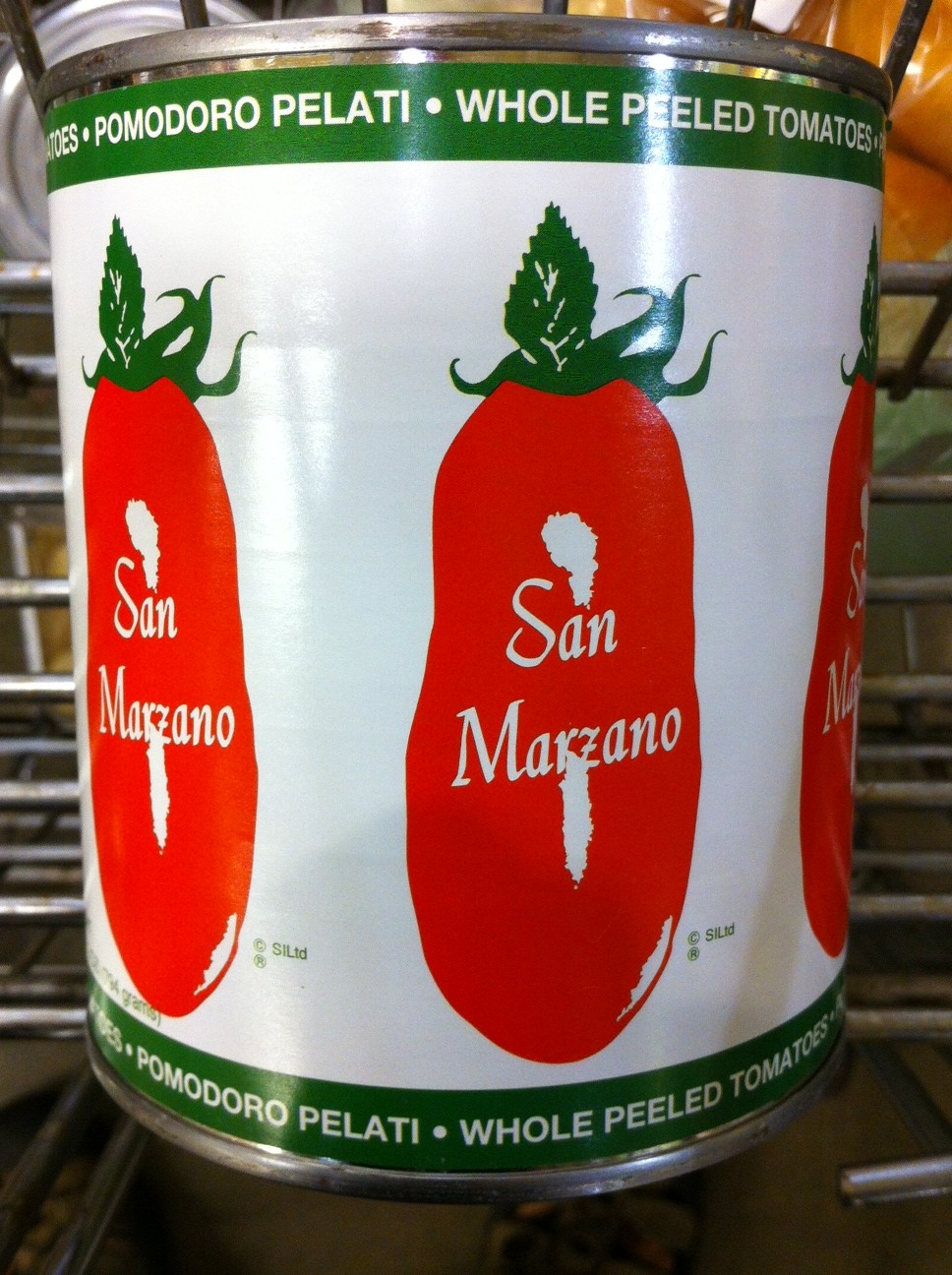
But unfortunately,  the label can say “San Marzano tomatoes” even if they are not real San Marzano tomatoes.


San Marzano is a region in Italy near Naples and Mt. Vesuvius, and the special combination of climate and volcanic soil make these plum tomatoes world famous. They have less water, fewer seeds and are picked off the vine when perfectly ripe and processed the same day.


But San Marzano is a variety of tomato, too…and so you can have a can of San Marzano tomatoes that are not from San Marzano. And to add to the confusion, there’s actually a brand of tomatoes called San Marzano, with tomatoes grown in the United States. You can bet that the sellers of these tomatoes are counting on us not to know the difference!

Sold everywhere, but not the real deal. Grown in the USA.


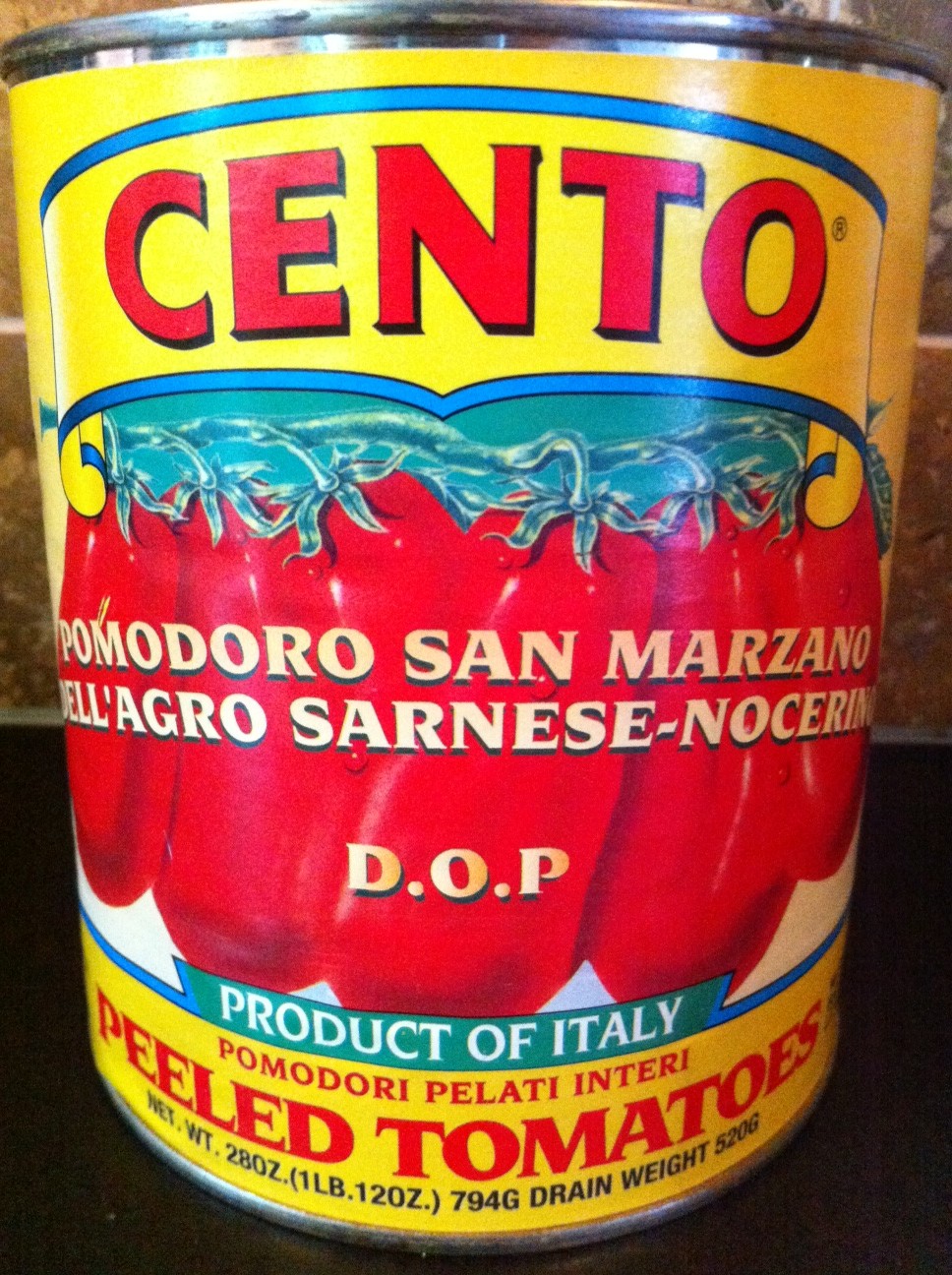
Real San Marzano Tomatoes are a very old variety, extremely limited in quantity, grown and produced exclusively in the San Marzano region of Italy. Because production is so very limited, the Italian Government and the European Union have formed a way of protecting consumers from fraud by having San Marzano tomatoes tightly controlled. DOP, or denomination of protected origin, is the mechanism that the government is using to tightly control the production and marketing of genuine San Marzano tomatoes. Labels for DOP products must be individually numbered and manually applied to each and every can in specific lots and government officials must oversee this application. So here’s the deal: unless you see “DOP” on the label with a hand-stamped number on the can, it’s not a San Marzano tomato.


Real San Marzano tomatoes. Cento also sells non-certified San Marzano’s, so always look for the DOP on the can.

Another way to tell when you’re in the market is simple. Check the price. Your average can of tomatoes will be in the $2 range. Real DOP San Marzano tomatoes: about $4–$5 a can. It’s all about quality.


It’s all about the salt.

I fell in love with Fleur de Sel, the rare hand-raked salt, several years ago. I’ve got high blood pressure, and unfortunately, I need to limit my intake of salt. So my discovery of “finishing salts” allows me to cook completely without salt until the very end, where I can then sprinkle just a few crystals of this moist, hand-harvested miracle on my plate, enjoying every tiny burst of salty ocean flavor without a lot of guilt.

Inspired by an episode of “No Reservations” where Anthony Bourdain journeyed to Brittany, my wife and I dreamed of traveling to what is arguably the epicenter of Fleur de Sel production, the small town of Guerande, France. Located on the Atlantic coast in the Pays de La Loire region just south of Brittany, it’s about a 5-hour drive from Charles de Gaulle airport outside of Paris.

A salt flat in Guerande


Some of the comments we read about the medieval town of Guerande said it was too touristy, but we found that it had a lot of charm: the perfect combination of old and new, with many interesting shops and eateries inside the ancient walls of this small town. Built in the 15th century and fortified in the 19th century, the surrounding wall around Guerande is one of the best preserved in all of France.

The salt marshes outside the city walls have been around a long time…the last of them built around 1800. Salt production here declined soon after, because salt was available more cheaply from salt mines. But you gotta love foodies…the influence of chefs and food lovers around the world have brought back the demand for this very special product. Salt workers now harvest about 15,000 tons of cooking salt a year, and about 300 tons of the very precious Fleur de Sel.

Worth its weight in gold!

The process is simple: the ocean tides bring the salt water in and channel it into shallow pools where the water then evaporates, leaving behind the beautiful sea salt Guerande is known for. When just a few inches of water remain, a salty crystalized film floats on the surface of the water. This is very gently hand-raked and produces the much sought after Fleur de Sel. Traditionally only women were allowed to rake this salt because it was believed they had a gentler touch.

Driving through the salt field was a wonderful experience. The roads are narrow, and wind almost endlessly through these flat marshes where salt workers spend their days raking, gathering and then bagging their precious harvest. You can stop anywhere along the way to buy your salt directly from these salt workers, which we did. It was easy to get carried away…we brought home over 20 lbs of salt! Of course, we shared it with friends. Otherwise, not only would my blood pressure have gone through the roof, but I’d probably be dealing with kidney stones as well!

Harvesting and selling salt in Guerande is a family affair.

One taste of Fleur de Sel, letting it gently melt on your tongue, and you’ll know what the big fuss is all about.

Our Fleur de Sel journey did not end in Guerande, however. After a couple of nights in that region, we headed south to the island of Ile de Re, just off the coast of La Rochelle, France. Connected by a 3km bridge, Ile de Re is a beautiful world unto itself, with an intricate network of bicycle paths that allow you to travel safely from one end of this flat island to the other, enjoying beautiful views as you ride through vineyards, salt marshes, beaches and small port towns.

As in Guerande, not only can you sample the local salt, but also the abundant supply of incredibly fresh seafood, especially their famous oysters. The salt flats seem somewhat newer in Ile de Re, but still very much a large part of the local economy. The salt itself differs in only the most subtle of ways from its Guerande counterpart and I would find it difficult to say which I liked better.

Ile de Re is long and flat, so many of the salt pools are larger than those in Guerande.

It may seem a bit silly to travel all this way for something is simple as salt. But it’s a journey I’m very happy I made…and will gladly make again in the near future.

Cucumber season is winding down here in Southern New England. If you think these veggies are nothing special, it’s probably because you bought them from a supermarket, where they’ve been grown on the other side of the planet, covered in wax to prevent bruising, and then shipped to your local store where they place them under artificial lighting.

Go to your local farmer now. Buy some amazing fresh cukes. Then try any or all of these suggestions…

CRISPY CUCUMBER SOUP

3 medium-sized cucumbers, peeled and seeded

1 clove garlic, crushed

1 cup vegetable broth

4 cups plain yogurt (I like the full fat yogurt)

1/2 cup mint leaves

juice of 1 lemon

salt and pepper

Peel and seed 2 1/2 of the cucumbers and place in a blender with garlic, broth, 3 cups of the yogurt, mint leaves, lemon juice, and salt and pepper to taste.

Mix well. Add remaining yogurt and wisk in.

Finely dice the leftover 1/2 cucumber and place in soup bowl. Add soup on top.

Garnish with a pinch of SEA salt, preferably Fleur de Sel.

REFRESHING CUCUMBER DRINK

This is a recipe I found last summer, and it’s one of the most refreshing summer drinks you can make for yourself. But it also requires a lot of preparation. It’s worth it. I made a pitcher this past weekend, and I can’t even begin to tell you how good it was!

Ingredients per pitcher:

8 English cucumbers, peeled and seeded

4 cups lightly packed fresh mint leaves

12 Tablepsoons fresh lime juice

8 teaspoons sugar

16 ounces vodka

4 ounces Cointreau

Peel cucumbers and quarter lengthwise. Remove any seeds. Cut a couple of quarters into thin stalks for garnish. Rough chop the rest of the cukes and put them in a food processor. Blend until totally liquefied. Strain cuke juice through a fine sieve, squeezing out as much liquid as you can from the solids. Throw the solids in your compost bin.

In a pitcher, combine mint, sugar and lime juice. Muddle the mint leaves, then add 1 cup crushed ice to the pitcher and stir well.

Add 3 cups cucumber juice, the vodka and Cointreau to the pitcher and stir well again.

Strain liquid into tall glasses filled with ice. Garnish with cucumber stalks.

PIMM’S CUP

Pimm’s No. 1 is a gin-based liqueur made in England. There are many variations of this drink, but my favorite is this simple:

Pimm’s No. 1

Ginger ale

1 smaller cucumber, peeled and quartered lengthwise

In a tall glass filled with ice, pour 2 oz of the Pimm’s No. 1. Fill to top of glass with ginger ale, leaving enough room to place a stalk of cucumber in the glass.

And nothing comforts me more than a bowl of chopped cukes with sour cream, some finely chopped fresh dill and a pinch of salt. Something my Mom gave us as kids that I still love today.

Read more: http://www.94hjy.com/pages/alz_food_blog.html#ixzz25algwxHE