Posts Tagged ‘food’

Spaghetti alla Carbonara and Fettuccine Alfredo are my daughter’s two favorite pasta dishes. When she couldn’t decide which one she wanted for dinner one night, I decided that she’d get both! (Yes, I spoil my girl rotten!)

The addition of chicken and peas made for a more balanced plate. This is now one of my go-to dishes when guests arrive, since many parts can be prepared ahead of time. And the gluten-free version tastes as good the original!
 

fullsizerender-4


Start with the chicken…

The breading for the chicken uses gluten-free bread that I’ve toasted, crumbled and put into a food processor to make breadcrumbs. You get a lot more flavor this way than using store-bought GF breadcrumbs from a can. I add gluten-free flour to it to lighten it up. Cup4Cup is by far the best GF flour I’ve tried.

If you’re not on a GF diet, simply use regular breadcrumbs and all-purpose flour in the same proportions.

1/2 lb. chicken breasts, cut into 1″ pieces
1 egg, scrambled
4 oz. sliced gluten-free bread, toasted (I use Udi’s frozen bread)
1/2 cup gluten-free flour (I use Cup4Cup)
3 teaspoons dried parsley
2 teaspoons dried oregano
1 teaspoon dried basil
1/2 teaspoon granulated garlic
1/2 teaspoon granulated onion
1 1/2 teaspoons salt
1/4 teaspoon pepper
olive oil, for frying

Scramble the egg in a bowl. Cut the chicken into pieces, and add them to the egg, making sure they get evenly coated. Set aside.

In another bowl, combine the bread crumbs, flour, parsley, oregano, basil, garlic, onion, salt and pepper. Set aside.

Fill a pan with about an inch of olive oil. Heat to medium-high, for frying.

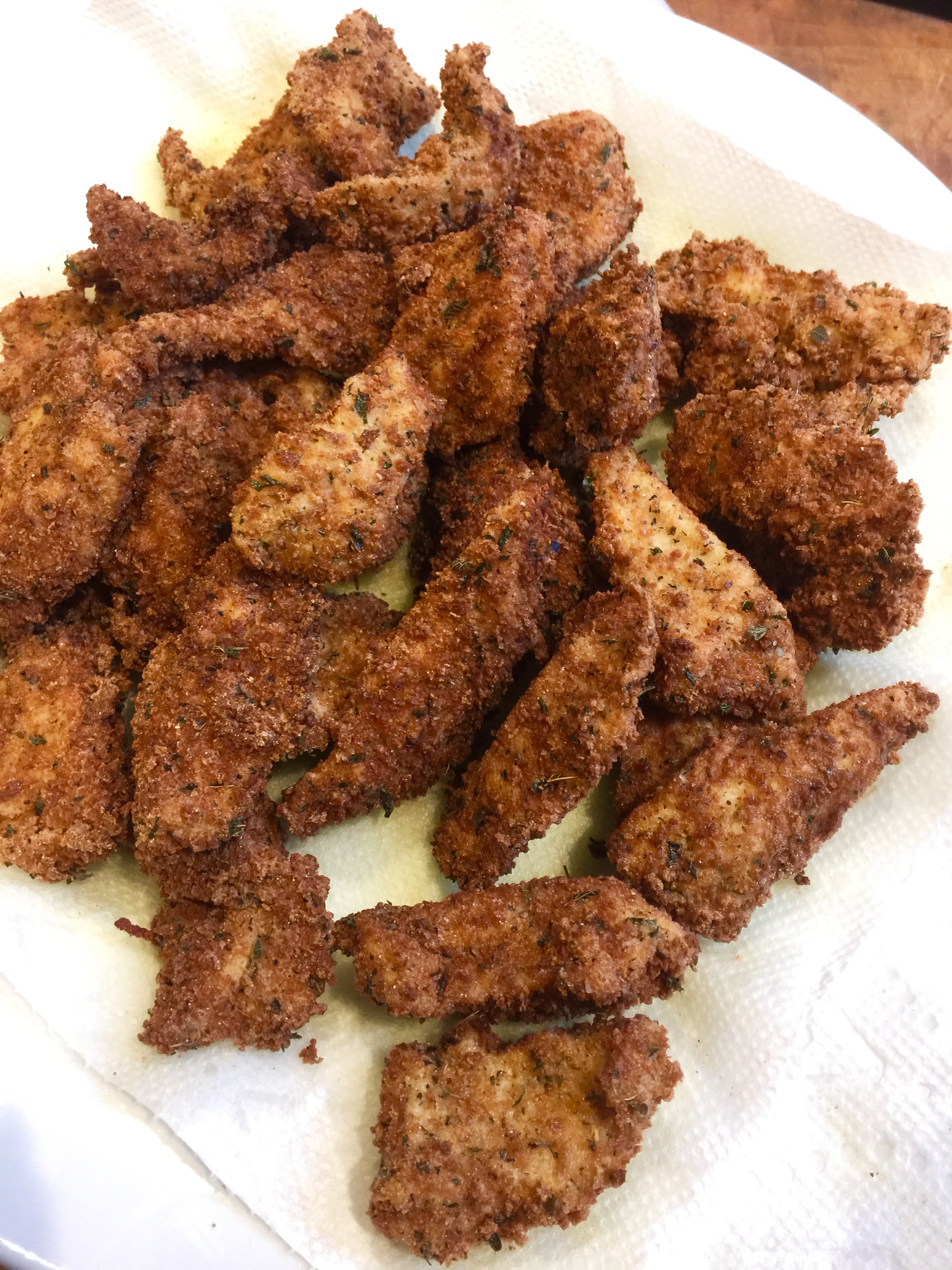
In batches not to overcrowd the pan, take the chicken pieces out of the egg and toss them in the bread crumb mixture, shaking off the excess. Place them carefully in the hot oil and fry on both sides until golden. Since they’re small pieces, they should cook all the way through easily. Drain on a plate covered with paper towels. Do this with all the chicken and set it aside. Try not to eat it all before you make the rest of the dish! (This chicken can also be eaten as is–these are my daughter’s favorite nuggets–or used with tomato sauce and mozzarella cheese to make a delicious chicken parmigiana.)


fullsizerender-6


The carbonara factor…

Many recipes for Spaghetti alla Carbonara use pancetta or bacon. But the original recipe calls for guanciale: cured (but not smoked) pig jowls, or cheeks. It’s easy enough to find in a good Italian food store, but I cure my own. I buy raw heritage Berkshire pork jowls from a farm that raises the pigs humanely, and cure the jowls for about 3 weeks in a combination of salt, pepper and fresh thyme leaves. Then I rinse them, pat them dry, and cut them into portion-sized pieces, which I wrap individually and freeze until I need them. It’s a lot of work, but to me, totally worth it.

3 oz. guanciale

If the guanciale is frozen, let it thaw just a little, then cut it into the smallest cubes you can manage. Place it in a pan and cook them until they’ve browned and crisped beautifully. Keep an eye on the pan, as guanciale can burn easily. Use the fried meat bits for this recipe and save the fat for flavoring a future dish! Set aside.


The Alfredo sauce…

Despite what you get in crappy restaurants like Olive Garden, Alfredo sauce should not be runny or soupy. It should cling to the pasta and be rich in flavor. When making this dish gluten-free, I use Garofalo gluten-free pasta exclusively, because it tastes just like real pasta. (Believe me, I’ve tried every GF pasta out there.) I buy mass quantities at Amazon.

If you’re not on a GF diet, simply use your favorite regular pasta.

1 cup heavy cream
3 tablespoons butter
Fleur de Sel or sea salt
1 lb. pasta, fresh or dried
2/3 cup freshly grated Parmigiano Reggiano cheese
freshly ground black pepper


Put 2/3 of the cream and all the butter in a large saucepan that will later accommodate all the pasta. Simmer over medium heat for less than a minute, until the butter and cream have thickened a bit. Turn off the heat.

Drop the pasta in a bowl of boiling salted water. If the pasta is fresh, it will take just seconds. If it’s dry, it will take a few minutes. (Gluten-free pasta takes a little longer.) Either way, you want to cook the pasta even firmer than al dente, because it will finish cooking in the pan with the butter and cream. Drain the pasta immediately when it reaches that firm stage, and transfer it to the pan with the butter and cream, tossing the pasta gently for a few seconds to coat.

Turn the heat under the saucepan on low, tossing the pasta, coating it with the sauce. Add the rest of the cream, all the Parmigiano Reggiano, and a bit of pepper (no salt because there’s plenty in the guanciale and cheese.) Toss briefly until the sauce has thickened and the pasta is well-coated.


At this point, you don’t want the pasta to get to dry, so you add…

1 cup of frozen peas

…tossing gently to warm them through. Also add the cooked guanciale at this time.

fullsizerender-5


Plate the pasta in a bowl or dish and serve the chicken alongside.


Nothing says summer here in New England like a lobster roll. But I don’t go to a clam shack to get one. The prices are ridiculous, the meat can be overcooked, and they often add ingredients I don’t want.

I start with fresh lobster. I get it from my lobster man buddy, Gary, just down the street at his dock in Tiverton, RI. Gary’s brother runs the Sakonnet Lobster Company on Sakonnet Point in Little Compton, RI. It’s just steps away from Saule, our rental property. (Check it out at http://www.sauleri.com)


A view of the Sakonnet River from the back of Gary's lobster boat, the Edna Mae

A view of the Sakonnet River from the back of Gary’s lobster boat, the Edna Mae


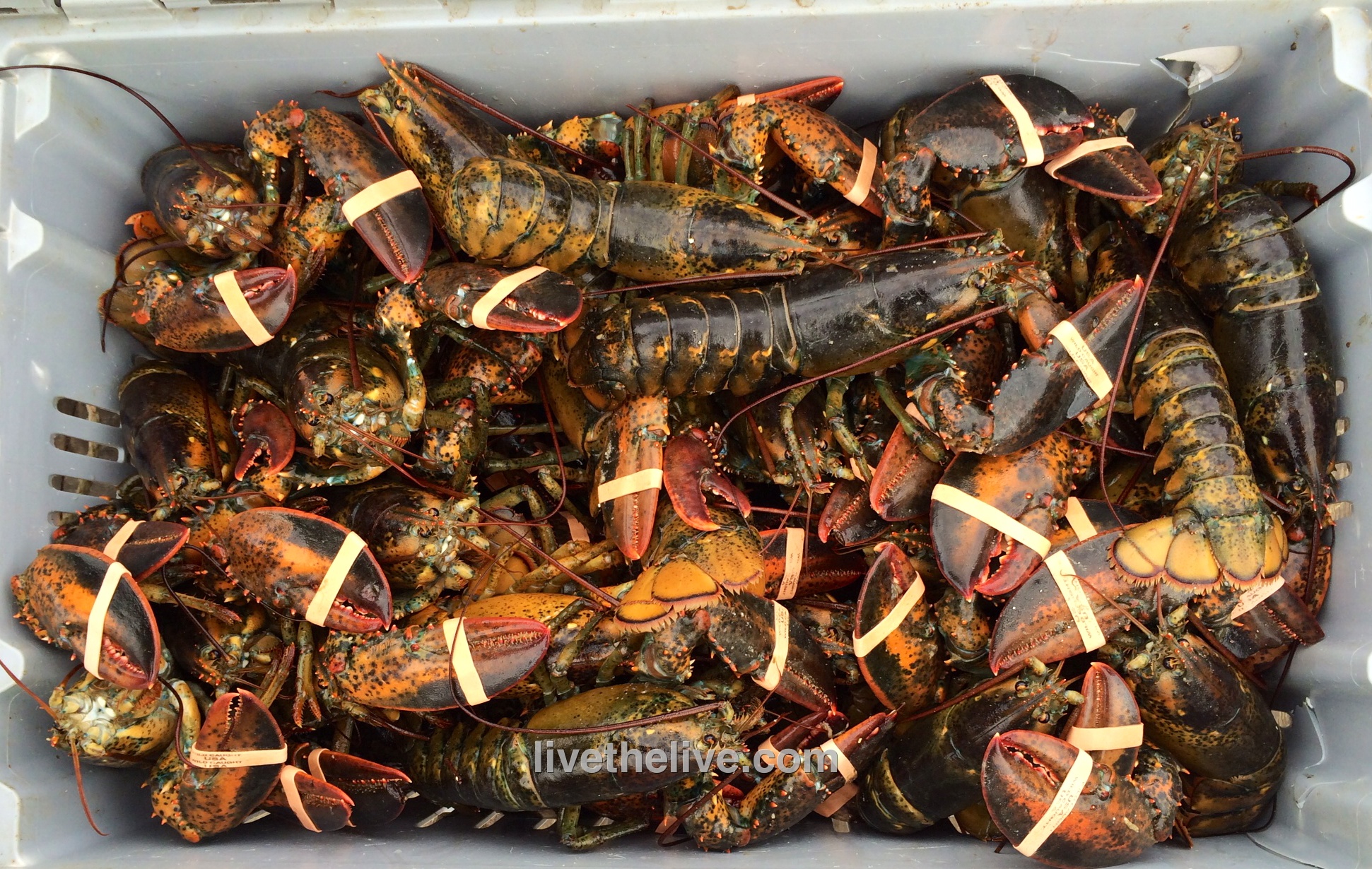
Once you’ve bought your live lobster, the next step is to cook it right. Some people steam and some people boil. I’ve always been a boiler myself. I fill a large pot half way-to-2/3’s with water and add sea salt. I bring it to a rolling boil before the lobsters go in. And then I do the math…

I boil my lobsters for 10 minutes per pound, for the first pound. Then I add 3 minutes per pound for each additional pound thereafter. For example, a 2 pound lobster should boil for 13 minutes and a 1 1/2 pound lobster should boil for 11 1/2 minutes. These times are for hard shell lobsters, if cooking new shell (soft shell lobsters) reduce the boiling time by three minutes.


Lobster catch LTL


A larger lobster is not always better. My uncle used to buy the largest lobster he could find, and it was impressive when he placed at the center of the dinner table. But the meat was like rubber. And personally, I felt bad for the old lobster that made it that far in life. His last days should’ve be in the ocean, not on a plate.

My maximum lobster size is 2 lbs. At that weight, you have the perfect ratio of meat-to-shell…with lots of delicious meat that is still sweet and tender. It’s perfect.

After the lobsters have been removed from the pot and have cooled for a few minutes, I get to work: cracking the claws and tail and removing every bit of beautiful meat I can find. Lobster lovers will tell you that the legs have some meat in them and that the tomalley (the green liver and pancreas) and roe (eggs) are delicacies not to be missed. For the purpose of making lobster salad, I don’t use these parts. But I do save the tomalley and roe for a separate treat…and I save all the legs and cleaned empty shells for lobster stock.

Cleaning lobster legs is easy: simply remove all the legs from the body and place them flat on a cutting board. Grab a rolling-pin, and one at a time, roll the pin over the lobster legs, starting at the claw end and working your way up. Like a tube of toothpaste, the meat will squeeze right out of the leg!


Lobster roll LTL


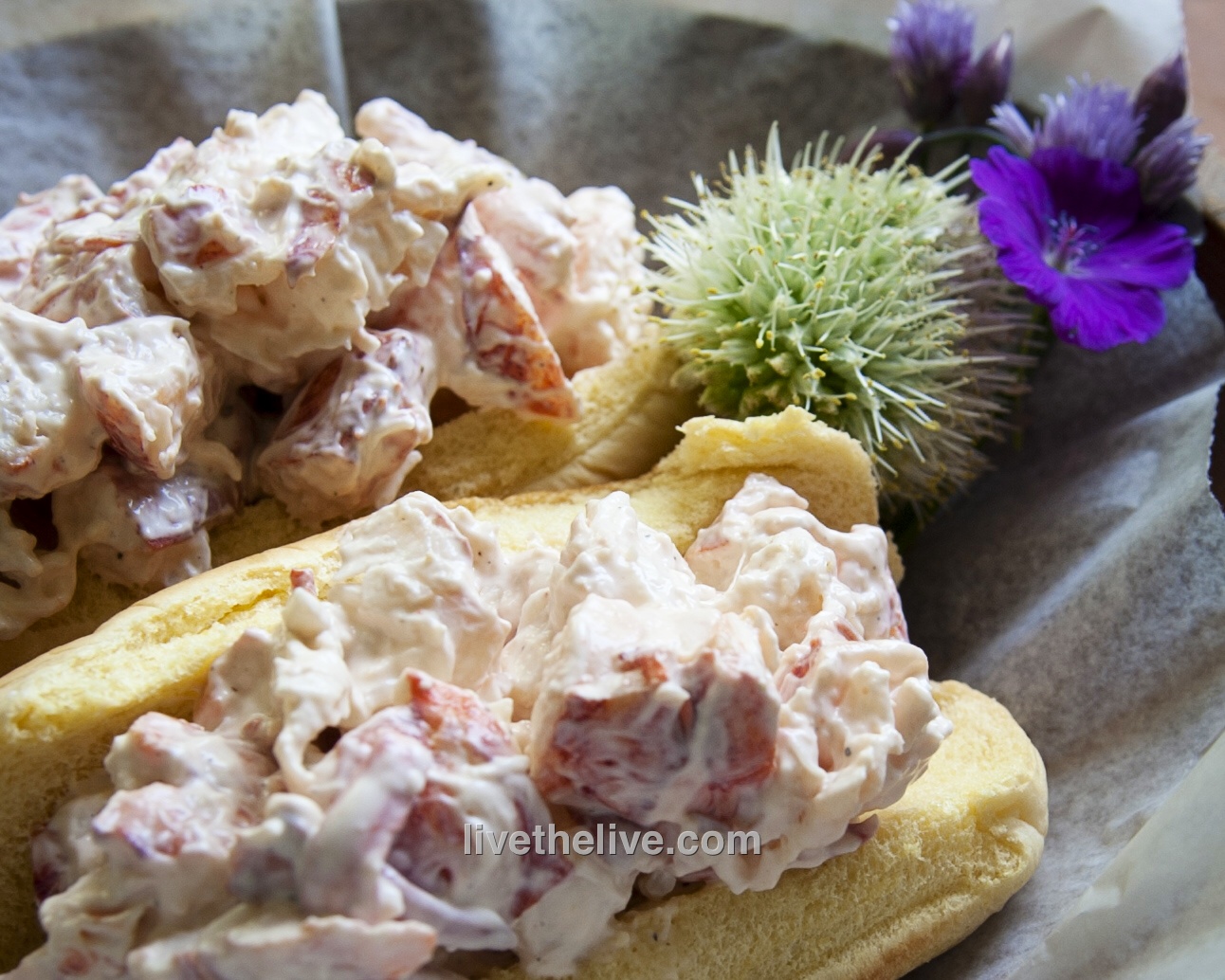
Now for the important stuff. What goes in a lobster roll, and more importantly, what doesn’t… I have very strong opinions in this matter.

First, there should NEVER be anything green in a lobster roll! No celery, no pickle, and it certainly shouldn’t be sitting on a lettuce leaf!

No paprika or Old Bay seasoning. A pinch of celery salt? Sure. Mayonnaise? Only Hellman’s. White pepper, not black, and just a touch. Salt? A pinch of Fleur de Sel. And the secret weapon to bring out all the flavors: the tiniest squeeze of fresh lemon juice…not enough to give it a lemon flavor…just to brighten the taste.

As for the roll, I prefer those long Martin’s potato rolls: soft and squishy straight out of the bag or for extra decadence: lightly grilled with a little melted butter brushed on.


Just because you’ve got a garden full of fresh veggies, it doesn’t mean you have to gorge on nothing but salads! Sometimes, a refreshing cocktail is just what you need after a long day of yard work. With a ton of cucumbers crankin’ out of the garden right now, and with this seemingly never-ending heat wave going on in New England, this is the perfect Friday-get-the-weekend-started cocktail!

If you’ve got a juicer that’s sitting in the corner of the kitchen unused because the “juice kick” you were on became tiresome, here’s a great excuse to bring it out again.


4 fresh cucumbers, peeled and seeded
Small ice cubes
1 cup loosely packed fresh mint leaves
2 teaspoons granulated organic cane sugar
3 tablespoons fresh lime juice
1/2 cup vodka (I like Tito’s)
1 oz. orange liqueur (I like Cointreau)


Peel and seed the cucumbers. Juice them to extract the liquid. If you don’t have a juicer, use a food processor. Coarsely chop them and then purée in a food processor until smooth. Strain through a fine sieve, pressing the solids to extract as much liquid as possible. You’ll need at least 3/4 of a cup of juice, so use more cukes if you don’t have enough. Set the cucumber juice aside.

To a large glass pitcher, add the mint leaves, sugar and lime juice. Muddle the ingredients so that the mint leaves release their oils. Add 3/4 cup (at least) of the cucumber juice. Add the vodka and Cointreau. Muddle again briefly.

Fill tall drinking glasses with ice cubes. Strain the cocktail into glasses. Garnish with a cucumber spear or mint.

GUAC AND ROLL

Posted: July 31, 2018 in Food, Recipes
Tags: , , ,

Hey! It’s National Avocado Day!

People are passionate about their guacamole, and there are thousands of recipes out there. If the avocados are nice and ripe, I think a good guac recipe needs to be simple. Grapefruit is my go-to citrus to add a spark of bright flavor.

image

4 ripe avocados
1 grapefruit
1/2 small Vidalia onion, finely chopped
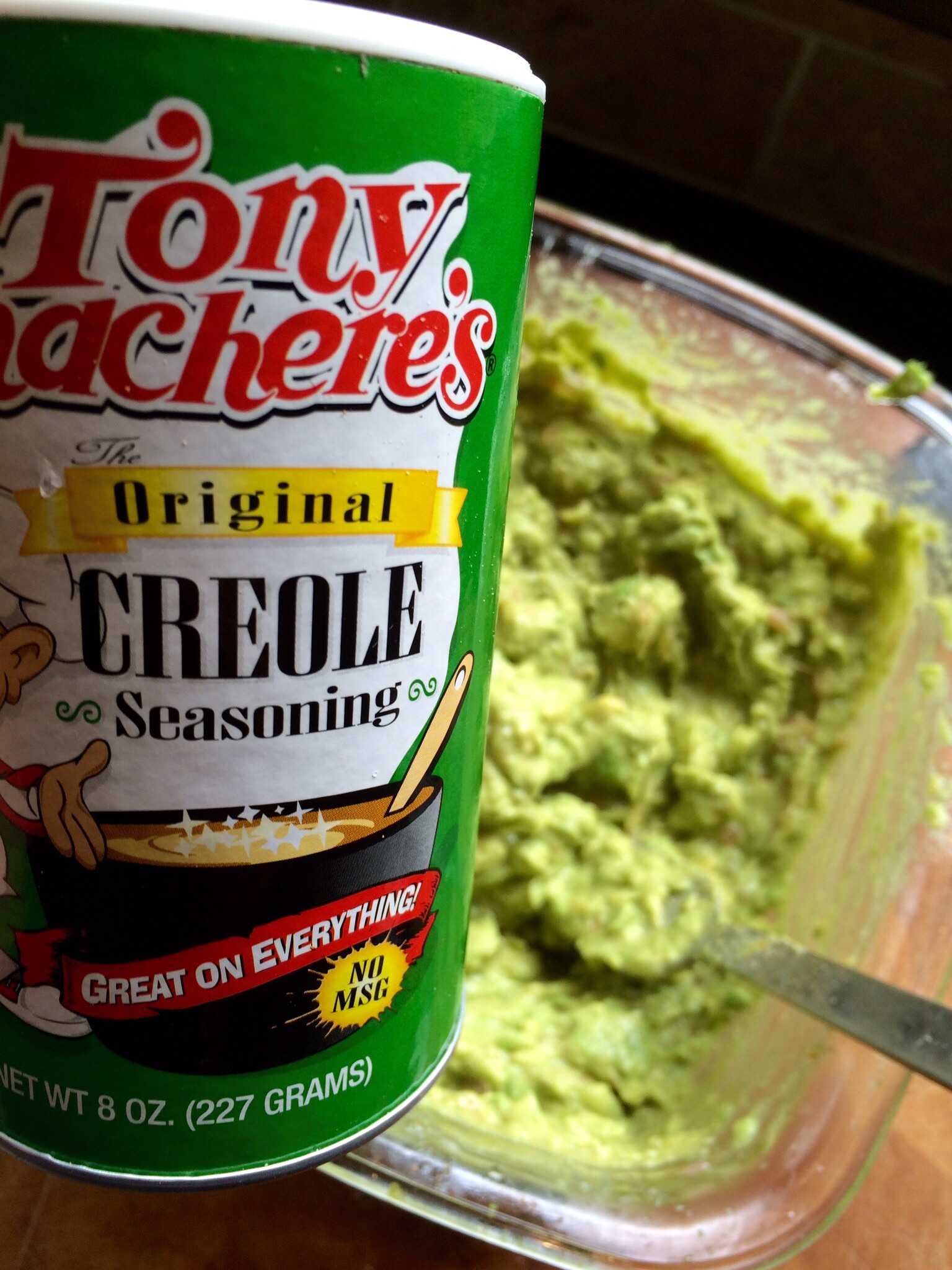
Tony Chachere’s Creole Seasoning


Slice the avocados lengthwise down the middle and all the way around, twist to get 2 halves, remove the seeds, and scoop out the flesh into a glass bowl. Mash it up a bit with a fork.

I always wash fruit before zesting. Using a microplane zester, zest a bit of the grapefruit skin and add to the bowl before cutting it into quarters. Squeeze the juice out of one of the quarters and add to the bowl.

The art of removing the flesh out of citrus without any of that nasty fibrous skin is called supreming.  Supreme as much of the flesh as you like, roughly chopping it, and add it to the bowl.

Add the chopped onion.

Tony Chachere’s (pronounced sak-a-rees) Creole Seasoning has some kick, some salt, and some spices. Add it to taste.

Mix the contents of the bowl well with a fork. Cover the bowl tightly to prevent oxidation, and like all guacamole, store it in the fridge and serve it as soon as possible.

A while ago, we were invited to a very cool retro summer party: cocktails and appetizers from the 60’s, and everyone contributed to the music by bringing in their favorite songs on vinyl. (I brought in a copy of the First Edition’s “Just Dropped In (to See What Condition My Condition Was In)” featuring a very young Kenny Rogers. Very trippy.

We were also asked to contribute to the apps, so we brought waffle chips with clam dip. Clam dip is a classic, and it’s really easy to make. And the bowl was practically licked clean by our party-going friends!

image

2 8-oz. packages cream cheese, softened
3 6-oz. cans of chopped clams, drained, liquid reserved from one can
1 tablespoon fresh lemon juice
2 teaspoons Worcestershire sauce
1/2 teaspoon salt
1/4 teaspoon black pepper

Combine all the ingredients, except the clam liquid, in a bowl and mix well with a fork.

Add 1 tablespoon of the clam liquid and mix well. Keep adding the clam liquid until the dip reaches a consistency you like.

Serve with potato chips.

image

What do you do when the hot weather kicks in and the cucumbers start taking over your garden? I make soup!

The original cucumber soup recipe comes from Ikies Traditional Houses, a wonderful hotel in the beautiful town of Oia in Santorini, Greece. After a long, hot day of exploring the island, we would settle down to a refreshing bowl of cucumber soup. They were nice enough to share the recipe with us, and a few tweaks later, it’s my definition of perfect.


cuke soup


3 English cucumbers or 5 regular cucumbers, peeled, seeded and roughly chopped
1 clove garlic, crushed
1 cup vegetable stock, preferably home-made
4 cups plain full-fat yogurt
1/2 cup fresh mint leaves
Juice of 1 lemon
Fleur de Sel and pepper


Peel, seed and chop the cucumbers and place them in a blender with the garlic, stock, 2 cups of the yogurt, mint leaves, lemon juice, 2 teaspoons Fleur de Sel, and a grating of fresh black pepper.

Turn on the blender and mix well. Stop the blender and then add remaining 2 cups of yogurt and mix it by hand.

Pour the cucumber soup in bowls. Garnish with diced cucumber or radish.


To make the vegetable stock: rough-chop a few carrots, a few stalks of celery, and an onion, and put them in a pot with 4 cups of water. Boil until the liquid has reduced by half. by half. Strain the veggies before using the stock. You can also roast the veggies on a sheet pan in a hot oven for a bit before adding them to the water for an even richer flavor.


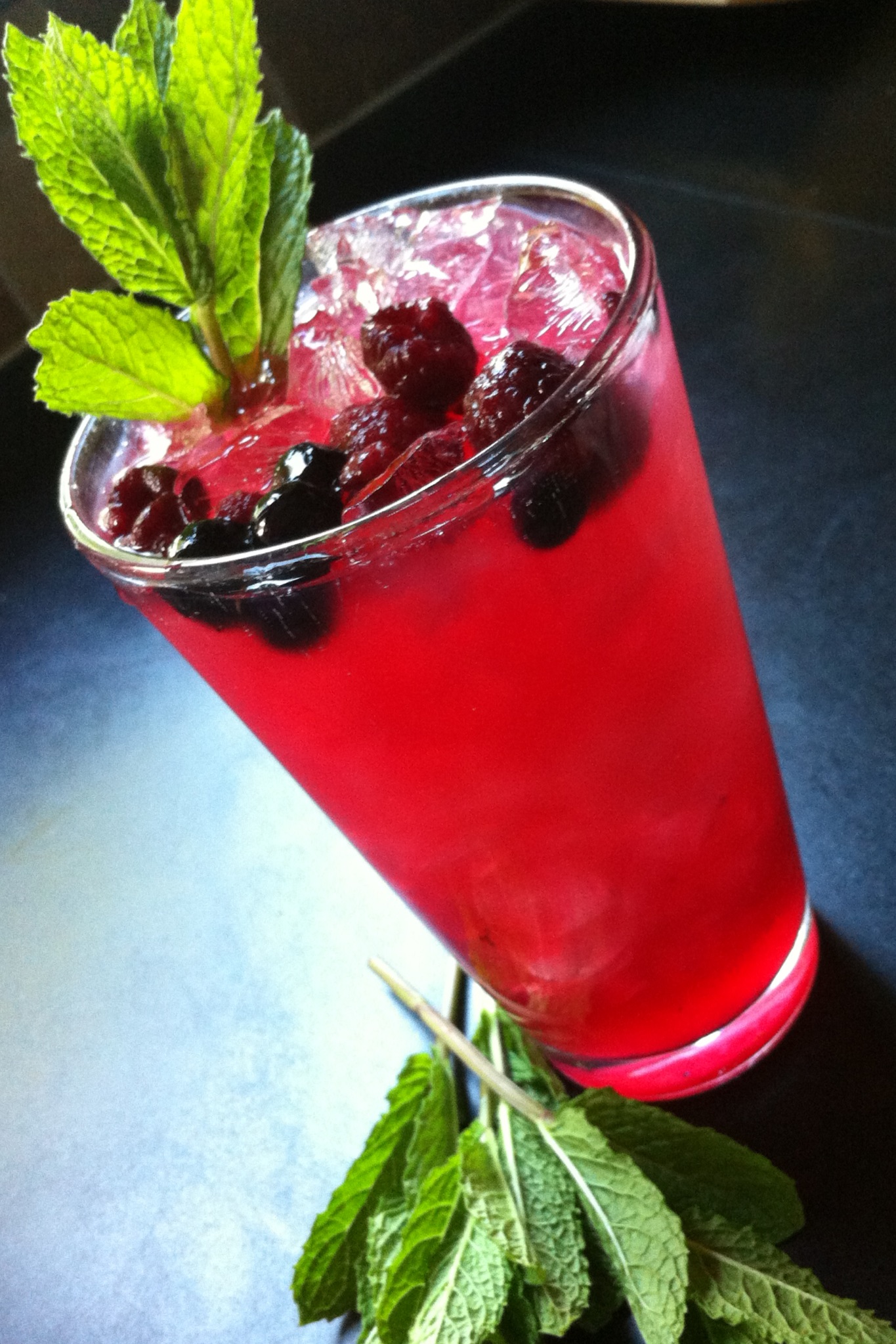
My raspberry plants are producing a ton of fruit, and my mint plants are taking over the yard! It’s time to make mojitos!

Very often, I’ll use raspberries alone, but mojitos are even better when you combine the raspberries with blueberries. Though I have a few blueberry bushes in my yard, it seems that the birds get to them before I even get a chance. Fortunately, I have several neighbors that put little farm stands up in front of their homes, selling blueberries, so I stock up on them, rinsing them and placing them in plastic bags that go in the freezer until I’m ready to make my mojitos.

Store-bought frozen fruit works well, too, so if you don’t have a farm stand down the road, don’t feel like you can’t make this fabulous cocktail. Make mojitos by the pitcher and you’ll never have them any other way!

The ingredients


Make ahead of time…
1 1/2 cups fresh squeezed lime juice
1 1/3 cups turbinado sugar (Sugar in the Raw)

Mix both ingredients together, letting it stand at room temperature for a few minutes. I like to combine them in a Mason jar, then shake really hard until the sugar has dissolved. I keep it in the fridge, and it’s good for up to 3 weeks…ready to use any time. Shake it well again before using.


mojito pitcher

For the Mojitos…
1 cup sugar/lime mixture
1 cup mint leaves, packed
1/2 pint blueberries (fresh or frozen)
1/2 pint raspberries (fresh or frozen)
3 or 4 cups white rum (I use Don Q Cristal rum)
3 or 4 cups club soda

Combine the mint leaves and 1/2 cup of the sugar/lime mixture in bottom of a pitcher. Muddle the mint up very well to release mint oils. Add the blueberries and continue to muddle.

Add the remaining sugar/lime mixture, rum and raspberries. Mix well. Just before serving, add the club soda and ice. Stir. Pour into tall glasses.

Or…for drinks one at a time, don’t add the club soda to the pitcher. Instead, fill a tall glass with ice. Fill it one-third to halfway with club soda, then top with the mojito mix. Garnish it with a mint leaf.


Cheers!

Cheers!

Shrimp with an orange sauce is something you see on every Chinese restaurant menu. I didn’t have oranges, but wanted a citrus kick to my sweet and spicy sauce. I went with grapefruit and I never looked back!

Although I call this recipe “Asian shrimp,” I never buy my shrimp from Asia! Only wild-caught American shrimp will ever do. When you realize just how nasty Asian shrimp can be (farmed in over-crowded conditions, swimming in their own filth and fed chemical food pellets) you’ll never eat it again.

Green beans are now growing in my garden, so I used them, but feel free to substitute with broccoli, asparagus, or any other veggies you like.

Chili garlic sauce and hoisin sauce can be found in most supermarkets, in the international foods section.

As long as you use gluten-free soy sauce and hoisin sauce, this dish is gluten-free!


image


For the rice:

1 cup basmati rice (I use Texmati brown rice)
2 cups seafood stock (I use homemade shrimp and fish stock)
1/2 teaspoon salt
2 scallions, finely chopped
splash of peanut oil


For the veggies:

1/2 Vidalia onion, finely chopped
1 lb. fresh green beans, washed and cut into 1/4′ pieces
1 teaspoon soy sauce
splash of peanut oil


For the shrimp:

2 dozen thawed, peeled and de-veined wild caught USA shrimp
1 tablespoon chili garlic sauce
3 tablespoons hoisin sauce
juice and zest of 1 grapefruit
splash of peanut oil


Making your own seafood stock is easy: just peel the shrimp you’re going to use in this recipe, and place the shells in a saucepan full of water. Let it boil until you’ve reduced it to 2 cups. Strain out the shells and discard them. Then use the stock to cook your rice, according to the package directions. Once the rice is cooked, toss in the chopped scallions, mix well, and set the rice aside.

Add peanut oil to a hot pan and saute the onions until translucent. Add the green beans and cook them until al dente. Add the soy sauce, stir, and then pour the contents of the pan into the rice. Mix well.

Using the same pan, add a little more peanut oil and sear the shrimp on both sides. Don’t overcook them! Push the shrimp to the sides of the pan so that a circle remains in the middle. Add the chili garlic sauce and hoysin sauce and stir them together, then blending in the shrimp until the shrimp are covered with the sauce. Add the grapefruit zest and juice and stir until everything is combined and the sauce has thickened just a bit.

Pour the contents of the pan into the rice mix and combine. Add more soy sauce to the rice, to taste.

Whenever I serve these tuna tacos to friends, I always get requests for the recipe. It requires a bit of setting up, but you can put it together right before serving to your guests…or yourself.

I use sushi grade tuna for this dish, which is easily found in small frozen “bricks” at Whole Foods or similar stores.


The marinade…
6 tablespoons soy sauce
1 teaspoon chili oil

The topping…

¼ cup sour cream
1 tablespoon fresh squeezed lime juice

Other Ingredients…

½ lb. sushi grade raw tuna, chopped into ¼-inch cubes
Tortilla chips
Finely chopped scallions

Combine the topping ingredients in a bowl, and place it in the fridge. Mix the marinade ingredients in a separate bowl. Chop the tuna into ¼-inch cubes, and marinate it in the soy/oil mix for just 10 minutes, then drain. (It will be really salty if you let marinate any longer.) Keep it cold!

Just before serving, take a tortilla chip, place 1 tablespoon of the tuna on top, top this with ½ teaspoon of the sour cream mixture, and then garnish with the finely chopped scallions.

Serve them immediately, and eat these quickly, before the tuna makes the tortilla soggy!


Newport, Rhode Island is a great old town to explore…and we’re lucky that we live just a half-hour away. But Newport gets ridiculously crowded in the summertime, so we visit before the season starts or wait until the season is over before we even dare to set foot anywhere near its historic waterfront. But when we heard that one of our favorite restaurants, Fluke, hired a new chef, we broke our own rules and made a special trip to check things out.

The first change is the name: formerly Fluke Wine Bar & Kitchen…now Fluke Newport. Straight to the point, emphasizing its location: one of the oldest cities in the country, founded in 1639. Their philosophy is simple: the freshest locally caught fish and seafood when possible.

Jeff and Geremie Callaghan, owners of Fluke, have been in the biz for a long time, and we’ve been fortunate to know them for over a decade. We met one cold winter night, when my radio station Christmas party, being held at one of the mansions on Bellevue Avenue in Newport, went horribly wrong when they insisted on playing that lame “murder mystery theater” thing in the middle of dinner. My wife and I, being new parents at the time, and cherishing our very rare date night alone, ditched the Christmas party the moment we saw what was going on and made our way quite randomly to the bar on the third floor of Fluke, where Jeff introduced us to many wonderful sipping rums. I consider Jeff my mentor in this area, showing me there was far more to rum than a Captain and Coke.


The bar at Fluke Newport.

The bar has changed a little bit at Fluke Newport…where rums used to dominate, now there are bourbons…a sign of the times. But the creative bartenders use top quality spirits and hand-pressed juices in their cocktails.


Chef Eddie Montalvo, hands-on in the kitchen.


The new chef at Fluke is Eddie Montalvo, a graduate of Johnson & Wales University in Providence. He worked at the highly respected Al Forno in Providence before moving to New York City, where he worked for many years for restaurant legends like David Bouley, Daniel Boulud, Danny Meyer and others. Once Eddie became a family man, and he realized he didn’t want to raise a child in the city, it was obvious that a change of venue was needed, and he left New York for Newport. It’s clear that the move was not only great for him, but for Fluke as well (it was due for an injection of fresh ideas) and even the Fluke owners and staff, who seem re-energized by a talented new chef at the helm.

Eddie came to our table and we talked at length about food and life, and how the two play a crucial role in our existence. We instantly realized this was not only a talented chef, but a nice guy, not something you always find in one person!


Foie gras Paris-brest.


He started us off with an appetizer of foie gras Paris-brest. Paris-rest is a popular sweet pastry. They add local strawberry jam and foie gras to make little sandwiches that are sweet and so rich and satisfying. So good as an appetizer, I was already planning to have it again as dessert!


Striped bass crudo.


Next came an experimental plate. Chef Montalvo had some fresh-caught striped bass, and made a beautiful plate that was not yet on the menu. I’m not usually a fan of striped bass, but cutting it super-thin, and serving it crudo-style was brilliant. We told him he shouldn’t change a thing. Perhaps it’s on the menu by now.


Lobster with spinach angel hair pasta.

We don’t usually order chicken at a restaurant, but my wife’s local Baffoni farm chicken, cooked in a cast iron pan and served with morels and an artichoke puree, was perfect. Chef Eddie told me he prides himself in his pasta making, so I went with the poached lobster on pillowy-soft spinach angel hair pasta with mushrooms. Both of our selections were delicious, and the plates were beautiful. And I was too stuffed to have another order of the foie gras Paris-brest! Maybe next time…


An after dinner sip of Blanton’s made the meal complete.


Every bit of seafood at Fluke Newport is right off the boat. Produce and meats are from farms just up the road. And now, a chef that excels in putting them together for a fabulous meal.