Posts Tagged ‘pasta’
PASTA WITH ASPARAGUS AND SAUSAGE
Posted: May 21, 2021 in asparagus, Carnivore!, cheese, Food, Italian, pork, Recipes, sausageTags: asparagus, food, pasta, recipes, sausage
4 mild Italian sausages, sliced into pieces 1/2″ thick
PASTA WITH 5 CHEESES
Posted: January 2, 2021 in cheese, Food, pasta, Recipes, restaurants, Rhode Island, san marzano, UncategorizedTags: Al Forno, cheese, food, pasta, recipes
Al Forno in Providence, RI, is a legendary Italian restaurant that was established in 1980 and has graced the pages of many a food magazine ever since. Chefs Johanne Killeen and George Germon made it a culinary destination, creating dishes that many have copied, but never equaled.
One of those creations was the grilled pizza. These days, you can find grilled pizzas just about anywhere in the country, but it was Al Forno that started it all.
Sadly, George Germon passed away in 2015, but the restaurant continues, despite only being open for takeout these days, due to the pandemic. And although the menu offers a wide variety of dishes for takeout, the one my daughter and I crave–that isn’t on the menu–is their 5-cheese pasta dish. It’s not baked ziti. It’s not lasagna. It’s something way beyond.
Taking the recipe from one of Johanne and George’s cookbooks, my daughter and I decided that we would re-create this magical dish at home as best we could.
One element obviously missing in our home is a wood-fired oven, something Al Forno uses with every dish. (I’ll be able to tackle that end of the recipe in a few months, when my Ooni wood-burning pizza oven arrives.)
And looking at their list of 5 cheeses (mozzarella, Pecorino Romano, fontina, ricotta and gorgonzola), I found that gorgonzola was a bit of a surprise. Having had the 5-cheese pasta dish at least 4 times at Al Forno, I never detected even a hint of blue cheese. In fact, if I would have, I don’t think I would’ve ordered it again. So we chose to remove the gorgonzola and add another favorite, sharp provolone, instead. It turned out to be an excellent choice.
Other than that, we stayed true to the recipe, using shell pasta because that’s what we always got at the restaurant.
2 cups heavy cream
1 cup chopped canned tomatoes in heavy puree (San Marzano’s, if you can get ’em)
4 oz. thinly sliced mozzarella cheese
1.5 oz. grated Pecorino Romano cheese
1.5 oz. coarsely shredded Fontina cheese
1.5 oz. grated Provolone cheese
2 tablespoons ricotta cheese
3/4 teaspoon Kosher salt, plus more for the pasta water
6 fresh basil leaves, coarsely chopped
1 lb. conchiglie (medium shell) pasta
4 tablespoons unsalted butter, sliced thinly
Shavings of raw scallion for garnish (optional)
Preheat the oven to 500°, or as close to it as your oven will get.
Bring a large pot of salted water to a boil.
In a mixing bowl, combine all the ingredients except the pasta and the butter. Stir well to combine.
Drop the pasta in the boiling water and parboil it for about 4 minutes. Drain it in a colander and add it to the ingredients in the mixing bowl. Combine it well.
Divide the pasta mixture into small ceramic dishes, or just use one large baking dish. You want it to sit in a relatively shallow 1-inch layer.
Dot the top of the dish with the butter, and bake it until it’s bubbly and brown, about 7 to 10 minutes at 500…a little longer at lower temperatures.
It’s the creamiest, cheesiest pasta dish you’ll ever have…and everyone will fight over those little charred pasta shells!
Optional: When I ordered this dish at Al Forno, they would top it with thin shavings of raw scallion on top. I loved that touch and do that at home as well.
VEAL MEATBALLS WITH PASTA AND PEAS
Posted: October 18, 2020 in Food, pasta, Recipes, UncategorizedTags: food, meatballs, pasta, peas, recipes, veal
Some people don’t like cooking with veal because of the way the animals are treated, and I completely understand because I’m one of those. But…I’m fortunate that I can buy my veal from a nearby dairy farm, Sweet & Salty Farm in Little Compton, RI, where the animals are grass-fed and raised humanely. That makes for happier animals and incredibly flavorful meat…and no guilt about using it.
If you can’t get humanely raised veal, pork and beef work, too.
I also buy veal bones from Sweet & Salty Farm, roasting them on a sheet pan in a 400-degree oven for 30 minutes, then placing them in a large pot of water. I take some chopped carrots, onions, and celery, toss them in a little olive oil, and place them on a sheet pan, roasting them in the oven until they’ve caramelized, then add them to the pot with the veal bones. The secret to a great veal bone broth is to boil the bones and veggies for as long a time as possible. Restaurants will do this for days, replacing the water in the pot as needed. At home, I’ll start the broth in the morning and finish it by evening, straining out the veggies and bones at the very end of the cooking time.
The subtle flavor of veal can get lost with heavy seasonings, so I keep it simple. The addition of veal bone broth amplifies the flavor and keeps the meatballs from drying out.
1 lb. ground veal
1 cup toasted breadcrumbs (I use Udi’s bread to make it gluten-free)
2 teaspoons parsley
1 teaspoon oregano
1/2 teaspoon basil
1 teaspoon salt
1/2 teaspoon black pepper
1/2 teaspoon granulated garlic
1/2 teaspoon granulated onion
1 egg
extra virgin olive oil
1 lb. pasta, cooked firmer than al dente
2 cups veal bone broth or beef stock
salt and pepper for seasoning
2 tablespoons half-and-half
2 tablespoons butter
1 cup of frozen organic peas
Pre-heat the oven to 350 degrees.
Make the meatballs: In a bowl, combine the veal, breadcrumbs, parsley, oregano, basil, salt, pepper, garlic, onion and egg, mixing the ingredients thoroughly. Don’t over-mix.
Form the meatballs one by one, about golf ball size, and place them in an ovenproof pan. I line the pan with non-stick aluminum foil for easy clean up. Cook the meatballs for about 10 minutes. Don’t overcook them! (Even if you’re using pork, 10 minutes is OK because you will be cooking them longer. )
In a saucepan, heat the veal bone broth or beef broth. Once the meatballs have cooked in the oven, transfer them to the pot of broth and cover it with a lid, keeping the heat on low. If the broth doesn’t cover the meatballs, turn them every once in a while to keep them moist on all sides. Simmer the meatballs in the broth for about 30 minutes, then transfer them to a large sauté pan.
Turn the saucepan with the veal broth on high and reduce it to about 1/2 cup. Season it with salt and pepper.
In a large pot, cook the pasta to a bit firmer than al dente in well-salted water. Drain it and set it aside.
In the large sauté pan with the meatballs, add the butter and the half-and-half. Add the reduced veal broth, the pasta, and the peas.
Gently mix the ingredients in the pan until the peas have warmed through and the sauce clings to the pasta. Serve immediately.
PASTA WITH ASPARAGUS AND SAUSAGE
Posted: May 14, 2020 in asparagus, Carnivore!, cheese, Food, Italian, pork, Recipes, sausageTags: asparagus, food, pasta, recipes, sausage
4 mild Italian sausages, sliced into pieces 1/2″ thick
1 lb. penne pasta
1/2 onion, finely chopped
1 cup chopped fresh trumpet mushrooms (white button mushrooms work, too)
2 cups fresh asparagus, sliced into 1-inch pieces
1 clove garlic, passed through a garlic press
1 cup homemade chicken broth
6 fresh sage leaves, finely chopped
1/2 cup freshly grated Parmigiano Reggiano cheese
extra virgin olive oil
salt and pepper
THE BEST OF TWO CLASSIC PASTA DISHES
Posted: April 23, 2020 in carbonara, fleur de sel, Food, guanciale, Italian, pork, pork jowl, pork jowls, RecipesTags: alfredo, carbonara, chicken, food, guanciale, Italian, pasta, recipes
Spaghetti alla Carbonara and Fettuccine Alfredo are my daughter’s two favorite pasta dishes. When she couldn’t decide which one she wanted for dinner one night, I decided that she’d get both! (Yes, I spoil her rotten!)
The addition of chicken and peas made for a more balanced plate. This is now one of my go-to dishes when guests arrive, since many parts can be prepared ahead of time.
Start with the chicken…
The breading for the chicken is bread that I’ve toasted, crumbled and put into a food processor to make breadcrumbs. I get a lot more flavor this way than using store-bought breadcrumbs from a can. I add flour to it to lighten it up.
If you’re on a gluten-free diet, simply use GF breadcrumbs and GF all-purpose flour in the same proportions.
1/2 lb. chicken breasts, cut into 1″ pieces
1 egg, scrambled
1/2 cup breadcrumbs
1/2 cup all-purpose flour
3 teaspoons dried parsley
2 teaspoons dried oregano
1 teaspoon dried basil
1/2 teaspoon granulated garlic
1/2 teaspoon granulated onion
1 1/2 teaspoons salt
1/4 teaspoon pepper
olive oil, for frying
Scramble the egg in a bowl. Cut the chicken into pieces, and add them to the egg, making sure they get evenly coated. Set aside.
In another bowl, combine the bread crumbs, flour, parsley, oregano, basil, garlic, onion, salt and pepper. Set aside.
Fill a pan with about an inch of olive oil. Heat to medium-high, for frying.
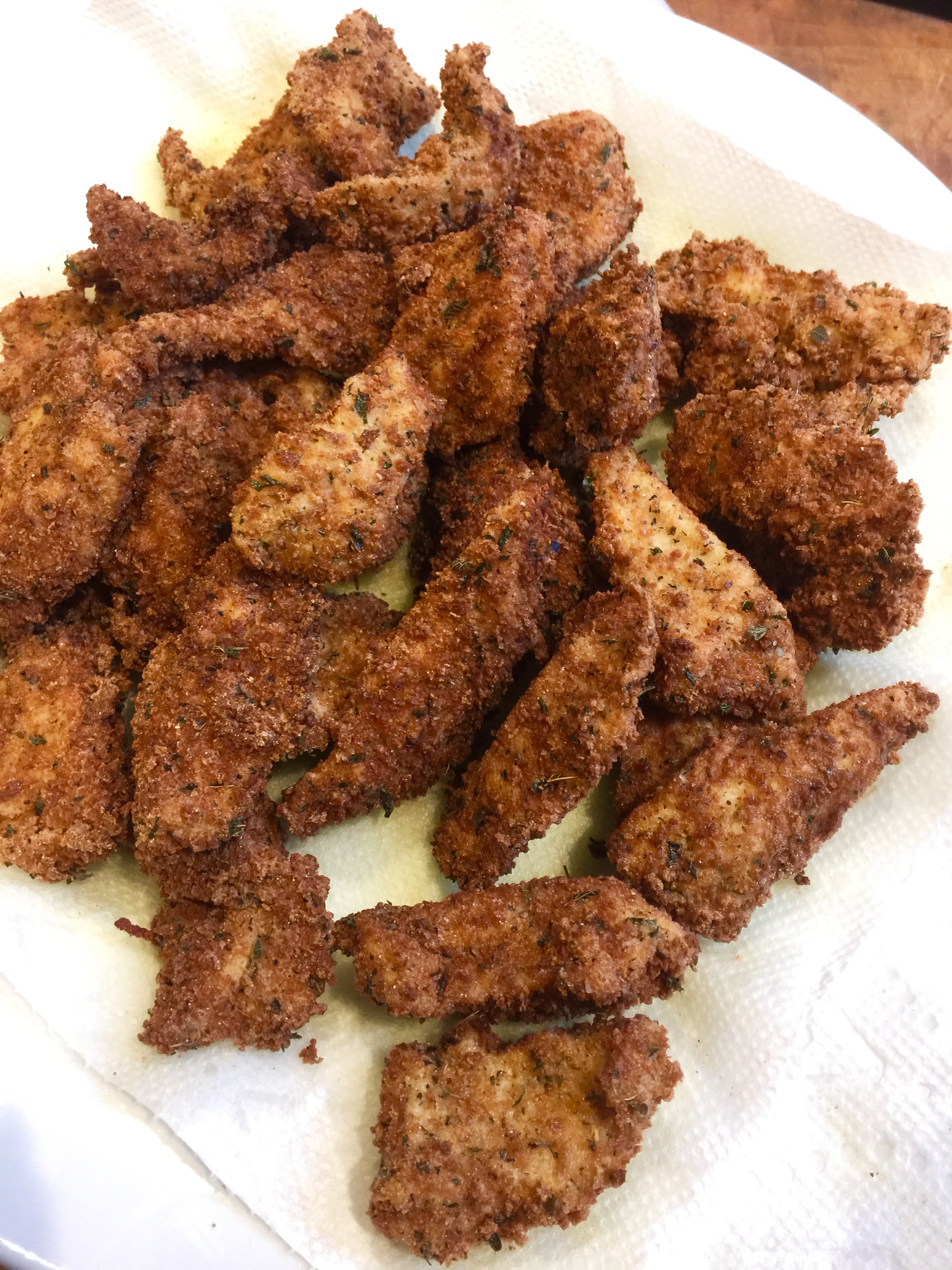
In batches not to overcrowd the pan, take the chicken pieces out of the egg and toss them in the bread crumb mixture, shaking off the excess. Place them carefully in the hot oil and fry on both sides until golden. Since they’re small pieces, they should cook all the way through easily. Drain on a plate covered with paper towels. Do this with all the chicken and set it aside. Try not to eat it all before you make the rest of the dish! (This chicken can also be eaten as is–these are my daughter’s favorite nuggets–or used with tomato sauce and mozzarella cheese to make a delicious chicken parmigiana.)
The carbonara factor…
Many recipes for Spaghetti alla Carbonara use pancetta or bacon. But the original recipe calls for guanciale: cured (but not smoked) pig jowls, or cheeks. It’s easy enough to find in a good Italian food store, but I cure my own. I buy raw heritage Berkshire pork jowls from a farm that raises the pigs humanely, and cure the jowls for about 3 weeks in a combination of salt, pepper and fresh thyme leaves. Then I rinse them, pat them dry, and cut them into portion-sized pieces, wrapping them individually and freezing until I need them. It’s a lot of work, but to me, totally worth it.
3 oz. guanciale
If the guanciale is frozen, let it thaw just a little, then cut it into the smallest cubes you can manage. Place it in a pan and cook them until they’ve browned and crisped beautifully. Keep an eye on the pan, as guanciale can burn easily. Use the fried meat bits for this recipe and save the fat for flavoring a future dish! Set aside.
The Alfredo sauce…
Despite what you get in crappy restaurants like Olive Garden, Alfredo sauce should not be runny or soupy. It should cling to the pasta and be rich in flavor. My Alfredo sauce is based on a recipe from the legendary Italian cookbook author, Marcella Hazan.
1 cup heavy cream
3 tablespoons butter
Fleur de Sel or sea salt
1 lb. pasta, fresh or dried
2/3 cup freshly grated Parmigiano Reggiano cheese
freshly ground black pepper
Put 2/3 of the cream and all the butter in a large saucepan that will later accommodate all the pasta. Simmer over medium heat for less than a minute, until the butter and cream have thickened a bit. Turn off the heat.
Drop the pasta in a bowl of boiling salted water. If the pasta is fresh, it will take just seconds. If it’s dry, it will take a few minutes. (Gluten-free pasta takes a little longer.) Either way, you want to cook the pasta even firmer than al dente, because it will finish cooking in the pan with the butter and cream. Drain the pasta immediately when it reaches that firm stage, and transfer it to the pan with the butter and cream, tossing the pasta gently for a few seconds to coat.
Turn the heat under the saucepan with the pasta on low, and add the rest of the cream, all the Parmigiano Reggiano, and a bit of pepper (no salt because there’s plenty in the guanciale and cheese.) Toss briefly until the sauce has thickened and the pasta is well-coated.
At this point, you don’t want the pasta to get to dry, so you add…
1 cup of frozen peas
…tossing gently to warm them through. Also add the cooked guanciale at this time.
Plate the pasta in a bowl or dish and serve the chicken alongside.
PAN-SEARED WILD-CAUGHT AMERICAN SHRIMP
Posted: January 8, 2020 in Food, pasta, Recipes, seafood, shrimpTags: food, pasta, recipes, shrimp
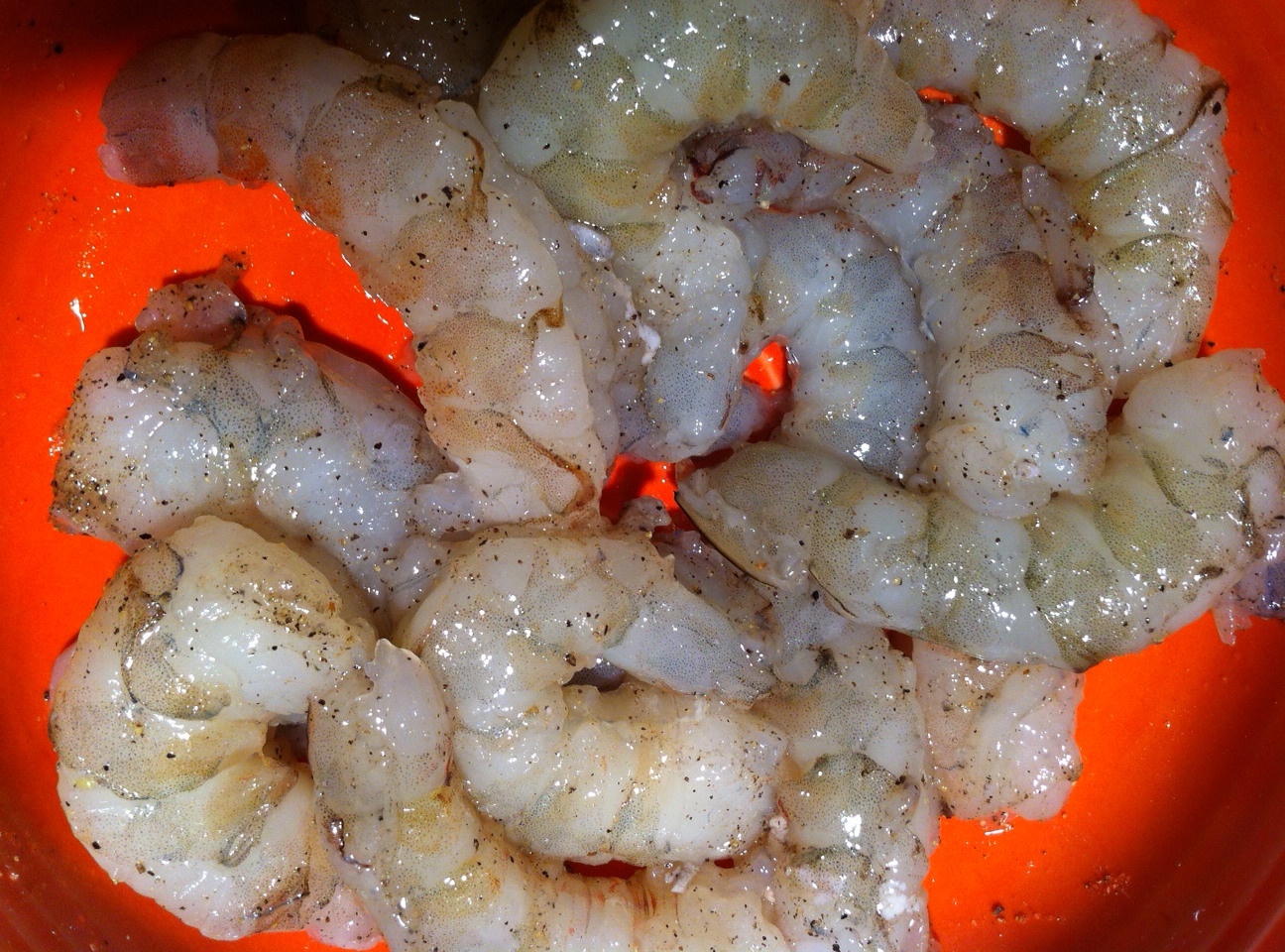
1 lb. large peeled and deveined wild-caught American shrimp
Salt
Freshly ground pepper
1/4 teaspoon sugar
4 tablespoons softened butter
1 clove of garlic, squeezed through a press
1 tablespoon freshly squeezed lemon juice
2 tablespoons chopped parsley
1 teaspoon oregano
Extra Virgin olive oil
PASTA WITH LOBSTER SAUCE
Posted: December 29, 2019 in Food, lobster, pasta, Recipes, seafood, tomatoes, travelTags: food, lobster, pasta, recipes, Santorini, sauce
This dish is absolutely delicious and worth the effort. Despite the fact that we first had it in the middle of summer on a vacation to the beautiful island of Santorini, Greece, we always cook it around the holidays in wintertime. We don’t have access to that unusual Mediterranean lobster, but our cold water New England lobsters are a fine substitute!
Santorini gets a bad rap these days, because they’ve allowed the cruise ships to take over, and they just can’t support the massive crowds that invade this small, beautiful island every summer. Once you’ve opened the floodgates, it’s hard to suddenly turn around and tell tourists not to come. Santorini’s tourism industry drives the entire country of Greece. Sadly, it seems that many beautiful places in the world, once discovered by the masses, have to deal with this issues. (My beloved island of St. John in the USVI, is another example.)
But despite the hoards of tourists that swarm the island every summer, Santorini remains one of the most amazing places I’ve been to in my life. Having traveled there at least 4 times now, I know all the cruise ship tour bus routes and stops to avoid, and where I can still go to experience the real Santorini.
It was in one of those out-of-the-way places that we first had this dish. Taverna Giorgaros is a simple family-run restaurant that is on the road leading to the lighthouse, past the ancient ruins of Akrotiri. We’ve gone there every time we’ve visited Santorini, and only once did they have the freshly caught lobster that allowed us to enjoy this dish.
First, it’s absolutely important to make a good stock: the base for all the other flavors to follow.
For the stock…
2 1-1/2 lb. lobsters, slightly under-cooked
12 cups water
1/2 onion, chopped into quarters
3 celery stalks, chopped into quarters
1 carrot, chopped into quarters
Under-cook (steam or boil, whatever your favorite method) the lobsters. (You’ll be cooking the meat again later.) Remove the lobster meat from the shells and set it aside.
Place the cleaned lobster shells, claws, tails, legs and bodies in a large pot. (You don’t want any of the internal organs or tommaley.) Crush the shells, if needed, so they fit in the pot. Add the water, onion, celery and carrot. Set the heat on high. Cook it until it’s reduced by half.
Strain the stock, discarding the lobster shells and veggies. Bring the stock back to the heat and reduce it until all you have left is 1 cup of intense stock.
For the lobster sauce…
1/2 onion, finely chopped
1 garlic clove, finely chopped
pinch of Italian red pepper flakes
teaspoon fresh chopped parsley
extra virgin olive oil
1/2 cup lobster stock
1/4 cup San Marzano tomato sauce (see below)
splash of dry un-oaked white wine (I use an Australian Chardonnay)
salt and pepper
Final ingredients…
reserved lobster meat
1/2 lb. cooked pasta
Add some olive oil to a large pan and sauté the onions until they’re translucent. Season them with salt and pepper. Add the garlic and cook for 10 seconds. Add the red pepper flakes and parsley.
Add 1/4 cup of the lobster stock and let it cook, reducing by half. Add the other 1/4 cup of lobster stock and the tomato sauce. Let it cook for a couple of minutes and add the white wine. Cook for a few minutes more.
Cook the pasta and drain it before it reaches the al dente stage. Place the pasta in the pan with the sauce, heating and coating thoroughly. Add the reserved lobster pieces and warm them through, tossing in the sauce. Serve immediately.
For the San Marzano tomato sauce: Pour a can of whole San Marzano tomatoes in a food processor and blend. Pour the sauce into a pan and reduce it over medium heat by half, until the sauce has thickened. Use this sauce in the recipe.
RAGU BOLOGNESE
Posted: December 15, 2019 in Food, Italian, pork, pork jowl, pork jowls, RecipesTags: Bolognese, food, guanciale, Italian, pasta, pork, ragu, recipes, veal
Fettucini alla Bolognese is my daughter’s go-to dish when we visit one of her favorite Italian restaurants, Il Corso, on W 55th St. in New York. But we only go there once a year, so it was about time I tried my hand at Bolognese at home. The dish isn’t difficult, but like many great dishes, it depends on the best quality ingredients you can get your hands on.
Much like meat loaf, I like to use a combination of ground beef, ground veal and ground pork. But I don’t sweat it too much if I don’t have all three, substituting a little more of one or the other, depending on what’s in my freezer at the time.
I use humanely raised grass-fed ground veal that I get down the road from a local dairy farm: Sweet & Salty Farm in Little Compton, RI. I use ground Berkshire pork, full of “good fat.” And I use grass-fed beef from local farms. Guanciale, a cured pork product that comes from the cheek (jowl) of the pig, is something that I prepare myself. I buy the Berkshire pork jowls raw and cure them at home. (That’s another blog!) If you can’t get your hands on guanciale, a nice slab of bacon will do the trick.
The rest of the ingredients are organic, when available.
This recipe probably feeds a dozen people. I make a lot at once because it takes time to put it together and let it cook on the stove, and it freezes really well. I place leftovers in tightly sealed single-portion containers in the freezer and then re-heat them when my daughter gets the craving, adding it to freshly cooked pasta.
How much pasta you make with this dish depends on how many people you’re going to serve.
5 tablespoons extra virgin olive oil
3 tablespoons butter
1/2 cup finely chopped guanciale or bacon
1 lb. ground veal, 1 lb. ground pork, 1 lb. beef (or any combination to make 3 lbs.)
1 large onion, finely chopped
2 carrots, finely chopped
3 stalks celery, finely chopped
2 cloves of garlic, squeezed through a garlic press or thinly sliced
1 small can (6 oz.) tomato paste
6 cups ground tomatoes
2 cups whole milk
2 cups white wine (I use an un-oaked Australian chardonnay, like Yellow Tail)
salt and pepper
pasta, cooked (regular or gluten-free )
Freshly grated Parmigiano Reggiano
Place the olive oil and butter in a large sauce pan with a heavy bottom over high heat. Once the butter has melted, add the guanciale or bacon, letting the fat render out. When it’s almost brown, add the veal, pork, and beef, stirring constantly. Make sure the meat is broken down into small pieces and completely browned.
Add the finely chopped onion, carrots, celery and garlic, stirring well. Sweat the veggies for a few minutes, letting them get nice and soft.
Add the tomato paste, the ground tomatoes, milk and wine, stirring well. Allowing it to come to a boil will activate the tomato paste’s thickening power. Let it boil for a minute, then reduce the heat to medium-low, and let it simmer for at least 90 minutes, stirring occasionally.

Add the ingredients one step at a time until the sauce comes together: 1) guanciale, 2) meat, 3) veggies), 4) tomatoes.
You don’t want the sauce to be runny, and you definitely want to give it enough time on the stove top for the flavors to blend and for the alcohol in the wine to evaporate.
Carefully give the sauce a taste, and season it with salt and pepper.
Traditionally, ragu Bolognese is served by placing a part of the cooked pasta in a pan, and adding just enough sauce to have it cling to, not drip from, the pasta. It’s not soup!
Top it with freshly grated Parmigiano Reggiano cheese.