Every year, I still have a lot of green tomatoes on the vine as the summer comes to an end. Fried green tomatoes are the tasty solution to the problem.
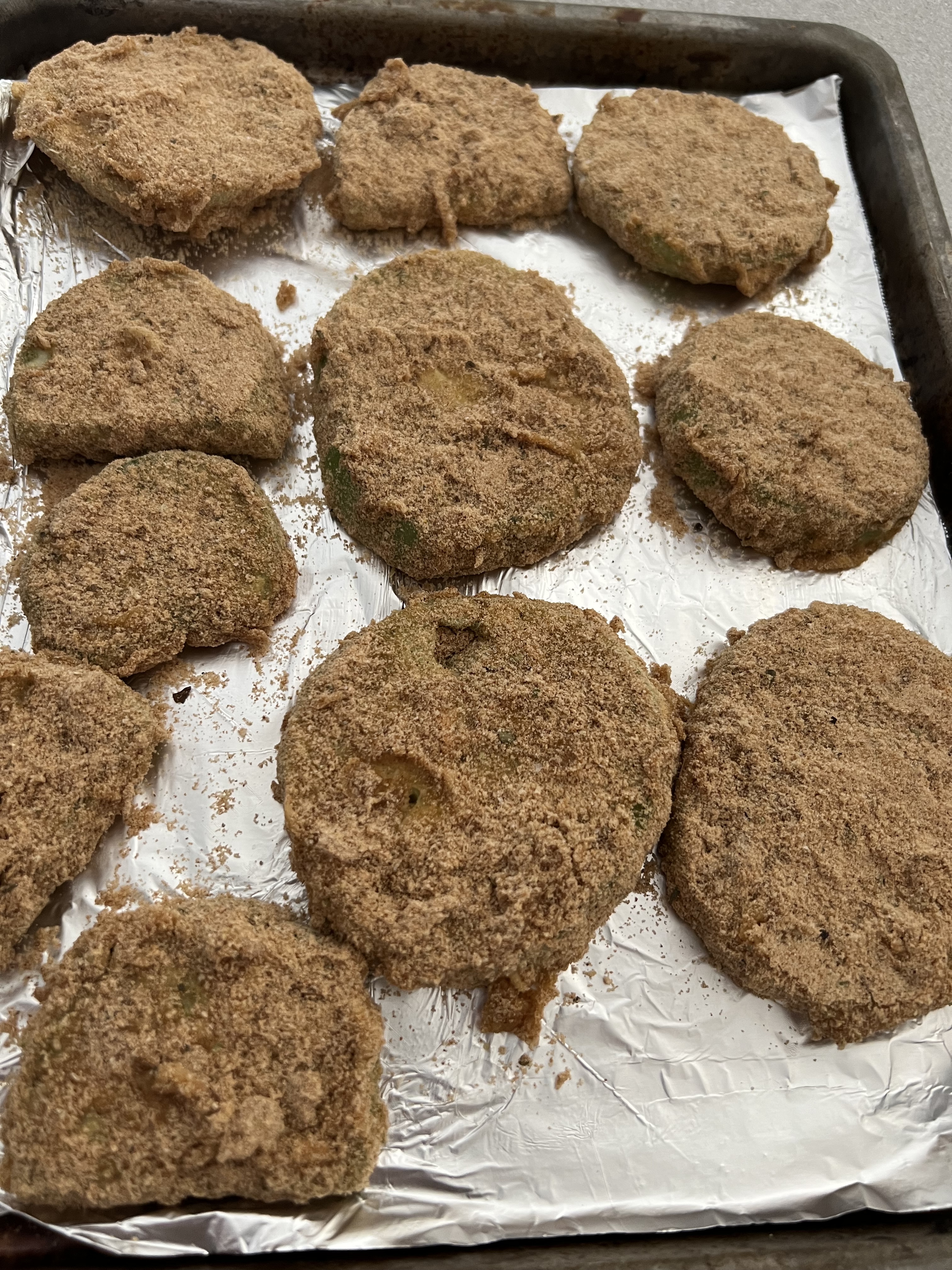
It’s a really simple process of slicing the tomatoes, seasoning them with salt and pepper, dusting them with flour, dipping them in egg, and then rolling them in some flavored breadcrumbs before frying.
Good news for those that need it all gluten-free! It can happen if you follow my instructions below.
Green tomatoes, sliced Salt and pepper All-purpose flour (I use Bob’s Red Mill 1-to-1 Gluten-Free Baking Flour) 2 eggs, beaten Seasoned breadcrumbs (I make them gluten-free…see below)
At first, I sliced my tomatoes at about 1/4″ thick, but I found that if I could make them just a bit thinner, they would come out even crispier. So now I go with about a 1/8″ thickness.
I place the tomatoes on a cutting board, and season them with the salt and pepper.
I then set up my 3 bowls for adding the breading. In the first bowl, the all-purpose flour. (I like using the Bob’s Red Mill 1-to-1 Gluten-Free Baking Flour because it’s mostly rice flour and it makes the coating lighter.)
In the second bowl, I whisk a couple of eggs.
In the third bowl, I place my seasoned breadcrumbs. (You can buy Italian seasoned breadcrumbs, but I make my own by toasting a loaf of Udi GF bread, tossing the pieces into a blender to mill them down to a powder. I add oregano, basil, parsley, salt and pepper, granulated garlic and granulated onion, then whiz the blender for just a few seconds to combine everything. I place this in the third bowl.)
Then it’s time to do the one-handed method of dipping the tomato slices one-by-one into the egg, then dropping it into the breadcrumbs, where the other hand takes over to cover the tomato with a light layer of breadcrumb. Do the same for all the tomatoes.
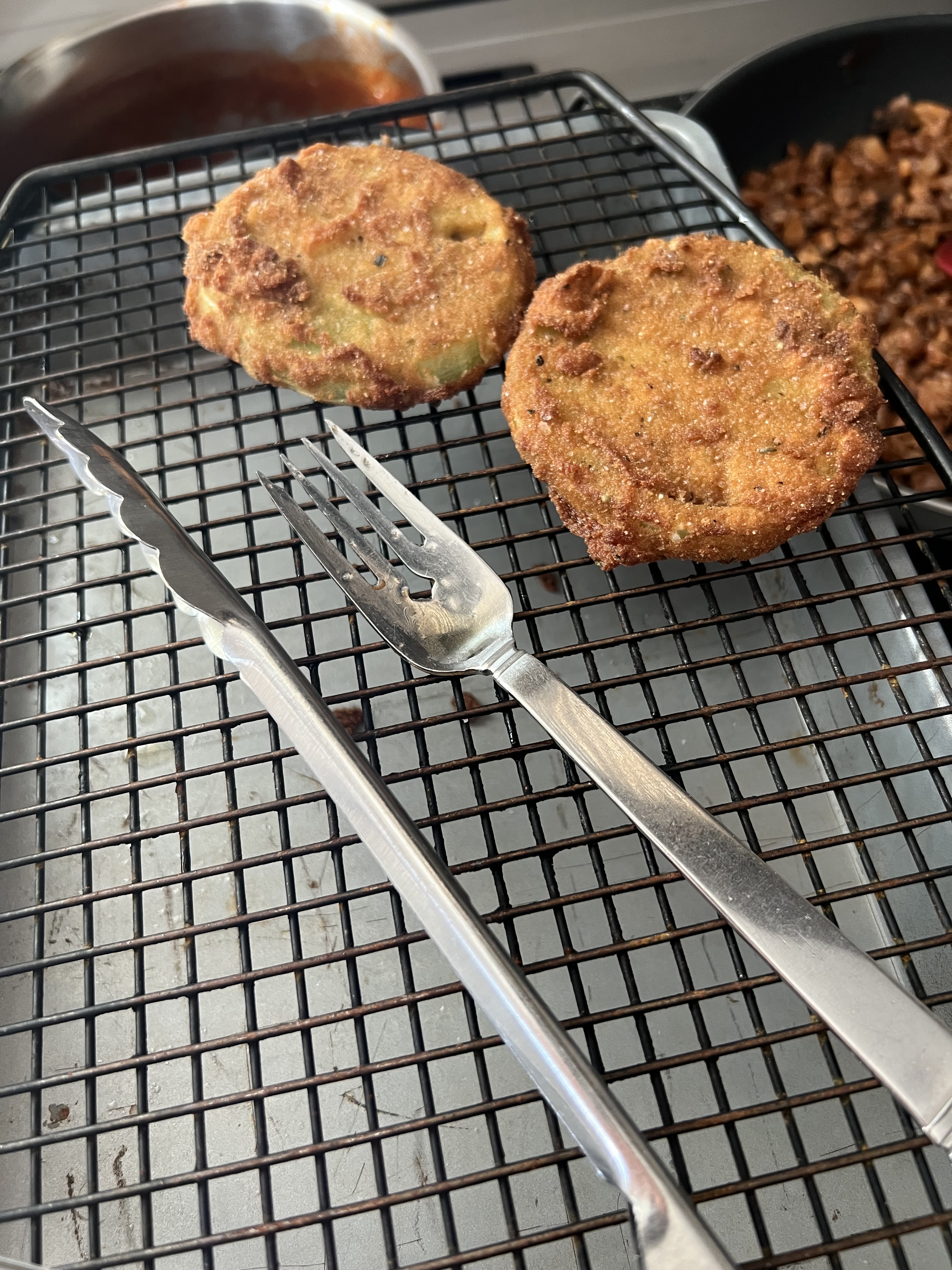
I fry the tomatoes at 350° in a non-seed oil with a high smoke point, like avocado oil, until golden.
I place the tomato slices on a wire rack to cool, seasoning them immediately out of the fryer with some sea salt.
A dipping sauce, like marinara sauce, goes well with these tasty bites!
I live just down the road from Fall River, Massachusetts, and New Bedford, Massachusetts, two thriving proud Portuguese communities. In middle school, my daughter had to take mandatory Portuguese language classes. We’ve got dozens of authentic Portuguese restaurants in the area, and even a well-stocked supermarket with its own bacalhau (salt cod) room: Portugalia Marketplace, in Fall River.
So when I first posted my recipe of Portuguese kale soup, I was told by many Portuguese friends that my soup wasn’t authentic so I couldn’t call it that. Fair enough. After all, my soup has far less carbs (no potatoes or pasta), fewer spices, and it uses homemade stock instead of water. It may not be Portuguese, but it’s full of flavor.
My semi-Portuguese kale soup.
4 cups home-made chicken or beef stock 4 cups water 1 cup lentils, rinsed in cold water 1 onion, finely chopped 1 carrot, finely chopped 2 stalks celery, finely chopped 1 clove garlic, through a press 1 lb. Portuguese chourico, peeled and chopped into small cubes 1 large bunch organic kale salt and pepper
Add the stock and water to a large pot. Heat until boiling. Add the lentils.
In a saucepan with a little olive oil or bacon fat, sauté the onions, carrots, celery, and garlic for a few minutes. Add the chopped chourico and sauté a few minutes more. Add the contents of the sauté pan to the pot.
Wash and de-stem the kale, tearing the leaves into smaller pieces. Add the leaves to the pot and stir. The stems go in your compost pile. (You can also use them in a juicer.) Kale is always on the “dirty dozen” list of vegetables with large amounts of pesticides, so I always buy organic.
Cook the soup until the lentils are al dente. Taste and season for salt and pepper before serving.
Simple and delicious, especially with fall on the way.
It’s not often that my daughter spends extended time at my house, so when I asked her for a food shopping list, and she said she was craving applesauce, I went out and bought a few pounds of organic apples to make my own. Applesauce is so easy to make, I don’t know why people buy that over-sweetened over-processed stuff in the supermarket.
Apples are a heavily sprayed crop, so I always buy organic. (Sadly, that’s also why I never go to you-pick-’em orchards anymore. For those apples to look as pretty as they do, they’ve been sprayed with a ton of pesticides, which I prefer not to eat. You can’t wipe or even wash them off completely.)
My basic applesauce has only 4 ingredients. And if you don’t want any sweetener at all, it’s 3. Can’t be easier than that. The hardest part is getting the apples ready.
Apples, cinnamon, and water. That’s it.
I happened to have a bunch of organic Fuji apples this time, but use whatever apples you like. My Mom used to combine varieties. It’s up to you.
And if I choose to sweeten my applesauce, I use maple syrup instead of sugar.
2 lbs. organic apples, peeled, cored, and cubed 1/3 cup water 1/2 teaspoon cinnamon 1/4 cup (or more) maple syrup
I clean and peel the apples and chop them up into nice chunks, placing them in a pan with the water.
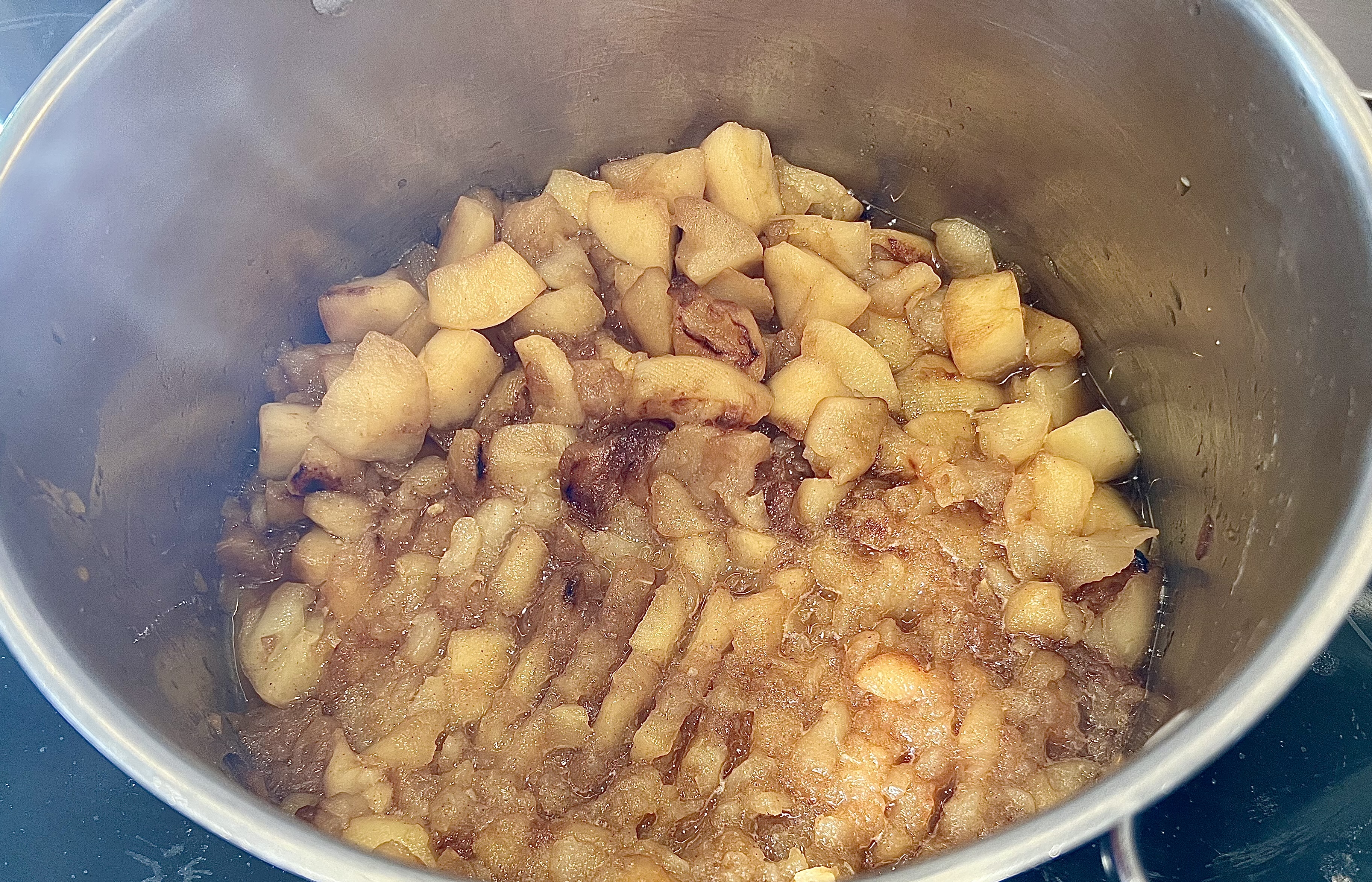
I turn the stovetop on high, and bring the apples and water to a boil. As the apples cook, they will release a lot of their own liquid, and you’ll have “apple soup” for a while before it finally reduces.
I add the cinnamon, and continue cooking the apples until have the consistency I like. (Some people like a more watery applesauce than others.) Depending on the apples, you might have to add water if all of it has evaporated, and the apples aren’t soft enough.
I pull the pot off the stove and mash most of the apples with a potato masher, then put it back on the stove to cook further. I leave some of the chunks whole, because I like a chunky applesauce. I always keep an eye on it, because I don’t want the natural sugars in the apples to burn.
When the apples are cooked to my desired softness, I take the pan off the heat and add the maple syrup.
Is there anything better than pure Vermont maple syrup? I don’t think so!
If it still looks too watery, I bring it back over the heat, but I watch it carefully.
I let the applesauce cool and enjoy! Keep it refrigerated.
I don’t have the patience to boil Mason jars and lids and all that. But I love me my pickles, especially when this year’s garden cranks out so many cucumbers!
This is such an easy way to make great pickles, it’s almost unbelievable…and no water is needed! The salt extracts just enough moisture to make it work. This method works great if you want fresh pickles to eat immediately, but if you want to keep them for long periods of time, you’ll have to go back to the old tried-and-true methods.
Fortunately for me, I devour these pickles as soon as they’re ready!
I originally used a plastic bag for this, but a plastic container also works well. Use what you have.
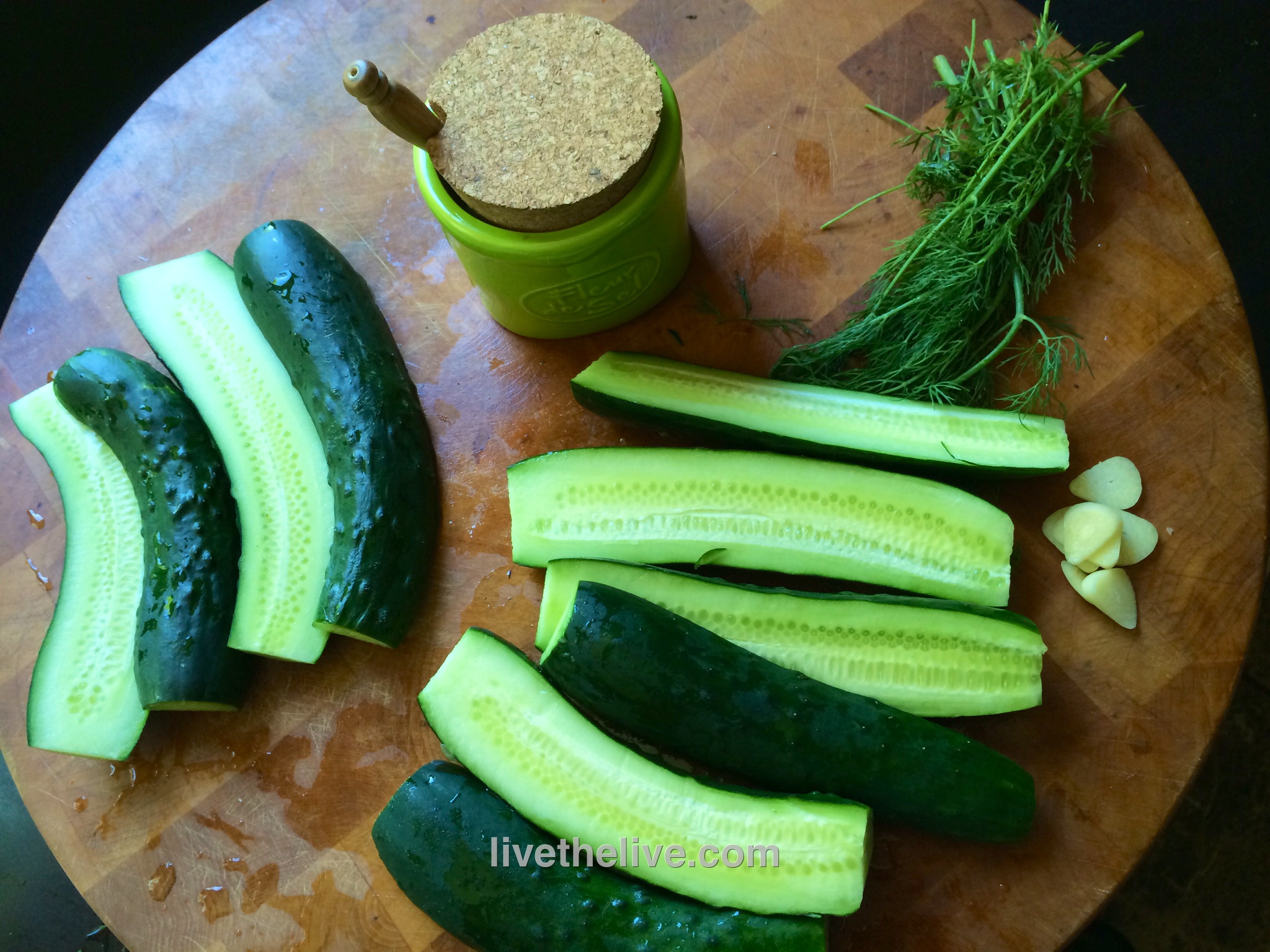
fresh cucumbers sea salt or Kosher salt a handful of fresh dill a couple of cloves of garlic, thinly sliced
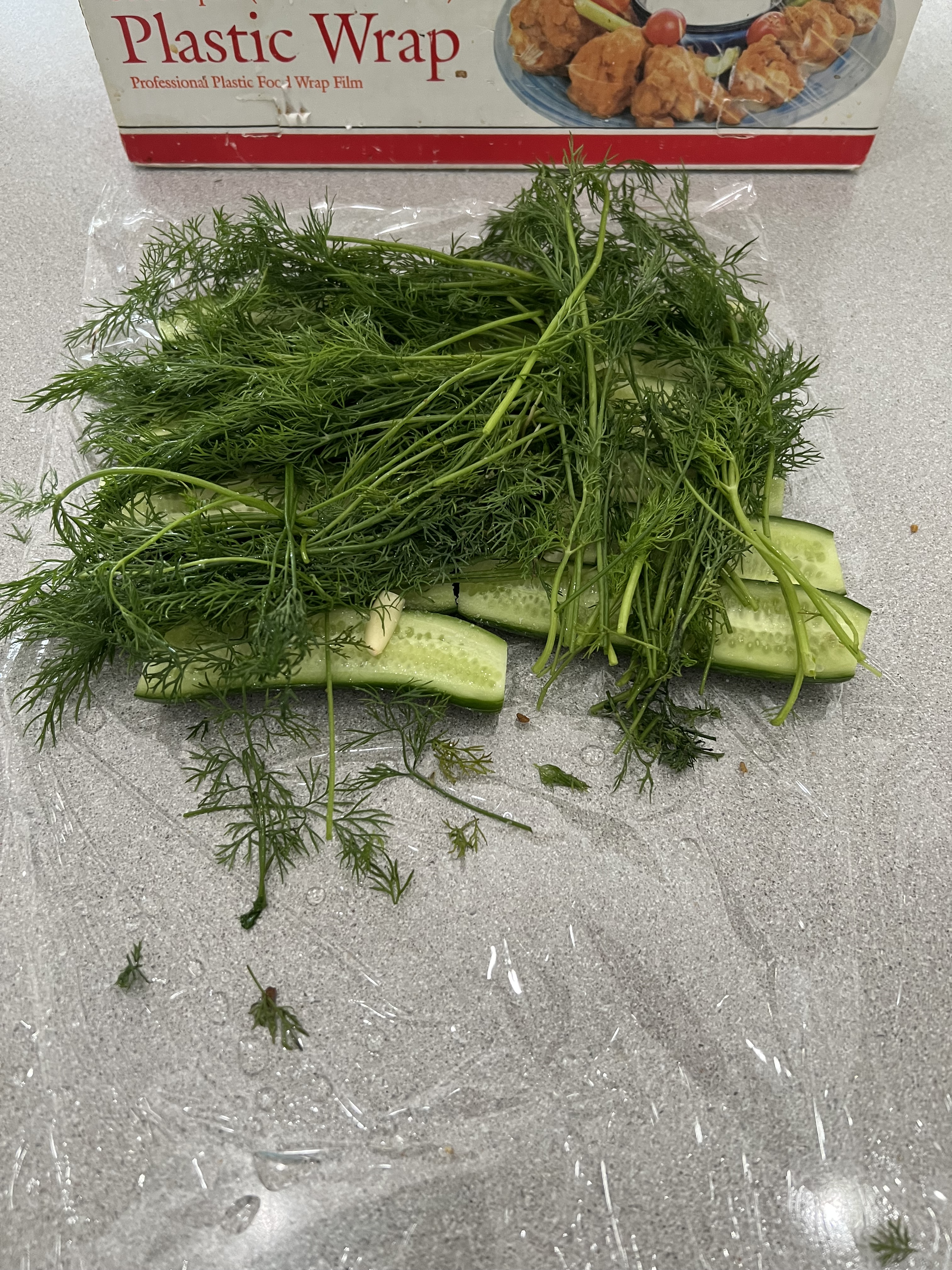
Cut the ends off the cucumbers and then slice them lengthwise, in half or in quarters. Lay them neatly next to each other in one layer in a container, or on a piece of plastic wrap, skin-side down. Sprinkle the salt over the cucumbers. Sprinkle some of the chopped garlic on top. Then, tear off some fresh dill and lay it to cover the pickles.
If using a container, you should be able to get a second row of pickles on top of the first, again sprinkling with the salt, garlic, and topping with dill.
Placing the lid on the container, squeeze out as much air out of the container as you can.
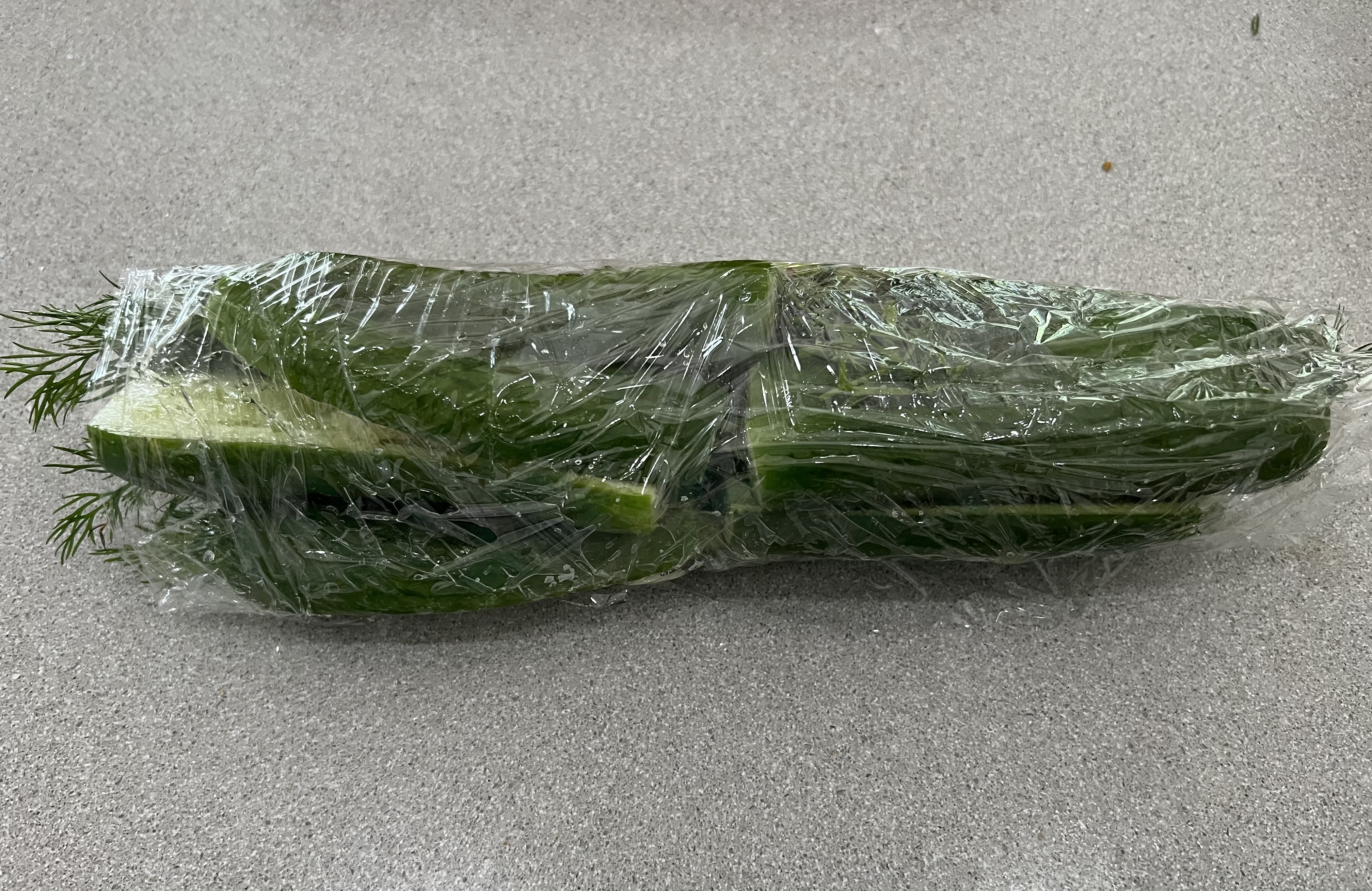
If using plastic wrap, roll it up tightly and place it inside a Ziploc bag, and seal it.
Put the container or bag in the fridge overnight. Making sure the lid is tightly sealed on the container, flip it over every few hours. (I always put a plate underneath it when it’s upside down in case it leaks a little.)
The plastic wrapped pickles don’t need to be flipped.
The pickles will be ready to eat the next day, but they’re even better after 48 hours.
I tried this one yesterday: pickles, sliced carrots, and even small onions in the same mix. Delicious!
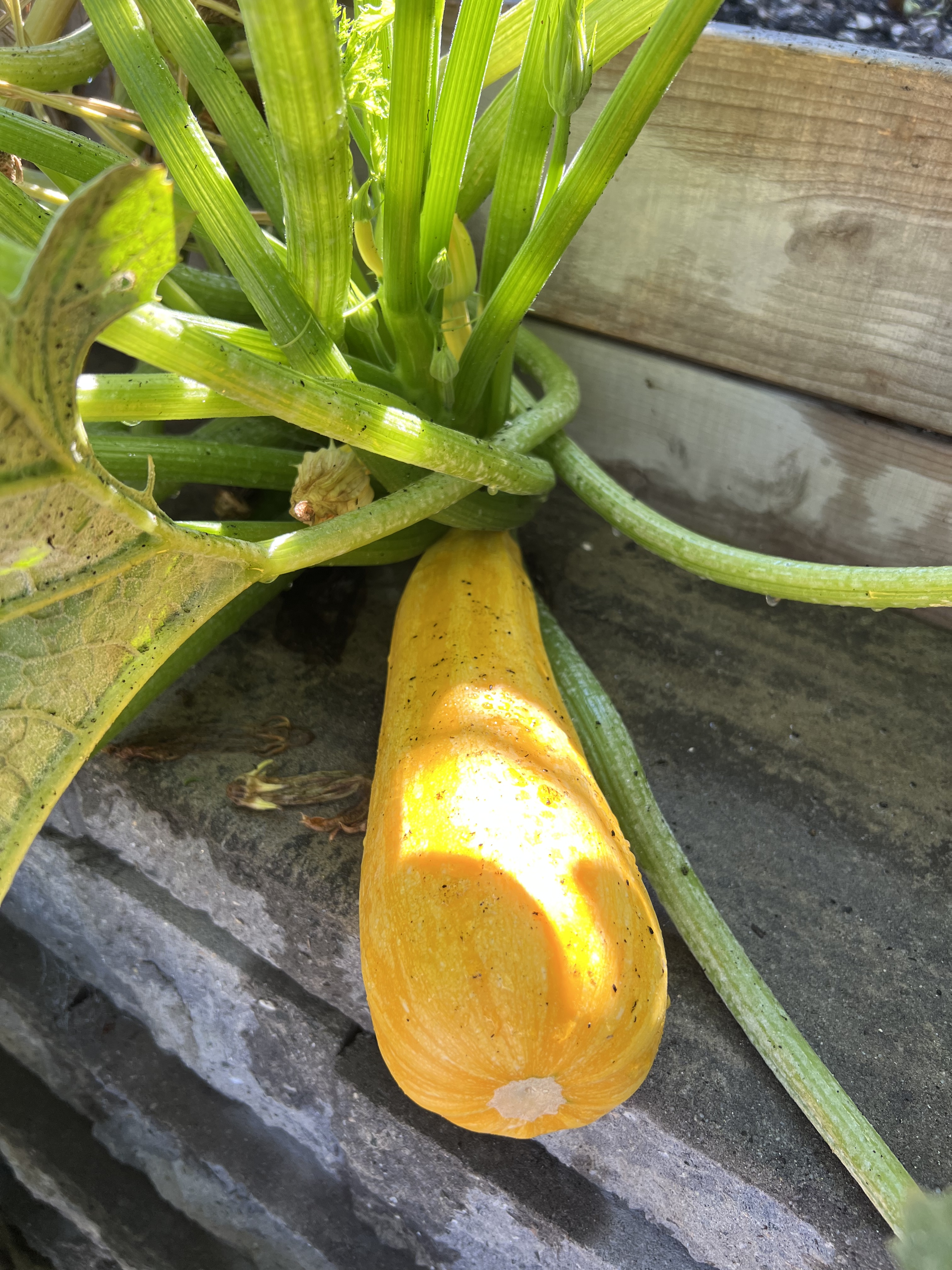
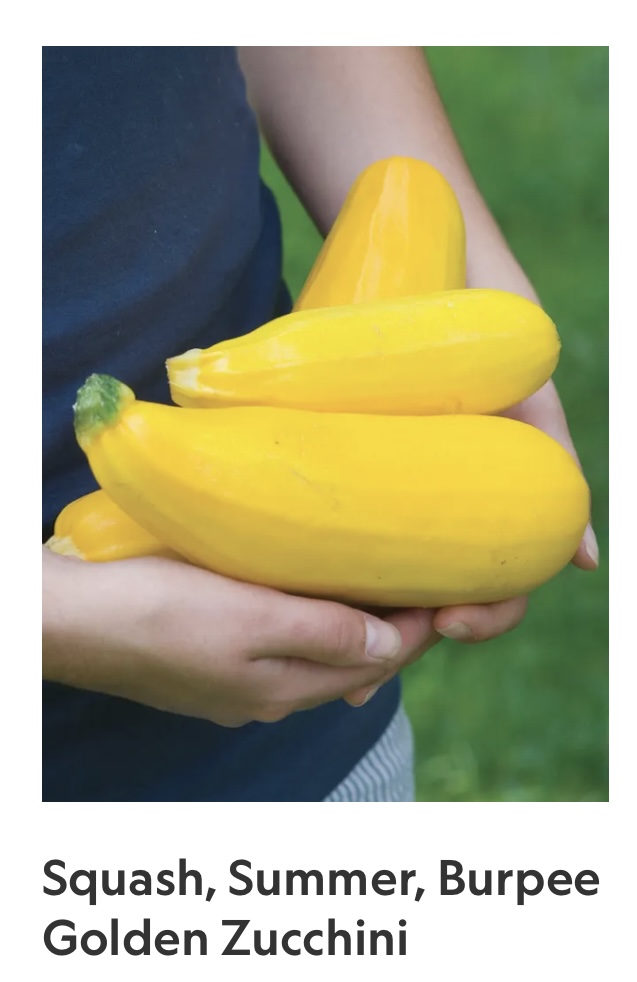
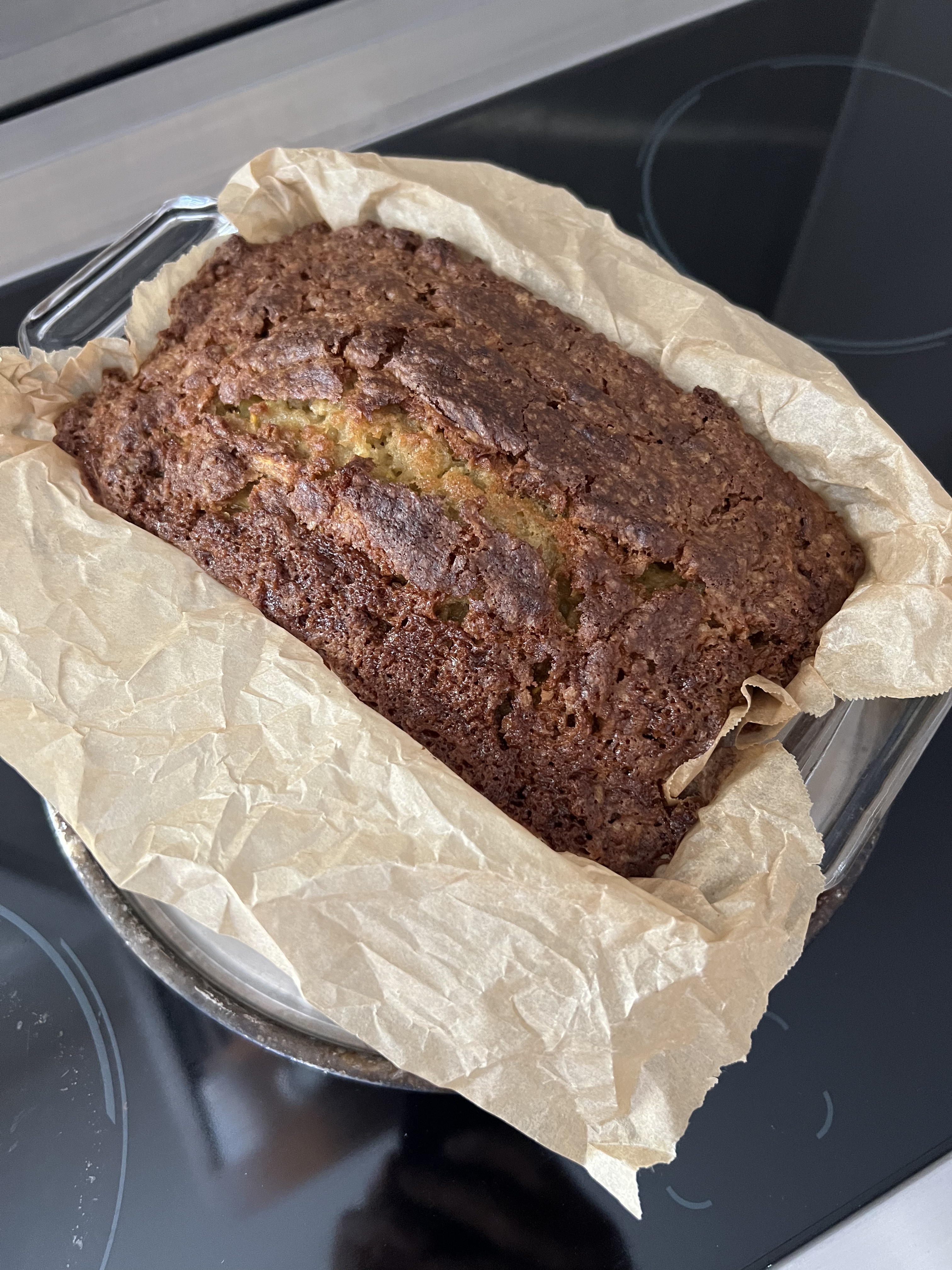
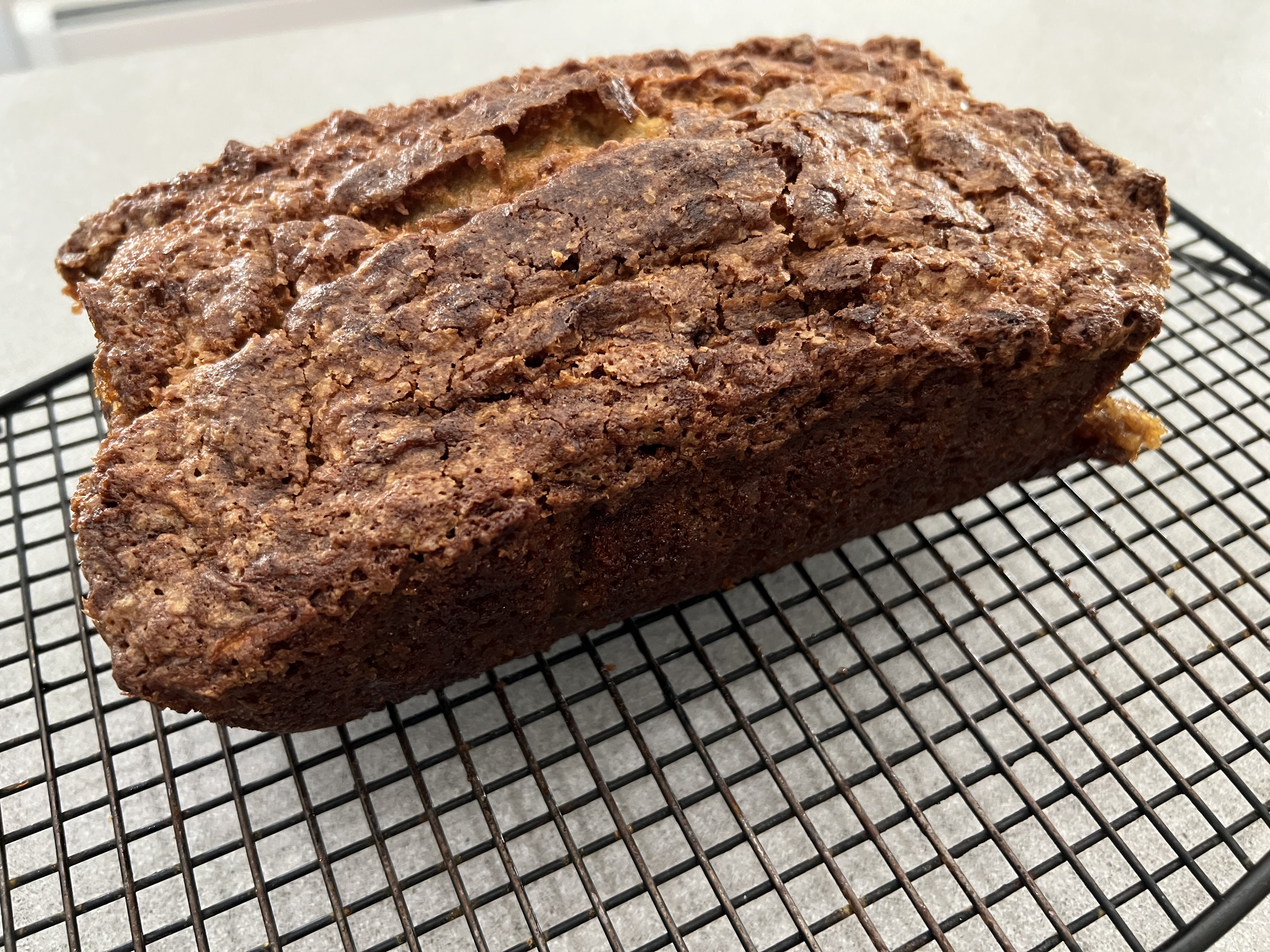
I’m pretty good at keeping the zucchinis in my garden harvested on a regular basis, so they don’t get too big. But once in a while, I miss one, and it gets to be huge. That’s when it’s time to make zucchini bread.
I was recently told that zucchinis are green…summer squash is yellow. I use the word “zucchini” interchangeably, but technically, the variety I grow is, in fact, a zucchini and a squash!
Whatever you call it, use it! And make some delicious bread!
If the zucchini is really large, I slice it lengthwise, and remove the center section with all the seeds, because I don’t want that in my bread. But the smaller ones don’t have that problem. Then I grate the rest on a box grater. This recipe needs about 2 1/2 cups of grated zucchini, which is about 16 ounces.
When it comes to baking, I use my small kitchen scale to make most of the crucial measurements, because accuracy counts. It’s much more accurate than going by volume. But this recipe has both measurements, so you can try either method.
Substituting gluten-free flour for the basic all-purpose flour, will make this recipe gluten-free. I like to use the all-purpose GF flour by Cup4Cup.
And I like using olive oil as my vegetable oil, because I love the flavor and its health benefits. But feel free to use whatever vegetable oil you like.
2 cups all-purpose flour 1 teaspoon baking soda 1 teaspoon baking powder 1 teaspoon Kosher salt 1/2 teaspoon cinnamon (optional)
1 cup light brown sugar 1/2 cup white cane sugar 3/4 cup vegetable oil 1 teaspoon vanilla extract 2 eggs, lightly beaten
2 1/2 cups (16 oz.) grated zucchini
Preheat the oven to 350°.
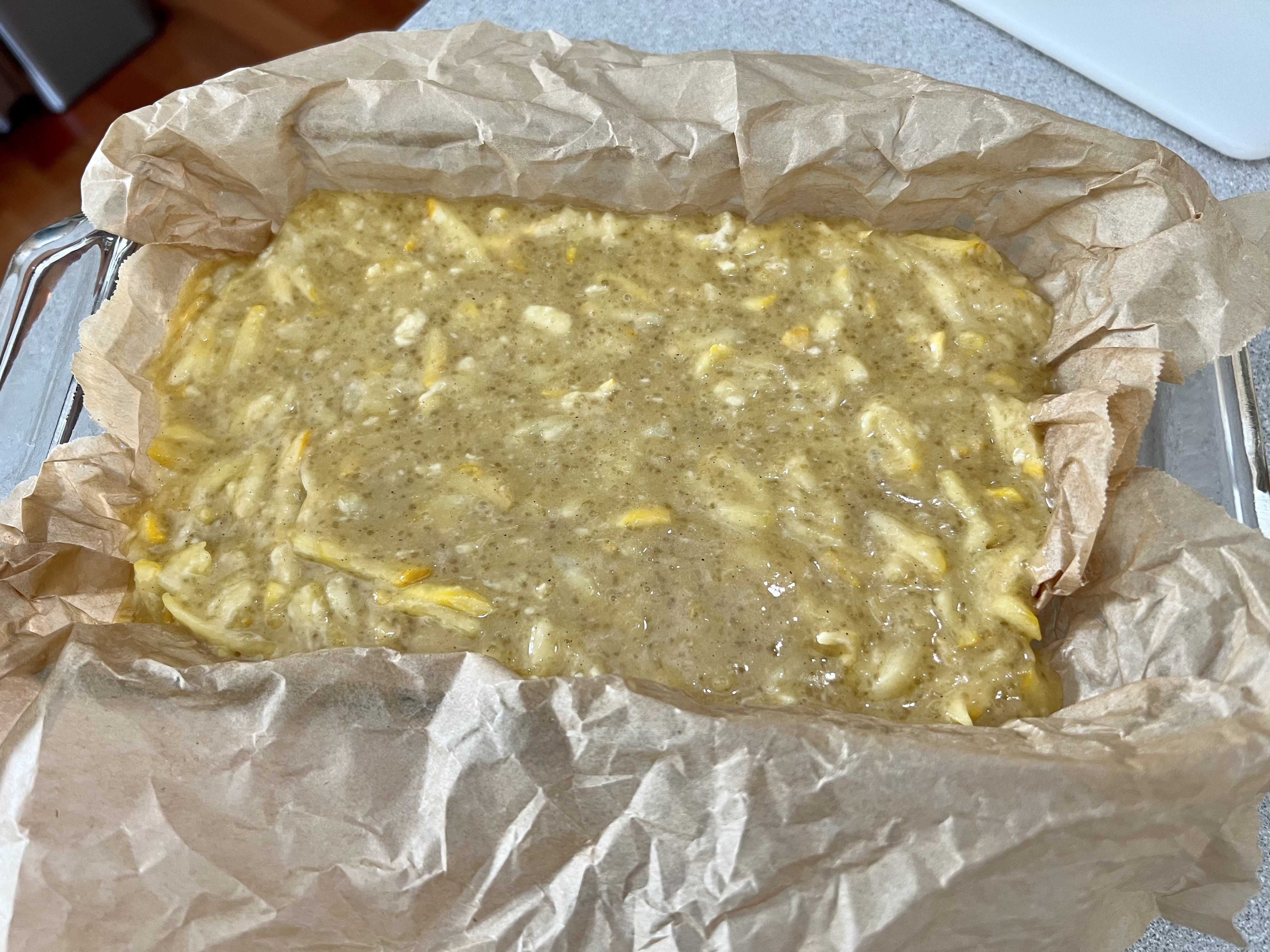
Grease an 8 x 8“ or 5″ x 10″ loaf pan with some of the vegetable oil. Then line it with parchment paper…it makes it easier to remove later.
In a bowl, mix together the first five ingredients.
In a separate bowl, combine the remaining ingredients except the zucchini.
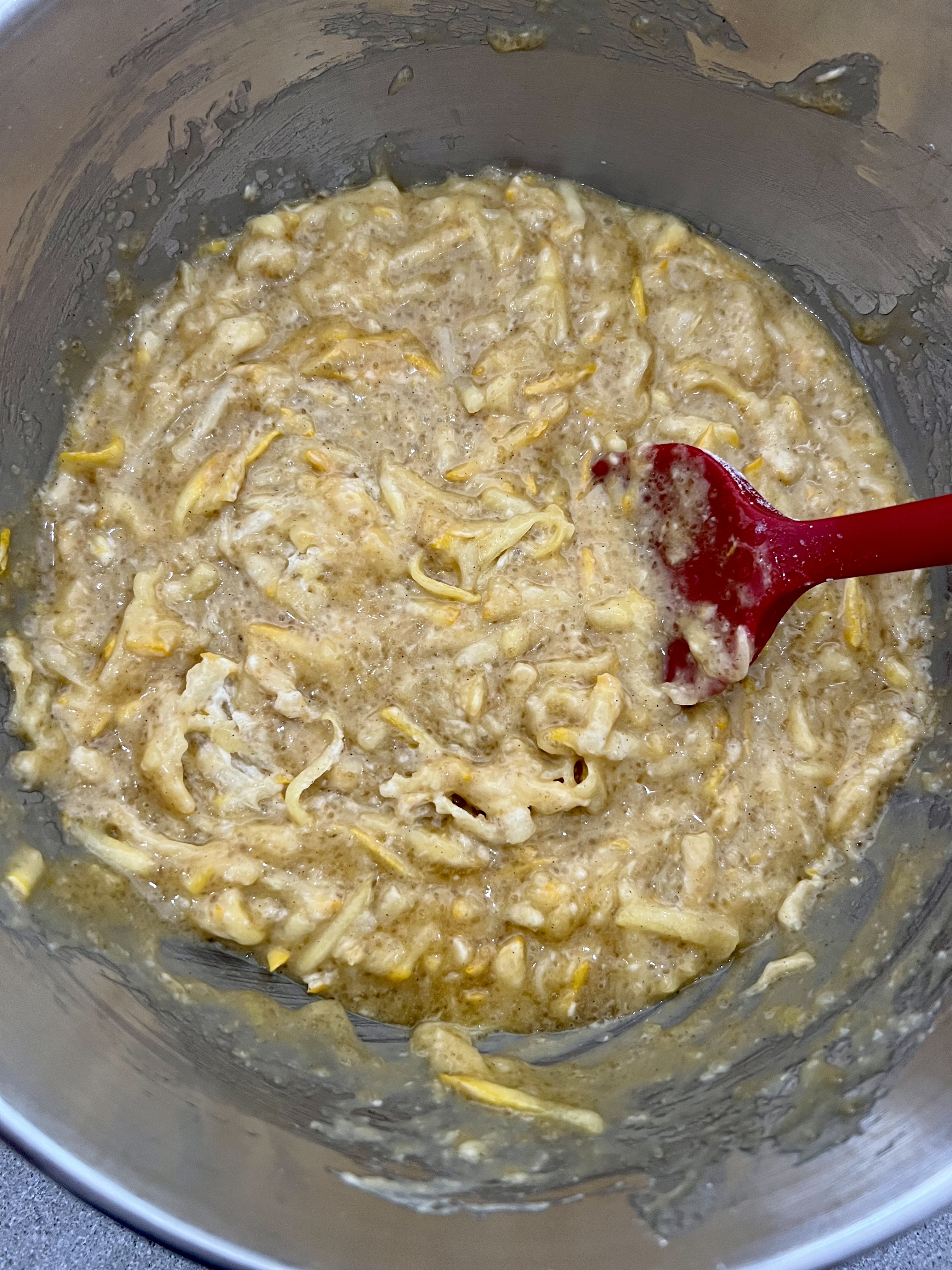
Add the grated zucchini to the bowl with the flour mixture and toss it around to coat.
Add the dry mixture to the wet mixture and stir until it’s combined.
Pour it into the pan.
Bake until a toothpick comes out clean, about 45 to 60 minutes…but it could be even longer. Every oven is different, and different zucchini can have different moisture levels, so you may need to cook yours longer, depending on your situation. Even with all the high-tech thermometers I have, I find the good old-fashioned toothpick method still works best.
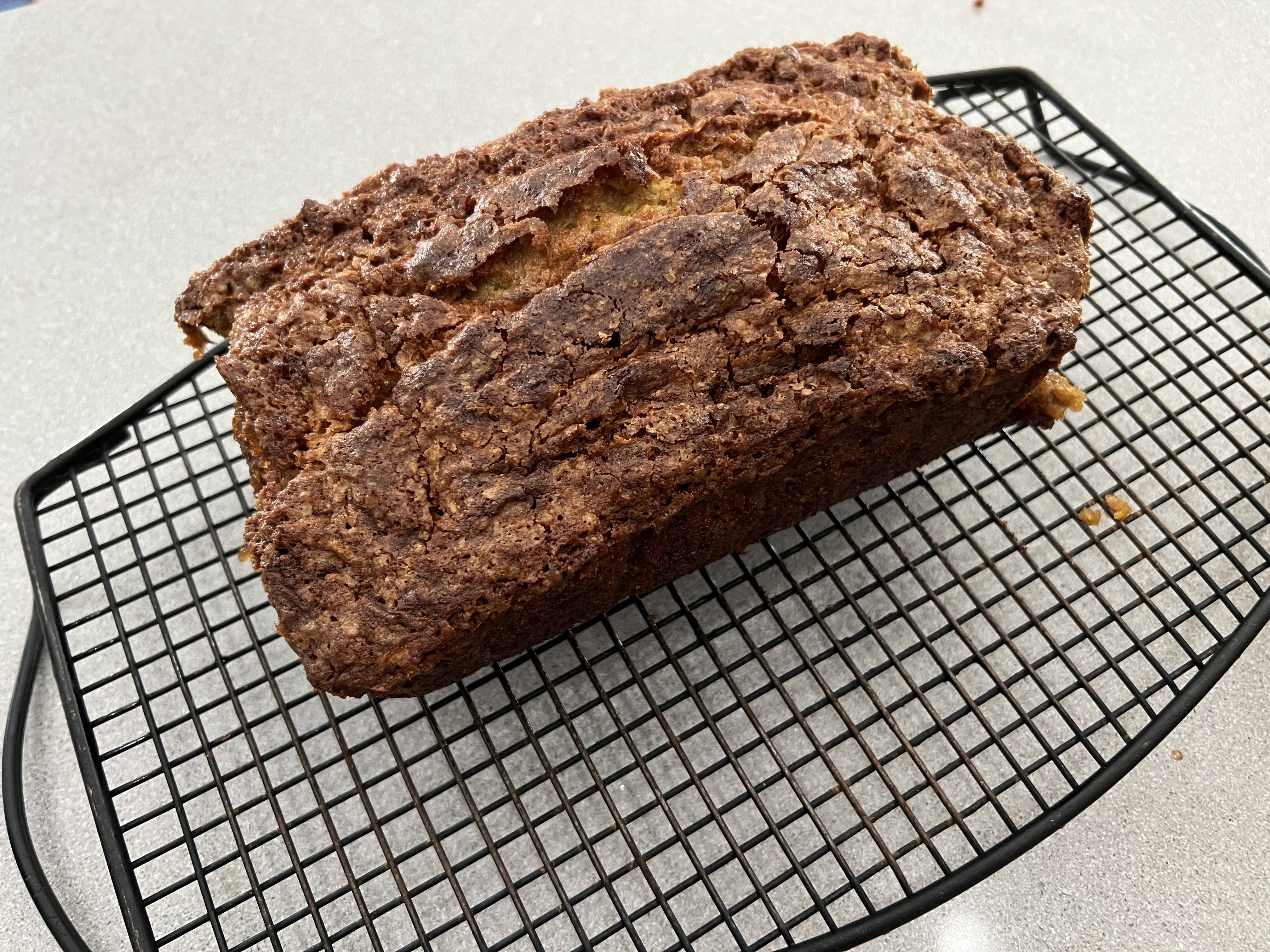
Remove the baking pan from the oven and let it cool for 15 minutes. Then turn it over on a wire rack, removing the pan, and let the zucchini bread cool completely to room temperature before slicing.
This bread is so good, I just might let the zucchini overgrow more often!
I recently cooked another batch of zucchini bread in a round pan. Worked great! And I experimented with substitutions: I replaced 1/2 cup of the all-purpose flour with corn meal to give it a more rustic taste. And I replaced the 1/2 cup white cane sugar with 1/4 cup of maple syrup. Delicious!
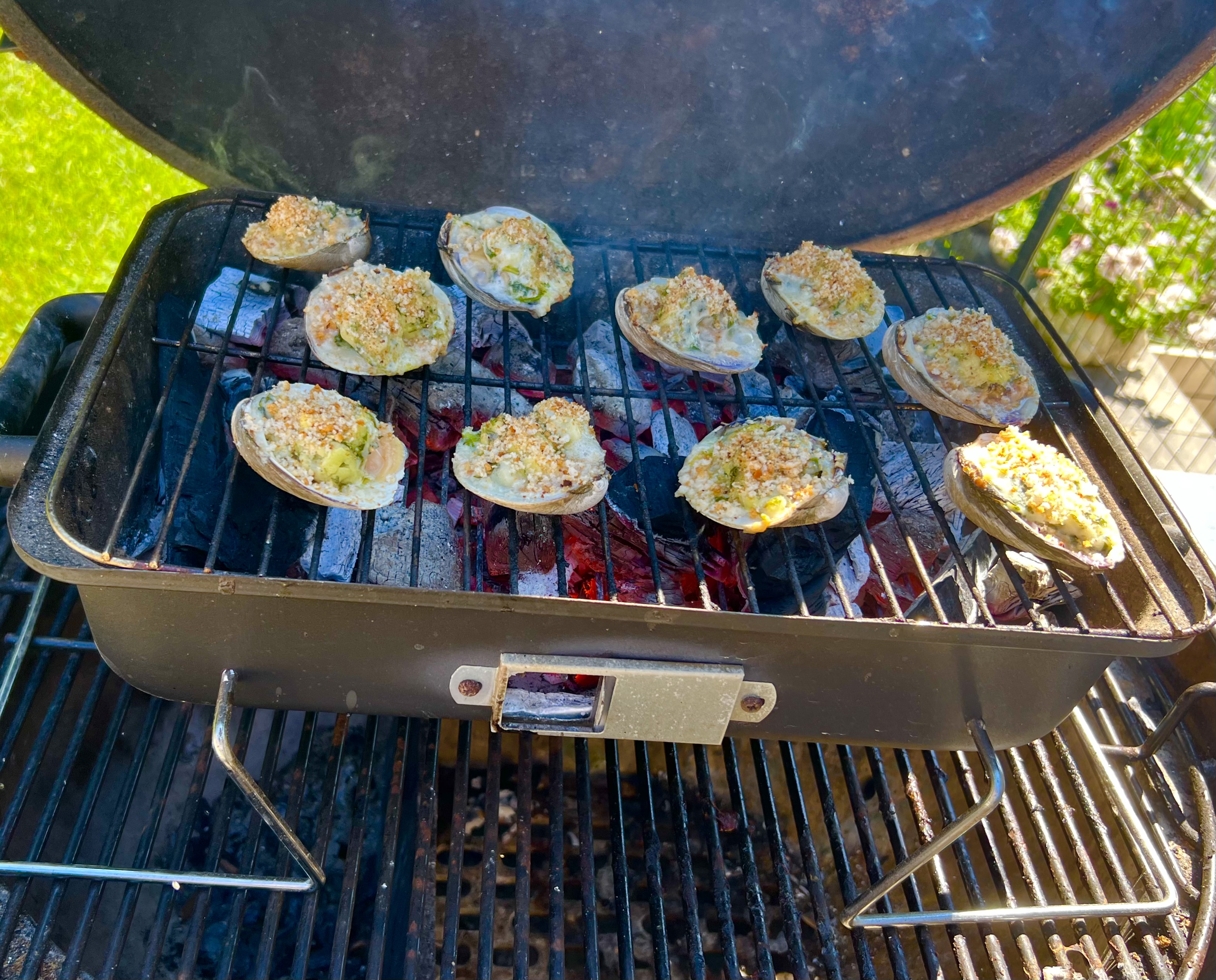
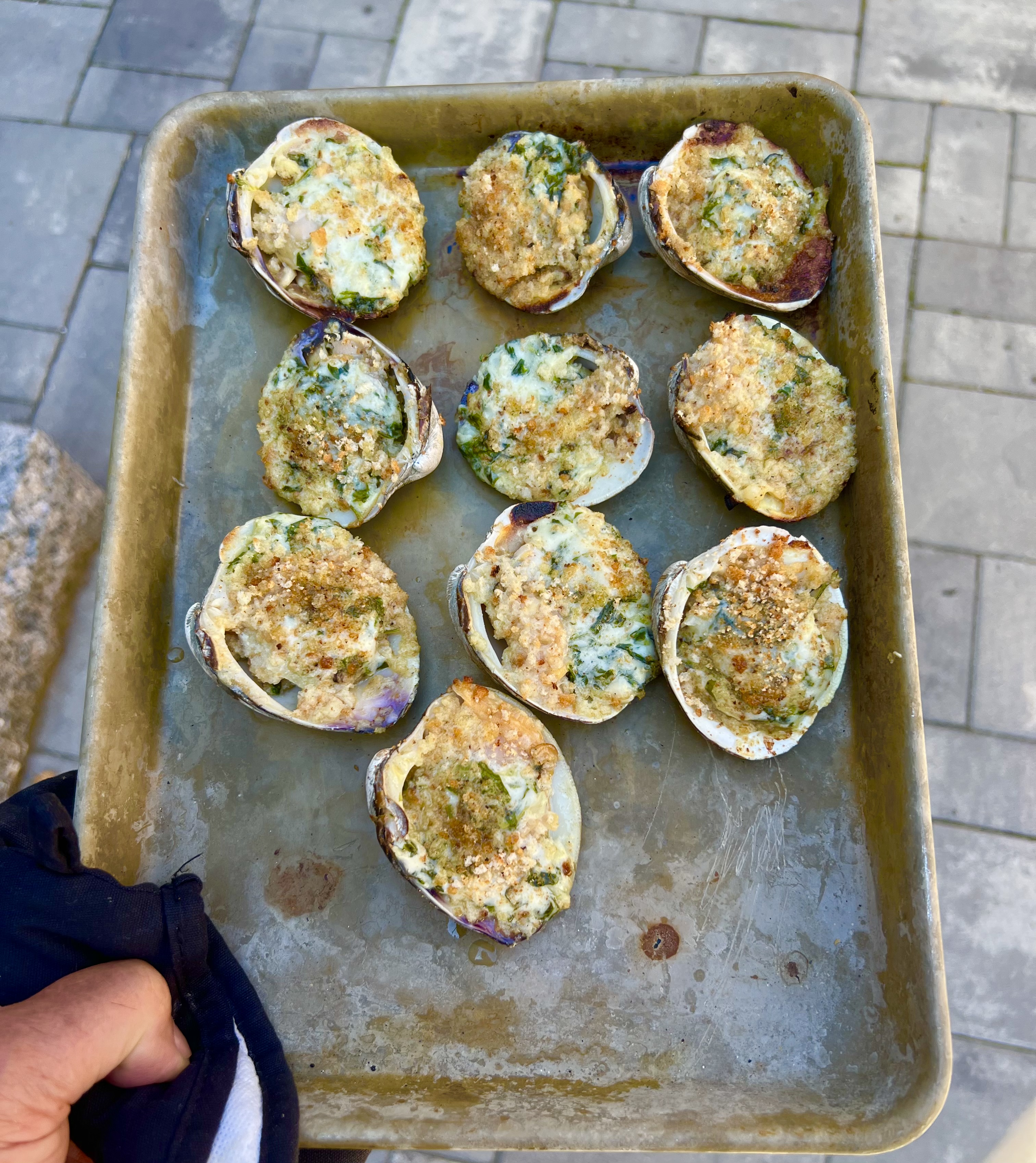
Ever since I had char-grilled oysters in New Orleans, I’ve been obsessed. I’ve made them at least once a month since I’ve been back. But the other day, I went to my local seafood store and I saw some beautiful clams, and I thought: Why not try those on the grill?
I had some friends over a couple of days ago, and I made my Oysters Rock-a-Fellow recipe for them, and I had some leftover gooey cheesy stuffing that goes on top of the oyster. I thought: Why not use it on the clams and then put them on the grill?
A hybrid recipe of two previous recipes, and it really worked!
The first step is to make the gooey cheesy stuffing mix ahead of time.
1/4 cup unsalted butter 1 small onion, finely chopped 1 garlic clove, finely chopped 1/4 cup low-fat milk salt and pepper 3 cups (tightly packed) fresh arugula, finely chopped, about a 5 oz. container 6 oz. mild cheddar cheese (the white one), grated 6 oz. mozzarella, grated Fine bread crumbs (Using GF breadcrumbs will keep this dish gluten-free)
Melt the butter in a pan and add the onion and garlic. Sauté until translucent, then add the milk, salt and pepper, and the arugula. Sauté for a few minutes, stirring, so that all of the arugula wilts down. Slowly add the cheddar until it all melts, then add the mozzarella, stirring slowly, until you have one big gooey mass of goodness in the pan.
Pour the gooey cheese mix into a shallow pan and place it in the fridge for a few hours. It will firm up and you will be able to cut it easily into cubes that you will then place on top of the clams.
Once the cheese mixture has firmed up, and it’s time to cook, start a hardwood charcoal fire in your grill.
Open the clams and put them on a tray, topping each clam with a cube of the firm cheese and arugula stuffing mix.
Sprinkle the breadcrumbs on top of each clam.
When your charcoal grill fire is hot, place the clams on the grill and cook until the cheesy topping melts and the clams have a nice char to them.
They will be lava hot when they come off the grill, so give them a few minutes before eating!
Back from a trip to Poland and Lithuania with my daughter, where I literally ate my weight in herring.
I know a lot of folks aren’t as crazy about herring as I am. But I was raised in a Lithuanian home, and it was everywhere. Growing up on Long Island, outside of New York City, there were dozens of great Jewish delis that served herring in white cream sauce, one of my favorite ways to enjoy it.
These days, I don’t need to go home for it when the craving hits me. Instead, I go to my herring hack.
I buy a jar of Blue Hill Bay herring in wine sauce, available at Whole Foods. Blue Hill Bay is distributed by what I consider the best salmon/herring/smoked fish company in the country: Brooklyn’s own AcmeSmoked Fish.
I grab a couple of sweet onions, like Vidalias, and I peel them and slice them as thinly as possible.
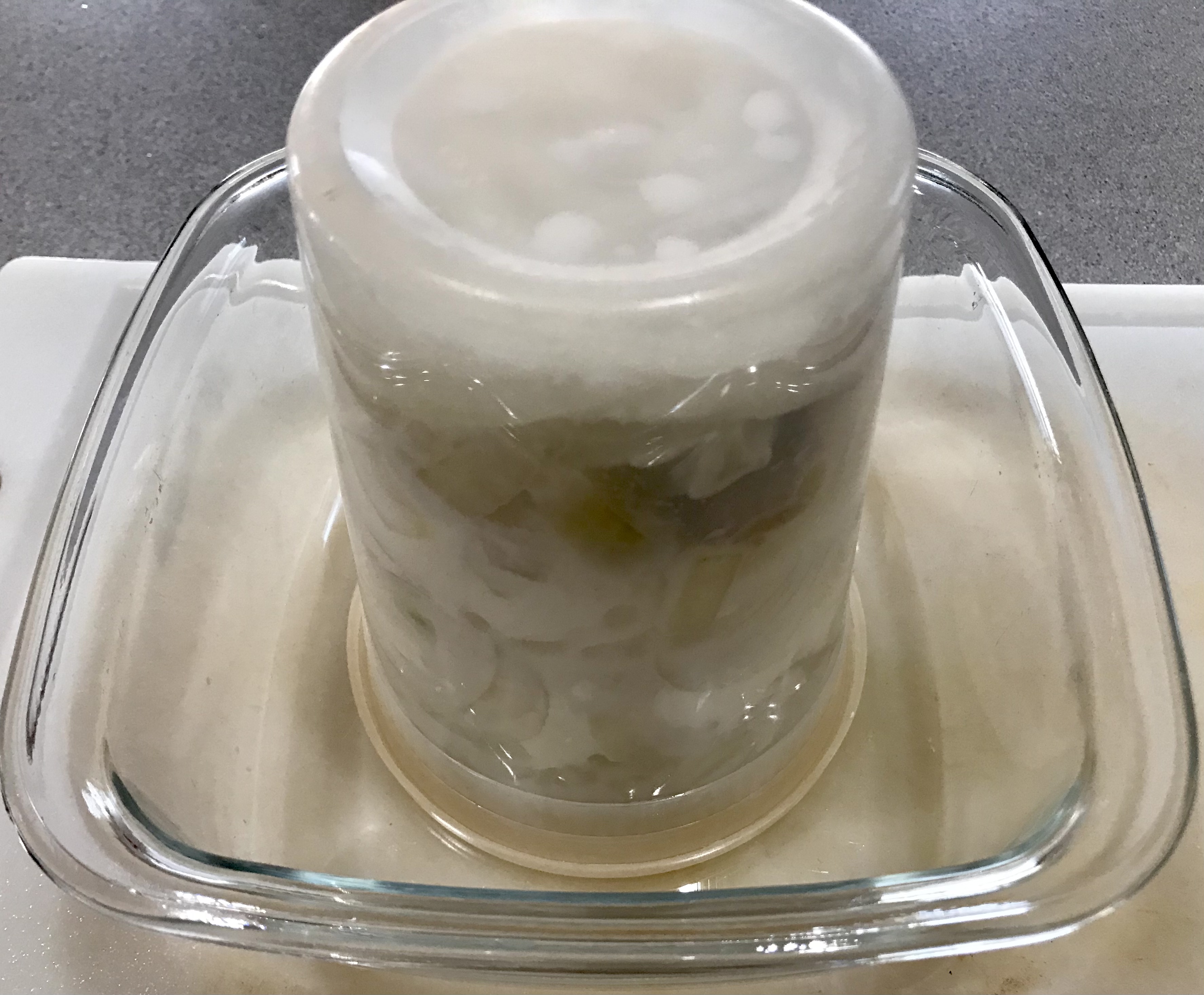
I take a quart-sized container with a lid, and I line the bottom with some of the onions. I then pour some of the contents of the jar of herring into the container. I then take a couple of spoonfuls of sour cream (gotta be Breakstone’s–I’m a New Yorker) and place it on top. Then I keep working in layers: onions, herring, sour cream…until it’s all gone and jammed into the container.
I place the lid on the container and shake it vigorously to combine the ingredients. Then I place it upside-down in a dish (in case of spills) and put it in the fridge.
A few hours later, I’ll turn the container right side-up and let it sit in the fridge some more.
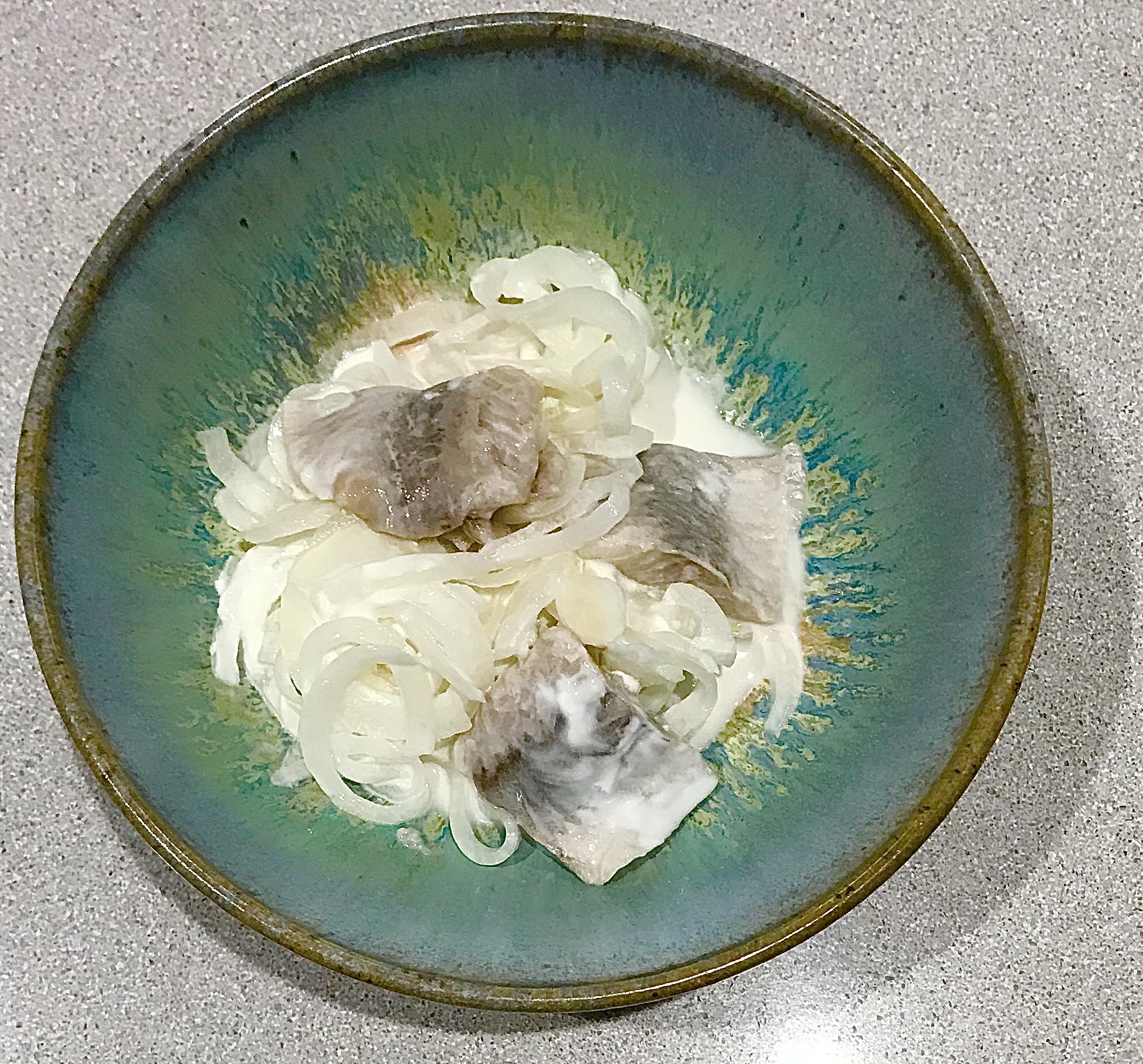
The wine sauce will blend with the sour cream to make a delicious cream sauce, and the onions will slowly break down and soften.
Of course, you can combine everything in a large bowl and then move it to a container, but it gets messy. My layering method avoids the need for clean-up.
After a few hours–if I can wait that long–it’s time to eat! A slab of bread is always good on the side.
I have to say my herring hack is good. Maybe not New York Jewish deli good. But good enough to satisfy my craving!
I call this a milk liqueur, because I remember my Mom made it when I was younger, and she called it “pieninis likeris” (milk liqueur) in Lithuanian. But a good friend of mine, knowledgable in all things alcohol, said that it’s not much different than a “milk punch,” something that was common in New Orleans.
The milk liqueur recipe I based mine on was not my Mom’s…she never showed me how to make it. I found it listed under Portuguese recipes, so it looks like this thing is pretty common among many nationalities. And why not? It’s delicious!
If you’ve ever made ricotta cheese at home, there are some similarities. With ricotta, you add vinegar or lemon juice to milk to make it curdle and then separate the curds from the whey. It’s a similar process for this liqueur.
My twist to the recipe is to add a vanilla bean to the mix, because, how can it possibly hurt?
My preferred vodka for all liqueur recipes is one that is as flavorless, as neutral, as possible. And for me, that’s Absolut. I use 80-proof Absolut for this recipe. (I use 100-proof Absolut for my limoncello.)
I used whole milk for this recipe, and if you can, avoid using ultra-pasteurized milk. (That’s harder to do than it sounds!) I don’t mean raw milk…I haven’t used that, and can’t vouch for the results. But I did find some “normally” pasteurized/homogenized whole milk from a local dairy, and that seemed to work fine.
1 liter 80-proof vodka 1 quart whole milk 4 cups sugar the juice and peel of 1 or more lemons, depending on their size and juiciness 1 whole vanilla bean
1 gallon glass jar with lid cheese cloth paper filters for coffee machines
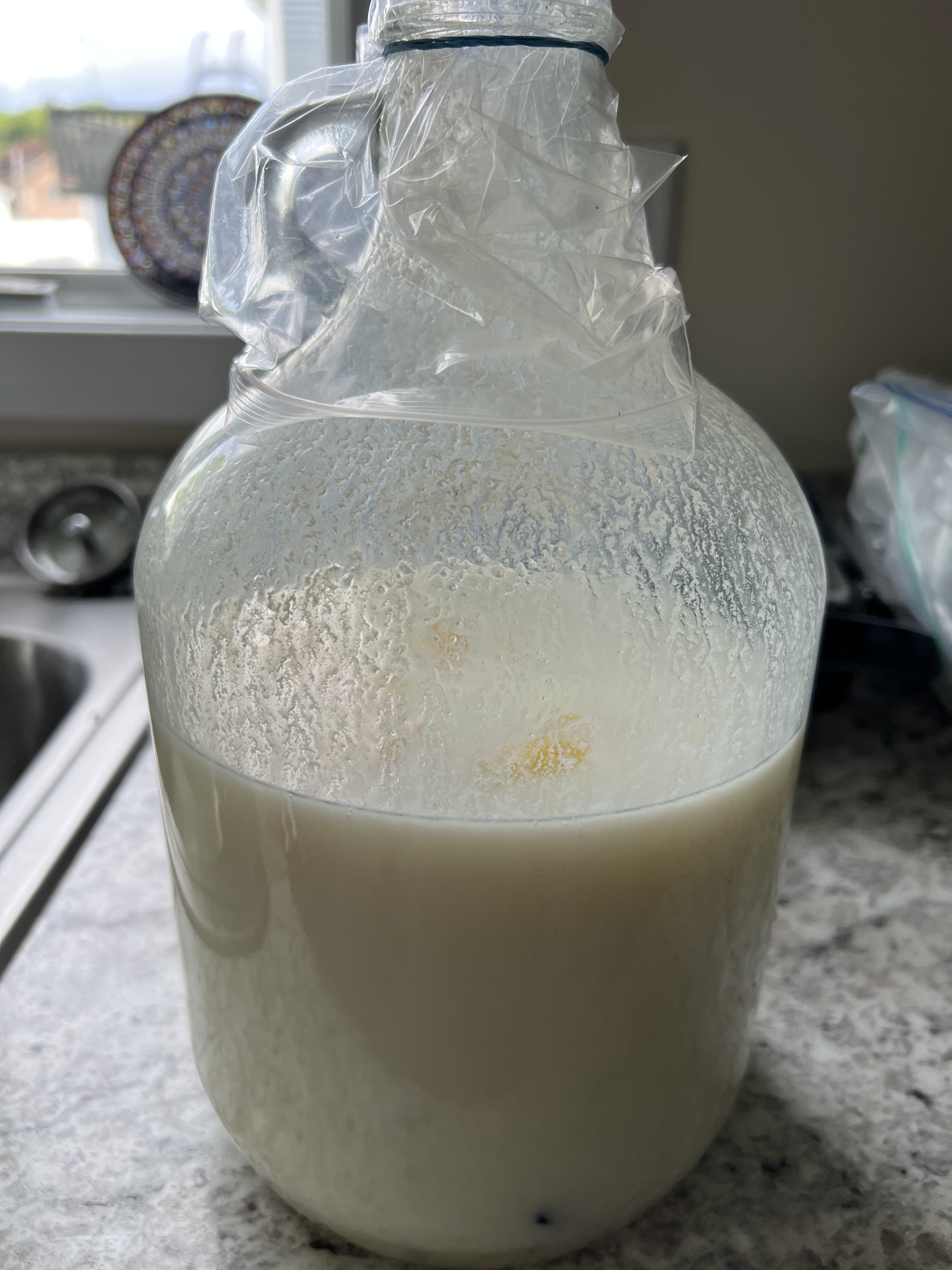
In a gallon-sized glass container with a tight-sealing lid, pour in the vodka and the milk. Add the sugar, and swish it all around to start dissolving it.
Using a vegetable peeler, carefully peel the outer yellow skin of the lemons, avoiding the bitter white pith underneath. Place them in the jar. Carefully squeeze the lemons, avoiding the seeds, and add the juice to the mix. Toss the used lemons into your compost.
Drop in the vanilla bean.
Seal the container, and swish it around, making sure everything gets mixed.
Place the container in a shady part of the kitchen, at room temperature but away from sun and heat, and swish it around once or twice every day. You’ll see the dairy start to separate from the rest of the liquid, but keep swishing it every day nonetheless.
After 10 days, the liqueur is ready!
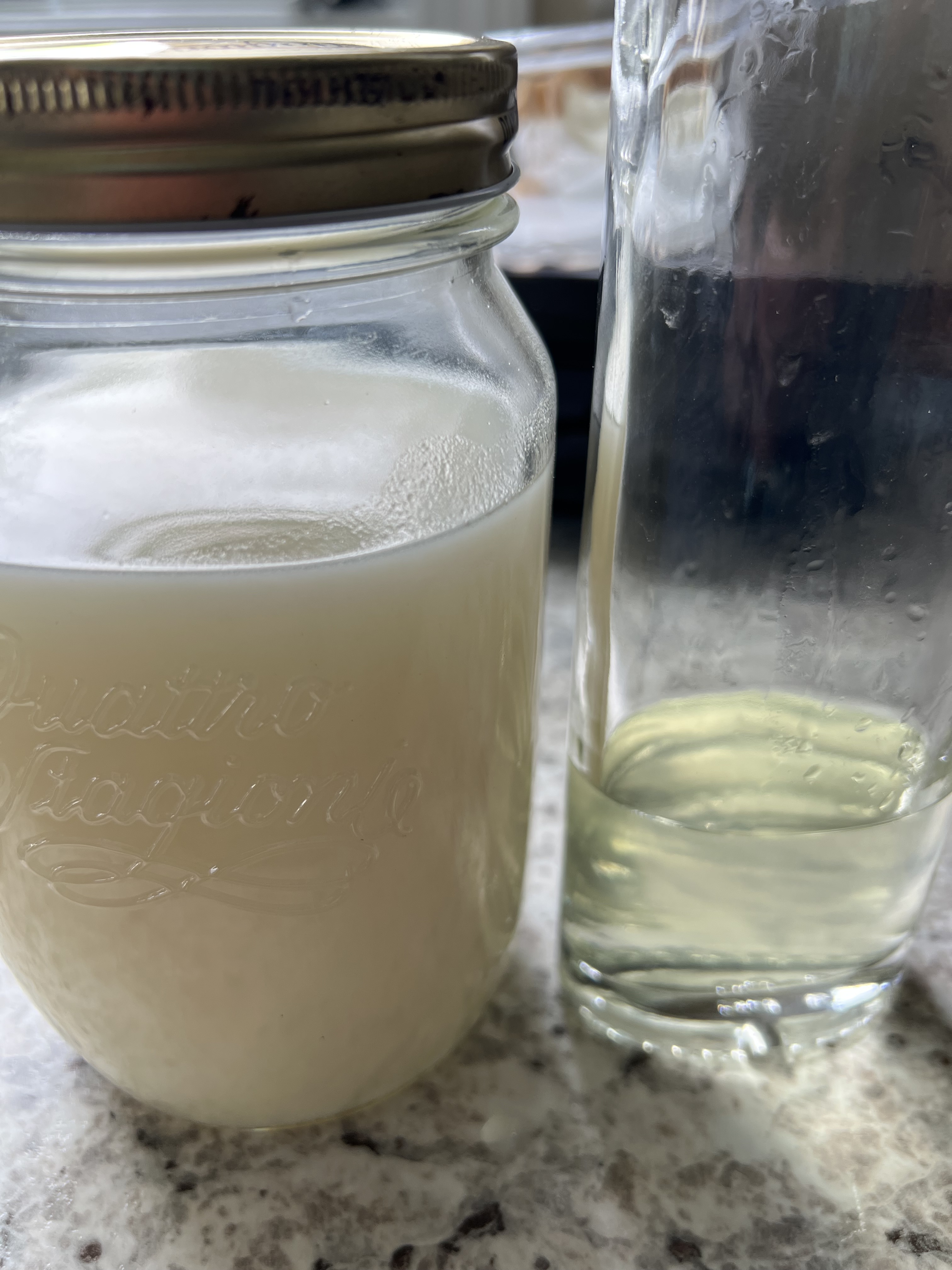
I used a double layer of cheese cloth, placed in a sieve, and it did a good job of capturing most of the milk solids. I had to go through 4 cloths to get the job done, but at the end, I had a cloudy liquid that needed one more filtration process.
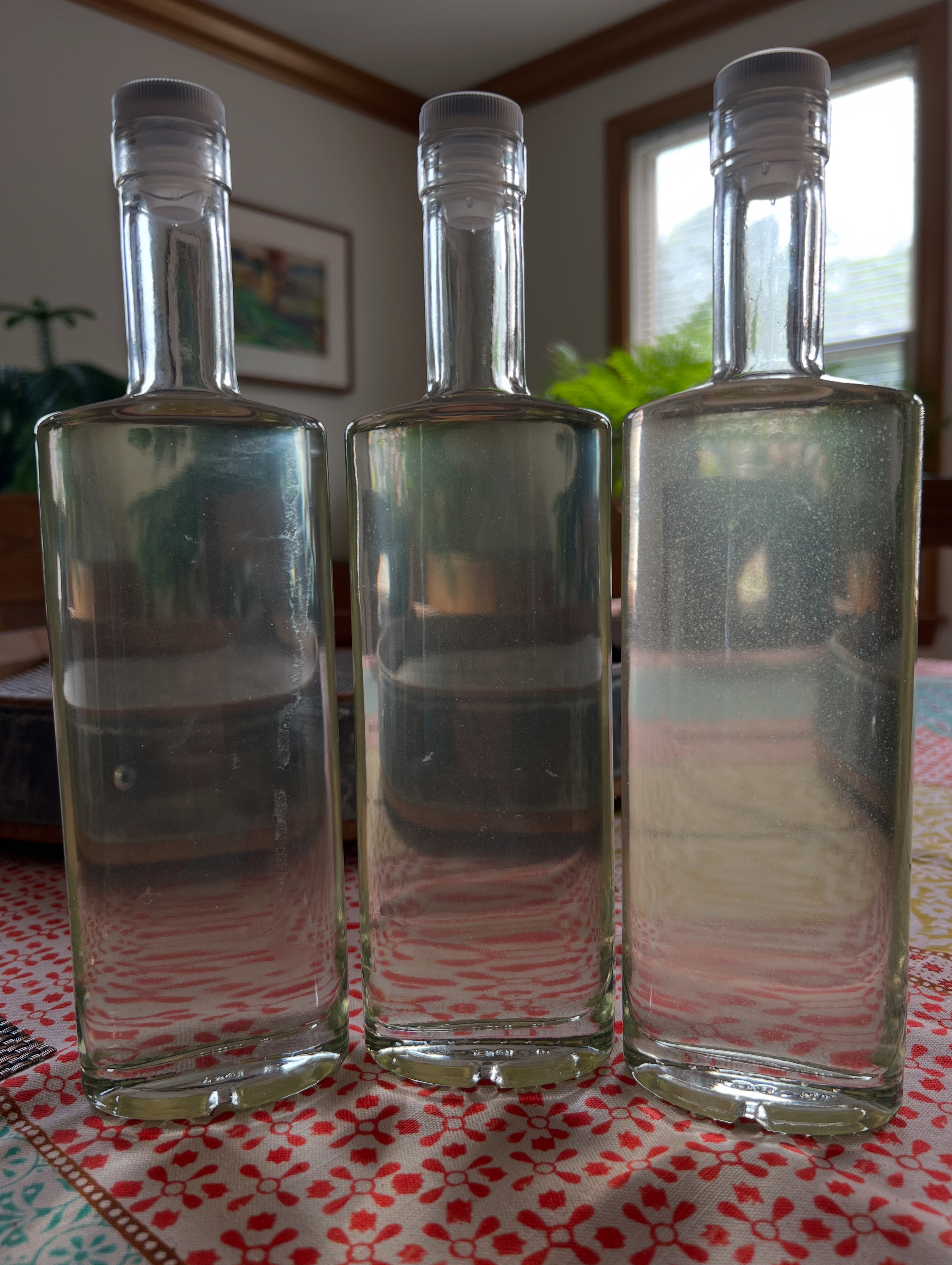
Like I do with my Lithuanian honey liqueur, Krupnikas, I placed a series of funnels with coffee filters over Mason jars and tall glasses, and poured the cloudy liquid through the filters, changing them as needed, as they did tend to clog up.
At the end, I had a relatively clear final product that was absolutely delicious, and maybe even better than the stuff my Mom made!
After making a batch of this for my daughter this week, I got a bunch of requests for the recipe. So here we go!
Chicken parmigiana, much like pizza, is a bit more difficult to make than you might think. Sure, there’s plenty of crappy chicken parm out there, made with processed frozen chicken cutlets, bad sauce and cheap cheese. But to make a really fantastic, mind-blowing chicken parm, that takes a little practice!
The key to this recipe is simple: don’t skimp on the quality ingredients. And my recipe makes a lot. Trust me: you will want leftovers.
The recipes for my Italian bread crumbs and my “Don’t Call It Gravy” tomato sauce are at the bottom.
Gooey, cheesy, orgasmic.
6 Chicken breasts, the best quality you can get your hands on Italian bread crumb seasoning (see recipe below) 3 eggs vegetable oil for frying “Don’t Call It Gravy” tomato sauce (see recipe below) Fresh mozzarella cheese oregano
Thaw the chicken breasts. Lay them flat on a cutting board, and you’ll see where the chicken tender is on the side of the breast. Cut the tender off and set aside, leaving the breast which is thinner at one end and thicker at the other. Slice the breast in half lengthwise at the thicker end, keeping the knife level, so that you wind up with 2 pieces of breast meat that are the same thickness, but one will be a longer piece (the bottom) and one about half its size (the top part you sliced off.) Do this with all the breasts.
By slicing the breasts lengthwise into evenly thick pieces, it will take the same amount of time for them to cook. (I prefer not to pound the hell out of the chicken breasts until they’re flat as a pancake.)
Pour the vegetable oil into a large frying pan. (I like to use corn oil or grapeseed oil.) Next to the pan, set up two bowls: one with my Italian bread crumb seasoning (recipe below) and in the other: crack the eggs and whisk them.
Now it’s your standard breading procedure: chicken meat in the egg, then in the breadcrumbs, coating well. Shake off the excess and place carefully in the pan of olive oil when the oil comes to temperature (about 350) for frying.
Fry the chicken in the oil until it’s golden brown. You want it cooked all the way through, but not overcooked. Place the fried chicken pieces on a wire rack to drain the oil. Do this with all the chicken. The fried chicken at this point is delicious all by itself: chop it and use it in a salad, or make a chicken sandwich. (By the way, if there’s breading left over, use it on the chicken tenders you cut off, and fry them up. My daughter gets these instead of store-bought chicken tenders, and she loves them.)
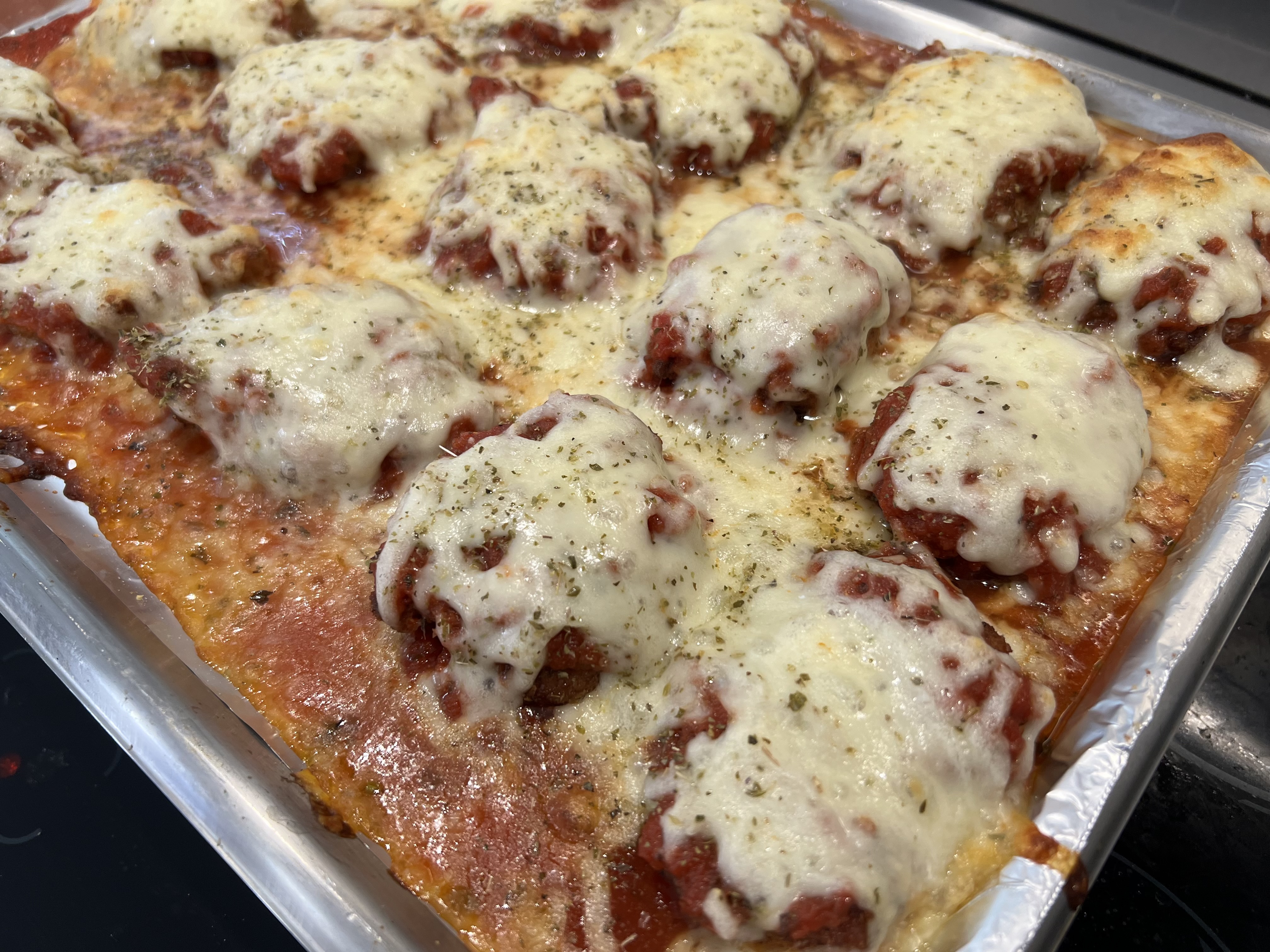
Cover a baking sheet with aluminum foil. Ladle out enough sauce (recipe below) to create a thin layer on the bottom of the baking sheet. Place the fried chicken breasts on top of the sauce. Cover the breasts with more sauce, then place shredded mozzarella on top. Sprinkle the top with a little oregano.
Place the baking sheet in a pre-heated 350 degree oven and bake until the cheese has melted and just starts to brown. Serve it with pasta.
MY “DON’T CALL IT GRAVY” TOMATO SAUCE
It’s not hard to make a good tomato sauce. But it takes a little work to make an amazing tomato sauce. Honed from a recipe handed down by a friend-of-a-friend’s Italian grandma, it is one very important part in two of my favorite Italian comfort food recipes: my meatballs…and my chicken parmigiana recipe.
1 medium onion, finely chopped 2 cloves garlic, finely chopped 1/2 cup extra virgin olive oil 10 cups ground and peeled tomatoes…or 3 cans (28 oz.) tomatoes (real San Marzanos preferred) 2 teaspoons each: dried oregano, basil and parsley 3/4 teaspoon each anise seed and fennel seed 1 1/2 teaspoons salt 1/2 teaspoon black pepper 2 bay leaves 1 small can (6 oz.) tomato paste 1 teaspoon sugar, optional
Heat the olive oil in a large pot and add the onions. Cook until onions are translucent, then add the garlic. Stir for about 10 seconds.
Add the tomatoes and cook until the orange foam disappears, stirring frequently.
Add the oregano, basil, parsley, anise seed, fennel seed, salt, pepper, and bay leaves. Stir to combine. Add the tomato paste, stirring well. Let the sauce just come to a boil (which helps the paste thicken the sauce), then reduce it to a simmer, and cook uncovered for at least an hour, stirring constantly, until the sauce reaches the consistency you like.
MY ITALIAN BREAD CRUMB SEASONING
This is the one part of the recipe (other than the optional pasta) that keeps this dish from being gluten-free. So I use gluten-free breadcrumbs, even if I don’t need to. I buy a loaf of Udi’s frozen gluten-free bread, toast the slices, and them put them in a food processor. I dare you to tell the difference between these and breadcrumbs with gluten!
1 Udi’s loaf, toasted and ground into breadcrumbs 2 teaspoons dried parsley 1 teaspoon dried oregano 1 teaspoon dried basil 1 teaspoon salt 1/2 teaspoon granulated garlic 1/2 teaspoon granulated onion 1/4 teaspoon black pepper
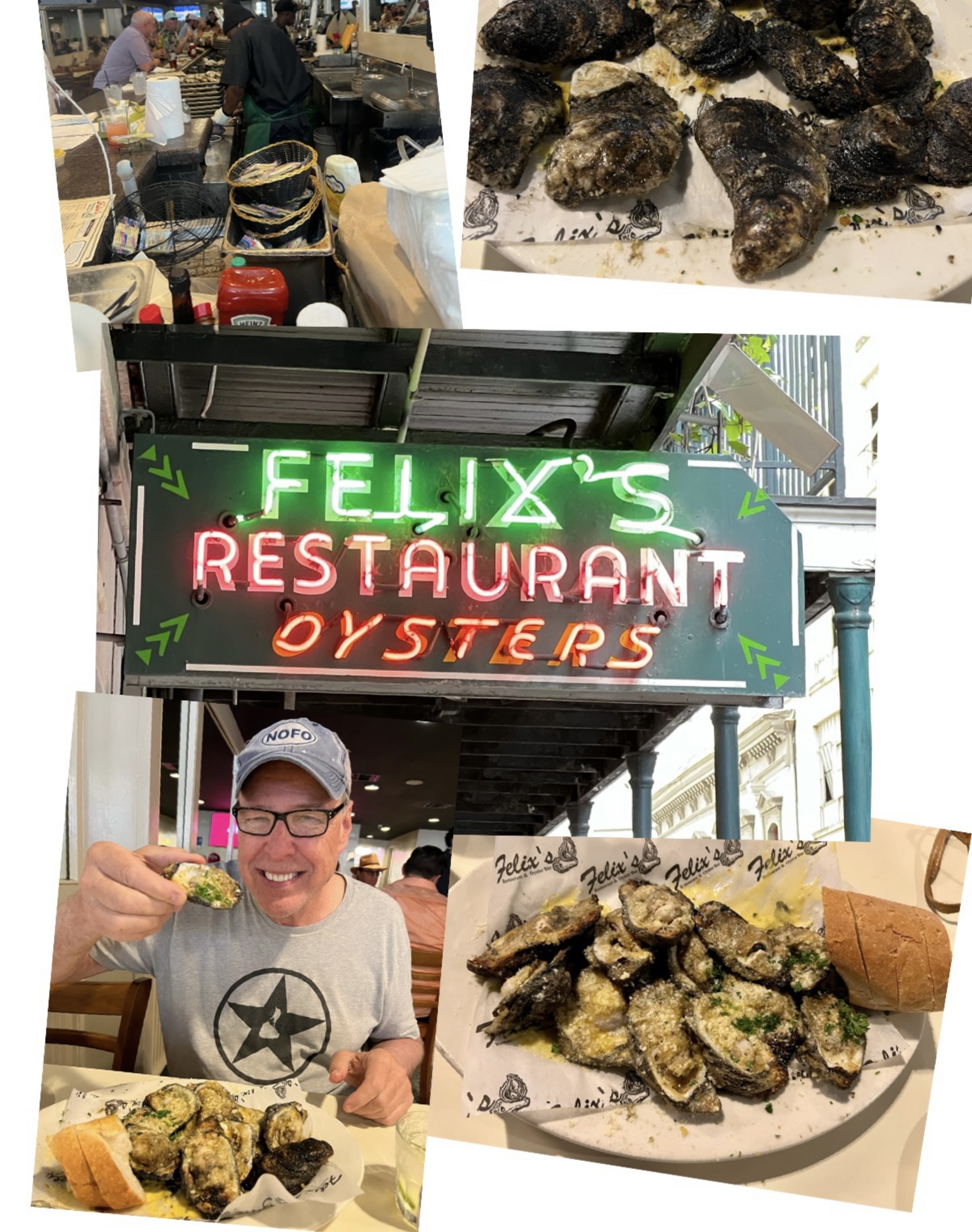
It’s been a few years since I visited New Orleans, and it was great to see that many of the old food destinations were still there: the Napoleon House, Café Dumonde, Acme Oyster House, and across the street from it: Felix‘s OysterHouse.
My friend, Rick, told me I had to try the char-grilled oysters at Felix‘s. He hadn’t been there, but he read a lot about them and they were supposed to be amazing. Well, that’s all the encouragement I needed, and I made a beeline to Felix’s that very day.
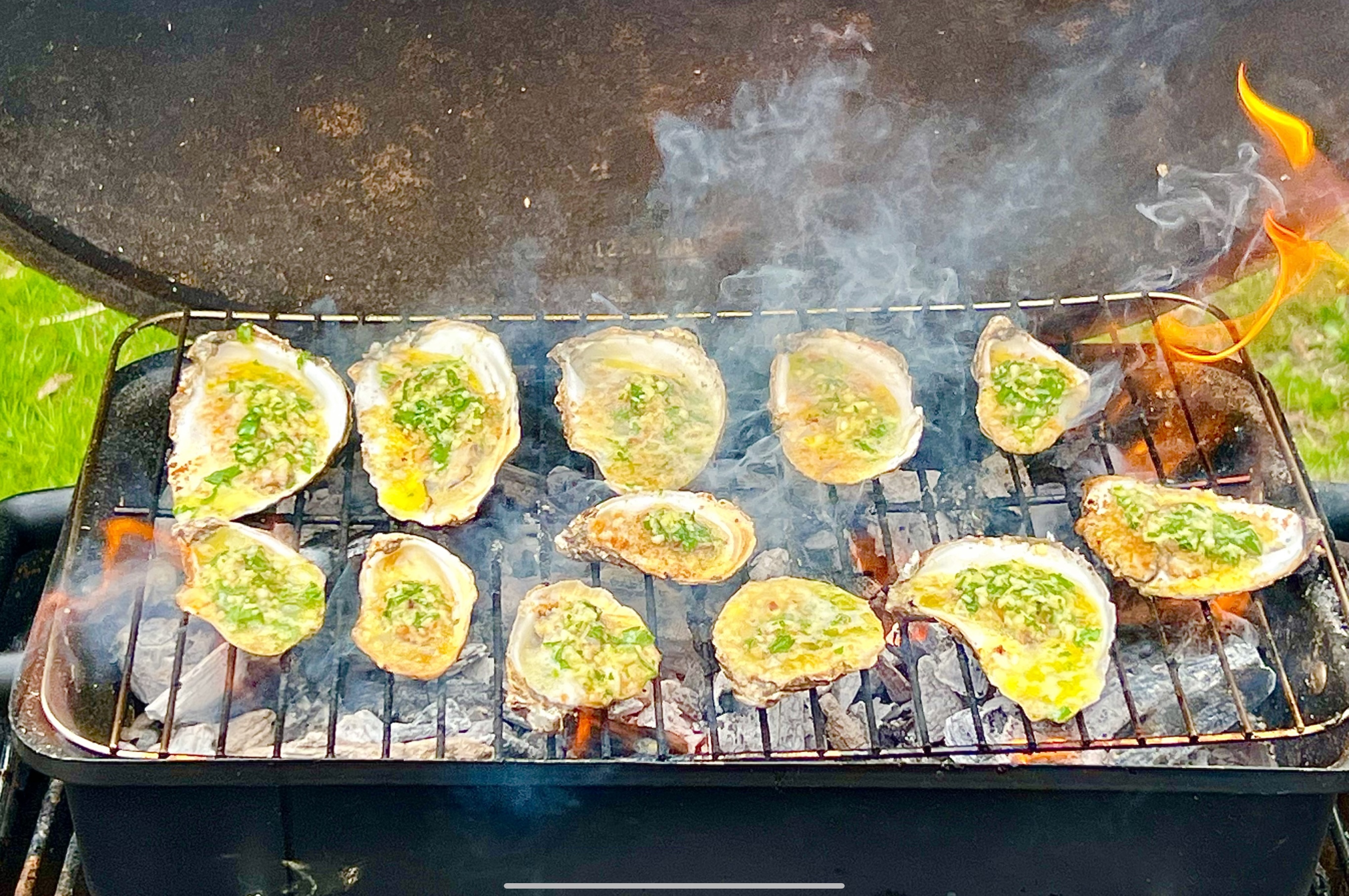
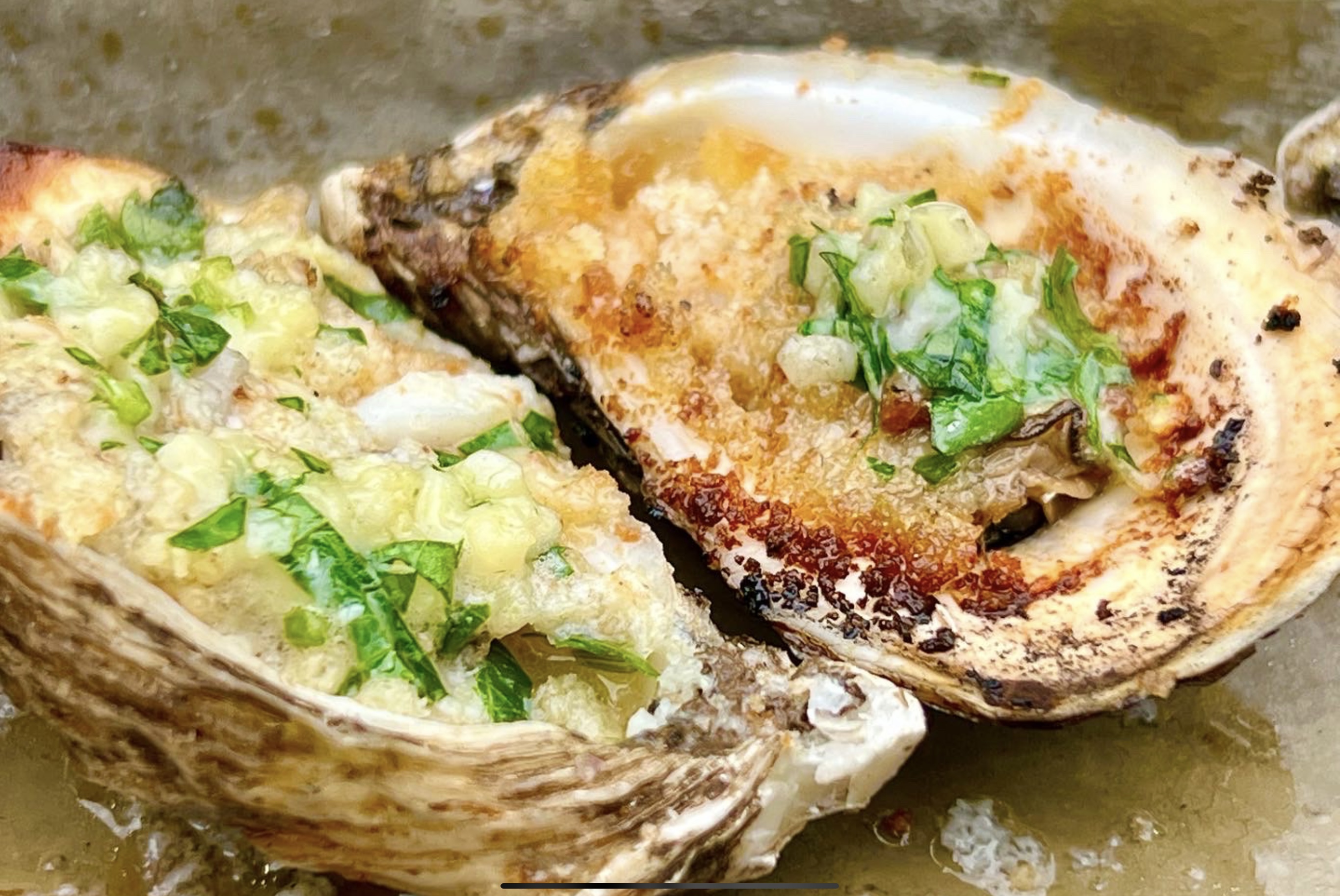
When you think about it, it’s no great culinary feat to grill an oyster. But yet, I never thought of doing it on my own. The dozen oysters I devoured that day were buttery, garlicky, with a hint of char and smoke that made them absolutely delicious, quite easily the best oysters I’ve ever had in my life.
I knew that as soon as I came home from this trip, I would have to try to make these myself. I have to say I came pretty darn close!
If you don’t use a charcoal or wood fire to make these, you’re simply leaving out one of the most important ingredients to the entire recipe. A gas grill or a kitchen stove can cook an oyster, but the only way you can take it to the next level is by putting it on open flame, a wood-burning flame.
This recipe is good for about a dozen oysters. Using gluten-free breadcrumbs makes this recipe gluten-free.
The first step is to get your hardwood charcoal fire started. I use a charcoal chimney and newspaper–never any lighter fluid.
Once the coals are lit, head to the kitchen…
4 tablespoons salted butter 2 tablespoons minced garlic 2 tablespoons fresh Italian parsley, finely chopped 2 tablespoons Parmesan cheese, grated (I use Parmigiano Reggiano) 4 tablespoons breadcrumbs
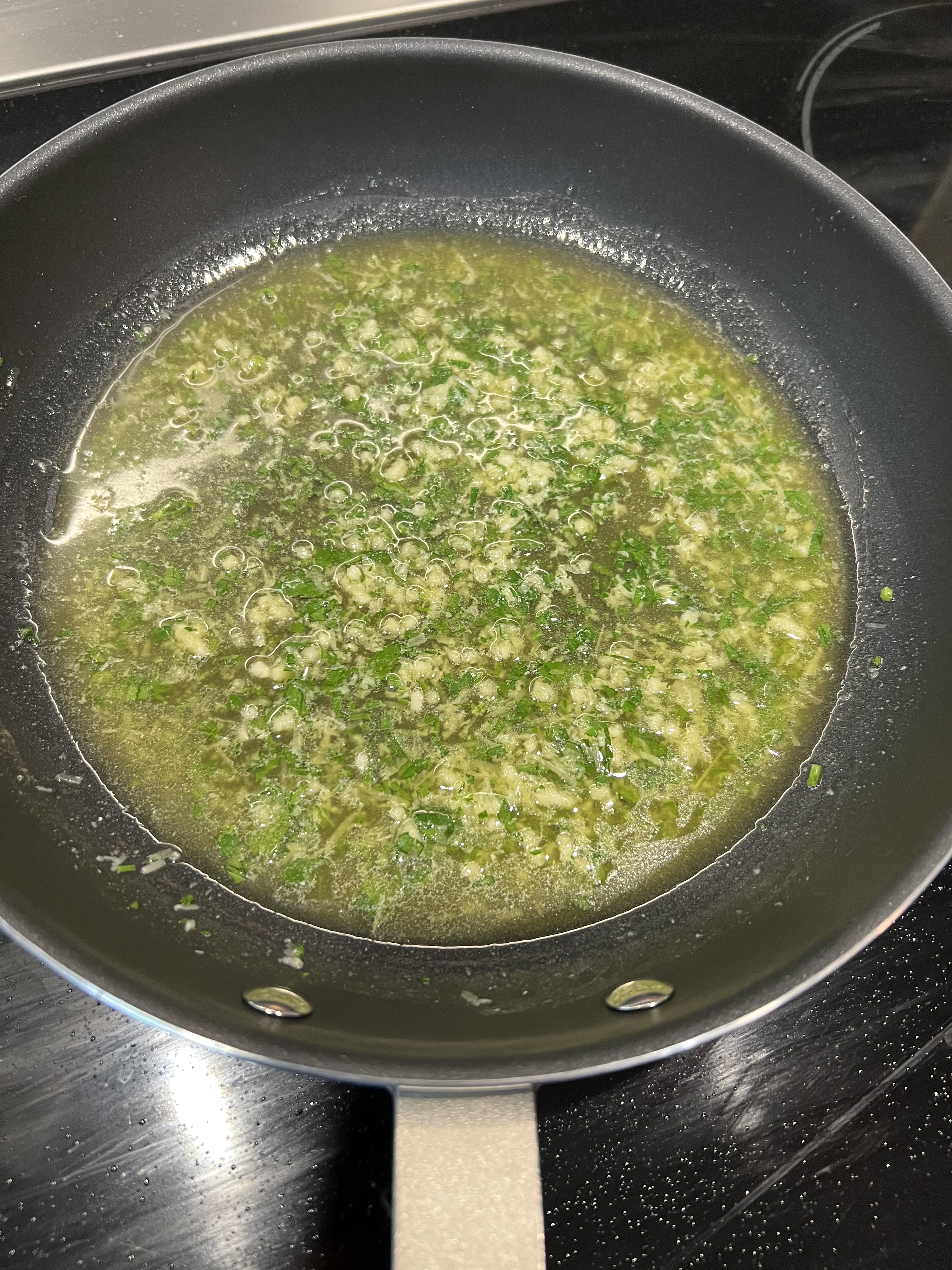
Combine the butter, garlic, parsley, and cheese in a sauté pan over medium heat. All you’re looking to do is to melt the butter, so once it’s melted, take the pan off the heat and this mix is ready to use.
Shuck your dozen oysters. Remember: they will shrink a little bit while cooking, so don’t be afraid to go for bigger ones.
Lay the opened oysters in a pan, carefully trying to preserve as much of the oyster liquor (liquid) in each shell as possible.
When the hardwood charcoal has heated up, and you’ve spread the coals evenly on your grill, you are ready to cook the oysters. You want the grill to be hot.
You don’t need to put the oysters directly on the hardwood charcoal. Putting a grill over the coals is fine, and it keeps the oyster shells from tipping over.
Before placing the oysters on the grill, sprinkle each one with some of the breadcrumbs. Then place the oysters on the grill, being careful not to burn your hands!
Using a spoon, pour some of the butter mixture into each oyster shell. It will flame up! That’s OK. Use up the entire butter mixture for all 12 oysters.
The oysters are ready when you see that golden brown color all around the edges of the oyster shell, when most of the liquid in the shell has evaporated. Don’t let them dry out completely.
Using tongs, remove the oysters from the flame and enjoy! Just be careful…they can be lava hot!




















 Live the Live ™