Archive for the ‘Carnivore!’ Category

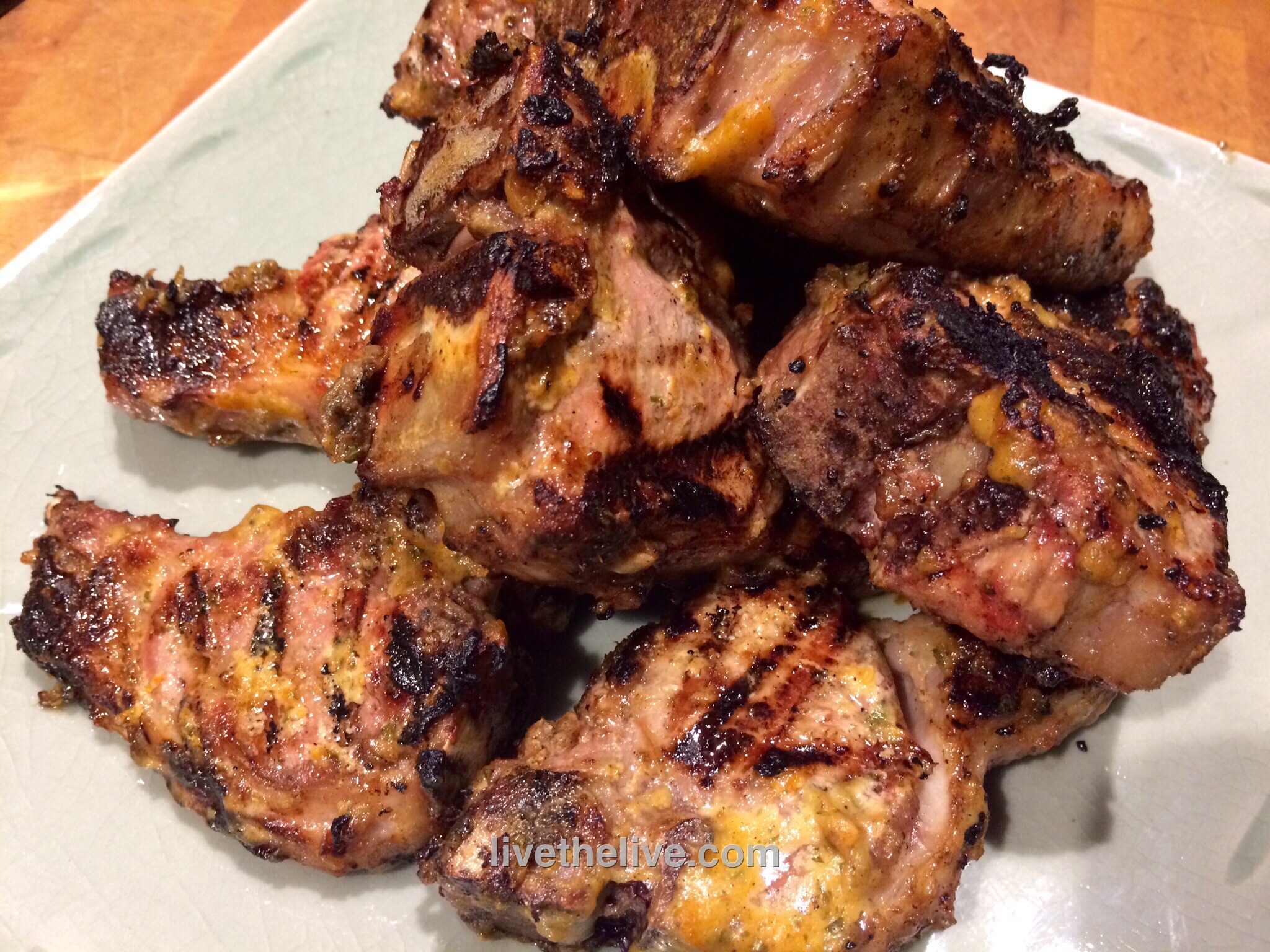
True: the inspiration behind this dish was a conversation I had with friends, talking about our early childhood days. Someone brought up the name Shari Lewis, and her famous puppet Lamb Chop. Next thing I knew, I was grilling the critter in my yard.

This is a great grilled lamb recipe that doesn’t need any marinating before cooking.

image


Ingredients:


1/2 cup Dijon mustard (I like Maille)

Zest of 1 grapefruit

1 teaspoon grapefruit juice

1 tablespoon fresh thyme leaves, finely chopped

2 tablespoons honey

1 teaspoon garlic salt

1/4 teaspoon black pepper


In a bowl, combine mustard, grapefruit zest and juice, thyme, and honey, garlic salt and pepper. Mix well.

Pre-heat a hardwood charcoal grill.

Grill the lamb on all sides first, then start brushing the mixture on them, flipping them, brushing again, and grilling. Keep doing this until you’ve used up all the mixture and the lamb is cooked to proper doneness. Don’t overcook it!


The lamb chops I buy come in a rack like the one below. They are pre-cut, so you just thaw them and go through each one with a knife to get mini lamb porterhouses. I like to grill them on all sides before I start brushing the sauce on them.

imageimage

For me, deep-fried turkey is just too much damn work: finding a safe spot in the yard to blast the propane-fueled fryer so that you don’t burn your house down, standing outside and freezing your ass off while it fries, and then disposing of gallons of used oil at the end of it all. And making sure the oil is at the right temperature so you don’t get a scorched turkey on the outside and raw turkey on the inside. Sure, they now have indoor turkey fryers, but I’m not crazy about that idea, either.

I get great results by cooking my turkey in my Weber grill. The standard Weber allows you to cook up to a 15 lb. bird–big enough for my purposes–and it comes out crispy, smokey and delicious. If you’re afraid to try this for the first time at Thanksgiving when it really matters, wait a few months and buy a turkey when you have the craving and try it out.

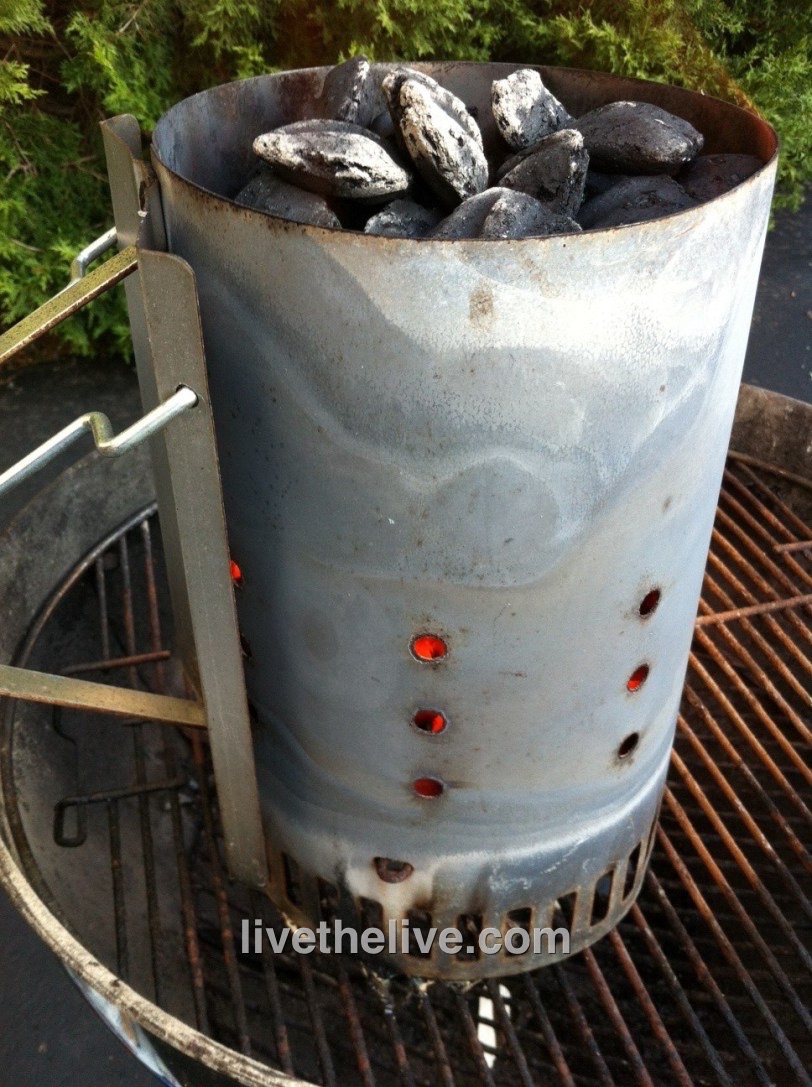
The charcoal chimney with hot coals awaits.

The charcoal chimney with hot coals awaits.

Although I’ve stopped using charcoal briquettes a long time ago, and now strictly use natural hardwood charcoal, this recipe works best with Kingsford. The idea is for the coals to cook slowly and evenly. And never use lighter fluid…always start your fire with a few pieces of crumbled newspaper under a charcoal chimney.


Needed:

Weber grill, with the dome top

Kingsford charcoal briquettes (do not use Match Lite or other pre-soaked briquettes)

Heavy duty aluminum pan (disposable)


Ingredients:

Whole turkey, up to 15 lbs, thawed and brined (see my blog about brining a turkey)

Olive oil (to rub on turkey)

2 yellow onions, chopped

4 stalks of celery, chopped

½ lb (2 sticks) of unsalted butter, melted

1 tablespoon granulated garlic

1 tablespoon onion powder

2 tablespoons salt

1 tablespoon pepper

Spreading the coals away from the center of the grill.

Spreading the coals away from the center of the grill.

If you want stuffing, make it separately and cook it separately. (A great recipe in my next blog.)

Light 8 to 10 lbs of charcoal in the grill…depending on the size of the turkey and how cold it is outside.

Remove the giblets from the turkey. Place the bird in the aluminum pan.

In a small bowl, mix granulated garlic, onion powder, salt and pepper Add any other seasonings you like.

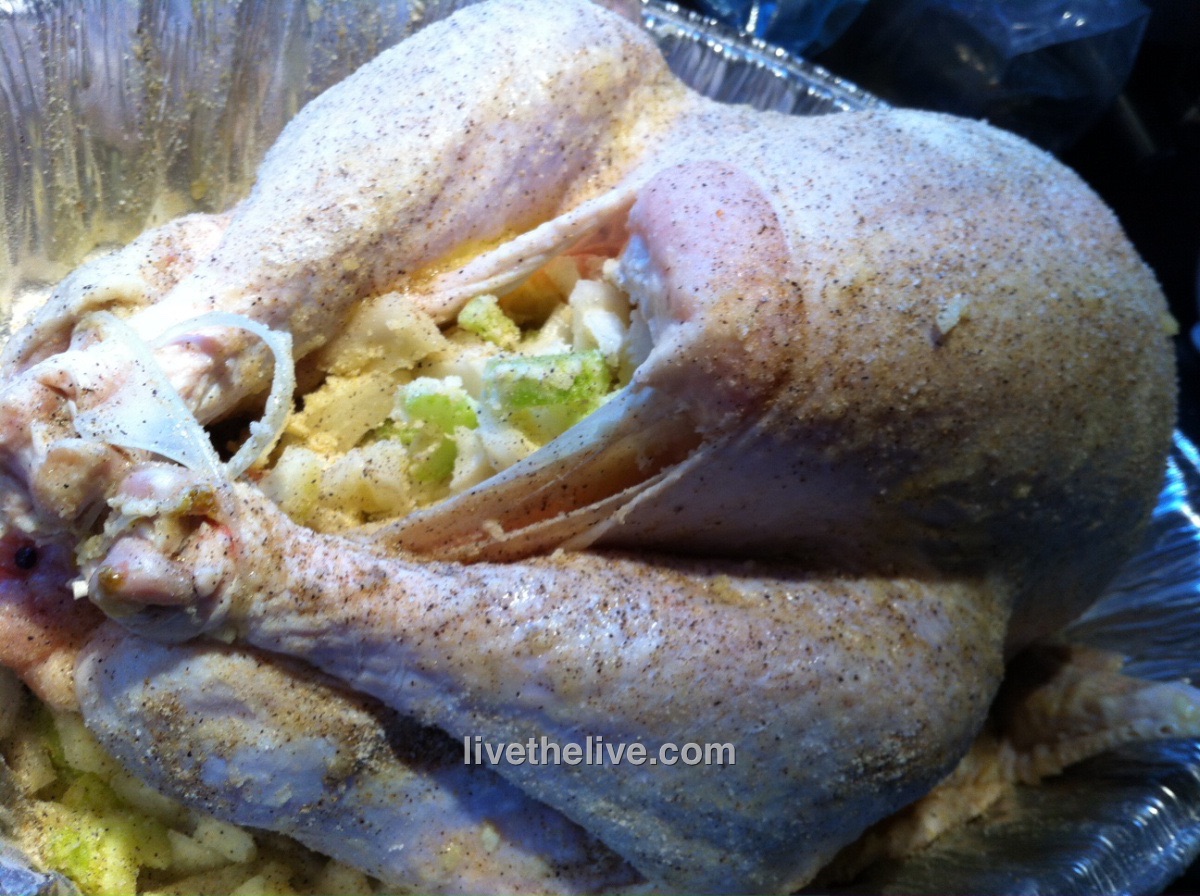
Coarsely chop onions and celery. Place in a another bowl. Mix with the melted butter and 1/3 of the salt/pepper/garlic powder mixture. Place a small handful of this “stuffing” mixture in the neck cavity of the turkey. Place the rest in the body cavity (where the stuffing would usually go.) You can fasten the bird with turkey skewers if you like. This “stuffing” is strictly to flavor the turkey…you don’t eat it!

The rubbed, stuffed and seasoned bird.

The rubbed, stuffed and seasoned bird.

Rub the outside of the entire turkey with the olive oil and sprinkle the rest of the garlic/onion/salt/pepper mixture on the outside of the bird. Make sure you get the bird on the bottom as well.

When the coals in the grill have ashed over, spread them to the outside edges of the Weber equally. Put the cooking grill rack in place. Place the aluminum pan with the turkey in the center of the grill, keeping it away from the direct heat of the coals. If using a meat thermometer, insert the probe into the thickest part of the breast, being careful not to hit the bone. Place the lid on the grill. (You may need to bend your pan a bit.) Open the vents on the bottom of the Weber as well as the lid. Important to get air circulating!

My meat thermometer calls me from as far as 100 feet away! Time for a cocktail!

My meat thermometer calls me from as far as 100 feet away! Time for a cocktail!

No basting is necessary.

Now here’s the tough part: DO NOT OPEN THE GRILL TO CHECK ON THE TURKEY! (If you must look, shine a flashlight into the vent holes on the lid to take a peek at the pop-up timer, if there is one.) The whole point is to keep the heat inside the kettle. You’ll know your turkey is done when no more smoke or heat rises from the grill, and the turkey inside stops making sizzling noises.

Remove the turkey and let it rest at least 15 minutes before carving.

Beautifully grilled, and perfectly cooked in less than 2 hours!
Beautifully grilled, and perfectly cooked in less than 2 hours!

Brining is a simple process of soaking a hunk of protein in a flavored salt solution for a time before cooking, resulting in a much more juicy and flavorful final product.

It’s basic high school science: the brine has a greater concentration of salt and water than the molecules of the protein (in this case, a turkey) that is soaking in it. By simple diffusion, the protein molecules suck up the salty water and keep it. When you cook the meat, some of the water evaporates, but the meat still has far more moisture in it than it would have without the brine soaking, and the result is a moister, more delicious bird.

Some people use giant syringes to inject their turkeys with crazy solutions, but I think that the old way is still the best way when it comes to brining. Get a big pot, fill it with the brine, and soak the bird in it. Done.

Here’s my tried-and-true turkey brining recipe. Once the brining is done, you can cook the turkey whatever way you like best. I use a method where I grill it inside a Weber grill with charcoal. It comes out smokey and absolutely amazing. I’ll have that info in the next blog.

image


Ingredients:

1 gallon of water
2 onions
3 carrots
3 stalks celery
1 cup kosher salt
1 tablespoon black peppercorns
1/2 cup light brown sugar
1 1/2 teaspoons whole allspice
4 bay leaves
1 gallon of ice water
14–15 lb turkey, thawed

Pour first gallon of water in a large pot. Quarter the onions, carrots and celery (no need to peel them) and add to the water. Add salt, black peppercorns, brown sugar, allspice, and bay leaves.

Let the pot come to a boil for a few minutes. Remove from heat and let brine cool down to room temperature.

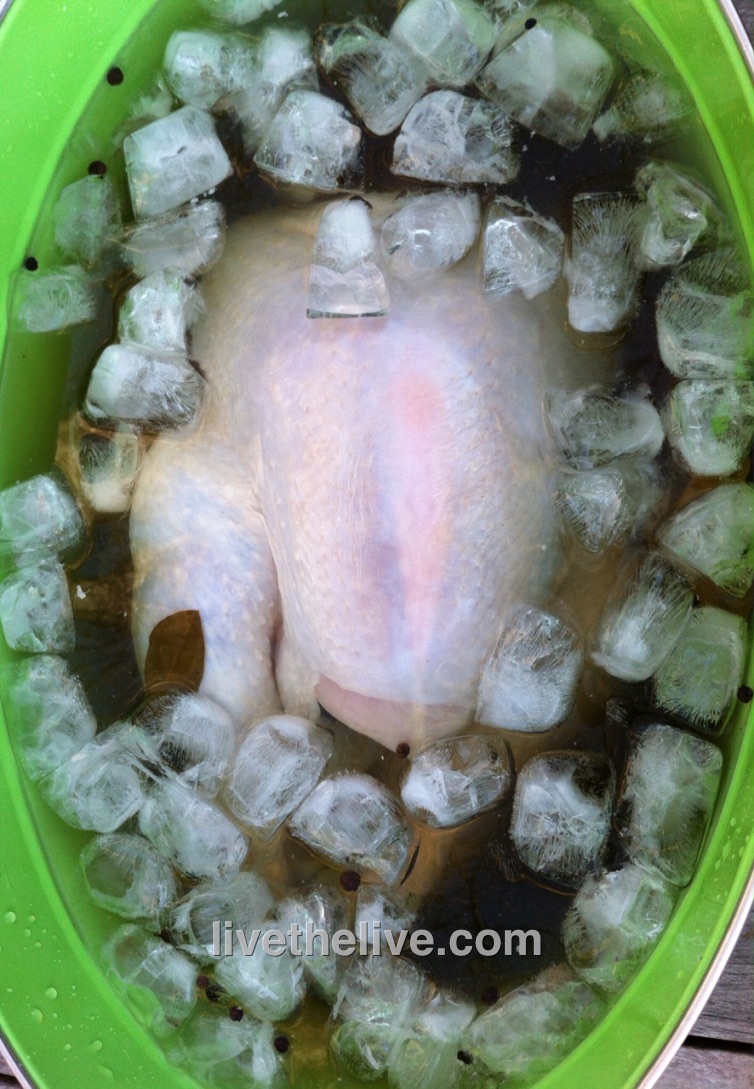
Remove giblets from turkey and place the bird in a container just big enough to hold it and 2 gallons of liquid.

Pour the now-cooled brine over the turkey, then pour in the gallon of ice water.


Make sure the turkey doesn’t float up by placing a plate on top. Put turkey container in fridge for 5 to 8 hours, flipping the turkey over in the container halfway through.

Drain turkey, pat dry with paper towels, and then cook using your favorite recipe.

Next time: cooking your turkey on a Weber grill in a fraction of the time.

Like hot dogs and Slim Jims, jerky is one of those “mystery meats” we love but don’t really know how it’s made or what part of the animal it comes from.
Really excellent beef jerky is a rare treat, and once you have it, you will never go back to that rancid, preservative-filled dog meat you find in a bag at the supermarket. And the best part is: it’s easy to make.
Shop around for a really nice slab of London broil or similar cut. You don’t need to buy an expensive piece of grass-fed beef, but the better the meat, the better the jerky. Remove all the gristle and fat that may be on the meat and then slice it against the grain and on a diagonal, into 1/4″ thick slices. Toss all the meat in a Ziploc bag. Once you’ve done that, all you need to do is make the marinade, marinate the beef overnight, and then dry it the next day. Your final product will be a flavorful beef jerky that is so good, you’ll find it very hard to stop eating it…or to share it.
If you use gluten-free soy sauce and teriyaki sauce (La Choy is the brand I use, found in any supermarket), this recipe can be considered gluten-free. Be careful: regular soy sauce, and even some tamari sauces, have wheat in them. Read the label!
image
Ingredients:
1 Tablespoon salt
1 1/2 Tablespoons granulated garlic
1 teaspoon black pepper
1 teaspoon fresh minced peeled ginger
2/3 cup brown sugar
1 cup Teriyaki sauce
1 cup soy sauce
8 lbs raw, lean beef, like London broil, cut into 1/4″ thick diagonal slices, against the grain of the meat
Mix all ingredients except meat in a large bowl. Place meat in a large Ziploc bag, pour marinade inside, seal, and refrigerate overnight. Squish the bag around once in a while, to make sure all meat surfaces make contact with the marinade. Keep the bag in a bowl to prevent any accidental spillage in your fridge!
The next day, pour off the marinade and discard. Using a food dehydrator or simply an oven at 140 degrees, dry the meat by laying strips on cookie sheets in a single layer. Drying could take several hours to half a day, depending on how dry and chewy you like your jerky.
This recipe makes a lot of jerky, but it stores really well in the freezer. I put small amounts into individual freezer bags, then place all of them in one large freezer bag. Thaw as needed.

HOLIDAY BRISKET

Posted: October 11, 2014 in beef, Carnivore!, Food, Recipes
Tags: , , , ,

This is my friend, Lori’s, recipe…and it rocks! It takes a couple of days to cook, and it’s worth it. image

I’ve had barbecued brisket, corned beef and pastrami. But this is the quintessential comfort food version that brings her family home for the holidays.


Ingredients:

1 beef brisket, 5 to 7 lbs.

salt, pepper, garlic powder

1 large onion, chopped

2 celery stalks, chopped

1 bottle (12 oz.) Heinz chili sauce

1 cup water

1/4 cup chopped parsley

2 tablespoons brown sugar

2 tablespoons Worcestershire sauce

1 packet Lipton onion soup mix


Pre-heat oven to 325 degrees.

Rub brisket with salt, pepper and garlic powder to taste. Place fat side up in a pan.

In a bowl, combine onion, celery, chili sauce, water, parsley, brown sugar, Worcestershire sauce, and soup mix. Pour over meat. Cover the pan with heavy duty aluminum foil to make a tight seal. Cook for 3 hours. (This is the first cook!)

After 3 hours, remove the pan from the oven (leave foil on) and let the meat cool to room temp, then place in fridge. Skim off the fat when the meat has chilled.

While the meat is cool, slice it as thin as you can and place the meat in a glass/Pyrex pan–a 9 x 13 works well–and pour all the gravy/cooked juices on top. If it looks dry, add a little water. Cover the pan tightly with aluminum foil and cook at least one hour at 325. (This is the second cook!)

At this point, you can remove the brisket from the oven and keep it in the pan in the fridge until you’re ready to serve. When it’s time to serve, heat the brisket one more time at 325 until it has warmed all the way through.

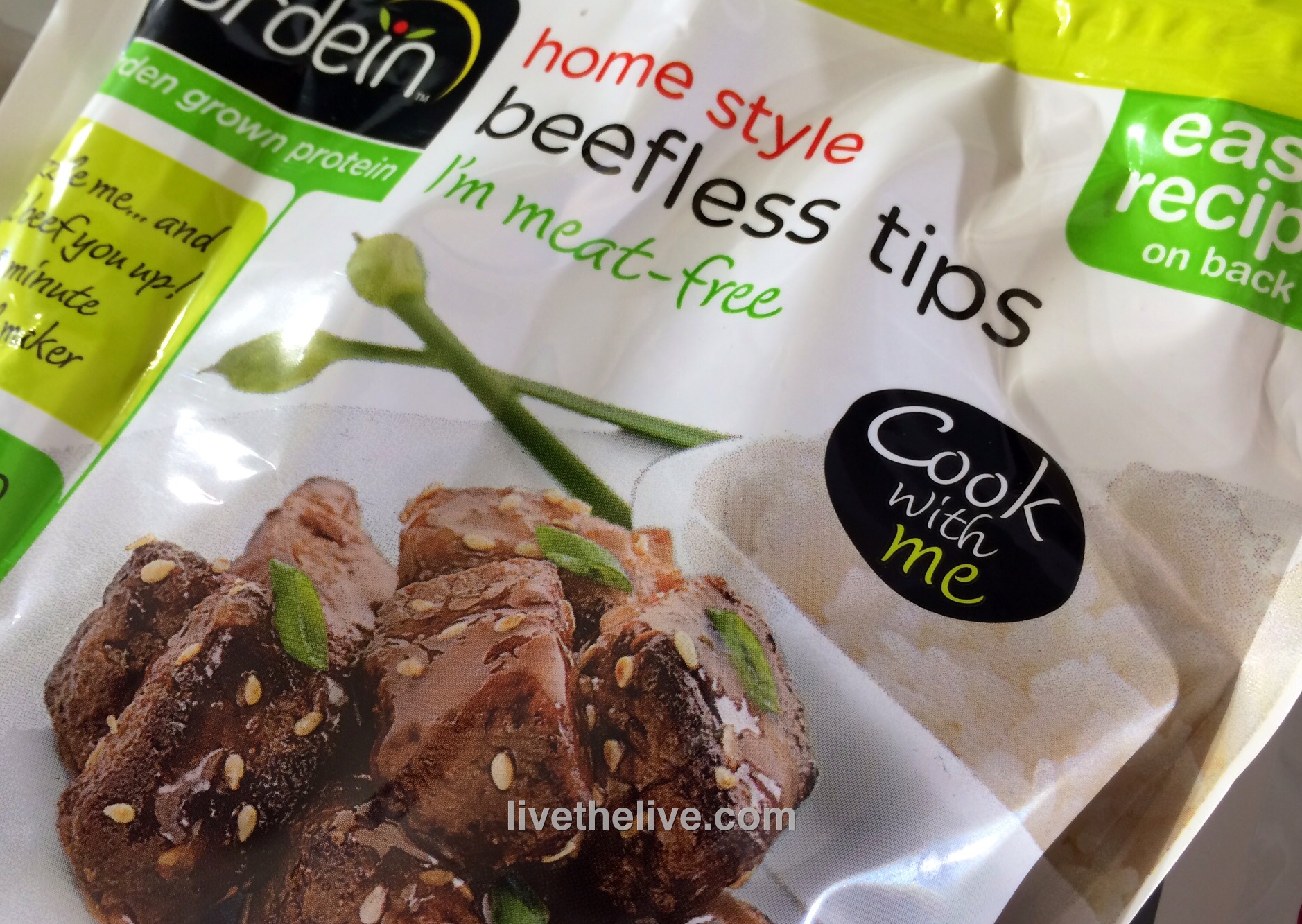
Do vegetarians and vegans secretly want to be carnivores? Why do so many vegetarian foods need to look, taste and even have names that sound like meat products?
Why do we need to call it this?image
 Is it because the real name: ” ‘Repulsive cubes of tofu’ salad” wouldn’t sell?
 
What about this one?
image
Looks like dog food, with one difference: I wouldn’t give it to my dog.
Or perhaps my favorite:
image
“Chick’n?” CHICK’N?! Are you effing kidd’n me?!
My vegetarian and vegan friends have legitimate reasons why they choose their lifestyle. Some don’t like factory farms or the way they treat animals and the environment. I don’t either. I buy grass-fed and pastured meats which come from small farms which use humane practices.

Some find the death of any animal for their food, even it’s done humanely, not acceptable. I feel that my manly omnivore cravings are nothing to be ashamed of, and obtaining animal protein in a sustainable way, whether farming, fishing or hunting, is the way to go. And for me, no plant protein can replace the quality of animal protein.

There are those that don’t eat red meat because of the negative effects on their health. Grass fed beef instead of corn and grain fed beef all but eliminates this problem. And we’re now seeing the negative health effects of meat substitutes like soy, even organic soy. Non-organic soy, which makes up 80% of the world’s crop, is Monsanto’s Round-Up Ready seed that gets oversprayed with herbicides.  Sorry…I’d rather have healthy beef, pork and chicken than GMO Frankenfood in my family’s diet.
If I was a vegetarian or vegan, I would write to the people who make these crappy products. They’re making them look bad. I’d be carrying that organic broccoli stalk high above my head and showing my pride, not hiding behind food disguised as quasi-meat.
Proud carnivores would never allow a piece of meat to be shaped to resemble a vegetable. A dinosaur chicken nugget, maybe. But never a vegetable. Now pardon me while I cook up some bac’n.
You don’t have to stand by your smoker and cook for hours to have amazing ribs. As the glaze cooks down, it gets sticky, gooey and delicious…but use a non-stick pot if you can or you’ll be scrubbing when you should be eating!
 image
 Ingredients:
Marinade: ¾ cup light soy sauce
                     6 Tablespoons hoisin sauce
5 lbs pork ribs
Zest and juice of 1 lemon
2 whole star anise
2 cinnamon sticks (3”)
1/2 cup honey
4 cups chicken broth
Mix marinade ingredients. Set aside.
If the ribs are large, cut them into pieces. If smaller, cluster 2 or 3 ribs together. Place in a large pot. Cover with water and bring to a boil. Boil for 5 minutes. Drain.
Place ribs on a sheet pan with a rack and coat with marinade. Let sit for 10 minutes.
Pre-heat oven to 350 degrees. Bake ribs in sheet pan with rack for 30 minutes.
While the ribs are baking, start sauce in a large non-stick pan or pot: combine lemon zest and juice, star anise, cinnamon sticks, honey and chicken broth. Bring to a boil, then reduce to a simmer.
When ribs have finished baking, add them to the sauce pot and simmer (covered) for at least 15 minutes or until rib meat is tender.
Turn heat on high, uncover pot and cook until the sauce is reduced to a glaze that coats the ribs. Reduce heat as sauce thickens to avoid sugars in honey from burning. When the ribs are sticky and gooey, they are ready!


image

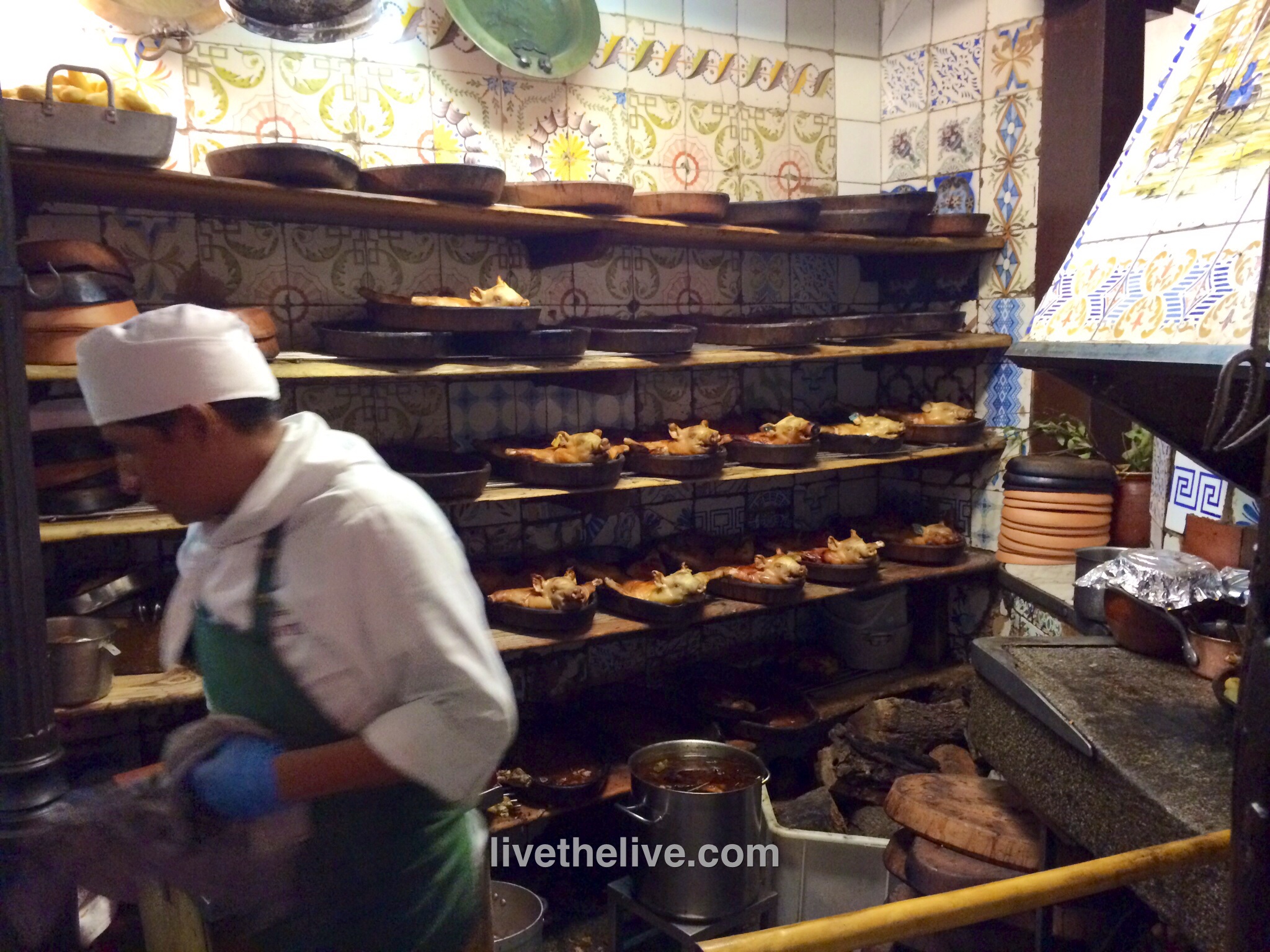
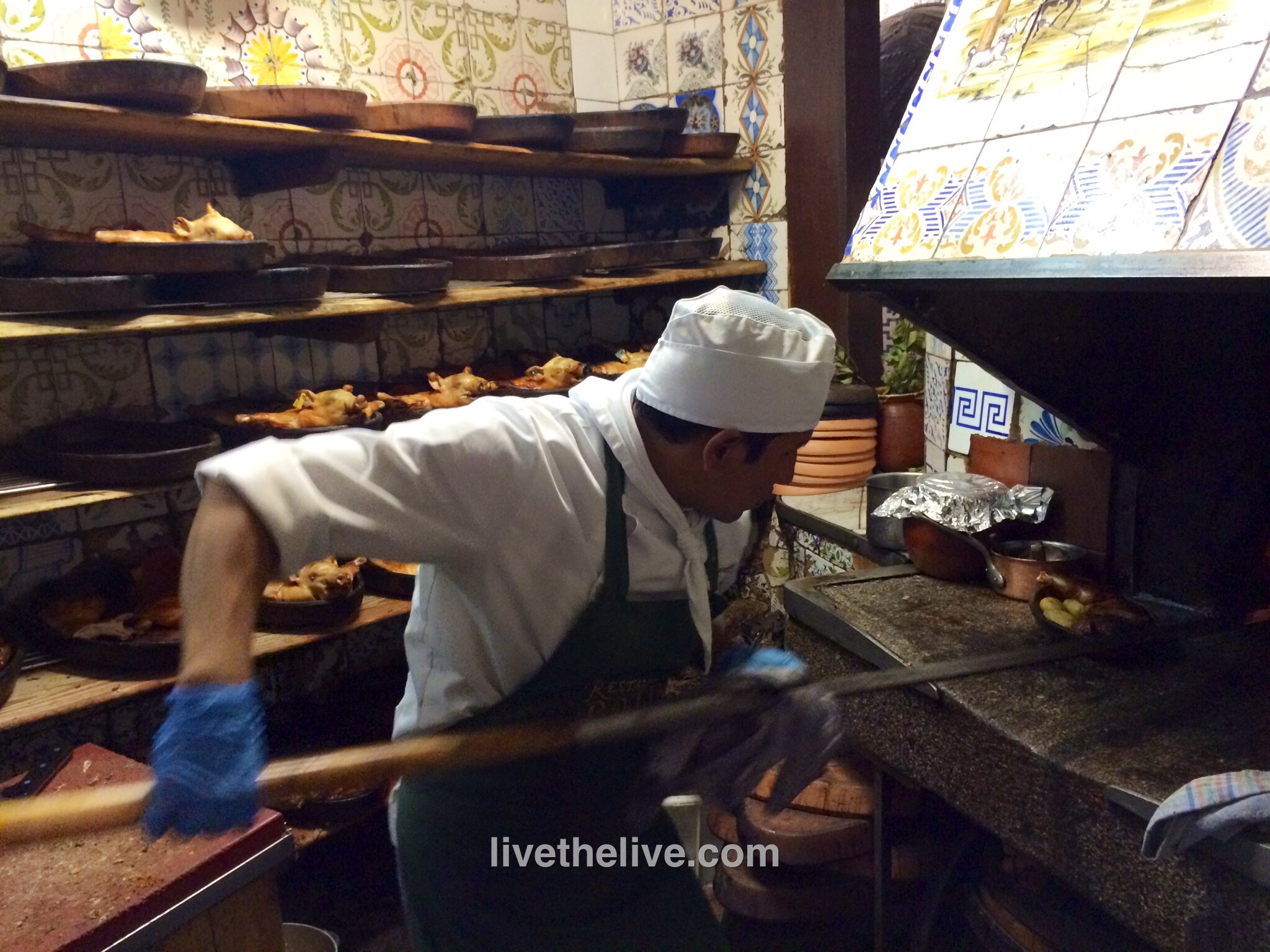
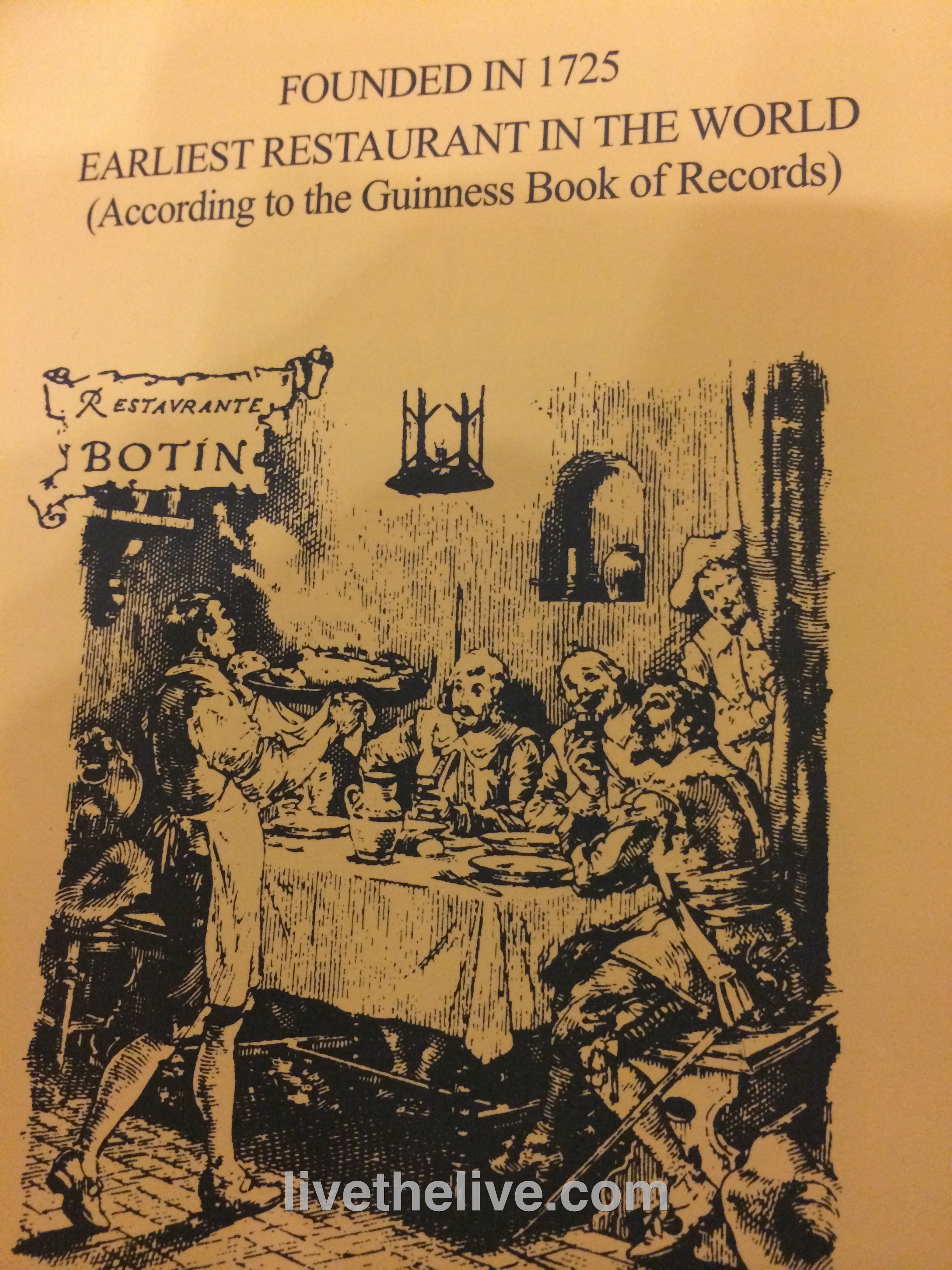
Restaurante Botin, in the great old city of Madrid, Spain, is a must-visit. At first, I thought it might be more of a tourist trap. But this establishment, which holds the Guinness Book of world records for oldest restaurant (it opened in 1725), has some fantastic dishes that you just can’t get anywhere else.

image

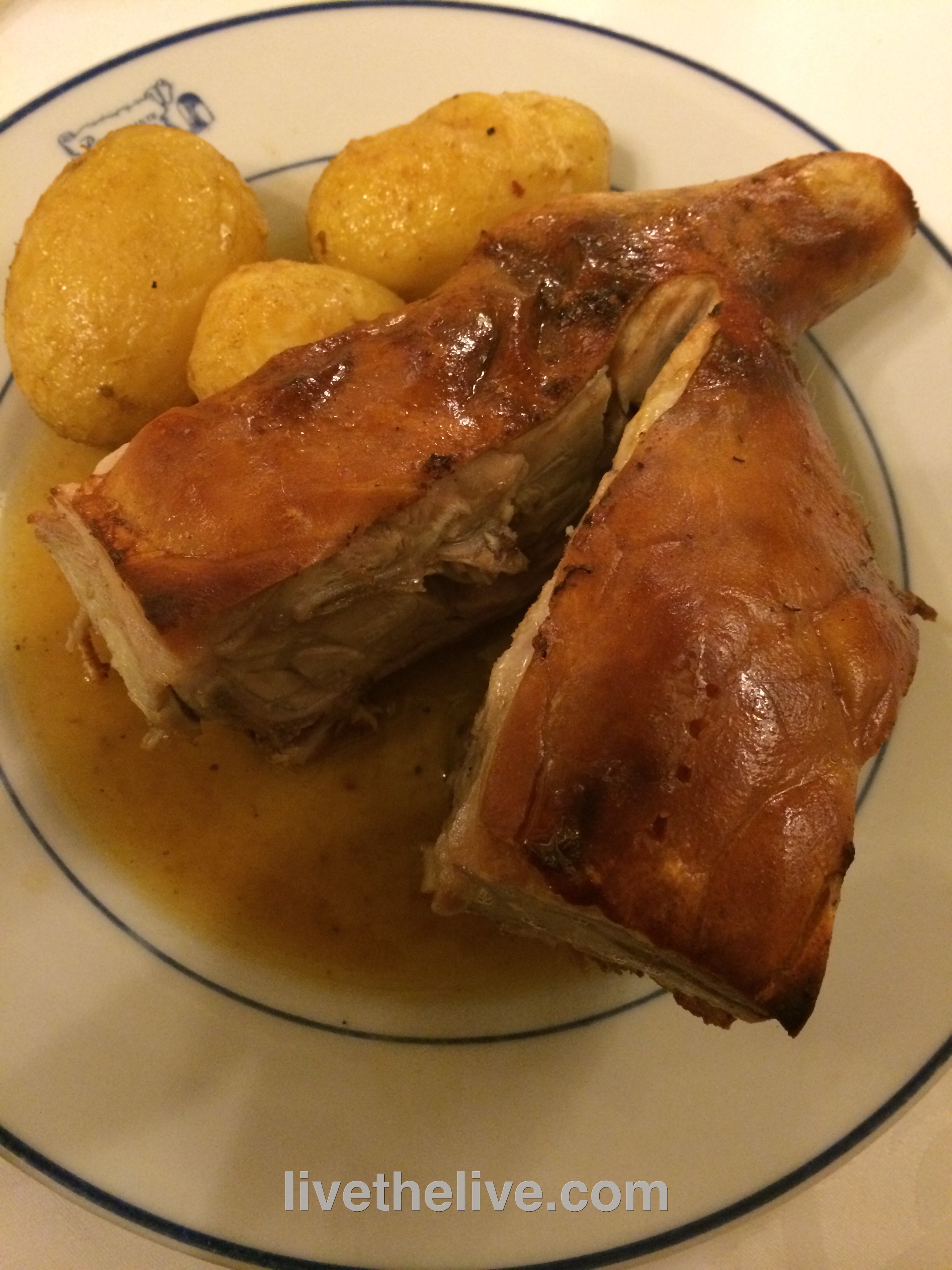
The suckling pig at Botin is world-famous. If you’re a vegetarian, you’ll probably be freaked out to see the row of little pigs on plates, waiting to be placed in the almost-300-year-old wood burning oven. These suckling pigs were only 20-something days old when they became dinner, and the slow-roasted flavor of this pork is like nothing you’ve ever had before. The roasted baby lamb, a gamier lamb than most Americans are used to, thanks to its grass-fed upbringing, was also exquisite.

imageimage

imageCroquettes are big in Spain, as popular with the kids as nuggets are here in the states. And the croquettes at Botin, breaded and fried to a perfect crisp on the outside, with an oozy, creamy cheesy center, are addictive.

The servers, handling three levels of dining rooms, are fast and efficient, but also have time for a sense of humor.

image

Just around the corner from the Plaza de Mayor, the city’s best people-watching location, Botin is my kind of attraction: a food museum where they still create many dishes like they did hundreds of years ago. In fact, the famous artist Goya was a dishwasher here in his youth, back in 1765.

image

Walk around the restaurant, and check out the different rooms that have been renovated over time…and the ones that have been there all these years. It’s a fascinating trip through history.

image

Re-posting this on National Cheeseburger Day!

When it comes to grilling, lamb is often overlooked. Yet it’s a wonderful, flavorful meat that makes a great burger. The taste of lamb can be a bit strong, however, so I mix 1 lb of ground lamb with 1 lb of ground grass-fed beef.

Ingredients:

1 lb ground lamb
1 lb ground beef
2 Tablespoons + 2 teaspoons extra Virgin olive oil
4 Tablespoons minced Spanish onion
2.5 teaspoons whole grain Dijon mustard
1 teaspoon each fresh parsley, mint, and dill, finely chopped
1 teaspoon dried Greek oregano
.5 teaspoon cumin
1 large clove garlic, squeezed through a garlic press
1 scallion, finely chopped, green part only
1 teaspoon salt
.5 teaspoon black pepper

Heat 2 Tablespoons olive oil in a skillet over high heat. Add onions. Cook until browned, about 6 minutes. Transfer onions to a plate. Let cool.
In a bowl, mix onions, lamb, pork, mustard, herbs, spices, garlic, scallions, salt and pepper.
Form meat into slider-sized patties. Place on baking sheet covered with non-stick foil, and place in fridge.
Prepare a medium-hot charcoal fire.

lamburger

To keep the Greek flavors going, I came up with this feta cheese dressing that works great with the lamburgers.

Ingredients:
3/4 cup plain Greek yogurt
1  cup mayo
1 teaspoon Worcestershire sauce
1/2 teaspoon cayenne pepper sauce, like Franks Red Hot
1 teaspoon Dijon mustard
1/2 teaspoon granulated garlic
1/2 teaspoon salt
1/2 teaspoon ground black pepper
4–5 ounces crumbled feta cheese

Combine all ingredients in a bowl. Mix well. Cover and refrigerate. Best the next day.

Don’t let the lamburgers get too cold in the fridge…just enough to firm the meat up a bit. If it gets too cold, give it a few minutes at room temp to warm up again.  Grill burgers until cooked to medium. Place on slider buns with lettuce and tomato, and smear the bun with the feta cheese dressing.

Well, that’s what I call it. Sometimes the most interesting creations happen by accident, and this is one of them.

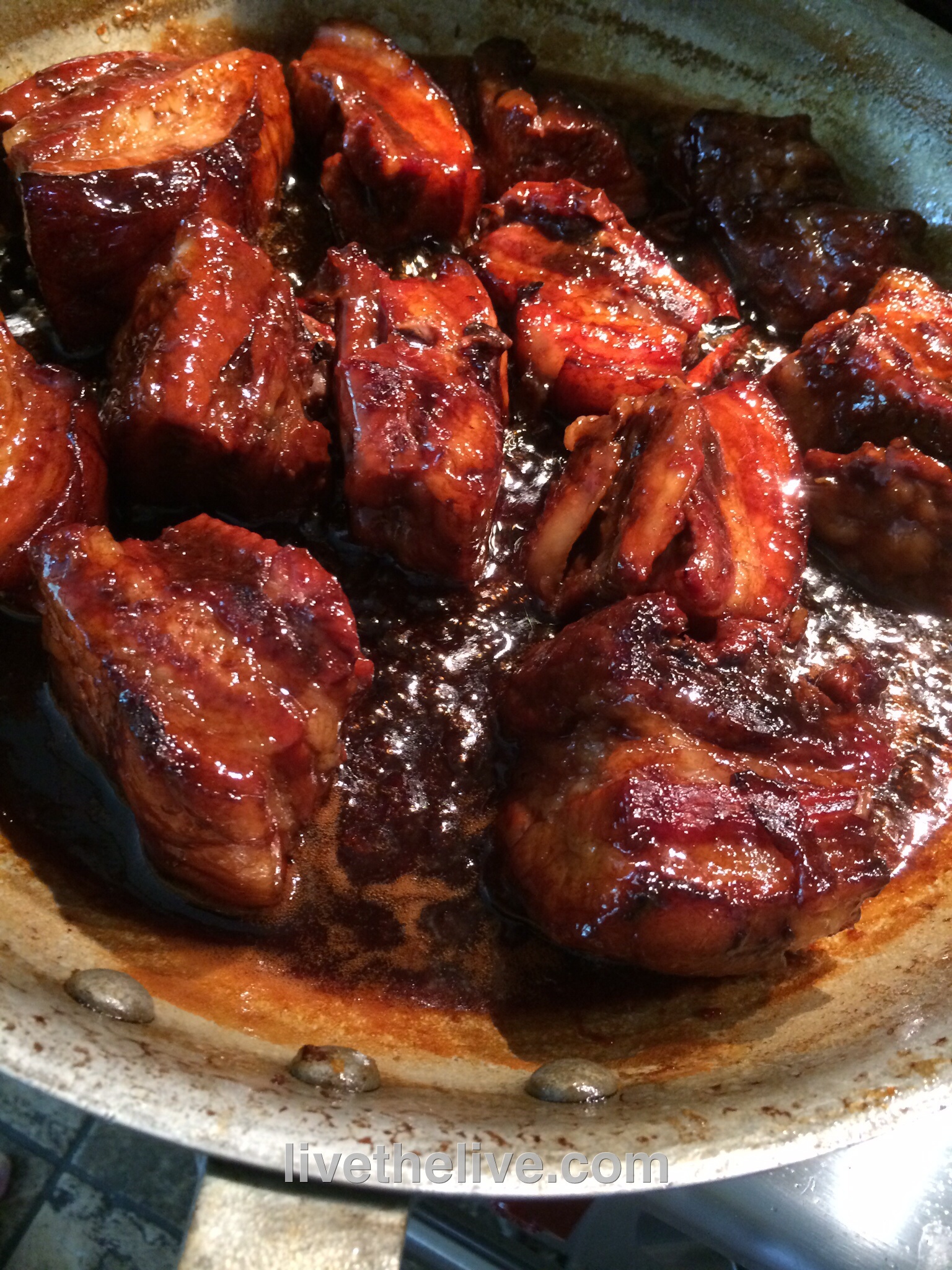
My plan was to make my Chinese Style Honey Ribs (http://wp.me/p1c1Nl-i7) for dinner. But I accidentally took a slab of pork belly out of the freezer instead. I only realized my mistake when I thawed it and started cooking it, so I decided to continue the process with the pork belly instead. The results were pretty damn tasty.

image


 Ingredients:
Marinade: ¾ cup light soy sauce
                     6 Tablespoons hoisin sauce
5 lbs pork belly
Zest and juice of 1 lemon
2 whole star anise
2 cinnamon sticks (3”)
1/2 cup honey
4 cups chicken broth
image
Mix marinade ingredients. Set aside.
Cut the pork belly into pieces that are about 3 inches square. Place in a large pot. Cover with water and bring to a boil. Boil for 5 minutes. Drain.
Place pork belly on a sheet pan with a rack and coat with marinade. Let sit for 10 minutes.
Pre-heat oven to 350 degrees. Bake pork belly pieces on foil-lined sheet pan for 30 minutes.
While the pork belly is baking, start sauce in a large non-stick pan or pot: combine lemon zest and juice, star anise, cinnamon sticks, honey and chicken broth. Bring to a boil, then reduce to a simmer.
When the pork belly pieces have finished baking, add them to the sauce pot and simmer (covered) for at least 15 minutes or until meat is tender.
Turn heat on high, uncover pot and cook until the sauce is reduced to a glaze that coats the ribs. Reduce heat as sauce thickens to avoid sugars in honey from burning. When the pieces are sticky and gooey, they are ready!
Let a piece of pork belly cool…then slice to desired thickness and fry like regular bacon. Makes an amazing omelet!
image