Archive for the ‘Food’ Category

This is my version of a holiday drink I was introduced to by my mother-in-law from the Upper Peninsula of Michigan. I knew I was marrying into the right family after one sip!

This classic is loaded with sugar. But then…so is everything else around the holidays!

Whiskey slush


9 cups water
2 cups sugar
4 “Constant Comment” tea bags
12 oz. frozen OJ concentrate
12 oz. frozen lemonade concentrate
2 cups whiskey (I use Crown Royal)
7-Up or Sprite

Boil the water and sugar, making sure the sugar dissolves. Turn off the heat and steep the tea bags in the liquid for 10 minutes. Discard the tea bags.

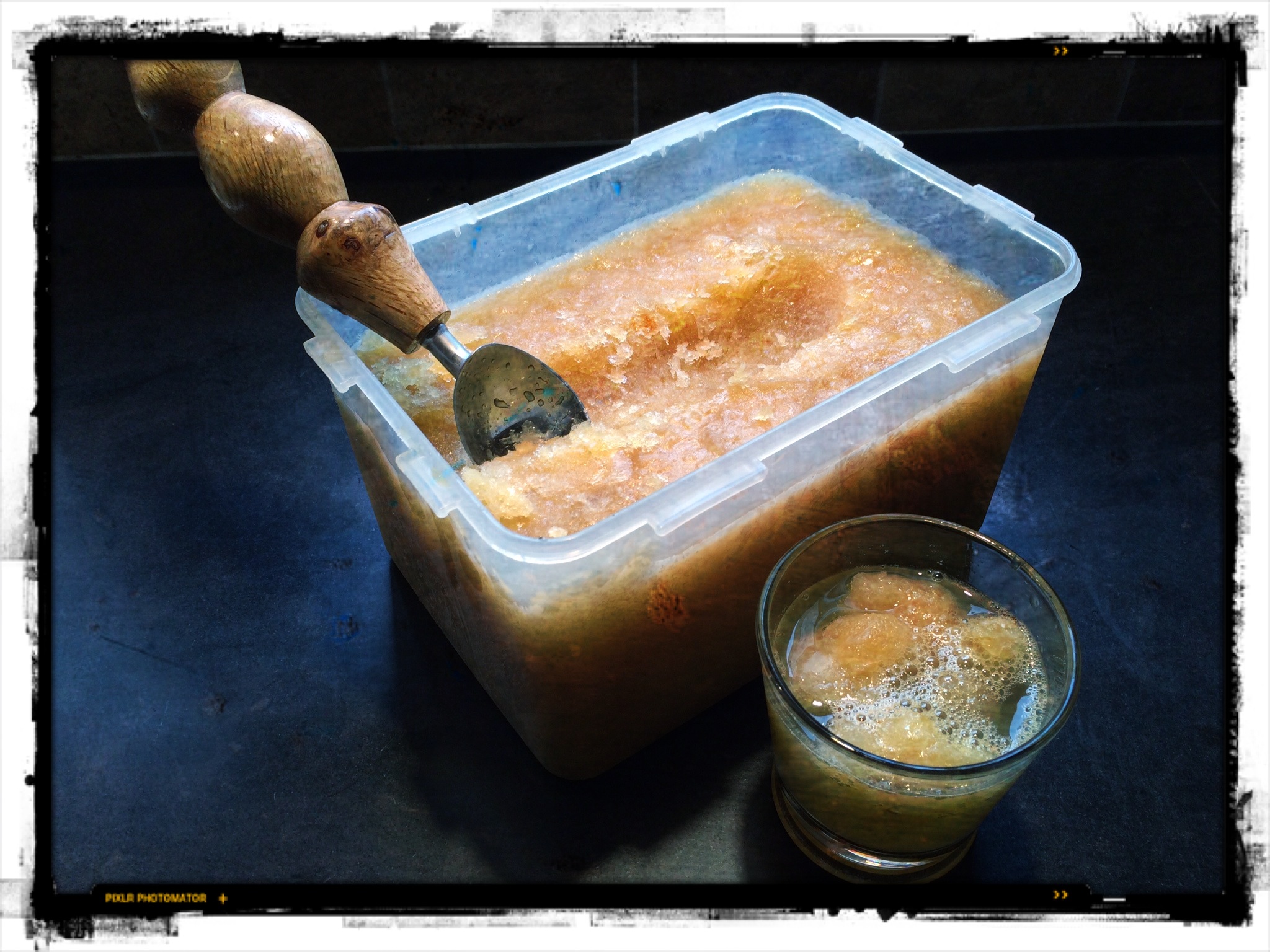
Add the OJ, lemonade and whiskey. Mix well, then pour it all into a freezeable container with a lid. Freeze.

To serve: Scoop the slush out of the container (it doesn’t freeze solid) and mix in a tall glass with 7 Up.

Now that I’ve shared details of my love affair with pork jowls, aka guanciale, in my earlier blog,  it’s time to use them in a classic recipe.

Fettucini alla Bolognese is my daughter’s go-to dish when we visit one of her favorite Italian restaurants,  Il Corso, on W 55th St. in New York. But we only go there once a year, so it was about time I tried my hand at Bolognese at home. The dish isn’t difficult, but like many great dishes, it depends on the best quality ingredients you can get your hands on.

Much like meat loaf, I like to use a combination of ground beef, ground veal and ground pork. But I don’t sweat it too much if I don’t have all three, substituting a little more of one or the other, depending on what’s in my freezer at the time.

I use grass-fed ground veal that I get down the road from a local dairy farm: Sweet & Salty Farm in Little Compton, RI. I use ground Berkshire pork, full of “good fat.” And I use grass-fed beef from local farms. Guanciale, a cured pork product that comes from the cheek (jowl) of the pig, is something that I prepare myself. I buy the Berkshire pork jowls raw and cure them at home. (That’s another blog!) If you can’t get your hands on guanciale, a nice slab of bacon will do the trick.

The rest of the ingredients are organic, when available.

This recipe probably feeds a dozen people. I make a lot at once because it takes time to put it together and let it cook on the stove, and it freezes really well. I place leftovers in tightly sealed single-portion containers in the freezer and then re-heat them when my daughter gets the craving.

How much pasta you make with this fish depends on how many people you’re going to serve.


5 tablespoons extra virgin olive oil
3 tablespoons butter
1/2 cup finely chopped guanciale or bacon
1 lb. ground veal
1 lb. ground pork
1 lb. beef
1 large onion, finely chopped
2 carrots, finely chopped
3 stalks celery, finely chopped
2 cloves of garlic, squeezed through a garlic press or thinly sliced
1 small can (6 oz.) tomato paste
6 cups ground tomatoes
2 cups whole milk
2 cups white wine (I use an un-oaked chardonnay like Yellow Tail)
salt and pepper
pasta, cooked (regular or gluten-free )
Freshly grated Parmigiano Reggiano


Place the olive oil and butter in a large sauce pan with a heavy bottom over high heat. Once the butter has melted, add the guanciale or bacon, letting the fat render out. When it’s almost brown, add the veal, pork, and beef, stirring constantly. Make sure the meat is broken down into small pieces and completely browned.

Add the finely chopped onion, carrots, celery and garlic, stirring well. Sweat the veggies for a few minutes, letting them get nice and soft.

Add the tomato paste, the ground tomatoes, milk and wine, stirring well. Allowing it to come to a boil will activate the tomato paste’s thickening power. Let it boil for a minute, then reduce the heat to medium-low, and let it simmer for at least 90 minutes, stirring occasionally.


Add the ingredients one step at a time until the sauce comes together: 1) guanciale, 2) meat, 3) veggies), 4) tomatoes.


You don’t want the sauce to be runny, and you definitely want to give it enough time on the stove top for the flavors to blend and for the alcohol in the wine to evaporate.

Carefully give the sauce a taste, and season it with salt and pepper.

Traditionally, ragu Bolognese is served by placing a part of the cooked pasta in a pan, and adding just enough sauce to have it cling to, not drip from, the pasta. It’s not soup!

Top it with freshly grated Parmigiano Reggiano cheese.


Let’s face it: there’s no such thing as healthy eggnog. This recipe kicks ass but is also a heart attack in a glass.

My buddy, Rick Sammarco, a wicked talented bartender, credits his father, Al, for this eggnog. The original recipe calls for a lot more of everything. I’ve cut it down to a “more reasonable” size.

A word about salmonella: Many people are concerned about it, and you need to decide what works for you. Some recipes tell you to make your eggnog weeks in advance to “sterilize” the drink with all the booze you’ve added to it. I’m not sure that really works. Look…if you’re really worried about it, maybe this drink isn’t for you. I use raw eggs in my Caesar salad dressing and in other recipes, so I’m willing to risk it here.

If you’re lucky, some stores–(though very few of them, and none near me)–sell pasteurized eggs. They say the taste is a bit funky, but that it does remove the salmonella.

eggnog


1.5 quarts vanilla ice cream (I use Breyer’s)
1 pint half & half
15 whole eggs (raw)
½ teaspoon vanilla extract
1/4 teaspoon cinnamon
1/4 teaspoon nutmeg
At least 3/8 cup of each:
spiced rum (I use Capt. Morgan)
whiskey (I use Crown Royal)
brandy (I use E&J)


Let the ice cream soften 1 day in the fridge. Mix the ice cream, eggs, vanilla, half and half in a blender.

Add the spices and liquor. Blend until it’s frothy.

Taste, and add more cinnamon and nutmeg if you like.

After it’s fully blended, let it sit in the fridge, covered, for at least 12-24 hours for the flavors to blend. Even longer is better.


I love my onions! Raw, sautéed, caramelized, yellow, Spanish, Bermuda, Vidalia, Texas Sweets, scallion, pearl, Crimini, Walla Walla…they can do no wrong. In fact, my wife and daughter gave me the Lithuanian nickname: “Ponas Svogūnas.” (“Mr. Onion.”) I answer to it proudly.

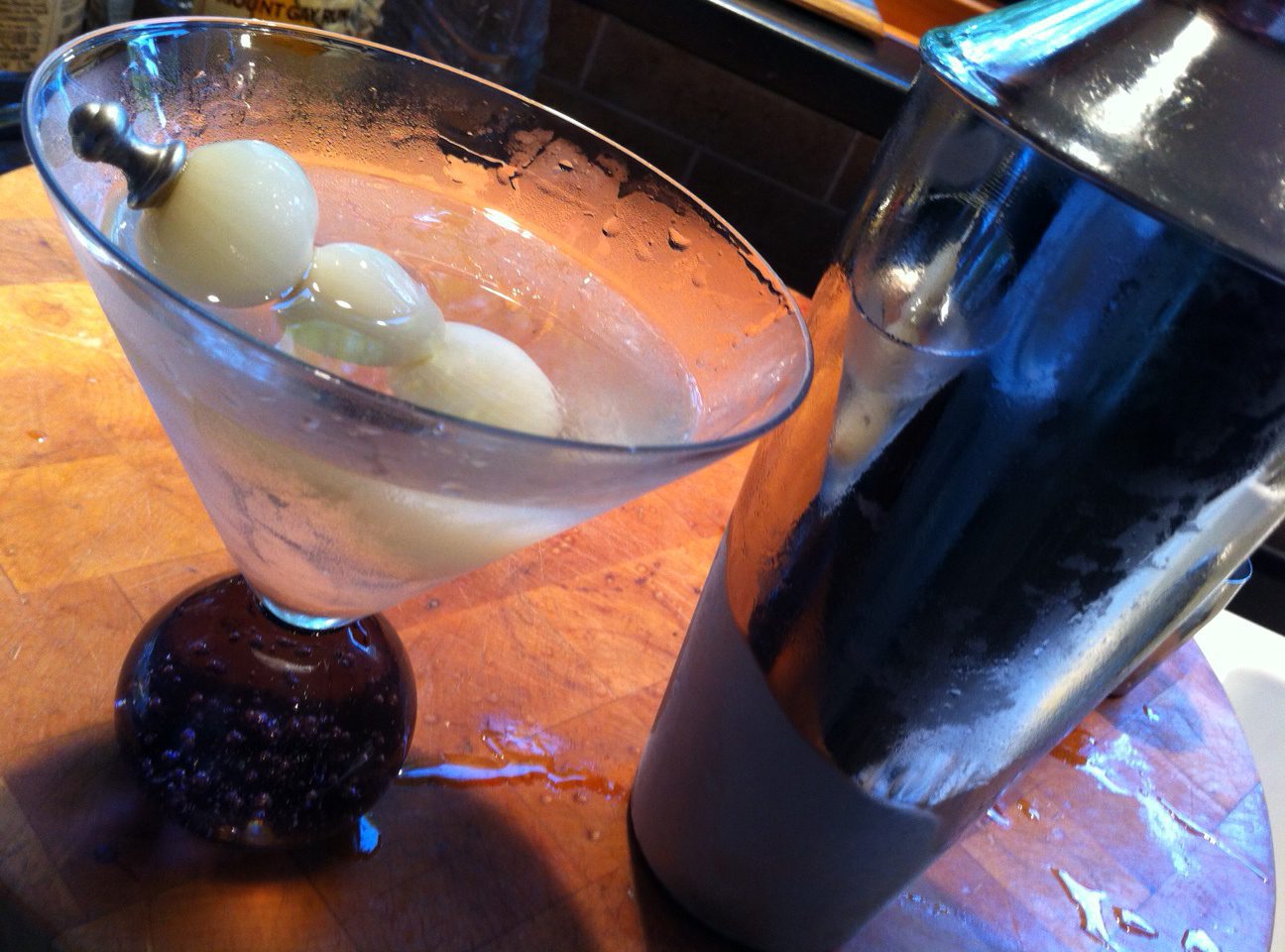
I also love my vodka martinis! So if I’m going to buy a top shelf vodka like Stoli Elit or Belvedere, I’m not going to ruin it with cheap vermouth, especially that nasty stuff they use to brine supermarket cocktail onions that come in a jar that’s been sitting on the shelf for about 10 years.

My first attempt at homemade cocktail onions was not a success. I bought pearl onions and did what the package instructions said: I dropped them in boiling water for a couple of minutes, then moved them to ice water to let them cool. Then a gentle squeeze on one end of the onion would make it pop right out of its skin. Easy, right?


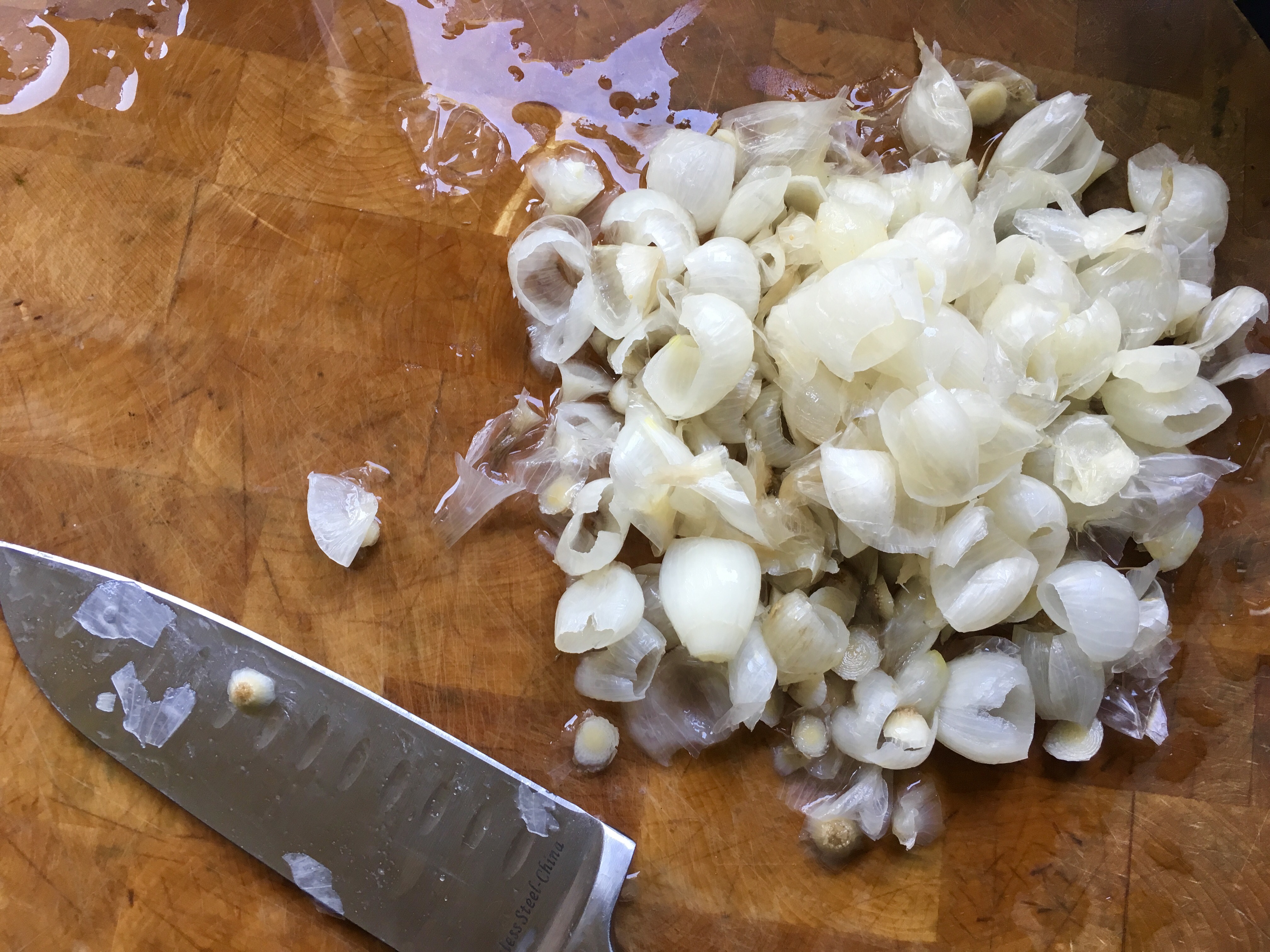
Well, it didn’t work out that way. For one thing, the onions got soft…not what I wanted. I had to cut one end of the bulb with a knife. And even then, when I squeezed the onion, the part that popped out was about half the size of the original onion…there was a lot of waste.


After brining, they tasted OK, but they never had that crisp bite I wanted. They were mushy. I realized that boiling was not the way to go.


A lot of waste.

I knew there had to be a better way. Then I discovered already peeled pearl onions at Whole Foods. I have to be honest…I won’t use any other onions now. They’re big, plump, and exactly what I want.


Sure, these are much larger than the onions you find in a jar. But tell me how that’s a problem!


Once that time-saving ingredient was in my possession, I took my own pickled asparagus recipe (https://livethelive.com/2018/05/16/pickled-asparagus-the-new-season-has-begun-4/) and used it with onions. Awesome results!


1 lb. pearl onions, peeled
1 cup white vinegar
1/2 cup cider vinegar
1 1/2  cups water
3/4 cup sugar (I like turbinado cane sugar)
10 peppercorns
1 teaspoon salt (per quart-sized Mason jar)
2 cloves garlic


Combine the white vinegar, apple cider vinegar, water, sugar, and peppercorns in a medium-sized saucepan. Bring it to a boil, making sure the sugar dissolves completely.

In a quart-sized Mason jar, add the teaspoon of salt and garlic cloves.


Pour a little of the hot vinegar liquid in the jar to dissolve the salt. Add the onions to the jar, then fill the jar to the top with the vinegar liquid.

Cover the jar tightly and turn it upside-down a couple of times to mix everything together.


Let the jar cool to room temperature, then move it to the fridge. You can use the onions as soon as the craving hits you, but they taste better if you give them a few days.


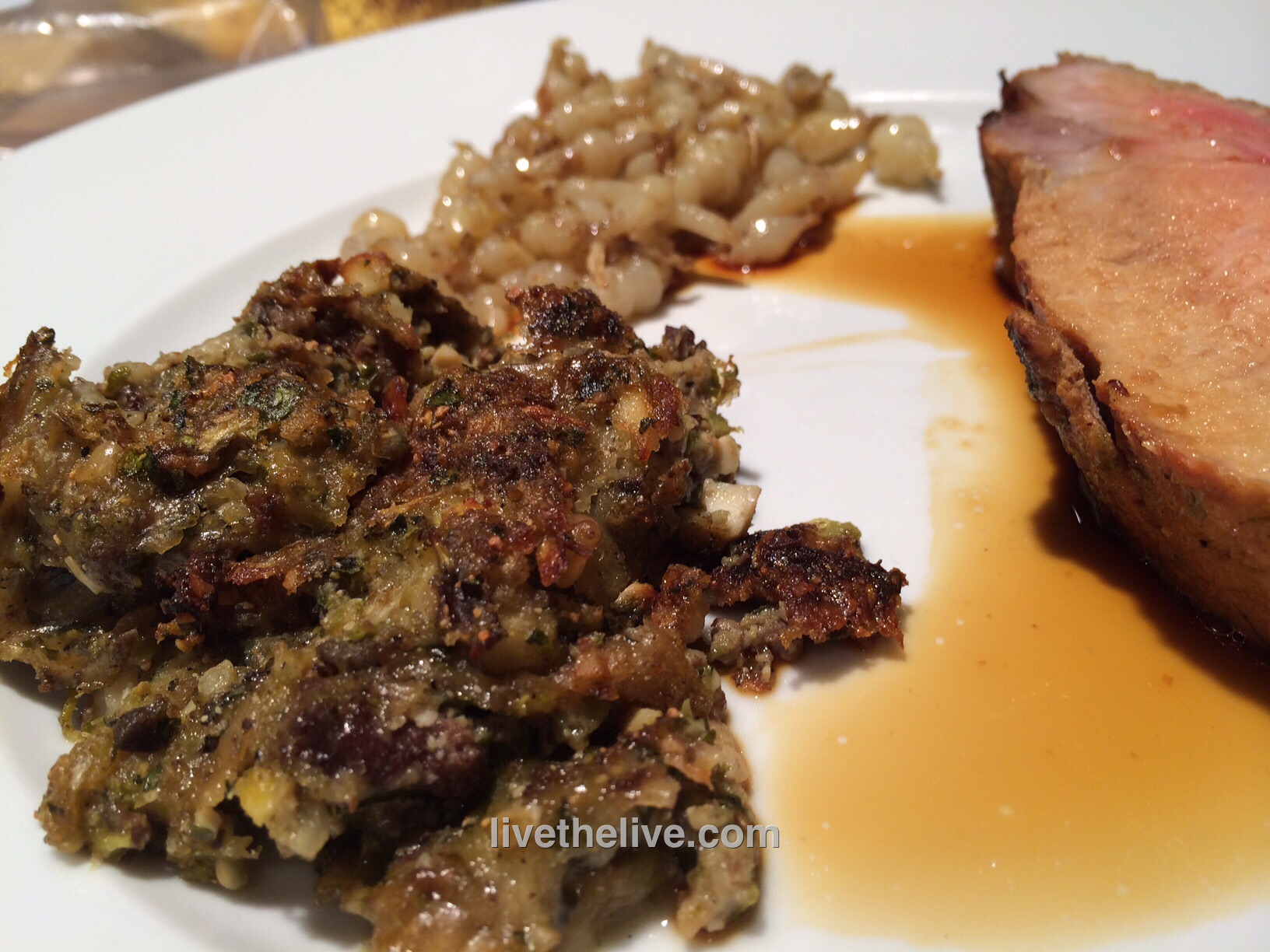
Man, that’s a loaded blog title if I ever saw one! Years ago, I read an article about how a Thanksgiving stuffing recipe credited to Marilyn Monroe was discovered. Apparently, she could cook–and she was good in the kitchen as well. Wha! (Thanks. Drive safely. Try the veal.)

Dated around the time she was married to baseball great Joe DiMaggio while living in San Francisco, it was decided that the recipe was authentic for, among other reasons, its lack of garlic, which DiMaggio reportedly despised!

I tried the recipe years ago and tweaked it, adding garlic, of course. This makes a family sized platter of stuffing. Using a food processor to chop makes things much easier.


image


20 ounces sourdough bread (gluten-free bread will make this stuffing totally GF)
1 lb. chicken livers
1 lb. ground beef
1 tablespoon olive oil
8 stalks celery, chopped
2 large onions, chopped
4 cloves garlic, chopped
2 cups chopped parsley
4 eggs, hard-boiled, chopped
1/2 cup chopped prunes or raisins
2 cups grated Parmigiano Reggiano cheese
2 cups chopped walnuts, pine nuts or roasted chestnuts…or a combination
2 tablespoons fresh rosemary, chopped
4 teaspoons dried oregano
2 tablespoons fresh thyme, chopped
4 bay leaves
2 tablespoons salt, plus more to taste
2 teaspoons black pepper


Break the sourdough into pieces and soak them in a large bowl of cold water for 15 minutes. Wring the excess water out over a colander and shred the bread into pieces.

Boil the chicken livers for 8 minutes in salted water, then chop them into small pieces, placing them in a food processor and pulsing until you get smaller pieces.

In a skillet over medium-high heat, brown the beef in the olive oil, stirring occasionally. Break up the meat into small pieces.

In a large mixing bowl, combine the sourdough, livers, ground beef, celery, onions, parsley, eggs, prunes or raisins, Parmigiano Reggiano and nuts, tossing gently to combine.

In a separate bowl, combine the rosemary, oregano, thyme, bay leaves, salt and pepper and scatter over the stuffing mixture. Mix again. Taste and adjust for salt.

Refrigerate, covered with foil, until ready to bake.

To bake: Pre-heat your oven to 350 degrees. Cook 1 hour with foil on top. Remove the foil and cook for 1 hour more at 300. Keep an eye on it. Ovens vary, and you want it out of the oven before it gets too dry. If it does get dry, sprinkle a little chicken stock or water on it, cover with foil, and heat for 10 minutes.

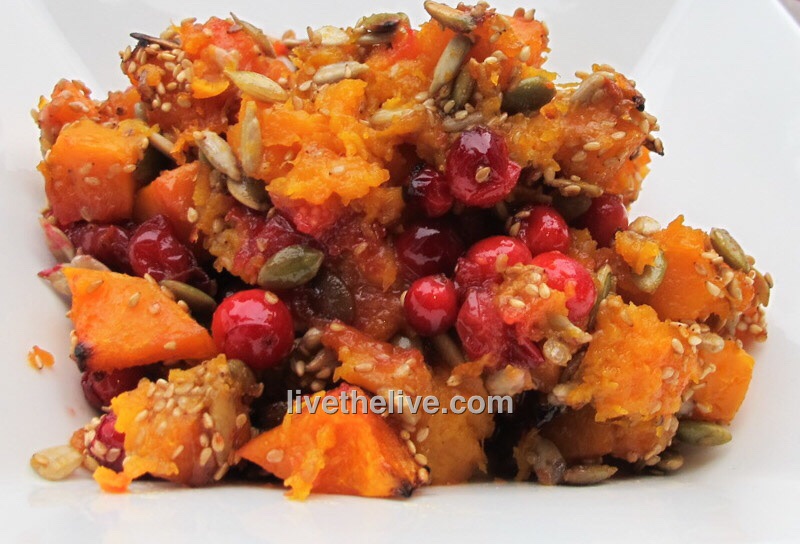
My Mom loves that nasty, gooey cranberry log that oozes out of the can. It would hit the bowl with a splurt and would wiggle for about an hour. I’m more than happy to avoid that and make this delicious side dish, which has become mandatory at our Thanksgiving table every year…


1 medium-sized butternut squash, washed and peeled with the seeds removed
Olive oil
Salt
1 cup fresh cranberries
¼ cup sunflower seeds
¼ cup pumpkin seeds or pepitas
¼ cup sesame seeds
¼ cup maple syrup, more if you like it really sweet


image


Pre-heat the oven to 400 degrees.

Once you’ve washed, peeled and seeded the butternut squash, cut it into ½” chunks. Sprinkle a little olive oil and salt on them and toss them to coat. Then spread the squash cubes in a single layer on a baking sheet. Bake them for about 30 minutes or until they’re golden on the edges.

Remove the squash from the oven and pour the cranberries into the hot tray. Mix gently. Pour the squash/cranberry mix into a smaller, deeper baking pan.

Increase the oven to 425.

In a separate bowl, combine the sunflower seeds, pumpkin seeds and sesame seeds. Sprinkle the seeds evenly over the squash/cranberry mixture. Drizzle the maple syrup over everything and place the baking pan in the oven. Cook for another 20 minutes, until the seeds have roasted.


I always get asked if I deep-fry my turkey for Thanksgiving. I had deep-fried turkey when I lived in the South, and for me, it’s way too much work for mediocre results. First, you need to find a safe spot in the yard to blast the propane-fueled fryer so you don’t burn your house down. Then you need to stand outside and freeze your butt off while it fries, while your friends and family are all indoors having cocktails. Then you need to get rid of gallons of used oil, and clean up a huge mess at the end of it all. And through all this, you need to make sure the oil is at the right temperature so you don’t get a scorched turkey on the outside and a raw turkey on the inside.

No, thanks.

I get great results by cooking my turkey in my Weber grill. I’ve cooked it this way every Thanksgiving for about 25 years. The standard Weber allows me to cook up to a 15 lb. bird–big enough for my purposes–and it comes out crispy, smokey and delicious. If you’re afraid to try this for the first time at Thanksgiving when it really matters, buy a turkey on sale right after Thanksgiving and freeze it, then wait a few months and try it out.

Or be bold! Go for the gusto the first time around. I did it that way and I never looked back.


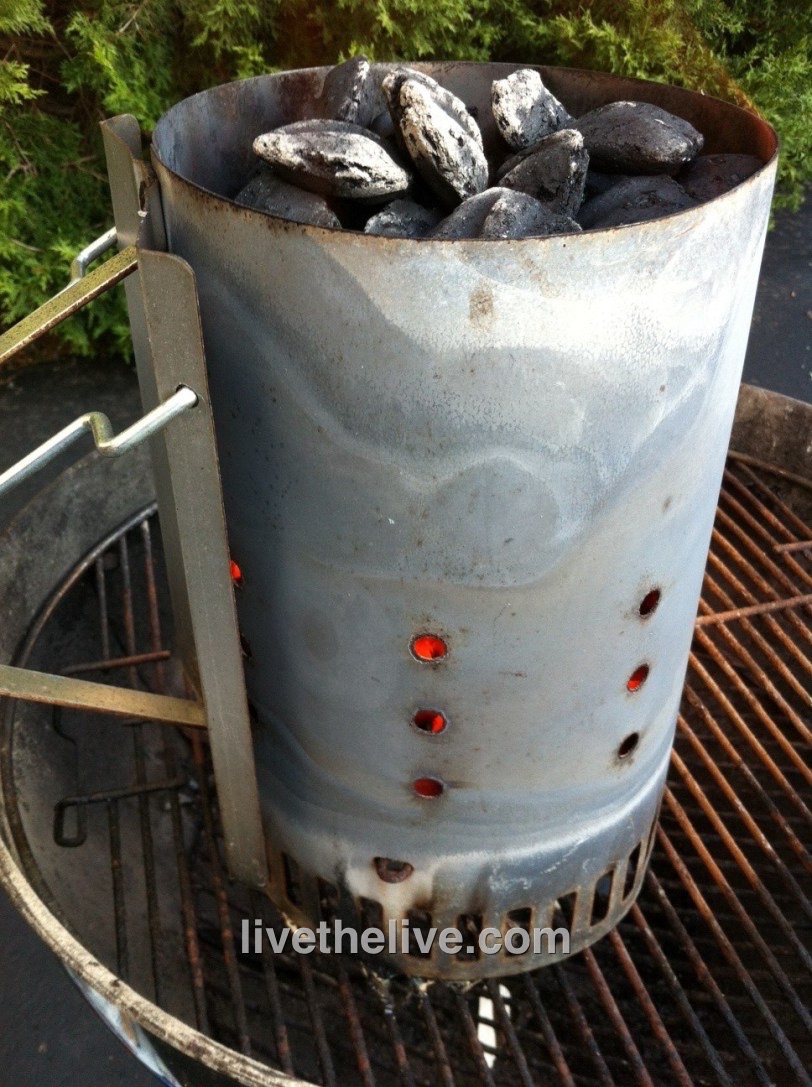
The charcoal chimney with hot coals awaits.

The charcoal chimney with hot coals awaits.


Although I’ve stopped using charcoal briquettes for basic grilling a long time ago, and now strictly use natural hardwood charcoal, this recipe works best with Kingsford briquettes. They burn slowly and evenly. I never use lighter fluid…I always start my fire with a few pieces of crumbled newspaper under a charcoal chimney.


The tools you need:
A Weber grill, with the dome top
Kingsford charcoal briquettes (do not use Match Lite or other pre-soaked briquettes)
A charcoal chimney, easily found at Home Depot or Lowe’s
A heavy-duty disposable aluminum pan


Ingredients:
Whole turkey, up to 15 lbs., thawed and brined (see my previous blog about brining a turkey)
Olive oil (to rub on the turkey)
2 yellow onions, chopped
4 stalks of celery, chopped
½ lb. (2 sticks) of unsalted butter, melted
1 tablespoon granulated garlic
1 tablespoon granulated onion
2 tablespoons salt
1 tablespoon pepper


Spreading the coals away from the center of the grill.

Spreading the coals away from the center of the grill.


If you want stuffing, it’s always wise to make it separately and cook it separately.

Light 8 to 10 lbs. of charcoal in the grill…depending on the size of the turkey and how cold it is outside.

If you brined the turkey first, you’ve already removed the giblets. If you’re not brining, go ahead remove the giblets from the thawed bird now. Place the turkey in the aluminum pan.

In a small bowl, mix the granulated garlic, granulated onion, salt, and pepper. (Definitely add any other seasonings you might like.)

Coarsely chop the onions and celery. Place them in a another bowl. Mix them with the melted butter and 1/3 of the garlic/onion/salt/pepper mixture. Place a small handful of this onion and celery “stuffing” mixture in the neck cavity of the turkey. Place the rest in the body cavity (where the stuffing would usually go.) You can fasten the bird with turkey skewers if you like. This “stuffing” is strictly to flavor the turkey…you don’t eat it!


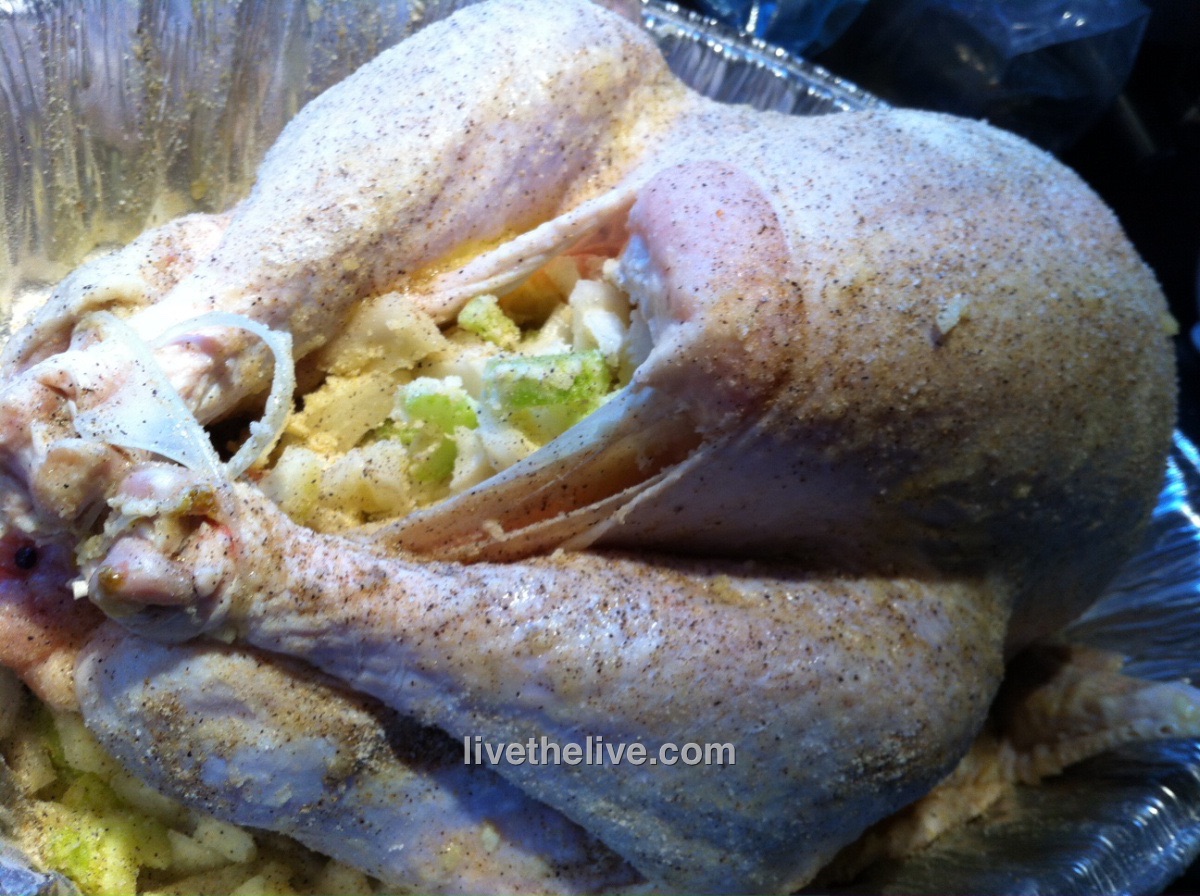
The rubbed, stuffed and seasoned bird.

The rubbed, stuffed and seasoned bird.


Rub the outside of the entire turkey with the olive oil and sprinkle the rest of the garlic/onion/salt/pepper mixture on the outside of the bird. Make sure you get the bird on the bottom as well.

When the coals in the grill have ashed over, spread them to the outside edges of the Weber grill equally. Put the cooking grill rack in place. Place the aluminum pan with the turkey in the center of the grill, keeping it away from the direct heat of the coals. If you’re using a meat thermometer, insert the probe into the thickest part of the breast, being careful not to hit the bone. Place the lid on the grill. (You may need to bend your aluminum pan a bit.) Open the vents on the bottom of the Weber as well as the vents on the lid. It’s important to get air circulating!


My meat thermometer calls me from as far as 100 feet away! Time for a cocktail!

My meat thermometer calls me from as far as 100 feet away! Time to join family and friends for a cocktail!


No basting is necessary.

Now here’s the tough part: DO NOT OPEN THE GRILL TO CHECK ON THE TURKEY! (If you must look, shine a flashlight into the vent holes on the lid to take a peek at the pop-up timer, if there is one.) The whole point is to keep the heat inside the kettle. You’ll know your turkey is done when no more smoke or heat rises from the grill, and the turkey inside stops making sizzling noises.

And believe it or not, a 15-lb. turkey will be cooked in about 2 hours!

Remove the turkey and let it rest at least 15 minutes before carving. I like to wrap it in aluminum foil as it rests.


Beautifully grilled, and perfectly cooked in less than 2 hours!

Beautifully grilled, and perfectly cooked in less than 2 hours!


The side dishes for Thanksgiving are as important as the main course. I love serving my Oysters Rock-a-Fellow before dinner starts. (https://livethelive.com/2018/11/01/oysters-rock-a-fellow-improved/)
Next time, I’ll share my recipe for another delicious side dish: butternut squash with cranberries!

Thanksgiving is only a few weeks away. Time to talk turkey! No matter what method you prefer to cook your bird, brining it beforehand will make it tastier and juicier. And it’s easy to do.

It’s basic high school science: the brine has a greater concentration of salt and water than the molecules of the protein (in this case, a turkey) that is soaking in it. By simple diffusion, the protein molecules suck up the salty water and keep it. When you cook the meat, some of the water evaporates, but the meat still has far more moisture in it than it would have without the brine soaking, and the result is a moister, more delicious bird.

Some people use giant syringes to inject their turkeys with crazy solutions, but I think that the old way is still the best when it comes to brining. Get a big pot, fill it with the brine, and soak the bird in it. Done.

Here’s my tried-and-true turkey brining recipe. Once the brining is done, you can cook the turkey whatever way you like best. I use a method where I grill it inside a Weber grill with charcoal. It comes out smokey and absolutely amazing. I’ll have that info in my next blog.

You must brine a thawed bird, so use your favorite method to thaw your turkey so that it’s ready on Thanksgiving morning. Brining can take 4 to 6 hours, so start early!

For this recipe, you’ll need a large pot to boil the brine ingredients, and then a larger pot to hold the turkey submerged in the brine. I use a turkey no bigger than 15 lbs. for two main reasons: there are only 3 people in our family, and the Weber grill I use can’t handle anything bigger.


image

1 gallon of water
2 onions
3 carrots
3 stalks celery
1 cup kosher salt
1 tablespoon black peppercorns
1/2 cup light brown sugar
1 1/2 teaspoons whole allspice
4 bay leaves
1 gallon of ice water
14–15 lb turkey, thawed

Pour the first gallon of water in a large pot. Quarter the onions, carrots and celery (no need to peel them) and add them to the water. Add the salt, black peppercorns, brown sugar, allspice, and bay leaves.

Let the pot come to a boil for a few minutes. Remove it from the heat and let the brine cool down to room temperature.

Remove the giblets from the thawed turkey and place the bird in a container just big enough to hold it and 2 gallons of liquid.

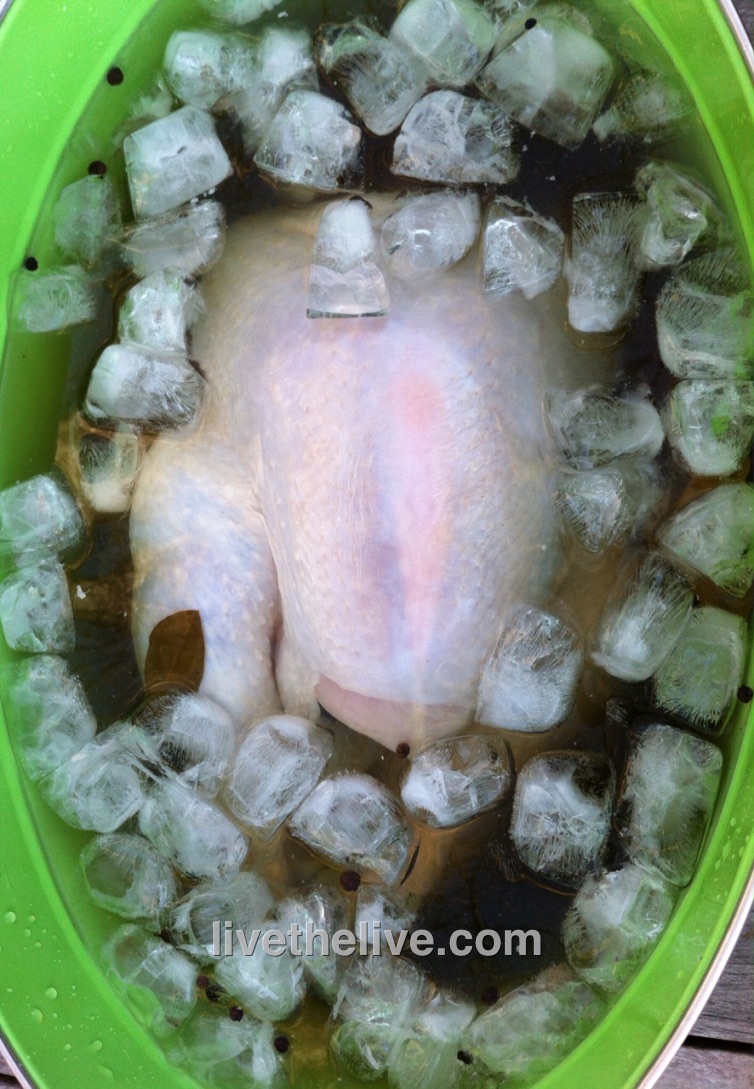
Pour the now-cooled brine over the turkey, then pour in the gallon of ice water.


Make sure the turkey doesn’t float up by placing a plate on top. Put the turkey container in the fridge (or a cold garage or basement) for 4 to 6 hours, flipping the turkey over in the container halfway through.

Drain the turkey, rising off any spices that stuck to it, then pat it dry with paper towels. Now it’s ready to cook, using your favorite recipe.

Next time: my recipe for a fabulous turkey cooked on a Weber grill. It’s fast, requires no basting, and is absolutely delicious!


My dog, Fellow, stood by me in the kitchen while I made this dish. I decided to name it after him. Since the first time I created this dish, I’ve made some improvements. First, a little history…

The original Oysters Rockefeller recipe is a closely guarded secret, created in 1899 at the famous New Orleans restaurant Antoine’s. Jules Alciatore, the son of founder Antoine Alciatore, developed the dish when they had a shortage of escargot, substituting locally available oysters. Antoine’s is still the only place in the world where you can be served the original Oysters Rockefeller recipe.

Search on line for Oysters Rockefeller, and you’ll find hundreds of recipes that claim to be the real thing. Most of them use spinach in the dish. The folks at Antoine’s claim there wasn’t any spinach in the original recipe.

My version, my Oysters Rock-a-Fellow, is a cheesier, gooier version than the original, which is heavy on the greens, but I think it’s one you will enjoy. I use larger, meatier oysters like Wellfleets from Cape Cod or local Rhode Island oysters, but use what you like.

24 oysters, washed to remove grit
2 cans beer (any extra beer you have is fine)
5 black peppercorns
2 teaspoons salt
2 garlic cloves

Scrub the oysters under cold water to get them clean.

In a large pot, pour in the beer, peppercorns, salt, and garlic cloves, along with enough cold water to fill the pot about halfway. Turn the heat on high and bring the pot to a boil.

The moment you reach a boil, turn the heat to medium and drop in 6 oysters, letting them bathe in the liquid for only 30 seconds. Scoop them out with a slotted spoon and place them in a bowl to cool. If the oysters open, they’ve been in there too long! You want them to stay closed. Do the same with the rest of the oysters, 6 at a time. Once all the oysters have had their 30 seconds, move the oyster bowl to a cutting board. Discard the liquid in the pot.

Once the oysters have cooled enough for you to handle, remove the top shell off each one, carefully reserving the oyster liquor inside if you can. I do this by pouring Kosher salt on a sheet pan, and using the salt to keep the oysters propped up.
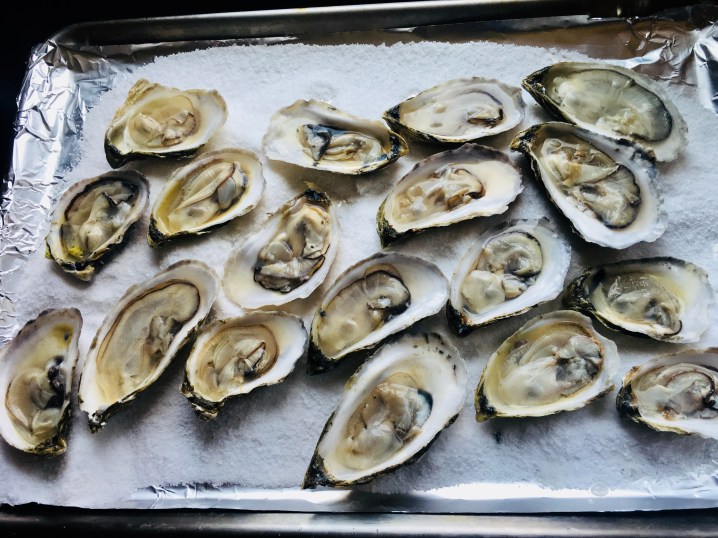
 

Salt holds the oysters in place.


Pre-heat the oven to 425 degrees.


1/4 cup unsalted butter
1 small onion, finely chopped
1 garlic clove, finely chopped
1/4 cup low-fat milk
salt and pepper
3 cups (tightly packed) fresh arugula, finely chopped, about a 5 oz. container
6 oz. mild cheddar cheese (the white one), grated
6 oz. mozzarella, grated
Fine bread crumbs (Using GF breadcrumbs will keep this dish gluten-free)


In a sauce pan, melt the butter and then add the onion and garlic. Cook until the onion is translucent.

Add the milk, season with salt and pepper, and then add the arugula a little at a time, letting it wilt before adding more. Use all the arugula.

Once all the arugula is in the saucepan, sprinkle the cheese in a bit at a time, letting it melt, until you’ve used all the cheese: the cheddar and then the mozzarella.

Originally, I tried to spoon this gooey cheese on top of the oyster shells, but it was so sticky and stretchy, that it was too difficult to work with. Now, I pour the gooey cheese mix into a lasagna pan, smooth it out with a spatula, and place it in the fridge to cool.


You can actually do this all the day before, because the cheese mix hardens and becomes easy to cut into cubes with a sharp knife.


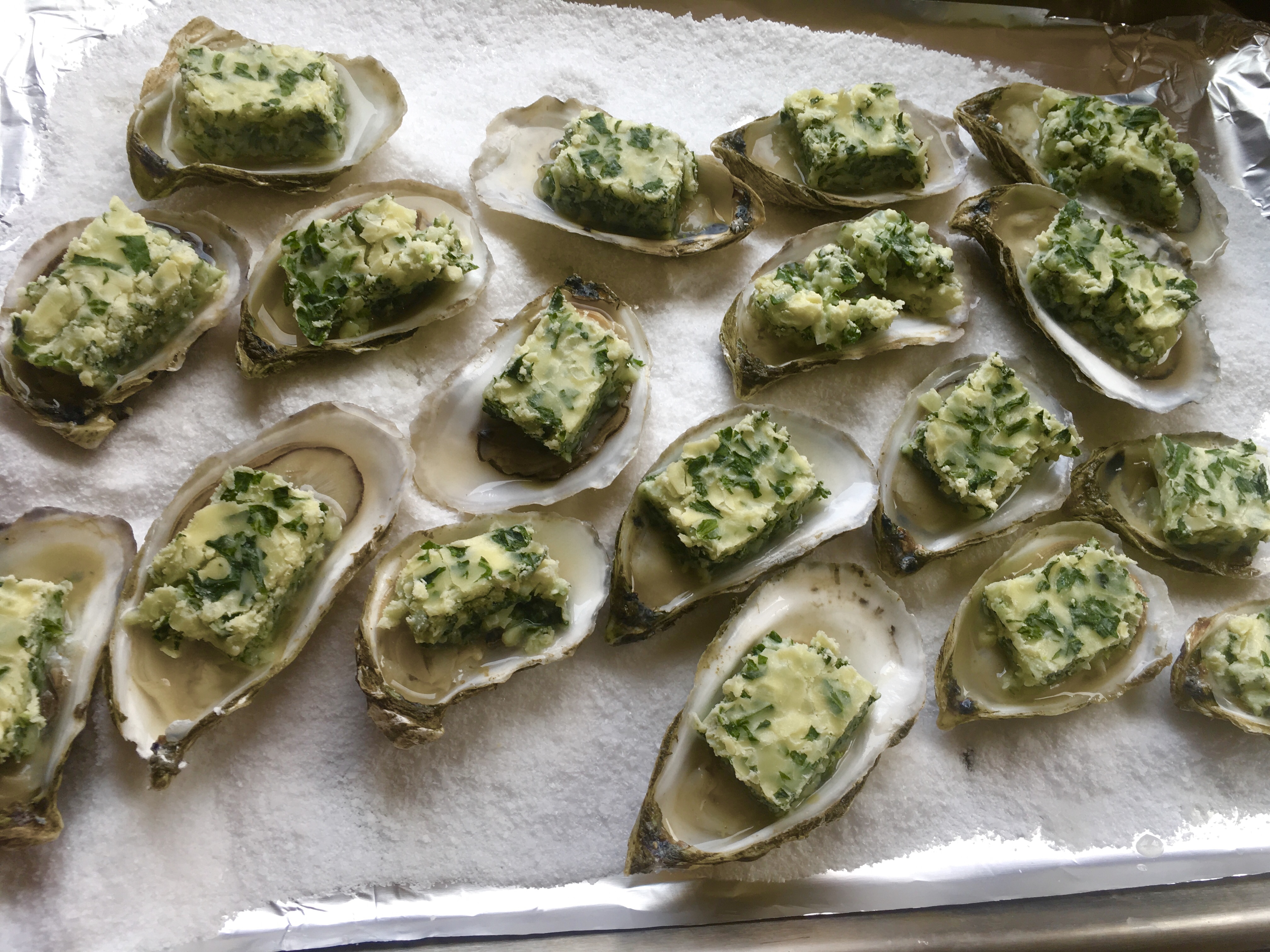
Then simply place a cube of the cheese mix on each oyster…


…sprinkle a little bread crumb on top…


…and bake in the 425-degree oven for about 8–10 minutes until it’s golden and bubbly.
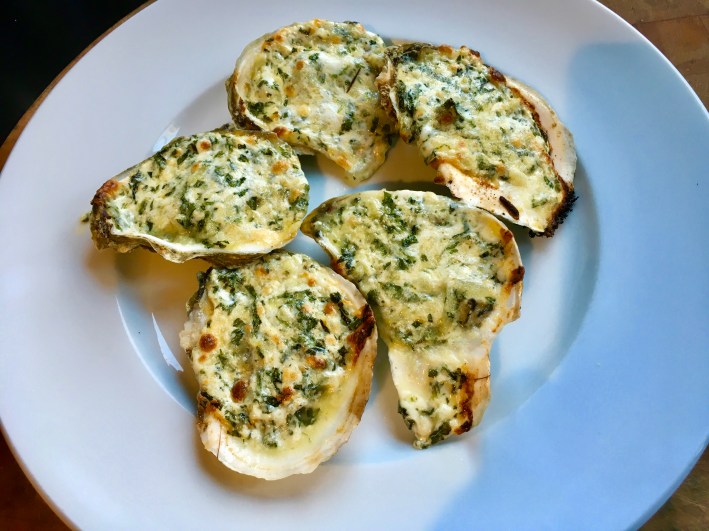


Whoever said that cheese and seafood don’t go together, never tried this!


I buy Udi’s gluten free frozen bread for my breadcrumbs. I take the loaf, toast the slices, then put them through the food processor. The taste is far better than buying pre-made GF breadcrumbs. Use regular breadcrumbs if you don’t need to worry about gluten.

If you’re really strict about gluten, you can use GF beer in the pot of water or simply eliminate the beer altogether.
 

This is a story about something that is near and dear to my heart…and liver.

I’ve been making Krupnikas for over 40 years. (And no, I won’t be posting my secret recipe here.) It’s a honey-based liqueur that is popular in eastern Europe, especially in countries like Lithuania, where my parents were born. Though most of the Krupnikas that I’ve tasted is similar, no two recipes are exactly alike…and that’s where the arguments begin!

I have many friends that make Krupnikas. Some use the leaner-meaner approach (like me)…others go for the everything-in-one-basket approach. I’m not sure that more is necessarily better. Some friends claim that it isn’t real Krupnikas if you don’t use black pepper. But I’ve been to many pubs and restaurants in Lithuania and have never been served Krupnikas with black pepper in it. Other recipes include ginger, turmeric, saffron, and heavy amounts of anise. I prefer a lighter approach.


krupnikas


If you Google “Krupnikas,” you’ll find many different recipes…some pretty good, some incredibly awful…but none as good as mine! I use grain alcohol…there’s no distilling involved. There were times in the last 40 years when grain alcohol was not readily available to me, and so my Krupnikas production came to a screeching halt for a while. But these days, you can usually find it within a short ride from home just about anywhere you live. (Here in New England, it’s sold in Rhode Island and Massachusetts.) Desperate times without grain alcohol forced me to try vodka instead, but I never liked the way it came out.

Krupnikas uses a variety of unusual spices, none of which have their origins in Lithuania, so it’s interesting to hear how these exotic ingredients made their way via various trade routes to eastern Europe.

The story goes that Krupnikas was created by Benedictine monks in the 1500’s, and that it became popular in both Lithuania and Poland for celebrations like birthdays, weddings, and holidays. But when the Soviets shut down all Krupnikas production, the recipes went “underground,” passed down from generation to generation through closely guarded family recipes. That’s why everyone thinks their family recipe is the best!


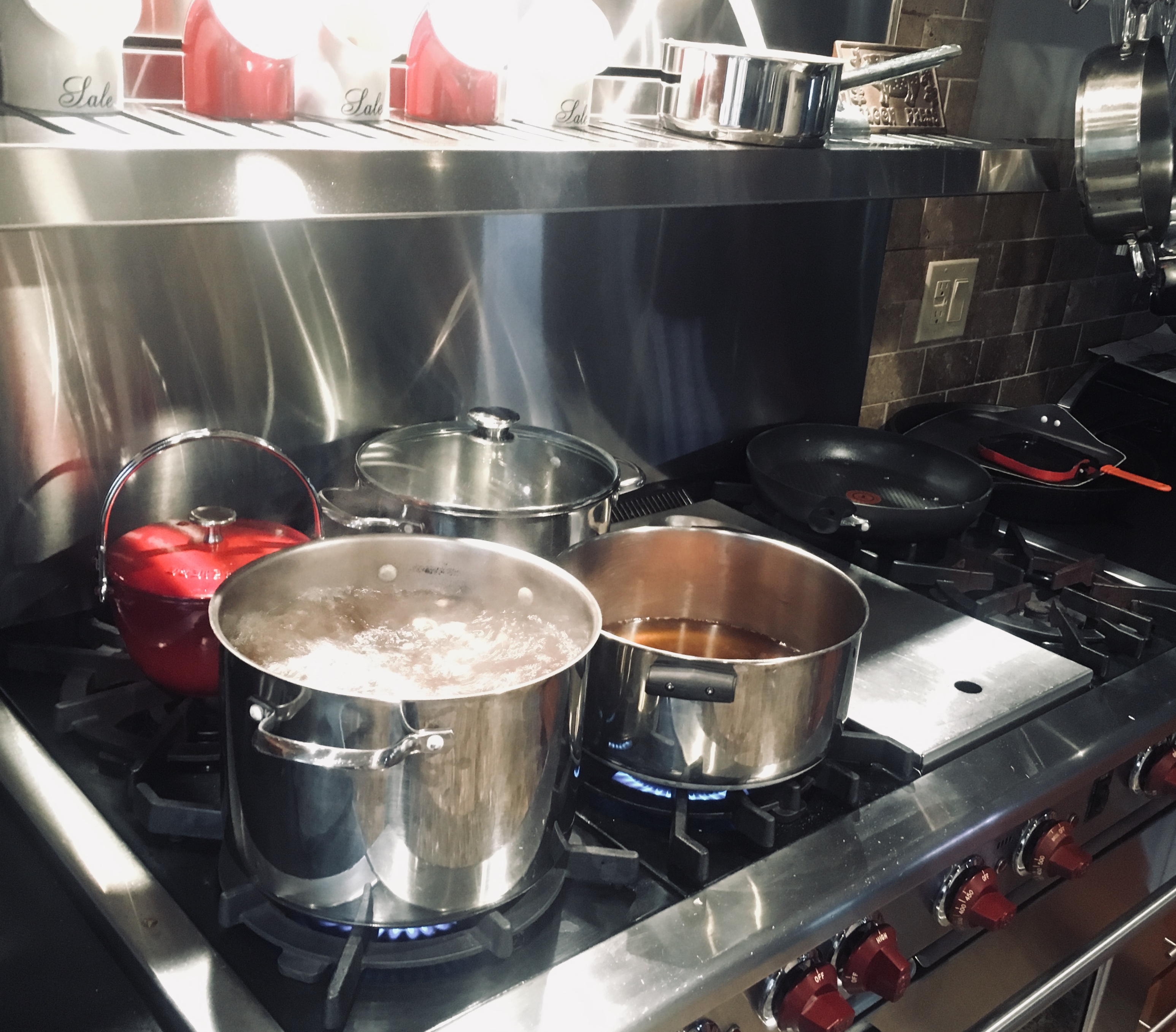
One pot for honey, one pot for the various spices I use…to be combined later.


My own Krupnikas making story started with my uncle, who would make large batches of the stuff in his tiny Richmond Hill, Queens, NY kitchen. Because I am the godfather of my cousin, his son, I received a bottle as a gift from my uncle every Christmas. By New Year’s, that bottle would be gone. It wasn’t long before I got very tired of waiting 51 weeks for another bottle and I asked my uncle if he would share his recipe with me. He never did that exactly, but he did let me sit in on a brewing session and take notes in a cramped corner of his kitchen.


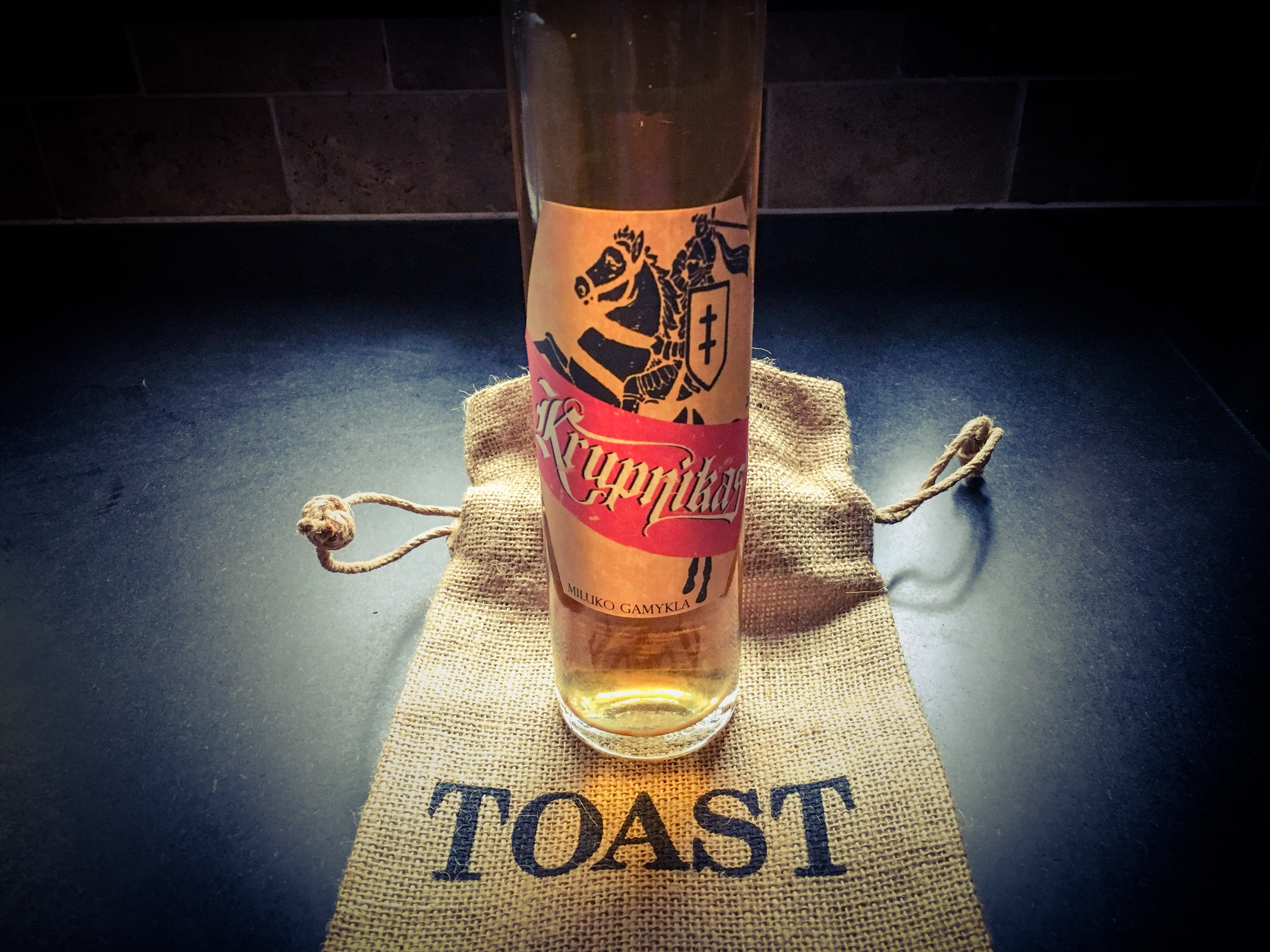
My wife, an artist, helped me design my own label.


I took my notes home from my uncle’s house and tried to decipher what I wrote. Since there was no such thing as the internet back then (what we call “the dark ages,” kids), I drove all over New York City in search of some of the more exotic spices used in making my uncle’s Krupnikas recipe. I became a regular at several Asian and Indian stores, where, at first, they looked at this tall, geeky white dude somewhat suspiciously as I brought my spices to the counter for purchase.

Over the decades, through trial and error, I changed my uncle’s original recipe to the one that I proudly call my own today. You can’t buy it in a store, but if you have tons of money and want to go into business with me, I’m sure we can work something out! Or become my best friend and you’ll get a bottle every Christmas…and then you’ll be the one waiting 51 weeks for another!


krup glasses


Versions of Krupnikas are available in liquor stores: Old Krupnik is a Polish liqueur, and the German brand Barenjager is another. And many whiskies, like Dewar’s and Jack Daniels, now have honey-flavored spirits as well.

Though quite different from my own recipe, there are two authentic Lithuanian style Krupnikas liqueurs made in the United States by acquaintances of mine.

Based out of Durham, North Carolina, the Brothers Vilgalys Spirits Company (www.brothersvilgalys.com) has a pepperier version that uses local North Carolina wildflower honey. President of the company, Rim Vilgalys, the son of my good childhood friend from New York, has done what I never got around to do: make this fabulous elixir available to the public. You’ll find it at ABC stores throughout the state of North Carolina.


bvsco-krupnikas


The second brand is made and sold in the New York area and goes by the name of KAS Krupnikas. (www.kasspirits.com)

kas_krupnikas_new

Both are pretty darn good. But are they as good as mine? I think you already know my answer to that question!

Sveiks! (Cheers!)