Archive for the ‘Recipes’ Category

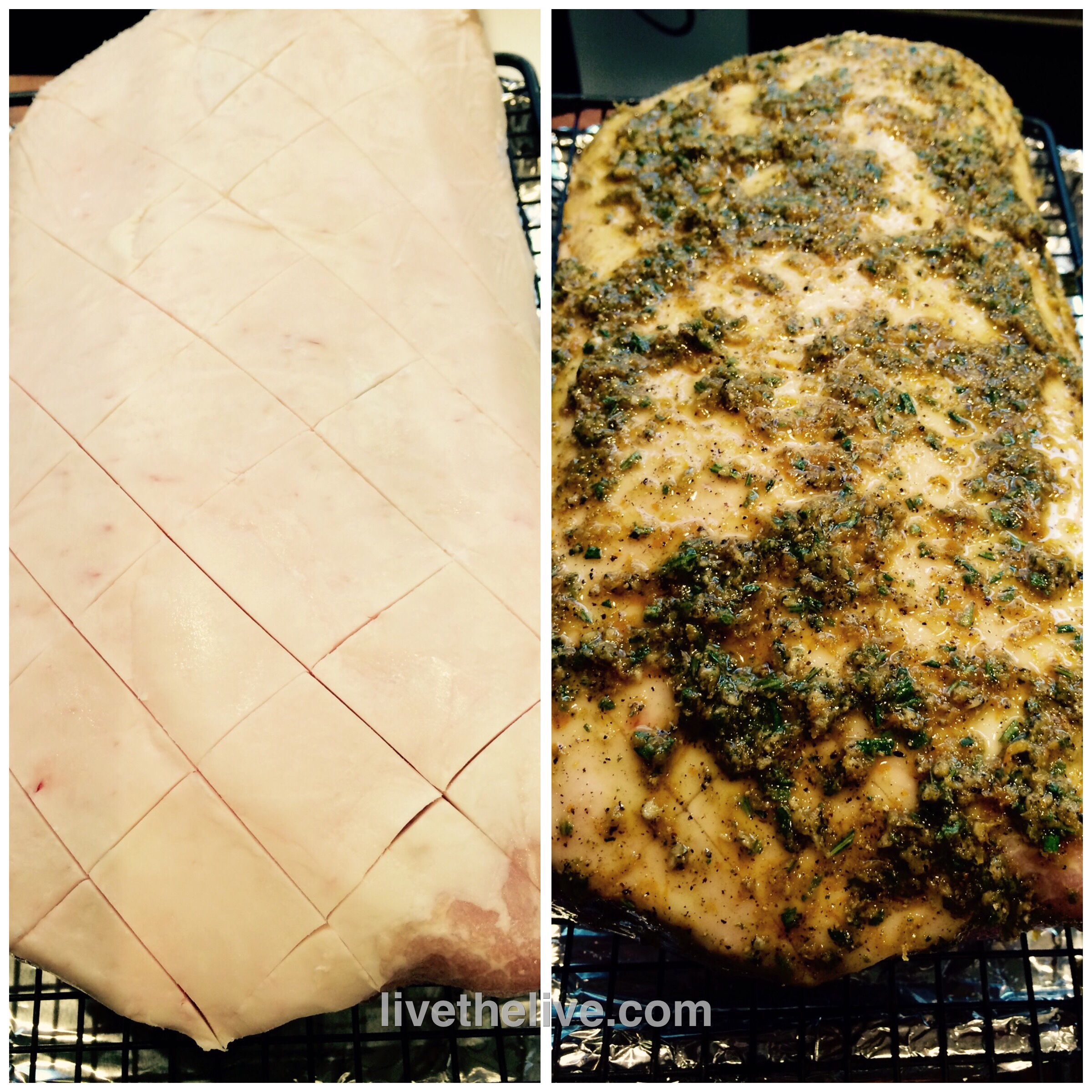
The “paste” used in this dish is really more like a citrusy pesto that you smear all over the meat before cooking, preferably the day before. The citrus flavors work really well with the pork, and the initial high-heat cooking really gets the fat crispy and delicious.

image

Ingredients:

1 pork loin, about 8 lbs. (I use Berkshire pork)


zest of 2 oranges

zest of 1 lemon

1 tablespoon fresh rosemary, chopped

1 tablespoon fresh sage, chopped

1 tablespoon Kosher salt

2 teaspoons black pepper

3 cloves garlic, through a press

1/4 cup olive oil


In a food processor bowl, combine the orange and lemon zest, the rosemary, sage, salt and pepper, and garlic. Pulse the processor just to mix, then turn it on and add the olive oil slowly, in a stream, until you get what resembles an oily pesto.

Score the fatty side of the pork loin with a knife in a diamond pattern. Rub the paste on all sides of the pork, but especially into the cracks of the fatty side.

Lay the loin down on a rack, raised off a sheet pan, fatty side up. Place it in the fridge, unwrapped, overnight.

The next day, about an hour before cooking, remove the loin from the fridge and let it come back to room temperature.

Pre-heat the oven to 450 degrees.

Bake the pork loin at 450 for 20 minutes, then cut the heat to 350 and cook until the pork reaches a temperature of 140 degrees (light pink). Let it rest for 15 minutes before serving.

image

There are few carbs in this preparation, because I use just the zest of the citrus and not the juice.

I always thought that spaghetti squash was a sort of “gimmick” vegetable. Who really ate this thing? I mean, if I wanted squash, I’d just buy a zucchini, chop it up and cook it. Why do I need a food that resembles another food I like?

Well, the answer to that question came to me when I could no longer eat the other food: pasta, because I was on a low-carb, no-carb diet. I was making meatballs and I was craving pasta. So I grabbed a couple of spaghetti squash at the store.

Cooking them certainly was easy. I washed them, cut them in half, and removed the seeds and membrane stuff with a spoon. I flipped them onto their backs, skin side down, and drizzled some extra virgin olive oil on them. A little sea salt and pepper, and then I flipped them back down, skin side up, on a sheet pan lined with non-stick aluminum foil. Into a pre-heated 350 degree oven for 30–40 minutes. When they were soft to the touch, I removed the sheet pan from the oven, flipped them back over again, and let them cool to room temperature. Then I simply spooned out the flesh, and it came out in strands, like spaghetti.

image

While the squash roasted in the oven, I made the meatballs. My wife is on a gluten-free diet, so I used gluten-free bread crumbs. The carb count of GF bread crumbs is about the same as regular bread crumbs, around 75 carbs per cup. I used 1 cup to make 25 meatballs, so they had about 3 carbs a piece. Not super low carb, but not awful.

Here’s how it went down…
image

For the balls…

1 lb. pastured ground veal
1 lb. ground grass-fed beef
1 cup GF breadcrumbs
2 eggs, cracked and scrambled

2 tablespoons dried parsley

2 tablespoons dried oregano

1 tablespoon dried basil

1 tablespoon granulated garlic

1 tablespoon granulated onion

1 teaspoon black pepper

2 teaspoons salt


Mix all the ingredients in a large bowl and form into meatballs. Place them in a hot pan with 1/4 cup of extra virgin olive oil. Cook until the meatballs are browned on all sides.


For the sauce…

2 cans (28 oz.) of tomatoes, pureed

olive oil

1/2 onion, finely chopped

1 tablespoon dried parsley

1 tablespoon dried oregano

1 teaspoon dried basil

1 teaspoon granulated garlic

2 teaspoons salt

1/2 teaspoon fennel seeds

1/2 teaspoon anise seeds


In a large pot, saute the onions in a little olive oil until translucent. Add the pureed tomatoes and cook at medium heat until the foam disappears.

Add all the herbs and spices and mix well. Continue cooking on medium heat, lowering to a simmer if the sauce seems to be boiling too hard.

Add the meatballs to the sauce when the meatballs have been browned on all sides. Pour the entire contents of the meatball pan, including the olive oil and fat, into the tomato sauce pot.

Make sure all the meatballs are covered with the sauce. Place a lid on the pot, and simmer for at least an hour, until the meatballs are cooked all the way through.

image

To serve:

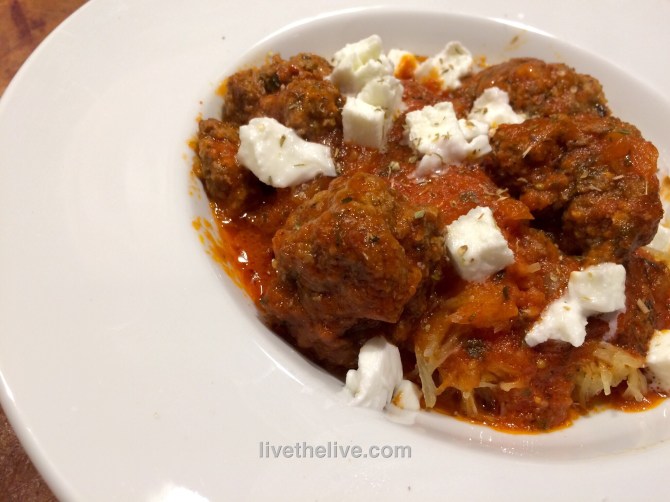
Scrape the spaghetti squash with a spoon and place a mound of it in the center of the serving dish. Top it with the meatballs and sauce. Grate some Parmigiano-Reggiano over the top, or do what I did this time, and cut a slab of mozzarella di bufala into small cubes and toss on top. A little sprinkle of oregano and olive oil for good measure on top.
 

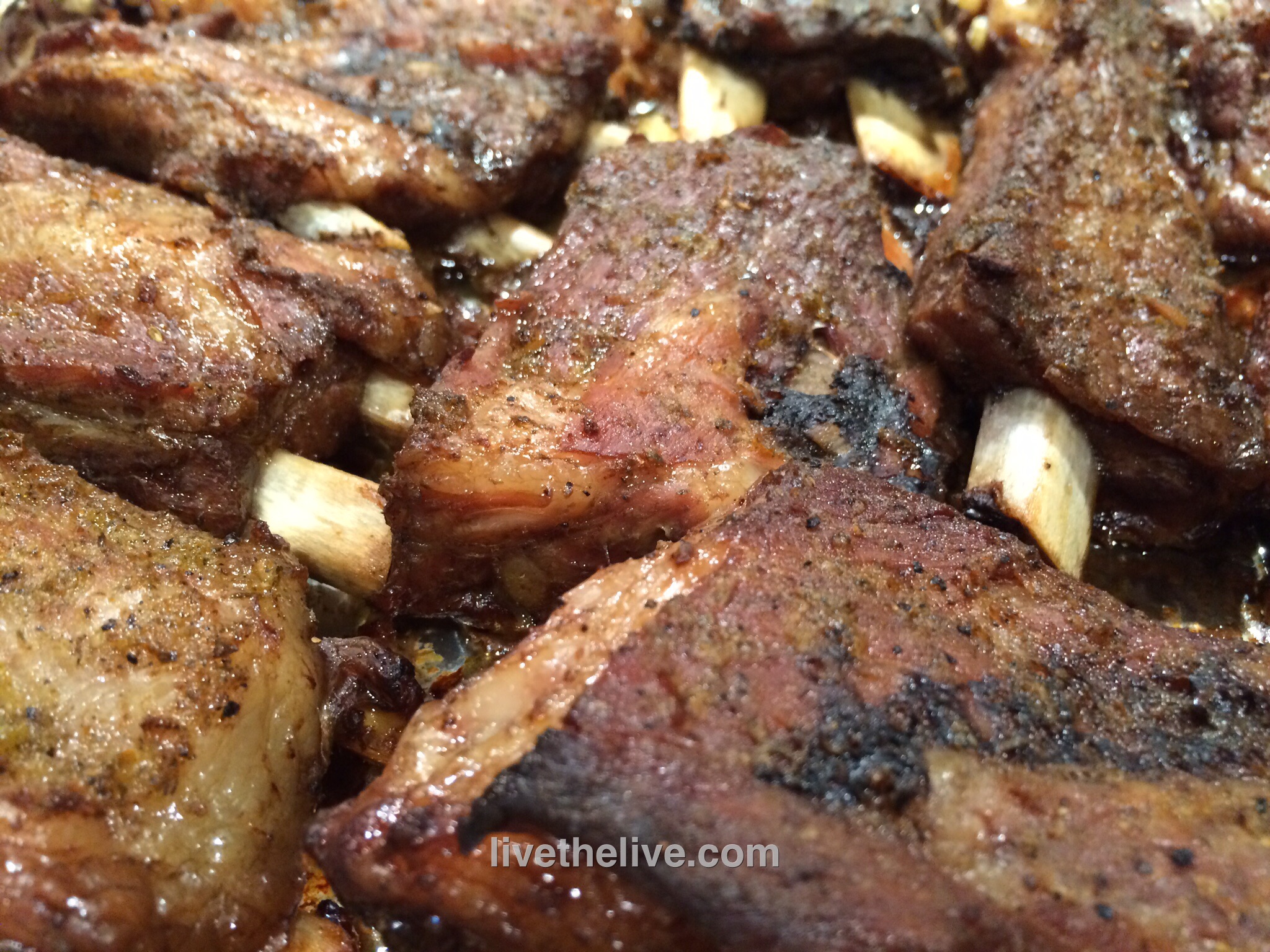
I was going to post my “deflated meatballs” recipe, but I decided to go with a classic for the big game! No need to freeze my butt off outdoors for these amazing ribs. I can stay in the kitchen. As the glaze cooks down, it gets sticky, gooey and delicious.
 image
For the marinade:
 ¾ cup soy sauce
 1/4 cup hoisin sauce
Other ingredients:
5 lbs pork ribs
Zest and juice of 1 lemon
2 whole star anise
2 cinnamon sticks (3”)
1/2 cup honey
4 cups chicken broth
Mix the soy sauce and the hoisin in a bowl, and set aside. These are the marinade ingredients.
If the ribs are large, cut them into individual pieces. If smaller, cluster 2 or 3 ribs together. Place in a large pot. Cover with water and bring to a boil. Boil for 5 minutes. Drain.
Place the ribs on a sheet pan lined with non-stick aluminum foil or with a rack and coat with the marinade. Let them sit for 10 minutes.
Pre-heat the oven to 350 degrees. Bake the ribs in sheet pan for 30 minutes.
While the ribs are baking, start the sauce in a large non-stick pan or pot: combine the lemon zest and juice, star anise, cinnamon sticks, honey and chicken broth. Bring it to a boil, then reduce it to a simmer.
When the ribs have finished baking, add them to the sauce pot and simmer (covered) for at least 15 minutes or until the rib meat is tender.
Turn the heat on high, uncover the pot and cook until the sauce is reduced to a glaze that coats the ribs. Reduce the heat as the sauce thickens to avoid the sugars in honey from burning. When the ribs are sticky and gooey, they’re ready!


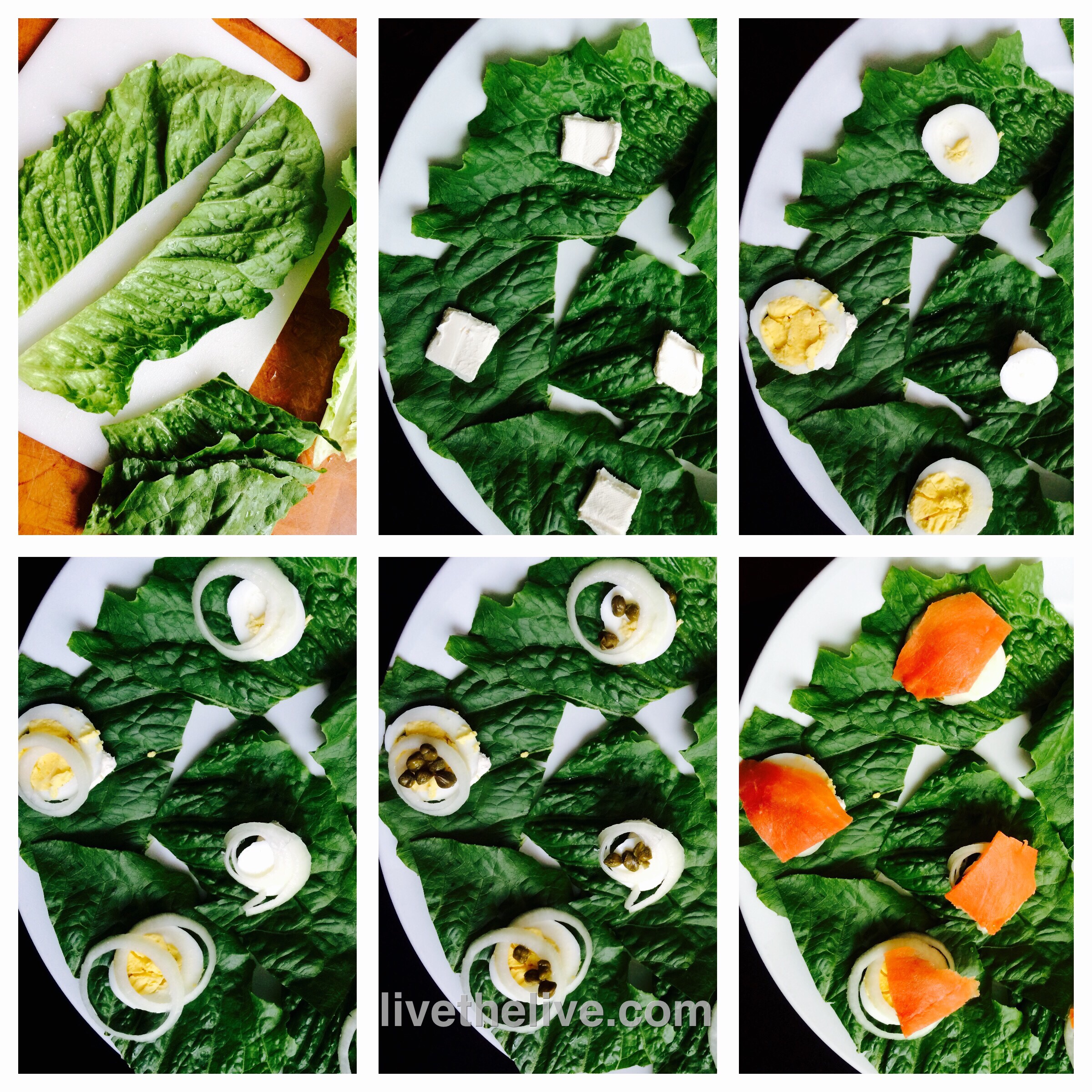
I’m past the halfway mark in my 30-day low-to-no carb diet right now. Although nothing beats a New York City bagel, it’s just not on the menu. So I went with organic Romain lettuce instead.

I removed the thick central stalk from several washed lettuce leaves, then cut each half in half, placing the lettuce on a large plate. Then I stacked: a small cube of cream cheese, followed by a slice of hard-boiled egg, followed by a thin slice or two of onion, a few capers, and finally, the lox. Each lettuce leaf made a bite-sized wrap.

image


Delicious? Yes. But I still missed the bagel.


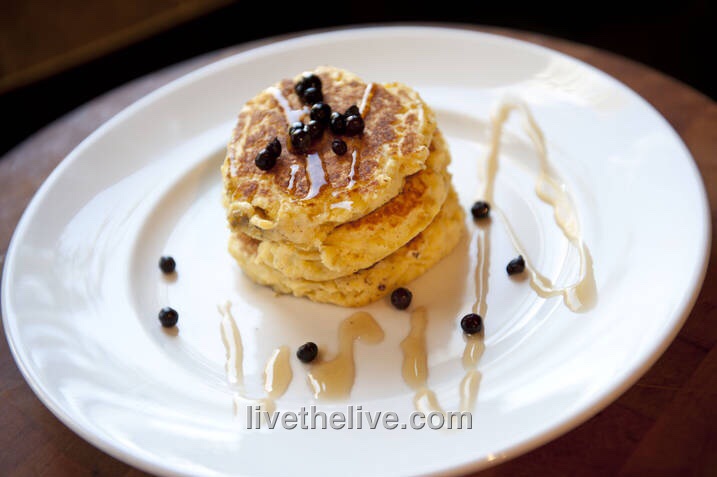
January 28th is National Blueberry Pancake Day! And this is my favorite pancake recipe by far.
All it takes to make this recipe gluten-free is to substitute the cup of all-purpose flour with gluten-free flour.
 image
1 cup all-purpose flour
1 1/2 cups stone-ground yellow cornmeal
2 tablespoons sugar
2 teaspoons baking powder
1/2 teaspoon baking soda
1/2 teaspoon salt
2 cups buttermilk
2 teaspoons grated lemon zest
1 large egg
3 Tablespoons melted unsalted butter, slightly cooled
1–2 teaspoons avocado oil
1 cup fresh or frozen blueberries, preferably wild, rinsed and dried
Whisk the flour, corn meal, sugar, baking powder, baking soda, and salt in a medium bowl
to combine.
In a separate bowl, whisk the egg, lemon zest, and melted butter into the buttermilk to combine.
Make a well in the center of the dry ingredients in the bowl. Pour in the milk mixture and
whisk very gently until just combined. Do not over mix. A few lumps are OK.
Heat non-stick skillet over medium heat. Add 1 teaspoon of oil and use a brush to coat the skillet
bottom evenly. Pour 1/4 cup of the batter into 3 spots on the skillet. Sprinkle 1 tablespoon of the
blueberries over each pancake. Cook the pancakes until large bubbles begin to appear,
about 1 1/2 to 2 minutes. Using a thin, wide spatula, flip the pancakes and cook until they’re golden
brown on the other side, 1 to 1 1/2 minutes longer.
Chow down immediately!
image

Pasta is not something I’m currently eating on my low-carb diet. But it’s a great recipe I wanted to pass on to others.

Sometimes the simplest dishes are the toughest to execute well. Spaghetti alla Carbonara is one of those dishes. All you need is pasta, olive oil, raw eggs (separated), guanciale, grated Parmigiano-Reggiano and pepper. (Real carbonara doesn’t use cream.)

You boil the pasta. Chop the guanciale (cured pork cheeks or jowls) and saute in a pan with the olive oil. Do not drain the fat. Drain the pasta and drop it into the pan with the guanciale, adding about 1/4 cup of the pasta water. Shake it around for a minute and remove from the heat. Add some of the cheese and the egg whites, season with pepper, and mix the pasta well. Separate into bowls, making a nest with the pasta. Add an egg yolk to each, sprinkling more cheese on top. What could go wrong, right?

There’s a lot to be said for finesse!

I make my own guanciale. I buy Berkshire pork jowls and cure them. Then they go through a drying phase for a few weeks before I wrap and freeze them in chunks. Whenever a dish calls for guanciale (my daughter loves it on pizza), I simply unwrap some, let it thaw, then chop it up and saute it. The fat in the pork jowls is very different from other parts of the pig, and there’s no replacing that flavor. When making Spaghetti all Carbonara, some cooks replace the guanciale with pancetta or bacon, but that’s not for me.

It’s also important to note that this dish relies a lot on fat, so good fat is really important. Berkshire pork fat has good fat. Organic butter has good fat. And the cheese? Parmigiano-Reggiano isn’t called “The King of Cheeses” for no reason!

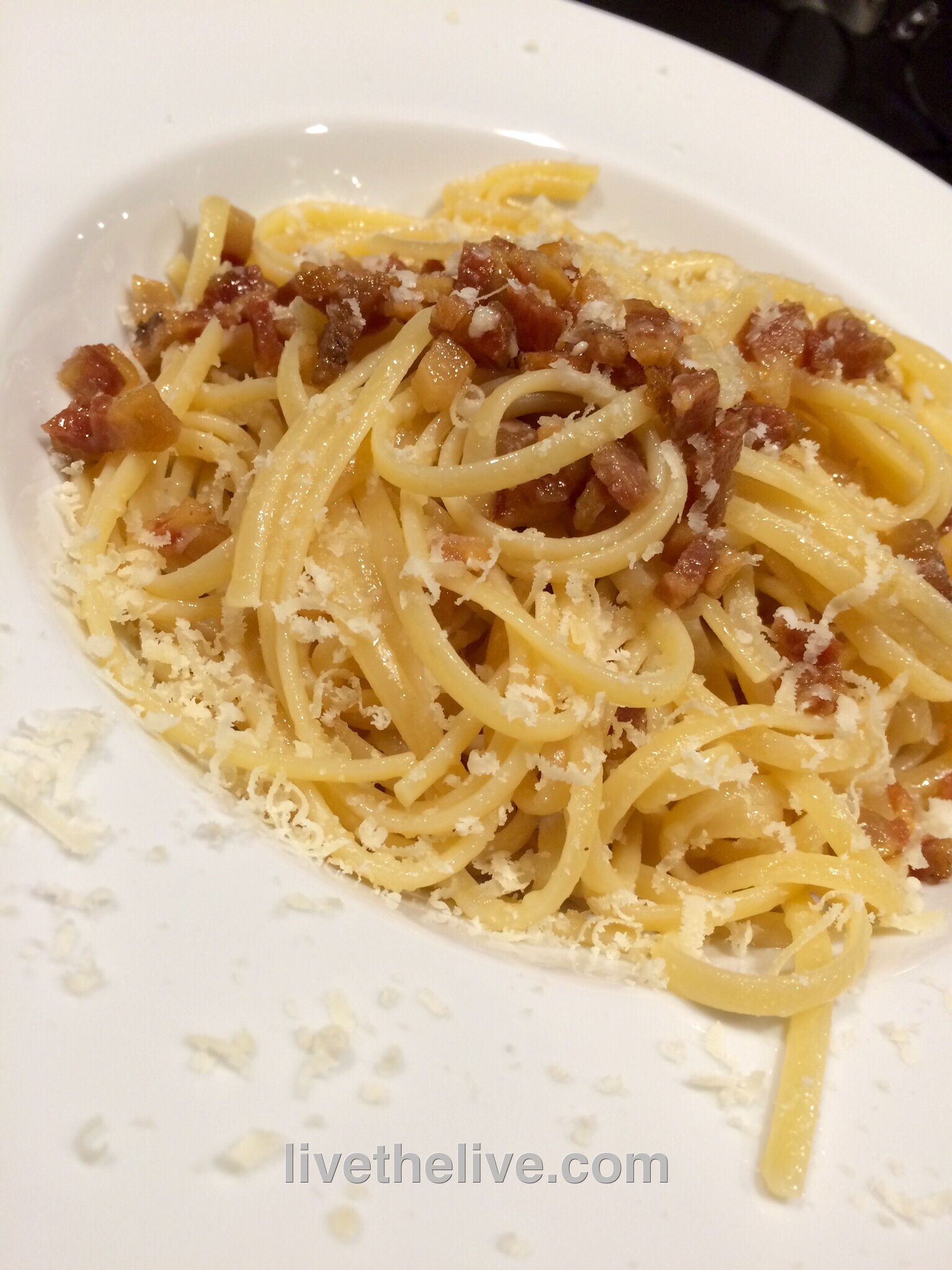
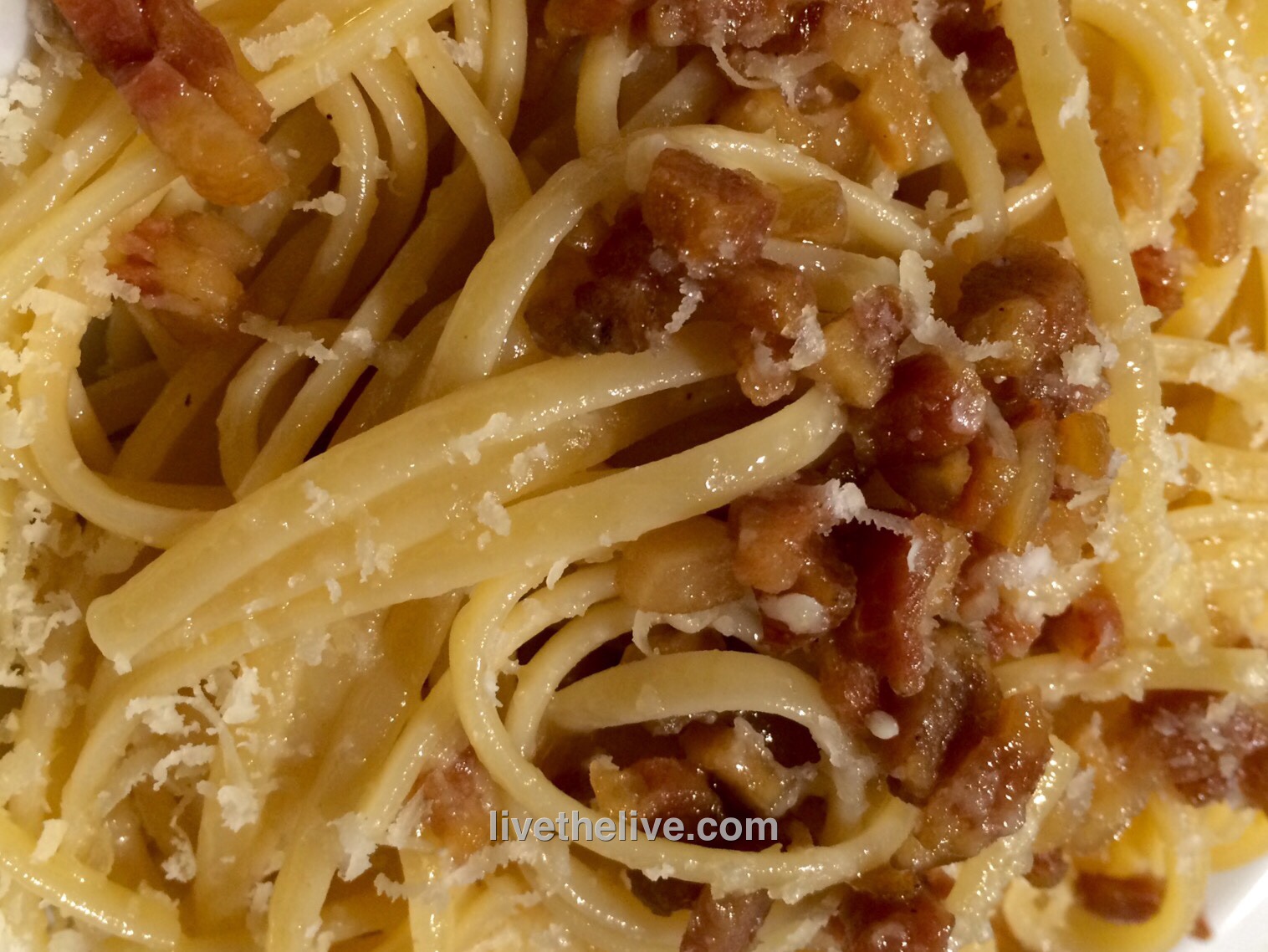
I decided to make a Not-Quite-Carbonara dish. I say “not quite” because I left out the eggs, which my daughter doesn’t like. It still came out pretty damn good…

image


1 lb. pasta (we like bucatini over spaghetti)

1 lb. Berkshire pork guanciale, chopped into small (1/4″) cubes

olive oil

2 tablespoons unsalted organic butter

1/2 cup freshly grated Parmigiano-Reggiano

black pepper


Boil the pasta to the just-before-al dente stage.

In a large saucepan, heat the guanciale and olive oil until the fat has rendered. Do not drain the fat. Turn the heat off, add the butter and let it melt.

Drain the pasta and drop it into the pan with the guanciale, stirring the pasta around to coat with the ingredients. Sprinkle in 1/4 cup of the Parmigiano-Reggiano and season with pepper, still mixing.

Distribute the pasta into individual bowls, making sure everyone gets the tasty bits of guanciale. Sprinkle some more of the Parmigiano-Reggiano on top. Serve immediately.

image


On my low-carb/no carb diet, I can enjoy pork, chicken, beef…any carnivorous delight I choose. What makes them bad for me is the rub and sauce that I put on them, which usually has a good amount of sugar. So I came up this alternate pork rib dry rub recipe.

I used the juice of two oranges in this recipe, but it’s mainly in the marinade which is later poured off. With 5 pounds of ribs, I think the carb intake is minimal. Using the orange zest adds extra citrus flavor.

image

Zest and juice of 2 oranges

1 teaspoon black pepper

3 tablespoons seasoned salt

2 tablespoons good quality (not the expensive stuff) balsamic vinegar

5 lbs. Berkshire pork ribs (I like the St Louis style)


In one bowl, combine the zest of 2 oranges, 1 teaspoon of black pepper, 3 tablespoons of seasoned salt. Combine so that the zest dries out. Set aside.

Cut the ribs into smaller pieces. I like making double-rib cuts and not single. Place all the ribs in a large Ziploc bag.

In another bowl, combine the juice of the 2 oranges (about 1 cup) and 2 tablespoons good quality balsamic vinegar. Mix the two well then pour into the Ziploc bag with the ribs to marinate for at least a couple of hours at room temperature, or in the fridge overnight.

Pre-heat the oven to 450°.

Line a sheet pan with aluminum foil with extra over the sides. Remove the marinated ribs from the bag and lay them down on the foil, trying to keep them in one layer.

Sprinkle both sides of the ribs with the orange zest, salt and pepper seasoning. Rub it into the ribs well. Fold the foil over, wrapping the ribs tightly.

Placed the sheet pan with the ribs in the oven and cook at 450° for 30 minutes. Then reduce the oven temperature to 325.

Cook for 2 hours more, then open up the foil and cook another hour.


Of course, if you’re not on a low carb diet, feel free to slather these bad boys with your favorite sauce. My grapefruit barbecue sauce would work well with these: http://wp.me/p1c1Nl-qX

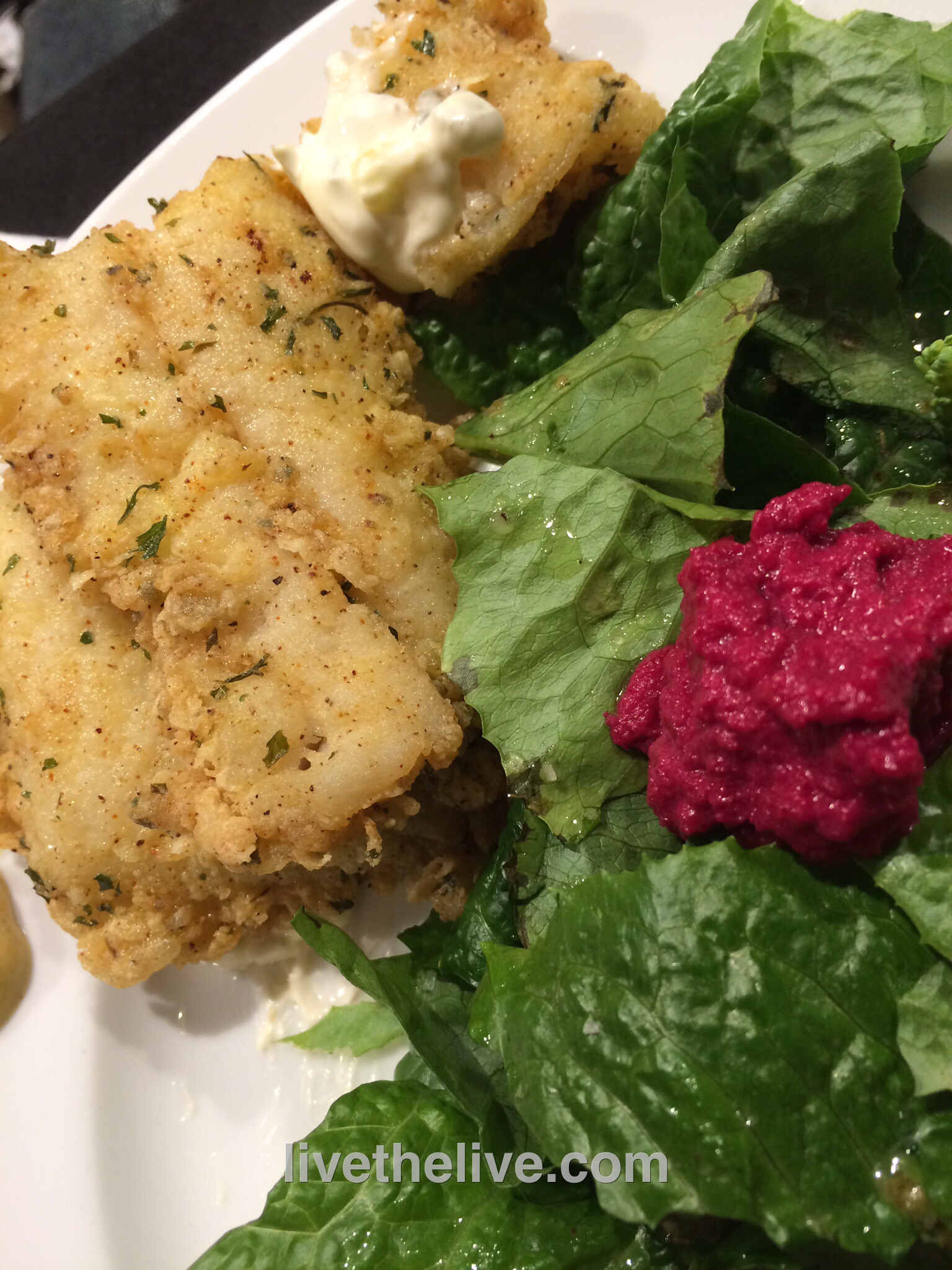
It’s always a challenge when you’re on a diet. I’m going no alcohol and low-carb to lose some weight. (Down 6 lbs. in 5 days so far.) My wife needs to include gluten-free food in her diet, though she can have a few carbs. Fish is a great source of protein, and we love it sauteed in a little butter and olive oil with Paul Prudhomme’s Seafood Magic seasoning on it. But let’s face it, that gets old after a while, and we all know there’s nothing tastier than fried fish.

Rather than using a heavy beer batter like I used to do (damn good and easy to do:http://wp.me/p1c1Nl-en), I came up with a very light gluten-free-flour-based seasoning that gave the fresh-caught local fish we bought incredible flavor and crunch without a carb overload and without gluten. Damn good, and I have to say, you’d never know the difference.

There are many gluten-free flours out there now, and all you need to do is substitute them cup-for-cup in any recipe you have. I’ve tried Bob’s Red Mill (OK), King Arthur (better), and Pamela’s (very good–what I used for this recipe.) I’ve just ordered the latest: Cup 4 Cup, created by chefs that include the famous Thomas Keller, which we tasted at Mario Batali’s Del Posto restaurant in New York City recently. They have about 12 different pasta dishes on their menu, and each one has a gluten-free option using the Cup 4 Cup flour. They were fantastic!

image


1 cup flour (all-purpose or gluten-free)

2 teaspoons salt

1/2 teaspoon pepper

1 tablespoon dried parsley

1 teaspoon oregano

1 teaspoon granulated onion

1/2 teaspoon granulated garlic

1 teaspoon paprika

2 eggs

fresh locally caught fish fillets of your choice (I used fluke and ocean perch)

Organic GMO-free canola oil or avocado oil for frying


In a flat bowl you will use to dredge the fish fillets, combine the flour, salt and pepper, parsley, oregano, granulated onion and garlic, and paprika.

In a separate flat bowl, scramble the 2 eggs.

Pour about 1/2″ of the oil in a pan and heat to medium-high heat.

Dip the fish fillets first in the eggs, coating well. Then dredge in the flour mixture, pressing down on both sides, so the flour mixture really sticks to the fish. Then shake the fillet lightly to remove the excess flour and gently lay the fillet in the hot oil. Fry until golden.

We made a quick and delicious tartare sauce using mayonnaise, dill pickle relish and Maille sauterne mustard.


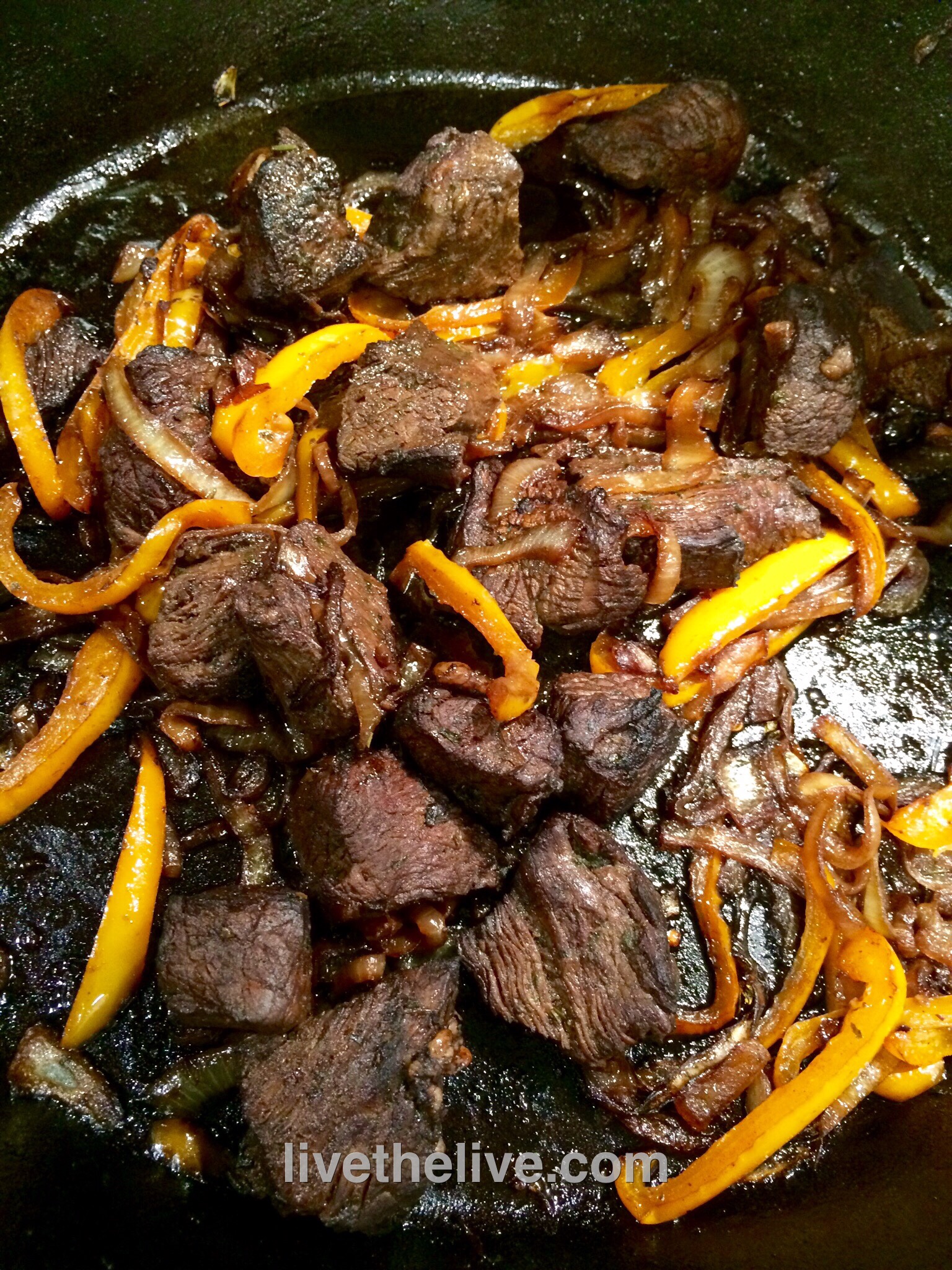
An easy way to marinate beef is to simply throw the meat in a bag and dump some Italian dressing into it. As simple as that sounds, it flavors the meat really nicely. But I’ve got a problem with anything that comes from a jar and was made in a factory, especially when it’s so easy to make my own Italian seasoning.
I recently bought some sirloin beef tips and after trimming the fat and silver skin (they always leave it on the meat), I cut it up into 1 inch cubes. I put the pieces in a glass container–a plastic bag would be fine–and then made my marinade.

Ingredients:

For the marinade:
1/4 cup decent quality balsamic vinegar–not the expensive stuff
1/4 cup avocado oil
1 teaspoon dried oregano
1 teaspoon dried parsley
1 teaspoon granulated garlic
1 teaspoon granulated onion
1 teaspoon salt
1/2 teaspoon pepper


2 lbs. sirloin beef tips, trimmed and cut into 1″ cubes

avocado oil

3 onions, sliced into rings

2 sweet bell peppers, sliced into thin strips

splash of white wine

Combine the marinade ingredients and pour them into the bag or container with the meat. Mix it around so that every bit of the meat gets coated with the marinade. Seal the container and place in the fridge overnight.
Next day, remove it from the fridge and let it come to room temperature before cooking.

Marinated beef, ready to cook.

Marinated beef, ready to cook.

Heat a large cast-iron skillet until hot. You may not need to add oil, since the meat has marinated in it. Using tongs to shake off any marinade, place the beef tips in the skillet, and brown on all sides, constantly flipping them. Cook the meat until it is done: medium to medium rare. (Of course, a hardwood fire is great for cooking these, too. It’s just a question of wanting to freeze your butt off outside or not.)
Remove the meat from the pan and place in a bowl to the side. In the hot pan, toss in the sliced onions and peppers. Cook until the onions and peppers are caramelized, and splash a little white wine to de-glaze the pan if you like. (The alcohol cooks off.) If there’s any left over marinade in the bag or container, you can pour it into the pan at this time.

Return the beef to the pan being sure to include all the juices that may have settled into the bottom of the bowl. Mix through until thoroughly heated and serve immediately.

I made a lot more...forgot to take the pic before devouring!

I made a lot more…forgot to take the pic before devouring!

This recipe is gluten-free. If you’re on a low-carb diet, you may want to skip the onions and peppers, since they’ve got natural sugars. The amount of sugar in the balsamic is minimal, when you spread it out over 2 lbs. of meat.

TIME FOR A DAMN DIET

Posted: January 13, 2015 in Carnivore!, Food, Recipes
Tags: , , ,

Actually, not just a diet, but a lifestyle change. A recalibration of things, my food and liquid intake a significant part of that.

It’s clear I love food. This is mainly a food blog, after all. I don’t eat a lot of bad snacks. Rarely do I eat chips, cookies, candy, cake, ice cream, etc.– but I do take in calories from a variety of places that should be drastically reduced, like bread, pizza and pasta…and, of course, alcohol.

The Paleo diet is all the rage right now, and although the idea of eating simpler foods is a good one, I don’t need to be a damn caveman to do it, and some of the strict rules in that diet are really somewhat random.

Back when my wife and I got engaged, we went on the Atkins diet, and it really worked. I got to a long-time low of 217 lbs. (I’m back up to 235 now), despite the fact that I was eating a ton of meat, bacon and cheese, all slathered in mayo. But, of course, my cholesterol and blood pressure went through the roof. It was only 12 years ago, but back then I couldn’t find pastured chicken, heritage Berkshire pork, or grass-fed beef. So the fats I was consuming were all bad. Today, the most of my meat intake falls in one of those three categories, and all of my seafood is wild-caught from American waters. Great proteins with healthy fats.

So what do I cut out? I remember Oprah went on a “no white food” diet a bunch of years ago, way before people knew what Atkins was. It made a lot of sense then, and it makes sense now: no flour, white rice, sugar, or potatoes (and limited salt.) I’m going a step further and eliminating all high-carb foods, including certain fruits and veggies. And, at least for a month, I’m giving up the alcohol, which honestly is the hardest thing about this diet.

image

I have an alcoholic beverage every day. At least one. Without fail. Weekdays, it’s usually a few glasses of wine. Weekends, I go for the cocktails. They all have hundreds of useless calories. An ounce of any 80-proof liquor has 64 calories. I use a 5-ounce martini glass. That’s 320 calories per martini, without the olives. I’ve been known to put 3 of those bad boys away in one sitting. We’re talking almost 1000 calories! And that’s before we bring up the topic of liver damage.

So the diet begins. For one month, I’ll go balls-to-the-wall and be really strict. By mid-February, I will allow myself to enjoy a cocktail now and then. But a low-carb diet will stay in place until I get back to at least “wedding weight.”

If you see what look like tears on my blog, you’ll know I’m having a moment of weakness.

I wisely chose to start this diet after going back to my hometown of New York City for a long weekend. I’ve had the best pizza, the best bagels, some fine carb-filled meals, and fantastic cocktails.

But now…it’s time to get down to business!