Ernest Hemingway loved his burgers…and he loved to put all kinds of crazy ingredients in them. Following the basic guidelines of his recipe, seen below, I put my own spin on it.
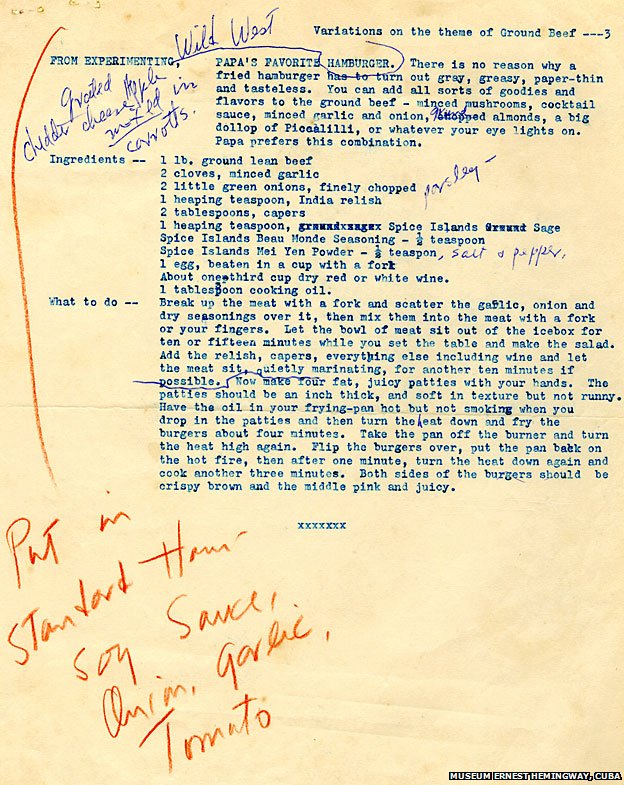
Hemingway's burger notes

Hemingway’s burger notes

I skipped the India relish. Didn’t have it in my pantry.

Beau Monde Seasoning is readily available, but I made my own at home:

1 tablespoon cloves

1 1/4 teaspoon cinnamon

1 tablespoon salt

1 tablespoon Bay leaf powder

1 tablespoon allspice

2 tablespoons black pepper

1 teaspoon nutmeg

1 teaspoon celery seed

1 tablespoon white pepper

Combine all these ingredients, grinding to a powder whatever you have as whole pieces: cloves, bay leaves, nutmeg, etc. Store in a tightly sealed glass jar.

And Mei Yen Powder can be replaced with equal parts salt, sugar, and MSG (which I leave out.) To this I add some soy sauce.

So here’s my take on it:

Ingredients:

1 lb. grass-fed ground beef

2 garlic cloves, squeezed through a garlic press

2 tablespoons minced red onion

1 tablespoon capers

1 teaspoon dried sage

3/4 teaspoon salt

1/2 teaspoon sugar

1 1/2 teaspoons soy sauce

1/2 teaspoon homemade Beau Monde seasoning

1/3 cup white wine (I use Alice White chardonnay)

1 raw egg

Combine all ingredients and let it sit in the fridge for an hour. The meat may be a bit mushy, but you can form 4 equal sized patties. Place them in a hot ovenproof pan that has a little oil and sear on one side. Flip burgers, and sear on the other side. Place pan in a 350-degree oven and cook until desired doneness.

The verdict: Hemingway was crazy! Though the burger had some exotic flavors–it tasted almost like a burger from the Middle East–my personal choice is still to go with a relatively plain burger of exceptional quality, season it lightly, and cook it to medium-rare. Toppings like caramelized onions or sautéed mushrooms are always welcome, but in many ways, less is more. Hemingway clearly thinks more is more…but maybe his burger meat wasn’t all that good and he need to mask the bad flavor. Anyway…a fun experiment!
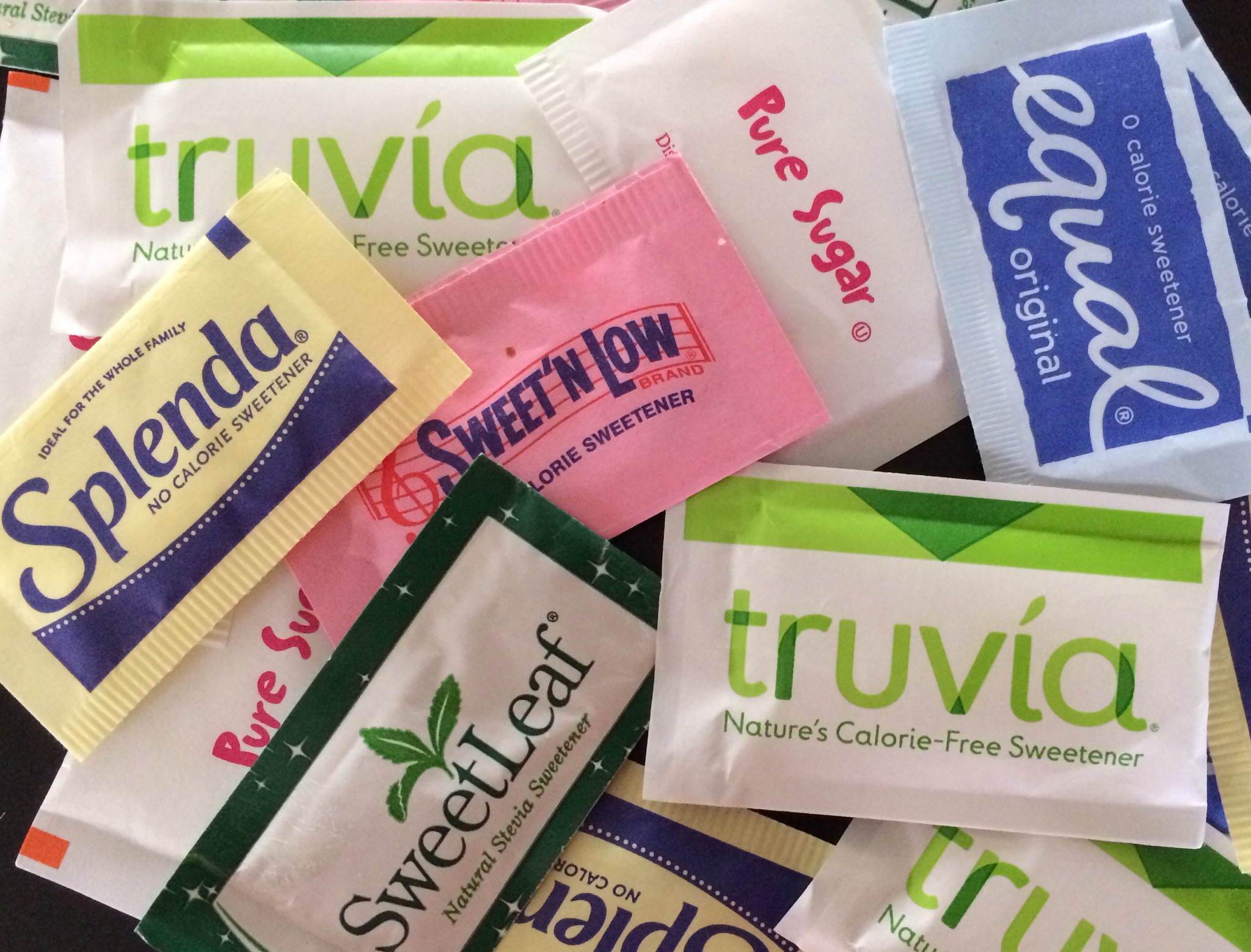
Remember when the only sugar substitute available was saccharin? Those pink packets of Sweet ‘n’ Low used to be the only choice you had with your cup of coffee at the local diner…and the cause of the nasty aftertaste in your can of TAB.
sweeteners
It was a long time before another sweetener came along, and in the beginning, we all thought Nutrasweet was the answer to our prayers. Sales of Nutrasweet skyrocketed, and one of the most interesting facts to come out of that time was that despite Nutrasweet’s amazing sales, sales of sugar remained steady. We later found out that people were buying Nutrasweet to make things even sweeter, without the guilt of sugar! Equal is the brand name for Nutrasweet, the artificial sweetener that contains aspartame. We now know that aspartame can cause seizures in some people, namely phenylketonurics, and they’re being told to avoid it. It also has an overly-sweet unnatural taste.
Enter Splenda,  the brand name for sucralose, in the yellow packets. Sucralose is a sugar alcohol. It does not affect your blood sugar and it contains no calories. But sucralose is not a natural product: it’s a total guys-in-white-lab-coats creation. Almost no aftertaste, but now there are claims that Splenda alters and even kills important flora in your gut.
OK, so how about that cute little Stevia leaf? The sweetener in the Stevia leaf is natural, and marketing makes it seem like it’s the only ingredient in products like Truvia. But the fact is that the Stevia extract is extremely potent, so they use a very small amount of it.  So to “bulk it up,” they add erythritol, which is another sugar alcohol. The only good thing about this is that erythritol is indeed naturally occurring, so Truvia can rightly claim to be a “natural” sweetener. For me, this is the best choice of all sugar substitutes: all natural and no aftertaste.
Sweetleaf, besides being a song by Black Sabbath, is another all-natural sweetener that combines the extract of the Stevia leaf with a soluble vegetable fiber called inulin. Sweetleaf contains zero calories and does not affect blood sugar.
But the inulin leaves a real nasty aftertaste that had me throwing a boxful of packets into the trash after one sip.
 
 Nectresse is made by those fabulous Splenda people and they claim it’s all natural…a no-calorie sweetener that comes from the monk fruit (combined with “other natural flavors.”) I’d like to know what those other natural flavors are, but I can’t find it on their website. I haven’t tried this one, but when all the reviews about it start with: “It took a while to get used to the aftertaste, but now I kinda like it”….that’s not exactly a rave, as far as I’m concerned!
Sugar itself is not evil, and most people that watch what they eat can probably use it. But if you’re diabetic…or if you guzzle sodas, juices, and sports drinks…and eat packaged and processed foods that have tons of hidden sugar (aka high fructose corn syrup)…a sugar substitute may be a good move.
 

Many of my recipes come from the fact that I live just a little too far from the nearest supermarket to simply jump in the car when I’m out of a certain ingredient. OK…actually, I’m too damn lazy. So I stand in front of the refrigerator, doors open, looking at my inventory, and when the fridge alarm sounds telling me to shut the freakin’ door, I’ve usually decided on what I’m going to do.

This is one such recipe. It works with whatever cut of pork you like, and with whatever citrus you have on hand. I’ve used blood oranges, grapefruit, you name it.

citrus pork

Ingredients:

1 5-lb. pork loin

2 garlic cloves, through a garlic press

3 cloves, crushed

1 large lemon, juice and zest

1 orange, juice and zest

1 8″ sprig fresh rosemary, cut into pieces

2 teaspoons fennel seed, coarsely chopped

1 teaspoon juniper berries, coarsely chopped

2 bay leaves

salt and pepper

1/4 cup extra virgin olive oil

To make the marinade, combine garlic, cloves, lemon juice and zest, orange juice and zest, rosemary, fennel, juniper berries, bay leaves, and some salt and pepper in a bowl.

Place pork loin, fat side up, on cutting board and gently slash diagonally through the fat, creating a diamond pattern.

Place pork loin in a non-reactive bowl and massage well with marinade mixture. Cover with plastic and refrigerate overnight.

Next day, let the pork loin come to room temperature. Wipe off the marinade, especially the larger chunks. Season again with salt and pepper.

Pre-heat oven to 350 degrees.

On the stove top, heat an ovenproof pan. Place pork loin fat side down and sear. Flip the loin over so that all sides sear nicely, then place in the oven. Cook with fat side up. Cook until internal temperature reaches 140 degrees.

Freshly shucked oysters and clams call for an equally amazing cocktail sauce…and this sauce kicks butt! And it features a key ingredient that you might not expect: vodka. The small amount of vodka in the mix keeps the cocktail sauce from freezing solid when stored in the freezer. Just scoop out what you need, let it thaw, and put the rest back in the freezer.

cocktail sauce

Ingredients:

2 cups ketchup

4 Tablespoons prepared horseradish

1 Tablespoon fresh lemon juice

1 teaspoon Worcestershire sauce

1/2 teaspoon Tabasco or other hot pepper sauce

5 grinds of fresh black pepper

1/4 teaspoon salt

1 teaspoon good quality vodka, like Tito’s

Combine all ingredients. Store in a tight plastic container in the freezer.

“The Wave” needed a little warmth!the wave

I’ve never met a ceviche I didn’t like. Sometimes, nothing can stop a serious seafood craving like sushi, sashimi or ceviche. They require the freshest seafood and veggies you can get your hands on. And other than some fine chopping, they require little else.

The acid in citrus juices basically “cooks” the seafood in a process very similar to applying heat, but when I use shrimp in ceviche, I place them in some boiling salted water first…although very briefly.

Crazy colored shrimp, thanks to blood oranges.

Crazy colored shrimp, thanks to blood oranges.

Ingredients:

For the poaching liquid…

2 quarts water

1/4 cup salt

For the ceviche…

1 pound raw wild-caught American shrimp, peeled and deveined

juice of 2 lemons

juice of 2 limes

juice of 2 oranges (I had blood oranges this time)

1 cup diced seeded peeled cucumber

1/2 cup finely chopped red onion

pinch of red pepper flakes

1 cup diced seeded tomato

1 avocado, chopped into 1/2″ pieces

1 tablespoon roughly chopped cilantro leaves, plus more for garnish

1/4 cup extra virgin olive oil

1/4 teaspoon Fleur de Sel

Combine water and 1/4 cup salt in a saucepan and bring to a boil. Add shrimp and immediately turn off the heat. Let the shrimp sit for just a minute, drain and transfer to a bowl of ice and place in fridge to cool.

Remove cooled shrimp from fridge and drain. Chop shrimp into 1/2″ pieces and place in a medium non-reactive bowl. Add lemon, lime and orange juice. Stir in cucumber, onion and pepper flakes. Refrigerate for 1 hour.

Stir in the tomato, avocado, chopped cilantro, olive oil and Fleur de Sel into the shrimp mixture. Let stand at room temperature for 30 minutes before serving. Garnish with cilantro leaves, if desired.

Join me on Saturday, March 29th for “The Rescue,” now in its 7th year. Great drinks, tasty food bites and auctions all to help the Providence Animal Rescue League. The VIP Reception features a bourbon tasting this year. And the food bites are provided by some of the best restaurants in Rhode Island.


rescue image compressed


PARL does great work, and they need your help. All the details of the event are here:

http://www.parl.org/news-events/rescue


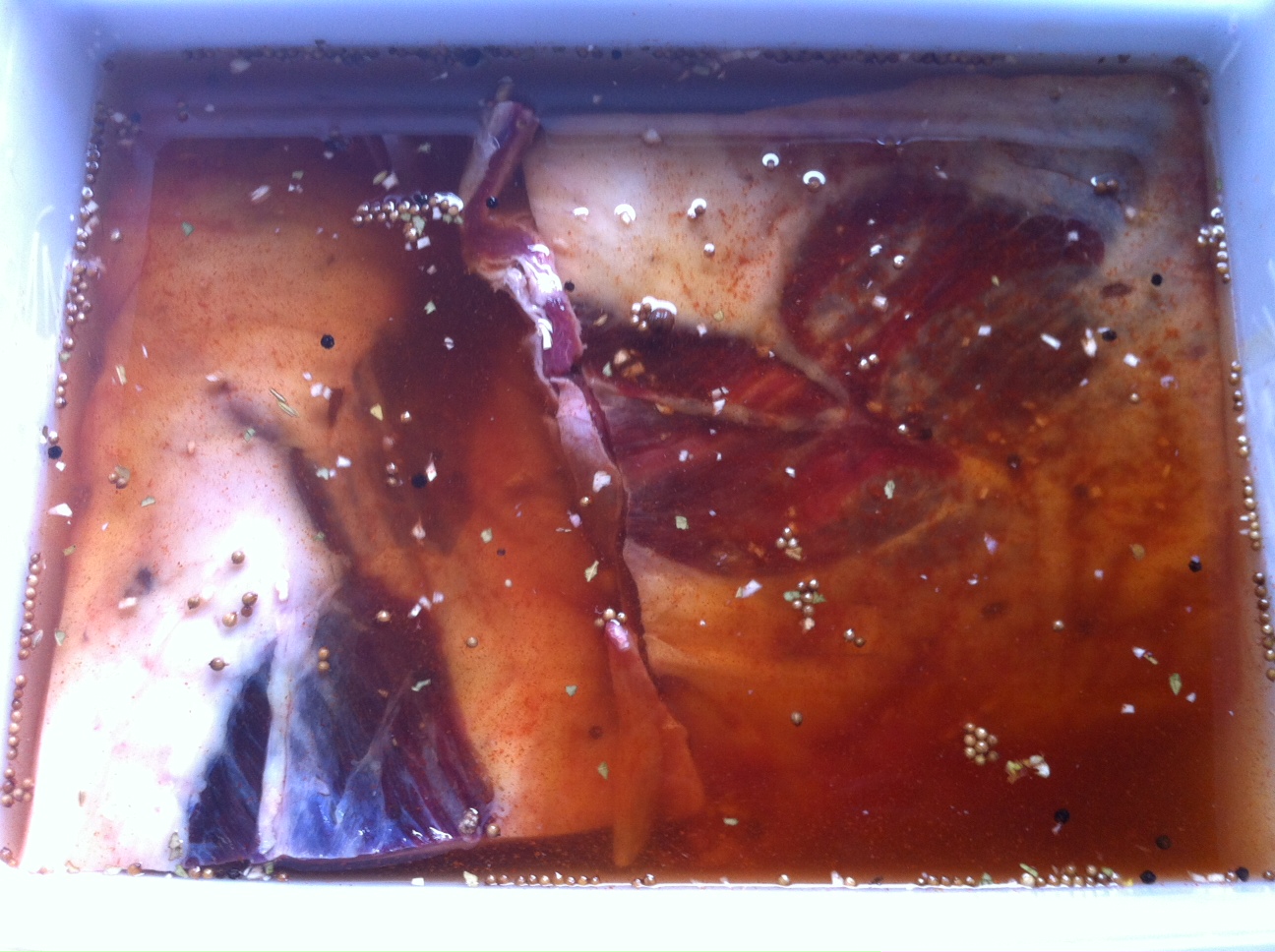
St. Patrick’s Day is about 3 weeks away…just in time to make your own corned beef!

It takes about 3 weeks to make corned beef, but it’s not difficult to do. Doing it yourself gives you a better quality product than that nasty slab from the supermarket that is full of chemicals and preservatives.

Corned beef has nothing to do with corn. ‘Corning’ is a technique for preserving raw meats for long periods by soaking it in salt brine. This method was used before the days of commercial refrigeration. Back then, the large salt kernels used in the brine were called “corns.”

Brining is a time-honored way of preserving and it prevents bacteria from growing. Both pastrami and corned beef are made by this method. Both corned beef and pastrami usually start with a brisket of beef. Corned beef is then cooked–usually boiled–and served. Pastrami is made when the brined meat is rubbed  with more spices and smoked to add extra flavor. So corned beef and pastrami are the same meat, just treated differently.

Saltpeter is an ingredient that has been used in brining beef for years. It adds the traditional red coloring to the corned beef and pastrami meat. But since saltpeter can also contain carcinogens, I leave it out. The meat may not be the usual bright red color, but the flavor and texture of the meat will not be affected.

Brining the beef brisket

Brining the beef brisket

Step one: corned beef…

Ingredients:
beef brisket (about 8-10 pounds)
2 tsp. paprika
1/4 cup warm water
3 cloves of minced garlic
2 tablespoons sugar
1 tablespoon mixed pickling spices
3/4 cup salt
2 quarts water

Place the brisket in a large container made of non-reactive material, like glass or plastic.

In the 1/4 cup of warm water, dissolve the sugar, minced cloves, paprika and pickling spices.

Dissolve the 3/4 cup of salt in the 2 quarts of water. Pour in the sugar/garlic/paprika/pickling spices mix and stir everything together. Pour the mixture over the meat in the container. Make sure the meat is totally beneath the surface of the liquid. (You may need to weigh it down to do this.) Cover the container.

Refrigerate the container and contents for 3 weeks, turning the meat once or twice per week. At the end of the third week, remove the container from the refrigerator and take out the meat. Soak the meat in several changes of fresh cold water over a period of 24 hours to remove the excess salt.

At this point, if you want corned beef, prepare and cook it using your favorite recipe. But I’m all about the pastrami!

Step two: making Pastrami…

pastrami

Ingredients:

Brined and rinsed corned beef brisket from above recipe, patted dry with paper towels

1/4 cup Kosher salt

1/4 cup paprika

3 tablespoons coriander seeds

2 tablespoons black peppercorns

2 tablespoons yellow mustard seeds

1 tablespoon white peppercorns

3 tablespoons brown sugar

1 tablespoon granulated garlic

Combine coriander seeds, black and white peppercorns and mustard seeds in a spice grinder and grind coarsely. Place in a bowl. Add salt, paprika, brown sugar and granulated garlic. Mix well.

Rub the mix into the brisket well, covering all sides.

Heat smoker to 225 degrees and smoke for several hours using a less intense wood, like oak. When the internal temperature of the meat has reached 165 degrees, it’s done. It isn’t necessary to smoke pastrami as long as you would a regular brisket because the long brining time makes the meat tender.

It is very important that absolutely everything that comes in contact with the meat is very clean. (This includes your hands.) Also, make very sure that every inch of the meat reaches the 165 degrees before it is removed from the smoker. The corned beef is now pastrami.

My wife and I are iced coffee fanatics. It’s what we drink every morning, 365 days a year. I have a full air pot of coffee in the fridge at all times, and a stash of coffee ice cubes in the freezer so that not one precious drop of this elixir is diluted. When we go away on vacation, I will bring containers of this already brewed coffee with us. If we go somewhere with a kitchen and a coffee maker, I will grind the beans at home in pre-measured amounts and then seal it in Ziploc bags, brewing it immediately upon arrival so that we have our cold coffee ready the next morning, ice cubes included. When we travel to a destination where bringing this coffee is absolutely impossible, we try to look at it as an opportunity to perhaps discover a newer, better coffee. It has yet to happen.

The coffee is called Caffe Chicco D’Oro, which means “nugget of gold,” and we discovered it in Switzerland, near the Italian border, about 9 years ago. My brother-in-law’s family was living in Basel at the time and my wife and I traveled there to be a part of a large family Christmas holiday gathering. The journey across the pond included a scenic road trip to the spectacular Grand Hotel Villa Castagnola in Ticino/Lugano, close to the Italian border but still in Switzerland despite its Italian name. We stopped at a popular Autogrill rest area in southern Switzerland and sipped cappucinos that totally blew us away….so much so that we needed to know the brand of this incredible coffee. Once we were home in the United States, I was on a mission to find a way to buy this coffee for our every day use. Fortunately, they had an office here in the states, and it was relatively easy for me to buy Caffe Chicco D’Oro online. After a few years, they shut their operation down and transferred the rights to sell their product to a company called The Swiss Bakery in Virginia. To this day, these folks are the exclusive importers of Caffe Chicco D’Oro. (www.chiccodoro-usa.com)

The variety I buy is in the gold package, known as “Tradition.” I have tried the “Elite” when they were sold out of my favorite, and was not as happy with it.

coffee

I buy the coffee by the case: 12 whole bean bags (250g) at a time. Shipping is free. I keep them in a cool, dry place and I’ve never had a problem with spoilage. Besides, we drink a lot of it and it doesn’t sit around very long!

DIY TACO SEASONING

Posted: February 22, 2014 in beets, Food, morocco, Recipes, taco
Tags: , , , ,

It’s so easy to make taco seasoning at home, so why would you buy the spice factory floor sweepings that they use for packaged taco seasoning sold in supermarkets? I’m not a huge fan of Mexican cuisine, but every once in a while, I crave a good taco. As you’ll see, my tacos don’t resemble most, but that’s OK. It’s all about making it your own.

My taco seasoning recipe is for 2 lbs. of grass-fed ground beef…

Yes, I put my taco seasoning in a Moroccan tajine pot. But it looks cool, so cut me some slack!

Yes, I put my taco seasoning in a Moroccan tajine pot. But it looks cool, so cut me some slack!

Ingredients:

1 teaspoon granulated garlic

1 teaspoon onion powder

1/4 teaspoon crushed pepper flakes

1 teaspoon dried Mexican oregano

1 teaspoon paprika

2 teaspoons ground cumin

1 teaspoon sea salt

1 teaspoon black pepper

1 Spanish onion, finely chopped

olive oil

2lbs. grass-fed ground beef

Combine all the spice ingredients in a bowl.

Saute the onions in a bit of olive oil until translucent. Add the beef and saute until cooked, mixing in the spice mixture a little at a time until you’ve used it all.

You can also mix the spices with 1 cup of flour and use it to season chicken before frying…or mix the seasoning with strips of chicken breast or beef for fajitas.

My tacos are a bit unusual. Although I use a soft flour tortilla and my seasoned and cooked ground beef, I use my Awesomesauce  and roasted golden beets. Recipe here: https://livethelive.com/2014/02/19/awesomesauce/

Tacos with roasted golden beets, baby Romaine salad mix, and Awesomesauce

Tacos with roasted golden beets, baby Romaine salad mix, and Awesomesauce

For the beets: I wash the beets and quarter them, cutting the top and bottom off but leaving the skin. I place them in a sheet of aluminum foil, and sprinkle with salt, pepper and olive oil. I combine the ingredients to coat the beets, wrap the foil tightly into a package, and roast in a 400-degree oven for 1 hour. After roasting and the beets have cooled a bit, I slice them into smaller pieces for the tacos.

Slices of avocado go really well with this, too!