Posts Tagged ‘carnivore’

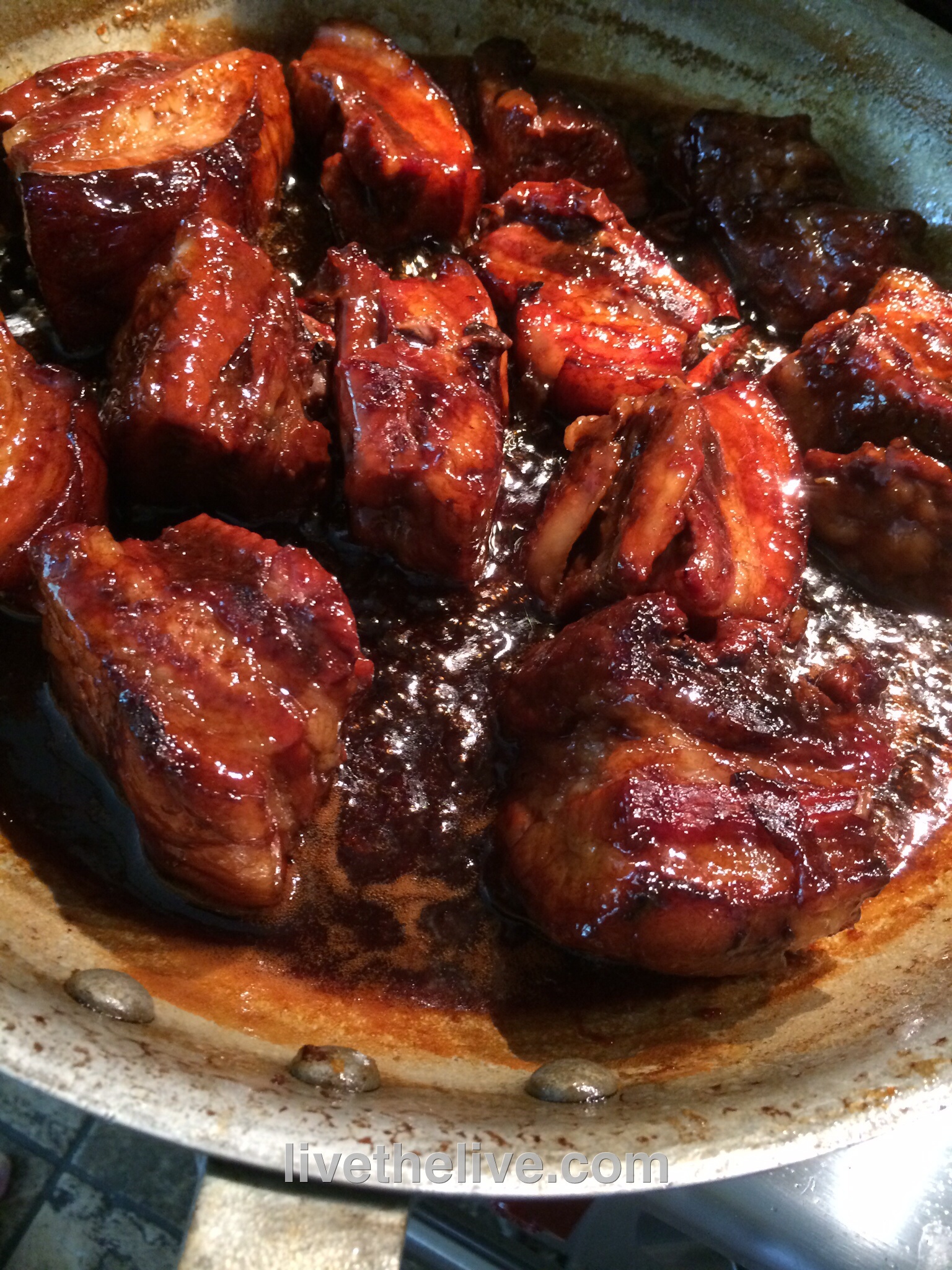
Since I’m busy tasting many bourbons these days, I’ve got some leftovers that may not make a great cocktail but would work great for a sauce. I had Maker’s Mark sitting around, so I came up with this sauce to use it up!

image

 Ingredients:

5 lbs St Louis style pork ribs

salt and pepper


For the sauce: 

1/4 cup honey

1/4 cup bourbon

zest and juice of 1 lime

zest and juice of 1 lemon

zest and juice of 1 orange

2 tablespoons Hoisin sauce

1 tablespoon Dijon mustard (I use Maille)

1 tablespoon soy sauce

2 teaspoons Worcestershire sauce

1 teaspoon chili oil

image

Season the ribs well with salt and pepper and cook in a smoker for 3 hours at 25o degrees, using hickory chips.

While ribs are smoking, combine sauce ingredients in a sauce pan, bring to a boil, then lower to medium heat and reduce the sauce by half until it thickens. Stir often, and don’t let the honey foam up and spill over the top.

Pre-heat oven at 250 degrees.

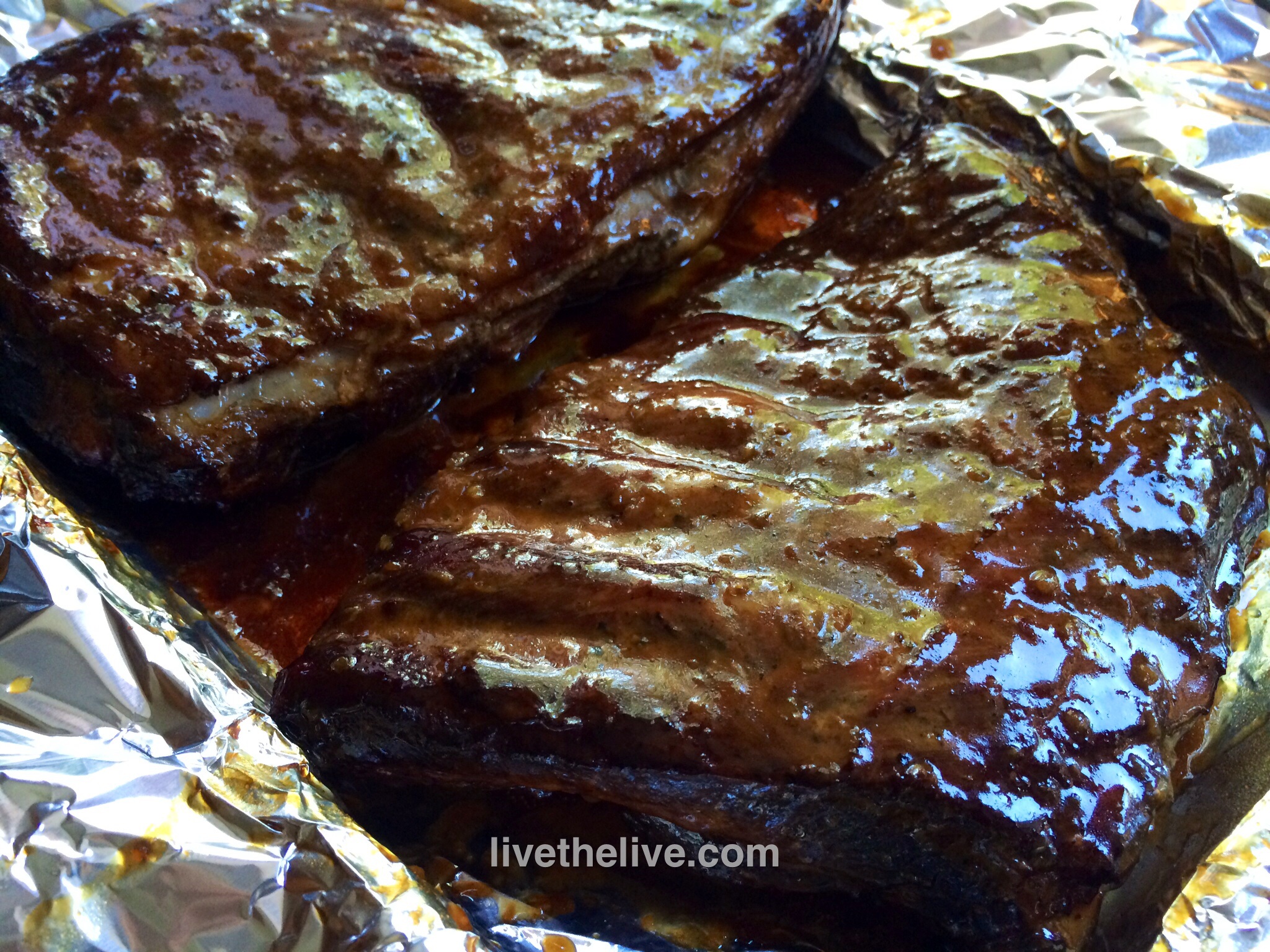
Remove ribs from the smoker and place in a sheet pan that is lined with aluminum foil, with enough foil to wrap around the ribs. Brush the ribs on all sides with the sauce, stacking no more than 2 sets of ribs on top of each other, and then wrap with foil.

Cook in the foil for 2 more hours, until tender.


I love the flavors in Thai food…but I don’t enjoy extreme heat and my wife can’t deal with extreme garlic. So this is my more balanced version of a Thai grilled chicken dish…

thai chicken LTL


Ingredients:


3 lbs chicken pieces (I used drumsticks for this recipe)

2/3 cup soy sauce
1/2 cup fresh cilantro
2 tablespoons canola or peanut oil
2 garlic cloves, roughly chopped
1/2 teaspoon white pepper

1/2 cup sugar
1/4 cup white vinegar
1 teaspoon red pepper flakes or crushed dried chiles
1 teaspoon salt

Marinade: Combine soy sauce, cilantro, canola oil, granulated garlic and white pepper in a food processor and let it run. Place chicken pieces in a Ziploc bag and pour half of the marinade in. Save the other half for basting later. Seal the bag and let the chicken marinate overnight, or at least a few hours, squishing the bag around so that all the chicken gets marinated.

Sauce: In a saucepan, combine sugar, white vinegar, pepper flakes and salt. Bring to a boil and make sure the sugar dissolves. Remove from heat and let it cool to room temperature.

After marinating overnight, discard the used marinade in the Ziploc bag. Place chicken pieces over a hot hardwood fire or bake in an oven at 350, basting them with the leftover marinade until fully cooked. If the coal fire gets too hot, move the chicken to a cooler part of the grill to prevent burning. If using the oven, switch to the broiler at the end to give the chicken a nice char.

Serve with sweet pepper sauce drizzled on top.

Inspired by the classic “Pork Chops and Applesauce” Brady Bunch episode, I came up with a recipe for pork chops that uses applesauce in an herb-infused applesauce marinade that later cooks into the meat. I took it one step further this time, using a pork loin, and adding bread crumbs to the applesauce mix to add a crunchy crust to the pork.

Pork loin applesauce


Ingredients:

1 pastured pork loin, about 5 lbs.

1 tablespoon extra virgin olive oil

about 1/2 cup fresh breadcrumbs

2 small tubs (8 oz) organic unsweetened applesauce

2 teaspoons honey

1 tablespoons fresh sage, finely chopped

6 sprigs fresh thyme–leaves only–finely chopped

2 teaspoons salt

1 teaspoon granulated garlic

1/2 fresh cracked black pepper


In a bowl, combine all the ingredients except the pork chops, olive oil, and breadcrumbs.

Place pork loin on cutting board fat-side up, and make diamond-like slices into the fat. Place the pork loin in a non-reactive container and smear about a quarter of the applesauce and herb mixture all over the loin. Place the container in the fridge overnight. Cover the applesauce and herb mixture and place in fridge as well.

The next day, pre-heat the oven to 350.

Remove the applesauce and herb mixture from the fridge, and slowly add breadcrumbs to it until it reaches the consistency of wet sand.

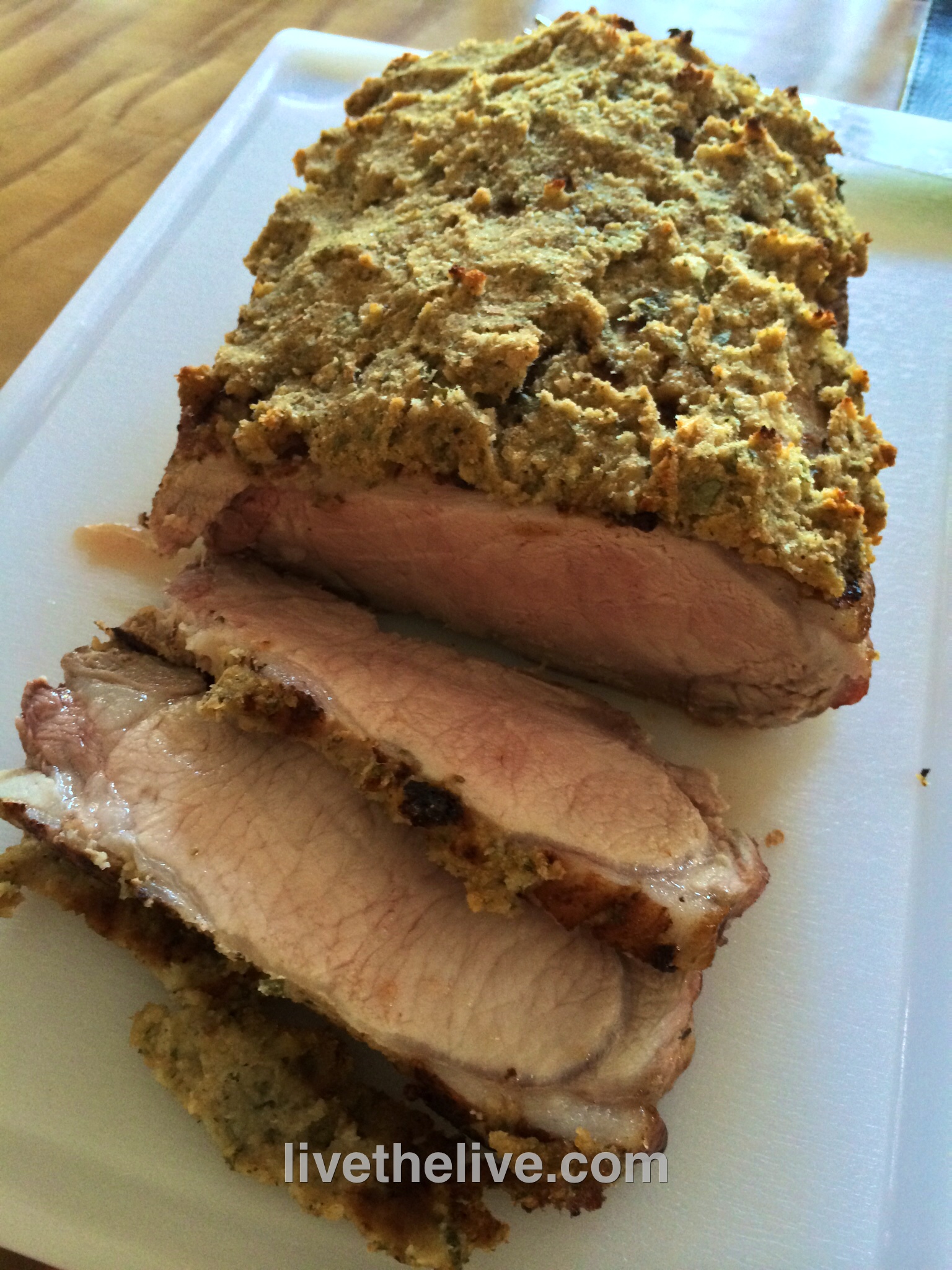
Heat an oven-proof pan. Using a little olive oil, sear the pork loin on all sides until brown. The  turn loin with fat side up and smear the applesauce/breadcrumb mixture over the top to form a crust.

Cook until meat temperature reaches 160 and crust is crunchy and brown on top. Let the pork loin rest before slicing.


Sometimes you take a couple of recipes you have in your file and you combine them to get delicious results. That’s what happened when I took my basic pork dry rub and then added my version of the Franklin barbecue sauce, as featured in a previous blog.

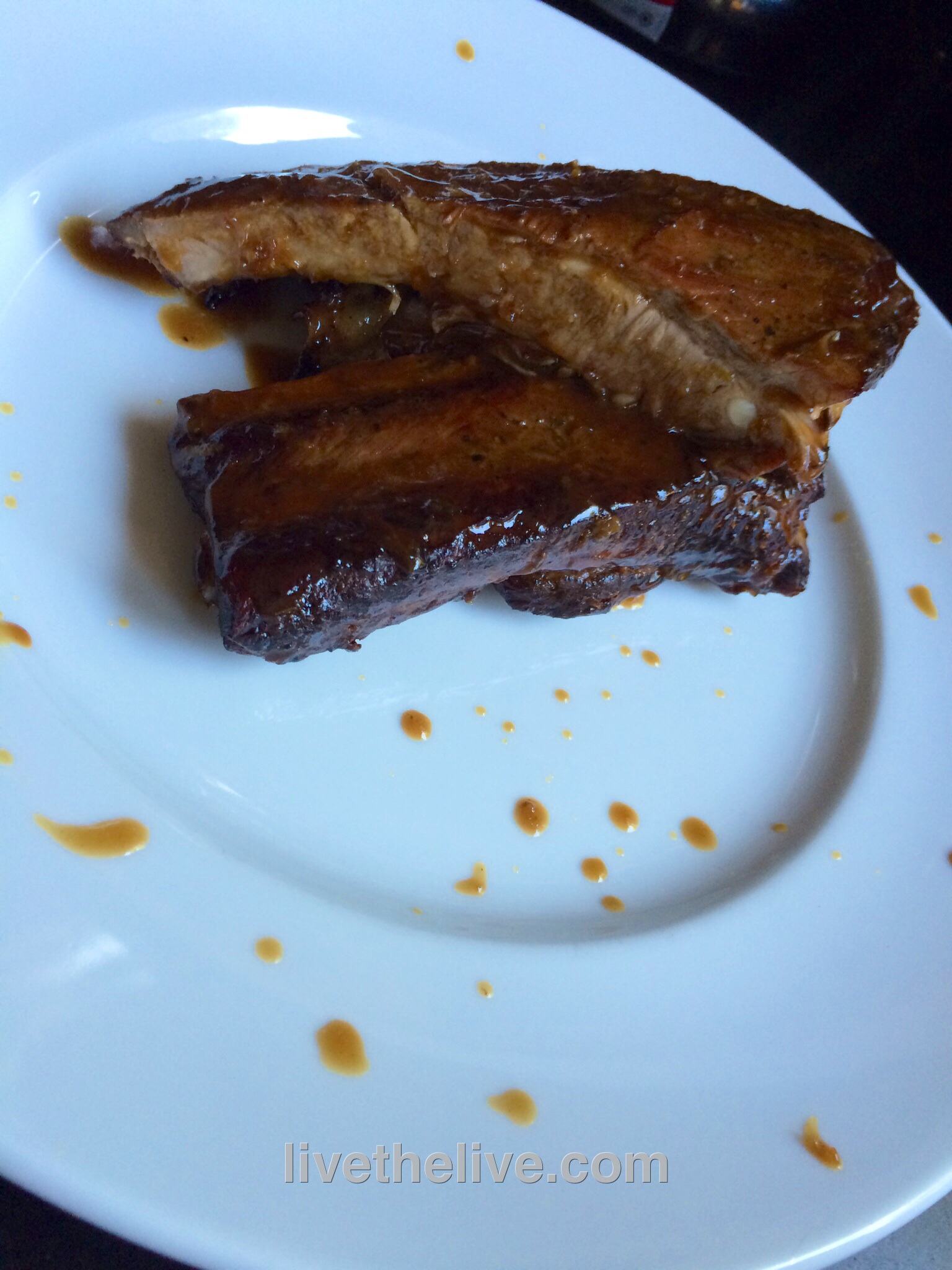
The ribs were intense, delicious, and did not require a smoker to reach fall-off-the-bone amazingness…


Intense ribs LTL


Alz Pork Rub


Ingredients:

2 tablespoons salt

1 tablespoon black pepper

1 tablespoon granulated garlic

1 tablespoon onion powder

1 tablespoon paprika


Combine ingredients and sprinkle liberally onto meat, rubbing it in well.


The Barbecue Sauce


Ingredients:

2 cups ketchup

3/4 cup water

6 tablespoons cider vinegar

6 tablespoons white vinegar

6 tablespoons brown sugar

3 tablespoons Worcestershire sauce

1 tablespoon chili powder

2 teaspoons salt

2 teaspoons black pepper

1 1/2 teaspoons cumin


Mix all the ingredients in a saucepan and simmer until the flavors have blended, about 20 minutes. Remove from heat and cool to room temp. If you store it in an airtight container in the fridge, it’ll stay good for a few months.


To cook the ribs…


Rub the ribs with the dry rub on all sides and wrap in aluminum foil. If you have a lot of ribs, it’s okay to stack them on each other for now. Place the wrapped ribs on a sheet pan and cook in a 250-degree oven for about 4 hours.

After 4 hours, unwrap the ribs and pour off any fat. Lay the ribs flat in one layer, uncovered, on the sheet pan and brush on all sides with the barbecue sauce. Cook for 1 hour more.


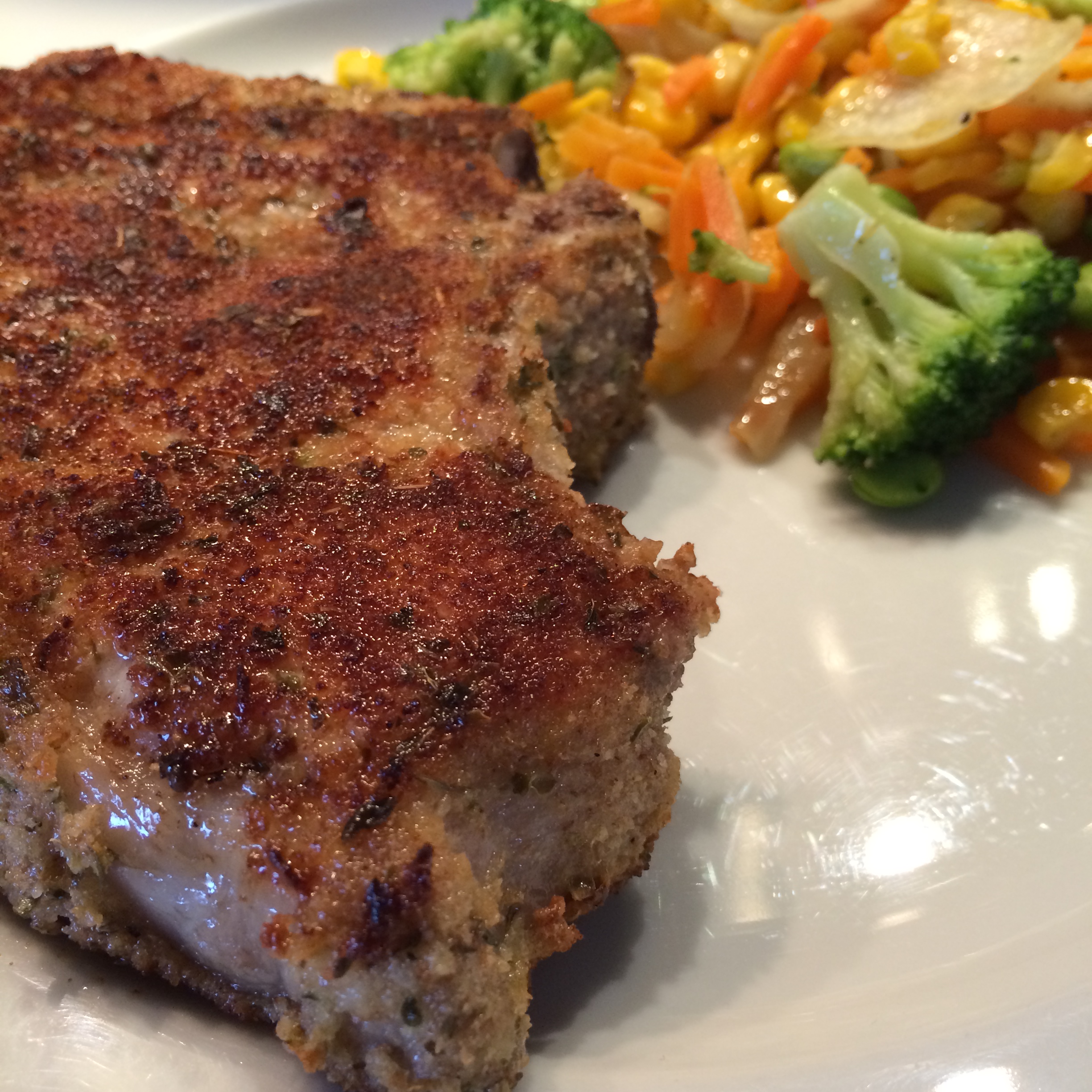
Pork chops were a favorite of mine growing up, but my Mom cooked them only one way: breaded and fried in a pan full of oil. They were good, but they were greasy, and my Mom was not big on seasonings. It was time to improve on the original.

chop 1


Ingredients:

2 Berkshire pork chops

1 egg

1/2 cup plain bread crumbs

1 teaspoon salt

1/4 teaspoon pepper

1 teaspoon dried oregano

1 teaspoon dried parsley

1/2 teaspoon granulated garlic

1/2 teaspoon onion powder

olive oil


Pre-heat the oven to 350 degrees.

Set up 2 bowls. In one, crack and scramble the egg. In the other, combine salt, pepper, oregano, parsley, granulated garlic and onion powder.

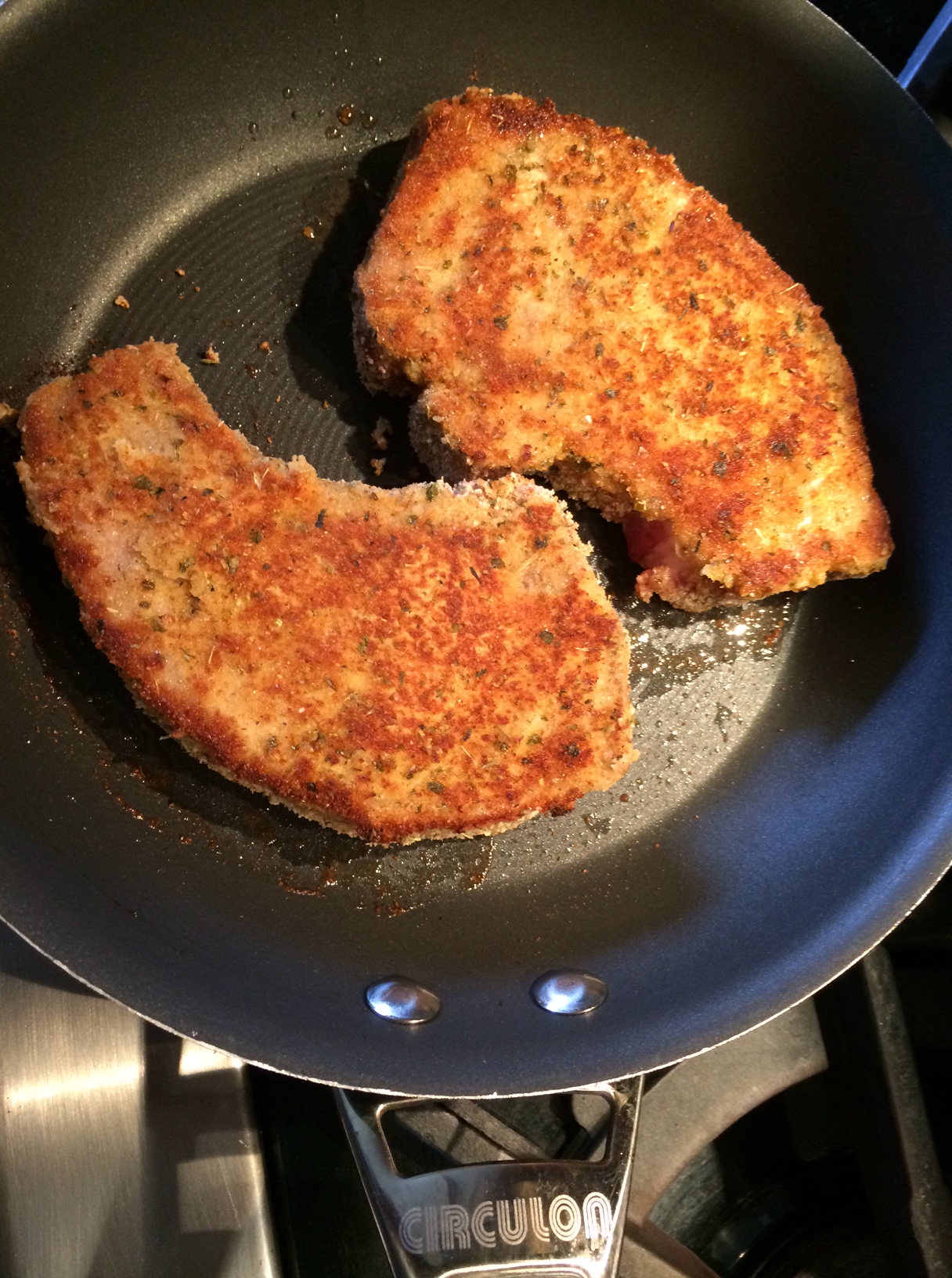
Place an oven-proof pan on medium-high heat and add a little olive oil. Once the oil is hot, cover the pork chops in the egg wash and then coat with the bread crumb mixture. Place in the hot pan to brown and sear. Do this with both chops.

After a few minutes, flip the chops over in the pan and place the pan in the oven to finish cooking.

chop 2

Remember, good pork does not need to be cooked until well done!


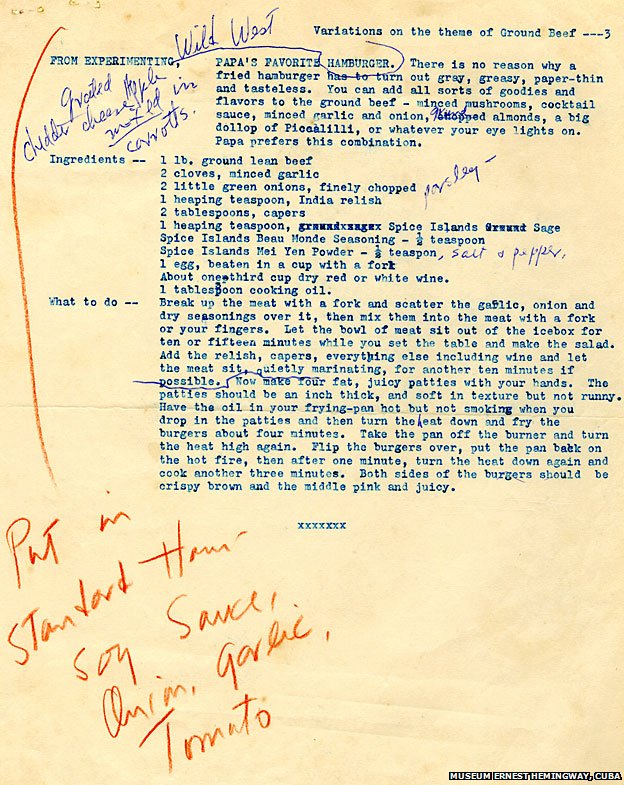
Ernest Hemingway loved his burgers…and he loved to put all kinds of crazy ingredients in them. Following the basic guidelines of his recipe, seen below, I put my own spin on it.

Hemingway's burger notes

Hemingway’s burger notes

I skipped the India relish. Didn’t have it in my pantry.

Beau Monde Seasoning is readily available, but I made my own at home:

1 tablespoon cloves

1 1/4 teaspoon cinnamon

1 tablespoon salt

1 tablespoon Bay leaf powder

1 tablespoon allspice

2 tablespoons black pepper

1 teaspoon nutmeg

1 teaspoon celery seed

1 tablespoon white pepper

Combine all these ingredients, grinding to a powder whatever you have as whole pieces: cloves, bay leaves, nutmeg, etc. Store in a tightly sealed glass jar.

And Mei Yen Powder can be replaced with equal parts salt, sugar, and MSG (which I leave out.) To this I add some soy sauce.

So here’s my take on it:

Ingredients:

1 lb. grass-fed ground beef

2 garlic cloves, squeezed through a garlic press

2 tablespoons minced red onion

1 tablespoon capers

1 teaspoon dried sage

3/4 teaspoon salt

1/2 teaspoon sugar

1 1/2 teaspoons soy sauce

1/2 teaspoon homemade Beau Monde seasoning

1/3 cup white wine (I use Alice White chardonnay)

1 raw egg

Combine all ingredients and let it sit in the fridge for an hour. The meat may be a bit mushy, but you can form 4 equal sized patties. Place them in a hot ovenproof pan that has a little oil and sear on one side. Flip burgers, and sear on the other side. Place pan in a 350-degree oven and cook until desired doneness.

The verdict: Hemingway was crazy! Though the burger had some exotic flavors–it tasted almost like a burger from the Middle East–my personal choice is still to go with a relatively plain burger of exceptional quality, season it lightly, and cook it to medium-rare. Toppings like caramelized onions or sautéed mushrooms are always welcome, but in many ways, less is more. Hemingway clearly thinks more is more…but maybe his burger meat wasn’t all that good and he need to mask the bad flavor. Anyway…a fun experiment!

I don’t exactly know when my love affair with bone marrow began, but suffice it to say that if I see it on a restaurant menu, I have to order it.
A 2 ounce serving of beef bone marrow has over 500 calories, so diet food it is not. But it has some calcium and “good” fats, especially if the cow was grass-fed.  Each 2 ounce serving has over 54 grams of fat, although most of it is unsaturated. How much protein it has depends on the marrow, but there are those carnivores out there that swear by bone marrow’s almost magical health food properties.
But whether it’s good for you or not, the main reason to eat bone marrow is taste. And I’ve found that when it comes to eating it, there are no gray areas…people either love it or are grossed out by it.
marrow
 
Bone marrow played a very important role in the development of mankind as a species. Long before we had the skills to hunt for our own food, about 2 million years ago, we feasted on the bones of fallen prey…or more accurately, what was inside the bones of fallen prey. A diet of fatty, high-calorie bone marrow meant that early man didn’t have to rely on the digestion of roughage alone to survive, and it allowed for the “luxury” of the development of larger brains.
Fast-forward to today, where the only critters that appreciate bone marrow are our dogs—if they’re lucky enough to get a bone—or foodies like us!
Aside from higher-end restaurants, bone marrow might be difficult to find at first. But you can certainly ask your local butcher for some—he’ll even cut them lengthwise or into short cylinders for you for easy access. I get mine online, with bones from grass-fed cows.

Cooking bone marrow couldn’t be simpler: a little salt and pepper, a drizzle of olive oil, then bake in a hot oven until bubbly and caramelized. Spread it on toast in the morning with your eggs, smear it on top of your steak instead of butter, or just scoop it right out of the bone.

I’ve made some changes to my bacon blog of over a year ago, taking many more steps toward true bacon greatness. Scroll down for my updates…

There are few foods as magical as bacon. Add bacon to just about any dish you’re preparing, and it elevates it to incredible new heights of flavor. The BLT is possibly the greatest sandwich ever invented: just a few simple, fresh ingredients, when placed together, transforming into one of the most amazing treats on planet Earth.

And it all depends on the bacon.

For many years, I’ve bought my bacon on-line from Burger’s Smokehouse, a family run business in Missouri that not only sells some great bacon (get the thick-sliced country bacon—my favorite), but also smoked turkeys, ham and more. The prices are excellent and they include shipping.

But it was time to take the next step: I had to make my own bacon!

Bacon comes from the pork belly. So I bought a few slabs of insanely good pork from my friends at Fire Fly Farms in Stonington, CT (www.fireflyfarmsllc.com), and followed the simple curing techniques outlined in a great book about making all kinds of prepared meats (sausages, salamis, and of course, bacon): “Charcuterie,” by Michael Ruhlman and Brian Polcyn.

To cure bacon, all you really need is some salt and some sugar, and what they in the curing biz call “pink salt,” which is not to be confused with salt that happens to be pink, like Himalayan salt you would find in a spice catalog. Pink salt is bright pink—to let you know that this is special salt that should only be used in small quantities for curing. And the reason for that is because it has nitrites. Nitrites delay the spoilage of the meat, and help keep the flavors of spices and smoke. That’s good. But nitrites can break down into nitrosamines, which have been known to cause cancer in lab animals. But let’s face it: you would need to eat a ton of cured meat to really worry about this.

To make the basic dry cure:

1/2 lb. kosher salt

4 oz sugar

1 ounce (5 teaspoons) pink salt

Combine these ingredients well. You won’t need all of it unless you’ve got a lot of pork belly. An important note: kosher salts do not all weigh the same, so that’s why I go by the weight and not a cup measurement.

Once you rub the pork belly with the basic dry cure, place it in a Ziploc bag, squeeze the air out of it, and seal it well. Place in the fridge for about a week, flipping it over a few times to let gravity do its work. You’ll see that the salt will draw moisture out of the meat and form a brine. This brine will continue to cure your pork belly, so leave it in there.
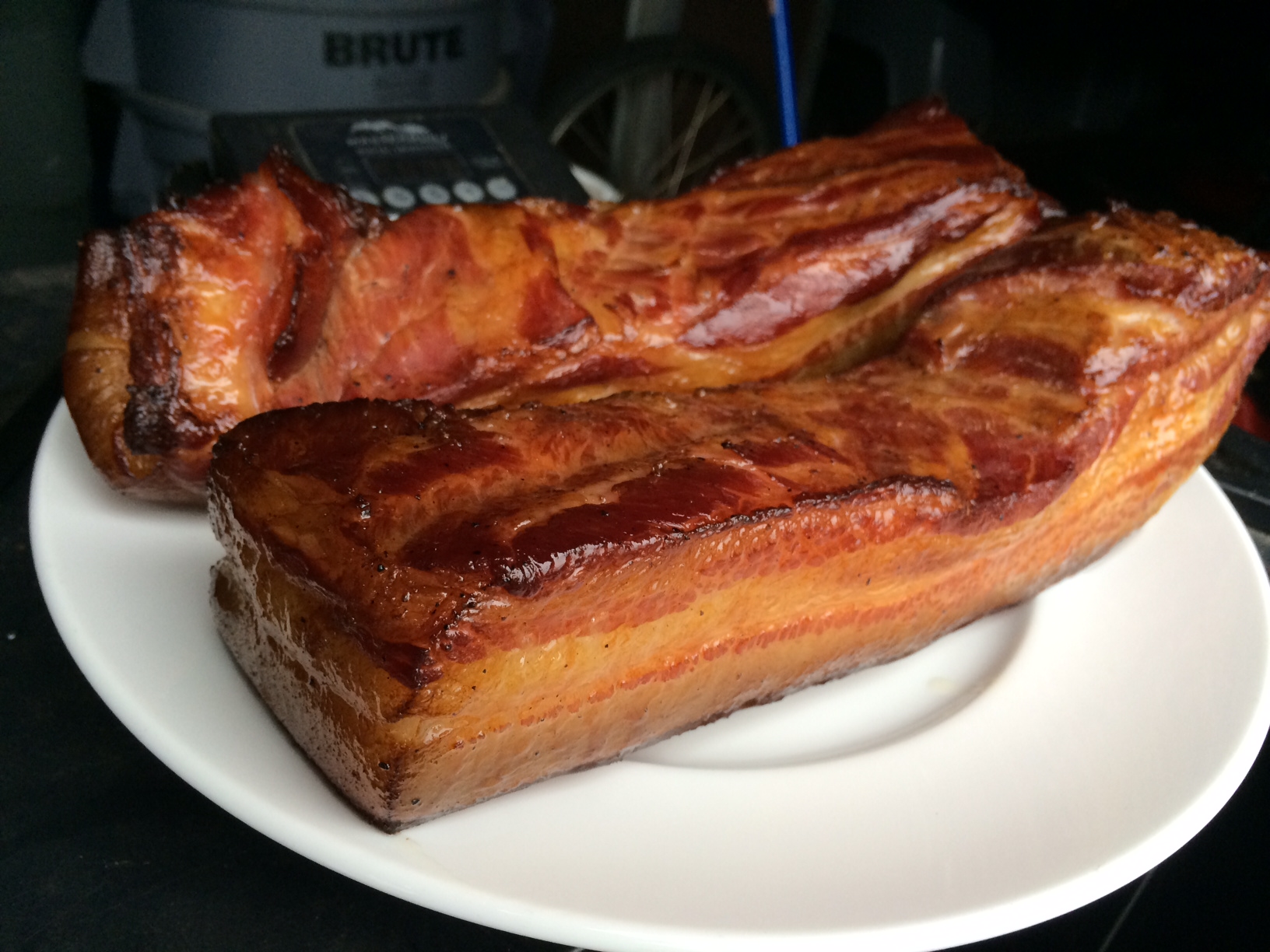
Once the pork belly has been cured, wash the brine off the meat, pat dry with paper towels. Now it’s time to cook. You can simply cook the pork belly at 200 degrees for about 2 hours, until the internal temperature reaches 160 degrees, or do what I did: place the pork belly in a digital smoker, cooking it at 250 degrees for 1 hour, then adding hickory chips and smoking it at 250 degrees for another hour.

That’s it. You have achieved bacon!
Bacon, straight out of the smoker.

Bacon, straight out of the smoker.

Let me tell you…that first slice you cut off that bacon and toss in a pan to lightly fry for a few moments will be the best bite of bacon you have ever had in your life!
The reward is so worth the effort. If you don’t want to bother going online or if you don’t have a local farm to buy your pork, simply go to your favorite butcher and ask for pork belly. It’s usually available. And if you’re making one slab of bacon, why not make it three or four? It freezes well. And…you will eat it. You know you will!

Sliced, and ready for frying.

Sliced, and ready for frying.

Since I posted the above information, I’ve had the opportunity to tweak my bacon curing recipe. The result was a more balanced, less salty bacon with tons of flavor…

Ingredients:

1/4 cup of the basic dry rub (recipe above)

1/2 cup light brown sugar

1/2 teaspoon ground black pepper

Combine these ingredients and rub on all sides of the pork belly. Place in Ziploc bags and squeeze all the air out of them. Place in a container in the fridge and turn them over every day to let gravity do its work. A brine will form inside the bag…this is good. It will cure the pork belly. After about a week, remove the pork bellies and rinse them with cold water. Pat them dry with paper towels and then proceed to the smoker.

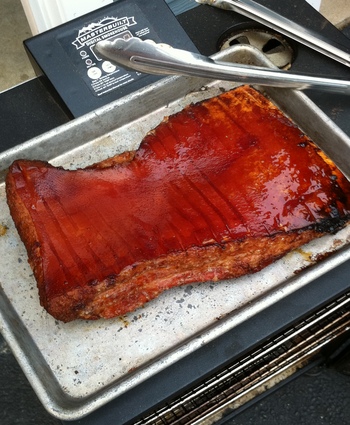
Bellies in the smoker

Bellies in the smoker

I use a digital smoker, so I set the temp for 250 degrees and cook the pork bellies at this temperature for one hour. I then add hickory chips and smoke the bellies at 25o degrees for one more hour.

Smoked bacon

Smoked bacon

At this point, you have achieved bacon! While the bellies are still warm, you can easily slice off the pork skin off the belly. I discard it. Slice the bacon into whatever thickness you like, and fry some up immediately! Once the rest of the bacon has cooled to room temp, cut them into chunks, wrap individually, and freeze until ready to use.

Frying in the pan!

Frying in the pan!