Posts Tagged ‘dinner’

PICKLED BEETS

Posted: December 10, 2025 in beets, Food, pickling, Recipes
Tags: , , , , , ,

Growing up in a Lithuanian family, there was a small group of foods that I had to love to survive, since they constantly appeared on the dinner table: potatoes, cabbage, mushrooms, herring, and beets. Fortunately for me, I loved them all, despite my Mom’s desire to boil everything to death.

One of the many uses for beets, besides a cold summer soup and a hot winter soup, was pickling. Pickled beets are an excellent side dish for any hearty meat dish. (I love ’em with kielbasa!)  Store-bought pickled beets pack way too much sugar in every jar, so it was time to make my own.

A real time saver is a product called Love Beets, which you can find in any supermarket. If you use them, you can skip the roasting and messy peeling of the beets altogether.

This recipe makes one large Mason jar’s worth of pickled veggies.


beets


4 to 8 beets, scrubbed (your favorite variety)
1 cup apple cider vinegar
1 cup water
3 garlic cloves, crushed
3 tablespoons sugar
2 teaspoons whole black peppercorns
1 tablespoon Kosher salt
1 onion, sliced (or more, if you love ’em like I do!)
cauliflower pieces (optional)
fresh dill (optional)


Pre-heat the oven to 450. Wrap the beets in foil and roast them for about an hour, until tender. When they’re cool enough, carefully peel and quarter them. (If you’re using Love Beets, no cooking is necessary. Just open the package, and halve them, quarter them, or slice them…whatever is your preference.) 

In a medium saucepan, combine the vinegar, water, garlic, sugar, peppercorns and salt. Bring it to a boil and simmer over moderately high heat, stirring until the sugar has dissolved. Let the pickling liquid cool to warm, about 15 minutes.

In a heat-proof glass jar or container, layer the beets, onions, and optional cauliflower. Pack them down a bit so there’s not a lot of air between them. Pour the pickling liquid in the jar, covering the veggies. Seal the jar tightly. Let it stand at room temp for 2 hours, then place it in the fridge overnight.


They stay fresh for a week, but they won’t last that long!


BALSAMIC BRAISED PORK CHOPS

Posted: December 7, 2025 in Uncategorized
Tags: , , , ,

I was in the supermarket the other day, and a pack of pork chops called to me as I walked by the meat department. I hadn’t had pork chops in ages, and it was time to try something new with them.

The balsamic vinegar used in this recipe is not the crazy expensive stuff. It’s the bottle you probably already have in your kitchen cabinet that costs about nine bucks.

This recipe works with thick or thin pork chops, your choice.

The cool thing about this recipe is that you make it all in one pan, and on the stovetop.

4 or 5 bone-in pork chops
olive oil
Kosher salt and freshly cracked black pepper
2 teaspoons dried thyme
1 large Spanish onion, diced
2 large cloves of garlic, minced
2 cups chicken broth (homemade is always best)
3 tablespoons Dijon mustard
5 tablespoons balsamic vinegar
6 tablespoons brown sugar
2 tablespoons Worcestershire sauce

Season the pork chops with the salt, pepper and thyme.

Add some olive oil to a large pan, and when it’s hot, sear the pork chops on both sides until they’re nice and brown.

Remove the pork chops from the pan and set them aside. Pour out the fat in the pan, add a touch of olive oil, and put it back on the heat. Add the onions, sautéing them for about 10 minutes until they’ve softened, and then add the garlic. Sauté a minute more.

Add the chicken broth, Dijon, balsamic vinegar, brown sugar and Worcestershire sauce. Stir to combine.

Return the pork chops back to the pan, nestling them down into the sauce. Add any of the juices that may have collected when you set the chops aside.

Bring the pan to a boil, then reduce to a simmer and cover the pan. Let it cook for 45 to 60 minutes. I like to flip the chops about halfway through the cooking process.

To serve, remove the chops from the pan, and smother them with the sauce! You may want to reduce or thicken the sauce a bit, but I like it just the way it is!

TANDOORI ROAST CHICKEN

Posted: November 30, 2025 in Uncategorized
Tags: , , , ,

My family has made it pretty clear over the last half-dozen years or so that they’re tired of turkey on Thanksgiving. So when I saw a recipe in “Food and Wine” Magazine for a roasted turkey with Indian spices, I thought: “Why not try this with chicken?”

The recipe is from Food Network’s Maneet Chauhan, who is a regular on “Guy’s Grocery Games,” “Tournament of Champions,” etc. She’s got herself a restaurant empire in Nashville, of all places, and her knowledge of Indian food is pretty incredible. I knew I couldn’t go wrong using her recipe.

Indian cuisine is still pretty new to me, though I’ve made classic dishes like butter chicken. There are many ingredients in this dish that the average person won’t have in their cupboard, (ginger-garlic paste, tandoori masala, garam masala, kasoori methi, ghee) and maybe not even in the local supermarket. So you might have to do what I did, and look these things up on line and buy them ahead of time. But I found it all to be a great learning process.

You can marinate the bird overnight, or prepare it right before cooking. I choose to marinate overnight, because you have more time to really flavor the meat.

1 6-to-7-lb. chicken (I used a Perdue Oven Stuffer Roaster)
1/2 cup whole milk yogurt
1/4 cup chopped fresh cilantro
1/4 cup cream cheese, softened
1/4 cup ginger-garlic paste
1/4 cup fresh lemon juice, plus 1 lemon sliced in quarters
2 1/2 tablespoons tandoori masala
2 teaspoons Kosher salt
1 1/2 teaspoons garam masala
1 1/2 teaspoons kasoori methi
1/2 teaspoon black pepper
2 cups water
1 large yellow onion, roughly chopped
1 large carrot, roughly chopped

Thaw the bird and remove the giblets. Save them for another time.

In a bowl, combine the yogurt, cilantro, cream cheese, ginger-garlic paste, lemon juice, tandoori masala, salt, garam masala, kasoori methi and black pepper.

Gently slide your fingers under the skin of the breast and thigh of the chicken to loosen it. Generously rub the yogurt marinade under the skin as far as you can reach without tearing it. Also spread some of the marinade inside the cavity of the bird. Take the lemon quarters and stuff them into the cavity of the bird as well. Tie the legs of the bird together to close the cavity.

Note: You don’t want the marinade on the outside of the skin until right before cooking! So save some of the marinade in the fridge for the next day.

Place the bird on a pan and in the fridge, uncovered, overnight.

The next day, pre-heat the oven to 425°. Remove the chicken from the fridge one hour before cooking, to bring it to room temperature. Rub the remaining marinade all over the bird in a thin layer.

To cook the bird, you want to place it in a roasting pan that elevates it off the bottom of the pan. In the bottom of the pan, pour in the water, and add the onion and carrot pieces. Place a rack on top of that, and put the chicken on top.

Bake the chicken at 425° for 35 minutes. Then drop the oven temperature to 350° and bake for 20 to 30 minutes more. Check the temperature of the bird by placing an instant-read thermometer in the inner thigh, being careful not to hit the bone. It should read 165°. Remove the bird from the roasting pan and place it on a plate. Cover it with foil to let it rest for 20 to 30 minutes.

While the chicken is resting, it’s time to make the gravy.

2 tablespoons ghee
1 teaspoon cumin seeds
1 teaspoon tandoori masala
2 tablespoons cornstarch
2 cups chicken stock
pan drippings from roasting the chicken

Melt the ghee in a saucepan over medium heat. Add the cumin seeds and tandoori masala. Cook, stirring often, being careful not to burn them. Whisk in the cornstarch, mixing well to avoid lumps. Then slowly add the chicken stock. Pour in the drippings from roasting the chicken. (You don’t need the onion and carrot–they’ve done their job.) Bring it to a simmer, then reduce the heat, and cook, stirring constantly, until the gravy is thick enough to coat the back of a spoon. To serve, pour the gravy through a wire-mesh strainer into a gravy boat.

RISOTTO

Posted: November 5, 2025 in Uncategorized
Tags: , , , ,

Good things come to those who wait. Risotto makes you wait!


When I recently made my slow-cooked braised beef short ribs, my daughter requested more than just a simple starch to go with it. One of her favorite dishes in the whole wide world is risotto, and though I’ve never made it before, I knew it wasn’t difficult…just time consuming. Well, a recent rainy Saturday was the perfect day to give it a try.

Like many great Italians dishes, risotto requires love. It requires patience. And it requires few ingredients, but they need to be the best quality ingredients you can get your hands on.

This dish is gluten-free, and vegetarian if you use vegetable stock. (It’s not vegan because of the butter and Parmigiano Reggiano.)


1 tablespoon unsalted butter
1 tablespoon olive oil
1/2 medium onion, chopped finely
4 cloves garlic, minced
1 cup Arborio rice (basmati is a good substitute)
1/4 cup dry white wine
4 cups chicken or vegetable stock, kept warm on the stove top (homemade is best)
3 tablespoons chopped fresh parsley 
1 cup frozen peas
1 cup freshly grated Parmigiano Reggiano 


In a large pan, heat the butter and olive oil over medium heat. 


Add the onions and sauté them until they’re translucent.
Add the garlic and sauté for 10 seconds.

Add the rice and stir really well, so that every bit of the rice gets coated with the butter and oil mixture.
Add the wine, and stir gently, letting the rice absorb it.


Homemade chicken stock really brings the flavor!


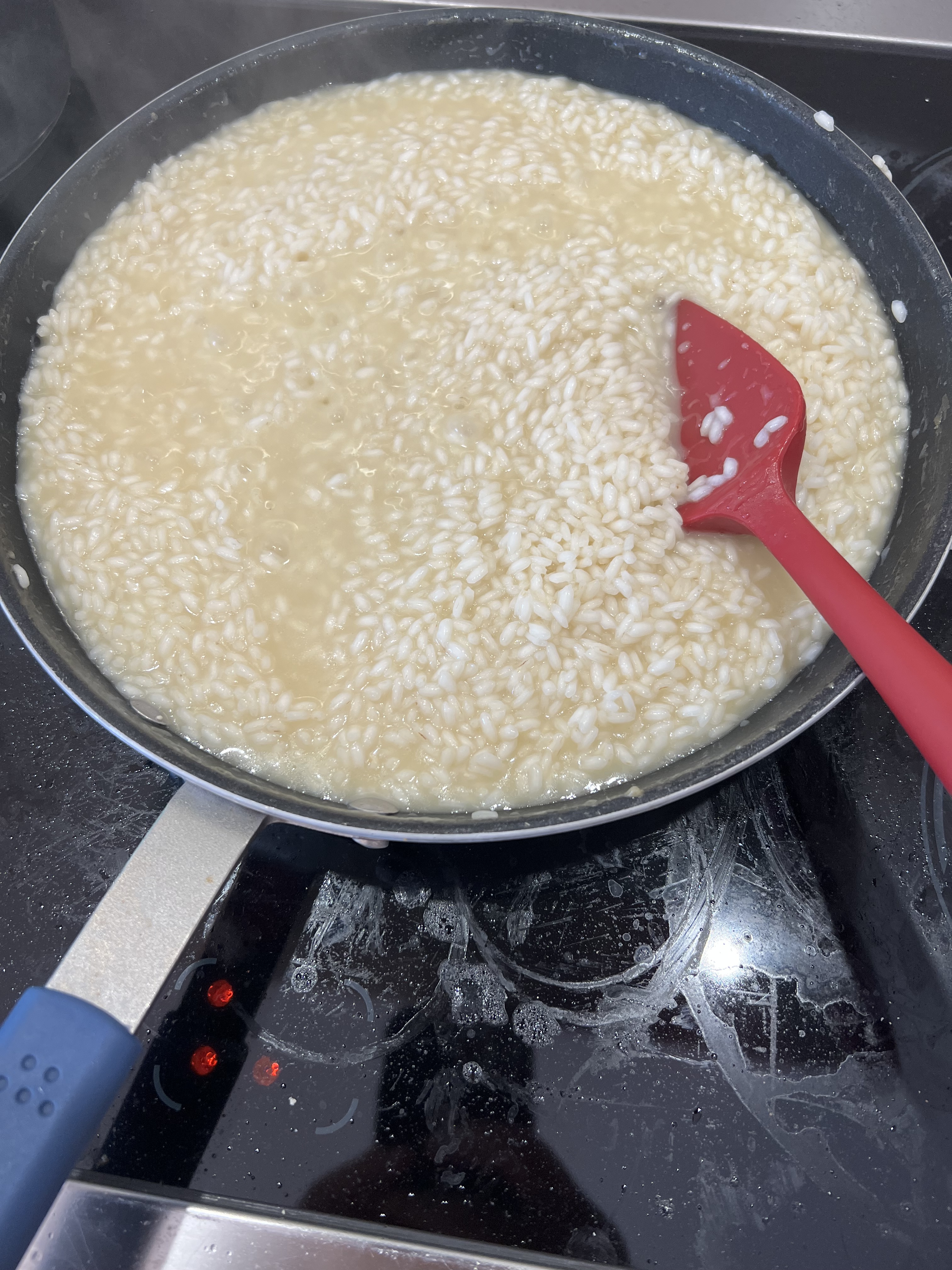
Add a ladle of the stock to the rice, stirring gently, letting it absorb all the stock. Only once the stock has been absorbed do you add another ladle of stock. Repeat this process until all the stock has been used and the rice has softened. This should take about 25 minutes, and you need to be standing there, stirring gently, the entire time.


Just before the last bit of stock has been absorbed, add the parsley and the peas.


Stir for a bit and then add the grated cheese.


Serve immediately!


BRAISED BEEF SHORT RIBS

Posted: November 2, 2025 in Uncategorized
Tags: , , , ,

Although beef short ribs can be an expensive dish at many a fine restaurant, the expense is not in the ingredients, but in the time it takes to prepare it. But it is definitely worth the effort!


I used grass-fed beef short ribs for my recipe, and I think it made a huge difference in taste. But use what you like, and can easily find. Short ribs can be extremely fatty. Although you want to keep some of the fat, remove any excess fat that will only make the final braising liquid taste greasy.

I didn’t have a Dutch oven, which is really the right tool for this recipe, so I seared my beef and cooked the veggies in a pan, and then transferred everything to a deeper oven-safe pot with a lid when it was time to cook.

In doing my research for this recipe, I found dozens of variations. I wound up going with a hybrid of two, both from Food Network chefs: the late Ann Burrell, and Robert Irvine. Burrell’s recipe was heavy on the wine, and used water. Irvine’s was heavy on stock, a little wine, and no water.


3 to 5 lbs. grass-fed beef short ribs, trimmed
3 large carrots (200g)
3 stalks celery (200g)
1 medium onion (200g)
3 cloves garlic
Olive oil
Bacon fat (optional)
1 can (6 oz.) tomato paste
2 cups red wine, like a Cabernet Sauvignon
3 cups chicken or beef stock (homemade is best)
Kosher salt and pepper

About an hour before cooking, trim the beef short ribs and season them all over with Kosher salt. Set them aside.


Pre-heat the oven to 325.


Place the carrots, celery, onion and garlic in a food processor and process until you get something that resembles a paste.
Right before searing the short ribs, re-season them with salt and pepper.


Heat a large pan on high, and when hot, add enough olive oil to coat the bottom. Sear the beef short ribs in the oil, making sure they’re nice and brown on all sides.


Set the beef aside in a bowl, pour out the fat in the pan, and replenish with new olive oil, (and some bacon fat if you have it and want to use it), just enough to coat the bottom of the pan.


Pour in the veggies from the food processor, season them with salt and pepper, and sauté them until they really caramelize. You want them to start taking on a brown color. 


If the veggies start sticking to the pan, turn down the heat, but the stuff that sticks to the pan is full of flavor. Let that happen! It will all come off later when you deglaze with the wine.


You want those sticky brown bits!


Add the tomato paste and let it cook down for 5 minutes or so.


Add the red wine, and you’ll see how it deglazes the pan and cleans all those tasty brown bits off the bottom. Add the stock and continue stirring.


See how the wine cleans the bottom of the pan? It’s all about flavor!


Place the beef short ribs (and any juices that may be in the bowl) into a Dutch oven or large oven-safe pot. Pour the pan with the veggie-wine-stock mix over the top. Add water if needed to cover the beef.


Cover the pot and place it in the middle of the oven. Cook for 3 hours, flipping the beef ribs once halfway through. Add water at the halfway point if it looks like the meat is exposed.


After 3 hours, remove the lid off the pot and cook for another 45 minutes to an hour. This allows the braising liquid to reduce and concentrate its flavors.
You can turn the oven off at this point and just leave the pot in it until you’re ready to serve.


Serve with the braising liquid.


The risotto I made to go with it will be posted in another blog.

ASIAN-STYLE ROASTED PORK

Posted: October 8, 2025 in Uncategorized
Tags: , , , ,

I love pulled pork, or pork roast…cuts that use inexpensive, fatty cuts of meat that are full of flavor as long as you roast them low and slow.


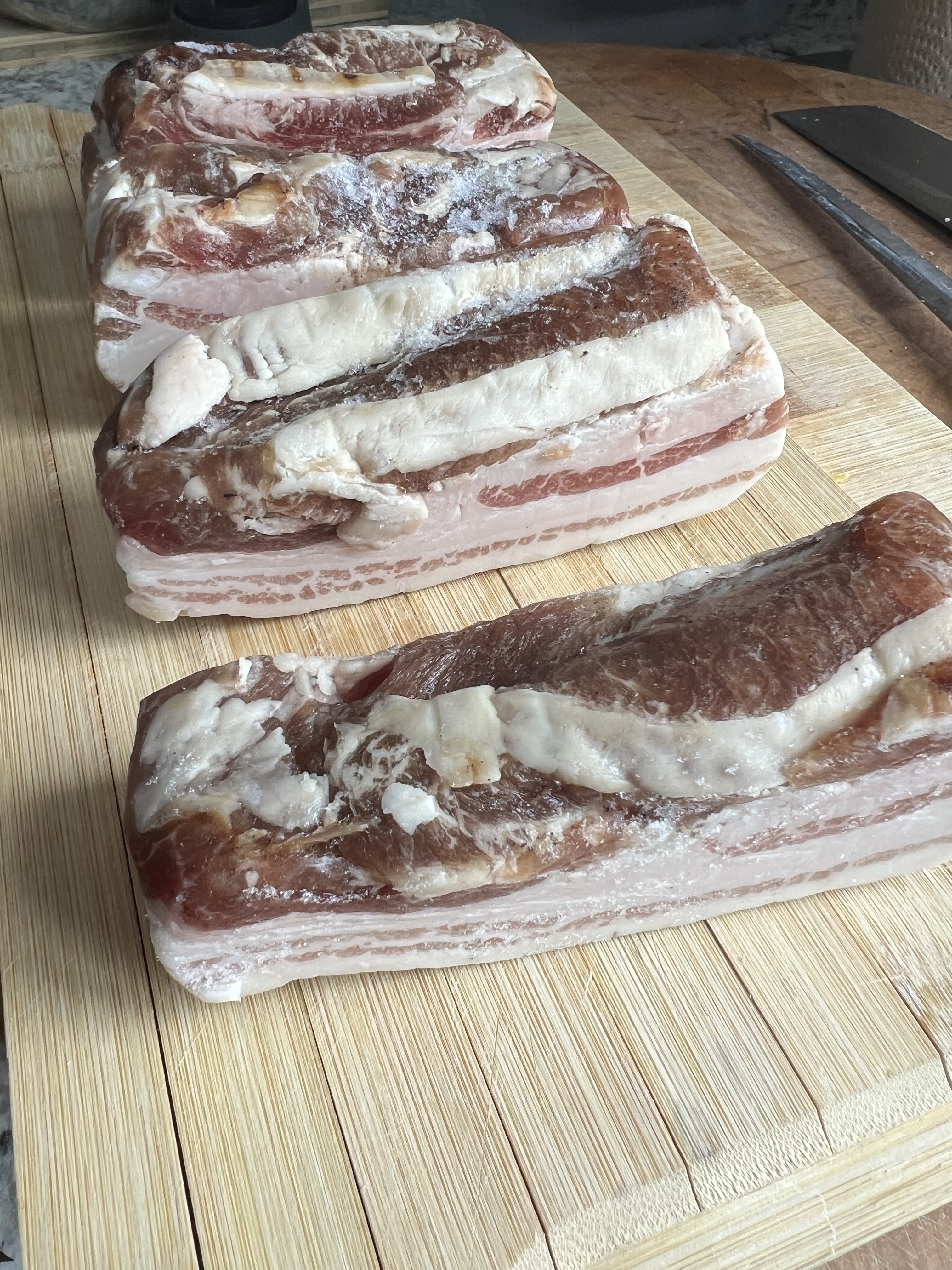
A very special cut of pork!

I recently received a gift of a very fancy cut of pork: Spanish Iberico, where the pigs roam freely, feasting on acorns. It’s some of the best pork you can buy.

But even with a much less expensive cut of pork, like a pork shoulder, you can achieve some delicious results as long as you give it time: time for the marinade to get absorbed into the meat, and time for the meat to cook slowly at a low temperature. Low and slow is key to melting the fat and gristle, and making the meat as tender as it can be.

The pork, before marinating.

Just like with a basic pulled pork recipe, the spices you use make all the difference. I usually make a spice rub that I generously rub all over a pork shoulder when I’m preparing pulled pork. Then it goes in the smoker for as much as 10 hours, depending on the size of the shoulder.

In this case, I’m using a marinade, which needs to be absorbed into the meat. So if I was using a larger cut, I would butterfly it, and marinate it that way. The Iberico pork that I used in this recipe was under 2 pounds, so I left it whole.

I combine all the marinade ingredients into a bowl…

3 tablespoons Chinese Five Spice powder
3 tablespoons soy sauce
2 tablespoons hoisin sauce
2 tablespoons maple syrup
1 tablespoon Chinese chili garlic sauce
1 tablespoon rice vinegar (same thing as rice wine vinegar)
1/2 an onion, chopped
3 garlic cloves, chopped (optional)

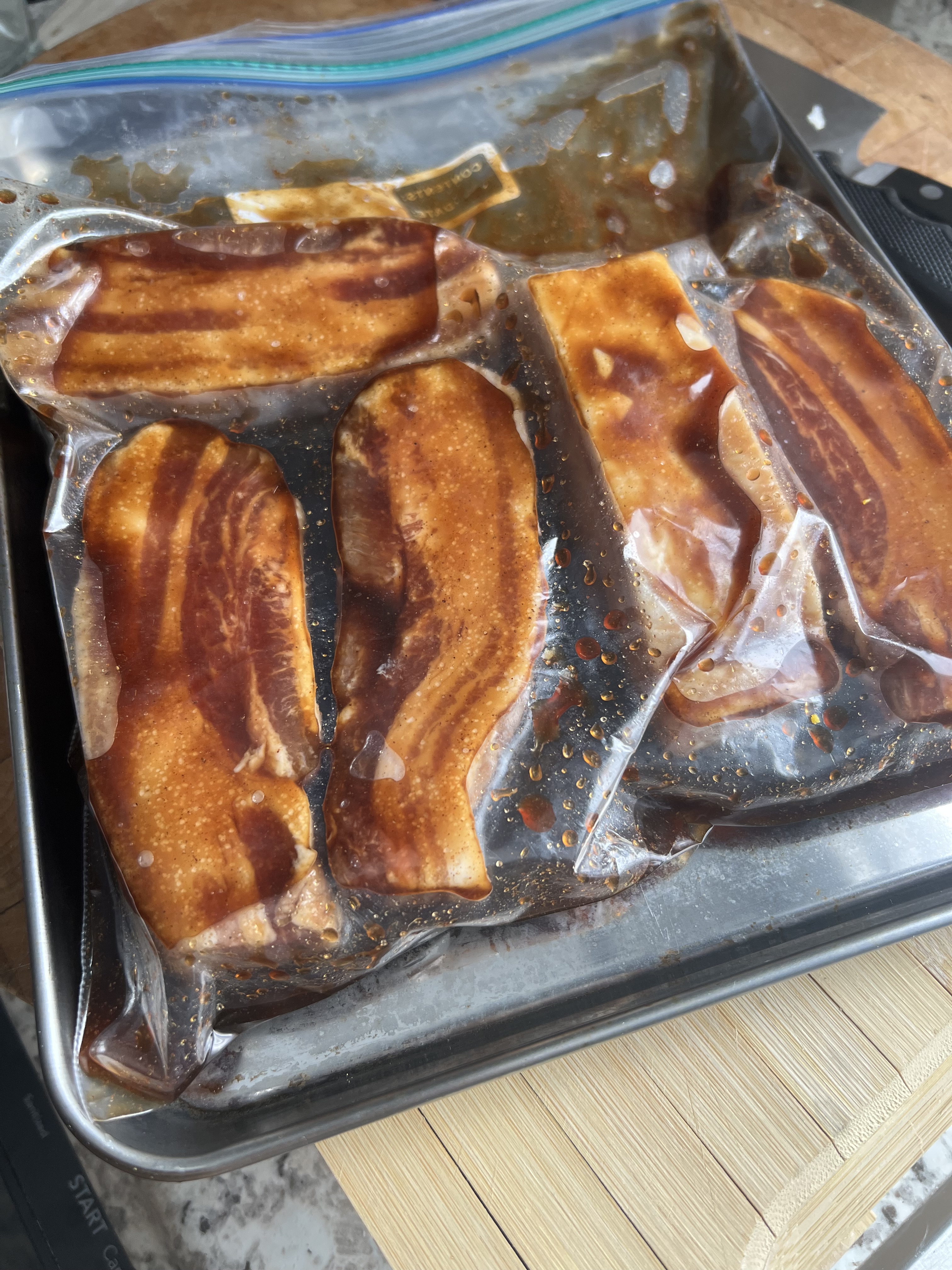
Once the piece of pork has been trimmed of any obvious hanging fat (remember, you don’t need to butcher the meat…the fat and gristle will melt while cooking and add flavor), place in a Ziplock-type freezer bag, and pour in the marinade. Squish the bag around carefully, to make the marinade makes good contact with the meat. Place the bag in a bowl (to prevent accidents) and place the bowl in the fridge overnight. Squish the bag around every few hours.


Pre-heat the oven to 275 degrees. Use a baking pan large enough to hold the roast.

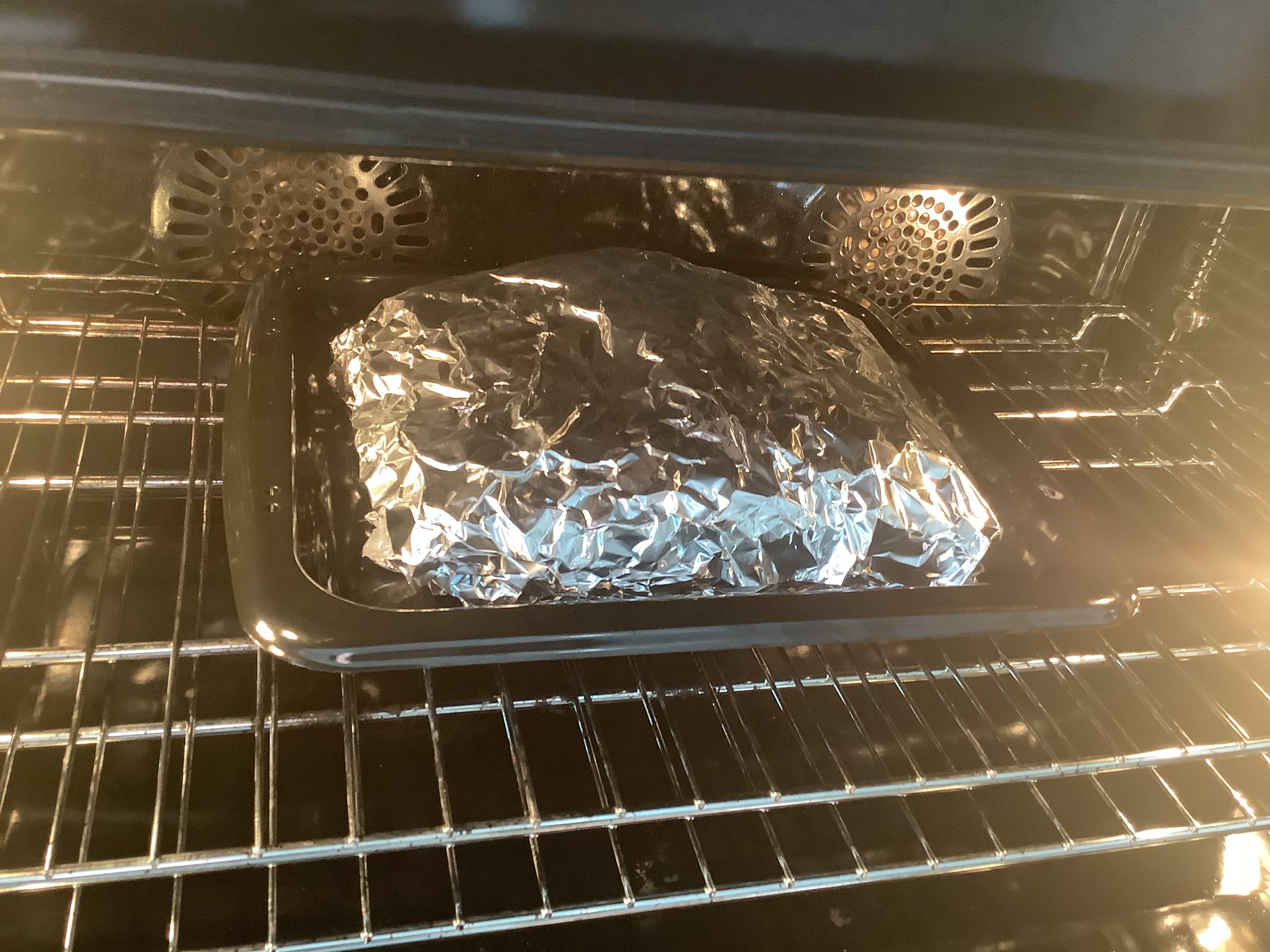
Remove the roast from the marinade, and wrap it in aluminum foil. Place the foil on the baking pan and into the oven. The amount of time you cook the pork will depend on the size of the roast, so use a thermometer to check if the meat is ready. My roast was ready in less than 2 hours, but it was a small one.


Halfway through cooking, while I was checking the temperature, I opened the foil and basted the roast with some of the marinade. Then I re-wrapped it, and placed it back in the oven.


I save the marinade to brush on the roast halfway through the cooking process. I could also use it as a dipping sauce when serving, but if I did that, it’s important to place the marinade in a saucepan and bring it to a boil to kill all germs! Remember, that marinade was swimming around raw pork! Once it has boiled for a bit, you can set it aside to cool to room temperature.


Done!


Pork should be cooked to a temperature of 160 degrees, so I remove it from the oven at 150 degrees, knowing the temperature will still rise as the meat rests.


Let the meat rest for at least 30 minutes.


SWEET POTATO CORNED BEEF HASH

Posted: September 28, 2025 in Uncategorized
Tags: , , , ,

Corned beef hash is actually a very simple thing to make. The most difficult part is the corned beef, especially if you’re curing it yourself. That process takes about three weeks…a long time to wait for a plate of hash!


If you have a package of already prepared corn beef that you bought at the supermarket, thaw it, and rinse it in clean, cold water.

I post my corned beef recipe every year around St. Patty’s Day. If you want to make your own, just use the search button on my blog to find the recipe.


A beautiful slab of corned beef, after 3 weeks of curing. I trim large pieces of fat and gristle off before cooking.


At this point, many people choose to boil the corned beef, but I don’t. Instead, I place the piece of brisket in a container large enough to hold it covered with more cold, clean water. I let it sit in this cold water for about 12 hours. I dump some ice into it to keep everything cold.  I change the water a couple of times over the 12 hours. Much of the salt will be washed away by this process. I pat the meat dry with paper towels.

I preheat the oven to 325°.


I lay a couple of sheets of foil down on a baking pan, and then add chopped carrots, celery and onions to it. I place the brisket on top of the veggies.


I wrap the brisket tightly in the foil, and place the pan on the center rack of the oven.


I let it cook for about 3 1/2 hours for a 8-pound piece of meat. Cook it less if yours is smaller.


I let the meat cool to room temperature in the foil, then unwrap it, and cut it into manageable sized pieces for future use. I wrap each piece tightly in plastic wrap once it has cooled, and I place the wrapped pieces in a sealed bag and into the freezer. 


Of course, you have to slice off a few pieces to taste your masterpiece!


Once the corned beef has cooked, it’s ready for sandwiches, and of course, hash! (Pastrami is another series of steps, discussed in another blog.)


A piece of cooked corned beef, about 1 lb., cubed
1 medium onion
2 lbs. sweet potatoes 
olive oil
salt and pepper

Preheat the oven to 350°. If the corned beef is frozen, remove it from the freezer an hour earlier, letting it come to room temperature.


Peel and cube the sweet potatoes. Make the cubes about a half-inch around. Placed them in a single layer on a large sheet pan, sprinkling them with olive oil, and seasoning them with salt and pepper. Toss the sweet potatoes to coat them with the seasonings and then place the sheet pan in the oven, baking for about 25 minutes, until the sweet potatoes are fork-tender and have tasty caramelized, slightly charred edges.


A few minutes before the sweet potatoes are done cooking, finely chop the onion and sauté it in a large pan with some olive oil.

Cut the corned beef into small cubes, about a quarter-inch in size.


Once the onions are translucent, add the cubed corned beef to the pan, and warm it through.

Now add the sweet potatoes to the pan and mix thoroughly to combine. Season with salt and pepper.


Your sweet potato corned beef hash is ready to serve! It also freezes well, so don’t be afraid to make extra!

EASY FRIED GULF SHRIMP

Posted: September 26, 2025 in Uncategorized
Tags: , , , ,

I love fried shrimp. It’s like seafood candy. And I’ve got a really easy method of making it.

For me, the secret to great fried shrimp is a light batter. I’m not crazy about the heavy, almost pancake mix-like batter that is used in some restaurants for shrimp or onion rings.

As I looked through many recipes, I found that the secret to a lighter batter is rice flour. I didn’t have any in my cupboard per se, but then I found a bag of Bob’ Red Mill Gluten_free 1 to 1 Baking Flour, which turns out to be mostly rice flour. I decided I would use that, scooping a couple of cups of it into a bowl.

My go-to seafood seasoning is Chef Paul Prudhomme Seafood Magic. I added a couple of tablespoons of that to the flour, and mixed it well.

In a separate bowl, I scrambled two eggs.

I use only wild-caught American shrimp, never the nasty stuff from Asia. Thawing the shrimp is simply a matter of placing the frozen shrimp in a bowl, and covering them with cold water (never warm) and in a couple of hours, they’ve thawed out. Then I drain the bowl, and dry the shrimp with paper towels.

In a pan on the stove, I have about an inch of a high smoke point oil, like avocado oil, heating it to about 325°, using a thermometer to check.

Cooking in batches, I put about a dozen shrimp into the eggs, coating them well, then transferring them to the flour mixture, coating them well again, and shaking off the excess. Then I carefully put them in the hot oil. About 30 to 45 seconds on each side is all the shrimp needs to be perfectly cooked. I drain them on paper towels, and they are ready to eat!

I love a little remoulade sauce to go with my fried shrimp, so I grab some mayo and Dijon mustard, and mix them in a bowl to my desired ratio. (Sometimes I like a lot of mustard…other times, not so much.) To this, I add another great “cheat:” Tony Chachere’s Original Creole Seasoning–again–to taste.

Now I’m ready to eat!

FRIED GREEN TOMATOES

Posted: September 24, 2025 in Uncategorized
Tags: , , , ,

Every year, I still have a lot of green tomatoes on the vine as the summer comes to an end. Fried green tomatoes are the tasty solution to the problem.

It’s a really simple process of slicing the tomatoes, seasoning them with salt and pepper, dusting them with flour, dipping them in egg, and then rolling them in some flavored breadcrumbs before frying.

Good news for those that need it all gluten-free! It can happen if you follow my instructions below.

Green tomatoes, sliced
Salt and pepper
All-purpose flour (I use Bob’s Red Mill 1-to-1 Gluten-Free Baking Flour)
2 eggs, beaten
Seasoned breadcrumbs (I make them gluten-free…see below)

At first, I sliced my tomatoes at about 1/4″ thick, but I found that if I could make them just a bit thinner, they would come out even crispier. So now I go with about a 1/8″ thickness.

I place the tomatoes on a cutting board, and season them with the salt and pepper.

I then set up my 3 bowls for adding the breading. In the first bowl, the all-purpose flour. (I like using the Bob’s Red Mill 1-to-1 Gluten-Free Baking Flour because it’s mostly rice flour and it makes the coating lighter.)

In the second bowl, I whisk a couple of eggs.

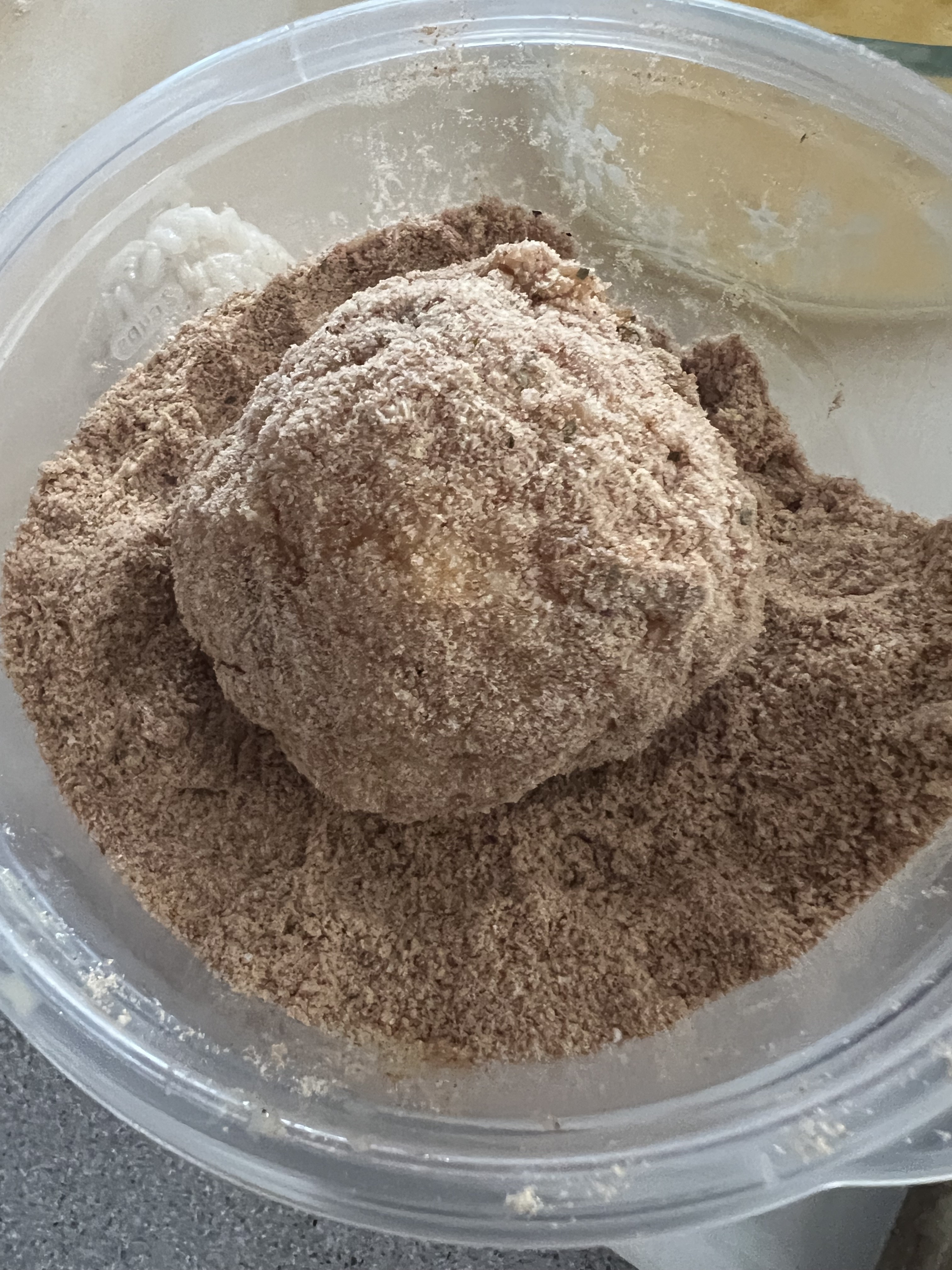
In the third bowl, I place my seasoned breadcrumbs. (You can buy Italian seasoned breadcrumbs, but I make my own by toasting a loaf of Udi GF bread, tossing the pieces into a blender to mill them down to a powder. I add oregano, basil, parsley, salt and pepper, granulated garlic and granulated onion, then whiz the blender for just a few seconds to combine everything. I place this in the third bowl.)

Then it’s time to do the one-handed method of dipping the tomato slices one-by-one into the egg, then dropping it into the breadcrumbs, where the other hand takes over to cover the tomato with a light layer of breadcrumb. Do the same for all the tomatoes.

I fry the tomatoes at 350° in a non-seed oil with a high smoke point, like avocado oil, until golden.

I place the tomato slices on a wire rack to cool, seasoning them immediately out of the fryer with some sea salt.

A dipping sauce, like marinara sauce, goes well with these tasty bites!

I live just down the road from Fall River, Massachusetts, and New Bedford, Massachusetts, two thriving proud Portuguese communities. In middle school, my daughter had to take mandatory Portuguese language classes. We’ve got dozens of authentic Portuguese restaurants in the area, and even a well-stocked supermarket with its own bacalhau (salt cod) room: Portugalia Marketplace, in Fall River.

So when I first posted my recipe of Portuguese kale soup, I was told by many Portuguese friends that my soup wasn’t authentic so I couldn’t call it that. Fair enough. After all, my soup has far less carbs (no potatoes or pasta), fewer spices, and it uses homemade stock instead of water. It may not be Portuguese, but it’s full of flavor.


My version of the classic Portuguese kale soup.

My semi-Portuguese kale soup.


4 cups home-made chicken or beef stock
4 cups water
1 cup lentils, rinsed in cold water
1 onion, finely chopped
1 carrot, finely chopped
2 stalks celery, finely chopped
1 clove garlic, through a press
1 lb. Portuguese chourico, peeled and chopped into small cubes 
1 large bunch organic kale
salt and pepper

Add the stock and water to a large pot. Heat until boiling. Add the lentils.

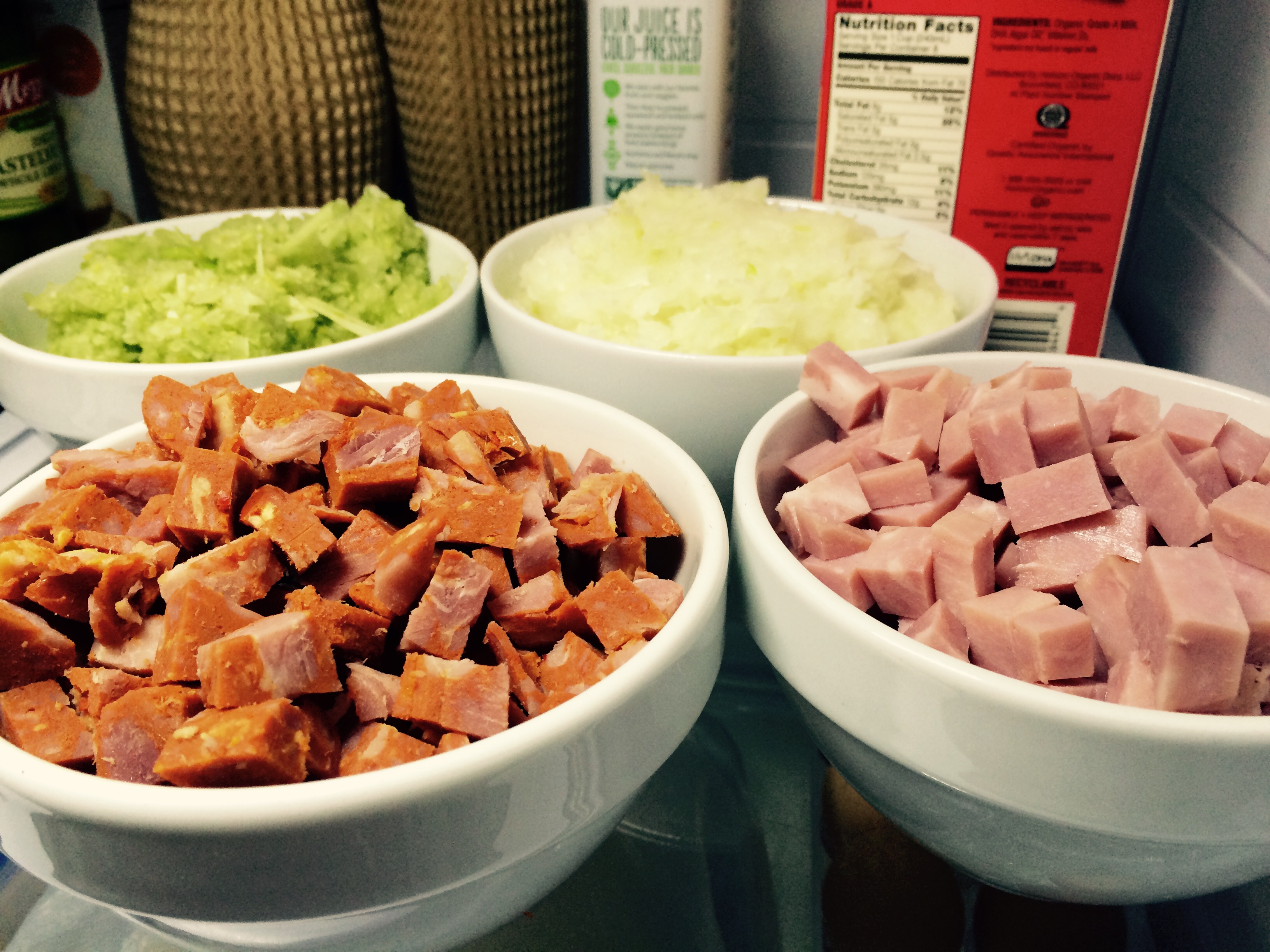
In a saucepan with a little olive oil or bacon fat, sauté the onions, carrots, celery, and garlic for a few minutes. Add the chopped chourico and sauté a few minutes more. Add the contents of the sauté pan to the pot.

Wash and de-stem the kale, tearing the leaves into smaller pieces. Add the leaves to the pot and stir. The stems go in your compost pile. (You can also use them in a juicer.) Kale is always on the “dirty dozen” list of vegetables with large amounts of pesticides, so I always buy organic.

Cook the soup until the lentils are al dente. Taste and season for salt and pepper before serving.

Simple and delicious, especially with fall on the way.