On the South Island of New Zealand, on the Pacific (eastern) coast near the beach town of Kaikoura, there is a shack that has been serving up crayfish for years…and it’s earned a cult following among foodies that, like me, have traveled thousands of miles just to have a taste of this seafood delicacy.
The place is called Nins Bin, and it’s simply a little shack that sits on the rugged, windy coastline of the Pacific. You walk in, and a plastic container holds already-cooked crayfish, caught that day. The prices for each are marked right on the shell. You pick one, they cut it in half, and serve it with your choice of two sauces: one a sort of thousand island thing, and the other a garlic aioli. We took one of each, walked over to the only picnic table nearby, and quickly finished off this little treat, hungry seagulls buzzing all around us, waiting for any morsel we might accidentally drop. (Not a chance!)

The flesh of the crayfish was sweet…but not really sweet like Maine lobster can be. And although it was a beautiful white in color, its texture was almost meat-like, like chicken. But really good. We devoured the tail, sucked whatever meat we could out of the legs, and that was it…crayfish gone. Experience had. It totally lived up to the foodie hype I had read about.
We hung out around Nins Bin a little longer, taking in the atmosphere before we got back in the rental car and headed down the road to the town of Kaikoura, our next stop on our 3-week, 2000 mile journey through New Zealand.
SUMMER ISN’T OVER YET!
OK…at least I refuse to think so.
It’s still not too late to enjoy the fresh fruits and veggies that our local farmers have to offer. Soon, we’ll be forced to go back to the supermarket to buy our produce. But until then, we can enjoy the bright, fresh flavors that only our local farmers can provide.
Oven roasted plum tomatoes
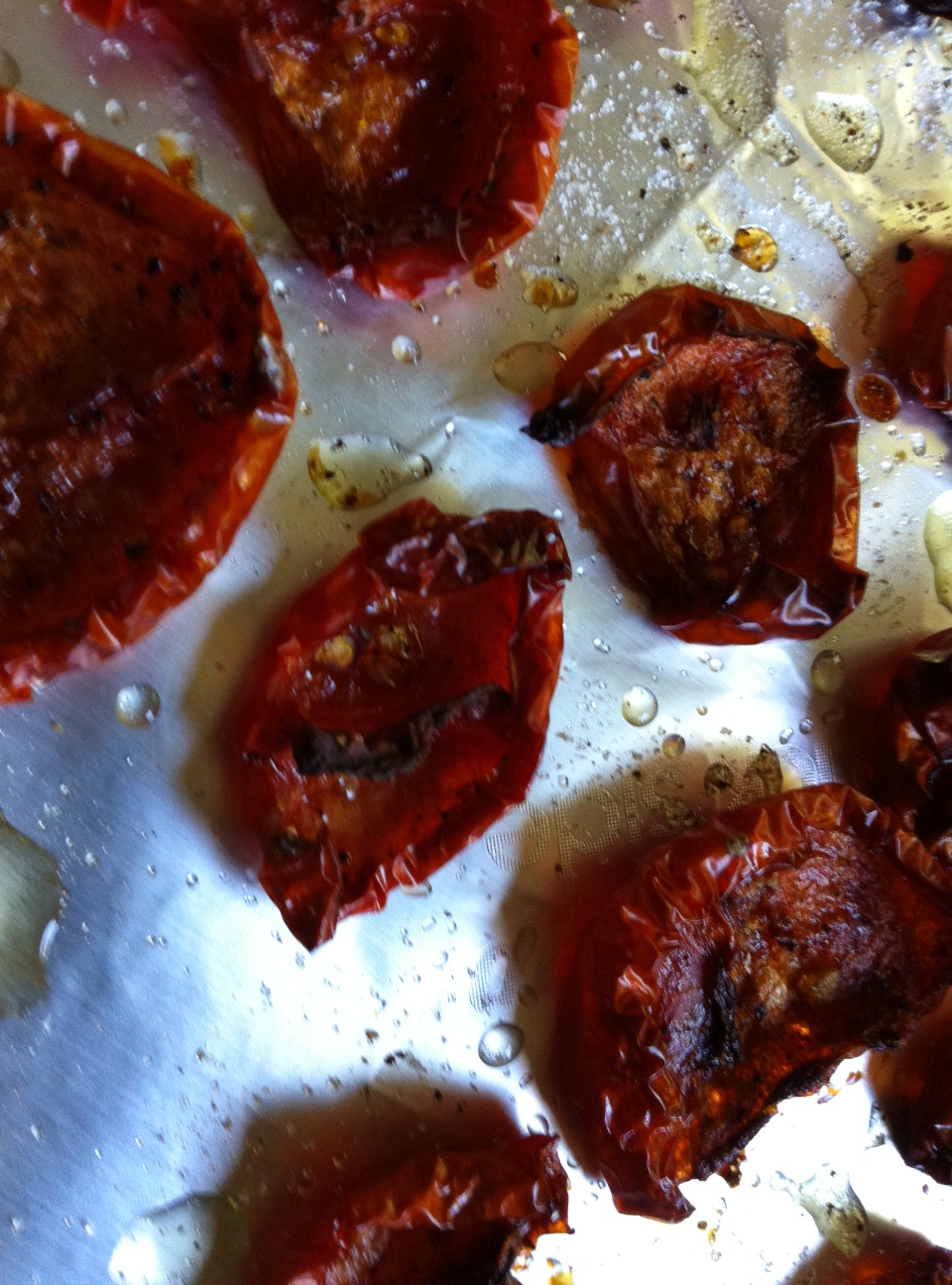
These are not sun dried tomatoes. These are seasoned and slow roasted, so that their sweet flavors concentrate, but the moist, chewy texture remains.
Ingredients:
12 to 18 halved, seeded plum tomatoes
Extra virgin olive oil
Sugar
Freshly ground pepper
Fleur de Sel, or other finishing salt
Pre-heat oven to 250.
Line a baking sheet with foil and rub it with olive oil.
Arrange halved and seeded tomatoes on the baking sheet in a single layer, cut side up. Drizzle evenly with ½ cup olive oil, sprinkle with 2 tablespoons sugar, and season with pepper to taste.
Baked the tomatoes until they are still juicy but slightly wrinkled, about 3 hours. Transfer to a platter and let cool slightly.
Just before serving, sprinkle tomatoes with Fleur de Sel, and garnish, if you like, with mint, parsley or basil.
BABY BELL PEPPERS WITH FRESH CORN STUFFING
Bags of these baby bell peppers are appearing everywhere on supermarket shelves this season. Recently, I had about 100 people over for a party, and I came up with this tasty bite to serve as an appetizer.
Ingredients:
Baby bell peppers
1 dozen ears fresh corn, boiled for just a couple of minutes, then removed from the cob…or organic frozen corn
1 Vidalia onion, peeled, quartered, grilled, chopped
Juice of 1 large lime
¾ cup mayonnaise
20 shots of Frank’s Red Hot or Tabasco
1 lb Queso Fresco, crumbled
Salt
Fresh cilantro or parsley, finely chopped
Cook the corn for just a couple of minutes to keep it crisp. If using corn on the cob, cut corn from ears and place in a bowl.
Peel and quarter the Vidalia onion, and throw it on a hot grill with a little olive oil to get some nice grill marks on it, leaving the onion still crispy, not soft. Remove, let cool, then place in a food processor and pulse until the onion is chopped into small bits, just smaller than the corn kernels. Add onions to corn.
In a separate small bowl, combine mayonnaise and Frank’s Red Hot. Pour in crumbled Queso Fresco and mix well. Pour into corn and onion bowl and mix well.
Add lime juice to the bowl and mix well again. Taste mixture and season with salt.
Cut the baby bell peppers in half lengthwise, and remove the seeds and membrane. Stuff the peppers with the corn mixture and garnish with cilantro or parsley.
If preparing ahead of time, refrigerate until ready to eat, but allow some time for them to warm up a little bit. You don’t want to serve them ice cold.


If you do your share of Italian recipes, a common product that you can find in just about any store has many people confused: San Marzano tomatoes. Most good cooks agree that San Marzano tomatoes are some of the best canned tomatoes you can buy.
But unfortunately, the label can say “San Marzano tomatoes” even if they are not real San Marzano tomatoes.
San Marzano is a region in Italy near Naples and Mt. Vesuvius, and the special combination of climate and volcanic soil make these plum tomatoes world famous. They have less water, fewer seeds and are picked off the vine when perfectly ripe and processed the same day.
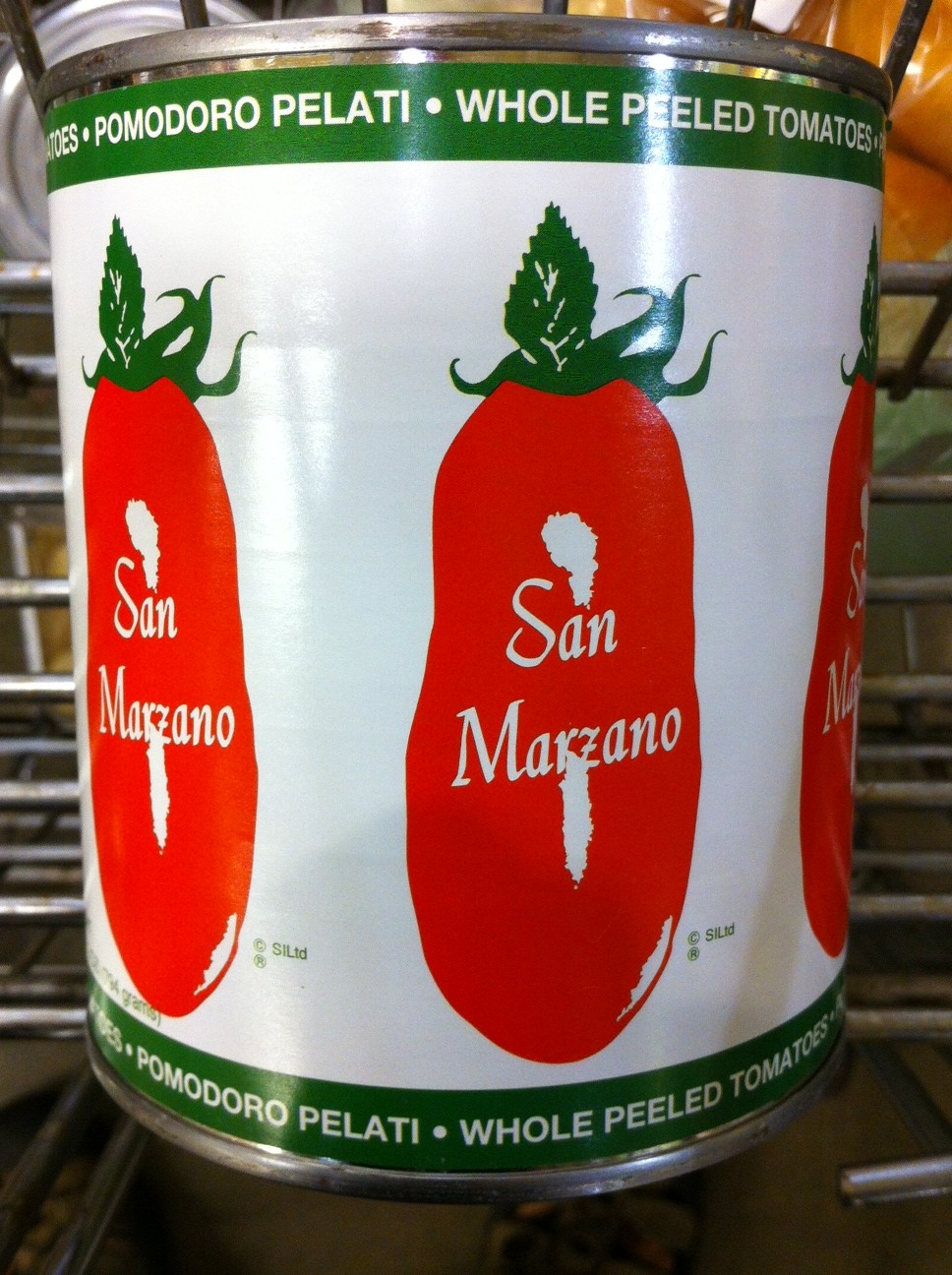
But San Marzano is a variety of tomato, too…and so you can have a can of San Marzano tomatoes that are not from San Marzano. And to add to the confusion, there’s actually a brand of tomatoes called San Marzano, with tomatoes grown in the United States. You can bet that the sellers of these tomatoes are counting on us not to know the difference!
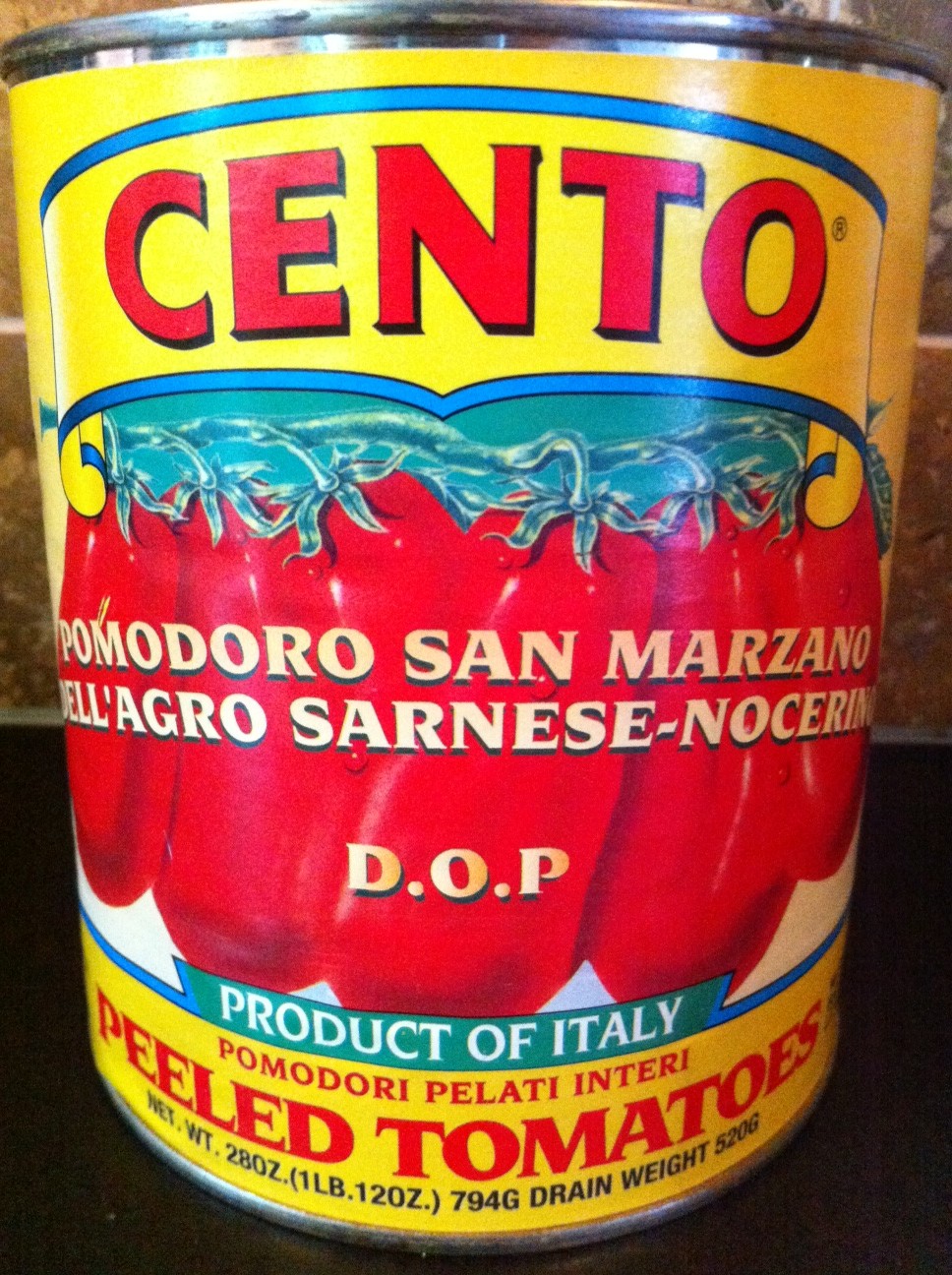
Real San Marzano Tomatoes are a very old variety, extremely limited in quantity, grown and produced exclusively in the San Marzano region of Italy. Because production is so very limited, the Italian Government and the European Union have formed a way of protecting consumers from fraud by having San Marzano tomatoes tightly controlled. DOP, or denomination of protected origin, is the mechanism that the government is using to tightly control the production and marketing of genuine San Marzano tomatoes. Labels for DOP products must be individually numbered and manually applied to each and every can in specific lots and government officials must oversee this application. So here’s the deal: unless you see “DOP” on the label with a hand-stamped number on the can, it’s not a San Marzano tomato.

Real San Marzano tomatoes. Cento also sells non-certified San Marzano’s, so always look for the DOP on the can.
Another way to tell when you’re in the market is simple. Check the price. Your average can of tomatoes will be in the $2 range. Real DOP San Marzano tomatoes: about $4–$5 a can. It’s all about quality.
It’s all about the salt.
I fell in love with Fleur de Sel, the rare hand-raked salt, several years ago. I’ve got high blood pressure, and unfortunately, I need to limit my intake of salt. So my discovery of “finishing salts” allows me to cook completely without salt until the very end, where I can then sprinkle just a few crystals of this moist, hand-harvested miracle on my plate, enjoying every tiny burst of salty ocean flavor without a lot of guilt.
Inspired by an episode of “No Reservations” where Anthony Bourdain journeyed to Brittany, my wife and I dreamed of traveling to what is arguably the epicenter of Fleur de Sel production, the small town of Guerande, France. Located on the Atlantic coast in the Pays de La Loire region just south of Brittany, it’s about a 5-hour drive from Charles de Gaulle airport outside of Paris.
Some of the comments we read about the medieval town of Guerande said it was too touristy, but we found that it had a lot of charm: the perfect combination of old and new, with many interesting shops and eateries inside the ancient walls of this small town. Built in the 15th century and fortified in the 19th century, the surrounding wall around Guerande is one of the best preserved in all of France.
The salt marshes outside the city walls have been around a long time…the last of them built around 1800. Salt production here declined soon after, because salt was available more cheaply from salt mines. But you gotta love foodies…the influence of chefs and food lovers around the world have brought back the demand for this very special product. Salt workers now harvest about 15,000 tons of cooking salt a year, and about 300 tons of the very precious Fleur de Sel.
The process is simple: the ocean tides bring the salt water in and channel it into shallow pools where the water then evaporates, leaving behind the beautiful sea salt Guerande is known for. When just a few inches of water remain, a salty crystalized film floats on the surface of the water. This is very gently hand-raked and produces the much sought after Fleur de Sel. Traditionally only women were allowed to rake this salt because it was believed they had a gentler touch.
Driving through the salt field was a wonderful experience. The roads are narrow, and wind almost endlessly through these flat marshes where salt workers spend their days raking, gathering and then bagging their precious harvest. You can stop anywhere along the way to buy your salt directly from these salt workers, which we did. It was easy to get carried away…we brought home over 20 lbs of salt! Of course, we shared it with friends. Otherwise, not only would my blood pressure have gone through the roof, but I’d probably be dealing with kidney stones as well!
One taste of Fleur de Sel, letting it gently melt on your tongue, and you’ll know what the big fuss is all about.
Our Fleur de Sel journey did not end in Guerande, however. After a couple of nights in that region, we headed south to the island of Ile de Re, just off the coast of La Rochelle, France. Connected by a 3km bridge, Ile de Re is a beautiful world unto itself, with an intricate network of bicycle paths that allow you to travel safely from one end of this flat island to the other, enjoying beautiful views as you ride through vineyards, salt marshes, beaches and small port towns.
As in Guerande, not only can you sample the local salt, but also the abundant supply of incredibly fresh seafood, especially their famous oysters. The salt flats seem somewhat newer in Ile de Re, but still very much a large part of the local economy. The salt itself differs in only the most subtle of ways from its Guerande counterpart and I would find it difficult to say which I liked better.
It may seem a bit silly to travel all this way for something is simple as salt. But it’s a journey I’m very happy I made…and will gladly make again in the near future.
Cucumber season is winding down here in Southern New England. If you think these veggies are nothing special, it’s probably because you bought them from a supermarket, where they’ve been grown on the other side of the planet, covered in wax to prevent bruising, and then shipped to your local store where they place them under artificial lighting.
Go to your local farmer now. Buy some amazing fresh cukes. Then try any or all of these suggestions…
CRISPY CUCUMBER SOUP
3 medium-sized cucumbers, peeled and seeded
1 clove garlic, crushed
1 cup vegetable broth
4 cups plain yogurt (I like the full fat yogurt)
1/2 cup mint leaves
juice of 1 lemon
salt and pepper
Peel and seed 2 1/2 of the cucumbers and place in a blender with garlic, broth, 3 cups of the yogurt, mint leaves, lemon juice, and salt and pepper to taste.
Mix well. Add remaining yogurt and wisk in.
Finely dice the leftover 1/2 cucumber and place in soup bowl. Add soup on top.
Garnish with a pinch of SEA salt, preferably Fleur de Sel.
REFRESHING CUCUMBER DRINK
This is a recipe I found last summer, and it’s one of the most refreshing summer drinks you can make for yourself. But it also requires a lot of preparation. It’s worth it. I made a pitcher this past weekend, and I can’t even begin to tell you how good it was!
Ingredients per pitcher:
8 English cucumbers, peeled and seeded
4 cups lightly packed fresh mint leaves
12 Tablepsoons fresh lime juice
8 teaspoons sugar
16 ounces vodka
4 ounces Cointreau
Peel cucumbers and quarter lengthwise. Remove any seeds. Cut a couple of quarters into thin stalks for garnish. Rough chop the rest of the cukes and put them in a food processor. Blend until totally liquefied. Strain cuke juice through a fine sieve, squeezing out as much liquid as you can from the solids. Throw the solids in your compost bin.
In a pitcher, combine mint, sugar and lime juice. Muddle the mint leaves, then add 1 cup crushed ice to the pitcher and stir well.
Add 3 cups cucumber juice, the vodka and Cointreau to the pitcher and stir well again.
Strain liquid into tall glasses filled with ice. Garnish with cucumber stalks.

PIMM’S CUP
Pimm’s No. 1 is a gin-based liqueur made in England. There are many variations of this drink, but my favorite is this simple:
Pimm’s No. 1
Ginger ale
1 smaller cucumber, peeled and quartered lengthwise
In a tall glass filled with ice, pour 2 oz of the Pimm’s No. 1. Fill to top of glass with ginger ale, leaving enough room to place a stalk of cucumber in the glass.
And nothing comforts me more than a bowl of chopped cukes with sour cream, some finely chopped fresh dill and a pinch of salt. Something my Mom gave us as kids that I still love today.
Read more: http://www.94hjy.com/pages/alz_food_blog.html#ixzz25algwxHE