Posts Tagged ‘food’

It’s the peak of the summer season along the coast of the great state of Maine. My friend, Lee, recently bought a second home in Kennebunk, and it was all the excuse I needed to head up there and check out the town I visited with my parents during my childhood. My trip was less about the Lithuanian Franciscan monastery my parents would make a point to visit, and more about hitting every bar and restaurant we could in a 24-hour period.
image

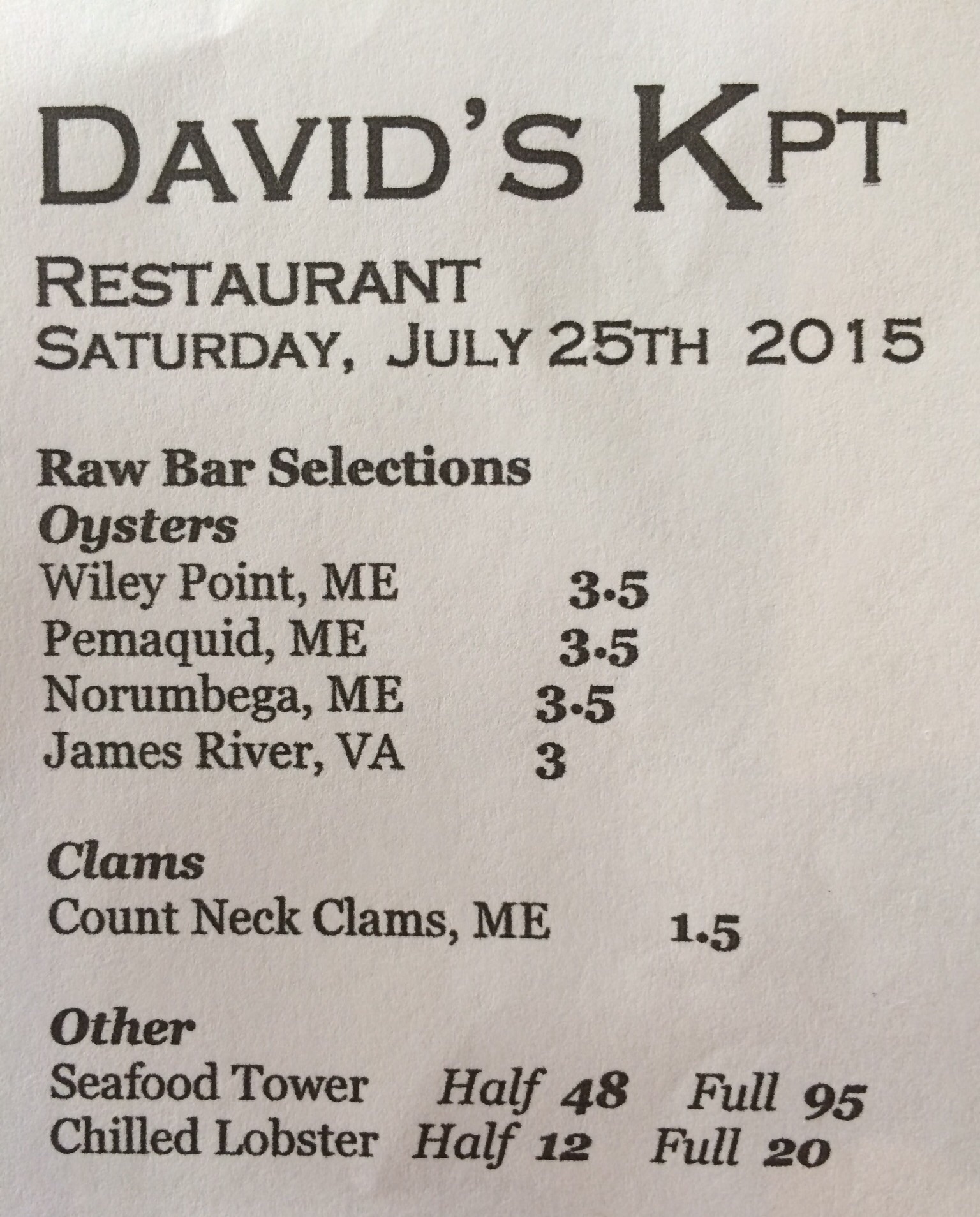
I arrived at lunch time and we went straight to David’s KPT, one of several restaurants owned by chef David Turin, who owns others in nearby Portland. I ate at the original David’s in Portland a few years ago and was not impressed, so it took a little coaxing to get me to come here. David’s KPT menu is simple, basic seafood, and for a restaurant on the water with great views, that’s about all you need. Nothing particularly creative here, just the basics, like fresh oysters but a rather bland lobster salad. Its key location also makes it a tourist trap and they jack the prices up, so some oysters go for $3.50 each! I don’t even pay that in New York City.
image

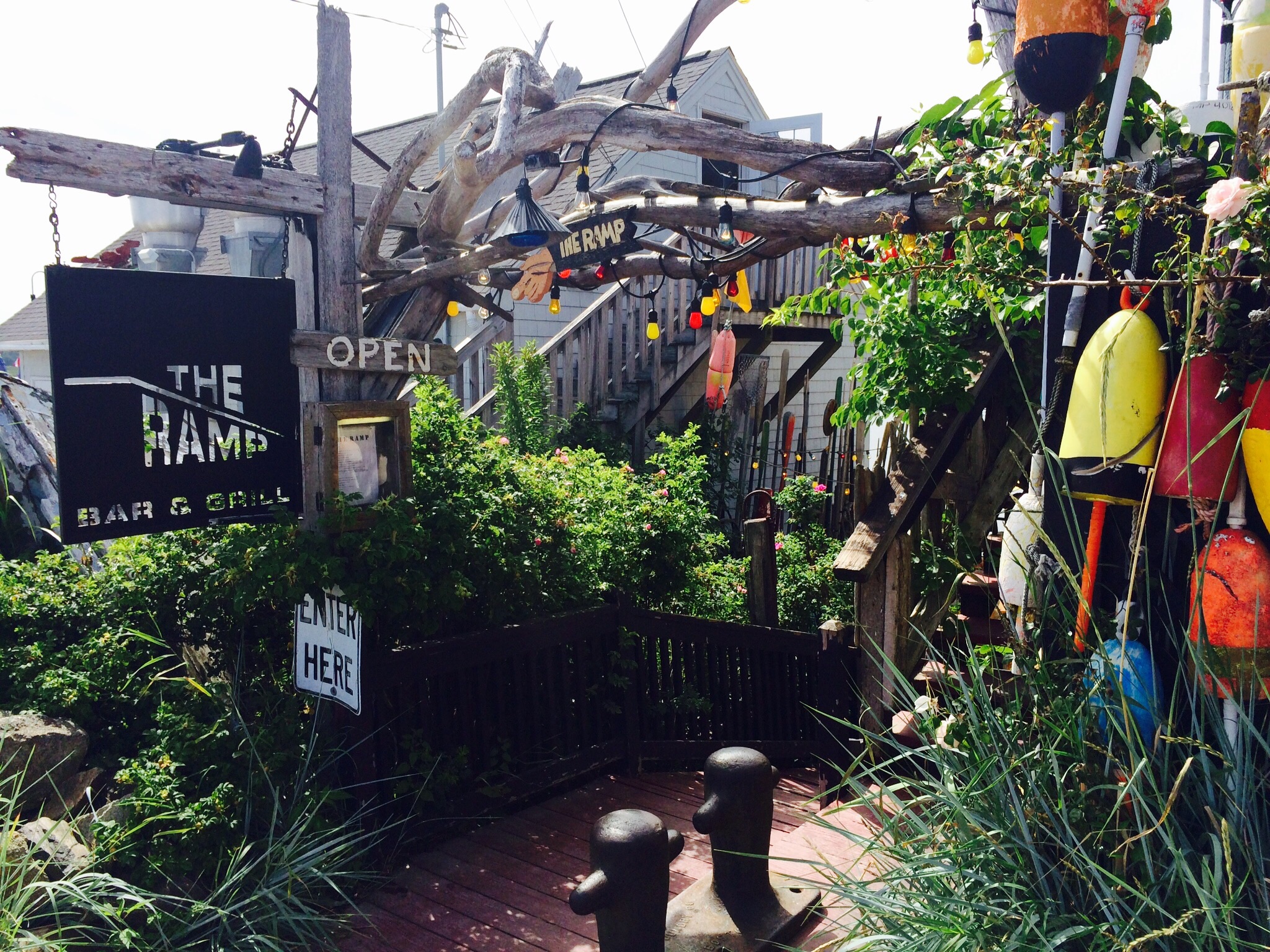
After lunch, we took a ride along the beautiful rugged Maine coast, passing the Bush family compound and the line of cars parked on the road with people taking snaps of the house for their scrapbooks. We stopped In Cape Porpoise, still a part of Kennebunkport, at a funky joint called The Ramp.
image

On the water, The Ramp is crowded and noisy, with old posters and souvenirs on the walls and ceiling, ranging from a NYC World Trade Center subway station sign to a “Vote for Marcos” campaign poster from the Philippines. We had to put our names on a list just to sit at the bar. But that was OK…we had a cocktail while waiting. By the time we finished our drinks and were ready to leave, our turn came up at the bar, so we handed our space off to the next person in line and moved on.

Our lovely server at The Ramp. Notice photos of former Presidents behind her.

Our lovely server at The Ramp. Notice photos of former Presidents behind her.

Back on the road, we drove into town, found a rare parking space on the street, and walked over to Tia’s Topside,with their signature giant lobster claws in the front yard.

imageimage

The menu was no great shakes, and it was clear the dude working the bar already had his fill of tourists for the season. No eye contact, just a “What do you guys want to drink?” That was a thumbs down in our book.

Walking back to the car, we popped into Ports of Italy for a pop. Looking at the plates of the people next to me at the bar, it seemed like we stumbled into a local version of the Olive Garden. The website makes everything we saw look much better. But we passed on the food. Generic drinks.

Clearly, the amount of drinks we had, and were still going to have, was going to be an issue, and Lee being the driver, was behaving to avoid any trouble with the law. Police are everywhere in Kennebunk, and they are notorious for pulling you over for even the slightest infraction. So we headed back to the condo to park the car and wait for the taxi we hired for the night to take us to dinner and beyond.

image

The culinary focus of the trip (I made reservations two months earlier) was Earth at Hidden Pond, a Ken Oringer restaurant in the center of a luxury resort just a short drive out of the center of town, hidden in the woods, surrounded by ridiculously expensive cabins.

Outdoor seating, great atmosphere at night when they light the torches and the fires.

Outdoor seating, great atmosphere at night when they light the torches and the fires.

Oringer is a crazy-talented chef, a Food Network “Iron Chef America” winner with a half-dozen respected restaurants to his name: Toro in Boston (personal favorite) and NYC, Clio in Boston, Coppa (excellent!) in Boston, and Uni in Boston. I was very glad to see that Earth lived up to my expectations.

The well-stocked bar at Earth.

The well-stocked bar at Earth.

Our evening got off to a slow start. It was a Saturday night, yet the main bartenders were nowhere to be found. (We heard that one was out due to a leg injury.) The woman that served us was great to talk to, but she clearly did not have a grasp on the crafting of the more complicated cocktails that Earth was known for. Our first drinks were good, but she literally had to read the recipes off a card to make them. And when I asked for Antica Formula in my Manhattan, she didn’t know what that was.

Enter Josh, a young, energetic bar assistant, who saw this as an opportunity to show off his mixology skills. He jumped right in and offered us a cocktails he created, and we welcomed his refreshing enthusiasm. I can’t even remember the ingredients list he had for each cocktail, but we thoroughly enjoyed them, and he custom-crafted them if we didn’t like a particular ingredient.
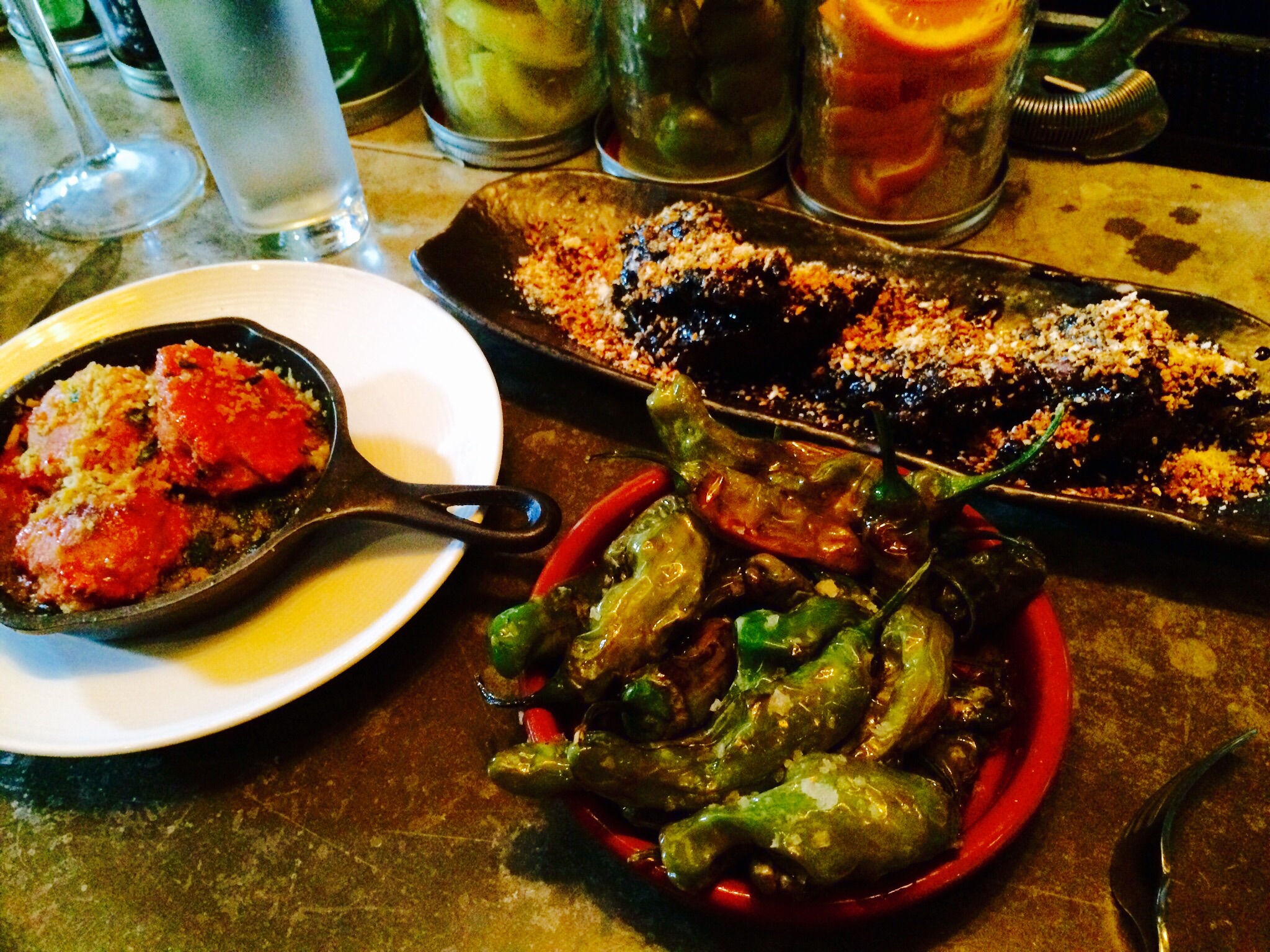
Small plates: meatballs, chicken wings with sesame and squid ink, shishito peppers.

Snacks: meatballs, chicken wings with sesame and squid ink, shishito peppers.

We started with a few apps, or snacks as they called them. The meatballs were good, average meatballs. The shishito peppers, roasted and salted, are a Ken Oringer signature dish, also served at his Toro restaurants. Usually 1 out of 10 are hot, but we had more than a few spicy bites on our plate. The chicken wings with squid ink were incredible: sweet, salty, briny. Probably the best wings I’ve ever had, and I’m dying to figure out how I can make them at home. I had a chance to talk to executive chef Justin Walker, and after he explained the process in detail, it was obvious it wouldn’t be easy!

A luxurious plate of seared foie gras followed. Couldn’t have been more perfect.

But after the foie, we had a dilemma: We made plans to have the taxi pick us up from the restaurant at 8:30, giving us 2 1/2 hours to eat dinner. It was after 8 already, and we had to focus on leaving, despite the fact that we didn’t have an entree yet. Our bartender suggested perhaps a dessert, and we decided to order a second plate of chicken wings to end our meal!

I was bummed that we didn’t give ourselves enough time to have a complete dinner. I suppose that meant we were having a good time and not just shoving food down our pie holes. It’s also my excuse to come back to Earth to “do things right” the next time!

image

Our last stop was back in town at Old Vines, a wine bar that also serves great food. Though we were seated quickly at the bar and got our first drinks, it seemed like forever before we could get the attention of our female bartender who was far more interested in the other females at the bar than us two old guys. Hey, I understand that, but we wanted to order some food. It was only when the owner showed up that we were asked what we’d like to eat and by then we were told the kitchen may be closed. Fortunately, we ordered two cold dishes, so they were easy to prepare: beef carpaccio and a burata salad. Both were excellent.

A cab ride home, and it was time to pass out.
FullSizeRender (12)

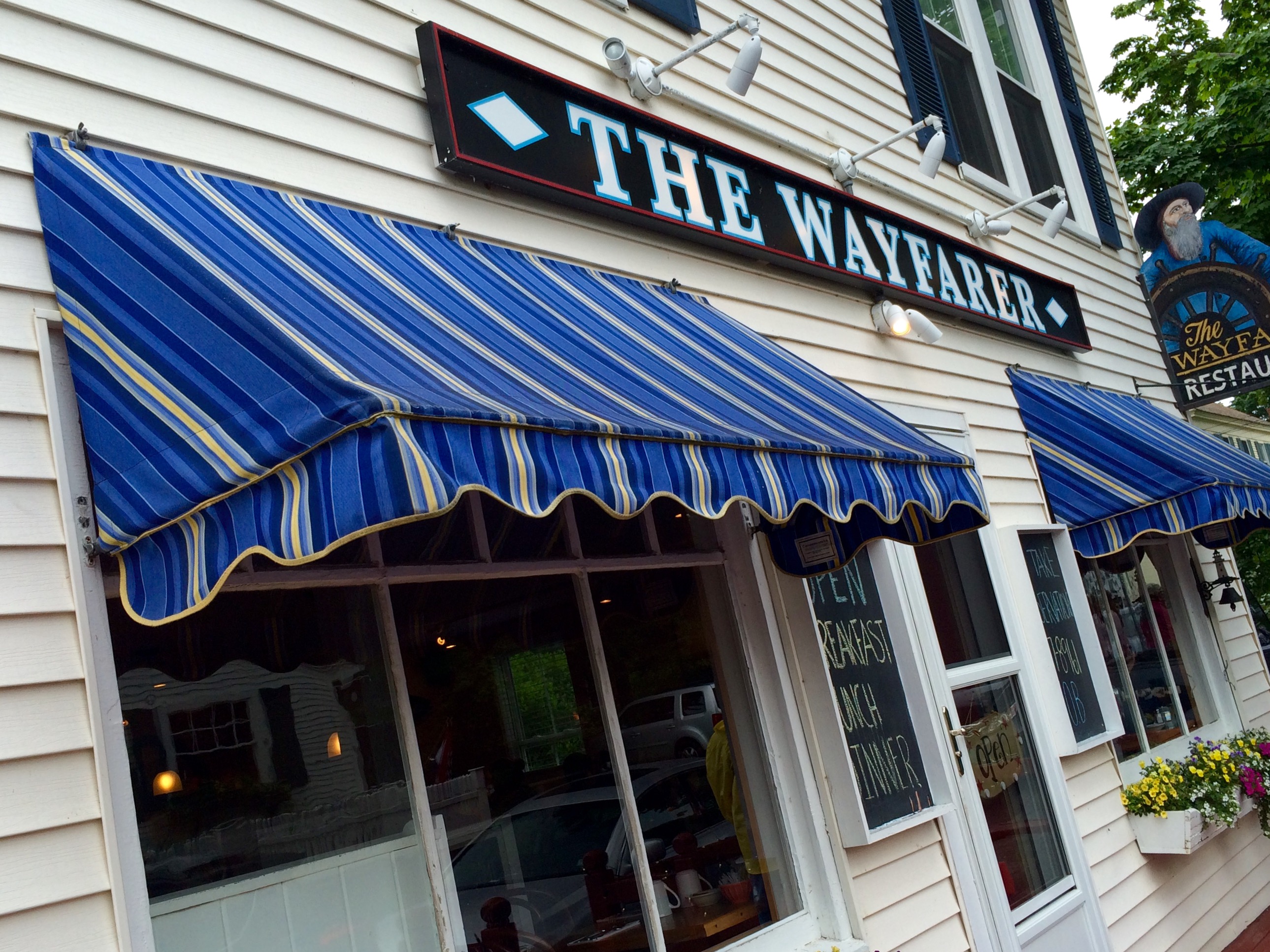
The next morning, breakfast was back in Cape Porpoise at The Wayfarer, a local favorite for years. Always crowded, we managed to find a couple of seats at the bar. Crowded because the menu offers breakfast favorites with their own twist: a scramble of the day, housemade sausage, and interesting takes on standards, like lobster and pork belly eggs Benedict.

FullSizeRender (6)

The creativity of this dish was excellent, the execution not so much. Hey, I love pork fat, but the pork belly wasn’t cooked enough so it was rubbery and the lobster meat was cold–should’ve been warmed through before putting it on top of the eggs.

That’s OK…lots of good coffee and smiling faces were a welcome sight the morning after a big night of drinking!

The ride back to Rhode Island was a bit rough with a hangover. Next time, it’ll be 48 hours in Kennebunkport and I’ll make sure I get some rest!

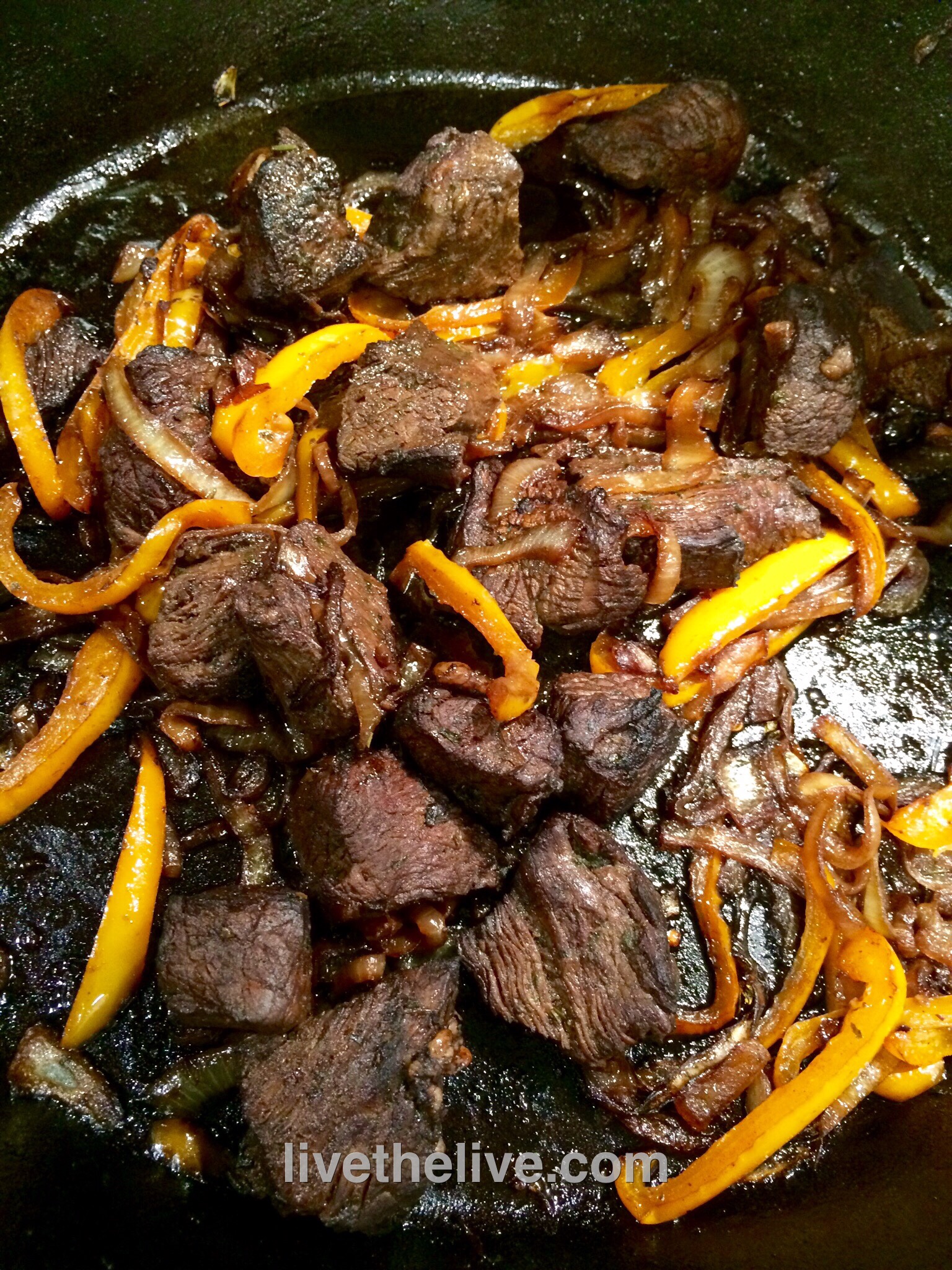
 

An easy way to marinate beef is to simply throw the meat in a bag and dump some Italian dressing into it. As simple as that sounds, it flavors the meat really nicely. But I’ve got a problem with anything that comes from a jar and was made in a factory, especially when it’s so easy to make my own marinade.
I recently bought some sirloin beef tips and after trimming the fat and silver skin (they always leave it on the meat), I cut it up into 1 inch cubes. I put the pieces in a Ziploc bag and then made the marinade…

For the marinade:
1/4 cup decent quality balsamic vinegar–not the expensive stuff
1/4 cup avocado oil
1 teaspoon dried oregano
1 teaspoon dried parsley
1 teaspoon granulated garlic
1 teaspoon granulated onion
1 teaspoon salt
1/2 teaspoon pepper


2 lbs. sirloin beef tips, trimmed and cut into 1″ cubes
avocado oil
3 onions, sliced into rings
2 sweet bell peppers, sliced into thin strips
splash of white wine

Combine the marinade ingredients and pour them into the bag or container with the meat. Mix it around so that every bit of the meat gets coated with the marinade. Seal the container and place in the fridge overnight.
Next day, remove it from the fridge and let it come to room temperature before cooking.

Marinated beef, ready to cook.

Marinated beef, ready to cook.

Heat a large cast-iron skillet until hot. You may not need to add oil, since the meat has marinated in it. Using tongs to shake off any marinade, place the beef tips in the skillet, and brown on all sides, constantly flipping them. Cook the meat until it is done: medium to medium rare. (Of course, a hardwood fire is great for cooking these, too.)
Remove the meat from the pan and place in a bowl to the side. In the hot pan, toss in the sliced onions and peppers. Cook until the onions and peppers are caramelized, and splash a little white wine to de-glaze the pan if you like. (The alcohol cooks off.) If there’s any left over marinade in the bag or container, you can pour it into the pan at this time.

Return the beef to the pan being sure to include all the juices that may have settled into the bottom of the bowl. Mix through until thoroughly heated and serve immediately.

I made a lot more...forgot to take the pic before devouring!


Greek food is some of the most delicious I’ve ever eaten. It rivals Italian and French cuisine, yet has nowhere near the fan base. It’s the same with Greek spirits. The island of Santorini offers many wonderful choices, and it would be a sin not to taste them all!

santorini3

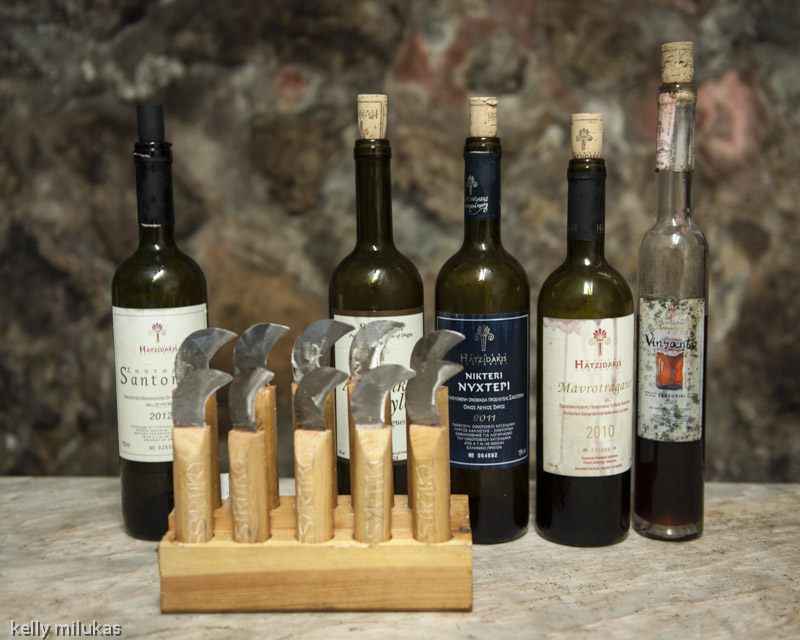
Santorini is magical. It’s why we keep coming back. But just as wonderful as the white buildings stacked on the cliffsides of this island are the people, and the native food and drink they offer. One such place is the Hatzidakis winery in the town of Pirgos.

hatz al

They don’t have a fancy tasting room. They don’t do tours. They don’t have an amazing view of the water or the island. They don’t even hold regular visiting hours. They simply have the best wine on the island.

hatz tools

And that’s exactly why we go. Haridimos “George” Hatzidakis is all about his grapes. Ask anyone on Santorini what the best wine is, and you will get “Hatzidakis” as the answer every time.

hatz kelly

Sure, there are huge wineries with tasting rooms that overlook the water. That’s where the tour buses take the cattle that arrive in Fira on cruise ships. And that’s the last place we want to be.

Hatzidakis wine is about the soil, the grapes, the climate. It’s also about the passion of the handful of people who work hard to make it.

hatz grapes

It’s hard to find Hatzidakis in the United states (unless you look in my wine cellar, because we bring home as much as we can!!) Much of it is scooped up and exported to France…and much to our happy surprise, we’ve had a bottle of the Hatzidakis Assyrtyko in Paris at Le Baratin.

hatz cave

For the most part, you’ll have to go to Santorini to experience the magic of this incredible wine. And that’s not a bad thing. Because the wine is much like the people of Santorini: beautiful and worth every bit of time it takes to get there.

Aside from wine in Santorini, our most recent visit a few years ago introduced us to a local drink called Raki. Kind of like grappa on steroids, it’s the national drink of Turkey, popular here as well, and often served as a digestif before dinner. It’s a drink that can definitely get you in trouble.

image


Also new (to us) in Santorini was Red Donkey, a locally brewed beer. It was a welcome treat on those very hot and dry summer days. Unfiltered and delicious.

image


As for local foods, nothing is better than a salad featuring the sharp tang of Santorini tomatoes. Much like the grapes of this island, the tomatoes grow in volcanic soil. Rain is scarce, and so the tomatoes, like the grapes, stay small but intense, bursting with flavor.

image


image

Capers and caper berries, stuffed into empty plastic water bottles, are sold on the side of the road by local farmers.

image

Perhaps the most unlikely food item we bring home from Santorini is what they call “fava,” but it’s not the bean we usually associate with that name. Originally, broad beans were used in this dish, but quickly it changed to a type of yellow shelled lentil that is much smaller and flavorful than its American counterpart. The lentil is smaller and the art of turning this simple gem into a sublime porridge is worth learning.

As common in Santorini as pasta is in Italy, grains of fava have been found in archaeological sites in the ancient city of Akrotiri (on the southern side of Santorini) dating as far back as 3500 years ago. Every taverna on the island offers their own version of fava, and though the differences are subtle, they can be significant.

Proud of his fava.

Proud of his fava.


Most recipes start with the dried lentils, which are washed thoroughly. They are added to a pot of fresh water and then boiled until the water reduces and the lentils slowly absorb the liquid and soften into a porridge. Often chopped onion is added to the pot of water in the very beginning, so that it completely dissolves and flavors the fava. Some recipes call for a subtle mixture of local dried herbs, similar to oregano and thyme, to be wrapped in cheesecloth and added to the pot to infuse flavor.

Like making a great Italian tomato sauce, cooking fava is a labor love. It requires low heat and constant stirring to make it perfectly smooth. Often it is pureed in a blender at the end.

When the fava is ready to serve, the toppings can vary. Thin slices of red onion and a liberal drizzle of Greek olive oil are common. Sometimes it is topped with locally harvested and brined caper berries or caper berry leaves, or a few kalamata olives.

On our last trip to Santorini, our most memorable fava dishes were a simple and rustic, with onion, capers, olive oil and a side of lemon. One of our favorite restaurants, Dimitris in Amoudi, serves it this way.

The fava at Dimitri's, on the water in Ammoudi.

The fava at Dimitri’s, on the water in Ammoudi.

We bought our fava from several people, including this beautiful ageless woman, who remembered us from our previous visit. image

We’re hoping still be here on this magical island when we visit in a couple of weeks!

image

KOHL-SLAW

Posted: July 10, 2016 in Food, garden, Recipes
Tags: , , , , ,

Kohlrabi is probably one of the most misunderstood vegetables around. Most people don’t know what to do with them. Kohlrabi is a member of the cabbage family and can be eaten raw as well as cooked.

For me, the real joy of kohlrabi is biting into a crunchy, sweet, freshly picked and peeled bulb right out of the garden. Unfortunately, much of the kohlrabi you find in a supermarket (or even a farm stand) is grown larger than a tennis ball, making it tough, woody and dry. And they usually remove all the leaves, which are delicious.

The kohlrabi harvest has just begun in my home garden, and I make a slaw with the leaves and the bulb. I use my Awesomesauce recipe as the dressing.

FullSizeRender (10)


s into the bowl.
2 kohlrabi bulbs with leaves, de-stemmed
1 carrot, peeled
For the Awesomesauce:
1/2 cup mayonnaise
1 tablespoon ketchup
1 tablespoon yellow mustard
1 tablespoon dill pickle relish
1/4 teaspoon garlic powder
1/4 teaspoon paprika
Pinch cayenne pepper

Combine the Awesomesauce ingredients in a bowl and keep it in the fridge.

Wash the veggies thoroughly before using. Pull the leaves off the kohlrabi bulb, and remove the stems. Grab a bunch of leaves at a time, roll them up tightly, and slice as thinly as you can into thin ribbons. Place in a bowl. Do this with all the leaves.

Peel the thick skin off the kohlrabi bulb and slice it as thinly as you can. Then take the slices and cut thin sticks out of them. Toss into the bowl.

I like to peel the carrot with a veggie peeler, then finely chop the slices. Toss into the bowl.

Add Awesomesauce to taste and toss well.

FullSizeRender (9)

Cover and refrigerate, letting the flavors blend for a couple of hours before serving.

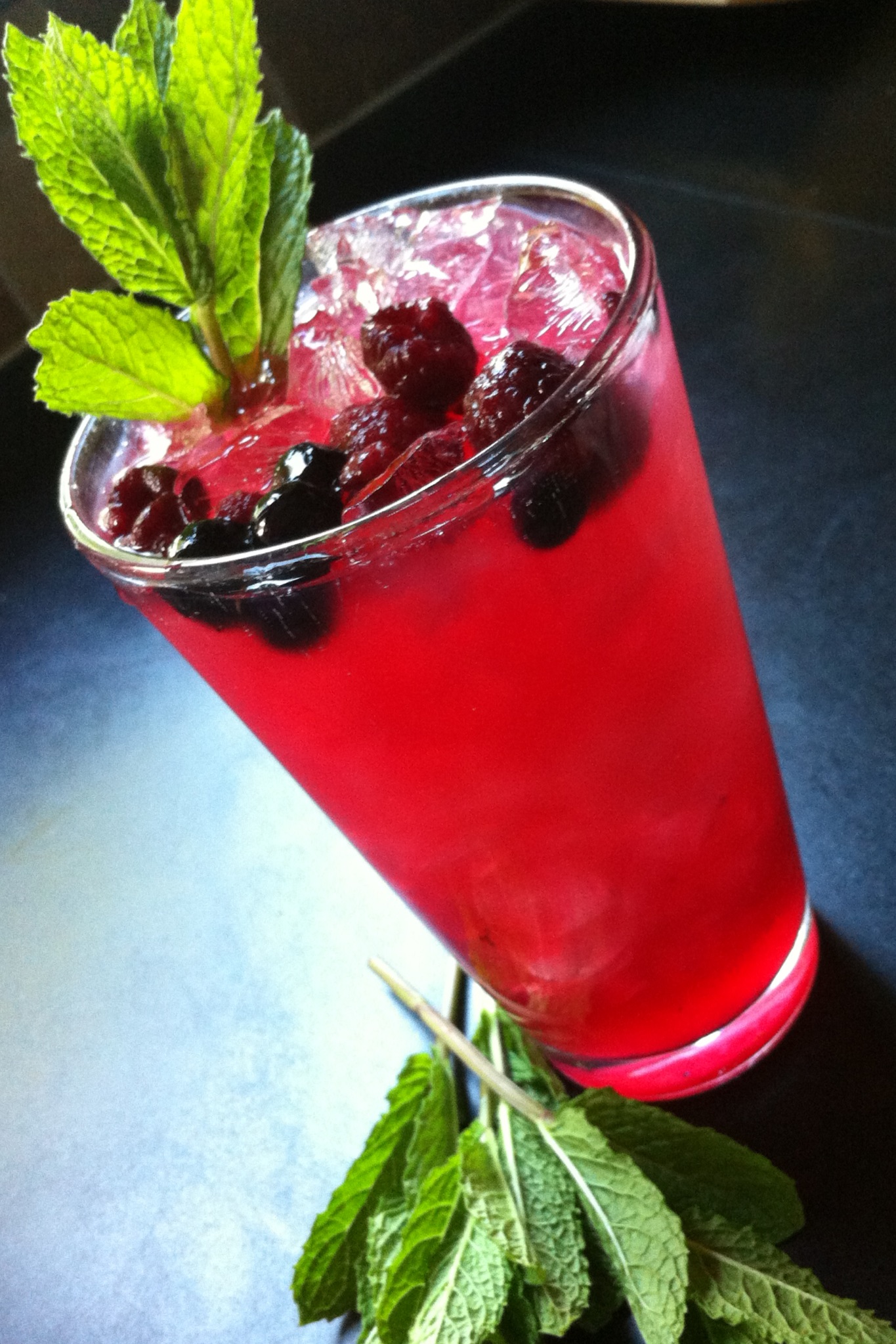
My raspberry plants are producing a ton of fruit, and my mint plants are taking over the yard! It’s time to make Mojitos!

Very often, I’ll use raspberries alone, but Mojitos are even better when you combine the raspberries with blueberries. Frozen fruit works well, too. Make them by the pitcher and you’ll do it any other way again!

The ingredients

The ingredients


Make ahead of time…
1 1/2 cups fresh squeezed lime juice
1 1/3 cups turbinado sugar (Sugar in the Raw)

Mix both ingredients together and let stand at room temp. Shake until dissolved. The mixture can be covered and refrigerated for several weeks and ready to use any time. Shake well before using.

mojito pitcher

For the Mojitos…
1 cup sugar/lime mixture
1 cup mint leaves, packed
1/2 pint blueberries (fresh or frozen)
1/2 pint raspberries (fresh or frozen)
3 or 4 cups white rum, preferably Don Q Cristal rum
3 or 4 cups club soda

Combine the mint leaves and 1/2 cup of the sugar/lime mixture in bottom of a pitcher. Muddle the mint up very well to release mint oils. Add the blueberries and continue to muddle.

Add the remaining sugar/lime mixture, rum and raspberries. Mix well. Just before serving, add the club soda and ice. Stir. Pour into glasses.

Or…for drinks one at a time, fill a tall glass with ice. Fill it one-third to halfway with club soda. Top with the Mojito mix. Garnish with a mint leaf.


Cheers!

Cheers!

Pork chops were a favorite of mine growing up, but my Mom cooked them only one way: breaded and fried in a pan full of oil. They were good, but they were greasy, and my Mom was not big on seasonings. And she cooked the hell out of it. It was time to improve on the original.

Using the best quality pork I can get, like Berkshire pork, makes a real difference in flavor. It also matters to me that the animals are humanely treated while they’re on the farm. No factory-farmed meats.

chop 1


2 Berkshire pork chops
1 egg
1/2 cup plain bread crumbs (I use gluten-free)
1 teaspoon salt
1/4 teaspoon pepper
1 teaspoon dried oregano
1 teaspoon dried parsley
1/2 teaspoon granulated garlic
1/2 teaspoon granulated onion
olive oil


Pre-heat the oven to 350 degrees.

Set up 2 bowls. In one, crack and scramble the egg. In the other, combine the bread crumbs, salt, pepper, oregano, parsley, granulated garlic and granulated onion.

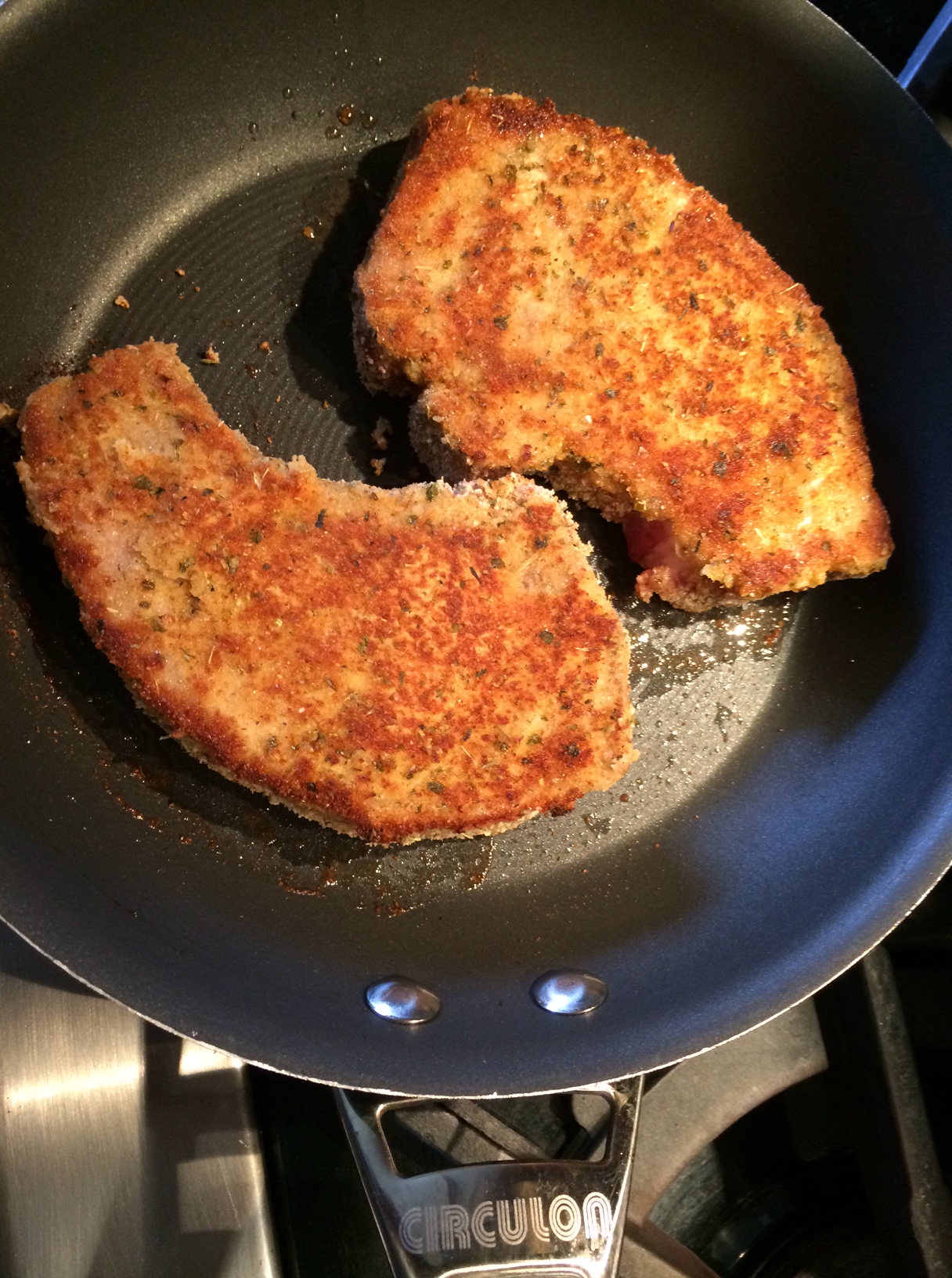
Place an oven-proof pan on medium-high heat and add a little olive oil. Once the oil is hot, cover the pork chops in the egg wash and then coat with the bread crumb mixture. Place in the hot pan to brown and sear. Do this with both chops.

After a few minutes, flip the chops over in the pan and place the pan in the oven to finish cooking.

chop 2

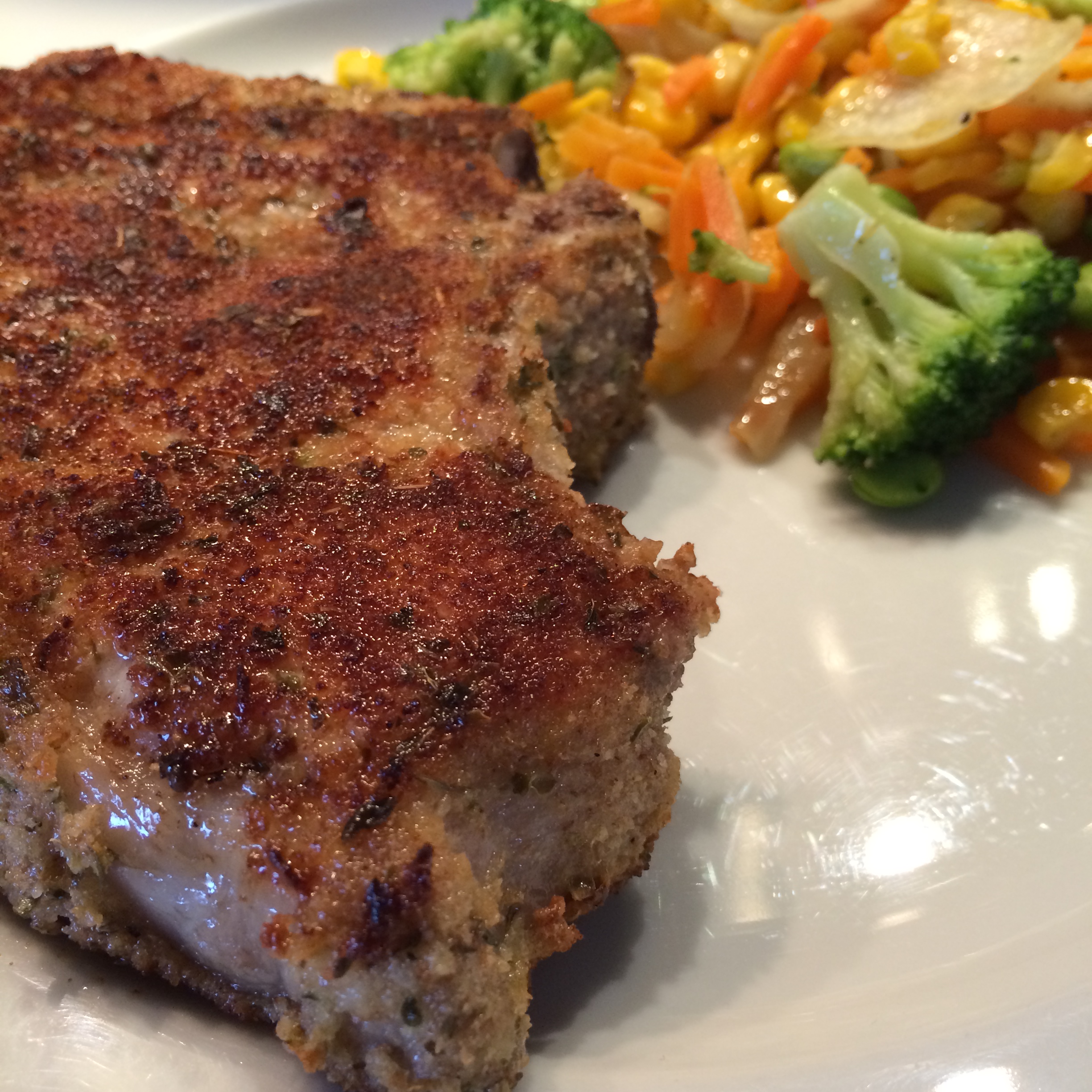
Remember, good pork does not need to be cooked until well done!


There’s no problem with your bird, she said to me
Just go low and slow to cook it perfectly
A few choice seasonings end up deliciously
There must be 50 ways to roast your chicken…
There’s nothing better than a whole roasted chicken. Simply season it, pop it in the oven and go low and slow. No maintenance, and you’ve got a great bird in a couple of hours. 
Once you go with humanely raised pastured chicken, you’ll never go back to supermarket chicken again. The flavor is fantastic, and you’ll devour it right down to the bones, which you can use to make the best home-made chicken stock or soup you’ve ever had. Nothing goes to waste.
I roast at least one chicken every week, so to change it up, I’ve come up with many different rubs and sauces over the years. All of the rubs are sugar and gluten-free preparations. The sauces may have one or both.
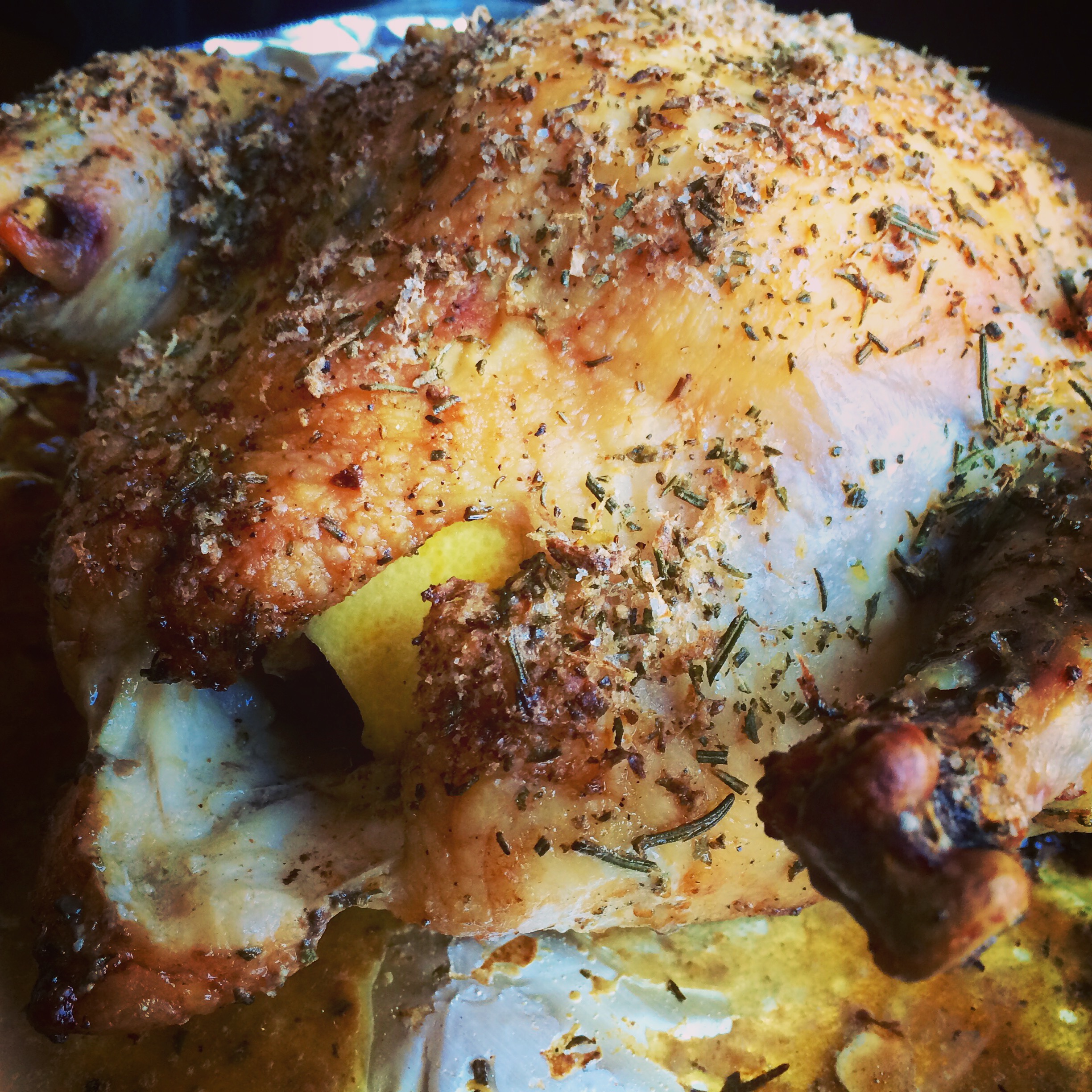
Chicken with Rosemary and Lemon
 IMG_9146
The lemon serves double-duty in this dish. You use the zest to season the outside skin, then you place the remaining cut up pieces inside the carcass to flavor from the inside out.
1 tablespoon finely chopped fresh rosemary
1 teaspoon granulated garlic
2 teaspoons salt
zest from 2 lemons, using a micro plane zester, the leftover lemons quartered
1/2 teaspoon black pepper
In a bowl, combine the rosemary, garlic, salt, lemon zest, and pepper. 
Thaw a bird, remove the giblets, and rub it all over with olive oil. Shove the quartered lemon pieces into the carcass of the bird. Season the bird inside and out with the rosemary seasoning mix.
Place the bird on a pan lined with non-stick aluminum foil in a pre-heated 450-degree oven. Cook for 10 minutes at this temperature, then reduce to 275 degrees and cook low and slow until done.
Tarragon Chicken
I love the taste of chicken seasoned with tarragon. Careful with this, or you will accidentally devour your fingers!
1 tablespoon dried tarragon, crumbled into a powder
1 teaspoon garlic salt
1 teaspoon salt
1/2 teaspoon black pepper
olive oil
In a bowl, combine the tarragon, garlic salt, salt and pepper.
Thaw a bird, remove the giblets, and rub it all over with olive oil. Season the bird inside and out with the seasoning mix.
Place the bird on a pan lined with non-stick aluminum foil in a pre-heated 450-degree oven. Cook for 10 minutes at this temperature, then reduce to 275 degrees and cook low and slow until done.
Italian Chicken
FullSizeRender
The darker color of the bird comes from rubbing it first with balsamic vinegar, then olive oil, before coating it with Italian seasonings. Don’t use the fancy, expensive balsamic. The bottles that go for about 9 bucks in the supermarket work well for this recipe.
Balsamic vinegar
Olive oil
1 tablespoon salt
1 tablespoon parsley
1 teaspoon oregano
1 teaspoon pepper
1 teaspoon granulated onion
1/2 teaspoon granulated garlic
Thaw a bird, remove the giblets, and rub it all over with the balsamic vinegar. Then rub it all over with the olive oil. Season the bird inside and out with the seasoning mix.
Place the bird on a pan lined with non-stick aluminum foil in a pre-heated 450-degree oven. Cook for 10 minutes at this temperature, then reduce to 275 degrees and cook low and slow until done.
My Grandma’s Chicken
My grandmother would cook chicken thighs low and slow all Saturday morning, knowing that I was coming over for lunch after Lithuanian school. The meat just fell off the bone, and I couldn’t stop eating it. This recipe is so simple and works just as well for a whole bird. Every time I make this, I think about those days at my grandmother’s house.
Lawry’s Seasoned salt
Olive oil
Thaw a bird, remove the giblets, and rub it all over with olive oil. Season the bird inside and out with the Lawry’s Seasoned salt.
Place the bird on a pan lined with non-stick aluminum foil in a pre-heated 450-degree oven. Cook for 10 minutes at this temperature, then reduce to 275 degrees and cook until done.
If you’re using chicken thighs, like my grandmother did, make sure they have the skin on and the bone in.

Nothing says summer here in New England like a lobster roll. But I don’t go to a clam shack to get one. The prices are ridiculous, the meat can be overcooked, and they often add ingredients I don’t want.

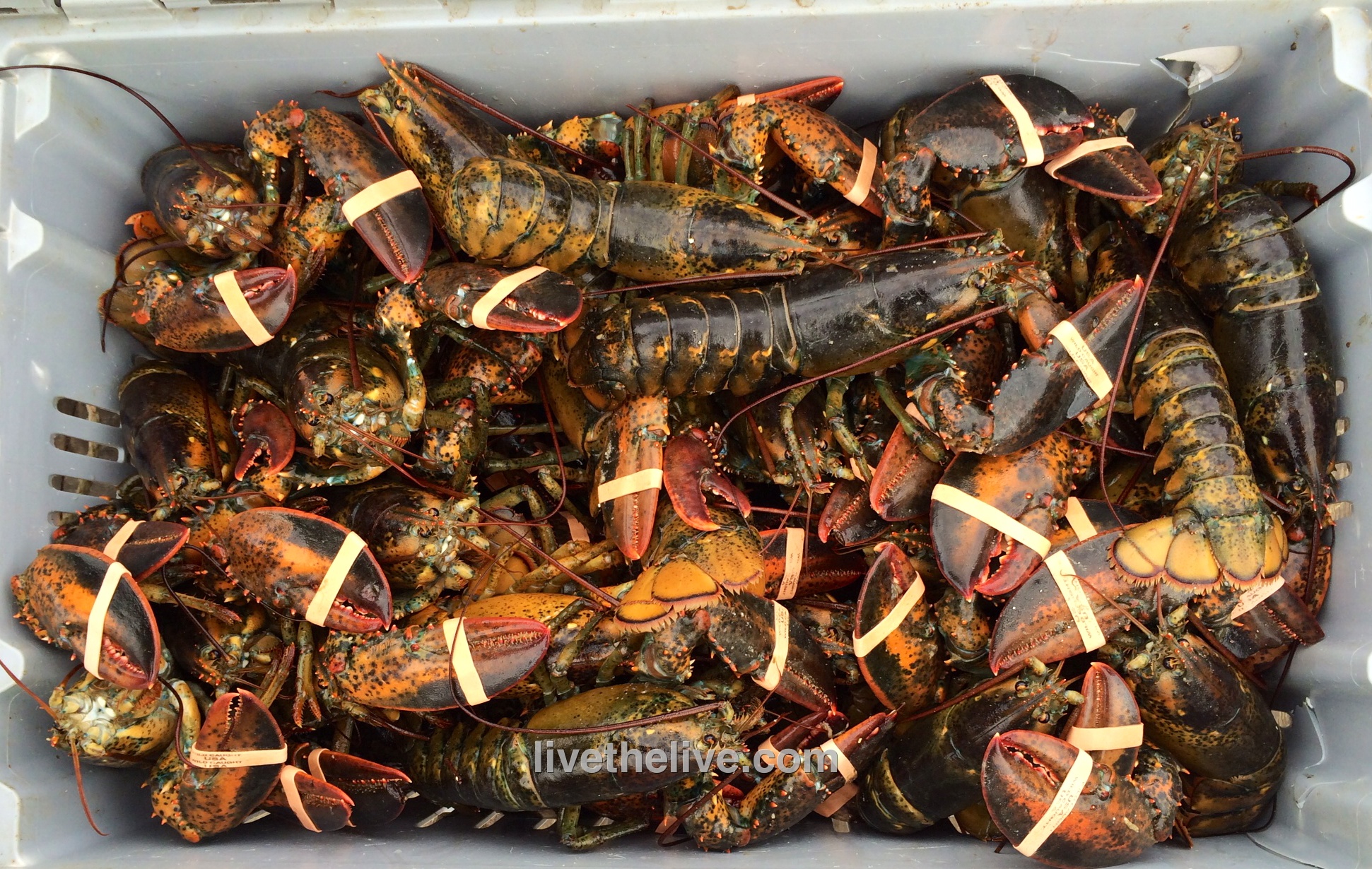
I start with fresh lobster. I get it from my lobster man buddy, Gary, just down the street at his dock in Tiverton, RI.

A view of the Sakonnet River from the back of Gary's lobster boat, the Edna Mae

A view of the Sakonnet River from the back of Gary’s lobster boat, the Edna Mae

The next step is to cook it right. I use sea salt in a large pot of boiling water. I make sure the water is at a rolling boil before the lobsters go in. And I cook them for no more than about 8 minutes.

Lobster catch LTL

After the lobsters have been removed from the pot and have cooled for a few minutes, I get to work: cracking the claws and tail and removing every bit of beautiful meat I can find. I even take the legs off and push a rolling pin over them to extract the meat inside. The tomalley (the green liver and pancreas) and roe (eggs) are delicacies not to be missed, but for the purpose of making lobster salad, I don’t use these parts. I save them for a separate treat. And I use the legs and cleaned empty shells to make lobster stock. Nothing goes to waste!

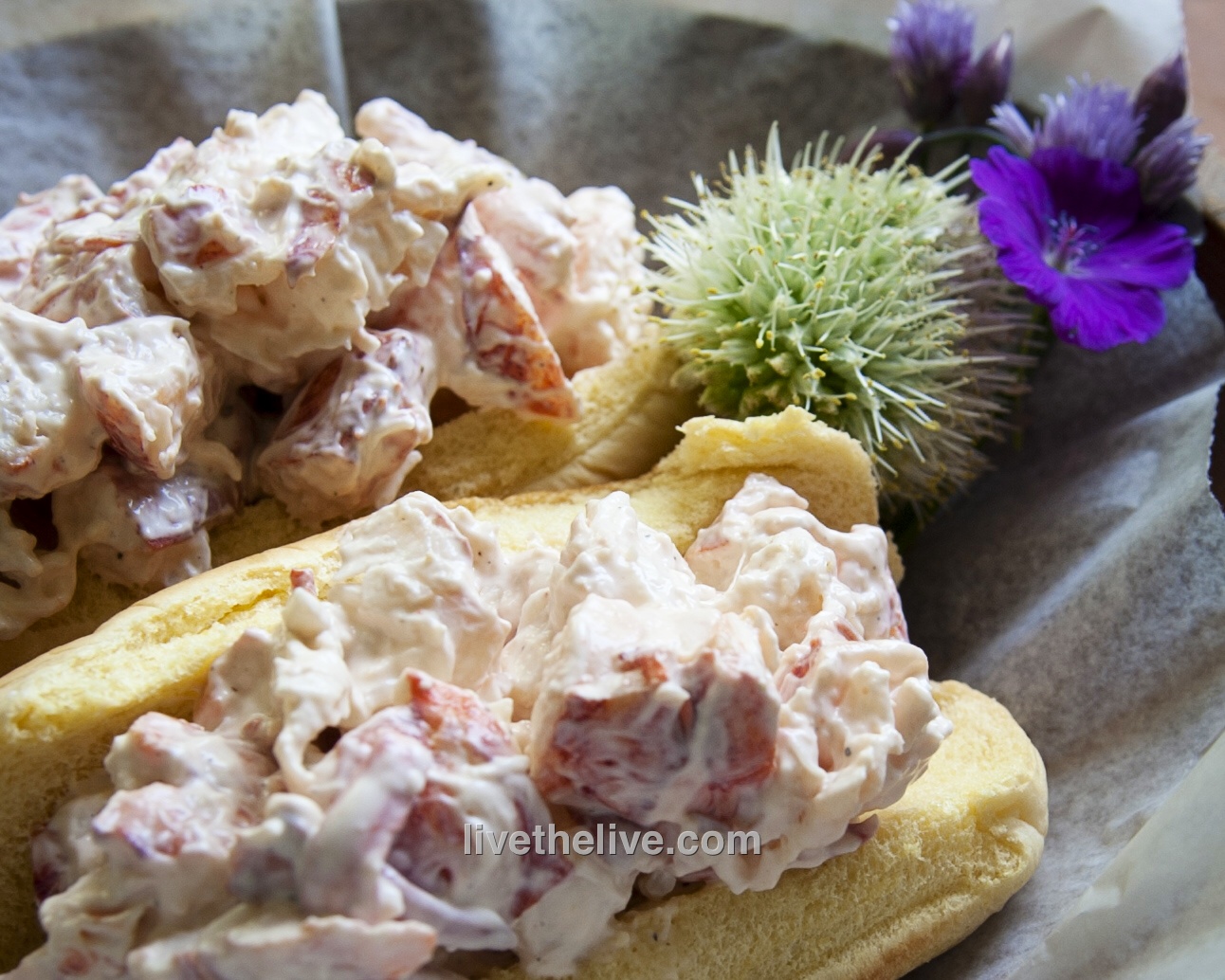
Lobster roll LTL

Everyone has their own opinion about lobster rolls: what goes in ‘em…and perhaps more importantly, what doesn’t. I am no exception. For me, no veggies whatsoever: no chopped celery, no lettuce, no pickle. No paprika or Old Bay seasoning. A pinch of celery salt? Sure. Mayonnaise? Only Hellman’s. White pepper, not black, and just a touch. Salt? A pinch of Fleur de Sel. And the secret weapon to bring out all the flavors: the tiniest squeeze of fresh lemon juice…not enough to give it a lemon flavor…just to brighten the taste.

I prefer those long Martin’s potato rolls: straight out of the bag or lightly grilled with a little melted butter brushed on.


My first foray into serious cooking started when I bought “The Classic Italian Cookbook,” written by the legendary Marcella Hazan.

Like many great recipes, Fettuccine Alfredo is not complicated…but few restaurants that offer it get it right. Most of the Alfredo sauces I’ve had were watery, floury, and salty and had nothing in common with the real deal.
To this day, if I want a great Alfredo, I make it like Marcella.

alfredo2


1 cup heavy cream
3 tablespoons butter
Fleur de Sel or sea salt
1 lb. Fettuccine, fresh or dried
2/3 cup freshly grated Parmesan cheese
Freshly ground pepper
A very tiny grating of nutmeg

Put 2/3 cup of the cream and all the butter in a large saucepan that will later accommodate all the pasta. Simmer over medium heat for less than a minute, until the butter and cream have thickened. Turn off the heat.

Drop the fettuccine in a big pot of boiling salted water. If the pasta is fresh, it will take just seconds. If it’s dry, it will take a few minutes. Cook the fettuccine firmer than usual, because it will finish cooking in the pan with the butter and cream. Drain the pasta immediately and thoroughly when it’s done and transfer to the pan containing the butter and cream.

Turn the heat under the pan on low, and toss the fettuccine, coating them with the sauce. Add the rest of the cream, all the grated cheese, 1/2 teaspoon salt, the pepper and the nutmeg. Toss briefly until the sauce has thickened and the fettuccine are well coated. Taste and correct for salt.

Serve immediately!

It’s Negroni week! And an aged Negroni is even better.

Used to be that only the big distilleries were able to age their finest spirits in charred oak barrels. But now, there’s a movement goin’ on…and hand-crafted oak barrels are available to aficionados at home.

Companies like Redhead Barrels (http://www.redheadoakbarrels.com) are offering oak barrels for aging that range in size from 1 liter to 20 liters. And that’s where this enthusiast comes in: with a 1-liter barrel, I’m able to age my favorite spirit–vodka, rum, whiskey, bourbon, anything–in just a few weeks, elevating the flavors to levels previously unknown.

wood

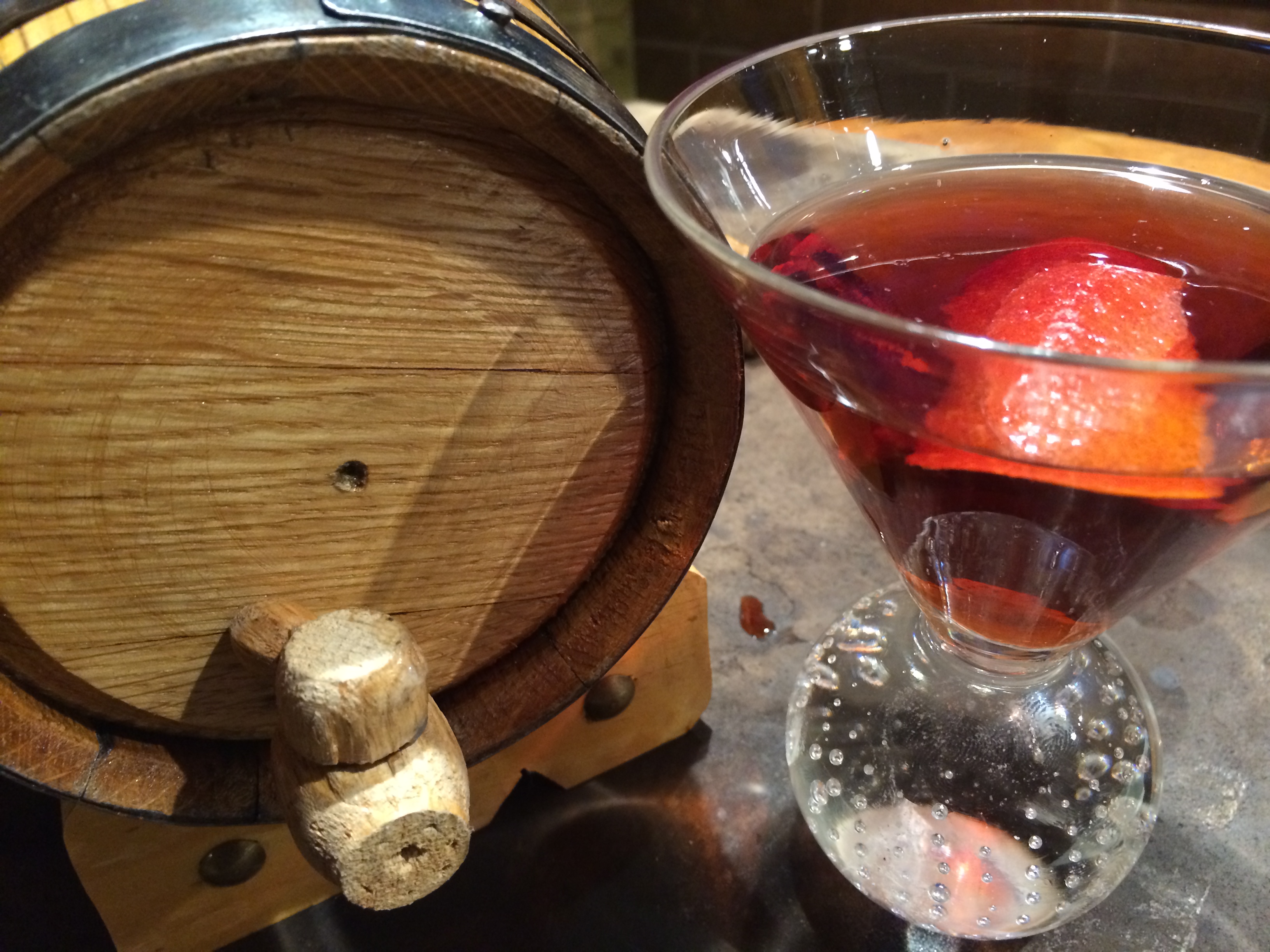
My  1-liter barrel arrived with the spigot and bung separately. Curing the barrel is necessary before using it. You do this by rinsing the barrel out a few times to remove any loose pieces of wood chips or splinters that may still be inside. Hand-turn the spigot into the barrel until it fits snugly and place the barrel in the sink on the included stand. Fill the barrel with very hot water…and watch. Some barrels are totally watertight and will not leak. Others may take literally a few days of repeated fillings with hot water before it thoroughly seeps into the wood, expanding it to seal the barrel.

Once there are no leaks, it’s ready to go. Empty the water out of the barrel and fill it with your favorite spirit. Because there is more wood surface area to less liquid (as compared to the large barrels companies like Jack Daniels use), your alcohol will age faster…in weeks instead of years. Once you’ve aged it as much as you want, you simply pour it into a bottle to stop the aging process. Rinse the barrel out thoroughly, and you are ready to age yet another spirit.

I chose to age a cocktail that I first savored at the Greenhouse Tavern in Cleveland, Ohio, the brainchild of talented chef Jonathon Sawyer. The call it a Negroski, their take on a Negroni. It features equal parts Campari, Cocchi sweet vermouth, and OYO stone fruit vodka. They make large batches of it and keep it in a barrel until they serve it. So enamoured my wife and I were with this drink, that I begged the bartender to give me the recipe.

Doing the math, equal parts of each ingredient meant 1 1/3 cups of each to make a quart…which fit perfectly in my 1-liter barrel. Once I corked the top with the bung, it was time to let it age.

A slight daily rotation of the barrel gently rocks the liquid inside, exposing it to the barrel’s charred wood interior, giving it more flavor. And at the end of   a week, I was ready for my first tasting: the wood had a subtle influence, rounding out the flavors. I wanted a little more, so I waited another week.: even better, but not quite there. It took a total of three weeks before the drink reached its flavorful peak.

I poured some of the drink into a cocktail shaker with ice, stirred briskly with a spoon, and strained it into a martini glass, garnishing with a twist of blood orange peel. Delicious!

cask

Just recently, I purchased a 3-liter barrel. After all, 3 times the booze means 3 times the fun!