Posts Tagged ‘recipes’

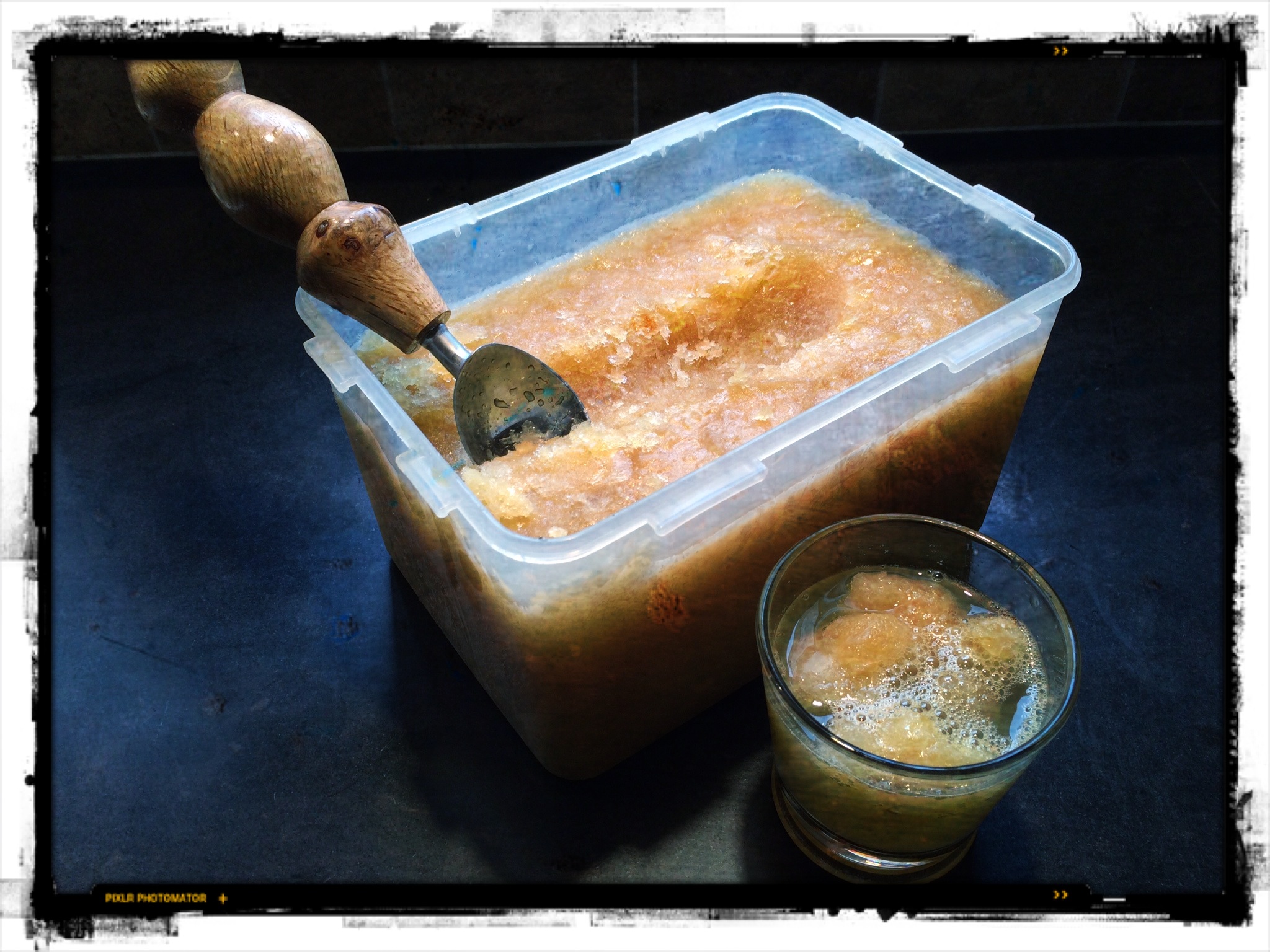
Freshly shucked oysters and clams–or in this case–beautiful boiled wild-caught American shrimp, call for an equally amazing cocktail sauce…and this sauce kicks butt! And it features a key ingredient that you might not expect: vodka. The small amount of vodka in the mix keeps the cocktail sauce from freezing solid when stored in the freezer. Just scoop out what you need, let it thaw, and put the rest back in the freezer.

image


2 cups ketchup
4 tablespoons prepared horseradish
1 tablespoon fresh lemon juice
1 teaspoon Worcestershire sauce
1/2 teaspoon Frank’s Red Hot, or other hot pepper sauce
5 grinds of fresh black pepper
1/4 teaspoon salt
1 teaspoon good quality vodka, like Tito’s

Combine all the ingredients. Store in a tight plastic container in the freezer.

My raspberry plants are producing a ton of fruit right now, and when that happens every season, I could turn my attention toward tarts, jams or even ice cream. But I prefer to focus on Mojitos!

Very often, I’ll use raspberries alone, but Mojitos are even better when you combine the raspberries with blueberries. Frozen fruit works well, too. Make it by the pitcher and you’ll never make it any other way again!

The ingredients

The ingredients


Make ahead of time…
1 1/2 cups fresh squeezed lime juice
1 1/3 cups turbinado sugar (Sugar in the Raw)

Mix both ingredients together and let stand at room temp. Shake until dissolved. The mixture can be covered and refrigerated for several weeks and ready to use any time. Shake well before using.

mojito pitcher

For the Mojitos…
1 cup sugar/lime mixture
1 cup mint leaves, packed
1/2 pint blueberries (fresh or frozen)
1/2 pint raspberries (fresh or frozen)
3 or 4 cups white rum, preferably Don Q Cristal rum
3 or 4 cups club soda

Combine mint leaves and 1/2 cup of sugar/lime mixture in bottom of a pitcher. Muddle mint up very well to release mint oils. Add blueberries and continue to muddle.

Add remaining sugar/lime mixture, rum and raspberries. Mix well. Just before serving, add club soda and ice. Stir. Pour into glasses.

Or…for drinks one at a time, fill a tall glass with ice. Fill one-third to halfway with club soda. Top with Mojito mix. Garnish with mint leaf.


Cheers!

Cheers!

Brining, the process of letting a hunk of protein soak in a salt solution for a few hours, is a great way to add flavor and moisture to any cut of meat. I brine these wings for 3 hours before using a sweet and spicy rub. They can be grilled or roasted in the oven.

image

The brine…

1/2 cup Kosher salt
3 tablespoons light brown sugar
1 teaspoon whole black peppercorns
1 whole bay leaf
2 quarts water

Combine all ingredients in a saucepan and heat until the sugar and salt dissolve. Remove from heat, and let it cool to room temperature.

The rub…

1/4 cup light brown sugar
1/4 cup granulated sugar
1/4 cup sweet paprika
1 tablespoon Kosher salt
1 tablespoon granulated onion
2 teaspoons black pepper
1 teaspoon dried thyme
1 teaspoon dry mustard
1 teaspoon ground ginger
1 teaspoon cayenne pepper

Combine all ingredients in a bowl.

Place 3 lbs. of chicken wings in a Ziplock bag and pour the cooled brine into the bag. Place the bag in a bowl to prevent leaks and place in the fridge for 3 hours.
After 3 hours, remove the chicken from the brine and dry with paper towels. Discard the brine.
Place the chicken pieces in a large bowl and sprinkle with 1/3 cup of the rub, tossing to coat the chicken well. Place the bowl with the chicken in the fridge until ready to cook.
About 30 minutes before cooking, remove the bowl from the fridge and let the chicken come to room temperature.
Pre-heat the oven to 350 or light a grill.
Toss the chicken with some more of the rub, if you like, then place the pieces on a sheet pan lined with non-stick aluminum foil.
Bake at 350 for 30 minutes or until done. Lower oven temperature if it starts to burn.

If grilling, cook over medium heat, turning frequently to prevent burning. Cook until the wings are done.


Though it may sound Japanese, the word “saganaki” refers to a small frying pan used in Greek cooking. The most famous of these dishes, simply called saganaki, is a fried cheese, often flamed at the end with a little ouzo.

Shrimp saganaki is one of my favorite Greek dishes, and it usually involves cooking shrimp in a tomato-based sauce with plenty of feta cheese sprinkled in. It’s a simple yet fantastic dish if the ingredients are fresh. Doesn’t hurt to be sitting in a taverna on the beautiful island of Santorini while eating it, either!

Graviera cheese

Graviera cheese

I had a slab of Graviera cheese from my most recent trip to Santorini, and decided to recreate shrimp saganaki using that instead of feta. It was pretty damn amazing…

Melty, gooey, delicious!

Melty, gooey, delicious!


300 g grated Graviera cheese
1 can (28 oz) whole tomatoes
1 lb (about 24) shrimp, peeled and deveined
1 medium onion, chopped
juice of 1/2 lemon
1/4 cup olive oil
2 cloves garlic, through a press
pinch red pepper flakes
1 1/2 tablespoons fresh dill, finely chopped
1 tablespoon fresh oregano, finely chopped
1 1/2 tablespoons Ouzo
salt and pepper


Peel and de-vein the shrimp. Squeeze the juice of  1/2 of a lemon on to the shrimp and toss. Set aside.

In a large pan, saute the onions in the olive oil until translucent. Add garlic and cook for a few seconds more.

Crush or puree tomatoes and add to the pan. Add red pepper flakes, dill and oregano, and salt and pepper. Add Ouzo.

Let this sauce cook down for a bit until all the flavors have blended together.

Pour a layer of the sauce on the bottom of a metal broiler-proof pan. Lay the shrimp in a single layer into the sauce. Cover the shrimp with the rest of the sauce and sprinkle the grated Graviera on top.

Place the pan in the broiler and cook until the cheese is brown and bubbly.

shrimp saganaki


We were recently invited to a very cool retro summer party: cocktails and appetizers from the 60’s, and everyone contributed to the music by bringing in their favorite songs on vinyl. (I brought in a copy of the First Edition’s “Just Dropped In (to See What Condition My Condition Was In)” featuring a very young Kenny Rogers. Very trippy.

We were also asked to contribute to the apps, so I brought waffle chips with clam dip.

image

2 8-oz. packages cream cheese, softened
3 6-oz. cans of chopped clams, drained, liquid reserved from one can
1 tablespoon fresh lemon juice
2 teaspoons Worcestershire sauce
1/2 teaspoon salt
1/4 teaspoon black pepper

Combine all the ingredients, except the clam liquid, in a bowl and mix well with a fork.

Add 1 tablespoon of the clam liquid and mix well. Keep adding the clam liquid until the dip reaches a consistency you like.

Serve with potato chips.

image

As a kid, I always knew my grandmother loved me. After all, she told me that every time I visited her on Saturday afternoons. She lived in Queens, NY, and we’d visit after sitting through 5 long hours of Lithuanian school in Brooklyn every Saturday morning.

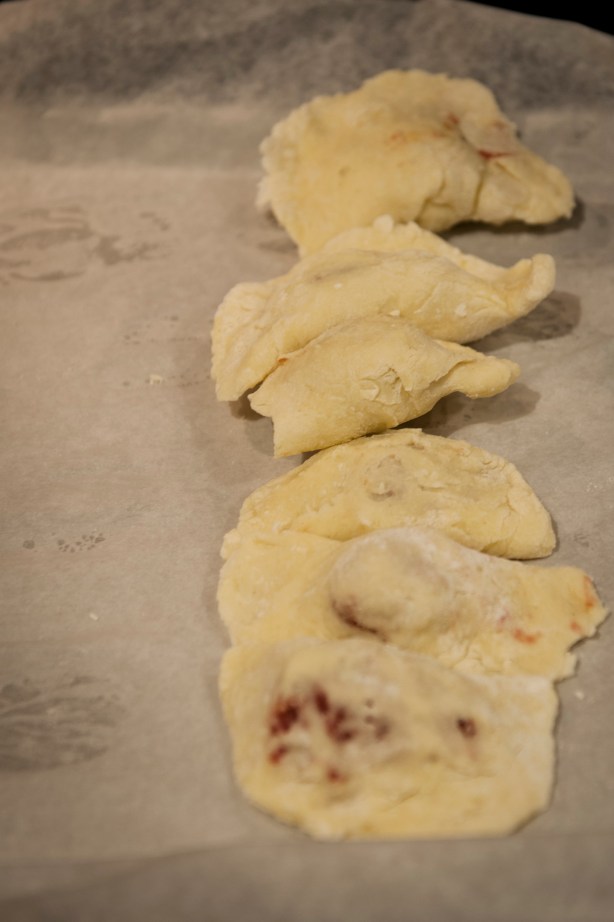
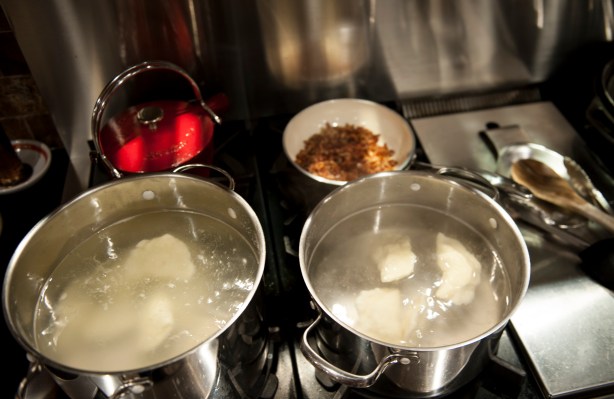
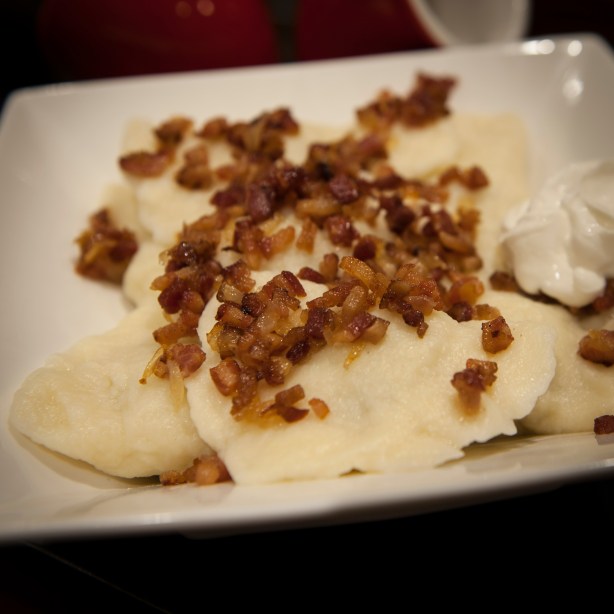
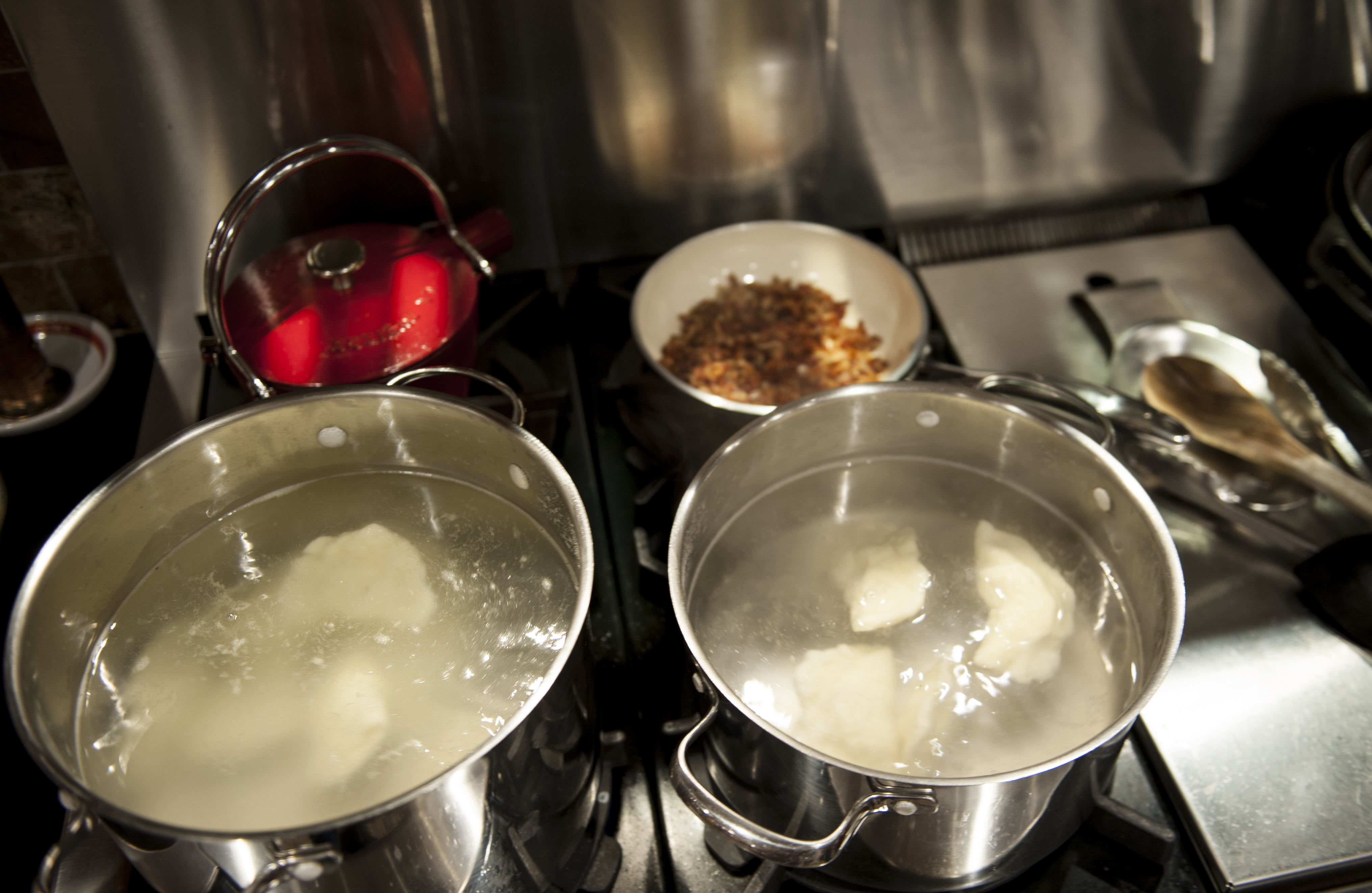
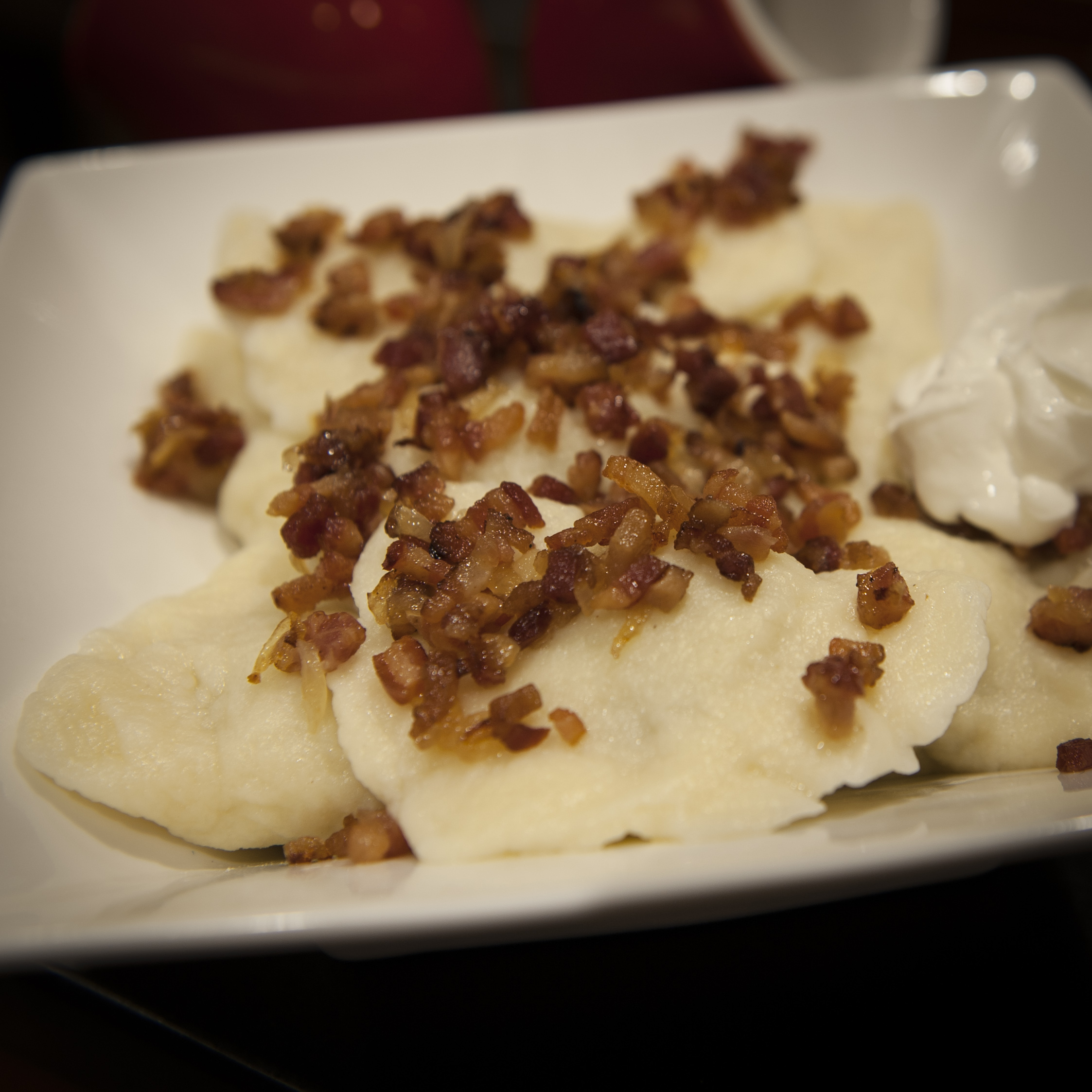
By the time we got to my grandmother’s house, it was mid-afternoon, and I was starving. She’d greet me with a smile and a kiss on the forehead, and she’d proudly put a plate full of koldūnai (Lithuanian pierogis, usually stuffed with meat instead of potatoes or sauerkraut, and way better) in front of me, steam rising off the freshly-boiled koldūnai, with spirgučiai (fried bacon and onion bits) generously sprinkled on top, and a dollop of sour cream on the side.

There were times when I could eat 20 of them. However many I had, it seemed that she still had more, and I never thought for a moment about where they came from. I guess I knew that she made them, but I never really thought about what that meant.

Now I cook for my 8-year-old daughter, and the other day, she asked for one of her favorite dishes: ham and cheese croquettes. It’s a long and messy process to make them: boiling and mashing potatoes, chopping up slabs of ham, grating piles of cheddar cheese, mincing onions. Then rolling the croquette filling in flour, egg and breadcrumbs before frying them.

Whether I make six or sixty, the kitchen is trashed afterwards, so I went with the larger number…62, to be exact. (They freeze well.)

image

It’s not hard work, but it’s tedious. After making 30 croquettes, my back was aching from standing hunched over the kitchen counter. And I was only half done. I tried pulling up a stool, but that didn’t help, so I popped a few ibuprofen and kept going, finally frying that last croquette, turning the heat off the oil, and standing back to see a kitchen counter covered in egg, flour, breadcrumbs, and mashed potatoes. The cooking was done but the cleanup was just beginning.

My daughter stepped off the school bus at the end of the driveway, and I greeted her with a kiss on the forehead, telling her I loved her. We walked back to the house, and I asked her about her day, all the time knowing that I had a special treat waiting for her that I couldn’t wait to show her.

We walked into the house and she saw the trays of croquettes. I placed a couple of them on a plate and she sat down, eyes wide open, and took her first crunchy bite. The heartfelt “Mmmmm” that came from deep inside her gave me a real sense of satisfaction. My hours of work had paid off with one simple bite. Few things could’ve made me happier at that moment than the smile on her face.

And then I thought of my grandmother.

image

What I did that day, she did for me every Saturday without fail. And she was a lot older than I am now.

She loved me, alright. Funny how it took almost 40 more years for me to realize just how much.

Nothing says summer here in New England like a lobster roll. But I don’t go to a clam shack to get one. The prices are ridiculous, the meat can be overcooked, and they often add ingredients I don’t want.

I start with fresh lobster. I get it from my lobster man buddy, Gary, just down the street at his dock in Tiverton, RI.

A view of the Sakonnet River from the back of Gary's lobster boat, the Edna Mae

A view of the Sakonnet River from the back of Gary’s lobster boat, the Edna Mae

The next step is to cook it right. I use sea salt in a large pot of boiling water. I make sure the water is at a rolling boil before the lobsters go in. And I cook them for no more than about 8 minutes.

Lobster catch LTL

After the lobsters have been removed from the pot and have cooled for a few minutes, I get to work: cracking the claws and tail and removing every bit of beautiful meat I can find. Lobster lovers will tell you that the legs have some meat in them and that the tomalley (the green liver and pancreas) and roe (eggs) are delicacies not to be missed. For the purpose of making lobster salad, I don’t use these parts. But I do save the tomalley and roe for a separate treat…and I save all the legs and cleaned empty shells for lobster stock.

Lobster roll LTL

Everyone has their own opinion about lobster rolls: what goes in ‘em…and perhaps more importantly, what doesn’t. I am no exception. For me, no veggies whatsoever: no chopped celery, no lettuce, no pickle. No paprika or Old Bay seasoning. A pinch of celery salt? Sure. Mayonnaise? Only Hellman’s. White pepper, not black, and just a touch. Salt? A pinch of Fleur de sel. And the secret weapon to bring out all the flavors: the tiniest squeeze of fresh lemon juice…not enough to give it a lemon flavor…just to brighten the taste.

I prefer those long Martin’s potato rolls: straight out of the bag or lightly grilled with a little melted butter brushed on.


When asparagus is in season, it’s time to gorge. I’ve got it growing in my yard, and the patch gets bigger and happier every year with minimal maintenance…definitely one of those veggies every lazy gardener should grow.

I love it raw, chopped into salads, pickled, oven-roasted, and in pasta dishes. This is a great side dish with any main course slab of meat.

image

1 lb. fresh asparagus spears
1 tablespoon butter
2 tablespoons olive oil
3/4 cup grated Parmigiano Reggiano cheese
salt and pepper


The easy way to trim asparagus spears is to grab the thicker end between two fingers and bend it. It will snap at the point where the tough part ends and the softer, edible part begins. Toss the bottoms into your compost pile.

Heat the butter and oil in a pan and then add the asparagus spears. Cook over medium heat for about 5 minutes, until al dente. You don’t want them mushy.

While the asparagus is still in the pan, sprinkle the Parmigiano Reggiano on top, letting it melt a bit. Season with salt and pepper.

I ate this batch right out of the pan!


GUAC AND ROLL

Posted: June 5, 2015 in Food, Recipes
Tags: , , ,

People are passionate about their guacamole, and there are thousands of recipes out there. If the avocados are nice and ripe, I think a good guac recipe needs to be simple. Grapefruit is my go-to citrus to add a spark of bright flavor.

image

4 ripe avocados
1 grapefruit
Tony Chachere’s Creole Seasoning

Slice the avocados lengthwise down the middle and all the way around, twist to get 2 halves, remove the seeds, and scoop out the flesh into a glass bowl. Mash it up a bit with a fork.

I always wash fruit before zesting. Using a microplane zester, zest a bit of the grapefruit skin and add to the bowl before cutting it into quarters. Squeeze the juice out of one of the quarters and add to the bowl.

The art of removing the flesh out of citrus without any of that nasty fibrous skin is called supreming.  Supreme as much of the flesh as you like, roughly chopping it, and add it to the bowl.

Tony Chachere’s (pronounced sak-a-rees) Creole Seasoning has some kick, some salt, and some spices. Add it to taste.

Mix the contents of the bowl well with a fork. Cover the bowl tightly to prevent oxidation, and like all guacamole, store it in the fridge and serve it as soon as possible.

Whether it’s the Italian Giardiniera or the French spelling of Jardiniere, it’s a delicious mix of vegetables that get their kick from soaking in a vinegar-mustard seed brine. My Mom used to make Chow-Chow, which is similar, using vinegar and yellow mustard. Either way, I love the taste of this veggie medley that really has no rules: use whatever your favorite vegetables are, brine them, and enjoy.

I got carried away and used a gallon-sized glass jar for this recipe, perhaps far too much for most applications. This recipe has been reduced to fit a quart-size Mason jar.


image

2 cups white vinegar
1/4 cup granulated sugar (I use organic cane sugar)
2 tablespoons Kosher salt
1/2 head organic cauliflower, chopped into small florets
1 medium yellow onion, sliced thin
1/2 red bell pepper, seeded and cut into 1/2″ dice
1 celery stalk, sliced very thin
1 carrot, peeled and sliced thin
1 garlic clove, through a press
1 tablespoon whole yellow mustard seeds
1 1/2 teaspoons dried oregano
1/4 cup olive oil


In a non-reactive saucepan, bring the vinegar, sugar and salt to a boil, just until all the ingredients have dissolved. Remove from heat and let it cool to room temperature.

Chop the cauliflower, onion, pepper, celery and carrot, placing them into the Mason jar. Feel free to use more of what you love and less of what you don’t!

Once the vinegar mixture has cooled, add the garlic, mustard seeds and oregano to the mixture and stir to combine. Pour this mixture into the Mason jar of veggies, seal the jar and shake the jar to thoroughly mix everything.

image


Store in the fridge. It’ll be ready to eat in a couple of days…if you can wait that long!