Archive for the ‘Food’ Category

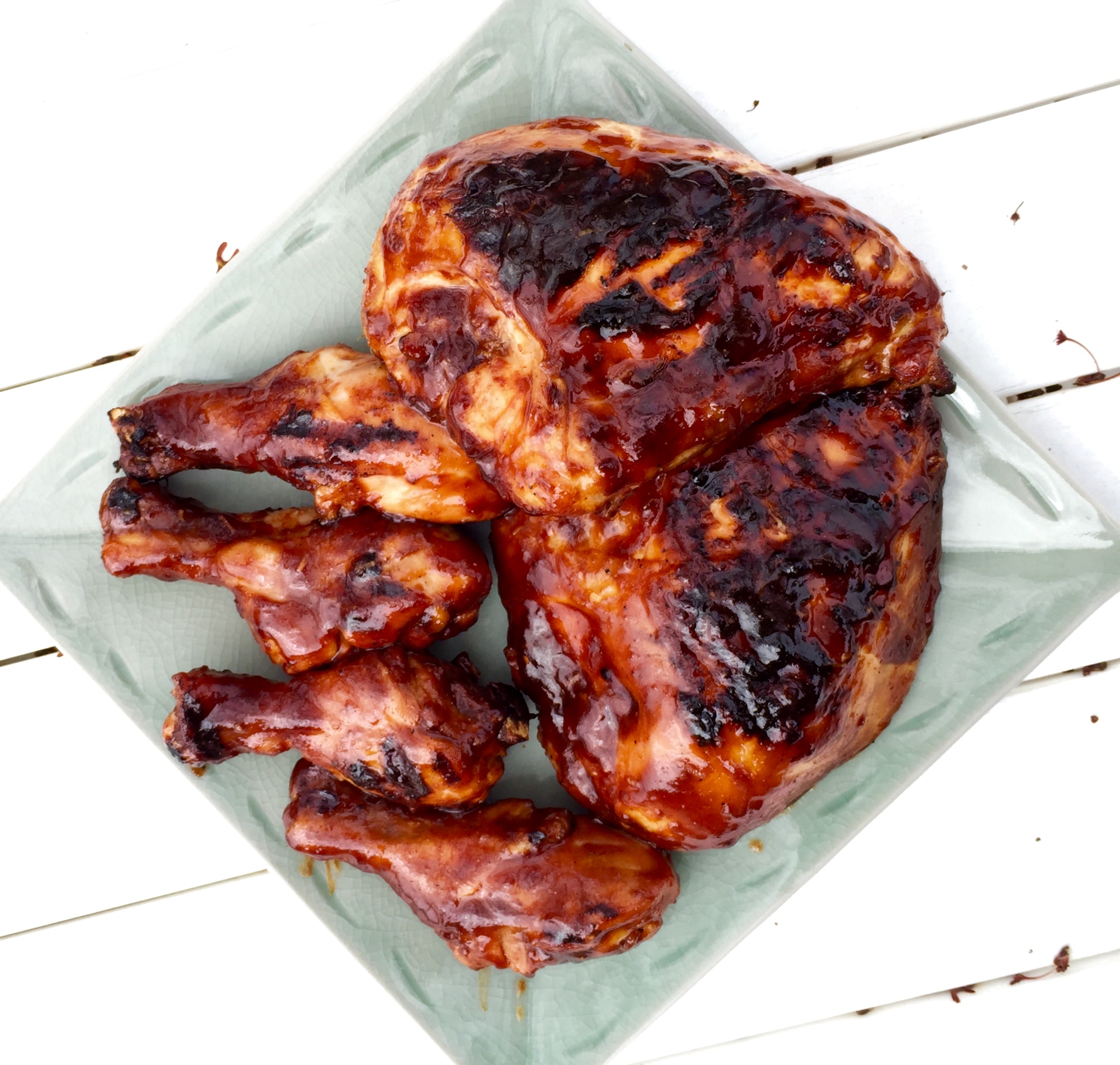
This was a hit when  I brought them to a recent neighborhood party. Imagine the best of a deviled egg and a BBQ chicken sandwich, and you’ve got this appetizer that rocks in more ways than one. This is a great app you can make ahead of time: I boil the eggs and make the cole slaw the day before, then keep them in the fridge. Even the chicken can be cooked the day before and then warmed through before assembling right before your guests arrive.

_DSC6511

For the chicken:
3 cups ketchup (I use Heinz organic)
1 tablespoon apple cider vinegar
2 tablespoons soy sauce (I use La Choy: it’s gluten-free)
1 teaspoon hot sauce (I use Frank’s Red Hot)
1/4 cup + 2 tablespoons brown sugar
1 lb. boneless skinless chicken breasts


For the cole slaw:
2 tablespoons mayonnaise
1 tablespoon rice wine vinegar
1/2 teaspoon sugar (I use organic cane sugar)
2 cups finely shredded cabbage
For the deviled eggs:
6 hard-boiled eggs
1/4 cup mayonnaise
1 tablespoon mustard (I use Gulden’s)


Combine the ketchup, apple cider vinegar, soy sauce, hot sauce, and brown sugar in a Crock Pot or heavy pot with a lid. Mix well, then add the chicken breasts, making sure they’re immersed in the sauce. Cook low and slow for about 4 hours. If using a pot with a lid, place in a pre-heated 250-degree oven and cook for 6 hours.

When the chicken is cooked through, shred the meat with 2 forks. Set aside, but keep warm.

Combine all the cole slaw ingredients in a bowl, mixing well, and place in the fridge.

For perfectly hard-boiled eggs, place the eggs in a pot of cold water, and turn the heat on high. Just before the water starts to boil, put a lid on the pot and turn the heat off. Let the eggs sit in the hot water for 15 minutes. Once cooked, keep the eggs in the fridge.

Slice the eggs in half and place the yolks in a bowl with the mayonnaise and mustard. Mix well and keep in the fridge.

To assemble, take a teaspoon of the mayo/mustard/yolk mixture and place it in the cavity of one of the egg halves. Place another teaspoon of the shredded chicken on top (I like it warm, to counter the cold of the mayo and cole slaw), drizzling a little of the BBQ sauce on the meat. Then place a teaspoon of the cole slaw on top of the chicken.

Clam fritters, conch fritters, lobster fritters…I suppose you could fritter anything. But the first time I had them with mussels, I knew that I would never fritter my life away with any other!

It was a fall afternoon in Newport, Rhode Island, at the Newport Yachting Center’s annual Oyster Festival. We’re gorging on freshly shucked oysters and clams, boiled shrimp, and…what have we here? I had never heard of a mussel fritter before, but once I took a bite, there was no turning back.

They couldn’t be easier to make, but it is crucial to have the right fritter batter. And that starts with a Rhode Island product called Drum Rock fritter mix. If you live in New England, you can find it in just about any seafood department at Whole Foods. If you live further away, you can check out their website (www.drumrockproducts.com) or try your luck with a local brand of fritter mix.

fritter ingredients


If you’re using fresh mussels, be sure to clean them well and remove the beards. Steam them in a pot over a small amount of water. As they open, they will release their flavorful juices and you want to save every drop of that broth for the fritters. Here in New England, frozen mussel meats are available in some seafood stores. All you need to do is thaw them, steam them saving the broth, and you’re ready to go.

For the fritters:
1 lb. fritter mix
2 cups cooked mussel meats
1/2 cup mussel broth (saved from steaming mussels)
1/4 to 1/2 cup good quality beer (I use Sam Adams Boston Lager)
Avocado oil for frying (I don’t use canola or vegetable oils)


Steam the mussel meats until they’re just cooked. Remove the mussel meats, and reserve 1/2 cup of the broth. Pulse the mussel meats in a food processor, but leave ’em chunky…or chop by hand.

Put the fritter mix in a large bowl. Add the mussel meats, mussel broth, and beer. Stir gently until just mixed. Let it sit for 10 to 15 minutes and do not stir again. (If you’ve got guests coming, you can prepare up to this part ahead of time, covering the bowl with a wet towel, and leaving at room temperature.)

Using a thermometer, heat the oil to 350 degrees, and using a small spoon or scoop, drop fritters in the hot oil, turning gently, cooking 3 to 4 minutes until golden.

Drain on absorbent paper, and season with salt and pepper immediately. Serve right away!

IMG_3043


For the dipping sauce:
1 cup mayonnaise
1/4 cup Ponzu sauce

The perfect dipping sauce for these mussel fritters is made from two ingredients: mayo and Ponzu sauce, a citrus-based soy sauce. Combine both ingredients in a bowl. Keep in the fridge until you’re ready to use it.

Awesomesauce is an all-purpose sauce that I created a couple of years ago for a variety of dishes. Because it has a base of mayo, mustard and ketchup, it works great on burgers and fish…on lobster and crab salads and shrimp cocktail…and just about anything else you can think of.

I made a batch of Awesomesauce for taco night at the house, and decided to use the leftovers the next day to coat pieces of chicken before roasting. The chicken came out moist and delicious. And because I sprinkled some breadcrumbs on them, they had a nice added crunch.

image

For the Awesomesauce:
1/2 cup mayonnaise
1 tablespoon ketchup
1 tablespoon mustard (I like Gulden’s)
1 tablespoon dill pickle relish
1/4 teaspoon granulated garlic
1/4 teaspoon paprika
Pinch cayenne pepper
4 lbs. organic pastured chicken pieces
plain breadcrumbs (I use gluten-free)

In a bowl, combine the mayo, ketchup, mustard, dill pickle relish, garlic, paprika and cayenne. Mix thoroughly and keep in the fridge until you’re ready to use it.

Pre-heat the oven to 325.

Rub the Awesomesauce all over the chicken pieces and lay them in a sheet pan lined with non-stick aluminum foil. Lightly sprinkle the breadcrumbs over the top of the chicken.

Bake until the chicken is cooked all the way through and brown and crispy.


I think half my childhood was spent in the kitchen, watching my Mom and grandmother make koldūnai (kohl-doo-nayh), the Lithuanian version of a pierogi, by hand at lightning speed. Some Lithuanian cooks would make the dough, roll it out into a large flat sheet with a rolling-pin, then cut circles out with a glass or a cookie cutter. But my Mom and grandmother used a different method: they’d roll the dough into a log, cut it into 1″ pieces, and then twirl each piece in their hands to make a flat pancake that they would then fill with a spoonful of meat or mushrooms. It blew my mind that they could crank out over a hundred of these perfectly shaped dumplings in no time, placing them on a cookie sheet and freezing them until it was time to cook them.

One of the main reasons koldūnai beat pierogis every time is the filling. My Mom would mix ground beef with chopped onions sautéed in butter, a couple of eggs, and milk crackers soaked in milk. She’d add salt and pepper, then take a spoonful of the raw meat mixture and plop it in my mouth. “Enough salt?” she’d ask. My sisters and I loved the taste of the raw beef like that…probably why I always order beef tartare when I see it on a restaurant menu.

The other stuffing, usually reserved for special holidays like Christmas and Easter, was made from mushrooms. Italy may lay claim to the porcini, but the fact of the matter is, Lithuania is porcini heaven. And when they’re dried and reconstituted, their incredible flavor is so intense, you don’t need many of them to flavor a large amount of cheaper button mushrooms. We’d get our dried boletes from relatives in Lithuania every year…the real deal. Mom would place a handful in some boiling water and let them steep until they swelled up and could easily be chopped and added to the other mushrooms. She’d then pour the mushroom liquid into the pan as well, not wasting a bit of that magical porcini flavor. The mushrooms were simply sautéed in butter, cooled, then used to fill the koldūnai.

Common pierogi fillings are potatoes or sauerkraut. I think the Lithuanians got this round.

Not perfect, but not bad for a first attempt. I made sure the exposed meat was covered by dough before placing in the freezer. otherwise, they would open up in the boiling water and make a mess.

Not perfect, but not bad for a first attempt. And the GF dough was tough to deal with at first. I made sure the exposed meat was covered by dough before placing in the freezer. Otherwise, they would open up in the boiling water and make a mess.


So this past Christmas Eve, I decided it was time to try my hand at making koldūnai. As I recall, my Mom simply mixed water with flour and a little salt to make the dough, kneaded it into a log, and off she went. My challenge was a bit more daunting: I needed to make them gluten-free as well. My sister, whose family lives the GF lifestyle, told me that they simply exchange all-purpose flour for gluten-free flour and it works fine. But my experience in trying to bake bread or make pizza dough with gluten-free flour told me that the dough would be tough to work with and would lack the elasticity found in dough made with gluten, so I wanted another option. I found an old recipe on-line that still used the individual GF ingredients (rice flour, potato starch, tapioca flour, etc.) before the advent of Cup 4 Cup, the all-purpose gluten-free flour I now use religiously. I decided I’d substitute my go-to flour for those ingredients and add it to the rest of the recipe. What I got was a soft dough that was relatively easy to work with, just a little sticky.

The biggest challenges I had with making my koldūnai was my own clumsiness and lack of experience. Once I got the hang of it, things moved along steadily, and it didn’t take long for me to make 24 gluten-free koldūnai–not all perfect, but not bad for a first try.

Since my wife is allergic to mushrooms, I had to skip them this time around and used a ground beef filling instead. And, by my daughter’s special request, I also made 4 mac-and-cheese koldūnai, also gluten-free using GF mac-and-cheese.

The ground beef filling was easy…

1/2 onion, finely chopped
1 pat of butter
1 lb. ground beef
1 egg
1/2 cup breadcrumbs (I use gluten-free)
1/4 cup milk


Finely chop the onion and saute it in a little butter until translucent. Let it cool, then add it to 1 lb. of thawed ground beef. Add the egg, the breadcrumbs, and the milk. Season with salt and pepper. Mix ingredients thoroughly and keep the meat in the fridge until ready to use.


Two pots of boiling salted water: one for the meat-filled koldūnai, and one for the mac-and-cheese filled koldūnai.

Two pots of boiling salted water: one for the meat-filled koldūnai, and one for the mac-and-cheese filled koldūnai.


1 lb. bacon, finely chopped
1 large onion, finely chopped

In a large pan, fry the chopped bacon until it’s almost crisp. I don’t drain the fat, but you can if you’re a wuss. Add the chopped onions and cook until they are soft. Set aside. These are called spirgučiai, (spir-guh-chay) and they are sprinkled on top of the finished koldūnai, just before serving. (My Mom always kept a stash in a container in the fridge, and sprinkled them on anything and everything.)

duni 4

1/2 cup cottage cheese
1 large egg
1/4 cup milk
1 tablespoon olive oil or avocado oil (I don’t ever use canola or vegetable oils)
1/2 teaspoon salt
1 cup gluten-free flour (I use Cup4Cup)

Place the flour in a bowl. In a blender, combine the cottage cheese, egg, milk olive oil and salt. Blend until smooth. Pour the liquid ingredients into the bowl with the flour and knead by hand, forming a dough.

Dust a board with more flour, and move the flour from the bowl onto the board. Knead it into a long log, about a foot long and 1 1/2″ thick. Cut it into 12 equal pieces, about 1″ wide.

Take one cut piece, and using your thumbs, twirl the dough around, flattening it into a small pancake. (Feel free to use a small rolling-pin, if that’s easier.) Place a teaspoon of filling in the center of the pancake, then fold one side over so that it meets the edges of the other side. Press with your fingers to make the two halves stick together and form a seal. (You may need to dab a little water on one edge with a small pastry brush to help make it sticky enough to seal it.)

Place the koldūnai on a sheet pan lined with parchment paper, and when you’re done, place the sheet pan in the freezer.

Get a large pot of salted water boiling. Drop the koldūnai in gently, being careful not to overcrowd them…about 6 at a time. If the dough is thin, the koldūnai will be ready when they float up to the surface. A thicker dough will need longer cooking. The best way to know if they’re done is by taking one out, cutting it open and having a look (and taste!)

When plating, sprinkle generously with spirgučiai, and serve with sour cream.

Mac-and-cheese koldūnai!

Mac-and-cheese koldūnai!


ORGANIC OR NOT ORGANIC?

Posted: December 29, 2015 in Food, garden, tomatoes
Tags: , , , ,

You might be thinking of eating more healthy fruits and veggies in 2016, and organic is usually the way to go. But considering the price difference, it’s not always easy to simply buy organic over non-organic produce. Although I tend to buy mostly organic products, there are times when I think it’s not all that necessary. By the same token, there are times when it is absolutely necessary.

organic

Despite the organic label… despite the fact that produce has been triple washed or whatever other nonsense they claim, I always wash my produce before eating. And I store it in a new, clean plastic bag or container in the fridge, recycling the old clam shell container.

I try to avoid any produce from Mexico or South America, where they’re allowed to use pesticides banned long ago in the United States. I don’t even trust the organic products from those areas. (Hey, if they tell you not to drink the water when you vacation in Mexico, why would you want them to water your produce with it?)

And I buy seasonal organic produce from my local farmers whenever possible.

Here are a few of what are known as the “dirty dozen:”

Strawberries: Always go organic. Non-organic strawberries are bathed in pesticides and no amount of washing with water will remove them. There’s no way I’m going to put that in my daughter’s smoothie.
Speaking of strawberries, the greens on each fruit are totally edible, and you won’t notice them at all if you’re using them for smoothies. Just wash the fruits and then throw the whole thing into your blender.
I usually buy a large quantity of organic strawberries when they’re on sale, wash them thoroughly in cold water, and then freeze them in small bags to use for smoothies later.

Apples: Always go organic. I have two apple trees in my yard and I know what a nightmare it is to keep the bugs away from them. The only way you can do that is by spraying the living hell out of those trees. Unfortunately for me, the days of going to an orchard with the family and picking our own apples are long gone, because I know what they have to do to make them look pretty on the branch.

Potatoes: Always go organic. These are sprayed heavily as well. And then there’s the added bonus of spraying the harvested potatoes afterwards to prevent them from sprouting while in storage.


Since the US Environmental Protection Agency doesn’t do its job to let you know about pesticides in your food, groups like the EWG, the Environmental Working Group, do it for them. Other produce that falls into the “dirty dozen” category, as listed by the EWG: celery, peaches, bell peppers, spinach, imported nectarines, cucumbers, cherry tomatoes, kale, collard greens, zucchini, lettuce, blueberries. Always buy organic versions of these if you want to avoid ingesting pesticides. Remember, washing the fruit does not wash off the pesticide!


Fruits with skin you peel: bananas, oranges and other citrus, melons, etc…I’m OK with non-organic, but I wash the outside thoroughly before cutting into the fruit, and I don’t use the skin. If I need the zest of citrus for a recipe, I use organic…but those can be hard to find.

“The clean fifteen,” meaning produce you can buy that is not organic (according to the EWG): onions, sweet corn (which I totally disagree with, thanks to Monsanto’s Round-Up ready crops), pineapple, avocado, asparagus, frozen sweet peas, mango, papayas, eggplant, cantaloupe (domestic), kiwi, cabbage, watermelon, sweet potatoes, grapefruit, mushrooms. I would still keep my purchases to produce grown in the USA. Pesticides that are banned in the USA are still used in other countries.

Here’s some technical labeling info you may or may not know…

Natural: This is a marketing word – not a scientific label. The FDA requires only one natural ingredient to be present for an entire product to be labeled “natural.” This means that as long as a company has one natural ingredient despite multiple harmful chemical ingredients, they can still call the product natural. (As my buddy, Lee, a PhD in Chemistry once told me: “Hey…cyanide is ‘natural!'”) So always read the label!

USDA Certified Organic: Product labels that feature this term are manufactured by operators who comply with annual inspections, as well as random checks, to ensure they’re adhering to the USDA’s organic standards. This includes, among many things, a three-year process to properly fortify the farmland. It’s also important to note that many local farmers that do adhere to “organic” standards can’t afford the fee to apply the “organic” label to their products. So, talk to your local farmer about it.

Here are a few permutations of the USDA’s “organic” label:

    • 100 percent organic: Product must contain (excluding water and salt) only organically produced ingredients. Products may display the USDA Organic Seal and must display the certifying agent’s name and address.
    • Organic: Product must contain at least 95 percent organically produced ingredients (excluding water and salt). Remaining product ingredients must consist of non-agricultural substances approved on the National List or non-organically produced agricultural products that are not commercially available in organic form, also on the National List. Products may display the USDA Organic Seal and must display the certifying agent’s name and address.
    • Made with more organic ingredients: Products contain at least 70 percent organic ingredients and product label can list up to three of the organic ingredients or “food” groups on the principal display panel. For example, body lotion made with at least 70 percent organic ingredients (excluding water and salt) and only organic herbs may be labeled either “body lotion made with organic lavender, rosemary, and chamomile,” or “body lotion made with organic herbs.” Products may not display the USDA Organic Seal and must display the certifying agent’s name and address.

    Of course, all this assumes honest labeling on packaging. Bottom line: read labels, ask questions, and support your local farmers.


    This is my version of a holiday drink I was introduced to by my mother-in-law from the Upper Peninsula of Michigan. I knew I was marrying into the right family after one sip!

    Whiskey slush


    9 cups water
    2 cups sugar
    4 “Constant Comment” tea bags
    12 oz. frozen orange juice concentrate
    12 oz. frozen lemonade concentrate
    2 cups whiskey (I use Crown Royal)
    7-Up

    Boil the water and sugar, making sure the sugar dissolves. Turn off the heat and steep the tea bags in the liquid for 10 minutes. Discard the tea bags.
    Add the OJ, lemonade and whiskey. Mix well, then pour into a freezeable container with a lid. Freeze.
    To serve: Scoop the slush out of the container (it doesn’t freeze solid) and mix in a tall glass with 7-Up.

    There’s a lot of sugar in this drink. You can reduce it by using less sugar, low-sugar concentrates, and Diet 7-Up. Just don’t cut back on the damn whiskey!

    Let’s face it: there’s no such thing as healthy eggnog. This recipe kicks ass but is also a heart attack in a glass.

    My buddy, Rick Sammarco, a former bartender at Mill’s Tavern in Providence, RI, credits his father, Al, for this eggnog. The original recipe calls for a lot more of everything. I’ve cut it down to a “more reasonable” size. It’s been so long since I bought ice cream, that I didn’t even know that the standard half-gallon size was replaced by a 1.5 quart size!

    A word about salmonella: If you panic at the sight of raw eggs, this drink may not be for you. But you’re dumping a lot of booze into this drink, and those that worship eggnog will often make it weeks in advance so that the alcohol has more time to “sterilize” the drink. You’ve been warned.

    eggnog


    1.5 quarts vanilla ice cream (I use Breyer’s)
    1 pint half-and-half
    15 whole eggs (raw)
    ½ teaspoon vanilla extract
    1/4 teaspoon cinnamon
    1/4 teaspoon nutmeg
    1/4 cup (at least) spiced rum (I use Capt. Morgan)
    1/4 cup (at least) whiskey (I use Crown Royal)
    1/4 cup (at least) brandy (I use E&J)


    Let the ice cream soften 1 day in the fridge. Mix the ice cream, eggs, vanilla, half-and-half in a blender.

    Add the spices and liquor. Blend until it’s frothy.

    Taste, and add more cinnamon and nutmeg if you like.

    After fully blended, let sit in fridge 24 hours for the flavors to blend. Even longer is better.


    The is a killer recipe that I’ve waited a long time to prepare. My hats off to chef Chuck Hughes for the inspiration. My hats off to my buddy, Dr. Chezwick, who sent me a gift of wild boar bellies. Locally caught Rhode Island scallops in season complete the dish.

    FullSizeRender (9)

    For the pork belly…
    3 lbs. fresh pork belly (I used wild boar belly)
    salt and pepper
    1–2 tablespoons leaf lard or olive oil
    1 carrot, coarsely chopped
    1 celery stalk, coarsely chopped
    1 onion, roughly chopped
    1 fennel bulb, quartered
    2 sprigs fresh thyme
    1 teaspoon black peppercorns
    4 cups beef stock
    1 cup hard cider or apple juice

    Pre-heat the oven to 350.

    Season the belly with salt and pepper. On medium-high heat, melt the leaf lard, then sear the meat on all sides in an oven-proof pot big enough to hold it in one layer. Add the carrot, celery, onion, fennel, thyme and peppercorns and continue cooking for another 5 minutes, until caramelized.

    Add the beef stock and the cider. Cover the pot with a lid or seal with aluminum foil, and braise the belly in the oven for 3 hours, until tender.

    Remove the pot from the oven, carefully remove the pork belly, and put it on a plate. Cover it with foil. If you’re cooking earlier in the day, you can place the belly in the fridge at this point.

    Strain the leftover braising liquid from the pot and discard the vegetables and thyme. Skim off the excess fat. If starting this dish earlier in the day, you can put this liquid in the fridge and the fat will harden, making it easier to remove.

    FullSizeRender (8)

    For the glaze…
    braising liquid, strained
    1 tablespoon espresso
    1 tablespoon honey

    In a small saucepan, reduce the brazing liquid by half, then add the espresso and honey. Cook a few more minutes until the sauce thickens. When it coats the back of a spoon, it’s ready. Set aside.

    For the scallops…
    Fresh scallops
    salt and pepper

    When you’re ready to serve, heat a pan on high heat with a little more leaf lard. Cut the belly into equal pieces and sear on all sides for about a minute. Place the scallops in the same pan, season with salt and pepper, and sear them on both sides, being careful not to overcook them.

    To serve, place the belly on a plate. Top with a scallop or two. Drizzle glaze over the top. Season with Fleur de Sel or sea salt and serve immediately.

    Always good to have a lovely food stylist around to make it look pretty.

    Always good to have a lovely food stylist around to make it look pretty.


    “WE NEED PIE”

    Posted: December 9, 2015 in Food, Recipes
    Tags: , , , , , , ,

    Back in my younger days, when I could consume mass quantities of carbs without gaining a pound, I baked a wicked good apple pie, and I baked it often. While most apple pie bakers argued over which was better, a crust made with shortening or or one made with butter, my pie crust recipe used both.

    These days, I don’t bake apple pies very often. I might bake a galette on occasion, but that’s about it. Besides dealing with the calories, I live in a house where I need to cook gluten-free because of my wife’s allergies, so things like pie were 86-ed off the menu.

    Although I can find really good gluten-free flour (the brand I use is called “Cup 4 Cup”), it has its limitations. It’s great for dusting shrimp or fish before frying, or coating a pork chop before cooking, but the dough lacks elasticity, and never holds up well for pizza or pie crusts.

    Brands of pre-made gluten-free products, however, are getting better. What once was only found in a gourmet store at a ridiculous price, is now found at the local supermarket at a reasonable price. Freschetta, the frozen pizza company, makes a gluten-free 4-cheese pizza that is absolutely delicious.

    And the other day, I found a 2-pack of frozen GF pie crusts at Whole Foods. No way I couldn’t give that a try. I used one pie crust to hold the pie filling, and I sliced up the second one to decorate the top of the pie. Worked great.

    Looks like apple pie is back on the menu!


    FullSizeRender

    pie dough
    2 1/2 pounds apples: peeled, cored and sliced about 1/4″ thick (I like Gala)
    1/2 cup sugar
    3/4 teaspoon ground cinnamon
    pinch of ground nutmeg
    1/8 teaspoon ground allspice
    3 heaping tablespoons all-purpose flour (I use GF)
    4 tablespoons butter, cut into small pieces


    Pre-heat the oven to 350.

    Place the apple slices in a large bowl and add the sugar, cinnamon, nutmeg, allspice and flour. Mix well.

    Pour the apple mixture into the pie plate that already has the pie crust in it. Dot the top of the apples with the butter and either seal the top with more dough, or decorate with whatever pattern of dough makes you happy. If you’re sealing the top with a full layer of dough, make sure you poke a few holes for steam to escape while cooking.

    Place the pie on a cookie sheet (to catch any spills) and bake for 30 minutes, with foil wrapped around the edges of the crust to keep it from burning. Then remove the foil and bake about 30 minutes more, until the crust is golden.

    12304212_10208013940245236_826204537007565530_o


    Many years ago, my wife and I visited the Amalfi coast, and we spent several nights on the beautiful island of Capri. On our last night, we dined at the legendary Grand Hotel Quisisana, and our incredible meal ended with a glass of the most delicious limoncello I’ve ever had.

    I asked the waiter if it was possible to get the recipe for it, and he made a big deal about the fact that it was a “secret.” Though disappointed, I understood, and I left Capri thinking that I would never taste that limoncello again.

    Two weeks later, now back at home, I was reading the latest issue of Conde Nast Traveler, and there in black and white, was the Quisisana limoncello recipe! WTF?

    My twist on the recipe: instead of lemons, I use grapefruit. I’ve tried other citrus, too, like oranges, but grapefruit-cello is fantastic!

    Sampling vintage limoncello and grapefruit-cello, aged 2 years or more

    4 lbs. lemons or grapefruit, zest only
    2 750-ml bottles 100 proof vodka (I prefer Absolut)
    5 1/2 cups sugar
    6 cups filtered water

    Peel the zest off all the lemons, making sure you don’t get any of the white pith that could make the limoncello bitter. Place all the zest in the bottom of a glass jar with a lid that can hold all the vodka.

    Pour the vodka on top of the lemon zest pieces, seal the container, and keep at room temperature for a week, swirling the jar around gently once a day.

    On the sixth day, combine the sugar and water in a pot over medium-high heat, and stir until all the sugar completely dissolves. Remove from the heat, cover, and let it thoroughly cool to room temperature (overnight is best.)

    On day seven, strain the lemon zest, pouring the infused vodka into a clean glass jar. Discard the lemon zest.

    Pour the sugar/water mixture into the vodka and mix well.

    At this point, you can pour the finished product into individual bottles, but let it mellow for about a month before drinking.

    I keep my limoncello refrigerated.