Archive for the ‘Uncategorized’ Category

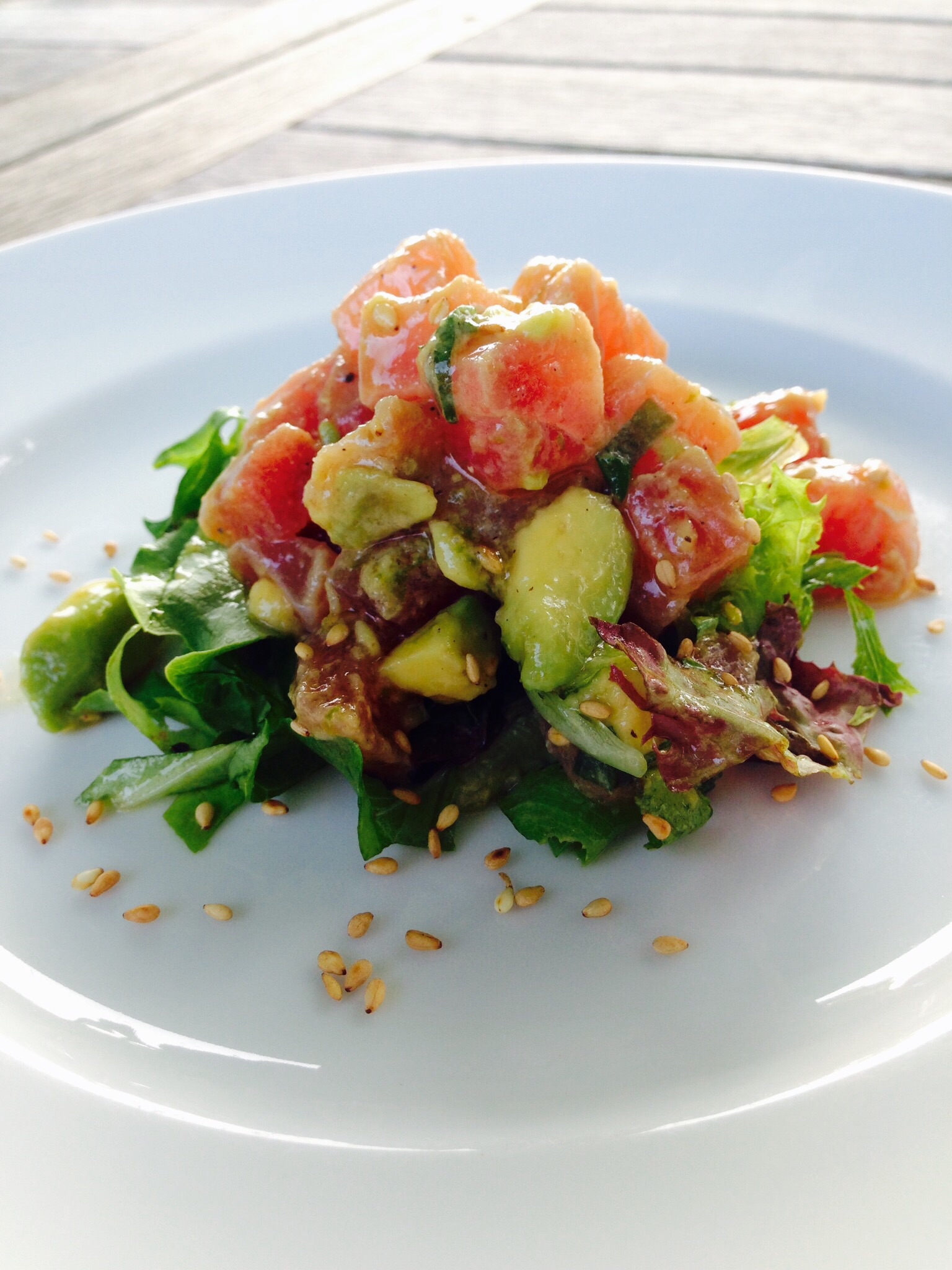
The key to great tuna tartare is super fresh tuna. I was lucky: I got a phone call from friends who had an overload of just-caught tuna delivered to their door! I gladly accepted whatever they wanted to give me, and made this dish…

image


Ingredients:


1 lb. super-fresh tuna

1/4 cup olive oil

zest of 1 lime

1/4 cup fresh lime juice

1/2 teaspoon wasabi powder

1 1/2 teaspoons soy sauce

1/2 teaspoon hot pepper sauce (I use Frank’s)

1/2 teaspoon sea salt

1/2 teaspoon black pepper

1/4 cup scallions, minced (white and green parts)

1 avocado, chopped into 1/4″ cubes

1 1/2 teaspoons toasted sesame seeds (optional)


Chop the tuna into 1/4″ cubes or smaller. Place in a large bowl and keep in the fridge.

In another bowl, combine olive oil, lime zest and juice, wasabi powder, soy sauce, hot pepper sauce, salt and pepper, scallions, and chopped avocado. Mix gently so you don’t mash the avocado.

Add this mixture to the bowl of tuna and combine gently. Let it sit in the fridge for at least an hour for the flavors to combine. Before serving, take the bowl out of the fridge and let it warm just slightly. Taste for seasoning. Top with optional sesame seeds.

Corn and tomatoes…when they’re in season, you just can’t beat the combination! This is a very simple salsa that takes advantage of their natural sweetness and is easy to make.

salsa


Ingredients:


1 lb frozen organic corn or equivalent fresh

2 ripe tomatoes, seeded and chopped

1/4 small red onion, finely chopped

6 oz mild crumbled cheese, like feta, cotija, or queso fresco

1 teaspoon Fleur de Sel

A pinch of black pepper

2 teaspoons white vinegar

2 tablespoons extra virgin olive oil


If using fresh corn, remove it from the ears, then pan saute  in a little olive oil, but leave it nice and crisp. If you can roast the ears of corn over some coals, even better. Let it cool.

Mix corn with all the other ingredients in a bowl. Cover and refrigerate.

The cukes are taking over my garden! Time to make soup!

The original cucumber soup recipe comes from Ikies Traditional Houses, a wonderful hotel in the beautiful town of Oia in Santorini, Greece. After a long, hot day of exploring this beautiful island, we settled down to a refreshing bowl of cucumber soup. They were nice enough to share the recipe with us, and a few tweaks later, it’s my definition of perfect.

cuke soup


Ingredients:


3 English cucumbers or 5 regular cucumbers, peeled, seeded and roughly chopped

1 clove garlic, crushed

1 cup vegetable stock, preferably home-made

4 cups plain full- fat yogurt, preferably Fage Greek yogurt

1/2 cup fresh mint leaves

Juice of 1 lemon

Fleur de Sel and pepper


Peel, seed and chop the cucumbers and place in a blender with garlic, stock, 2 cups of the yogurt, mint leaves, lemon juice, 2 teaspoons Fleur de Sel, and a grating of fresh black pepper.

Turn on blender and mix well. Stop blender and then add remaining 2 cups of yogurt and mix by hand.

Pour cucumber soup in bowls. Garnish with diced cucumber or radish.


To make the vegetable stock, boil chopped carrots, celery and onion in a large pot of water for an hour, reducing by half. Strain the veggies before using the stock. You can roast the veggies on a sheet pan in a hot oven for a bit before adding to the water for an even richer flavor.


image image image

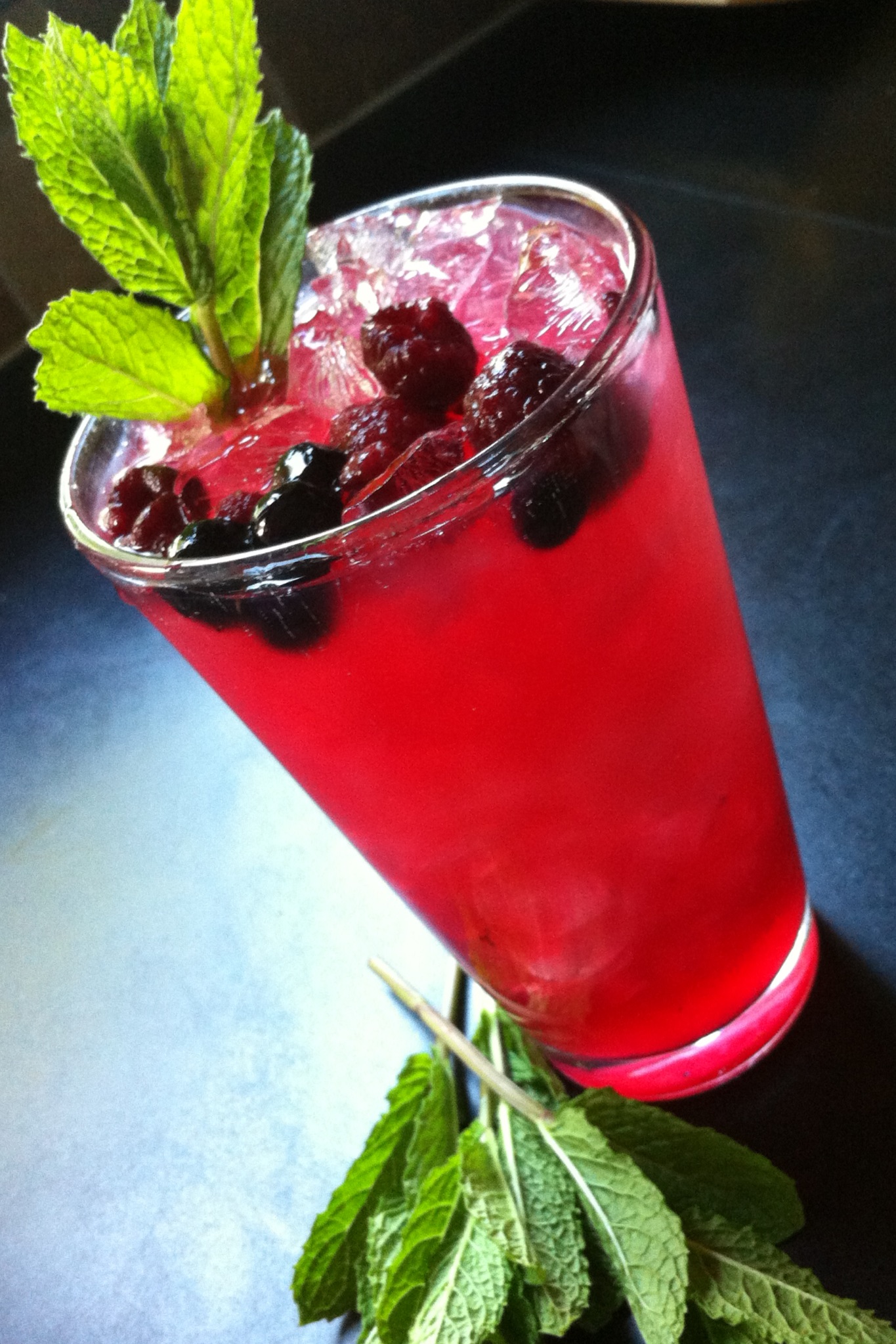
I love me my Mojitos, and they’re even better when I have fresh organic blueberries and raspberries to add to the mix. Frozen fruit works well, too. Make it by the pitcher and you’ll never make it any other way again!

The ingredients

The ingredients

Ingredients:

Make ahead of time…
1 1/2 cups fresh squeezed lime juice
1 1/3 cups turbinado sugar (Sugar in the Raw)

Mix both ingredients together and let stand at room temp. Shake until dissolved. The mixture can be covered and refrigerated for several weeks and ready to use any time. Shake well before using.

mojito pitcher

For the Mojitos…

1 cup sugar/lime mixture
1 cup mint leaves, packed
1/2 pint blueberries (fresh or frozen)
1/2 pint raspberries (fresh or frozen)
3 or 4 cups white rum, preferably Don Q Cristal rum
3 or 4 cups club soda

Combine mint leaves and 1/2 cup of sugar/lime mixture in bottom of a pitcher. Muddle mint up very well to release mint oils. Add blueberries and continue to muddle.

Add remaining sugar/lime mixture, rum and raspberries. Mix well. Just before serving, add club soda and ice. Stir. Pour into glasses.

Or…for drinks one at a time, fill a tall glass with ice. Fill one-third to halfway with club soda. Top with Mojito mix. Garnish with mint leaf.


Cheers!

Cheers!

Many people are choosing a gluten-free diet even though they don’t suffer from Celiac disease. Though many people stay undiagnosed, gluten sensitivity is pretty common. And even if you’re not sensitive to gluten, it can cause bloating, pain and fatigue. Many doctors are advising people to remove all or most of the gluten in their diets to see if they feel better as a result.

Gluten is a protein found in wheat and wheat products. So that means no bread, pasta, pizza, even soy sauce. Gluten is a hidden ingredient in many food products, so you need to do some research to figure out what alternatives are available. We’re pretty lucky…there are now entire sections of everyday food stores that carry gluten-free products.

I don’t have any sensitivity to gluten, and quite frankly, I find it hard to live without pizza or a nice slab of freshly baked bread now and then. And all the subsititute flours: rice, corn, quinoa, chickpea, or any combination of them–they all taste bad to me. But…I have a wife that has chosen a gluten-free diet. And since I’m the one that cooks all the meals at home, I’m making a valiant effort to find tasty alternatives.

I don’t spend my time baking gluten-free bread, cookies, cakes or other desserts. We have a great bakery nearby (www.evaruths.com) that does all that. Instead, I focus on the meals I’ve always made in the past and try to “de-glutenize” them.

Two of our favorite meals are chicken parmigiana and pizza.

The chicken parmigiana was relatively easy. The only gluten in my original recipe (http://wp.me/p1c1Nl-jq) was found in the breadcrumbs that I topped the chicken pieces with. I bought a package of Glutino gluten-free bread crumbs (made from corn) and the chicken came out pretty good. I still made a regular batch for myself…but my wife gave it a thumbs up.

Gluten-free chicken before I added sauce and cheese.

Gluten-free chicken before I added sauce and cheese.

The tougher challenge was pizza. With dozens of flours to choose from, I wasn’t sure where to start. But I’m a fan of Bob’s Red Mill. I’ve been using their products for years. So when I saw they offered a Bob’s Red Mill All-Purpose gluten-free baking flour (a combination of garbanzo bean flour, potato starch, whole grain white and sorghum flour, tapioca flour and fava bean flour), I figured I’d make my first gluten-free pizza dough with that. I also learned that I had to buy some Xanthan Gum, a plant-based product that adds the elasticity that gluten usually provides.

gluten pizza1


The recipe:

1 cup gluten-free all-purpose flour

1 teaspoon xanthan gum

1 teaspoon salt

1 teaspoon sugar

1 1/4 teaspoons yeast

1 cup very warm (130 degree) water

1egg

olive oil


Use two bowls: one for the dry ingredients, one for the wet.

In the first bowl, mix flour, xanthan gum, salt, sugar and yeast with a whisk to combine.

In the second bowl, whisk egg with warm water.

Pour the wet ingredients into the dry, and using a wooden spoon, combine to form a dough. It will be somewhat dry. If it’s very dry, add a small amount of water at a time until the dough holds together.

Line a small sheet pan with Reynolds non-stick aluminum foil. Spread the dough out to the desired thickness, and then brush lightly with olive oil. Cover with plastic wrap and let it rise for about 45 minutes.

Bake the dough in a pre-heated 450-degree oven for about 5 minutes. Remove and add tomato sauce and cheese and other toppings, then place back in the oven and cook another 5 minutes, until golden.

gluten pizza2


My wife liked the pizza. I could definitely pass on it. But I will keep tweaking recipes. I’ve heard that Bob’s Red Mill now has a brand new all-purpose baking flour, Bob’s Red Mill Gluten Free 1-to-1 Baking Flour, where they’ve removed the bean flours and added xantham gum to the mix. They also have a special Pizza Crust Mix.

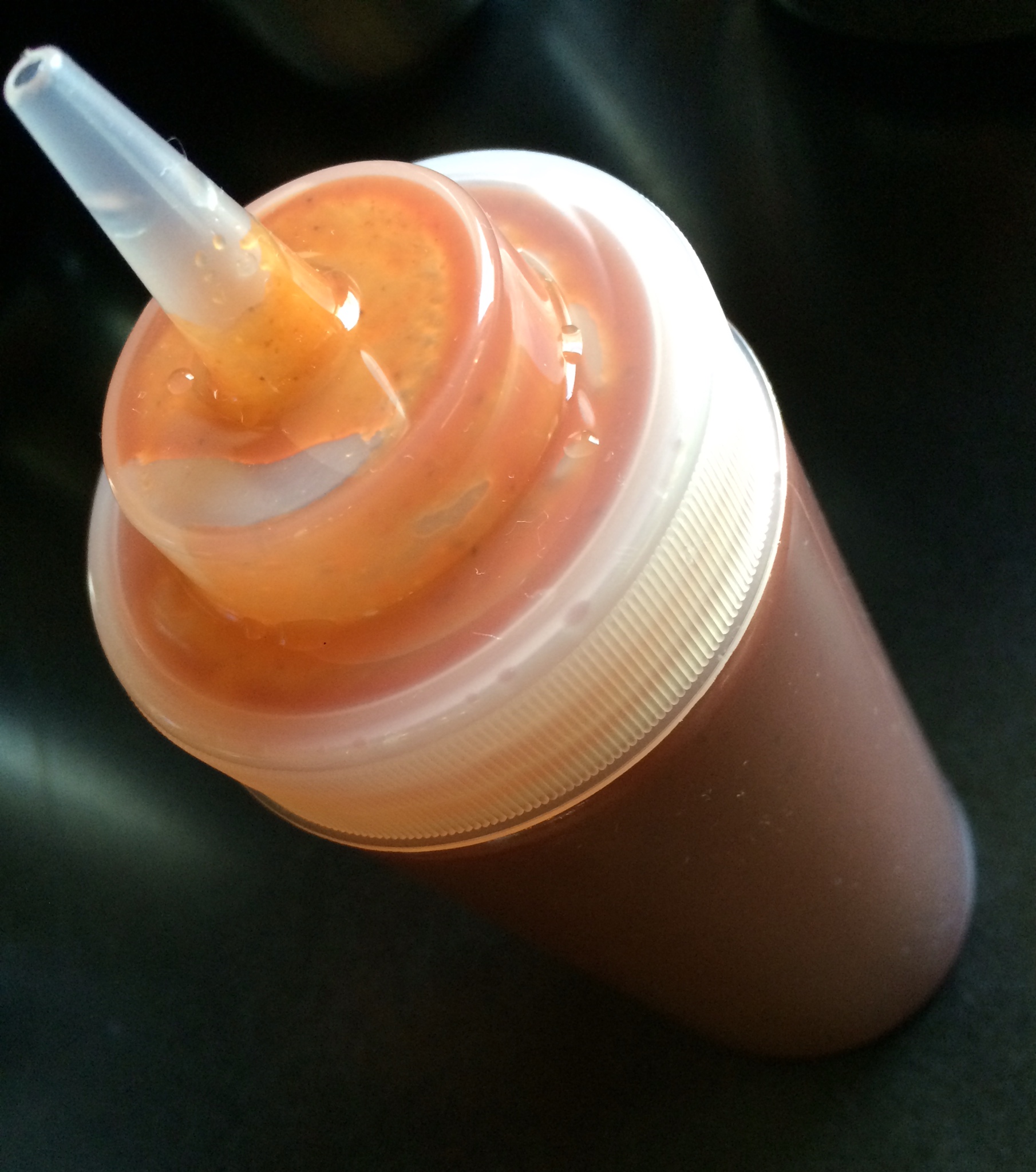
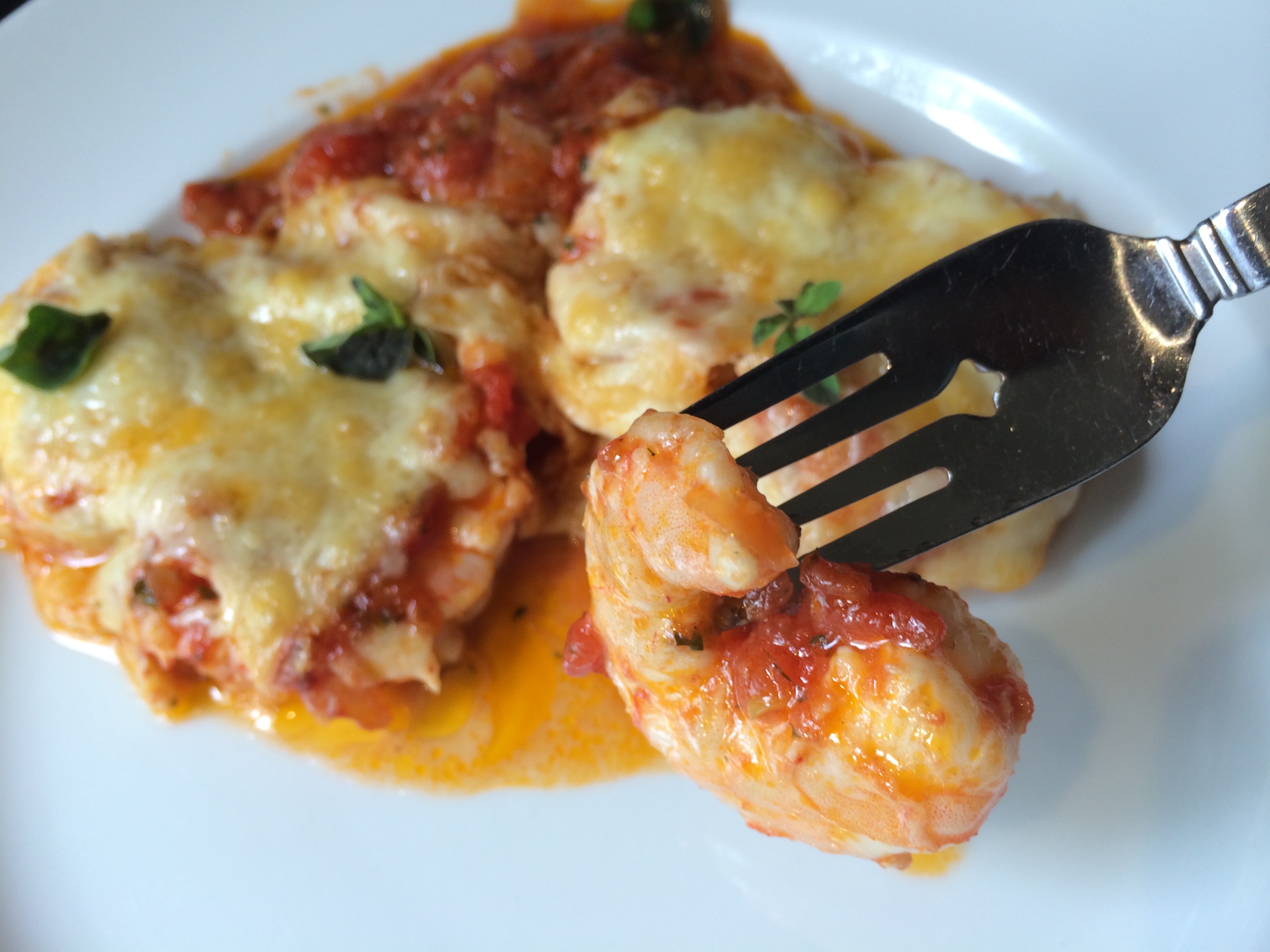
Since I’m busy tasting many bourbons these days, I’ve got some leftovers that may not make a great cocktail but would work great for a sauce. I had Maker’s Mark sitting around, so I came up with this sauce to use it up!

image

 Ingredients:

5 lbs St Louis style pork ribs

salt and pepper


For the sauce: 

1/4 cup honey

1/4 cup bourbon

zest and juice of 1 lime

zest and juice of 1 lemon

zest and juice of 1 orange

2 tablespoons Hoisin sauce

1 tablespoon Dijon mustard (I use Maille)

1 tablespoon soy sauce

2 teaspoons Worcestershire sauce

1 teaspoon chili oil

image

Season the ribs well with salt and pepper and cook in a smoker for 3 hours at 25o degrees, using hickory chips.

While ribs are smoking, combine sauce ingredients in a sauce pan, bring to a boil, then lower to medium heat and reduce the sauce by half until it thickens. Stir often, and don’t let the honey foam up and spill over the top.

Pre-heat oven at 250 degrees.

Remove ribs from the smoker and place in a sheet pan that is lined with aluminum foil, with enough foil to wrap around the ribs. Brush the ribs on all sides with the sauce, stacking no more than 2 sets of ribs on top of each other, and then wrap with foil.

Cook in the foil for 2 more hours, until tender.


Bitters have been around forever, but the recent resurgence in the art of mixology has made bitters a real buzzword among bartenders and cocktail enthusiasts alike. Ten years ago, I almost never would have asked for a cocktail that included bitters. Now, I almost always do.

But bitters aren’t the only way to spice up your libations. Other tinctures have been around for centuries as well, many of which are finding their way to the forefront of mixology. Two of those are falernum and shrub.

Despite that falernum and shrub sound like the name of a bad law firm, they are welcome additions to many simple spirits we enjoy.

Falernum is a sweet syrup used in Caribbean and tropical drinks. It often has flavors of almond, ginger, cloves, lime and sometimes vanilla or allspice. Some people drink falernum by itself on the rocks, but most often it is mixed in a cocktail. The bottle below is falernum made by my friend Roy, who used ginger, cloves and lime juice in an alcohol base.

image


Shrub, meanwhile, can be several different kinds of drinks. It was a fruit liqueur popular in 17th and 18th England, made with rum or brandy mixed with sugar or the juice or rinds of citrus fruit. A shrub was also a drink popular in American colonial times, featuring a mix of vinegared syrup mixed with spirits or water. But most times, today’s version of shrub is the sweetened vinegar-based syrup itself. If you’re curious about shrub, there’s a great source for a variety of shrub flavors: http://www.shrubandco.com.

Many people, even avid gardeners, seem to think that composting is extremely complicated and that it will take up too much of their time. And so they miss out on one of the most important free sources of organic matter for their gardens.
Composting is a win–win in every way imaginable.
Composting allows you to recycle kitchen food scraps. When you consider the fact that about 30% of all landfill waste is food scraps that could have been recycled into compost, you quickly see the value of this process.
Composting saves you trips to the dump and dirty looks from your garbage man when you leave too many bags at the end of your driveway. Why put all those grass and leaf clippings into a landfill when you can transform them into organic material that will nourish your garden plants?
Good composting basically means supplying microbes with the right balance of food so that they can thrive and break down your yard and kitchen waste. Despite what you may read elsewhere, the reality of backyard composting is that you will never get that super-hot pile they talk about in all the composting manuals. But, if you have a pile that cooks reasonably well, and becomes a haven for many happy redworms, you can consider your efforts a success.
My compost bins, with dahlias, cosmos and scarlet runner beans in front.

My compost bins, with dahlias, cosmos and scarlet runner beans in front.

Compost piles are aerobic, meaning they need fresh air to be successful, so it is important to aerate your compost pile once in a while. Simply take a shovel or pitchfork and “fluff” the pile up, mixing the contents. You’ll find that this small amount of maintenance will keep the aerobic microbes happy, and will keep the anaerobic microbes (the ones that don’t require air and cause the compost pile to smell bad) away.
Keep your compost pile out of the full sun. Successful composting requires the pile to be moist, and the summer sun will dry things out very quickly. Semi-shade is a better way to go.
The main types of food for your compost pile, easily split into 2 categories, are green and brown. Green waste is made of fresh plant material from the garden, kitchen fruit and vegetable scraps, and coffee grounds. They don’t necessarily need to be the color green. The term “green,” in this case, means they contain nitrogen. Avoid weeds because weed seeds can survive the average home composter and will sprout when you return the compost back to your soil the next season. And avoid all animal products (meat, dairy) unless you like rotten smells and animals tearing up your yard.
Brown waste is made of straw, leaves, wood chips, sawdust, newspaper, and even some cardboard. Brown waste tends to be drier than green waste, so it’s a good idea to soak things like newspaper and cardboard before putting it into your compost pile.
Too much green material will cause your compost to take on a not-so-delightful bouquet reminiscent of ammonia because of the excess of nitrogen. Adding a little brown stuff to it and mixing it through will help it stay odor-free.
The end of the season, when the leaves have fallen in my yard, is the only time I use the bagger on my riding lawn mower. (I let the mulched grass clippings go back into the soil the rest of the season.) But in the fall, I bag the grass clippings and leaves together, effectively combining green and brown in a perfect mix that starts to cook in my compost piles almost immediately. The result is some pretty well broken down material by the springtime.
If you’ve got a lot of leaves, most leaf blowers can suck up leaves, too, and they grind them up into fine particles that are worth their weight in gold. Throw them in your compost pile, or even till into your garden soil in the fall.
I keep a metal compost bucket with a lid under the kitchen sink. No need to buy an expensive bucket with a carbon-filter built into the lid from those garden catalogs. Just a good metal or plastic bucket with a lid, and before I dump my vegetable scraps and coffee grinds into it, I line the bottom with a single sheet of newspaper. That’s all I  need to keep the bucket from stinking up the room until I dump it into the compost pile.
There are many composters to choose from, from rotating drums that claim you’ll get compost in 14 days, to simple wooden or wire frames that hold the pile in check. Use what works best for you. I have a system of 3 bins made from wooden slats. When I fill one, I start on the next. Other than aerating them once in a while, I don’t mess with them. It takes about a year, but at the end of a long winter, I usually have some pretty nice compost to use in the springtime garden.
A word about manure in your garden: You should never use raw manure directly in your garden. You don’t want raw parasite-laden manure touching or splashing up onto your vegetables. If you get a supply of fresh horse or cow manure, mix it into your garden in the fall after you’ve harvested all of your veggies. It will winter over and be ready to make your garden happy the next season. Or let it sit in your compost bin for a year before using it. Though some will rave about the benefits of chicken manure, the fact is it harbors salmonella, which takes a year or two to go away. I won’t use it.

I recently spent a long weekend in P-Town with my wife and daughter…my wife enjoying an art conference while my daughter and I enjoyed the sunshine. We’d meet at the end of the day for dinner, and share our stories.

P-Town has a bit of a reputation…and I was told by some friends that after sundown, we should bring our 7-year-old daughter indoors if we wanted to avoid her asking a lot of uncomfortable questions. Well, there were no red leather chaps, no circus freaks. I’m sure that there are certain weekends that may be a bit less family friendly than others, but generally speaking, today’s Provincetown is not the same as the town I visited back when I lived on Cape Cod in the 80’s.

Families walk the main street, Commercial Street, late into the night. Shops, restaurants and galleries cater to all tourists and lifestyles. And why not? A small waterfront town like this relies on its very short summer season to make its money. Why turn people and their wallets away?

There are many restaurant choices in Provincetown, and if you’re looking for top-notch big city fine dining, you won’t find it here. However, there are many good restaurants with creative dishes. And there’s incredibly fresh simply presented seafood that is a staple in New England: clams, oysters, cod, halibut, tuna, and scallops.


VICTOR’S

victors1LTL

Victors is a fun place. They serve tapas, and they make it very easy to share by dividing each plate beautifully and simply. The ingredients are fresh and the ideas are pretty good. Sometimes, though, they just don’t hit the mark. The fish taco with halibut was delicious. Duck sliders, however, were too salty. The Caesar salad came out in large, individual pieces of Romain lettuce, sprinkled with the Caesar ingredients on them. An interesting presentation, and again, easy to share. But not exactly what you want in a Caesar salad. Raw tuna Napoleons were good. The bar knows its cocktails and they serve them strong. Service is excellent. Basically, Victor’s is a perfect example of any Provincetown restaurant: good but not great. In a seasonal town, it is hard to maintain quality to the highest standards. But it’s a fun place to go to.


MEWS BAR & CAFE

mews1LTL

When a bar boasts 300 vodkas from around the world, I need to check it out. And that I did! I always start with my signature Stoli Elit and then work my way from there. I asked for and received a written list of all the vodkas in stock and being Lithuanian, I was happy to see there was a Lithuanian vodka on the list. I challenged them to present the bottle to me, and it appeared within seconds! Naturally I had to have a drink with it. The bar staff was swamped but always courteous and service was excellent. The bar itself is old and funky and really a lot of fun. I will come back someday for the food, but this time it was all about the martinis. One cool feature was that the olives for my martini were on a skewer that hung on the outside of the glass, and not in the drink. Sort of like truck nuts for a martini. Funky and fun.

mews3LTL


MAC’S PROVINCETOWN

macs1LTL


Mac’s does not have a great view of the water. It’s on a rather busy street that offers no scenery whatsoever. But what they lack in views, they make up for in fresh fish and delicious sushi! Everything we had was spectacular: the mini baked hand grenades (rice, shrimp, scallop, dynamite sauce and eel sauce) should not be missed. The sashimi–we had fresh halibut–was superb.

Sushi at Mac's, including the Hand Grenades in the black dish

Sushi at Mac’s, including the Hand Grenades in the black dish

The broiled yellowtail collar, what they call “Hamachi Kama” in the big city, was the best I’ve ever had. We were there for lunch, so no big drinking going on. But a peek inside showed a beautiful, clean (new) space that could get hoppin’ on any given evening around the raw bar. And next door is their own seafood shop…probably the cleanest I’ve ever seen, selling impeccably fresh fish.

Broiled yellowtail collar

Broiled yellowtail collar


 RED INN

redinn1LTL

The biggest disappointment on our trip.

After my wife had a pretty good trout dinner at the Red Inn several nights before, we decided we would try again for a Friday night dinner. The place was crowded and it seemed that the wait staff was overwhelmed. Everything on the menu sounded good but all of it tasted like it had been cooked two days earlier and then just reheated before service. The bacon wrapped fried oysters that came with my Caesar salad were greasy, rubbery and cool. The avocado foam on my wife’s beet salad could’ve been anything… it had no flavor at all. The slow braised pork shank special lacked seasoning and it sat on top of a rather flavorless pile of grits. It seemed that the best dish on our table that night was the Kobe beef sliders our daughter had ordered. (And was it really Kobe? I think not, since it can only come from Japan and it’s really expensive. I’m guessing it was Wagyu, the American version of Kobe. Mislabeled menu.)


EDWIGE

edwige1LTL


Our best dining experience of the weekend.

The soup of the day was an unlikely and fantastic mushroom and lobster soup. We thought the lobster would be lost with the intensity of the mushroom stock, but it was a delicious balance of flavors…really addictive! The tuna tartare was equally excellent. A main course bowl of seafood in a coconut sauce again showed a delicate hand by the chef and was delicious. And a flank steak was moist and tender, despite it being cooked beyond medium when I asked for medium-rare, set on top of a mound of irresistible wasabi mashed potatoes.

Infused vodkas that later infused me.

Infused vodkas that later infused me.

Cocktails are serious…and there’s a choice of house-infused vodkas at the bar: pineapple, ginger, cranberry, pepper. A bit of an issue with the wine list…but it’s an issue with every wine list we’ve seen in every restaurant we’ve been to in P-Town. Looks like one distributor has all the rights to wine in this town, so the lists are the same from place to place. Kinda sucks.

THE PROVINCETOWN INN

The view of town outside our room

The view of town outside our room


This is an old resort that has taken a beating over the years. The rooms aren’t fancy, but they are clean. And you absolutely cannot beat the location and the views: right at the end of Commercial Street and right on the water! Considering this is a town where you don’t come to stay indoors a lot, the rooms are perfectly fine. We stayed in the Captains Suite A, which had a full kitchen, and though we didn’t cook meals here, it was nice to hard boil an egg in the morning and keep our snacks in a full-sized refrigerator. They have a private beach (nothing fancy) and a swimming pool (very nice.)


 SURF CLUB RESTAURANT AND BAR

One look at the place and you know this is no fancy dining establishment. But the cocktails are strong and the food is fresh. It’s right on MacMillan wharf, so you can grab a bite, like we did, right after your whale watch trip. Great kids’ menu. I had the broiled seafood platter and it was a fresh as it could be.


DOLPHIN WHALE WATCH

whale LTL

A fleet of beautifully maintained boats with professional crews and expert naturalists to narrate your trip. Indoor areas with snacks as well as plenty of seats out in the sunshine, and great views from anywhere on the boat. I’m sure the boats get crowded in season, but we went before the season really kicked in and had a great time. We saw 12 humpback whales over the course of 3 hours…some very close to the boat! There are other whale watch companies out of the Cape, but this is the one to go with. Highly recommended. http://www.whalewatch.com

ptown2LTL


RACE POINT BEACH, HERRING COVE BEACH

Huge expanses of sand. Beautiful dunes. You can spot whales out in the distance.Two great beaches that shouldn’t be missed. In season, they do charge a $15 parking fee.

ptown1LTL