Posts Tagged ‘food’

On Thanksgiving morning, we did what we weren’t supposed to do: woke up late and arrived just 20 minutes before the Macy’s parade started, huddled in the crowd just in front of Radio City Music Hall.

As fate would have it, a police barrier was opened up to the public–kids had the first row–with adults behind them. Our 5-year-old daughter got right up front, and my wife snagged a photo of Iron Chef Geoffrey Zakarian on the Food Network float. (I was a few rows back, taking family videos of the event.)

My advice if you ever plan on going to New York City for Thanksgiving: skip the blowing up of the balloons the night before. It is a madhouse that wraps around a half a dozen city blocks and once you are in, there is no way out until the very end. If you’re claustrophobic, or have a sick or tired kid, you are absolutely screwed. The police show no mercy because they’ve heard every excuse you can think of a thousand times before. Can’t say that I blame them.

We found a way out by heading down to the subway station below the American Museum of Natural History (where all this takes place) and came up the other side of the street out of another subway entrance.

As for Thanksgiving Day and the Macy’s parade: the weather was perfect and our daughter had a great time. We’ve done the parade once. And now we’re done!

Geoffrey Zakarian on the Food Network float.

On Thanksgiving night, we had our dinner at Zakarian’s restaurant, The National, located on the first floor of The Benjamin, our hotel for the weekend. Unfortunately, like many restaurants owned by Iron Chefs (Bobby Flay a prime example), the menus don’t reflect the creativity that you see on Food Network’s “Iron Chef America” show. Our meal was a prix fixe dinner that featured steak. And although it was beautifully cooked…it was steak. I can get that anywhere.

What did shine was the service. The manager, Noble, made sure that we were happy with our wine selection and that our 5-year-old daughter was offered something other than the adult prix fixe menu. And when our choice of a white Rioja tasted off, he quickly brought a bottle of another variety that absolutely hit the spot. As we were waiting for our table on that very busy night, a busboy saw that our little girl was hungry, so he brought over some bread, butter and jelly, and gave her a seat at a small table to enjoy  it while waiting. Excellent service.

Not that I’m an Iron Chef stalker, but the next night, we had dinner at Restaurant Marc Forgione, located in the Tribeca neighborhood of Manhattan. Everything about this restaurant told us we were in the capable hands of a creative master. The restaurant was beautiful. Our server, Brad: friendly and totally professional. And the food: absolutely amazing. Appetizers consisted of chili lobster on Texas toast, with a sauce so good, you wanted to soak every bit up with that thick bread. Kampachi tartare with avocado, Schechuan buttoms, toasted pine nuts and Saratoga chips to scoop with: rich and smooth. A that-day creation of trout on a cedar plank was out of this world. A main course of perfectly cooked squab, bacon, brussels sprouts was real cold weather comfort food. And the most challenging meal for me: the veal tenderloin with Boudin noir, a pork blood sausage that was really intense. But hey, I didn’t come here to have my hand held. I came here to get slapped around a bit! And that’s exactly what this dish did.

Desserts were equally incredible, my favorite combining my two favorite desserts, bread pudding and pecan pie, into one amazing sweet, gooey treat.

And unlike other high-end restaurants, there was no problem when we requested something simple for our fussy daughter’s meal. A plate of home-made pasta with butter and cheese arrived at the table, and my daughter called it “the best ever.”

Marc Forgione the restaurant was only half the story. Marc Forgione the chef was a really cool guy who stepped out of the kitchen often, checking on tables to make sure people were satisfied with their meals. We had a table right near the open kitchen door, so we saw him and his staff at work during our entire meal. And when my daughter handed him a drawing she made of him in his kitchen, he offered to give us a tour. We grabbed that opportunity in a heartbeat! He came back to our table several times more, just to see how we were doing. Great guy. Great talent. Great restaurant.

With Iron Chef Marc Forgione in his kitchen.
Almost 95% of all shrimp sold in the United States comes from farmed shrimp in countries like China, Thailand, Vietnam and India…as well as Latin America. The stuff you buy at the supermarket comes frozen (since shrimp is highly perishable) and then is thawed out and placed on ice to make the display look nice. But the shrimp you’re getting is not “fresh” (unless you’re lucky enough to get some wild caught local shrimp) and it’s from countries where the methods of farming are questionable at best.
Shrimp farming in Asia and Latin America is destroying mangrove forests and because of that, coastal villages as well. Disease is commonplace in shrimp farms, so they’re pumped full of antibiotics and pesticides.
Imported wild shrimp are also a problem because of bycatch. For every pound of wild shrimp caught, several pounds of other animals such as turtles die needlessly in the trawler nets.
Wild American shrimp is the best way to go for your health and the environment. American shrimp fishermen are required by law to reduce bycatch. For example, they’re required to use Turtle Exclusion Devices to stop turtles from being caught in their nets.
I stopped eating tiger shrimp and other farmed shrimp from foreign countries a long time ago because I found a source of shrimp that not only delivers to my door, but offers me that shrimp at competetive pricing even with the shipping! And best of all, it is wild caught in American waters. I’m supporting the lives of shrimp men along the Gulf of Mexico, not some foreign country that doesn’t give a rat’s ass about the environment, the shrimp they raise in it, or my family’s well-being.

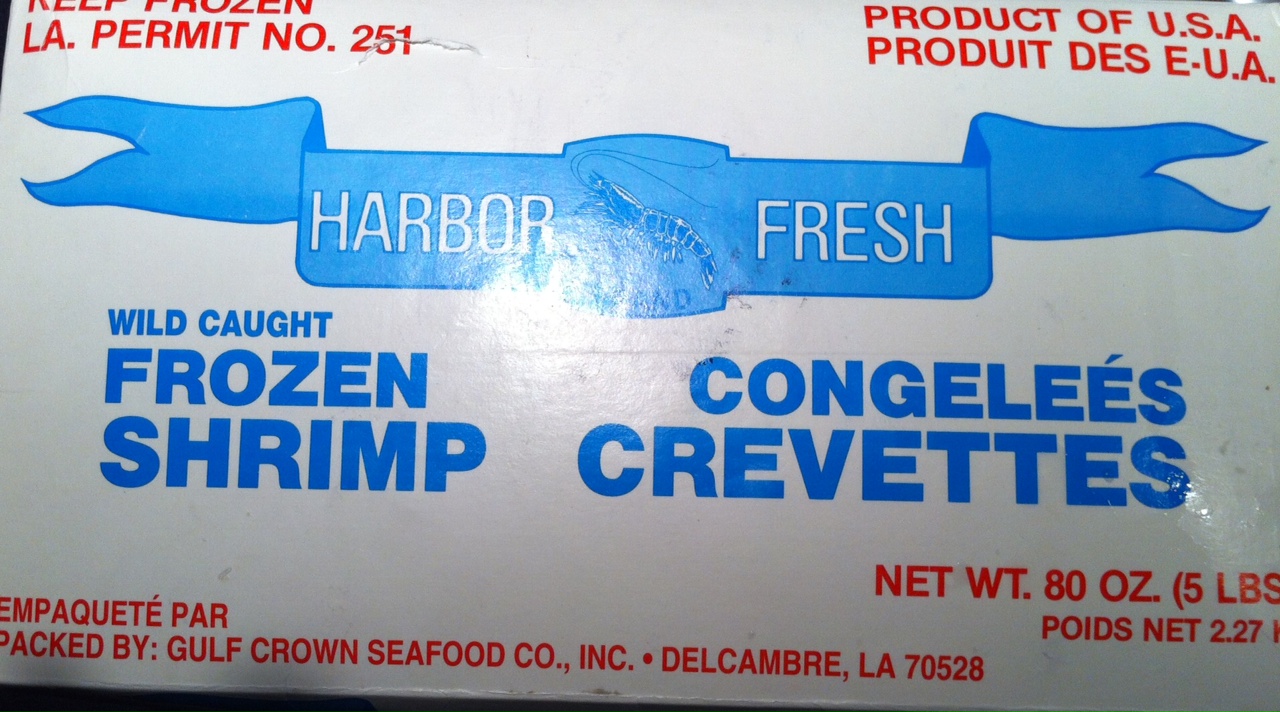
The real deal, usually sold in 5 lb boxes.

And on top of everything else, wild caught American shrimp tastes better. And why shouldn’t it? The shrimp are eating their natural foods found in the wild…not some pellets thrown at them that contaminate the water around them, not to mention the shrimp themselves.
My favorite website for wild caught American gulf shrimp is www.cajungrocer.com. I have been ordering my favorite Cajun foods, like Turduckens and alligator sausage, from these people for many years, but they also sell shrimp and live crawfish (in season.)
Don’t cheat yourself, your friends or your family out of something really special. Wild caught American gulf shrimp costs the same, supports our economy, is better for you and tastes better.
The basics of this recipe come from my friend, Lee, a chemist in New Jersey who also enjoys creating in the kitchen. What I found interesting about his recipe was the touch of sugar that doesn’t really add sweetness but rather helps create the light, tasty caramelized crust that forms on the shrimp when you sear it. I tweaked a few things in this recipe, but the essence of it remains the same.

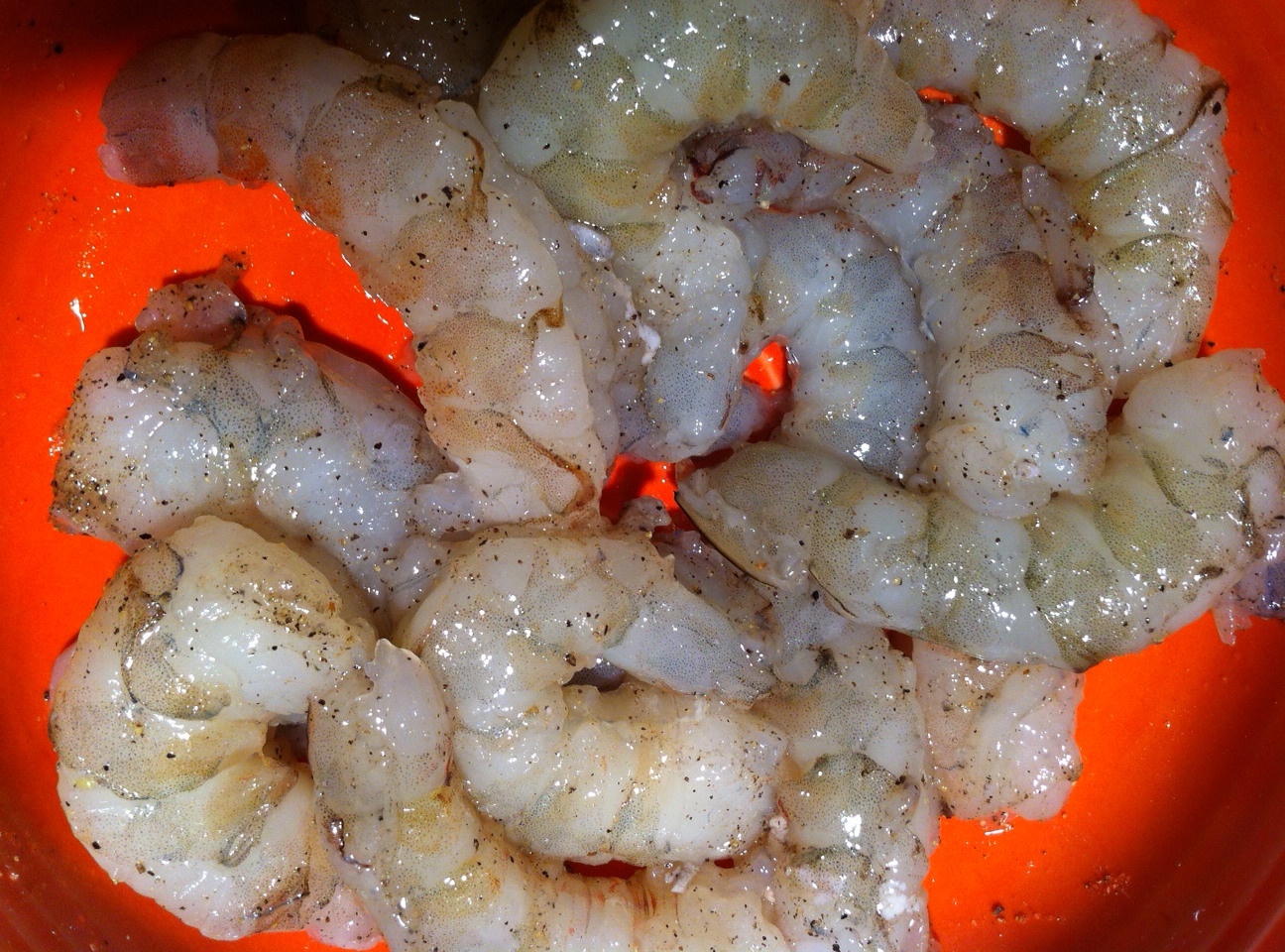
Seasoned shrtimp.

Ingredients:
1 pound large peeled and deveined wild-caught American shrimp
Salt
Freshly ground pepper
Sugar
4 Tablespoons softened butter
1 clove of garlic, squeezed through a press
1 Tablespoon freshly squeezed lemon juice
2 Tablespoons chopped parsley
1 teaspoon oregano
Extra Virgin olive oil
Toss shrimp, 1/4 teaspoon salt, 1/4 teaspoon pepper, and 1/4 teaspoon sugar in a bowl.
In a separate bowl, mash butter with a fork, folding in the garlic. Add the lemon juice, parsley, oregano, and 1/4 teaspoon salt.
Heat a Tablespoon of olive oil in a large skillet over high heat. Add half the shrimp in a single layer to the pan and cook at high heat until caramelized on one side, about 1 minute. Flip shrimp over with tongs and cook for another 30 seconds. Do not overcook.
Remove cooked shrimp to a covered bowl and similarly sear the other half of the shrimp, then return other half of the shrimp back to the skillet. Turn down the heat to medium and add the butter/garlic/lemon/parsley/oregano/salt mixture, occasionally tossing shrimp around in the pan to evenly coat them with the glaze.
If serving over pasta, increase the amount of butter and olive oil to just lightly coat the pasta. Toss cooked pasta into the pan of shrimp to combine.
I like to season lightly at the end with a tiny pinch of Fleur de Sel. Serve immediately.
Portland, Maine has quickly become the most foodie-intense city in the northeast. Block for block, this waterfront town features anything you crave, from incredible James Beard nominated four-star restaurants like Fore Street, to legendary brewpubs like Gritty’s, to famous seafood dives like J’s.  It’s a town I look forward to visiting anytime I can, and I get there 2 or 3 times every year.
Located on the waterfront, across from the classic Harbor Fish Market (a great place to buy fresh lobster, Maine shrimp and crab and lots more), the Porthole has been serving amazing grub in Portland for many years.
The indoor seating area has hardly changed since the beginning, with the exception of a Guy Fiere Food Network poster proudly displayed on the wall, signifying that “Diners, Drive-Ins and Dives” did indeed pay these people a visit.
The outdoor deck, however, is somewhat new, say, 10 or so years old, connecting to the outdoor deck of the Comedy Connection next door, and certainly handling the overspill of drinkers that come to Portland to party.
I was here for breakfast recently, and the food is definitely “I got a hangover” greasy…but that’s not a bad thing! My daughter had French toast. (It comes with a bourbon maple syrup, but we got her the regular kind.) My wife had the home-made hash featuring beef brisket. And I enjoyed and incredible Porthole Classic Breakfast Sandwich featuring cheddar scrambled eggs, crispy pork belly, kimchi and scallions. We washed our meal down with Bloody Marys and Captain and Cokes.
Now that’s a breakfast!!!

I know a lot of people are tempted to buy the turkey deep fryer this time of year, especially now that there’s an electric home turkey fryer that seems to make the job a lot easier and safer. (I’m still not OK with frying turkeys indoors, no matter how safe they say it is.)

The concept of a deep-fried turkey sounds pretty cool. And if you do it right, it tastes pretty good. I’ve had my share of fried turkeys when I lived in Alabama many years ago. But for me, it’s just too much damn work: finding a safe spot in the yard to blast the propane-fueled fryer so that you don’t burn your house down, standing outside and freezing your ass off while it fries, and then disposing of gallons of used oil at the end of it all. And making sure the oil is at the right temperature so you don’t get a scorched turkey on the outside and raw turkey on the inside.

So here’s what I do: I cook the turkey in my good old Weber grill. The standard Weber grill allows you to cook up to a 15 lb. turkey–big enough for my purposes–and it comes out crispy, smokey and delicious. If you’re afraid to try this for the first time at Thanksgiving when it really matters, wait a few months and buy a turkey when you have the craving and try it out.

The charcoal chimney with hot coals awaits.

Although I’ve stopped using charcoal briquettes a long time ago, and now strictly use natural hardwood charcoal, this recipe works best with Kingsford. The idea is for the coals to cook slowly and evenly. And never use lighter fluid…always start your fire with a few pieces of crumbled newspaper under a charcoal chimney.

Needed:

Weber grill, with the dome top

Kingsford charcoal briquettes (do not use Match Lite or other pre-soaked briquettes)

Heavy duty aluminum pan (disposable)


Ingredients:

Whole turkey, up to 15 lbs, thawed and previously brined (see my blog about brining a turkey)

Olive oil (to rub on turkey)

2 yellow onions, chopped

4 stalks of celery, chopped

½ lb (2 sticks) of unsalted butter, melted

1 tablespoon granulated garlic

1 tablespoon onion powder

2 tablespoons salt

1 tablespoon pepper

Spreading the coals away from the center of the grill.

If you want stuffing, make it separately and cook it separately.

Light 8 to 10 lbs of charcoal in the grill…depending on the size of the turkey and how cold it is outside.

Remove the giblets from the turkey. Place the bird in the aluminum pan.

In a small bowl, mix granulated garlic, onion powder, salt and pepper Add any other seasonings you like.

Coarsely chop onions and celery. Place in a another bowl. Mix with the melted butter and 1/3 of the salt/pepper/garlic powder mixture. Place a small handful of this “stuffing” mixture in the neck cavity of the turkey. Place the rest in the body cavity (where the stuffing would usually go.) You can fasten the bird with turkey skewers if you like. This “stuffing” is strictly to flavor the turkey…you don’t eat it!

The rubbed, stuffed and seasoned bird.

Rub the outside of the entire turkey with the olive oil and sprinkle the rest of the garlic/onion/salt/pepper mixture on the outside of the bird. Make sure you get the whole bird…on the bottom as well.

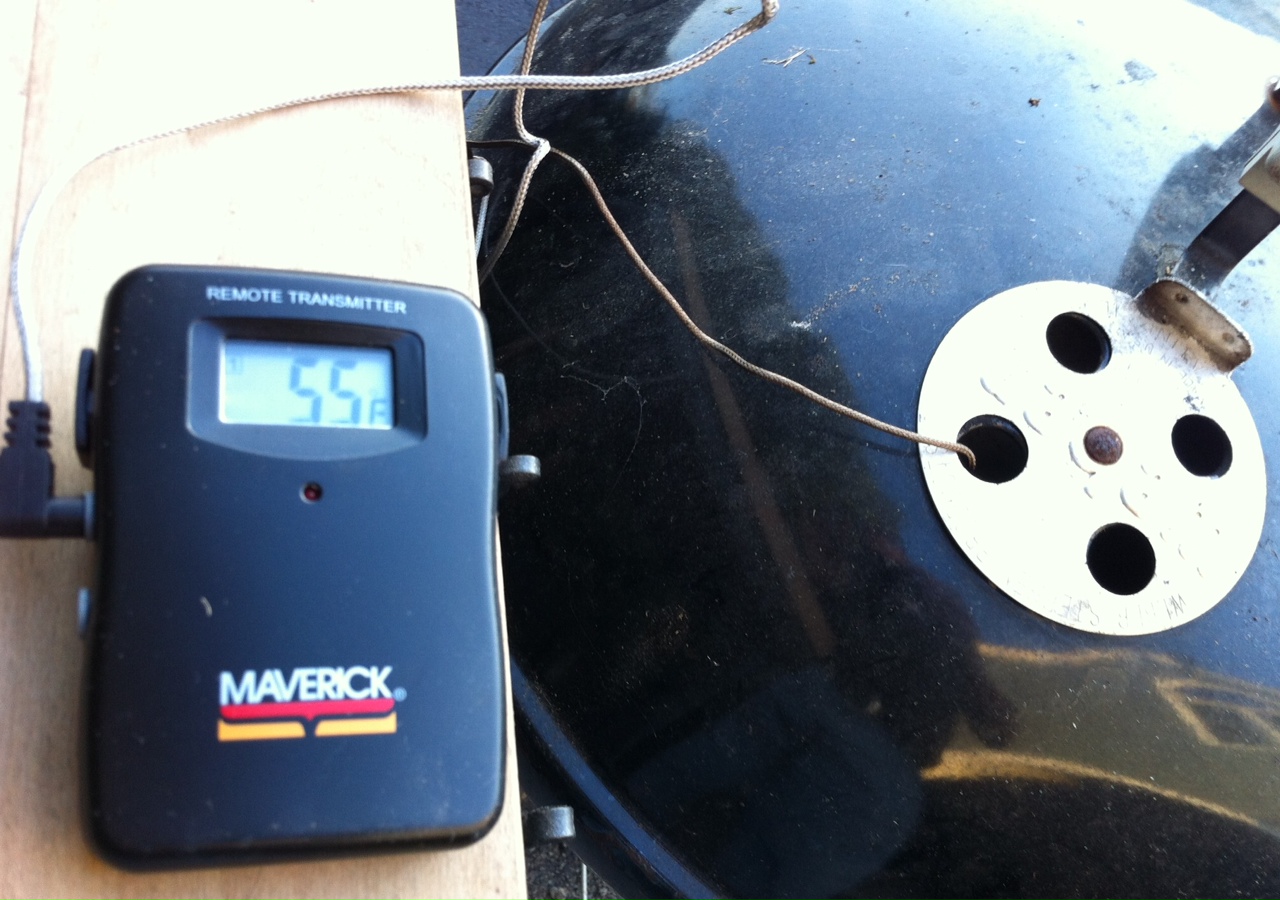
When the coals in the grill have ashed over, spread them to the outside edges of the Weber equally. Put the cooking grill rack in place. Place the aluminum pan with the turkey in the center of the grill, keeping it away from the direct heat of the coals. If using a a meat thermometer, insert the probe into the thickest part of the breast, being careful not to hit the bone. Place the lid on the grill. (You may need to bend your pan a bit.) Open the vents on the bottom of the Weber as well as the lid. Important to get air circulating!

My meat thermometer calls me from as far as 100 feet away when the turkey reaches the optimum temperature that I pre-set. Time for a drink!

No basting is necessary.

Now here’s the tough part: DO NOT OPEN THE GRILL TO CHECK ON THE TURKEY! (If you must look, shine a flashlight into the vent holes on the lid to take a peek at the pop-up timer, if there is one.) The whole point is to keep the heat inside the kettle. You’ll know your turkey is done when no more smoke or heat rises from the grill, and the turkey inside stops making sizzling noises.

Remove the turkey and let it rest at least 15 minutes before carving.

Beautifully grilled, cooked to 180 degrees in less than 2 hours!

BRINING A TURKEY

Posted: November 10, 2012 in brining, Food, marinade, turkey
Tags: , , , ,

Brining is a simple process of soaking a hunk of protein in a flavored salt solution for a period of time before cooking, resulting in a much more juicy and flavorful final product.

It’s basic high school science: the brine has a greater concentration of salt and water than the molecules of the protein (in this case, a turkey) that is soaking in it. By simple diffusion, the protein molecules suck up the salty water and retain it. When you cook the meat, some of the water evaporates, but the meat still contains far more moisture in it than it would have without the brine soaking, and the end result is a moister, simply delicious bird.

Some people use giant syringes to inject their turkeys with crazy solutions, but I think that the old way is still the best way when it comes to brining. Get a big pot, fill it with the brine, and soak the bird in it. Done.

Here’s my tried-and-true turkey brining recipe. Once the brining is done, you can cook the turkey whatever way you like best. I use a method where I grill it inside a Weber grill with charcoal. It comes out smokey and absolutely amazing. I’ll have that info in the next blog.

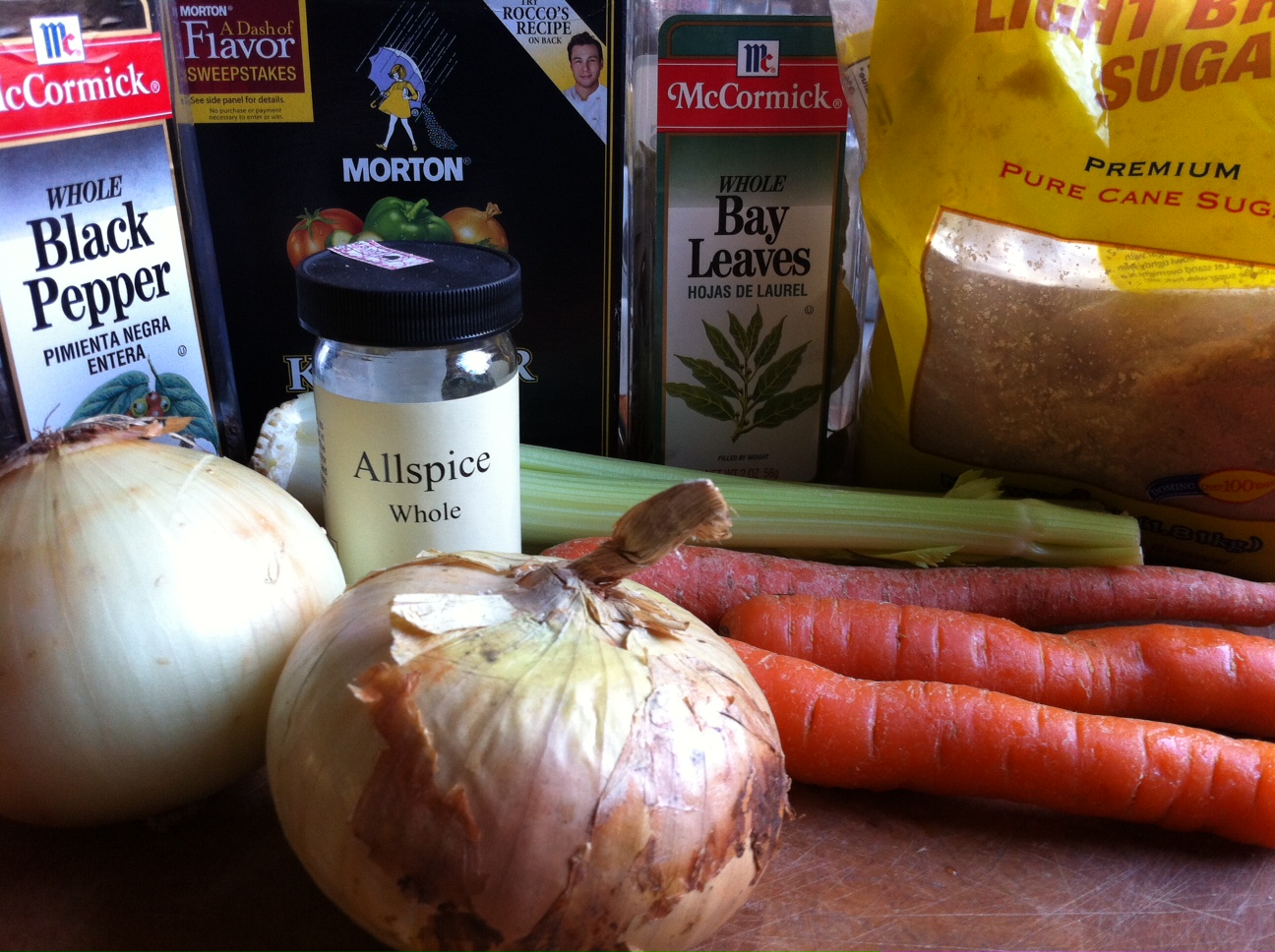
Brine Ingredients:

1 gallon of water
2 onions
3 carrots
3 stalks celery
1 cup kosher salt
1 tablespoon black peppercorns
1/2 cup light brown sugar
1.5 teaspoons whole allspice
4 bay leaves
1 gallon of ice water
14–15 lb turkey, thawed

Pour first gallon of water in a large pot. Quarter the onions, carrots and celery (no need to peel them) and add to the water. Add all the other ingredients, except ice water and turkey.

Let the pot come to a boil for a few minutes. Remove from heat and let brine cool down to room temperature.

Remove giblets from turkey and place the bird in a container just big enough to hold it and 2 gallons of liquid.

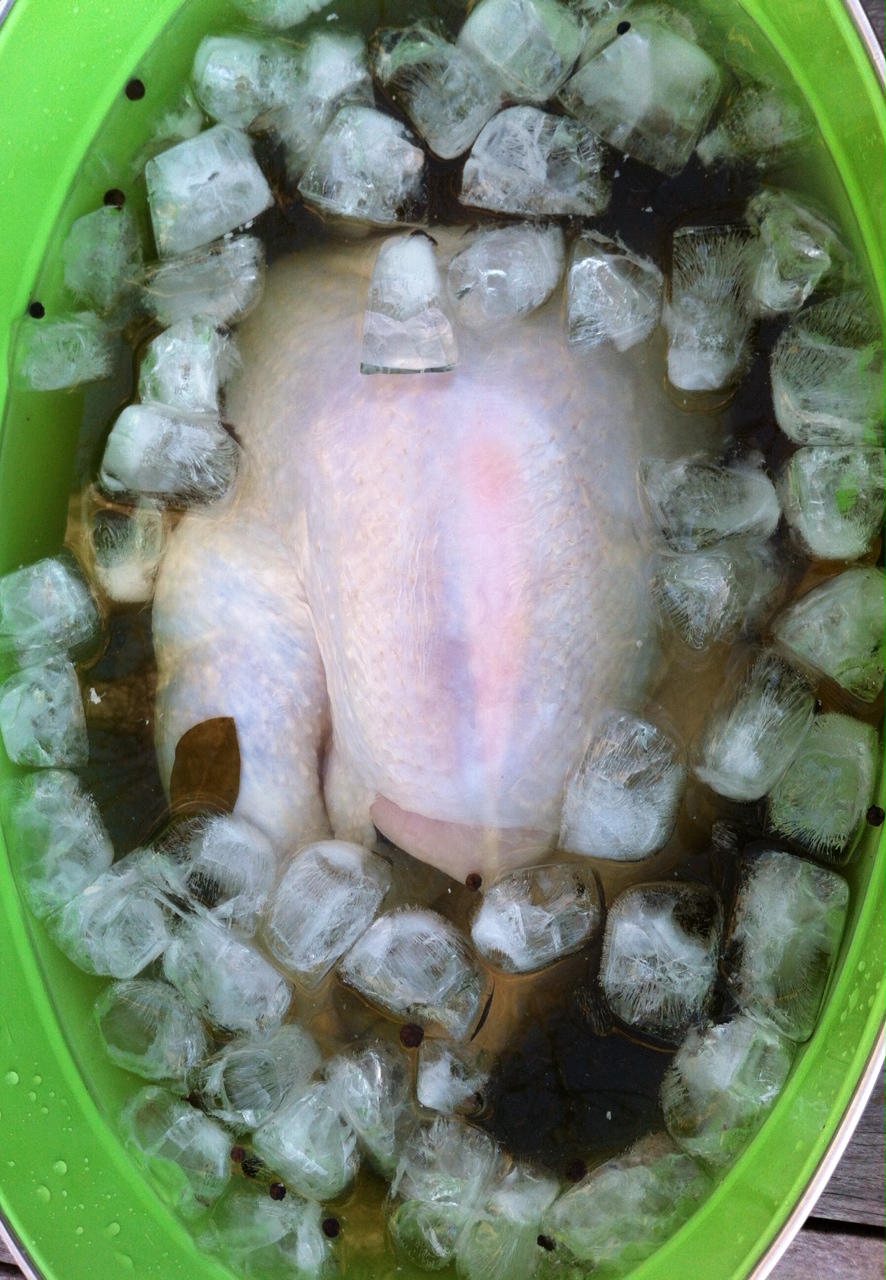
Pour the now-cooled brine over the turkey, then pour in the gallon of ice water.

Make sure the turkey doesn’t float up by placing a plate on top. Put turkey container in fridge for 5 to 8 hours, flipping the turkey over in the container halfway through.

Drain turkey, pat dry with paper towels, and then cook using your favorite recipe.

Next time: cooking your turkey on a Weber grill in a fraction of the time.

I went on line and looked at many websites that claimed to have the “real” recipe for a Scorpion Bowl…you know, the classic drink you get in a large Trader Vic volcano glass with a little cup in the volcano for the 151 rum that you take a small hit of before you suck down more of the drink? I tell you what: it makes the Asian food you’re eating that much tastier and the world around you spin that much faster!
Most of the recipes I’ve found on line don’t match the one that I’ve been using for many years. This recipe comes from a bartender (whose name I can’t remember–too many Scorpion bowls, I guess) from a long-gone Chinese restaurant, China Garden, that was located in Warwick, Rhode Island. A car dealership now stands in that location. This is the best Scorpion Bowl I’ve ever had…and continue to have!
Make sure to use top shelf booze for this or you’ll be a Suffering Bastard the next morning! (A little drink humor…)

Look carefully, and you may see the flame coming out of the volcano! Hope I don’t need to tell you not to drink the 151while it’s lit!

SCORPION BOWL
2 oz. light rum (I use Don Q silver)
2 oz. dark rum (I use Mt Gay)
1 oz. gin (I use Bombay Sapphire)
½ oz. brandy (I use good ol’ E&J)
½ oz. Disaronno Originale
½ oz. Cointreau
6 oz Pineapple juice
6 oz Orange juice
½ oz. Bacardi 151 rum for the little cup in the volcano

In a blender half-full of ice, add all the alcohol, except the 151 rum. Add the pineapple juice and the orange juice.  (Use less if you like it stronger.) Give the drink a quick 1-second pulse in the blender, and pour with ice into Scorpion Bowl or very large glass. If you do have a Scorpion Bowl with the volcano in it, add the 151 rum to the bowl in the volcano. If not, you can mix the 151 into your drink.

Don’t drive!

The fact that I can’t remember a damn thing anymore has actually worked in my favor when it comes to getting recipe ideas from television. I can no longer get the exact ingredients down and so I wind up make stuff up as I go along. The end result: my own original take on a particular recipe.
A perfect example of that was a few months ago when I was watching Adam Richman’s Best Sandwich In America on the Travel Channel, which featured some of the most innovative sandwiches from around the country. I was particularly intrigued by the methods used by the folks at Faidley’s in Baltimore to make their famous crab cake sandwich. I jotted down what I thought they did (of course, they don’t reveal their recipe secrets) and I wound up creating the best crab cake I’ve ever made:
Alz Crab Cakes

1 pound crab meat
1/3 cup oyster crackers
1 teaspoon Old Bay seasoning
1/2 cup mayo/mustard blend

To make the mayo/mustard blend, combine 4 parts mayonnaise to 1 part mustard. You your favorite. I use Maiile Chablis mustard, but it’s only available in France. (See my previous blog about the Maille mustard shop in Paris.) However, Maille Dijon mustard is great, too. Set aside.

Take the oyster crackers and pulse them in a food processor until it resembles oatmeal…not too fine.

In a bowl, gently mix all the ingredients. With your hands, form small crab cake balls, like meatballs. Place on a tray lined with foil, and pop in the fridge for at least 15 minutes to set.
Heat oil in a pan to 375 degrees. Gently drop the crab cakes into the oil, and fry for only 10 to 15 seconds. Flip over, and fry 10 to 15 seconds more, just to form a light crust. Don’t over-fry or they will fall apart!

Drain crab cakes on paper towels and enjoy.

Any leftover mayo/mustard works great as a tartar dipping sauce, or a spread if you’re making a crab cake sandwich. Just finely chop some pickles, add a splash of Worcestershire and/or hot sauce, and mix with the mayo/mustard.

This recipe works equally well with a light, flaky fish, like cod. Combine mayo/mustard mix with Old Bay. Slather the fish in it, then roll the fish in the crumbs and fry in oil.


Don’t let the fact that your brain isn’t what it used to be get you down. Take advantage of it! You just might come up with an original recipe that blows the doors off anything you copy down word for word.

When you’ve had enough of Buffalo wings, try this Asian version. They are easy to make, and taste awesome. A nice change of pace from your usual wings. This recipe works well with larger chicken pieces, too.
Asian style chicken wings
10 lbs chicken wings, the larger the better
2 cups soy sauce
1 small can (6 oz) pineapple juice
1 cup brown sugar
1 tablespoon powdered onion
1 tablespoon granulated garlic
1 teaspoon Chinese five spice
a squirt of sesame oil
Salt and pepper
Mix all the marinade ingredients in a large Ziploc bag, shake to mix, and then add the chicken. Marinate in the fridge overnight, turning the bag once in a while to make sure everything gets an even coating of the marinade.
The next day, pour off the marinade and discard, remove chicken wings from the bag, place on a cookie sheet lined with foil, and bake at 325 degrees for about 30 minutes, until sizzling and done.

In the tradition of the Food Network’s extremely popular show “Diners, Drive-Ins and Dives,” I get a special thrill in discovering great old eating establishments while on the road.

One way to easily hunt down those local gems is by downloading an app like MapMuse on my iPhone, which tells me all of the locations of every joint featured on “Diners, Drive-Ins and Dives.”

So whenever I’m heading home to New York to see my family, I check the website out for the possibility of a fun eating experience along the way, not too far off I-95.

One time I made a stop in Westport, CT at the Black Duck Cafe, and chowed down on an amazing sauteed crawfish po-boy and Caesar salad, on the waterfront of this sleepy blue-collar town, the elevated highway directly above.

More recently, I stopped in New Haven, CT at the legendary Louis’ Lunch, established in 1895. With room for only 25 people, this tiny hot spot claims it is where the hamburger was invented. If you want a fancy burger, this is not the place. They serve ’em just a few ways: with cheese or without, with tomatoes and onions or without. All burgers are cooked medium-rare, and come on toasted white bread. No ketchup in the building. No salt and pepper. For sides: potato salad or chips. Some drinks. And that’s it!

Apparently, they don’t need to cater to the masses, because there’s always a line out the door, and the wait can be as long as 2 hours for a burger…and people gladly wait.

A fresh batch of burgers right out of the grill!

I was lucky: I got there on a Friday afternoon and missed the lunch rush, so I only had to wait a half-hour for my taste of history, still grilled in the funky-looking original gas-fired grills built back in the 1800’s.

The original grills at Louis’ Lunch: 9 burgers are cooked at a time, placed in a screen that holds them while they cook sideways.

In all honesty, it was not the best burger I’ve ever had…and I don’t know if I’d wait 2 hours for one. But it was a fun experience being there…watching others in line doing what I was doing: whipping out the phone and taking pictures of this legendary establishment…one that almost succumbed to the wrecking ball until the people of New Haven came to the aid of Louis’ Lunch and had it moved down the road to its current location.

At the counter: White plastic bags full of sliced bread await the toaster that sends them spinning around on a belt.
It just takes a couple of minutes off I-95 to get to Louis’ Lunch. Certainly more fun than stopping at some fast food joint. And a chance to taste a bit of  history.
It’s a mouthful…but man, is it good!
I think buttermilk is overlooked by most people. If you gave the average person a quart of buttermilk, they wouldn’t know what to do with it. Most people have heard of regular buttermilk pancakes, or maybe the process of soaking chicken in buttermilk before breading and frying…but that’s about it.
I grew up in a Lithuanian household where buttermilk, like many other dairy products, was an everyday ingredient. From something as simple as a bowl of cold buttermilk with fried potatoes on the side (one of my Dad’s favorites), to a cold summer borscht, my Mom found different ways to use buttermilk on a regular basis.
The term “buttermilk” actually refers to several different dairy drinks. Originally, buttermilk was the liquid left behind after churning butter out of cream. Buttermilk can also be quickly soured milk, a common drink in warmer climates. In colder climates, the souring process doesn’t occur naturally, but it is often encouraged, commonly by placing bread in the milk to make it go sour faster. (My Mom did this all the time, using Lithuanian bread, a dark rye-like bread.) And then there’s cultured buttermilk, which is what most of us find on supermarket store shelves today. This is milk that has had lactic acid bacteria introduced into it.
I loved the taste of buttermilk–still do. Just give me a cold bowl, sprinkle a little finishing salt in it, and I’m good. But for those who don’t want their buttermilk straight, here’s a recipe that will knock your socks off, and wouldn’t be the same without this great, misunderstood ingredient.
Blueberry cornmeal buttermilk pancakes with lemon zest
1 cup all-purpose flour
1 1/2 cups stoneground yellow cornmeal
2 Tablespoons sugar
2 teaspoons baking powder
1/2 teaspoon baking soda
1/2 teaspoon salt
2 cups buttermilk
2 teaspoons grated lemon zest
1 large egg
3 Tablespoons melted unsalted butter, slightly cooled
1–2 teaspoons vegetable oil
1 cup fresh or frozen blueberries, preferably wild, rinsed and dried
Whisk flour, corn meal, sugar, baking powder, baking soda, and salt in a medium bowl
to combine.
In a separate bowl, whisk egg, lemon zest, and melted butter into buttermilk to combine.
Make a well in the center of the dry ingredients in the bowl. Pour in milk mixture and
whisk very gently until just combined. Do not over mix. A few lumps are OK.
Heat non-stick skillet over medium heat. Add 1 teaspoon oil and brush to coat skillet
bottom evenly. Pour 1/4 cup batter into 3 spots on skillet. Sprinkle 1 Tablespoon
blueberries over each pancake. Cook pancakes until large bubbles begin to appear,
about 1 1/2 to 2 minutes. Using thin, wide spatula, flip pancakes and cook until golden
brown on second side, 1 to 1 1/2 minutes longer.
Serve immediately.