Posts Tagged ‘food’

Few dishes scream out “comfort food” like meatloaf. My Mom’s meatloaf was awesome, and she’d cut a huge slab of it onto my plate, with fantastic butter-loaded Pennsylvania Dutch egg noodles on the side. I couldn’t stop eating it.

I never thought of making meatloaf when I moved away, because it gave my Mom something special to make for me when I came home to visit. She was thrilled that there was a dish she could make that I would devour every time, without hesitation. (The others were her roasted lamb and Lithuanian pierogis called koldūnai (kol-doon-ay).

But now that my Mom has moved into an assisted living facility where she can’t cook, I’ve had to take meatloaf matters into my own hands. I never got my Mom’s exact recipe. But I had an idea of what went into it, so I gave it a shot.

The standard mix for my Mom’s meatloaf was one-third each ground beef, pork and veal. I go 50-50 with the beef and pork instead, unless I can get my hands on humanely-raised veal from a farm down the road. My Mom used Lipton onion soup mix in her meatloaf. I chose to stay away from packaged ingredients which are nasty and could contain gluten. And instead of layering slices of bacon on top as many people do, I like to use my own home-cured and smoked pre-cooked bacon that I chop up and put inside the loaf.

To keep this dish gluten-free, I use GF breadcrumbs. I buy loaves of gluten-free bread, toast them, then put them in a food processor to make great-tasting bread crumbs that have all the flavor of regular bread crumbs, without the gluten.

image

4 strips bacon
1 yellow onion, minced
1 teaspoon salt
1/2 teaspoon pepper
1/2 teaspoon granulated garlic
pork fat or olive oil
1 lb. ground beef
1 lb. ground pork
1/2 cup breadcrumbs (I use gluten-free)
1/4 cup ketchup
2 eggs


Fry the strips of bacon until crisp. Remove the bacon from the pan and chop it fine. Set it aside.

Keeping the rendered bacon fat in the pan, and sauté the onion with it until translucent. Add the salt, pepper and garlic. Set the pan aside, letting it cool to room temperature.


In a bowl, combine the meat, bread crumbs, ketchup, bacon, eggs, and the sautéed onion mixture. Form it into a loaf and place it in a loaf pan. Bake at 350 for about an hour.

Delicious, caramelized meatloaf.
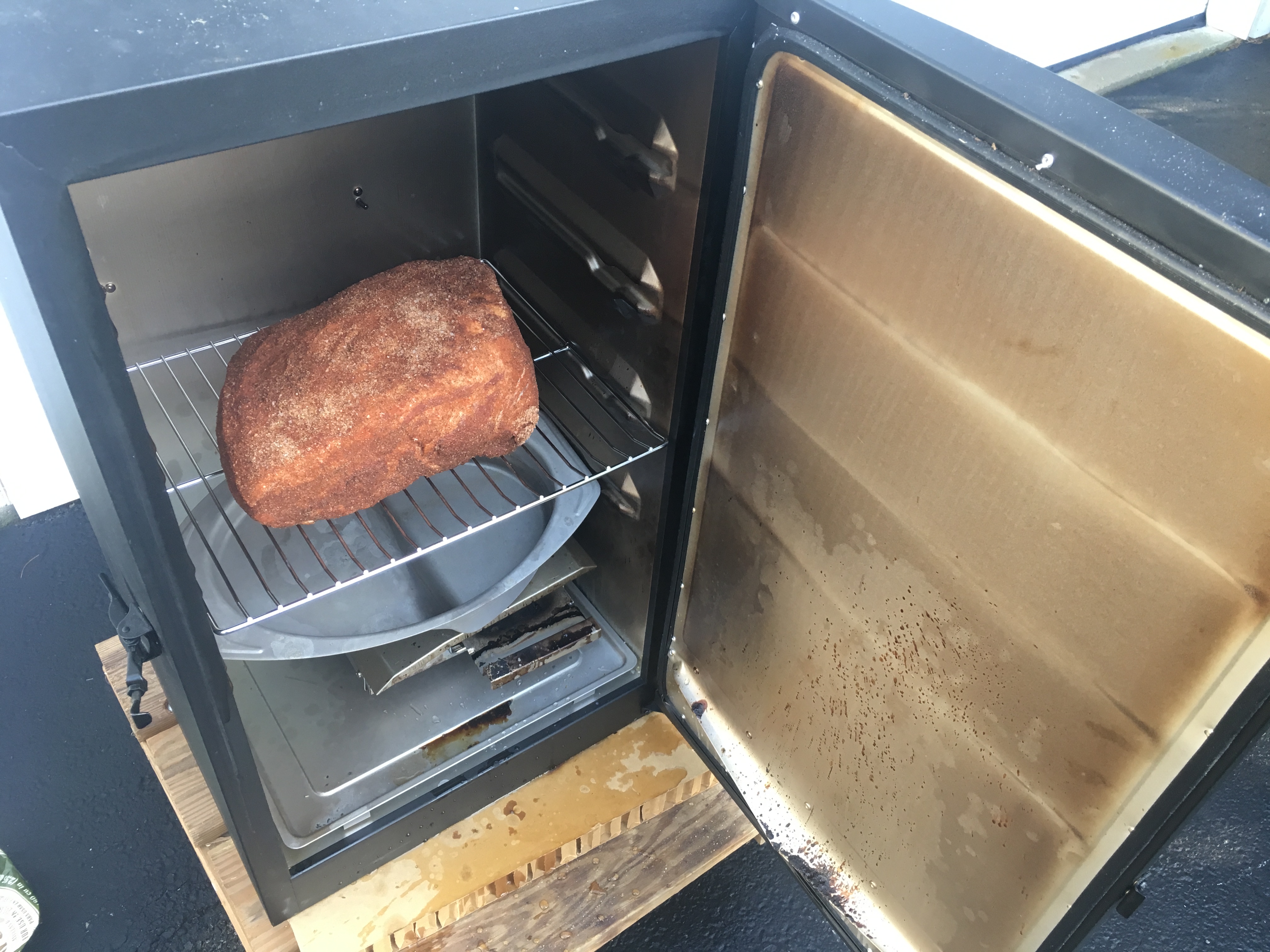
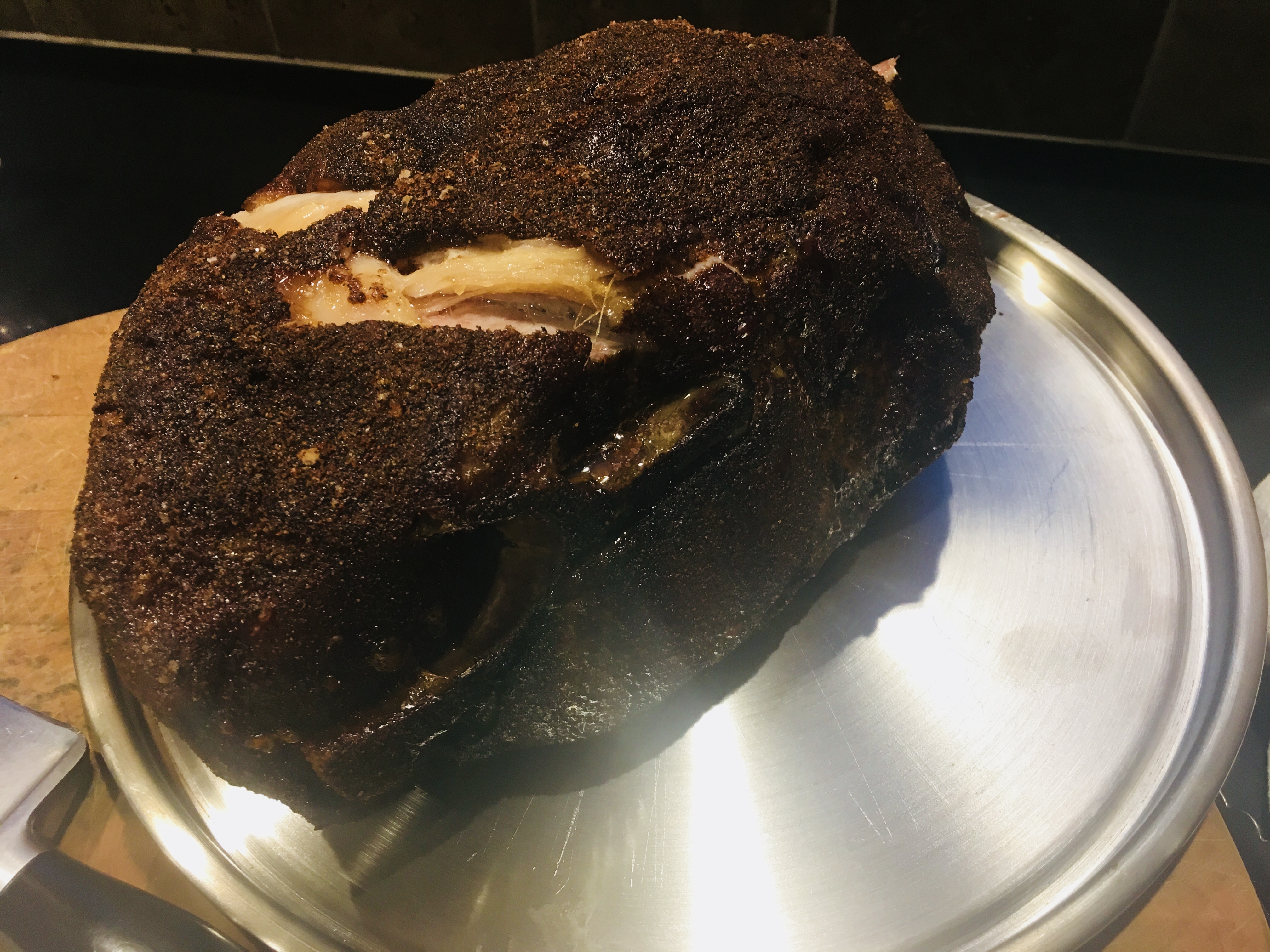


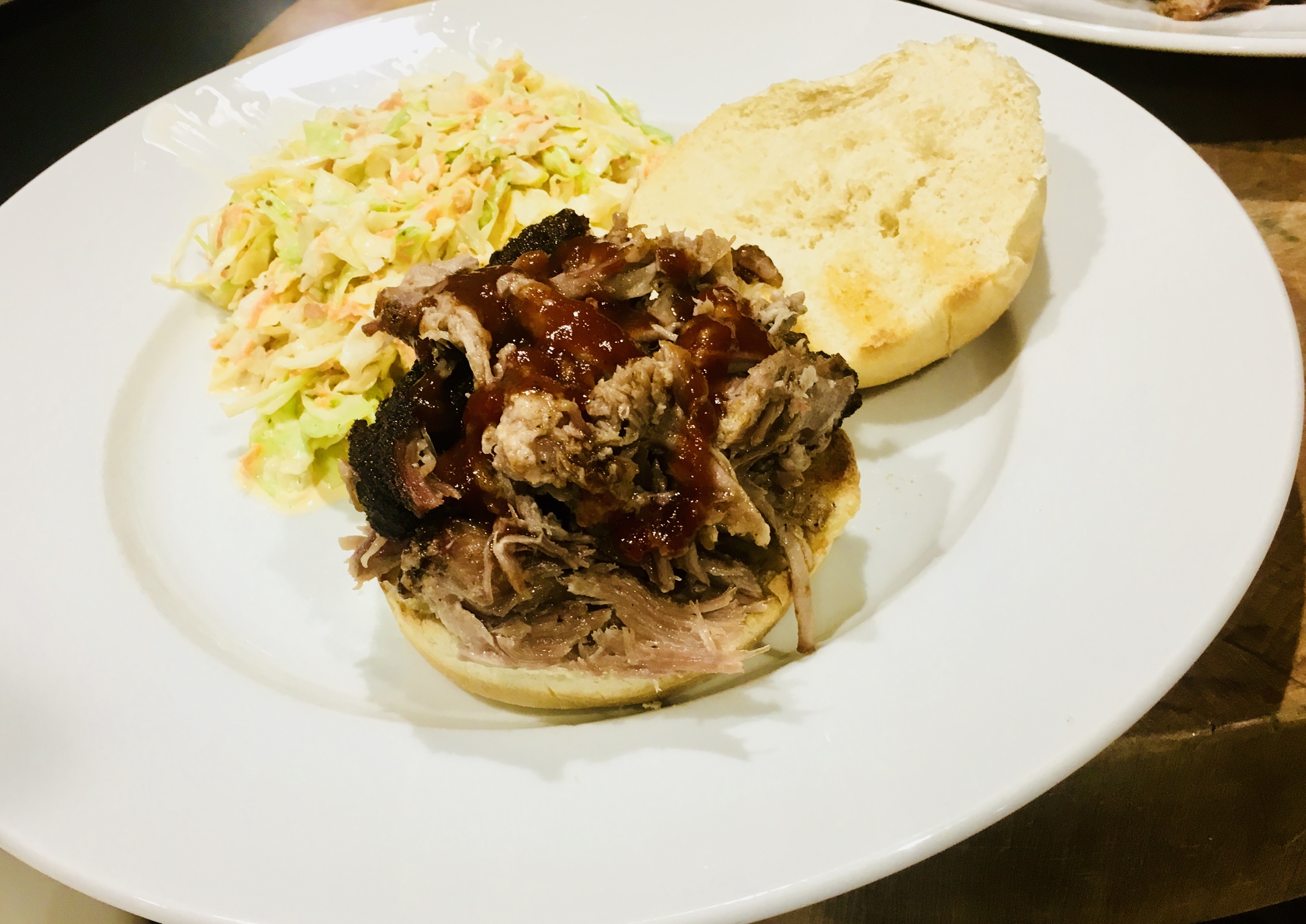
Few slabs of meat are as amazing as a pork butt or shoulder, rubbed with a special dry rub, then slow-smoked for 8 hours (or more), pulled and slathered with amazing barbecue sauce. It takes time, but it’s not really that hard to do.


My electric smoker allows me to set the time and temp and walk away.


First, get a hunka pork. The kind of pig I get matters to me, and so I buy a heritage breed, like Berkshire (also known as Kurobuta), from a farm that raises them humanely. I’m willing to pay the extra bucks to get better quality meat.

But going to a supermarket or butcher shop for pork is what most people do. The names of the cuts of meat can be a bit confusing. Despite its name, pork butt is not from the back-end of the pig.  (The term “butt” referred to the barrel the meat was stored in when the only method of preservation was salting the meat and storing it in barrels.)

The pork butt is actually the shoulder of the pig. The pork shoulder picnic is a lower cut of the same area. These cuts can also go by the names Boston shoulder roast, Boston butt, Boston roast, shoulder butt, and shoulder-blade roast. Whatever the name, these are all nicely marbled hunks of meat that usually weigh in anywhere from 6 to 8 lbs, and are easy to find. Barbecue fanatics claim the bone-in pork butt is more flavorful, but boneless will work, too.

Once I’ve got my slab of pork, I need to season it. I’ve found that a simple rub is the best way to go for the sauce I’m going to use later.

After 8 hours in the smoker, the rub makes a crust on the meat that is just fantastic!

BASIC DRY RUB

1/4 cup kosher salt
1/4 cup black pepper
1/4 cup paprika
¼ cup brown sugar
1 tablespoon granulated garlic
1 tablespoon onion powder

Place all the ingredients in a jar with a lid and shake it up to blend.

Once I’ve made the rub, I generously sprinkle it all over the pork, and rub it in really well. I have a digital smoker at home, which allows me to set the temperature to cook and smoke my pork butt. I place the pork butt on a rack, put a drip pan with water underneath it to catch the grease, and set the smoker for 250 degrees. I cook the pork at 250 for about 6 to 8 hours, and then add hickory chips to the smoker and smoke the butt at 250 for at least another 2 hours. The marbled fat in the pork butt slowly melts over time and the pork becomes incredibly tender and flavorful.

I remove the pork butt from the smoker and let it rest, covered with aluminum foil, for at least 20 minutes before pulling it apart with a couple of forks, shredding it into beautiful meaty bits.

While the pork is cooking and smoking, there’s plenty of time to make two other very important parts of this recipe: a vinegar-based barbecue sauce, and the cole slaw.

Slaw on the side or on the sandwich…up to you!


BARBECUE SAUCE

2 cups ketchup
3/4 cup water
6 tablespoons cider vinegar
6 tablespoons white vinegar
6 tablespoons brown sugar
3 tablespoons Worcestershire sauce
1 tablespoon chili powder
2 teaspoons salt
2 teaspoons black pepper
1 1/2 teaspoons cumin


Mix all the ingredients in a saucepan and simmer until the flavors have blended, about 20 minutes. Remove from the heat and cool to room temp. If you store it in an airtight container in the fridge, it’ll stay good for a few months.

COLE SLAW

My unusual cole slaw recipe uses an interesting ingredient: pickle juice! Just a splash of juice from your favorite jar of pickles is all you need.


1 package of cole slaw veggies
splash of pickle juice
1/4 cup mayonnaise (more to taste)
teaspoon celery seed (not salt)
salt and pepper

There are no real specific measurements for cole slaw, because I’ve found that some people like it dry, others wet…some peppery, some not. Play around with it and make it your own. I prefer a more mayonnaise-y cole slaw, and usually err on the wet side.

In a bowl, combine all the ingredients. Cover it with plastic wrap and chill. When ready to use, re-mix it, and taste for seasoning before using.

OK…time to make that sandwich!

You can either go Carolina style and place the cole slaw right on top of the pulled pork in the bun, or simply serve the slaw on the side. No rules!

Whether you go through all these steps yourself or not, it’s nice to appreciate a labor of love that is worth every bit of time and trouble invested in it.

WE BROKE 1000!

Posted: February 28, 2018 in Uncategorized
Tags: , , ,

My thanks to you for following this blog and getting it past 1000! If you haven’t signed up to follow, go to livethelive.com, look left and click!

It’s National Pancake Day!

These pancakes, based on a recipe from chef April Bloomfield (The Spotted Pig and The Breslin in NYC), are made from fresh homemade ricotta cheese. Light as air…and really delicious! I’ve made a few batches of fresh ricotta cheese in my day, but when the family has a craving for these pancakes at the last-minute, a good-quality store-bought ricotta cheese will do.


1 1/2 cups all-purpose flour (I use Cup4Cup GF flour if I want to make these gluten-free)
1/4 cup yellow cornmeal
2 tablespoons sugar
1/2 teaspoon salt
1/2 teaspoon baking powder
1/2 teaspoon baking soda
2 cups milk
2 large eggs, separated
1/2 cup fresh ricotta


In a large bowl, combine the flour, cornmeal, sugar, salt, baking powder and baking soda. In another large bowl, whisk together the milk, ricotta,  and egg yolks. Fold the wet ingredients into the dry ingredients.

In a large stainless steel bowl, whisk the egg whites until they are stiff, but not dry. Fold gently into the batter.

Spray a non-stick griddle with a little cooking spray and drop about 1/4 cup of batter per pancake. Cook over medium heat for about 2 minutes per side, until golden and fluffy.

pancake

I have chicken at least twice a week…can’t get enough of it! So I’m always looking for new recipes. I especially love marinades, because they’re easy to prepare ahead of time, and the flavor really gets into the meat.

The balsamic In use in this recipe is the basic, $9-buck-a-bottle stuff. Don’t use the 25-year-old aged fancy balsamic!


fullsizerender-15

4 lbs. chicken parts, or 1 whole chicken cut up
1/2 cup balsamic vinegar
2 tablespoons honey
1 1/2 tablespoon mustard (I use Gulden’s)
1 tablespoon chopped fresh rosemary
2 teaspoons garlic salt
1 teaspoon pepper
extra virgin olive oil


If you’re using a whole chicken and the breast is really large, you’ll want to cut it in half so that it cooks as quickly as the other parts. Put all the chicken pieces in a large Ziploc bag.

In a bowl, combine the balsamic vinegar, honey, mustard, rosemary, salt and pepper. Whisk to mix thoroughly.

Pour the contents of the bowl into the Ziploc bag, seal tightly, and squish it around to make sure the marinade reaches all surfaces of the chicken.

Marinate the chicken for at least an hour at room temperature. Overnight in the fridge is even better. Make sure you squish the bag every once join a while to move the marinade around. Keep the bag in a bowl to prevent accidental spillage all over your fridge! Remove the bag from the fridge about an hour before cooking to bring the meat to room temperature.

Pre-heat the oven to 350.

Using an oven-proof pan, heat some olive oil (pork fat is even better!) and then place the chicken pieces in the pan. (Discard the marinade.)

Sear for 2 minutes on one side, then sear for 2 more minutes on the other. Place the pan in the oven and cook for 30 minutes, making sure the chicken has cooked all the way through.


You’d think it would be Cinco de Mayo, but February 22nd is National Margarita Day.
My personal recipe uses no sour mix…just 4 basic ingredients. I still have a small stash of the HoneyBells mentioned here, but the original recipe, below, uses pineapple juice. Cheers!
Every year around January, we get a shipment of Cushman’s HoneyBells. They look like fiery red bell-shaped oranges, but they’re not really oranges at all, and their season is very limited.
 image
HoneyBells are a unique natural hybrid of Dancy Tangerine and Duncan Grapefruit. The plants are grafted to a sour orange root-stock, and when the tree reaches maturity, it looks just like a grapefruit tree…but with oranges growing on it.
I usually make my signature margarita, the Algarita, with pineapple juice. But when I get those HoneyBells in the mail, my recipe takes on a new twist:
 image
 
2 oz. Patron silver tequila (3 oz. is even better!)
1/2 oz. Cointreau orange liqueur
4 oz. pineapple juice (or fresh-squeezed HoneyBell juice, when in season)
1/2 oz. fresh-squeezed lime juice
Fill a cocktail shaker or tall glass with ice and add all the ingredients. Stir vigorously. Pour into a large margarita glass. Garnish with a lime wedge. Salt optional.
 image
 Either way: with HoneyBells or with pineapple juice, it’s a great way to celebrate National Margarita Day! Cheers!

This past weekend, I was at the annual Providence Art Club Founder’s Day celebration, raising a glass in their honor. And I was again asked to create the drink we toasted the evening with!

First, some history…

The Providence Art Club is the third-oldest art club in the United States. The Philadelphia Sketch Club was founded in 1860. New York’s Salmagundi Club, founded in 1871, came next. But they were both founded by an all-male board. The Providence Art Club is the oldest art club in the nation that also included women. And that was back in 1880! That’s especially huge when you see what’s going on in our country even today…and it’s even more special to me because my wife was elected president of the Providence Art Club  last year, making her only the second woman to hold that post in the club’s history!


1


Several years ago, they asked me to come up with a cocktail for their first Founders Day celebration. One hundred glasses were raised to honor the founding fathers of the Providence Art Club.

Silhouettes of past art club founders, influential members, and presidents line the walls of the Providence Art Club, so my wife came up with the name of the cocktail: The Silhouette. Little did she know that her own silhouette would grace the hallowed walls of the Providence Art Club this year!
In the past, I based my Silhouette cocktail on the Boulevardier, a delicious but strong drink that substitutes bourbon for gin in the classic Negroni. (See the recipe at the bottom of this page.)
But with my wife’s election as the new president at the art club, I thought a new Silhouette was in order, too…and it’s my own recipe for a cocktail I’ve made for many years. I call it Velvet Elvis. Keeping the silhouette theme, we decided to call it The Velvet Silhouette for this Founders’ Day celebration.
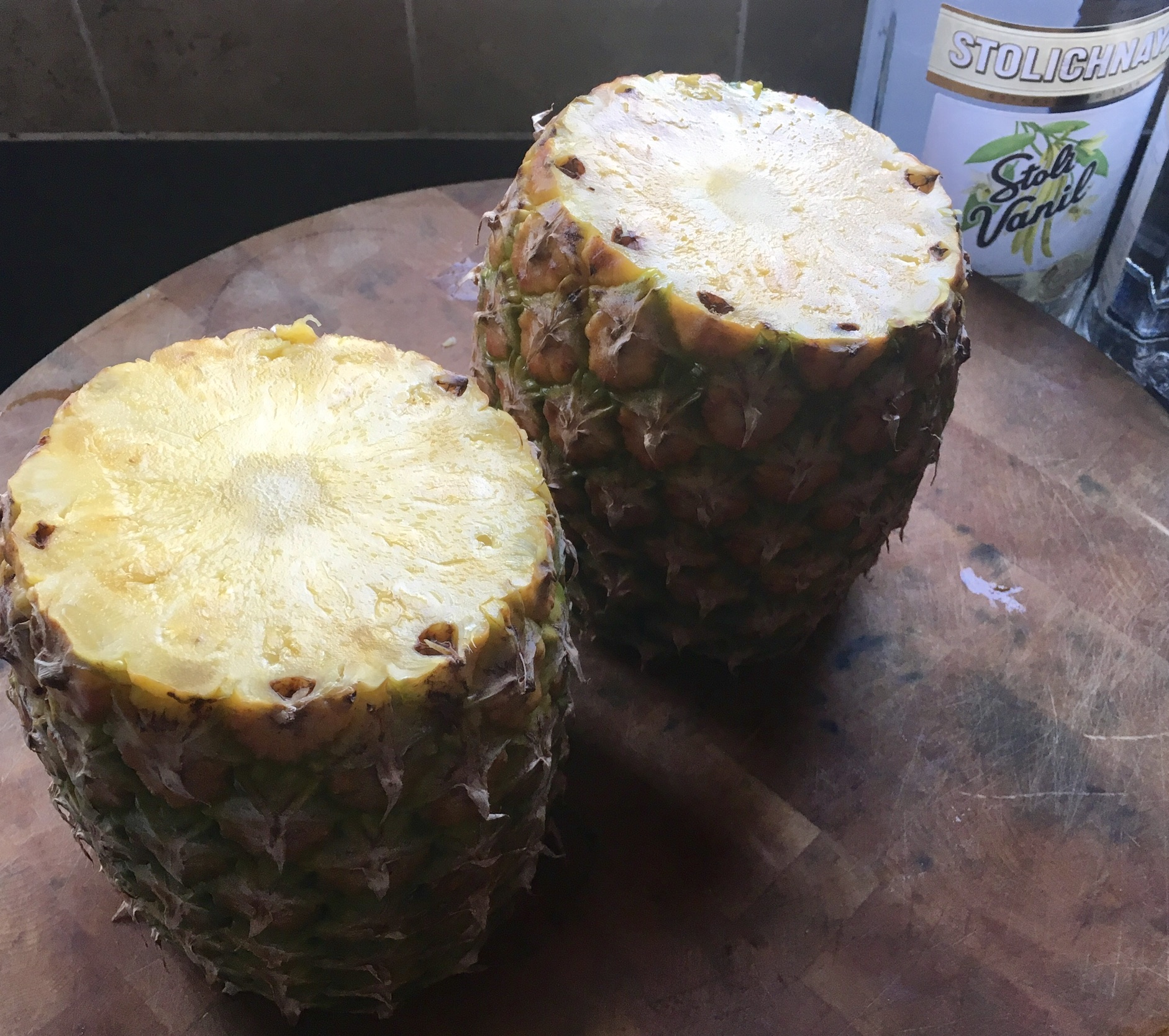
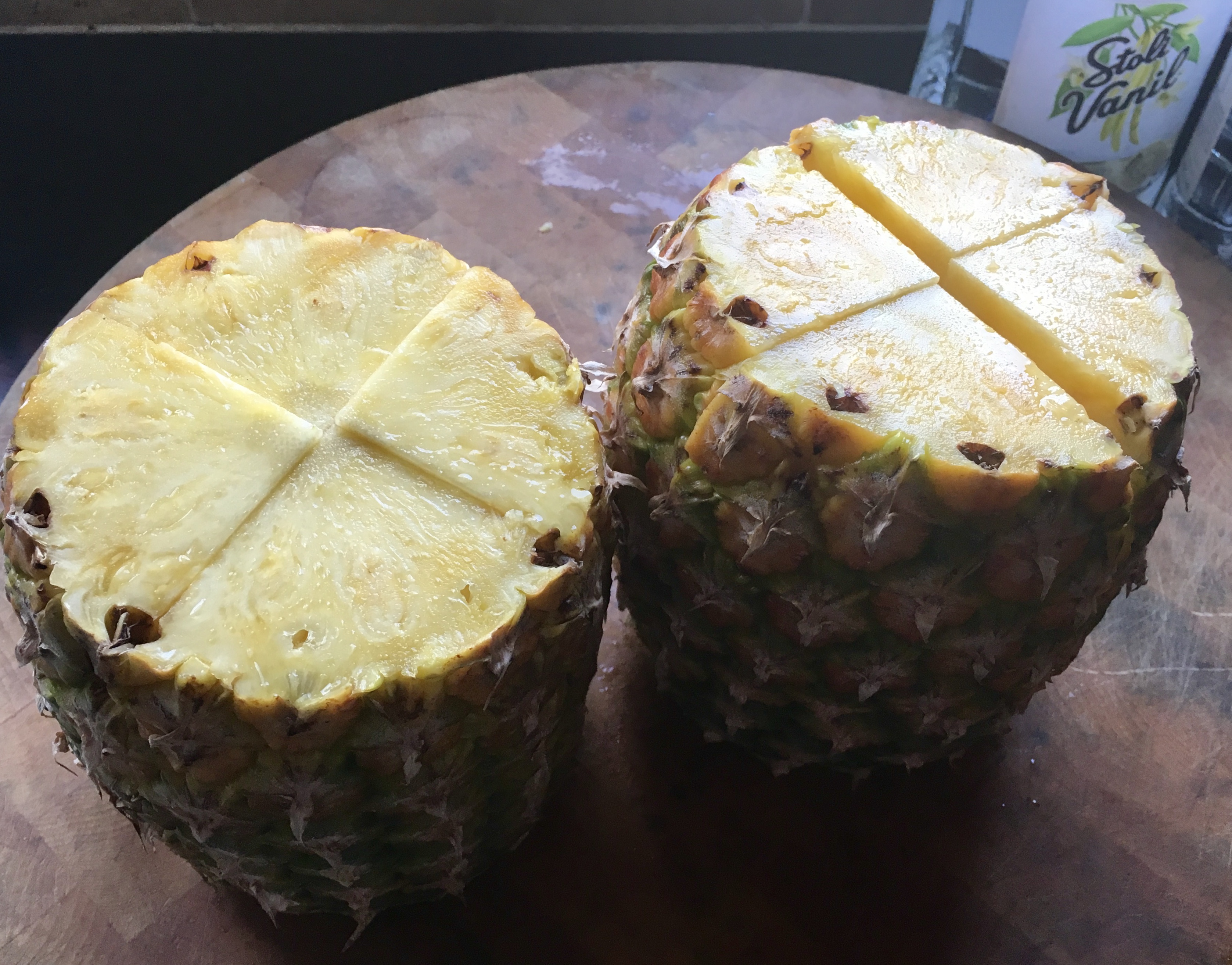
The Velvet Silhouette is my version of a fresh pineapple-infused vanilla vodka. (I use Stoli Vanil.) Here’s how it’s done…
Get a gallon-sized glass jar with a lid. Peel, core and slice the pineapple, and place all the pieces in the jar.
Pour in one 1.75l bottle of Stoli Vanil. Swirl to mix, then screw the lid on and keep the jar at room temperature for 3 weeks.
After 3 weeks, strain the liquid, making sure to squeeze out as much as you can from the pineapple pieces. Discard the pineapple and keep the Velvet Silhouette in the fridge until ready to serve. Serve it on the rocks, or as a martini, shaken in a cocktail shaker with ice.

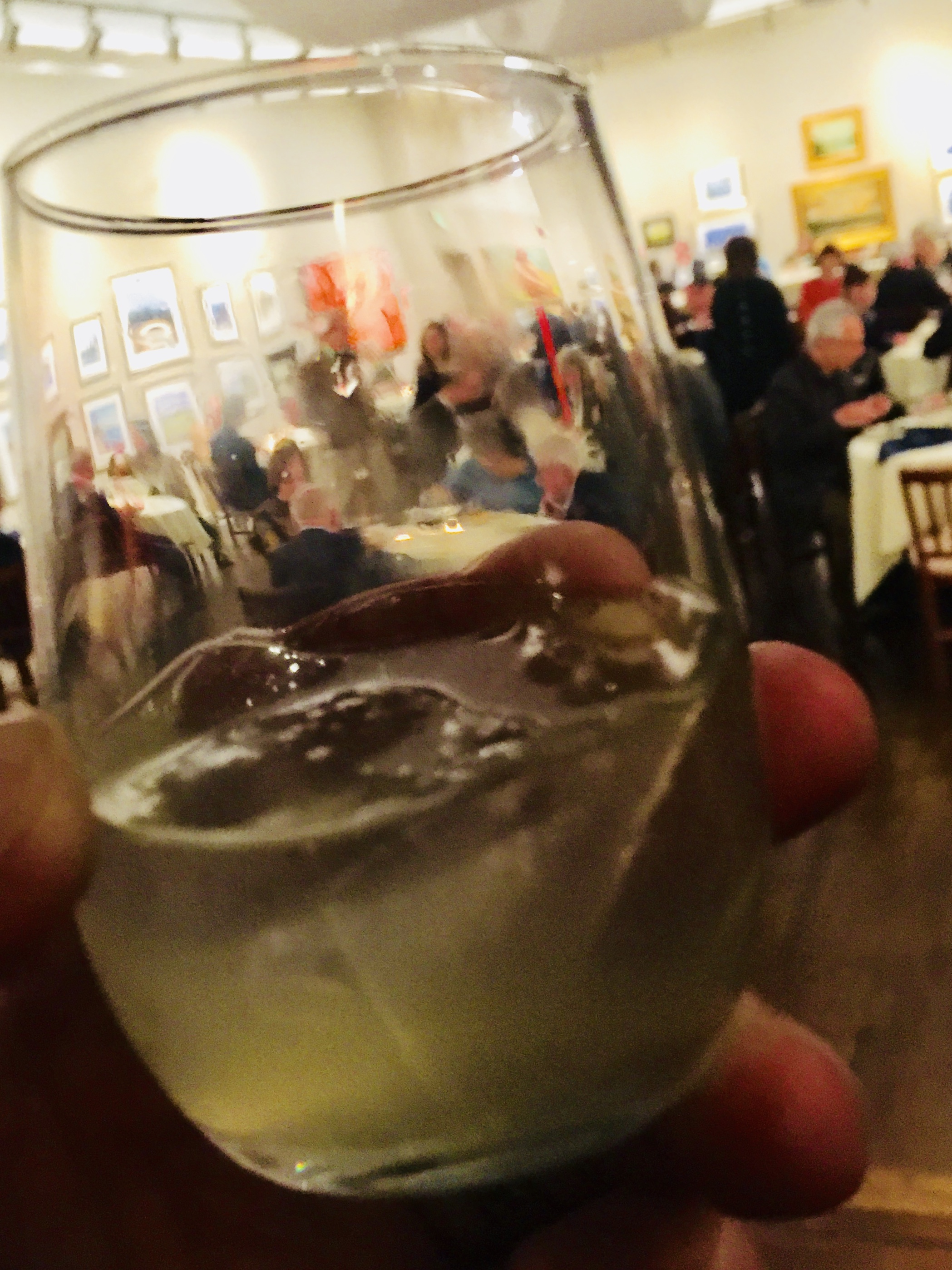
Toasting at the Providence Art Club with the Velvet Silhouette.


The original Silhouette was mighty tasty, but a bit too strong for some of the senior art club members. Nonetheless, a favorite of mine. Here’s the recipe…
image
2 oz. Eagle Rare 10-year bourbon
1 oz. Antica Formula sweet vermouth
1/2 oz. Campari
2 shakes Regan’s orange bitters

In a cocktail shaker with ice, stir the ingredients and then strain into a rocks glass with one large ice-cube.

Garnish with an orange twist.

Cheers!

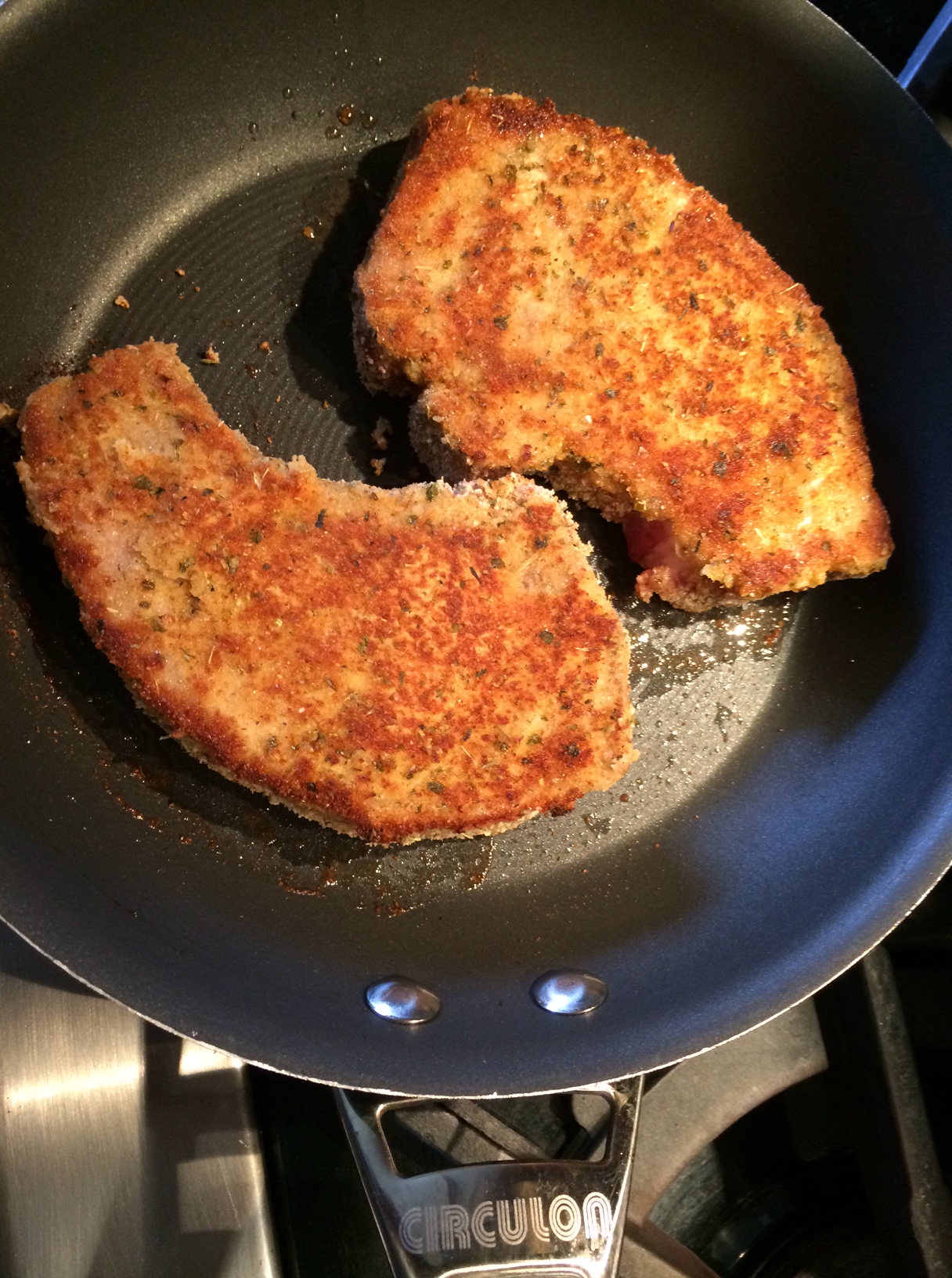
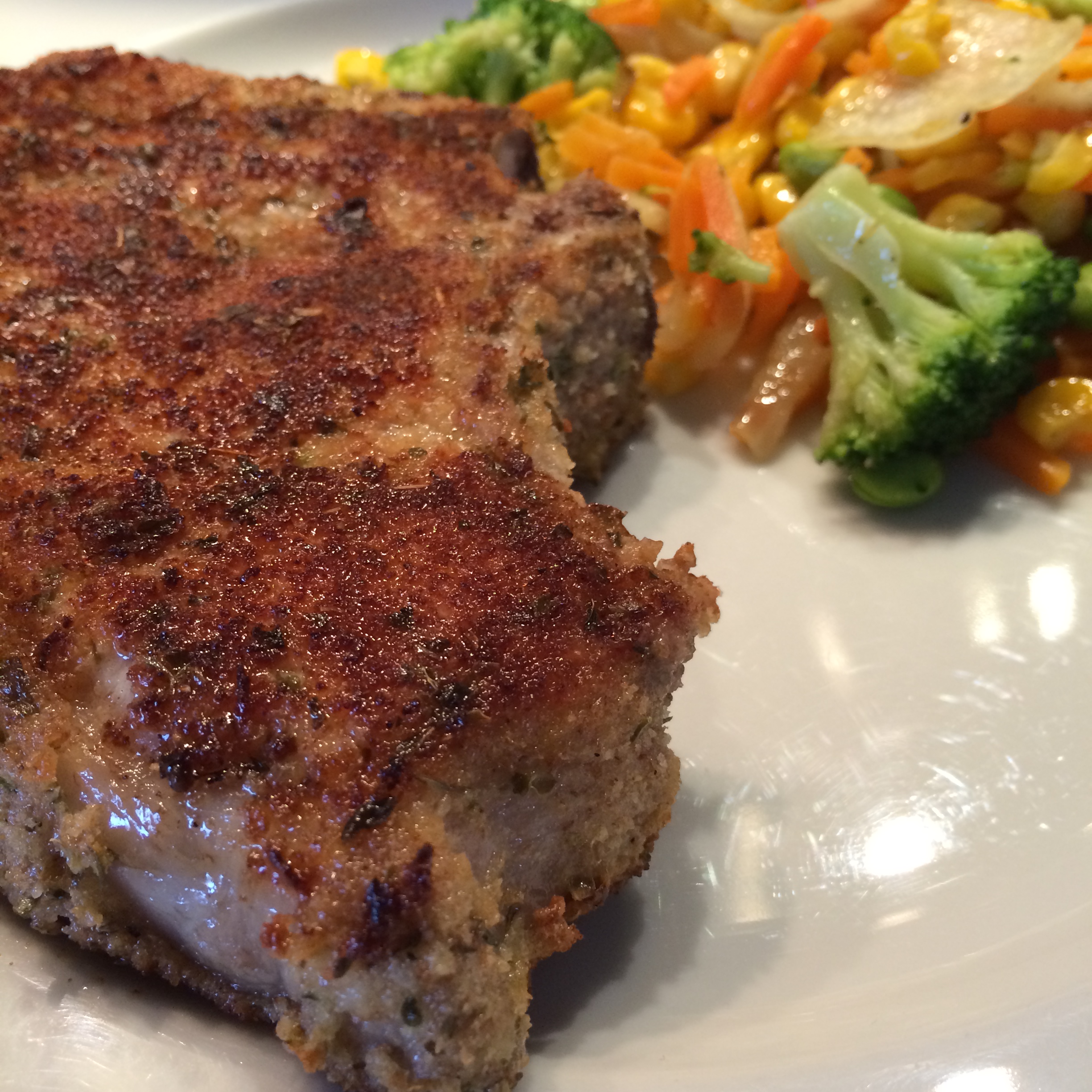
Pork chops were a favorite of mine growing up, but my Mom cooked them only one way: breaded and fried in a pan full of oil. They were good, but they were greasy, and my Mom was not big on seasonings. And she cooked the hell out of it. It was time to improve on the original.

Using the best quality pork I can get, like Berkshire pork, makes a real difference in flavor. It also matters to me that the animals are humanely treated while they’re on the farm. No factory-farmed meats.

chop 1


2 Berkshire pork chops
1 egg
1/2 cup plain bread crumbs (I use gluten-free)
1 teaspoon salt
1/4 teaspoon pepper
1 teaspoon dried oregano
1 teaspoon dried parsley
1/2 teaspoon granulated garlic
1/2 teaspoon granulated onion
olive oil


Pre-heat the oven to 350 degrees.

Set up 2 bowls. In one, crack and scramble the egg. In the other, combine the bread crumbs, salt, pepper, oregano, parsley, granulated garlic and granulated onion.

Place an oven-proof pan on medium-high heat and add a little olive oil. Once the oil is hot, cover the pork chops in the egg wash and then coat with the bread crumb mixture. Place in the hot pan to brown and sear. Do this with both chops.

After a few minutes, flip the chops over in the pan and place the pan in the oven to finish cooking.

chop 2

Remember, good pork does not need to be cooked to death!


It’s Fat Tuesday! Laissez les bon temps roulez!

I lived in Mobile, Alabama back in the late 80’s, and if you asked the locals, they’d quickly tell you that Mardi Gras originated in Mobile, not New Orleans.

Joe Caine paraded through the streets of Mobile dressed in a Native American costume in 1868, and is credited for our current way of observing the Mardi Gras celebration. Of course, it’s hard not to think of New Orleans when you hear the phrase “Mardi Gras,” and I spent many a weekend on the streets and bars of the crescent city back in the day.

It was then that I fell in love with Cajun food, and needed to learn how to cook it myself. I bought cookbooks by two of the greats: Justin Wilson and Paul Prudhomme. I learned about layers of seasoning, and often I’d use those ideas in my own dishes.

When I moved to Rhode Island in 1990, I had yearly Mardi Gras parties at my house, and I cooked massive batches of these Cajun chicken breasts, using a spice mix I learned from my cooking experiments. They’re so good, my daughter asks for them all the time.

Double-dipping in the seasoned flour is a messy step, but it makes them extra crunchy and flavorful.

fullsizerender-8


1 cup all-purpose flour (I use Cup4Cup flour to keep it gluten-free)
1 tablespoon salt
1 1/2 teaspoons sweet paprika
1 teaspoon granulated onion
1 teaspoon granulated garlic
1 teaspoon basil
1/4 teaspoon white pepper
1/4 teaspoon cayenne pepper
1/2 teaspoon black pepper
1/2 teaspoon dried thyme
1/2 teaspoon gumbo file (file powder), optional
2 pounds boneless, skinless chicken tenders or breasts
4 eggs
oil for frying (I like using avocado oil and some pork fat for flavor)


Cut the chicken breasts into manageable pieces. If they’re thick, slice them horizontally to make two thinner breasts. A thick piece of chicken won’t cook all the way through.

Combine the flour, salt, paprika, onion, garlic, basil, white pepper, cayenne, black pepper, thyme and gumbo file in a bowl. Mix well.

I like to separate the 4 eggs, placing 2 eggs in 2 separate bowls. This keeps the first bowl “clean” and not gummed up with flour. You’ll see what I mean once you start, because it’s a bit messy. So, crack 2 eggs in the first bowl and the other 2 eggs in the second bowl. Scramble them up and put the bowls on either side of the seasoned flour bowl.

Pre-heat a pan of oil to 350 degrees.

Dip the chicken in the first egg bowl and then the seasoned flour mixture. Shake off the excess flour and dip the chicken in the second egg bowl, making sure the flour is covered by egg. Then dip the chicken back into the flour for a second coat. Carefully place the chicken in the pan. Fry the chicken until it’s cooked all the way through and golden brown. Drain on paper towels.


If you need to feed a crowd, just double or triple the recipe. I used to make a 10x batch for my Mardi Gras parties!


February 7 is National Fettuccine Alfredo Day!

My first foray into serious cooking started when I bought “The Classic Italian Cookbook,” written by the Marcella Hazan.

Like many great recipes, Fettuccine Alfredo is not complicated…but few restaurants that offer it get it right. Most of the Alfredo sauces I’ve had were watery, floury, and salty and had nothing in common with the real deal.
To this day, if I want a great Alfredo, I make it like Marcella.

alfredo2


1 cup heavy cream
3 tablespoons butter
Fleur de Sel or sea salt
1 lb. Fettuccine, fresh or dried
2/3 cup freshly grated Parmesan cheese
Freshly ground pepper
A very tiny grating of nutmeg

Put 2/3 cup of the cream and all the butter in a large saucepan that will later accommodate all the pasta. Simmer over medium heat for less than a minute, until the butter and cream have thickened. Turn off the heat.

Drop the fettuccine in a big pot of boiling salted water. If the pasta is fresh, it will take just seconds. If it’s dry, it will take a few minutes. Cook the fettuccine firmer than usual, because it will finish cooking in the pan with the butter and cream. Drain the pasta immediately and thoroughly when it’s done and transfer to the pan containing the butter and cream.

Turn the heat under the pan on low, and toss the fettuccine, coating them with the sauce. Add the rest of the cream, all the grated cheese, 1/2 teaspoon salt, the pepper and the nutmeg. Toss briefly until the sauce has thickened and the fettuccine are well coated. Taste and correct for salt.

Serve immediately!