Posts Tagged ‘pork’

Pork is magical. And though I’ve loved pork chops and store-bought bacon all my life, it’s only been in the last decade that I’ve learned to appreciate other cuts of pork and how they’re prepared. Guanciale is one of those meats, and it’s a key ingredient to a classic Italian dish: pasta carbonara.
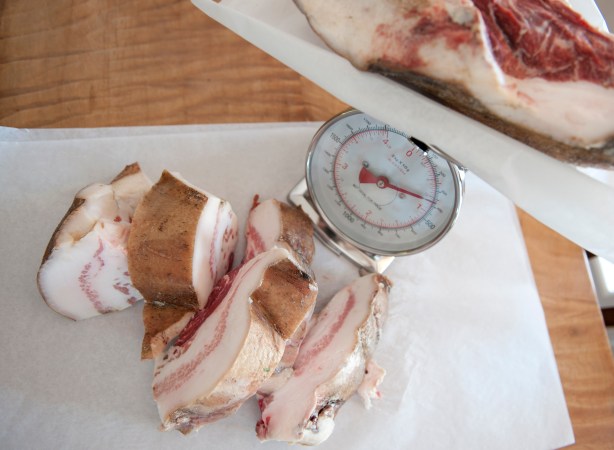
In the beginning, I could only find huge jowls that required cutting and weighing to mix with the right amount of cure.

Looking at carbonara recipes online, many said the same thing: “Though a genuine carbonara uses a cured cut of pork called guanciale, it’s hard to find. So use pancetta or bacon.” Although both pancetta and bacon meats are delicious (both come from the belly of the pig…bacon is smoked, pancetta is not) the flavor and texture is not the same as a pork cheek, or jowl…and that’s what guanciale is made from.
Many years ago, my search for guanciale started with a local restaurant, the Back Eddy in Westport, Massachusetts. Being a buddy of the owner (and bribing him with alcohol), I asked if he’d order me some jowls. He did, and that worked well for a while. But I didn’t want to keep bothering him every time I wanted more, so I eventually found my own source on line that supplied me with massive jowls weighing many pounds each, as in the photo above. They were good, but a pain to work with. Eventually, that company went out of business.
I now shop for jowls online at http://www.heritagefoods.com. They sell a variety of pork products made from  heritage breeds like Berkshire, also called kurobuta. It’s delicious with wonderful fat that’s healthy and full of flavor.

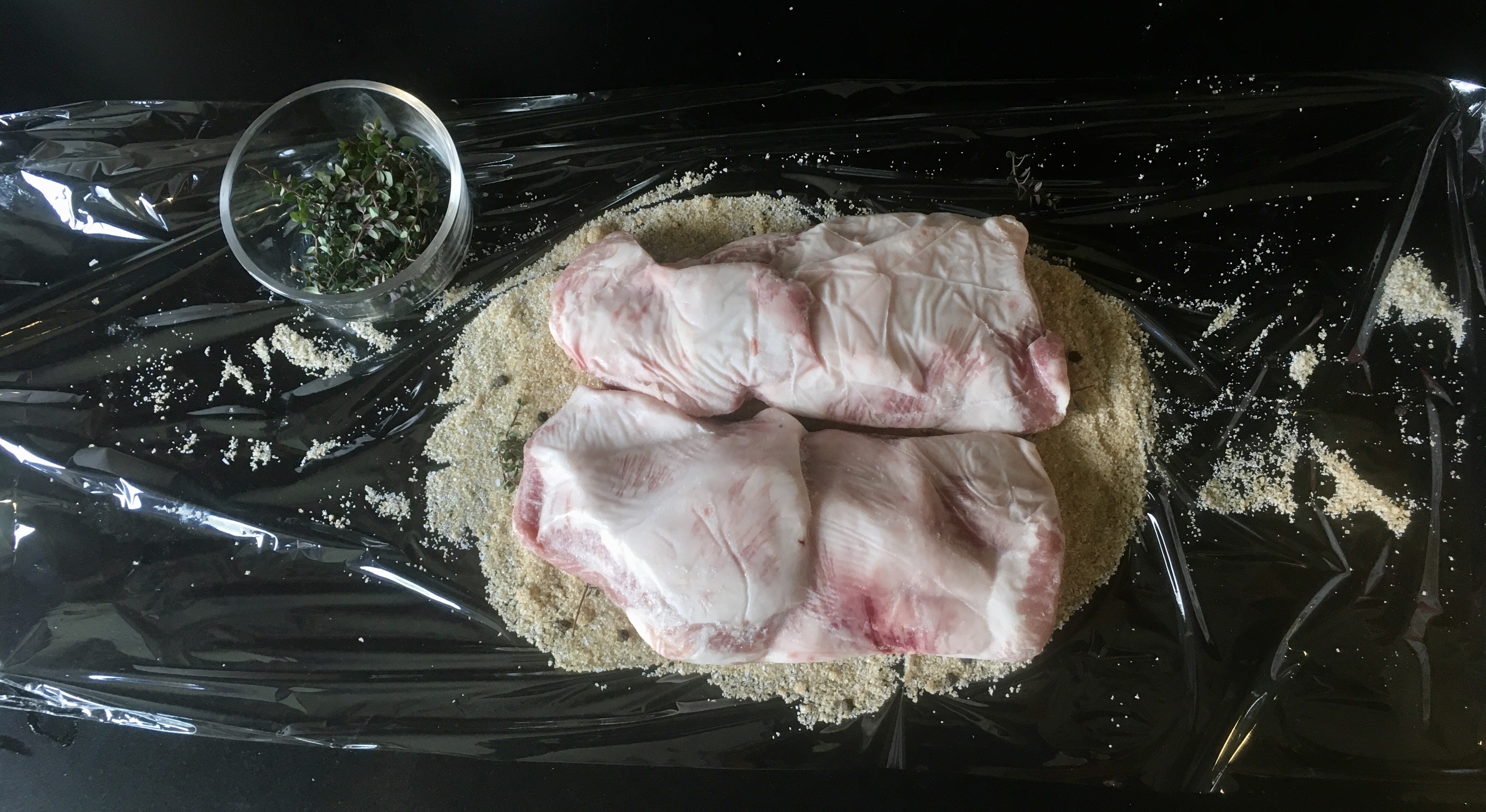
Berkshire pork jowls with fresh thyme from the garden and the dry cure mix.

My curing process is simple: sugar, salt, peppercorns, and fresh thyme. I cure the jowls for about 3 weeks. I rinse them once they’ve cured, and pat them dry. They still need to cook, but they’re ready to use for carbonara, ragu bolognese, topping a pizza, or any other delicious recipe that comes my way…and they freeze really well.
Once I made my first batch, there was no turning back!
2 lbs. raw pork jowls
1/2 cup basic dry cure mix (recipe below)
1/2 cup brown sugar
1 teaspoon whole black peppercorns
a handful of fresh thyme sprigs
Combine the basic dry cure mix, brown sugar, and peppercorns in a bowl. We’ll call this the rub.
On a large work surface, lay down several sheets of plastic wrap, overlapping each other to keep the rub from leaking through to the counter underneath. Sprinkle half of the rub onto the plastic wrap in an area where the jowls will lay. Scatter a half-dozen thyme sprigs on top of the rub. Lay the pieces of pork jowl on top of the rub and the thyme.
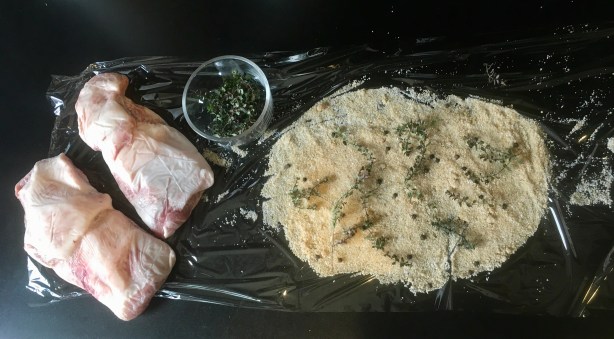
I place the rub and sprigs of thyme on a long sheet of plastic wrap.
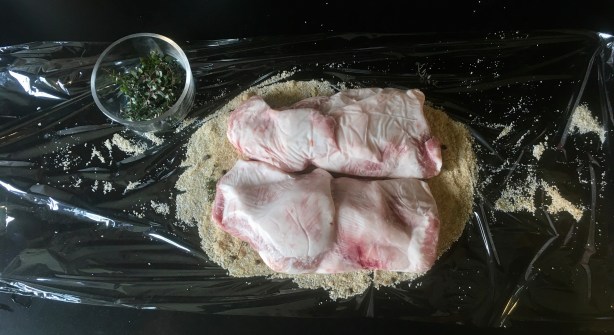
 

The pork jowls go on top.

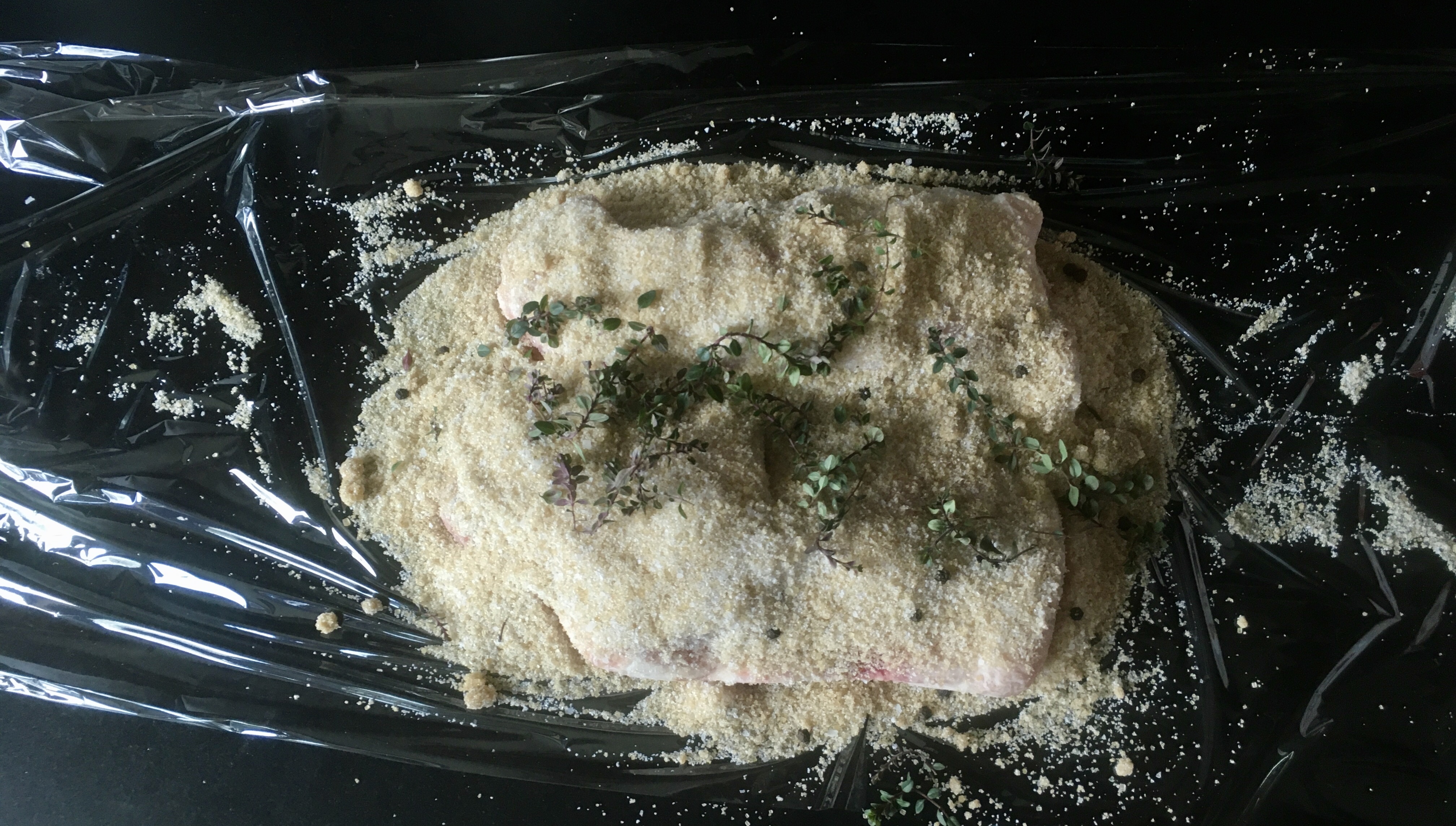
Then top the jowls with the rest of the rub, covering them evenly, and top with more thyme sprigs.
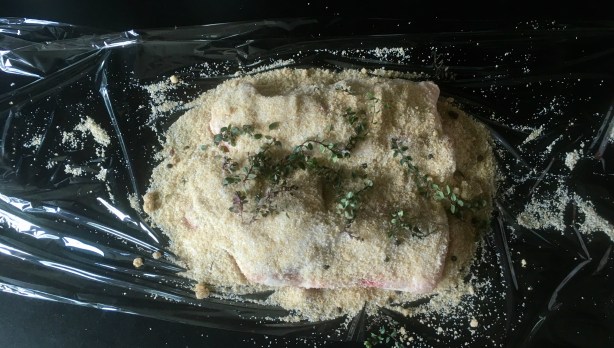
Press down on the jowls to really get the rub to stick.


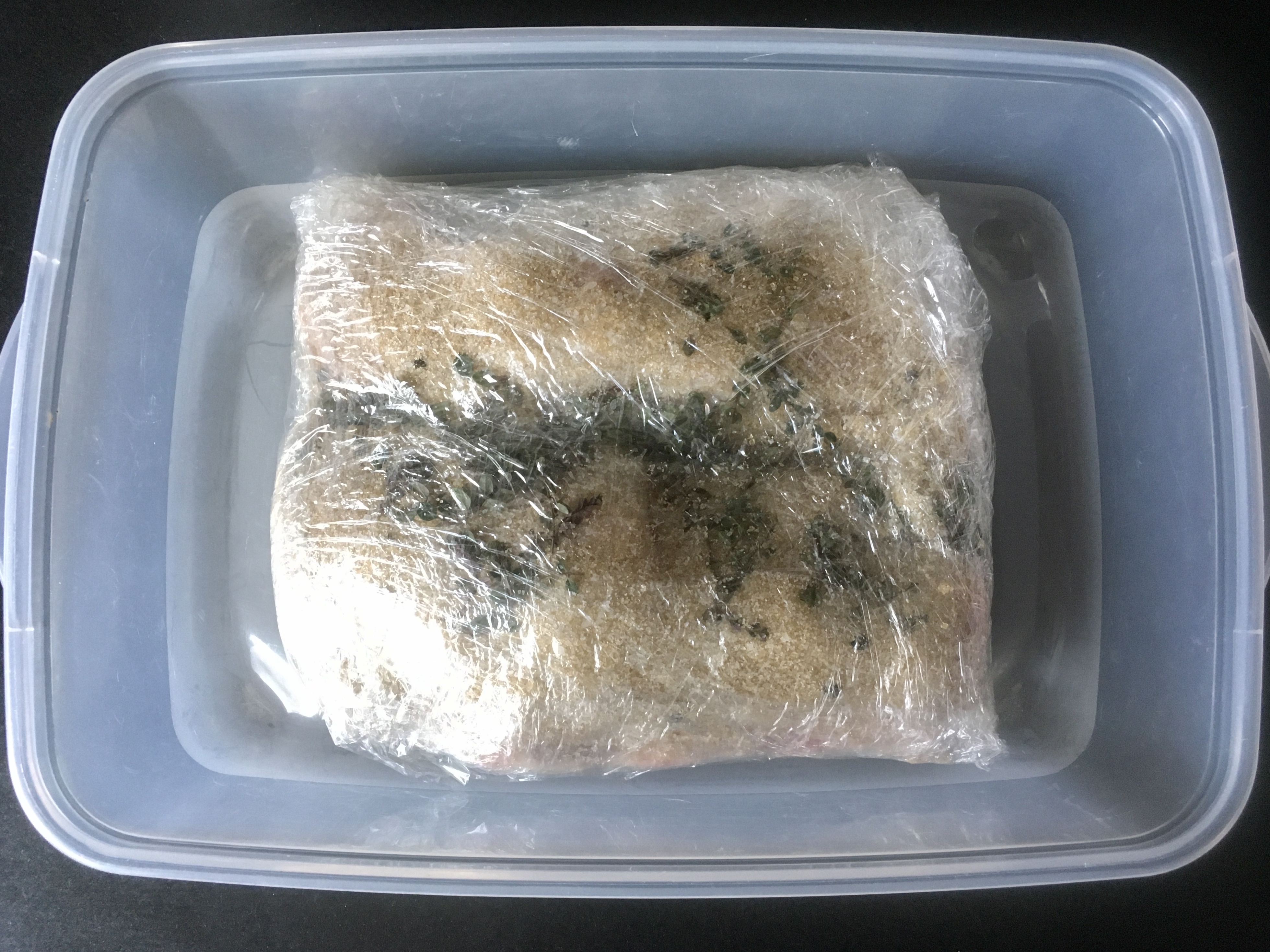
Fold the plastic wrap over the jowls as tightly as you can, pressing the rub into the meat. If the wrap is loose, use more wrap to really tighten it up. Then place the entire pork-wrapped package in a container that will hold the liquid that will ooze out during the curing process.
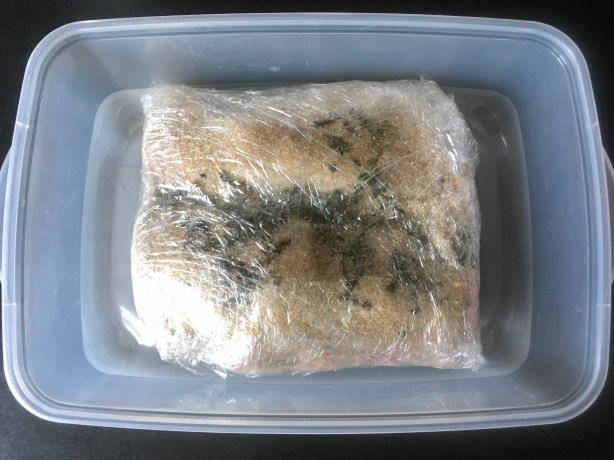
Into a container with a lid and into the fridge.


Place the container in the fridge to cure for 3 weeks.
Every couple of days, flip the plastic wrap package over, so that the top is now the bottom. Then return it to the fridge. You want the rub to get at every part of the pork. Don’t pour off any liquid that forms…it gets kind of gooey, but it will help the curing process.
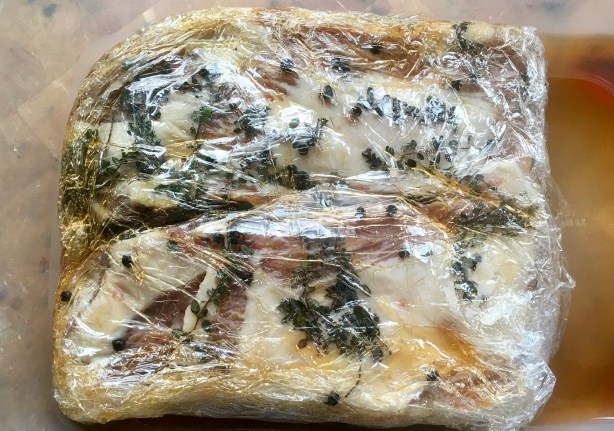
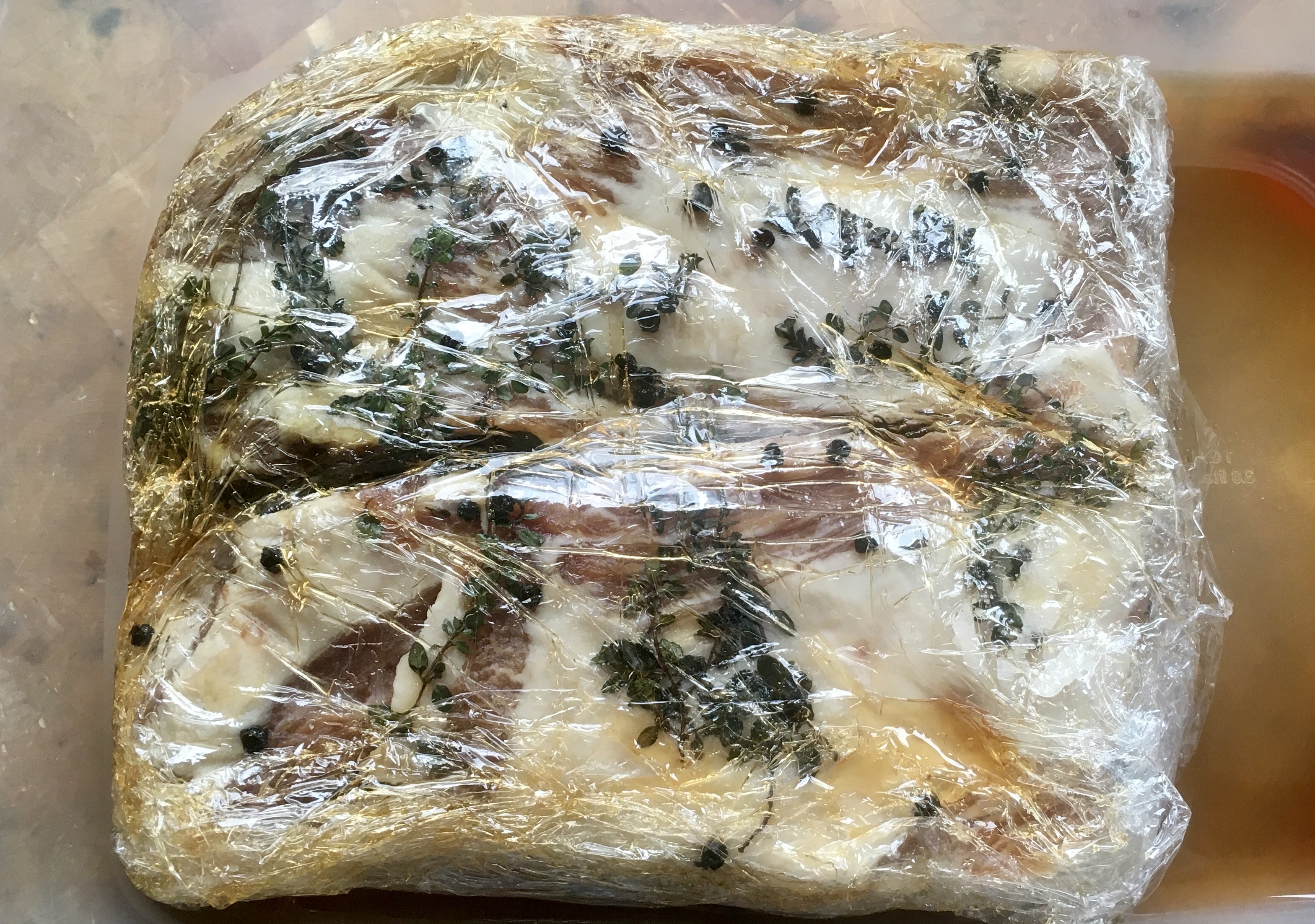
3 weeks later, it has transformed…

In about 3 weeks, the pork jowls will feel firmer. This is a sign they’ve been properly cured. Remove them from the plastic wrap, rinse them thoroughly under cold clean water, then pat them dry with paper towels.

They’re perfect…they just need a rinse.
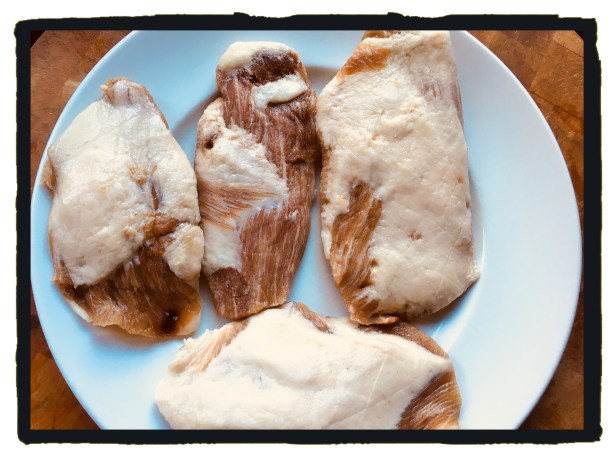
 

Cured, rinsed and patted dry. Cut the guanciale into smaller pieces before freezing. A little goes a long way!


At this point, cut the guanciale into smaller pieces, wrapping each well and placing them in freezer bags. They will keep in the freezer for a long time.
Many guanciale recipes tell you to hang the meat in the fridge for at least a week after curing, but I haven’t really found the need to do that if I’m keeping them frozen. The drying process keeps the meat from getting moldy, but that’s only if you keep it at room temperature, which I don’t.

Always slice off a little to fry up a test batch! It’s all about quality control!


The Basic Dry Cure Mix
This basic dry cure mix is extremely simple, and you can cure many meats with it. But it does require a special ingredient: pink salt. This is not pink Himalayan salt. This is a very special curing salt that must be used in small amounts. (You can easily find it online.) It contains nitrites which will help preserve the meat and give it a good color. Many people get bent out of shape over nitrites these days, so you need to decide whether you want to use pink salt or not. I do, because I don’t eat pounds of guanciale like a lab rat. If you don’t use it, the meat will turn a bit gray–nothing wrong with it, just not an appealing color.
1 1/2 cups Diamond Crystal Kosher Salt*
1/2 cup organic turbinado  sugar
5 teaspoons pink curing salt
Combine these ingredients and mix well. Store the basic dry cure mix in a tightly sealed plastic bag in your pantry.
*An important note: the reason I give the brand name for the salt is because all Kosher salt does not weigh the same! A cup-and-a-half of Morton Kosher Salt, for example, weighs more and will throw off the recipe.
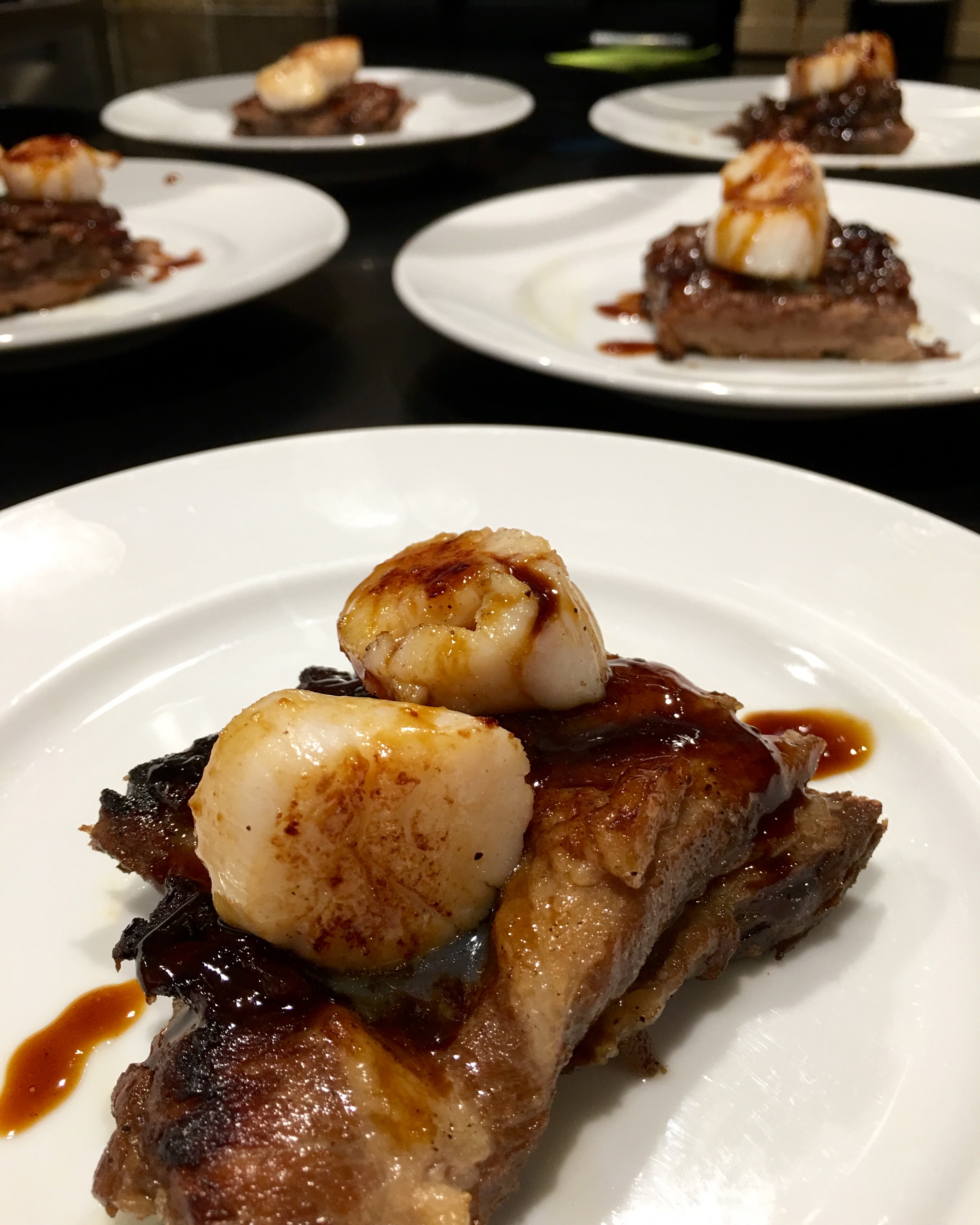
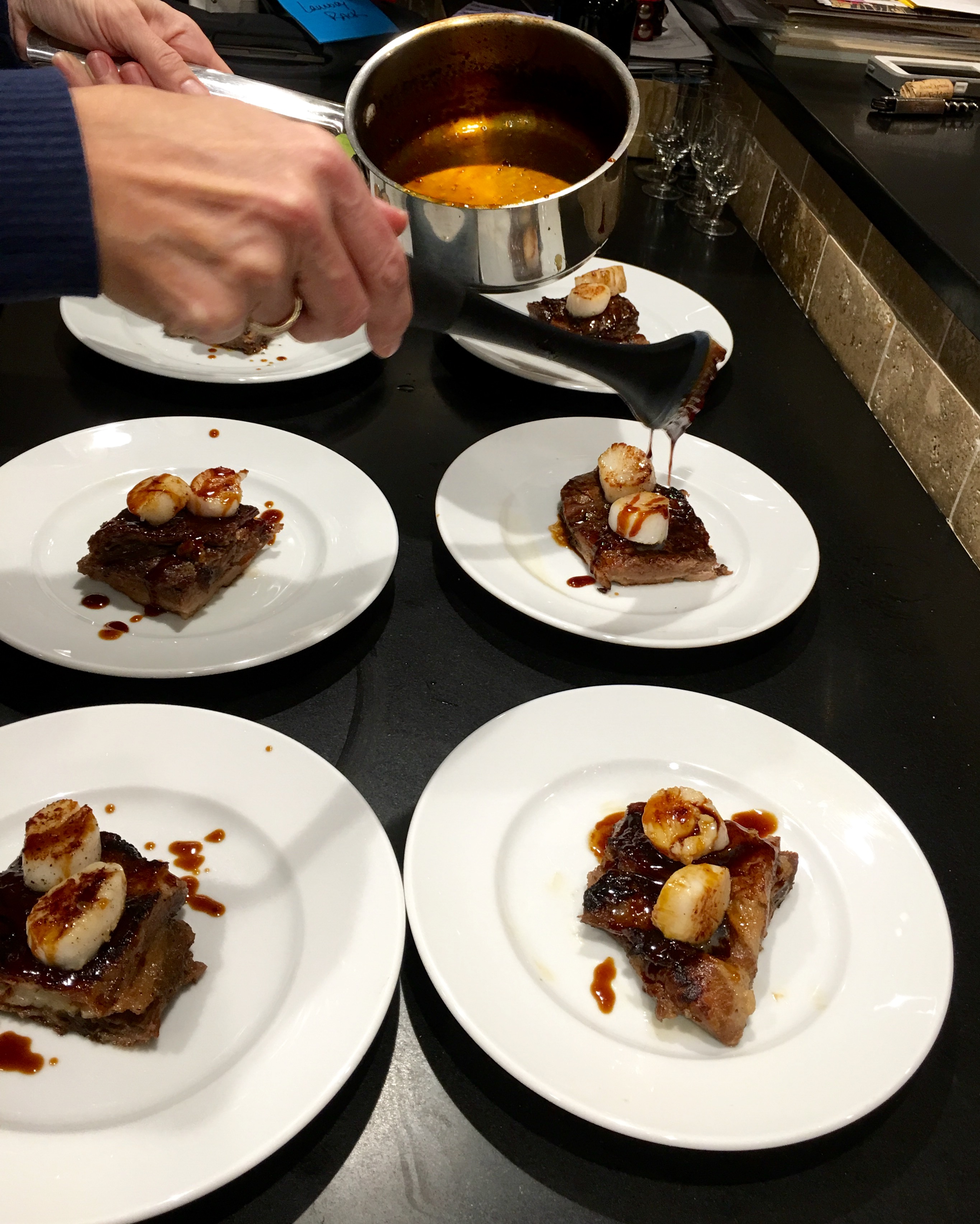
I grill year-round. I’ll stand in 3 feet of snow to get smoked ribs just right, if I have to. Through years of tireless experimentation, I’ve come up with a barbecue sauce that I can be proud of. I prefer a slightly sweet and tangy barbecue sauce,  and it works really well with pork or chicken.

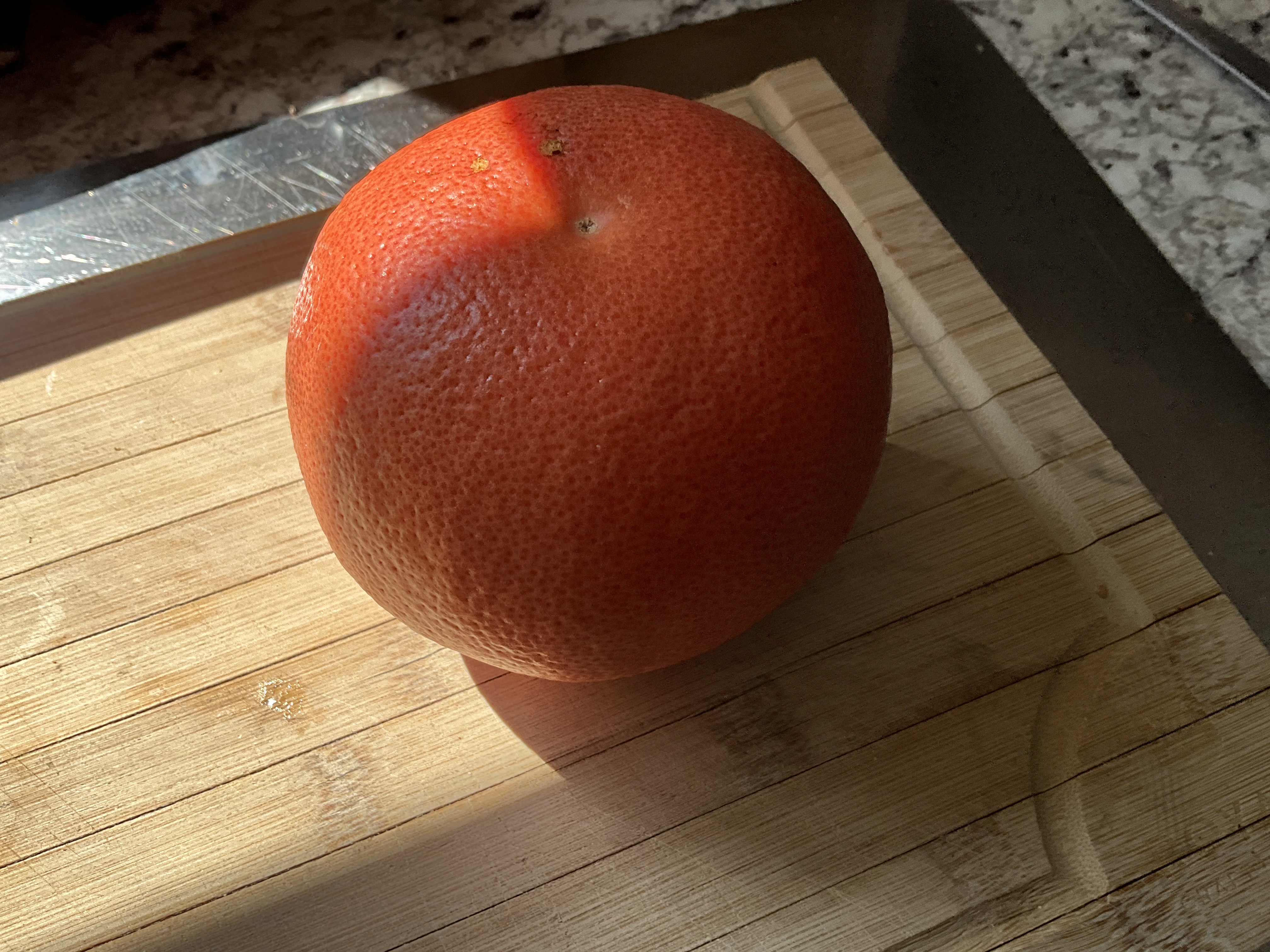
What makes this sauce special is the citrus. I originally used lemon juice for this recipe and it was good. Lime juice was better. Adding lime zest: even better than that. I tried orange juice and zest, even Meyer lemon. But the Big Daddy of ’em all was grapefruit. I was craving my barbecue sauce one day and only had a grapefruit in the fridge. I thought: how bad could this be? Turned out to be the perfect foil to the sweetness of the brown sugar and ketchup.


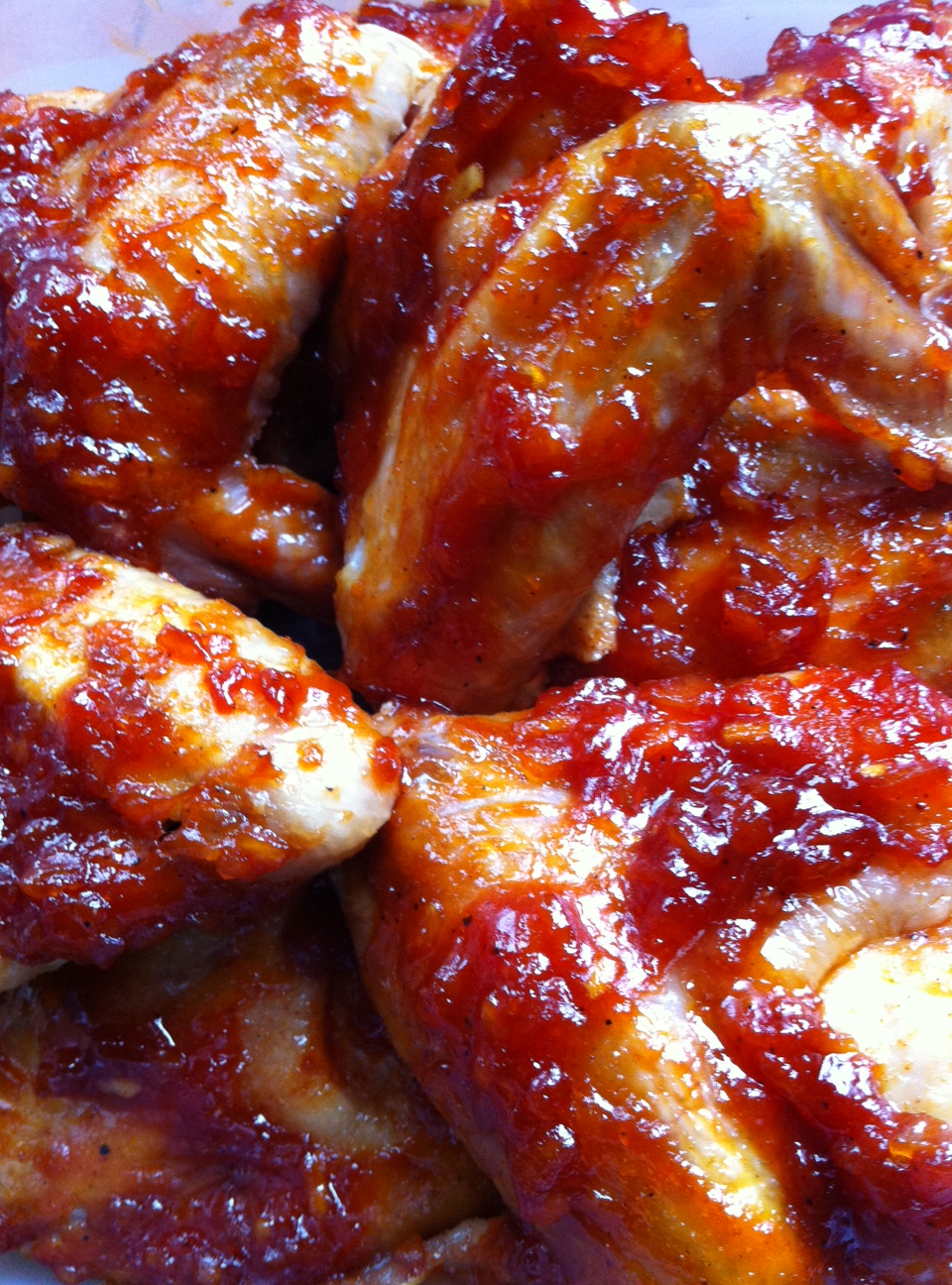
Try this sauce on your next rack of ribs, batch of chicken wings, or even a whole bird. Cook the meat almost all the way through, brushing the sauce on for the last 20 minutes so that the sugars don’t burn. Then just try to stop eating it!


Chix BBQ


GRAPEFRUIT BARBECUE SAUCE
1 cup ketchup
1/2 cup firmly packed brown sugar
Juice and zest of 1 grapefruit
3 tablespoons unsalted butter
1 teaspoon granulated onion
1 teaspoon cayenne pepper sauce, like Frank’s Red Hot
1 teaspoon Worcestershire sauce
1 teaspoon granulated garlic
1/4 teaspoon black pepper
(no salt)

Combine all the ingredients in a sauce pan. Bring it to a boil and then simmer for about 20 minutes on low, until it’s slightly thickened.


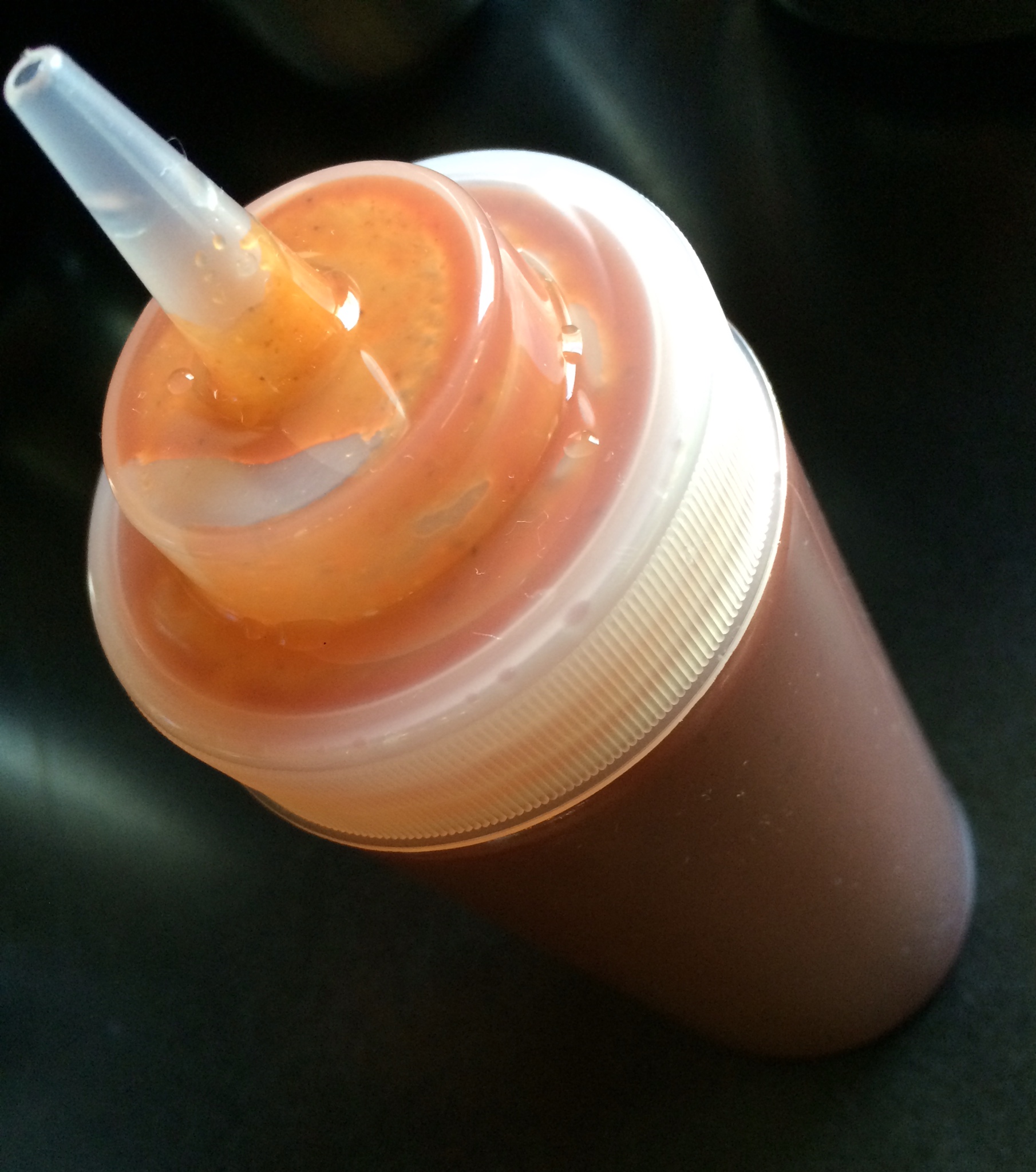
saucey


It’s almost impossible to imagine that there would be any leftovers, but the last time I made a batch of boneless skinless barbecued chicken thighs with the sauce, we had a little bit left over. So we decided to make a barbecued chicken pizza with it the next day.

Fresh pizza dough, some of the barbecue sauce, a combination of sharp cheddar and mozzarella cheeses, and of course, the barbecued chicken thighs.


A great way to use up leftovers!

I grill year-round. I’ll stand in 3 feet of snow to get smoked ribs just right, if I have to. Through years of tireless experimentation, I’ve come up with a barbecue sauce that I can be proud of. I prefer a slightly sweet and tangy barbecue sauce,  and it works really well with pork or chicken.

What makes this sauce special is the citrus. I originally used lemon juice for this recipe and it was good. Lime juice was better. Adding lime zest: even better than that. I tried orange juice and zest, even Meyer lemon. But the Big Daddy of ’em all was grapefruit. I was craving my barbecue sauce one day and only had a grapefruit in the fridge. I thought: how bad could this be? Turned out to be the perfect foil to the sweetness of the brown sugar and ketchup.

Try this sauce on your next rack of ribs, batch of chicken wings, or even a whole bird. Cook the bird almost all the way through, brushing the sauce on for the last 20 minutes so that the sugars don’t burn. Then just try to stop eating it!

Chix BBQ


GRAPEFRUIT BARBECUE SAUCE
1 cup ketchup
1/2 cup firmly packed brown sugar
Juice and zest of 1 grapefruit
3 tablespoons unsalted butter
1 teaspoon granulated onion
1 teaspoon cayenne pepper sauce, like Frank’s Red Hot
1 teaspoon Worcestershire sauce
1 teaspoon granulated garlic
1/4 teaspoon black pepper
(no salt)

Combine all the ingredients in a sauce pan. Bring it to a boil and then simmer for about 20 minutes on low, until it’s slightly thickened.


saucey

If you like a less sweet, more vinegary style to your barbecue sauce, this is the one. How could a sauce that’s inspired by what most people claim to be the best barbecue joint in the USA, Franklin’s Barbecue in Austin, Texas, be bad? People line up early in the morning and wait as much as four hours for a slab of brisket from this place. I’ll get there one day. In the meantime, I have the sauce.

use this sauce on chicken, pork, or beef. The vinegar really cuts through the fat.


2 cups ketchup
3/4 cup water
6 tablespoons cider vinegar
6 tablespoons white vinegar
6 tablespoons brown sugar
3 tablespoons Worcestershire sauce
1 tablespoon chili powder
2 teaspoons salt
2 teaspoons black pepper
1 1/2 teaspoons cumin


Mix all the ingredients in a saucepan and simmer until the flavors have blended, about 20 minutes. Remove it from heat and cool to room temp. If you store it in an airtight container in the fridge, it’ll stay good for a couple of months.


A COUPLE-A CHUCK ROASTS

Posted: April 27, 2025 in Uncategorized
Tags: , , , ,

Chuck roast is an inexpensive cut of beef, but it requires a little TLC to make it tender and tasty. I had a couple of grass-fed chuck roasts in the freezer, and decided to try two different ways of seasoning them before cooking them low and slow.

With the first, I used Asian spices…

2 lb. chuck roast, preferably grass-fed
1 tablespoon Chinese five spice
1 tablespoon Kosher salt
1 tablespoon granulated onion
1 tablespoon granulated garlic
1 teaspoon black pepper
2 tablespoons hoisin sauce
1 teaspoon sesame oil

Pre-heat the oven to 250°.

Let the chuck roast come to room temperature before cooking.

Combine the Chinese five spice, salt, onion, garlic and pepper in a bowl.

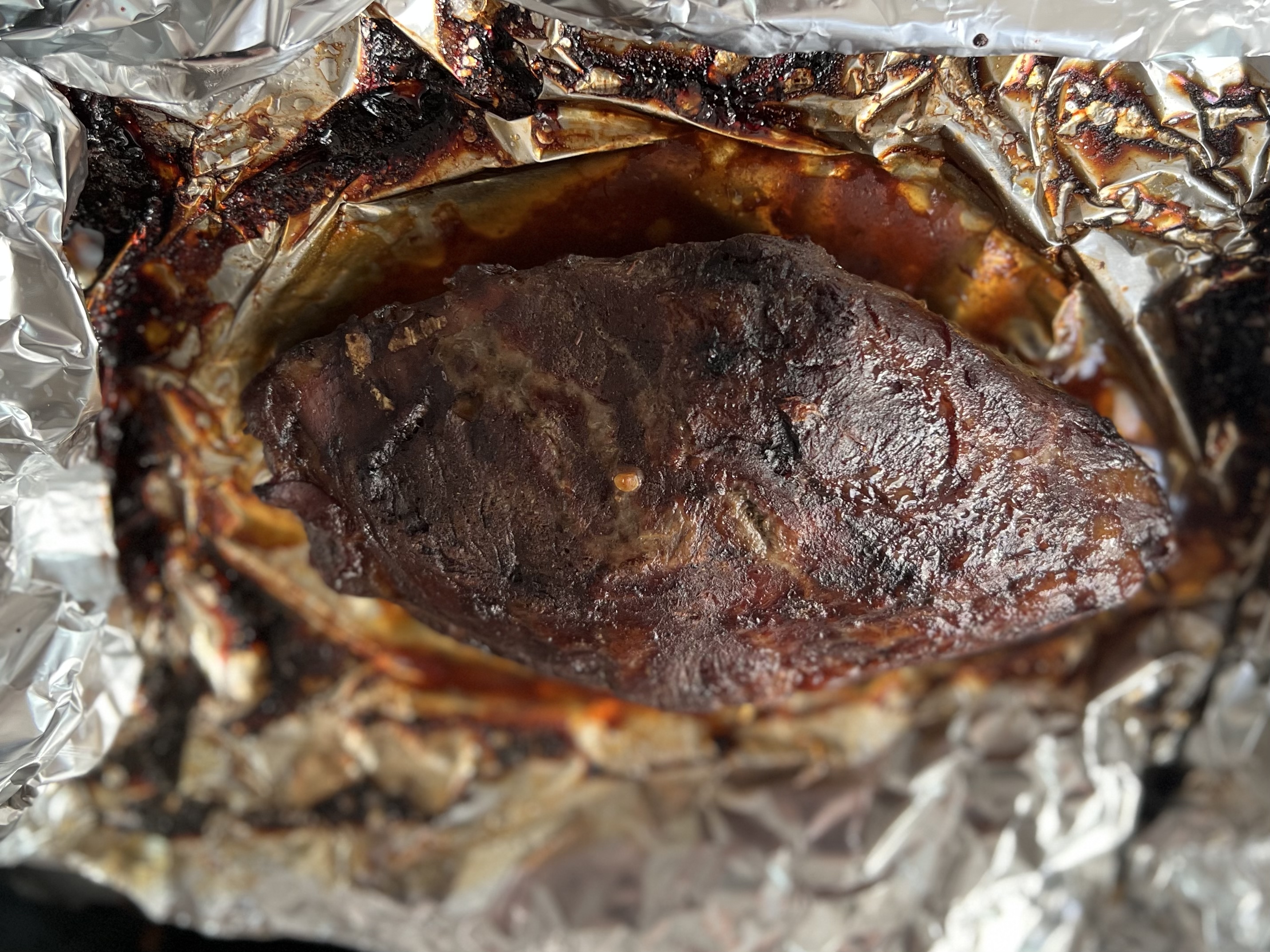
Rub the spice mixture all over the chuck roast, and then wrap the roast in aluminum foil. Place the foil in an oven-proof pan and bake the chuck roast for about 2 hours, until it’s tender. Carefully pour of the fat before the next step.

In a separate bowl, mix the hoisin sauce and sesame oil, and brush it all over the chuck roast. Put the roast back in the oven, uncovered, for about 15 minutes, until a nice glaze forms on the meat.

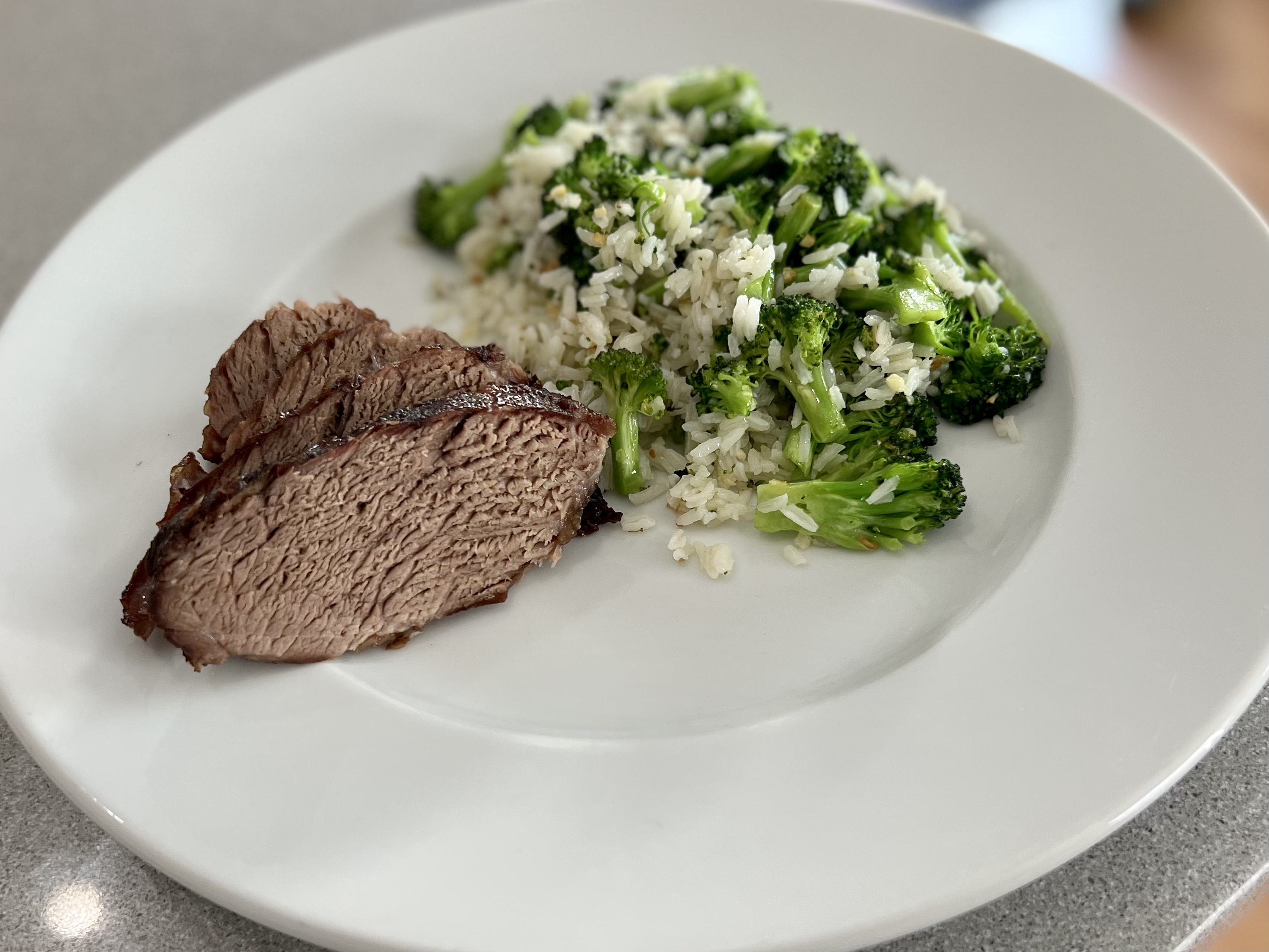
Let it rest for 15 minutes. Slice the chuck roast on the diagonal for maximum tenderness.

With the second chuck roast, I went with Italian style seasonings, also with tasty results.

2 lb. chuck roast, preferably grass-fed
olive oil
1 tablespoon Kosher salt
1 tablespoon granulated garlic
1 tablespoon granulated onion
1 tablespoon oregano
1 teaspoon black pepper

Pre-heat the oven to 250°.

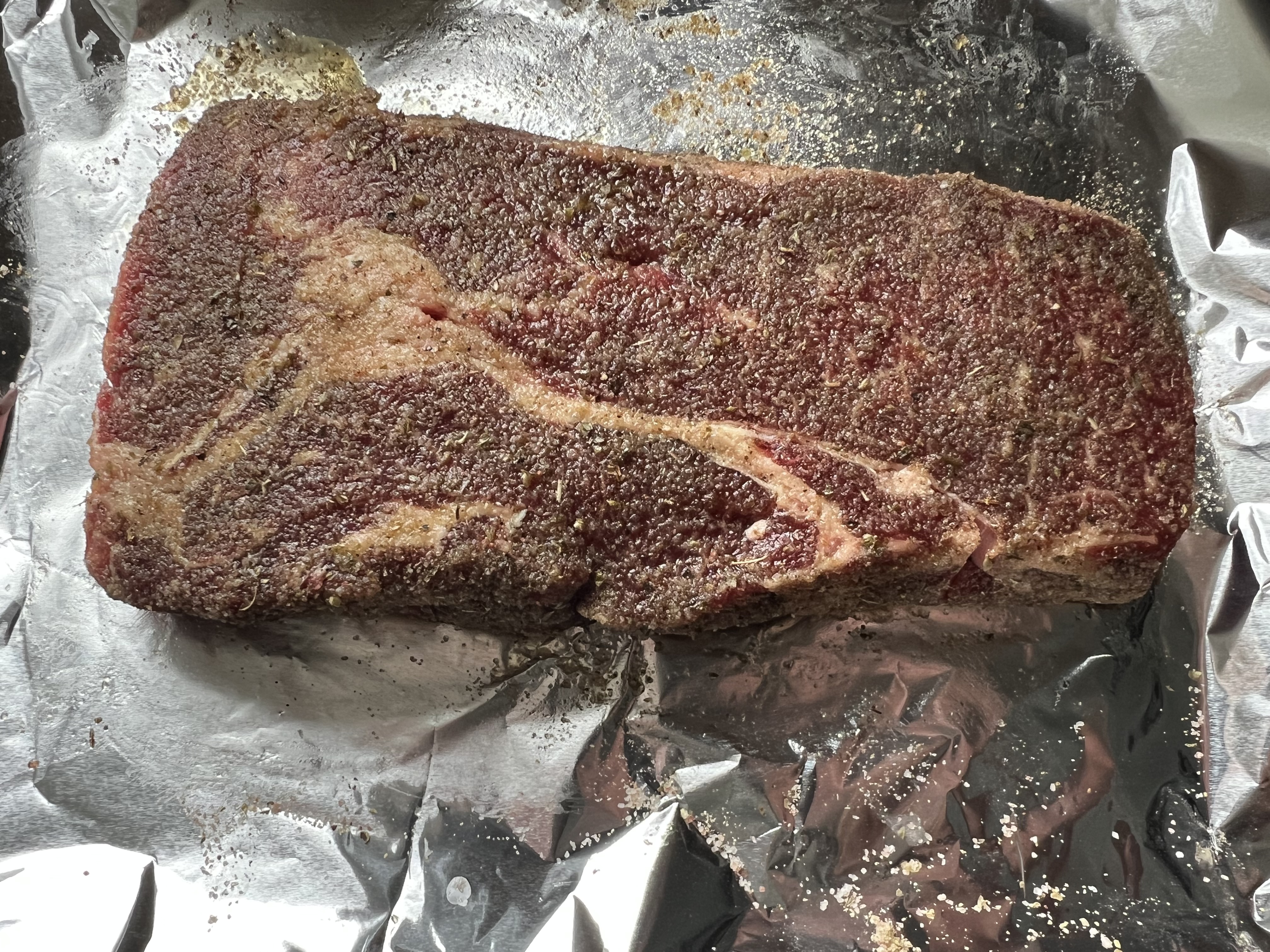
Rub the chuck roast with olive oil, and then rub the spices all over it, placing it in the foil and wrapping it. Place the foil in an oven-proof pan and bake it for about 2 hours, until tender.

Carefully pour off the fat, and let the meat rest for 15 minutes before slicing on the diagonal.

ASIAN-STYLE PORK CHUNX

Posted: April 12, 2025 in Uncategorized
Tags: , , , ,

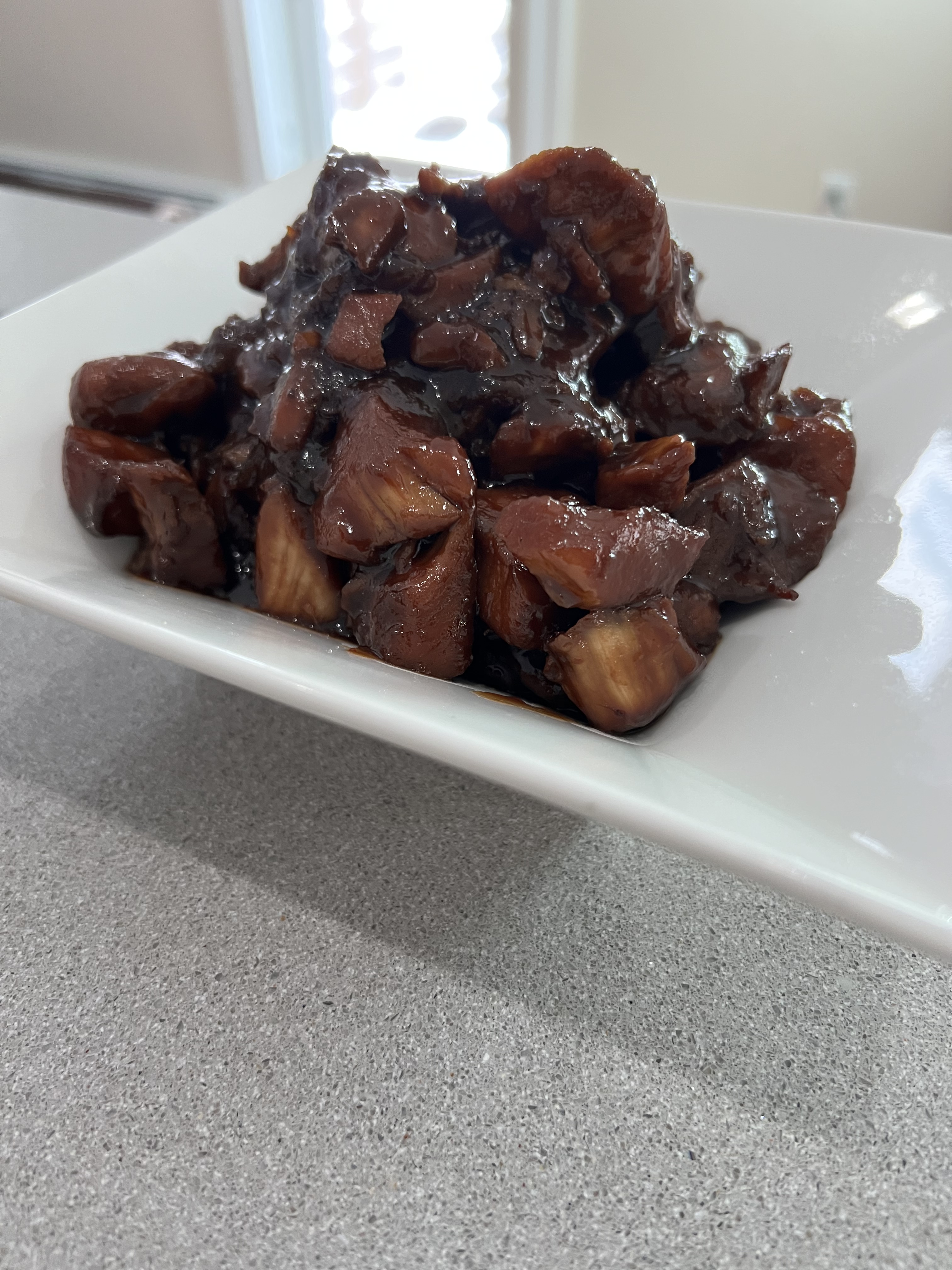
These delicious “chunx” of pork are full of fantastic Asian flavors and go great with broccoli and rice…or just by themselves. Plus, I used inexpensive boneless pork sparerib meat, which saves a few bucks.

3 pounds boneless pork ribs
1/2 a large onion, diced
1/2 cup soy sauce
4 tablespoons hoisin sauce
1 teaspoon Chinese chili garlic sauce
Zest and juice of 1 lemon
2 star anise
2 cinnamon sticks
1/2 cup maple syrup
4 cups chicken broth, preferably homemade

This recipe is similar to my Asian bacon recipe, only it uses a cheaper, easier to find, cut of pork: boneless sparerib meat. You can usually find packages of this meat in a 3-pound size at most supermarkets.

The rib meat is fatty, however, and often has some gristle. So I trim as much of that away as I can to keep the tasty bites tender. 

I cut the pork into 1-inch cubes, and toss them in a bowl with the diced onion. I add the soy sauce, hoisin sauce, and Chinese chili garlic sauce to the bowl and mix everything really well.

I will let the pork marinate for 2 hours at room temperature, remixing every half-hour or so. (If the pork needs to stay out longer, I put it in the refrigerator, bringing it back to room temperature when I’m ready to cook.)

I preheat the oven to 350°.

I line a baking pan with nonstick aluminum foil and place the pork and onion pieces on it in a single layer, reserving any leftover marinade for later.

I bake the pork and onions for 30 minutes.

While the pork is in the oven, I get a large pot and place the lemon zest, lemon juice, star anise, cinnamon sticks, maple syrup, and chicken broth in the pot. I bring it to a boil, then reduce it to a simmer.

After the pork and onions have cooked for 30 minutes, I remove them from the baking pan and place them in the pot, pouring in all the juices that might be in the baking pan. At this point, I can add any leftover marinade into the pot as well.

Bringing the heat under the pot back on high, I continue cooking until the liquid in the pot starts reducing. As it reduces, I turn the heat down as well, so I don’t burn any sugars in the pot. I stir the pork pieces once in a while.

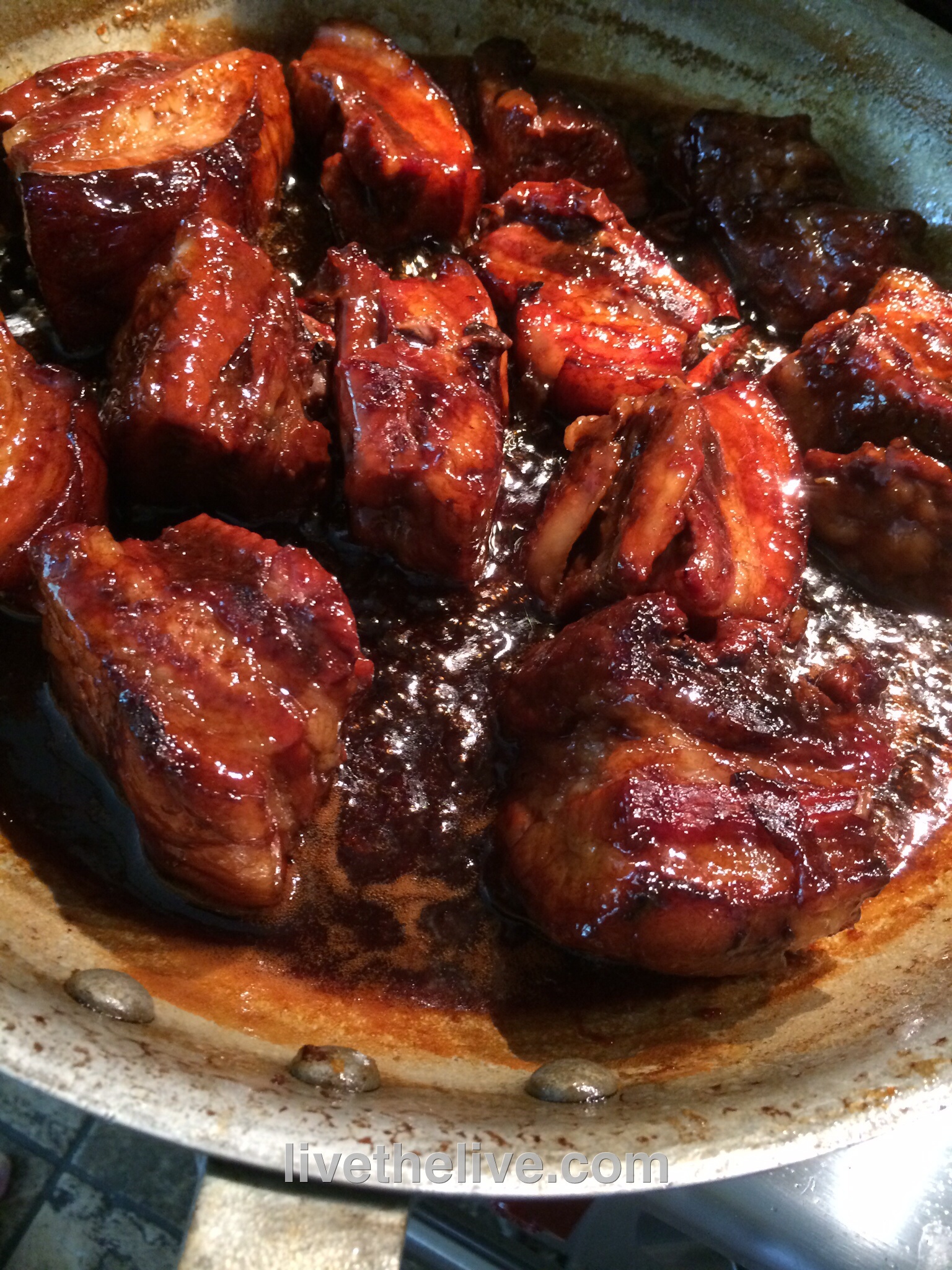
Soon, the liquid will be reduced to a glaze. I keep tossing the pork in that glaze until it looks nice and shiny and gooey and sticky. And that’s when they’re ready!

Serve the pork chunks immediately!

I just came back from a trip to my hometown of New York City, where I saw some old radio friends. It reminded me of this awesomely simple grilled pork chop that dates back to my early years in radio on Long Island.

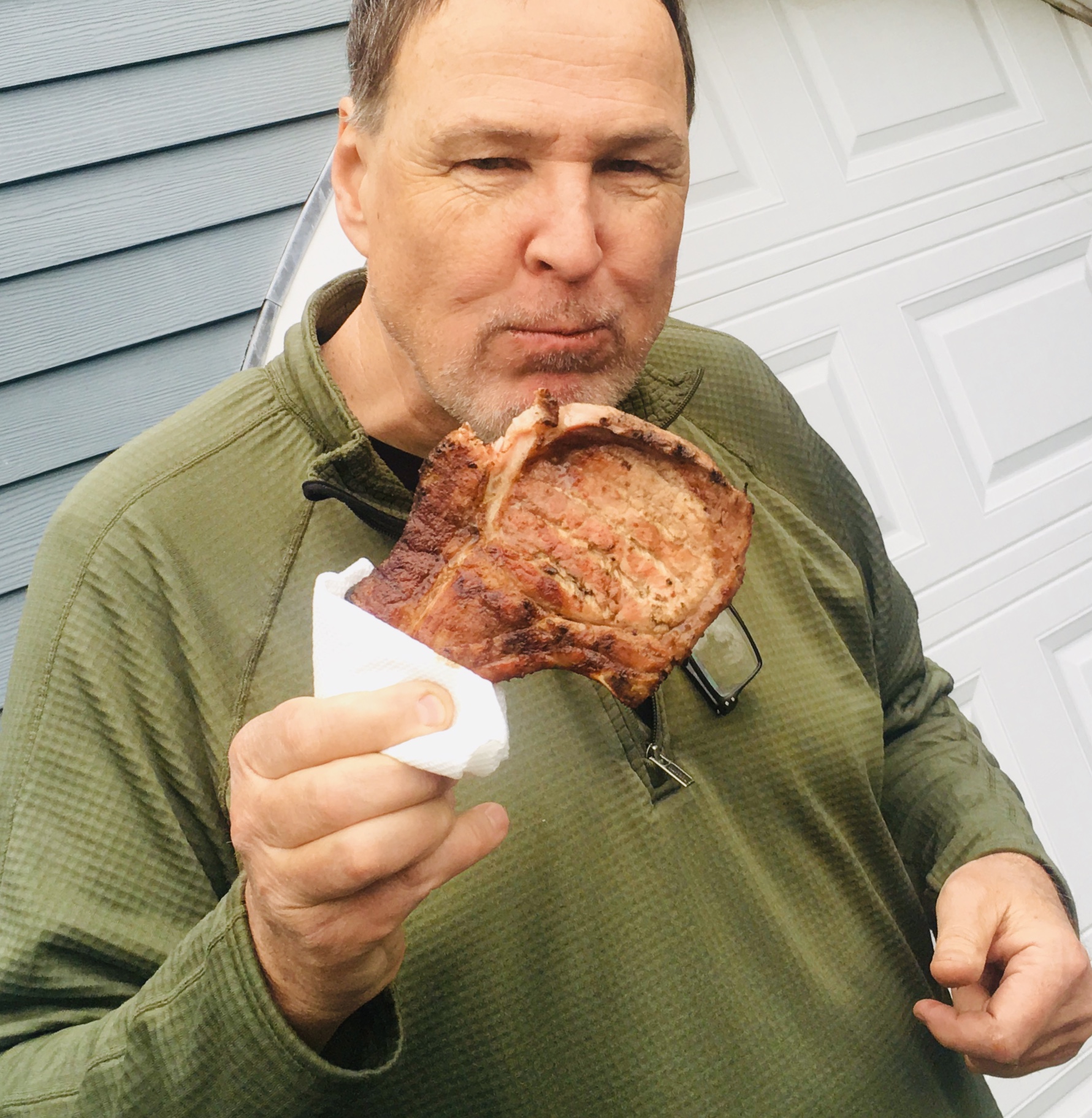
“Cope” chops are the creation of my radio buddy, Marc Coppola, who can be heard from Cape Cod to California. Cope and I met at WBAB on Long Island back in the early 80’s. He had the afternoon drive shift, and I was on after him from 7 to midnight. After his show, Cope would remove a hibachi grill out of the trunk of his car, light some charcoal in the radio station parking lot, and he’d grill up the most amazing pork chops I’ve ever had. They were thin, but juicy and beautifully charred. He called ’em “Cope chops,” and we’d eat them by the stack, wrapping the hot bone of the chop with a paper towel, and then just chowing down. It’s a great memory, and one that I like to re-live by grilling Cope chops at home even today.

After four decades, I’m not sure if my Cope chop recipe is the same as the original, but they are damn good and incredibly easy to make.

Ironically, for this recipe, I don’t go all out and spend big money on thick, expensive pork chops. I want them thin, fatty and with the bone in. This is not a low-and-slow process: the secret to the success of these chops is to cook them hot and fast on a charcoal grill, sealing in the juices.

Thin-cut pork chops
Dry white wine (I use an unoaked inexpensive French chardonnay)
Lawry’s seasoned salt

Place the pork chops in a casserole dish or other flat dish with sides, and pour the wine over the top, making sure you cover the chops. Let them marinate for at least an hour at room temperature, flipping them over halfway through so that all sides get covered by the wine.

Light a hot hardwood charcoal fire.

Pour off the wine from the chops and discard it. Place the chops on the hot grill and season the top with the Lawry’s seasoned salt. Once they’ve charred nicely, flip the chops over and season the other side. Grill until the chops are cooked all the way through, but not dry. Serve them immediately.

The proper way to eat a Cope chop: wrap the bone in a paper towel and chow down!

Fettucini alla Bolognese has been my daughter’s favorite Italian dish for years. The recipe isn’t difficult, but like many great dishes, it depends on the best quality ingredients you can get your hands on.

I like to use a combination of ground beef, ground veal and ground pork in my Bolognese recipe. But I don’t sweat it too much if I don’t have all three, substituting a little more of one or the other, depending on what’s in my freezer at the time. (2–1, beef to pork, is a good ratio.)

I use humanely raised grass-fed ground veal that I get down the road from a local dairy farm: Sweet & Salty Farm in Little Compton, RI. I use ground Berkshire pork, full of “good fat.” And I use grass-fed beef from local farms. Guanciale, a cured pork product that comes from the cheek (jowl) of the pig, is something that I prepare myself. I buy the Berkshire pork jowls raw and cure them at home. (That’s another blog!) If you can’t get your hands on guanciale, a nice slab of bacon or pancetta will do the trick.

The rest of the ingredients are organic, when available.

This recipe probably feeds a dozen people. I make a lot at once because it takes time to put it together and let it cook on the stove, and it freezes really well. I place leftovers in tightly sealed single-portion containers in the freezer and then re-heat them when my daughter gets the craving, adding it to freshly cooked pasta.

How much pasta you make with this dish depends on how many people you’re going to serve.


5 tablespoons extra virgin olive oil
3 tablespoons butter
1/2 cup finely chopped guanciale or bacon or pancetta
1 lb. ground veal, 1 lb. ground pork, 1 lb. beef (or any combination to make 3 lbs.)
1 large onion, finely chopped
2 carrots, finely chopped
3 stalks celery, finely chopped
2 cloves of garlic, squeezed through a garlic press or thinly sliced
1 small can (6 oz.) tomato paste
6 cups ground tomatoes
2 cups whole milk
2 cups white wine (I use an un-oaked French chardonnay)
salt and pepper
pasta, cooked (regular or gluten-free )
Freshly grated Parmigiano Reggiano


Place the olive oil and butter in a large sauce pan with a heavy bottom over high heat. Once the butter has melted, add the guanciale, letting the fat render out. When it’s almost brown, add the veal, pork, and beef, stirring constantly. Make sure the meat is broken down into small pieces and completely browned.

Add the finely chopped onion, carrots, celery and garlic, stirring well. Sweat the veggies for a few minutes, letting them get nice and soft. (Here’s a tip: rather than wasting time chopping all the veggies finely by hand, toss large pieces into a food processor–the onion, carrot, celery and garlic cloves all at the same time–and pulse until they’re finely chopped.)

Add the tomato paste, the ground tomatoes, milk and wine, stirring well. Allowing the sauce ito come to a boil will activate the tomato paste’s thickening power. Let it boil for a minute, then reduce the heat to medium-low, and let it simmer for at least a couple of hours, stirring occasionally.


Add the ingredients one step at a time until the sauce comes together: 1) guanciale, 2) meat, 3) veggies), 4) tomatoes.


You don’t want the sauce to be runny, and you definitely want to give it enough time on the stove top for the flavors to blend and for the alcohol in the wine to evaporate.

Carefully give the sauce a taste, and season it with salt and pepper.

Traditionally, ragu Bolognese is served by placing a part of the cooked pasta in a pan, and adding just enough sauce to have it cling to, not drip from, the pasta. It’s not soup!

Top it with freshly grated Parmigiano Reggiano cheese.


A snowy day in New England today. It’s time to make some meatloaf!

Few dishes scream out “comfort food” like meatloaf. My Mom’s meatloaf was awesome, and she’d cut a huge slab of it onto my plate, with fantastic butter-loaded Pennsylvania Dutch egg noodles on the side. I couldn’t stop eating it.

I never thought of making meatloaf when I moved away, because it gave my Mom something special to make for me when I came home to visit. She was thrilled that there was a dish she could make that I would devour every time, without hesitation. (The others were her roasted lamb and Lithuanian pierogis called koldūnai (kol-doon-ay).

But Mom passed away years ago, so I’ve taken meatloaf matters into my own hands. I never got my Mom’s exact recipe. But I had an idea of what went into it, so I gave it a shot.
The standard mix for my Mom’s meatloaf was one-third each ground beef, pork and veal. I go 2/3’s beef and 1/3 pork instead, unless I can get my hands on humanely-raised veal from a farm down the road. My Mom used Lipton onion soup mix in her meatloaf. I chose to stay away from packaged ingredients which have chemicals and preservatives. And instead of layering slices of bacon on top as many people do, I fry and chop the bacon and mix it into the meat, giving my meatloaf delicious smokey bacon goodness in every bite!

To keep this dish gluten-free, just use GF breadcrumbs. I buy loaves of Udi’s frozen gluten-free bread, toast the bread slices, then put them in a food processor to make great-tasting bread crumbs that have all the flavor of regular bread crumbs, without the gluten. You’d never know the difference.


image

4 strips bacon, fried and chopped
1 yellow onion, minced
1 teaspoon salt
1/2 teaspoon pepper
1/2 teaspoon granulated garlic
pork fat or olive oil
2 lbs. ground beef
1 lb. ground pork
1 cup breadcrumbs
1/2 cup ketchup
2 eggs

Fry the strips of bacon until crisp. Remove the bacon from the pan and chop it fine. Set it aside.

Keeping the rendered bacon fat in the pan, sauté the onion with it until translucent. Add the salt, pepper and garlic. Set the pan aside, letting it cool to room temperature.


In a bowl, combine the meat, bread crumbs, ketchup, bacon, eggs, and the sautéed onion mixture. Form it into a loaf and place it in a loaf pan. Bake at 350° for about an hour.


Delicious, caramelized meatloaf. Leftovers are always welcome!


Despite gardening for almost 50 years, I sowed and harvested my first batch of fennel last season. Having received a recent shipment of heritage Berkshire pork chops, I thought it was time to get creative. This is a rustic Italian-style recipe that works great for pork and fennel…

fennelfrond


4 good quality pork chops, medium thickness
2 fennel bulbs with stems and fronds, finely chopped
2 shallots, finely chopped
1/2 cup fresh parsley, chopped
olive oil
salt and pepper
1 28 oz. can tomatoes
1 tablespoon capers
Zest of 1 lemon
1/2 cup dry white wine


pork and fennel


In a large pan, heat some olive oil. Season the pork chops on both sides with salt and pepper, then brown them on both sides in the pan with the olive oil. Remove the chops from the pan and set them aside.

Add a little more olive oil to the pan and add the chopped fennel and shallots, stirring for a few minutes. Add the white wine, and stir well to get the tasty bits of pork from the bottom of the pan. Add half of the parsley. Add the can of tomatoes, squishing the tomatoes between your fingers so that they are broken up when they hit the pan. Stir for a few minutes over medium heat.

Return the pork chops to the pan, nestling them in the sauce. Add the capers, lemon zest and remaining parsley. Stir everything together a bit, and then let the chops cook for about 10 to 15 minutes, until their internal temperature reads 145 degrees.


The original recipe for this white bean soup used bits of bacon. But it just so happened that I was planning on slow-cooking a pork shoulder in my smoker today. When the smoked pork met the white bean soup, it was a match made in pig heaven! (Of course, it would work with brisket or chicken as well…)


2 medium onions, finely chopped
1 medium fennel bulb, finely chopped
1 smashed garlic clove
3 cans (15 1/2 oz.) cannellini beans, drained and rinsed, 1 1/2 cups reserved
40 oz. veal bone broth (or chicken broth, if you prefer)
1/4 teaspoon bouquet garni
1 teaspoon salt
1/4 teaspoon black pepper
Bacon fat and/or olive oil
A slab of slow-cooked smoked pork shoulder, pulled and shredded


In a large heavy saucepan, sauté the onion, fennel, and garlic in bacon fat or olive oil until they are tender, about 8 minutes.

Drain and rinse the cannellini beans, reserving 1 1/2 cups for later. Pour the beans in the saucepan.

Add the veal (or chicken) broth, the bouquet garni, and the salt and pepper.

Simmer for 15 minutes, then turn the heat off and let it cool for 15 minutes.

Puree the soup in batches in a blender, until smooth.

Return the soup to the pot and add the reserved beans. Heat for 10 minutes, and then taste it, adding more salt and pepper, if needed.


To serve, place a mound of the pork, cubed or pulled, in the center of a bowl. Pour the soup on top, and drizzle with a touch of extra virgin olive oil. Chopped scallions, or fresh chives, or parsley on top never hurt!