Posts Tagged ‘recipes’

I love the flavors in Thai food…but I don’t enjoy extreme heat and my wife can’t deal with extreme garlic. So this is my more balanced version of a Thai grilled chicken dish…

thai chicken LTL


Ingredients:


3 lbs chicken pieces (I used drumsticks for this recipe)

2/3 cup soy sauce
1/2 cup fresh cilantro
2 tablespoons canola or peanut oil
2 garlic cloves, roughly chopped
1/2 teaspoon white pepper

1/2 cup sugar
1/4 cup white vinegar
1 teaspoon red pepper flakes or crushed dried chiles
1 teaspoon salt

Marinade: Combine soy sauce, cilantro, canola oil, granulated garlic and white pepper in a food processor and let it run. Place chicken pieces in a Ziploc bag and pour half of the marinade in. Save the other half for basting later. Seal the bag and let the chicken marinate overnight, or at least a few hours, squishing the bag around so that all the chicken gets marinated.

Sauce: In a saucepan, combine sugar, white vinegar, pepper flakes and salt. Bring to a boil and make sure the sugar dissolves. Remove from heat and let it cool to room temperature.

After marinating overnight, discard the used marinade in the Ziploc bag. Place chicken pieces over a hot hardwood fire or bake in an oven at 350, basting them with the leftover marinade until fully cooked. If the coal fire gets too hot, move the chicken to a cooler part of the grill to prevent burning. If using the oven, switch to the broiler at the end to give the chicken a nice char.

Serve with sweet pepper sauce drizzled on top.

Bitters have been around forever, but the recent resurgence in the art of mixology has made bitters a real buzzword among bartenders and cocktail enthusiasts alike. Ten years ago, I almost never would have asked for a cocktail that included bitters. Now, I almost always do.

But bitters aren’t the only way to spice up your libations. Other tinctures have been around for centuries as well, many of which are finding their way to the forefront of mixology. Two of those are falernum and shrub.

Despite that falernum and shrub sound like the name of a bad law firm, they are welcome additions to many simple spirits we enjoy.

Falernum is a sweet syrup used in Caribbean and tropical drinks. It often has flavors of almond, ginger, cloves, lime and sometimes vanilla or allspice. Some people drink falernum by itself on the rocks, but most often it is mixed in a cocktail. The bottle below is falernum made by my friend Roy, who used ginger, cloves and lime juice in an alcohol base.

image


Shrub, meanwhile, can be several different kinds of drinks. It was a fruit liqueur popular in 17th and 18th England, made with rum or brandy mixed with sugar or the juice or rinds of citrus fruit. A shrub was also a drink popular in American colonial times, featuring a mix of vinegared syrup mixed with spirits or water. But most times, today’s version of shrub is the sweetened vinegar-based syrup itself. If you’re curious about shrub, there’s a great source for a variety of shrub flavors: http://www.shrubandco.com.

I had a pound of leftover lobster meat (I know, I know…how could you ever have leftover lobster?!) So I wrapped it tightly and kept it frozen. When I had a craving for crab cakes, I figured I’d try my recipe out with lobster instead. So good, I sprained my arm patting myself on the back!

lobstercake2


Ingredients:

1 lb cooked lobster meat (thawed, if frozen)

1 cup mayo (I like Hellman’s)

1/4 cup Dijon mustard (I like Maille)
3/4 cup saltine crackers or oyster crackers
1 teaspoon old Bay seasoning
Olive oil

In a bowl, combine mayo, mustard and Old Bay Seasoning.

Chop the lobster into small pieces and add it to the mayo/mustard mix.

Pulse the crackers in a food processor until it resembles oatmeal. Add it to the bowl and gently combine the ingredients.

Form small patties. I use either a small beef slider mold or the lid from a small mouth Mason jar. I won’t kid you: it gets messy, but it’s worth it! Place the patties on a sheet pan lined with Reynold’s non-stick aluminum foil.

Place the sheet pan in the freezer for about 15 minutes to stiffen up the patties.

Heat some olive oil in a pan. Cook the patties on both sides until golden brown.

lobstercake1

Many people are turned off by lamb because somewhere in their past, they had a horribly cooked piece of meat that ruined it for the rest of their lives. I’m here to tell you: don’t be sheepish! “Man up” and try lamb again!

If you think lamb is too “gamey,” buy American lamb over New Zealand or Australian lamb. Although the animals are mostly pasture-raised, most American lamb is larger and grain finished, which results in a milder flavor. Unfortunately, like with non grass-fed American beef, this also results in a larger, fattier animal, and a less healthy cut of meat.

I prefer 100% grass-fed lamb. You can find it from the US, but most often it comes from New Zealand. Having been to the country, I can tell you that the quality is unmatched and the grasslands in New Zealand are the most beautiful I’ve ever seen. New Zealand lamb is smaller and is slaughtered at a younger age than American lamb, making it very tender. In New Zealand, as well as many other countries, only an animal under 12 months of age and without incisors can be called “lamb.” No such labeling is required in the United States.

I love the baby lamb chops that look like miniature porterhouse steaks. You can find them in any supermarket. a good marinade will get rid of any of those flavors you don’t want. Here’s an easy recipe that I served at a party in my home for 40 people, many of whom claimed they didn’t like lamb or never had it before. By the end of dinner, the chops were gone!

lamb LTL


Ingredients:


½ cup olive oil

¼ cup balsamic vinegar

2 cloves garlic, through a garlic press

1 tablespoon fresh rosemary, chopped

1 tablespoon honey

2 teaspoons Dijon mustard

1 teaspoon dried oregano

Salt and pepper


Place lamb meat in a plastic bag. Combine all ingredients for marinade and pour over lamb. Seal the bag and squish it around so that the marinade reaches every part of the chops. Place in refrigerator for a few hours…overnight is better. Pre-heat your barbecue grill. Grill lamb until done. That means cooked no more than medium. Don’t cook it to death! If you can’t get to a grill, place the lamb in an oven-proof pan and sear on all sides. Then place in a 350-degree oven to cook all the way through.


Inspired by the classic “Pork Chops and Applesauce” Brady Bunch episode, I came up with a recipe for pork chops that uses applesauce in an herb-infused applesauce marinade that later cooks into the meat. I took it one step further this time, using a pork loin, and adding bread crumbs to the applesauce mix to add a crunchy crust to the pork.

Pork loin applesauce


Ingredients:

1 pastured pork loin, about 5 lbs.

1 tablespoon extra virgin olive oil

about 1/2 cup fresh breadcrumbs

2 small tubs (8 oz) organic unsweetened applesauce

2 teaspoons honey

1 tablespoons fresh sage, finely chopped

6 sprigs fresh thyme–leaves only–finely chopped

2 teaspoons salt

1 teaspoon granulated garlic

1/2 fresh cracked black pepper


In a bowl, combine all the ingredients except the pork chops, olive oil, and breadcrumbs.

Place pork loin on cutting board fat-side up, and make diamond-like slices into the fat. Place the pork loin in a non-reactive container and smear about a quarter of the applesauce and herb mixture all over the loin. Place the container in the fridge overnight. Cover the applesauce and herb mixture and place in fridge as well.

The next day, pre-heat the oven to 350.

Remove the applesauce and herb mixture from the fridge, and slowly add breadcrumbs to it until it reaches the consistency of wet sand.

Heat an oven-proof pan. Using a little olive oil, sear the pork loin on all sides until brown. The  turn loin with fat side up and smear the applesauce/breadcrumb mixture over the top to form a crust.

Cook until meat temperature reaches 160 and crust is crunchy and brown on top. Let the pork loin rest before slicing.


Nothing says summer here in New England like a lobster roll. But I never go to a clam shack to get one. Their prices are ridiculous, the meat can be overcooked, and they often add ingredients I don’t want.

Lobster boat LTL

You have to start with fresh lobster. I get mine from my lobsterman buddy, Gary, just down the street at his dock in Tiverton, RI.

A view of the Sakonnet River from the back of Gary's lobster boat, the Edna Mae

A view of the Sakonnet River from the back of Gary’s lobster boat, the Edna Mae


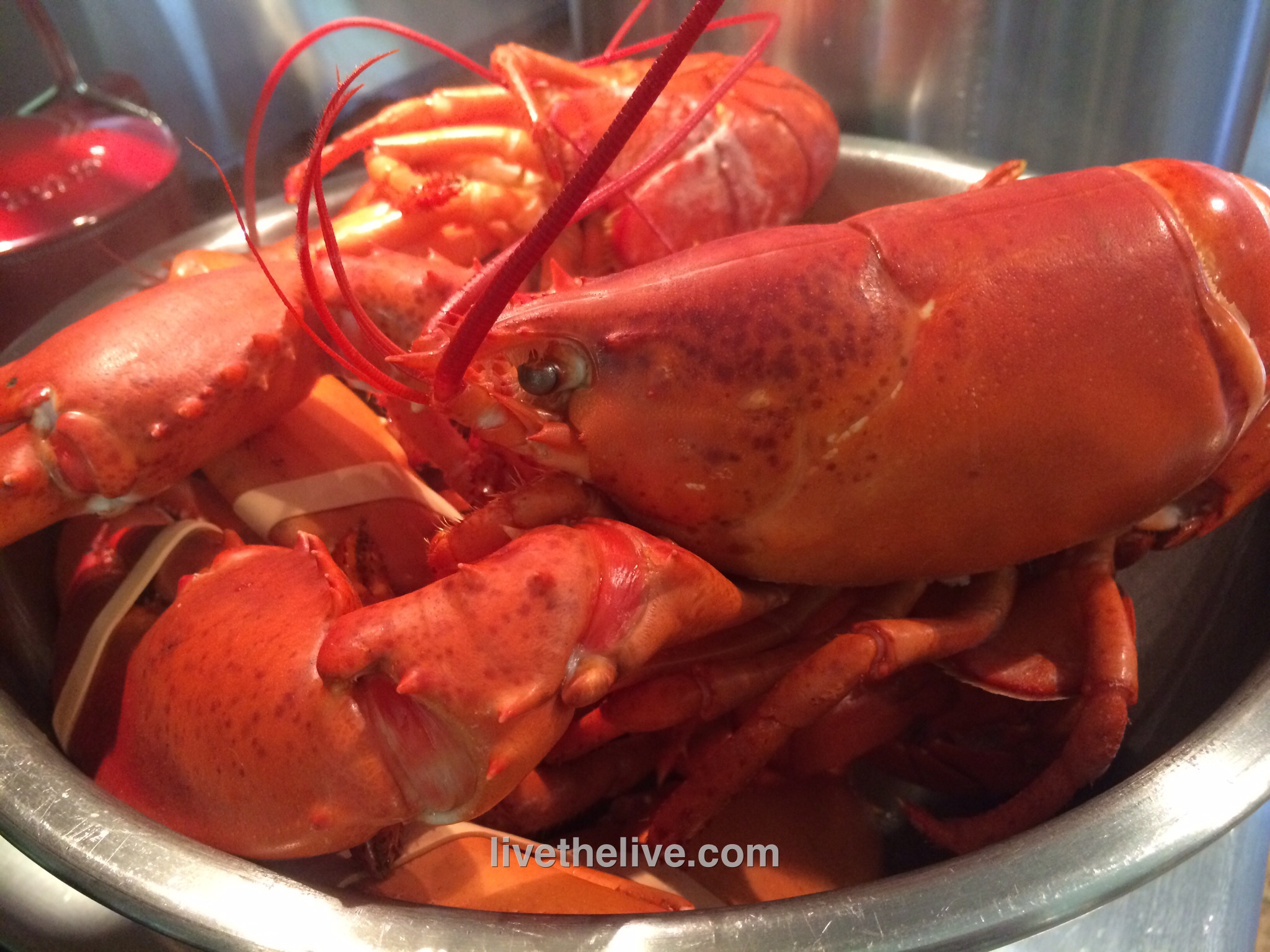
The next step is to cook it right. I always use sea salt to salt a large pot of boiling water. I make sure the water is at a rolling boil before the lobsters go in. And I cook them for no more than about 8 minutes.

Lobster catch LTL

After the lobsters have been removed from the pot and have cooled for a few minutes, I get to work: cracking the claws and tail and removing every bit of beautiful meat I can find. Lobster lovers will tell you that the legs have some meat in them and that the tomalley (the green liver and pancreas) and roe (eggs) are delicacies not to be missed. For the purpose of making lobster salad, I don’t use these parts. But I do save the tomalley and roe for a separate treat…and I save all the legs and cleaned empty shells for lobster stock.

Lobster roll LTL


Everyone has their own opinion about lobster rolls: what goes in ‘em…and perhaps more importantly, what doesn’t. I am no exception. For me, no veggies whatsoever: no chopped celery, no lettuce, no pickle. No paprika or Old Bay seasoning. A pinch of celery salt? Sure. Mayonnaise? Only Hellman’s. White pepper, not black, and just a touch. Salt? A pinch of Fleur de sel. And my secret weapon to bring out all the flavors: the tiniest squeeze of fresh lemon juice…not enough to give it a lemon flavor…just to brighten the taste.

Measurements are really up to each person’s personal taste.

I prefer those long rolls from Martin’s potato rolls: straight out of the bag or lightly grilled with a little melted butter brushed on.


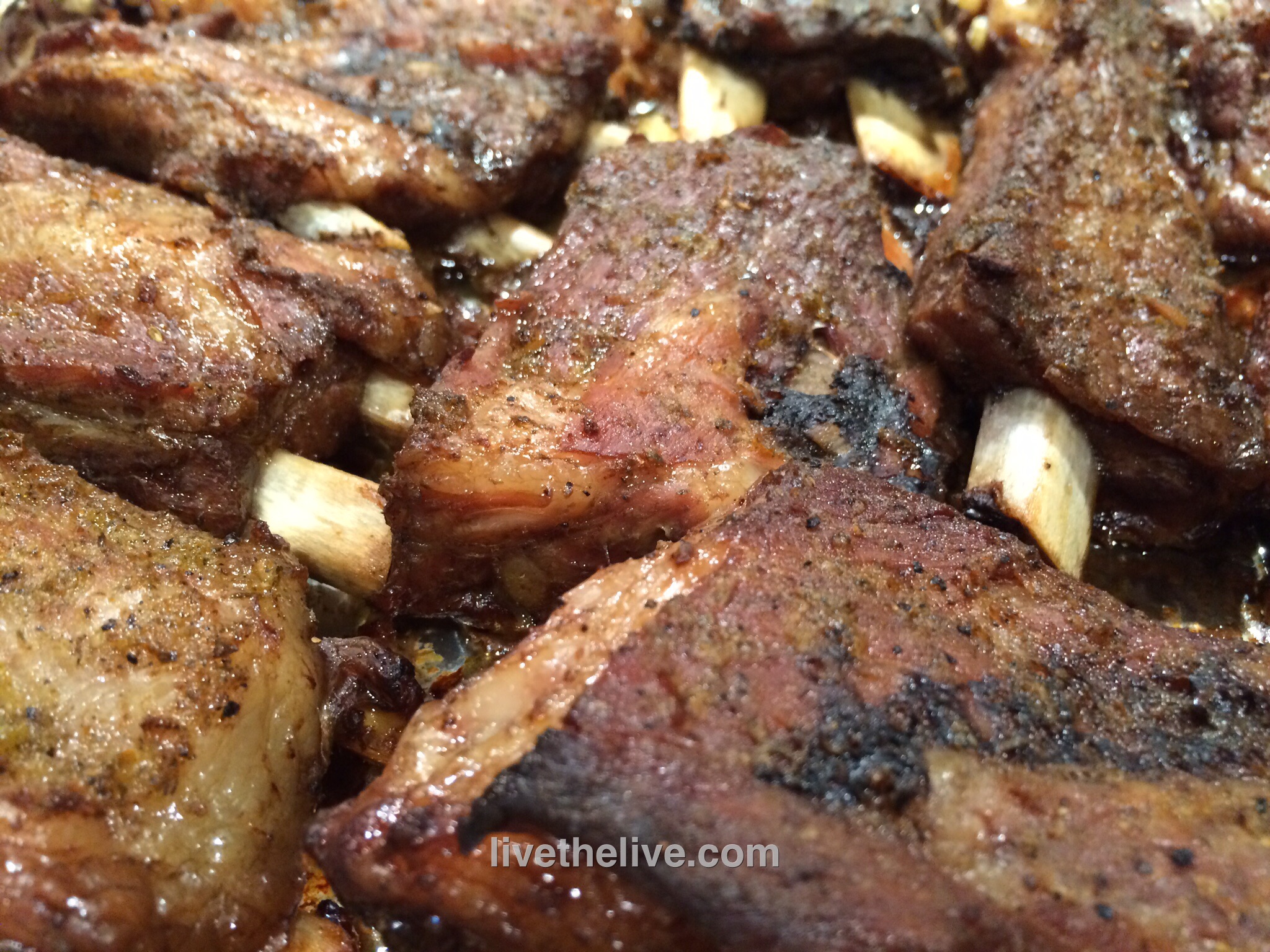
Sometimes you take a couple of recipes you have in your file and you combine them to get delicious results. That’s what happened when I took my basic pork dry rub and then added my version of the Franklin barbecue sauce, as featured in a previous blog.

The ribs were intense, delicious, and did not require a smoker to reach fall-off-the-bone amazingness…


Intense ribs LTL


Alz Pork Rub


Ingredients:

2 tablespoons salt

1 tablespoon black pepper

1 tablespoon granulated garlic

1 tablespoon onion powder

1 tablespoon paprika


Combine ingredients and sprinkle liberally onto meat, rubbing it in well.


The Barbecue Sauce


Ingredients:

2 cups ketchup

3/4 cup water

6 tablespoons cider vinegar

6 tablespoons white vinegar

6 tablespoons brown sugar

3 tablespoons Worcestershire sauce

1 tablespoon chili powder

2 teaspoons salt

2 teaspoons black pepper

1 1/2 teaspoons cumin


Mix all the ingredients in a saucepan and simmer until the flavors have blended, about 20 minutes. Remove from heat and cool to room temp. If you store it in an airtight container in the fridge, it’ll stay good for a few months.


To cook the ribs…


Rub the ribs with the dry rub on all sides and wrap in aluminum foil. If you have a lot of ribs, it’s okay to stack them on each other for now. Place the wrapped ribs on a sheet pan and cook in a 250-degree oven for about 4 hours.

After 4 hours, unwrap the ribs and pour off any fat. Lay the ribs flat in one layer, uncovered, on the sheet pan and brush on all sides with the barbecue sauce. Cook for 1 hour more.


Though it may sound Japanese, the word “saganaki” refers to a small frying pan used in Greek cooking. The most famous of these dishes, simply called saganaki, is a fried cheese, often flamed at the end with a little ouzo.

Shrimp saganaki is one of my favorite Greek dishes, and it usually involves cooking shrimp in a tomato-based sauce with plenty of feta cheese sprinkled in. It’s a simple yet fantastic dish if the ingredients are fresh. Doesn’t hurt to be sitting in a taverna on the beautiful island of Santorini while eating it, either!

Graviera cheese

Graviera cheese

I had a slab of Graviera cheese from my most recent trip to Santorini, and decided to recreate shrimp saganaki using that instead of feta. It was pretty damn amazing…

Melty, gooey, delicious!

Melty, gooey, delicious!


Ingredients:


300 g grated Graviera cheese

1 can (28 oz) whole tomatoes

1 lb (about 24) shrimp, peeled and deveined

1 medium onion, chopped

juice of 1/2 lemon

1/4 cup olive oil

2 cloves garlic, through a press

pinch red pepper flakes

1 1/2 tablespoons fresh dill, finely chopped

1 tablespoon fresh oregano, finely chopped

1 1/2 tablespoons Ouzo

salt and pepper


Peel and devein the shrimp. Squeeze the juice of  1/2 of a lemon on to the shrimp and toss. Set aside.

In a large pan, saute the onions in the olive oil until translucent. Add garlic and cook for a few seconds more.

Crush or puree tomatoes and add to the pan. Add red pepper flakes, dill and oregano, and salt and pepper. Add Ouzo.

Let this sauce cook down for a bit until all the flavors have blended together.

Pour a layer of the sauce on the bottom of a metal broiler-proof pan. Lay the shrimp in a single layer into the sauce. Cover the shrimp with the rest of the sauce and sprinkle the grated Graviera on top.

Place the pan in the broiler and cook until the cheese is brown and bubbly.

shrimp saganaki


CHIVE TALKIN’

Posted: May 20, 2014 in Food, garden, pizza, Uncategorized
Tags: , , , , ,

This is the time of year when the chives in my herb garden are busting out with blossoms. Before they pop, I head out every few days and snip the larger blossoms off the chive plants and wrap bunches of them in Ziploc bags and freeze them.

image

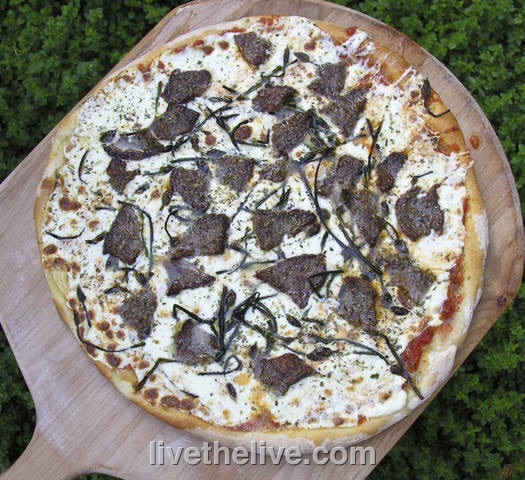
I use those blossoms over the course of the next year on my signature marinated beef and chive blossom pizza. I just take a packet of chive blossoms out of the freezer, and sauté them for just a bit in olive oil and salt and pepper, then place them on the pizza before baking.

image

The chive blossoms not only add great flavor, but they look cool on the plate, too. Great as a side for almost any meat dish.


Soy sauce, citrus and honey is always a winning combination with chicken. The addition of toasted anise seeds adds that touch of licorice without overpowering it. The sugar in the honey can make these thighs burn, so keep an eye on them. But I do like a touch of char on my chicken!

chix thighs


Ingredients:


2 teaspoons anise seed
4 cloves garlic, through a press
1/4 cup fresh lime juice
1/4 cup soy sauce
2 tablespoons honey
8 chicken thighs (about 4 lb), skin on

Toast the anise seed in a small dry skillet over medium heat, tossing until fragrant, about 2 minutes. Let it cool to room temp and then grind with a mortar and pestle or coffee grinder. (I have one I use just for spices.)
Combine anise seed, garlic, lime juice, soy sauce and honey. Pour into a large Ziploc bag and add chicken thighs. Squish around to make sure thighs are well coated.
Marinate for several,hours, or better: overnight.
Preheat oven to 450 degrees. 
Cover a sheet pan with non-stick aluminum foil and place thighs skin-side down on foil.
Cook for 15 to 20 minutes, then flip thighs over and cook another 15 to 20 minutes.