Author Archive

I always thought that spaghetti squash was a sort of “gimmick” vegetable. But once I roasted it, I realized just how delicious it could be. Squash is a great lower-carb gluten-free substitute for pasta. But feel free to use spaghetti in this recipe if you like!


FullSizeRender


Cooking spaghetti squash is easy. I wash them, cut them in half, and remove the seeds and membrane with a spoon. I flip them onto their backs, skin side down, and drizzle some extra virgin olive oil on them. A little sea salt and pepper, and then I flip them back down, skin side up, on a sheet pan lined with non-stick aluminum foil. Into a pre-heated 350 degree oven for 30–40 minutes. When they’re soft to the touch, I remove the sheet pan from the oven, flip them back over again, and let them cool to room temperature. Then I simply scrape out the flesh with a fork, and it comes out in strands, like spaghetti.


image


While the squash roasts in the oven, I make the meatballs. After years of serious meatball research, I found that the secret to a tender meatball is adding more bread to the meat than you think you should.

2 lbs. ground grass-fed beef
1 cup breadcrumbs (at least)
2 eggs, cracked and scrambled
2 tablespoons dried parsley
2 tablespoons dried oregano
1 tablespoon dried basil
1 tablespoon granulated garlic
1 tablespoon granulated onion
1 teaspoon black pepper
2 teaspoons salt

Mix all the ingredients in a large bowl and form them into meatballs. (I like to use an ice cream scoop to make the job easier.)

Place the meatballs on a baking sheet that’s been rubbed with some olive oil. (I usually line the pan with non-stick aluminum foil as well.) Cook the meatballs for about 30 minutes at 350 degrees, until they’ve browned nicely.


Meatballs happily cooking low and slow in the rich tomato sauce.


As for the sauce…

2 cans (28 oz.) of tomatoes, pureed (preferably San Marzano tomatoes)
olive oil
1/2 onion, finely chopped
1 tablespoon dried parsley
1 tablespoon dried oregano
1 teaspoon dried basil
1 teaspoon granulated garlic
2 teaspoons salt
1/2 teaspoon fennel seeds

In a large pot, sauté the onions in a little olive oil until translucent. Add the pureed tomatoes and cook at medium heat until the foam disappears.

Add all the herbs and spices and mix well. Continue cooking on medium heat, lowering to a simmer if the sauce seems to be boiling too hard.

Add the meatballs to the sauce when they’ve finished cooking. (I like to include all the fat and juices that came out of the meatballs while cooking.)  Make sure all the meatballs are covered with the sauce. Place a lid on the pot, and simmer on low for at least an hour.


image


Scrape the spaghetti squash and place a mound of it in the center of the serving dish. Top it with the meatballs and sauce. Grate some Parmigiano-Reggiano cheese over the top, or do what I did this time, and cut a slab of mozzarella into small cubes and toss that on top. A little sprinkle of oregano and olive oil for good measure on top.


Substitutions: If you’re not in the mood for spaghetti squash, it’s safe to say your favorite pasta will work quite well.

This dish is easily made gluten-free simply by using GF breadcrumbs in the meatballs. I like to buy frozen gluten-free bread, like Udi’s, and toast the slices. Then I break them up and toss them in a food processor. In a minute, I have really tasty breadcrumbs that are as good as regular bread.

And if you’re going with pasta, then a GF pasta, like Garofalo, is a delicious gluten-free substitute.

A FABULOUS FISH BAKE

Posted: January 20, 2024 in Uncategorized

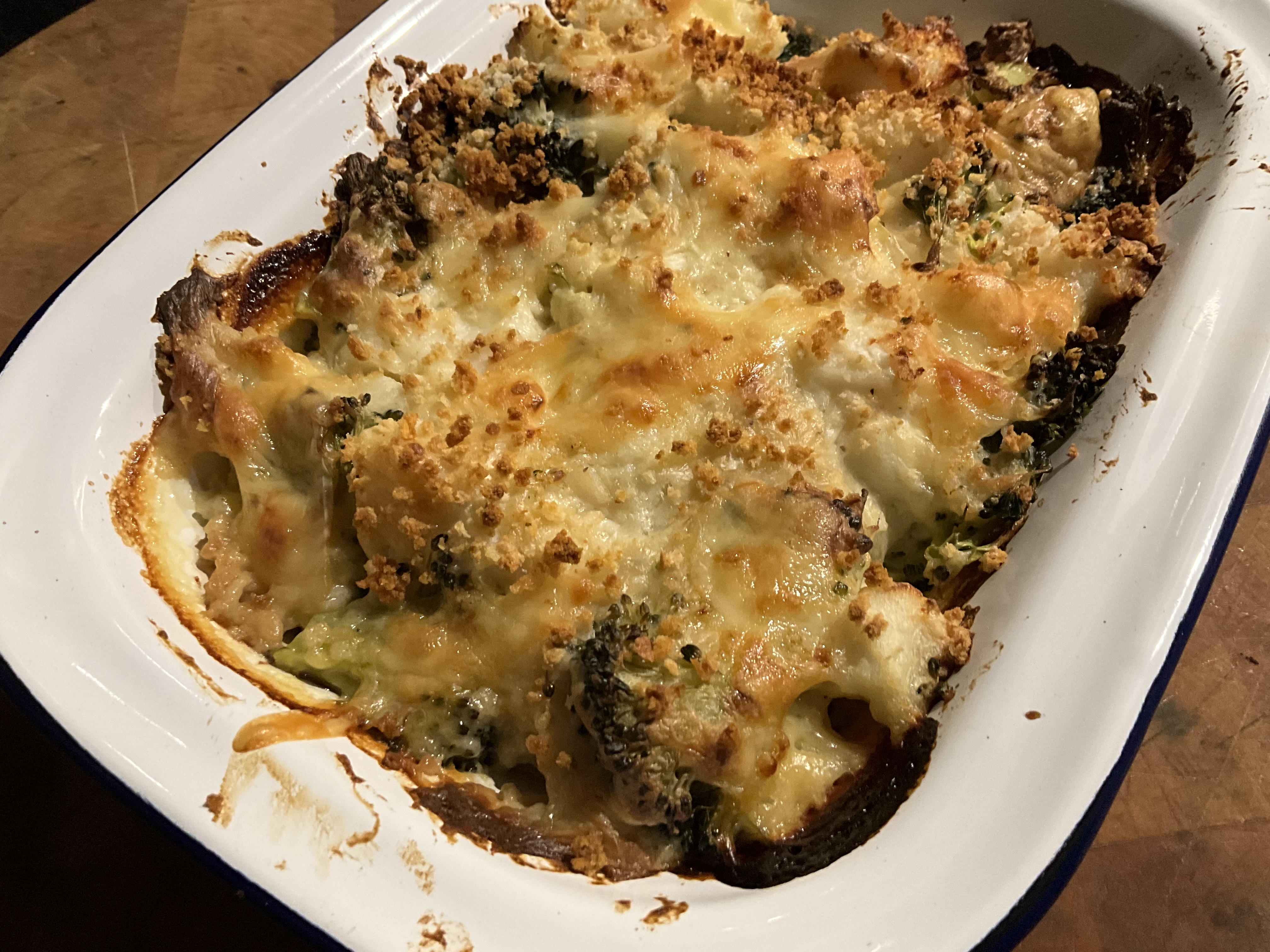
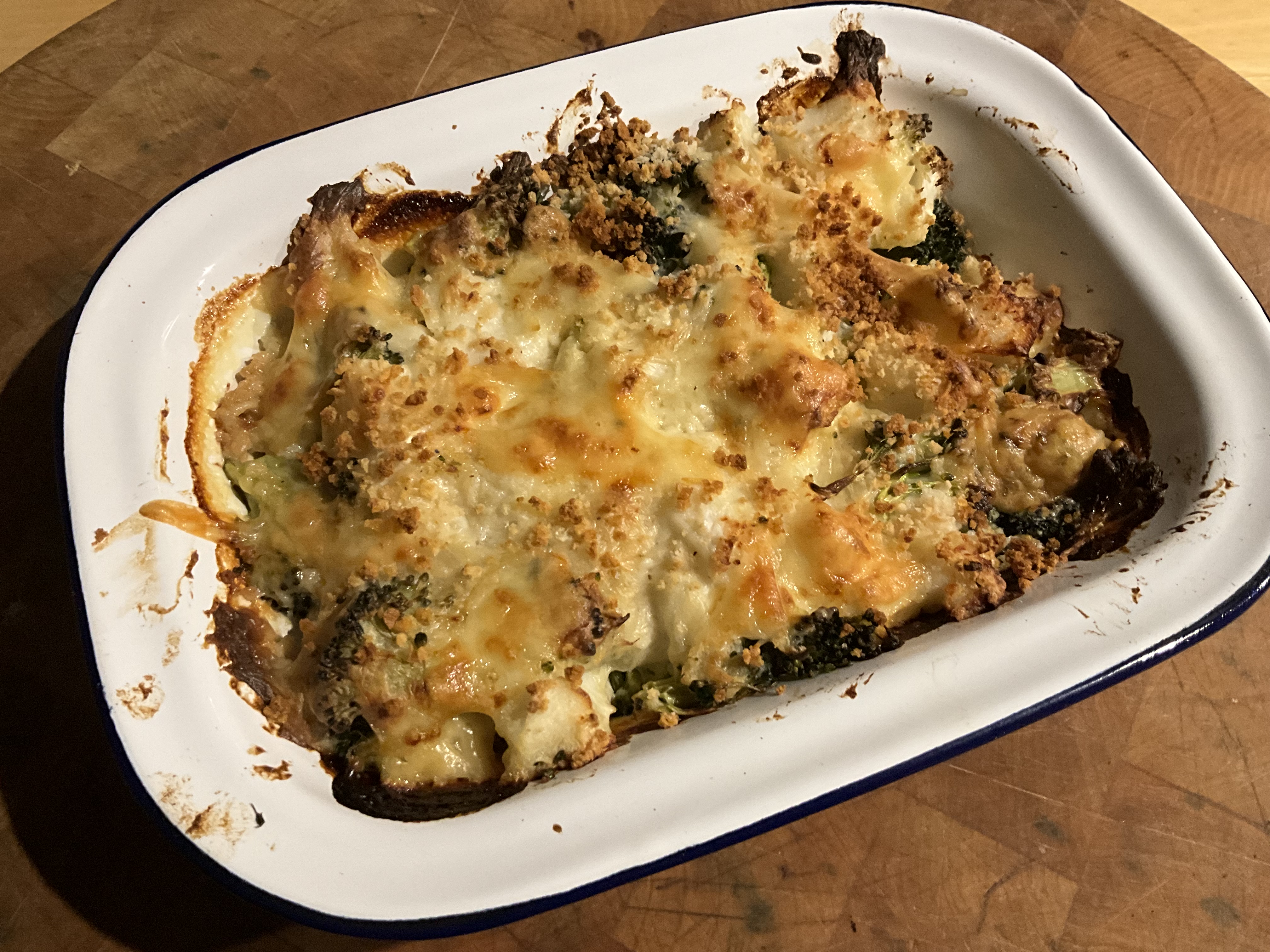
Those who say that cheese and fish don’t go together, haven’t tried shrimp scampi, a tuna melt, or even a McDonald’s filet-o-fish sandwich! Hearty and satisfying, this dish is all comfort.

As I researched this recipe, I found versions that had potatoes or pasta. I wanted a lower calorie and lower carb option, so I went with just cauliflower and broccoli. But feel free to substitute as you like. Potatoes don’t need to be pre-cooked, as long as you cut them into small cubes. Pasta needs to be cooked to the almost al dente stage—very firm—and then added to the pan.

I originally came up with this recipe when I found some tuna and salmon in my freezer, and I wanted to use them up. But this recipe works even better with any white fish, like cod or halibut.

If you use gluten-free flour and breadcrumbs (easy enough to do), this dish is gluten-free.


6 oz. cod, fresh or thawed if frozen
8 oz. mixed broccoli and cauliflower, cut into smaller pieces (you can use fresh or frozen)
1/2 small onion, finely chopped
1 tablespoon unsalted butter 
1 tablespoon all-purpose flour
1/2 cup milk
2 oz. sharp cheddar cheese, grated, separated
1/4 teaspoon granulated garlic
Salt and pepper
1 tablespoon breadcrumbs


Preheat the oven to 350 degrees.

Cut the fish into large chunks, removing any skin, and place it in a bowl. 

Pour the broccoli and cauliflower into the bowl.

Melt the butter in a saucepan over medium heat, and add the onion, sautéing it until it’s soft but not brown. Stir in the flour and cook for a minute or two. Slowly pour in the milk, stirring constantly. Season with salt, pepper, and the granulated garlic. Add all the cheddar cheese except a tablespoon, mixing well and making sure it all melts.


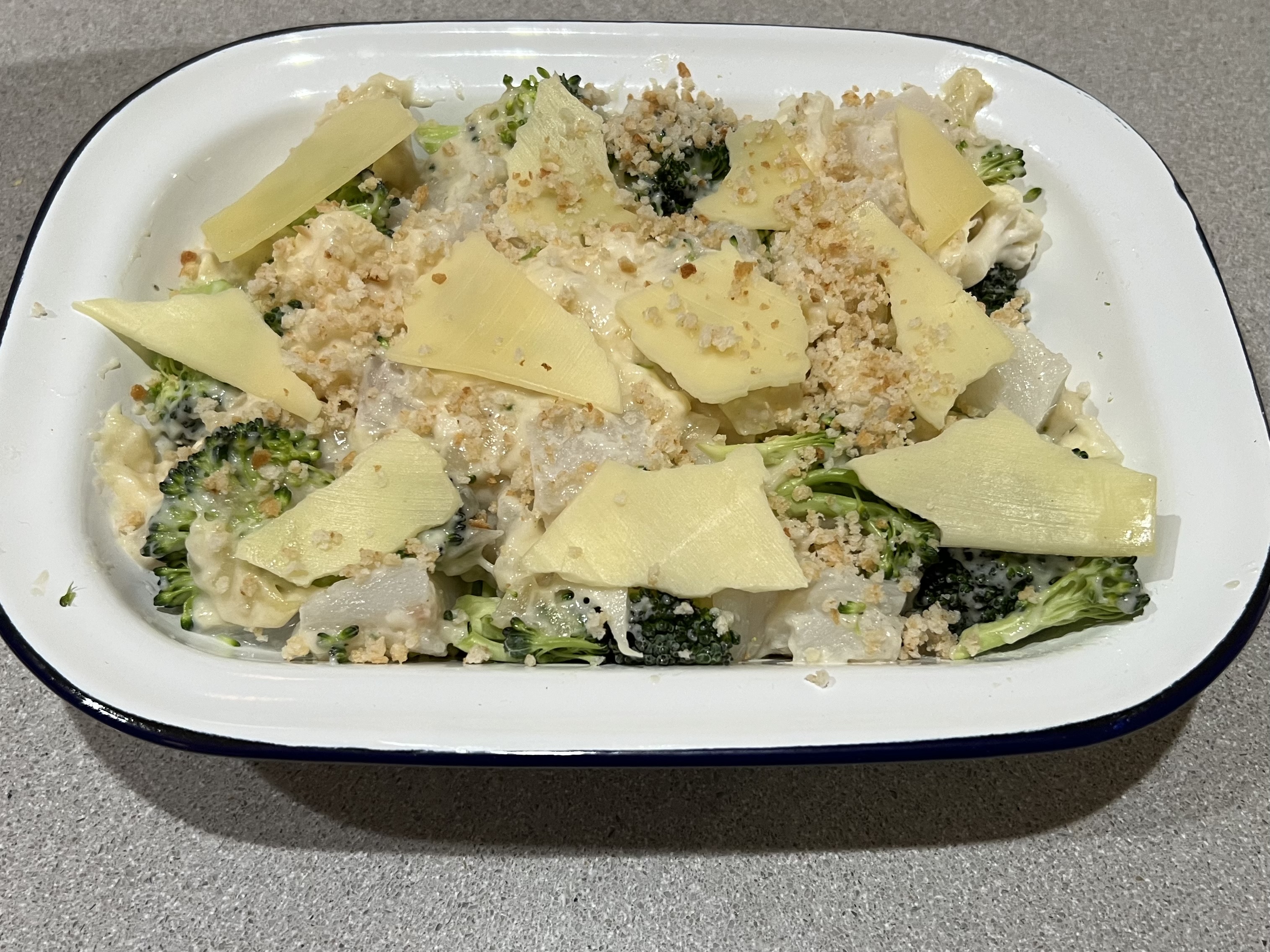
Pour the sauce into the bowl with the veggies and the fish, and mix everything gently, trying not to break the fish pieces up too much.


Pour the contents of the bowl into a baking dish just big enough to hold it all. You don’t want it spread out…you want it to have some depth so it doesn’t dry out.

Sprinkle the top with the remaining cheese and the breadcrumbs.


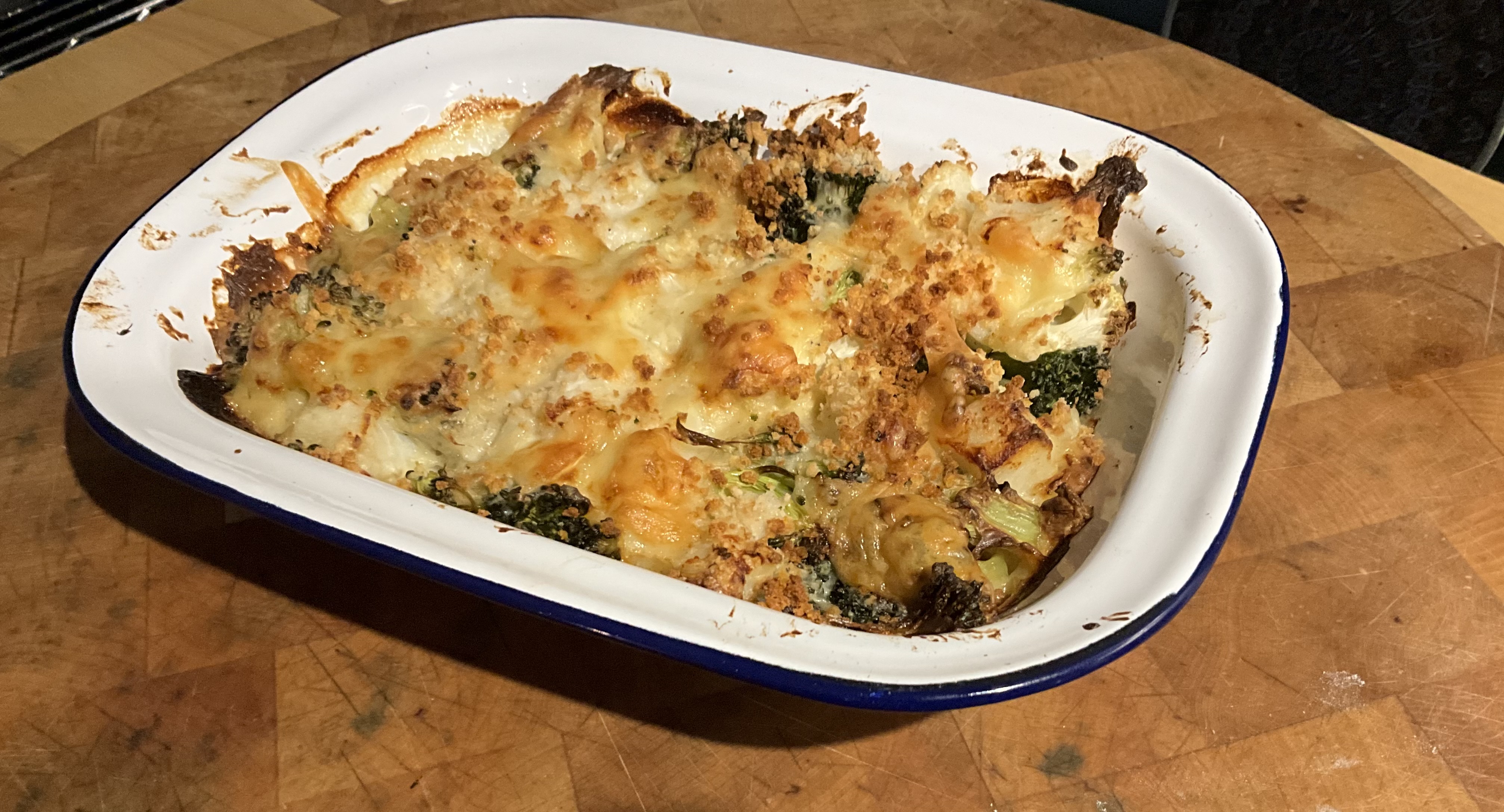
Bake for about 30 minutes, until it’s golden and bubbly.


This recipe could serve 2, but I devoured it on my own!

Instead of opening a nasty can of Manwich or other similar product, the classic Sloppy Joe sandwich is easy enough to make from scratch.

My version takes on a Mexican twist (hence the name Sloppy José), using seasoned taco meat and a great barbecue sauce. Putting them together with a sprinkling of Mexican cheese on a bun with lettuce and tomato makes for one sloppy but delicious sandwich!


sloppy jose


For the barbecue sauce…

2 cups ketchup
3/4 cup water
6 tablespoons white vinegar
6 tablespoons apple cider vinegar
6 tablespoons brown sugar
3 tablespoons Worcestershire sauce
1 tablespoon chili powder
2 teaspoons salt
2 teaspoons black pepper
1 1/2 teaspoons cumin


Mix all the ingredients in a saucepan and simmer until the flavors have blended, about 20 minutes. Remove from the heat and cool to room temp. If you store it in an airtight container in the fridge, it’ll stay good for a few months.


For the seasoned taco meat…

1 teaspoon granulated garlic
1 teaspoon onion powder
1/4 teaspoon crushed pepper flakes
1 teaspoon dried Mexican oregano
1 teaspoon paprika
2 teaspoons ground cumin
1 teaspoon sea salt
1 teaspoon black pepper
1 Spanish onion, finely chopped
olive oil
2 lbs. grass-fed ground beef


Combine all the spice ingredients in a bowl.

Sauté the onions in a bit of olive oil until translucent. Add the beef and sauté until cooked, mixing in the spice mixture a little at a time until you’ve used it all.


For the sandwich…

Take some of the taco meat and place it in a small non-stick pan and heat it on medium. Squirt in as much of the barbecue sauce as you like, mixing thoroughly. Sprinkle some grated Mexican cheese on top. (I like Cotija, which is like a Mexican feta, but a bag of mixed cheeses works great, too.) Mix thoroughly, letting it all melt together into one warm, gooey mess. Throw it on a bun. Add lettuce, tomato, avocado slices, whatever you like!


I grill outdoors year-round, but this recipe works just as well indoors.

Many people are turned off by lamb because somewhere in their past, they had a horribly overcooked piece of meat that ruined it for them. Don’t be sheepish! Try lamb again!

If you think lamb is too “gamey,” buy American lamb over New Zealand or Australian lamb. Although the animals are mostly pasture-raised, most American lamb is larger and grain finished, which results in a milder flavor. Unfortunately, like with non grass-fed American beef, this also results in a larger, fattier animal, and a less healthy cut of meat.

I prefer 100% grass-fed lamb, and most of it comes from New Zealand. Having been to the country twice now, I can tell you that the quality is unmatched and the grasslands of New Zealand are the most beautiful I’ve ever seen. New Zealand lamb is smaller and is slaughtered at a younger age than American lamb, making it very tender. In New Zealand, as well as many other countries, only an animal under 12 months of age and without incisors can be called “lamb.” No such labeling is required in the United States.

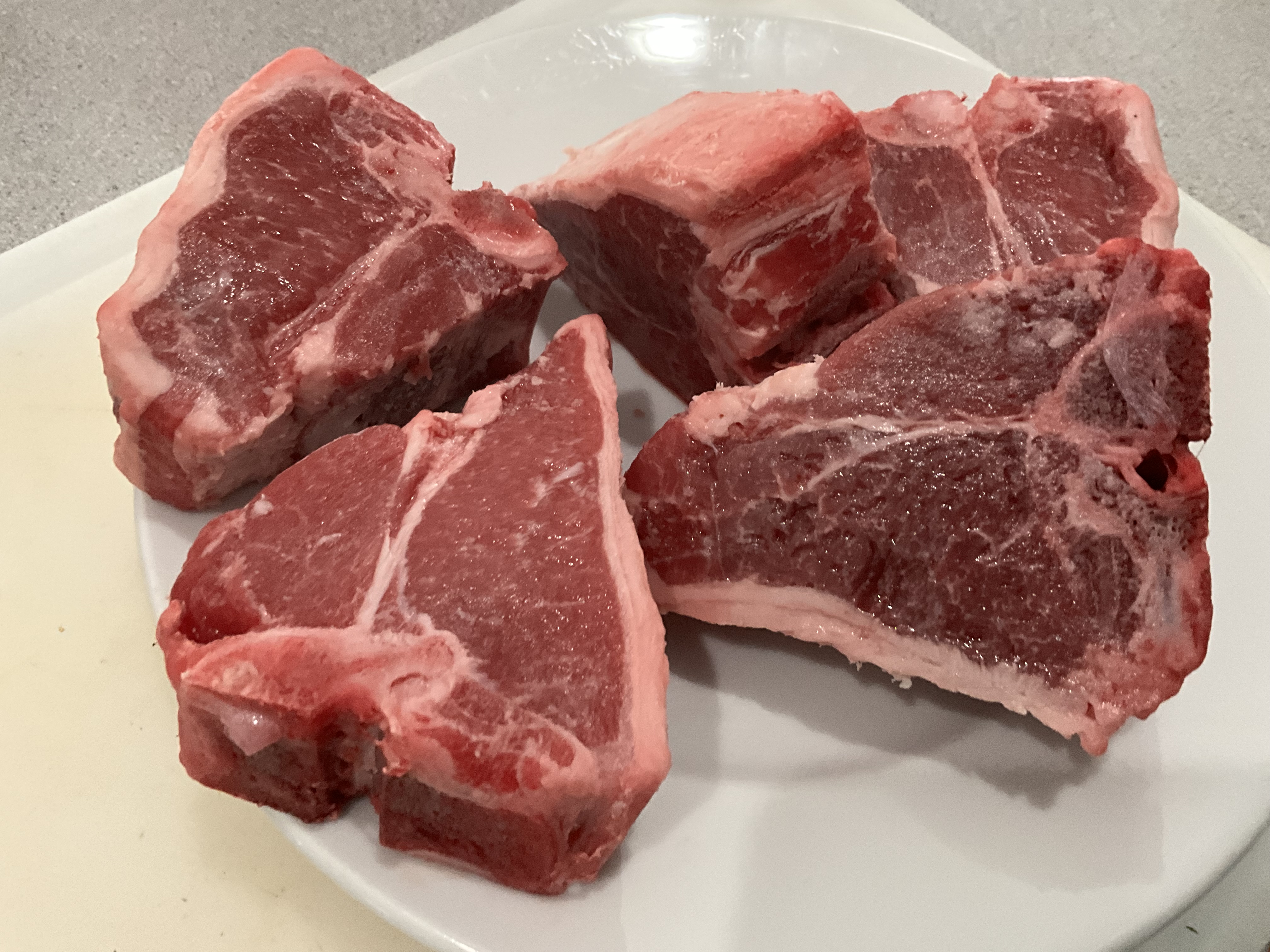
I love the baby lamb chops that look like miniature porterhouse steaks. You can find them in any supermarket. Here’s an easy recipe that I first served at a party in my home for 40 people, many of whom claimed they didn’t like lamb or never had it before. By the end of dinner, the chops were gone!


lamb LTL


8 small lamb chops
½ cup olive oil
¼ cup balsamic vinegar
2 cloves garlic, through a garlic press
1 tablespoon fresh rosemary, chopped
1 tablespoon honey
2 teaspoons Dijon mustard
1 teaspoon dried oregano
Salt and pepper


Place the lamb meat in a plastic bag. In a bowl, combine all the other ingredients to make a marinade and pour it over the lamb. Seal the bag and squish it around so that the marinade reaches every part of the chops. I leave it at room temp if marinating for a few hours…or in the fridge if overnight.

Before cooking, take the lamb out of the fridge and let it come back to room temperature.

Pre-heat the outdoor grill. Cook the lamb until you reach an internal temperature of 145. Let it rest for 10 minutes before serving.

If you’re cooking indoors…

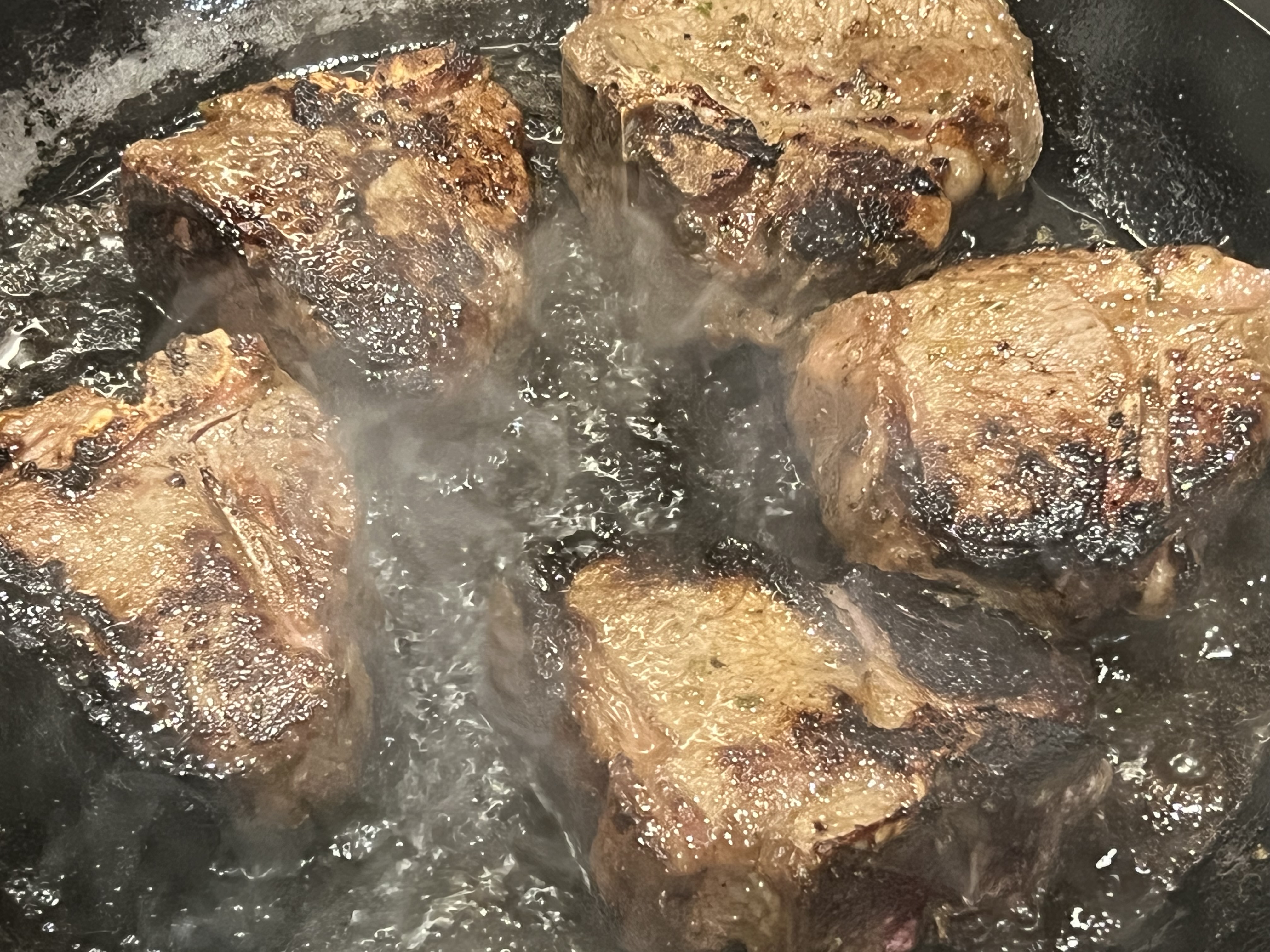
…place the lamb chops in a hot oven-proof pan (cast iron is always best) and sear it on all sides.


Then place the pan in a 350-degree oven to cook all the way through.


HOMEMADE SPINACH PASTA

Posted: January 10, 2024 in Uncategorized

Homemade pasta is surprisingly easy to make, especially if you have a food processor. If you’re not crazy about spinach, just leave it out of this recipe.

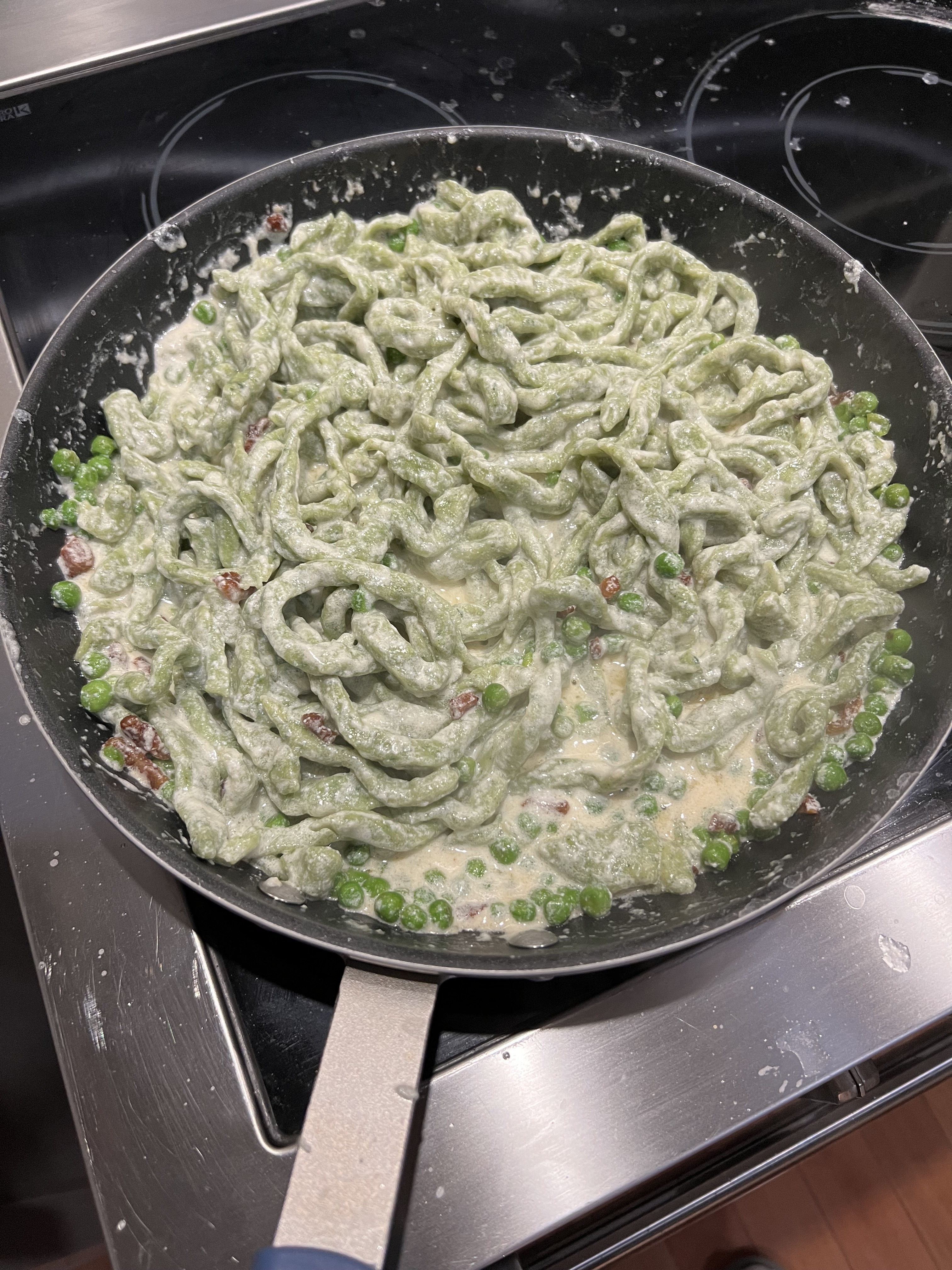
Homemade spinach pasta with Alfredo sauce, peas and guanciale.

3 oz. fresh spinach
2 large eggs
1 1/2 teaspoons extra virgin olive oil
1/2 teaspoon Kosher salt
2 cups all-purpose flour, as needed

Get a bowl and put some cold water and ice cubes in it. Set it aside.

Preheat a pan over medium heat with a little water in it. Add the spinach and cook it for no more than a minute…just until it has wilted completely and turns bright green.

Place all the spinach in the ice bath to let it cool for a few seconds. When it gets lukewarm, remove it, and squeeze out the excess moisture with a clean dish towel or cheesecloth.

In the food processor, using the regular cutting blade (not the dough blade), combine the spinach, eggs, olive oil and salt. Blend until it’s smooth.

Add the flour and blend until the dough no longer sticks to the blades. Depending on how much moisture you have, you might have to add flour…or you might need to add some cold water.

On a lightly floured surface, roll the dough into a ball, and wrap it with plastic wrap. Let it rest for 20 minutes at room temperature.

After 20 minutes, remove the dough from the plastic and, on a floured surface, cut the dough into 4 pieces.

Roll the dough out with a rolling pin into rectangles about 1/4″ in thickness if you have a pasta machine. If you’re going to be cutting it by hand, roll it as thin as you can.

If using a pasta maker, dust it with flour and run the dough rectangles through several times, starting with the widest setting, and then reducing it with each run to the desired thickness. Spinach pasta is stickier than regular pasta, so you may not get it as thin. Then change the pasta maker’s attachment to the desired noodle shape, and cut it with the pasta maker.

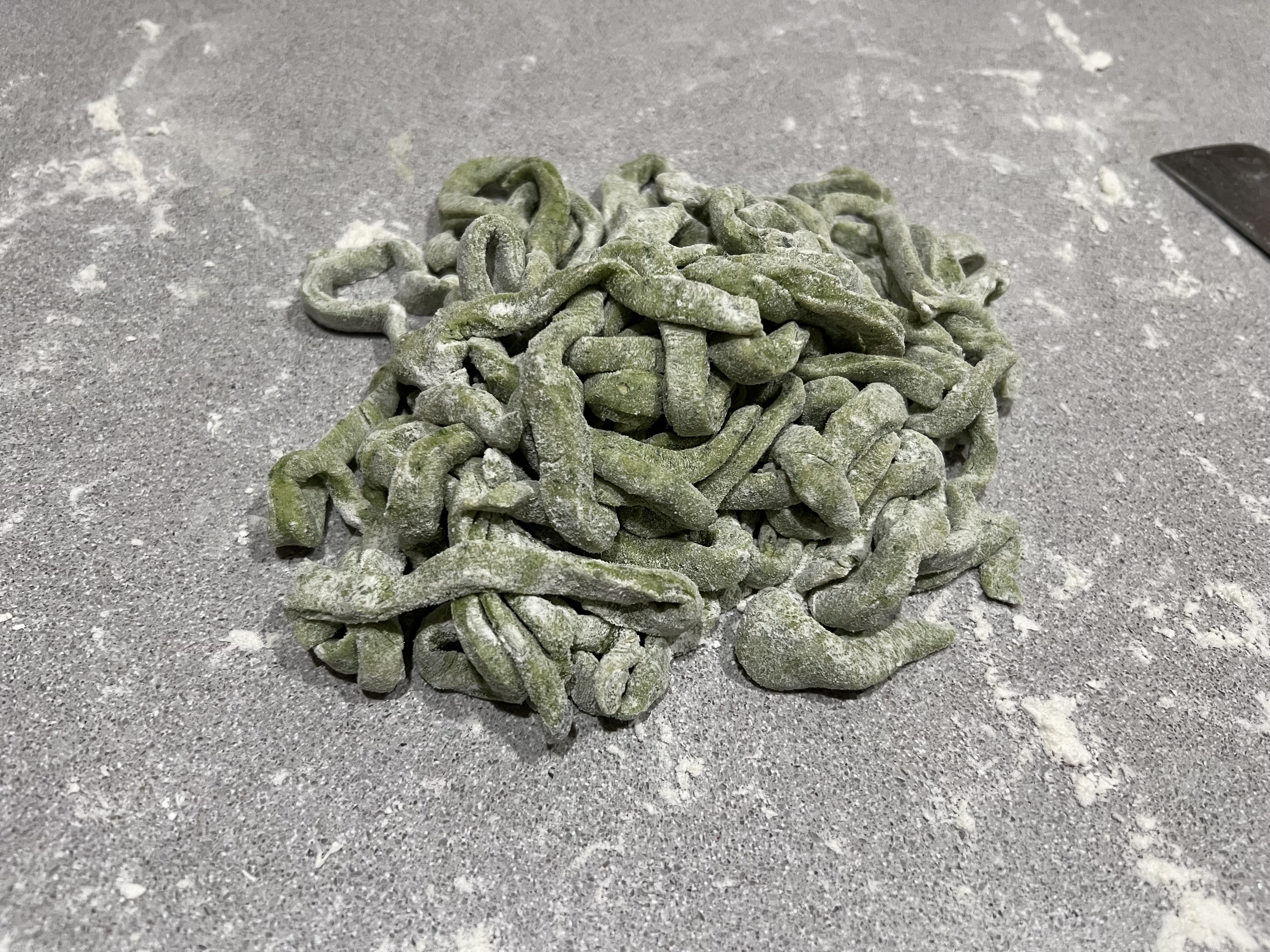
If you’re hand-cutting the pasta, once you’ve rolled it as thin as you like, dust it with flour and roll it into a log shape. Then cut it into pieces as wide as you like. Unroll each cut piece and place it on a floured surface so it doesn’t stick together.

Bring a large pot of salted water to a boil. Lower the pasta into the water, using a wooden spoon to keep the noodles moving so they don’t stick together. Cook until the pasta is firm but soft, 3 to 6 minutes depending on the thickness of the noodle.

Use tongs to remove the pasta from the pot. If you pour it into a strainer, the pasta will stick together.

In this case, I put the cooked pasta in a large pan with alfredo sauce , peas, and crispy bits of guanciale. I tossed it all together until the sauce was nice and creamy.

If you want to make pasta without the spinach, start with 1 3/4 cups flour and then add as needed.

This was my most popular blog post from a decade ago. Thought I’d re-run it…

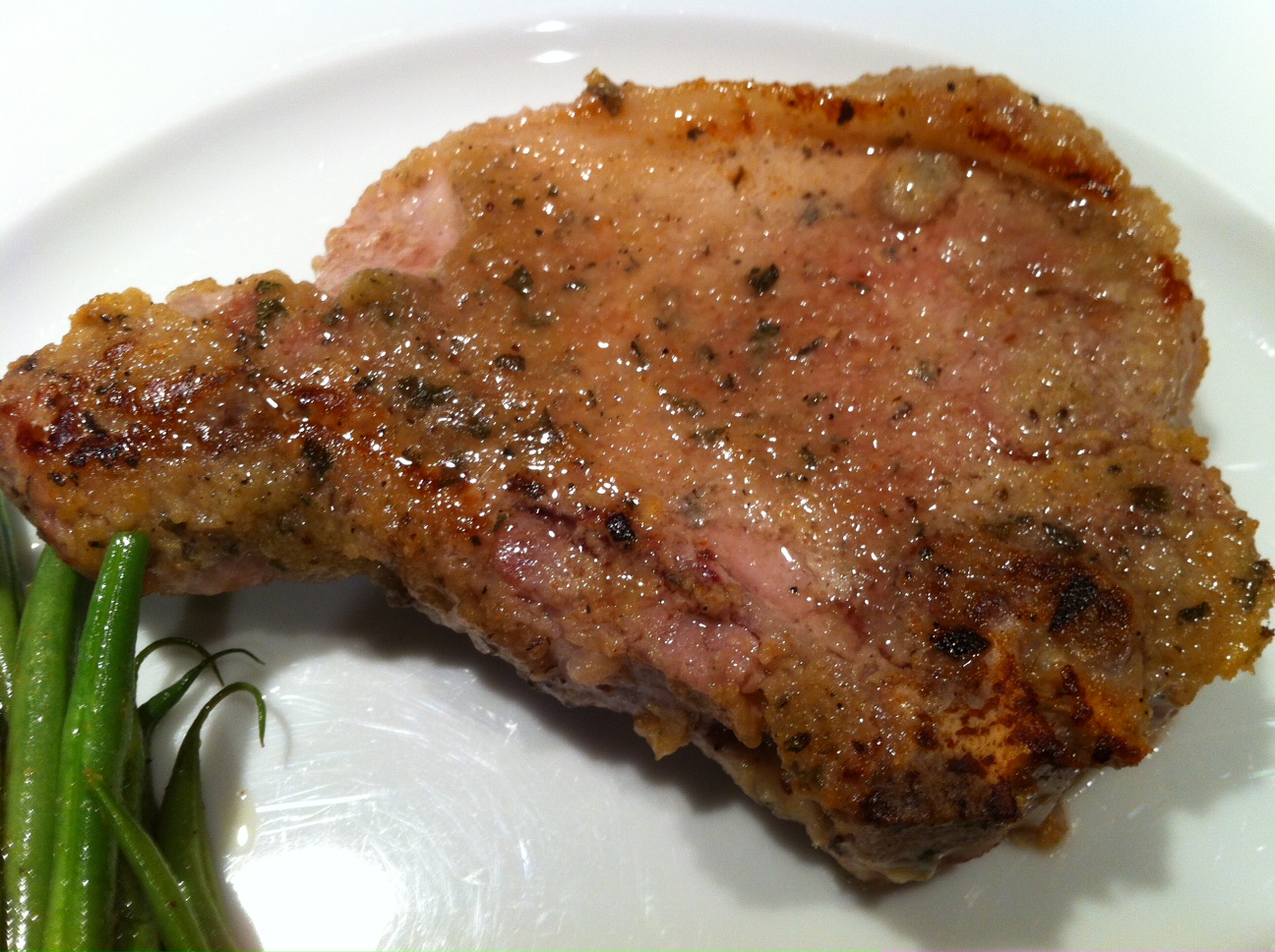
Food magazines and cooking shows are pretty obvious places to be inspired by new recipes from common ingredients. But I’ve found inspiration from some strange places, including old TV sitcoms. I had some nice thick pork chops thawed, and I was trying to think of something new to do with them. The classic “pork chops and applesauce” episode of The Brady Bunch was on TV that afternoon. I looked in the pantry, found a small container of my daughter’s applesauce, and came up with this recipe.

The applesauce and honey create a tasty crust.

pork chop 2

2 nice, thick cut pastured pork chops
1 small tub (4oz.) unsweetened apple sauce
1 tablespoon fresh sage, finely chopped
A few sprigs of fresh thyme–leaves only–finely chopped
1 teaspoon honey
1 teaspoon salt
1/2 teaspoon granulated garlic
1/4 teaspoon fresh cracked black pepper

In a small bowl, combine everything but the pork chops.

Smear this applesauce mix all over the pork chops, place them in a non-reactive covered container in the fridge, and let them marinate overnight.

The next day, make sure all the gooey applesauce mix gets re-smeared on the chops. You want it nice and thick on the meat.

Pre-heat the oven to 350 degrees.

On the stove top, heat an oven-proof pan on medium. Use a little olive oil. Place the chops in the pan gooey side down, then re-smear with any leftover applesauce on what is now the top side. Let the first side sear to a golden brown before flipping the chops over. Be careful not to let them burn from the sugars in the applesauce and honey.

Once you’ve flipped the chops, place the pan in the oven. Cook the pork chops until just pink. (It’s no longer necessary to cook pork to death like our parents used to do. The safe temp is 145 degrees.)

STEAK AU POIVRE

Posted: January 4, 2024 in Uncategorized

A classic French beef dish, Steak au Poivre is the perfect example of delicious simplicity. If you love black pepper, you can make this wonderful dish with just a few ingredients. My personal twist was to add porcini mushrooms to the mix because…well…why not?

The classic Steak au Poivre uses a tender, lean cut of beef like filet. But I had a couple of grass-fed sirloins in the fridge, and they worked out just fine.

2 sirloin steaks, about 6 oz. each
Kosher salt
2 tablespoons whole black peppercorns
2 tablespoons butter, divided
1 teaspoon olive oil
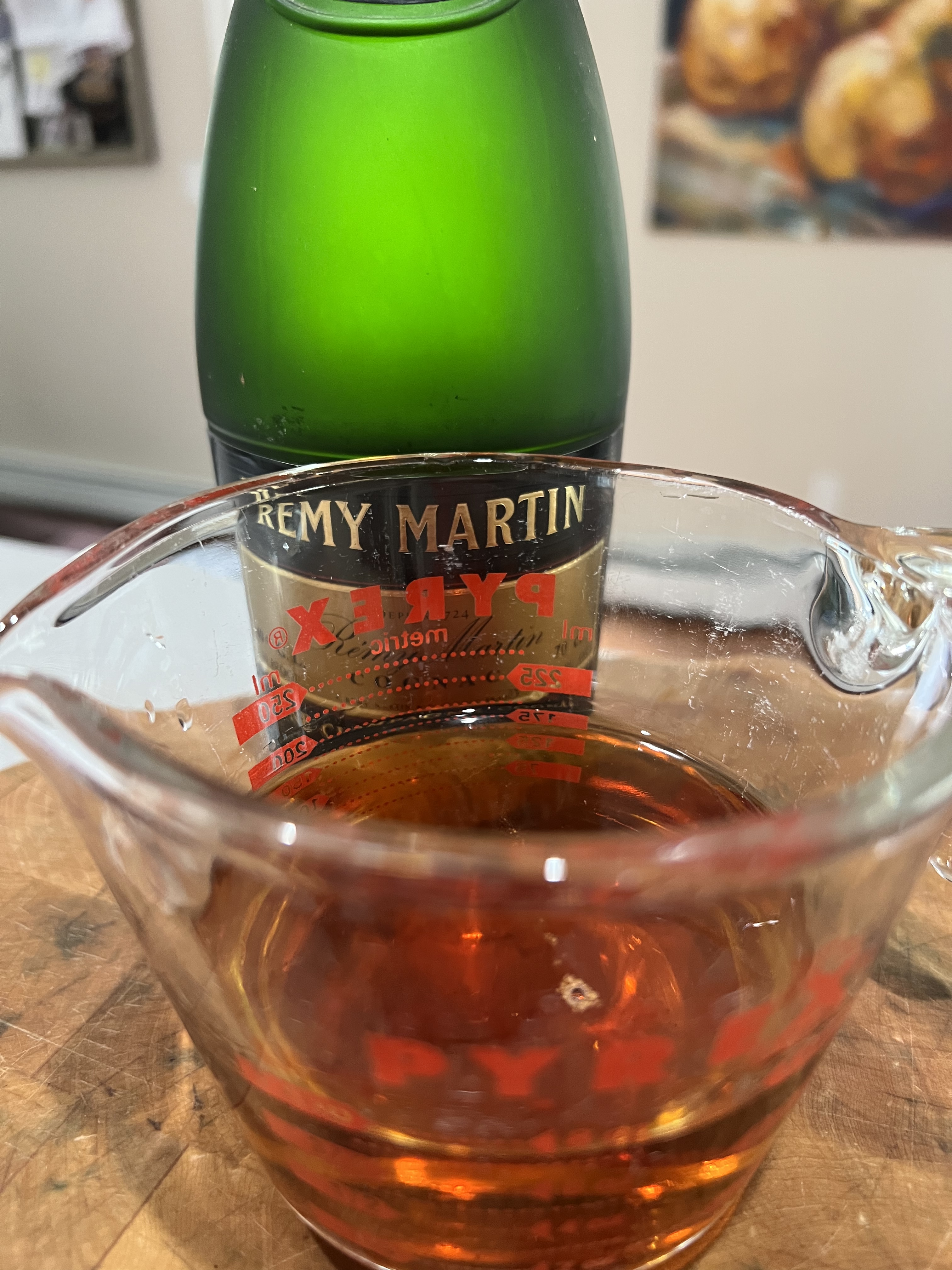
1/3 cup Cognac, plus 1 teaspoon
1 cup heavy cream
dried porcini mushrooms (optional)


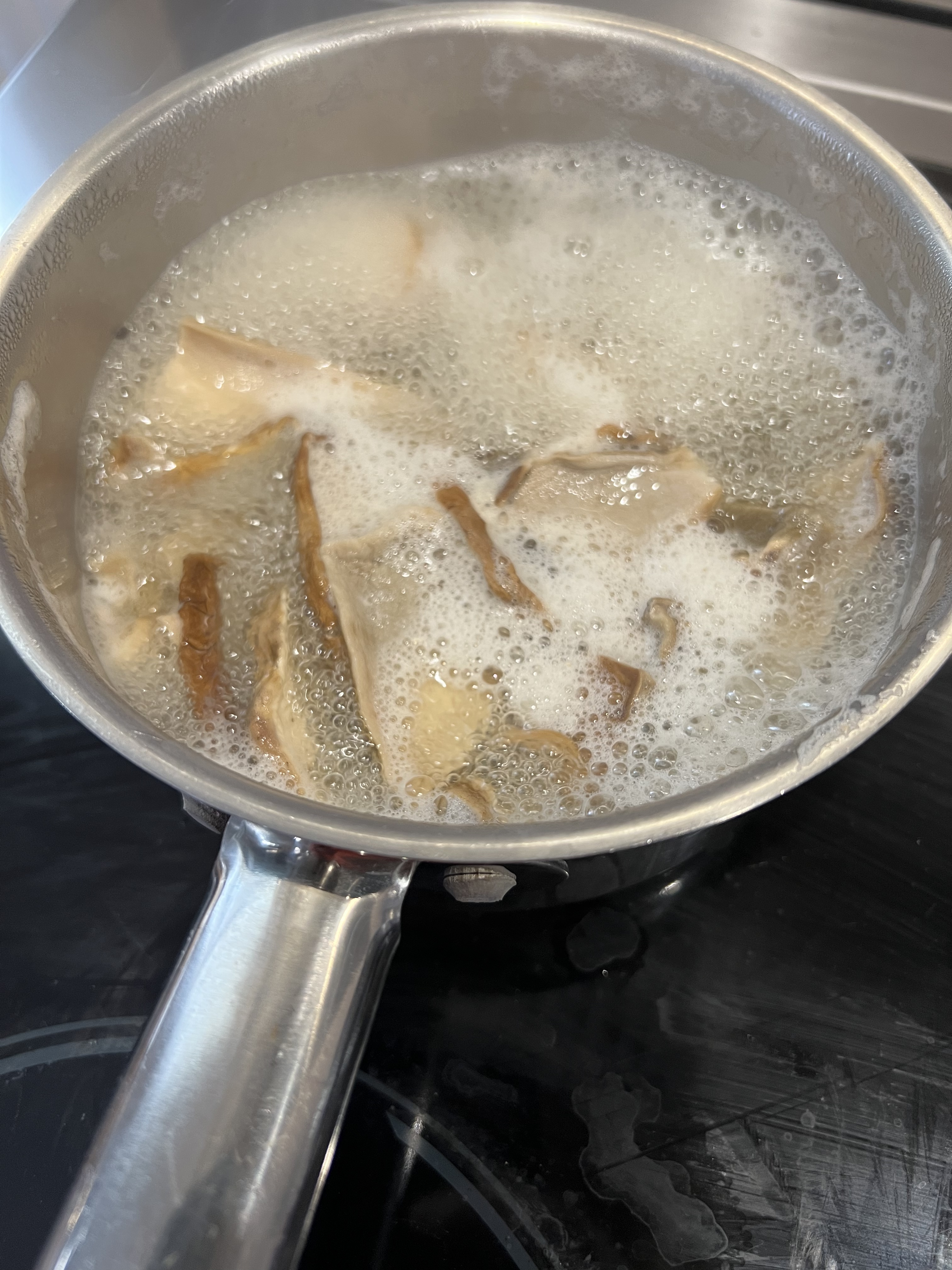
If you’re using the porcinis, place them in a sauce pan, and add water to cover them. Bring the water to a boil, set the pan aside, and let the porcinis rehydrate. Once they’ve rehydrated, remove them from the pan (save the liquid) and chop them up finely. Set them aside.

Rehydrating the porcinis.


Remove the steaks from the fridge at least 30 minutes before cooking, so they are at room temperature. Season them on all sides with the salt.

Coarsely crush the peppercorns. (I have a pepper mill that makes coarsely crushed pepper, so I used that.) Spread the peppercorns evenly on a plate, and press the sirloins, on both sides, into the pepper so that it coats the surface of the meat. Set them aside.


In a medium skillet over medium heat, melt 1 tablespoon of the butter and the olive oil. As soon as the butter and oil start to smoke, place the steaks in the pan. Cook them for about 4 minutes on each side. Once they’re done, remove the steaks, place them on a plate, and cover them with foil to keep them warm.


Pour off the excess fat from the pan, but don’t wipe the pan clean!

Back to the porcinis: in a separate skillet, add 1 tablespoon of butter and the chopped porcinis, sautéing them for a few minutes over medium heat. Slowly pour in the mushroom liquid from the sauce pan, making sure any sediment at the bottom gets left behind. Cook this liquid down with the mushrooms until it has reduced almost completely.


Back to the steak pan: off the heat, add 1/3 cup of Cognac to the pan and carefully ignite the alcohol with a long match or lighter.


Gently shake the pan until the flames die. Return the pan to the medium heat and add the cream. Bring the mixture to a boil and whisk it until the sauce coats the back of a spoon, about 5 minutes or so. Add the teaspoon of Cognac. (If you’re using the mushrooms, add them to the sauce at this point, stirring them in.)


Add the steaks back to the pan, spooning the sauce over the meat.


THE DIET RETURNS!

Posted: January 1, 2024 in Uncategorized
Tags: , , ,
“You’ll never out-exercise a bad diet.”
That’s not my quote…but it’s absolutely true.
I’m re-starting this diet because I’m going on a trip in a couple of months, and I want to drop the weight and bloat I’ve gained over the holidays. This diet has been extremely successful for me in the past, and as long as I stay with it, it will succeed for me again this year!
Two years ago, I started this diet at 238. So I’m ahead of the game. But it still won’t come easy…

After seeing my blog posts featuring ribs, pastas with cheese, huge roasts, and cheesecake, I had several friends ask me how I didn’t weigh 500 pounds! My answer was simple: I cook everything. I just don’t eat everything. That’s what this diet is all about. I might cook a large portion, but I eat a small amount of it, portion out the rest of it, and put it in my freezer for another day. I also share it with family and friends, who are more than happy to oblige!

When I was young, I was rail thin and could eat anything I wanted without gaining a pound. When I got older, my metabolism slowed down, but my love of food did not–in fact, it probably increased, as I learned how to cook really well.

OMG…that was one skinny dude!

Now, here I am, writing a food blog. I travel for food. I plan six meals ahead at any given time. I’ll be 66 in March, and I have a 17-year-old daughter. Do the math, and you’ll realize, like I did, that I need to take care of myself to be around for as many of her upcoming life events as possible.
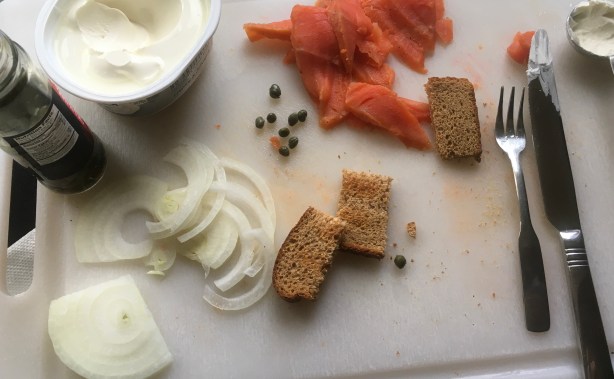
My version of lox and bagels: home-cured wild-caught Alaskan salmon, whipped cream cheese (fewer calories), onions, capers, and toast pieces. Lots of tasty bites here. (A sliced, hard-boiled egg would only add 70 calories.)

There are a million diets out there, and everybody claims they have the secret to weight loss. But no matter what diet you’re on, what it really boils down to is the simple mathematical equation of calories in…versus calories out.
My buddy, Lee, a PhD in chemistry, and someone that dropped 50 pounds a couple of years ago, told me about an article written by an engineer that lays out the basics. You can find it here:
As he states, losing weight is simply thermodynamics: you need to eat less calories than your body burns every day. If you do that, you will lose weight. Those diet pills that claim to burn your body fat, allowing you to lose 17 lbs. in a week, are about as believable as that con man, Dr. Oz, himself. You didn’t gain the weight overnight. So anyone that tells you you can lose it overnight is full of it. The most weight you can expect to lose on a healthy diet plan is 1 1/2 to 2 lbs. a week.
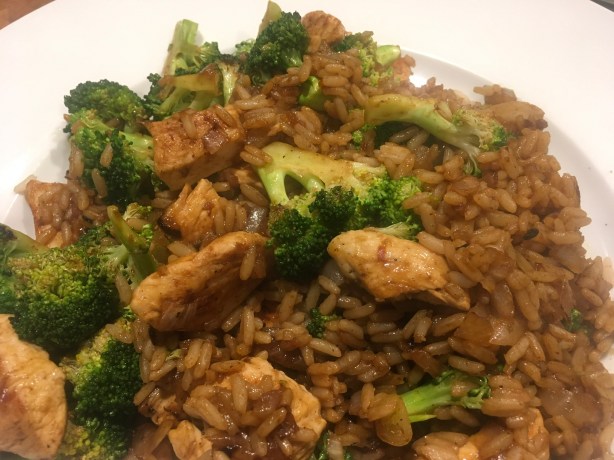
My stir-fry has chicken breast, broccoli, white rice, some onion, and my “Asian Mix” of flavors: soy sauce, hoisin sauce, chili garlic sauce, and sesame oil. My trick to add flavor to the rice without calories is to add homemade chicken broth instead of water when cooking. And I measure everything: there’s a lot of sugar and sodium in Chinese ingredients.

There is a way to find out approximately how many calories a day your body uses to maintain its weight. It’s called the basal metabolic rate, or BMR. In my case, I need about 2500 calories per day to maintain my weight. So, like my friend Lee, I chose a diet where I eat no more than 1500 calories daily…a deficit of 1000 calories per day.
At the end of 7 days, I have eaten 7000 fewer calories than my body uses. Since about 3500 calories make 1 pound, I should be losing about 2 pounds per week, according to this math.
Now, there are many variables to this, but basically this thought process holds true.
And the best part is: is doesn’t matter what I eat. If I want to eat bean sprouts, great. If I want Taco Bell, fine. As long as I don’t go over 1500 calories a day, it doesn’t matter what I put in my gut. This is really helpful for people like me, who get bored of eating the same old stuff day after day–a sure-fire way to give up on a diet. Carbs, fats, meat, dairy–even alcohol…all OK within those calorie limitations. (Although anytime you reduce or remove alcohol from your diet, you’re getting extra health benefits.)
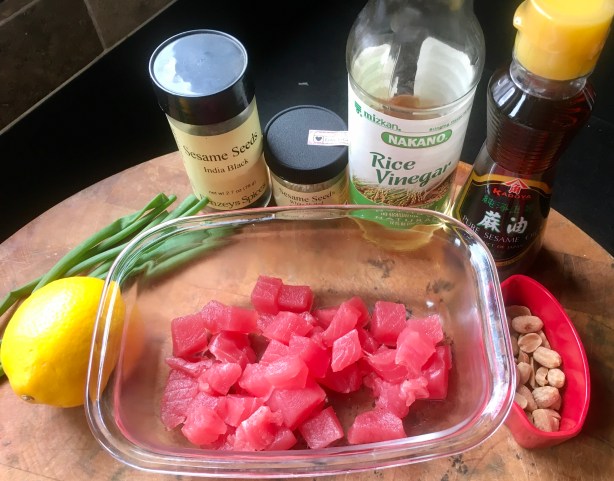
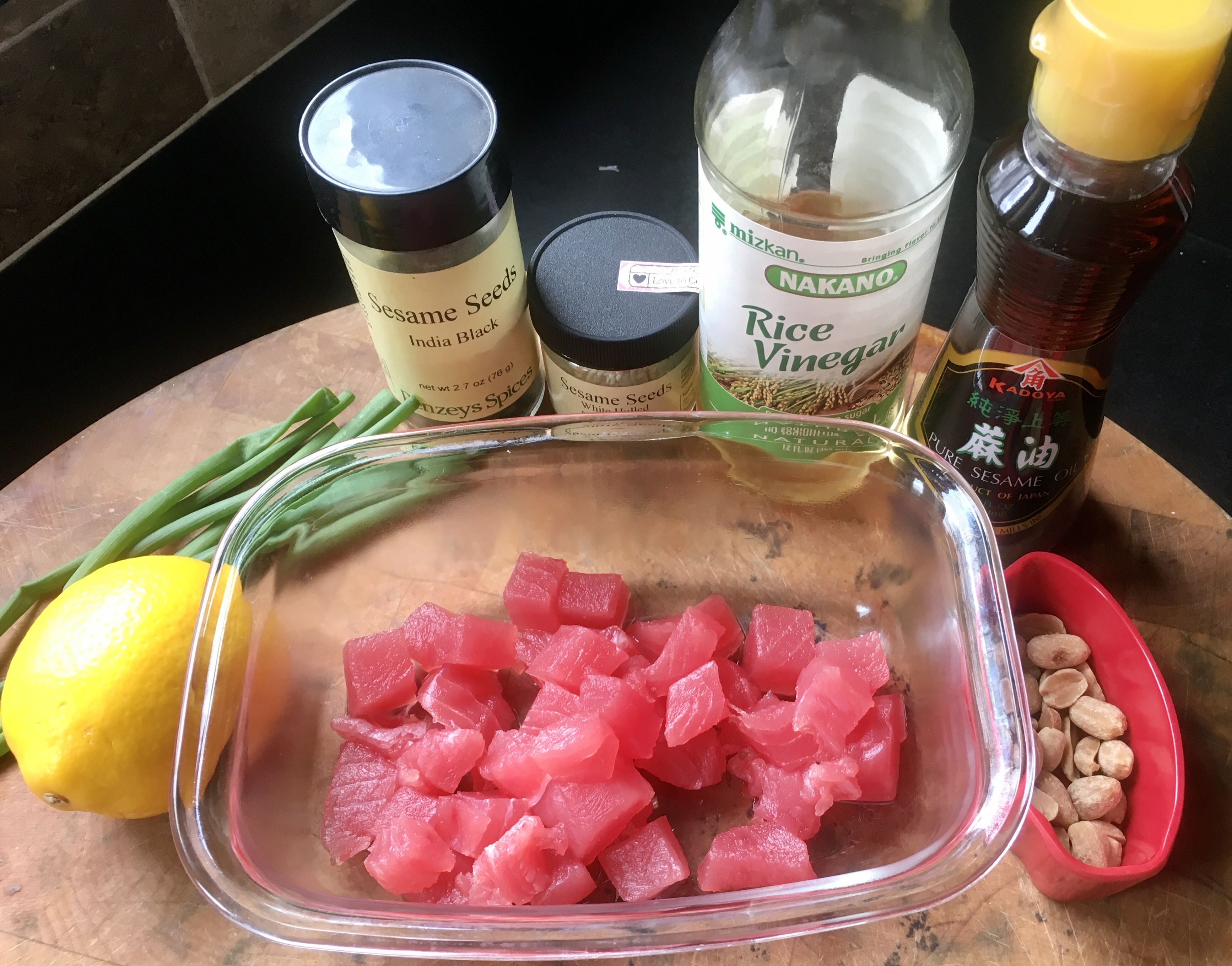
Fish is an excellent source of protein, and I never ate enough of it. Now, I make a bowl of tuna poke pretty often, and it’s absolutely delicious!

My buddy, Lee, is a diabetic, and stays away from carbs. He eats lean meats, seafood, and vegetables. That’s how he lost his 50 pounds. His son, on the other hand, lost weight by eating mostly fast food, but still counting the calories and not eating more than 1500 of them per day. He also lost 50 pounds.
I’m not a big junk food person. I don’t buy cookies, cakes or chips. Ice cream (my kryptonite) is a rare treat. I don’t put sugar in my coffee, and I don’t drink juices or soda. And I don’t like beer! But my biggest weight-gain mistake was thinking I could use unlimited amounts of so-called “healthy fats” in my recipes. I was pouring olive oil over everything…spreading pork leaf lard everywhere…and buttering my butter! Now I measure everything, drastically reducing my fats, and I can’t believe how many calories I’m saving!
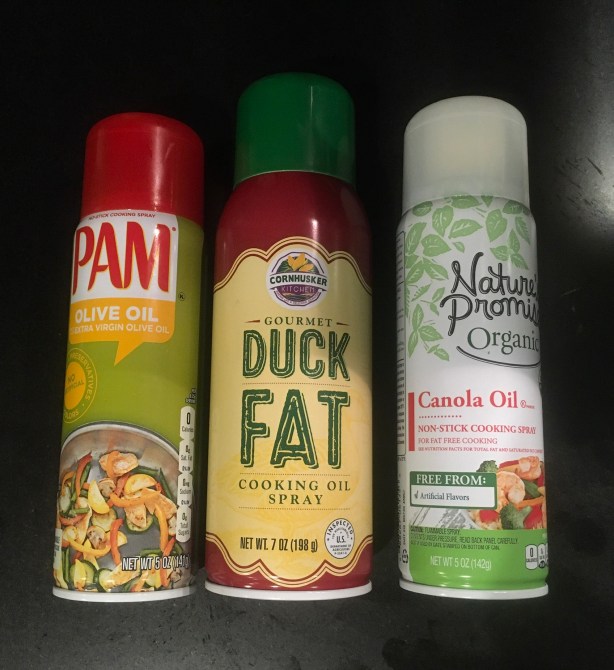
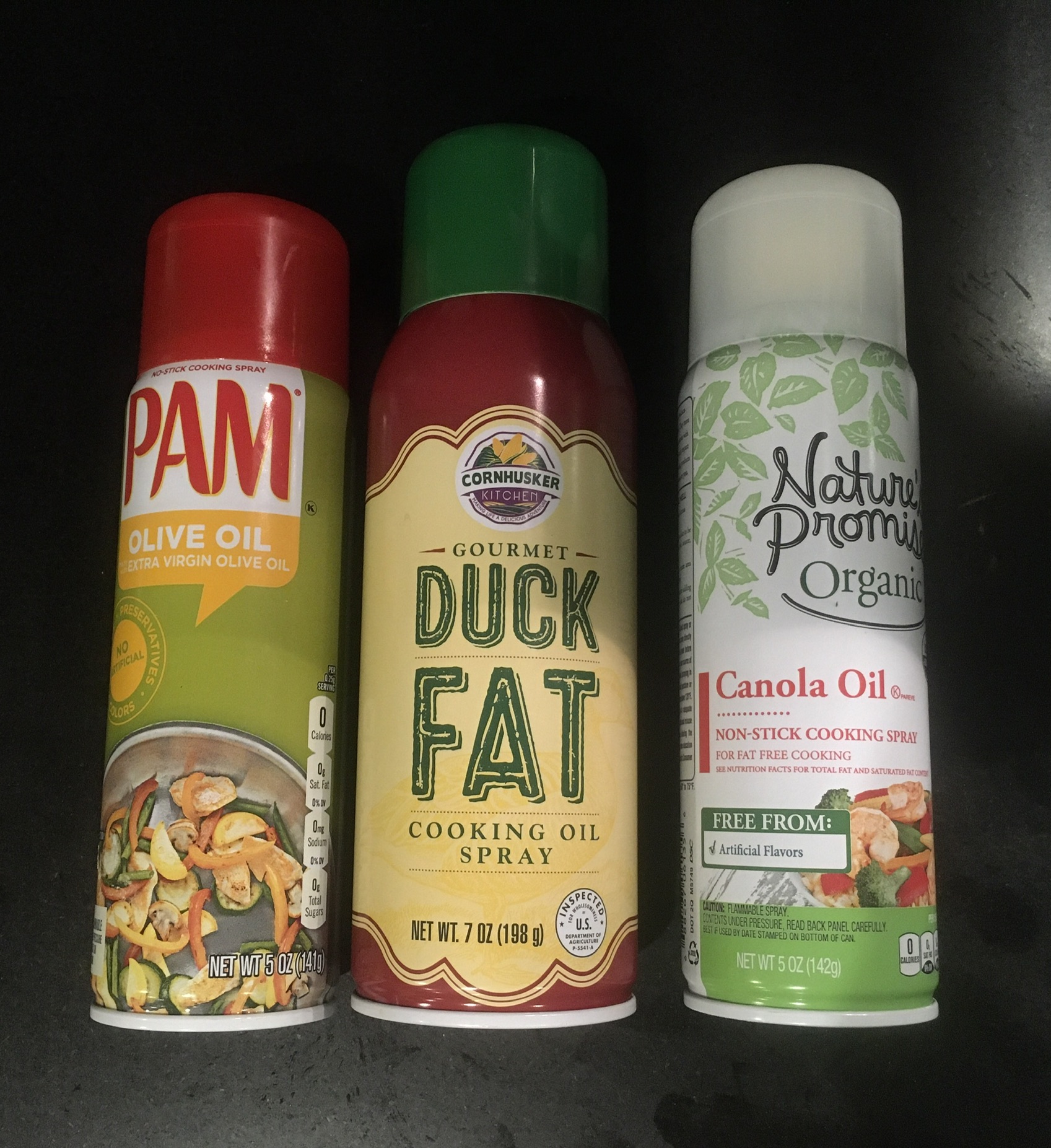
Sprays can be extremely helpful in keeping your calories low. Just be careful: they say “zero calories,” but that doesn’t mean you can spray a ton in your pan! Regulations allow them to say “zero” if a single serving is less than 1 calorie. That’s why a single serving here is a spray of about 1/5 of a second! (Seriously!) Remember: spray oil is still oil!

Portion control is essential. I’ve found that I really don’t have to change many of my recipes in this livethelive.com blog, which is all the food I love. I just have to control my portion sizes. For example, a ribeye may be a delicious source of protein, but it’s also loaded with fat. (That’s why it tastes so good!) So now I only eat a small, 4-ounce serving at mealtime, not the 12-ounce (or larger!) slab I was eating before. Or I go for a lower-fat cut, like sirloin or tenderloin.
Right now, starting my 1500-calorie-a-day diet again, I’m bloated from alcohol, salt, fat, and simply eating too much rich food. But once the diet really starts rolling, I’ll step on the bathroom scale and see the bloat is diminishing, and rather quickly. At this point, it’s easy to deceive myself in thinking that this is “real weight,” when it’s not. It’s just my body reaching its natural plateau. But that’s OK. When I see the weight go down, even by a tenth of a pound a day, it gives me the incentive to continue.
After about a week of bloat loss, the real diet and weight loss begins!
The human body is full of constant change. So even once I steadily maintain my 1500-calorie-a-day diet, I shouldn’t expect to be dropping 2 pounds per week like clockwork. Some weeks, my body will retain more water, perhaps from eating too much salt. Some days, I’ll go to the bathroom more, some less. My bathroom scale itself may be off by a little, too. So what I see when I step on the scale needs to be taken with a grain of salt (pardon the pun.) On any given day, my weight can actually be plus or minus 2 pounds (or more) of what my scale shows.
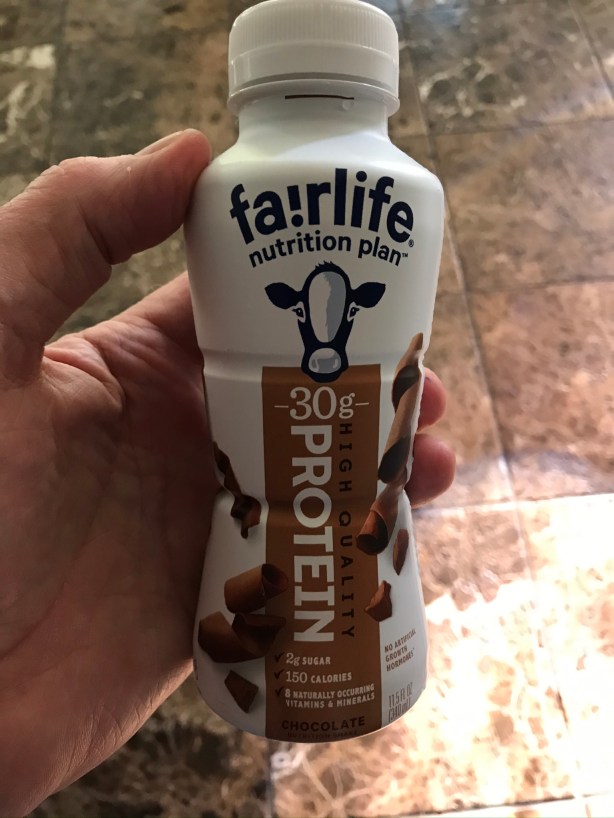
Find a protein drink or power bar you like. It can really help when the cravings get bad. But make sure you choose one that is low in calories and sugar!

The secret of this diet (or any other diet for that matter) is persistence. Don’t give up because your scale hasn’t moved. Your body is going through changes–big changes. And if you maintain your diet, you will see results eventually…the keyword being: eventually. Over the course of a month or two, you will see significant results.
The secret for me is to find the food I like and then eat it in reasonable quantities. Variety is also really important, or I’ll get bored and give up. Other than avoiding too much salt, I have few dietary restrictions. So I’m able to eat whatever I want within my calorie guidelines.
So as you read this blog this year, you’ll see that many of my recipes haven’t changed, with the exception, perhaps, of fats used in cooking, because that’s one of the top calorie culprits. It doesn’t matter if you’re using butter, bacon fat, or healthy olive oil, all fats have a lot of calories, whether they’re healthy or not.
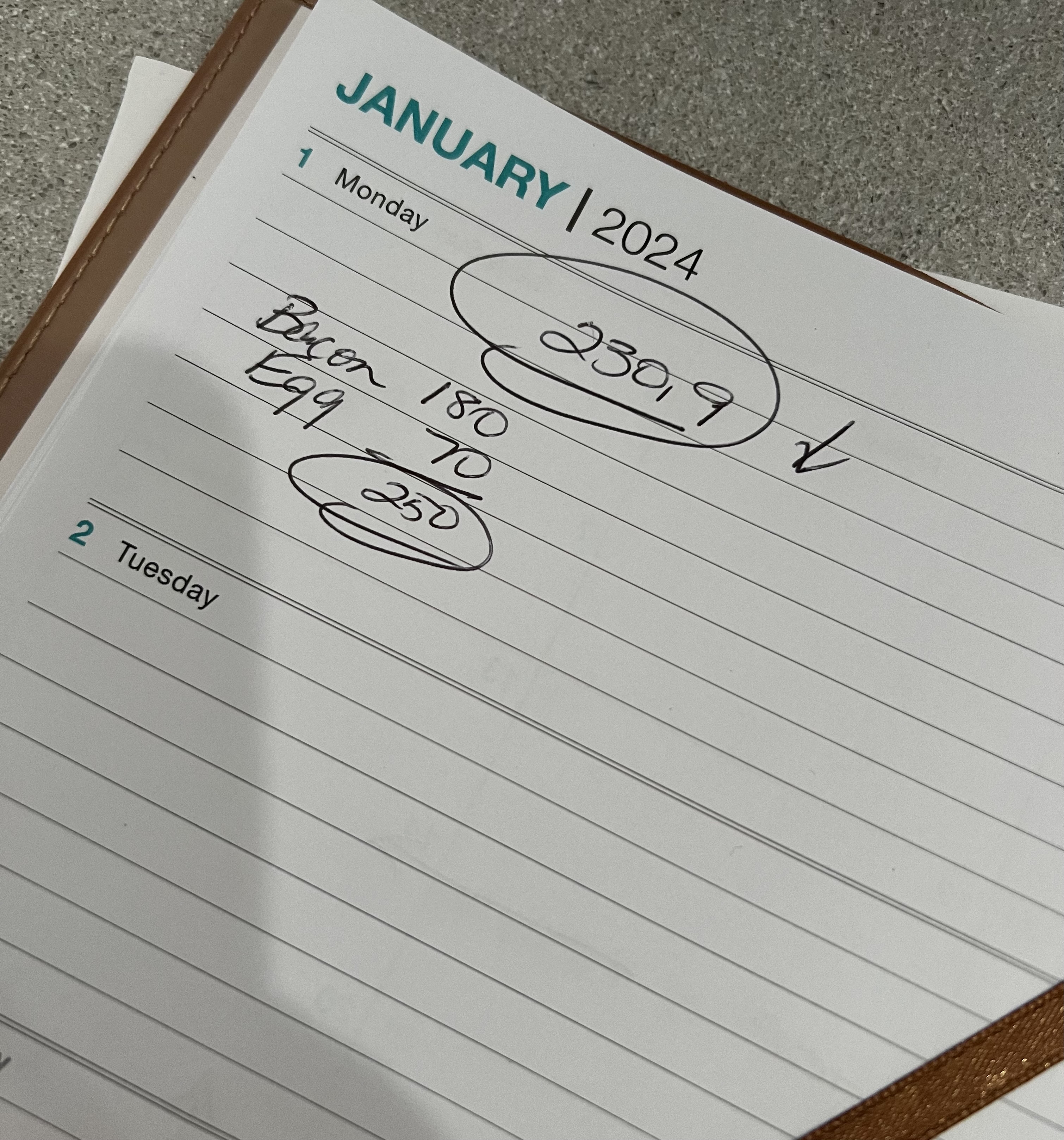
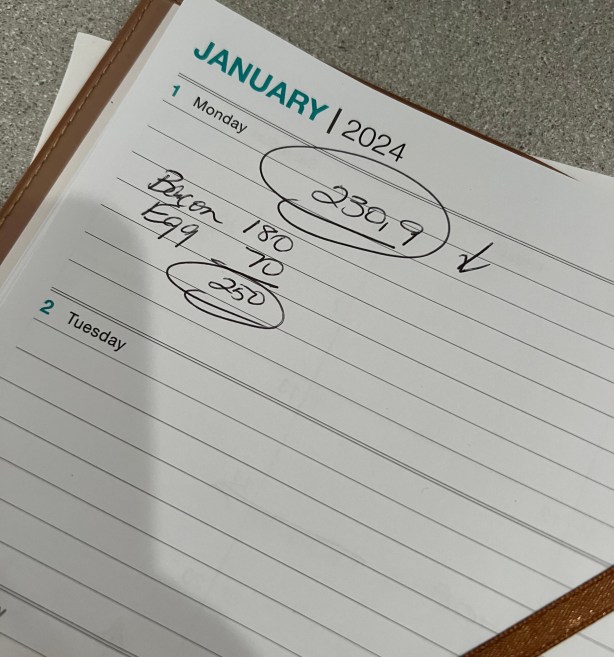
Another key to this diet’s success–and this is the one that everybody hates!–using a kitchen scale, I weigh and write down EVERY SINGLE MORSEL OF FOOD I EAT EVERY DAY, and then calculate how many calories that entails. Not everyone can be this anal, but I have no problem with it. Once I set my mind to it, it just comes naturally. I have a date book where I write my morning weight every day, and then everything I eat that day, with individual and total calorie counts. (Counting calories is easy, now that we all carry phones that let us simply Google that information.)
Using a simple digital kitchen scale (one that weighs ounces and grams) is KEY to making sure you’re not overeating. Buy one immediately! If you think you can simply eyeball measurements, you’ll find that you are WAY OFF!
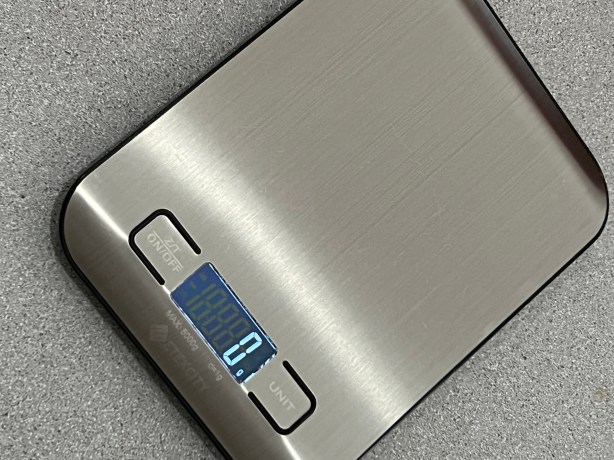
You can’t diet properly without this little bugger: a digital scale. Take my word for it, you will ALWAYS think you’re eating less than you are…and that’s one of the biggest mistakes people make. It’s just 20 bucks, and worth every penny.
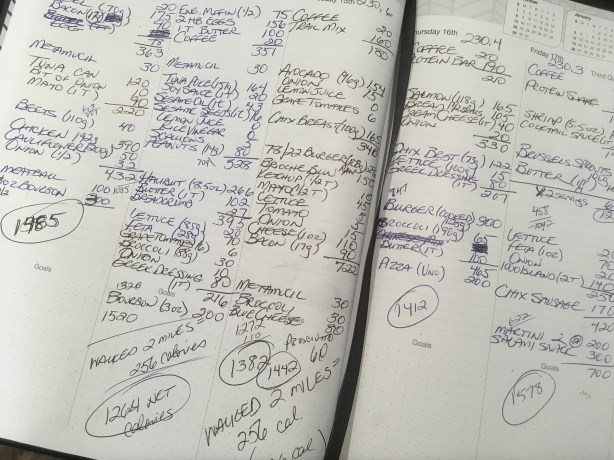
Yes…I write it ALL down!

Fortunately for a cocktail lover like me, even alcohol can be included in this diet. That’s not to say that I’m boozing it up! I only allow myself alcoholic beverages on Friday and Saturday nights. At 100 calories for 1.5 ounces of 80-proof booze, I can have a 3-ounce martini for a total of 200 calories (without olives.) Of course, that still counts in my 1500-calorie-a-day plan. So that means I have to eat less…which can get me a little loopy on weekends! But as long as I’m not driving, that’s not a problem! Drinking alcohol also gives me the munchies…so I have to be very careful with that.

Having a seat at great bars, like the world-famous Bar Hemingway at the Ritz in Paris, is a passion of mine. My diet still allows me to sip a fine cocktail without guilt! I choose drinks that are very low in sugar.

Follow this diet and you, too, will succeed. It doesn’t matter if you need to be gluten-free or not. It doesn’t matter if you’re avoiding carbs or not. It doesn’t matter if you’re vegan, vegetarian, or a total carnivore. Keto, Atkins, whatever. What matters is counting your total calories per day…and sticking to the diet every day…no cheating. No business lunch excuses, breakfast buffets, and 48-oz. steaks.
And no “rewarding” yourself with treats because “you did good” for a couple of days. Those things need to happen once a month MAX, not every few days.
A great tip is to start by still eating the foods you love, even if it’s not always good for you, just weighing everything and eating in smaller quantities. Avoid true junk food (like chips and cookies), but worry about total calories first, not whether what you’re eating is “health food.” (Like my buddy, Lee’s, son who still lost weight eating Taco Bell.) Your first goal should be to limit calories. Get a feel for it. Then, as you get comfortable and progress, start making better and healthier food choices. Let’s be honest: anyone who starts a diet by chewing celery stalks all day after a lifetime of steak and potatoes is going nowhere!
In previous years of dieting, after I achieved my goal weight, I went back to my daily intake of 2500 calories to maintain my new weight. (That’s still fewer calories than I was consuming every day before I started the diet, but after 1500 a day, it felt like I was cheating!)
What I learned with this diet, as I cooked healthier, measuring how much fat I put in a pan before frying…cutting my huge steaks into smaller pieces and trimming off the fat…was that I never want to go back to my old way of eating again. I can still eat anything I love…just less of it.
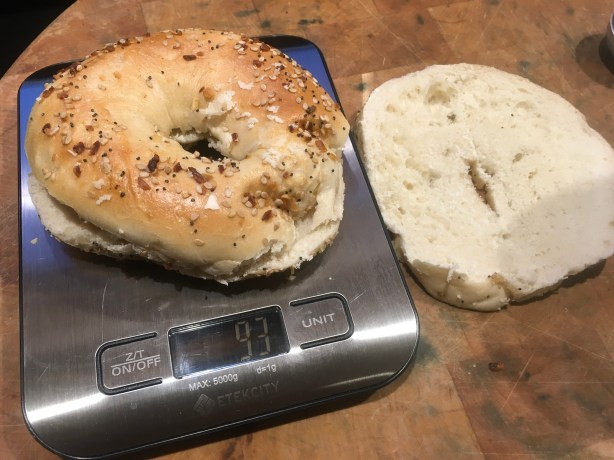
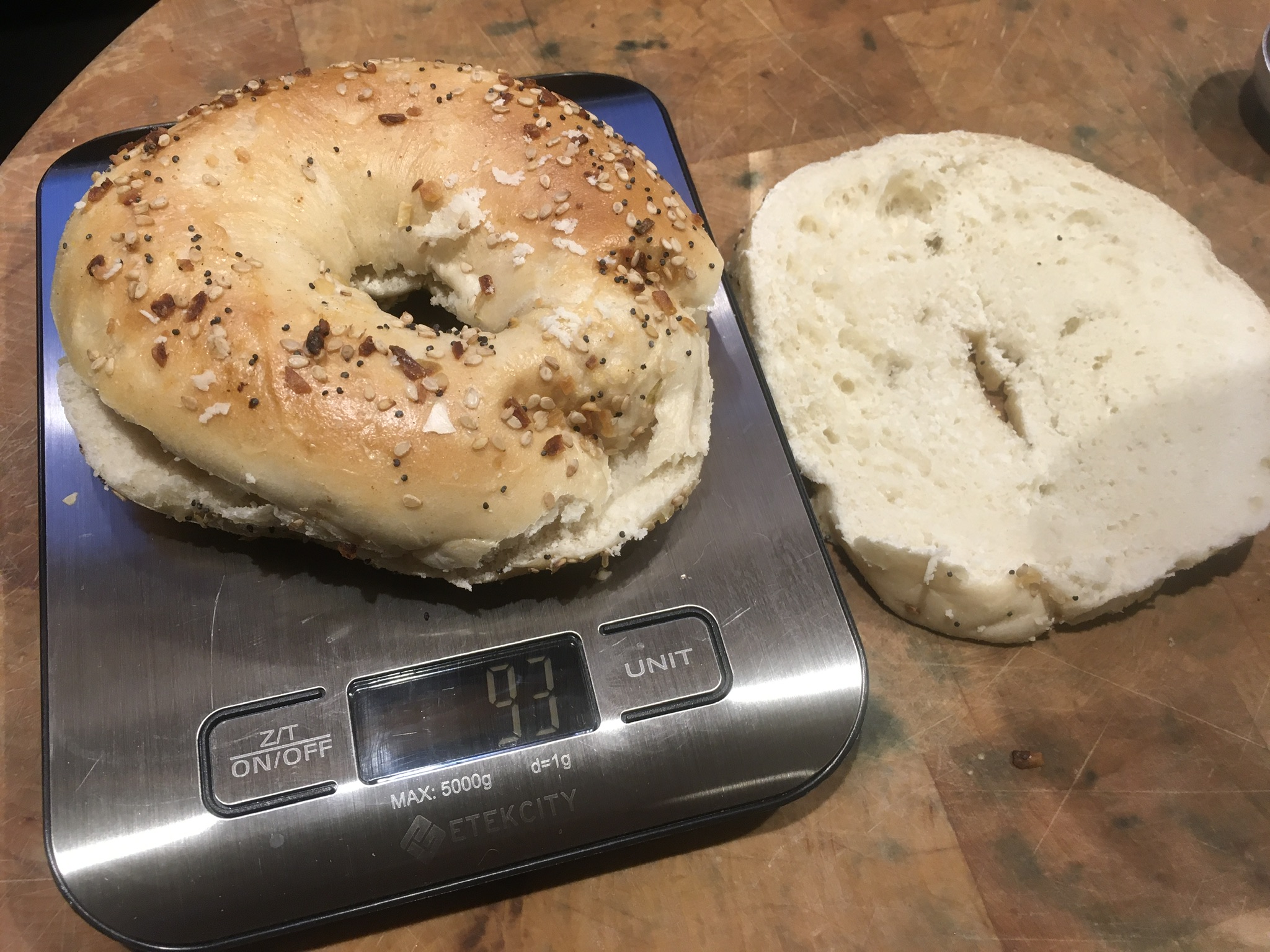
I cut the middle out of my bagel and weigh it!
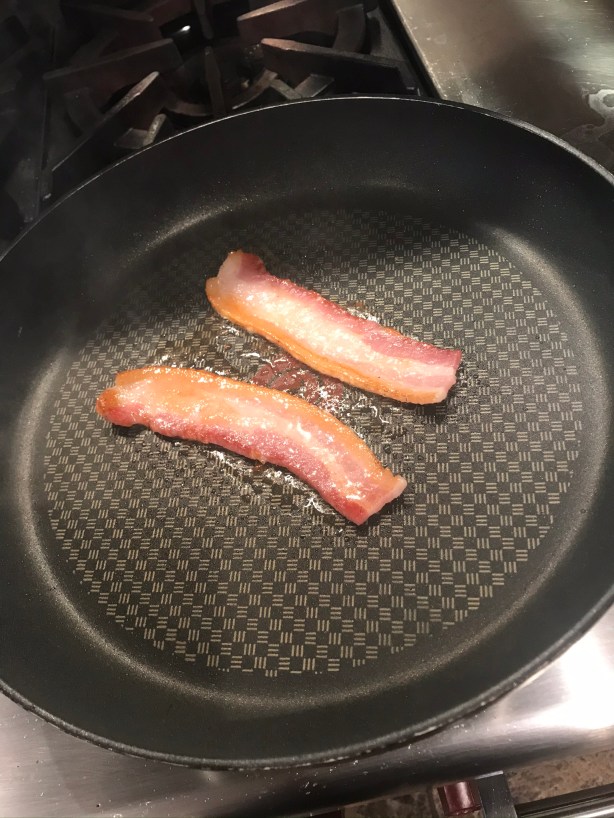
 

That right there, after cooking, is 90 calories (17g of cooked bacon, according to the package, dabbed with paper towels to remove as much grease as possible.) Nothing brings the flavor like bacon!
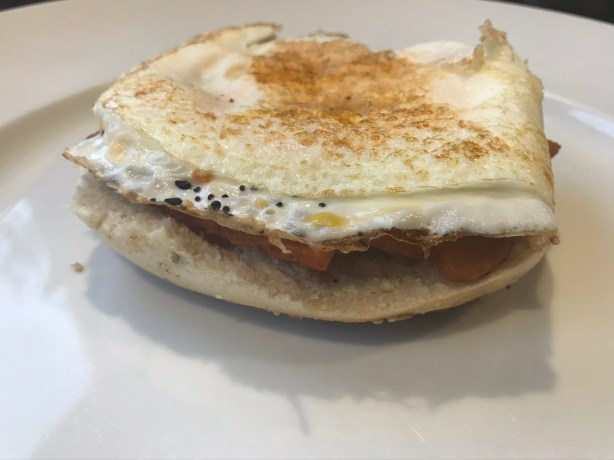
 

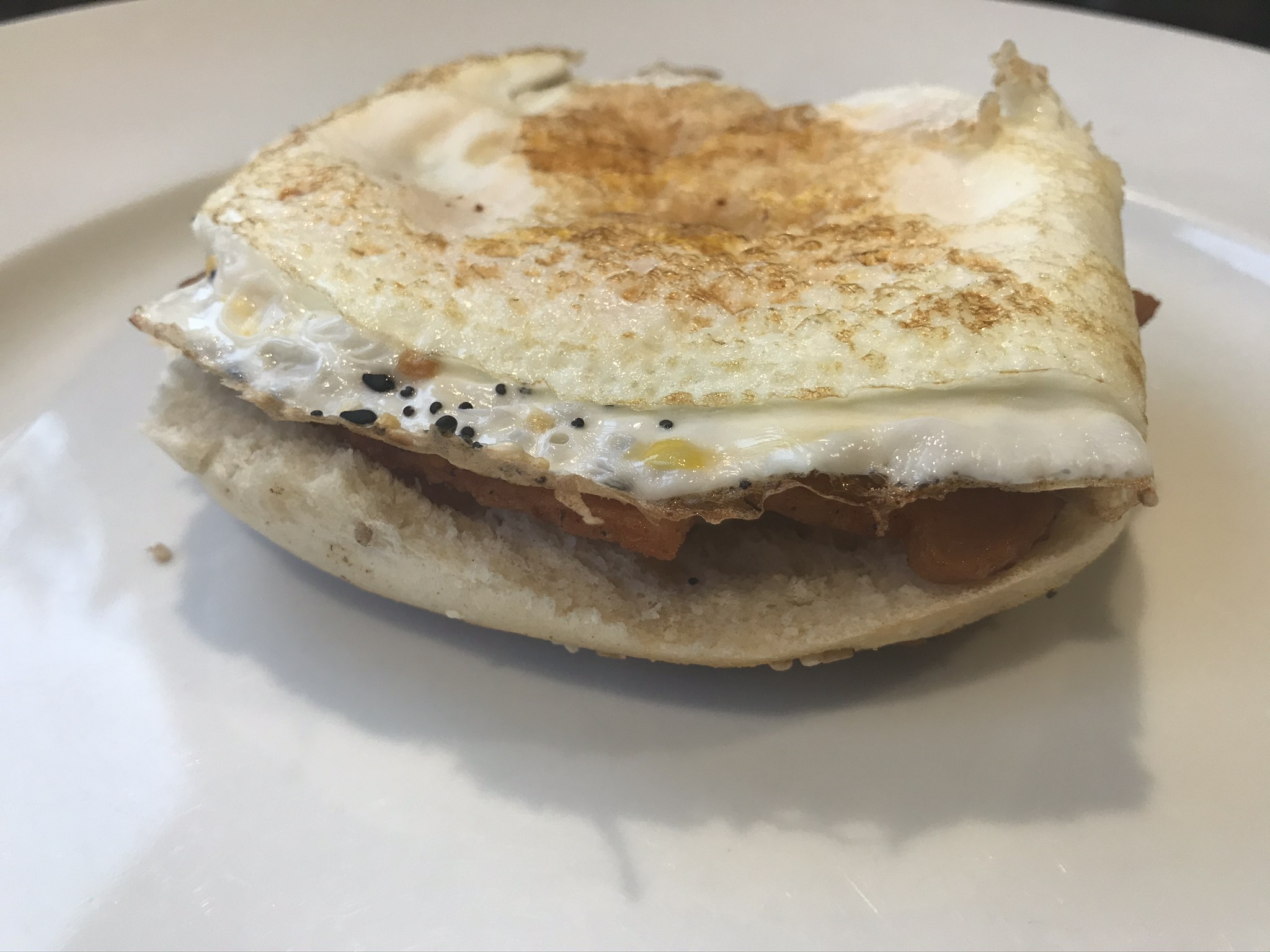
My breakfast sandwich: the bottom of an everything bagel, a strip of bacon, and a fried egg. 349 calories, including a tablespoon of butter! A sprinkle of everything bagel seasoning adds flavor and just a couple of calories.

WHAT I’VE FOUND….
Bad…
1 tablespoon of butter has 100 calories. I used to load my 400-calorie everything bagel with 300 calories of butter…and then I had breakfast! A tablespoon of whipped butter has only 50 calories, so I use that instead.
Same thing with mayonnaise. I love Hellman’s. But it’s got 90 calories per tablespoon. I either use Hellman’s Light at 35 calories, a low-calorie salad dressing, or I use a lot less of the real thing.
Cheese is not a dieter’s friend. It’s a calorie and salt nightmare. And light cheese tastes like crap. So I stick to small amounts of lower calorie cheeses, like feta (70 calories per ounce) or whipped cream cheese (40 calories per tablespoon), and save pizza and pasta dishes for very rare occasions.
Pizza and pasta: goes without saying. Dry pasta is 200 calories for 56g. That’s a third of what I used to eat (before the sauces, cheeses, meatballs, etc!)
Good…
Boiled Shrimp is our friend at just 1 calorie per gram–the same as chicken breast–and it has lots of protein. Shrimp cocktail makes you feel like you’re splurging, but it’s low in calories if you go easy on the cocktail sauce.
Lobster and scallops, too: super-low calorie. It’s the butter that kills you!
Raw oysters: packed with protein and a ridiculously low 10 calories, on average, per oyster. Eat all you want, but go easy on the cocktail sauce.
A hard-boiled egg, which I love, is just 70 calories…an excellent protein bomb that fills you up. (And don’t worry about the cholesterol unless you’re eating a dozen a day!)
You can still have bacon! My thick-cut bacon is 90 calories a slice after frying (17g.) Now I have one slice for breakfast instead of six! (Bacon varies. Read the package.)
A diet saves you money! I can’t believe how much less food I buy at the supermarket! Sure, I’m buying more veggies, but a steak that used to be one meal is now three! As a nation, Americans eat way too much food, and what we eat is mostly unhealthy. A diet that focuses on veggies and lean proteins is good for any body. Michael Pollan’s quote is more valuable now than ever: “Eat food, not too much, mostly plants.”
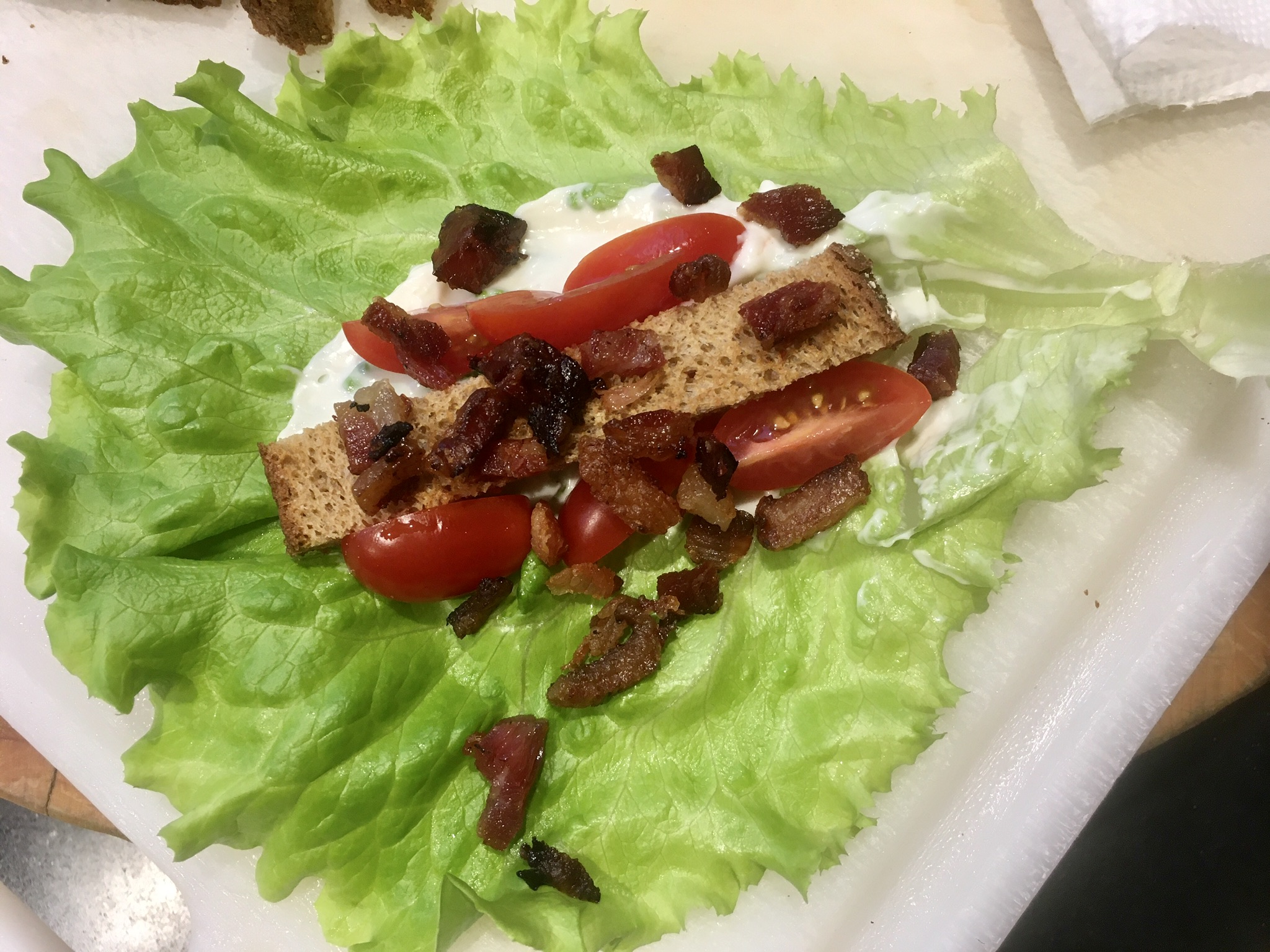
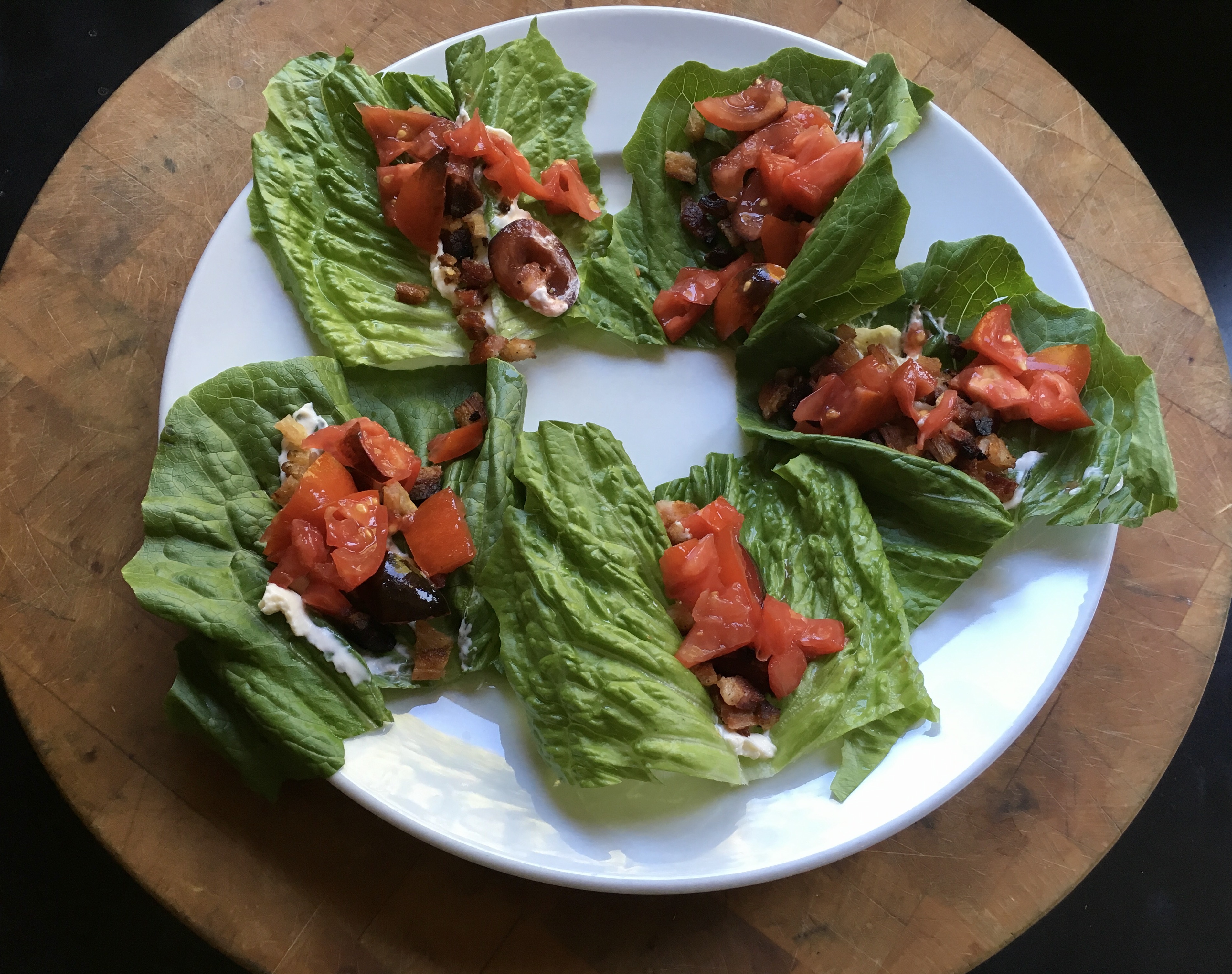
A successful diet is all about being creative. I can’t have a BLT in the usual sense anymore, and that’s my all-time favorite sandwich. But I can have BLT lettuce wraps that drastically cut the calories and still satisfy my cravings.
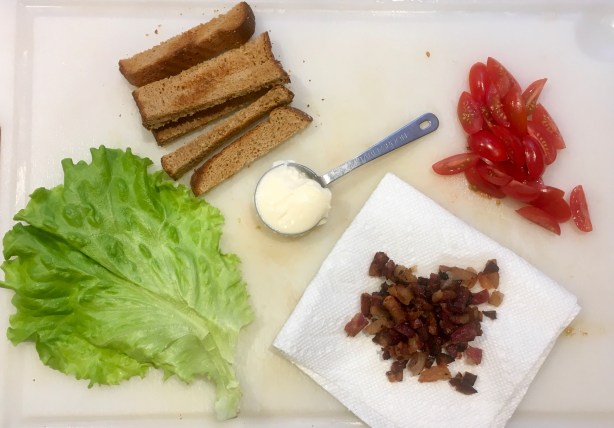
My BLT. Limiting the bacon and mayo makes it diet-friendly.
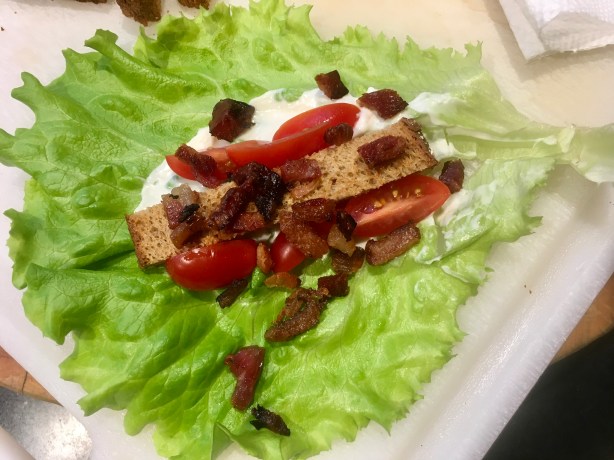
 

Adding that strip of toasted bread really adds to the flavor and texture!

Of course, any exercise you do in addition to this diet is only a bonus. If you use a treadmill or stationary bike, the digital readout will tell you just how many calories you’ve burned. You can subtract that from your daily calorie count. But, that being said, one of the biggest diet mistakes people make is to over-estimate how many calories they’ve burned during exercise.  If you’re guessing…you’re WRONG! Guaranteed, you burned FAR LESS than you think you did!
I know the health clubs may not want me to say this, but you DON’T have to exercise to lose weight. Reducing your caloric intake alone–if you reduce it enough and for long enough–WILL make you lose weight. Exercise alone WILL NOT.
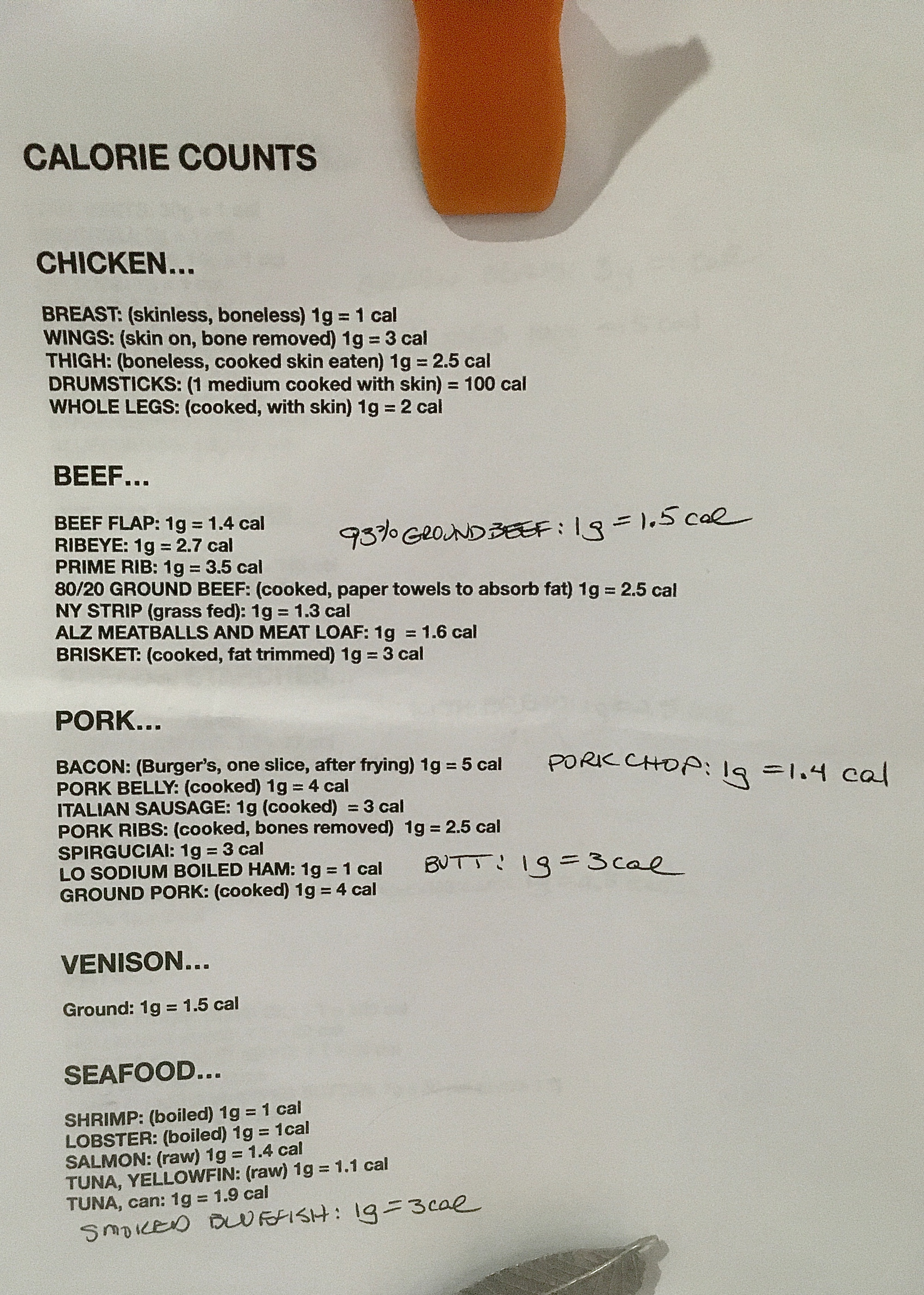
Here are my calorie charts for this diet. You may not like all the foods I’ve got listed here, but I think it’s a good start. As I mentioned earlier, you can pretty much Google the calorie count of any food. That’s basically what I did….and I read a lot of labels!
One last tip: There will be times where the bathroom scale will be teasing you, taunting you: where your weight won’t budge for several days at a time. Don’t let this get to you! Your body is still changing for the better! This is where you need to be strong! Keep doing the right thing, and you will see that at the end of a couple of months, when you chart your progress, you really did lose almost 2 pounds a week.
I’ve done it before!  I’m gonna do it again! So can you in 2024!

It’s National Bacon Day!
Let’s face it: there are few foods as magical as bacon. Add bacon to just about any dish you’re preparing, and it elevates it to incredible new heights of flavor. The BLT is possibly the greatest food combination ever invented: just a few simple, fresh ingredients, when placed together, transforming into one of the greatest sandwiches on planet Earth.

BLT wraps: home-cured and smoked bacon, local farmstead romaine, home garden tomatoes, always Hellman’s mayo.

If I’m buying bacon, I go on-line to Burger’s Smokehouse, a family run business in Missouri that has made great bacon for decades. The prices are good, and they include shipping. (www.smokehouse.com) I buy in quantity and freeze what I don’t need right away. My favorite is the thick-sliced country bacon “steaks.”

But nothings beats making your own.

Bacon comes from the pork belly, and they’re easy to find in any good butcher shop. But to get something a notch above, I’ll buy a heritage breed, like Berkshire pork, from Heritage Pork International. (www.heritagepork.com)  I follow the simple curing techniques outlined in “Charcuterie,” a great book written by Michael Ruhlman and Brian Polcyn.

To cure bacon, all you really need is salt and sugar, and what they in the curing biz call “pink salt,” which is not to be confused with salt that happens to be pink, like Himalayan salt you would find in a gourmet store. Pink salt is bright pink to let you know that it’s a special salt that should only be used in small quantities for curing. The reason is: nitrites. Nitrites delay the spoilage of the meat, and help keep the flavors of spices and smoke. They also keep the meat nice and pink instead of an unappetizing gray. That’s good. However, nitrites can break down into nitrosamines, which have been known to cause cancer in lab animals. But let’s face it: you would need to eat a ton of cured meat to really worry about this. (I buy uncured deli meats and hot dogs at the supermarket, because processed meats are a different story. But since I know exactly what goes into my own bacon, I’m not worried about the level of nitrites.)

To make the basic dry cure:

1/2 lb. kosher salt (I use Diamond Crystal Kosher salt)
1/2 cup light brown sugar or turbinado sugar
1 oz. pink curing salt

Mix the ingredients well. An important note: all salts do not all weigh the same, so go by the weight and not a cup measurement. (Morton’s Kosher salt, for example, is heavier than Diamond Crystal.) I keep this basic dry cure stored in my pantry, ready to use when I need it.

When it’s time to be makin’ the bacon, I combine this dry cure with other ingredients to make my bacon rub.

My bacon rub:

1/2 cup basic dry cure
1/2 cup brown sugar or turbinado sugar
1 tablespoon fresh cracked black pepper
1 tablespoon granulated garlic
1 tablespoon granulated onion

Mix these ingredients well (yes, there’s quite a bit of sugar there, but I like my bacon a little sweet!) Rub it generously all over the pork belly.

I have a large plastic container with a lid that fits one slab of pork belly perfectly. I place the belly inside it, put the lid on, and place the container in the fridge. The pork belly stays there for at least a couple of weeks, maybe three. I flip the belly every few days. You’ll see that the salt will draw moisture out of the meat and form a gooey brine. This brine will continue to cure your pork belly, so leave it in there. Just flip it, put the lid back on the container, and back in the fridge.

In two or three weeks, you’ll be able to tell the pork belly has cured because it feels firm. Wash the brine off the meat well with cold water, and pat it dry with paper towels. Place the belly in the fridge for an hour or so and it will develop a tackiness to the touch. This is a thin layer of proteins known as a pelicle, and it helps the smoke stick to the meat.

Now it’s time to cook. You can simply cook the pork belly (without smoking it) at 200 degrees for about 2 hours, until the internal temperature reaches 160 degrees. But this isn’t bacon…it’s pancetta.

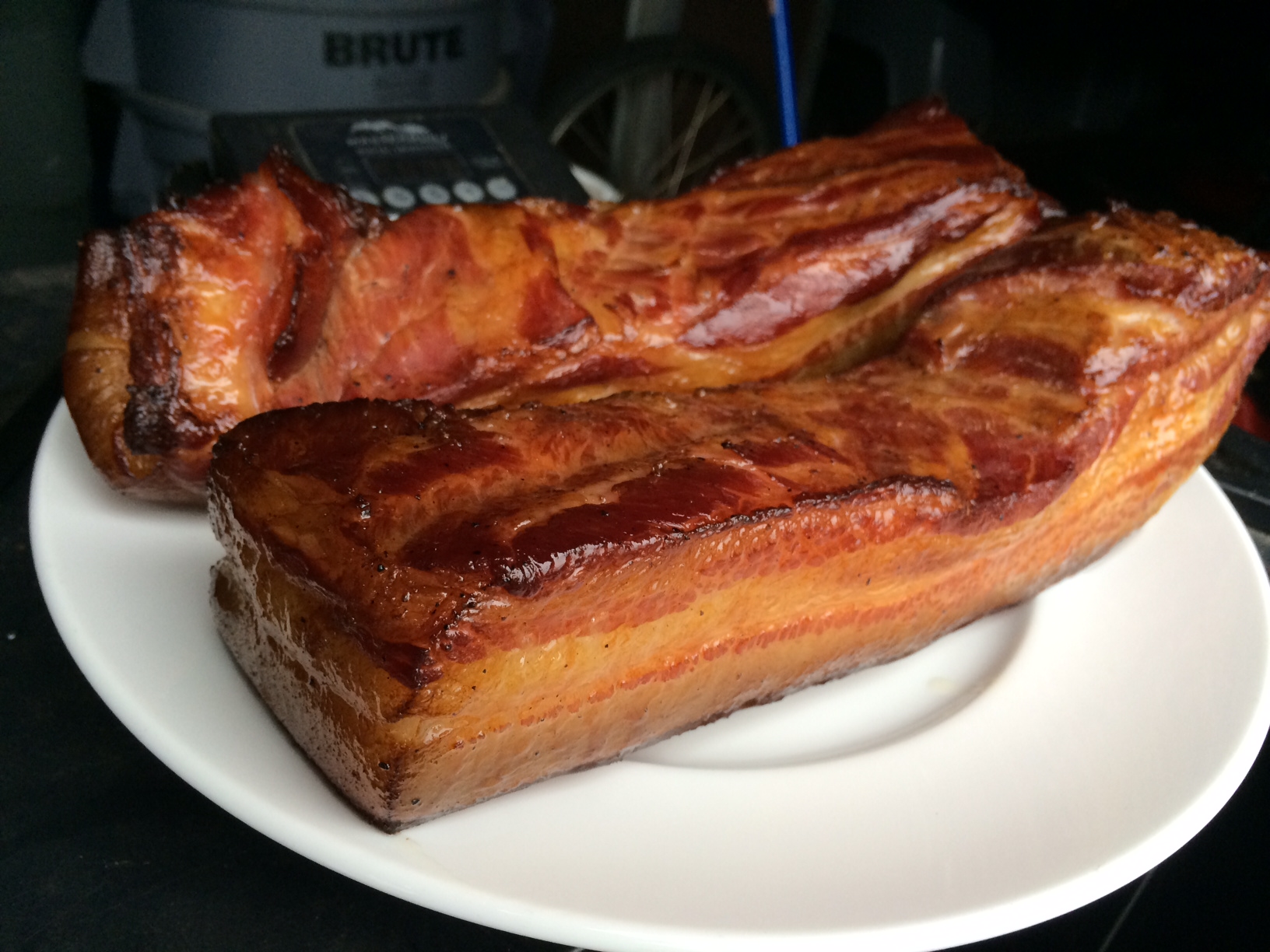
I place the pork belly in my digital smoker, which allows me to set an exact temperature. I smoke it at 250 degrees for 2 hours, using hickory chips. Now it’s bacon.

Bellies in the smoker

Bellies in the smoker.

Smoked bacon

Beautiful bacon!

That’s it. You have achieved bacon!

The reward is so worth the effort. Just remember that you still need to slice the bacon and fry it. Don’t eat it straight out of the smoker. That first slice you cut off your bacon and toss in a pan to lightly fry for a few moments will be the best bite you’ve ever had in your life!
And if you’re making one slab of bacon, why not make it three or four? It freezes well. And…you will eat it. You know you will!

Frying in the pan!

Frying in the pan!

Winter is here. It’s time for some serious comfort food.

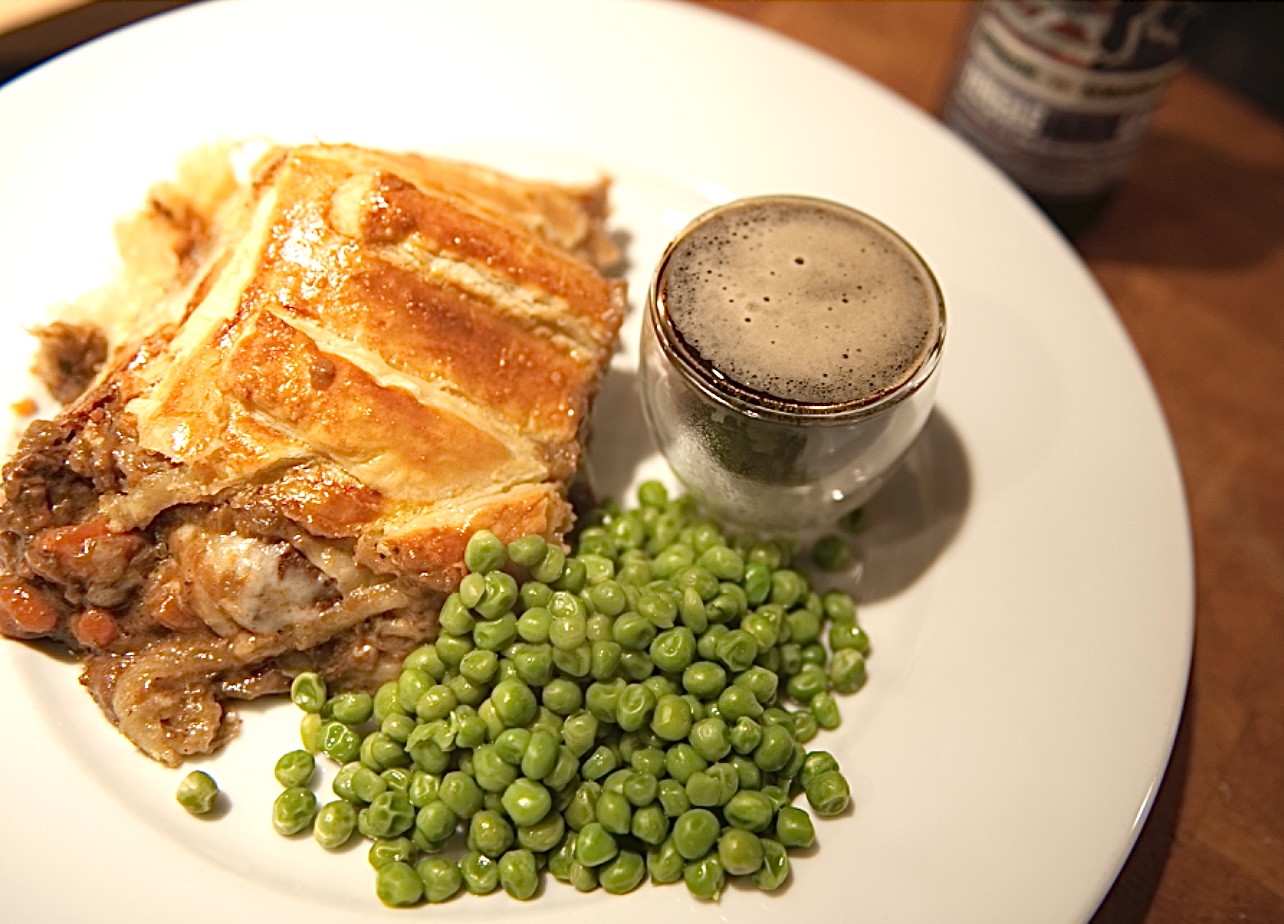
Years ago, when I received a shipment of venison from my father-in-law, an avid hunter that lives in the Upper Peninsula of Michigan, I knew that although I could certainly use beef for this dish, it would be absolutely stellar with venison. I’ve made it several times since then, with beef, venison, and lamb, with delicious results!


image

Olive oil
3 red onions, peeled and chopped
3 cloves of garlic, peeled and chopped
3 tablespoons butter, plus extra
3 carrots, peeled and chopped
3 celery stalks, trimmed and chopped
10 oz. baby bella mushrooms, chopped
3 lbs. venison (or beef or lamb), cut into 3/4″ cubes
A few sprigs of fresh rosemary, leaves picked and chopped
Salt and pepper
24 oz. of your favorite lager or stout
3 tablespoons flour
12 oz. freshly grated cheddar cheese
1 1/2 pounds store-bought puff pastry (all-butter is best)
1 large egg, beaten


Pre-heat the oven to 375.

In a large oven-proof pan, heat a few tablespoons of the olive oil. Add the onions and fry gently for about 10 minutes. Turn the heat up and add the garlic, butter, carrots, celery and mushrooms. Stir well, then add the venison, rosemary, and a teaspoon each of salt and pepper.

Sauté on high for about 4 minutes, then add the beer, making sure you take a swig for luck! Stir in the flour and add just enough water to cover. Bring it to a simmer, cover the pan with a lid or foil, and cook it in the pre-heated oven for about 1 1/2 hours.

Remove it from the oven after 1 1/2 hours and stir it a bit to combine all the flavors. Put it back in the oven (covered) and cook another hour, until the meat is cooked and the stew is rich, dark and thick. If it’s still liquidy, place the pan on the stove top and reduce it until the sauce thickens. (You don’t want a soupy stew or you’ll get soggy puff pastry later.) Remove the pan from the heat and stir in half the cheese. Taste it to see if it needs seasoning, but remember there’s more salt coming when you add the rest of the cheese. Set it aside to cool.

Depending on whether your puff pastry comes in sheets or a block, you’ll need to use a rolling-pin to get it into sheets about 1/8″ thick. Butter a good-sized pie dish or an oven-proof terrine, like the one in the photo above. Line the dish with the sheets of pastry, letting the pastry hang over the sides. Pour in the stew, even it out with a spatula, and add the rest of the grated cheese on top.

Use another 1/8″ thick sheet of pastry (or a couple if they’re not wide enough) to cover the top of the pie dish. Lightly crisscross the top with a knife, then fold over the overhanging pieces of pastry over the lid, making it look nice and rustic. Don’t cut or throw any of the extra pastry away! Find a way to use as much as you can, since everyone will want some.

Brush the top with the beaten egg and then bake the pie on the bottom of the oven for about 45 minutes, until the pastry has cooked, and it’s beautifully puffed and golden. Serve with a side of peas (and beer!)