Archive for the ‘beef’ Category
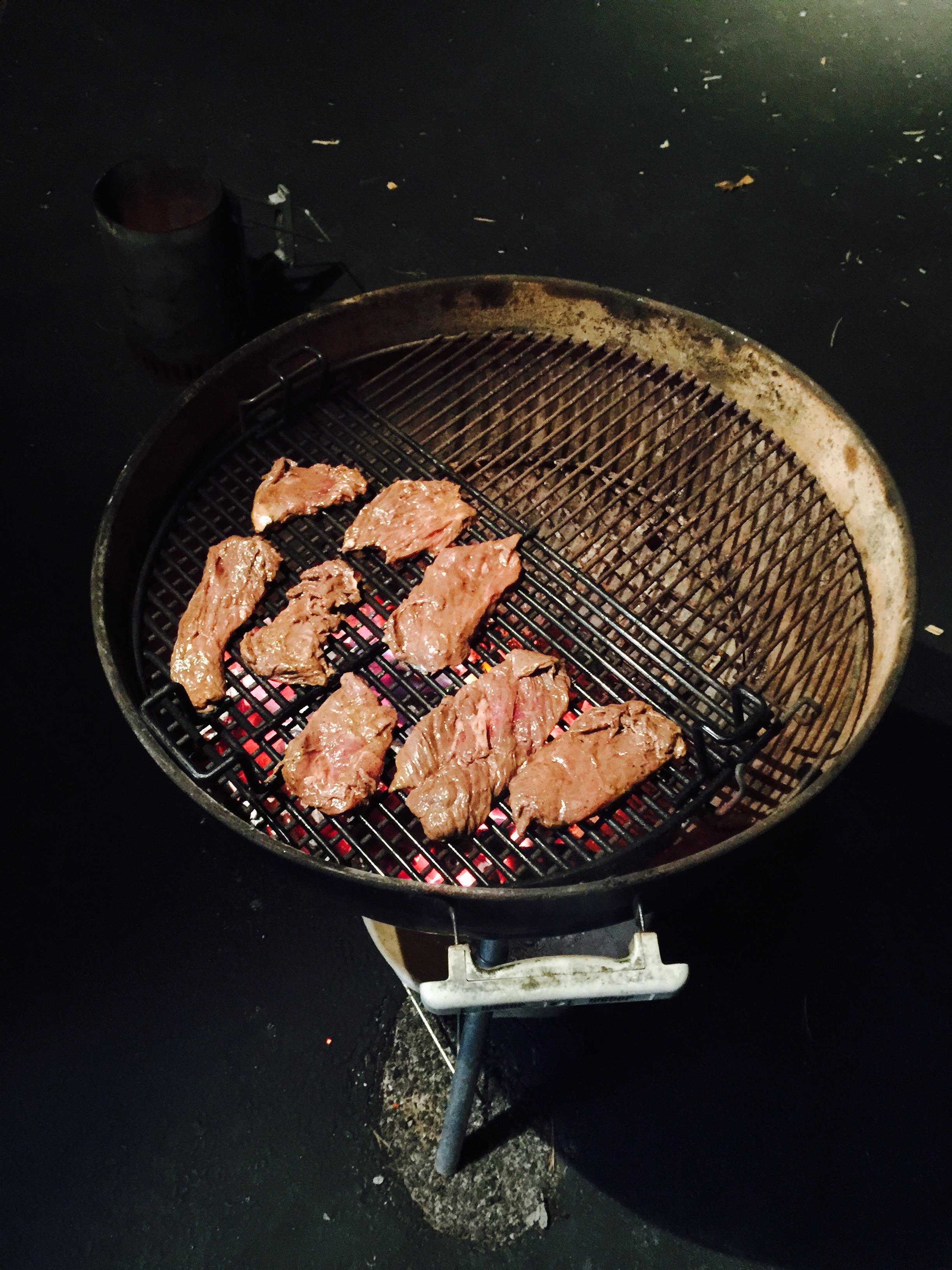
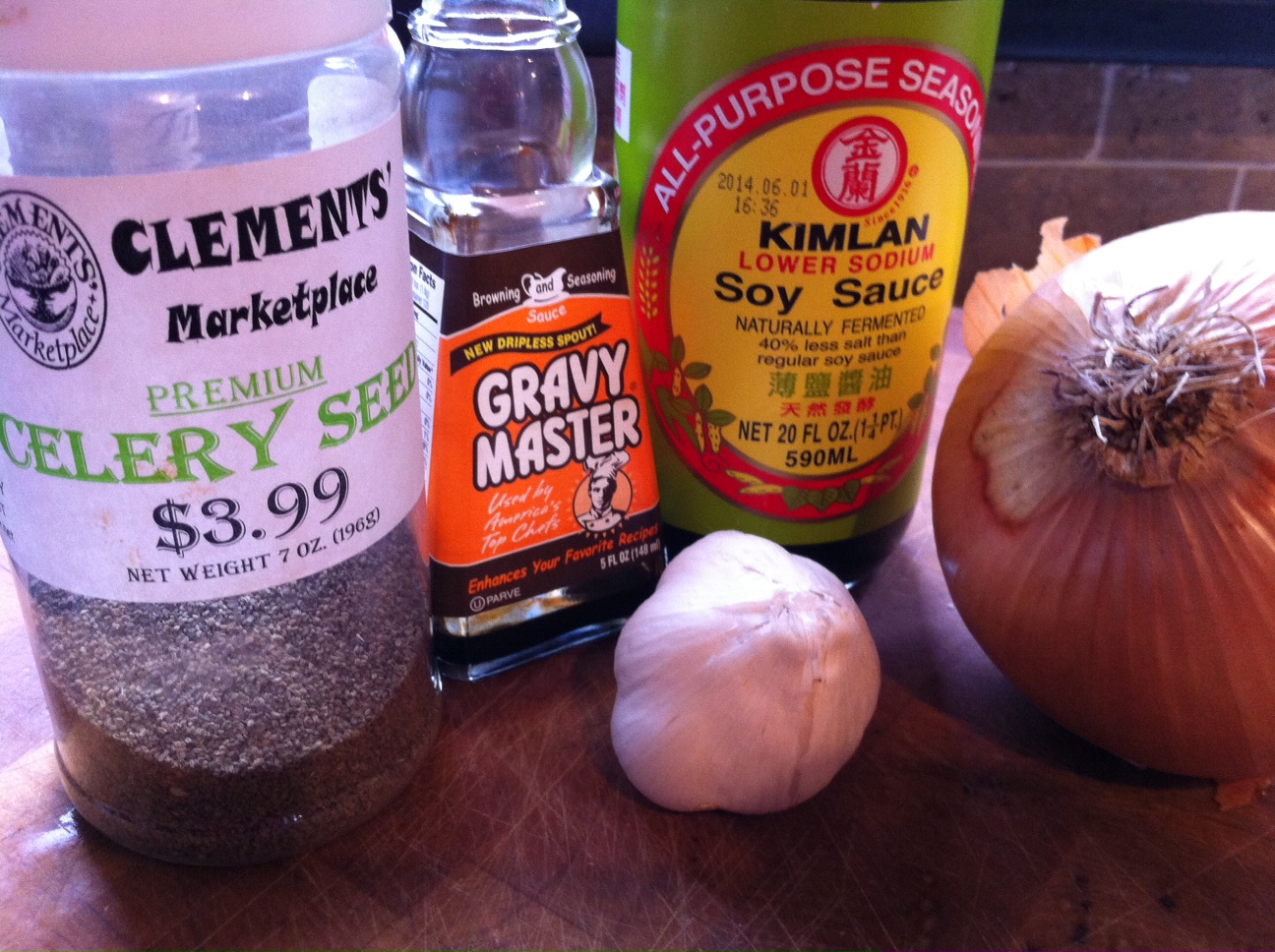
HOME MADE BEEF JERKY IS THE BEST
Posted: November 29, 2017 in beef, Carnivore!, Food, jerky, marinade, RecipesTags: beef, food, GF, gluten-free, jerky, marinade, recipes
1 tablespoon salt
STUFFED CABBAGE
Posted: October 30, 2017 in bacon, beef, Food, pork, Recipes, UncategorizedTags: beef, cabbage rolls, food, pork, recipes, stuffed cabbage
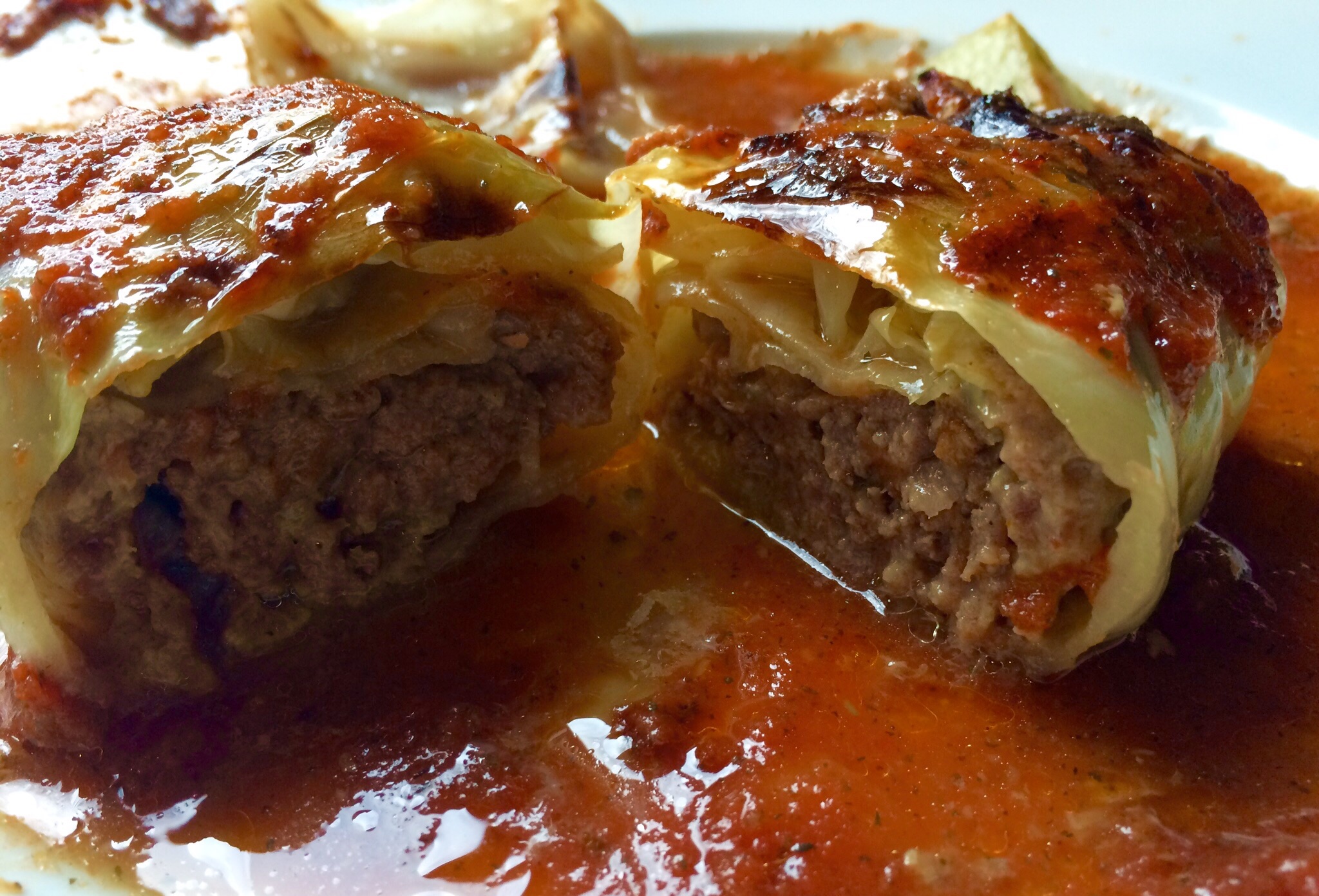
If there’s a dish that my Mom made all the time, but I didn’t appreciate until I got older, this is it. Stuffed cabbage, cabbage rolls, or balandėliai, as we say in Lithuanian, was a staple in our home and one of my Dad’s favorite foods.
I had seen my Mom make these beauties so often in my childhood, I didn’t even need to check online recipes out for guidance. That doesn’t mean I make them exactly like Mom, but my version came out pretty damn good. I think Mom would be proud.
4 strips of bacon, chopped
1 yellow onion, finely chopped
1 teaspoon salt
1/2 teaspoon pepper
1/2 teaspoon granulated garlic
1 lb. ground grass-fed beef
1 lb. ground pastured pork
1/2 cup breadcrumbs
2 eggs
1 large head cabbage
1 pint homemade chicken stock
750 mg diced tomatoes (1 Pomi container)
1 teaspoon thyme
1 teaspoon salt
1/2 teaspoon pepper
1/4 teaspoon granulated garlic
1/4 teaspoon granulated onion
Chop the bacon into small pieces and fry them until crisp. Finely chop the onion, and add it to the bacon in the pan, cooking until the onions are translucent. Add the salt, pepper and garlic. Mix well, and remove from the heat. Let it cool to room temperature.
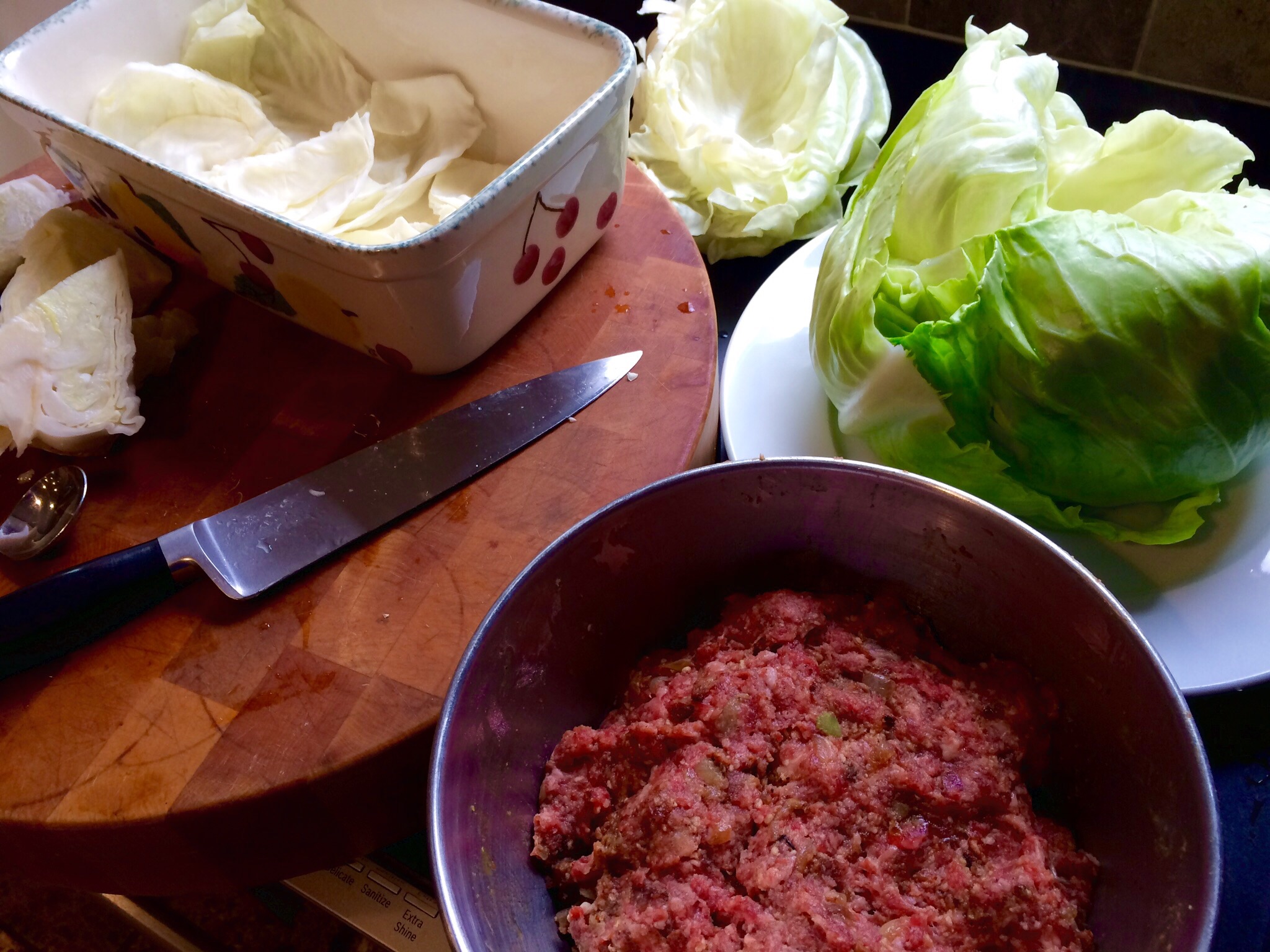
In a large bowl, combine the beef, pork, breadcrumbs, eggs, and cooled bacon and onion mixture. Place in the fridge to firm up.
Let a large pot of salted water come to a boil. Core the cabbage, leaving the leaves whole, and carefully immerse the head of cabbage into the hot water. Little by little, the outermost leaves of the cabbage will come off the head, and you can remove them with tongs, so you don’t burn yourself with the hot water. Set the leaves aside to cool, and continue doing this until you can no longer remove leaves from the remaining head of cabbage.
Remove the remaining head of cabbage from the hot water, and using your hands or a knife, break it into flat pieces. Line the bottom of a roasting pan with the pieces. These will keep the stuffed cabbage from burning and sticking to the bottom.
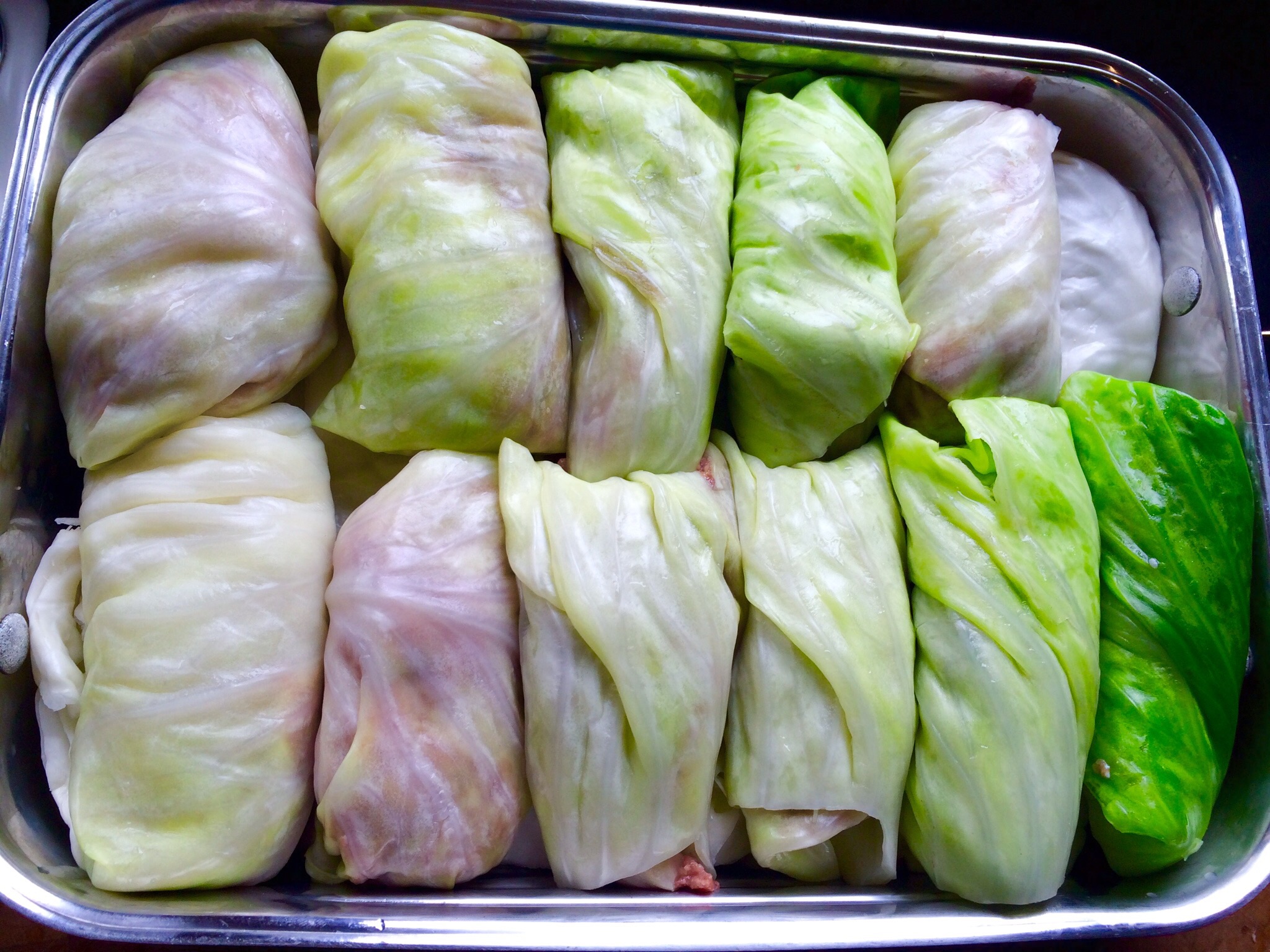
Time to roll the stuffed cabbage. Take the meat out of the fridge. Lay a cabbage leaf flat on the counter, and add some of the meat mixture inside. Roll the cabbage around the meat, folding the sides in as you go, much like a burrito. You might need to slice away the thickest part of the leaf stem to make rolling easier. Lay the stuffed cabbage in the roasting pan on top of the leftover cabbage pieces. (Unlike Mom, I don’t use toothpicks to hold the stuffed cabbage rolls together.)
Continue stuffing and rolling the cabbage leaves until you’ve got a pan full of them, shoulder-to-shoulder.
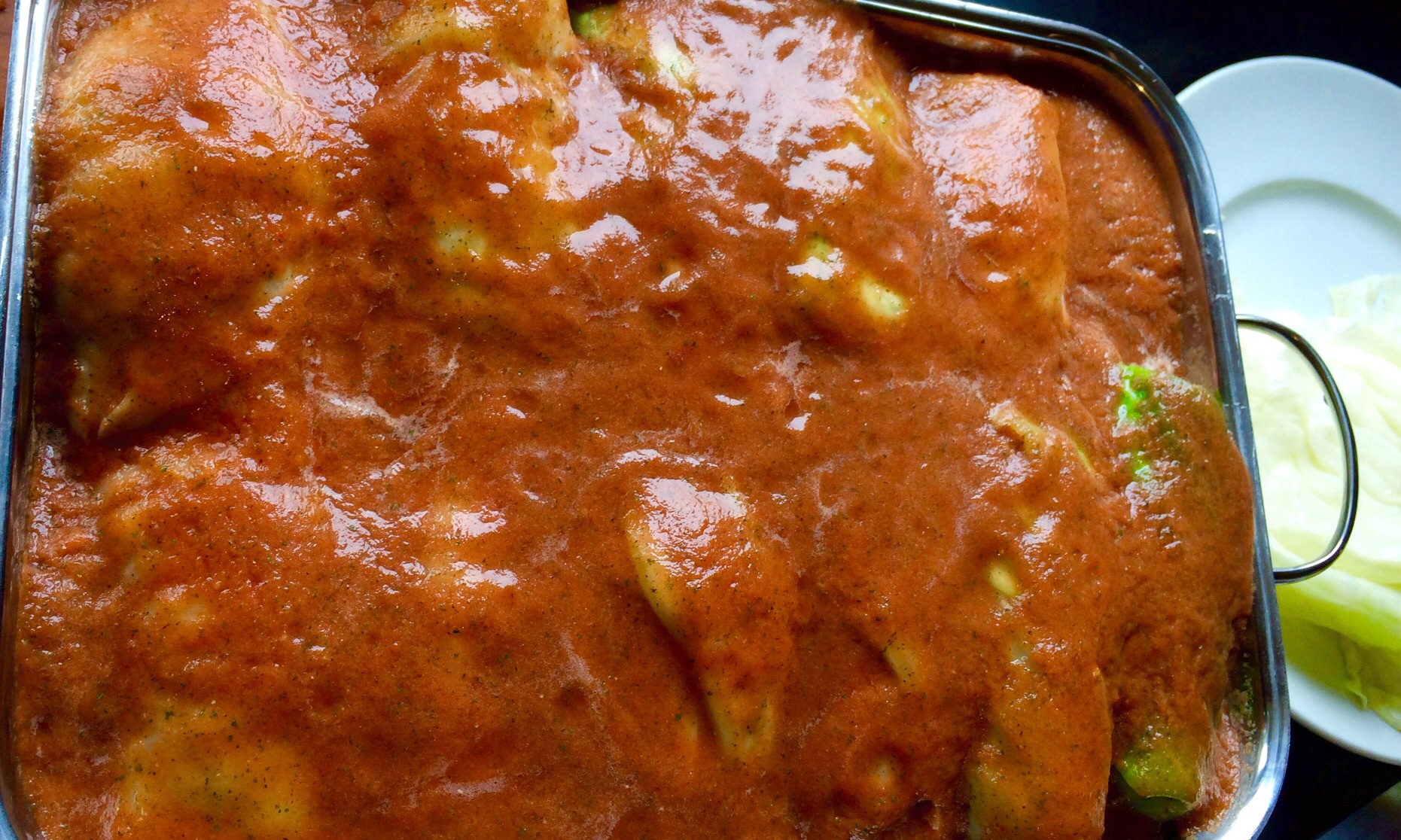
In a blender, combine the chicken stock, diced tomatoes, thyme, salt, pepper, garlic and onion. Pour this mixture over the top of the cabbage rolls in the roasting pan, covering them.
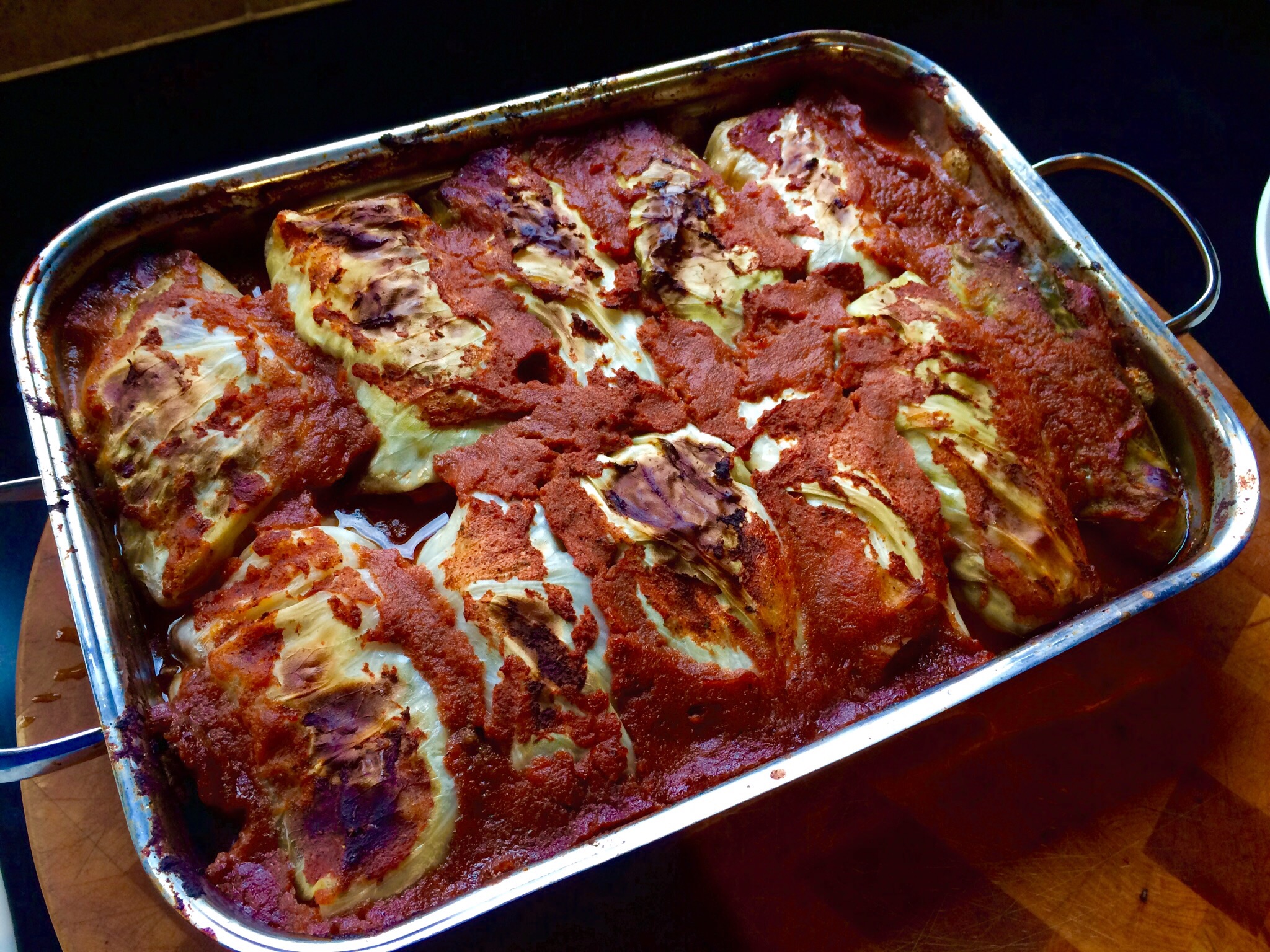
If you have leftover cabbage, you can place another layer of them on top. Otherwise, cover the roasting pan with foil and place in a pre-heated 350 degree oven. Cook for an hour.
After an hour, remove the foil and cook further for another 45–60 minutes.
CHIMICHURRI
Posted: April 23, 2017 in beef, Food, grilling, marinadeTags: chimichurri, food, marinades, recipes
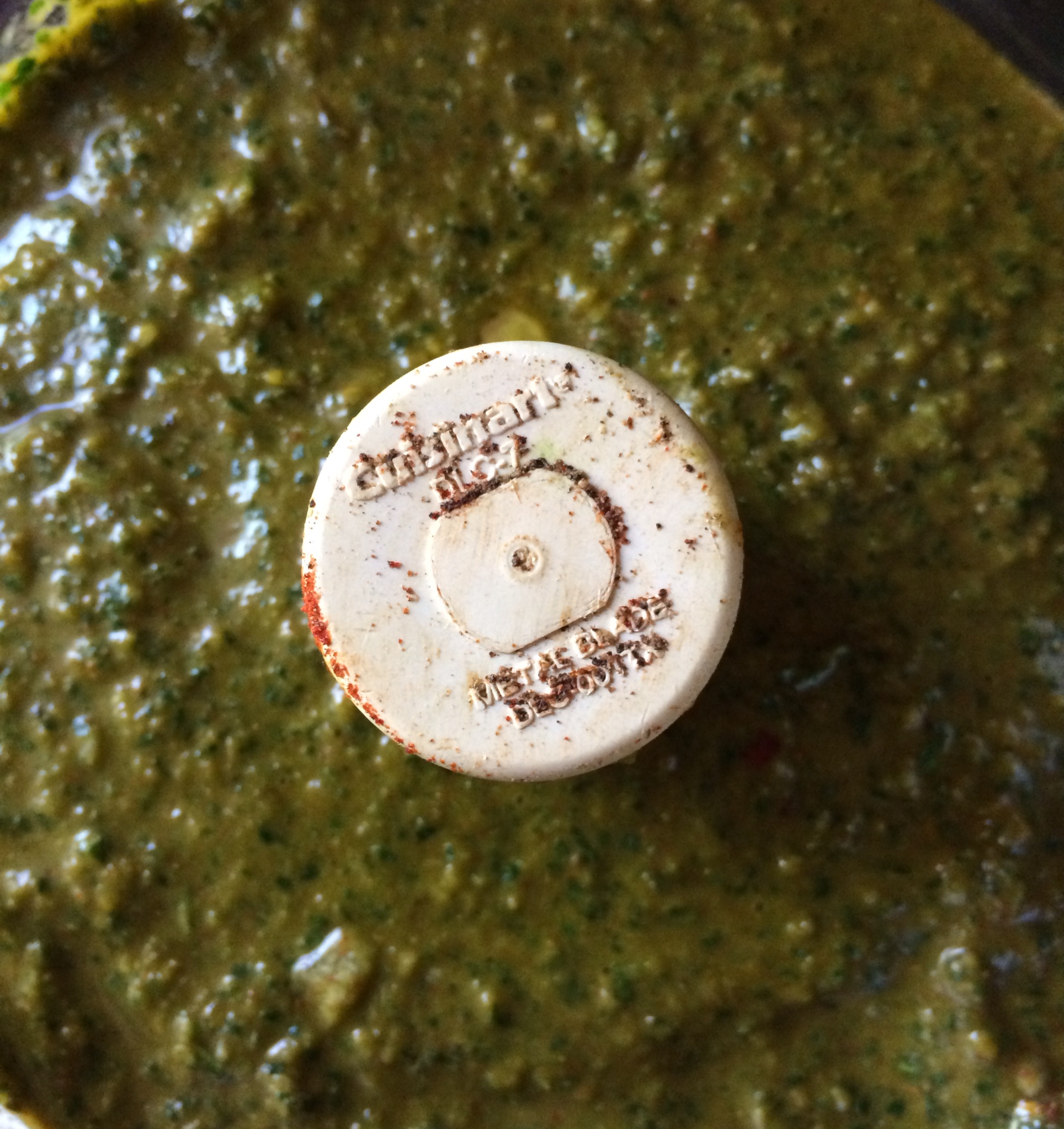
Chimichurri is a green sauce usually used with grilled meats. This pesto-like condiment originated in Argentina and is also commonly used in Nicaragua and Uruguay. Though some recipes include cilantro, many insist the original is made only with parsley. Chimichurri also makes an excellent marinade for grilled meats.
My buddy, Lee, a chemist and avid chimichurri fan, is the inspiration for my version of this sauce. It’s incredibly easy to make. Just make sure to use fresh ingredients, and it’s always a good idea to wash all the veggies before using.
1 bunch flat-leaf parsley, chopped
1/4 cup water
1 medium onion, chopped
3 cloves garlic, minced
3–4 tablespoons fresh oregano, leaves only (or 1 tablespoon dry)
1 tablespoon paprika
1 teaspoon crushed bay leaf
1 tablespoon coarse sea salt
1 teaspoon freshly ground black pepper
pinch red pepper flakes
1/4 cup red wine vinegar
1/2 cup extra virgin olive oil
Place all the parsley and the water in a food processor and begin to chop. When the parsley is in small pieces, stop the processor and add the remaining ingredients, except the vinegar and olive oil. Start the processor again and slowly pour in the vinegar, then the olive oil. Mix and chop, do not puree. Allow it to rest for at least 30 minutes, but overnight in the fridge is best.
I marinated 2 grass-fed beef ribeyes in chimichurri overnight. The next day, I let the beef come to room temperature and I wiped the marinade off the steaks. I discarded the marinade, then I re-seasoned the beef with a little salt and pepper and pan seared them, finishing them in a 350-degree oven until medium-rare. A little dipping of fresh chimichurri on the side.
KONA BEEF RIBS
Posted: March 19, 2017 in beef, Food, RecipesTags: beef, coffee, food, grass-fed, recipes, ribs, rub
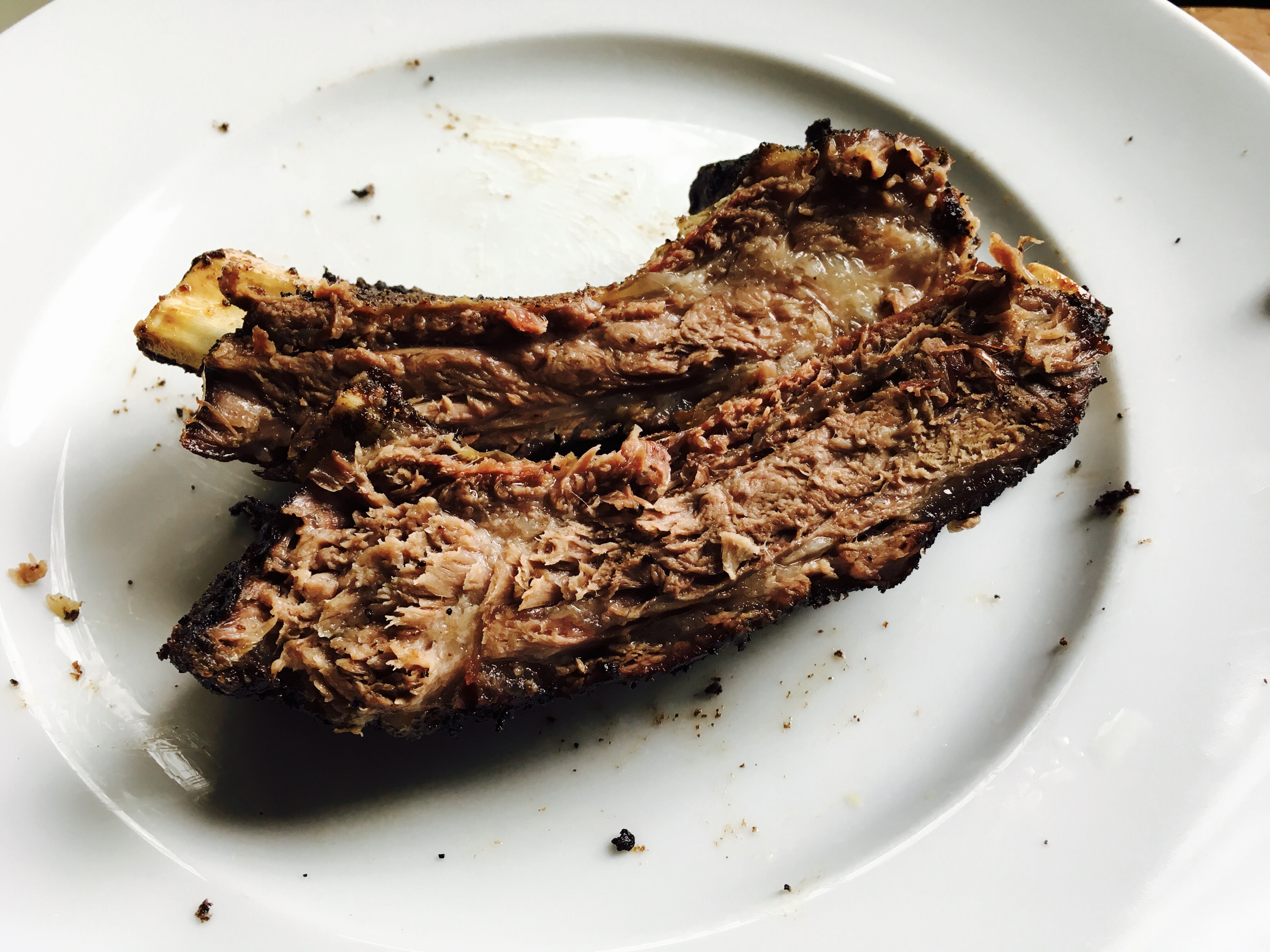
I’m usually a pork rib guy. But recently, I bought a nice slab of grass-fed beef ribs from one of my latest favorite suppliers of beef, Slanker’s Grass-Fed Beef. (www.texasgrassfedbeef.com) They sell grass-fed beef, pork, lamb, poultry, and more…with fair pricing and free shipping.
My coffee rub from an earlier blog has become my go-to way to cook a steak. So I figured, how bad could it be on beef ribs?
Any coffee will do for this rub…pick your favorite. But I had a stash of my personal favorite, Kona, at home, and used that.
3 tablespoons brown sugar
1 tablespoon ground Kona coffee
1 tablespoon Kosher salt
1 teaspoon granulated garlic
1 teaspoon granulated onion
1 teaspoon unsweetened cocoa powder
5 lbs. grass-fed beef ribs
In a bowl, combine the brown sugar, coffee, salt, garlic, onion, and cocoa. Mix well.
Remove the skin on the underside of the ribs. I do this by sliding a knife under a corner of the skin, exposing just enough of a tab that I can grab onto. The meat can be slippery, so pulling the skin off with a folded piece of paper towel in your hands gives a better grip.
Cut the ribs into 2-rib portions. Place all the rib pieces on a baking sheet lined with aluminum foil.
Generously rub the coffee rub into all sides of the rib pieces, turning them meat-side-up, and let them sit on the baking sheet at room temperature for about a half hour, while you warm the oven up to 350 degrees.
Place the sheet pan of ribs in the oven and bake for 30 minutes.
Remove the ribs from the oven, and lower the heat to 250. Wrap the ribs in aluminum foil, 2 sections per packet, and place them back on the baking sheet. Place the baking sheet back in the oven and cook them for 4 more hours.
Remove the ribs from the oven and take them out of the foil, placing them back on the baking sheet and back into the 250-degree oven for 30 more minutes.
THE PERFECT COFFEE STEAK RUB
Posted: January 27, 2017 in beef, Carnivore!, Food, grilling, RecipesTags: beef, food, grilling, recipes, rubs, steak
I rarely order beef at a restaurant, because I can usually make a better steak at home. For one thing, I use humanely raised grass-fed beef, something few restaurants offer. And I can cook it for less than a third of the price of a steakhouse. Granted, most steakhouses dry-age their beef, a time-consuming process of taking slabs of beef and keeping them in a fridge for weeks until a certain amount of moisture is sucked out of the meat, intensifying the flavor. I can do that at home in my fridge, but it takes a lot of time and effort.
There is one steak that I couldn’t match for the longest time, and that was the Capital Grille’s bone-in Kona crusted dry-aged NY strip. I would have dreams about that steak! It was time to find a way to make something that would satisfy my craving for that amazing steak at home.
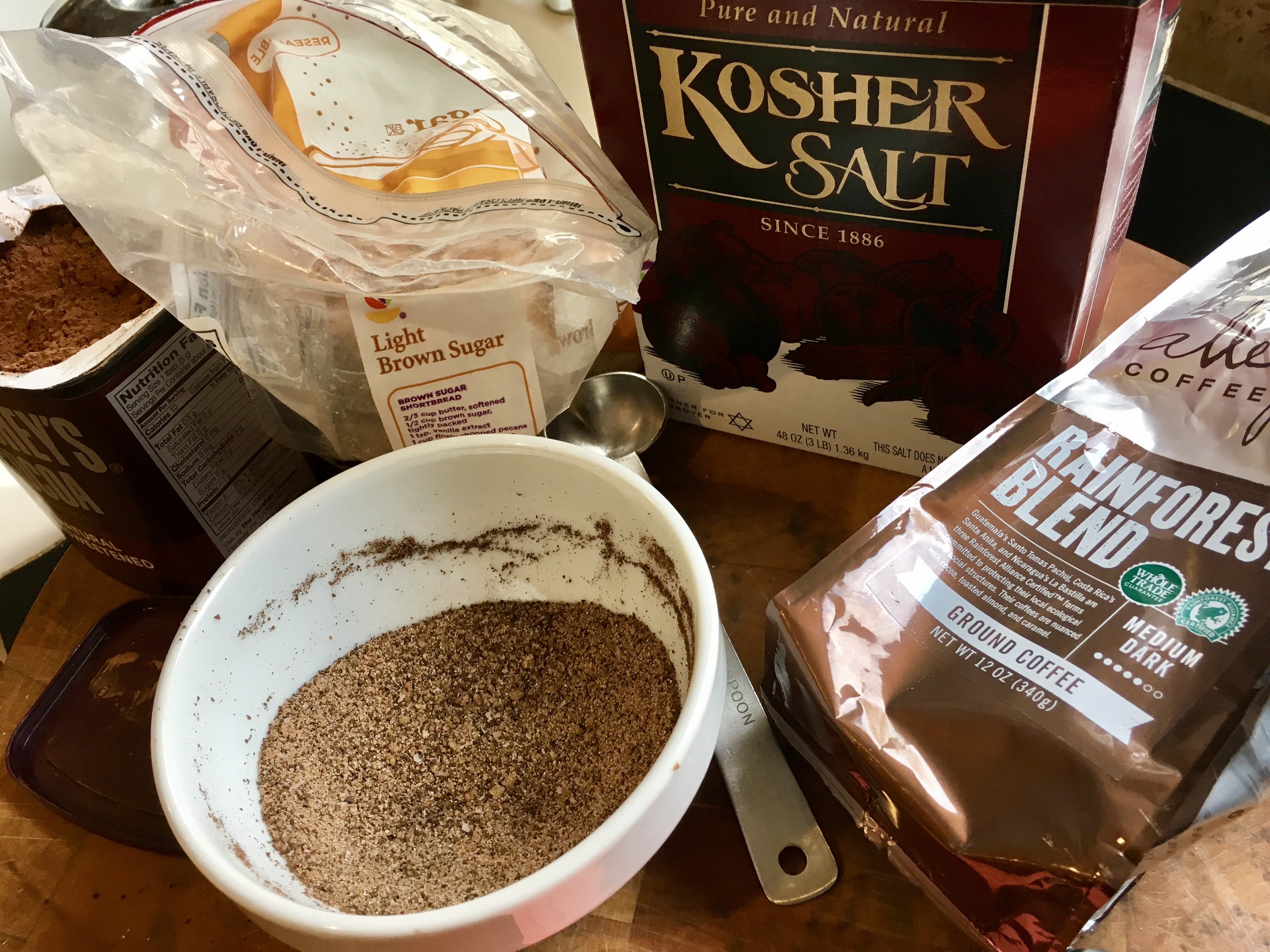
Looking at a variety of coffee rub recipes on-line, I started the slow and steady process of combining ingredients in just the right proportions, tasting as I went. What I came up with really accentuated the flavor of the beef I was cooking, better than I had imagined!
3 tablespoons brown sugar
1 tablespoon Kosher salt
1 tablespoon ground coffee (use your favorite)
1 teaspoon granulated garlic
1 teaspoon granulated onion
1 teaspoon unsweetened cocoa powder
Combine the ingredients, mixing well, and keep them in a tightly sealed container at room temperature.
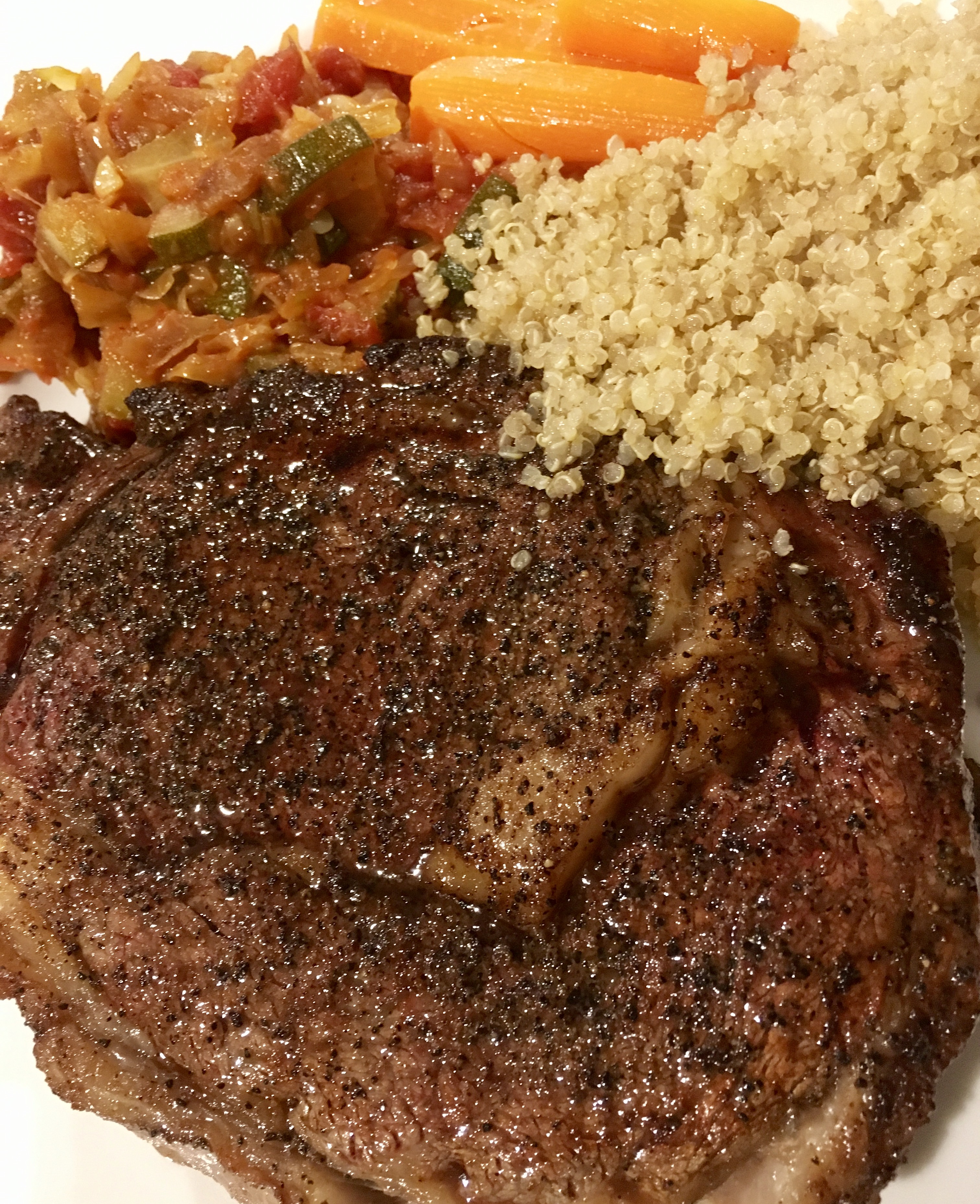
When using, sprinkle liberally on both sides of the steak before cooking. I find a steak that’s cooked in a cast iron pan to be perfectly acceptable, but nothing beats the grill!
MY VEAL SALTIMBOCCA
Posted: January 19, 2017 in beef, Food, pasta, Recipes, Rhode Island, Southern New EnglandTags: food, humane, recipes, saltimbocca, veal
Despite almost universal opposition to the cruel way calves are treated, the Humane Society says the veal industry shows little signs of changing. That’s why many people simply refuse to eat veal. I was one of them.
The veal industry is a by-product of the dairy industry. To get the dairy cows to produce milk, they are impregnated every year. Half of their offspring are male, no use to the dairy business, and those are the calves that become veal.
I said I was one of the people who didn’t eat veal. What changed was my source. A few years ago, Sweet and Salty Farm (www.sweetandsaltyfarm.com), a dairy farm down the road from me in Little Compton, Rhode Island, began selling their own line of yogurt and cheese. And like most dairies, when calves are born, they have no use for the males. But rather than taking them away from their mothers and caging them for their short lives, they allow the calves to stay with their moms, nursing for up to four months before weaning. Then they graze in the fields by their mothers’ side, living a stress-free life. And when the time finally comes, they are dispatched humanely.
The result is incredible grass-fed veal I don’t feel guilty about eating: a rich, red in color…nothing like beef and a far better option than conventional veal. I also buy the veal bones from the farm to make a rich, flavorful veal stock, roasting the bones on a baking sheet with onions, carrots and celery…then moving them all to a large pot of water that cooks for 24 hours.
Traditionally, veal saltimbocca consists of veal medallions rolled with prosciutto and sage leaves. Often it is served with a marsala sauce. I got rid of the marsala–too sweet–and substituted a chardonnay. I added fontina cheese. And a guest’s aversion to spinach gave me the option to use kale…with bacon, of course!
By the way, if you’re not lucky enough to have a farm that humanely raises veal (or you’re still queasy about veal in general), this recipe works with chicken breasts, too.
1 1/2 lbs. grass-fed veal, pounded thin and cut into medallions about 3″ around
1/2 lb. prosciutto, sliced paper-thin
1/2 lb. fontina cheese, sliced thin
1 cup all-purpose flour (I use Cup4Cup gluten-free flour)
1 teaspoon salt
1/2 teaspoon pepper
olive oil
butter
2 cups veal stock
1 cup un-oaked white wine (I like to cook with Alice White chardonnay)
1 tablespoon finely chopped fresh sage
1/2 yellow onion, finely chopped
12 oz. baby portobello mushrooms, thinly sliced
1 lb. spaghetti
2 bunches organic kale
3 strips bacon, finely chopped
Place the veal cutlets on a cutting board between a few layers of plastic wrap. Pound the cutlets to about 1/8″ thickness. Cut them into pieces about 3″ around, which will make them easier to handle.
Place the flour in a bowl and add the teaspoon of salt and 1/2 teaspoon of pepper. Mix well.
Heat a couple of tablespoons of olive oil and butter in a pan. Drop the veal medallions in the flour and coat both sides of the meat, shaking off any excess. Carefully lay the veal in the pan and cook the veal until it’s just barely browned. You don’t want to cook it all the way through. When the medallions have cooked, place them on a baking sheet. Cook the medallions in batches, adding more olive oil or butter to the pan if needed.
When you’ve cooked all the medallions, use the same pan to sauté the onion until translucent. Add the mushrooms and cook them down. (You can add a little of the veal stock to help the mushrooms release their liquid.) Add the rest of the veal stock, wine and sage. Cook over medium heat until it’s reduced by half. If the sauce looks a bit thin, make a quick roux in a separate pan by heating equal parts melted butter and flour until it forms a paste. Stir this paste into the sauce, making sure there are no lumps.
Back to the veal medallions: place a piece of prosciutto on top of each medallion, and then a slice of fontina on top of that. Keep the baking sheet with the medallions in a warm (150 degree) oven.
Boil the spaghetti in well-salted water until al dente. Strain and toss in a bowl with unsalted butter. Season with a bit more salt.
Hand-tear the kale and remove all the tough, woody stems. Wash the kale thoroughly in cold water, making sure you get all the dirt and sand that can be caught in its leaves. Heat some olive oil (and bacon fat, if you have it!) in a pan, and toss in the chopped bacon, just to warm the bits up. Working in batches, place a handful of kale in the pan, and when it wilts down a bit, place another handful in, and so on until you’ve got all the kale in. Season with salt and pepper, and keep tossing the kale until it has wilted to its desired doneness. (I like it to still have a bit of a crunch.)
When you’re ready to serve, turn the oven on broil and place the baking sheet with the veal medallions on the top rack. You want the cheese to melt, but you don’t want it to burn, so keep an eye on it!
Serve a few medallions on the plate, with spaghetti, kale and sauce on the side.