Archive for the ‘Food’ Category

Skip the necktie. If your dad’s a food nut, he deserves something better! All of these ideas have been rigorously tested by our panel of experts (OK, just me), and get a big thumbs up. This article was originally published a few years ago, but I’d still be happy to get any of these for Father’s Day!


Masterbuilt Electric Digital Smokehouse: I’m a bit of a purist when it comes to grilling. I refuse to use a gas grill because I think there’s no difference between that and my kitchen stove. I use real hardwood charcoal, with real smoke and real flavor. But when it comes to smoking meats, basic smokers require constant maintenance so that the temperatures don’t fluctuate. I’m just too busy for that, especially if I’m cooking something low and slow for about 12 hours. So I have a digital smoker. I plug it in, set the time and temperature, and then periodically add wood chips through a side drawer to smoke the meat. I can literally set it and forget it. I have it cook through the night, so I wake up to a beautifully smoked slab of meat in the morning.


Cognac! How can you go wrong with booze for Father’s Day? But if you’re looking for something really special to give Dad (or your favorite blogger), it’s Kelt XO. What makes Kelt XO special is that before bottling, they place the barrels of cognac on board ships that sail the world for months at a time. During this time, the cognac gently rocks back and forth in the barrels, slowly acquiring a smoothness you can’t find in other spirits. Each bottle even comes with a tag that tells you exactly what ports around the world your cognac has been to. Worth the search at high-end liquor stores.

jack daniels


Jack Daniels smoking chips: Whether you have a smoker or not, these chips will make anything you cook taste better. Made from the old oak barrels that they use to age Jack Daniels, you get a serious hit of whiskey in every bag…and in your food. Simply toss a handful of chips you’ve soaked in water for about a half hour, and they will infuse the food on your grill with flavor. You can also use them dry, on charcoal or gas grills.


Cookbook favorites: “Jamie at Home,” by Jamie Oliver (a great combination gardening/cookbook), “Charcuterie,” by Michael Ruhlman and Brian Polcyn (the best book on how to cure and smoke meats), “Barbecued Ribs, Smoked Butts, and Other Great Feeds,” by Jeanne Voltz (my absolute barbecue Bible!), and “Martin Yan’s Feast: The Best of Yan Can Cook” by Martin Yan (the authority on Asian cooking.)


Redi-Check Remote Cooking Thermometer: Even someone who has barbecued all their lives runs the risk of burning or undercooking a roast or a large bird. Opening the grill and jabbing the meat with a thermometer several times causes the juices from the meat to run out, leaving it dry…and every time you open the grill, you lose precious heat. This is the better solution: You stick the needle into the roast or bird and leave it in there the entire time it cooks, so no juices leak out. You plug it into the monitor which then calls you when the meat is ready (from as far as 100 feet away!) You set the time or temperature, and then get to join your guests for the party.

smoking gun


Smoking Gun: There are times when you don’t need a full-on smoker. All you want to do is smoke a small piece of fish or a hunk of cheese.  You simply take some of the finely ground wood chip powder (comes with the gun) and place it in the pipe-like bowl. Light it, and the Smoking Gun will blow that smoke through a hose into the Ziploc bag where your piece of fish is waiting for its magical transformation to smoky deliciousness.


Mason jar cocktail shaker: A fun new way for Dad to make his martini.
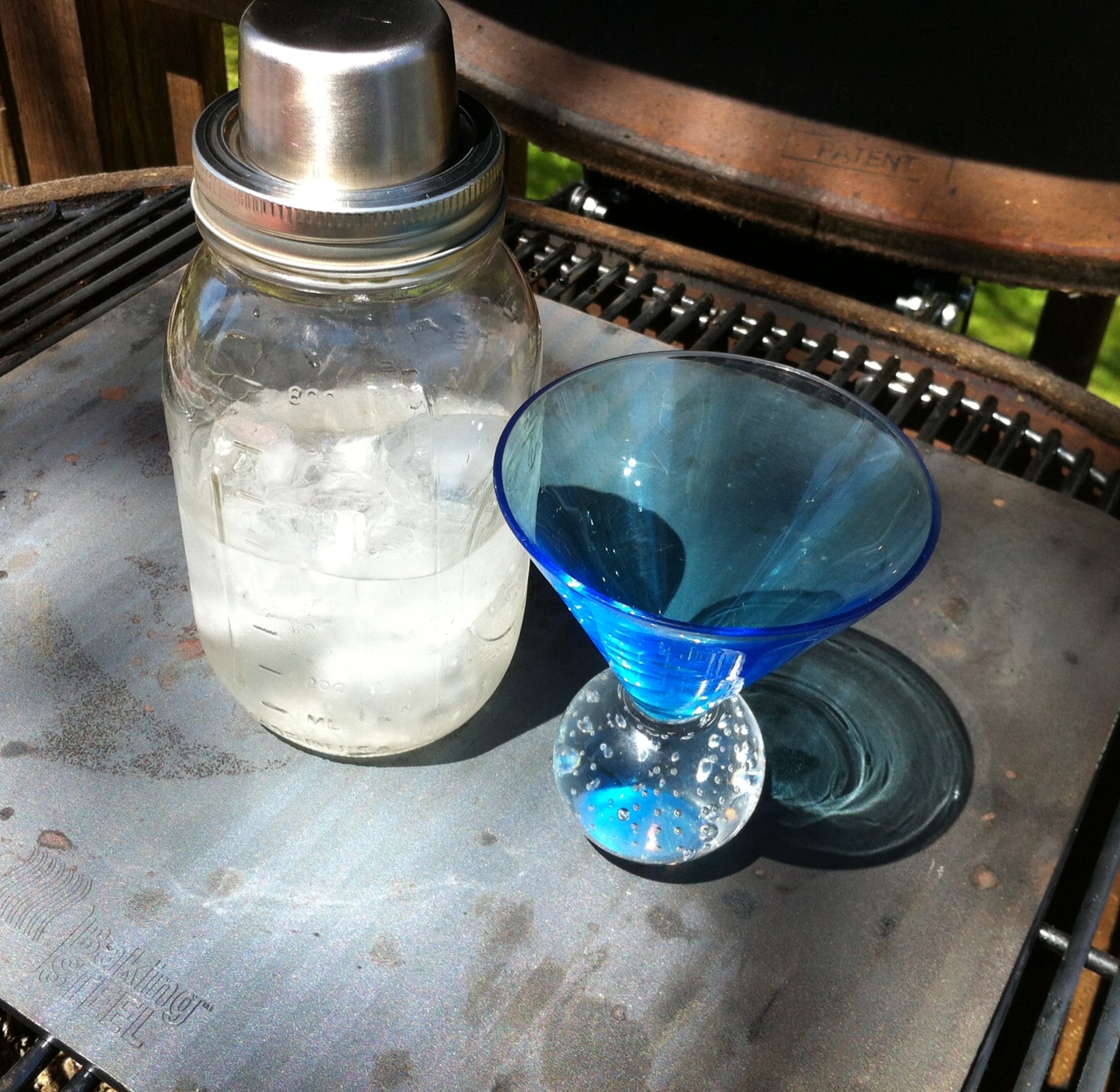
mason jar, baking steel


Oh, and by the way…dads don’t care if your gift is late. You can still buy it now and give it to him later!

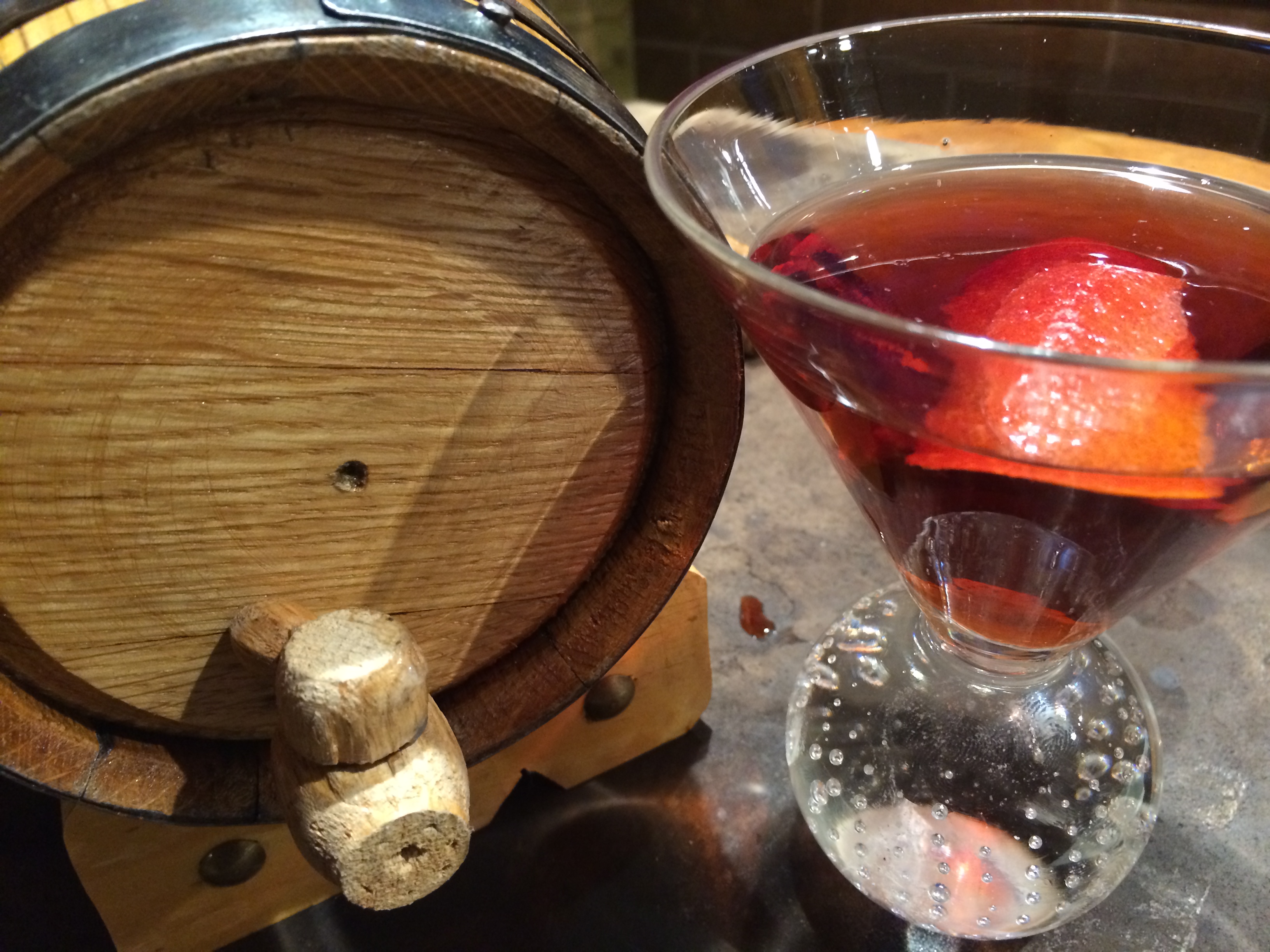
It used to be that only the big distilleries were able to age their finest spirits in charred oak barrels. But now, there’s a movement goin’ on…and hand-crafted oak barrels are available to aficionados at home.

Companies like Redhead Barrels (http://www.redheadoakbarrels.com) are offering oak barrels for aging that range in size from 1 liter to 20 liters. And that’s where this enthusiast comes in: with a 1-liter barrel, I’m able to age my favorite spirit–vodka, rum, whiskey, bourbon, mixed drinks, anything–in just a few weeks, elevating the flavors to levels previously unknown.


wood

My  1-liter barrel arrived with the spigot and bung separately. Curing the barrel is necessary before using it. I do this by rinsing the barrel out a few times to remove any loose pieces of wood chips or splinters that may still be inside. I hand-turn the spigot into the barrel until it fits snugly and place the barrel in the sink on the included stand. I fill the barrel with very hot water…and watch. Some barrels are totally watertight and will not leak. Others may take literally a few days of repeated fillings with hot water before it thoroughly seeps into the wood, expanding the wood fibers to seal the barrel.

Once there are no leaks, it’s ready to go. I empty the water out of the barrel and fill it with my favorite spirit. Because there is more wood surface area to less liquid (as compared to large barrels), alcohol will age faster…in weeks instead of years. Once I’ve aged it as much as I want (tasting it along the way is the best way to determine this), I simply pour it into a bottle to stop the aging process. I rinse the barrel out thoroughly, and I’m ready to age yet another spirit.

I chose to age a cocktail that I first savored at the Greenhouse Tavern in Cleveland, Ohio, the brainchild of talented chef Jonathon Sawyer. The call it a Negroski, their take on a Negroni. It features equal parts Campari, Cocchi sweet vermouth, and OYO stone fruit vodka. They make large batches of it and keep it in a barrel until they serve it. So enamoured my wife and I were with this drink, that I begged the bartender to give me the recipe.

Doing the math, equal parts of each ingredient meant 1 1/3 cups of each to make a quart…which fit perfectly in my 1-liter barrel. Once I corked the top with the bung, it was time to let it age.

A slight daily rotation of the barrel gently rocks the liquid inside, exposing it to the barrel’s charred wood interior, giving it more flavor. And at the end of  a week, I was ready for my first tasting: the wood had a subtle influence, rounding out the flavors. I wanted a little more, so I waited another week…even better, but not quite there. It took a total of 3 weeks before the drink reached its flavorful peak.

I poured some of the drink into a cocktail shaker with ice, stirred briskly with a spoon, and strained it into a martini glass, garnishing with a twist of blood orange peel. Delicious!


cask


Since my first batch, I’ve aged Manhattans, my homemade Lithuanian honey liqueur (Krupnikas), and even simple spirits. It’s amazing how an average whiskey becomes something quite spectacular after just 3 weeks of aging!

THREE-HOUR RIBS

Posted: June 9, 2020 in Food, pork
Tags: , , , , ,

Yes, this is a pork blog…but first, an introduction…

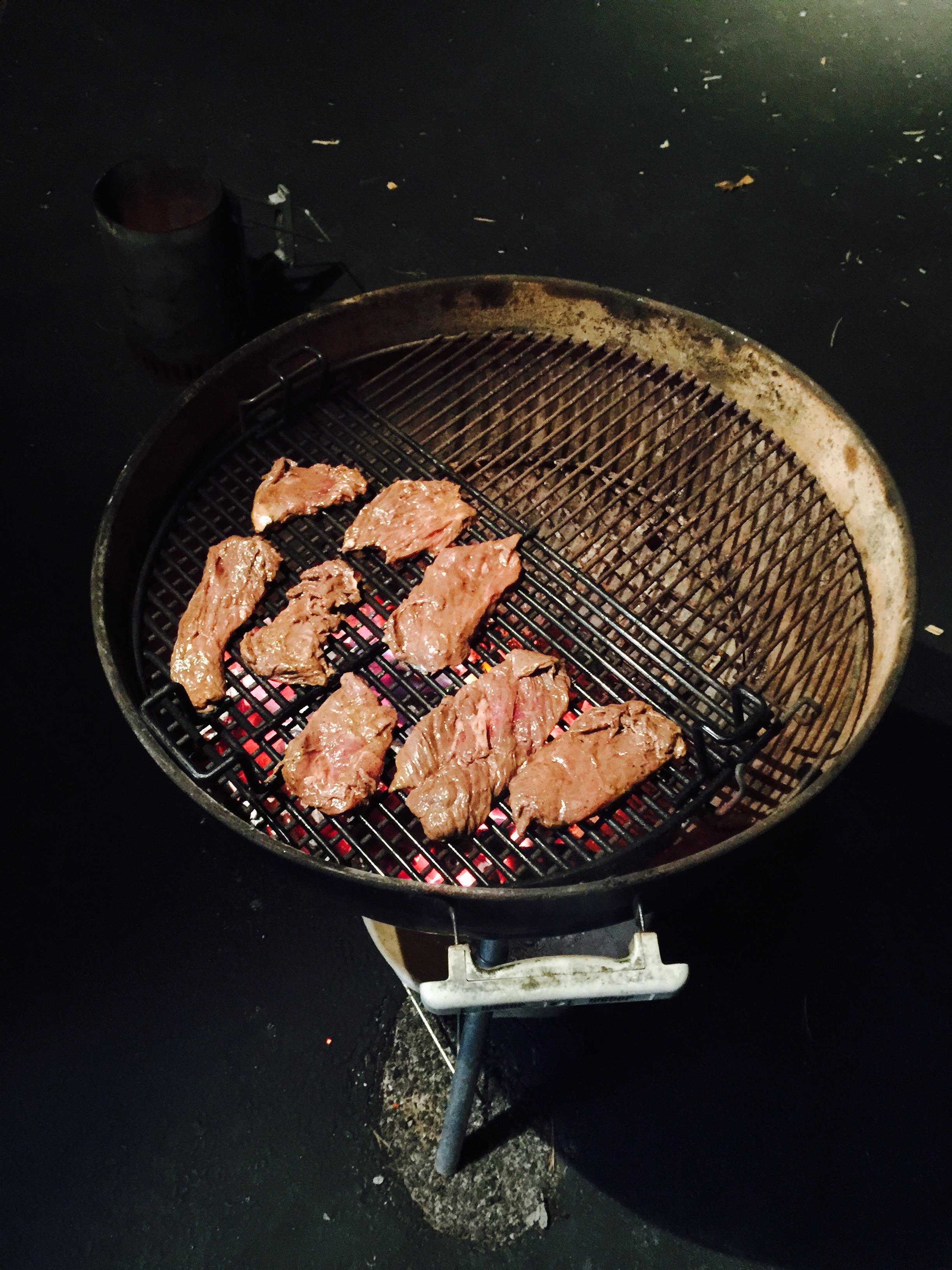
My diet continues, and one of the foods that I absolutely love and can eat quite often because of its low calorie/high protein combination is poke: basically a Hawaiian version of unconstructed sushi. I’ve developed a combination of flavors that I simply call my “Asian Mix,” and I’ve found that it not only works well in dishes with seafood like tuna and salmon, but also with meat. I recently marinated beef flap in my Asian Mix, then grilled it over hardwood…delicious!


One of many versions of poke I made with my Asian Mix: wild-caught Alaskan salmon with cucumber, avocado, onion, and sesame seeds.


So I said to myself: “Self! Why not pork?”

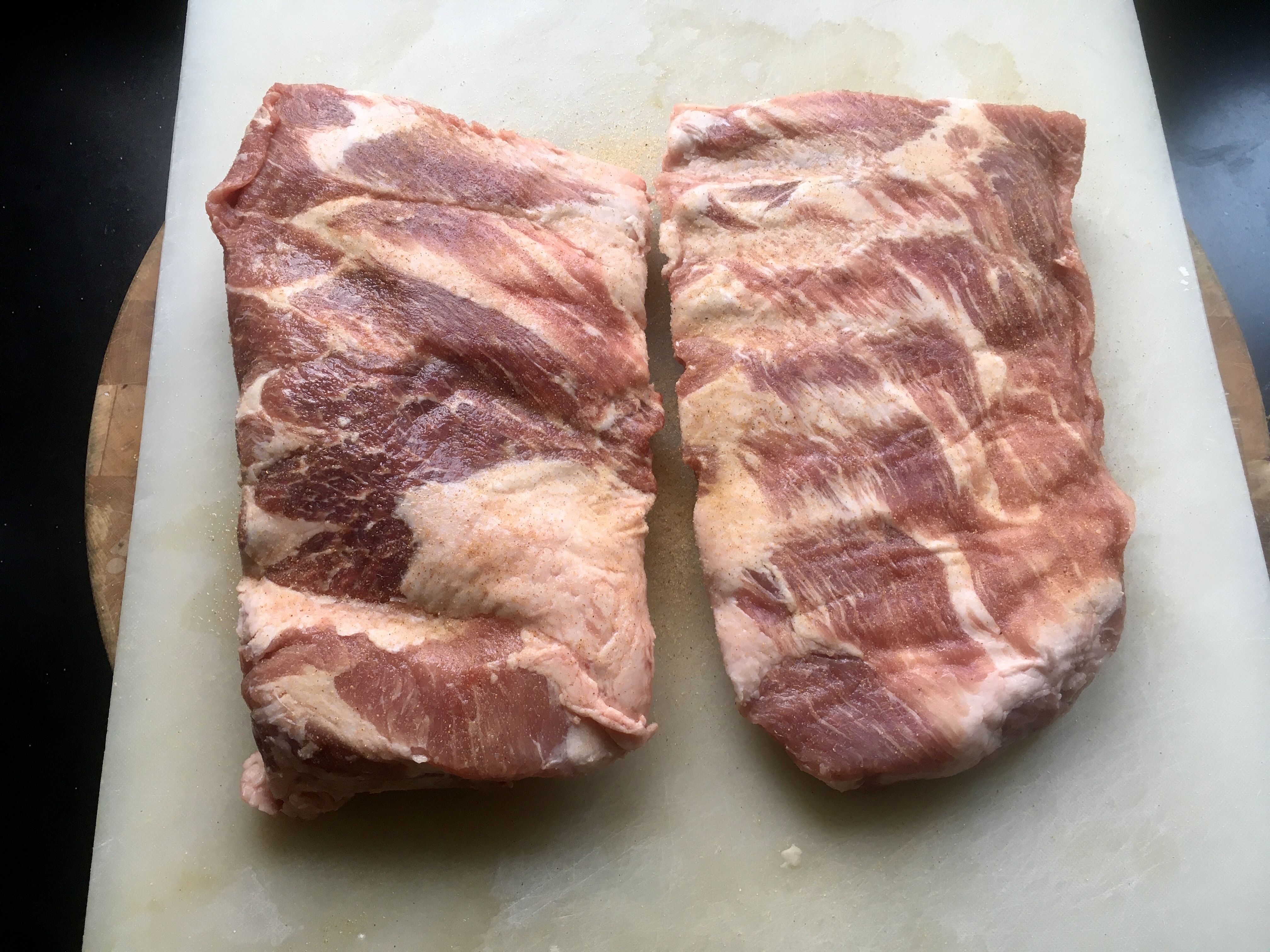
It just so happened that I had a rack of St Louis-cut Berkshire pork in my freezer, so I took it out to thaw. I peeled the skin that’s on the back of the ribs and tossed it out. I cut the rack in half, and then sprinkled the ribs ever-so-lightly with a little Lawry’s Seasoned Salt, a classic in barbecuing. I placed the ribs in a plastic container, and moved them to the fridge to rest overnight.


Berkshire (also known as kurobuta) pork ribs, lightly seasoned with Lawry’s.


The next day, I removed the ribs from the fridge, placed them on a sheet pan lined with non-stick foil, and placed the pan in a pre-heated 450-degree oven. Once the sheet pan was in and the oven door was closed, I immediately lowered the temperature of the oven to 325. I let it cook for an hour.

After one hour, I poured off any fat that rendered from the pork, and flipped the ribs over. I put the sheet pan back in the oven, still at 325, for a second hour.

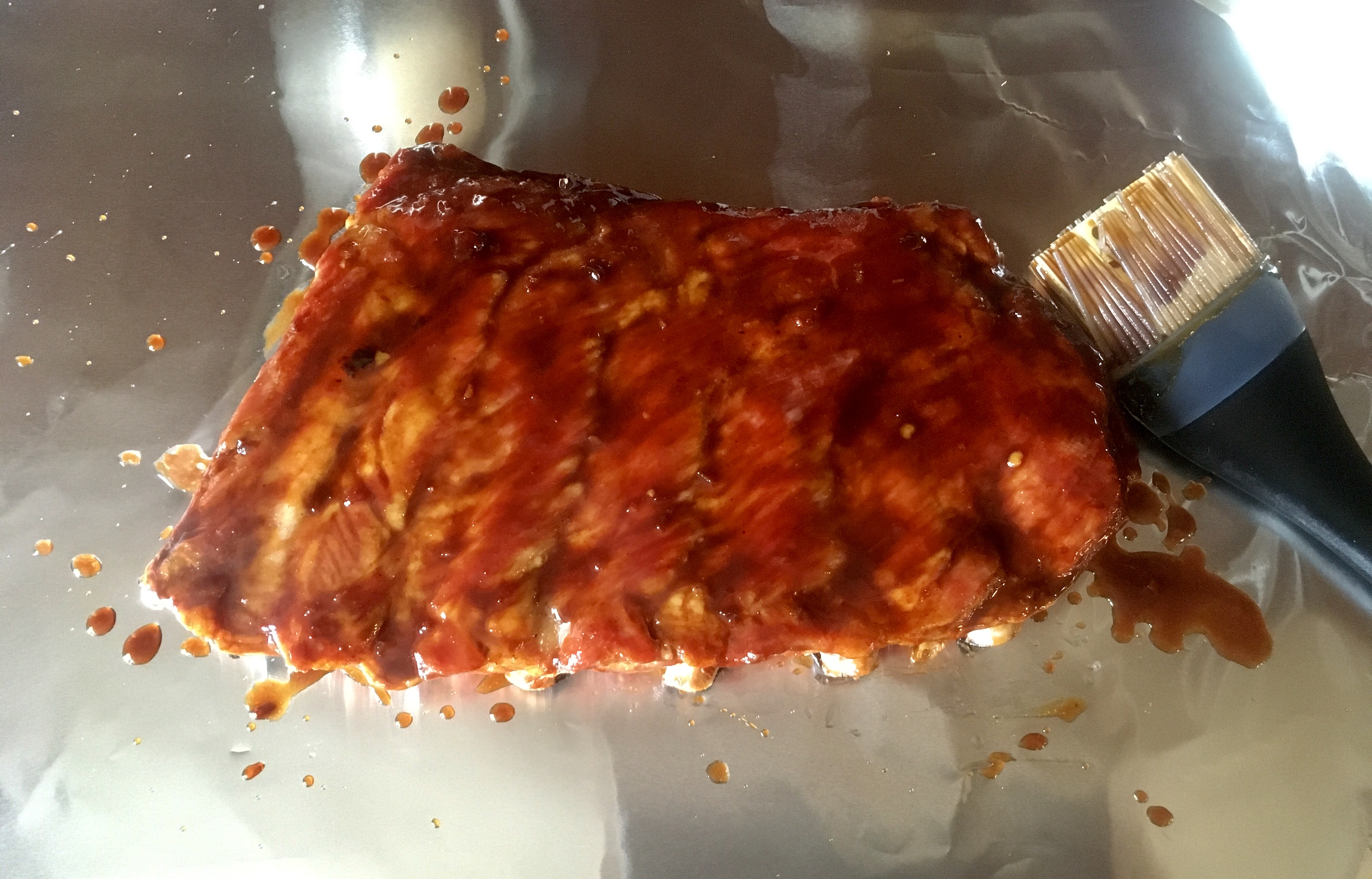
After hour two, I once again poured off any fat, and set the sheet pan down. I tore off a new piece of aluminum foil, placing it flat on the counter, and I placed one half-rack, bone-side up, on the foil. I brushed it with the Asian Mix. I flipped the half-rack over, and brushed the top side. Then I folded the foil tightly around the half-rack to create a packet as tightly sealed as I could get it.


Brushing the ribs with the asian Mix before wrapping it in foil and returning it to the oven for one more hour. Looks good already!


I did the same with the second half-rack.

I placed the two foil-wrapped half-racks back on the sheet pan and back in the 325-degree oven for one more hour.

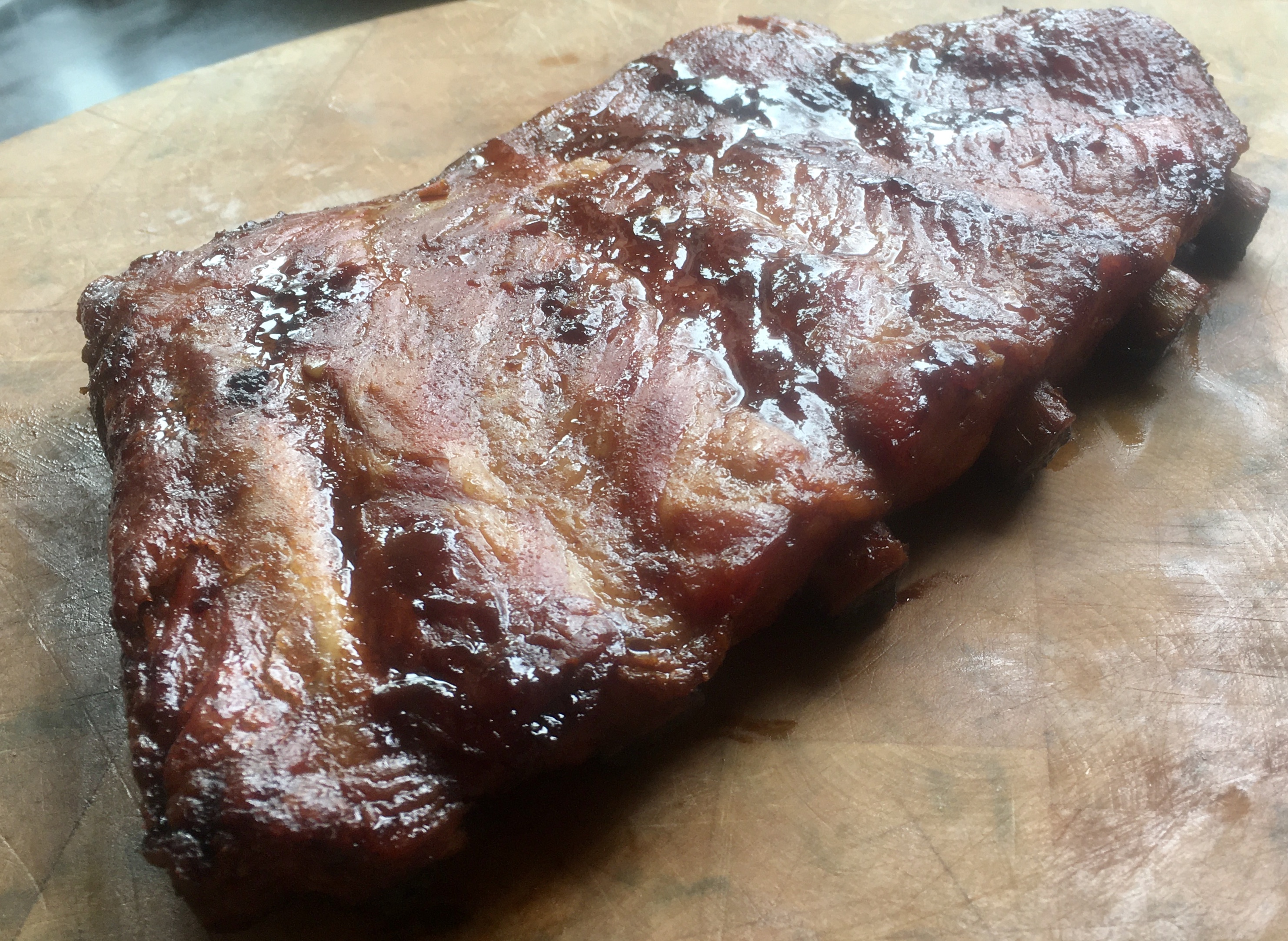
After the third hour was up, I removed the sheet pan from the oven and let the ribs rest for 15 minutes before unwrapping the foil.


Beauty, eh?


Asian Mix (for 1 rack of ribs)

2 tablespoons soy sauce
2 tablespoons hoisin sauce
1 teaspoon chili garlic sauce
1 teaspoon sesame oil
1 teaspoon rice vinegar


Combine all the ingredients in a bowl. Mix well.


Just the right amount of heat from the chili garlic sauce. But feel free to add or reduce to your personal taste.


Butter and cheese. Can anything be better?

Little by little, asparagus season is winding down. I’ve had a month of gorging (and sharing with friends.) It’s time to let some of the stalks grow tall, and open up into the beautiful bushy asparagus ferns that will decorate the garden all summer. It’s important to leave these ferns alone, because they’re storing up energy for the next season. I let them turn brown and fall over when colder weather arrives, only removing them the following spring before the new season starts. That assures that my asparagus roots are re-charged for another amazing season. Asparagus is such a low-maintenance crop; it’s definitely one of this veggies every lazy gardener should grow.

I still have bags of asparagus in my fridge, and I enjoy it in a variety of ways: I love it raw, chopped into salads, pickled, oven-roasted, and in pasta dishes.

This is a great side dish with any main course like a big slab of meat, and has special meaning to me because my cousin first introduced me to asparagus with this recipe when I was just a kid. She passed away many years ago, but I think of her every time I make this simple but delicious dish.

You can use almost any grated “parmesan” cheese, but nothing beats real Parmigiano Reggiano that you freshly grate yourself.


image

1 lb. fresh asparagus spears
1 tablespoon unsalted butter
2 tablespoons extra virgin olive oil
3/4 cup grated Parmigiano Reggiano cheese
sea salt and freshly cracked black pepper


The easy way to trim an asparagus spear is to grab the thicker end between two fingers and bend it. It will snap at the point where the tough part ends and the softer, edible part begins. I toss the bottoms into my compost pile.

I heat the butter and oil together in a pan and then add the asparagus spears, cooking over medium heat for about 5 minutes, until al dente. (You don’t want them mushy.)

While the asparagus is still in the pan, I sprinkle the Parmigiano Reggiano on top, letting it melt a bit. I season with sea salt (I prefer Flour de Sel) and freshly cracked black pepper.

That’s it! With fresh garden asparagus, it’s all you need! I ate this batch right out of the pan!


It’s National Hamburger Day! But instead of the usual beef burger, try something that’s often overlooked: lamb. Some people think the taste of lamb is too strong. The really good lamb, grass-fed Australian or New Zealand lamb, can have that taste. Most American lamb is a bit milder. I mix one pound of ground lamb meat with one pound of ground grass-fed beef to cut the gaminess of the lamb. The flavor is just right.

These lamburgers are best when grilled over hardwood charcoal. But they’re just as tasty if you pan-sear them in a cast iron skillet and finish them in the oven.


1 lb. ground lamb
1 lb. ground beef
2 tablespoons + 2 teaspoons extra Virgin olive oil
1/2 onion, minced
1 tablespoon Dijon mustard
1 teaspoon each fresh parsley, mint, and dill, finely chopped
1 teaspoon dried Greek oregano
1/2 teaspoon cumin
1 large clove garlic, squeezed through a garlic press
1 scallion, finely chopped, green part only
1/2 cup breadcrumbs
1 egg
1 teaspoon salt
1/2 teaspoon black pepper


Heat 2 tablespoons of the olive oil in a skillet over medium heat. Add the onions. Cook them until translucent, about 6 minutes. Transfer the onions to a plate and let them cool.

In a bowl, mix the onions, mustard, parsley, mint, dill, oregano, cumin, garlic, scallions, breadcrumbs, egg, and salt and pepper.

In another bowl, combine the lamb with the beef. Then add the onion mix bowl to the meat and make sure all the ingredients are combined.

Form the meat into slider-sized patties. Place them on a baking sheet covered with non-stick foil, and place the baking sheet in the fridge.

Don’t let the lamburgers get too cold in the fridge…just enough to firm the meat up a bit. If it gets too cold, give it a few minutes at room temp to warm up again.  Grill the burgers until cooked to medium.

If you’re cooking indoors, heat some avocado oil in an oven-proof pan, preferably cast iron. Sear the burgers well on both sides, then place the pan in a 350-degree oven to finish cooking.

Place the burgers on slider buns with lettuce and tomato, and smear the bun with the feta cheese dressing.


My recipe for feta cheese dressing works really well with lamburgers. But it’s also great on a salad.

3/4 cup plain Greek yogurt
1  cup mayo
1 teaspoon Worcestershire sauce
1/2 teaspoon cayenne pepper sauce, like Franks Red Hot
1 teaspoon Dijon mustard
1/2 teaspoon granulated garlic
1/2 teaspoon salt
1/2 teaspoon ground black pepper
4–5 oz. crumbled feta cheese

Combine all the ingredients in a bowl. Mix well. Cover and refrigerate. If you can wait a day, it’s even better.

FullSizeRender (14)


Who says you have to only cook burgers and steaks on the grill? This is one of my favorite ways to enjoy clams…and without the clam knife! I always use hardwood charcoal.


image


A couple of dozen (or more) little neck clams, washed and purged
1 stick (8 oz.) of unsalted butter
1/4 cup extra virgin olive oil
1/4 cup chopped parsley
1 teaspoon dried oregano
1/2 teaspoon dried basil
1 teaspoon minced garlic
1/2 teaspoon sea salt


image


The clams should be stored in the fridge until ready to use…not in water, not on ice. Place the clams in a bowl and cover it with a wet dish towel.

Before cooking, I like to purge my clams to remove as much grit as possible. I fill a large bowl with cold water, add sea salt and some corn meal to it, and mix it around. Then I add the clams to this bowl and let them sit in this liquid for at least an hour. They will suck up the corn meal and spit out sand and grit. After an hour, I pour off the water/salt/meal/grit mix, and thoroughly wash the clams. Now they’re ready to grill!

I start my hardwood charcoal grill and divide it in half: coals on one side, no coals on the other.

While the coals are heating up, I grab a disposable aluminum foil tray and place it on a burner on my kitchen stovetop over medium heat. I add the butter, olive oil, parsley, oregano, basil, garlic and salt, and stir it all to combine. Once the butter has melted and everything has blended, I bring the tray over to the charcoal grill and place on the side of the grill without coals. It will stay warm.

Once the coals are hot, just place the clams directly on the grill. (Use tongs, unless you want to remove all of your knuckle hair.) They’re done as soon as they open, but you can cook them as long as you like, from raw to more thoroughly cooked. As each one reaches its desired doneness, place it carefully in the aluminum tray, making sure you don’t lose any of that precious liquid inside the clam shell. Give it a swish in the butter and herb mix.

When all the clams have been cooked and are in the tray, serve them with that herby butter sauce on top of pasta…or simply eat them with a fresh baguette. A glass of great white wine is a must.


image


Really easy and really delicious!

I find little or no difference between the gas stove in my kitchen and an outdoor gas grill…so I don’t own one. I can make a perfectly delicious steak by searing it in a cast iron pan on the stovetop, then finishing it in a hot oven. So, for me, if the real reason for outdoor grilling is flavor, nothing can replace a hardwood charcoal grill.

Besides the quality and source of my beef, wood and smoke are what make the difference between a good steak and a great steak.


beef brisket

I know the #1 argument for going with gas over hardwood charcoal is time. “It takes too long to start a charcoal grill.” That’s a load of crap. Over the years, I’ve showed many friends that it takes no more time to light a charcoal fire than it does to start up a gas grill.

Of course, it starts with the grill itself. The classic Weber is still an awesome choice. For larger cooking needs, I also have a Primo ceramic grill.

Then I get a bag of hardwood charcoal. I’m not talking charcoal briquets, like Kingsford, that have a ton of additives in them. And I’m definitely not talking about Match Light. I’m talking pure hardwood charcoal, easily found in supermarkets and home stores.

Next: a charcoal chimney. It’s a metal tube with a handle and a grate at the bottom. I crumble a couple of sheets of newspaper into the bottom, pour charcoal into the top, light it, and I have hot coals in 10 minutes without lighter fluid.

And I NEVER use lighter fluid! Why spend good money on a great steak only to make it taste like gasoline?

The variety of wood chips available for smoking is another flavor factor when it comes to grilling with charcoal. My personal favorite is hickory, especially when I’m cooking pork or chicken. But apple, cherry, oak, mesquite: they all impart their own unique flavors. And they’re all available in most home stores where you find all the other barbecue gear.

Although I have an electric smoker for those low-and-slow jobs, like a big ol’ brisket or pork shoulder, I don’t need it when grilling a steak. I simply soak some wood chips in water for about a 1/2 hour before grilling (I’ve found that hot water speeds the process up), drain the water, and then sprinkle the moist chips on the hot coals in my grill. I throw the meat on the grill, close the lid (opening the vents, of course) and off we go.

So now, in 10 minutes, I’ve got a grill that’s ready to cook a steak with…about the same time as gas.

If you say: “I don’t cook with charcoal because it’s so messy!” …I honestly don’t know if you and I can be friends.

Because I’m using a small amount of hardwood charcoal for the average dinner, I don’t have to clean out my grill every time I use it. After a while, yes, some ashes pile up in the bottom of my grill and I have to dump them. But because they’re pure wood ashes, I can dump mine into my strawberry or raspberry patch. They love the stuff.

You still have to clean a gas grill after a while, and it always runs out of propane halfway through cooking when you have guests over for dinner. So where’s the convenience in that?

Charcoal grills give you everything you could ask for: low maintenance, ease of use–no propane tanks, valves and igniters–real wood flavor, not lava rocks, and the thrill of cooking meat over a real fire, bonding with the caveman in you. Grab a beer–or even better: a bourbon on the rocks–and start grilling!

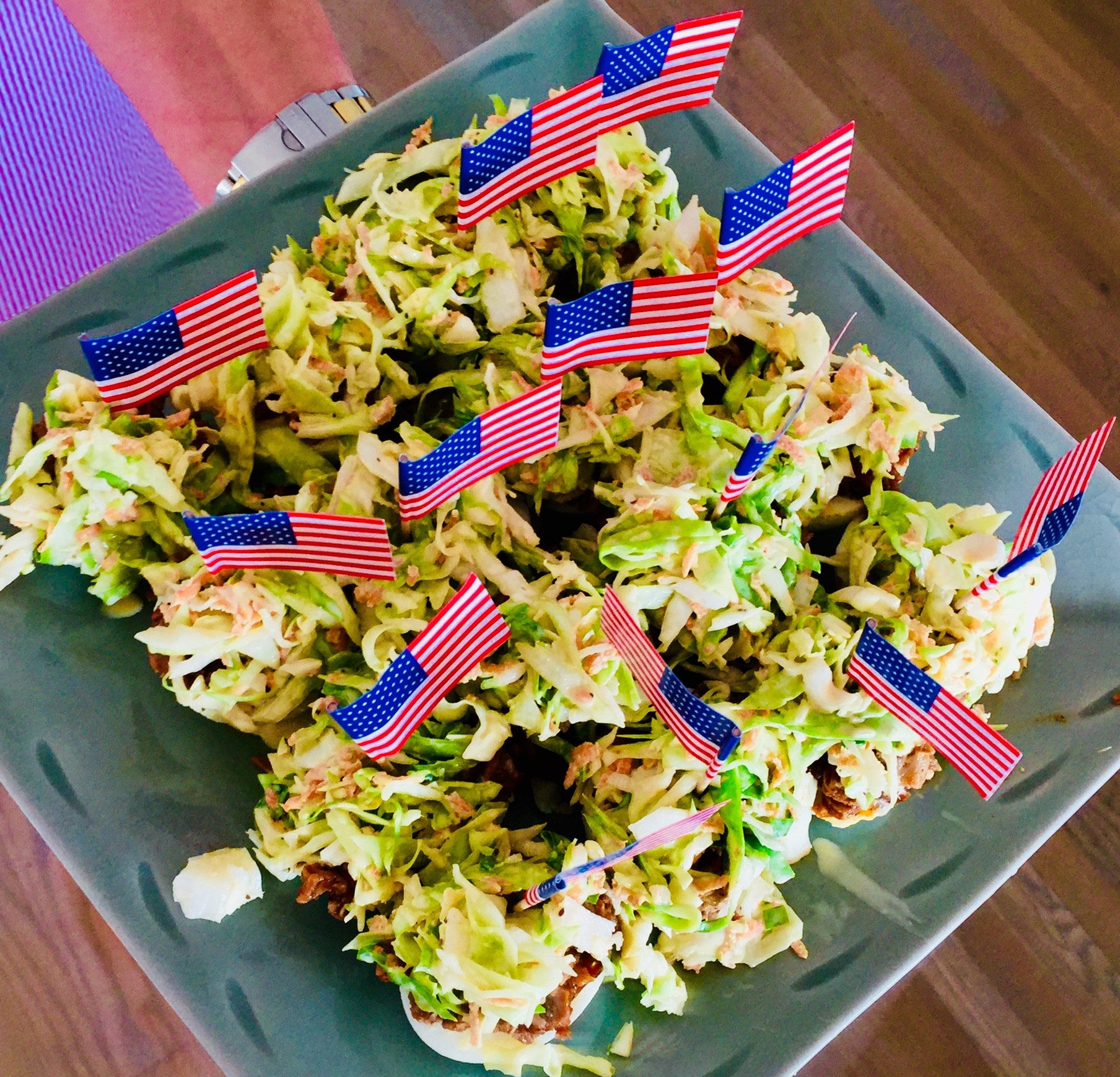
This was a huge hit whenever I brought it to a party…but it’s just as tasty when you’re quarantined at home or limiting the size of gatherings with friends! And this being Memorial Day weekend, it’s the perfect appetizer.

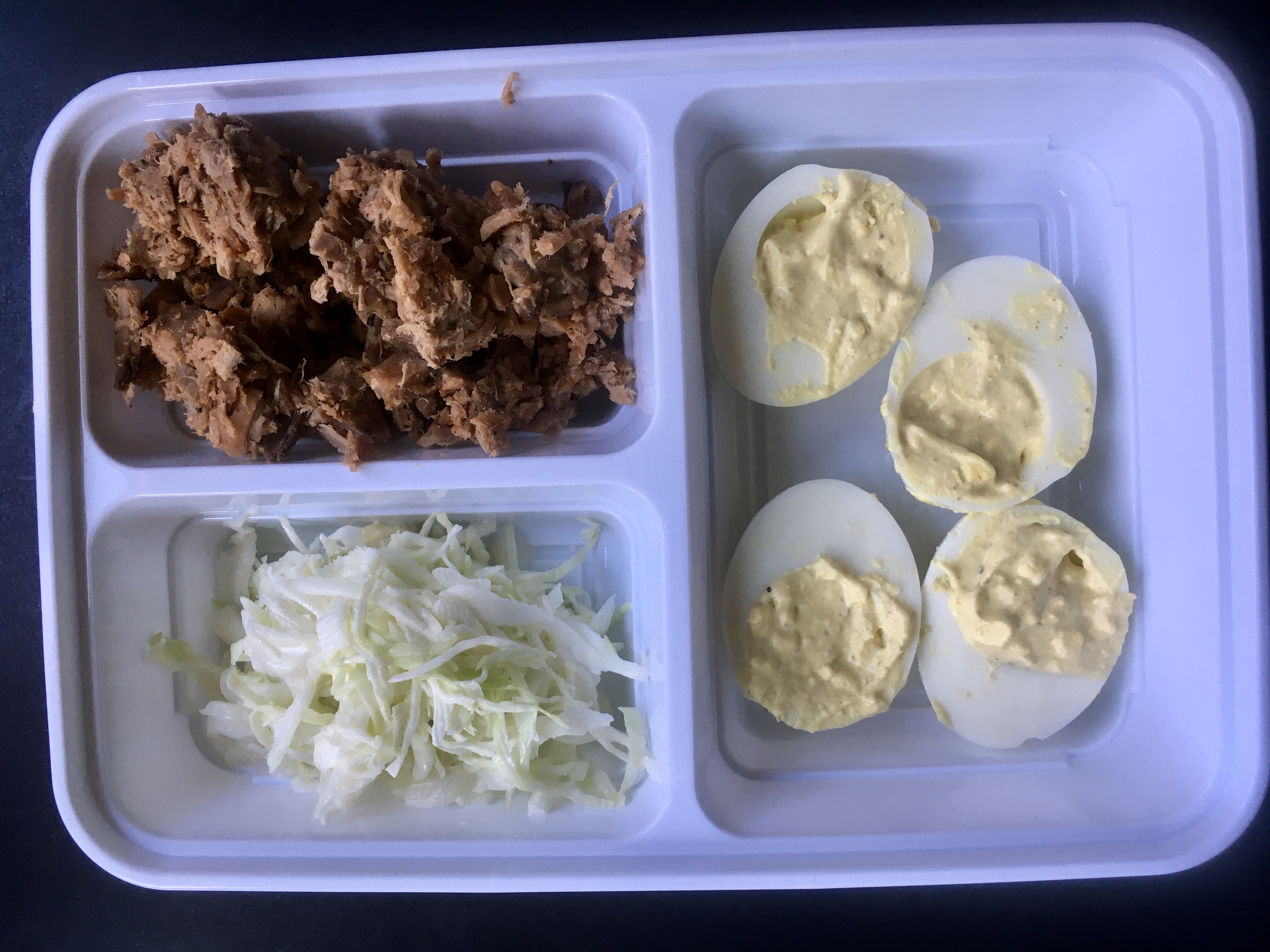
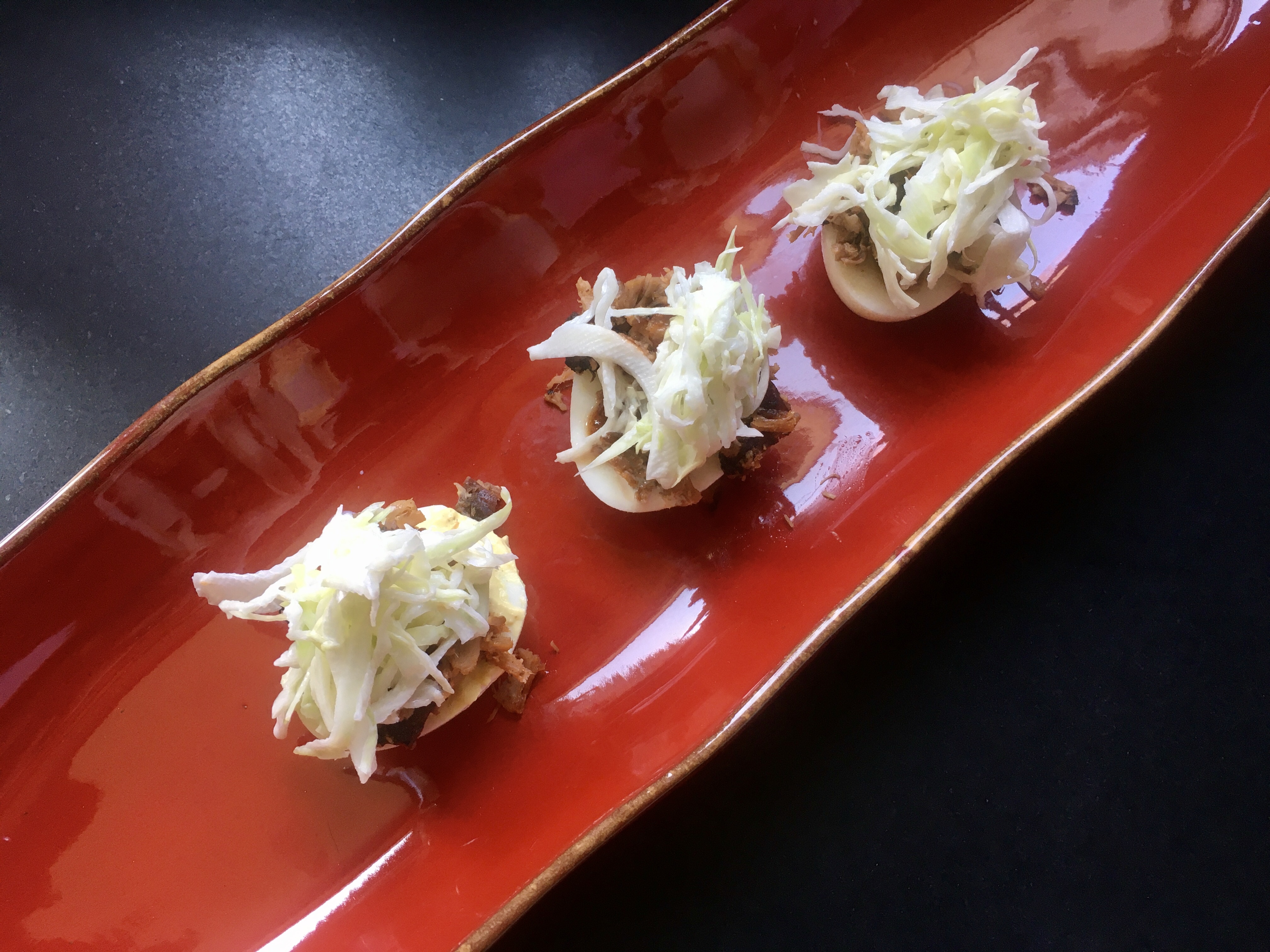
It’s easy to set up the parts, then put it together quickly as needed. I even put a to-go package together. If you know what a pulled pork sandwich North Carolina-style is all about (pulled pork on a bun with cole slaw right on top of the meat), then imagine taking away the bun and replacing with a deviled egg! It’s messy, it’s delicious, and everyone loves them.


A to-go package, ready to assemble at home.

I’ve tried this two ways now: with pulled pork and with chicken…and the big thumbs up goes to the pork. Of course, I will smoke a pork shoulder for 10 hours, pull the meat, and mix it with the barbecue sauce…all for this dish. If you don’t have a smoker, you can simply buy already prepared pulled pork and use it here.

Be sure to make a lot of these…they’ll go faster than the hard-boiled eggs in “Cool Hand Luke!”


For the BBQ sauce:
2 cups ketchup
3/4 cup water
6 tablespoons cider vinegar
6 tablespoons white vinegar
6 tablespoons brown sugar
3 tablespoons Worcestershire sauce
1 tablespoon chili powder
2 teaspoons salt
1 teaspoon black pepper
1 1/2 teaspoons cumin

Combine all the ingredients in a saucepan and simmer over medium heat for about 25 minutes, until the sauce has thickened. Let it cool to room temperature and then store it in the fridge. It will be good for several weeks.


For the cole slaw:
2 tablespoons mayonnaise
1 tablespoon rice wine vinegar
1/2 teaspoon sugar (I use organic cane sugar)
2 cups finely shredded cabbage

Combine all the cole slaw ingredients in a bowl or measuring cup, mixing well, and place it in the fridge. Making the cole slaw a day ahead of time is even better.


I measure 2 cups of cabbage in a measuring cup, then add the other ingredients.


For the deviled eggs:
6 hard-boiled eggs
1/4 cup mayonnaise
1 tablespoon mustard (I use Gulden’s)


Here’s my tip for perfectly hard-boiled eggs every time: place the eggs in a pot, cover them with cold water, and turn the heat on high. Just before the water starts to boil, put a lid on the pot and turn the heat off. Let the eggs sit in the hot water for 15 minutes. Perfect hard-boiled eggs every time! Once cooked, keep the eggs in the fridge.


Here’s another tip: the easiest peeling eggs are older eggs! No…that doesn’t mean you let your eggs sit out on the front porch for a week. What that means is: but them from your supermarket rather than the farm stand down the road. Super-fresh eggs still have a membrane attached to the shell that makes them difficult to peel. The membrane detaches in slightly older eggs, making them easier to peel.


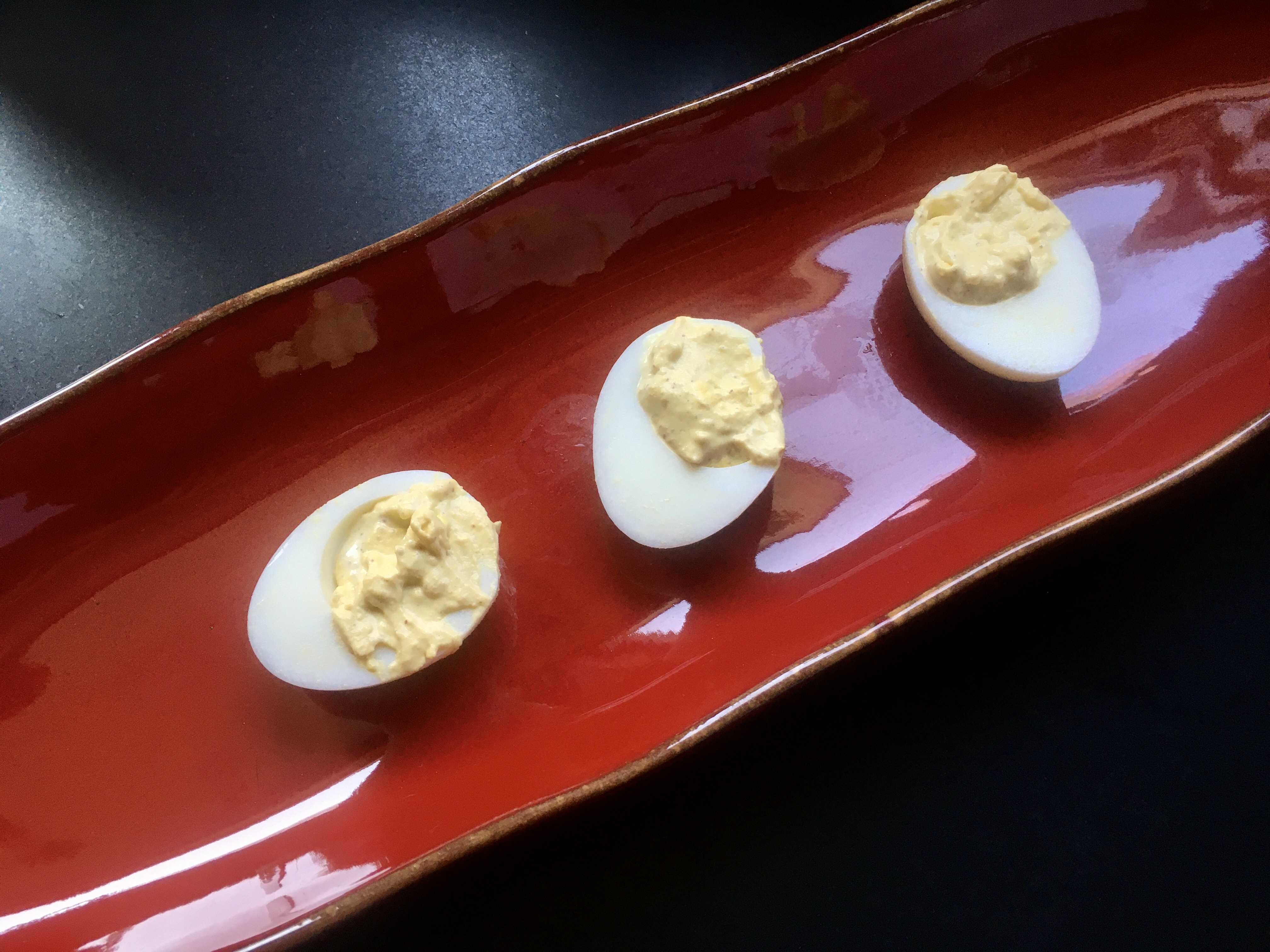
Slice the eggs in half and place the yolks in a bowl with the mayonnaise and mustard. Mix it well and keep it in the fridge.


As for the pork…I buy a large pork butt or pork shoulder. I remove any of the skin, but leave the fat. I prefer a pork shoulder with a bone…I think it adds more flavor. A day before I put the pork shoulder in the smoker, I rub it down with my pork rub and let it sit in the fridge overnight.

I set my smoker to 250 degrees (I have an electric smoker) and use hickory chips to smoke the shoulder. Letting the temperature drop to about 225 overnight, I smoke the shoulder for a total of about 14 hours, until the bones pulls out of the meat cleanly.


Out of the smoker, and ready to eat!


The bone comes right out!


I prefer to chop (versus shred) the pork meat, including bits of fat and crunchy exterior with the meat.


I mix in some BBQ into the meat–not too much–for extra flavor.


To assemble, take a teaspoon of the mayo/mustard/yolk mixture and place it in the cavity of one of the egg halves.


Place a lump of pulled pork on top (I like it warm, to counter the cold of the mayo and cole slaw.)


Top with a little BBQ sauce.


Then place a teaspoon of the cole slaw on top of that.


They are one of the more delicious single-bites you’ll ever have!


Since we’re quarantining, it’s time to dig out those bottles of booze that might be lurking somewhere in the back of the old liquor cabinet. Inspired by my travels, I’d like to share some of the cocktails I’m rediscovering these days, as I lock myself in my basement bar!

A few years ago, I sampled a negroni-inspired cocktail in Cleveland, Ohio, dining at chef Jonathon Sawyer’s The Greenhouse Tavern. Crazy creative food, and this mind-blowing drink that inspired me to buy a small oak barrel and start cask-aging everything I could get my hands on at home. Alas, the OYO Stone Fruit Vodka, a key part of this cocktail, is not available here in Rhode Island. And my online source will no longer ship it! But I still have a little bit remaining in my stash…


OYO STONE FRUIT “NEGROSKI”

1 oz. OYO Stone Fruit Vodka
1 oz. Campari
1 oz. Cocchi Vermouth di Torino


If you’re doing it The Greenhouse Tavern way, combine large quantities of these ingredients in the right proportions and pour them into an oak cask, then let it age! Experience tells you that newer and smaller casks will mellow flavors faster than larger, older ones. But it’s all about experimentation. Having a taste every once in a while is must, because you don’t want to over-age it, either.

If you don’t have an oak cask lying around at home, it’s still delicious without it…

Combine all the ingredients in a rocks glass with ice. Stir gently, adding a splash of soda, and garnish with an orange peel.


OYO Stone Fruit Vodka gets its wonderful flavors from stone fruits: cherries, peaches, apricots and almonds. Terrific on its own, but amazing in this recipe.

Campari is a world-famous aperitif and bitters, and a must in any decent home bar.

Cocchi Vermouth di Torino is a sweet vermouth, made in Italy from the Moscato grape.


When my daughter hangs out with me, I always ask her what she wants me to cook for her, and there are a few “Dad” recipes that are her favorites. This is one of them, especially when we’ve got fresh asparagus growing like crazy in the garden right now. And as any parent will tell you, if your kid is craving a dish that has vegetables in it, count yourself lucky–and make it!!
If you don’t have fresh asparagus growing in the garden, not a problem. It works well with store-bought asparagus, too. Just make sure the stalks aren’t old looking and woody. That means they’ve been traveling a long distance from the field to your store…and that’s not good.
Prepping asparagus is easy, and you don’t need a knife to cut off the woody bottoms of the stalks. Simply bend the stalks at the bottom and they will naturally snap off at the right point.
4 mild Italian sausages, sliced into pieces 1/2″ thick
1 lb. penne pasta
1/2 onion, finely chopped
1 cup chopped fresh trumpet mushrooms (white button mushrooms work, too)
2 cups fresh asparagus, sliced into 1-inch pieces
1 clove garlic, passed through a garlic press
1 cup homemade chicken broth
6 fresh sage leaves, finely chopped
1/2 cup freshly grated Parmigiano Reggiano cheese
extra virgin olive oil
salt and pepper
Have the pasta water salted and boiling, and add the pasta, cooking until just a bit more undercooked than al dente.
Heat a large pan, and drizzle in some olive oil. Sauté the sausage pieces until browned and cooked through, but not over cooked. Remove the sausages from the pan and place them in a separate bowl. Remove all but 2 tablespoons of the fat left behind in the pan.
Place the pan back on stove and sauté the onion until translucent. Add the garlic, and sauté for 10 seconds. Add the sage, and saute for 10 seconds, stirring. Add the chopped mushrooms and saute for a few minutes, then add the chicken broth, and simmer until almost all the liquid has evaporated. Pour the contents of the pan into the bowl with the sausages.
Return the pan to the stove, add a little more olive oil, and on medium heat, sauté the asparagus pieces. Cook them until they are al dente, not too soft. Once the asparagus has reached this stage, return all the contents of the sausage/mushroom bowl to the pan to heat through. Drain the pasta, and add it to the pan as well, combining all the ingredients. If it looks too dry, add a little pasta water to the pan. Season with salt and pepper.
Make sure you serve this hot, with grated Parmigiano Reggiano on top, and drizzle lightly over the top with extra virgin olive oil.