Archive for the ‘frying’ Category

THE BATTLE OVER CANOLA OIL

Posted: February 6, 2014 in Food, frying
Tags: , , ,

image

There is a huge battle going on about the safety of canola oil. The majority of canola oil is made with genetically modified seeds, so if you’re trying to avoid GMO’s in your family’s diet, you have 2 choices: stop using canola oil or buy non-GMO canola oil. Until a few hours ago, I didn’t know the latter even existed.

Canola gets its name from “Canada” and ‘Oil.” There is no “canola plant.” There is, however, something called rapeseed, which canola oil comes from. The “rape” comes from the latin “rapum,” which means “turnip,” but you can see how something called rapeseed oil wouldn’t work with the general public. So: Canola it became.

Rapeseed plants have been grown for thousands of years, not for edible oils, but for lamp oils and lubricants. The presence of erucic acid, some nasty stuff that nobody really wants to eat, made it unsafe for human consumption. But rapeseed oil was in high demand during World War II for its industrial applications. After the war, the demand for rapeseed oil diminished, and it was only in the 1970’s that scientists were able to wean out the erucic acid out of rapeseed to make canola. (This was done without genetically modifying the plant. That technology did not exist yet.)

It was in 1998 that the GMO was born when scientists developed a strain of rapeseed that could withstand herbicides, which is what about 85% of canola is made from today. Personally, I don’t want to eat any plant that can withstand (and certainly absorb) gallons of herbicides or pesticides. No thanks, Monsanto.

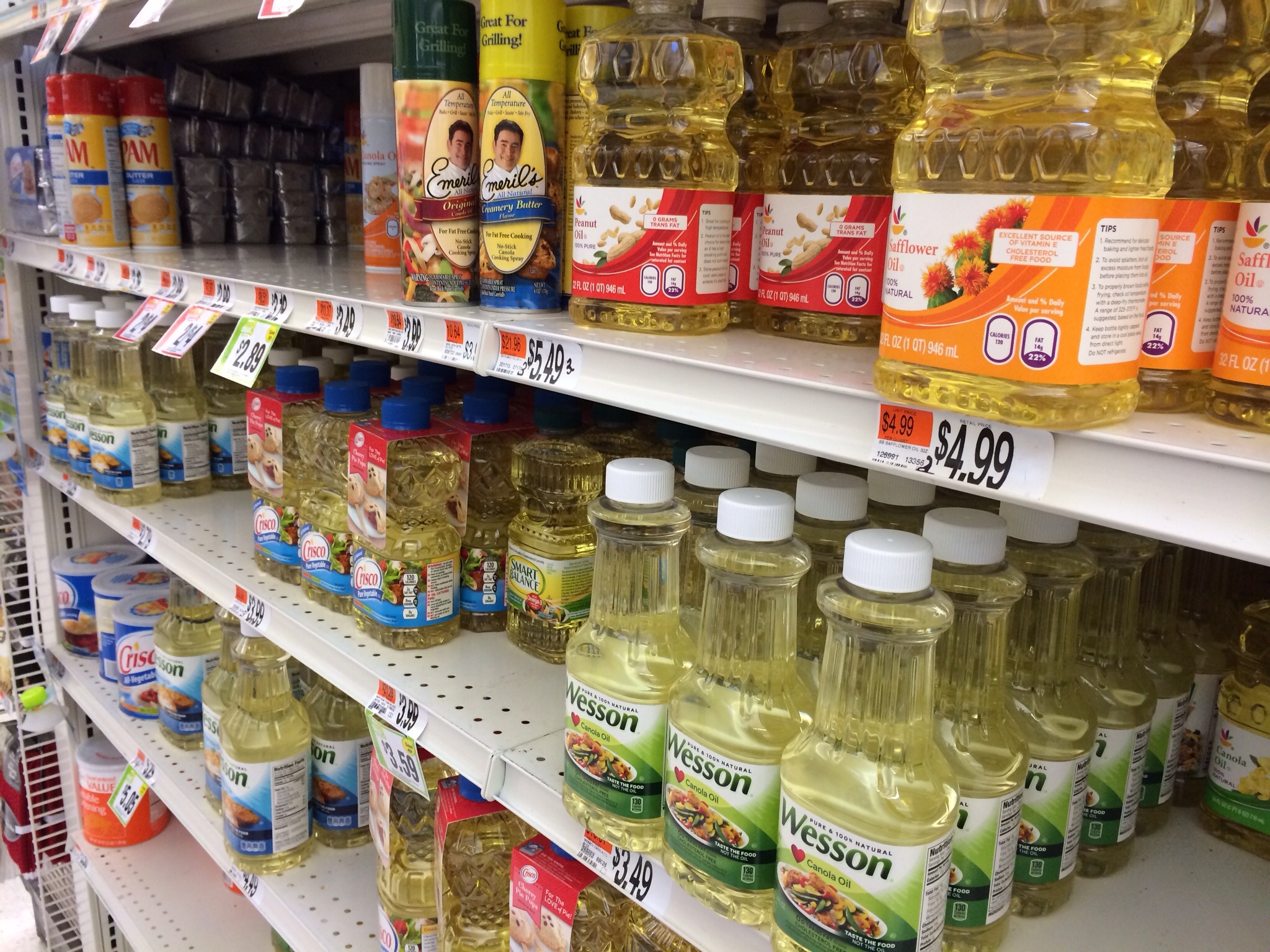
So what about the other oils out there? If you’re staying away from canola oil because of GMO’s, I’ve got news for you: you need to stay away from so-called vegetable oil (which is soybean oil), corn oil, safflower oil, sunflower oil, and even peanut oil. 

The best oils to cook with: olive oil, avocado oil, and unrefined coconut oil. There are such things as good fats, and these oils have them.

As for non-GMO canola oil? I’m a bit skeptical, but I’m willing to give it a chance. After all, I still need my occasional fried food fix once in a while.

On an episode of “Top Chef,” Wolfgang Puck had the competing chefs make an omelet, something you would think they could do blindfolded. They all failed. An omelet may be a simple dish, but creating a really great omelet is an art form. It’s the same with fried calamari. When I see it on a menu, I almost always order it, because it’s my litmus test for the meal ahead. If the chef screws it up, I know he or she either doesn’t have the chops, or doesn’t care, and that will reflect on the other food served as well.

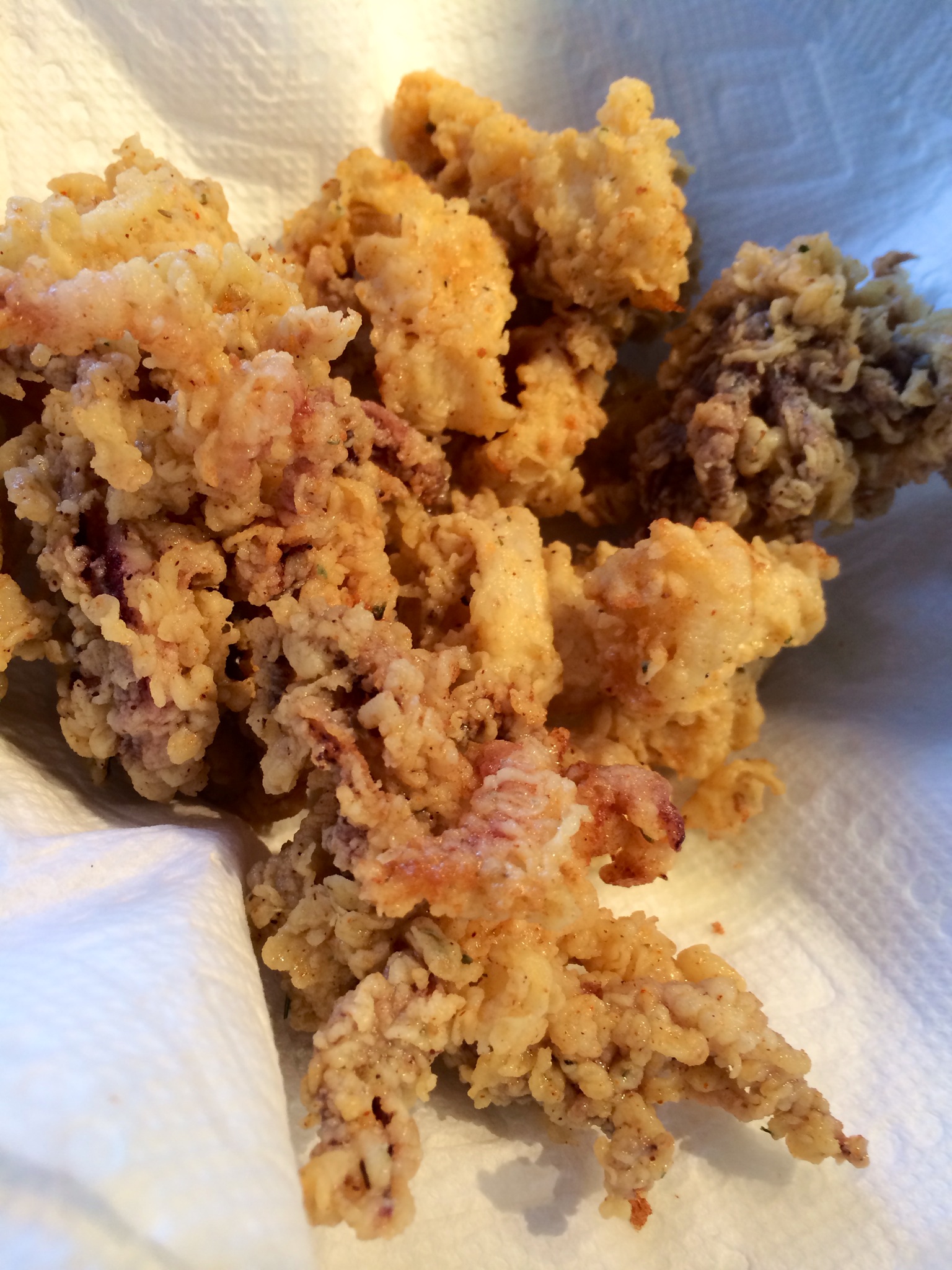
To me, what makes great friend calamari are three basic elements: it needs to be wild caught in the US and properly cleaned…it needs to be fried at the right temperature for the right amount of time so that it’s perfectly cooked and not greasy…and the coating needs to be light and crispy. This recipe does it for me…

calamari

Ingredients:

1 lb. wild caught cleaned squid (thaw if frozen)

2 cups flour (I use 00 flour, but all purpose is OK, too)

2 teaspoons dried oregano

1 1/2 teaspoons paprika

1 teaspoon dried parsley

1/2 teaspoon granulated garlic

1 1/2 teaspoons salt

1/2 teaspoon black pepper

1 cup milk

1 large egg

oil, for frying ( I use non-GMO canola oil or peanut oil)

Thaw the squid and slice into bite-sized rings. In a bowl, whisk the milk and the egg together. Toss in all the squid pieces into the bowl to coat. Place the bowl in the fridge for at least 15 minutes.

In another bowl, combine flour, oregano, paprika, parsley, garlic, salt and pepper. Set aside.

Fill a large pan halfway with oil…or use a deep fryer if you have one. Preheat the oil to 350 degrees.

Working in small batches, remove the squid from the milk and egg mixture, let some of it drip off, then place the squid in the flour mixture and toss to coat. Shake off any excess flour and place immediately into the hot oil. Fry until golden brown, about 4 or 5 minutes. Serve immediately with tartare sauce, tomato sauce, hot peppers, whatever you like.

Commentary on oil: I cook almost exclusively with olive oil. But for hot frying like this recipe requires, I go with non-GMO canola oil…or peanut oil if that’s not available. Despite what you read, most oils that are hailed as “healthy:” regular canola, corn, soybean, sunflower, safflower…are bad for you. But if you fry your food at the proper temperature using good clean oil, very little oil will stay on your food.

I’ve made some changes to my bacon blog of over a year ago, taking many more steps toward true bacon greatness. Scroll down for my updates…

There are few foods as magical as bacon. Add bacon to just about any dish you’re preparing, and it elevates it to incredible new heights of flavor. The BLT is possibly the greatest sandwich ever invented: just a few simple, fresh ingredients, when placed together, transforming into one of the most amazing treats on planet Earth.

And it all depends on the bacon.

For many years, I’ve bought my bacon on-line from Burger’s Smokehouse, a family run business in Missouri that not only sells some great bacon (get the thick-sliced country bacon—my favorite), but also smoked turkeys, ham and more. The prices are excellent and they include shipping.

But it was time to take the next step: I had to make my own bacon!

Bacon comes from the pork belly. So I bought a few slabs of insanely good pork from my friends at Fire Fly Farms in Stonington, CT (www.fireflyfarmsllc.com), and followed the simple curing techniques outlined in a great book about making all kinds of prepared meats (sausages, salamis, and of course, bacon): “Charcuterie,” by Michael Ruhlman and Brian Polcyn.

To cure bacon, all you really need is some salt and some sugar, and what they in the curing biz call “pink salt,” which is not to be confused with salt that happens to be pink, like Himalayan salt you would find in a spice catalog. Pink salt is bright pink—to let you know that this is special salt that should only be used in small quantities for curing. And the reason for that is because it has nitrites. Nitrites delay the spoilage of the meat, and help keep the flavors of spices and smoke. That’s good. But nitrites can break down into nitrosamines, which have been known to cause cancer in lab animals. But let’s face it: you would need to eat a ton of cured meat to really worry about this.

To make the basic dry cure:

1/2 lb. kosher salt

4 oz sugar

1 ounce (5 teaspoons) pink salt

Combine these ingredients well. You won’t need all of it unless you’ve got a lot of pork belly. An important note: kosher salts do not all weigh the same, so that’s why I go by the weight and not a cup measurement.

Once you rub the pork belly with the basic dry cure, place it in a Ziploc bag, squeeze the air out of it, and seal it well. Place in the fridge for about a week, flipping it over a few times to let gravity do its work. You’ll see that the salt will draw moisture out of the meat and form a brine. This brine will continue to cure your pork belly, so leave it in there.
Once the pork belly has been cured, wash the brine off the meat, pat dry with paper towels. Now it’s time to cook. You can simply cook the pork belly at 200 degrees for about 2 hours, until the internal temperature reaches 160 degrees, or do what I did: place the pork belly in a digital smoker, cooking it at 250 degrees for 1 hour, then adding hickory chips and smoking it at 250 degrees for another hour.

That’s it. You have achieved bacon!

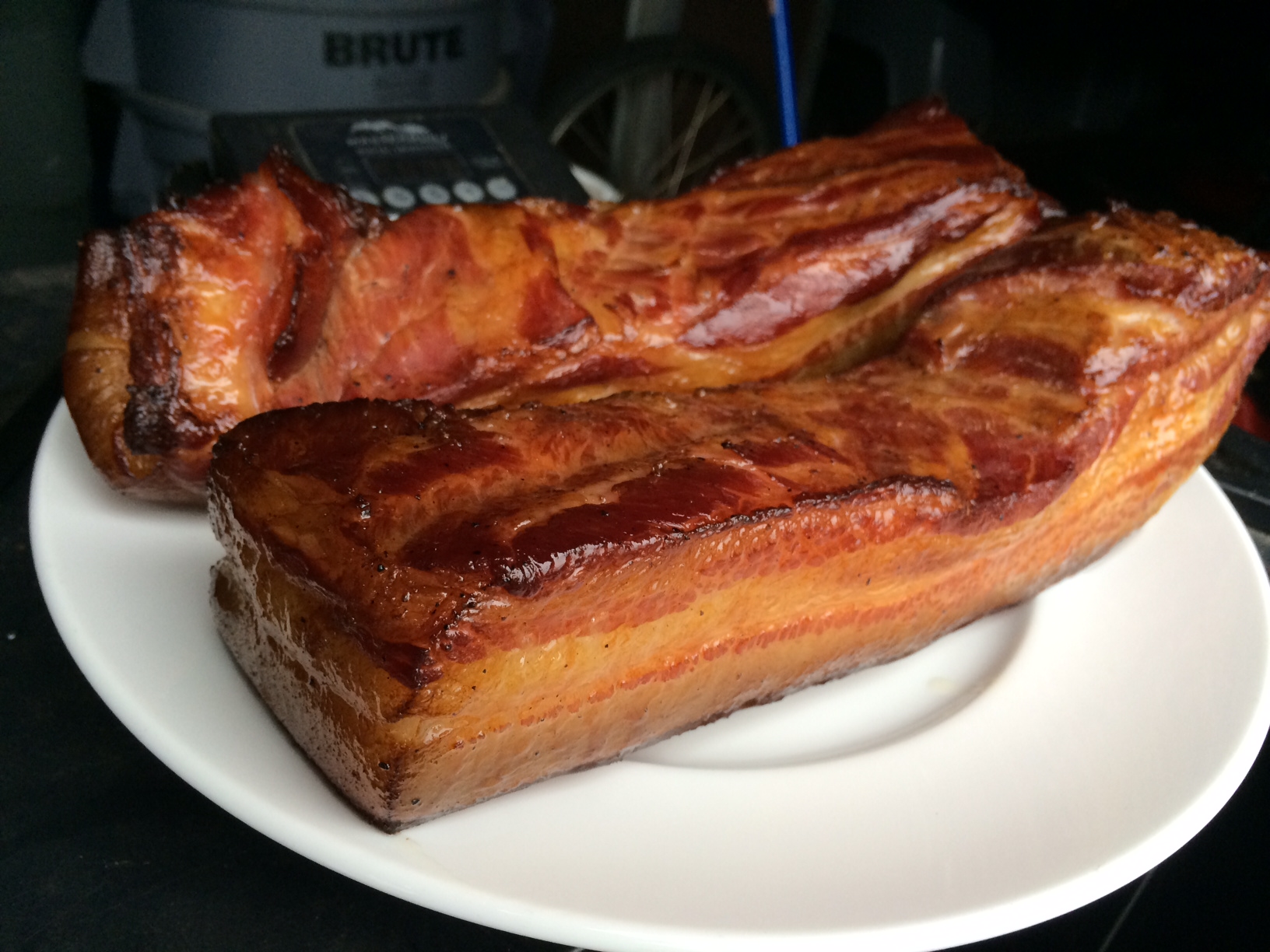
Bacon, straight out of the smoker.

Bacon, straight out of the smoker.

Let me tell you…that first slice you cut off that bacon and toss in a pan to lightly fry for a few moments will be the best bite of bacon you have ever had in your life!
The reward is so worth the effort. If you don’t want to bother going online or if you don’t have a local farm to buy your pork, simply go to your favorite butcher and ask for pork belly. It’s usually available. And if you’re making one slab of bacon, why not make it three or four? It freezes well. And…you will eat it. You know you will!

Sliced, and ready for frying.

Sliced, and ready for frying.

Since I posted the above information, I’ve had the opportunity to tweak my bacon curing recipe. The result was a more balanced, less salty bacon with tons of flavor…

Ingredients:

1/4 cup of the basic dry rub (recipe above)

1/2 cup light brown sugar

1/2 teaspoon ground black pepper

Combine these ingredients and rub on all sides of the pork belly. Place in Ziploc bags and squeeze all the air out of them. Place in a container in the fridge and turn them over every day to let gravity do its work. A brine will form inside the bag…this is good. It will cure the pork belly. After about a week, remove the pork bellies and rinse them with cold water. Pat them dry with paper towels and then proceed to the smoker.

Bellies in the smoker

Bellies in the smoker

I use a digital smoker, so I set the temp for 250 degrees and cook the pork bellies at this temperature for one hour. I then add hickory chips and smoke the bellies at 25o degrees for one more hour.

Smoked bacon

Smoked bacon

At this point, you have achieved bacon! While the bellies are still warm, you can easily slice off the pork skin off the belly. I discard it. Slice the bacon into whatever thickness you like, and fry some up immediately! Once the rest of the bacon has cooled to room temp, cut them into chunks, wrap individually, and freeze until ready to use.

Frying in the pan!

Frying in the pan!

Chicken parmigiana, much like pizza, is a bit more difficult to make than you might think. Sure, there’s plenty of crappy chicken parm out there, made with processed frozen chicken cutlets, bad sauce and cheap cheese. But to make a really fantastic, mind-blowing chicken parm, that’s a real skill…one that I’ve honed over my many bachelor years. So when it was time to cook something that would impress the hell out of the woman who is now my wife, I have no doubt that is was my chicken parm that won her over.

The key to this recipe is simple: don’t skimp on the quality ingredients. And my recipe makes a lot. Trust me: you will want leftovers.

Gooey, cheesy, orgasmic.

Gooey, cheesy, orgasmic.

Ingredients:

6 Chicken breasts, the best quality you can get your hands on

Alz Italian bread crumb seasoning (see recipe below)

3 eggs

olive oil for frying

Alz “Don’t Call It Gravy” tomato sauce (see recipe below)

Fresh mozzarella cheese

oregano

Thaw the chicken breasts. Lay them flat on a cutting board, and you’ll see where the chicken tender is on the side of the breast. Cut the tender off and set aside, leaving the breast which is thinner at one end and thicker at the other. Slice the breast in half lengthwise at the thicker end, keeping the knife level, so that you wind up with 2 pieces of breast meat that are the same thickness, but one will be a longer piece (the bottom) and one about half its size (the top part you sliced off.) Do this with all the breasts.

By slicing the breasts lengthwise into evenly thick pieces, there is no need to pound the hell out of the chicken breasts.

Pour the olive oil into a large frying pan. Next to the pan, set up two bowls: one with Alz Italian bread crumb mix and in the other: crack the eggs and whisk them.

Now it’s your standard breading procedure: chicken meat in the egg, then in the breadcrumbs, coating well. Shake off the excess and place carefully in the pan of olive oil when the oil comes to temperature for frying.

Fry the chicken in the oil until golden brown. You want it cooked all the way through, but not overcooked. Place fried chicken pieces on paper towels to absorb excess oil. Do this with all the chicken. The fried chicken at this point is delicious all by itself: chop and place in a salad, or make a chicken sandwich. My daughter gets these instead of store-bought chicken tenders, and she loves them.

Cover a baking sheet with aluminum foil. Ladle out enough  sauce to create a thin layer of sauce on the bottom of the sheet. Place fried chicken breasts on top of the sauce. Cover the breasts with more sauce, then place pieces of sliced fresh mozzarella on top. Sprinkle top with a little oregano.

Place the baking sheet in a pre-heated 350 degree oven and bake until the cheese has melted and just starts to brown. Serve with pasta.


ALZ “DON’T CALL IT GRAVY” TOMATO SAUCE

It’s not hard to make a good tomato sauce. But it takes a little work to make an amazing tomato sauce. Honed from a recipe handed down by a friend-of-a-friend’s Italian grandma, it is one very important part in two of my favorite Italian comfort food recipes: my (meat)balls…and my kick-ass chicken parmigiana recipe.

Ingredients:

1 medium onion, finely chopped

2 cloves garlic, finely chopped

1/2 cup extra virgin olive oil

10 cups ground and peeled tomatoes…or 3 cans (28 oz) tomatoes (real San Marzanos preferred)

2 teaspoons each: dried oregano, basil and parsley

3/4 teaspoon each anise seed and fennel seed

1 1/2 teaspoons salt

1/2 teaspoon black pepper

2 bay leaves

1 small can (6 oz) tomato paste

1 teaspoon sugar, optional

Heat olive oil in a large pot and add onions. Cook until onions are translucent, then add garlic. Stir for 10 seconds.

Add tomatoes and cook until orange foam disappears, stirring frequently.

Add oregano, basil, parsley, anise seed, fennel seed, salt, pepper, and bay leaves. Stir to combine. Add tomato paste, stirring well. Let sauce just come to a boil (which helps the paste thicken the sauce), then reduce to a simmer, and cook uncovered for at least an hour, stirring constantly, until sauce reaches desired consistency.


ALZ ITALIAN BREAD CRUMB SEASONING

If I can’t make my own breadcrumbs from old bread, I’m OK with buying store-bought breadcrumbs. But I always buy them plain, and then season them myself. And for this recipe, I don’t use Panko.

Ingredients:

1 cup plain breadcrumbs

2 teaspoons dried parsley

1 teaspoon dried oregano

1 teaspoon dried basil

1 teaspoon salt

1/4 teaspoon black pepper

1/2 teaspoon granulated garlic

1/2 teaspoon onion powder

Combine all ingredients well.
Fried food has not had a good reputation. Everyone automatically thinks that it’s bad for you. That fact is, if it’s done right, fried food is delicious and not greasy at all.

When you fry at home, you can do things the right way: start with clean oil, heat it to the right temperature, and then throw it out when it’s done. When you go to a fast-food place, that oil has been sitting there all day (if not all week)…it’s been used hundreds of times…it absorbs the flavors of whatever was fried before your food got dropped in there…and quite frankly, it’s beat up.

What got me started with this whole beer-batter-at-home process was stumbling upon some amazing fresh local cod at my neighborhood seafood store: Bridgeport Seafood in Tiverton, Rhode Island. My buddy, Dave, said that the cod came from just off Sakonnet Point that day. Good enough for me!


Beer Battered Fish

I use vegetable oil and, using a thermometer, heat it to 350 degrees. I always watch the temp of my oil…it can get too hot very quickly…and by the same token, the temp can drop quickly if I throw in a whole bunch of fish into the pot all at once. Using one of those deep fryers made for home use is also a good way of cooking and controlling temperature. I’m careful not to put too much oil in my pot (halfway up is fine) or it could spill over, since oil expands as it gets hotter.


Here’s all you need for great beer batter:


1 1/2 cups all-purpose flour (I use King Arthur)

12 oz bottle of beer (Sam Adams Boston Lager works for me)

1 teaspoon salt


Combine all ingredients in a bowl and beat until smooth. Cover loosely with plastic wrap and place in fridge for 3 hours.

Cut your fish into pieces that aren’t too big and will fit in your pot easily. Thickness of the fish may vary and so may the cooking times of each piece. When the oil reaches 350, simply dip the fish into the batter and let as much batter drip off as you like before you carefully place the fish into the oil. Fry until golden brown.


beer batter


What good is fried fish without tartare sauce, right? Don’t tell me you’re using the stuff in a jar after frying the fish yourself!


Alz Tartare Sauce


1/2 cup mayo

Dash of Worcestershire sauce

Dash of Frank’s Red Hot cayenne sauce

Grinding of black pepper

1 Tablespoon finely chopped capers

1 teaspoon lemon zest, using micro plane zester


Combine all ingredients in a bowl, cover with plastic and refrigerate for an hour before using.

Clam fritters, conch fritters, lobster fritters…I suppose you could fritter anything. But the first time I had them with mussels, I knew that I would never fritter my life away with any other!

It was a fall afternoon in Newport, Rhode Island, at the Newport Yachting Center’s annual Oyster Festival. We’re gorging on freshly shucked oysters and clams, boiled shrimp, and…what have we here? I had never heard of a mussel fritter before, but Wendy, the lovely lady behind the counter, convinced me that her secret recipe would knock my socks off. I took one bite, then another, then another…There was no turning back.

They couldn’t be easier to make, but it is crucial to have the right fritter batter. And that starts with a product called Drum Rock fritter mix. If you live in New England, you can find it in just about any seafood department at Whole Foods. If you live further away, you can check out their website (http://www.drumrockproducts.com/index.php) or try your luck with a local brand of fritter mix.

fritter ingredients


If you’re using fresh mussels, be sure to clean them well and remove the beards. Steam them in a pot over a small amount of water. As they open, they will release their flavorful juices and you want to save every drop of that broth for the fritters. Here in New England, frozen mussel meats are available in some seafood stores. All you need to do is thaw them, steam them saving the broth, and you’re ready to go.


Mussel Fritters

1 lb Drum Rock fritter mix

2 cups cooked mussel meats

1/2 cup mussel broth (saved from steaming mussels)

1/4 to 1/2 cup good quality beer, such as Sam Adams Boston Lager

Peanut oil for frying

Be sure to let the batter rest. If you're waiting for guests to arrive, just cover the batter bowl with a moist towel and it will keep for several hours at room temperature.

Be sure to let the batter rest. If you’re waiting for guests to arrive, just cover the batter bowl with a moist towel and it will keep for several hours at room temperature.


Steam mussel meats until just cooked. Remove mussel meats, and reserve 1/2 cup of the broth. Pulse mussel meats in a food processor, but leave chunky…or chop by hand.

Put Drum Rock fritter mix in a large bowl. Add mussel meats, mussel broth, and beer. Stir gently until just mixed. Let it sit for 10 to 15 minutes and do not stir again.

Using a thermometer, heat oil to 350 degrees, and using a small spoon or scoop, drop fritters in hot oil, turning gently, cooking 3 to 4 minutes until golden.

Drain on absorbent paper, and season with salt and pepper immediately. Serve right away!

IMG_3043


The perfect dipping sauce for these mussel fritters is made from two ingredients: mayonnaise and Ponzu sauce, which is a citrus-based soy sauce. Combine both ingredients in a bowl. How much you use of each is a matter of personal preference. I usually use a ratio of 4 parts mayo to 1 part Ponzu.


I love fried chicken. And despite what most people think, fried food is really not that bad for you if you fry it properly. Use clean oil every time, and get the oil to the right temperature: two key factors that will result in crispy chicken that isn’t bogged down with grease. But frying also means you have to stand over the chicken and watch it all the time…especially a pain in the butt if you’ve got guests and you’re making a lot of chicken! What makes this recipe great is that you get all the benefits of a crispy fried chicken without all the grease and without standing watch over it the whole time.

You can use chicken wings or any chicken parts for this recipe. Either way, I fry the chicken until it just turns golden brown and then bake it in the oven.

Ingredients:

10 lbs large chicken wings or chicken pieces

Vegetable oil, for frying

For soaking:

1 quart buttermilk

2 teaspoons Frank’s Red Hot, or other hot sauce

For the seasoned flour:

1 ½ cups all purpose flour

½ cup whole wheat flour

1 Tablespoon sea salt

1 teaspoon freshly ground black pepper

1 teaspoon paprika

1 teaspoon granulated garlic

1 teaspoon onion powder

1 teaspoon basil

1 teaspoon oregano

Open the bottle or carton of buttermilk and add 2 teaspoons of hot sauce. Close container and shake to combine. Place chicken pieces in a bowl and cover with buttermilk, letting the chicken soak in it for at least several hours or overnight.

Chicken soaking in buttermilk/hot sauce mixture overnight.

Pre-heat oven to 350 degrees.

Combine all purpose and whole wheat flours in a bowl. Add salt, pepper, paprika, granulated garlic, onion powder, basil and oregano. Mix well.

After chicken has soaked in the buttermilk, remove the pieces one at a time, leaving the buttermilk on them as you toss the pieces into the seasoned flour. Set pieces aside on a metal baking rack placed on a sheet pan.

Pour the vegetable oil into a large heavy-bottomed stock pot to a depth of 1-inch. Heat the oil to 360 degrees on a thermometer.

From the buttermilk, to the breadcrumb mixture, to the oil.

From the buttermilk, to the breadcrumb mixture, to the oil.

Working in batches, place the chicken pieces in the oil, being careful not to overcrowd them. Fry the chicken until it is golden brown on both sides, then place each piece back on the metal baking rack set on the sheet pan.

Once all the chicken has been fried, place the sheet pan in the oven for 30 to 40 minutes, until fully cooked and crispy.

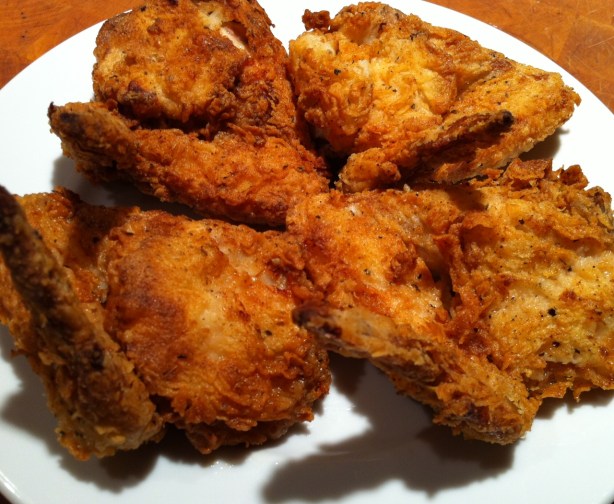
fried chix

Feast!

The fact that I can’t remember a damn thing anymore has actually worked in my favor when it comes to getting recipe ideas from television. I can no longer get the exact ingredients down and so I wind up make stuff up as I go along. The end result: my own original take on a particular recipe.
A perfect example of that was a few months ago when I was watching Adam Richman’s Best Sandwich In America on the Travel Channel, which featured some of the most innovative sandwiches from around the country. I was particularly intrigued by the methods used by the folks at Faidley’s in Baltimore to make their famous crab cake sandwich. I jotted down what I thought they did (of course, they don’t reveal their recipe secrets) and I wound up creating the best crab cake I’ve ever made:
Alz Crab Cakes

1 pound crab meat
1/3 cup oyster crackers
1 teaspoon Old Bay seasoning
1/2 cup mayo/mustard blend

To make the mayo/mustard blend, combine 4 parts mayonnaise to 1 part mustard. You your favorite. I use Maiile Chablis mustard, but it’s only available in France. (See my previous blog about the Maille mustard shop in Paris.) However, Maille Dijon mustard is great, too. Set aside.

Take the oyster crackers and pulse them in a food processor until it resembles oatmeal…not too fine.

In a bowl, gently mix all the ingredients. With your hands, form small crab cake balls, like meatballs. Place on a tray lined with foil, and pop in the fridge for at least 15 minutes to set.
Heat oil in a pan to 375 degrees. Gently drop the crab cakes into the oil, and fry for only 10 to 15 seconds. Flip over, and fry 10 to 15 seconds more, just to form a light crust. Don’t over-fry or they will fall apart!

Drain crab cakes on paper towels and enjoy.

Any leftover mayo/mustard works great as a tartar dipping sauce, or a spread if you’re making a crab cake sandwich. Just finely chop some pickles, add a splash of Worcestershire and/or hot sauce, and mix with the mayo/mustard.

This recipe works equally well with a light, flaky fish, like cod. Combine mayo/mustard mix with Old Bay. Slather the fish in it, then roll the fish in the crumbs and fry in oil.


Don’t let the fact that your brain isn’t what it used to be get you down. Take advantage of it! You just might come up with an original recipe that blows the doors off anything you copy down word for word.