Archive for the ‘pork’ Category

Today is National Meatloaf Day. Few dishes scream out “comfort food” to me like meatloaf. My Mom’s meatloaf was awesome, and she’d cut a huge slab of it onto my plate, with fantastic butter-loaded Pennsylvania Dutch egg noodles on the side. I couldn’t stop eating it.

I never thought of making meatloaf when I moved away, because it gave my Mom something special to make for me when I came home to visit. She was thrilled that there was a dish she could make that I would devour every time, without hesitation. (The others were her roasted lamb and Lithuanian pierogis called koldūnai (kol-doon-ay).

But now that my Mom has moved into an assisted living facility where she can’t cook, I’ve had to take meatloaf matters into my own hands. I never got my Mom’s exact recipe. But I had an idea of what went into it, so I gave it a shot.

The standard mix for my Mom’s meatloaf was one-third each ground beef, pork and veal. I went 50-50 with the beef and pork instead. My Mom used Lipton onion soup mix in her meatloaf. I chose to stay away from packaged chemicals. And instead of layering slices of bacon on top as many people do, I used my own home-cured and smoked pre-cooked bacon that I chopped up and put inside the loaf.

To keep this dish gluten-free, I use GF breadcrumbs, and I also don’t use the Lipton onion soup mix, because it can contain non-GF ingredients.

image

1 yellow onion, minced
1 teaspoon salt
1/2 teaspoon pepper
1/2 teaspoon granulated garlic
pork fat or olive oil
1 lb. ground beef
1 lb. ground pork
1/2 cup breadcrumbs (I use gluten-free)
1/4 cup ketchup
4 strips of cooked bacon, chopped
2 eggs


Sauté the onion in a little oil or pork fat until translucent. Let it cool, then mix in the salt, pepper and garlic. Set aside.

In a bowl, combine the meat, breadcrumbs, ketchup, bacon, eggs, and the sautéed onion mixture. Form it into a loaf and place it in a loaf pan. Bake at 350 for about an hour.


As if I needed more reasons to eat bacon, this Saturday, September 3rd, is International Bacon Day!

Let’s face it: there are few foods as magical as bacon. Add bacon to just about any dish you’re preparing, and it elevates it to incredible new heights of flavor. The BLT is possibly the greatest food combination ever invented: just a few simple, fresh ingredients, when placed together, transforming into one of the most amazing sandwiches on planet Earth.

Bacon comes from the pork belly. One of the places I buy pork bellies is from my friends at Fire Fly Farms in Stonington, CT (http://www.fireflyfarmsllc.com). I also get Berkshire pork bellies from Heritage Pork International (http://www.heritagepork.com). I follow the simple curing techniques outlined in “Charcuterie,” a great book written by Michael Ruhlman and Brian Polcyn.

To cure bacon, all you really need is Kosher salt and what they in the curing biz call “pink salt,” which is not to be confused with salt that happens to be pink, like Himalayan salt you’d find in a gourmet store. Pink salt is bright pink—to let you know that this is special salt that should only be used in small quantities for curing. The reason for that is because it has nitrites. Nitrites delay the spoilage of the meat, and help keep the flavors of spices and smoke. They also keep the meat nice and pink instead of an unappetizing gray. That’s good. But nitrites can break down into nitrosamines, which have been known to cause cancer in lab animals. But let’s face it: you would need to eat a ton of cured meat to really worry about this.

To make the basic dry cure:

1/2 lb. kosher salt
1/2 cup light brown sugar
1 ounce (5 teaspoons) pink salt

Mix the ingredients well. An important note: all Kosher salts do not all weigh the same (Diamond Crystal weighs less than Morton), so go by the weight and not a cup measurement. You can use this rub on your pork belly, but I make a large amount of the dry rub and keep it stored in my pantry. When it’s time to make bacon, I take it out and add other ingredients…


Bellies in the smoker

Bellies in the smoker.


Alz Bacon Rub:

1/2 cup basic dry cure
1/2 cup turbinado sugar (Sugar in the Raw brand)
1 teaspoon fresh cracked black pepper
1 teaspoon granulated garlic

Once you rub the pork belly thoroughly, place it in a Ziploc bag, squeeze the air out of it, and seal it tightly. another method is to wrap it tightly in plastic wrap, then seal it with tape. Place it in the fridge for a couple of weeks, flipping it over every few days to let gravity do its work. You’ll see that the salt will draw moisture out of the meat and form a brine. This brine will continue to cure your pork belly, so leave it in there.

After a few weeks, once the pork belly has been cured, wash the brine off the meat, pat it dry with paper towels. Now it’s time to cook. You can simply cook the pork belly at 200 degrees for about 2 hours, until the internal temperature reaches 160 degrees, but I always place the pork belly in a smoker, cooking it at 250 degrees for 1 hour, then add hickory chips and smoke it at 250 degrees for at least another hour.

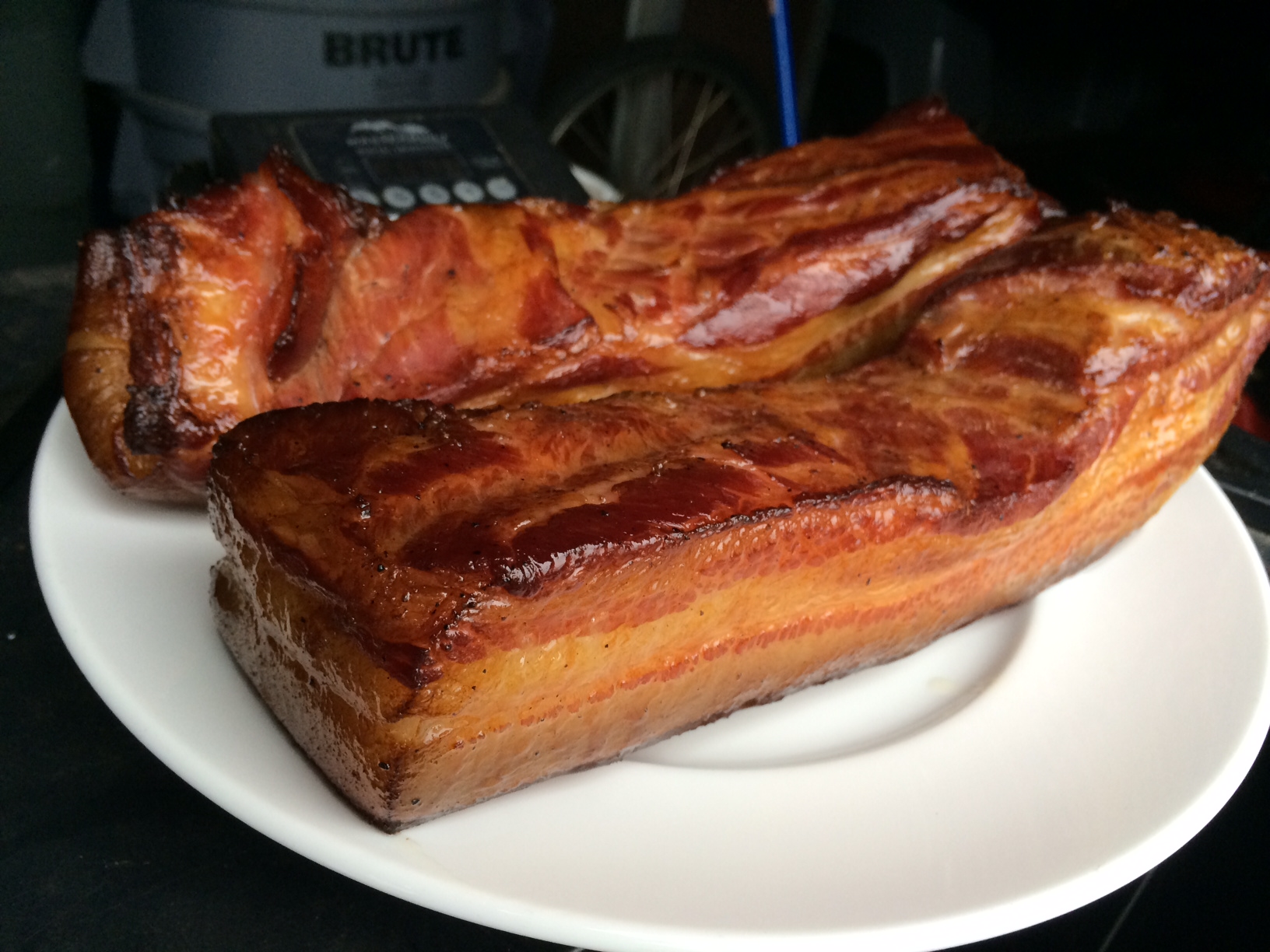
Smoked bacon

Smoked bacon

That’s it. You have achieved bacon!

The reward is so worth the effort. You still have to fry it at this point…you can’t just take a bite out of the slab! But that first slice you cut off your bacon and toss in a pan to lightly fry for a few moments will be the best bite you’ve ever had in your life!
And if you’re making one slab of bacon, why not make it three or four? It freezes well. And…you will eat it. You know you will!

Frying in the pan!

Frying in the pan!

Pork chops were a favorite of mine growing up, but my Mom cooked them only one way: breaded and fried in a pan full of oil. They were good, but they were greasy, and my Mom was not big on seasonings. And she cooked the hell out of it. It was time to improve on the original.

Using the best quality pork I can get, like Berkshire pork, makes a real difference in flavor. It also matters to me that the animals are humanely treated while they’re on the farm. No factory-farmed meats.

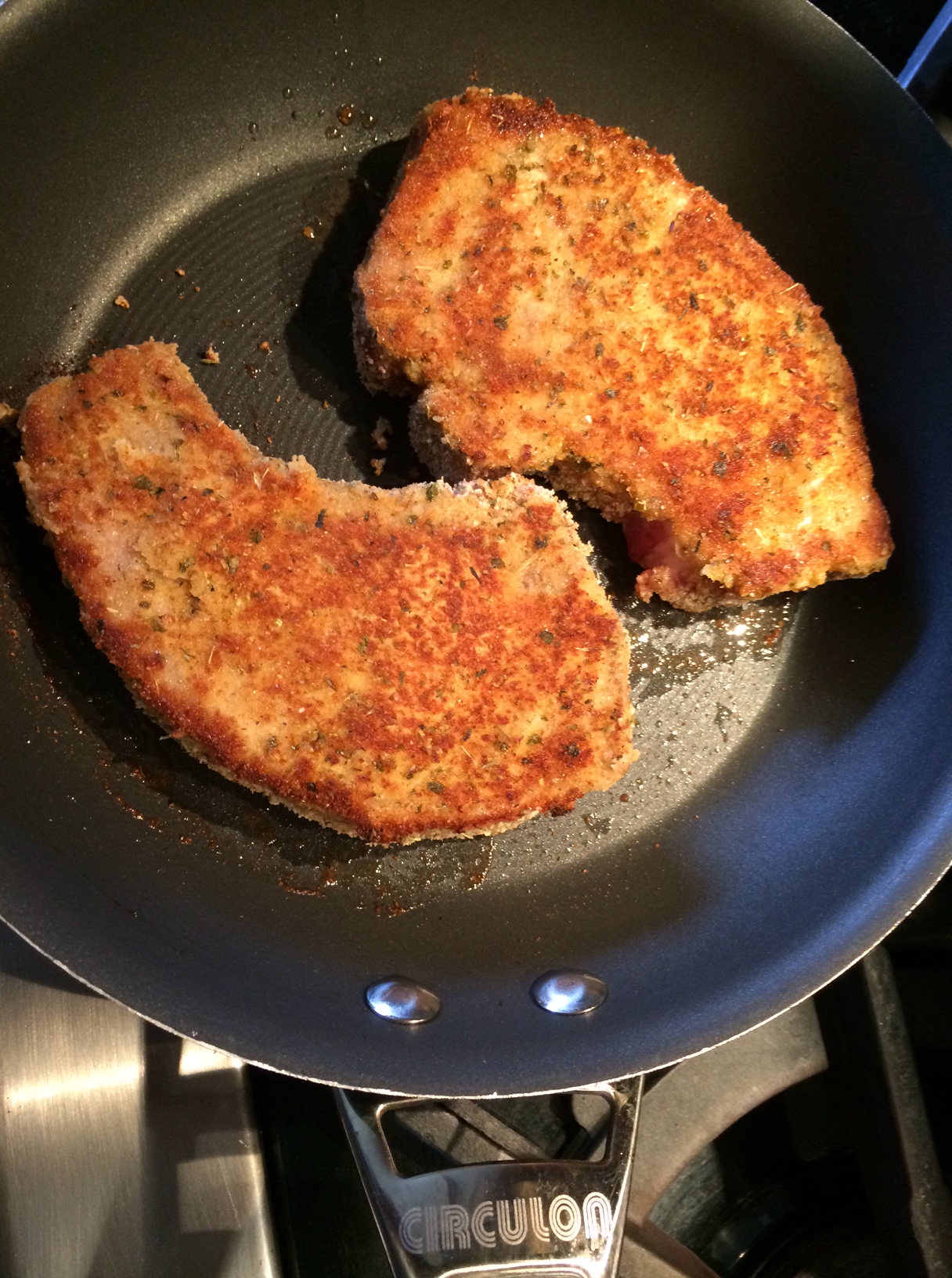
chop 1


2 Berkshire pork chops
1 egg
1/2 cup plain bread crumbs (I use gluten-free)
1 teaspoon salt
1/4 teaspoon pepper
1 teaspoon dried oregano
1 teaspoon dried parsley
1/2 teaspoon granulated garlic
1/2 teaspoon granulated onion
olive oil


Pre-heat the oven to 350 degrees.

Set up 2 bowls. In one, crack and scramble the egg. In the other, combine the bread crumbs, salt, pepper, oregano, parsley, granulated garlic and granulated onion.

Place an oven-proof pan on medium-high heat and add a little olive oil. Once the oil is hot, cover the pork chops in the egg wash and then coat with the bread crumb mixture. Place in the hot pan to brown and sear. Do this with both chops.

After a few minutes, flip the chops over in the pan and place the pan in the oven to finish cooking.

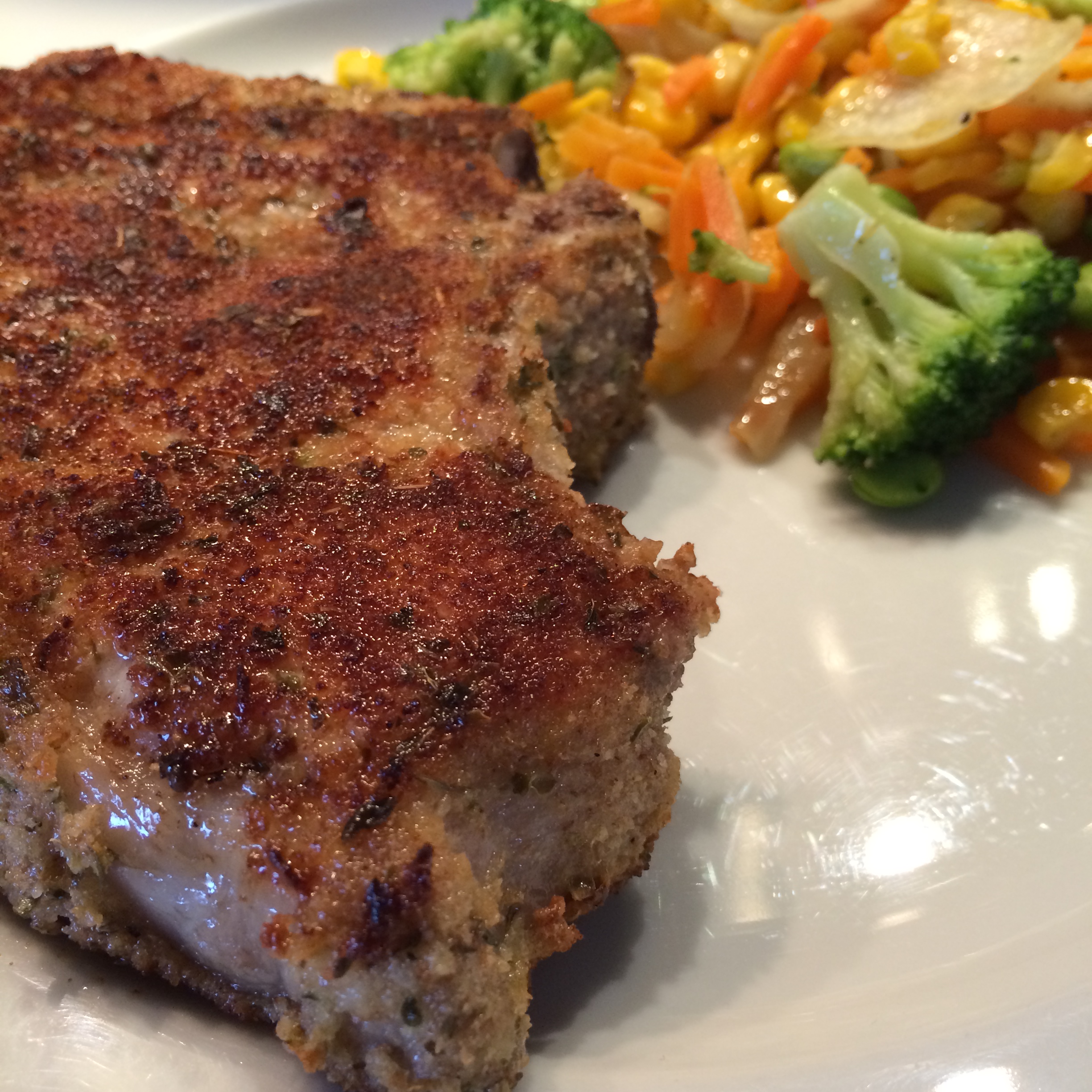
chop 2

Remember, good pork does not need to be cooked until well done!


asparagus pastaAsparagus season has arrived in my garden. This is one of my favorite ways to enjoy it.
4 mild Italian sausages, sliced into pieces 1/2″ thick
1 lb. penne pasta
1/2 onion, finely chopped
1 cup chopped fresh trumpet mushrooms (white button mushrooms work, too)
2 cups fresh asparagus, sliced into 1-inch pieces
1 clove garlic, passed through a garlic press
1 cup homemade chicken broth
6 fresh sage leaves, finely chopped
1/2 cup freshly grated Parmigiano Reggiano cheese
extra virgin olive oil
salt and pepper
Have the pasta water boiling, and add pasta, cooking until just a bit more undercooked than al dente.
Heat a large pan, and drizzle in some olive oil. Saute the sausage pieces until browned and cooked through, but not over cooked. Remove the sausages from the pan and place them in a separate bowl. Remove all but 2 tablespoons of the fat left behind in the pan.
Place the pan back on stove and saute the onion until translucent. Add the garlic, and saute for 10 seconds. Add the sage, and saute for 10 seconds, stirring. Add the chopped mushrooms and saute for a few minutes, then add the chicken broth, and simmer until almost all the liquid has evaporated. Pour the contents of the pan into the bowl with the sausages.
Return the pan to the stove, add a little more olive oil, and on medium heat, saute the asparagus pieces. Cook until they are al dente, not too soft. Once the asparagus has reached this stage, return all the contents of the sausage/mushroom bowl to the pan to heat through. Drain the pasta, and add it to the pan as well, combining all the ingredients. If it looks too dry, add a little pasta water to the pan. Season with salt and pepper.
Make sure you serve this hot, with grated Parmigiano Reggiano on top, and drizzle lightly over the top with extra virgin olive oil.


It’s mind-blowing how many new and exciting restaurants keep popping up in Portland, Maine, and even more interestingly, how they’re all thriving! With a great arts scene, historic New England waterfront, and a young crowd eager to spend their money, Portland is just exploding.

I work in Providence, Rhode Island, a city whose food scene has had a lot of attention in the last few years in a variety of national magazines. But really creative restaurants here are hard to find, perhaps five in the entire city. In Portland, you’ll find five on one block!

Portland is big enough to be a destination, and small enough that you can park your car once and walk everywhere you want to go all day and into the night.

Oysters at Eventide.

Oysters at Eventide.

Three of the best restaurants in town just happen to be owned by the same three guys: Andrew Taylor, Arlin Smith and Mike Wiley. They called their company AMA LLC, though now I think they go by the name Big Tree Hospitality. All three restaurants are located right next door to each other on Middle Street: Hugo’s, Eventide, and The Honey Paw. If you go nowhere else in Portland, hit this one block. If you’re just passing through for lunch, it’s right off 295. Just take the Franklin Street exit.

The block. From left to right: The Honey Paw, Eventide, and Hugo's. And if you stay at the Hampton Inn, like we did, you walk less than a block!

The block. From left to right: The Honey Paw, Eventide, and Hugo’s. And if you stay at the Hampton Inn, like we did, you walk less than a block!


The bar at Eventide.

The bar at Eventide.

Our love of Portland started years ago with Eventide, an oyster bar serving the freshest and most creative small seafood plates in the city: a killer brown butter lobster roll, tuna crudo that rivals the best sushi anywhere, blackboard special plates like char tartare, and a dozen oyster choices served with inventive accouterments, our favorite being the pickled red onion ice. Our non-seafood-eating daughter loved the buttermilk fried chicken bun and Eventide burger. And probably the most ignored-but-shouldn’t-be entry on the menu is the fish sandwich: best you ever had or I’ll eat it for you. They use pieces of fresh-caught hake, a fish that’s somewhat unknown unless you’re a local. A full bar and a surprisingly friendly staff, despite the fact they’re jamming all day long.

The amazing fish sandwich at Eventide.

The amazing fish sandwich at Eventide.

Hugo’s made Portland a food destination thanks to its previous chef/owner, Rob Evans, who sold it in 2012 to concentrate on his newer joint: Duckfat. The three guys: Taylor, Smith, and Wiley, worked there before it closed down and they grabbed the opportunity to take over, bringing a cutting-edge American menu served over a series of exciting tasting courses. Whether you’re a carnivore, vegetarian or seafood lover, you’ll find some wonderful choices here. Our night featured raw and cooked beef selections, lamb bolognese, ankimo (monkfish liver) and unusual veggie plates like sunchokes and smoked parsnips.

FullSizeRender (21)

Paul, the bartender, is a mixologist of the finest kind. My wife sipped on a Jasmine Fizz before we plunged into the eclectic and inspired wine list chosen by Big Tree Hospitality’s wine director, Brian Flewelling, who happened to be our server that night.

My wife enjoyed a sip of my Pappy's as well.

My wife enjoyed a sip of my Pappy’s as well.


And it didn’t hurt that they had three kinds of Pappy Van Winkle bourbon on their shelves…something I haven’t seen anywhere else. (These are the bottles that go for over $1500 on line.) Needless to say, Paul the bartender and I bonded over a taste of the 20-year-old Pappy.

A bourbon conversation between my newest best friend, Paul and myself.

A bourbon conversation between my newest best friend, Paul, and myself.

The third and newest restaurant in the group is The Honey Paw, featuring an eclectic Asian menu. The intense flavors come from all over Asia, and we wondered how these young chefs could be so knowledgeable. We found out that the company flies its employees to countries like Singapore and Malaysia on a regular basis to give them the experience they need to create and serve this amazing food. I swear, I wanna work for these guys! I haven’t seen any company anywhere treat its employees with such respect, and all of that trickles down to how they treat the food, the community, and their customers.

The Honey Paw's mind-blowing albacore tuna sashimi.

Beautiful plates at The Honey Paw.

Like their other two restaurants, The Honey Paw sources most of its ingredients from local farms. So when we ordered a plate of coppa, it was housemade from rare mulefoot hogs raised in Maine, topped with pickled husk cherries.

FullSizeRender (9)

I’m a huge fan of whole-fried fish, but very few restaurants take on that challenge. Even many of my favorite New York Chinese restaurants no longer feature that on the menu. The whole fried black bass I had at The Honey Paw is something I will have every time I return.

FullSizeRender (10)


We did leave the block, eventually! Though not big on atmosphere, Sur Lie was another restaurant in the long list of new establishments in the city featuring small plates full of exciting flavors.

FullSizeRender (18)

We enjoyed tapas like a plate of “Surryano” ham, the West Virginia version of Spanish Serrano…fried milk-braised cauliflower…Hiramasa (Yellowtail Amberjack) crudo…carrot agnolotti (pasta)…and a nicely cooked hanger steak. Good food, good service, and a nice selection of Greek wine.

We walked a lot in Portland. Loads of small shops, art galleries, and stores with collectibles. We hit a couple of comic book stores with our daughter, who’s in that phase…art galleries that enticed my wife, the artist…and an unusual shop with rare, collectible barware in the storefront and an actual bar in the back to do some serious sipping: a place called Vena’s Fizz House.

FullSizeRender (12)

One of the more interesting products they sell at Vena’s was a variety of infusion kits: dried fruits and spices just waiting for vodka or tequila to bring their flavors to life…

FullSizeRender (11)

Sometimes we did jump in the car to get to the other side of town. Portland boasts one of the largest–and coolest–Whole Foods stores ever. The selection is fantastic, and they sell wine and local spirits in a special section that comes with its own wine expert to help you make the right choices!

A short hop down the road from Whole Foods is a line of distilleries and breweries on Fox Street just waiting for thirsty customers. We stopped in to Maine Craft Distilling for a tasting of their creations.

FullSizeRender (6)

Here’s the thing that tells you you’re in Maine: we arrived at Maine Craft Distilling, and they told us they were sold out of just about every spirit because of the holidays. But they still poured us free tastings of all their booze! That would not happen anywhere else. Their logic was: if you like it, you won’t forget it and you’ll buy it the next time around. Friendly and informative, and their blueberry spirit called Blueshine, is worth a trip back.

IMG_0812

Back along the waterfront, on Commercial Street, we tucked into the Flatbread Company, a wildly popular pizza joint that now has 15 locations in Maine, Massachusetts, New Hampshire and even Hawaii. Great pizza (with gluten-free options), salads, and an awesome view of the water.

FullSizeRender (14)

Watching these talented chefs work the oven is better than television. I could watch all night!

Watching these talented chefs work the oven is better than television. I could watch all night!

A must-stop at least once on any Portland trip is the classic Porthole. Featured on “Diners, Drive-Ins and Dives,” they open for breakfast and rock all through the night. I dropped in for some breakfast to go on New Year’s morning, watching those at the bar chug down their Bloody Marys: a little hair of the dog after a long partying night.

IMG_0678

Perhaps my biggest disappointment of the trip (and mainly because it has received so much hype from magazines and friends) was The Portland Hunt and Alpine Club. I was told not to go here for the food, so we passed on that. But while my wife and daughter spent some time in the shops nearby, I decided to go in and check the place out for a cocktail.

FullSizeRender (17)


The bartender was friendly enough, and when I asked for a Manhattan with his choice of bourbon (he used Baker’s), he made it with flair and it tasted good. But it was also something I could make at home just as easily. I don’t know…maybe I needed to order something else. Maybe I should give the place a try in the light of a summer day and not a cold winter’s night. It just seemed kind of dumpy and not at all what I was expecting: uncomfortable metal benches at the bar, a stuffiness in the air like the vents in the kitchen weren’t working. I need to come back and give these guys another chance.


For more on Portland, Maine, check out my blog from July of 2013. A lot has changed in a year and a half, but there’s still some good info there. http://wp.me/p1c1Nl-g3


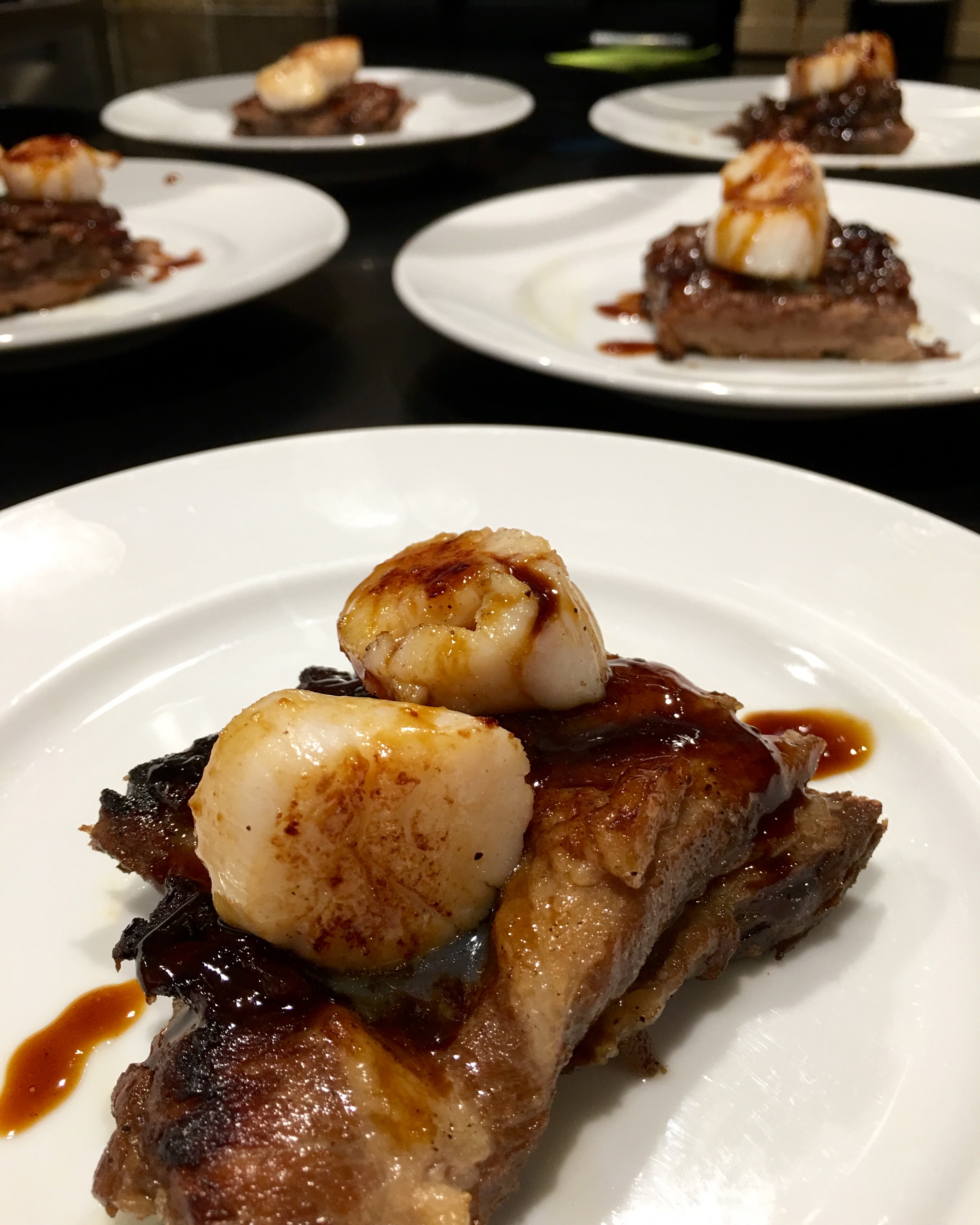
The is a killer recipe that I’ve waited a long time to prepare. My hats off to chef Chuck Hughes for the inspiration. My hats off to my buddy, Dr. Chezwick, who sent me a gift of wild boar bellies. Locally caught Rhode Island scallops in season complete the dish.

FullSizeRender (9)

For the pork belly…
3 lbs. fresh pork belly (I used wild boar belly)
salt and pepper
1–2 tablespoons leaf lard or olive oil
1 carrot, coarsely chopped
1 celery stalk, coarsely chopped
1 onion, roughly chopped
1 fennel bulb, quartered
2 sprigs fresh thyme
1 teaspoon black peppercorns
4 cups beef stock
1 cup hard cider or apple juice

Pre-heat the oven to 350.

Season the belly with salt and pepper. On medium-high heat, melt the leaf lard, then sear the meat on all sides in an oven-proof pot big enough to hold it in one layer. Add the carrot, celery, onion, fennel, thyme and peppercorns and continue cooking for another 5 minutes, until caramelized.

Add the beef stock and the cider. Cover the pot with a lid or seal with aluminum foil, and braise the belly in the oven for 3 hours, until tender.

Remove the pot from the oven, carefully remove the pork belly, and put it on a plate. Cover it with foil. If you’re cooking earlier in the day, you can place the belly in the fridge at this point.

Strain the leftover braising liquid from the pot and discard the vegetables and thyme. Skim off the excess fat. If starting this dish earlier in the day, you can put this liquid in the fridge and the fat will harden, making it easier to remove.

FullSizeRender (8)

For the glaze…
braising liquid, strained
1 tablespoon espresso
1 tablespoon honey

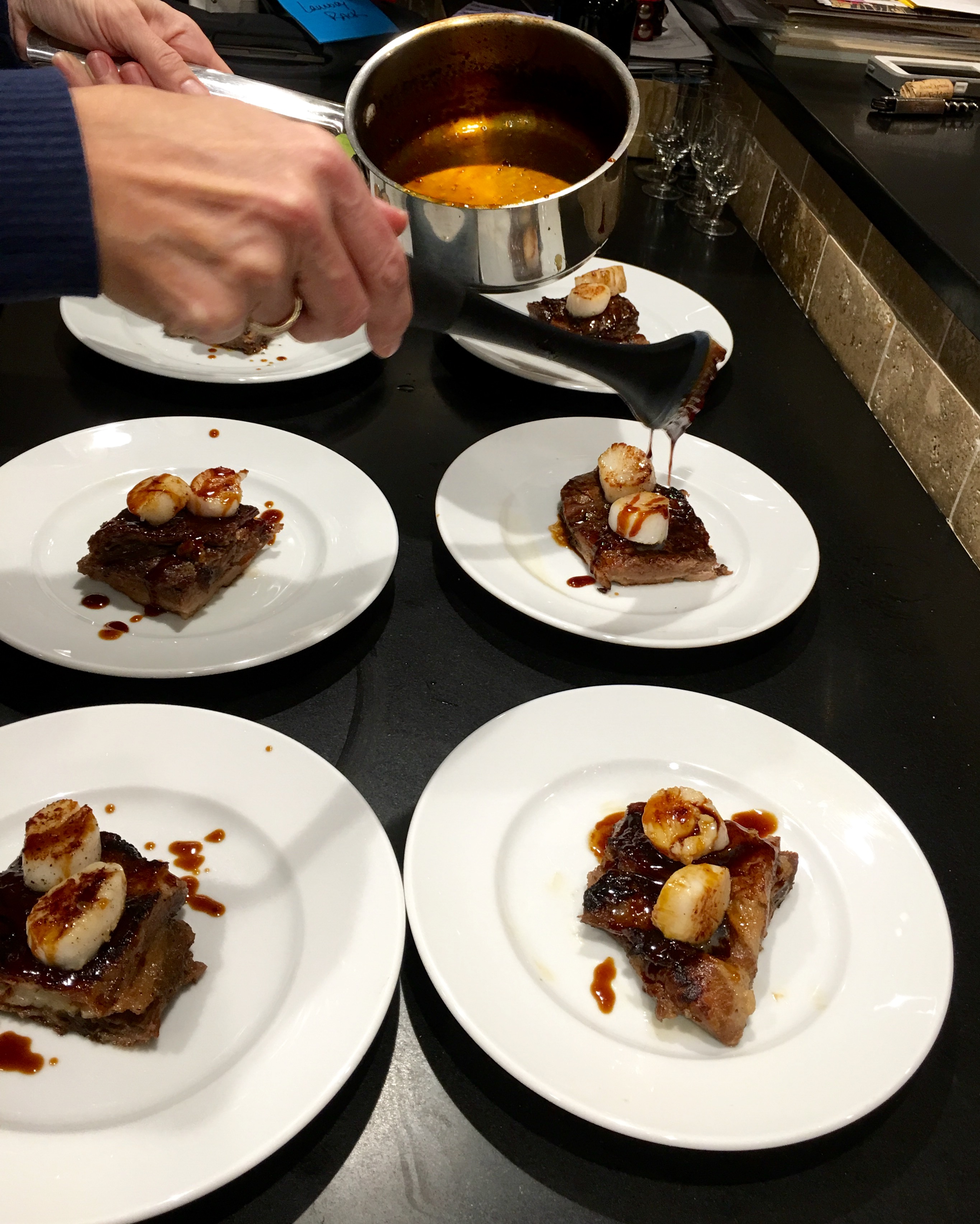
In a small saucepan, reduce the brazing liquid by half, then add the espresso and honey. Cook a few more minutes until the sauce thickens. When it coats the back of a spoon, it’s ready. Set aside.

For the scallops…
Fresh scallops
salt and pepper

When you’re ready to serve, heat a pan on high heat with a little more leaf lard. Cut the belly into equal pieces and sear on all sides for about a minute. Place the scallops in the same pan, season with salt and pepper, and sear them on both sides, being careful not to overcook them.

To serve, place the belly on a plate. Top with a scallop or two. Drizzle glaze over the top. Season with Fleur de Sel or sea salt and serve immediately.

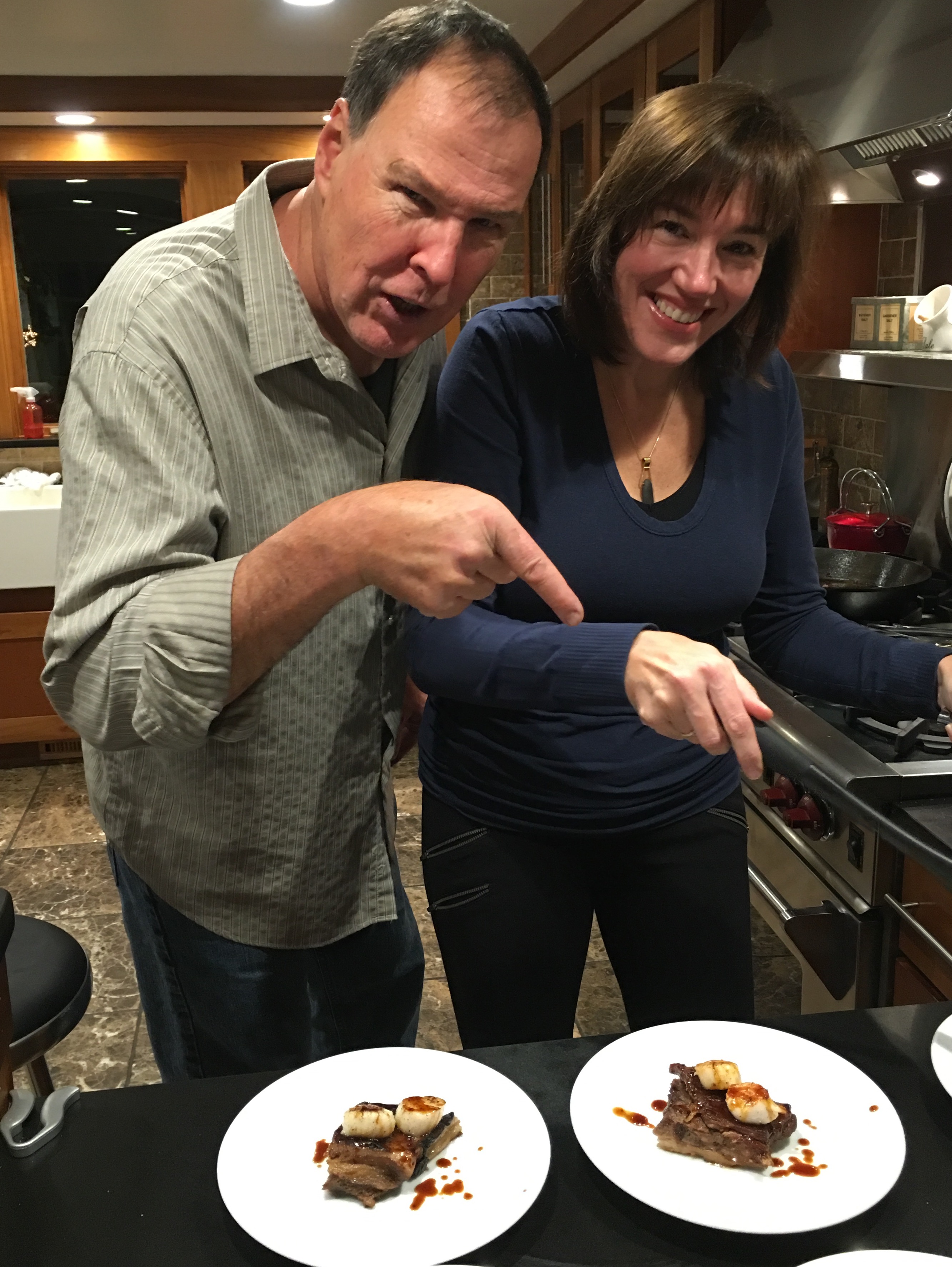
Always good to have a lovely food stylist around to make it look pretty.

Always good to have a lovely food stylist around to make it look pretty.


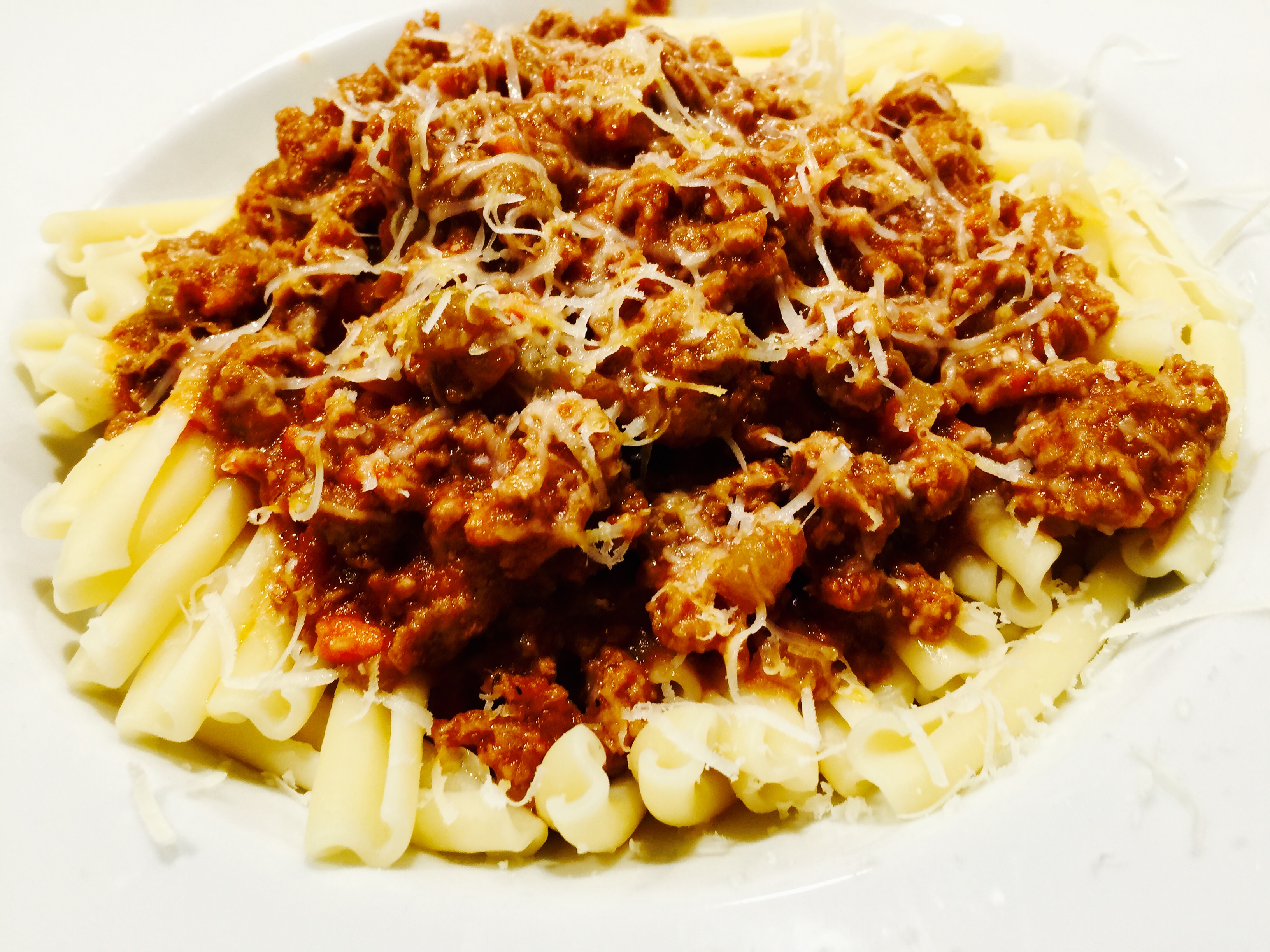
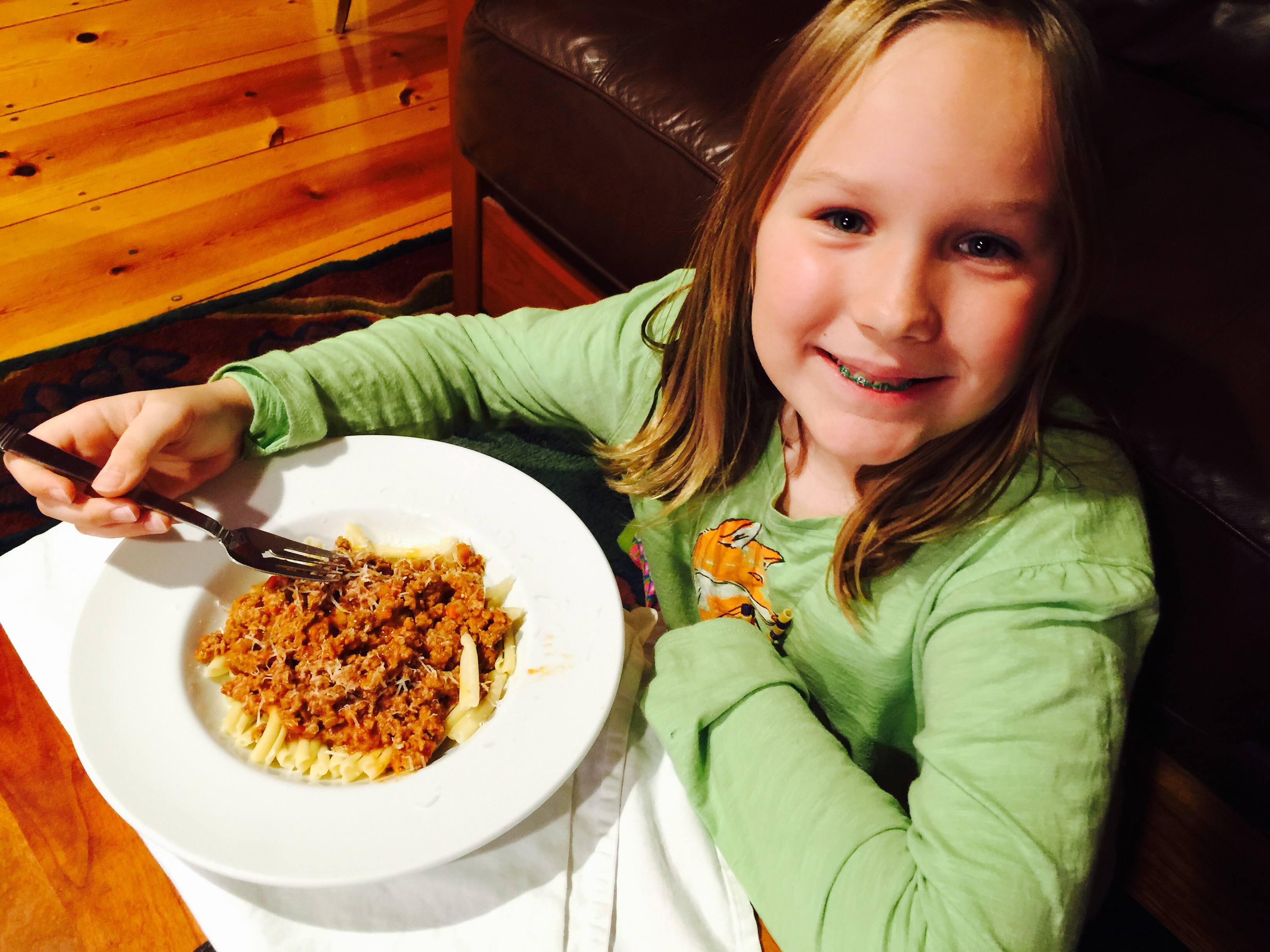
Fettucini alla Bolognese is my daughter’s go-to dish when we visit one of our favorite Italian restaurants,  Il Corso, on W 55th St. in New York. But we only go there once a year, so it was about time that I tried my hand at Bolognese at home. The dish isn’t difficult, but like many great dishes, the better the quality of the ingredients, the better the result.

I use grass-fed ground veal that I get down the road from a local dairy farm: Sweet & Salty Farm. I use ground Berkshire pork, full of “good fat.” And I use guanciale, a cured pork product that comes from the cheek (jowl) of the pig. I buy the Berkshire pork jowls raw and cure them myself. The rest of the ingredients are organic, when available.

FullSizeRender

5 tablespoons extra virgin olive oil
3 tablespoons butter
1 medium onion, finely chopped
1 carrot, finely chopped (1/3 cup)
1 stalk celery, finely chopped (1/3 cup)
1 clove garlic, thinly sliced
1 lb. ground veal
1 lb. ground pork
1/2 cup finely chopped guanciale
1 small can (6 oz.) tomato paste
1 cup ground tomatoes
1 cup milk
1 cup white wine (I use an un-oaked chardonnay)


Place the olive oil and butter in a large sauce pan with a heavy bottom over medium heat. Once the butter has melted, add the onion, carrot, celery and garlic. Keeping the heat on medium, sweat the veggies and allow them to get soft but not brown, about 10–15 minutes.

Turn the heat on high and add the guanciale. Stir it around to keep it from sticking. Let the guanciale cook for a minute, then add the veal and the pork, constantly stirring until the meat browns.

Once the meat has browned, add the tomato paste, ground tomatoes, milk and wine. Once it comes to a boil, reduce the heat to a medium-low, and let it simmer for 60–90 minutes, stirring occasionally.

Traditionally, ragu Bolognese is served by placing a portion of cooked pasta in a pan, and adding just enough sauce to have it cling to, not drip from, the pasta. It’s not soup!

To keep this dish gluten-free, I use GF pasta. Our favorite brand is Garofalo.

If she's happy, I'm happy!

If she’s happy, I’m happy!

Hoisin sauce goes great with every Asian-inspired dish I make. But since my wife needs to eat only gluten-free products, finding GF hoisin is not easy. And when I did find it online, it was ridiculously expensive. So it was time to make it myself. The recipe requires gluten-free soy sauce, which is easily found in any supermarket under the La Choy brand. You can also use Japanese Tamari sauce instead of soy sauce, but read the label: some tamari sauces do contain wheat. (The San-J brand is gluten-free.)

If you do a side-by-side taste test with jarred hoisin, you’ll find that this tastes quite different. But if you use it in your favorite Asian recipe, you’ll see that it works beautifully.

image

4 tablespoons GF soy sauce
2 teaspoons natural creamy peanut butter
1 tablespoon honey
2 teaspoons rice vinegar
1/4 teaspoon granulated garlic
2 teaspoon sesame oil
1/4 teaspoon Sambal chili paste


Combine all the ingredients in a food processor and mix thoroughly, stopping and scraping down the sides of the bowl to incorporate all the ingredients. Keep it in a tightly sealed container, refrigerated.

image

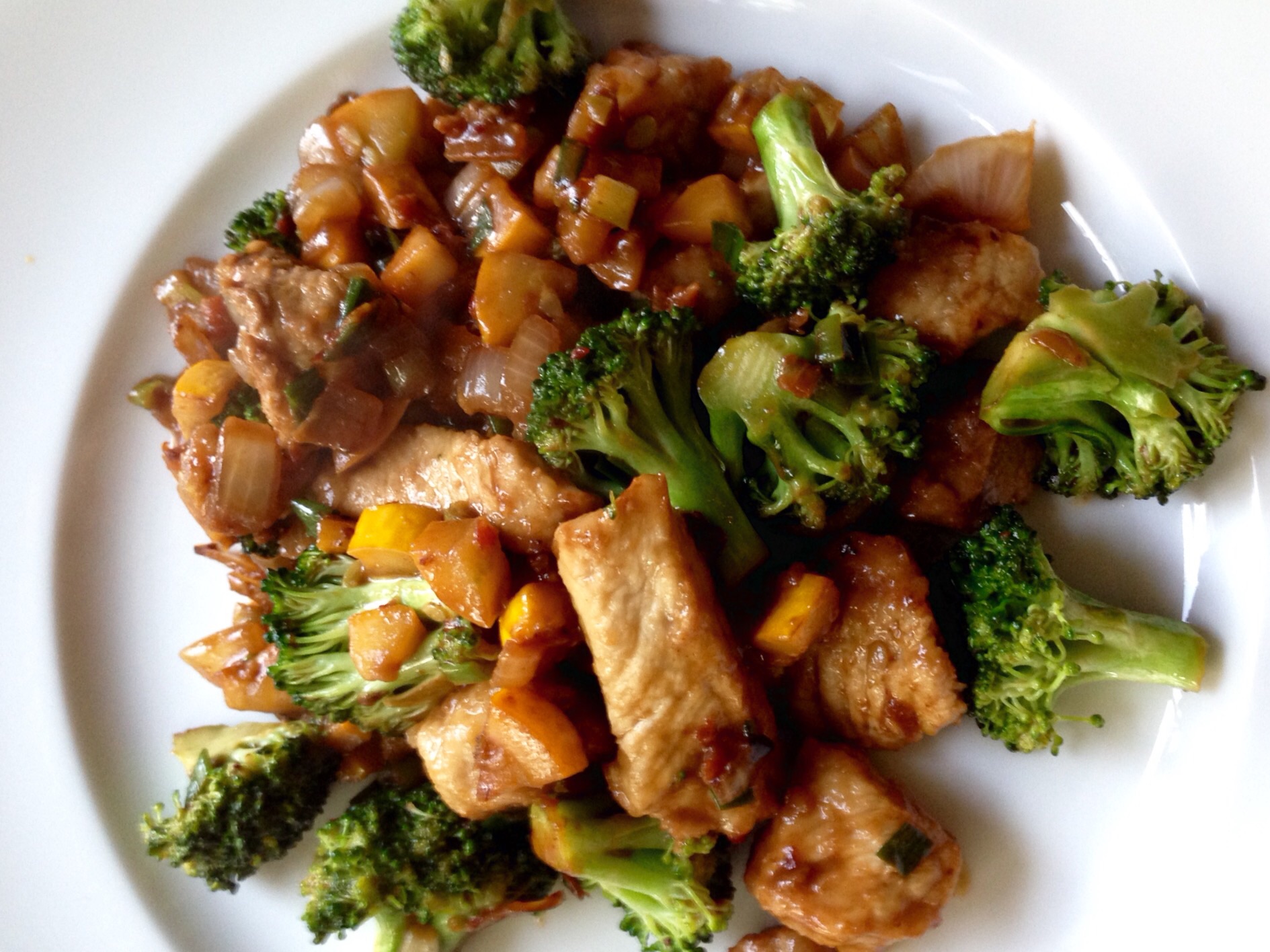
For the dish above…

1 1/2 lbs. boneless country-style pork ribs, cut into pieces
2 tablespoons corn starch
coconut oil
1 onion, peeled and diced
1 summer squash, diced
2 scallions, chopped (green and white parts)
2 heads of broccoli, washed and chopped into individual florets
hoisin recipe (above)

Once you’ve cut the pork into inch-long pieces, place it in a bowl and toss with the corn starch until it’s coated.

Heat a pan til hot. Add a tablespoon or 2 of the coconut oil and then the pork. Cook until the pork has browned on all sides and has cooked through. Scrape the pork out into a bowl and put the pan back on the stove, setting the heat to medium. Add another tablespoon of the coconut oil and saute the onions until translucent. Add the squash and saute for a few minutes until softened. Add the scallions and saute a couple of minutes more. Add the broccoli, tossing the pan ingredients to combine, and then spoon out about 2 tablespoons of the hoisin sauce into the pan, mixing well.

Add the pork and any juices in the bowl back into the pan and toss to combine. Taste carefully to check for seasoning. Add more hoisin if needed. Don’t add too much or it will be too salty.

Serve over rice, if desired.

The Saturday before Labor Day is traditionally considered to be International Bacon Day. So that makes it September 5th this year.

Let’s face it: there are few foods as magical as bacon. Add bacon to just about any dish you’re preparing, and it elevates it to incredible new heights of flavor. The BLT is possibly the greatest food combination ever invented: just a few simple, fresh ingredients, when placed together, transforming into one of the most amazing sandwiches on planet Earth.

I buy my bacon on-line from Burger’s Smokehouse, a family-run business in Missouri that not only sells some great bacon (get the thick-sliced country bacon—my favorite), but also smoked turkeys, ham and more.

But I also make my own.

Bacon comes from the pork belly. One of the places I buy pork bellies is from my friends at Fire Fly Farms in Stonington, CT (www.fireflyfarmsllc.com). I follow the simple curing techniques outlined in “Charcuterie,” a great book written by Michael Ruhlman and Brian Polcyn.

To cure bacon, all you really need is salt and sugar, and what they in the curing biz call “pink salt,” which is not to be confused with salt that happens to be pink, like Himalayan salt you would find in a gourmet store. Pink salt is bright pink—to let you know that this is special salt that should only be used in small quantities for curing. The reason for that is because it has nitrites. Nitrites delay the spoilage of the meat, and help keep the flavors of spices and smoke. They also keep the meat nice and pink instead of an unappetizing gray. That’s good. But nitrites can break down into nitrosamines, which have been known to cause cancer in lab animals. But let’s face it: you would need to eat a ton of cured meat to really worry about this.

To make the basic dry cure:

1/2 lb. kosher salt
1/2 cup light brown sugar
1 teaspoon coarsely ground black pepper
1 ounce (5 teaspoons) pink salt
optional ingredients: garlic, onion

Mix the ingredients well. An important note: all Kosher salts do not all weigh the same, so go by the weight and not a cup measurement.

Once you rub the pork belly with the basic dry cure, place it in a Ziploc bag, squeeze the air out of it, and seal it tightly. Place it in the fridge for a couple of weeks, flipping it over every few days to let gravity do its work. You’ll see that the salt will draw moisture out of the meat and form a brine. This brine will continue to cure your pork belly, so leave it in there.
Once the pork belly has been cured, wash the brine off the meat, pat it dry with paper towels. Now it’s time to cook. You can simply cook the pork belly at 200 degrees for about 2 hours, until the internal temperature reaches 160 degrees, or place the pork belly in a smoker, cooking it at 250 degrees for 1 hour, then adding hickory chips and smoking it at 250 degrees for another hour. I use my digital smoker to do this.


Bellies in the smoker

Bellies in the smoker.


Smoked bacon

Smoked bacon

That’s it. You have achieved bacon!

The reward is so worth the effort. That first slice you cut off your bacon and toss in a pan to lightly fry for a few moments will be the best bite you’ve ever had in your life!
And if you’re making one slab of bacon, why not make it three or four? It freezes well. And…you will eat it. You know you will!
Frying in the pan!

Frying in the pan!

When I used to go to my favorite barbecue place and asked for a pulled pork sandwich, I didn’t realize just how much work went into making it. Now I make my own, and I have a whole lotta new respect for those barbecue folks…


pulled pork

First, I get the pork butt. I buy a heritage breed, like Berkshire (also known as Kurobuta), from a farm that humanely raises them. That’s better for the pig and also better for my family.

Going to a supermarket for pork is what many people do, and the names of the cuts of meat can be a bit confusing. Despite its name, pork butt is not from the back-end of the pig. It’s the shoulder. And the pork butt (or pork shoulder) picnic is a lower cut of the same area. These cuts can also go by: Boston shoulder roast, Boston butt, Boston roast, shoulder butt, and shoulder-blade roast. Whatever the name, these are all nicely marbled hunks of pork that usually weigh in anywhere from 6 to 8 lbs, and are easy to find. Bone-in is for purists…boneless if you’re not.

Once I’ve got my slab, I need to season it. I’ve found that a simple rub is the best way to go for the sauce I’m going to use later.

1/4 cup kosher salt
1/4 cup black pepper
1/4 cup paprika
¼ cup brown sugar
1 tablespoon granulated garlic
1 tablespoon onion powder

Place all the ingredients in a jar with a lid and shake it up to blend.

Once I’ve made the rub, I generously sprinkle it all over the pork, and rub it in really well. I have a digital smoker at home, which lets me cook and smoke my pork butt all in one place. I place it on a rack, put a drip tray underneath it to catch the grease, and set the smoker for 225 degrees. I cook the pork for about 6 hours, and then I add hickory chips to the smoker and smoke the butt for another 2 hours. The marbled fat in the pork butt slowly melts over time and the pork becomes incredibly tender and flavorful.

I remove the pork butt from the smoker and let it rest, covered with aluminum foil, for at least 20 minutes before pulling the meat apart with a couple of forks, shredding it into beautiful meaty bits.

While the pork is cooking and smoking, there’s plenty of time to make two other very important parts of this recipe: the sauce and the cole slaw.

saucey

2 cups ketchup
3/4 cup water
6 tablespoons cider vinegar
6 tablespoons white vinegar
6 tablespoons brown sugar
3 tablespoons Worcestershire sauce
1 tablespoon chili powder
2 teaspoons salt
2 teaspoons black pepper
1 1/2 teaspoons cumin

Mix all the ingredients in a saucepan and simmer until the flavors have blended, about 20 minutes. Remove from heat and cool to room temp. If you store it in an airtight container in the fridge, it’ll stay good for a few months.


COLE SLAW

My cole slaw recipe uses pickle juice. Just a splash from your favorite jar of pickles is all you need.

1 package of cole slaw veggies
splash of pickle juice
1/4 cup mayonnaise (more to taste)
teaspoon celery seed (not salt)
salt and pepper

There are no real specific measurements for cole slaw, because I’ve found that some people like it dry, others wet…some peppery, some not. Play around with it and make it your own. I prefer a more mayonnaise-y cole slaw, and usually err on the wet side.

In a bowl, combine all the ingredients. Cover with plastic wrap and chill. When ready to use, re-mix, and taste for seasoning before using.


OK…time to make that sandwich!

Drizzle the barbecue sauce on the pulled pork and mix well…trying not to over-sauce the pork! Take a nice amount of pork and place it on a freshly baked bun. Place the cole slaw right on top if you prefer the Carolina method, or on the side if not.

Whether you decide to go through all this trouble to make pulled pork or not, just remember that if you’re at a barbecue joint, someone else did. Whatever you pay for that pulled pork sandwich is a bargain!