Archive for the ‘salt’ Category

At a recent summer garden dinner for 12 of our friends, I wanted to serve my corn and tomato salsa that I featured here a few weeks ago.

We “smuggled” a few treats from a recent visit to Santorini Greece: capers, caper leaves and sun-dried tomatoes. Adding them to fresh corn and tomatoes gave it that salty bite that. I usually use feta cheese in this recipe, but we served a cheese plate as an appetizer, so I left the feta out. Turns out we like it even better this way…

1 dozen fresh ears of corn, lightly sautéed in olive oil
2 dozen (or more) tiny tomatoes, cut in half
1/2 small red onion, finely chopped
2 tablespoons capers
1 tablespoon caper leaves
2 tablespoons finely chopped sun-dried tomatoes
1/4 teaspoon black pepper
2 tablespoons white vinegar
1 tablespoon extra virgin olive oil (in addition to what you saute the corn with)

Slice the kernels of corn off the ears with a sharp knife. Saute them in a little olive oil, just to remove the raw taste. Don’t over cook them!

Combine the corn with all the other ingredients and place in a bowl in the fridge.

Just before serving, let it come back to cool, not cold, and check for seasoning. The capers and caper leaves are salty, so I’m careful not to over-salt.

My friend, Cindy, has cucumber overload in the home garden right now. Thanks to her for requesting a re-post of this recipe.

I don’t have the patience to boil Mason jars and lids and all that crap. But I love me my pickles, especially when I’ve got a cucumber surplus in the garden. These won’t last beyond the season, but if you want fresh pickles in a hurry, this is a great method to use.

No water is needed! The salt extracts just enough moisture, like when curing meat, to make it work.

pickles


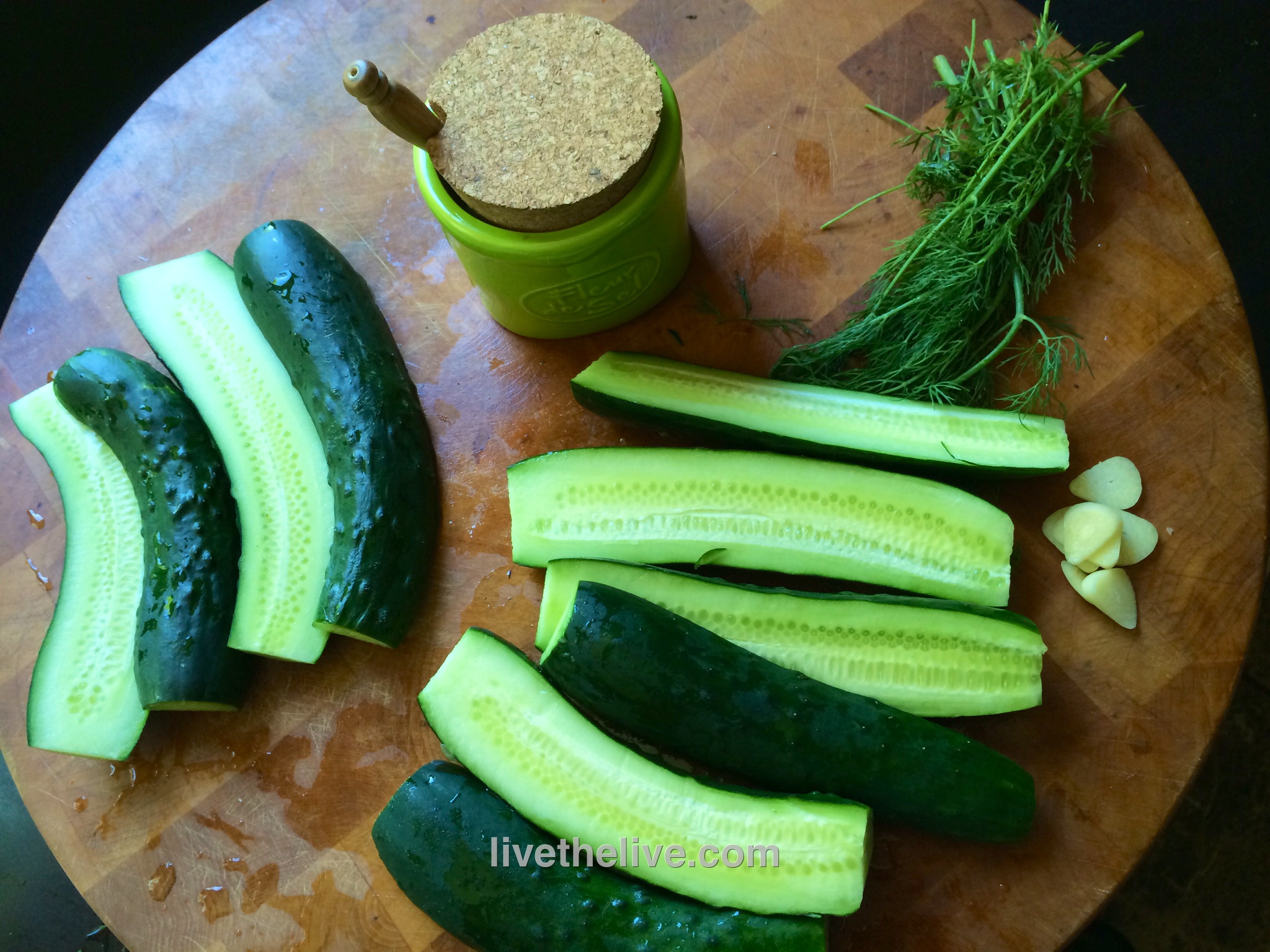
6 fresh cucumbers
1 1/2 teaspoons sea salt (I like Fleur de Sel)
handful of fresh dill
1 clove garlic, thinly sliced


Get a large plastic Ziploc bag.  Add the salt, dill and garlic and gently mix everything in the bag.

Cut the ends off the cucumbers and then slice them lengthwise, in half or in quarters. Add them to the bag and gently mix again.

Squeeze to remove air from the bag, close it tightly and place it in the fridge overnight. The pickles will be ready to eat the next day, but they’re even better after 48 hours.


Nothing says summer here in New England like a lobster roll. But I don’t go to a clam shack to get one. The prices are ridiculous, the meat can be overcooked, and they often add ingredients I don’t want.

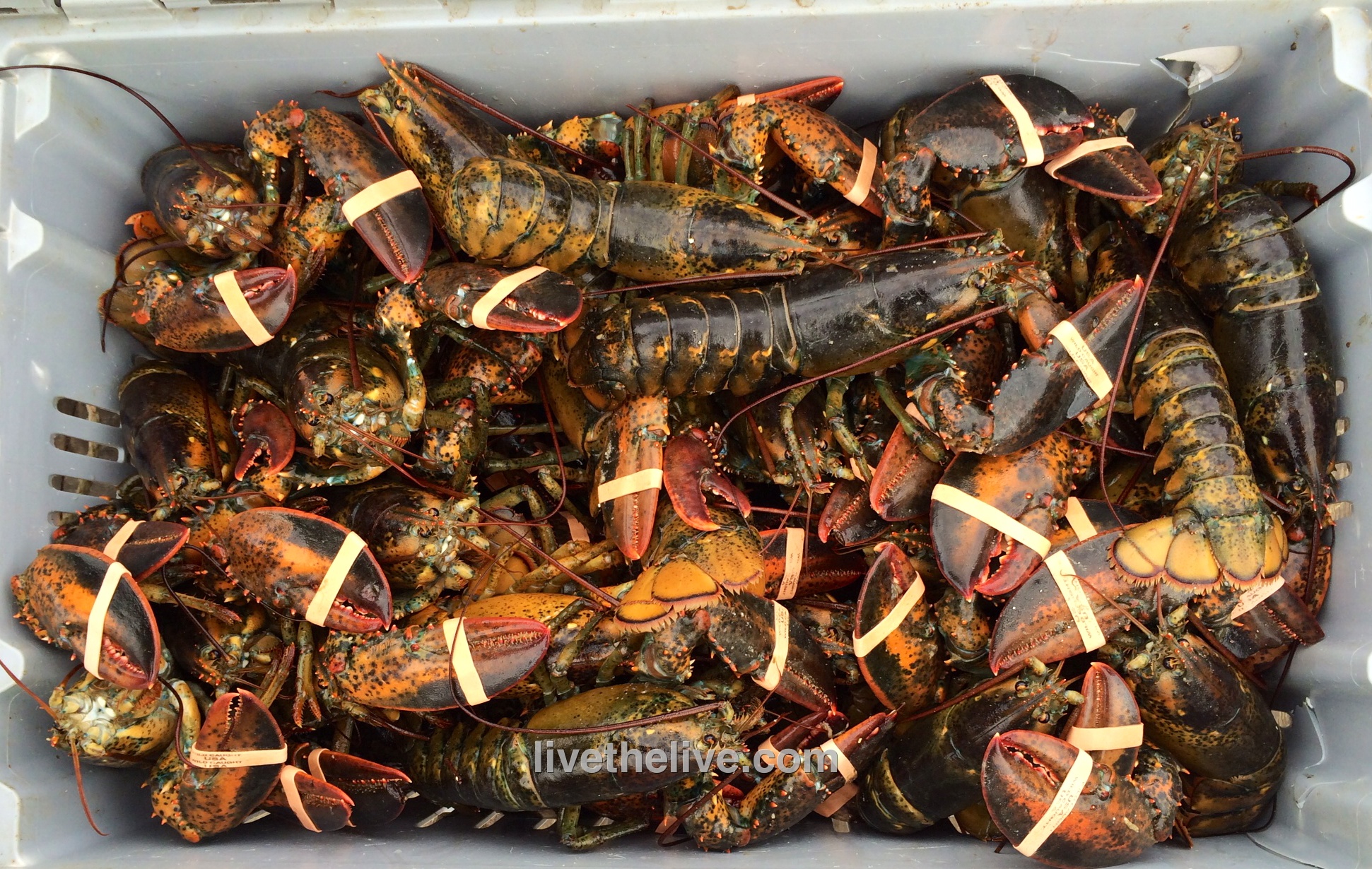
I start with fresh lobster. I get it from my lobster man buddy, Gary, just down the street at his dock in Tiverton, RI.

A view of the Sakonnet River from the back of Gary's lobster boat, the Edna Mae

A view of the Sakonnet River from the back of Gary’s lobster boat, the Edna Mae

The next step is to cook it right. I use sea salt in a large pot of boiling water. I make sure the water is at a rolling boil before the lobsters go in. And I cook them for no more than about 8 minutes.

Lobster catch LTL

After the lobsters have been removed from the pot and have cooled for a few minutes, I get to work: cracking the claws and tail and removing every bit of beautiful meat I can find. I even take the legs off and push a rolling pin over them to extract the meat inside. The tomalley (the green liver and pancreas) and roe (eggs) are delicacies not to be missed, but for the purpose of making lobster salad, I don’t use these parts. I save them for a separate treat. And I use the legs and cleaned empty shells to make lobster stock. Nothing goes to waste!

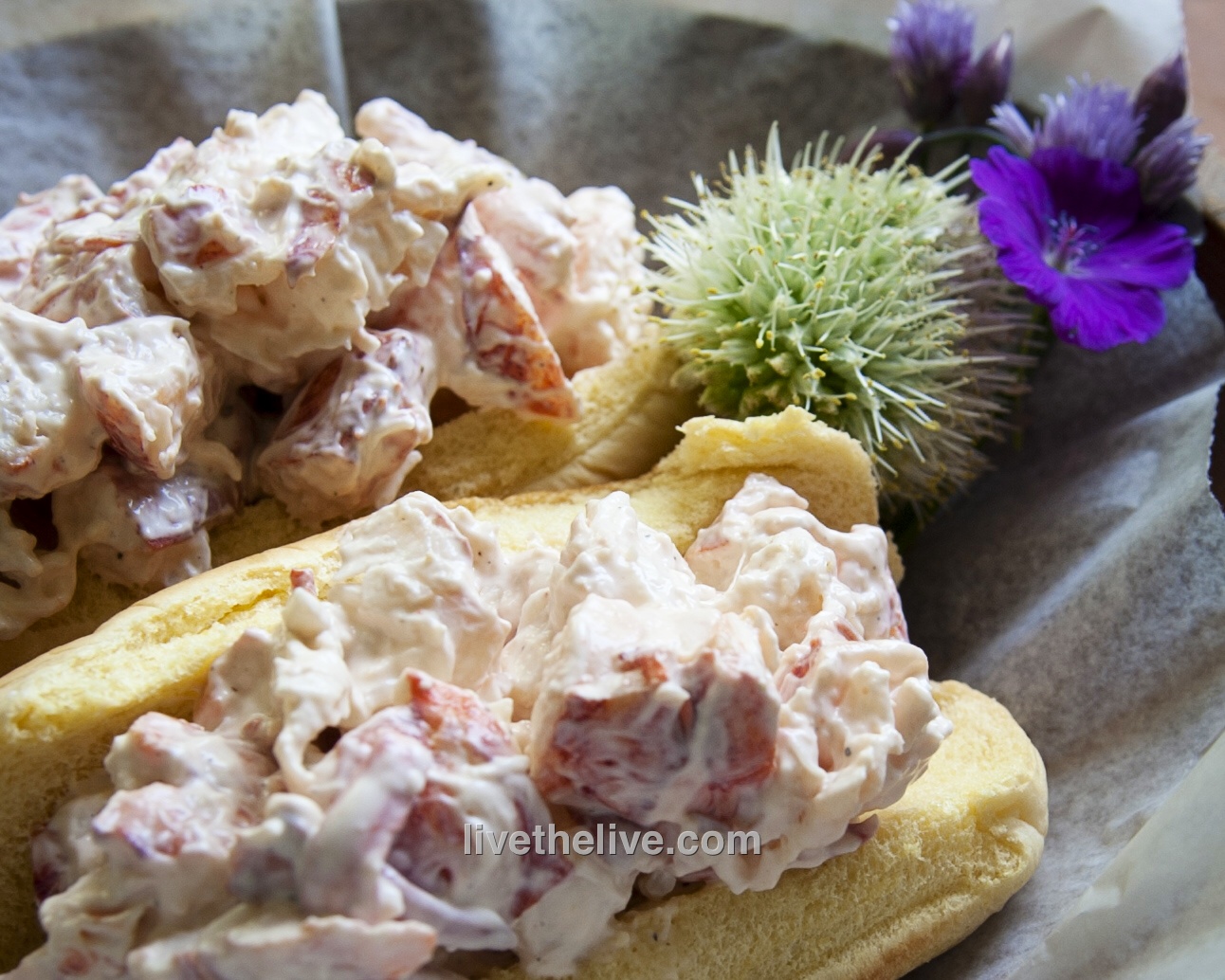
Lobster roll LTL

Everyone has their own opinion about lobster rolls: what goes in ‘em…and perhaps more importantly, what doesn’t. I am no exception. For me, no veggies whatsoever: no chopped celery, no lettuce, no pickle. No paprika or Old Bay seasoning. A pinch of celery salt? Sure. Mayonnaise? Only Hellman’s. White pepper, not black, and just a touch. Salt? A pinch of Fleur de Sel. And the secret weapon to bring out all the flavors: the tiniest squeeze of fresh lemon juice…not enough to give it a lemon flavor…just to brighten the taste.

I prefer those long Martin’s potato rolls: straight out of the bag or lightly grilled with a little melted butter brushed on.


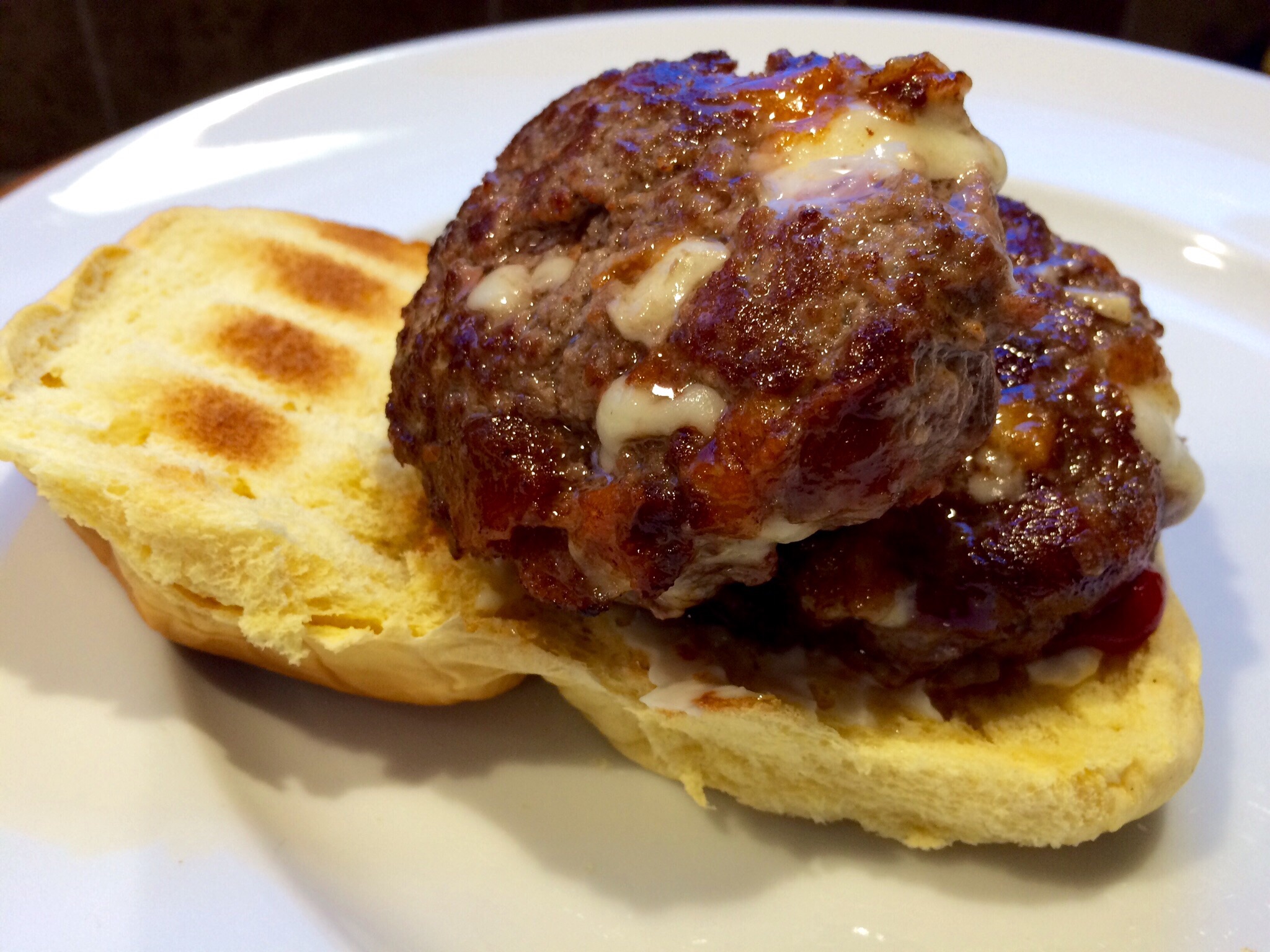
Not a very complex idea. I just put the stuff that’s usually on the outside, on the inside of my burgers. Why? Why not?

Instead of dealing with a package of bacon and a package of cheese and a stack of burgers, I’ve got all the ingredients conveniently inside the patties. And as the burgers cook, the fat from the bacon and the gooey cheese melt and combine with the burger meat to make a really tasty and moist burger.

I cook these on the grill, but the cast-iron skillet method, described below, works really well,  too.

I make 2 lbs. of burgers at a time, using humanely-raised local grass-fed beef, from my friends at Simmons Organic Farm in Middletown, RI.  Support your local farmers when you can!

image

2 lbs. ground grass-fed beef
1/2 cup sharp cheddar cheese, cut into 1/4″ cubes
1/2 lb. bacon, cooked crisp, cooled and crumbled
garlic salt
avocado oil or pork fat


In a bowl, combine the beef, the cheese and the bacon, mixing well so that all the ingredients are evenly incorporated.

Form the beef into 1/4 lb. patties or larger. Refrigerate them until you’re ready to cook to firm them up.

Heat a cast iron skillet and add a drop of oil or pork fat. Place the burgers in the hot skillet to sear and sprinkle with the garlic salt. When browned, flip the burgers and place the skillet in a 350-degree oven to finish cooking.

image


Despite that corned beef is not an authentic Irish dish, it seems that everyone thinks they should eat it on St. Patrick’s Day. The phrase “corned beef” was actually coined by the British, and although the Irish were known for their corned beef throughout Europe in the 17th century, beef was far too expensive for the Irish themselves to eat and all of it was exported to other countries. Owning a cow in Ireland was a sign of wealth, and the Irish used theirs for dairy products, not beef. The Irish ate pork, and a lot of it, because it was cheap to raise pigs, and they traditionally prepared something like Canadian bacon to celebrate St. Patrick’s Day in Ireland.

In the 1900’s, when the Irish came to America, both beef and salt were more affordable, and the Irish, who lived in poor, tight-knit communities, often next to Jewish communities, bought much of their beef from Kosher butchers. And so many of the Irish learned how to corn their beef using Jewish techniques, but added cabbage and potatoes to the mix.

It takes about 3 weeks to make corned beef, so you can’t make it in a day. But now that you know it’s not Irish anyway, that’s OK! Doing it yourself is not difficult, and you get a better quality product than that nasty slab from the supermarket that’s full of chemicals and preservatives.

Corned beef has nothing to do with corn. ‘Corning’ is a technique for preserving raw meats for long periods by soaking it in salt brine. This method was used in England before the days of commercial refrigeration. Back then, the large salt kernels used in the brine were called “corns.”

Brining is a time-honored way of preserving and it prevents bacteria from growing. Both pastrami and corned beef are made by this method. Both corned beef and pastrami usually start with a brisket of beef. Corned beef is then cooked–usually boiled–and served. Pastrami is made when the brined meat is rubbed with more spices and smoked to add extra flavor. So corned beef and pastrami are the same meat, just treated differently.

Saltpeter is an ingredient that has been used in brining beef for years. It adds the traditional red coloring to the corned beef and pastrami meat. But since saltpeter can also contain carcinogens, I leave it out. The meat may not be the usual bright red color, but the flavor and texture of the meat will not be affected.

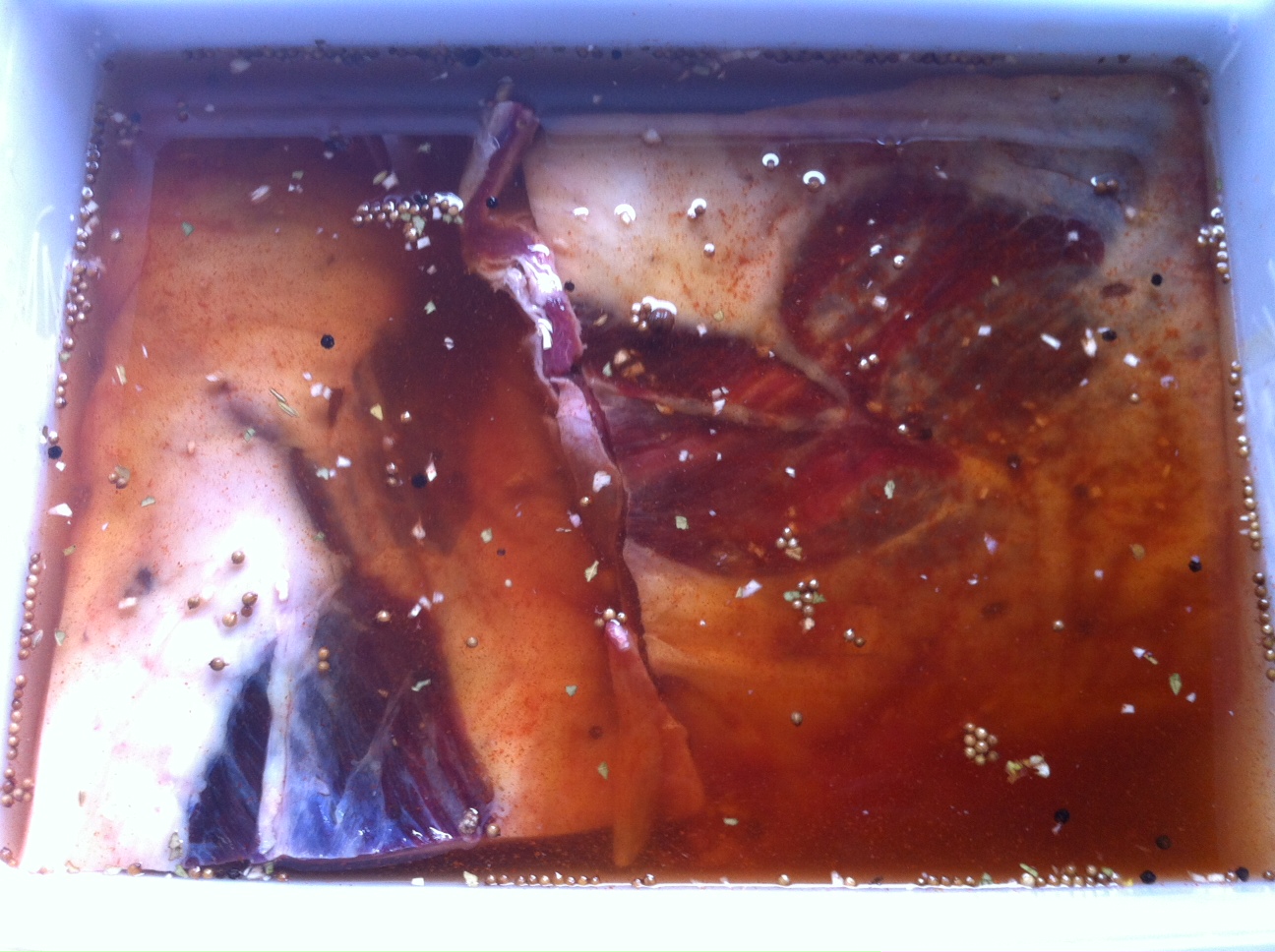
Brining the beef brisket

Brining the beef brisket

Step one: corned beef…

beef brisket (about 8-10 pounds)
2 teaspoons paprika
1/4 cup warm water
3 cloves of minced garlic
2 tablespoons sugar
1 tablespoon mixed pickling spices
3/4 cup salt
2 quarts water

Place the brisket in a large container made of non-reactive material, like glass or plastic.

In the 1/4 cup of warm water, dissolve the sugar, minced cloves, paprika and pickling spices.

Dissolve the 3/4 cup of salt in the 2 quarts of water. Pour in the sugar/garlic/paprika/pickling spices mix and stir everything together. Pour the mixture over the meat in the container. Make sure the meat is totally beneath the surface of the liquid. (You may need to weigh it down to do this.) Cover the container.

Refrigerate the container and contents for 3 weeks, turning the meat once or twice per week. At the end of the third week, remove the container from the refrigerator and take out the meat. Soak the meat in several changes of fresh cold water over a period of 24 hours to remove the excess salt.

At this point, if you want corned beef, prepare and cook it using your favorite recipe. But I’m all about the pastrami!

Step two: making Pastrami…

pastrami


Brined and rinsed corned beef brisket from above recipe, patted dry with paper towels
1/4 cup Kosher salt
1/4 cup paprika
3 tablespoons coriander seeds
2 tablespoons black peppercorns
2 tablespoons yellow mustard seeds
1 tablespoon white peppercorns
3 tablespoons brown sugar
1 tablespoon granulated garlic

Combine the coriander seeds, black and white peppercorns and mustard seeds in a spice grinder and grind coarsely. Place in a bowl. Add salt, paprika, brown sugar and granulated garlic. Mix well.

Rub the mix into the brisket well, covering all sides.

Heat your smoker to 225 degrees and smoke for several hours using a less intense wood, like oak. When the internal temperature of the meat has reached 165 degrees, it’s done. It isn’t necessary to smoke pastrami as long as you would a regular brisket because the long brining time makes the meat tender.

It is very important that absolutely everything that comes in contact with the meat is very clean. (This includes your hands.) Also, make very sure that every inch of the meat reaches the 165 degrees before it is removed from the smoker. The corned beef is now pastrami.

It’s mind-blowing how many new and exciting restaurants keep popping up in Portland, Maine, and even more interestingly, how they’re all thriving! With a great arts scene, historic New England waterfront, and a young crowd eager to spend their money, Portland is just exploding.

I work in Providence, Rhode Island, a city whose food scene has had a lot of attention in the last few years in a variety of national magazines. But really creative restaurants here are hard to find, perhaps five in the entire city. In Portland, you’ll find five on one block!

Portland is big enough to be a destination, and small enough that you can park your car once and walk everywhere you want to go all day and into the night.

Oysters at Eventide.

Oysters at Eventide.

Three of the best restaurants in town just happen to be owned by the same three guys: Andrew Taylor, Arlin Smith and Mike Wiley. They called their company AMA LLC, though now I think they go by the name Big Tree Hospitality. All three restaurants are located right next door to each other on Middle Street: Hugo’s, Eventide, and The Honey Paw. If you go nowhere else in Portland, hit this one block. If you’re just passing through for lunch, it’s right off 295. Just take the Franklin Street exit.

The block. From left to right: The Honey Paw, Eventide, and Hugo's. And if you stay at the Hampton Inn, like we did, you walk less than a block!

The block. From left to right: The Honey Paw, Eventide, and Hugo’s. And if you stay at the Hampton Inn, like we did, you walk less than a block!


The bar at Eventide.

The bar at Eventide.

Our love of Portland started years ago with Eventide, an oyster bar serving the freshest and most creative small seafood plates in the city: a killer brown butter lobster roll, tuna crudo that rivals the best sushi anywhere, blackboard special plates like char tartare, and a dozen oyster choices served with inventive accouterments, our favorite being the pickled red onion ice. Our non-seafood-eating daughter loved the buttermilk fried chicken bun and Eventide burger. And probably the most ignored-but-shouldn’t-be entry on the menu is the fish sandwich: best you ever had or I’ll eat it for you. They use pieces of fresh-caught hake, a fish that’s somewhat unknown unless you’re a local. A full bar and a surprisingly friendly staff, despite the fact they’re jamming all day long.

The amazing fish sandwich at Eventide.

The amazing fish sandwich at Eventide.

Hugo’s made Portland a food destination thanks to its previous chef/owner, Rob Evans, who sold it in 2012 to concentrate on his newer joint: Duckfat. The three guys: Taylor, Smith, and Wiley, worked there before it closed down and they grabbed the opportunity to take over, bringing a cutting-edge American menu served over a series of exciting tasting courses. Whether you’re a carnivore, vegetarian or seafood lover, you’ll find some wonderful choices here. Our night featured raw and cooked beef selections, lamb bolognese, ankimo (monkfish liver) and unusual veggie plates like sunchokes and smoked parsnips.

FullSizeRender (21)

Paul, the bartender, is a mixologist of the finest kind. My wife sipped on a Jasmine Fizz before we plunged into the eclectic and inspired wine list chosen by Big Tree Hospitality’s wine director, Brian Flewelling, who happened to be our server that night.

My wife enjoyed a sip of my Pappy's as well.

My wife enjoyed a sip of my Pappy’s as well.


And it didn’t hurt that they had three kinds of Pappy Van Winkle bourbon on their shelves…something I haven’t seen anywhere else. (These are the bottles that go for over $1500 on line.) Needless to say, Paul the bartender and I bonded over a taste of the 20-year-old Pappy.

A bourbon conversation between my newest best friend, Paul and myself.

A bourbon conversation between my newest best friend, Paul, and myself.

The third and newest restaurant in the group is The Honey Paw, featuring an eclectic Asian menu. The intense flavors come from all over Asia, and we wondered how these young chefs could be so knowledgeable. We found out that the company flies its employees to countries like Singapore and Malaysia on a regular basis to give them the experience they need to create and serve this amazing food. I swear, I wanna work for these guys! I haven’t seen any company anywhere treat its employees with such respect, and all of that trickles down to how they treat the food, the community, and their customers.

The Honey Paw's mind-blowing albacore tuna sashimi.

Beautiful plates at The Honey Paw.

Like their other two restaurants, The Honey Paw sources most of its ingredients from local farms. So when we ordered a plate of coppa, it was housemade from rare mulefoot hogs raised in Maine, topped with pickled husk cherries.

FullSizeRender (9)

I’m a huge fan of whole-fried fish, but very few restaurants take on that challenge. Even many of my favorite New York Chinese restaurants no longer feature that on the menu. The whole fried black bass I had at The Honey Paw is something I will have every time I return.

FullSizeRender (10)


We did leave the block, eventually! Though not big on atmosphere, Sur Lie was another restaurant in the long list of new establishments in the city featuring small plates full of exciting flavors.

FullSizeRender (18)

We enjoyed tapas like a plate of “Surryano” ham, the West Virginia version of Spanish Serrano…fried milk-braised cauliflower…Hiramasa (Yellowtail Amberjack) crudo…carrot agnolotti (pasta)…and a nicely cooked hanger steak. Good food, good service, and a nice selection of Greek wine.

We walked a lot in Portland. Loads of small shops, art galleries, and stores with collectibles. We hit a couple of comic book stores with our daughter, who’s in that phase…art galleries that enticed my wife, the artist…and an unusual shop with rare, collectible barware in the storefront and an actual bar in the back to do some serious sipping: a place called Vena’s Fizz House.

FullSizeRender (12)

One of the more interesting products they sell at Vena’s was a variety of infusion kits: dried fruits and spices just waiting for vodka or tequila to bring their flavors to life…

FullSizeRender (11)

Sometimes we did jump in the car to get to the other side of town. Portland boasts one of the largest–and coolest–Whole Foods stores ever. The selection is fantastic, and they sell wine and local spirits in a special section that comes with its own wine expert to help you make the right choices!

A short hop down the road from Whole Foods is a line of distilleries and breweries on Fox Street just waiting for thirsty customers. We stopped in to Maine Craft Distilling for a tasting of their creations.

FullSizeRender (6)

Here’s the thing that tells you you’re in Maine: we arrived at Maine Craft Distilling, and they told us they were sold out of just about every spirit because of the holidays. But they still poured us free tastings of all their booze! That would not happen anywhere else. Their logic was: if you like it, you won’t forget it and you’ll buy it the next time around. Friendly and informative, and their blueberry spirit called Blueshine, is worth a trip back.

IMG_0812

Back along the waterfront, on Commercial Street, we tucked into the Flatbread Company, a wildly popular pizza joint that now has 15 locations in Maine, Massachusetts, New Hampshire and even Hawaii. Great pizza (with gluten-free options), salads, and an awesome view of the water.

FullSizeRender (14)

Watching these talented chefs work the oven is better than television. I could watch all night!

Watching these talented chefs work the oven is better than television. I could watch all night!

A must-stop at least once on any Portland trip is the classic Porthole. Featured on “Diners, Drive-Ins and Dives,” they open for breakfast and rock all through the night. I dropped in for some breakfast to go on New Year’s morning, watching those at the bar chug down their Bloody Marys: a little hair of the dog after a long partying night.

IMG_0678

Perhaps my biggest disappointment of the trip (and mainly because it has received so much hype from magazines and friends) was The Portland Hunt and Alpine Club. I was told not to go here for the food, so we passed on that. But while my wife and daughter spent some time in the shops nearby, I decided to go in and check the place out for a cocktail.

FullSizeRender (17)


The bartender was friendly enough, and when I asked for a Manhattan with his choice of bourbon (he used Baker’s), he made it with flair and it tasted good. But it was also something I could make at home just as easily. I don’t know…maybe I needed to order something else. Maybe I should give the place a try in the light of a summer day and not a cold winter’s night. It just seemed kind of dumpy and not at all what I was expecting: uncomfortable metal benches at the bar, a stuffiness in the air like the vents in the kitchen weren’t working. I need to come back and give these guys another chance.


For more on Portland, Maine, check out my blog from July of 2013. A lot has changed in a year and a half, but there’s still some good info there. http://wp.me/p1c1Nl-g3


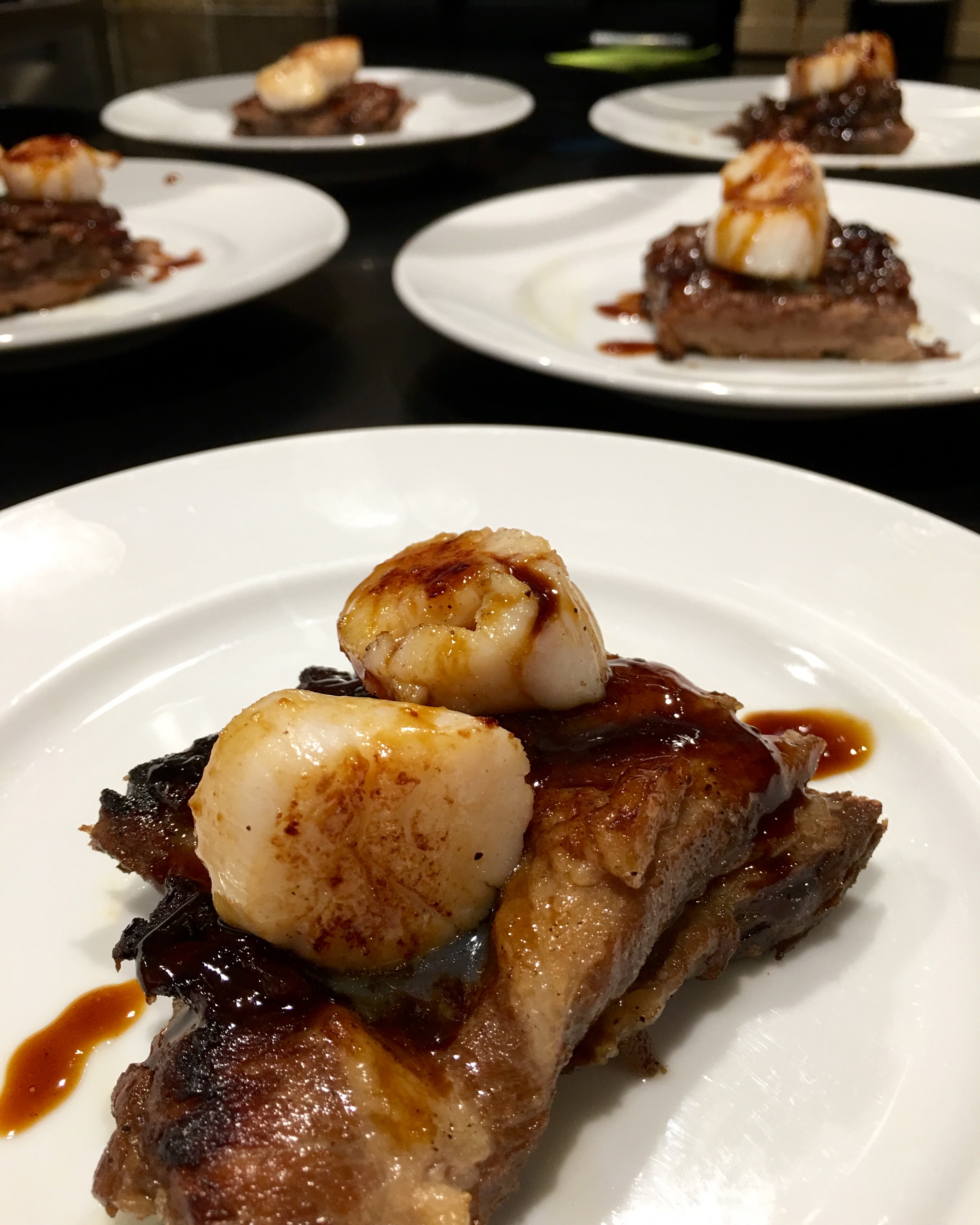
The is a killer recipe that I’ve waited a long time to prepare. My hats off to chef Chuck Hughes for the inspiration. My hats off to my buddy, Dr. Chezwick, who sent me a gift of wild boar bellies. Locally caught Rhode Island scallops in season complete the dish.

FullSizeRender (9)

For the pork belly…
3 lbs. fresh pork belly (I used wild boar belly)
salt and pepper
1–2 tablespoons leaf lard or olive oil
1 carrot, coarsely chopped
1 celery stalk, coarsely chopped
1 onion, roughly chopped
1 fennel bulb, quartered
2 sprigs fresh thyme
1 teaspoon black peppercorns
4 cups beef stock
1 cup hard cider or apple juice

Pre-heat the oven to 350.

Season the belly with salt and pepper. On medium-high heat, melt the leaf lard, then sear the meat on all sides in an oven-proof pot big enough to hold it in one layer. Add the carrot, celery, onion, fennel, thyme and peppercorns and continue cooking for another 5 minutes, until caramelized.

Add the beef stock and the cider. Cover the pot with a lid or seal with aluminum foil, and braise the belly in the oven for 3 hours, until tender.

Remove the pot from the oven, carefully remove the pork belly, and put it on a plate. Cover it with foil. If you’re cooking earlier in the day, you can place the belly in the fridge at this point.

Strain the leftover braising liquid from the pot and discard the vegetables and thyme. Skim off the excess fat. If starting this dish earlier in the day, you can put this liquid in the fridge and the fat will harden, making it easier to remove.

FullSizeRender (8)

For the glaze…
braising liquid, strained
1 tablespoon espresso
1 tablespoon honey

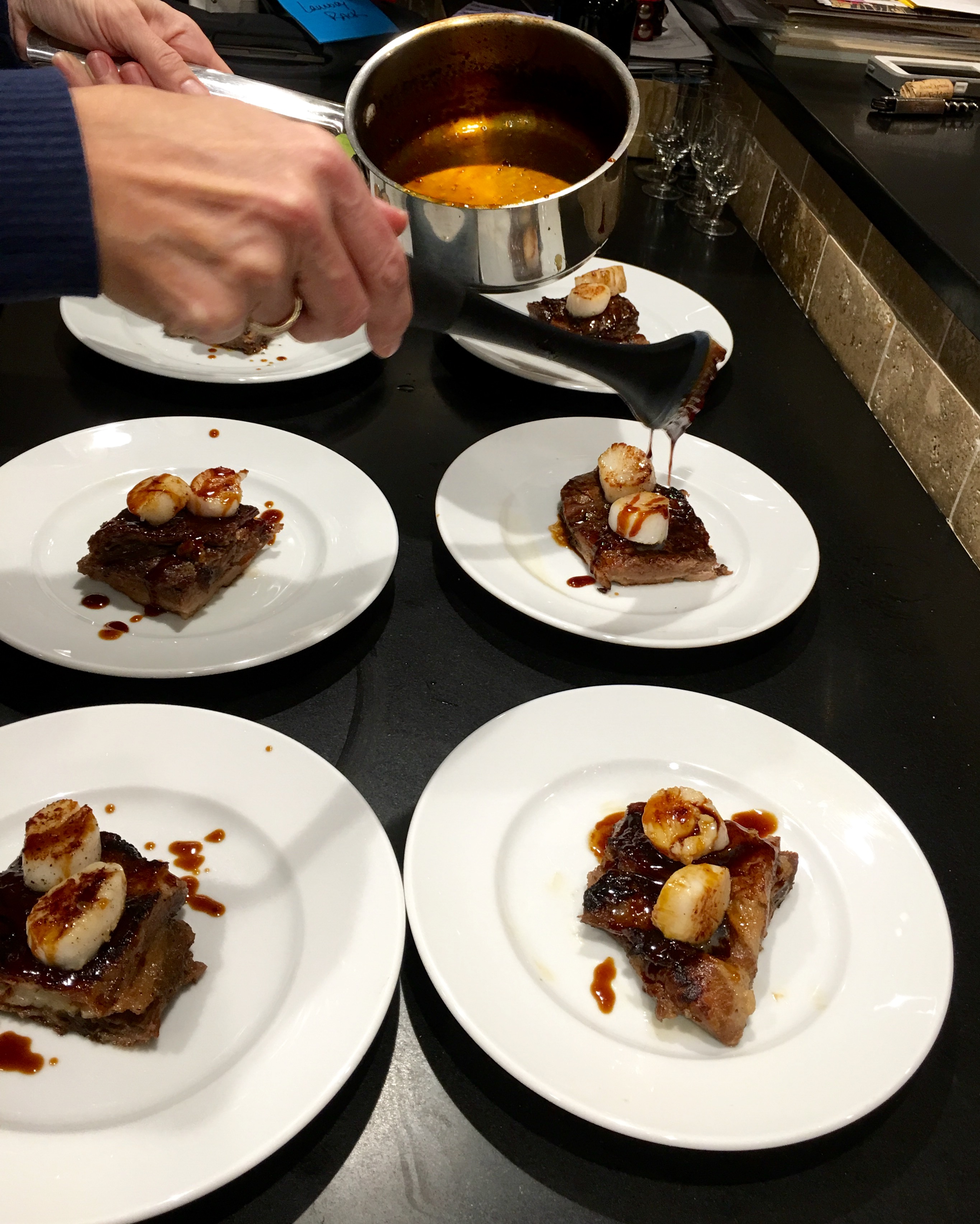
In a small saucepan, reduce the brazing liquid by half, then add the espresso and honey. Cook a few more minutes until the sauce thickens. When it coats the back of a spoon, it’s ready. Set aside.

For the scallops…
Fresh scallops
salt and pepper

When you’re ready to serve, heat a pan on high heat with a little more leaf lard. Cut the belly into equal pieces and sear on all sides for about a minute. Place the scallops in the same pan, season with salt and pepper, and sear them on both sides, being careful not to overcook them.

To serve, place the belly on a plate. Top with a scallop or two. Drizzle glaze over the top. Season with Fleur de Sel or sea salt and serve immediately.

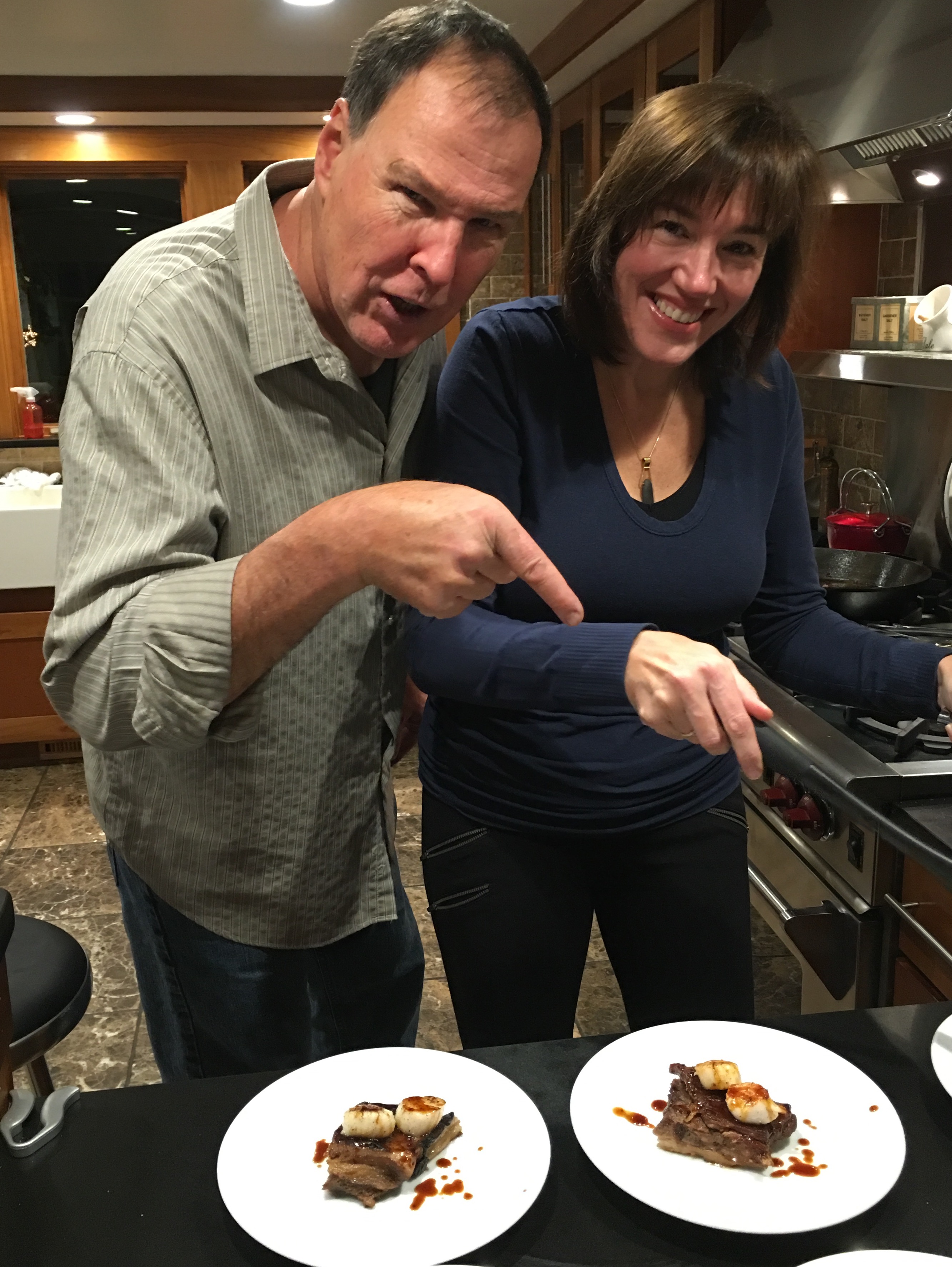
Always good to have a lovely food stylist around to make it look pretty.

Always good to have a lovely food stylist around to make it look pretty.


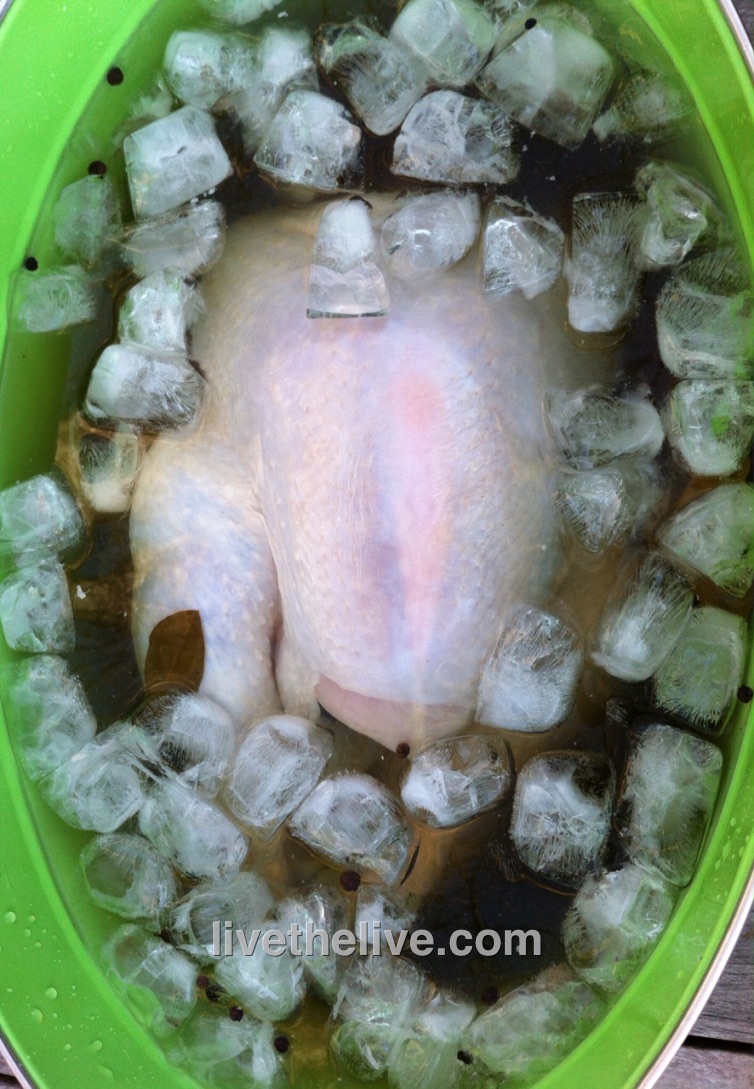
Thanksgiving is only a couple of weeks away. Time to talk turkey! No matter what method you prefer to cook your bird, brining it beforehand will make it tastier and juicier. And it’s easy to do.

It’s basic high school science: the brine has a greater concentration of salt and water than the molecules of the protein (in this case, a turkey) that is soaking in it. By simple diffusion, the protein molecules suck up the salty water and keep it. When you cook the meat, some of the water evaporates, but the meat still has far more moisture in it than it would have without the brine soaking, and the result is a moister, more delicious bird.

Some people use giant syringes to inject their turkeys with crazy solutions, but I think that the old way is still the best when it comes to brining. Get a big pot, fill it with the brine, and soak the bird in it. Done.

Here’s my tried-and-true turkey brining recipe. Once the brining is done, you can cook the turkey whatever way you like best. I use a method where I grill it inside a Weber grill with charcoal. It comes out smokey and absolutely amazing. I’ll have that info in the next blog.

image

1 gallon of water
2 onions
3 carrots
3 stalks celery
1 cup kosher salt
1 tablespoon black peppercorns
1/2 cup light brown sugar
1 1/2 teaspoons whole allspice
4 bay leaves
1 gallon of ice water
14–15 lb turkey, thawed

Pour the first gallon of water in a large pot. Quarter the onions, carrots and celery (no need to peel them) and add to the water. Add salt, black peppercorns, brown sugar, allspice, and bay leaves.

Let the pot come to a boil for a few minutes. Remove it from heat and let the brine cool down to room temperature.

Remove the giblets from the turkey and place the bird in a container just big enough to hold it and 2 gallons of liquid.

Pour the now-cooled brine over the turkey, then pour in the gallon of ice water.


Make sure the turkey doesn’t float up by placing a plate on top. Put the turkey container in the fridge for 4 to 6 hours, flipping the turkey over in the container halfway through.

Drain the turkey, pat it dry with paper towels, and then cook it using your favorite recipe.


Nothing says summer here in New England like a lobster roll. But I don’t go to a clam shack to get one. The prices are ridiculous, the meat can be overcooked, and they often add ingredients I don’t want.

I start with fresh lobster. I get it from my lobster man buddy, Gary, just down the street at his dock in Tiverton, RI.

A view of the Sakonnet River from the back of Gary's lobster boat, the Edna Mae

A view of the Sakonnet River from the back of Gary’s lobster boat, the Edna Mae

The next step is to cook it right. I use sea salt in a large pot of boiling water. I make sure the water is at a rolling boil before the lobsters go in. And I cook them for no more than about 8 minutes.

Lobster catch LTL

After the lobsters have been removed from the pot and have cooled for a few minutes, I get to work: cracking the claws and tail and removing every bit of beautiful meat I can find. Lobster lovers will tell you that the legs have some meat in them and that the tomalley (the green liver and pancreas) and roe (eggs) are delicacies not to be missed. For the purpose of making lobster salad, I don’t use these parts. But I do save the tomalley and roe for a separate treat…and I save all the legs and cleaned empty shells for lobster stock.

Lobster roll LTL

Everyone has their own opinion about lobster rolls: what goes in ‘em…and perhaps more importantly, what doesn’t. I am no exception. For me, no veggies whatsoever: no chopped celery, no lettuce, no pickle. No paprika or Old Bay seasoning. A pinch of celery salt? Sure. Mayonnaise? Only Hellman’s. White pepper, not black, and just a touch. Salt? A pinch of Fleur de sel. And the secret weapon to bring out all the flavors: the tiniest squeeze of fresh lemon juice…not enough to give it a lemon flavor…just to brighten the taste.

I prefer those long Martin’s potato rolls: straight out of the bag or lightly grilled with a little melted butter brushed on.


And May is National Hamburger Month. How can you go wrong? First, a favorite burger recipe, then one for brisket.

The Inside-Out Burger: If I’m making bacon cheeseburgers to bring to a barbecue, even if it’s on my back deck, instead of bringing a package of bacon and a package of cheese and a stack of burgers, I put all the ingredients inside the patties themselves. As the burgers cook, the fat from the bacon and the gooey cheese melt and combine with the burger meat to make a really tasty and moist burger.

image

2 lbs. ground beef
1/2 cup sharp cheddar cheese, cut into 1/4″ cubes
1/2 lb. bacon, cooked crisp, cooled and crumbled
garlic salt
avocado oil or pork fat

In a bowl, combine the beef, the cheese and the bacon, mixing well so that all the ingredients are evenly incorporated. Form the beef into 1/4 lb. patties. Refrigerate them until you’re ready to cook to firm them up.

Heat a cast iron skillet and add a drop of oil or pork fat. Place the burgers in the hot skillet to sear and sprinkle with the garlic salt. When browned, flip the burgers and place the skillet in a 350-degree oven to finish cooking.

image


Brisketta: There’s a wonderful Italian roasted meat dish called Porchetta (por-ketta). The classic version consists of a pork belly that is seasoned and then wrapped around a pork loin. The meat is tied, then roasted slowly for hours, basted with wine and the meat juices until the pork is cooked and the outside skin is crackly and crispy. Then it’s sliced like a log and served as a sandwich or a main dish.

I decided to use the same method of cooking for beef brisket, and I called it “Brisketta.”

image

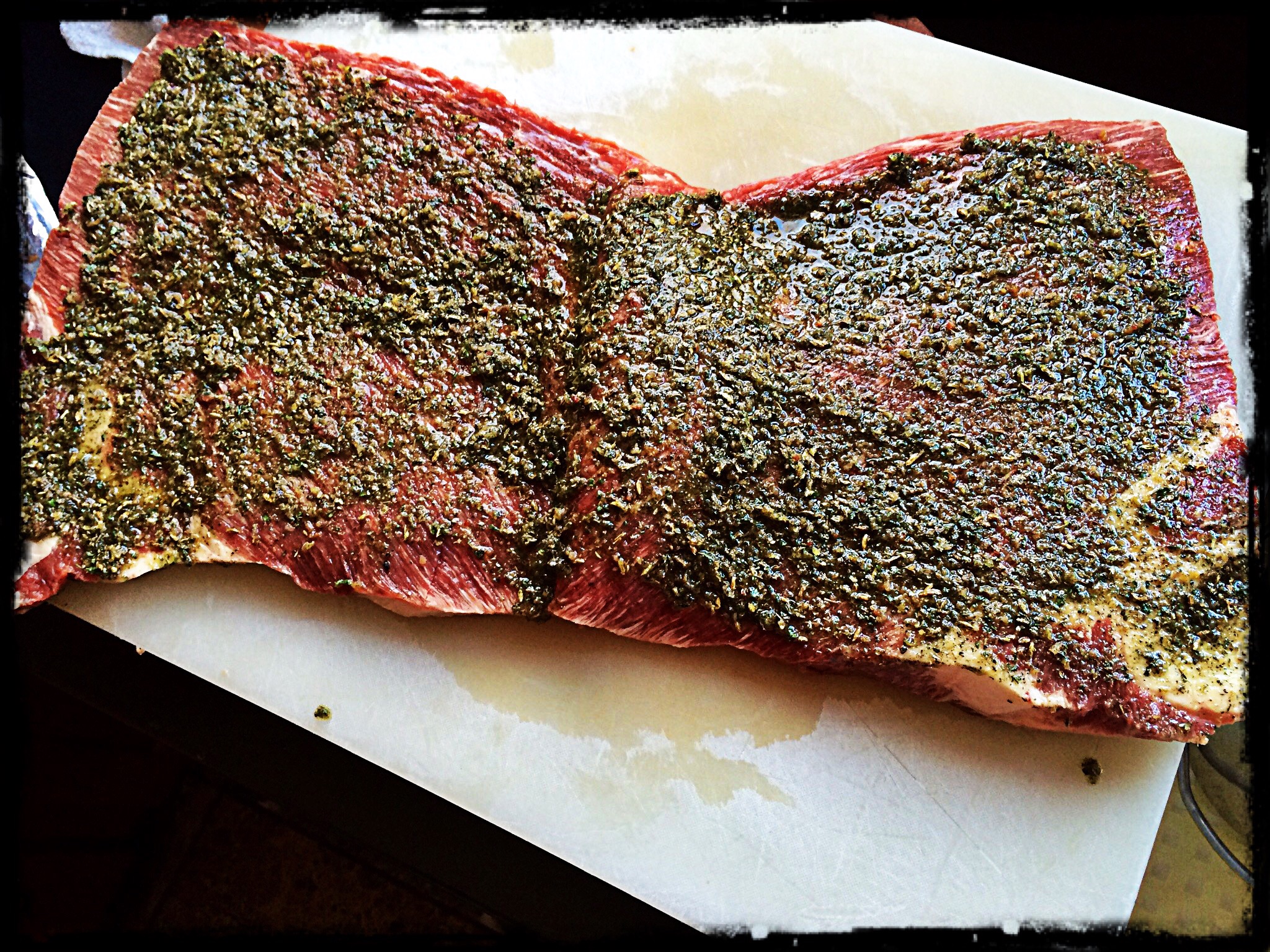
I flipped the brisket fat-side-down on my cutting board and carefully sliced it down the middle horizontally to make two large–even thinner–slabs of meat. The bottom half, with the fatty side of the brisket, would eventually be my outside layer. The top half would be my inside layer.

image

I took the top half and slathered some of my seasonings on it. Then I rolled it tightly into a log. I slathered more of my seasonings onto the bottom half of the brisket, then rolled it around the first log, so that the fattiest side of the brisket would now be on the outside of this large meat log. I tied the meat log up tightly with butchers’ twine and let it rest in my fridge overnight.

image

7 lbs. beef brisket
1 tablespoon fennel seed, toasted and cooled
5–3″ strips of bacon, cooked and cooled
2 tablespoons oregano
2 tablespoons parsley
2 teaspoons basil
2 tablespoons salt
1 teaspoon pepper
2 teaspoons granulated onion
1 teaspoon granulated garlic
Grated zest of 2 lemons
1/2 cup olive oil

Pour the fennel seed in a hot, dry pan on the stove. Toast the seeds until they release their aroma, but don’t let them burn. Set aside to cool.

Crumble the bacon strips and place in the bowl of a food processor. Add the cooled fennel seeds, oregano, parsley, basil, salt, pepper, onion, garlic, and lemon zest.

Run the food processor and slowly pour in the olive oil, until you have a paste much like pesto.

Slice the brisket in half horizontally. Save the piece with the fatty side for last, because this is the piece that will wrap around the others, with the fatty side out. Smear the rub on the first piece of brisket and roll it tightly into a log. Smear the rub on the second piece of brisket and wrap it around the first piece, making sure the fatty side is on the outside.

Once you’ve rolled both pieces into a single meat log, scored the fatty exterior with a knife and rub any leftover seasoning paste onto it. If you have none left, simply season with salt and pepper.

Tie the meat log tightly with butchers’ twine, tucking in all loose ends.

At this point, you can place the meat log in the fridge until ready to cook, remembering to remove it at least an hour before cooking so that it comes back to room temperature.

Pre-heat an oven or smoker at 250 degrees. Place the meat log directly on the grate, with a pan underneath to catch the dripping fat. Place a bowl of water in there as well, to keep the meat moist while it cooks. Cook for 4 1/2 hours, or until the interior temperature reaches 130 degrees. Let it rest an hour before slicing…if you can wait that long!

image