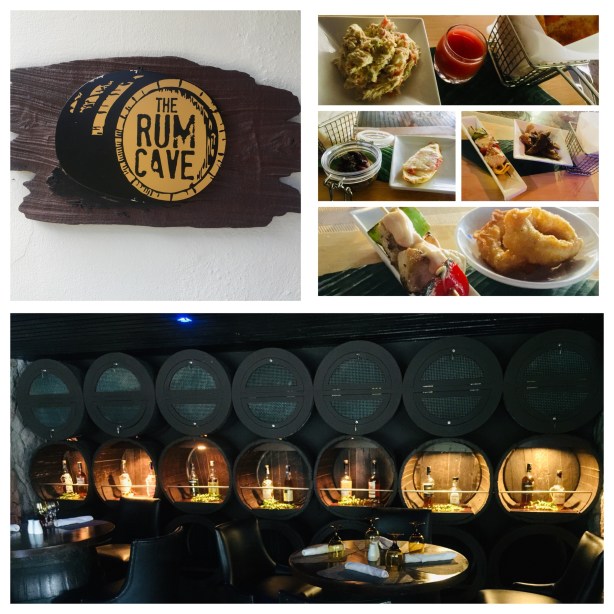
 The Rum Cave at the Marigot Bay Resort and Marina: A decent selection of rum. But many fun tapas to enjoy.
Took a taxi instead of walking the very long and steep uphill back to my hut. Worth every penny!
The Rum Cave at the Marigot Bay Resort and Marina: A decent selection of rum. But many fun tapas to enjoy.
Took a taxi instead of walking the very long and steep uphill back to my hut. Worth every penny!
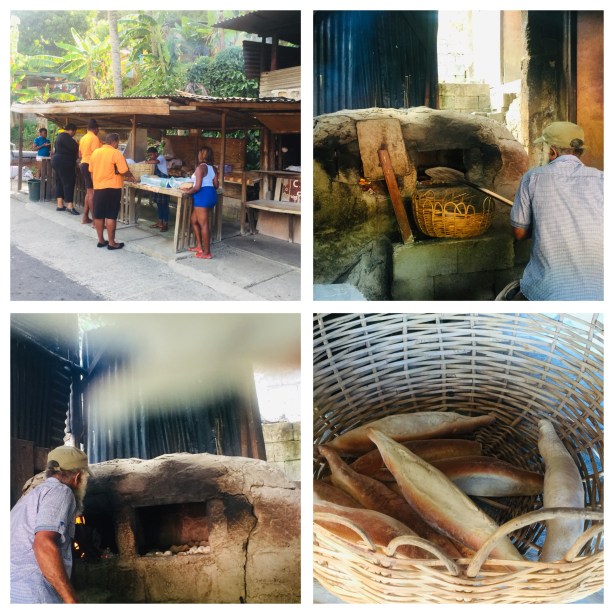
Straight from the airport, my newest best friend in St. Lucia, Anthony, my driver, took me to this roadside bakery with fantastic bread baked in a wood-fired oven. Sliced open, a little butter, and a little cheese in that still warm bread made a fantastic gooey sandwich!
The bread was so good that I literally had another bun with salted butter as my dinner!
St. Patty’s Day is this Sunday, so supermarkets are full of packages of processed corned beef in preparation for the big celebration. Too bad corned beef isn’t an authentic Irish dish!
The phrase “corned beef” was actually coined by the British, and although the Irish were known for their corned beef throughout Europe in the 17th century, beef was far too expensive for the Irish themselves to eat and all of it was exported to other countries. Owning a cow in Ireland was a sign of wealth, and the Irish used theirs for dairy products, not beef.
The Irish ate pork, and a lot of it, because it was cheap to raise pigs, and they traditionally prepared something like Canadian bacon to celebrate St. Patrick’s Day in Ireland.
In the 1900’s, when the Irish came to America, both beef and salt were more affordable, and the Irish, who lived in poor, tight-knit communities, often next to Jewish communities, bought much of their beef from Kosher butchers. And so many of the Irish learned how to corn their beef using Jewish techniques, but adding cabbage and potatoes to the mix.
It takes about 3 weeks to make corned beef. But now that you know it’s not Irish anyway, that’s OK! (If you’re dying to have it on St Patty’s Day anyway, just buy yourself a supermarket slab this time, then make your own when the craving hits again.) Doing it yourself is not difficult. It just takes time…and you get a really delicious slab of beef.
Corned beef has nothing to do with corn. ‘Corning’ is a technique for preserving raw meats for long periods by soaking it in salt brine. This method was used in England before the days of commercial refrigeration. Back then, the large salt kernels used in the brine were called “corns.”
Brining is a time-honored way of preserving meat and it prevents bacteria from growing. Both pastrami and corned beef are made by this method. Both start with a brisket of beef. Corned beef is then cooked–usually boiled–and served. Pastrami is made when the brined meat is rubbed with more spices and then smoked to add extra flavor. So corned beef and pastrami are the same meat, just treated differently.
Saltpeter is an ingredient that has been used in brining beef for years. It adds the traditional red coloring to the corned beef and pastrami meat. But since saltpeter can also contain carcinogens, I leave it out. The meat may not be the usual bright red color, but the flavor and texture of the meat will not be affected.
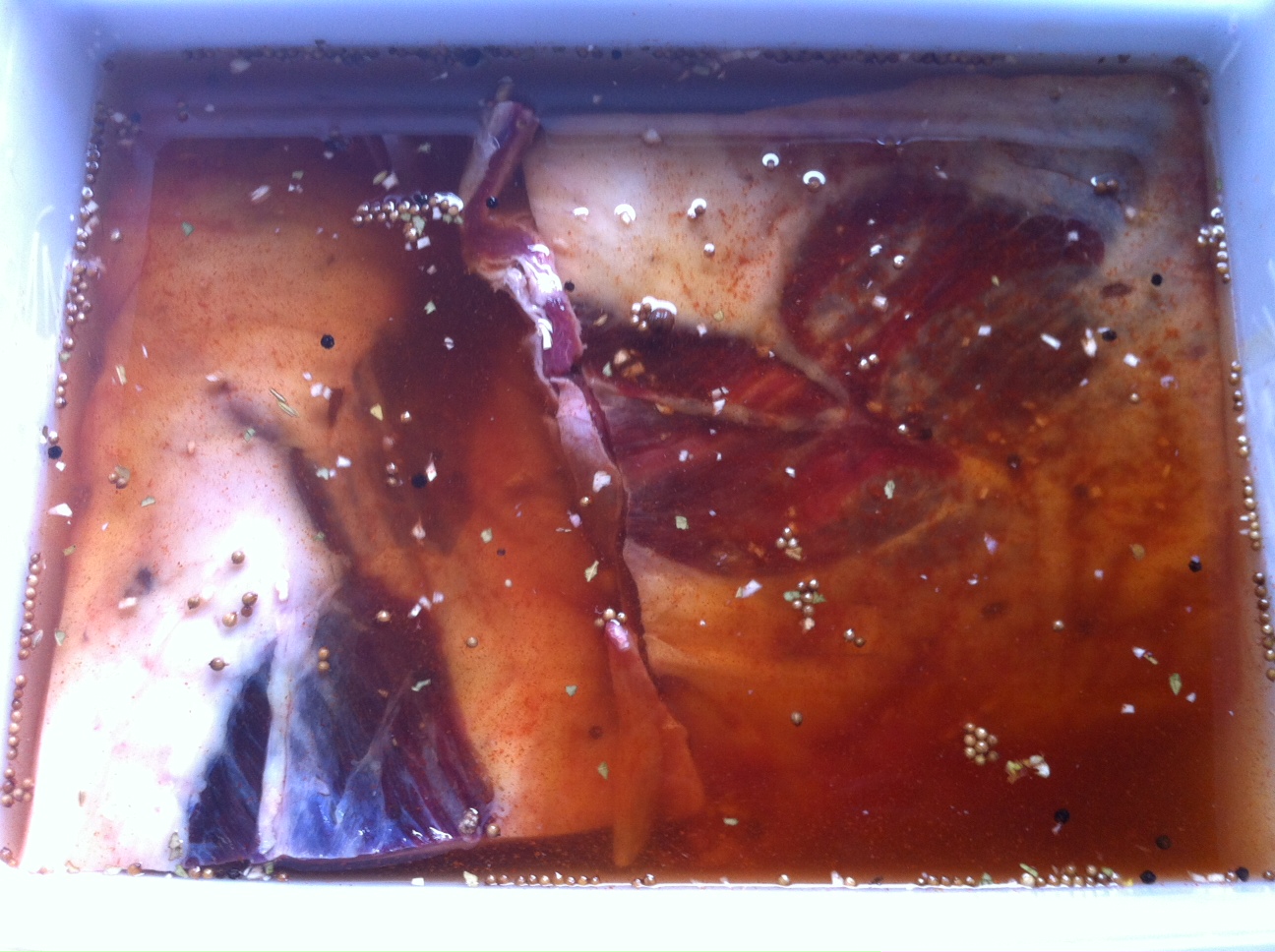
Brining the beef brisket
Place the brisket in a large container made of non-reactive material, like glass or plastic.
In the 1/4 cup of warm water, dissolve the sugar, minced cloves, paprika and pickling spices.
Dissolve the 3/4 cup of salt in the 2 quarts of water. Pour in the sugar/garlic/paprika/pickling spices mix and stir everything together. Pour the mixture over the meat in the container. Make sure the meat is totally beneath the surface of the liquid. (You may need to weigh it down to do this.) Cover the container.
Refrigerate the container and its contents for 3 weeks, turning the meat once or twice per week. At the end of the third week, remove the container from the refrigerator and take out the meat. Soak the meat in several changes of fresh cold water over a period of 24 hours to remove the excess salt.
At this point, if you want corned beef, prepare and cook it using your favorite recipe. But I’m all about the pastrami!

Combine the coriander seeds, black and white peppercorns and mustard seeds in a spice grinder and grind coarsely. Place in a bowl. Add the salt, paprika, brown sugar and granulated garlic. Mix well.
Rub the mix into the brisket well, covering all sides.
Heat your smoker to 225 degrees and smoke for several hours using a less intense wood, like oak. When the internal temperature of the meat has reached 165 degrees, it’s done. It isn’t necessary to smoke pastrami as long as you would a regular brisket because the long brining time makes the meat tender.
It is very important that absolutely everything that comes in contact with the meat is very clean. (This includes your hands.) Also, make very sure that every inch of the meat reaches the 165 degrees before it is removed from the smoker. The corned beef is now pastrami.
Happy St. Patty’s Day!
I live one town over from Fall River, Massachusetts, and just down the road from New Bedford, Massachusetts, two thriving proud Portuguese communities. My daughter is in middle school, and she’s taking mandatory Portuguese language classes. We’ve got dozens of authentic Portuguese restaurants in the area, and even a well-stocked supermarket with its own bacalhau (salt cod) room: Portugalia Marketplace, in Fall River.
So when I first posted my recipe of Portuguese kale soup, I was told by many Portuguese friends that my soup wasn’t authentic so I couldn’t call it that. Fair enough. After all, my soup has far less carbs, fewer spices, and uses homemade stock instead of water. It may not be Portuguese, but it’s full of flavor.

My version of the classic Portuguese kale soup.
Add the stock and water to a large pot. Heat until boiling. Add the lentils.
In a saucepan with a little olive oil or bacon fat, saute the onions, carrots, celery, and garlic for a few minutes. Add the chopped chourico and saute a few minutes more. Add the contents of the saute pan in the pot.
Wash and de-stem the kale, tearing the leaves into smaller pieces. Add the leaves to the pot and stir. The stems go in your compost pile. (You can also use them in a juicer.)
Cook the soup until the lentils are al dente. Taste and season for salt and pepper before serving.
My Portuguese pal, Paula, has a great soup recipe that has been passed down from her Mom. Her Mom even adds chicken feet to the stock, which Paula chooses to leave out. Like most Portuguese soup recipes I’ve seen, there’s a ton of carbs: often potatoes with pasta with a lot of beans. But it is good!
Paula’s Portuguese Soup
Drain and puree 3 cans of garbanzo beans in a food processor. Put the puree in a large pot with about a gallon of water. Chop the chourico, and add it to the puree along with the ribs. Boil for 20 minutes. Chop the fennel bulb and cabbage into 2 inch squares. Add the fennel and cabbage to soup and boil for 30 minutes. Add the chopped kale, and boil for 30 minutes. Add the cubed potatoes and before the potatoes are done, add the remaining drained cans of beans. Add macaroni and cook for a short time at the end.
My 12-year-old daughter’s at the age where she’s fascinated by the world of music. Working in radio, I’m lucky that I’m able to offer her some great experiences. Thanks to my boss, Rob, the man with all the connections, she got to meet her favorite band, AJR. She went backstage and met the guys from Imagine Dragons. She received a hand-written birthday greeting from Brendan Urie of Panic! at the Disco.
I saw my first concert at the age of 17. It was Three Dog Night and T.Rex at the Nassau Coliseum on Long Island. My daughter has already seen more concerts than I did in my teens.
As touristy as they are (and as mediocre as the food is), Hard Rock Cafes and their walls full of pictures, guitars, photos and other memorabilia, offer a glimpse into the world of music that fascinates my daughter. Once she visited her first Hard Rock, the world’s largest at Universal Studios in Orlando, Florida, she was hooked. If we were traveling anywhere near a Hard Rock Cafe, we had to go.
The Hard Rock at Universal was followed by New York City, Washington DC, the Cayman Islands, Paris, and Reykjavik. Yet we never made to the one in Boston, closest to our home in Rhode Island. It was time to go.
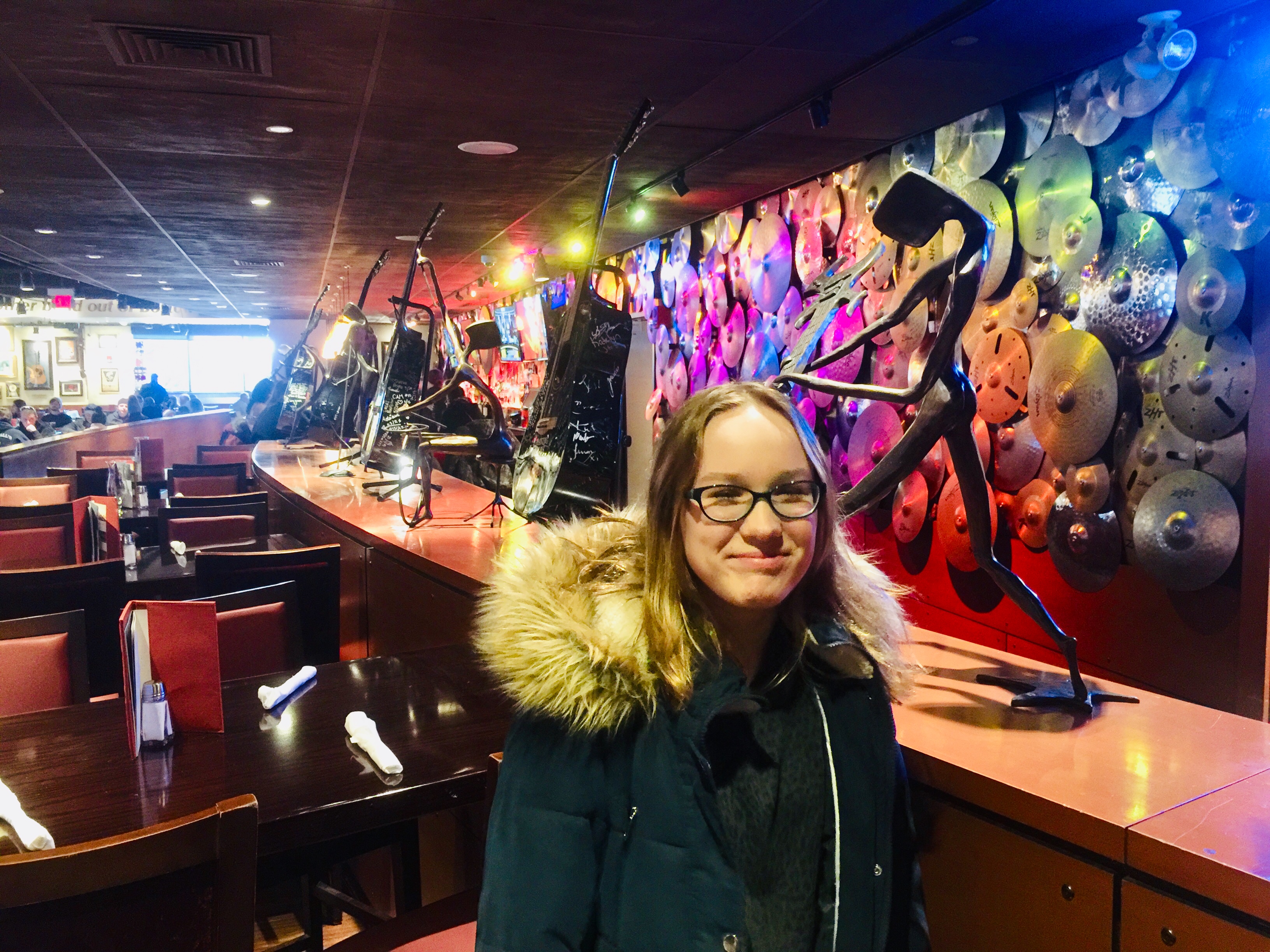
Hard Rock Cafe, Boston.
Our stay in Boston began with lunch at the Hard Rock Cafe, near Fanuel Hall. Nothing particularly amazing about the venue, but we could now scratch it off the list.

I clearly don’t know what the hell I’m doing.
Because our main point of going to Boston was to visit the New England Aquarium, I chose to get a room at the Marriott Long Wharf Hotel, located right on the water and literally a few steps from the aquarium. The area around Long Wharf includes many restaurant and shopping choices.
The Marriott Long Wharf is a huge hotel, and I was surprised at just how clean the property was, despite the vast numbers of people who were moving through the lobby and hallways. Our room was clean and technologically up-to-date: everything you’d want in a hotel room. Beds were comfortable, towels were plentiful.
The only complaint I had about our hotel is one that I have with most of the Marriotts and Westins that I’ve been to recently. They’ve decided to make the move away from old-fashioned room service with carts, real plates and silverware, and decent food. Now they all offer what amounts to take-out service. You get a bag full of cardboard boxes that contain your meals….paper napkins…plastic utensils…and crappy food. I highly doubt all of this gets recycled. So in a world where we’re supposed to be thinking about how not to overload our landfills, these guys came up with the idea to make everything disposable. Really dumb. Goes without saying that we didn’t eat at the hotel.

No carts. No fuss. No thanks.
The New England Aquarium is a great place to take the family and see penguins up close. We arrived at feeding time, and it was fun to watch them eat; some of them fussy, some of them devouring their offerings of fish. The center of the building is a spiral, and inside the spiral is a huge 4-story aquarium. So as you slowly walk up the spiral, you get a constantly changing view of the aquarium and the thousands of fish and other sea life (manta rays, tortoises, sea horses, jellyfish, starfish, eels, seals, and lots more that thrive there. Again, you might be lucky to catch them at feeding time, when workers in scuba gear swim down to the different groups of fish and make sure they get fed.
One note: buy your tickets online before you go. The outdoor line for last-minute ticket buyers was huge, and we visited on a bone-chilling winter’s day. Those people standing in line were very unhappy. We just walked right in with our online printed tickets.

The Red Lantern in Boston.
We don’t have many great Asian restaurant choices in Rhode Island, so when we go to Boston, it’s almost always on our list. This time, we decided to skip Chinatown and go to a restaurant that was as much about the atmosphere as it was about the food: The Red Lantern. Great music, cool lighting, awesome design, very good food and a huge cocktail menu. My daughter had miso soup and a massive delicious bowl of beef lo mein. I shoved a few large chopstick-fulls into my mouth “for blogging purposes.” Really good. I started with a plate of boneless ribs, sweet and sticky. My main dish was a huge spicy tuna toro maki roll: a tempura fried roll with avocado, cucumber, chili soy and toro tuna, slightly torched. Over the top. The Red Lantern has a beautiful bar, and my original mai-tai was well-made, though very sweet.
Dessert selections weren’t what we wanted…and we needed a breather…so we Ubered over to Newbury Street, where we found a wonderful gelato shop: Amorino. It’s an Italian chain, and they know how to do gelato!
I suppose if I wasn’t hanging out with my daughter, I’d take this opportunity to go to a bar for one last cocktail, but instead, we just went back to the hotel and focused on the next day, thinking we’d hit the indoor pool. Turns out it wasn’t a great idea, because the pool last the Marriott Long Wharf was really small and full of screaming little kids. Plan B: find a really great Sunday brunch.

Mooo, in Boston.
Mooo is a steak restaurant inside the beautiful XV Beacon Hotel, on historic Beacon Street. As I was searching for brunch possibilities, I saw the tempting list of freshly-baked treats on their menu, very different from those offered elsewhere, and I knew this was where we needed to go. We were not disappointed!
Ordering the cinnamon buns was a no-brainer. The moment they say on the menu that you “need to give it a little extra time,” you know it’s going to be worth the wait! as we slowly pulled apart the gooey rolls, shoving them into mouth, I moaned like Patton Oswalt in The Secret Life of Walter Mitty: “Cinnnabonnnn……” (Though it was way better than any Cinnabon I ever head!)

The incredible cinnamon buns at Mooo.
My daughter knew almost instantly that she was going to have the chocolate chip pancakes…with a side of bacon, of course. I was contemplating the lobster eggs Benedict (I’m a huge fan of bennies), but then I said to myself: “Wait…this is a steak restaurant. They have half-a-dozen steak and eggs offerings on the menu. Have a steak, for crying out loud!” My inner voice served me well.
I had a choice of 2 ribeyes: either a 12-oz. American corn-fed ribeye, or a 14-oz. pastured, grass-fed Australian ribeye. I’m a grass-fed guy, so the larger Australian ribeye (which was also less expensive) was a no-brainer. It was cooked to a perfect medium-rare, and was one of the best steaks I’ve had in a very long time. A couple of eggs and a side of perfectly cooked potatoes made for an ideal meal.
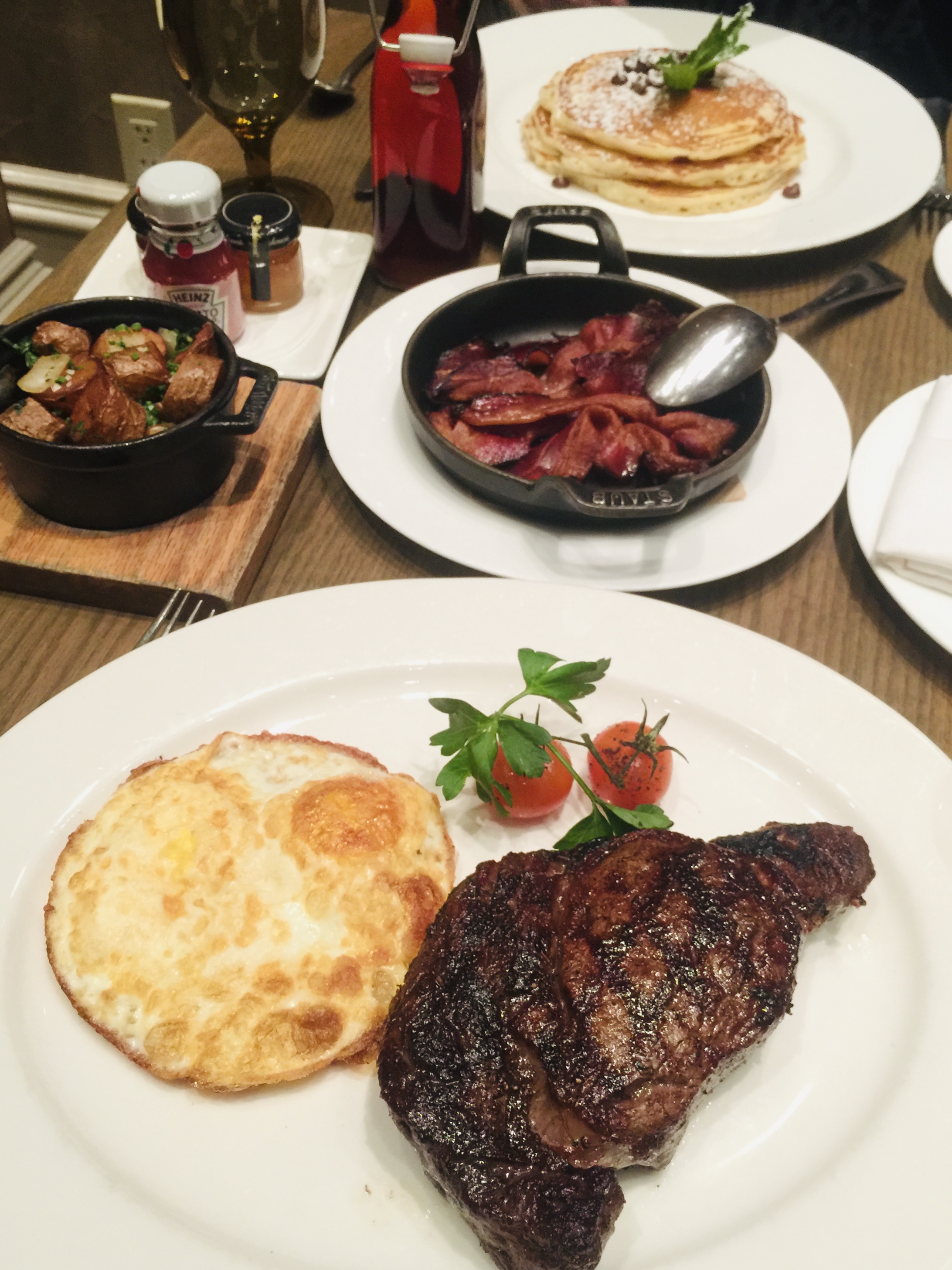
Brunch is served!
Mooo was such a great choice for brunch that I will keep it in mind for dinner on a return trip to Boston.
We returned to our hotel after brunch, simply to pack up and head home. A nice 24-hour getaway with wonderful food and a fun time with my daughter. I know my daughter and I will be back in June to see a Billie Eilish concert at the Rockland Trust Bank Pavilion, so we’ll have more opportunities to hit a couple of restaurants, this time in the Seaport District, which, sadly, is being overrun by so much new construction that you can’t even see the water anymore. It’s sad because Boston’s traffic has just been rated the worst in the country, and this will only add to a crumbling infrastructure that is already overloaded.
If there’s a dish that my Mom made all the time but I didn’t appreciate until I got older, this is it. Stuffed cabbage, cabbage rolls, or balandėliai, as we say in Lithuanian, was a staple in our home and one of my Dad’s favorite foods.
I had seen my Mom make these beauties so often in my childhood, I didn’t even need to check online recipes out for guidance. That doesn’t mean I make them exactly like Mom, but my version came out pretty damn good. I think Mom would be proud.
As always, to keep this dish gluten-free, I simply toast some GF bread slices in the oven, then grind them in the food processor. Way better than buying pre-made GF breadcrumbs!
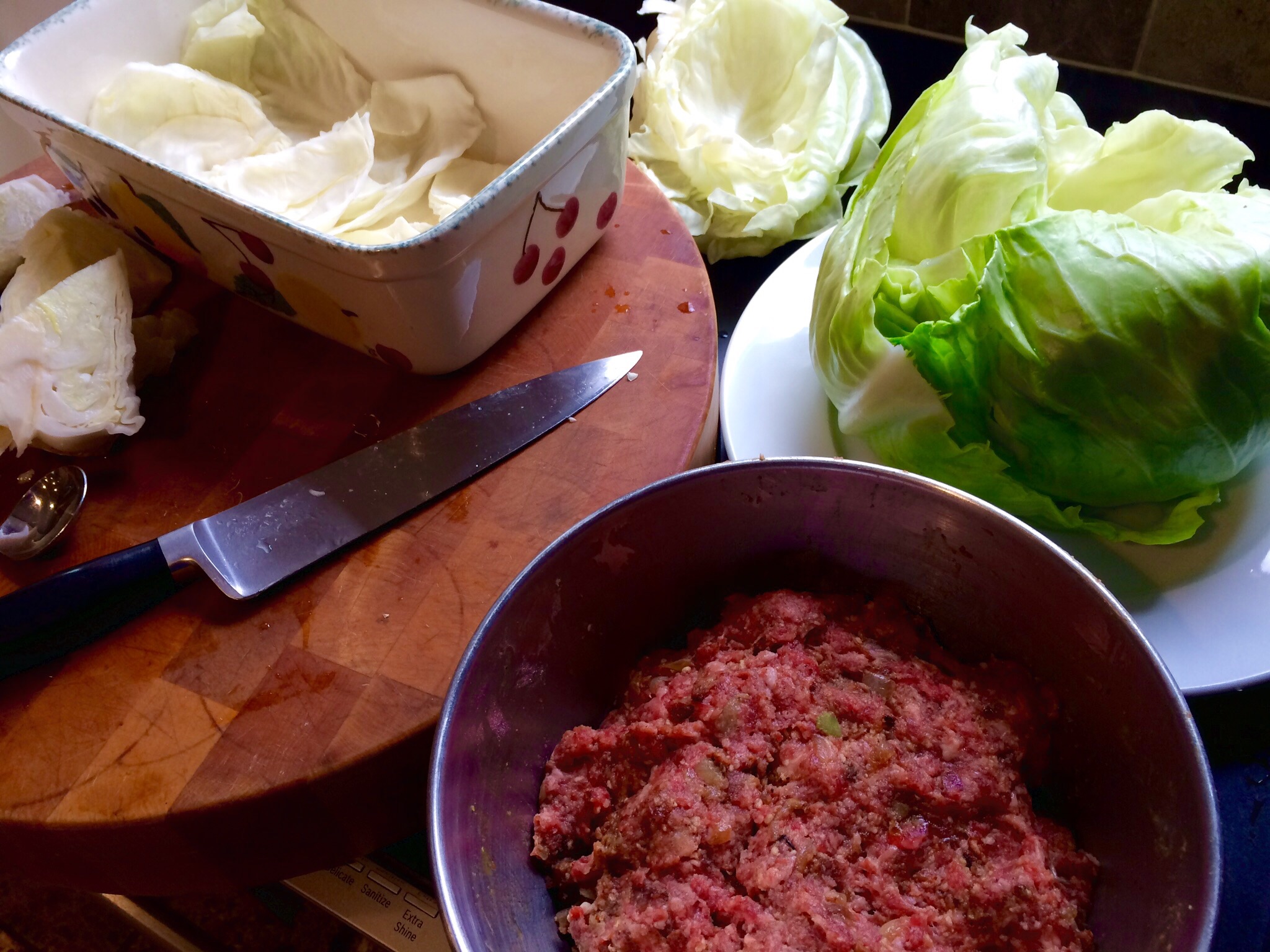
Chop the bacon into small pieces and fry them until crisp. Finely chop the onion, and add it to the bacon and rendered fat in the pan, cooking until the onions are translucent. Add the salt, pepper and garlic. Mix well, and remove from the heat. Let it cool to room temperature.
In a large bowl, combine the beef, pork, breadcrumbs, eggs, and cooled bacon and onion mixture. Place it in the fridge to firm up.
Let a large pot of salted water come to a boil. Core the cabbage, leaving the leaves whole, and carefully immerse the head of cabbage into the hot water. Little by little, the outermost leaves of the cabbage will come off the head, and you can remove them with tongs, so you don’t burn yourself with the hot water. Set the leaves aside to cool, and continue doing this until you can no longer remove leaves from the remaining head of cabbage.
Remove the remaining head of cabbage from the hot water, and using your hands or a knife, break it into flat pieces. Line the bottom of a roasting pan with the pieces. These will keep the stuffed cabbage from burning and sticking to the bottom.
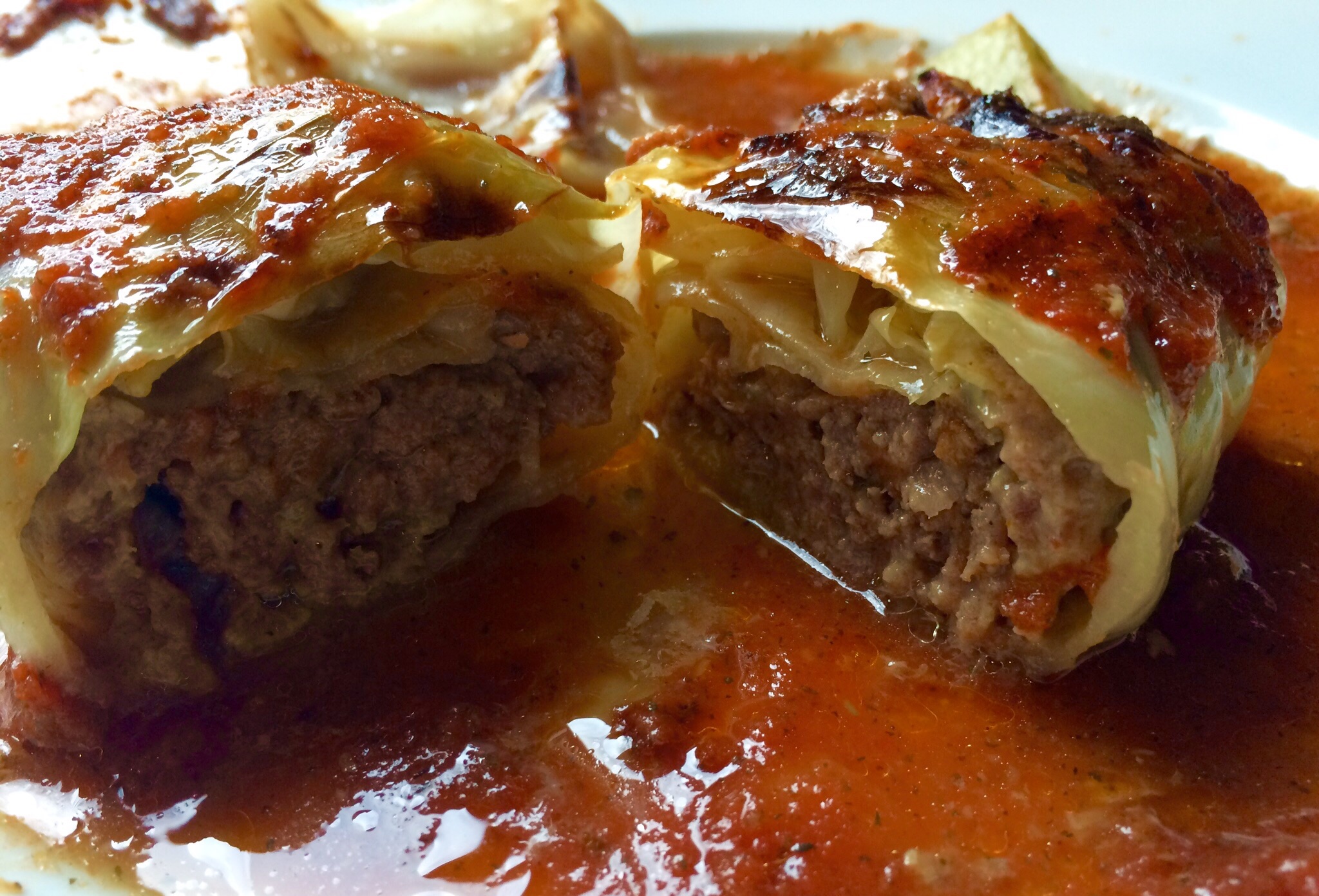
Time to roll the stuffed cabbage. Take the meat out of the fridge. Lay a cabbage leaf flat on the counter, and add some of the meat mixture inside. Roll the cabbage around the meat, folding the sides in as you go, much like a burrito. You might need to slice away the thickest part of the leaf stem to make rolling easier. Lay the stuffed cabbage in the roasting pan on top of the leftover cabbage pieces. (Unlike Mom, I don’t use toothpicks to hold the stuffed cabbage rolls together.)
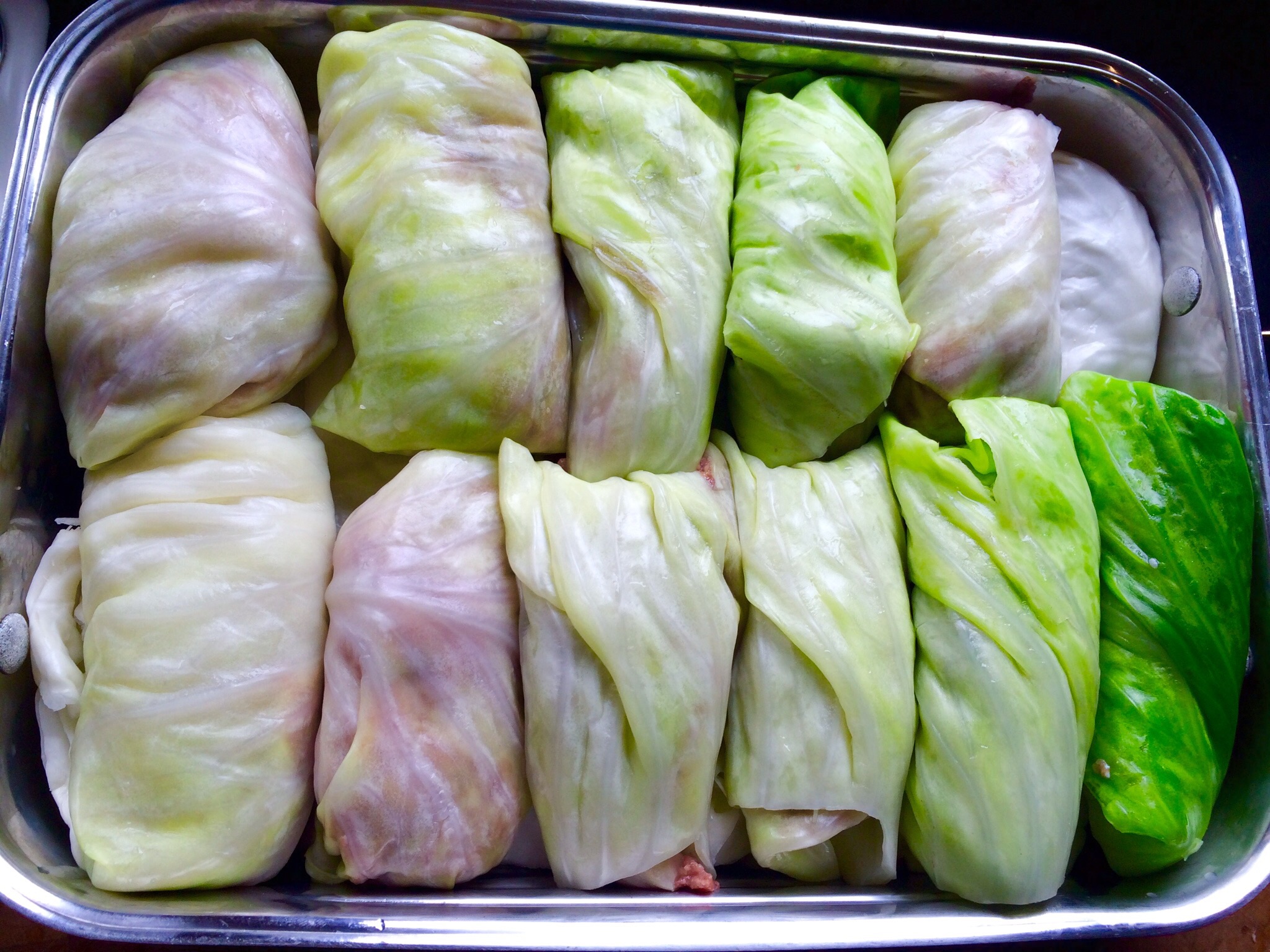
Continue stuffing and rolling the cabbage leaves until you’ve got a pan full of them, shoulder-to-shoulder.
In a blender or whisked in a bowl, combine the stock, diced tomatoes, thyme, salt, pepper, garlic and onion. Pour this mixture over the top of the cabbage rolls in the roasting pan, covering them.
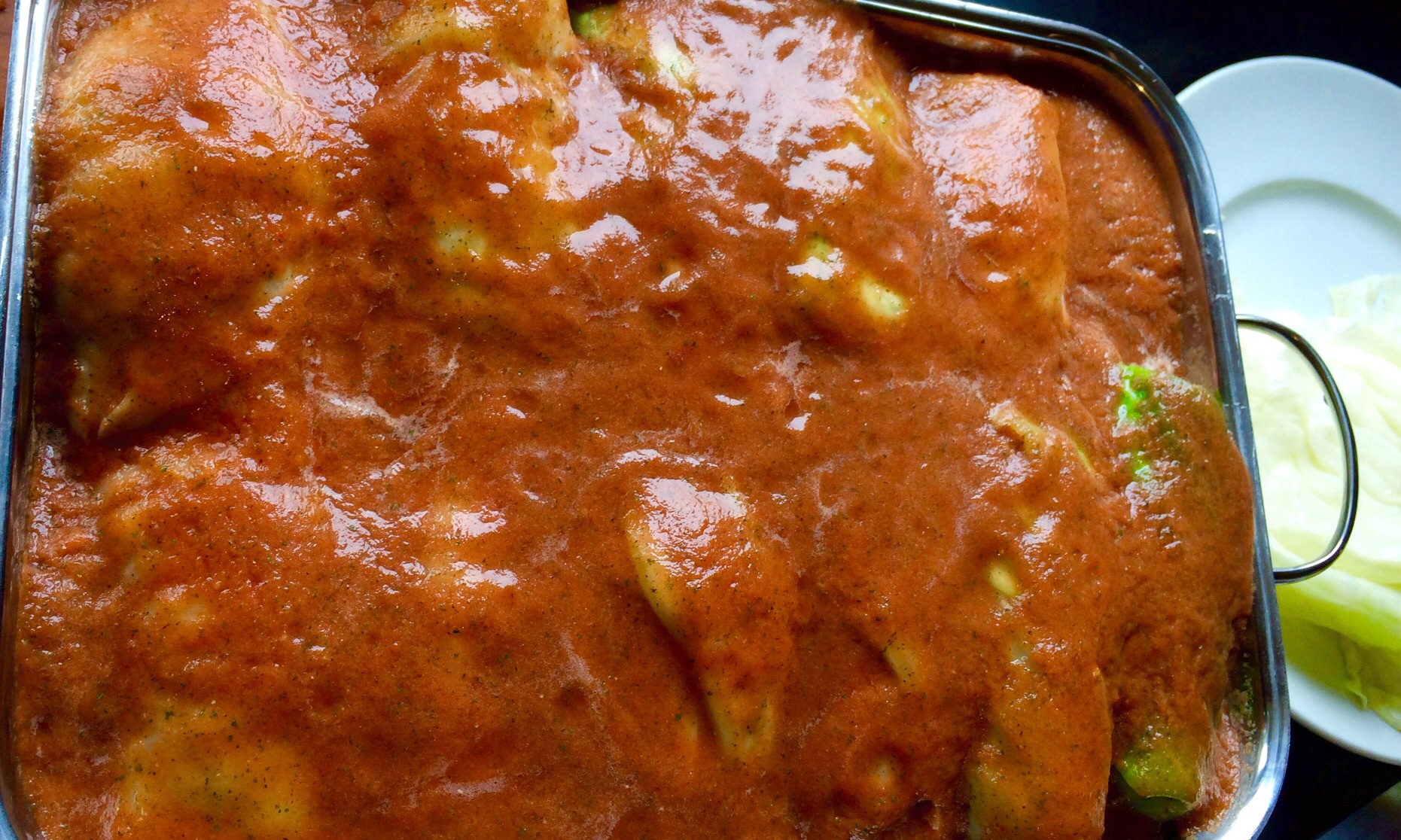
If you have leftover cabbage, you can place another layer of them on top. Otherwise, cover the roasting pan with foil and place in a pre-heated 350 degree oven. Cook for an hour.
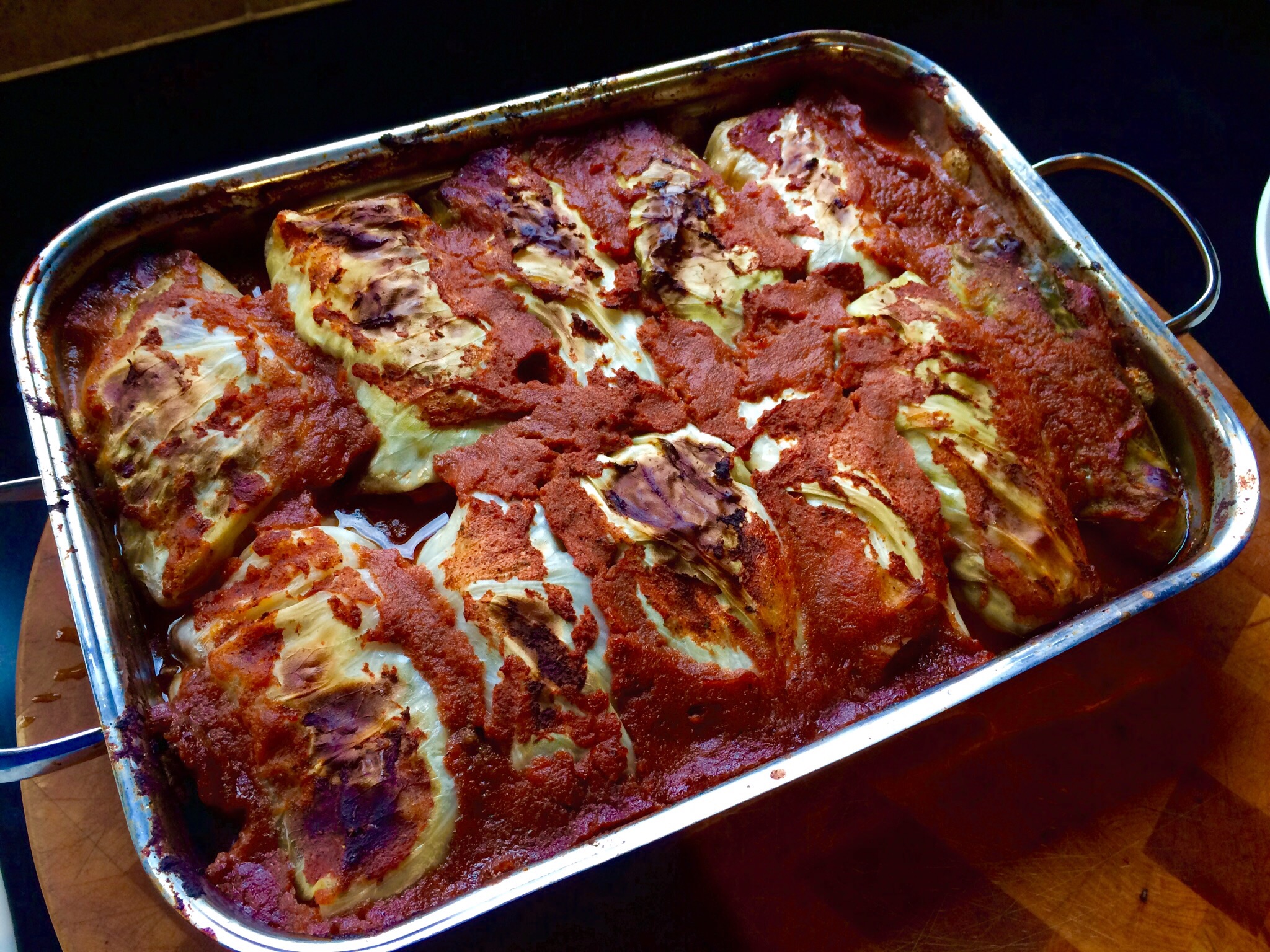
After an hour, remove the foil and cook further for another 45–60 minutes.
There’s still time to get all the ingredients that will make your Super Bowl party over the top!
Here are some links to my favorite recipes. All of them work really well when you want to feed a large group of hungry people, no matter what team they’re rooting for!
I’ve included classic chicken wing recipes, delicious ribs (without the need of a smoker or grill), classic Italian dishes, seafood and more.

CHICKEN WINGS AND DRUMSTICKS…

PORK RIBS…
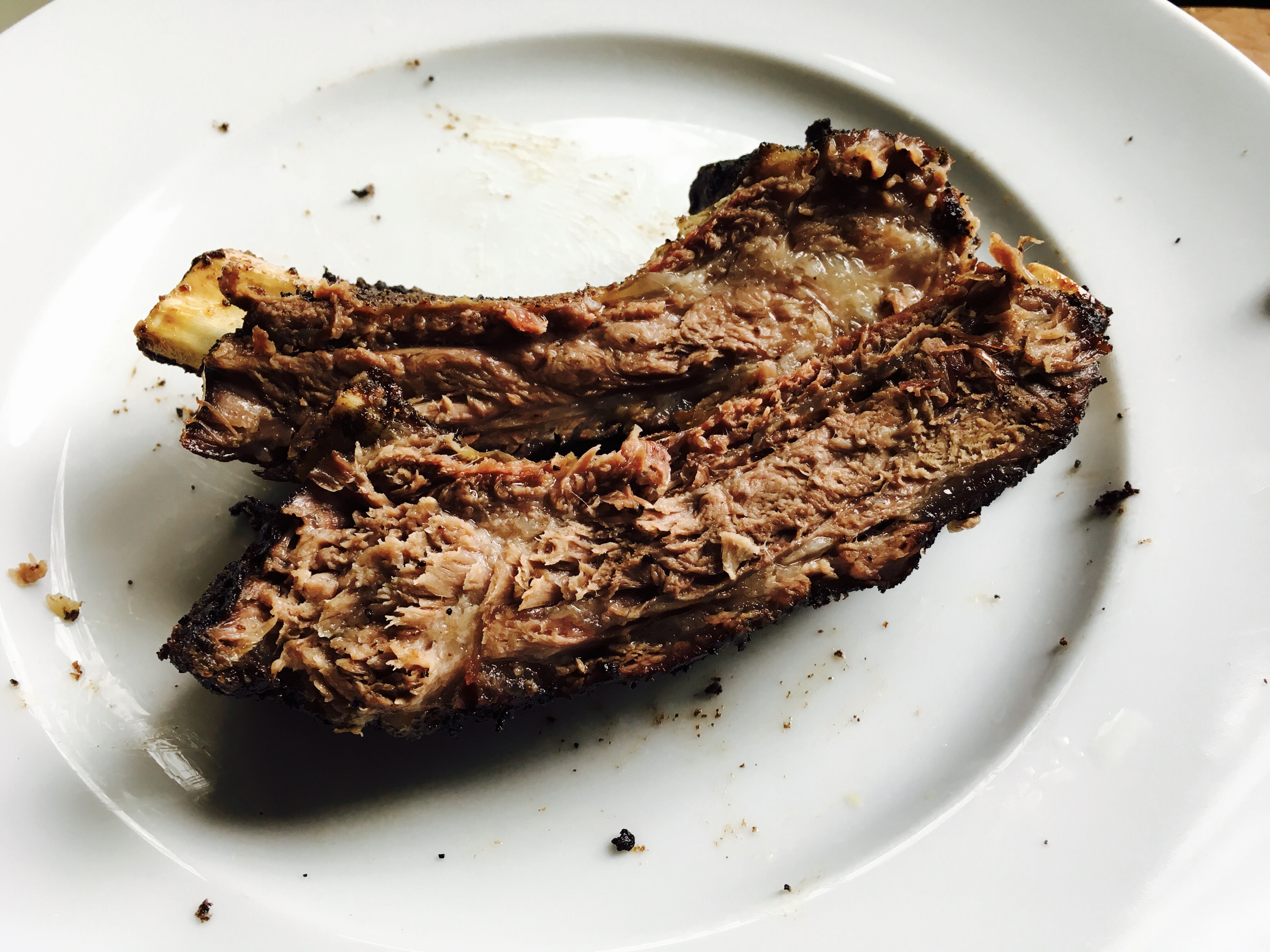
BEEF RIBS…

SHRIMP COCKTAIL WITH SAUCE…

FRIED SHRIMP…

LASAGNA AND BAKED ZITI…
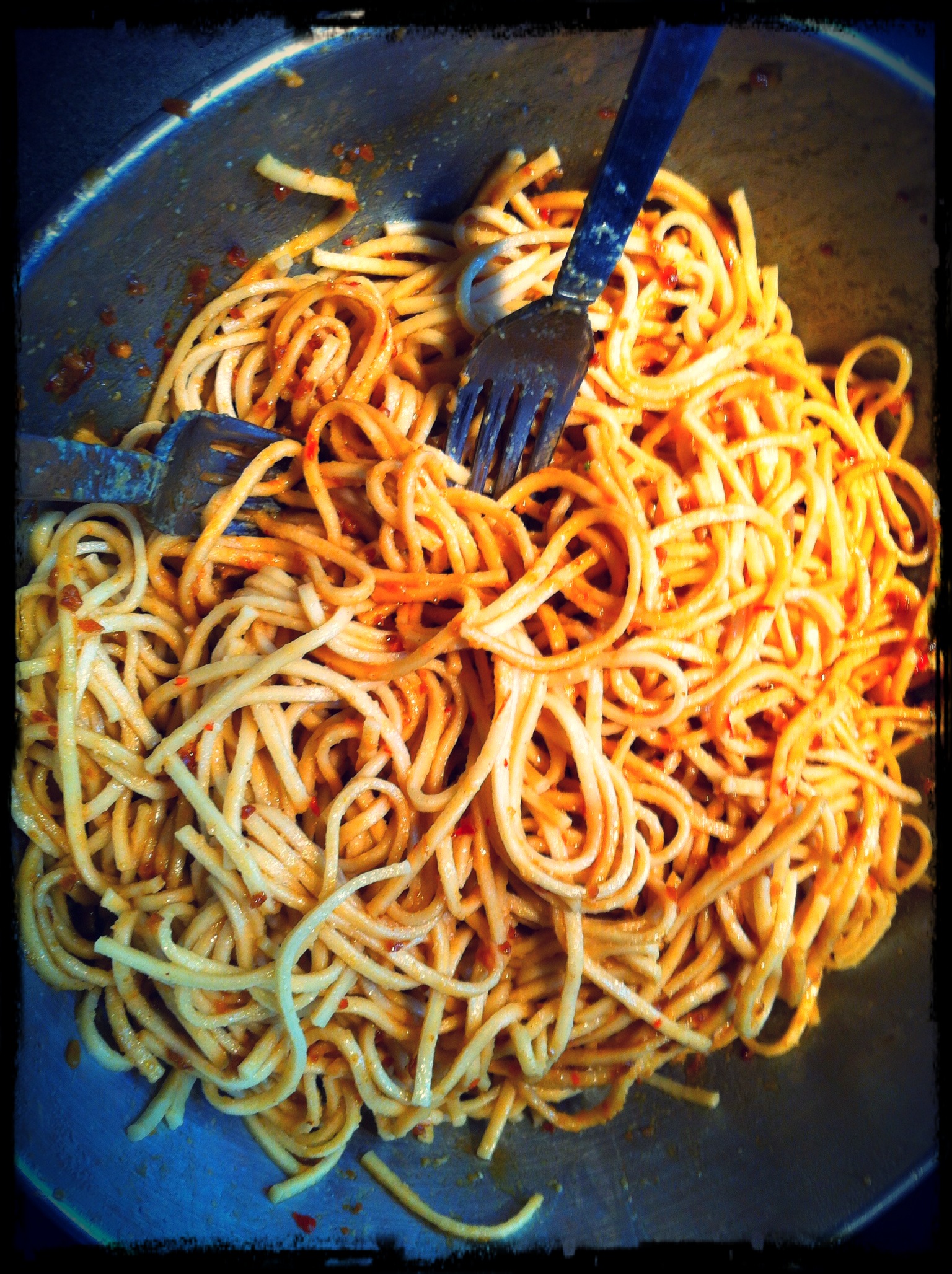
ASIAN NOODLES…GREAT HOT OR COLD

OYSTERS…
Before our daughter was born, my wife and I traveled the world. We got engaged in Paris. We honeymooned in Thailand. We swam with dolphins in Moorea. We rode camels along the Mediterranean in Morocco. So when our daughter was born, many of our friends thought our traveling days would be over.

At the Kaikoura Lavender Farm, South Island, New Zealand
One of the biggest sources of inspiration for me, personally, was a moment on our honeymoon in Thailand. We left our luxurious resort on Koh Samui to spend a few days on a remote island called Koh Nang Yuan, a destination for adventurers and serious scuba divers.
While waiting for our ferry to arrive, a bunch of us were packed like sardines in a small area. Around the corner came a young man, carrying 2 very large duffel bags–clearly a scuba diver with all his gear. But a moment later, his wife appeared from around the corner, and she was pushing a baby in a stroller. She whispered something to her husband, and he unzipped one of the large duffel bags to reveal a huge stash of diapers! He pulled one out, handed it to his wife, and she headed toward the restroom.
In that moment I realized: you can travel with a kid…and you can still have the adventure of a lifetime! It changed my attitude toward travel forever.

Snorkeling in St. John, USVI
It’s understood that not everyone can do this. Traveling is expensive. We gladly trade material things (that fancy SUV will have to wait) so that we can share some amazing memories.

In the crown of the Statue of Liberty, NYC
By the age of 12, my daughter had traveled to France, Italy, Spain, Greece, Lithuania, England, New Zealand, Iceland, Canada and the Caribbean.

London, England
The first time our daughter’s feet touched salt water, it was as an infant in the Adriatic Sea in Puglia, Italy. The first time she had a steak, it was steak frites in Paris.

Mercado de San Miguel in Madrid, Spain
Though she didn’t always realize it, her travels gave her an incredible education. The people she met, the foods she (sometimes) ate, the places she saw that her friends would only read about. It has made her wise in ways we never could have expected.

A mountain top view of San Sebastian, Spain
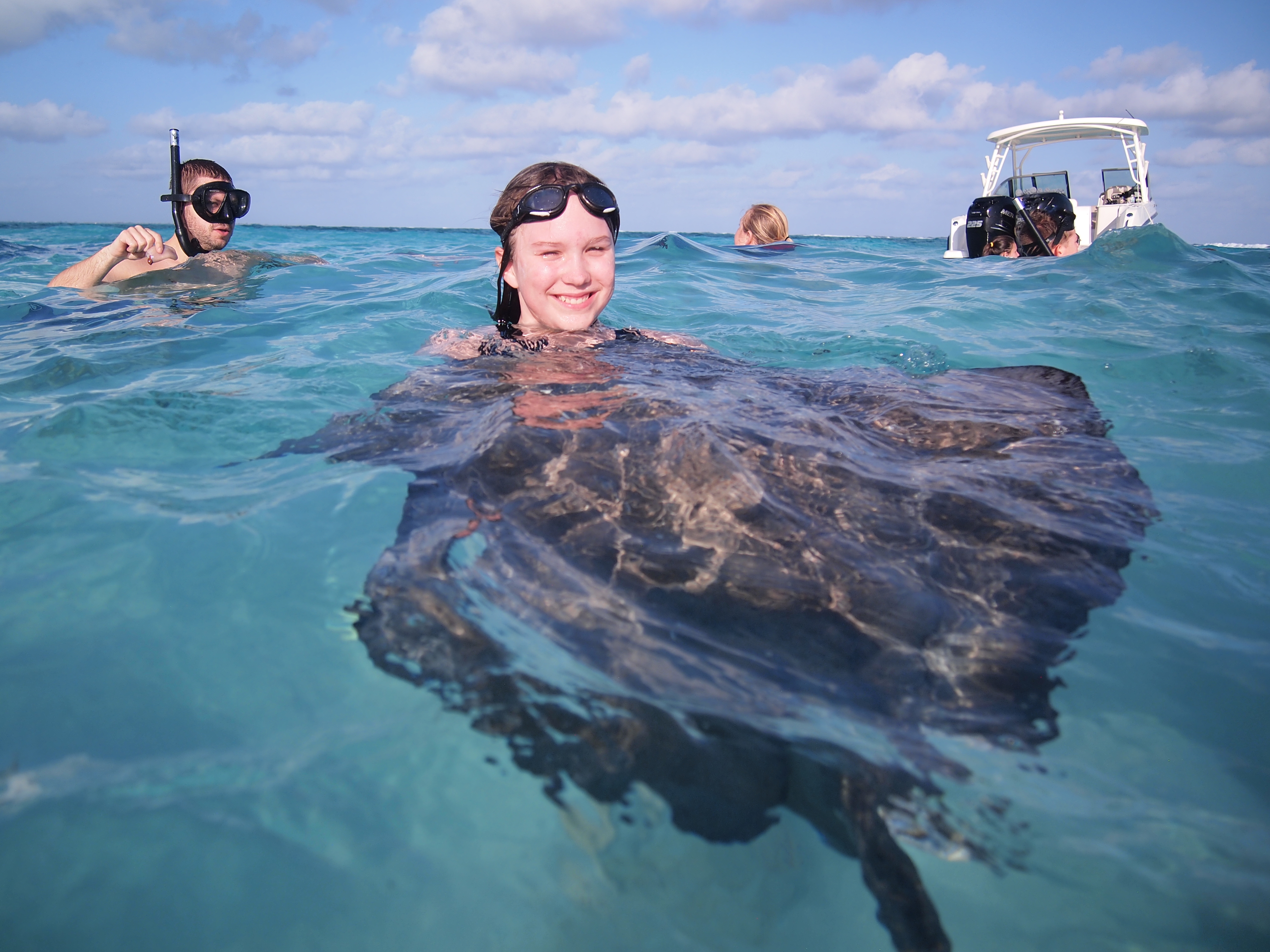
Swimming with stingrays at Stingray City in the Cayman Islands
Sure, once in a while my wife and I still travel alone for a romantic getaway. But to see the world through our daughter’s eyes has been a real joy for us, especially now when I can share my love for music with her.

Hard Rock Cafe, Paris
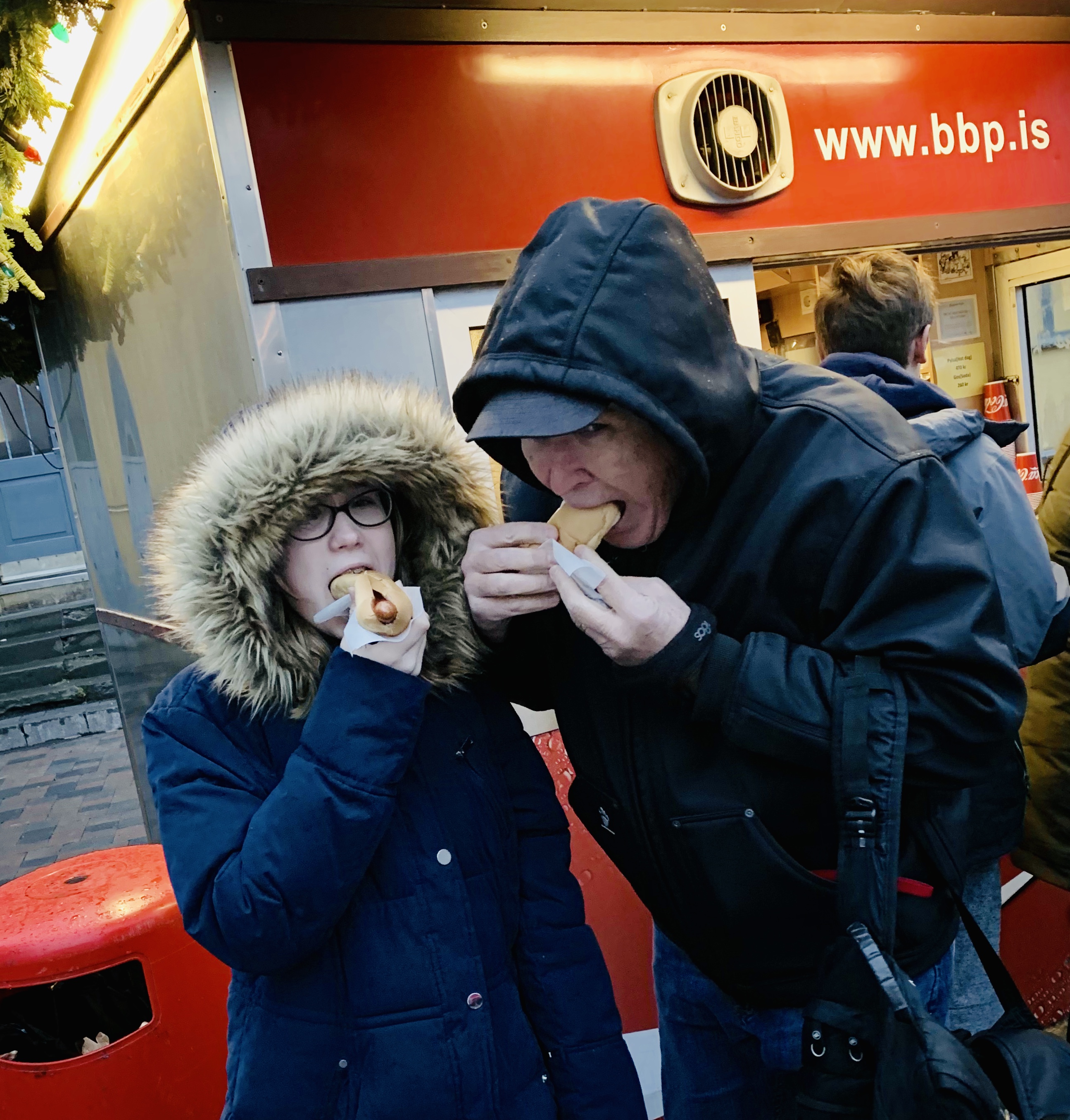
Hot dogs in Reykjavik, Iceland
We have friends that tell us they can’t afford to travel the way we do. Then they blow thousands on a Disney vacation or cruise.

Washington, DC
Everyone needs to make that choice on their own, but we decided a long time ago that we’d skip places like Disney World for the real world.
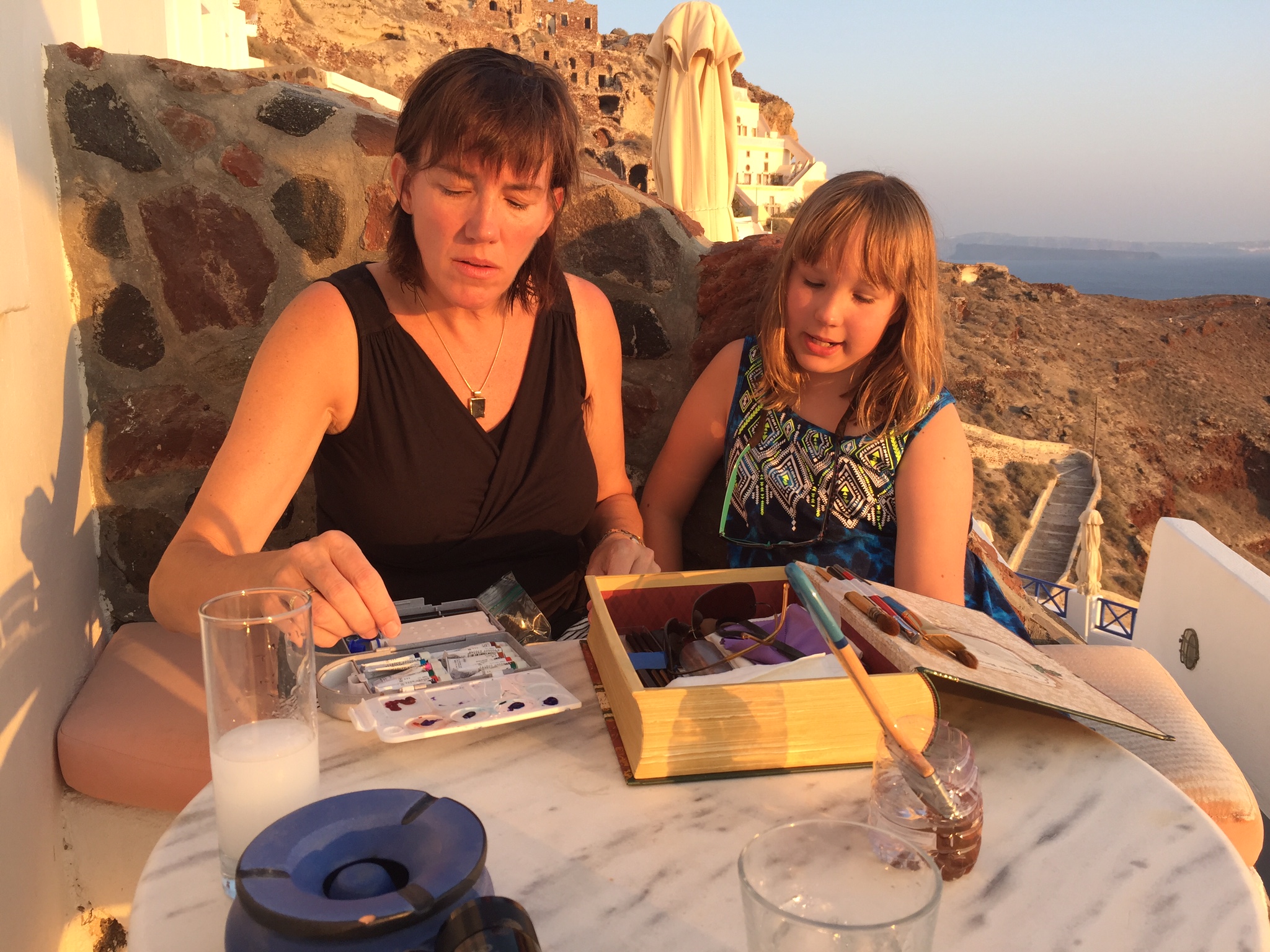
Sharing an artsy moment with Mom in Santorini, Greece

…and a silly moment with Dad in Vilnius, Lithuania
Even local trips can make a tremendous difference in a child’s life.

Block Island, RI

Fishing off the coast of Cape Cod, Massachusetts.

Camping in the Berkshires, Massachusetts.

Rafting on the Kennebec River in The Forks, Maine
Never underestimate the power of travel! It’s not just great for the kid…it’s great for the whole family!
I love pastrami. I love ribs. So why can’t the two get along? (Using my best announcer voice): Well now they can!!
I’ve seen a few recipes that use pastrami ingredients on foods other than pastrami and I thought it could work with pork ribs as well. I was right. And for these ribs, you don’t need a smoker or anything like that. They bake in the oven, then get finished under a broiler for that tasty char that you always look for in a grilled rib.
There’s a 2-step process to making these ribs. First, you combine the rub ingredients and let the ribs hang out in the fridge overnight. Then you bake them and broil them the next day, brushing a special sauce on them.
I prefer St. Louis-style ribs because they cook more evenly and have lots of meat. I prefer a heritage breed like Berkshire pork (also known as kurobuta) because of it has fantastic flavor, “good” fat, and is humanely raised.
Time to get ribbin’…
To make the rub, combine the black pepper, coriander, brown sugar, mustard powder, paprika and cayenne in a bowl. Mix well. To grind larger amounts of pepper and other spices, I use a small coffee grinder that I keep just for spices. It does the job quickly and easily.

My spice grinder.
Cut the racks of ribs into halves, removing the skin on the back of the ribs that can make it tough. Brush both sides of the ribs with the white vinegar, and then season with the salt. Pat the ribs with the spice rub, and place them on a rimmed baking sheet. Place the baking sheet in the fridge for at least an hour. Overnight is better.

Vinegar, salt and then the spice rub.
Pre-heat the oven to 325. Transfer the ribs to a large roasting pan, or you can use the rimmed baking sheet. Place the ribs fatty side up, and add 1/2 cup of water to the pan. Cover the ribs with aluminum foil and bake them for about 2 hours.
After 2 hours, remove the ribs from the oven and let them sit at room temperature, still covered by the foil, for about 30 minutes.
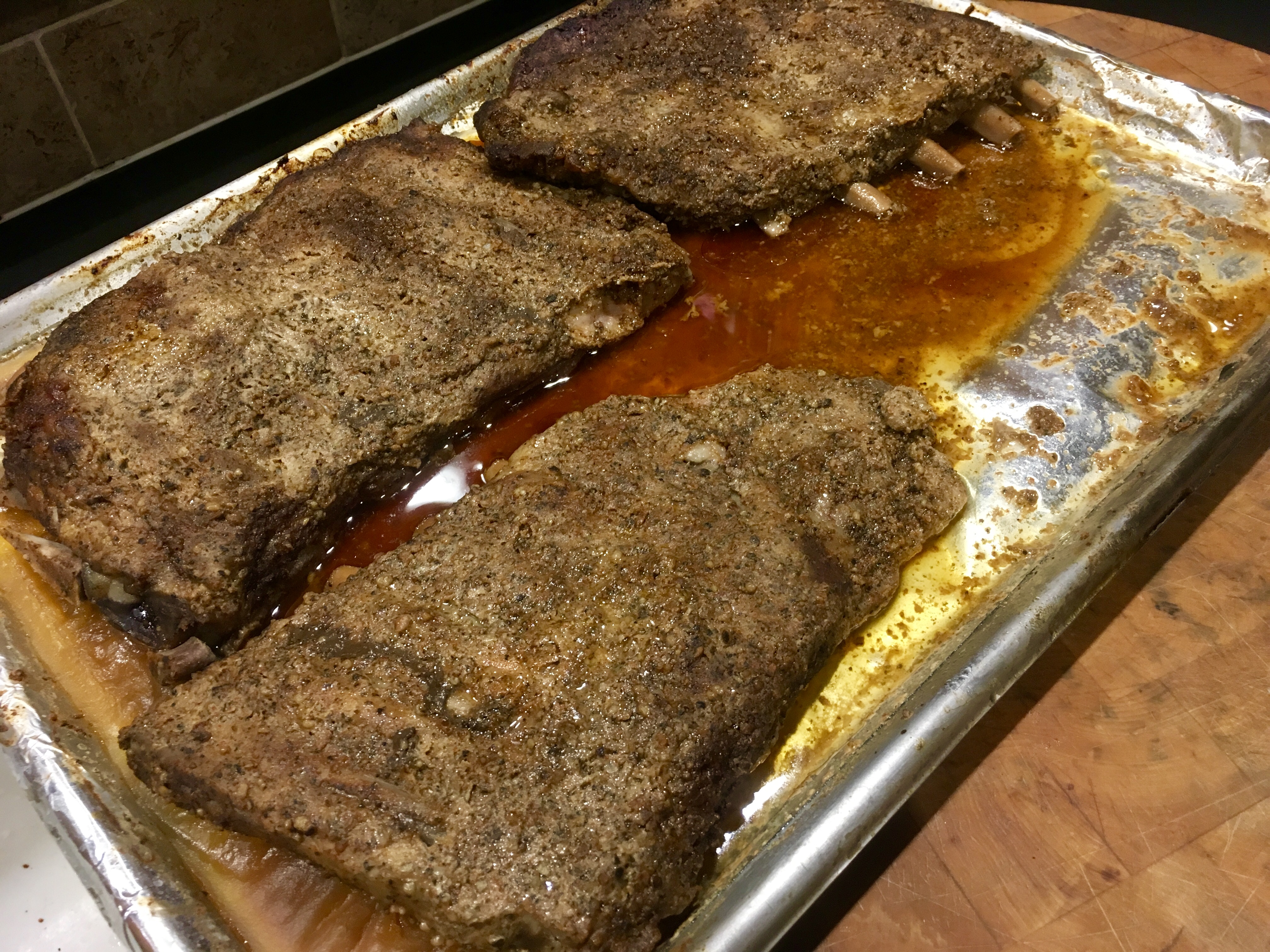
Out of the oven and ready to be brushed with sauce.
In a small bowl, combine the Dijon mustard, apple cider vinegar, honey and soy sauce. If the honey’s very thick, I place the glass jar (no lid) in the microwave for a few seconds to make it flow better. (Don’t do this if it’s in a plastic container, and don’t microwave for too long–honey will foam up and make a big mess!)
Pre-heat a broiler.
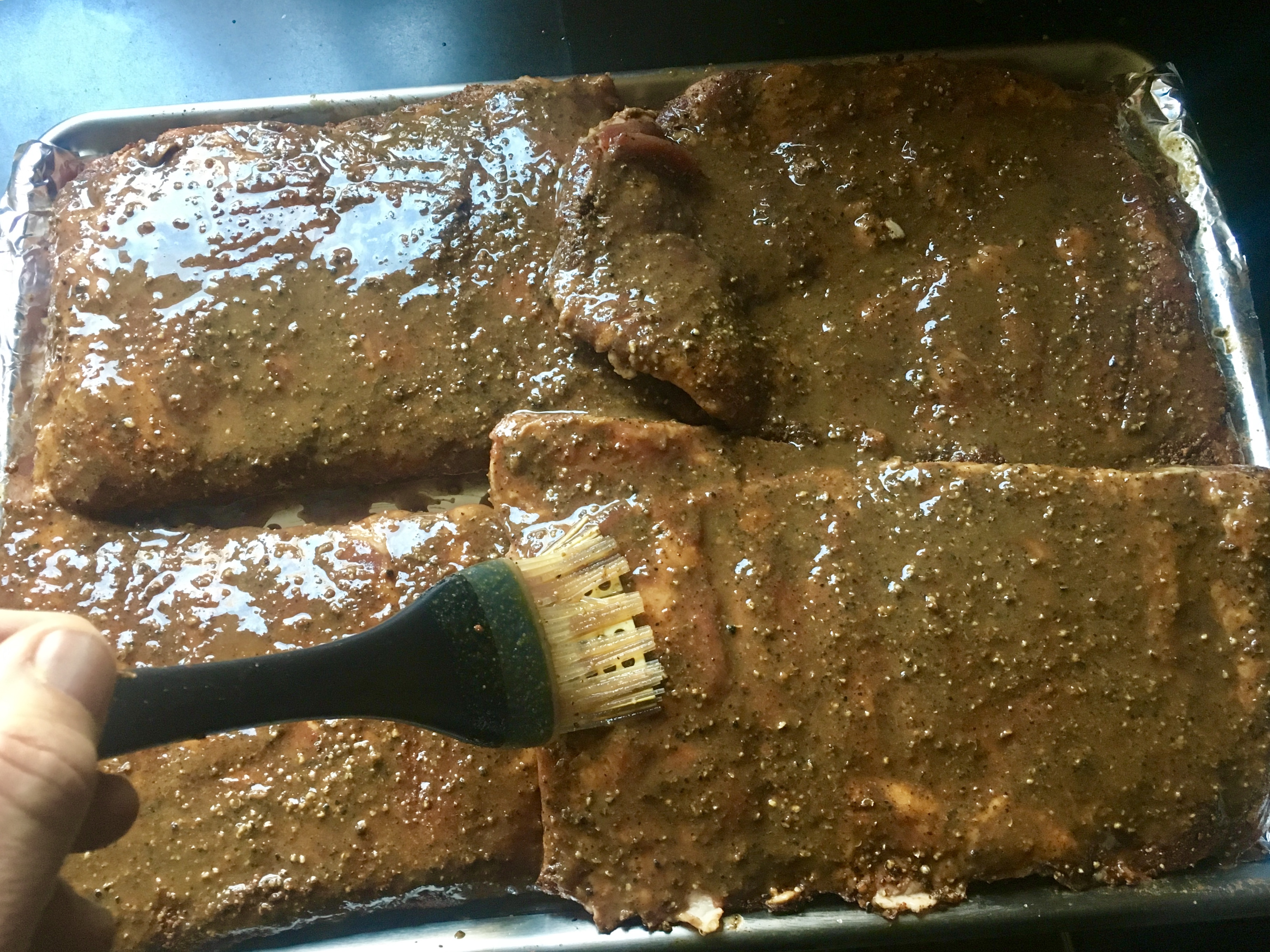
Brushing the ribs with the sauce.
Take the foil off the ribs and brush them with the sauce. Then place the ribs under the broiler until lightly charred, about 3 minutes. Slice into individual ribs or devour a slab at a time!
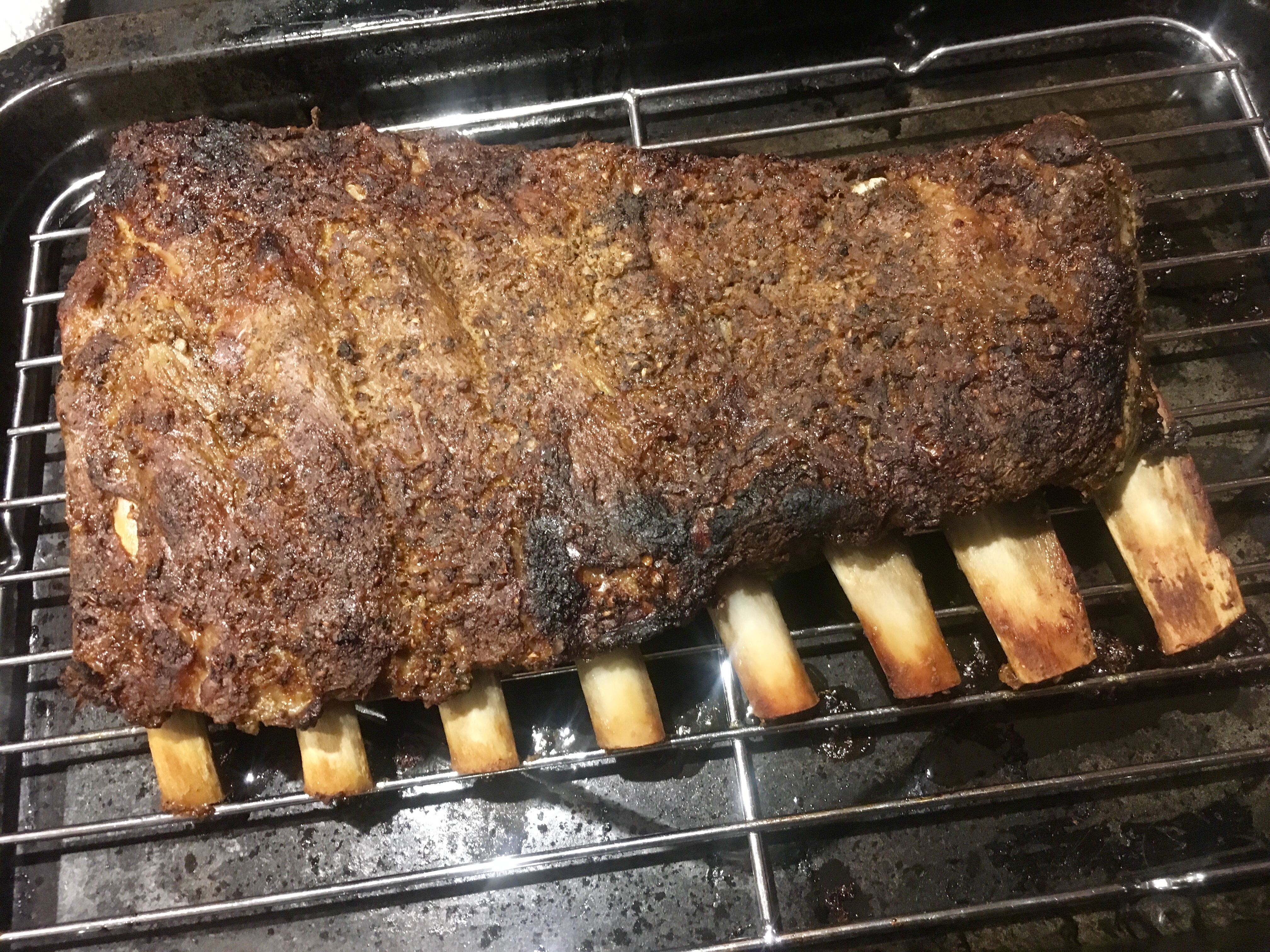
Charred and delicious!
Iceland is a land of extremes. In recent years, its remote, untouched beauty has lured tourists in vast numbers. But this tourism, which is the lifeblood of the country, is also the very thing that’s destroying it.
Back in late 2008, Iceland suffered a major financial crisis, the largest experienced by any country in economic history. To add to the damage, two years later, in 2010, the eruption of the volcano Eyjafjallajökull ejected so much smoke and ash into the atmosphere that the airspace around Iceland and Europe was closed to air traffic for an 8-day period, accounting for 48% of the world’s total air traffic and about 10 million displaced passengers.
This devastating combination caused prices in Iceland to plummet and word got out that it was an inexpensive, somewhat unexplored, destination for adventurers.Fast forward a few years later: Icelandair announced cheap airfares and no charge for layovers in Reykjavík, making travel to Iceland more attractive than ever. However, as the economy recovered, prices in Iceland started skyrocketing. Despite this, tourism has increased from 200,000 people a year 10 years ago to 3 million a year currently. Quite a huge change for a country with a population of only 300,000!There is no way this beautiful country, and the small city of Reykjavík, can handle this onslaught of tourism for very long. In fact, the Icelandic government has now started reducing new construction and putting a tax on hotels in downtown Reykjavík, trying to get people to do use lodgings that are outside of the city limits.











 Live the Live ™