Posts Tagged ‘chicken’
THE BEST OF TWO CLASSIC PASTA DISHES
Posted: April 21, 2019 in carbonara, fleur de sel, Food, guanciale, Italian, pork, pork jowl, pork jowls, RecipesTags: alfredo, carbonara, chicken, food, guanciale, Italian, pasta, recipes
Easter Sunday nightmare at the airport: my wife is stuck in Florida, and it looks like she won’t be home until after midnight. So, our Sunday brunch as a family will have to wait until another time.
My daughter just got back from a little vacation of her own yesterday, so I figured this would be a good opportunity to cook whatever she wanted. (I already knew it was going to be this dish!)
Spaghetti alla Carbonara and Fettuccine Alfredo are my daughter’s two favorite pasta dishes. When she couldn’t decide which one she wanted for dinner one night, I decided that she’d get both! (Yes, I spoil her rotten!)
The addition of chicken and peas made for a more balanced plate. This is now one of my go-to dishes when guests arrive, since many parts can be prepared ahead of time. And the gluten-free version tastes as good the original!
Start with the chicken…
The breading for the chicken uses gluten-free bread that I’ve toasted, crumbled and put into a food processor to make breadcrumbs. (I use Udi’s frozen GF bread, found in any supermarket.) I get a lot more flavor this way than using store-bought breadcrumbs from a can. I add gluten-free flour to it to lighten it up. Cup4Cup is by far the best GF flour I’ve tried.
If you’re not on a gluten-free diet, simply use regular breadcrumbs and all-purpose flour in the same proportions.
1/2 lb. chicken breasts, cut into 1″ pieces
1 egg, scrambled
1/2 cup gluten-free breadcrumbs
1/2 cup gluten-free flour (I use Cup4Cup)
3 teaspoons dried parsley
2 teaspoons dried oregano
1 teaspoon dried basil
1/2 teaspoon granulated garlic
1/2 teaspoon granulated onion
1 1/2 teaspoons salt
1/4 teaspoon pepper
olive oil, for frying
Scramble the egg in a bowl. Cut the chicken into pieces, and add them to the egg, making sure they get evenly coated. Set aside.
In another bowl, combine the bread crumbs, flour, parsley, oregano, basil, garlic, onion, salt and pepper. Set aside.
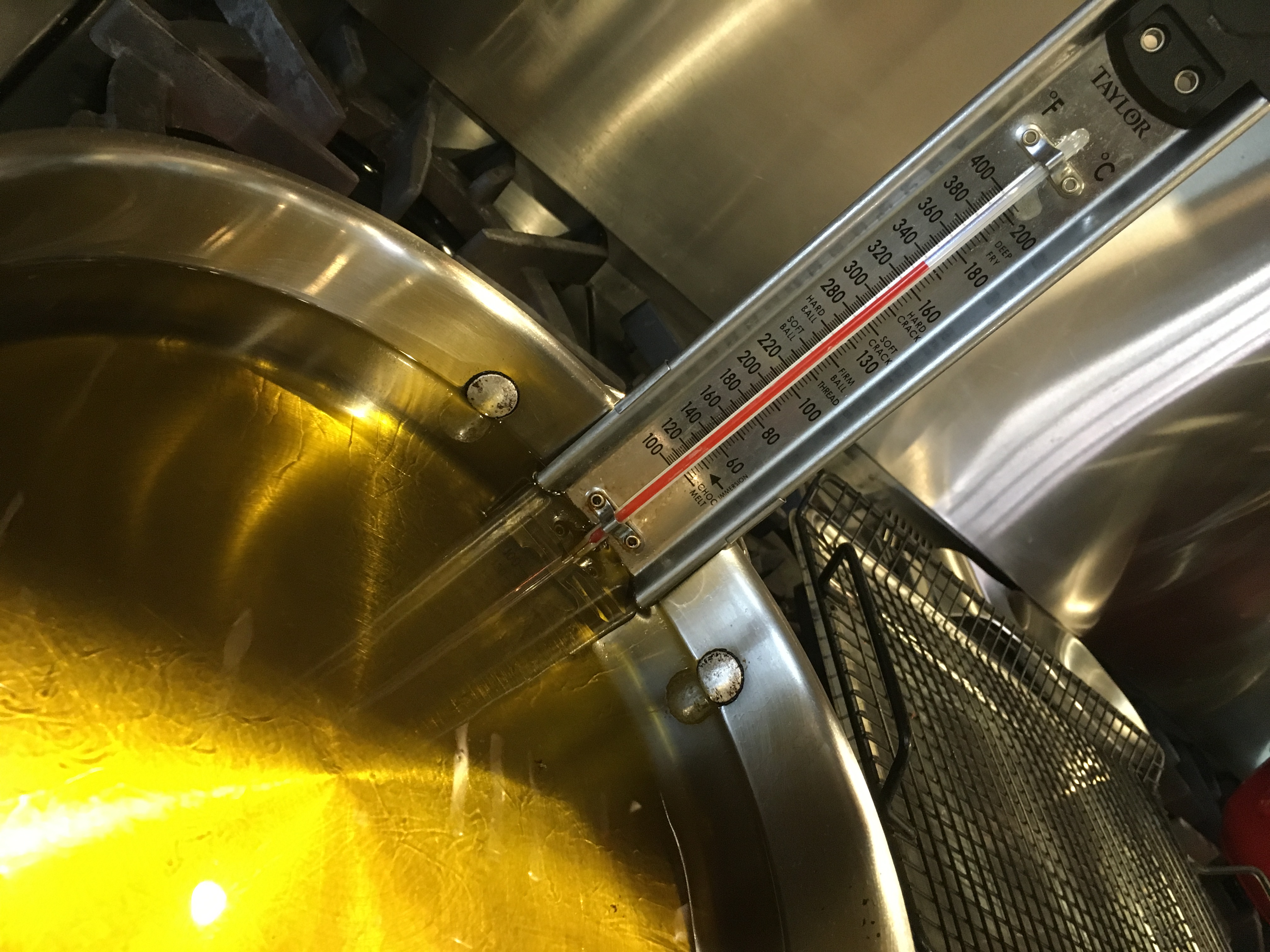
Fill a pan with about an inch of olive oil. Heat to medium-high, for frying.
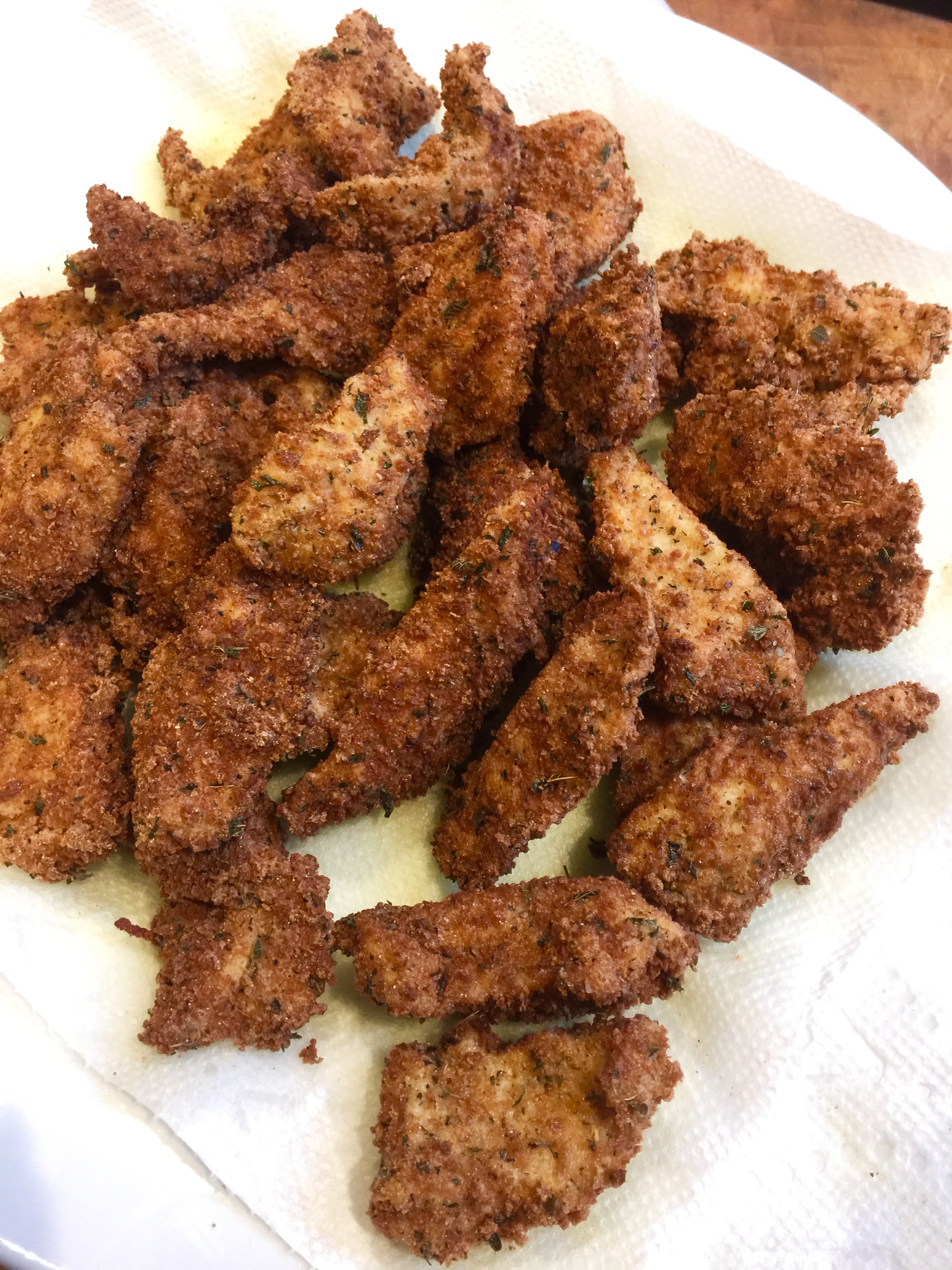
In batches not to overcrowd the pan, take the chicken pieces out of the egg and toss them in the bread crumb mixture, shaking off the excess. Place them carefully in the hot oil and fry on both sides until golden. Since they’re small pieces, they should cook all the way through easily. Drain on a plate covered with paper towels. Do this with all the chicken and set it aside. Try not to eat it all before you make the rest of the dish! (This chicken can also be eaten as is–these are my daughter’s favorite nuggets–or used with tomato sauce and mozzarella cheese to make a delicious chicken parmigiana.)
The carbonara factor…
Many recipes for Spaghetti alla Carbonara use pancetta or bacon. But the original recipe calls for guanciale: cured (but not smoked) pig jowls, or cheeks. It’s easy enough to find in a good Italian food store, but I cure my own. I buy raw heritage Berkshire pork jowls from a farm that raises the pigs humanely, and cure the jowls for about 3 weeks in a combination of salt, pepper and fresh thyme leaves. Then I rinse them, pat them dry, and cut them into portion-sized pieces, wrapping them individually and freezing until I need them. It’s a lot of work, but to me, totally worth it.
3 oz. guanciale
If the guanciale is frozen, let it thaw just a little, then cut it into the smallest cubes you can manage. Place it in a pan and cook them until they’ve browned and crisped beautifully. Keep an eye on the pan, as guanciale can burn easily. Use the fried meat bits for this recipe and save the fat for flavoring a future dish! Set aside.
The Alfredo sauce…
Despite what you get in crappy restaurants like Olive Garden, Alfredo sauce should not be runny or soupy. It should cling to the pasta and be rich in flavor. When making this dish gluten-free, I use Garofalo gluten-free pasta exclusively, because it tastes just like real pasta. (Believe me, I’ve tried every GF pasta out there.) I buy mass quantities at Amazon.
If you’re not on a GF diet, simply use your favorite regular pasta.
1 cup heavy cream
3 tablespoons butter
Fleur de Sel or sea salt
1 lb. pasta, fresh or dried
2/3 cup freshly grated Parmigiano Reggiano cheese
freshly ground black pepper
Put 2/3 of the cream and all the butter in a large saucepan that will later accommodate all the pasta. Simmer over medium heat for less than a minute, until the butter and cream have thickened a bit. Turn off the heat.
Drop the pasta in a bowl of boiling salted water. If the pasta is fresh, it will take just seconds. If it’s dry, it will take a few minutes. (Gluten-free pasta takes a little longer.) Either way, you want to cook the pasta even firmer than al dente, because it will finish cooking in the pan with the butter and cream. Drain the pasta immediately when it reaches that firm stage, and transfer it to the pan with the butter and cream, tossing the pasta gently for a few seconds to coat.
Turn the heat under the saucepan with the pasta on low, and add the rest of the cream, all the Parmigiano Reggiano, and a bit of pepper (no salt because there’s plenty in the guanciale and cheese.) Toss briefly until the sauce has thickened and the pasta is well-coated.
At this point, you don’t want the pasta to get to dry, so you add…
1 cup of frozen peas
…tossing gently to warm them through. Also add the cooked guanciale at this time.
Plate the pasta in a bowl or dish and serve the chicken alongside.
CANTONESE ROASTED CHICKEN
Posted: January 30, 2019 in Carnivore!, chicken, Food, RecipesTags: Asian, Cantonese, chicken, chinese, food, GF, gluten-free, recipes
I really love the deep flavor of soy sauce and the sweetness of hoisin on poultry. Peking duck is the best example of this, but since I live in Rhode Island, I don’t get a chance to jump in the car and drive to Chinatown in Boston or New York at the drop of a hat. I had to come up with a plan B…and a good plan B!
I found it while looking through an old Chinese cookbook I had bought many years ago. Written by legendary NY Times food critic Craig Claiborne and Virginia Lee, “The Chinese Cookbook” has become my bible for all of my Asian dishes.
I use chicken instead of duck. It’s cheaper, easier to find, and I can easily buy a whole pasture-raised chicken from local farms here in Rhode Island. But it is just as delicious.
As long as you use gluten-free soy sauce and hoisin sauce (La Choy and Kikkoman make them and they’re found in just about any supermarket), this recipe is gluten-free.
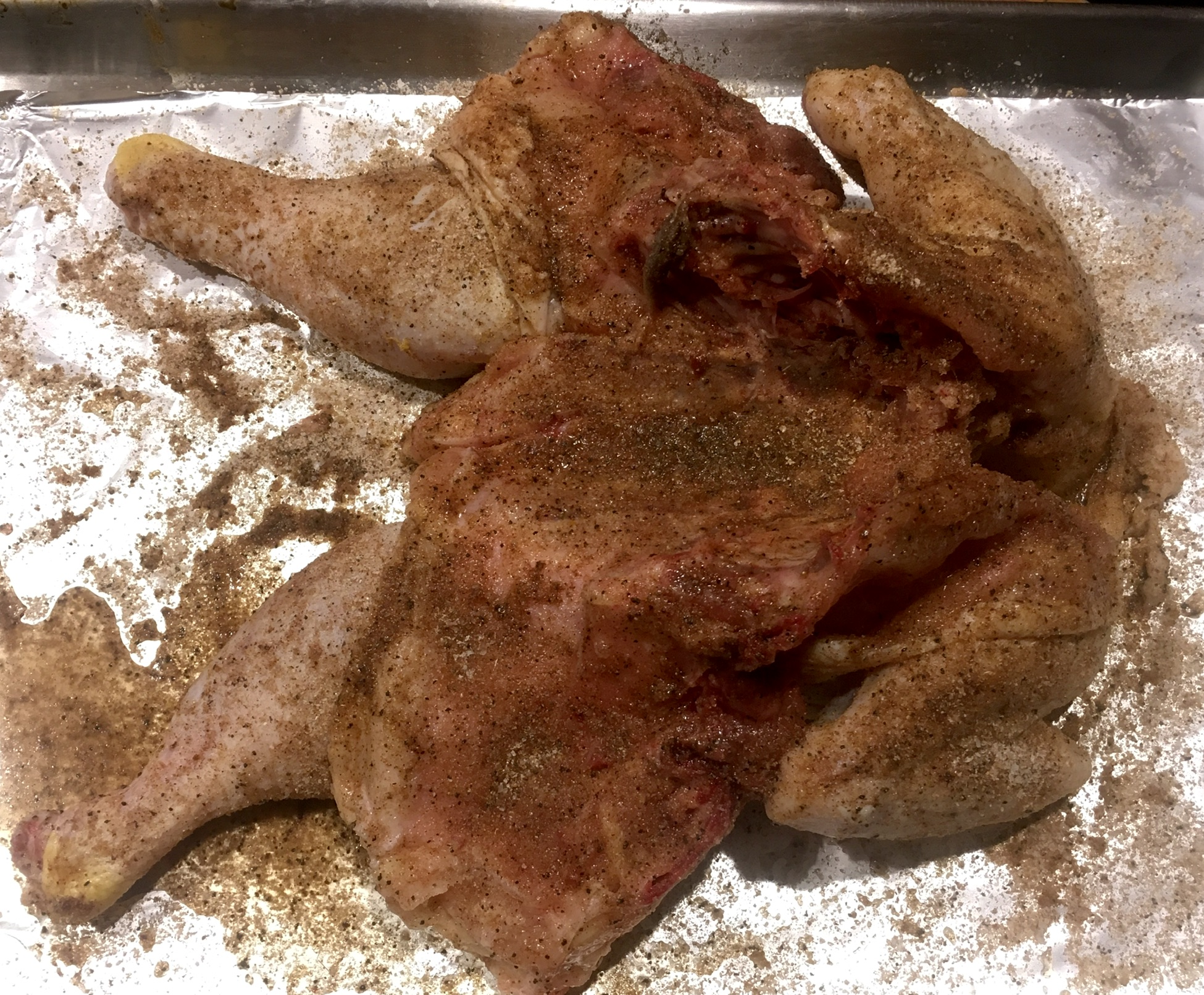
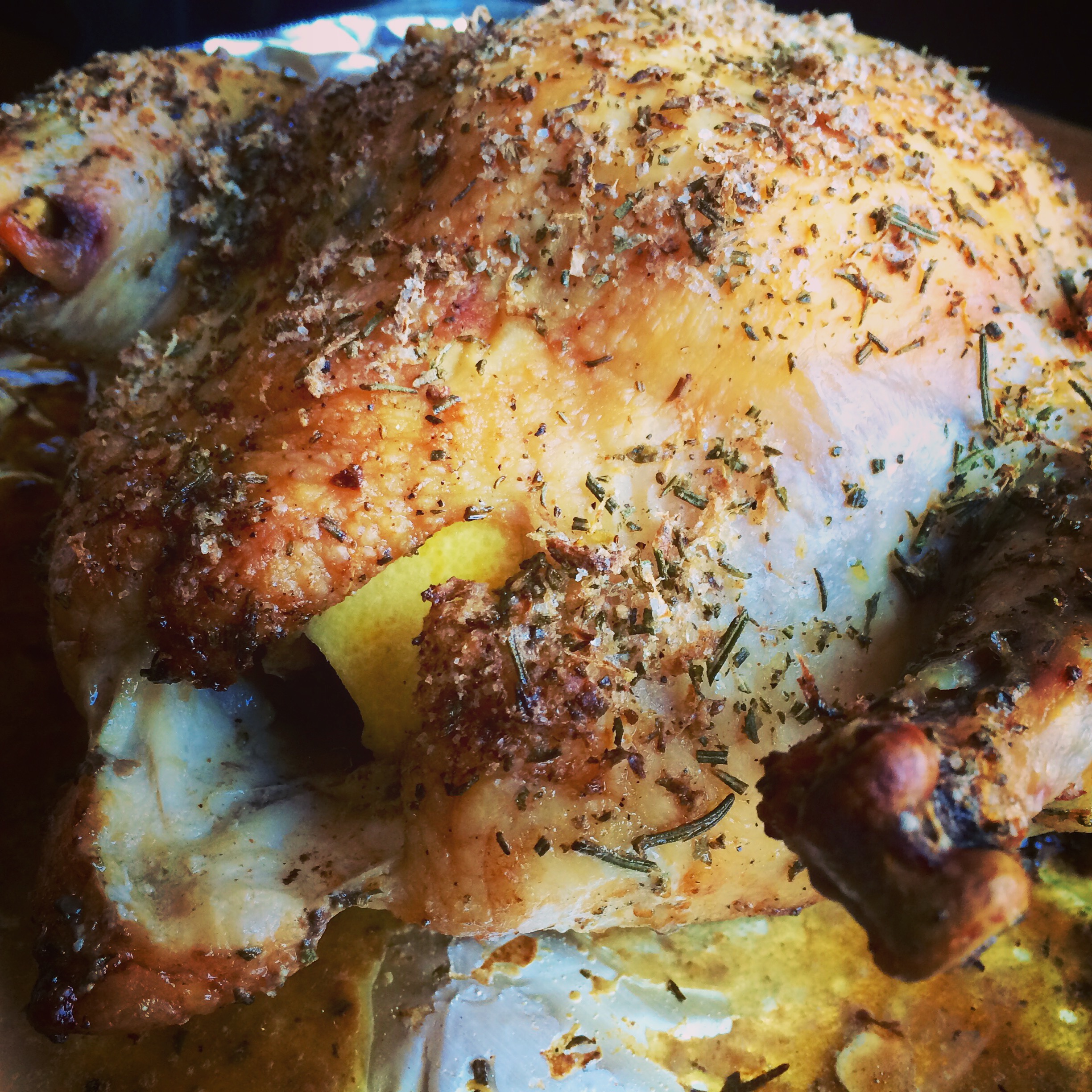
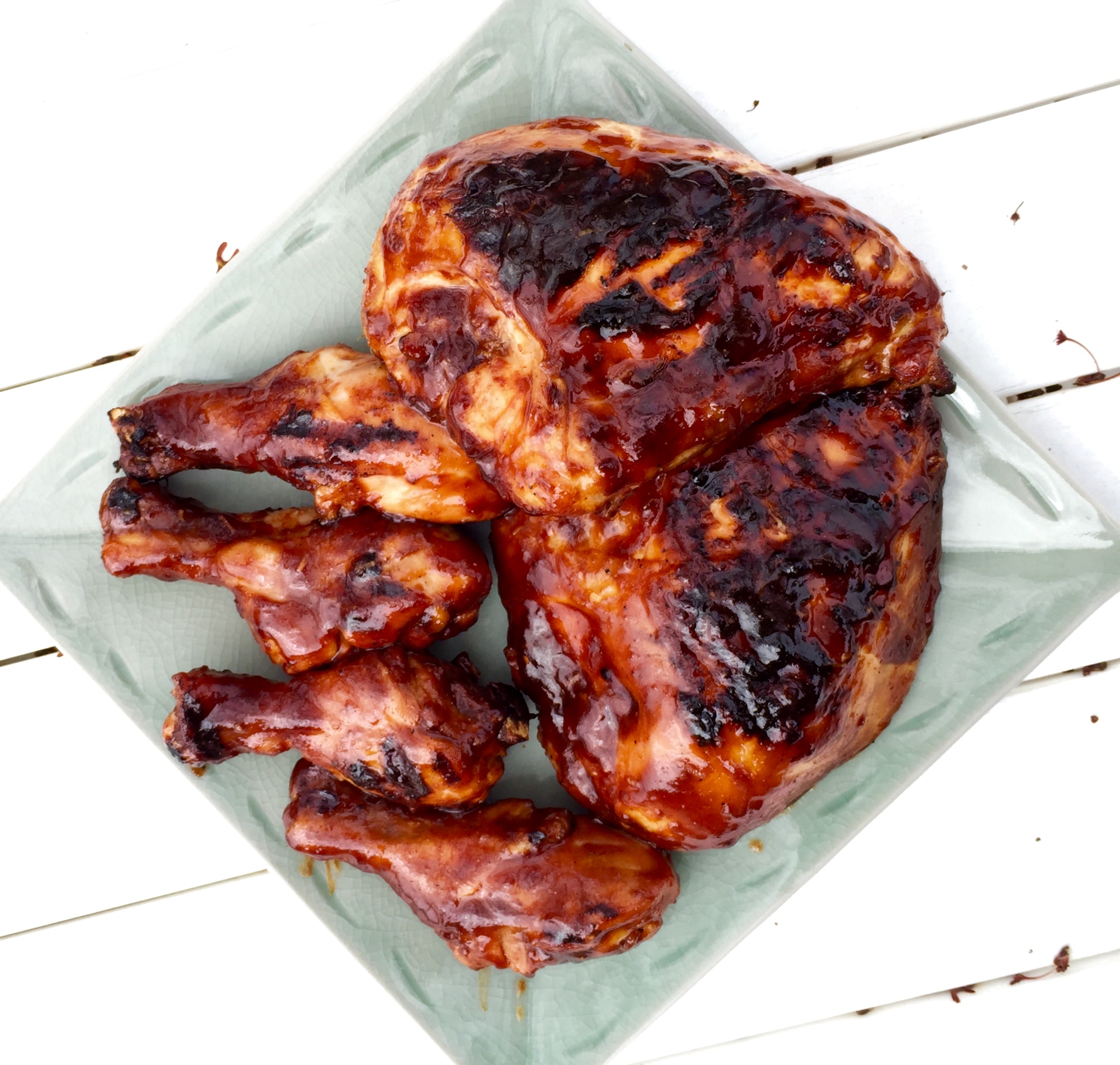
1 whole chicken, about 6 lbs., or 2 smaller chickens (pictured)
1 tablespoon peanut oil
1 tablespoon soy sauce
4 teaspoons Chinese five spice powder
2 teaspoons granulated garlic
2 teaspoons salt
1/2 teaspoon black pepper
6 tablespoons hoisin sauce
2 teaspoons sesame oil
Remove all the giblets from the chicken and discard. Rub the soy sauce first all over the chicken. (The chicken will absorb the flavors better if you do it before you rub the bird with the oil.) Then rub the peanut oil all over the chicken.
Combine the Chinese five spice, garlic, salt and pepper in a bowl. Season the entire chicken, including inside the cavity, with this mixture.
Pre-heat the oven to 325 degrees. Place the chicken in a pan lined with aluminum foil (cleanup will be easier) and bake.
Meanwhile, combine the hoisin sauce and sesame oil in a small bowl. When the chicken is about 15 minutes away from being done, brush it with the hoisin/sesame oil mixture. Cook it another 15 minutes until the chicken has a nice dark glaze. Don’t let it burn!
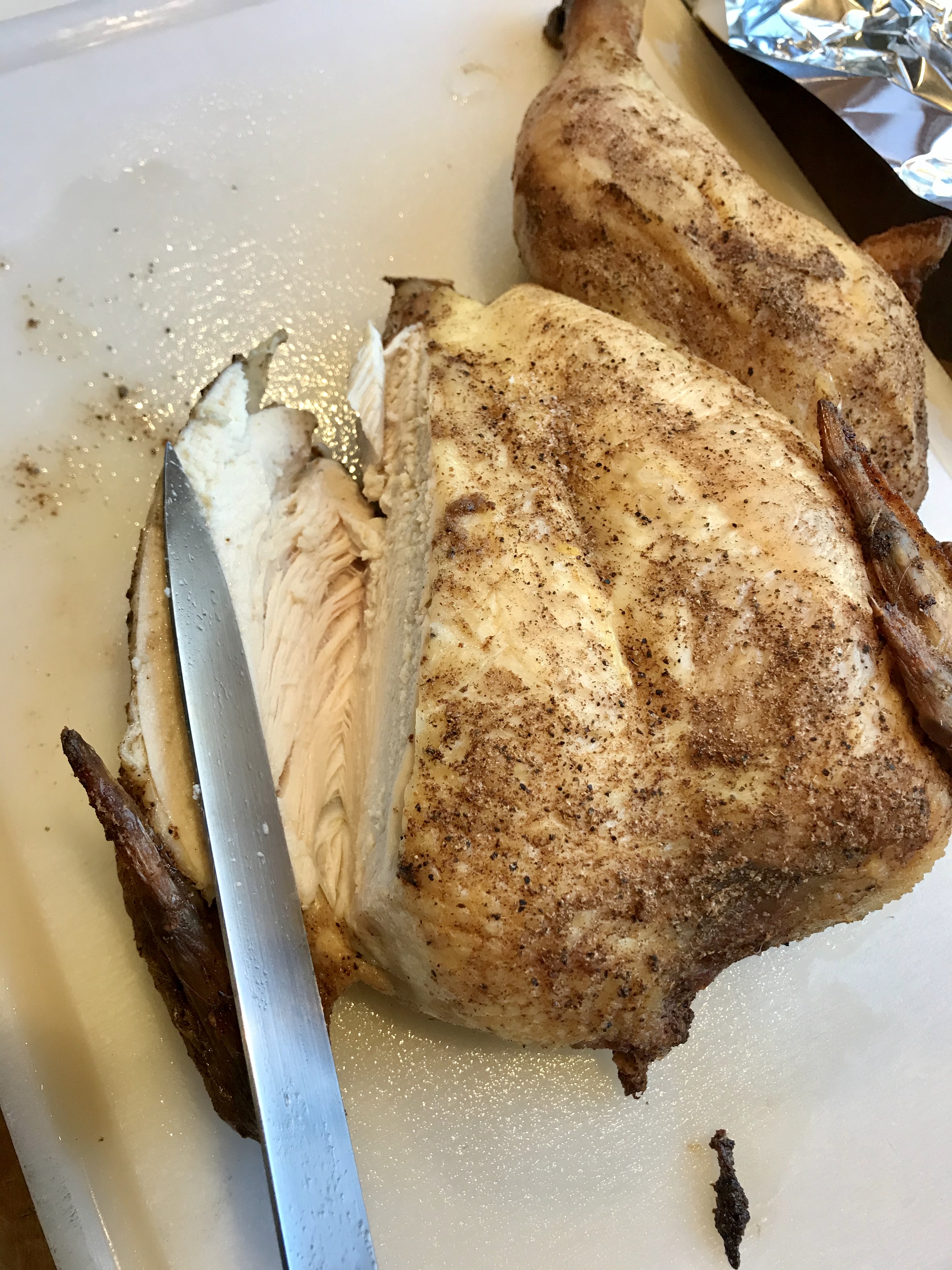
Let it rest about 15 minutes before carving.
DAD’S ALMOST-INSTANT WONTON SOUP
Posted: December 4, 2018 in UncategorizedTags: chicken, food, recipes, soup, stock, wonton
I posted an Instagram photo of soup I made the other day, and had quite a few friends ask me what the recipe was. My little girl got hit with a cold the other day, and I knew only one thing would help: a bowl of my homemade chicken soup. But rather than adding pasta or potatoes, I decided to give it an Asian kick. It was simple, delicious, and soothing.
Making the ingredients for a great bowl of chicken soup, or wonton soup for that matter, takes a little time. But once you’ve got them, you can freeze them, so that putting them all together takes no time at all.
The key to a great chicken soup is making your own chicken stock. Let’s be honest, nothing out of a carton can possibly compare. For one thing, I buy the best quality pastured chicken I can get. Here in Rhode Island, that means buying from local farms like Pat’s Pastured in East Greenwich. They’re at my farmers market every weekend.
I prefer buying a whole bird, roasting it for dinner, then removing all the meat from the carcass before I start making stock. If I’m making fried chicken for dinner, I’ll cut the raw bird up into pieces, then drop the raw carcass into a pot to start the process. Either way–a cooked bird or raw bird works great. (Just remember that a cooked bird can have some salt on it, so you don’t want to add any.)
Making chicken stock is incredibly easy. It just takes time, which is an ingredient many people don’t have enough of. Honestly, though, if you’ve got time to binge-watch your favorite show on Netflix or watch a football game on a Sunday afternoon, you can make stock. If you can’t make stock at the same time you’re making dinner, simply put the carcass in a Ziploc bag and toss it in the freezer until you’ve got more time.
If you don’t want to deal with cutting up a chicken carcass, buy a pack of chicken parts. It doesn’t really matter what parts you use, as long as it’s something on the bone. You want all that good fat and gelatin.
Once you’re ready to make stock, fill a large pot with clean, filtered water. Drop in the chicken carcass or pieces. Chop an onion in half (you don’t have to peel it unless it’s dirty), 2 or 3 celery spears, and 2 or 3 carrots. (Wash the carrots well, or just peel them.) Everything goes in the pot. Turn the burner on high, and let it come to a boil. If it’s boiling too hard and spilling over, reduce the heat to medium.
Let it go for at least an hour, two is better. If it looks like too much water has evaporated, simply add more. How intense you want your stock is really up to you. You can reduce it like crazy to make something very concentrated, or you can cook it down to a point where it’s user-friendly right away. The best way to know is to taste it along the way.
When making your stock, feel free to add any other ingredients you like. But I stick with only the onion, carrots, and celery–avoiding garlic, salt, bay leaves, and other flavorings–adding them only when I use the stock at a later time in a particular soup or recipe.
Once the stock is done, I let it cool a bit before I strain it and pour it into individual plastic containers with tightly sealing lids. (Don’t use glass if the stock is going into the freezer!) Then it’s off to the freezer until I need to use it in a recipe.
When it’s time to make soup, I run the frozen container under warm water, and drop the frozen “block of stock” into a sauce pan, adding a little water to it, and setting the burner on medium to thaw. Then it’s time to decide on what I want to put in my soup. Most of the time that simply means using whatever I’ve got in my fridge.
When I made my almost-instant wonton soup the other day, I had some carrots and kale in the fridge. I peeled and thinly sliced the carrots, and I removed the stem from the kale before chopping it up. I dropped the veggies in the soup and brought the heat up to high to get it to a boil.
If I’m using potatoes, I usually peel and chop them into small cubes and add them raw to the boiling stock. If I’m adding chicken, I usually choose already-cooked chopped breast meat. And if I’m using pasta, I use dry or pre-cooked, but I only add the pre-cooked pasta at the very end to avoid it turning mushy. When making chicken noodle soup, I add a pinch of salt and, for flavor, a pinch of dried bouquet garni to the pot.
With my wonton soup, I skipped the pasta and potatoes, because I had a package of dumplings in my freezer. A half-dozen of them, still frozen, go right into the boiling water. They’re fully cooked in about 5 minutes.
Once the dumplings are cooked, the soup is done! I turn the heat off, and add a couple of drops of sesame oil to the soup, mixing it in well.
Once I’ve placed the soup in the bowl, a few splashes of soy sauce, and it’s ready to serve.