Posts Tagged ‘food’

If I’m at a steakhouse and craving beef, I’ll usually order a cut like porterhouse or ribeye…great cuts of meat that require nothing more than a little salt and pepper, and a skillful grillmaster. The prep on that slab of meat before it even hits the grill has already been done: carving, dry-aging, trimming.

At home, we eat only humanely raised grass-fed beef. It’s expensive, so we buy the cuts that cost less, but require a bit of TLC before cooking. A cut like beef flap, which comes from the bottom sirloin butt (the back of the animal), looks similar to a skirt steak, a hanger steak, or a flank steak because of its thinness, but each comes from a different part of the animal.

Though the beef flap is somewhat thin, I will often slice it lengthwise into two thinner pieces, because the meat’s thickness often varies, which can give you uneven cooking. I like to cook it hot and fast on a hardwood fire grill, but still keep it medium-rare. If the weather is really unforgiving, searing the beef in a cast iron skillet and finishing it in the oven works well, too.

Marinades are the key to tenderizing and flavoring tougher or cheaper cuts of meat. What you put in your marinade really depends on what flavors you like.

The recipes below are for 3 to 5 lbs. of beef. I always make more, because leftover marinated grilled beef makes an awesome steak and egg breakfast!
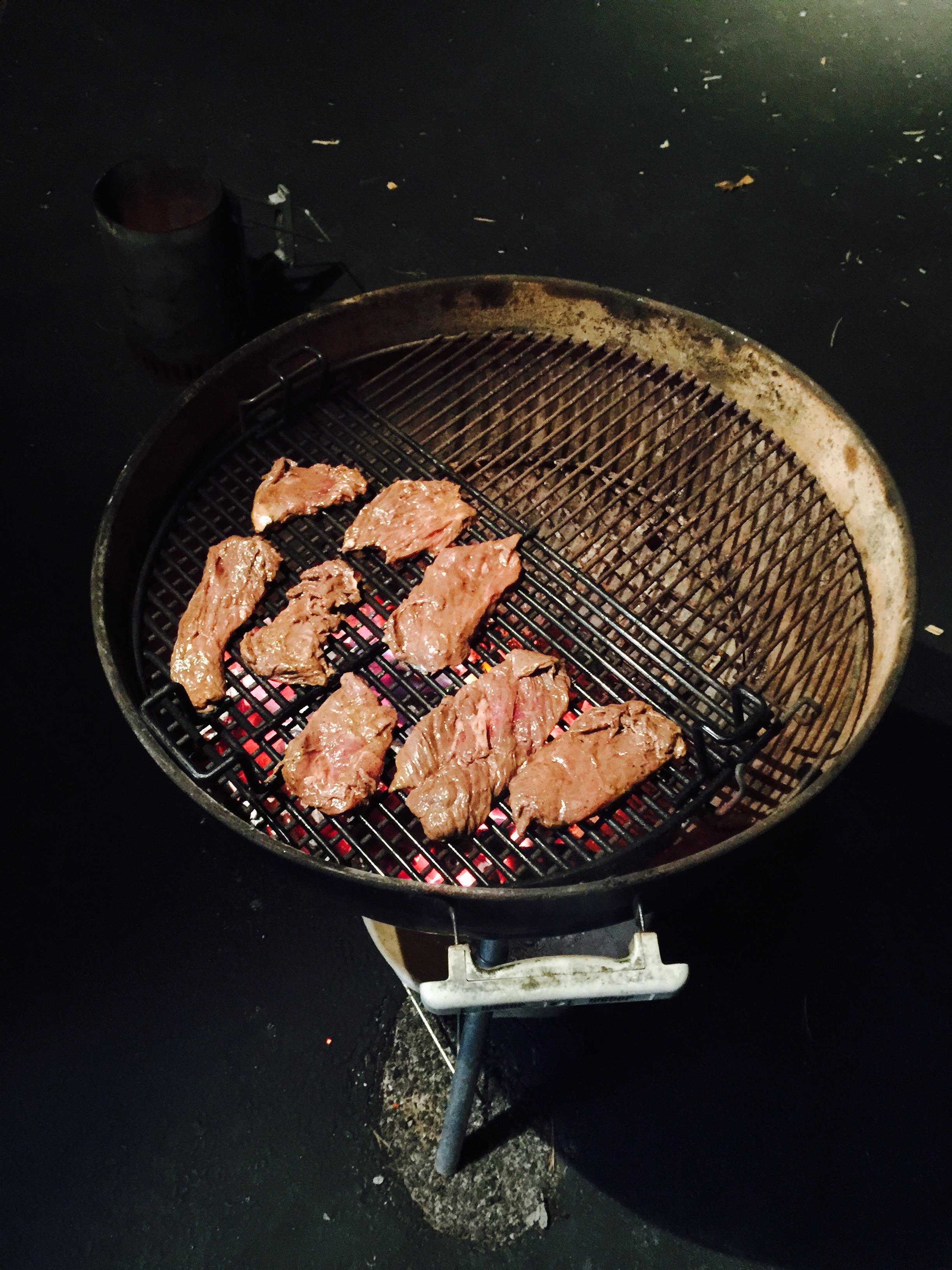
A cold winter's night is no excuse not to grill!

A cold winter’s night is no excuse not to grill!


The instructions with all of these marinades is basically the same: combine all the ingredients in a bowl. Cut the beef flap (or whatever cut you’re using) to a manageable size so that it fits a gallon-sized Ziploc bag easily. (Smaller, thinner pieces will also absorb the marinade better.) Place the beef in the bag, and then pour the marinade into the bag. Squeeze the excess air out and seal the bag. Gently squish the bag around so that the marinade makes contact with all the meat. Place the bag in a bowl in the fridge overnight, squishing the bag every few hours to make sure the marinade penetrates the meat. The bowl will prevent any accidents from happening in your fridge in case the bag leaks. The next day, remove the bag from the fridge and let it come to room temperature before grilling the meat. Discard the leftover marinade.

ALZ MARINADE #355
1/4 cup olive oil
1 lemon, zest and juice
1 tablespoon Worcestershire sauce
1 tablespoon soy sauce (I use La Choy gluten-free soy sauce)
1 teaspoon garlic salt
1 teaspoon Dijon mustard

Combine the ingredients. Marinate the meat. Grill.


Marinating beef flap.

Marinating beef flap.


On the North Fork of Long Island, in the middle of wine country, there’s a restaurant that’s been around for a long time: a sort of hole-in-the-wall place you might not think twice about visiting, unless you hear that they’ve got a special secret marinade for their beef. The place is called The Elbow Room (I think they’ve expanded to a second or third location by now), and though I wasn’t impressed by the quality of their beef, I was impressed with its flavor. Here, with the help of friends, is what we think comes as close to that marinade as we can get. Gravymaster is a product you can find in any supermarket, usually in the gravy section. This marinade also works well with beef tips or a London broil.
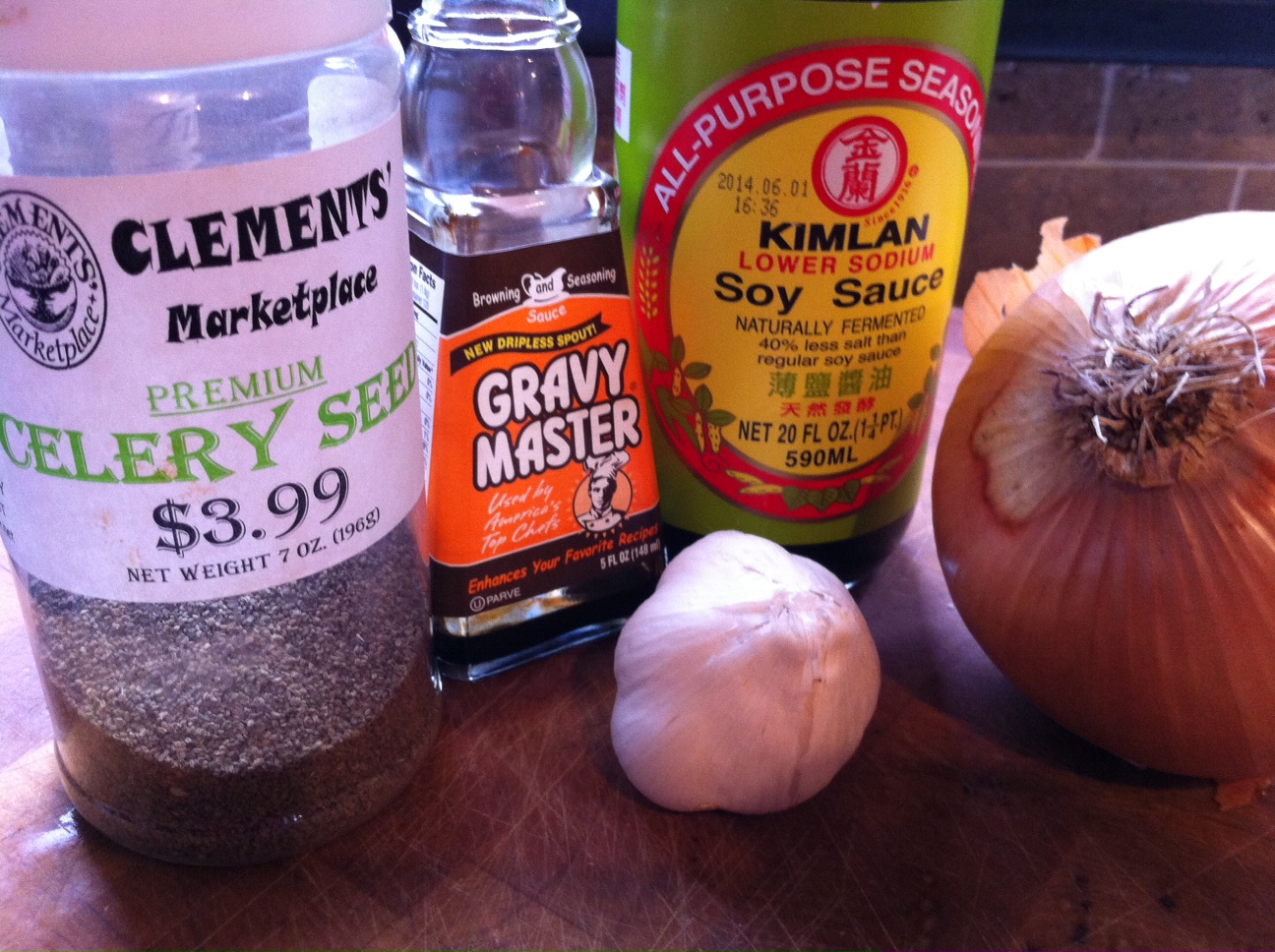
 

ingredients

1 cup soy sauce (I use La Choy gluten-free soy sauce)
1/4 cup Gravymaster (may not be gluten-free)
2 large Vidalia onions
2 cloves of garlic
2 teaspoons celery seed
1/2 teaspoon black pepper

Combine the onions and garlic in a large food processor and purée. Add the remaining ingredients and run the processor until it’s smooth and sort of resembles root beer (below.)

marinade


Marinate the meat overnight. Grill. Awesome with beef sirloin tips (below.)


beef-tips


This incredibly simple marinade falls into the “Italian” category. You could almost use it as an Italian dressing on salads, but it works really well as a marinade for beef.

1/2 cup olive oil
1/4 cup balsamic vinegar
2 teaspoons Kosher salt
1 teaspoon pepper

The balsamic vinegar I use is not the expensive aged stuff that costs a fortune. It’s the $9-a-bottle stuff you can find in any supermarket. Simply combine the ingredients. Marinate the meat. Grill.


Once again this weekend, I’ll be at the annual Providence Art Club Founder’s Day celebration, raising a glass in their honor. The cool thing is that I got to decide what went in the glass!

First, some history…

The Providence Art Club is the third-oldest art club in the United States. The Philadelphia Sketch Club was founded in 1860. New York’s Salmagundi Club, founded in 1871, came next. But they were both founded by an all-male board. The Providence Art Club is the oldest art club in the nation that also included women. And that was back in 1880! That’s especially huge when you see what’s going on in the country even today.

Now through April 22, the Providence Art Club is featuring “Making Her Mark, the Women Artists of the Providence Art Club 1880,” an exposition featuring the works of the women artists that founded the art club over 130 years ago.


1


My wife is an artist member of the Providence Art Club. That’s how a zhlub like me got in! Several years ago, they asked me to come up with a cocktail for their first Founders Day celebration. One hundred glasses were raised to honor the founding fathers of the Providence Art Club. This year, we’re expecting up to 150 people to be there for the celebration.

Silhouettes of past art club members line the walls of the Providence Art Club, so my wife came up with the name of the cocktail: The Silhouette. I decided to base my cocktail on the Boulevardier, an awesome drink that substitutes bourbon for gin in the classic Negroni.
image
2 oz. Eagle Rare 10-year bourbon
1 oz. Antica Formula sweet vermouth
1/2 oz. Campari
2 shakes Regan’s orange bitters

In a cocktail shaker with ice, stir the ingredients and then strain into a rocks glass with one large ice cube.

Garnish with an orange twist.

Cheers!

I love foods from all over the world, but I’m pretty clueless about Indian cuisine. My one experience at an Indian restaurant was in New York City many years ago, where I was served very dry, very spicy grilled chicken. It didn’t thrill me.

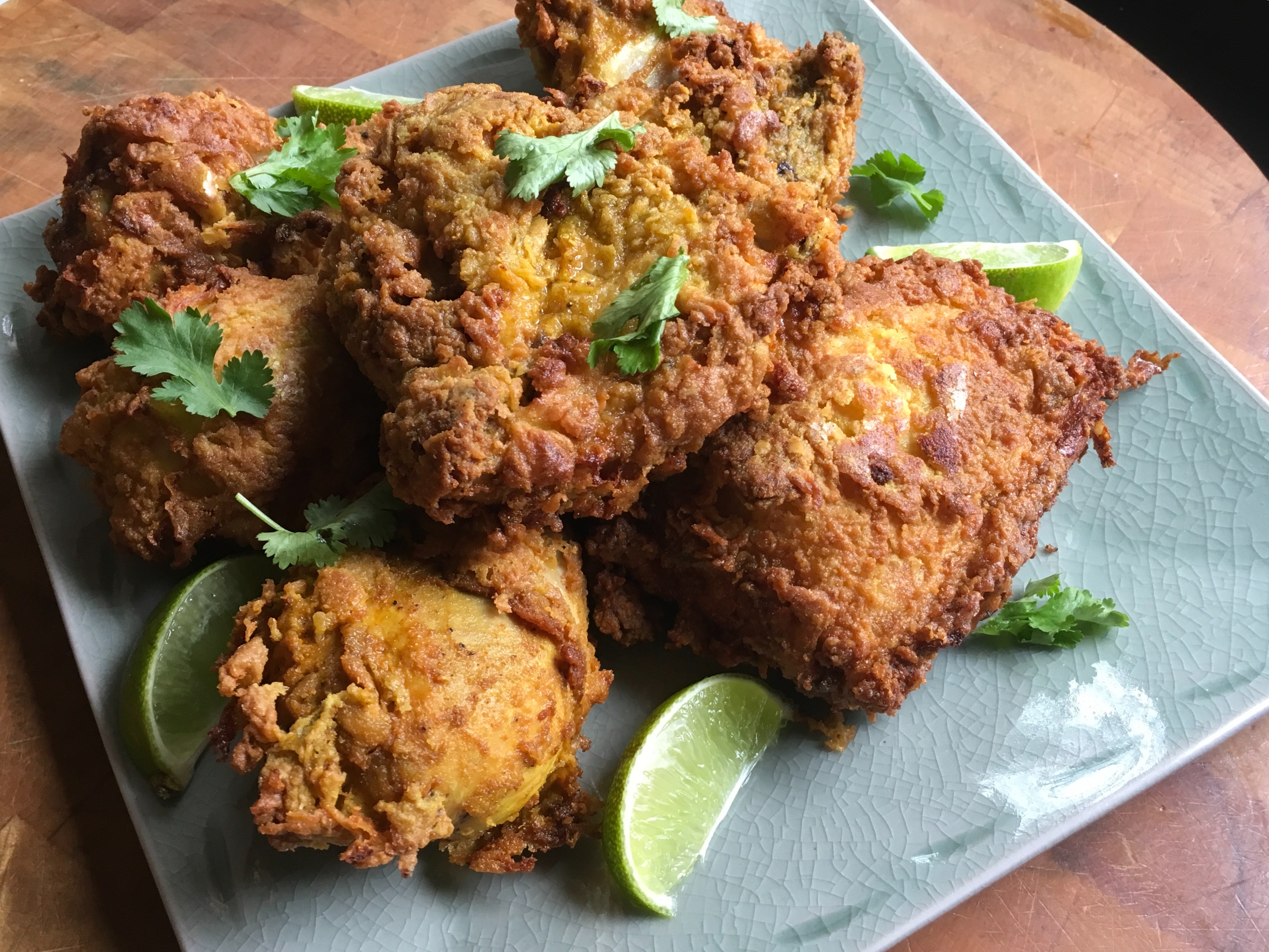
Recently, I spotted a recipe that looked like something I could handle first time around: “Indian Cooking 101,” if you will. It uses the traditional 2-step tandoori process of marinating: first, with the spices and then with yogurt for tenderizing. Using chicken thighs and drumsticks (as opposed to breast meat) meant the chicken would be flavorful and juicy. And frying in oil meant a crispy skin. I was ready!

Since the pieces of chicken I used were rather large, I fried the chicken only to get a nice golden color on the outside. Then the meat went into the oven to finish cooking all the way through.

This recipe requires marinating for a full 24 hours, so plan ahead!


fullsizerender-23


5 garlic cloves, chopped
one 2-inch piece of fresh ginger, peeled and chopped
the juice and zest of 1 lemon
1 tablespoon ground coriander
1 tablespoon ground turmeric
1 teaspoon cayenne pepper
2 tablespoons vegetable oil, plus more for frying (I like to use avocado oil mixed with a little pork lard)
2 teaspoons Kosher salt, plus 1 teaspoon later
1 teaspoon pepper
5 lbs. chicken thighs and drumsticks
1 1/2 cups full-fat Greek yogurt
1 1/2 cups chickpea flour
fresh cilantro sprigs and lime wedges, for garnishing

In a food processor or blender, combine the garlic, ginger, lemon, coriander, turmeric, cayenne, vegetable oil, 2 teaspoons of salt, and 1 teaspoon of pepper. Blend until smooth.

Place the chicken pieces in a large Ziploc bag and add the marinade, mixing well so that every bit of the chicken gets coated with the spices. (I like to use gloves for this messy job.)

fullsizerender-25


Place the Ziploc in the fridge and marinate the chicken for 12 hours.

After 12 hours, add the yogurt to the bag, mixing well, and return it to the fridge for another 12 hours.

Pre-heat the oven to 325 degrees. Set a rack over a rimmed baking sheet and set aside.

In a bowl, combine the chickpea flour and 1 teaspoon of salt.

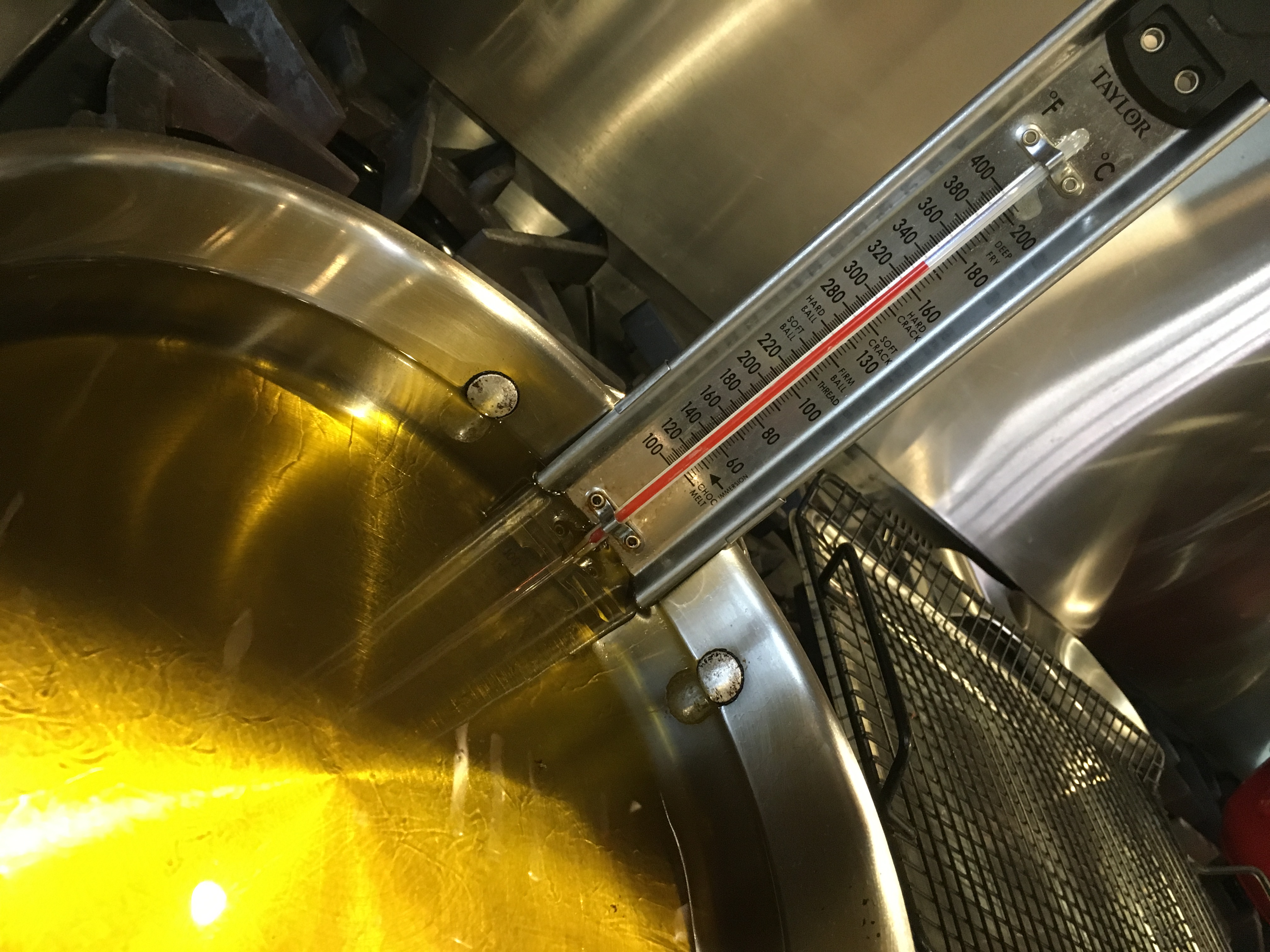
Meanwhile, in a large heavy saucepan, heat about 2″ of the oil to 325 degrees on a thermometer.


img_0119


When the oil reaches the right temperature, take the pieces of chicken out of the bag one by one, letting the excess drip off back into the bag before dredging the chicken in the flour. Shake off the excess, and carefully place the chicken pieces in the hot oil, working in batches. Don’t overcrowd the pan.


img_0122


Fry the chicken until golden brown, flipping once. You don’t need to cook it all the way through, just to brown it nicely. Place the browned pieces on the baking sheet with the rack.


img_0123


Once all the chicken has fried, place the baking sheet in the oven and cook the chicken until each piece registers about 160 degrees.


img_0125


Place the chicken on a plate, then garnish with cilantro leaves and lime wedges.


fullsizerender-24


Other stuff…

Chaat masala is a spice powder mix that typically contains dried mango powder, cumin, coriander, dried ginger, salt, black pepper, chili powder and more. It’s commonly used at the end of cooking a dish like this as a sprinkling on top. Since the only jar I could find contained 1/2 lb., way too much for my needs, I chose to leave it out.

Despite that coriander is the seed of the cilantro plant, the two are not interchangeable in cooking. Coriander seed has a lemony essence when ground. Always good to have in the pantry.


Pork tenderloin is a lean cut of meat that can dry out easily when roasted. It’s usually just a couple of inches around, and over a foot long…a shape that can easily go from juicy to overdone in just a few minutes if you’re not watching it carefully.

I usually cook my pork tenderloin much like I would a pork chop: In one bowl, I’ve got a couple of eggs, scrambled. In another, a mixture of flour with whatever seasonings I like. Cutting the tenderloin into 3 or so pieces to fit the bowls, I coat them in the egg wash, then dredge them in the seasoned flour before browning on all sides in a heated pan with pork lard on the stove top. Then into a 325-degree oven until the temperature just reads 145, letting the meat rest a few minutes before slicing.

But it was time for a change. This recipe really is based on what I had in the fridge and pantry at the time, and it just rocked!

I chose chickpeas (we never called them garbanzos!) as my starch. I don’t worry too much about carbs, as long as they’re good ones and in moderation. I try to avoid the white stuff: potatoes, pasta and white rice.

soup1

1 1/2 lb. pork tenderloin, cut into 1/4″ thick medallions, then cut in half
1 cup all-purpose flour (I use Cup4Cup gluten-free flour)
1/2 onion, finely chopped
3 carrots, peeled and sliced
3 stalks celery, sliced
1 teaspoon garlic salt
1/2 teaspoon pepper
1 pint veal stock or chicken stock
1/2 cup white wine (I like an un-oaked chardonnay like Alice White)
1 pint water
large pinch of bouquet garni
1 15-oz. can chickpeas, rinsed and drained
1 head organic kale, cleaned, stems removed, and chopped


Slice the pork tenderloin into 1/4″ medallions, then cut each medallion in half. Set aside.

In a bowl, add the flour (unseasoned). Set next to the pork.

Heat a heavy skillet big enough to hold all the pork. Add a few tablespoons of olive oil or pork lard. Drop the pork pieces in the flour, coating them well, then shaking off the excess. (No egg wash needed.) Place them carefully in the pan and brown them on both sides. They don’t need to cook all the way through.

Leaving the pork in the pan, add the onions and stir, cooking for a couple of minutes. Then add the carrot and celery slices, stirring again. Sprinkle in the garlic salt and pepper, stirring again.

Add the stock, the wine, and the pint of water. Bring it to a boil and let it simmer for a few minutes, stirring gently.

Add the chick peas. Then add the kale, a handful at a time, waiting for the greens to wilt into the soup before adding another handful. Do this until all the kale is in the pan. Add the pinch of bouquet garni. Bring the soup to a boil again, then reduce it to a medium-low simmer, uncovered.

The soup is ready when the veggies are tender, about 15 minutes. Keep an eye on it, and if the liquid has evaporated and it looks too thick, add more water, bringing to a boil with each addition, then reducing the heat.

Taste for seasoning before serving.


soup2


HONEY GLAZED CHICKEN WINGS

Posted: February 3, 2017 in chicken, Recipes, wings
Tags: , , , ,

I can’t get enough of chicken, and I cook it at least a couple of times a week. So I have to keep coming up with new flavors to challenge my taste buds as well as myself. And with Super Bowl Sunday around the corner, chicken wings are a must.

This recipe works with wings, and any other chicken parts you like.

Here’s a hint with fresh ginger: buy a nice looking root and keep it wrapped well and in the freezer. When you need some, simply grate the frozen root, skin and all, and then place it back in the freezer until next time. It will last a lot longer than in the fridge.

honey glazed chicken


4 lbs. chicken wings
1/2 cup honey
1/2 cup water
1/4 cup soy sauce
1/4 cup apple cider vinegar
2 tablespoons sesame oil
1 teaspoon cayenne pepper sauce (I like Frank’s Red Hot)
1/2 teaspoon fresh ginger, minced
1/4 cup onion, minced
1 tablespoon garlic, minced
1 cup chicken stock, preferably homemade


Thaw chicken wings and place in a Ziploc bag.

In a separate bowl, whisk together all the other ingredients, except chicken stock, to make a marinade. Pour this marinade into the Ziploc with the chicken and seal, squeezing the air out of the bag. Squish the bag around so that the marinade thoroughly covers all the chicken wings. Place the bag in the fridge to marinate for at least 4 hours, but overnight is even better. Place the bag in a bowl to prevent accidental leakage in your fridge.

Pre-heat the oven to 325.

Carefully pour the marinade out of the Ziploc bag into a saucepan, adding the chicken stock, and reduce until it becomes a thick, gooey glaze. Be careful not to burn the sugars in the honey. Honey can also foam up and overflow if you’re not watching it.

Remove the chicken pieces from the bag and place them on a baking sheet covered with non-stick aluminum foil. Bake for about 30 minutes.

The reduced marinade glaze should be ready right around the time the chicken has cooked for 30 minutes or so. Brush the glaze on to the chicken, and place back in the oven to cook 15 more minutes.


I get requests for this every year because it’s the easiest, tastiest way to make ribs indoors, and perfect for the big game. As the glaze cooks down, it gets sticky, gooey and delicious.
 image
¾ cup soy sauce
 1/4 cup hoisin sauce
5 lbs. pork ribs
Zest and juice of 1 lemon
2 whole star anise
2 cinnamon sticks (3”)
1/2 cup honey
4 cups chicken broth
Mix the soy sauce and the hoisin in a bowl, and set aside. These are the marinade ingredients.
If the ribs are large, cut them into individual pieces. If smaller, cluster 2 or 3 ribs together. Place them in a large pot. Cover them with water and bring it to a boil. Boil for 5 minutes. Drain.
Place the ribs on a baking sheet lined with non-stick aluminum foil or with a rack and coat them with the marinade. Let them sit for 10 minutes.
Pre-heat the oven to 350 degrees. Bake the ribs on the baking sheet for 30 minutes.
While the ribs are baking, start the sauce in a large non-stick pan or pot: combine the lemon zest and juice, star anise, cinnamon sticks, honey and chicken broth. Bring it to a boil, then reduce it to a simmer.
When the ribs have finished baking, add them to the sauce pot and simmer (covered) for at least 15 minutes or until the rib meat is tender.
Turn the heat on high, uncover the pot and cook until the sauce is reduced to a glaze that coats the ribs. Be sure to reduce the heat as the sauce thickens or it will burn! When the ribs are sticky and gooey, they’re ready.
Substituting grapefruit for the lemon works really well, too!


I rarely order beef at a restaurant, because I can usually make a better steak at home. For one thing, I use humanely raised grass-fed beef, something few restaurants offer. And I can cook it for less than a third of the price of a steakhouse. Granted, most steakhouses dry-age their beef, a time-consuming process of taking slabs of beef and keeping them in a fridge for weeks until a certain amount of moisture is sucked out of the meat, intensifying the flavor. I can do that at home in my fridge, but it takes a lot of time and effort.

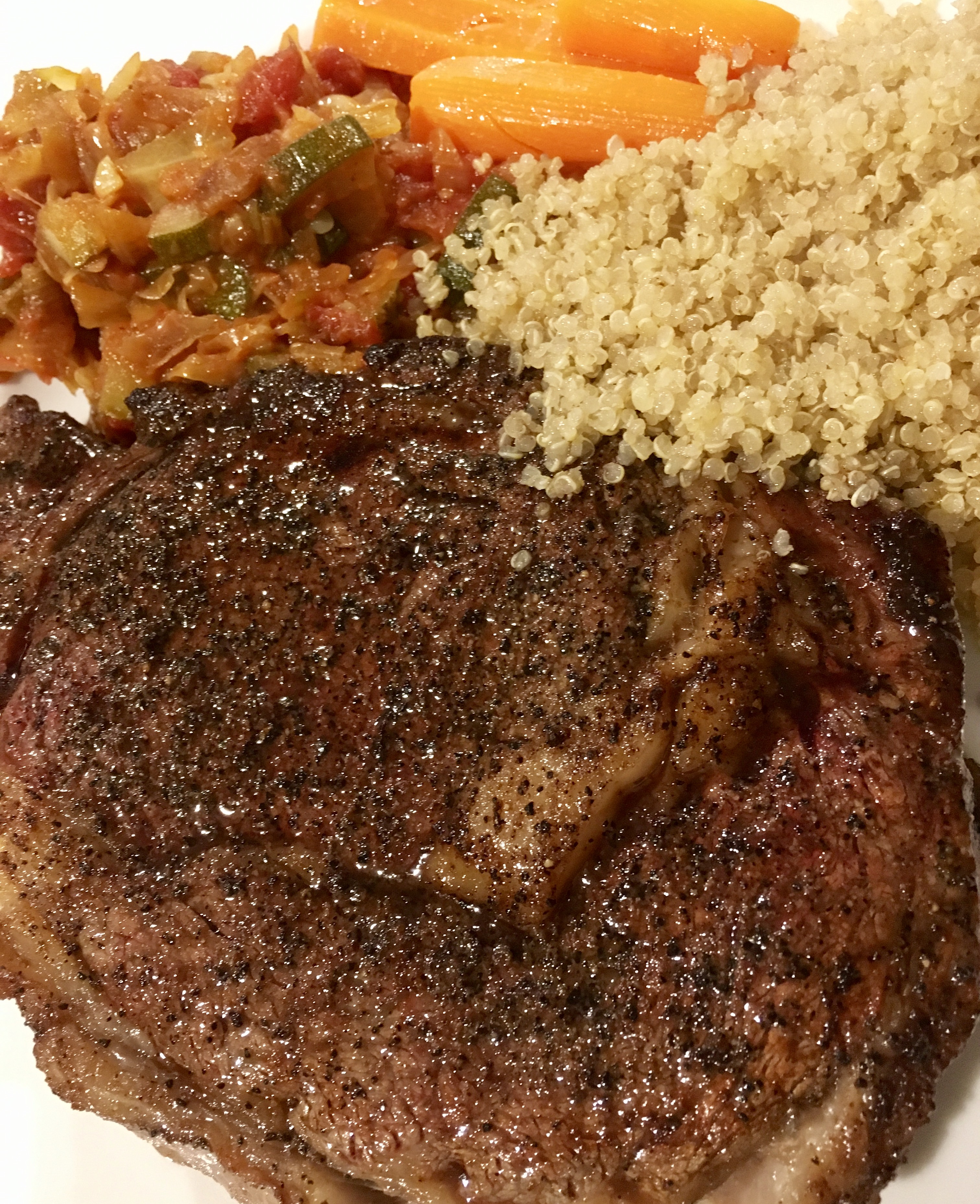
There is one steak that I couldn’t match for the longest time, and that was the Capital Grille’s bone-in Kona crusted dry-aged NY strip. I would have dreams about that steak! It was time to find a way to make something that would satisfy my craving for that amazing steak at home.

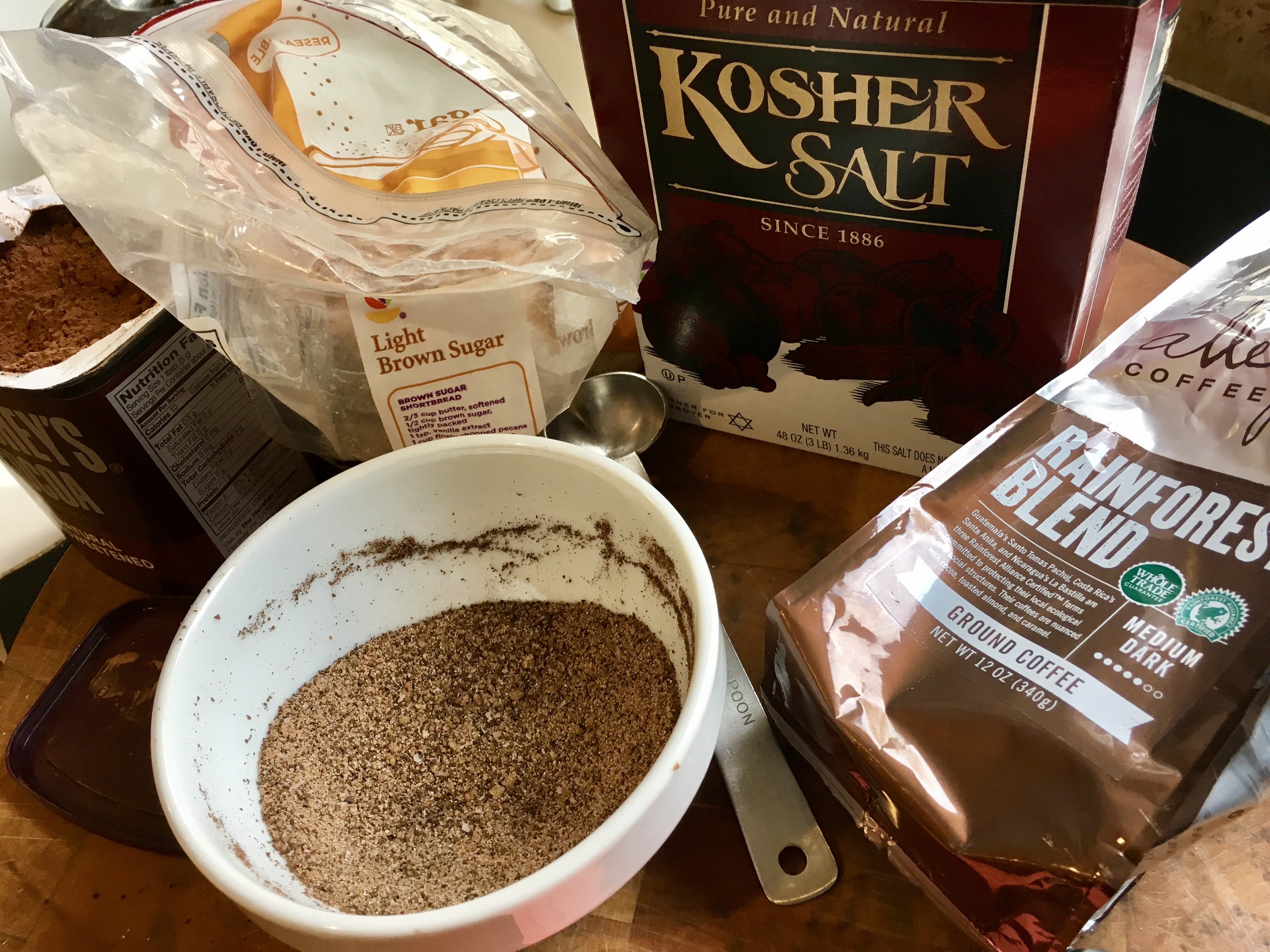
Looking at a variety of coffee rub recipes on-line, I started the slow and steady process of combining ingredients in just the right proportions, tasting as I went. What I came up with really accentuated the flavor of the beef I was cooking, better than I had imagined!

img_0100


3 tablespoons brown sugar
1 tablespoon Kosher salt
1 tablespoon ground coffee (use your favorite)
1 teaspoon granulated garlic
1 teaspoon granulated onion
1 teaspoon unsweetened cocoa powder


Combine the ingredients, mixing well, and keep them in a tightly sealed container at room temperature.

When using, sprinkle liberally on both sides of the steak before cooking. I find a steak that’s cooked in a cast iron pan to be perfectly acceptable, but nothing beats the grill!

img_0104


When I first told my friends that I grew up in a Lithuanian family, that we only spoke Lithuanian at the dinner table, that I went to Lithuanian Saturday school for 8 years, that I was a Lithuanian boy scout…they looked at me with a bit of disbelief. On the surface, I looked just like any other American-born kid that grew up in the suburbs. But the home life was vastly different.

Few things were stranger to my friends than the food we ate. While all my “American” friends had PB&J’s for lunch, I had a liverwurst sandwich on dark Lithuanian bread. While my friends struggled with broccoli, I was force-fed beets. And while my friends ate macaroni with jarred tomato sauce, my Mom served macaroni with sour cream and butter. (Nobody called it pasta back then.)

img_0048

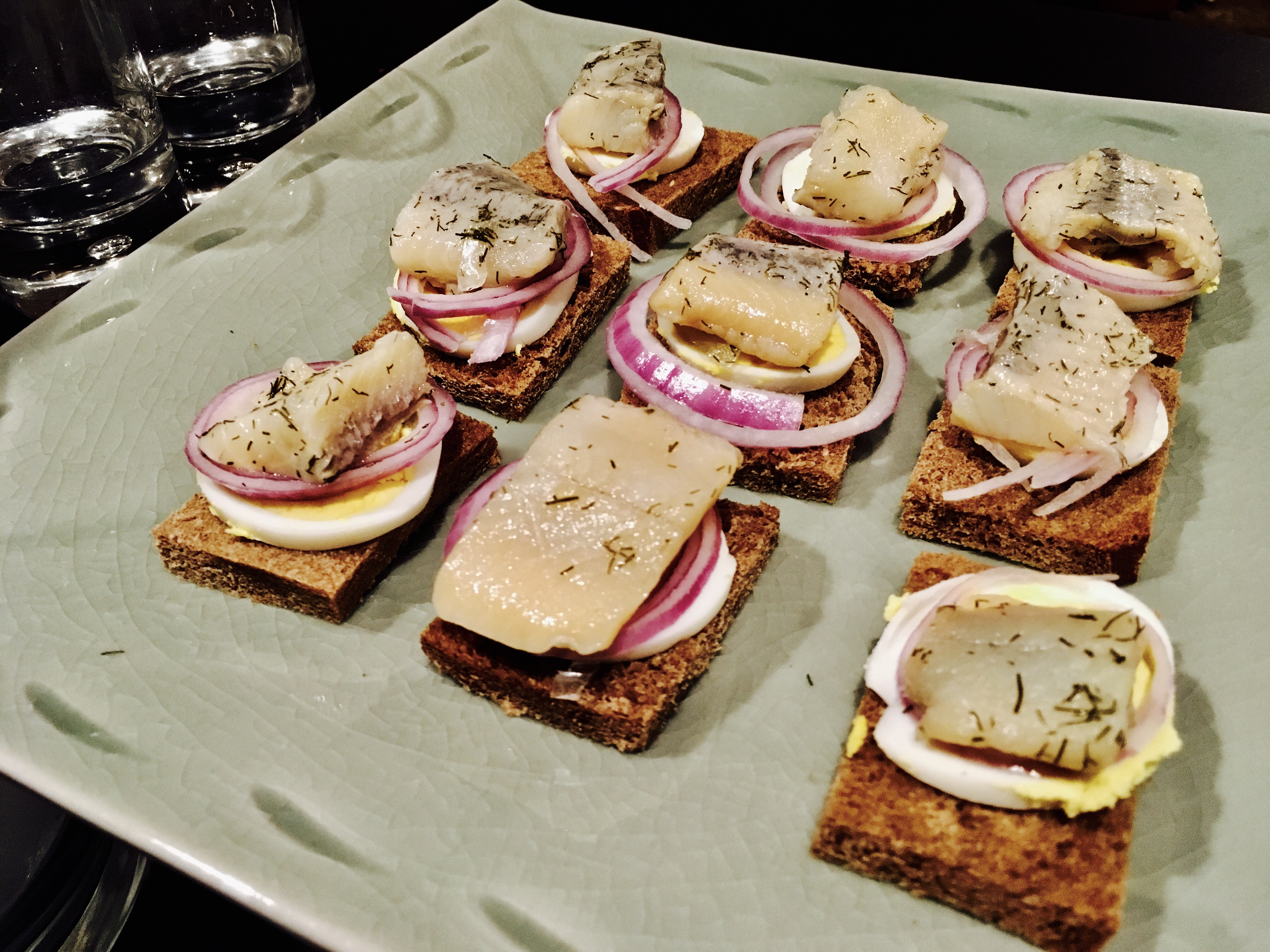
Few things prove you are a true Lithuanian more than an appetite for herring. (Silke (sil-keh) in Lithuanian.) I loved it at an early age. Didn’t matter if it was in a cream sauce with onions, in a tomato casserole with chopped boletes, or perhaps my favorite: an appetizer my Mom prepared only twice a year when my Dad’s buddies came over to play rounds of bridge all night.

There are a few basic ingredients that make this appetizer work…

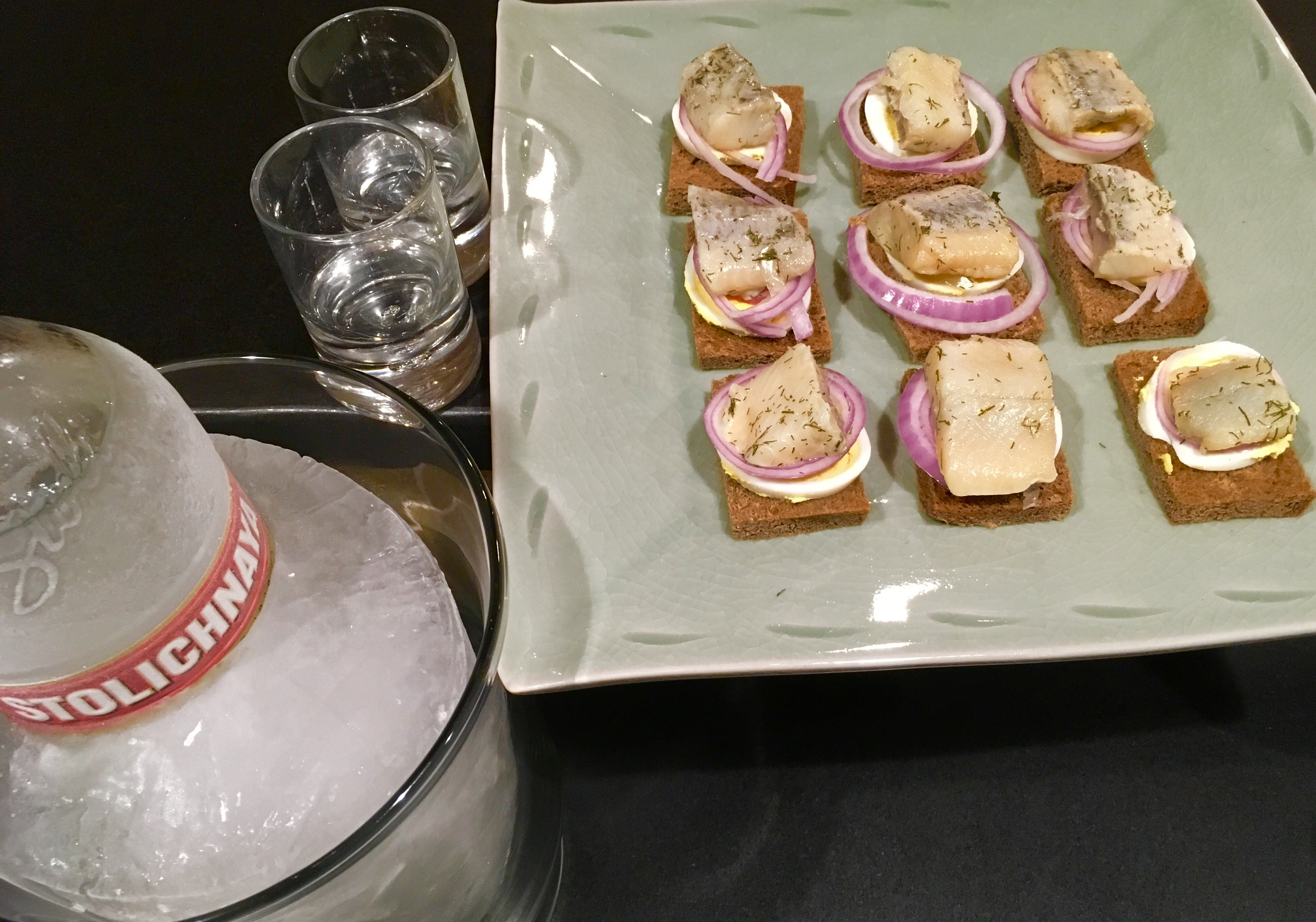
First and foremost, you need a bottle of good vodka in the freezer. Despite their lack of love for anything Russian, Lithuanians knew a good vodka when they saw one, and Stolichnaya has been the favorite for many years. Even now, with hundreds of vodkas to choose from, I still go to the red labeled Stoli bottle for this dish. I get a plastic juice pitcher, place the bottle of Stoli inside it, and fill with water just below the brand name on the label. I have a deep freezer that allows me to keep the pitcher right-side up until frozen.

Obviously, good quality herring is essential. Though I can get fresh when I’m back home on Long Island, the usual choice is from a jar. For me, there’s no better quality than Acme products out of Brooklyn, NY. (If you saw the episode of “Bizarre Foods America” with Andrew Zimmern where he visited a salmon processing plant in Brooklyn, that was Acme Smoked Fish.) You can find them in many supermarkets. Blue Hill Bay herring in dill marinade (an Acme product) is wonderful and can be found at Whole Foods.

Next: hard-boiled eggs that have cooled in the fridge. Get out the old egg slicer that’s been sitting in the kitchen  drawer for the last decade and use it for this appetizer.

Red onion, sliced thin. How much you use is up to you. But it’s gotta be red and it’s gotta be raw.

And finally, Lithuanian bread. Yes, there is such a thing. It’s easy to find in most Polish or German food stores in the New York area. I buy a loaf when I’m home and then keep it in the freezer to enjoy throughout the year. Lithuanian bread is like the lovechild of rye bread and pumpernickel.

img_0051

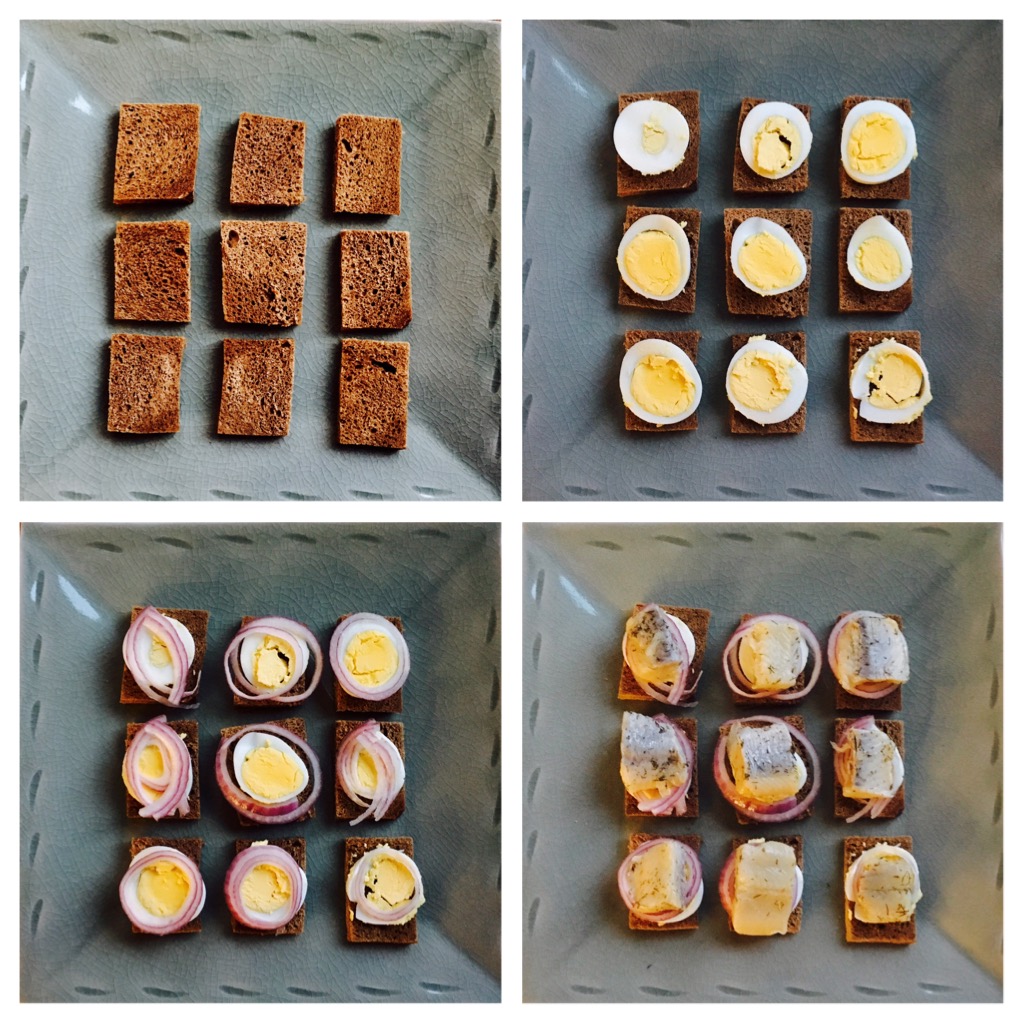
To make the appetizer, simply place a small piece of Lithuanian bread, about 1 1/2″ square, on a plate. Place a slice of hard-boiled egg on top of it. On top of that, some red onion. Then finally, a piece of herring.


img_0046

Pop the whole thing in your mouth, and wash it down with a small amount of frozen vodka. No shots–this isn’t a frat house. Besides, you won’t make it to the end of dinner. Then again, you may not care at that point!

I never learned how to play bridge, but I’m sure my Dad would be proud that I remembered this treat.


Despite almost universal opposition to the cruel way calves are treated, the Humane Society says the veal industry shows little signs of changing. That’s why many people simply refuse to eat veal. I was one of them.

The veal industry is a by-product of the dairy industry. To get the dairy cows to produce milk, they are impregnated every year. Half of their offspring are male, no use to the dairy business, and those are the calves that become veal.

I said I was one of the people who didn’t eat veal. What changed was my source. A few years ago, Sweet and Salty Farm (www.sweetandsaltyfarm.com), a dairy farm down the road from me in Little Compton, Rhode Island, began selling their own line of yogurt and cheese. And like most dairies, when calves are born, they have no use for the males. But rather than taking them away from their mothers and caging them for their short lives, they allow the calves to stay with their moms, nursing for up to four months before weaning. Then they graze in the fields by their mothers’ side, living a stress-free life. And when the time finally comes, they are dispatched humanely.

The result is incredible grass-fed veal I don’t feel guilty about eating: a rich, red in color…nothing like beef and a far better option than conventional veal. I also buy the veal bones from the farm to make a rich, flavorful veal stock, roasting the bones on a baking sheet with onions, carrots and celery…then moving them all to a large pot of water that cooks for 24 hours.

Traditionally, veal saltimbocca consists of veal medallions rolled with prosciutto and sage leaves. Often it is served with a marsala sauce. I got rid of the marsala–too sweet–and substituted a chardonnay. I added fontina cheese. And a guest’s aversion to spinach gave me the option to use kale…with bacon, of course!

By the way, if you’re not lucky enough to have a farm that humanely raises veal (or you’re still queasy about veal in general), this recipe works with chicken breasts, too.

img_0087


1 1/2 lbs. grass-fed veal, pounded thin and cut into medallions about 3″ around
1/2 lb. prosciutto, sliced paper-thin
1/2 lb. fontina cheese, sliced thin
1 cup all-purpose flour (I use Cup4Cup gluten-free flour)
1 teaspoon salt
1/2 teaspoon pepper
olive oil
butter
2 cups veal stock
1 cup un-oaked white wine (I like to cook with Alice White chardonnay)
1 tablespoon finely chopped fresh sage
1/2 yellow onion, finely chopped
12 oz. baby portobello mushrooms, thinly sliced
1 lb. spaghetti
2 bunches organic kale
3 strips bacon, finely chopped


Place the veal cutlets on a cutting board between a few layers of plastic wrap. Pound the cutlets to about 1/8″ thickness. Cut them into pieces about 3″ around, which will make them easier to handle.

Place the flour in a bowl and add the teaspoon of salt and 1/2 teaspoon of pepper. Mix well.

Heat a couple of tablespoons of olive oil and butter in a pan. Drop the veal medallions in the flour and coat both sides of the meat, shaking off any excess. Carefully lay the veal in the pan and cook the veal until it’s just barely browned. You don’t want to cook it all the way through. When the medallions have cooked, place them on a baking sheet. Cook the medallions in batches, adding more olive oil or butter to the pan if needed.

When you’ve cooked all the medallions, use the same pan to sauté the onion until translucent. Add the mushrooms and cook them down. (You can add a little of the veal stock to help the mushrooms release their liquid.) Add the rest of the veal stock, wine and sage. Cook over medium heat until it’s reduced by half. If the sauce looks a bit thin, make a quick roux in a separate pan by heating equal parts melted butter and flour until it forms a paste. Stir this paste into the sauce, making sure there are no lumps.

Back to the veal medallions: place a piece of prosciutto on top of each medallion, and then a slice of fontina on top of that. Keep the baking sheet with the medallions in a warm (150 degree) oven.

Boil the spaghetti in well-salted water until al dente. Strain and toss in a bowl with unsalted butter. Season with a bit more salt.

Hand-tear the kale and remove all the tough, woody stems. Wash the kale thoroughly in cold water, making sure you get all the dirt and sand that can be caught in its leaves. Heat some olive oil (and bacon fat, if you have it!) in a pan, and toss in the chopped bacon, just to warm the bits up. Working in batches, place a handful of kale in the pan, and when it wilts down a bit, place another handful in, and so on until you’ve got all the kale in. Season with salt and pepper, and keep tossing the kale until it has wilted to its desired doneness. (I like it to still have a bit of a crunch.)

When you’re ready to serve, turn the oven on broil and place the baking sheet with the veal medallions on the top rack. You want the cheese to melt, but you don’t want it to burn, so keep an eye on it!

Serve a few medallions on the plate, with spaghetti, kale and sauce on the side.


Fat Tuesday is February 28!

I lived in Mobile, Alabama back in the late 80’s, and if you asked the locals, they’d quickly tell you that Mardi Gras originated in Mobile, not New Orleans.

Joe Caine paraded through the streets of Mobile dressed in a native American costume in 1868, and is credited for our current way of observing the Mardi Gras celebration. Of course, it’s hard not to think of New Orleans when you hear the phrase “Mardi Gras,” and I spent many a weekend on the streets and bars of the crescent city back in the day.

It was then that I fell in love with Cajun food, and needed to learn how to cook it myself. I bought cookbooks by two of the greats: Justin Wilson and Paul Prudhomme. I learned about layers of seasoning, and often I’d use those ideas in my own dishes.

When I moved to Rhode Island in 1990, I had yearly Mardi Gras parties at my house, and I cooked massive batches of these Cajun chicken breasts, using a spice mix I learned from my cooking experiments. They’re so good, my daughter asks for them all the time.

Double-dipping in the seasoned flour is a messy step, but it makes them extra crunchy and flavorful.

fullsizerender-8


1 cup all-purpose flour (I use Cup4Cup flour to keep it gluten-free)
1 tablespoon salt
1 1/2 teaspoons sweet paprika
1 teaspoon granulated onion
1 teaspoon granulated garlic
1 teaspoon basil
1/4 teaspoon white pepper
1/4 teaspoon cayenne pepper
1/2 teaspoon black pepper
1/2 teaspoon dried thyme
1/2 teaspoon gumbo file (file powder), optional
2 pounds boneless, skinless chicken tenders or breasts
4 eggs
oil for frying (I like using avocado oil and some pork fat for flavor)


Cut the chicken breasts into manageable pieces. If they’re thick, slice them horizontally to make two thinner breasts. A thick piece of chicken won’t cook all the way through.

Combine the flour, salt, paprika, onion, garlic, basil, white pepper, cayenne, black pepper, thyme and gumbo file in a bowl. Mix well.

I like to separate the 4 eggs, placing 2 eggs in 2 separate bowls. This keeps the first bowl “clean” and not gummed up with flour. You’ll see what I mean once you start, because it’s a bit messy. So, crack 2 eggs in the first bowl and the other 2 eggs in the second bowl. Scramble them up and put the bowls on either side of the seasoned flour bowl.

Pre-heat a pan of oil to 350 degrees.

Dip the chicken in the first egg bowl and then the seasoned flour mixture. Shake off the excess flour and dip the chicken in the second egg bowl, making sure the flour is covered by egg. Then dip the chicken back into the flour for a second coat. Carefully place the chicken in the pan. Fry the chicken until it’s cooked all the way through and golden brown. Drain on paper towels.


If you need to feed a crowd, just double or triple the recipe. I used to make a 10x batch for my Mardi Gras parties!