Posts Tagged ‘GF’
HOME MADE BEEF JERKY IS THE BEST
Posted: August 4, 2019 in beef, Carnivore!, Food, jerky, marinade, RecipesTags: beef, food, GF, gluten-free, jerky, marinade, recipes
1 tablespoon salt
BAKED ZITI, CLASSIC OLD-SCHOOL ITALIAN COMFORT FOOD
Posted: February 10, 2019 in Food, Italian, pasta, RecipesTags: Bechamel, food, GF, gluten-free, Italian, lasagna, recipes
As a teenager growing up on Long Island, I worked long hours at a local Italian restaurant called Pizza City East in Plainview. (The original Pizza City was in Ozone Park, Queens.) Though the pay sucked, I made some important friendships that have lasted to this day. I also learned many Italian cooking basics: how to open clams for red and white clam sauce, the secrets of great pizza dough, the art of a perfect espresso, and how to make massive quantities of baked ziti.
When I got older and I shared an apartment with my buddy, Don, we would regularly invite a large crowd of people over for a party, and a huge tray of baked ziti was an inexpensive and hugely popular way to feed a crowd that was doing some serious drinking.
The basic ingredients of baked ziti are the same as lasagna, the main difference being the wetness factor. If you make lasagna too wet, the thing will fall apart when you try to slice it. But baked ziti is meant to be sloppy, and it actually shines in its incredible gooiness!
My baked ziti consists of 2 sauces (a meat sauce and a bechamel sauce) and 4 cheeses (ricotta, mozzarella, provolone, and Parmigiano Reggiano) using pasta that is boiled much firmer than al dente. Technically, I like to use penne, not ziti. It’s firmer, and really works well with this recipe. And there are plenty of great pasta choices out there for gluten-free diets. Our favorite brand of GF pasta is Garofalo.
Meat Sauce…
1 small onion, finely chopped
1 small carrot, finely chopped
1 lb. grass-fed ground beef or pastured pork, or a combination of both
1 tablespoon dried parsley
2 teaspoons dried oregano
1 teaspoon dried basil
1 teaspoon salt
1/2 teaspoon black pepper
1 28-oz. can whole tomatoes
extra virgin olive oil for sautéing
Heat a tablespoon or 2 of olive oil in a large pan and sauté the onions until translucent. I finely chop the carrots by peeling them all the way down until there’s nothing but a pile of peeled pieces, then chopping them up so small, they almost melt into the sauce. Add the carrots and cook for 2 minutes. Add the beef (or pork) and cook the meat until it browns. Add the parsley, oregano, basil, salt and pepper and mix well.
Empty the can of tomatoes into a blender and blend it until smooth. Add this to the pan and mix well.
Cook the meat sauce for about 10 minutes, then remove it from the heat and set it aside.
Bechamel sauce…
3 tablespoons butter
3 tablespoon all-purpose flour (I use Cup4Cup flour to make it gluten-free)
1/2 teaspoon salt
1/4 teaspoon black pepper
2 cups 2% milk
Bechamel is a basic white sauce. It adds a wonderful creaminess to lasagna or baked ziti.
Melt the butter in a saucepan under medium heat. Add the flour and whisk until you’ve combined the butter and flour and have a light roux.
Add the milk, and keep whisking, making sure you don’t get any lumps in the sauce. Season with the salt and pepper.
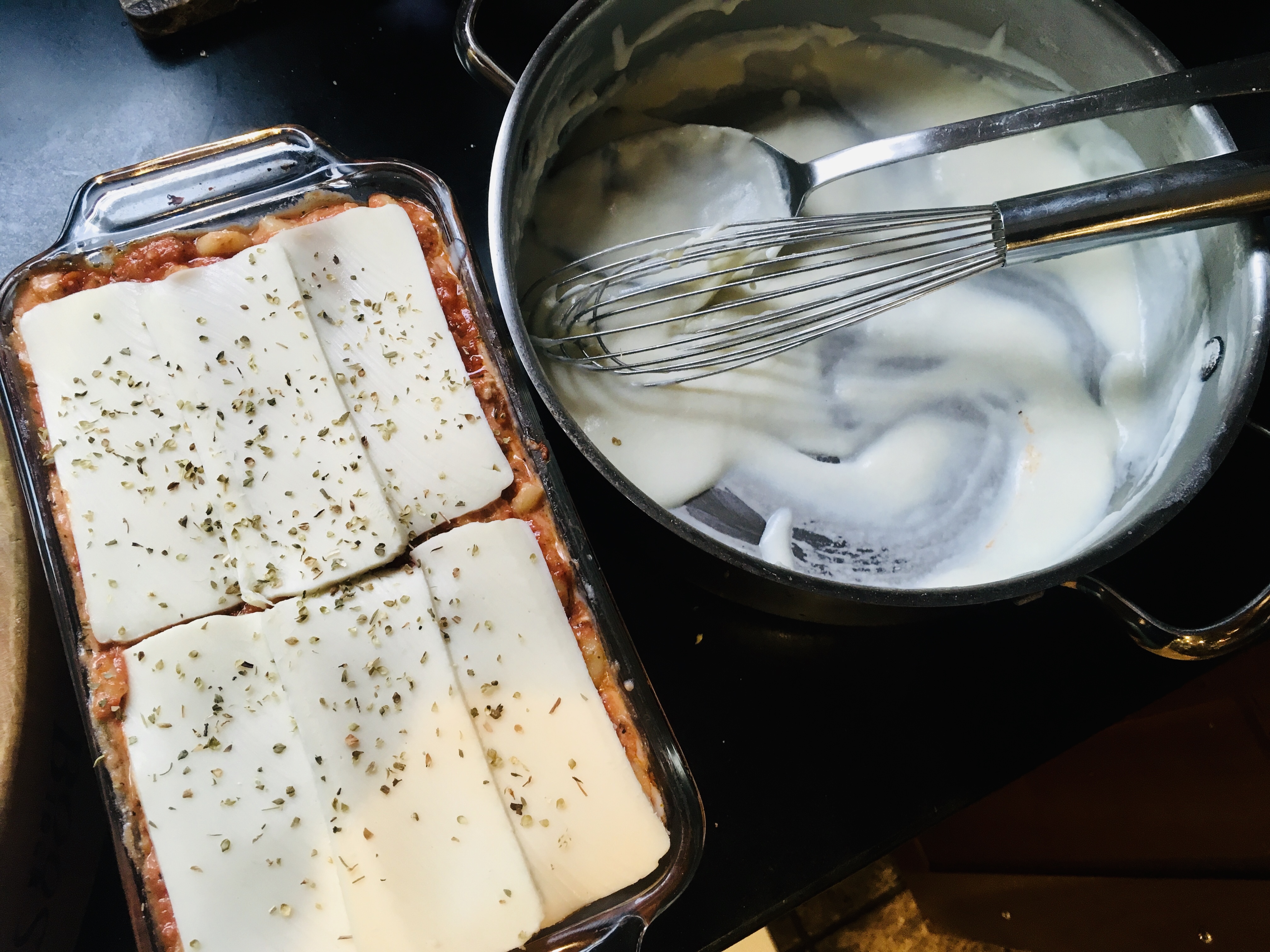
Keep whisking until the sauce thickens. Once it does, remove it from the heat and set it aside.
12 oz. small pasta, like ziti or penne
4 slices provolone cheese (about 4 oz.)
ricotta cheese (about 8 oz.)
mozzarella cheese, shredded (about 8 oz.)
2 tablespoons freshly grated Parmigiano Reggiano
Pre-heat the oven to 350 degrees.
For baked ziti, use a deeper pan than you would for lasagna, about 4″ deep.
Take several large spoonfuls (about half) of the meat sauce and the béchamel sauce and mix them together in the pan.
Boil the pasta in a pot of salty boiling water until very firm…firmer than al dente. Drain the pasta and pour it into the pan with the sauces. Mix really well.
Tear the slices of provolone and add them to the pan, mixing them in. Mix in the ricotta cheese, and handful of the mozzarella, and all the Parmigiano Reggiano, stirring really well to get everything mixed together.
If there’s still room in the pan, keep adding equal parts meat sauce and béchamel sauce until you’ve used them up.
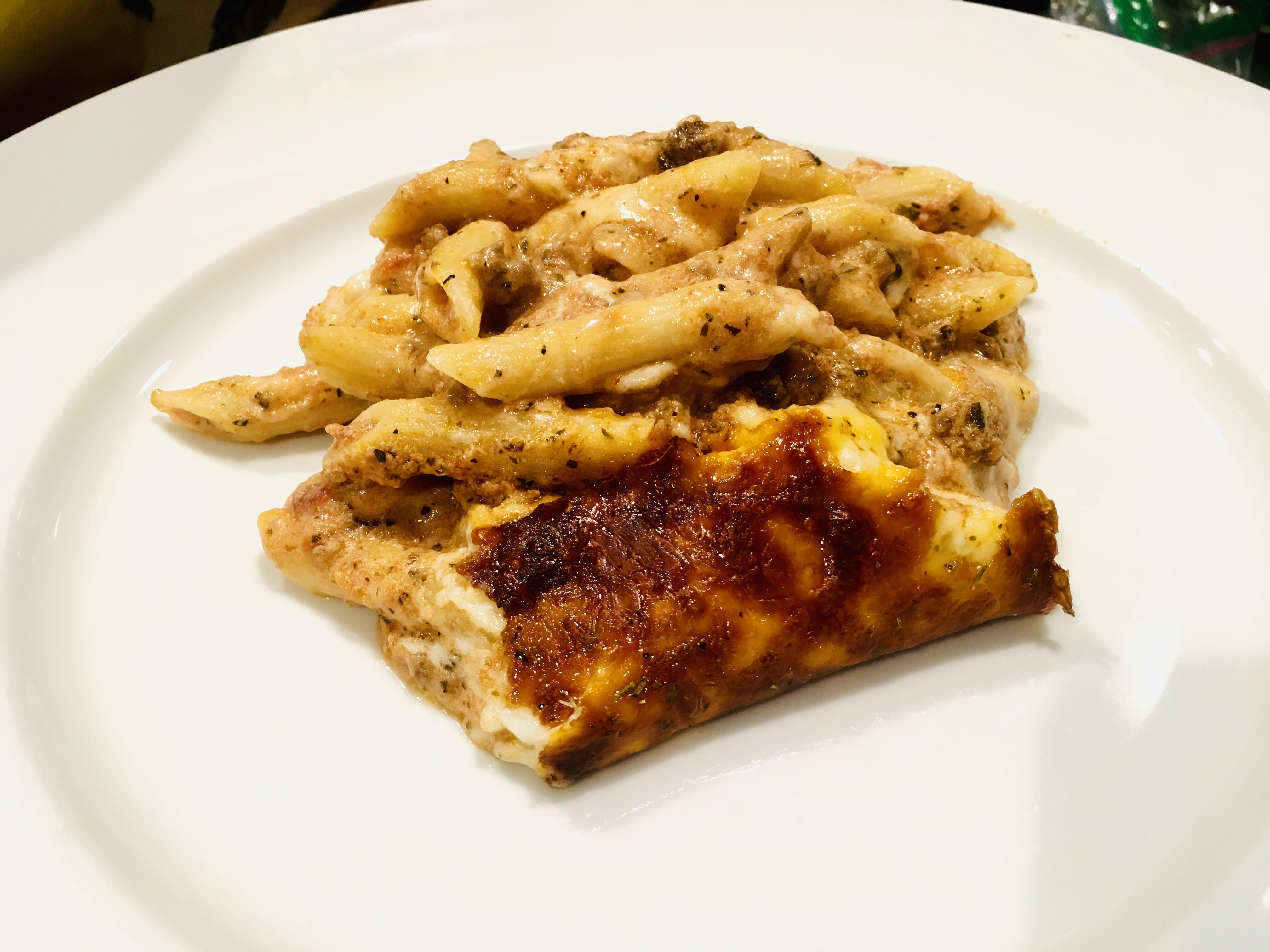
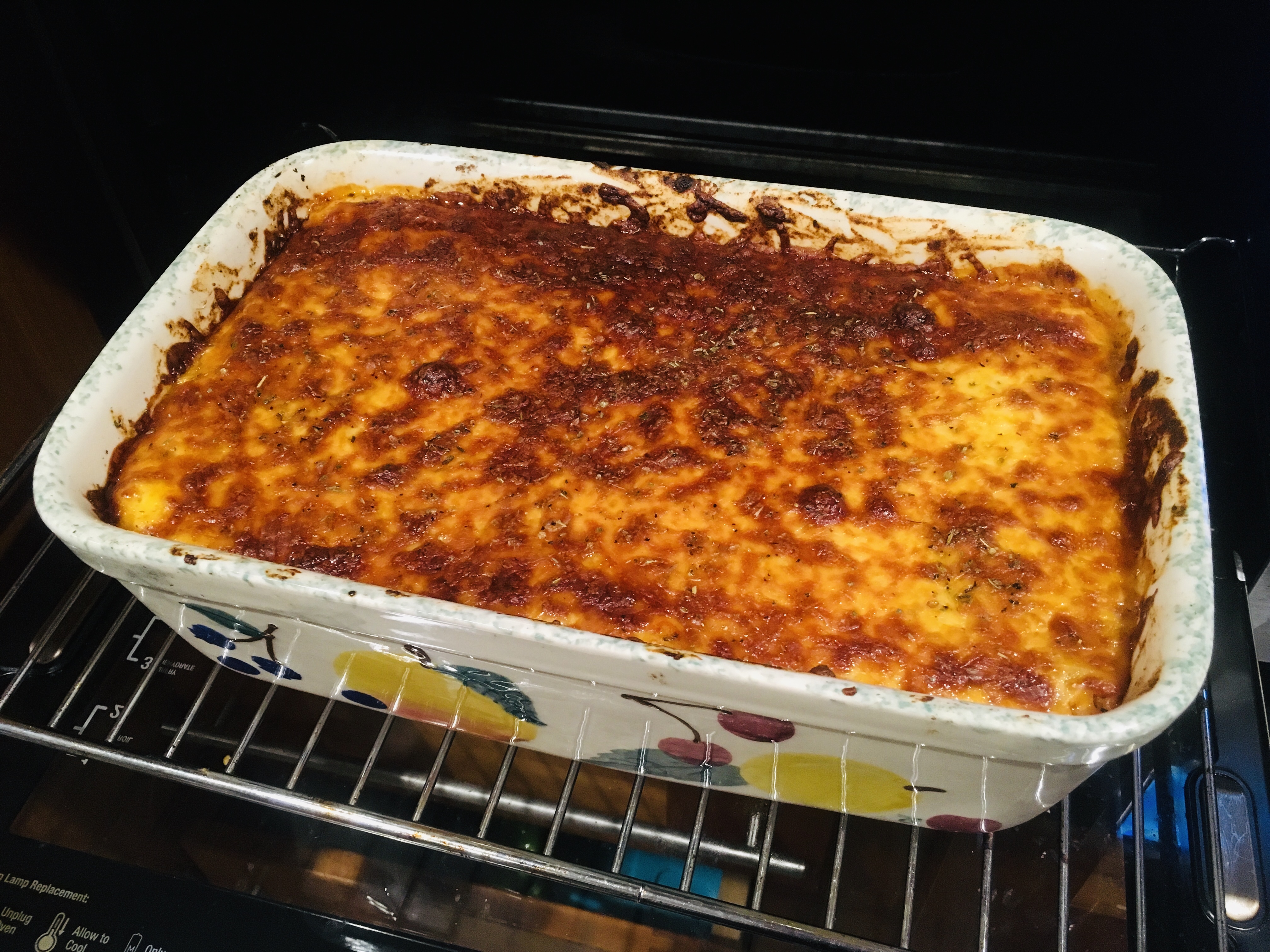
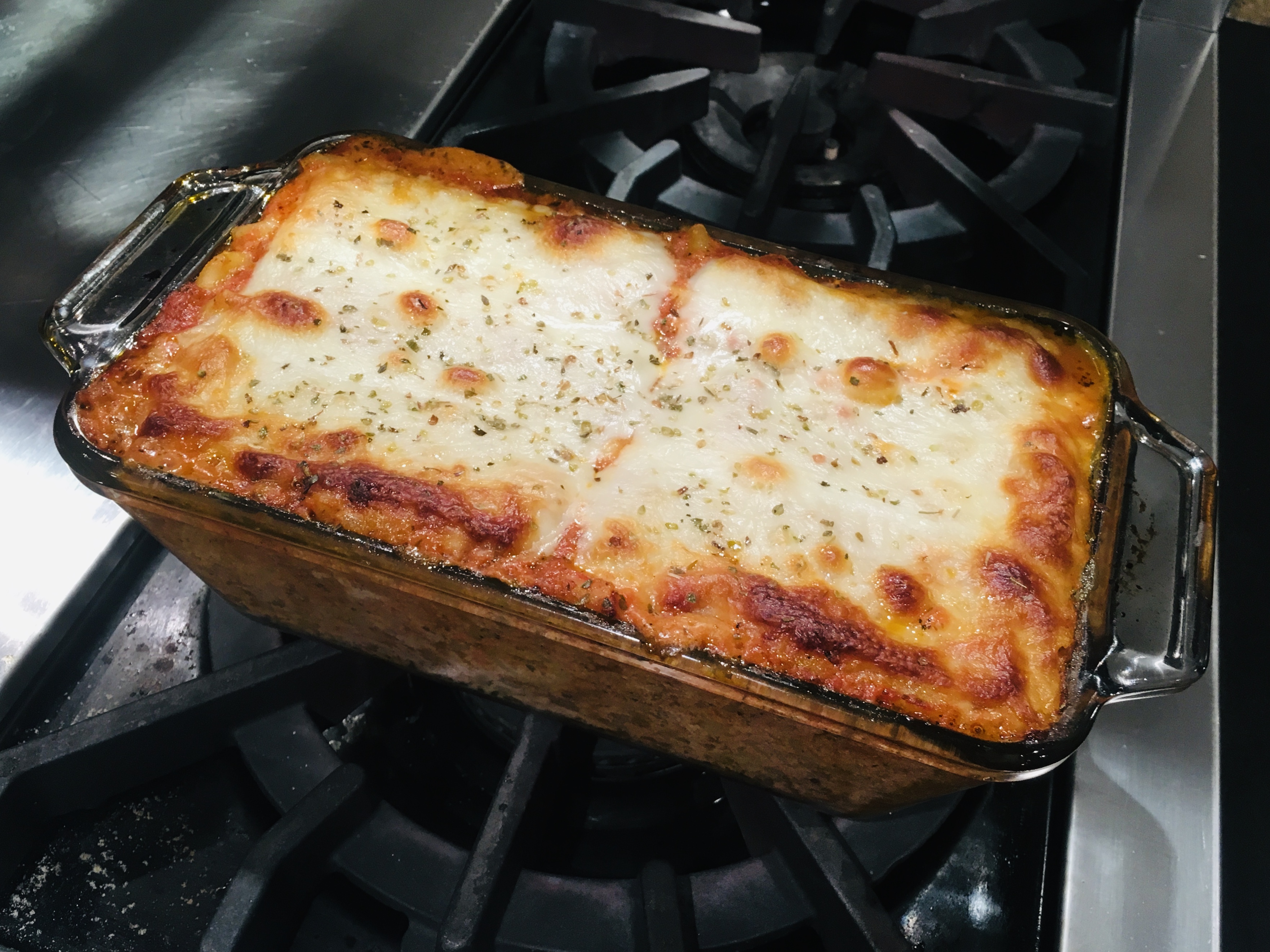
Smooth the top of the ziti mix flat with the back of a large spoon, then sprinkle the remaining mozzarella evenly over the top. Sprinkle a little oregano on top, and place the pan in the oven to bake for 30 minutes, or until the mozzarella on top is a beautiful golden brown.
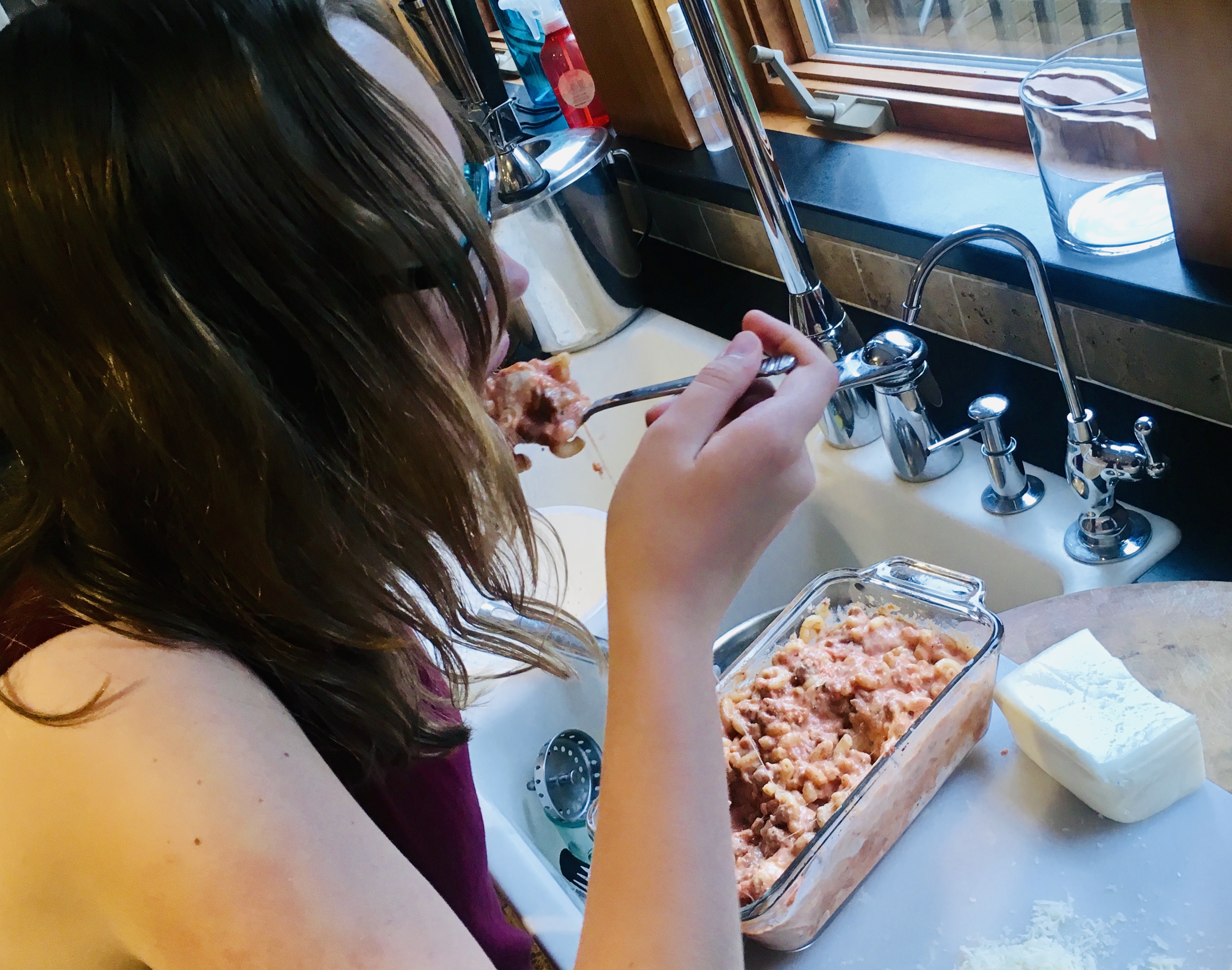
Of course, when you’re cooking, there’s always someone hanging around to grab a taste of the baked ziti before it goes in the oven…
CANTONESE ROASTED CHICKEN
Posted: January 30, 2019 in Carnivore!, chicken, Food, RecipesTags: Asian, Cantonese, chicken, chinese, food, GF, gluten-free, recipes
I really love the deep flavor of soy sauce and the sweetness of hoisin on poultry. Peking duck is the best example of this, but since I live in Rhode Island, I don’t get a chance to jump in the car and drive to Chinatown in Boston or New York at the drop of a hat. I had to come up with a plan B…and a good plan B!
I found it while looking through an old Chinese cookbook I had bought many years ago. Written by legendary NY Times food critic Craig Claiborne and Virginia Lee, “The Chinese Cookbook” has become my bible for all of my Asian dishes.
I use chicken instead of duck. It’s cheaper, easier to find, and I can easily buy a whole pasture-raised chicken from local farms here in Rhode Island. But it is just as delicious.
As long as you use gluten-free soy sauce and hoisin sauce (La Choy and Kikkoman make them and they’re found in just about any supermarket), this recipe is gluten-free.
1 whole chicken, about 6 lbs., or 2 smaller chickens (pictured)
1 tablespoon peanut oil
1 tablespoon soy sauce
4 teaspoons Chinese five spice powder
2 teaspoons granulated garlic
2 teaspoons salt
1/2 teaspoon black pepper
6 tablespoons hoisin sauce
2 teaspoons sesame oil
Remove all the giblets from the chicken and discard. Rub the soy sauce first all over the chicken. (The chicken will absorb the flavors better if you do it before you rub the bird with the oil.) Then rub the peanut oil all over the chicken.
Combine the Chinese five spice, garlic, salt and pepper in a bowl. Season the entire chicken, including inside the cavity, with this mixture.
Pre-heat the oven to 325 degrees. Place the chicken in a pan lined with aluminum foil (cleanup will be easier) and bake.
Meanwhile, combine the hoisin sauce and sesame oil in a small bowl. When the chicken is about 15 minutes away from being done, brush it with the hoisin/sesame oil mixture. Cook it another 15 minutes until the chicken has a nice dark glaze. Don’t let it burn!
Let it rest about 15 minutes before carving.
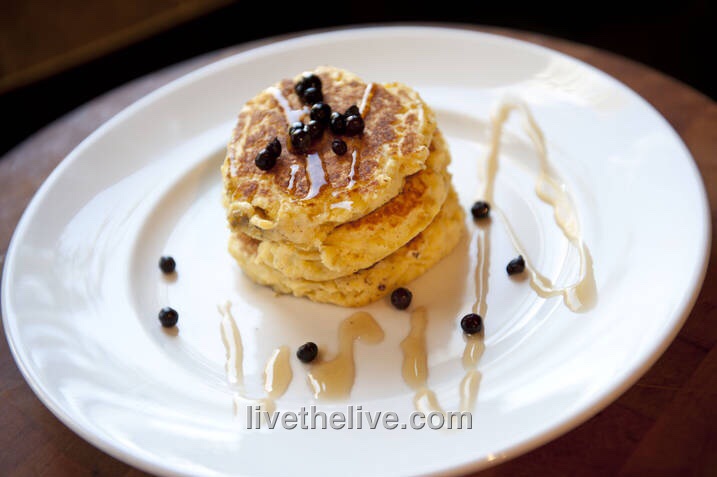
BLUEBERRY CORNMEAL BUTTERMILK PANCAKES WITH LEMON ZEST
Posted: January 16, 2019 in breakfast, buttermilk, Food, pancakes, RecipesTags: blueberry, breakfast, buttermilk, buttermilk pancakes, cormeal, food, GF, gluten-free, pancakes, recipes
1 cup all-purpose flour (or Cup 4 Cup original multi-purpose flour)
1 1/2 cups stone-ground yellow cornmeal
2 tablespoons organic cane sugar
2 teaspoons baking powder
1/2 teaspoon baking soda
1/2 teaspoon salt
2 cups buttermilk (or 1 1/2 cups milk and the juice of 1 large lemon)
zest of 1 organic lemon
1 large egg
3 tablespoons melted unsalted butter, slightly cooled
1–2 teaspoons avocado oil
1 cup fresh or frozen blueberries, preferably wild, rinsed and dried
LITHUANIAN KOLDUNAI (PIEROGIS)…A HOLIDAY TRADITION
Posted: December 31, 2018 in beef, Food, Recipes, UncategorizedTags: food, GF, gluten-free, koldunai, lithuanian, pierogi, recipes
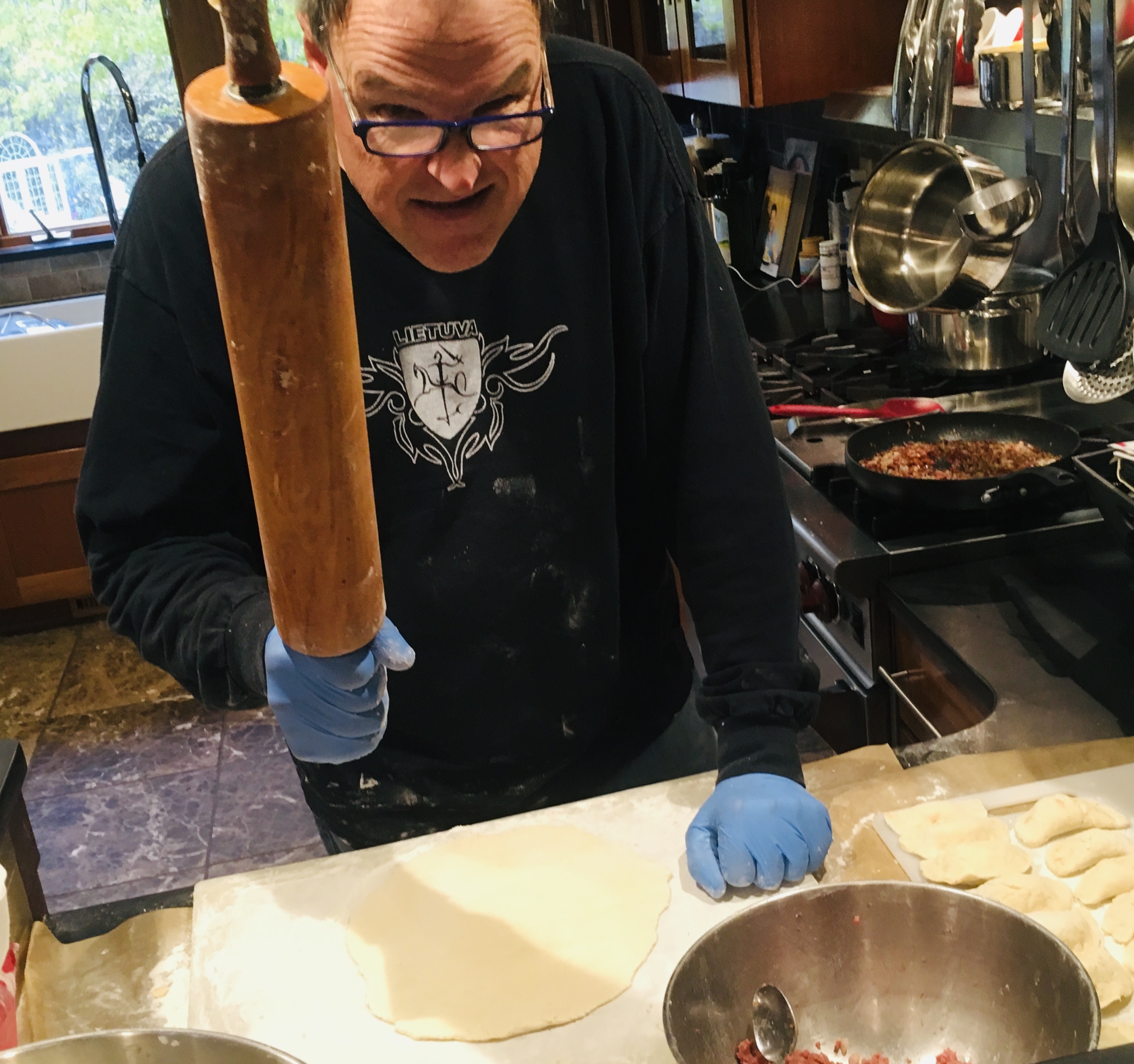
I think I spent half of my childhood in the kitchen, watching my Mom and grandmother make koldūnai (kohl-doo-nayh), the Lithuanian version of a pierogi, by hand at lightning speed. They would roll a simple dough into a log about 1″ in diameter, then cut it into 1″ pieces, twirling each piece between their fingers to make a flat pancake, filling each with a small spoonful of meat or mushrooms, then fold it over, crimping the edges to make a crescent-shaped dumpling. It blew my mind that they could crank out over a hundred of these little masterpieces in no time, placing them on a cookie sheet and freezing them until it was time to cook.
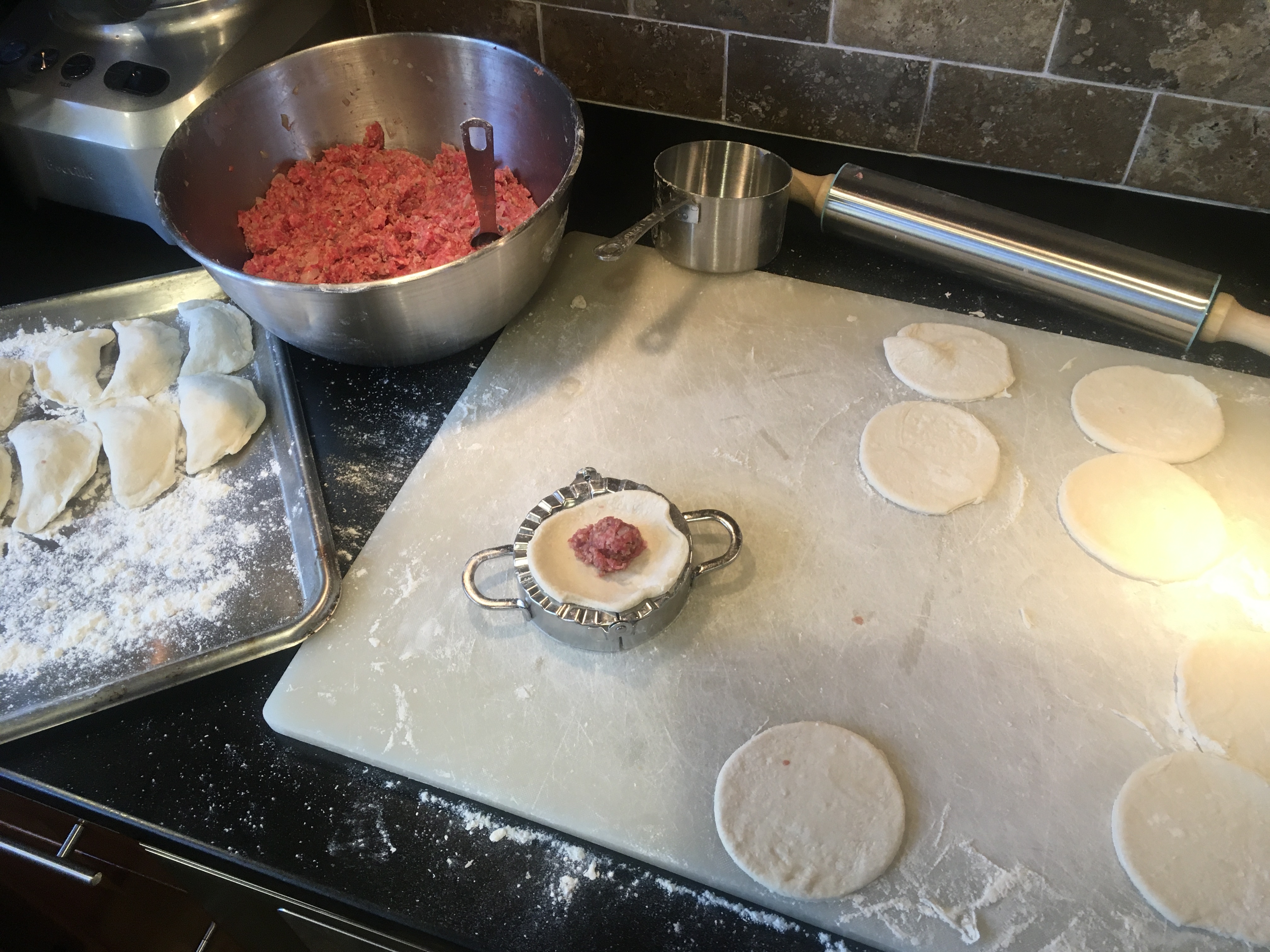
Always on the lookout to make my job easier, I discovered a new tool last year: a device that makes faster work of koldūnai production, though they do come out much smaller. It’s a ravioli maker, and the Lithuanian purists I chatted with on social media didn’t like it. I was willing to give it a try if it meant that I could save myself a lot of time.
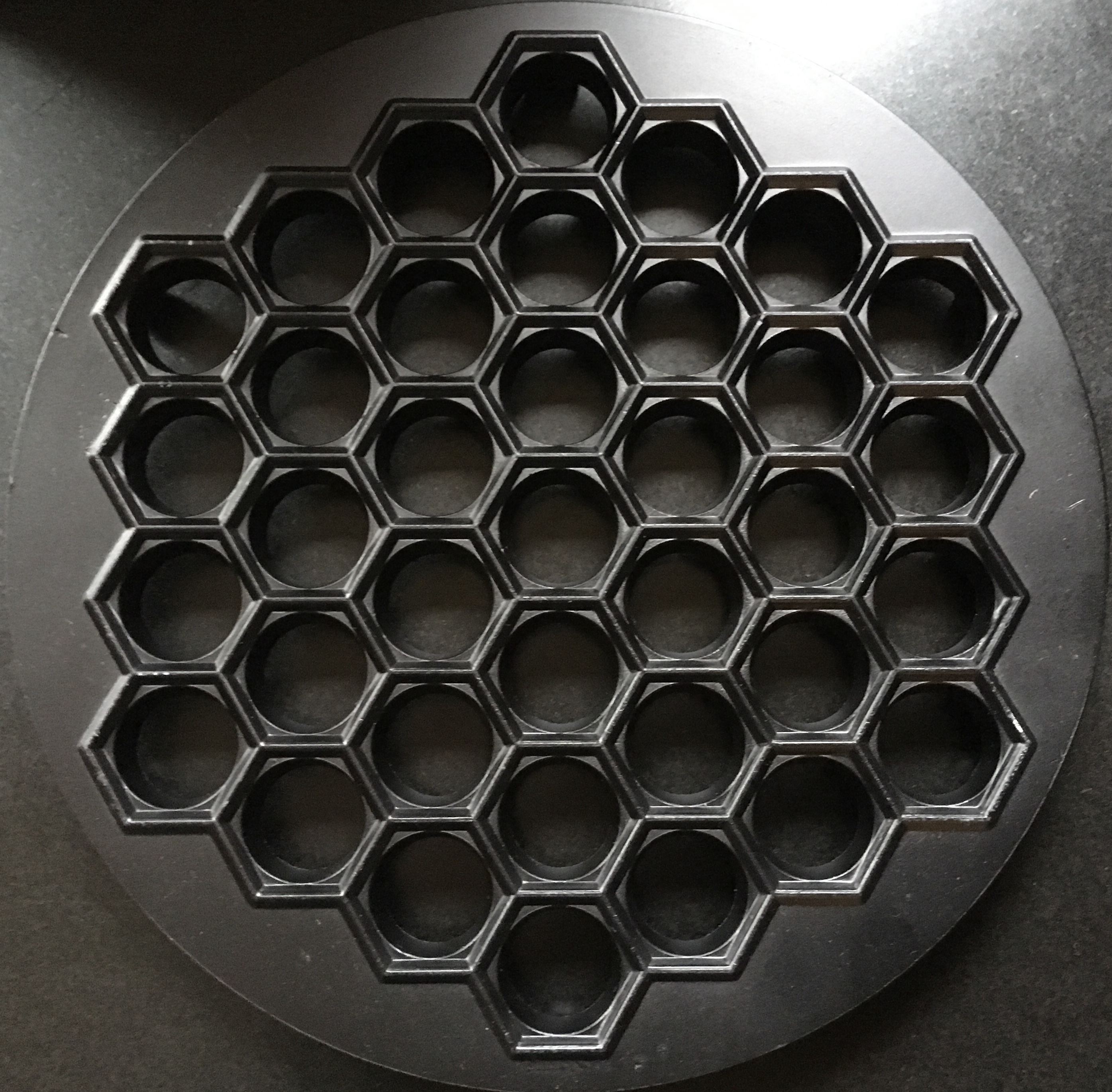
Simply roll out a sheet of dough on top of it.
Add a spoon of filling (in this case, ground beef) in each area.
Then roll out another sheet of dough on top of that and press down with a rolling pin.
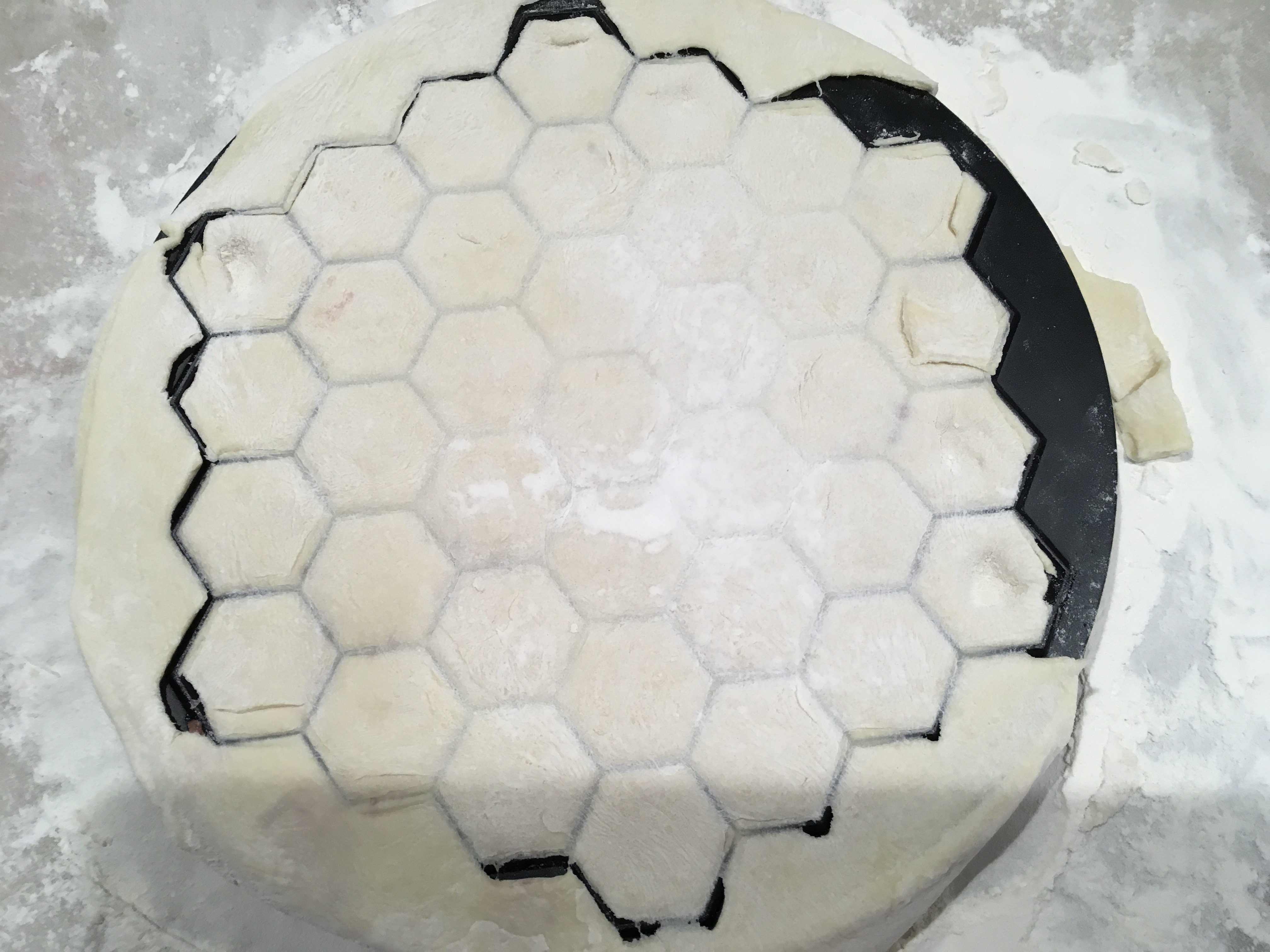
Voila! Out pop 37 mini-koldūnai at once!
I first tried it with gluten-free dough, with limited success. The dough needs to have elasticity for the device to work properly and that’s something that is sorely lacking in any gluten-free dough I’ve made over the years. Gluten-free dough tends to dry out quickly and simply break rather than bend. But, that said, I managed to make a decent amount of them so that my wife, who maintains a gluten-free diet, could enjoy them, too.
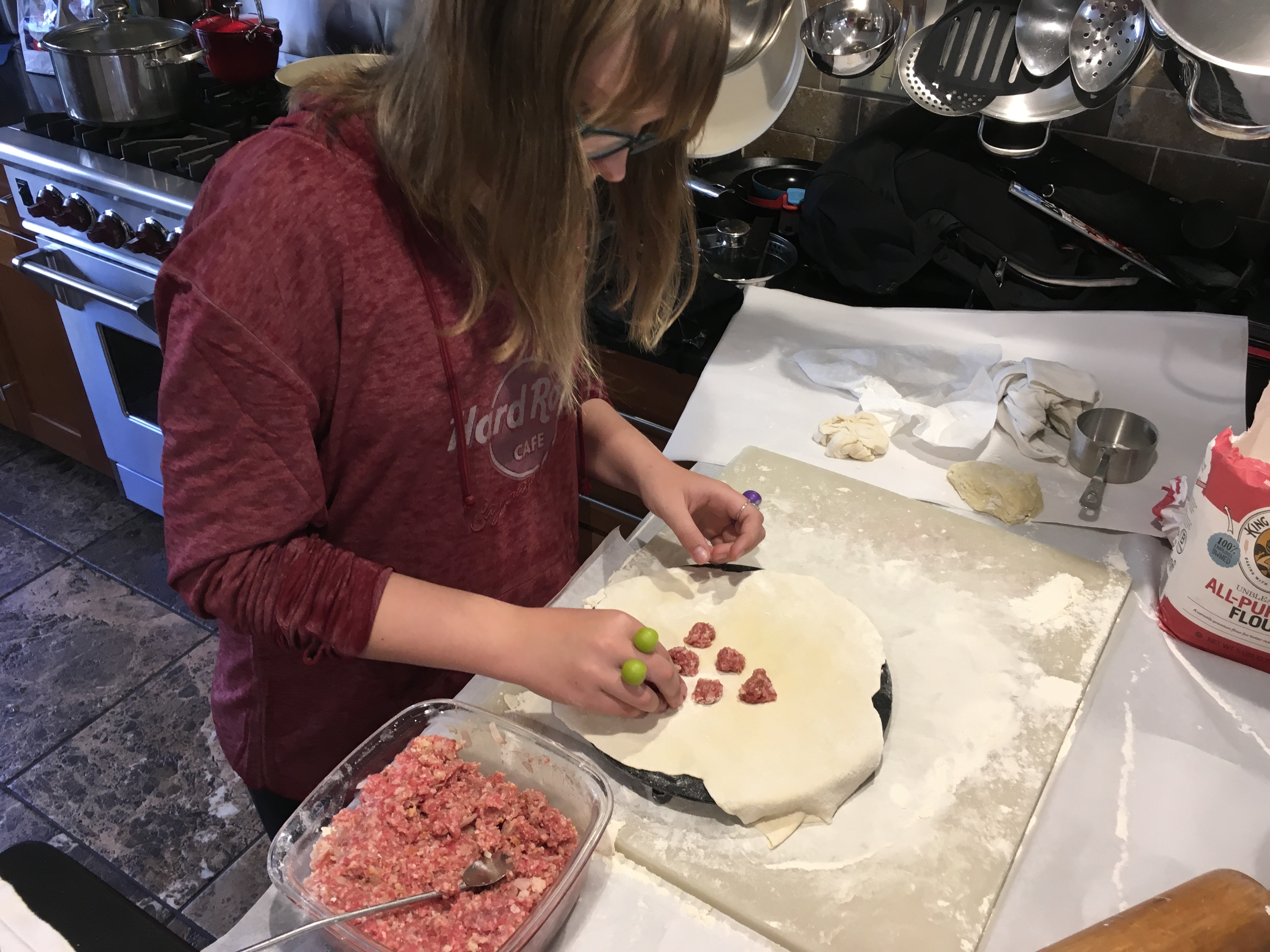
One of the main reasons Lithuanian koldūnai beat Polish pierogis is the filling. For me, standard pierogi fillings like potatoes, cheese, and sauerkraut just don’t cut it. My Mom would mix ground beef with chopped onions sautéed in butter, a couple of eggs, and milk crackers soaked in milk. She’d add salt and pepper, then spoon that mixture into her koldūnai.
The other stuffing, usually reserved for special holidays like Christmas Eve and Easter, was made from mushrooms. Italy may lay claim to the porcini, but the fact of the matter is, Lithuania is porcini heaven. And when they’re dried and reconstituted, their incredible flavor is so intense, you don’t need many of them to flavor a large amount of regular button mushrooms. We’d get our dried boletes from relatives in Lithuania every year. Mom would place a handful in some boiling water and let them steep until they swelled up and could easily be chopped and added to the other mushrooms. She’d then pour the mushroom liquid into the pan as well, not wasting a bit of that magical porcini flavor. The mushrooms were simply sautéed in butter, cooled, then used to fill the koldūnai.

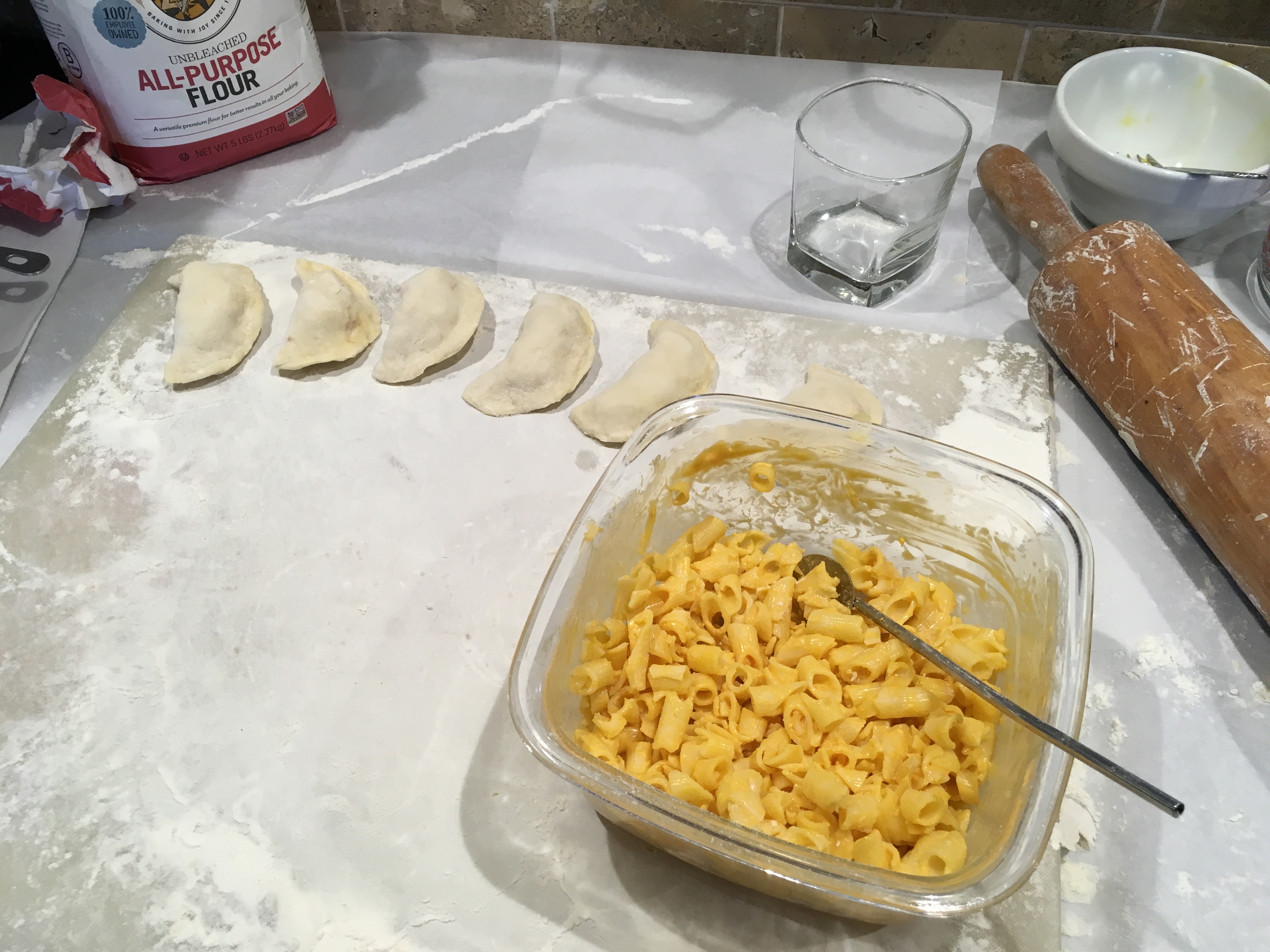
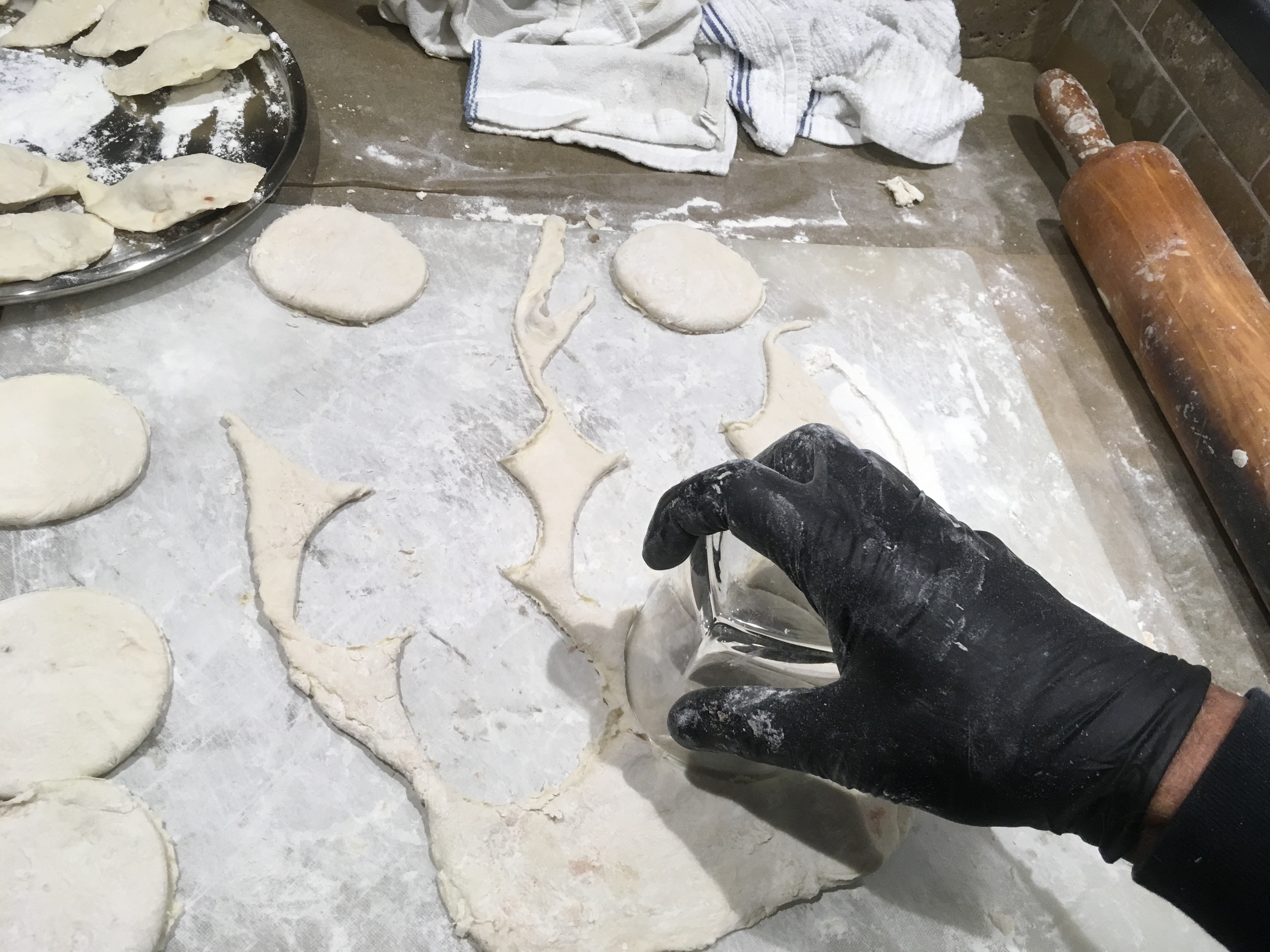
I found that my Mom’s log method was too much work. I roll the dough out into a sheet with a rolling pin, then cut circles with a glass. Yes, that’s mac-and-cheese in the forefront.
A few years ago, I decided it was time to try my hand at making koldūnai. As I recall, my Mom simply mixed water with flour to make the dough, kneaded it into a log, and off she went. I decided to go with the rolling pin and glass cutting method in addition to the ravioli maker, because I wanted to compare the classic crescent-shaped koldūnai with the newer mini’s.
The biggest challenges I had with making my own koldūnai was my own clumsiness and lack of experience. Once I got the hang of it, things moved along steadily, and it didn’t take long for me to make a decent batch–not all perfect, but not bad for a first try.
This time around, I made four kinds of koldūnai: traditional (ground beef as well as mushroom) and non-traditional (mac & cheese and pulled pork.) Patty’s Pierogis, a restaurant in nearby Fall River, Massachusetts, and featured on Food Network’s “Diners, Drive-Ins and Dives,” is where my daughter first had mac & cheese pierogis. She was instantly hooked and begs for them every year.
I keep all my fillings gluten-free, so I can use them in the GF as well as regular koldūnai. There’s no difference in the taste. Gluten-free mac-and-cheese is easily found in a box in supermarkets everywhere. Here’s my beef recipe…
1/2 onion, finely chopped
1 pat of butter
1 lb. ground beef
1 egg
1/2 cup breadcrumbs (I use gluten-free)
I make my gluten-free breadcrumbs with Udi’s frozen GF bread that I toast, then chop in a food processor. I think it tastes better than store-bought GF breadcrumbs in a can.
Finely chop the onion and saute it in the butter until translucent. Let it cool, then add it to 1 lb. of thawed ground beef. Add the egg and the breadcrumbs. Season with salt and pepper. Mix the ingredients thoroughly and keep the meat in the fridge until you’re ready to use it.
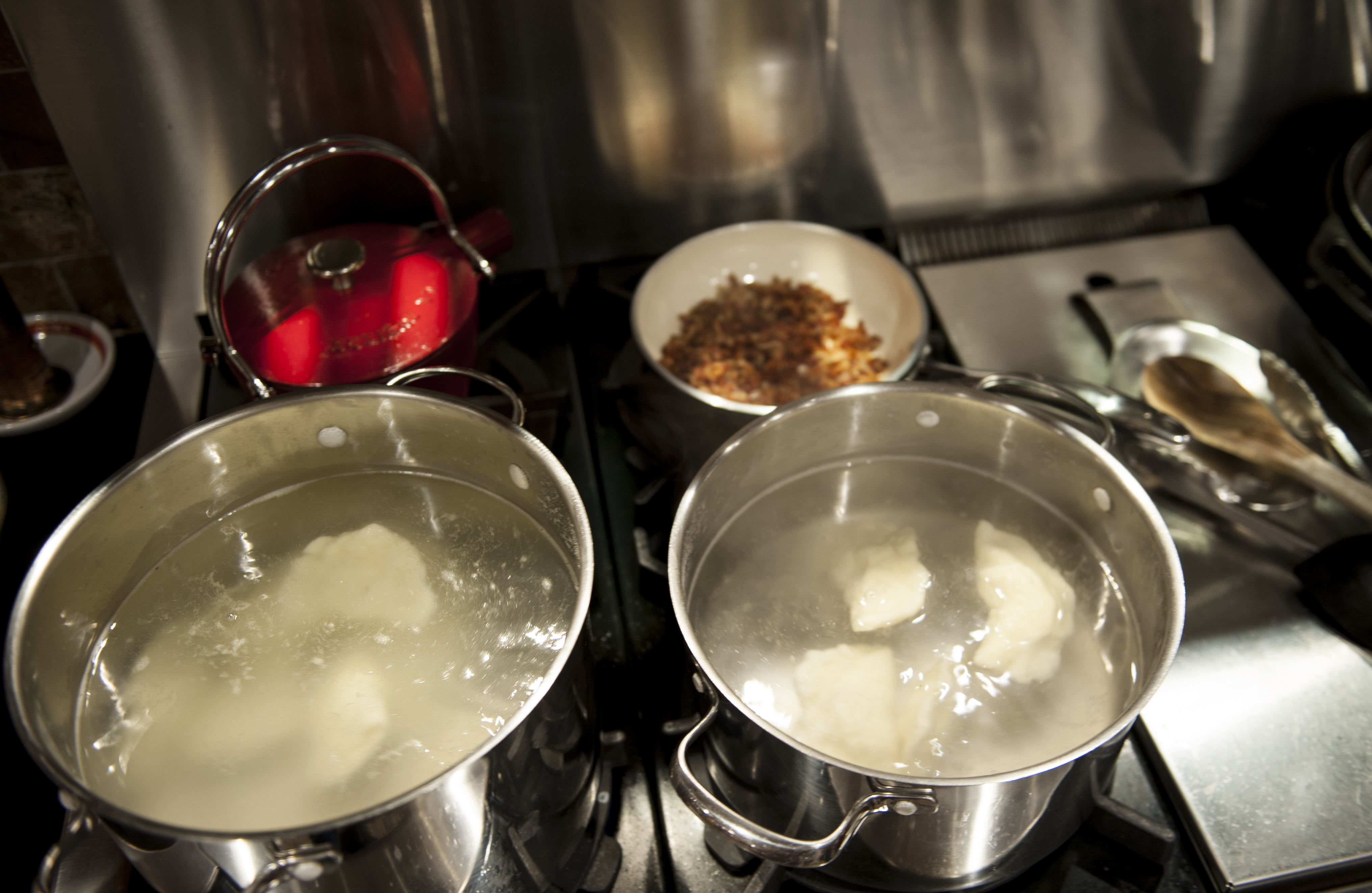
Two pots of boiling salted water: one for the meat-filled koldūnai, and one for the mac-and-cheese filled koldūnai.
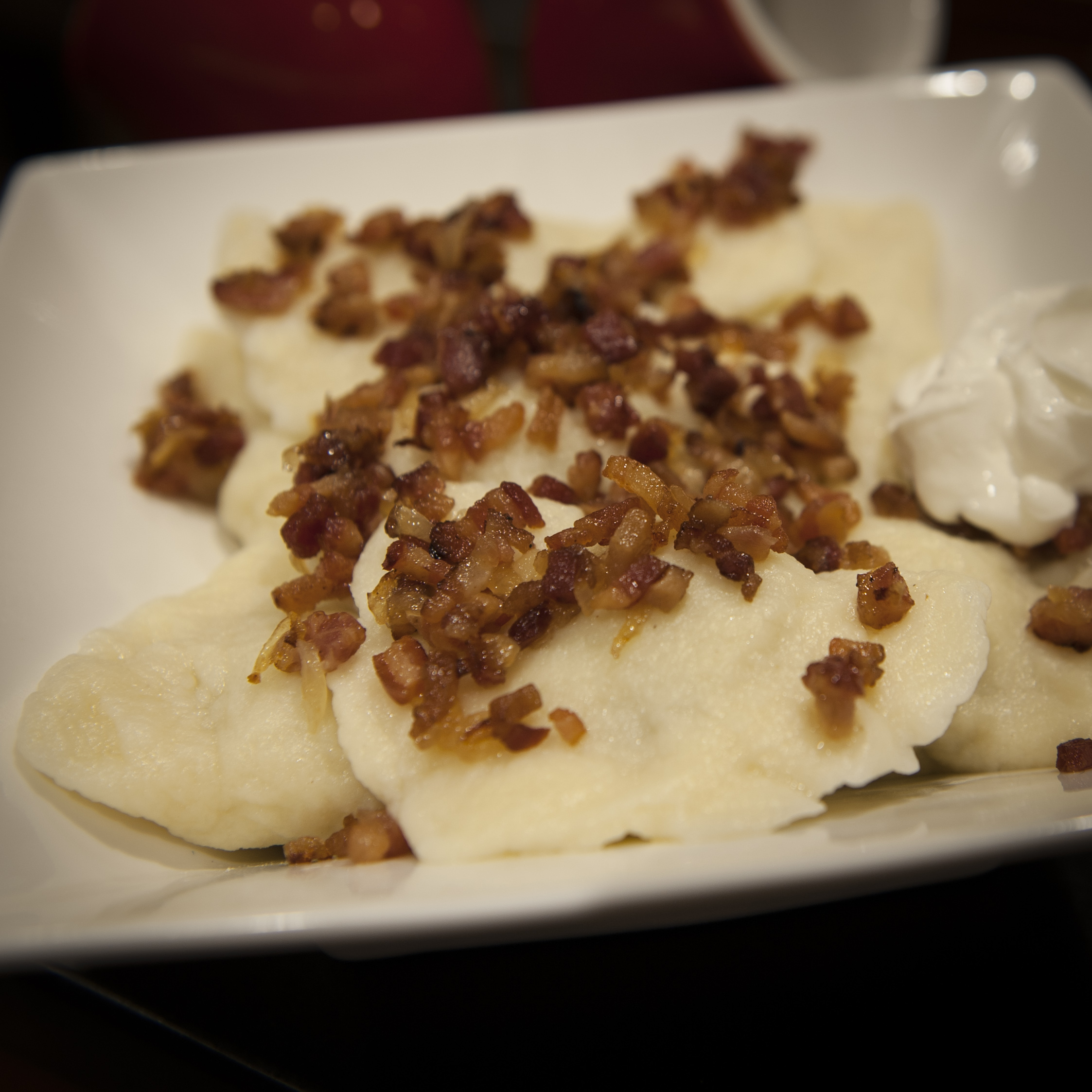
In my childhood home, you cannot possibly serve koldūnai without sour cream on the side and without spirgučiai (spir-guh-chay), chopped and fried bacon and onions that are sprinkled on top.
1 lb. bacon, finely chopped
1 large onion, finely chopped
In a large pan, fry the chopped bacon until it’s almost crisp. Never drain the fat! Add the chopped onions and cook until they are soft. Set aside. (My Mom always kept a stash of spirgučiai in a container in the fridge, and sprinkled them on anything and everything.)
Making the dough is simple.
2 cups all-purpose flour (gluten-free or regular)
1 cup water
I don’t use salt in the dough because I boil the koldūnai in salted water later.
Combine the ingredients in a bowl, mixing with your hands. Keep adding flour in small amounts until the dough isn’t wet and sticky. When it forms a nice ball, remove it from the bowl and place it on a floured surface and knead it a bit more. Cut the ball into quarters, and work with these smaller pieces of dough.
If you’re using the ravioli maker method, each quarter will make one sheet of dough for the top or bottom of the ravioli maker. If making them by hand, each sheet will give you about 8 crescent-shaped koldūnai.
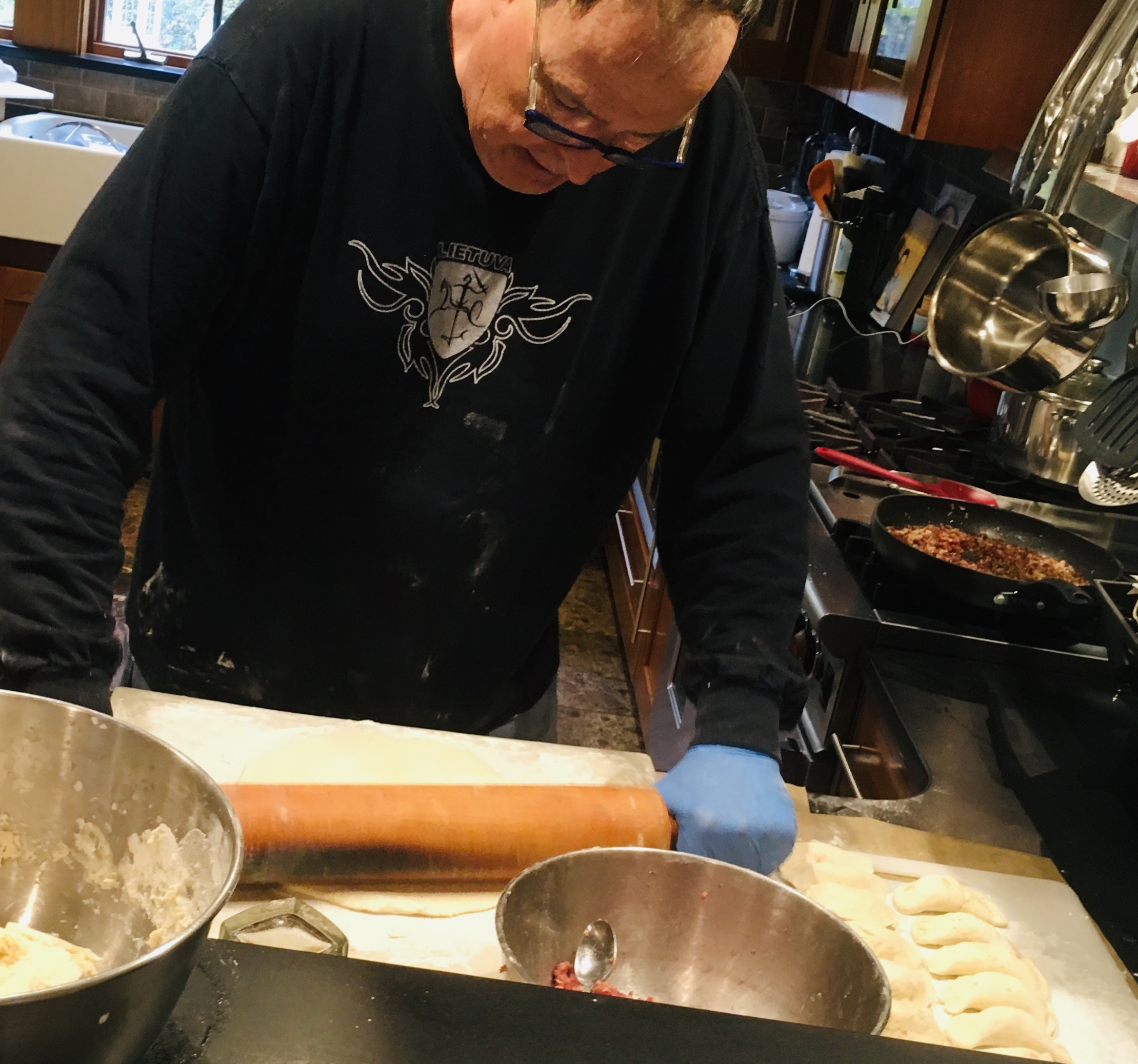
For the rolling-pin method, roll each quarter out until the dough is about 1/8″ thick. Using a rocks glass as your cutter, cut circles out of the dough. Add a small spoonful of filling in the center of the dough, then fold the edges over and pinch them with your fingers. Flip it over and pinch again, making sure none of the filling seeps out. A tight edge means the koldūnai won’t break open when you put them in boiling water.
Place the koldūnai on a sheet pan lined with parchment paper, and when you’re done, place the sheet pan in the freezer.
Get a large pot of salted water boiling. Drop the koldūnai in gently, being careful not to overcrowd them. If the dough is thin, the koldūnai will be ready when they float up to the surface. A thicker dough will need longer cooking. The best way to know if they’re done is by taking one out, cutting it open and having a look (and taste!)
When plating, sprinkle generously with spirgučiai, and serve with sour cream on the side.
My conclusion: When all is said and done, the old ways are still the best. Although the ravioli maker did a good job, in many ways it was just as time-consuming. And the finished mini-raviolis did not have the dough-to-filling ratio that I find so satisfying with classically made koldūnai. We sampled both side-by-side, and there really was a difference. I’m sticking with the classic methods for now! Mom will be proud.
The hand-painted Christmas trees in the photos are from our friend, Don Cadoret, an artist here in Tiverton, RI. Check out all of his work at: http://www.doncadoret.net.
LASAGNA AND ITS COUSIN, BAKED ZITI
Posted: September 23, 2018 in Food, Italian, pasta, RecipesTags: Bechamel, food, GF, gluten-free, Italian, lasagna, recipes
As a teenager growing up on Long Island, I worked long hours at a local Italian restaurant called Pizza City East in Plainview. (The original Pizza City was in Ozone Park, Queens.) Though the pay sucked, I made some important friendships that have lasted to this day. I also learned many Italian cooking basics: how to open clams for red and white clam sauce, the secrets of great pizza dough, the art of a perfect espresso, and how to make massive quantities of baked ziti.
The basic ingredients of baked ziti are the same as lasagna, and I make one or the other depending on my mood or what I’ve got in the cupboard. I also like to make my lasagna a little dryer, where baked ziti shines in its incredible gooiness.
My lasagna usually consists of 2 sauces (a meat sauce and a bechamel sauce) and 4 cheeses (ricotta, mozzarella, provolone, and Parmigiano Reggiano) using pasta that is boiled much firmer than al dente. I like real pasta, not the no-boil sheets, because I think the flavor is better. I’ve tried the no-boils, and I’ve found that they don’t cook evenly. Sometimes you get a nice soft bite and other times it’s completely raw and pasty. There are plenty of great brand choices for lasagna sheets these days, and that includes gluten-free varieties.
Meat Sauce…
1 small onion, finely chopped
1 small carrot, finely chopped
1 lb. grass-fed ground beef or pastured pork, or a combination of both
1 tablespoon dried parsley
2 teaspoons dried oregano
1 teaspoon dried basil
1 teaspoon salt
1/2 teaspoon black pepper
1 28-oz. can whole tomatoes
extra virgin olive oil for sautéing
Heat a tablespoon or 2 of olive oil in a large pan and sauté the onions until translucent. I finely chop the carrots by peeling them all the way down until there’s nothing but a pile of peeled pieces, then chopping them up so small, they almost melt into the sauce. Add the carrots and cook for 2 minutes. Add the beef (or pork) and cook the meat until it browns. Add the parsley, oregano, basil, salt and pepper and mix well.
Empty the can of tomatoes into a blender and blend it until smooth. Add this to the pan and mix well.
Cook the meat sauce for about 10 minutes, then remove it from the heat and set it aside.
Hint: I’ve found that no-boil pasta sheets suck up a lot more moisture than already-cooked pasta, so I make my sauce a bit runnier than usual when using the sheets.
Bechamel sauce…
3 tablespoons butter
3 tablespoon all-purpose flour (I use Cup4Cup flour to make it gluten-free)
1/2 teaspoon salt
1/4 teaspoon black pepper
2 cups 2% milk
Bechamel is a basic white sauce. It adds a wonderful creaminess to my lasagna or baked ziti.
Melt the butter in a saucepan under medium heat. Add the flour and whisk until you’ve combined the butter and flour and have a light roux.
Add the milk, and keep whisking, making sure you don’t get any lumps in the sauce. Season with the salt and pepper.
Keep whisking until the sauce thickens. Once it does, remove it from the heat and set it aside.
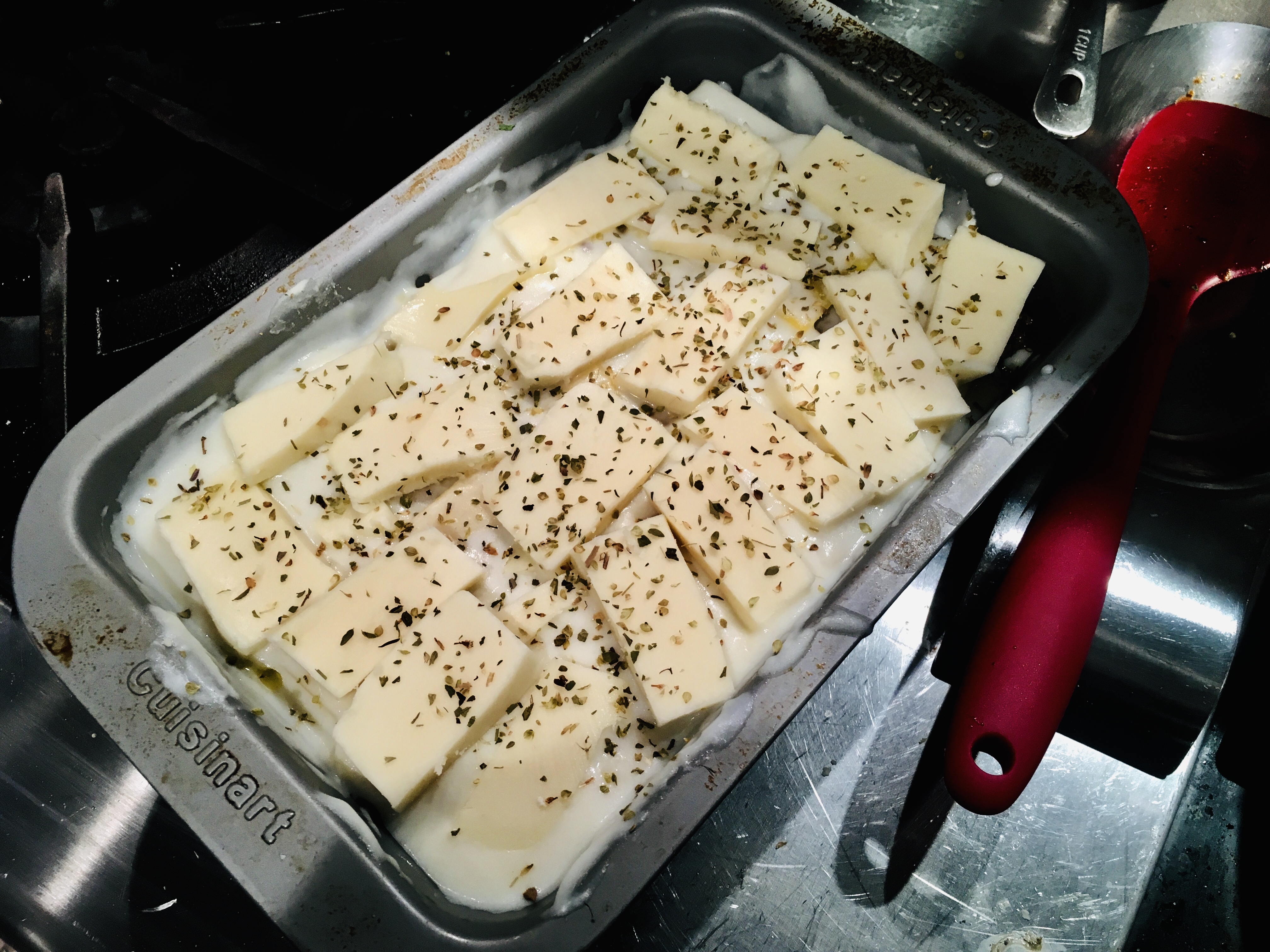
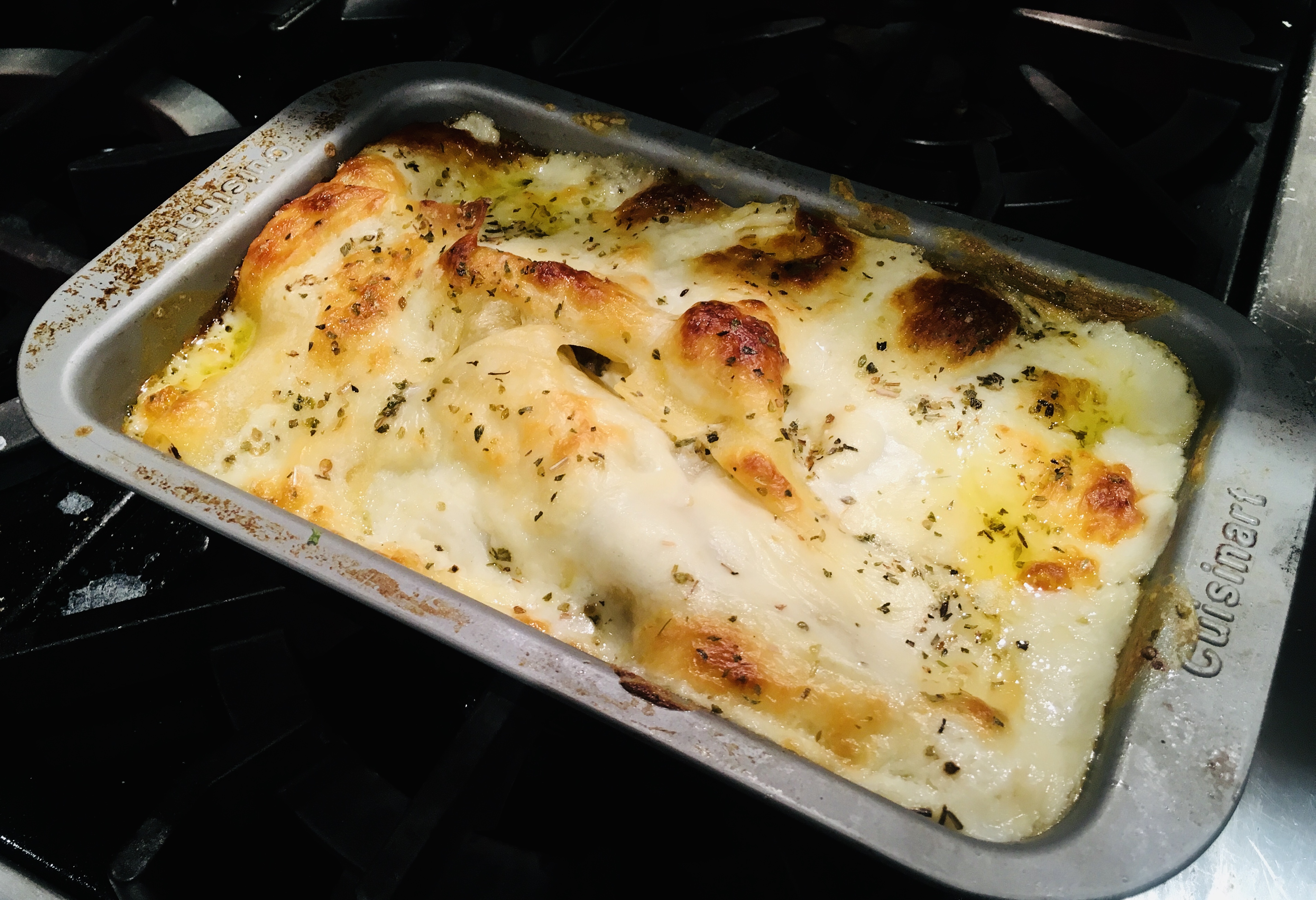
I made 2 different versions this last time. Having tomato allergies and on a gluten-free diet, my wife got a 4-cheese all-bechamel gluten-free lasagna all to herself. It baked up nicely.
12 oz. lasagna pasta sheets (boiled or no-boil)…or 12 oz. small pasta, like ziti, elbows or penne
4 slices provolone cheese (about 4 oz.)
ricotta cheese (about 4 oz.)
mozzarella cheese, thinly sliced (about 4 oz.)
2 tablespoons freshly grated Parmigiano Reggiano
Pre-heat the oven to 350 degrees.
If you’re using regular pasta, boil the lasagna sheets in a pot of salty boiling water until very firm…firmer than al dente. Drain the pasta and run cold water over it to stop the cooking process. The pasta will want to stick to itself, so work quickly. Adding a drop of olive oil can help.
Lay a thin layer of the meat sauce at the bottom of the lasagna pan, which will keep the lasagna from sticking. Then start your layers: a layer of pasta, a thin layer of the Béchamel sauce, the 4 slices of Provolone, a layer of pasta, a layer of the meat sauce, small teaspoon-sized dollops of the ricotta, another layer of pasta (press down occasionally to remove air bubbles), another thin layer of Béchamel, the Parmigiano Reggiano, more pasta, more meat sauce, etc….
Make it as thick as you like. I like to cover the final layer of pasta with the meat sauce and then finish the dish with the mozzarella, sprinkling a touch of oregano on top.
Place the lasagna pan in the oven and bake for 30 minutes, or until bubbly. Shut the oven off, but leave the pan in for another 10 minutes, then serve.
If you’re making a baked ziti version, your job is a lot easier. Take the cooked, drained pasta and pour it into the pan. Add the meat sauce and some bechamel sauce. Stir in the ricotta, torn up pieces of the provolone, grated Parmigiano Reggiano, and even a few small chunks of mozzarella. Mix it well. Then place more mozzarella on the top, and bake it in the oven for about 30 minutes.
Of course, when you’re cooking, there’s always someone hanging around to grab a taste of the baked ziti before it goes in the oven…
THESE ARE THE BALLS!
Posted: May 13, 2018 in Food, Italian, Recipes, san marzano, tomatoesTags: food, GF, glutern-free, Italian, meatballs, pasta, recipes, spaghetti, tomato, tomato sauce
There’s something magical about a simple plate of spaghetti and meatballs. When my parents took me to an Italian restaurant as a child, a plate of spaghetti and meatballs made me feel like the luckiest kid on the planet. And even now, when I prepare a plate of spaghetti and meatballs for my daughter, she can’t wait to sit down at the dinner table. She’s so busy shoveling the food into her mouth, she can’t even speak. I just get a quick thumbs-up between bites…and breaths!
Great meatballs start with great meat. I always use 80/20 grass-fed beef. I don’t use a ton of breadcrumbs as filler. And the tomato sauce is homemade as well, from canned tomatoes. I start with the sauce…
B.F.I.M. SAUCE
Inspired by a lovely but large Italian lady I once knew, my Big Fat Italian Mama sauce works well with this hearty dish.
1 medium onion, finely chopped
2 cloves garlic, through a press
1/2 cup extra virgin olive oil
10 cups ground and peeled tomatoes…or 3 cans (28 oz.) tomatoes pureed in food processor
2 teaspoons each: dried oregano, basil and parsley
3/4 teaspoon each anise seed and fennel seed
1 1/2 teaspoons salt
1/2 teaspoon black pepper
2 bay leaves
1 small can (6 oz.) tomato paste
1 teaspoon sugar (optional)
Heat the olive oil in a large pot and add the onions. Cook until the onions are translucent, then add the garlic. Stir for 10 seconds.
Add the tomatoes and cook on high until the orange foam disappears, stirring frequently. Don’t let it burn.
Add the oregano, basil, parsley, anise seed, fennel seed, salt and pepper, bay leaves and tomato paste. Allow the sauce to just come to a boil so that the tomato paste reaches optimum thickening power.
Reduce the heat to a simmer and cook for at least an hour, until the sauce reaches the desired consistency. Stir often.
While the sauce is cooking, I start the meatballs…
2 lbs. grass-fed ground beef
1 cup plain breadcrumbs (gluten-free breadcrumbs work well, too)
2 tablespoons dried parsley
2 tablespoons dried oregano
1 tablespoon dried basil
1 tablespoon granulated garlic
1 tablespoon onion powder
1 teaspoon black pepper
2 teaspoons salt
2 eggs, cracked and scrambled
1/2 cup extra virgin olive oil
Mix all the ingredients, except the olive oil, thoroughly but gently in a large bowl. Don’t overwork it.
Pour some olive oil a medium-hot pan (don’t let it burn), make the meatballs, and sear them on all sides until brown.
When the meatballs are nice and brown, place them into the pot of sauce, making sure they are covered. Pour all the little bits and the olive oil from the pan into the sauce as well! Great flavor there.
Cover the pot and cook the meatballs in the sauce on low for a few hours.
Serve the meatballs and sauce over your favorite pasta, and sprinkle with freshly grated Parmigiano Reggiano.
Making this dish gluten-free is easy: use gluten-free pasta (we love the products from Garofalo) and use GF breadcrumbs in the meatballs. I prefer to buy gluten-free loaves of bread, toasting them, letting the slices cool, then tossing them in a food processor to make breadcrumbs. The flavor is as good as regular breadcrumbs!
BANANA BREAD: WITH OR WITHOUT THE GLUTEN
Posted: January 4, 2018 in breakfast, FoodTags: BAKING, BANANA, BREAD, food, GF, gluten-free, recipes
My original banana bread recipe blog is featured directly below. It’s awesome. But my wife’s dietary needs required that I make some changes. My gluten-free version of the recipe, at the bottom of the page, is so good, you won’t miss the wheat!
The original recipe…
What makes this banana bread special is that it uses whole wheat flour…less sugar…and no artificial extracts that make most banana breads taste like crap. It relies on very ripe bananas to give it its wonderful natural flavor.
It’s not always easy to get bananas to ripen exactly when you’re trying to make your banana bread recipe. So I by a large bunch of bananas and let them get very ripe at room temperature. I then take 5 at a time (for this recipe), peel them, and place the bananas in a Ziploc bag in the freezer. When it’s time to make banana bread, I just pull one of those Ziplocs out of the freezer, let it thaw, and mash with a potato masher.
3 cups all-purpose flour
1/2 cup whole wheat flour
2 tsp baking soda
1/2 tsp salt
1 1/4 cup sugar
3/4 cup vegetable oil
2 eggs
5 medium-sized bananas, peeled and mashed
2 tsp real vanilla extract
Cooking spray
Pre-heat the oven to 350 degrees.
Combine the all-purpose flour, whole wheat flour, baking soda and salt in a medium bowl. Set aside.
Combine the sugar and oil in a mixing bowl and mix at medium speed for 2 minutes. (I use the whisk attachment.) Add the eggs, one at a time. Beat until the mixture is light and lemon colored.
With the mixer running at low-speed, add the flour mixture alternately with the bananas, beginning and ending with the flour mixture. Blend well after each addition. Add the vanilla extract and blend some more to mix.
Pour the batter into 2 loaf pans that have been sprayed with cooking spray. Bake for 45 minutes or until a wooden pick inserted in the center comes out clean. Cool 15 minutes in the loaf pan on a wire rack.
Remove from the pan and let it cool completely on the wire rack before slicing.
The gluten-free recipe…
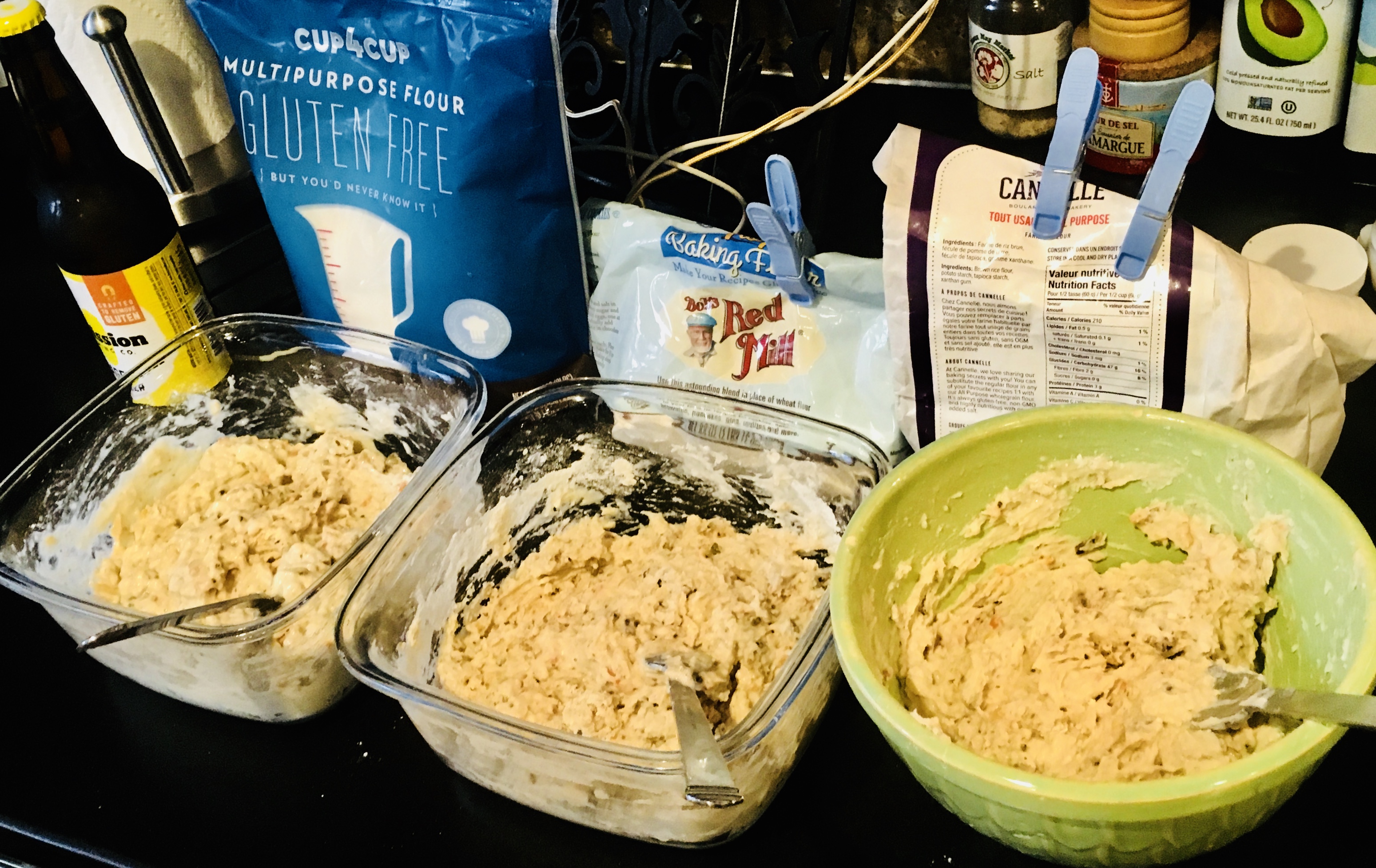
My go-to gluten-free flour is the brand called Cup 4 Cup. You can find it in most supermarkets. But this time I tried the gluten-free baking flour by Bob’s Red Mill. Both flours gave excellent–and tasty–results.
If you want a slightly more “rustic” flavor, you can substitute 1/2 a cup of corn meal for 1/2 a cup of the flour. I use organic cane sugar instead of regular sugar when I have it. I don’t use vegetable oils, especially not canola, so I use healthier avocado oil or olive oil. Eggs are pastured when I can get ’em. Bananas are organic. And I rub the pans with coconut oil or I use an olive oil cooking spray.
4 cups gluten-free flour
2 teaspoons baking soda
1/2 teaspoon salt
1 1/4 cup organic cane sugar
3/4 cup avocado or olive oil
2 eggs
5 medium-sized bananas, peeled and mashed
2 teaspoons real vanilla extract
coconut oil
Pre-heat the oven to 350 degrees.
Combine the flour, baking soda and salt in a bowl. Set aside.
Combine the sugar and oil in a mixing bowl and mix at medium speed for 2 minutes. (I use the whisk attachment.) Add the eggs, one at a time. Beat until the mixture is light and lemon colored.
With the mixer running at low-speed, add the flour mixture alternately with the bananas, beginning and ending with the flour mixture. Blend well after each addition. Add the vanilla extract and blend some more to mix.
Pour the batter into 2 loaf pans or one large bundt pan that have been rubbed with the coconut oil. Bake for 45–60 minutes or until a wooden toothpick inserted in the center comes out clean. Cool 15 minutes in the pan on a wire rack.
Remove from the pan and let it cool completely on the wire rack before slicing.