Archive for the ‘Recipes’ Category

When one of your favorite restaurants (I won’t name names) removes a profitable, bestselling dish from its menu, and the reason you’re given is that “the chef is tired of making it,” you kind of have to scratch your head and ask yourself: “What’s wrong with this picture?”

In this particular case, I decided to make it on my own. It’s really not hard to do…just takes a little time. But the end result is totally worth it.

FullSizeRender (5)

6 hard-boiled eggs
1/4 cup + extra mayonnaise
8 oz. high quality raw tuna
3 tablespoons soy sauce (I use gluten-free)
1/2 teaspoon chili oil
1/4 cup finely chopped scallions
1 teaspoon sesame seeds
fish roe (optional, see below)
handful fresh spinach, or cucumbers (see below)


The best way to hard-boil eggs is to put them in a pot of cold water. Turn the heat on high and bring to a boil. As soon as the water boils, turn the heat off and place a lid on the pot. Let it sit for 15 minutes. Perfect eggs every time. Remove the eggs from the water and cool them in the fridge.

If the tuna is frozen, let it thaw a little. If it’s fresh, you might need to place it into the freezer for about 10 minutes to firm up. That makes it easier to cube up. Slice the tuna carefully into the smallest cubes you can make. Once done, place the tuna in a bowl and put it back in the fridge until ready to use.

In a separate small bowl, combine the soy sauce and the chili oil. Set aside.

Finely chop the scallions. Set aside.

Once the eggs have cooled, peel them and cut them in half. Scoop out the yolks and place them in a bowl, starting with 1/4 cup of the mayonnaise. Add more mayo if needed. Mix well. I use a fork and try to get as many of the lumps out as possible. If you want to go crazy, you can put them in a blender or food processor to make a creamy puree. And again, you can place the puree in a piping bag and carefully squeeze out the puree into each egg half. I simply use a spoon.

Once all the egg halves are filled, place them on a spinach leaf-covered dish and put them back in the fridge until ready to serve.

When you’re ready to serve, take the tuna out of the fridge. Pour the soy sauce/chili oil mix into the bowl and mix well. Let the tuna marinate for just 2 minutes. Then pour off the excess marinade, or it’ll get too salty.

Remove the plate of eggs from the fridge and carefully put a small spoonful of tuna on top of each one. Garnish with the sesame seeds and the chopped scallions and serve immediately.

FullSizeRender

Optional: Instead of the bed of spinach, here’s another way to serve that works just as well: Peel a cucumber and cut the ends off. Slice the cuke into 1/2″ slices. Then carefully remove the seeds from the center to make a “cuke donut.” Use these as little stands to hold your eggs on the plate. When ready to serve, remove the eggs from the fridge and top them with the raw tuna without marinating it first. Drizzle the soy sauce/chili oil over the top of the eggs, garnishing with the sesame seeds, scallions, and a touch of fish roe.


The 142nd running of the Kentucky Derby revs up this Saturday at 6:34PM Eastern, and unfortunately, I’ll be working! –Working a beer festival, but nonetheless working.

The Mint Julep is such a perfect, classic and historic bourbon drink, it seems silly to wait until Derby day to have one. Of course, as any aficionado of spirits will tell you, there are as many right ways as wrong ways of making one.

The first step in my Mint Julep is making the simple syrup. I use the standard ratio of 1 cup of clean, filtered water to 1 cup of sugar, but I use an organic product like Woodstock Farms Organic Pure Cane Sugar. Place the sugar and water in a saucepan and heat until just boiling. I’ve found that it needs to reach this stage for the unbleached sugar to really dissolve. As soon as it starts to boil, remove the saucepan from the heat, and throw in a handful of freshly picked mint leaves. (I have mint growing all over my yard.) Stir to make sure the mint gets in there, and then leave the saucepan to cool to room temperature. Once it’s at room temp, strain out the mint leaves and pour the simple syrup into a bottle with a tight sealing lid, placing it in the refrigerator to cool. It will keep for about a week.

The next step is the tough part: the battle of the bourbons! The recent explosion of choices on the bourbon market has made it all but impossible for the average imbiber to know which bourbon is best for their tastes. My suggestion for this is to go to a trusted bartender and explain that you’re new to the bourbon world, and could you have the tiniest of tastes and sniffs of what he’s got at his bar. Chances are, you’ll get a sampling of some of the better known brands: Maker’s Mark, Woodford Reserve, perhaps Buffalo Trace or Bulleit, Basil Hayden, and the standard Jim Beam. This is a very good start. If you have deeper pockets, go to the manager of a trusted higher end liquor store and explain that you’ve had all the rest, now what does he think is the best? And of course, hinting to the wife and friends that “I’m trying new bourbons” around your birthday, Father’s Day, or the holidays inevitably gets you a few bottles as well! My personal favorites include Blanton’s, the now ridiculously overpriced Pappy Van Winkle, and a very reasonably priced ($32) Eagle Rare 10-year-old, my vote for best-bang-for-your-bourbon-buck.

A key ingredient for a perfect Mint Julep is crushed ice from clean, filtered water. Don’t even think of using tap water for any quality cocktail much less this one. Why ruin an expensive bottle of bourbon by going cheap on the ice? My home uses well water (no chlorine or flouride) and then my fridge filters the water before making ice, so I put the ice in a canvas ice bag and bash it to the perfect crushed size. (A thick Ziploc bag covered with a kitchen towel will work as well.) If you’ve got nasty city tap water and no filters installed, just buy a bag of good quality ice for this special occasion.

And a Mint Julep needs a metal–not glass– Julep cup. Made of pewter or aluminum, it frosts on the outside as you stir your drink, keeping your beverage ice-cold on even the hottest of days. You simply need to have one to make the perfect Mint Julep.


FullSizeRender

3 oz. bourbon (my go-to these days is Eagle Rare 10-year-old)
1 oz. mint-infused simple syrup
crushed ice
Julep cup
Fresh mint for garnish

Crush the ice and pack it into the Julep cup, letting it dome slightly over the top. Don’t worry…the alcohol will melt it.

I like to add a jigger of bourbon (1.5 oz.), then the shot of the mint-infused simple syrup (1 oz.), then another jigger of bourbon on top. Using a long spoon, stir the drink well. A beautiful layer of frost will form on the outside of the cup. Add more ice to replenish the dome and garnish with a sprig of mint.

FullSizeRender

What a week! Cinco de Mayo and Derby Day within a couple of days of each other! Let’s start it off with my favorite margarita recipe…

image

ALGARITA:

3 oz. Patron silver tequila
1 oz. Cointreau orange liqueur
4 oz. pineapple juice
1/2 a fresh lime, squeezed

Add ice to a tall glass and add Patron, Cointreau, pineapple juice and a good squeeze of lime juice from 1/2 a lime. Pour into a margarita glass (salt rim optional) and garnish with a lime wedge.

One tequila, two tequila, three tequila, FLOOR!

asparagus pastaAsparagus season has arrived in my garden. This is one of my favorite ways to enjoy it.
4 mild Italian sausages, sliced into pieces 1/2″ thick
1 lb. penne pasta
1/2 onion, finely chopped
1 cup chopped fresh trumpet mushrooms (white button mushrooms work, too)
2 cups fresh asparagus, sliced into 1-inch pieces
1 clove garlic, passed through a garlic press
1 cup homemade chicken broth
6 fresh sage leaves, finely chopped
1/2 cup freshly grated Parmigiano Reggiano cheese
extra virgin olive oil
salt and pepper
Have the pasta water boiling, and add pasta, cooking until just a bit more undercooked than al dente.
Heat a large pan, and drizzle in some olive oil. Saute the sausage pieces until browned and cooked through, but not over cooked. Remove the sausages from the pan and place them in a separate bowl. Remove all but 2 tablespoons of the fat left behind in the pan.
Place the pan back on stove and saute the onion until translucent. Add the garlic, and saute for 10 seconds. Add the sage, and saute for 10 seconds, stirring. Add the chopped mushrooms and saute for a few minutes, then add the chicken broth, and simmer until almost all the liquid has evaporated. Pour the contents of the pan into the bowl with the sausages.
Return the pan to the stove, add a little more olive oil, and on medium heat, saute the asparagus pieces. Cook until they are al dente, not too soft. Once the asparagus has reached this stage, return all the contents of the sausage/mushroom bowl to the pan to heat through. Drain the pasta, and add it to the pan as well, combining all the ingredients. If it looks too dry, add a little pasta water to the pan. Season with salt and pepper.
Make sure you serve this hot, with grated Parmigiano Reggiano on top, and drizzle lightly over the top with extra virgin olive oil.


The home garden is already showing signs of activity. Overwintered kale and arugula plants are springing back to life, enough for a quick salad. Cool weather seeds that I’ve sown early: peas, turnips, radishes, broccoli raab, and others are sprouting. But nothing says the gardening season is here like my patch of homegrown asparagus taking off!

asparagus2013

Asparagus is really easy to grow. You just need the space, and the plants practically do the rest. Space them about a foot apart, and before you know it, you will have a vast network of tasty stalks sprouting through the soil every spring. They are so much better than anything you can buy in a supermarket.
In the start of the growing season, the stalks don’t even make it into the house. I cut them and just eat them straight out of the garden. Eventually, they make the move to the kitchen, where I love to simply place them on a baking sheet and drizzle a little olive oil over them. Salt and pepper…and then in a 400-degree oven until they’ve caramelized.

Midway through the season, I have so much asparagus that I just don’t know what to do with them all. My friends don’t want anymore and I can’t bear to throw them into the compost pile. So I pickle them…a really easy process that ensures I’ve got delicious asparagus year-round.

E26853F4-0B7D-487D-B343-BDA38537D4B6
PICKLED ASPARAGUS
Several bunches of asparagus spears
2 cups white vinegar
1 cup cider vinegar
1 1/2 cups sugar
3 cups water
20 peppercorns
Garlic cloves, peeled
Salt (1 teaspoon per quart-sized Mason jar. Use less for smaller jars.)
Bring the vinegar, water, sugar and peppercorns to a boil.
Trim the bottom of the asparagus spears so that spears are just slightly shorter than the height of the quart-sized Mason jar you will use. Or cut into pieces that will fit smaller jars.
Pack the jars as tightly as you can with asparagus spears. (They will shrink when processed.) Add the garlic clove and 1 teaspoon of salt to every quart-sized Mason jar…less for smaller jars.
Fill jars with the vinegar mixture and seal.
Process the jars for 10 minutes. Let them cool before placing in refrigerator.

WHY DOES YOUR PEE SMELL WHEN YOU EAT ASPARAGUS?

Asparagus contains a sulfur compound called mercaptan. It is also found in onions, garlic, rotten eggs, and in the secretions of skunks. The signature smell occurs when this substance is broken down in your digestive system. Not all people have the gene for the enzyme that breaks down mercaptan, so some of you can eat all the asparagus you want without stinking up the place. One study published in the British Journal of Clinical Pharmacology found that only 46 percent of British people tested produced the odor while 100 percent of French people tested did. (It has to do with your DNA.)

Beef flap or flap steak is a cut from the lower sirloin. It’s a long, thin cut that resembles skirt steak or hanger steak, though they come from a different part of the animal.

You can stuff and roll a beef flap, as I did in a previous blog, but it’s really hard to beat the flavor of a slab of beef that was simply marinated and thrown on the grill.

Though the beef flap is a relatively thin piece of meat, I carefully butterfly it by slicing it lengthwise with a sharp knife, to get 2 thinner pieces that really absorb the marinade.

grill3


1 lb. (or more!) beef flap steak, sliced lengthwise
2 tablespoons balsamic vinegar (red wine vinegar works just as well)
4 tablespoons extra virgin olive oil
1 teaspoon oregano
1 teaspoon parsley
1/2 teaspoon granulated garlic
1/2 teaspoon granulated onion
salt and pepper

rill2

To make the marinade, combine everything but the beef in a bowl and whisk to mix thoroughly. Place the beef in a large Ziploc bag and add the marinade. Squeeze the bag so that the marinade reaches every part of the beef. Squeeze the air out of the bag, zip it tightly, and place it in a bowl (in case of accidental spillage) in the fridge. Let it marinate overnight, squeezing the bag every few hours to let the marinade do its job. Remove the bag from the fridge about an hour before grilling so the meat comes to room temperature.

Light a hardwood fire. When the coals are really hot, place the steak on the grill and sear each side. Then flip to sear the other side. Flip again to get those fancy diamond marks on the beef. Then flip again.

grill1

The meat has little fat, so it should be nicely seared on the outside, but still medium-rare on the inside. Let it rest before slicing. When slicing, cut the beef on an angle against the grain.

I love the combination of tomato sauce and feta, and this dish, served over some pasta, will have you licking the plate.

FullSizeRender (7)

8 oz. (or more!) feta cheese
1 can (28 oz.) whole tomatoes, ground into sauce
1 lb. (about 24) shrimp, peeled and deveined
1 medium onion, chopped
juice of 1/2 lemon
2 tablespoons olive oil
2 cloves garlic, through a press
pinch red pepper flakes
1 teaspoon fresh dill
1 teaspoon oregano
1 tablespoon Ouzo
salt and pepper

Peel and de-vein the shrimp. Place in a bowl and squeeze the lemon juice over the shrimp and toss to mix. Open the can of tomatoes and puree in a food processor.

In a saucepan, heat the olive oil. Saute the onions until translucent and then add the garlic. Saute the garlic for 10 seconds, until fragrant, then add the red pepper flakes, dill and oregano. Add the tomato sauce, and cook over medium heat until the sauce has reduced a bit and isn’t watery. Add the Ouzo carefully–keep away from open flame! Add salt and pepper to taste.

Line a sheet pan with foil and pour a thin layer of the tomato sauce on the bottom. Lay the shrimp down in one layer on the sauce, and then cover the shrimp with the rest of the sauce. Crumble the feta cheese with your fingers and sprinkle all over the top.

Bake in a pre-heated 350 oven until the shrimp has cooked through and it’s nice and bubbly. Serve over pasta.

When it comes to grilling, lamb is often overlooked. Yet it’s a wonderful, flavorful meat that makes a great burger. The taste of lamb can be a bit strong, however, so I mix 1 lb. of ground lamb with 1 lb. of ground grass-fed beef.

1 lb. ground lamb
1 lb. ground beef
2 tablespoons + 2 teaspoons extra Virgin olive oil
4 tablespoons minced Spanish onion
2 1/2 teaspoons Dijon mustard
1 teaspoon each fresh parsley, mint, and dill, finely chopped
1 teaspoon dried Greek oregano
1/2 teaspoon cumin
1 large clove garlic, squeezed through a garlic press
1 scallion, finely chopped, green part only
1 teaspoon salt
1/2 teaspoon black pepper

Heat 2 tablespoons of the olive oil in a skillet over medium heat. Add the onions. Cook until browned, about 6 minutes. Transfer the onions to a plate and let them cool.
In a bowl, mix the onions, the lamb, pork, mustard, herbs, spices, garlic, scallions, salt and pepper.

Form the meat into slider-sized patties. Place them on a baking sheet covered with non-stick foil, and place the baking sheet in the fridge.

Don’t let the lamburgers get too cold in the fridge…just enough to firm the meat up a bit. If it gets too cold, give it a few minutes at room temp to warm up again.  Grill the burgers until cooked to medium. (If you’re cooking them indoors, heat some pork fat or avocado oil in an oven-proof pan. Sear the burgers on both sides, then place the pan in the oven to finish cooking.)

Place the burgers on slider buns with lettuce and tomato, and smear the bun with the feta cheese dressing or tzaziki. Recipes for both are below.

lamburger

My recipe for feta cheese dressing works really well with lamburgers. If you’re skipping the bun and serving the burger with a salad, you might want to try my tzaziki recipe.

Feta Cheese Dressing:
3/4 cup plain Greek yogurt
1  cup mayo
1 teaspoon Worcestershire sauce
1/2 teaspoon cayenne pepper sauce, like Franks Red Hot
1 teaspoon Dijon mustard
1/2 teaspoon granulated garlic
1/2 teaspoon salt
1/2 teaspoon ground black pepper
4–5 ounces crumbled feta cheese

Combine all the ingredients in a bowl. Mix well. Cover and refrigerate. Best the next day.

FullSizeRender (14)

Tzaziki:
1 pint plain yogurt
1/3 cup extra virgin olive oil
1 tablespoon white balsamic vinegar
1 teaspoon dill weed
1/2 teaspoon granulated garlic
1 English cucumber, peeled and grated
Salt

Combine all the ingredients, except the cucumber, in a bowl. With the cuke: peel it, then finely grate it into a bowl. Add a pinch of salt and let it sit for a few minutes. Then scoop out the mashed cucumber with your hands and squeeze as much liquid out of it as you can. Add the cucumber to the bowl with the other ingredients. Discard the cucumber liquid.

Cover and refrigerate. Best the next day.


I like to think that I was the force behind my daughter’s sudden interest in cooking, but the fact is, it was probably the Food Network. Shows like “Chopped Junior” and “Kids Baking Championship” are her favorites, and I have to admit, watching a 9-year-old displaying knife skills better than mine does have me feeling somewhat inferior at times.

A gift of a kids’ cookbook from our friend, Stacey, was what finally got my daughter to ask if we could cook together. She chose the Shepherd’s Pie recipe. I never really analyzed my own cooking style until my daughter started reading the recipe step-by-step and I heard myself saying: “Oh, we can skip that…Oh, we don’t need to do that…Oh, let’s use another ingredient.” She’d look up at me and say: “But, Dad, the book says you have to do this.” Lesson one, kid: improvise to make the recipe your own.

Peeling potatoes without peeling your fingers!

Peeling potatoes without peeling your fingers!

The original recipe called for lamb. We used beef. The original recipe had a huge proportion of potatoes to meat. We doubled the meat and veggies.

Mastering knife skills.

Mastering knife skills.

3 lbs. potatoes (I like organic gold potatoes)
1 cup whole milk
4 tablespoons unsalted butter
salt and pepper
2 lbs. ground beef
1 onion, finely chopped
4 carrots, diced
2 tablespoons tomato paste
2 tablespoons all-purpose flour (I use gluten-free flour)
1 cup beef broth
olive oil


Peel the potatoes just to remove any blemishes. (I like my mashed potatoes with the skin included.) Cut into smaller pieces and place in a pot of cold, salted water. Bring to a boil and cook until fork-tender. Drain the potatoes, and put them back in the pot. Add the milk and butter, add salt and pepper, and mash until smooth. Set aside.

Chop the onions and dice the carrots. In a large skillet, heat some olive oil, then add the onion and carrot. Cook over medium heat until the onions are translucent. Add the beef, and cook until it’s browned, breaking the meat up into small pieces. Add the tomato paste and flour, and mix thoroughly. Add the beef broth and mix again. Cover the skillet with a lid, reduce the heat, and let it cook for about 15 minutes, until the sauce in the pan thickens.

FullSizeRender (18)

Find an ovenproof pie pan or lasagna pan. Pour the beef and carrot mixture into the bottom of the pan and smooth it out. Add the mashed potatoes on top. Place in a pre-heated 350-degree oven and bake for about 20 minutes if the potatoes are warm–a little longer if they’ve cooled down–until the potatoes start to turn a golden brown.

Proud chef.

Proud chef.

Let the pan rest for a few minutes, then serve.

FullSizeRender (21)


For most people, grilling season is still a long way away. I’m a bit of a fanatic: I’ll use my Weber grill in the wintertime, often standing in a foot of snow while I’m carefully turning my steaks over the hardwood coals below. In the spring, I put the Weber away, and unveil my larger ceramic grill. I use it to grill or smoke anything from a great steak to a whole chicken or even a pizza.

Making a great steak isn’t difficult, but like all good things, takes a little care and finesse.

It starts with the beef. I only buy grass-fed beef. I think it tastes better, and I buy it from local farms that raise the cattle humanely. Some say that grass-fed beef tastes too gamey. I understand that, because I’ve had grass-fed beef from many different sources over the years. The taste of the beef depends on the breed of cattle as well as the environment they’re raised in. The general title “grass-fed” is convenient to use, but quality varies greatly. The only answer to that is to keep trying cuts of beef until you find the one you like. For me, here in Rhode Island, Pat’s Pastured in East Greenwich has the quality and taste I’m looking for. And occasionally, my local Whole Foods will offer great cuts of grass-fed beef as well.

Grass-fed matters to me because the cows eat what is natural for them to eat: grass. The meat naturally has better fats; it’s higher in Omega-3’s. Feeding corn and grains to cattle is cheaper and fattens them up faster, which is why most American farmers switched to that method many years ago and created the factory farms we now have. But feeding them corn and grains also makes them sick, so the farmers have to pump antibiotics and hormones in them to keep disease away. Make no mistake: whatever nasty crap they put into the cow, goes into you. To me, it’s worth paying the extra bucks to support the farmers that do it right. I have beef less often, but what I have is the best I can get for my family.

If none of that matters to you, and you simply want to grab a slab of beef from your supermarket, that’s your choice. But even then, there are varying degrees of quality. Cough up a few extra bucks for better beef and it will reward you later.

A perfect medium-rare porterhouse that was simply pan-seared. It was thin enough not to even go in the oven.

A perfect medium-rare porterhouse that was simply pan-seared. It was thin enough not to even go in the oven.

The cut of beef I select is as personal as the choice to go grass-fed or not. My absolute favorite cut is the porterhouse: NY strip on one side, tenderloin on the other, bone in the middle. (Not to be confused with a T-bone, which offers almost no tenderloin.) And it needs to be thick. The thicker the cut of beef, the more control I have over the final cooking temperature I want it to be. Unfortunately, because grass-fed beef costs more, farmers often sell skinny porterhouses to keep the price down. But the end product comes out over-cooked, because the meat is so thin. I would rather pay big bucks less often and get a real slab of meat than get a scrawny cut more often.

If you want to try grass-fed beef, but are put off by the high price of the more popular cuts (tenderloins, ribeyes, etc.), go for the less popular cuts: flank, hangar, etc. They cost a lot less and they’ve got great taste. You just need to be careful not to overcook them because they’re usually thin and contain very little fat.


Many articles have been written about it being okay to cook beef from frozen, but I don’t like to do that. I always take my slab of beef out of the freezer the day before I want to cook it, and thaw it in the fridge (out of its wrapper.) Then, about an hour before I plan on cooking it, I take it out of the fridge and place it on a plate to warm to room temperature. I like to rub the beef with sea salt and fresh cracked black pepper and let it sit that way for an hour. And that’s all I season my beef with. No need to hide the flavor of amazing beef!

But although I grill year ’round, it’s not always convenient to fire it up when I crave a steak. Few methods can rival the simple steps of searing both sides of the beef in a hot cast iron skillet, and then finishing it in the oven. I use pork lard or bacon fat in the cast iron pan, heat it, sear one side, flip it over, sear the other side, and place it in a 375-degree oven. How long to cook it is a matter of practice. Eventually you learn the quirks of your oven and you get the perfect steak every time. Until then, a thermometer helps, though you don’t want to poke the hell out of your beef and let all the juices run out.

And it’s key to let the steak rest. I’ve gone to all this trouble…it would be dumb to mess it up now! This is when I take a few minutes to make myself a nice cocktail. By the time the cocktail’s made, and I’ve taken a few sips, the beef is ready to be devoured.

That's not scallions. That's garlic! And a side of fresh oregano.

That’s not scallions. That’s garlic! And a side of fresh oregano.


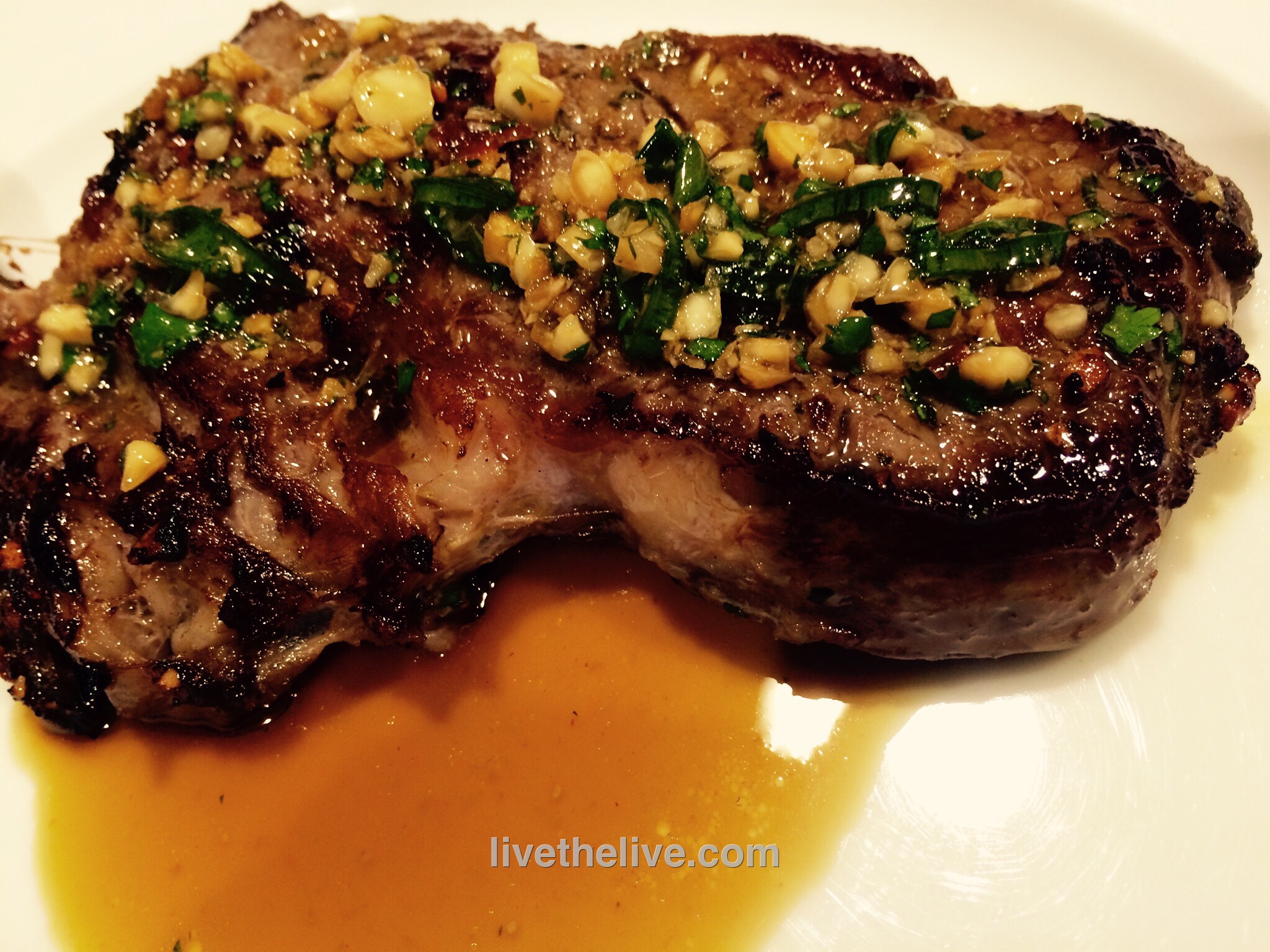
With the garden coming to life again this spring, I found a bunch of shoots popping out of the soil in my garlic patch. I pulled them out, and the garlic greens looked just like baby scallions, only with tiny garlic bulbs at the bottoms. I also found some fresh oregano growing in the herb garden. I washed them all, finely chopped them, and sautéed them in a pan with a little olive oil, butter, salt and pepper. I cooked them just until the garlic started to get brown and crispy, and I poured it all over my porterhouse. Fantastic!

FullSizeRender (5)

Just remember…

IMG_1521