Posts Tagged ‘food’

Beef sirloin tips are a bit fatty, which makes them perfect for grill because they don’t dry out, even if you leave them on a little too long. But they can be chewy, so marinating them overnight before grilling tenderizes them and gives them great flavor.

There always seems to be 2 choices when it comes to beef tips at the supermarket: the nice, clean tips that cost a lot, and the fattier, gristlier ones that come cheap. I’ve bought both, figuring I’d still save money with the cheap ones if I cleaned them up myself. Generally speaking, after cleaning up the cheap cuts of meat and tossing all the fat and gristle in the trash, I’ve found that it winds up costing about the same. So now I go for the nicest sirloin tips I can find.

I’ve made many marinades in my day, but I’ve never used the “secret ingredient” that I used this time around. I make my own Lithuanian honey liqueur called Krupnikas (I’ll write more about it in a future blog), and the combination of honey and secret spices really added to the marinade. Unless you make your own Krupnikas, you’re SOL, so I recommend honey and a little bourbon.

Gochujang is a Korean hot sauce. Feel free to substitute with your favorite.

fullsizerender-11


2 lbs. beef sirloin tips, cut into 1 1/2″ cubes
2 tablespoons La Choy Stir Fry Teriyaki sauce and marinade
2 tablespoons honey
1 tablespoon bourbon
2 teaspoons peanut oil
1 teaspoon lite soy sauce
1/2 teaspoon chili garlic sauce
1/2 teaspoon sesame oil
1/4 teaspoon gochujang


Trim off the excess fat and gristle, as well as all the silver skin off the beef, then cut into 1 1/2″ pieces. Place them in a large Ziploc bag, sitting inside a bowl. (The bowl will keep the marinade from spilling into your fridge if the bag leaks.)

In a separate bowl, combine all the other ingredients and whisk to combine thoroughly. Pour this marinade over the beef in the bag, making sure every bit of the marinade makes contact with the meat. Seal the bag tightly, squeezing all the air out of it, and place it in the fridge overnight. Be sure to squish the bag every once in a while to make sure the marinade penetrates all parts of the beef.

The next day, light a hot grill and cook the beef tips to desired doneness. If you’re cooking indoors, heat some pork lard in a large cast iron skillet, and sear the beef tips on all sides until done.

Let the beef rest before digging in!


Chourico is as important to the Portuguese as bacon is to us Lithuanians. Here in Southern New England, they pronounce it “sha-rees,” not the exaggerated Spanish “chaw-reezo,” like you hear on the Food Network.

I was joking with a friend the other day that if I won the lottery, I could buy a lifetime supply of chourico at my favorite store: Mello’s in Fall River, Mass. His response was: “Is there such a thing as a lifetime supply of chourico?!”

Good point!

If you’ve had really great chourico, you’re always looking for new ways to include it in your cooking. And arugula is one of the easiest greens to grow in the spring or fall garden. Even now, in November, I’ve got lots of it growing, just waiting to be turned into pesto.

Inspired by chef Chuck Hughe’s recipe, this is a great chourico appetizer that’s really easy to make. Whip up the arugula pesto ahead of time and keep it in the fridge. Then when guests come, just slice the chourico, saute it in a pan until brown, and serve.

fullsizerender

3 cups fresh baby arugula
1/2 cup walnuts
1/2 cup olive oil
1 clove garlic
1 teaspoon salt
1/4 teaspoon pepper
1/2 cup + one tablespoon grated Parmigiano Reggiano or other good quality parmesan cheese
2 lbs. chourico, sliced into 1/2″ pieces

Combine the arugula, walnuts, olive oil, garlic, salt, pepper and the 1/2 cup of cheese in a food processor or blender and blend until smooth. Set the tablespoon of cheese aside for garnishing later.

fullsizerender-1

Remove the casing from the chourico and slice it into 1/2″ thick pieces. Saute the chourico in a pan until both sides are caramelized and golden.

Place the chourico on a plate, topping with some of the pesto. Sprinkle a touch of the grated cheese to garnish. Serve immediately, while the chourico is still hot!


fullsizerender-3


Spaghetti alla Carbonara and Fettuccine Alfredo are my two favorite pasta dishes. Little did I realize that if I took the best of each one, I’d have something that would just blow me (and my family) away. The addition of chicken and peas made for a more balanced plate. This will now be my go-to dish when guests arrive, since many parts can be prepared ahead of time. And you’d never know that this dish is completely gluten-free!

fullsizerender-4

Start with the chicken…

The breading for the chicken uses gluten-free bread that I’ve toasted, crumbled and put into a food processor to make breadcrumbs. You get a lot more flavor this way than using store-bought GF breadcrumbs from a can. I add gluten-free flour to it to lighten it up. Cup4Cup is by far the best GF flour I’ve tried.

1/2 lb. chicken breasts, cut into 1″ pieces
1 egg, scrambled
4 oz. sliced gluten-free bread, toasted (I use Udi’s frozen bread)
1/2 cup gluten-free flour (I use Cup4Cup)
3 teaspoons dried parsley
2 teaspoons dried oregano
1 teaspoon dried basil
1/2 teaspoon granulated garlic
1/2 teaspoon granulated onion
1 1/2 teaspoons salt
1/4 teaspoon pepper
olive oil, for frying

Scramble the egg in a bowl. Cut the chicken into pieces, and add them to the egg, making sure they get evenly coated. Set aside.

In another bowl, combine the bread crumbs, flour, parsley, oregano, basil, garlic, onion, salt and pepper. Set aside.

Fill a pan with about an inch of olive oil. Heat to medium-high, for frying.

In batches not to overcrowd the pan, take the chicken pieces out of the egg and toss them in the bread crumb mixture, shaking off the excess. Place them carefully in the hot oil and fry on both sides until golden. Since they’re small pieces, they should cook all the way through easily. Drain on a plate covered with paper towels. Do this with all the chicken and set aside. Try not to eat it all before you make the rest of the dish! (This chicken can also be eaten as is–these are my daughter’s favorite nuggets–or used with tomato sauce and cheese to make a delicious chicken parmigiana.)

fullsizerender-6

The carbonara factor…

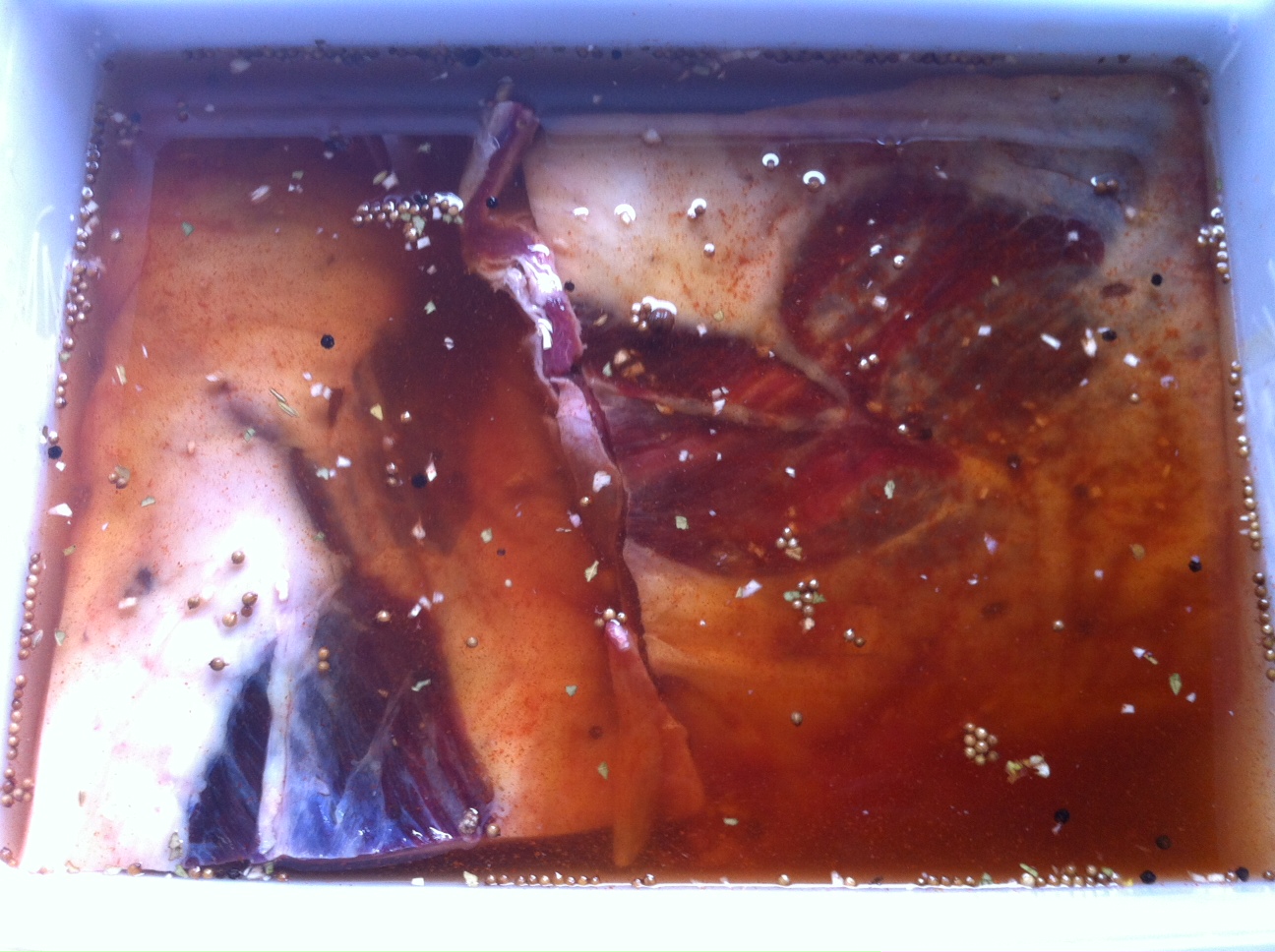
Many recipes for Spaghetti alla Carbonara use pancetta or bacon. But the original recipe calls for guanciale: cured (but not smoked) pig jowls, or cheeks. It’s easy enough to find in a good Italian food store, but I cure my own. I buy raw heritage Berkshire pork jowls from a farm that raises the pigs humanely, and cure the jowls for about 3 weeks in a combination of salt, pepper and fresh thyme leaves. Then I rinse them, pat them dry, and cut them into portion-sized pieces, which I wrap individually and freeze until I need them. It’s a lot of work, but to me, totally worth it.

3 oz. guanciale

If the guanciale is frozen, let it thaw just a little, then cut it into the smallest cubes you can manage. Place it in a pan and cook them until they’ve browned and crisped beautifully. Keep an eye on the pan, as guanciale can burn easily. Use the fried meat bits for this recipe and save the fat for flavoring a future dish! Set aside.

The Alfredo sauce…

Despite what you get in crappy restaurants like Olive Garden, Alfredo sauce should not be runny or soupy. It should cling to the pasta and be rich in flavor. I use Garofalo gluten-free pasta exclusively, because it tastes just like real pasta. Believe me, I’ve tried every GF pasta out there. I buy mass quantities at Amazon.

1 cup heavy cream
3 tablespoons butter
Fleur de Sel or sea salt
1 lb. pasta, fresh or dried (I used linguine this time because that’s what I had in my pantry)
2/3 cup freshly grated Parmigiano Reggiano cheese
freshly ground black pepper
a very tiny grating of fresh nutmeg (optional for this dish–I leave it out–but used when I make Alfredo)


Put 2/3 of the cream and all the butter in a large saucepan that will later accommodate all the pasta. Simmer over medium heat for less than a minute, until the butter and cream have thickened a bit. Turn off the heat.

Drop the pasta in a bowl of boiling salted water. If the pasta is fresh, it will take just seconds. If it’s dry, it will take a few minutes. Gluten-free pasta, which is what I use, takes a little longer. Either way, you want to cook the pasta even firmer than al dente, because it will finish cooking in the pan with the butter and cream. Drain the pasta immediately when it reaches that firm stage, and transfer it to the pan with the butter and cream, tossing the pasta gently for a few seconds to coat.

Turn the heat under the saucepan on low, tossing the pasta, coating it with the sauce. Add the rest of the cream, all the Parmigiano Reggiano, a bit of pepper (no salt because the guanciale will add more saltiness later), and the nutmeg (if you’re using it.) Toss briefly until the sauce has thickened and the pasta is well-coated.


At this point, you don’t want the pasta to get to dry, so you add…

1 cup of frozen peas

…tossing gently to warm them through. Also add the cooked guanciale at this time.

fullsizerender-5


Plate the pasta in a bowl or dish and serve the chicken alongside.


Today is National Meatloaf Day. Few dishes scream out “comfort food” to me like meatloaf. My Mom’s meatloaf was awesome, and she’d cut a huge slab of it onto my plate, with fantastic butter-loaded Pennsylvania Dutch egg noodles on the side. I couldn’t stop eating it.

I never thought of making meatloaf when I moved away, because it gave my Mom something special to make for me when I came home to visit. She was thrilled that there was a dish she could make that I would devour every time, without hesitation. (The others were her roasted lamb and Lithuanian pierogis called koldūnai (kol-doon-ay).

But now that my Mom has moved into an assisted living facility where she can’t cook, I’ve had to take meatloaf matters into my own hands. I never got my Mom’s exact recipe. But I had an idea of what went into it, so I gave it a shot.

The standard mix for my Mom’s meatloaf was one-third each ground beef, pork and veal. I went 50-50 with the beef and pork instead. My Mom used Lipton onion soup mix in her meatloaf. I chose to stay away from packaged chemicals. And instead of layering slices of bacon on top as many people do, I used my own home-cured and smoked pre-cooked bacon that I chopped up and put inside the loaf.

To keep this dish gluten-free, I use GF breadcrumbs, and I also don’t use the Lipton onion soup mix, because it can contain non-GF ingredients.

image

1 yellow onion, minced
1 teaspoon salt
1/2 teaspoon pepper
1/2 teaspoon granulated garlic
pork fat or olive oil
1 lb. ground beef
1 lb. ground pork
1/2 cup breadcrumbs (I use gluten-free)
1/4 cup ketchup
4 strips of cooked bacon, chopped
2 eggs


Sauté the onion in a little oil or pork fat until translucent. Let it cool, then mix in the salt, pepper and garlic. Set aside.

In a bowl, combine the meat, breadcrumbs, ketchup, bacon, eggs, and the sautéed onion mixture. Form it into a loaf and place it in a loaf pan. Bake at 350 for about an hour.


I have chicken at least twice a week…can’t get enough of it! So I’m always looking for new recipes. I especially love marinades, because it’s easy to prepare ahead of time, and the flavor goes right through the meat.

The balsamic used in this recipe is the basic, $9-buck-a-bottle stuff. don ‘t use your 25-year-old aged fancy balsamic!


fullsizerender-15

4 lbs. chicken parts, or 1 whole chicken cut up
1/2 cup balsamic vinegar
2 tablespoons honey
1 1/2 tablespoon mustard (I use Gulden’s)
1 tablespoon chopped fresh rosemary
2 teaspoons garlic salt
1 teaspoon pepper
extra virgin olive oil


If the breast of the chicken is really large, you’ll want to cut it in half so that it cooks as quickly as the other parts. Put all the chicken pieces in a large Ziploc bag.

In a bowl, combine the balsamic vinegar, honey, mustard, rosemary, salt and pepper. Whisk to mix thoroughly.

Pour the contents of the bowl into the Ziploc bag, seal tightly, and squish it around to make sure the marinade reaches all surfaces of the chicken.

Marinate the chicken for about an hour at room temperature. Preheat the oven to 350.

Using an oven-proof pan, heat some olive oil and then place the chicken pieces in the pan. Sear for 2 minutes on one side, then sear for 2 more minutes on the other. Place the pan in the oven and cook for 30 minutes, making sure the chicken has cooked all the way through.


My last blog featured Reuben Seup, the lovechild of a Reuben sandwich and French onion soup. Crucial to its success is good pastrami. Sure, you can buy it in a store if you want to settle for a nasty slab full of chemicals and preservatives, but nothing beats making it yourself. Pastrami starts as corned beef, which starts as beef brisket.

It takes about 3 weeks to make corned beef, and a little more time after that to reach pastrami nirvana. But it’s not difficult to do.

Corned beef has nothing to do with corn. ‘Corning’ is a technique for preserving raw meats for long periods by soaking it in salt brine. This method was used before the days of commercial refrigeration. Back then, the large salt kernels used in the brine were called “corns.”

Brining is a time-honored way of preserving and it prevents bacteria from growing. Both pastrami and corned beef are made this way. Both corned beef and pastrami start with a brisket of beef. Corned beef is then cooked–usually boiled–and served. Pastrami is made when the brined meat is rubbed  with more spices and smoked to add extra flavor. So corned beef and pastrami are the same meat, just treated differently.

Saltpeter is an ingredient that has been used in brining beef for years. It adds the traditional red coloring to the corned beef and pastrami meat. But since saltpeter can also contain carcinogens, I leave it out. The meat may not be the usual bright red color, but the flavor and texture of the meat will not be affected.

Brining the beef brisket

Brining the beef brisket

Step one: corned beef…

beef brisket (about 8-10 pounds)
1/4 cup warm water
2 tablespoons sugar
3 cloves of minced garlic
2 tsp. paprika
1 tablespoon mixed pickling spices
3/4 cup Kosher salt
2 quarts cool water

Place the brisket in a large container made of non-reactive material, like glass or plastic.

In the 1/4 cup of warm water, combine the sugar, minced cloves, paprika and pickling spices.

Dissolve the 3/4 cup of salt in the 2 quarts of water. Pour in the sugar/garlic/paprika/pickling spices mix and stir everything together. Pour the mixture over the meat in the container. Make sure the meat is totally beneath the surface of the liquid. (You may need to weigh it down to do this.) Cover the container.

Refrigerate the container and contents for 3 weeks, turning the meat once or twice per week. At the end of the third week, remove the container from the refrigerator and take out the meat. Soak the meat in several changes of fresh cold water over a period of 24 hours to remove the excess salt.

At this point, if you want corned beef, prepare and cook it using your favorite recipe. But I’m all about the pastrami!

Step two: making Pastrami…

pastrami


Brined and rinsed corned beef brisket from above recipe, patted dry with paper towels
3 tablespoons coriander seeds
2 tablespoons black peppercorns
2 tablespoons yellow mustard seeds
1 tablespoon white peppercorns
1/4 cup Kosher salt
1/4 cup paprika
3 tablespoons brown sugar
1 tablespoon granulated garlic

Combine the coriander seeds, black and white peppercorns and mustard seeds in a spice grinder and grind coarsely. Place them in a bowl. Add the salt, paprika, brown sugar and granulated garlic. Mix well.

Rub the mix into the brisket well, covering all sides.

Heat the smoker to 225 degrees and smoke for several hours using a less intense wood, like oak. When the internal temperature of the meat has reached 165 degrees, it’s done. It isn’t necessary to smoke pastrami as long as you would a regular brisket because the long brining time makes the meat tender.

It’s very important that absolutely everything that comes in contact with the meat is very clean. (This includes your hands.) Also, make very sure that every inch of the meat reaches the 165 degrees before it is removed from the smoker. The corned beef is now pastrami! Let it rest before slicing.

REUBEN SEUP

Posted: October 12, 2016 in bacon, cheese, Food, Recipes, sauerkraut
Tags: , , , ,

As the weather gets cooler here in Southern New England, nothing sounds better than a hot bowla soup and a sandwich!

But why have soup and a sandwich when your soup can be your sandwich? I had all the ingredients to make a Reuben sandwich. But I wanted soup. So I made Reuben Seup…I mean Soup!

Think French onion soup, but using Reuben ingredients…

rye

Take an oven-proof soup bowl. Line the bottom with some rye bread.

kraut

On top of that, place a nice helping of sauerkraut. I use sauerkraut that’s been rinsed and drained, then sauteed with some onions and bacon until lightly caramelized.

stock

Slice pastrami as thinly as possible, and simmer it in a pot of homemade chicken stock until tender. Season stock with salt and pepper, if needed. Pour the stock and pastrami over the sauerkraut.

swiss

Layer slices of Swiss cheese over the top of the bowl. Place under broiler until melted.

melty

Eat!

eat

It satisfied my soup and sandwich craving!


Yesterday, October 6th, was National Noodle Day. But I find any excuse to chow down on a great noodle dish!

There’s something about Asian noodle dishes that make them incredibly addictive. They’re great hot or cold, and easy to make at home, which is important to me because I live in the boonies, about 30 miles from my favorite Asian restaurant. I store an arsenal of basic Asian ingredients in my pantry, so slapping this together is no effort at all.


Asian noodles


4 tablespoons creamy peanut butter
2 teaspoons sesame oil
2 tablespoons Satay sauce
1 teaspoon Chinese chili garlic sauce
12 oz. package Chinese noodles (use rice noodles to make it gluten-free)

Combine the peanut butter, sesame oil, Satay sauce, and chili garlic sauce in a bowl. Set aside.
Boil the noodles until al dente. Drain.
Mix noodles with the sauce. Devour.

Ideally, a thin cut like a skirt steak works best for this recipe. But I didn’t have any in my freezer. What I did have was a fat ribeye, so once I thawed it, I sliced it lengthwise to get two large, thin steaks which would easily suck up the marinade I was going to make. And the ribeye was nicely marbled, so it stayed juicy and tender.

image


1/4 cup toasted sesame oil
1/4 cup soy sauce
2 tablespoons each finely chopped ginger, garlic, cilantro and unsalted dry roasted peanuts
2 scallions, minced
1 tablespoon each of light brown sugar, lime juice and chile oil
2 lbs. beef ribeye
1/4 cup chicken stock

To make the marinade, whisk together the sesame oil, soy sauce, ginger, garlic, cilantro, peanuts, scallions, sugar, lime juice and chile oil in a bowl. Transfer half of it to a shallow dish.
Add the steak to the dish and turn to coat well with the marinade. Cover and refrigerate overnight. Refrigerate the remaining marinade.
The next day, light a grill. While it’s warming up, add the chicken stock to the reserved marinade. This will be the dipping sauce for the beef. (I like it at room temp.)
Take the steak out of the fridge and bring it to room temperature. Season it with salt and pepper, and grill it over high heat until medium-rare, about 5 minutes.

If it’s too cold to light a grill, heat a cast iron pan, add a few drops of avocado oil, and sear the beef on both sides before placing it in a pre-heated 375-degree oven to finish cooking.


The latest rage in food is finding new uses for cauliflower. Personally, I love the taste of it so I don’t really need alternatives. But my wife’s on a gluten-free diet, I need to reduce my carbs, and we both love pizza. It seemed that maybe a cauliflower crust could be the answer.

The key to the crispiest crust possible is to make sure you bake it thoroughly before you put the toppings on.  Even if the crust comes out a bit soggy, all is not lost. Just grab a knife and fork… It’ll still taste pretty darn good.

img_2654

2 cups riced, then cooked cauliflower
1 cup grated parmesan cheese
2 eggs, beaten
1 teaspoon garlic salt
1 teaspoon oregano
1 teaspoon parsley
mozzarella cheese
tomato sauce
additional pizza toppings of your choice


Cut the cauliflower florets into chunks and toss them in a food processor. Pulse until you get the consistency of rice. Don’t over-process, or you’ll get mush.

img_2656


Microwave the riced cauliflower in a bowl for about 6 minutes on high. No need to add water. Depending on the amount of liquid in your cauliflower, you may need to transfer it to a fine mesh strainer to let it drain. Once it has drained, transfer it to a clean dish towel and wrap the sides around the cauliflower, gently pressing out the excess water. You want to get it as dry as possible. Dry = crispier crust. But be careful…let the nuked cauliflower cool first or you could burn your hands!

Pre-heat your oven to 450 degrees. (I like to use my large toaster oven, with the convection feature turned off.)

In a large bowl, use 2 cups of the cauliflower. (Depending on the size of the cauliflower head, you may have a little left over.) Add the parmesan cheese, the eggs, garlic salt, oregano and parsley. Mix well until it forms a sort of ball of “dough.”

img_2655

Grease a 9″ stainless pizza pan with olive oil. (Lining it with non-stick foil first is an option.) Take your ball of “dough” and press it evenly into the pan, making sure you don’t get it too thin, or you’ll get holes.

Bake the “dough” in the oven for 20–25 minutes, until it looks brown and crispy and is fully cooked. You don’t want it to be soft or soggy.

Remove the pizza from the oven, and add the tomato sauce, cheese, and whatever other toppings you like. (I used some pre-cooked chicken sausage and a sprinkling of oregano.)

Return the pizza to the oven, only this time place it under the broiler, and cook until the toppings have browned and the cheese has melted. Keep an eye on it…be careful not to burn it!