Archive for the ‘Uncategorized’ Category

Through years of tireless experimentation, I’ve come up with a barbecue sauce that I feel is the best I’ve ever made. Granted, everybody has their favorites, but this one kicks butt. I prefer a slightly sweet and tangy barbecue sauce,  so unless I’m making a classic pulled pork sandwich, I usually avoid vinegar-based sauces.

What makes this sauce special is the citrus. I originally used lemon juice for this recipe and it was good. Lime juice with lime zest was better. I also tried oranges, tangerines, even Meyer lemons. But my breakthrough happened on a day when I was craving barbecued chicken and all I had in my fridge was a grapefruit. I thought: how bad could it be? Turned out to be the perfect foil to the sweetness of the brown sugar and ketchup.

My favorite chicken pieces are the leg quarters: thigh and drumstick all in one. Chicken breasts, even on pastured birds, are pretty flavorless and dry, so I pass on them for the darker meat that’s juicy and fatty. (Honestly, I find it hard to trust anyone that won’t eat meat off a bone.)

Cooking chicken in the oven before putting it on the grill has several advantages. I don’t have to stand over the grill, constantly worrying about the meat burning or the fire going out. I can simply set a timer when I need to brush on the barbecue sauce or remove the chicken pieces. And the chicken cooks evenly…one piece won’t be burned while another piece is undercooked. Cooking them low and slow in the oven keeps the chicken juicy and tender. And I’m assured that my chicken is thoroughly cooked…no worries about salmonella.

I pre-heat the oven to 350 just to get it nice and hot. I line a sheet pan with non-stick aluminum foil, placing the chicken pieces on it. I rub each piece with a little olive oil, and season them lightly with Lawry’s Seasoned Salt. The chicken goes into the oven and I immediately lower the temperature to 200 degrees.

While the chicken is cooking, I combine all the barbecue sauce ingredients in a sauce pan, bring it to a boil, then reduce it to a simmer, letting it cook for about 20 minutes, until it has thickened. Then I turn the heat off and set the pan aside.

I’ll bake the chicken for about an hour, taking the sheet pan out of the oven to brush the barbecue sauce on the pieces before returning to the oven again, now bringing the temperature up to 300 degrees. (Because there’s sugar in the barbecue sauce, I don’t want to crank the heat or it will burn.)

Taking the chicken out of the oven and brushing it with sauce.


In 30 minutes, I take the sheet pan out a second time, and brush the sauce on the chicken pieces again…then back in the 300-degree oven for another 30 minutes.

Once the chicken’s back in the oven, it’s time to start the grill. For projects like this, I like to use a small grill I bought for our family camping trips. It’s like a mini-Weber, and it grills enough food for 4 people easily, without wasting charcoal like a larger grill would.

These small grills are just 20 bucks, and they save you a ton of otherwise wasted, unused charcoal.


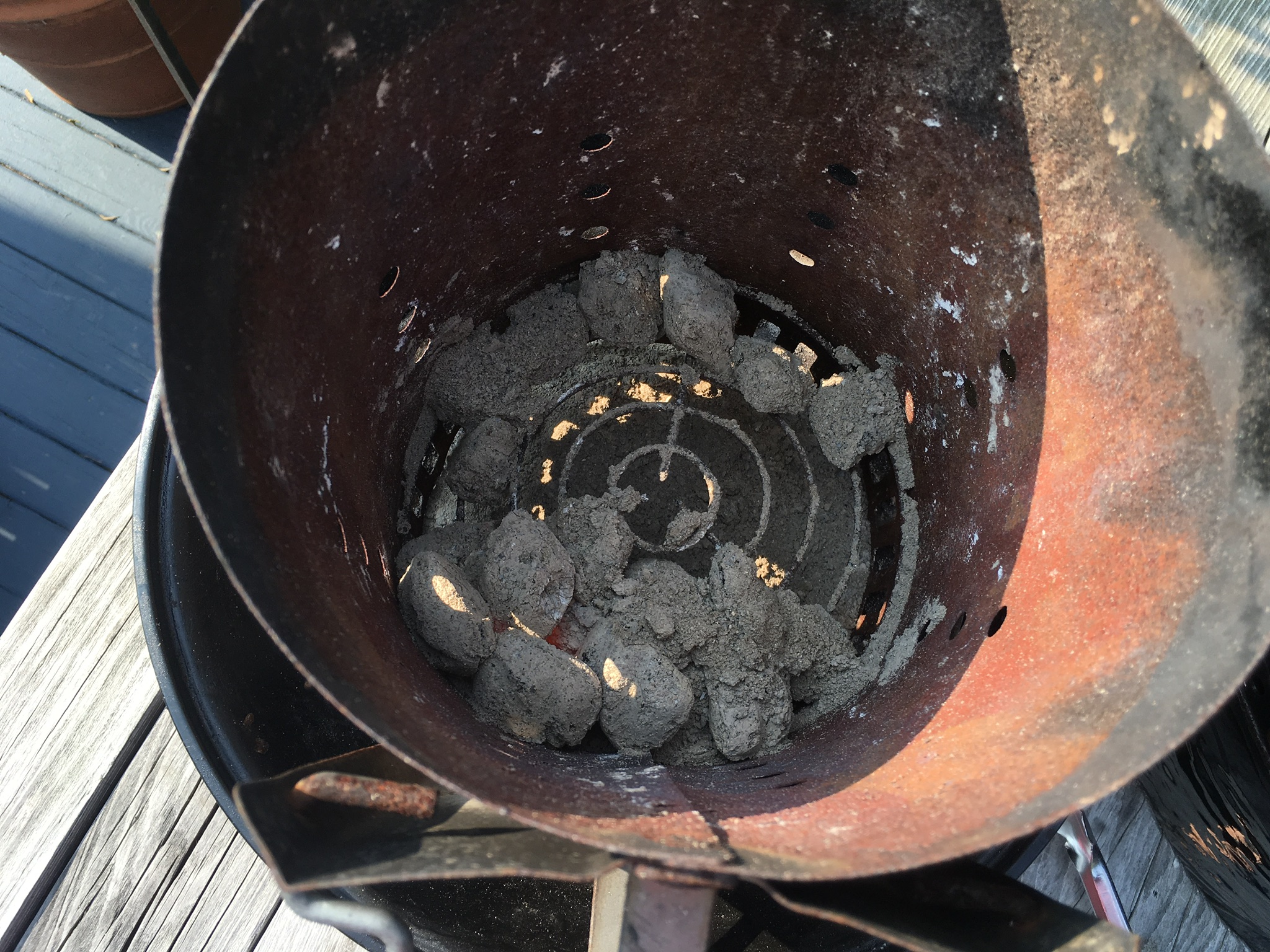
I use a smaller charcoal chimney for this project, and I use charcoal briquets, not hardwood, because I want an even fire. The coals are ashed over in just 10 minutes.
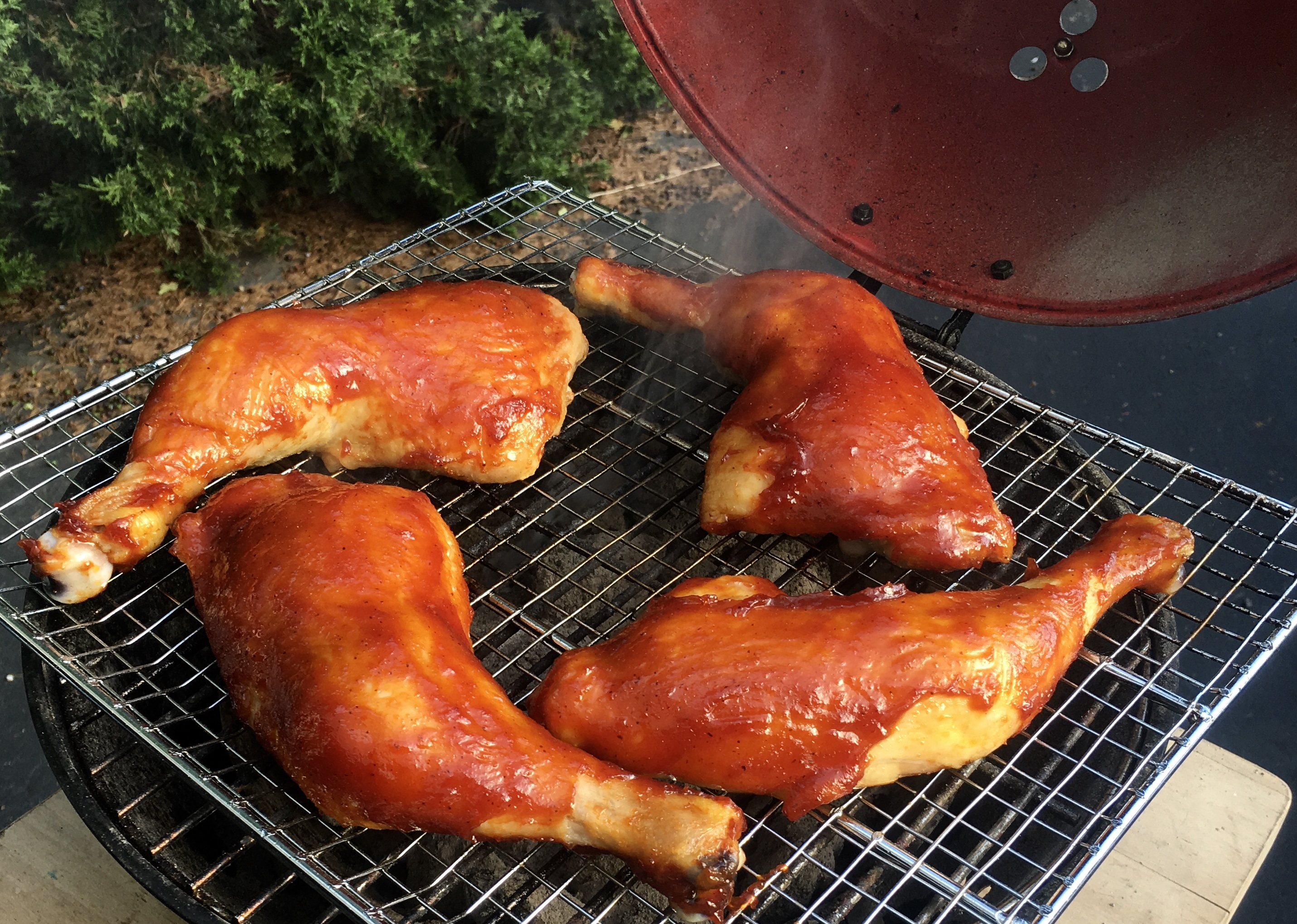
Out of the oven and onto the fire! The grill grate was nasty and rusty, so I just grabbed a clean one I had handy and popped it right on top. (I hate scrubbing grills!)


Once the chicken has cooked its total of 2 low-and-slow hours in the oven, I bring the pieces outside. I spread the coals evenly on my little grill, and place the chicken pieces on it, flipping the pieces so that both sides get nice and smokey with a little bit of char…about 5 or 10 minutes per side will do the trick.

Getting that char on the chicken is key to making it taste like it’s been on the grill all the time.


The chicken goes back to the kitchen, and while it’s still hot, I brush with the barbecue sauce one last time before serving.


Perfectly done…perfectly delicious!


Here is the magical barbecue sauce recipe…

1 cup ketchup
1/2 cup firmly packed brown sugar
Juice and zest of 1 grapefruit
3 tablespoons unsalted butter
1 teaspoon cayenne pepper sauce, like Frank’s Red Hot
1 teaspoon Worcestershire sauce
1 teaspoon granulated garlic
1 teaspoon granulated onion
1/4 teaspoon black pepper
(no salt)

Combine all the ingredients in a sauce pan. Bring it to a boil and then turn it down low, and let it simmer for about 20 minutes, or until slightly thickened.
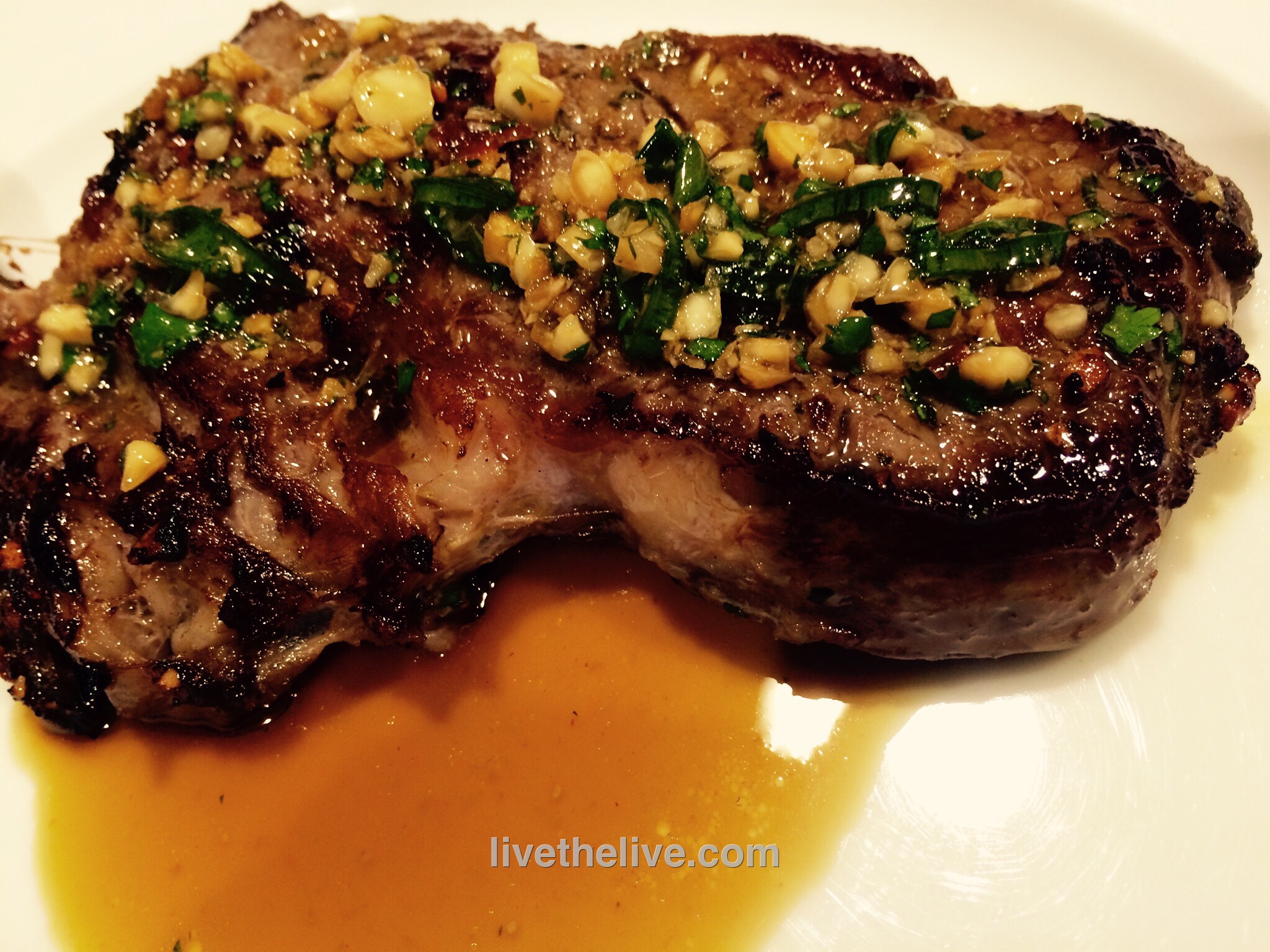


The original recipe called for skirt steak, but I didn’t have any in my freezer. I did have a fat ribeye, though, so once I thawed it, I sliced it lengthwise to get two large, thin steaks which would easily suck up the marinade I was going to make. And the ribeye was nicely marbled, so it stayed juicy and tender.


image


1/4 cup toasted sesame oil
1/4 cup soy sauce
2 tablespoons grated ginger
2 tablespoons finely chopped garlic
2 tablespoons finely chopped cilantro
2 tablespoons chopped dry roasted unsalted peanuts
2 scallions, minced
1 tablespoon light brown sugar
1 tablespoon fresh squeezed lime juice
1 tablespoon chile oil
2 lbs. beef ribeye (or skirt steak or beef flap)
1/4 cup chicken stock (homemade is best)

In a bowl, whisk together the sesame oil, soy sauce, ginger, garlic, cilantro, peanuts, scallions, sugar, lime juice and chile oil. Transfer half of it to a shallow dish.
Add the steak to the dish and turn the meat to coat it well. Cover and refrigerate the beef overnight. Refrigerate the remaining marinade.

The next day, light a grill. While it’s warming up, add the chicken stock to the reserved marinade. I like to heat it to combine it well, not letting it reach a boil,  then remove it from the heat and let it come to room temperature. This will be the dipping sauce for the beef.

Bring the steak to room temp, season with salt and pepper, and grill it over high heat until medium-rare, about 5 minutes. If it’s too cold to light a grill, or if you just want to use the oven, heat a cast iron pan, add a few drops of avocado oil, and sear the beef on both sides before placing it in a pre-heated 375-degree oven to finish cooking.

Devour the beef with the dipping sauce!


I’m fortunate that I can buy my veal from a nearby dairy farm, Sweet & Salty Farm in Little Compton, RI, where the animals are grass-fed and raised humanely. That makes for happier animals and incredibly flavorful meat…and no guilt about using it.

I also buy veal bones from Sweet & Salty Farm, roasting them on a sheet pan in a 400-degree oven for 30 minutes, then placing them in a large pot of water. I take some chopped carrots, onions, and celery, toss them in a little olive oil, and place them on a sheet pan, roasting them in the oven until they’ve caramelized, then add them to the pot with the veal bones. The secret to a great veal bone broth is to boil the bones and veggies for as long a time as possible. Restaurants will do this for days, replacing the water in the pot as needed. At home, I’ll start the broth in the morning and finish it by evening.

The subtle flavor of veal can get lost with heavy seasonings, so I keep it simple. The addition of veal bone broth amplifies the flavor and keeps the meatballs from drying out.


img_0245

1 lb. ground veal
1 cup toasted breadcrumbs (I use Udi’s bread to make it gluten-free)
2 teaspoons parsley
1 teaspoon oregano
1/2 teaspoon basil
1 teaspoon salt
1/2 teaspoon black pepper
1/2 teaspoon granulated garlic
1/2 teaspoon granulated onion
1 egg
extra virgin olive oil
1 lb. pasta, cooked firmer than al dente (I use Garofalo GF pasta to make it gluten-free)
2 cups veal bone broth or beef stock
salt and pepper for seasoning
2 tablespoons half-and-half
2 tablespoons butter
1 cup of frozen organic peas


Pre-heat the oven to 350 degrees.

Make the meatballs: In a bowl, combine the veal, breadcrumbs, parsley, oregano, basil, salt, pepper, garlic, onion and egg, mixing the ingredients thoroughly. Don’t over-mix.

Heat a tablespoon of the olive oil in an oven-proof pan, and form the meatballs one by one, placing them in the pan. Brown the meatballs on all sides over medium heat. Place the pan in the oven to cook the meatballs for 10 more minutes.

In a saucepan, heat the veal bone broth or beef broth. Once the meatballs have cooked in the oven, transfer them to the pot of broth and cover it with a lid, keeping the heat on low. If the broth doesn’t cover the meatballs, turn them every once in a while to keep them moist on all sides. Cook the meatballs in the broth for about 30 minutes, then transfer them to a large sauté pan.

Turn the saucepan with the veal broth on high and reduce it to about 1/2 cup. Season it with salt and pepper.

In a large pot, cook the pasta to a bit firmer than al dente in well-salted water. Drain it and set it aside.

In the large sauce pan with the meatballs, add the butter and the half-and-half. Add the reduced veal broth, the pasta, and the peas.

Gently mix the ingredients in the pan until the peas have warmed through and the sauce clings to the pasta. Serve immediately.


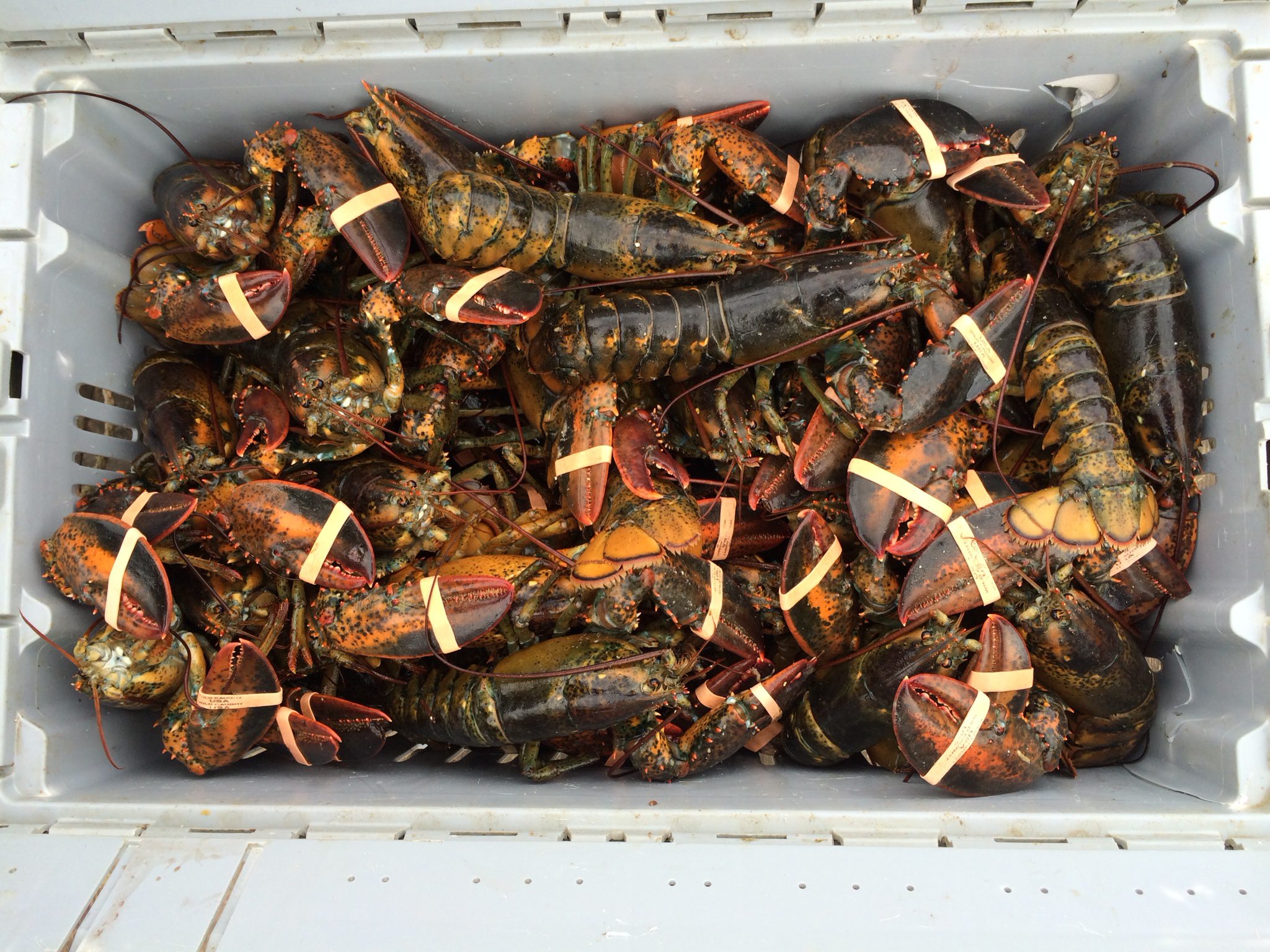
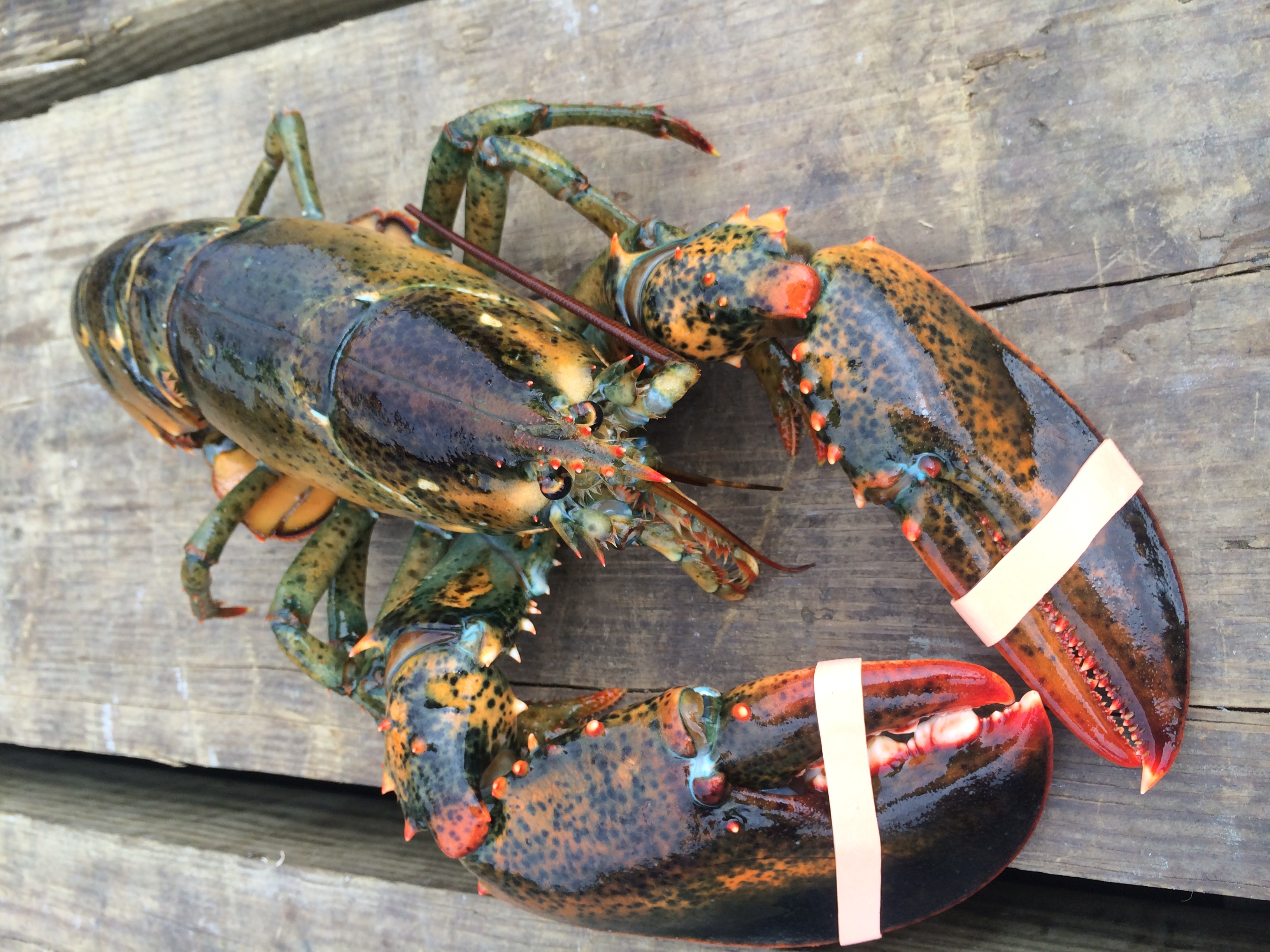
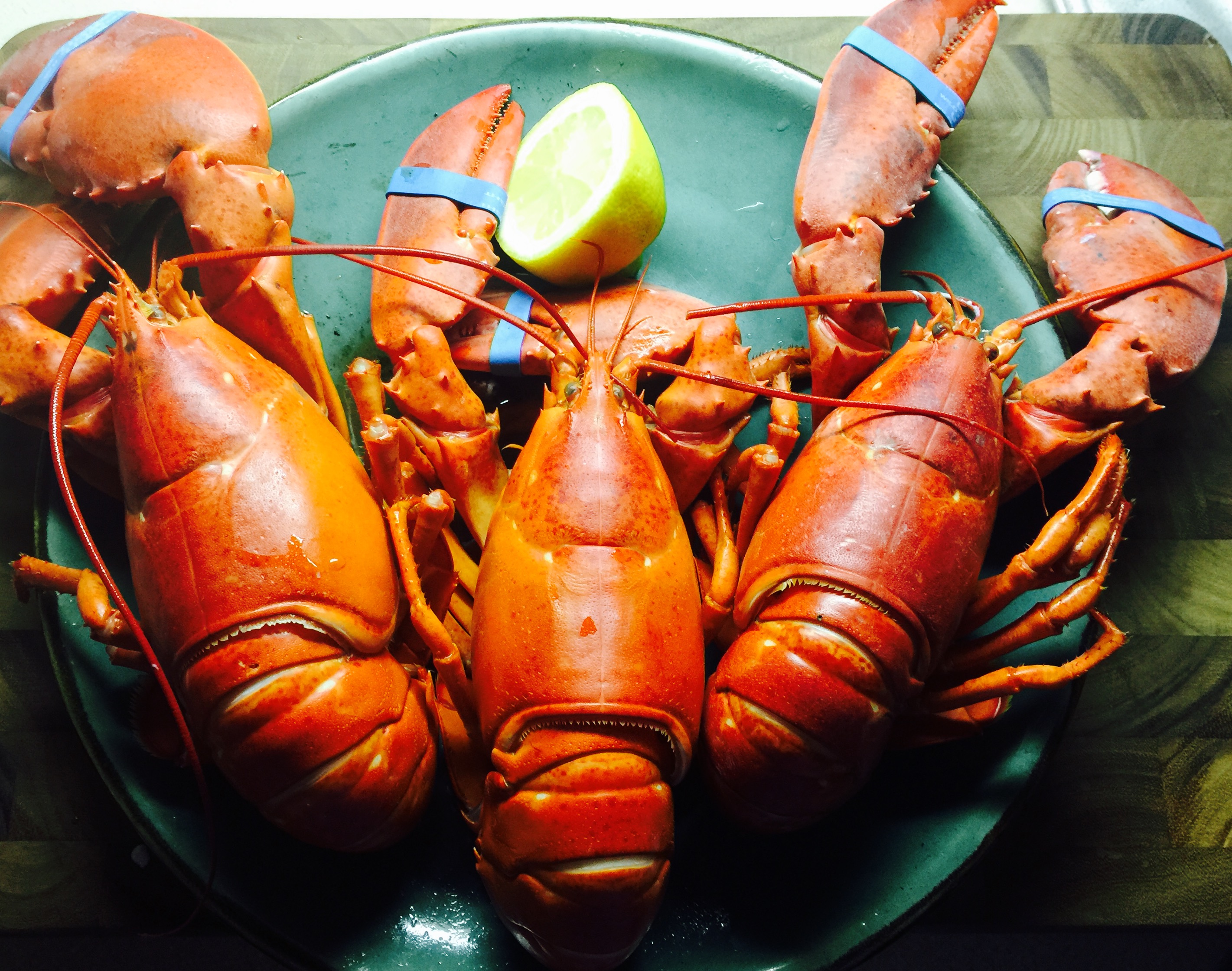
Those of us that live in New England understand the magnificence that is a fresh lobster. Nothing beats a Maine lobster pulled right out of the water, placed in a pot of boiling water, and devoured moments later with nothing but melted butter on the side.


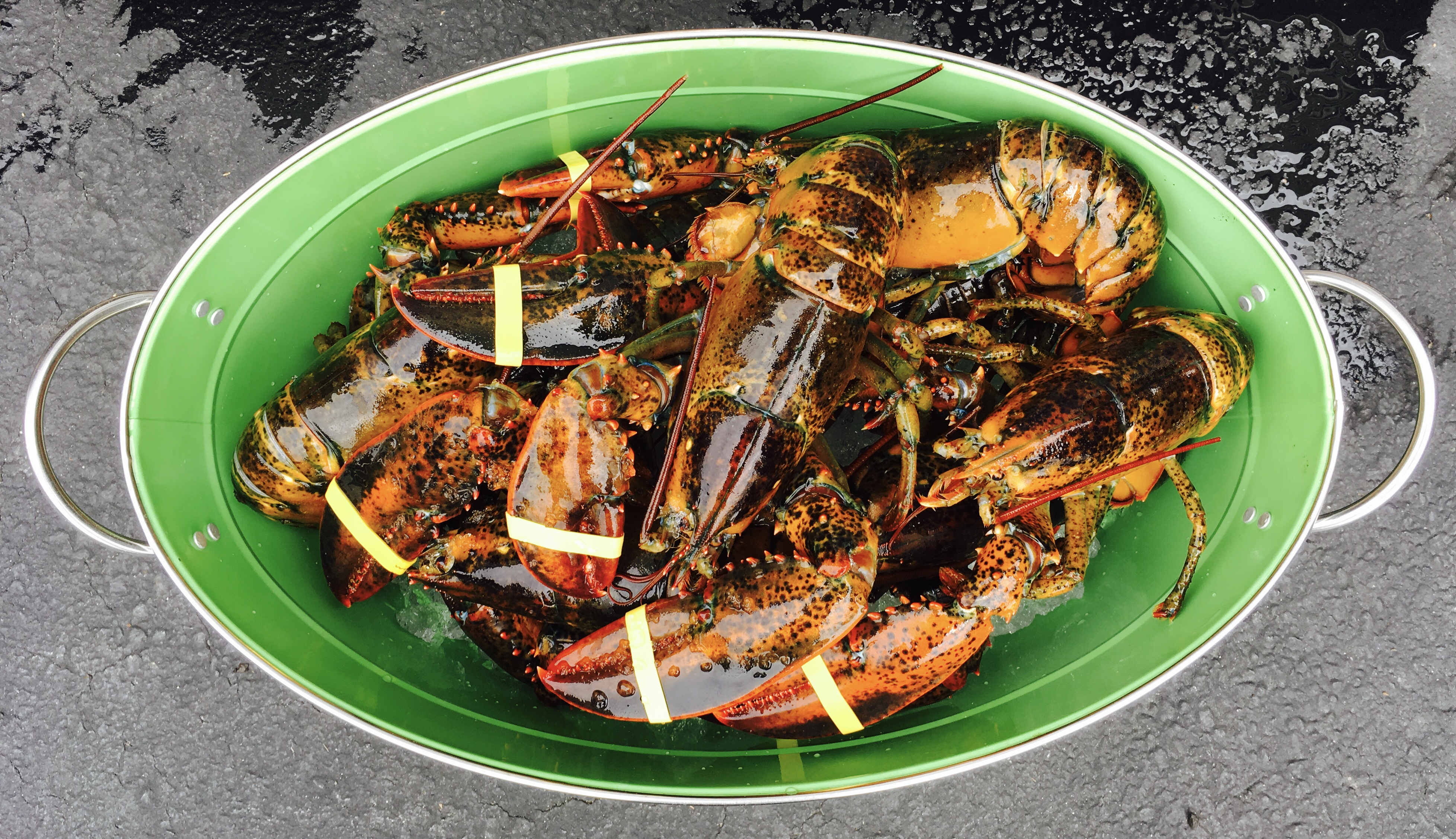
I live in Rhode Island. Our waters are a bit warmer than Maine’s, but my friends at Sakonnet Lobster in Little Compton, literally footsteps from our rental home, Saule (www.sauleri.com…go to Homeaway.com listing #4711871) have the freshest lobster around.


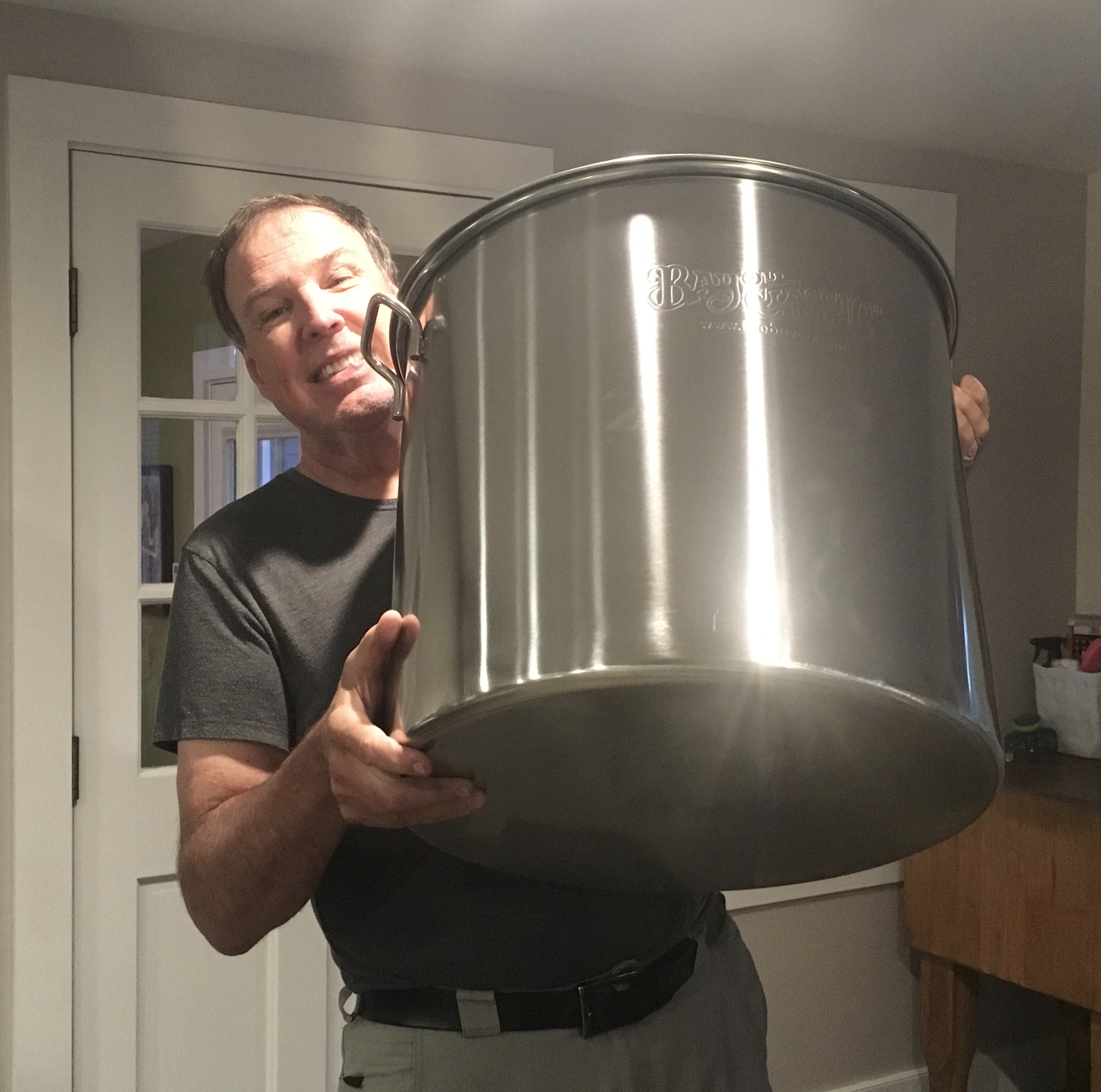
At a recent gathering at our house, I fired up my brand new 200,000 BTU burner and grabbed my 82-quart lobster pot to cook a dozen lobsters.

An 82-quart pot means business!


Many people will argue that steaming lobsters is better than boiling them. I don’t find that to be true, certainly from the perspective of ease of cooking or the taste of the final product. Baked stuffed lobsters are delicious, but that’s a subject for a different time.


Using the outdoor burner method has several advantages. First, all the mess and smell stays out of the kitchen. Clean-up is much easier. Second, when cooking lobsters for a lot of people, the burners on the kitchen stove just don’t have what it takes to boil the water. And third, this method requires no back-breaking lifting of heavy pots full of water.

My buddy, Lee, has a PhD in Chemistry, and has been a lobster lover all his life. With a home in Maine now, he knows a thing or two about cooking lobster. Here’s his fool-proof formula…

Bring the pot of water to a full vigorous boil.
Keeping the flame on high, add the lobsters, which will quench the boil for a few minutes.
Cook for 17 minutes for the first pound + 1 minute per each additional pound of lobsters added. (For example, cooking four 1.25 lb lobsters = 21 minutes.)
The water soon comes back to a full boil and you can reduce heat slightly to avoid boil over.


Experienced lobster boilers will tell you that this cooking formula is pretty accurate, but you do have to adjust the time if the water doesn’t come back to the boil as quickly as you’d like. The lobsters are still cooking even if the water isn’t boiling. If you’ve got an overcrowded pot, you might need to cook things a little longer. An emptier pot: a little less. Play it by ear.


To those that get queasy when it comes to cooking lobsters, there are several ways to kill a lobster before it goes into the pot: Some people put them in the freezer to numb them. Others use a sharp knife and cut down right between the eyes. Some do both. Although people constantly argue about whether lobsters can feel pain or not, my scientist friends assure me that a lobster’s nervous system is no more complicated than an insect’s. Dropping them head-first into a pot of boiling water is the fastest, most humane way of killing them. And they don’t “scream.” That’s just air escaping from the body cavity.


Good to remember: if you overcook the lobster a little, no harm done. But if you undercook it, it’s pretty nasty.


All I need on the side is some melted salted butter.


SALMONELLA…SOLVED

Posted: October 5, 2018 in chicken, Food, Uncategorized
Tags: , , ,

I devour chicken at least three times week…fried, broiled, grilled, barbecued, smoked…it’s all good. But because of that, salmonella paranoia takes over my brain. Watch any cooking show and as soon as the host touches a piece of raw chicken, they show him or her washing their hands before doing anything else. Panicky corporate lawyers make sure you see that so nobody gets sued for something very bad that can be very easily avoided.

I use these easy steps to avoid salmonella worries in my kitchen…


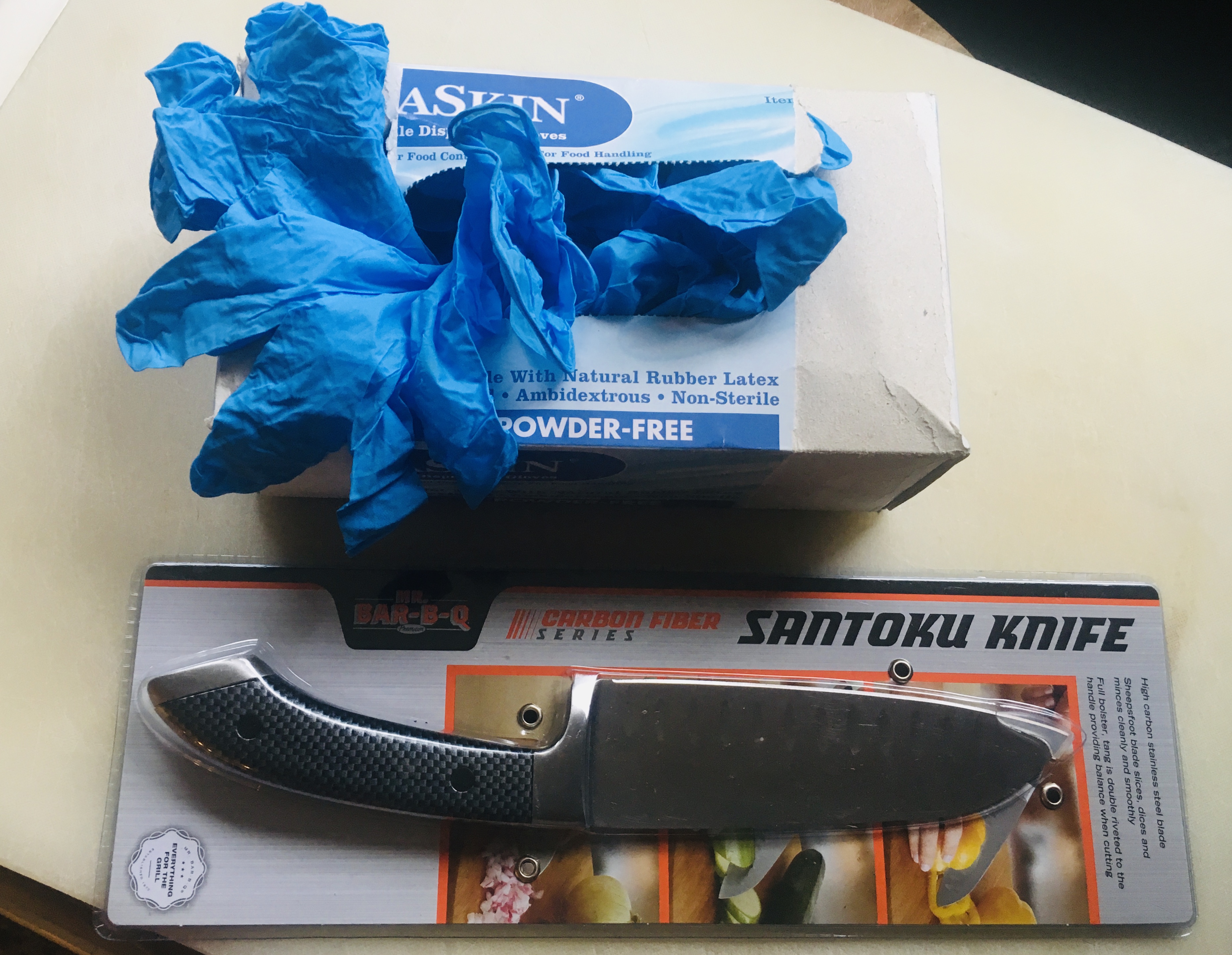
Washable, disposable: the best way to keep salmonella away.


I open the plastic wrapper of the chicken in the sink. You won’t believe how much stuff splatters around when you unwrap chicken. Do it in the sink and it won’t fly onto your countertop, windows, eyeballs, or nearby fruit bowl.


I buy very sharp and very cheap kitchen knives, like the one above. They go for about 6 bucks. Unlike my expensive prized chef knife which never goes into the dishwasher, these knives are easily sanitized by skipping the hand washing and letting the dishwasher do the work. I sharpen them when they get dull, but eventually, the get tossed out and I buy new ones. They’re not for every job in the kitchen, but they are perfect for any questionable food product like raw chicken.

While I’m at the store, I also buy a couple of acrylic cutting boards. The size and shape are a personal preference, but the idea is to use these boards when slicing and dicing chicken or any other nasty gooey thing. Unlike wooden boards that absorb everything, these are non-porous. The muck stays on the board, which is easily sanitized by tossing it in the dishwasher. The last thing I want to be doing with my deluxe wooden butcher blocks is bleaching and scrubbing those suckers because I cut up a couple of chicken breasts on them.

Finally, I buy myself a box of cheap disposable gloves. The main thing is to make sure they don’t slip off my hands while handling a sharp knife, or else I’ll be visiting the emergency room. When I’m done prepping the chicken, I just toss the gloves in the trash.

To be safe, I still rinse my hands with soap and water afterwards. But I don’t feel like I need to dip them in a vat of sulfuric acid to get them clean, and my kitchen workspace remains spotless.

Salmonella solved.

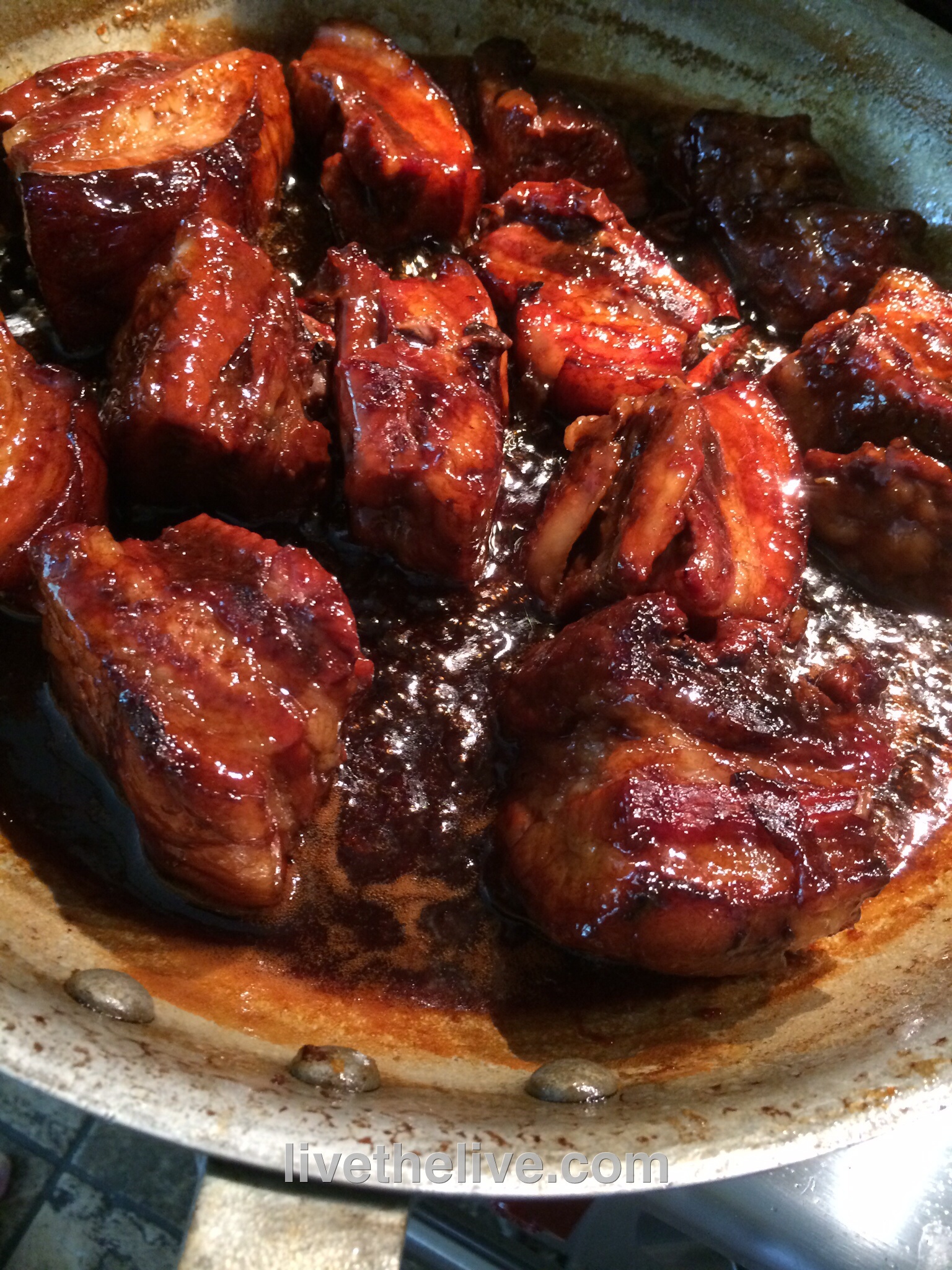
Sometimes the happiest of cooking accidents happen with bacon. My original plan was to make Chinese-style honey ribs for dinner. But instead of pulling a nice rack of ribs out of the freezer, I accidentally took out a slab of pork belly. I only realized my mistake when I thawed it and started cooking it, so I decided to continue the process with the pork belly instead. The results were pretty damn tasty.


image


Marinade:
¾ cup light soy sauce
6 Tablespoons hoisin sauce
5 lbs. pork belly
Zest and juice of 1 lemon
2 whole star anise
2 cinnamon sticks (3”)
1/2 cup honey
4 cups chicken broth
image
Mix the marinade ingredients. Set aside.
Cut the pork belly into pieces that are about 3 inches square. Place them in a large pot. Cover them with water and bring it to a boil. Boil for 5 minutes. Drain.
Place the pork belly pieces on a sheet pan lined with non-stick aluminum foil. Coat them with marinade while they’re still hot. Let them sit for 10 minutes.
Pre-heat the oven to 350 degrees. Bake the pork belly pieces on the sheet pan for 30 minutes.
While the pork belly is baking, start the sauce in a large non-stick pan or pot: combine the lemon zest and juice, star anise, cinnamon sticks, honey and chicken broth. Bring it all to a boil, then reduce to a simmer.
When the pork belly pieces have finished baking, add them (and any fat or liquid in the pan) to the sauce pot and simmer (covered) for at least 15 minutes or until the meat is tender.
Turn the heat on high, uncover the pot and cook until the sauce is reduced to a glaze that coats the ribs. Reduce the heat as the sauce thickens to avoid the sugars in the honey from burning. When the pieces are sticky and gooey, they are ready!
Let a piece of pork belly cool…then slice the to the desired thickness and fry it like regular bacon….or just pop it in your mouth like pork candy!
Makes an amazing omelet!
image

Hosting a “boys’ weekend” at Saule, our rental home in Little Compton, Rhode Island  (Go to http://www.sauleri.com. We’re listing #4711871 Homeaway.com), I made this as a side dish to the piles of meats we devoured.

This is a salad you want to make now, while corn and tomatoes are still in season, but I’ve found that frozen organic corn and greenhouse tomatoes work pretty darn well.


2 lbs. fresh or frozen organic corn
1 container grape tomatoes, chopped
1 small red onion, finely chopped
6 oz. mild crumbled cheese, like cotija or feta
1 package (5 oz.) organic baby arugula
1 teaspoon Fleur de Sel
1 teaspoon black pepper
1 tablespoon capers, drained
2 teaspoons white balsamic vinegar
2 tablespoons extra virgin olive oil


If you’re using fresh corn, remove it from the ears, then pan saute it  in a little olive oil, but leave it nice and crisp. If you can roast the ears of corn over some coals, even better. If you’re using frozen corn, pan saute in a little olive oil. Set the corn aside to cool.

Mix the corn with all the other ingredients in a bowl. Cover and refrigerate.

Right before serving, taste and season it again, mixing well. I think it’s best a little cooler than room temperature.

Sometimes a small bite can take a lot of preparation, and you just don’t appreciate it until you decide to make it yourself. That’s especially true with the classic Danish open sandwich called Smørrebrød. The ingredients can vary, but one of my favorite versions is with smoked salmon, on the brunch menu at the best restaurant in Rhode Island: Persimmon, in Providence. 

The Salmon Smørrebrød at Persimmon.


With some very special friends coming over for dinner, I decided this would be the event where I debut my own version of Salmon Smørrebrød. I had my work cut out for me…

It starts with the salmon. One of the finest sources of wild-caught Alaskan sockeye salmon is Vital Choice, a purveyor of extremely high-quality wild-caught seafood. I ordered several large fillets and had them shipped frozen to my home. I thawed a couple of the fillets in the fridge, and then cured them for several days.


Make sure you get your salmon from a reliable source, and always get wild-caught, never farmed.


The recipe for the cure mix is simple:

1 cup Kosher salt
1/2 cup cane sugar
1/2 cup brown sugar
1 tablespoon crushed black peppercorns

Combine these ingredients in a bowl. Mix well.

Use a container that will hold the fillets without bending them. It also needs to be watertight, because the salt extracts moisture from the fish, and you don’t want spills from the liquids released during the curing process.


First, the plastic. Then, a layer of the cure mix. Then the salmon fillet, skin-side-down. More cure mix on top. Then the second fillet, with more cure mix on top of that.


Lay a few sheets of plastic wrap on the bottom, allowing them to fall over the sides of the container. Sprinkle a good, even layer of the cure mix on the bottom. Lay down the first salmon fillet, skin side down, on top of the cure mix. add more cure mix on top of the fillet to cover it completely. Lay the second fillet on top of that, then cover it completely with more of the cure mix. Fold the plastic wrap tightly over the top, pressing out as much air as you can.


Finally, wrapping the whole thing up tightly in plastic.


Pressure on the salmon helps the curing process, so the cure mix makes good contact with the flesh. I weigh it down with a few cans of tomato sauce.


Even pressure on the salmon fillets helps the curing process.


Put the salmon in the fridge for at least 48 hours, until the fillets are firm to the touch.


The fillets have changed color and are firmer to the touch once cured.


Once the salmon has cured, remove it from the plastic wrap and wash it thoroughly with clean, cold water to remove as much of the salt as possible. Some of the peppercorns will imbed themselves in the fish…remove those, too. Pat the fillets dry with paper towels.


The salmon is ready to eat just like this, but…


At this point, you’ve got Gravlax, and it’s delicious just the way it is. But I chose to go one step further and smoke the salmon, so I put the fillets on a metal rack in my fridge, skin side down, and let them dry out a bit for an hour or so. When the salmon dries, the flesh gets a bit tacky. That’s called the pellicle, and the sticky surface of the fish helps the smoke molecules adhere better. It’s a good thing.


The salmon fillets, drying in the fridge.


While the salmon is drying in the fridge, I get my smoking gear ready.

I like to use charcoal briquets and hickory chips for the smoking process. I bring my small camping grill next to my larger home grill. Using my charcoal chimney, I light the briquets and let them burn until they’re ashed over. Using a small smoking box, I place some hickory chips inside, then add a couple of hot briquets to it, making sure they burn the chips and the smoking starts. I place the smoking box inside my large grill with the vents open, laying my salmon fillets (skin-side-down) next to the smoking box. I close the lid of the grill, and let the smoking begin.


Lighting briquets in the camping grill before moving them to the larger grill.


Ashed-over coals in the chimney.

This is as close to a cold-smoking process as you can get at home. There is no heat actually cooking the salmon, just a smoke-filled grill that needs to be replenished every once in a while with hot coals and more hickory chips. I smoke the salmon for a couple of hours.


Let the smoking begin!


Once the salmon has smoked, you’ve got yourself a really special treat. You must eat some at this point, just to reward yourself for a job well done! Then, wrap the rest of the salmon tightly in plastic wrap, and keep it refrigerated until you’re ready to serve it. It will stay fresh in the fridge for several days.

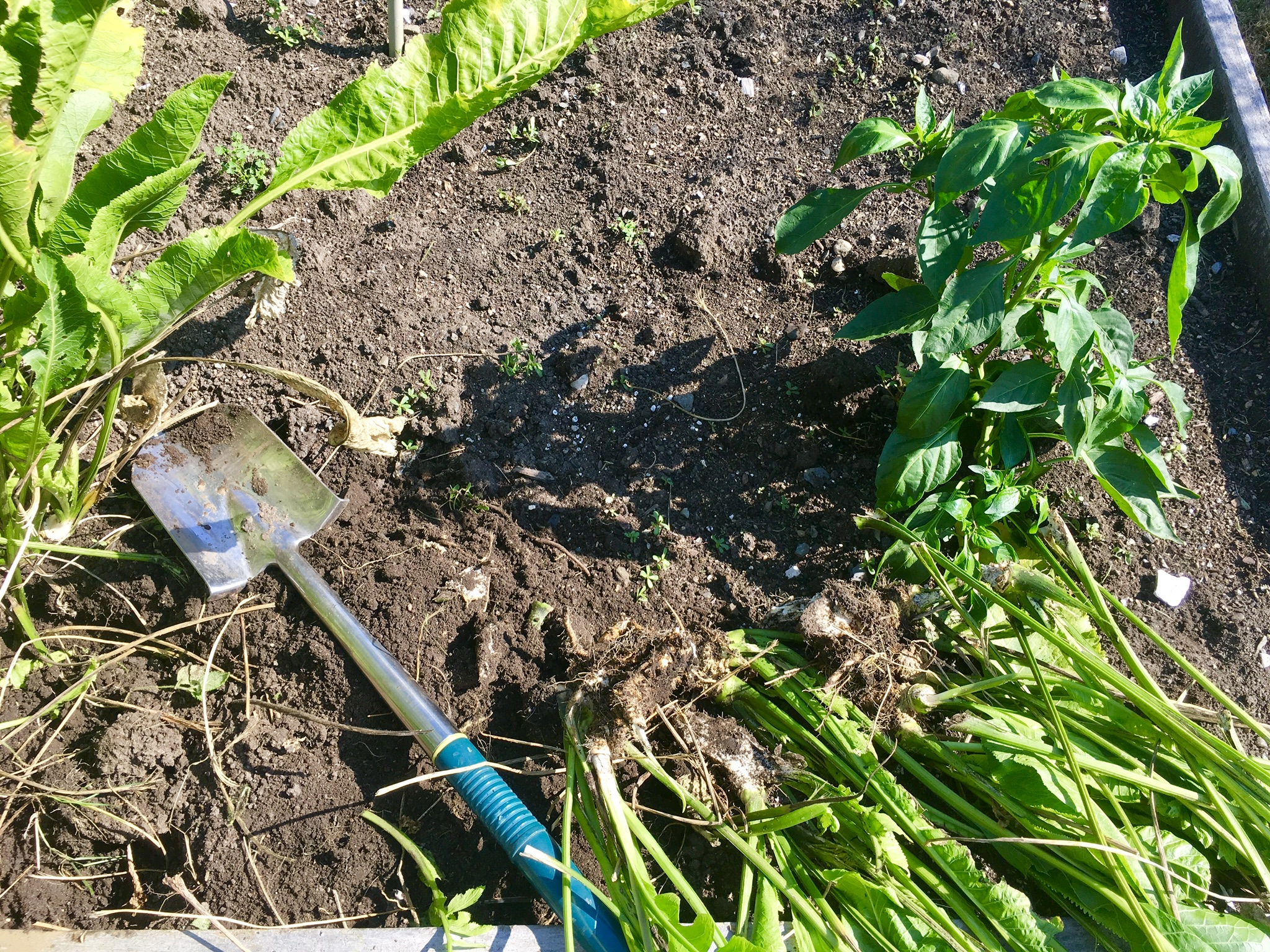
My research for Salmon Smørrebrød resulted in many variations, but I ultimately chose one that used a horseradish cream on the fish. Just so happened that I have a giant horseradish plant growing in my garden, so it was time to dig some of the roots up!


Digging up horseradish.

Once I dug the roots out and washed them clean, they needed to be peeled down to their white center. Then they were ready to be grated. I used the same system my grandfather did, many years ago: a simple hand grater for the job. If you thought you cry when you slice onions, you ain’t seen nuthin’ until you’ve grated horseradish! But it’s worth the effort.


Cleaned horseradish roots, before peeling and grating.


You need freshly grated horseradish, not the prepared stuff you find in the supermarket for the cream…


12 tablespoons sour cream
6 tablespoons plain Greek yogurt
4 tablespoons freshly grated horseradish
8 teaspoons freshly squeezed lemon juice
4 pinches of sugar
Kosher salt to taste

Combine these ingredients in a bowl and mix well. It keeps for at least a day, so you can make it the night before serving. This is a lot of horseradish cream, but I was making enough to serve 12 people.


The horseradish cream…delicious on a lot of things!


1 fennel bulb
2 Granny Smith apples
1 tablespoon freshly squeezed lemon juice

A few hours before serving, thinly slice a fennel bulb–paper-thin if you can–and place the slices in a bowl of ice water. Peel and core 2 Granny Smith apples and slice them as thinly as you can, placing them in the ice bath as well. After an hour, remove the fennel and apple slices from the ice water, pat them dry with paper towels, and place them in a bowl, sprinkling them with the lemon juice. Toss, mixing well, and then place the bowl in the fridge until you’re ready to use it.


Slicing the fennel as thinly as possible.


A few last ingredients…

Sliced bread
Softened unsalted butter
Fresh dill sprigs

Smørrebrød is a sandwich, so of course, I needed some bread. I chose something from my heritage: Lithuanian bread, a combination of rye and pumpernickel that I find when I go back home to New York. I keep it in the freezer until I need it, and for this recipe, I sliced it thin.


Getting the ingredients together. The Lithuanian bread is the brown bread. We also had a couple of slices of gluten-free bread.


Now we’re finally ready to build this thing!


Slicing the salmon as thinly as possible.


Rather than making all the sandwiches myself, I decided I’d teach a Master Class of Smørrebrød-making with my fabulous guests. So I brought all the ingredients out, and we started building our sandwiches as I sliced the salmon as thinly as possible.


Everyone makes their own Smørrebrød!


First, you take your slice of Lithuanian bread and spread some of the butter on it.

Then, layer the fabulous salmon on top.

Next, a healthy spread of the horseradish cream.

Top with some of the sliced fennel and apple.

Garnish with just a few fresh sprigs of dill.

And then top it all off with a friendly sprinkling of Fleur de Sel, or your favorite sea salt.


Fleur de Sel at the end makes all the difference!


And that’s my Salmon Smørrebrød…a labor of love. But that’s what you do for friends, right?


Time to eat!


Leftover ingredients make a great sandwich on an everything bagel the next day!


I’m not a big beer drinker, but I do like to cook with it. One of my favorite things in the world is beer-battered fish. And it doesn’t have to be greasy if you do it right. (Scroll down to the bottom to see how to make this gluten-free!)

When you fry at home, you can do things the right way: start with clean oil, heat it to the right temperature, and then throw it out when it’s done. When you go to a fast-food place, that oil has sat there all day (if not all week)…it’s been used hundreds of times…it absorbs the flavors of whatever was fried before your food got dropped in there…and quite frankly, it’s beat up.

What got me started with this whole beer-batter-at-home process was stumbling upon some fresh local cod at my neighborhood seafood store: Bridgeport Seafood in Tiverton, Rhode Island. My buddy, Dave, said that the cod came from just off Sakonnet Point that day. Good enough for me!

I always try to fry with healthy oils. For me, that means olive oil, avocado oil, or, pork lard from heritage breed pigs. But none of those choices are cheap. So I allow myself to “cheat” when deep-frying and I use peanut oil or vegetable oil. Using a thermometer, I heat it to 350 degrees. I always watch the temp of my oil…it can get too hot very quickly…and by the same token, the temp can drop quickly if I throw in a whole bunch of fish into the pot all at once. Using one of those deep fryers made for home use is also a good way of cooking and controlling temperature. I’m careful not to put too much oil in my pot (halfway up is fine) or it could spill over, since oil expands as it gets hotter.

Here’s all you need for great beer batter:

1 1/2 cups all-purpose flour (I use King Arthur)
12 oz. bottle of beer (Sam Adams Boston Lager works for me)
1 teaspoon salt

Combine all the ingredients in a bowl and beat until smooth. Cover loosely with plastic wrap and place in the fridge for 3 hours.

Cut your fish into pieces that aren’t too big and will fit in your pot easily. The thickness of the fish may vary and so may the cooking times of each piece. When the oil reaches 350, simply dip the fish into the batter and let as much batter drip off as you like before you carefully place the fish into the oil. Fry until golden brown.


beer batter


What good is fried fish without tartare sauce, right? Don’t tell me you’re using the stuff in a jar after frying the fish yourself!

1/2 cup mayo (I always use Hellmann’s)
Dash of Worcestershire sauce
Dash of Frank’s Red Hot cayenne sauce
Grinding of black pepper
1 tablespoon finely chopped capers
1 teaspoon lemon zest, using micro plane zester

Combine all the ingredients in a bowl, cover with plastic and refrigerate for an hour before using.


To make beer-batter gluten-free, substitute GF flour for the all-purpose flour. (I like Cup4Cup.) And now, you can get gluten-free beer that tastes pretty damn good. Use it instead of regular beer, and you’ve got a beer batter that’s gluten-free!

Before you can have great shrimp cocktail, you have to do 2 things: buy the right shrimp and cook the shrimp the right way. The right shrimp is nothing less than wild-caught American shrimp. If you’re buying shrimp from Asia, your supporting a system that uses slave labor, where shrimp are fed chemical pellets and swim in feces. If it doesn’t say wild-caught American shrimp on the package or at your local seafood store, it’s crap. Give your store owner hell for selling it.

Cooking shrimp the right way is something I learned living in the South. My wonderful friends and neighbors taught me many things about food, and the right way to cook shrimp is near the top of the list.

Shrimp was never meant to be cooked to death. It doesn’t matter if you start with fresh shrimp, store-bought shrimp, or even frozen shrimp…the same rules apply: 1) Season your water. 2) Bring it to a boil, then reduce to a simmer and let it get happy for 20 minutes. 3) Drop in the shrimp and raise the heat. 4) Remove the shrimp AS SOON AS the water returns to a boil.

The seasoning for the water, commonly called shrimp boil, makes or breaks the flavor of your shrimp. For years, I used Zatarain’s Crawfish, Shrimp and Crab Boil in a bag. And it was good. But at some point, I realized I had to get serious and make my own boil.

2 quarts water
2 cloves garlic, smashed
1/2 lemon, squeezed, then drop the lemon in
1 small onion, peeled and quartered
4 bay leaves
1 tablespoon black peppercorns
1 tablespoon salt
1 tablespoon whole allspice
1 teaspoon cayenne pepper
1 teaspoon celery seed
1 teaspoon whole cloves
1 teaspoon brown mustard seed
1 teaspoon dry thyme

Combine all the ingredients in a 4–6 quart pot. Bring it to a boil, then reduce to a simmer, put a lid on the pot, and let it simmer for 20 minutes.

After 20 minutes, remove the lid and pour in your shrimp. (I prefer unpeeled.) Stir well, bring the heat back up to high, and remove the shrimp AS SOON AS it returns to a boil! The shrimp are cooked! Done!

Strain the shrimp and place them in a bowl with crushed ice on the bottom. Add more crushed ice on top of the shrimp, and place the bowl in the fridge until you’re ready to serve.


Freshly shucked oysters and clams, or in this case, beautiful boiled wild-caught American shrimp, all call for an equally amazing cocktail sauce…and this sauce kicks butt! And it features a key ingredient that you might not expect: vodka. The small amount of vodka in the mix makes the cocktail sauce easy to scoop even when stored in the freezer. Just scoop out what you need, let it thaw, and put the rest back in the freezer until next time.

image


2 cups ketchup
4 tablespoons prepared horseradish
1 tablespoon fresh lemon juice
1 teaspoon Worcestershire sauce
1/2 teaspoon Frank’s Red Hot, or other hot pepper sauce
5 grinds of fresh black pepper
1/4 teaspoon salt
1 teaspoon good quality vodka, like Tito’s

Combine all the ingredients. Store in a tight plastic container in the freezer.